


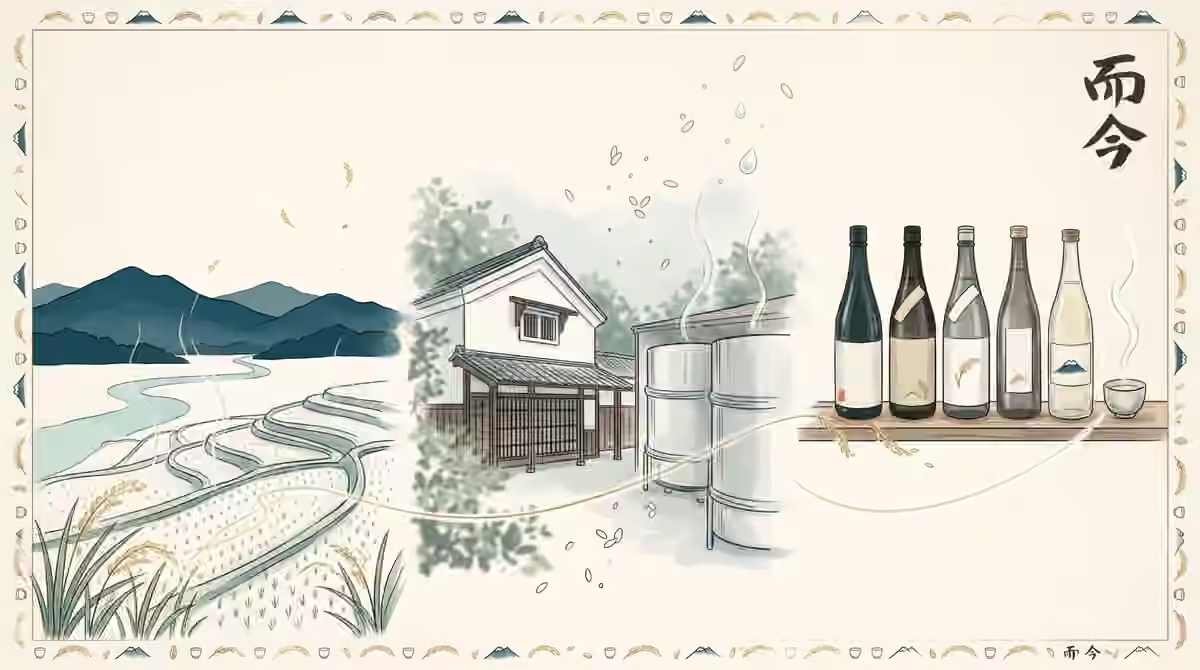

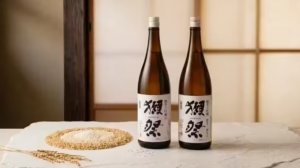
Jikon (而今) is a Japanese sake brand from Kiyasho Shuzo, a brewery in Nabari, Mie Prefecture. The brewery itself, though, dates to 1818. Jikon, however, is a much younger idea. It appeared in the mid-2000s, after the sixth-generation head took charge of brewing and gave his first sake a Zen-inspired name about living fully in the present.
Today the name covers a whole family of bottles rather than one fixed taste. Kiyasho works with Iga-grown Yamada Nishiki and several other sake rice varieties, and it ships different releases through the year. So what actually makes Jikon special? Below, we look at the name, the rice, the seasons and the brewery behind them.
What Is Jikon Sake?
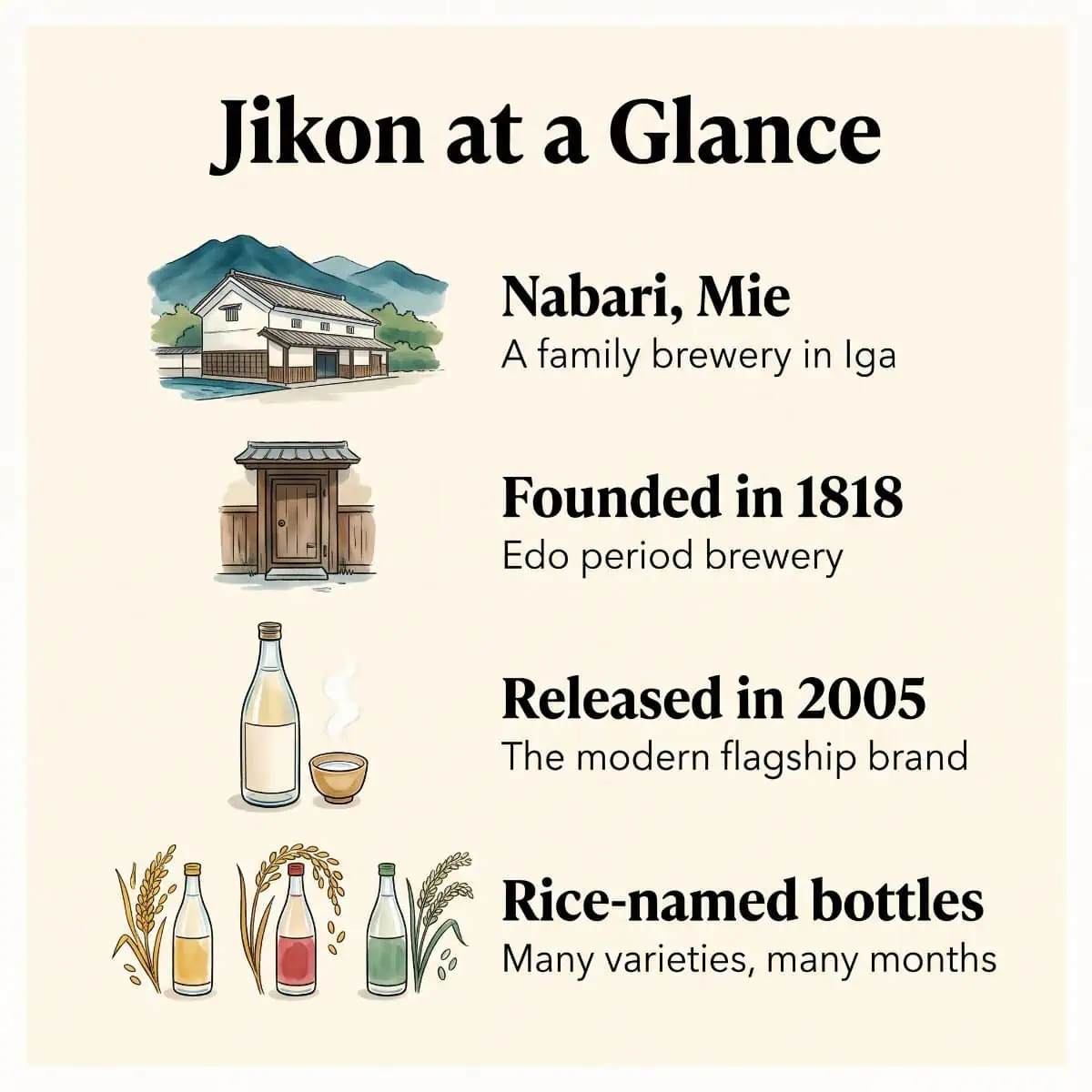
Jikon is the flagship modern brand of Kiyasho Shuzo (木屋正酒造), a family brewery in Nabari City, Mie Prefecture. According to the brewery, it released Jikon in 2005 after reviewing every stage of its production. Before that, the house brand was Takasago, sold mainly around the Iga area.
Jikon at a Glance
- Japanese name
- 而今 (pronounced jee-kon)
- Brewery
- Kiyasho Shuzo (木屋正酒造), Honmachi, Nabari City, Mie Prefecture
- Brewery founded
- 1818 (Bunsei 1), during the Edo period
- Brand released
- 2005, per the brewery; the head brewer first took charge in 2004
- Meaning
- A Zen expression the brewery explains as living fully in the present
- Main rice
- Iga-grown Yamada Nishiki, plus Omachi, Aiyama, Sake Mirai, Senbon Nishiki, Hattan Nishiki, Gohyakumangoku and others
- Styles
- Tokubetsu junmai, rice-specific bottles, junmai daiginjo, daiginjo, nama, nigori and origarami releases
- Sister brand
- Takasago (高砂), the brewery’s older label, revived in 2018
- Brewery visits
- No retail sales, tours or tastings on site, according to the brewery
What Kind of Sake Is Jikon?
Jikon is not a single flavor profile. Instead, the brewery’s list changes by rice variety, by grade and by handling. One bottle may be fresh unpasteurized nama sake, while another of the same rice is pasteurized and released months later. As a result, “Jikon” works more like a series title than a product name.
Why Is Jikon So Well Known?
Rarity is part of the story, but it is not the whole story. A feature on Nippon.com described how the owner standardized each brewing step and focused closely on koji making. The same feature said only about 30 shops in Japan carried the brand at the time. In other words, careful brewing and limited distribution grew together.
What Does the Name Jikon Mean?
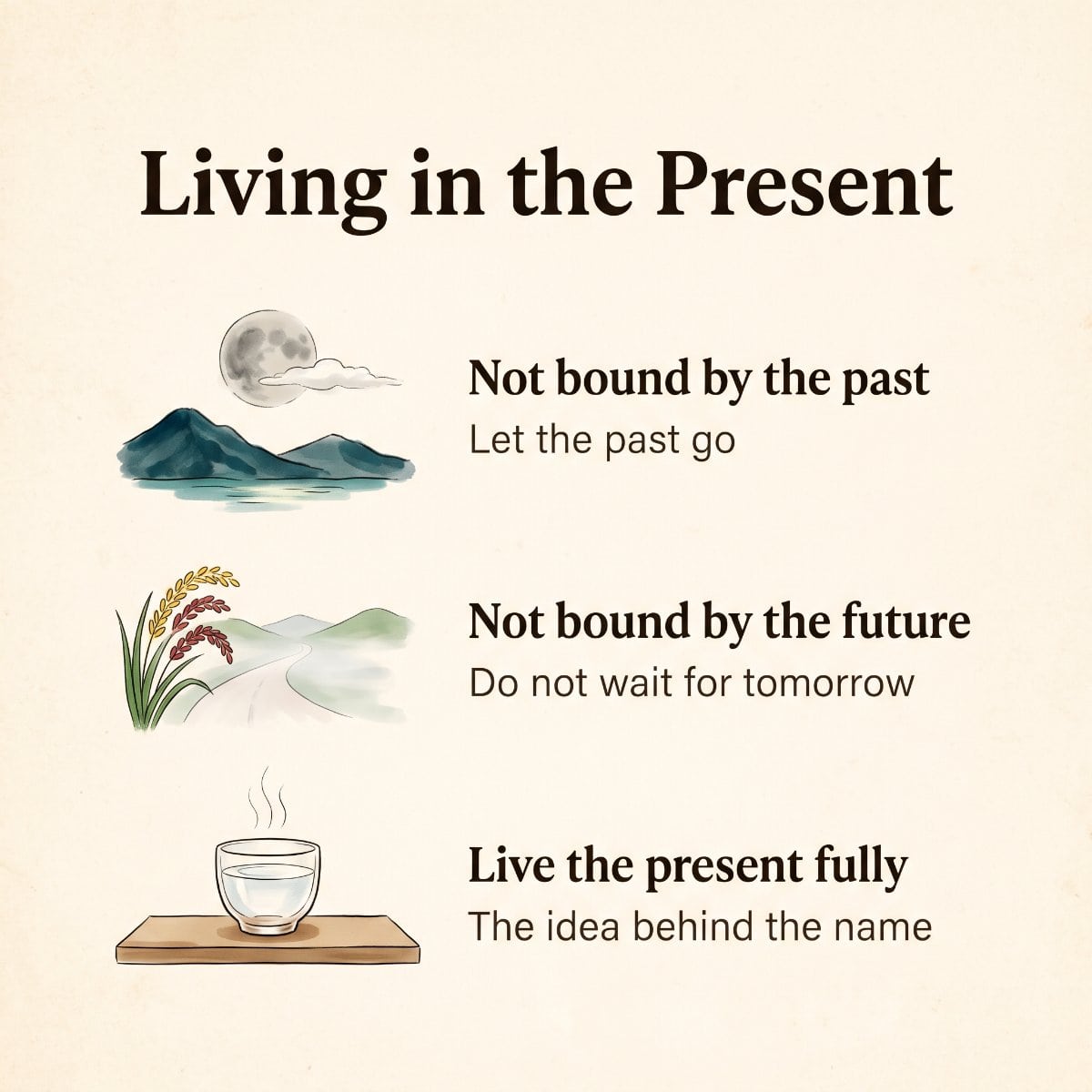
The two characters 而今 read “jikon” in the brand name. The brewery calls it a Zen phrase taught by Dogen, the founder of the Soto school of Zen Buddhism in Japan. Its own Japanese summary runs roughly like this: do not be bound by the past or the future, and simply live the present as fully as you can.
過去にも囚われず、未来にも囚われず、今をただ精一杯に生きる
“Not bound by the past, not bound by the future, simply living the present to the full.”
Kiyasho Shuzo’s explanation of 而今, our translation
Is That a Literal Translation?
Not quite, and this is worth a moment. The characters themselves point to “now” in a classical, literary way. By contrast, the longer phrase about past and future is the brewery’s interpretation. So it reads best as a philosophy the brewery chose, rather than a word-for-word gloss.
How the Name Shapes the Brewing
Why would a brewer pick such a name? Fortunately, the brewery’s own pages offer clues. They describe brewers as people who prepare the right conditions for koji mold and yeast to work. They also stress respect for tradition alongside the latest technology. Read that way, Jikon suggests improving this season’s sake, instead of resting on last year’s success.
The History of Kiyasho Shuzo Since 1818
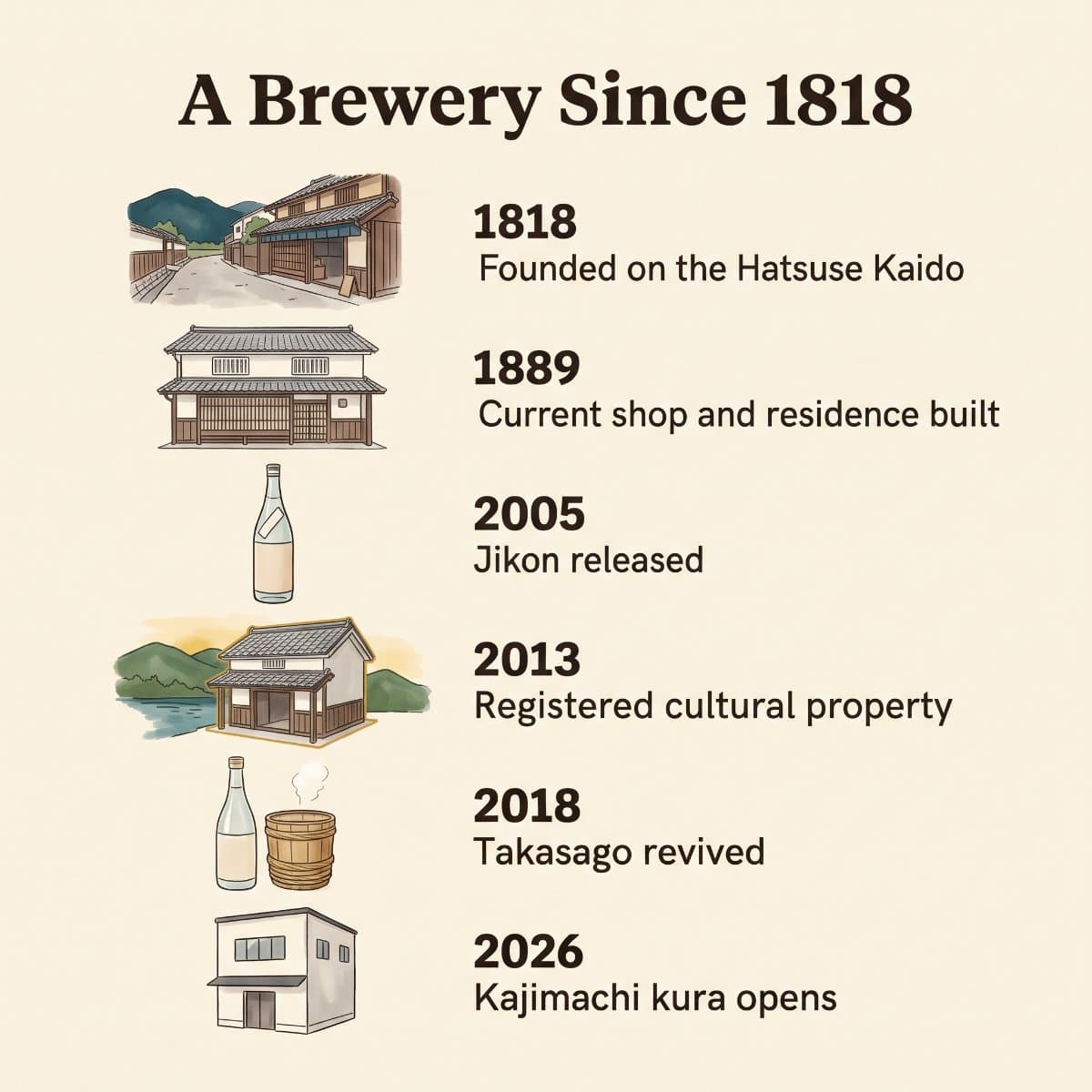
Kiyasho Shuzo opened in 1818 on the Hatsuse Kaido, an old road linking the Nara and Kyoto areas with Ise Grand Shrine. Even today, the shopfront faces that route. Still, the brewery is older than the building you can see, which surprises many visitors.
Early Edo period
The family’s ancestors are said to have moved from Imabari, in today’s Ehime Prefecture, while serving the Todo clan.
1818
Kiyasho Shuzo is founded on the Hatsuse Kaido. Takasago becomes its long-running house brand.
1889
The current shop and main residence is built. An extension follows in 1913, and a renovation in 1988.
2004 to 2005
The sixth-generation head starts brewing as toji. The brewery releases Jikon in 2005.
2013
The shop and residence becomes a Registered Tangible Cultural Property.
2018
For its 200th anniversary, the brewery revives Takasago with its first kimoto brewing.
January 2026
The new Kajimachi kura begins operating about 150 meters from the main brewery.
A Timber Merchant’s Name
Interestingly, the name Kiyasho has a practical origin. According to the brewery, the family first worked as timber merchants, which gave the house its trade name, 木屋正. The 木 character means “wood.” The story of the move from Imabari, by contrast, comes from family tradition, so the brewery presents it as something “said” to have happened.
Takasago Before Jikon
For most of its history, Kiyasho sold Takasago (高砂) mainly in the Iga area. That local focus matters. Jikon did not grow out of nothing. Rather, it came from a brewery that had already served its neighbors for nearly two centuries.
A Building From 1889
Japan’s Agency for Cultural Affairs lists the Kiyasho shop and main residence as a Registered Tangible Cultural Property. In fact, its record dates the building to 1889, with an extension in 1913. It also describes a wooden facade with plastered walls and small slatted windows, typical of an old sake shop. So the brewery dates to 1818, but the registered building is younger.
Tadayoshi Onishi and the Birth of Jikon
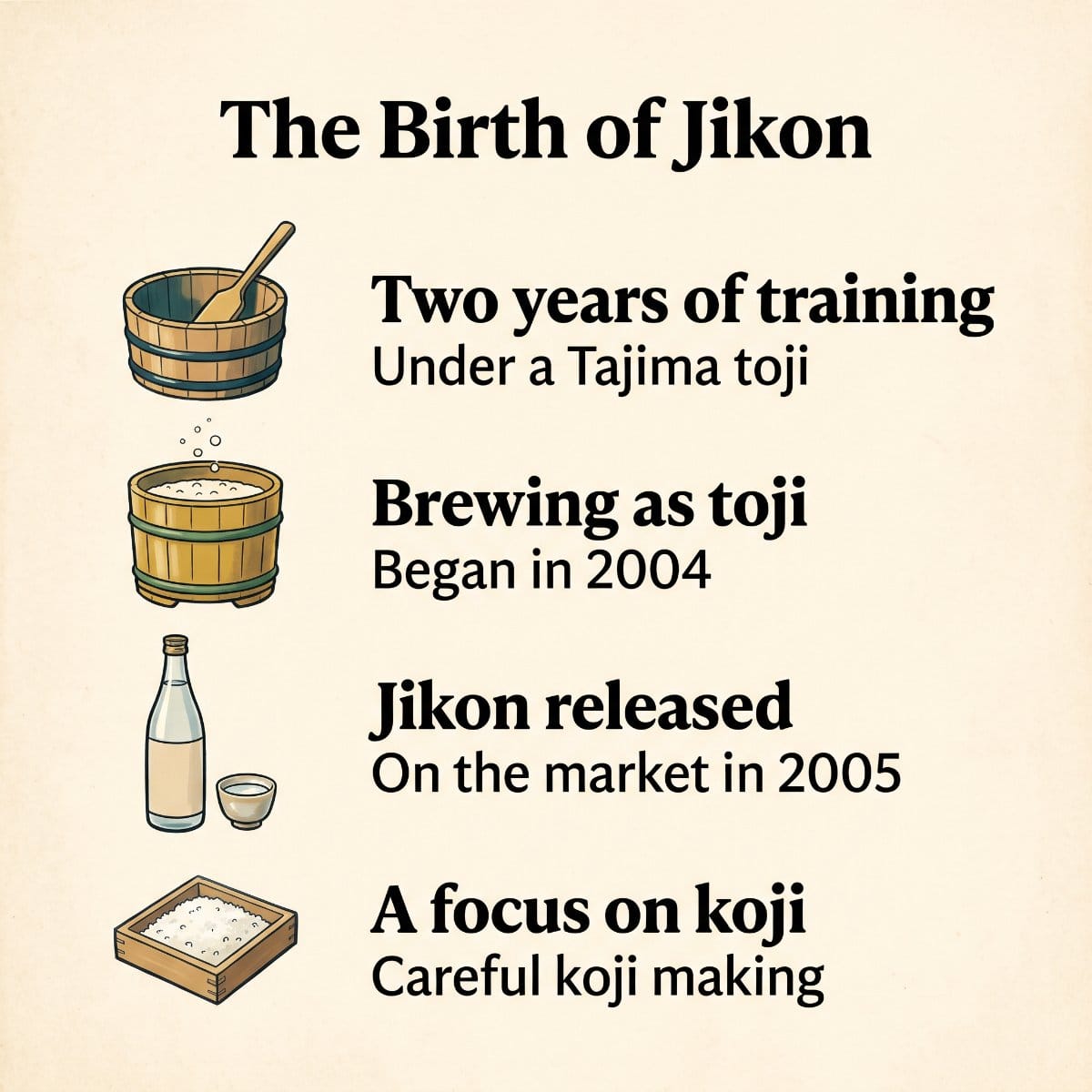
The sixth-generation head is Tadayoshi Onishi (大西唯克). Some English sources romanize his given name as Yukikatsu. Either way, his story is the turning point in the brewery’s modern history.
Learning Under a Tajima Toji
According to the brewery, he first spent two years making sake under a Tajima toji. Tajima, in northern Hyogo, is one of Japan’s well-known guilds of master brewers. After that training, he began brewing as the toji himself. The sake he made in that role became the first Jikon. If the word toji is new to you, see our guide to the toji, Japan’s master brewer.
2004 or 2005?
You will see both dates, and both have a basis. For example, Nippon.com reports that Onishi took over as toji in 2004. Kiyasho’s own site, however, gives 2005 as the year it released Jikon. The clearest way to read this is simple: brewing began under his lead in 2004, and the brand reached the market in 2005.
Why Koji Became the Focus
Koji is rice grown with the mold Aspergillus oryzae, and it turns starch into sugar. Onishi has said that koji “can make or break a sake,” according to Nippon.com. The feature also describes close control of temperature, humidity and rice moisture. Our guide to koji explains why this step matters so much.
Nabari and the Iga Basin: Jikon’s Home
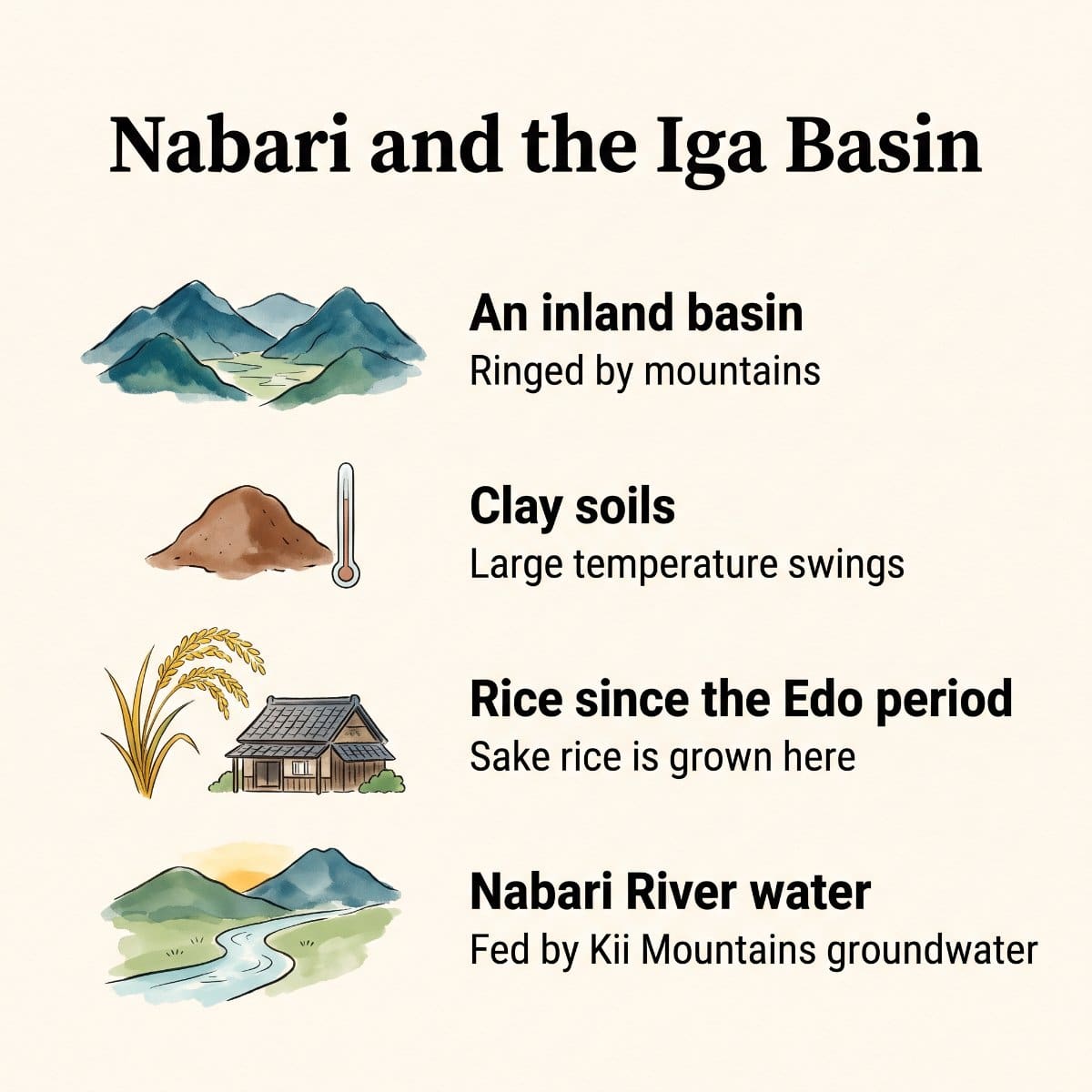
Nabari sits in the Iga region of western Mie Prefecture, close to the border with Nara. Kiyasho’s main brewery stands in Honmachi, about 10 minutes on foot from Kintetsu Nabari Station. The area is inland, hilly and quiet, far from the coastal image many people have of Mie.
The Iga Basin and Rice
Mie Prefecture’s agricultural research office in Iga describes a basin surrounded by mountains and highlands. In particular, it notes clay soils from the ancient Lake Biwa formation, rich in minerals, and large temperature swings. The same office says rice has been grown here since the Edo period. It also notes that sake rice farming and brewing are active.
Water From the Nabari River
Of course, water is the other half of the picture. The brewery describes the Nabari River as fed by underground water from the Kii Mountains, with clear water along the foothills. The Mie research office also adds that the area lies in the upper reaches of the Yodo River system. Even so, the brewery does not publish a mineral analysis of its brewing water.
Place Matters, but the Brewer Decides
It is tempting to say Iga’s climate “creates” Jikon’s taste. That goes too far. Rice, water and weather simply set the starting conditions. After that, the choice of rice, koji work, fermentation and storage shape what ends up in the glass.
The Rice Varieties Behind Jikon
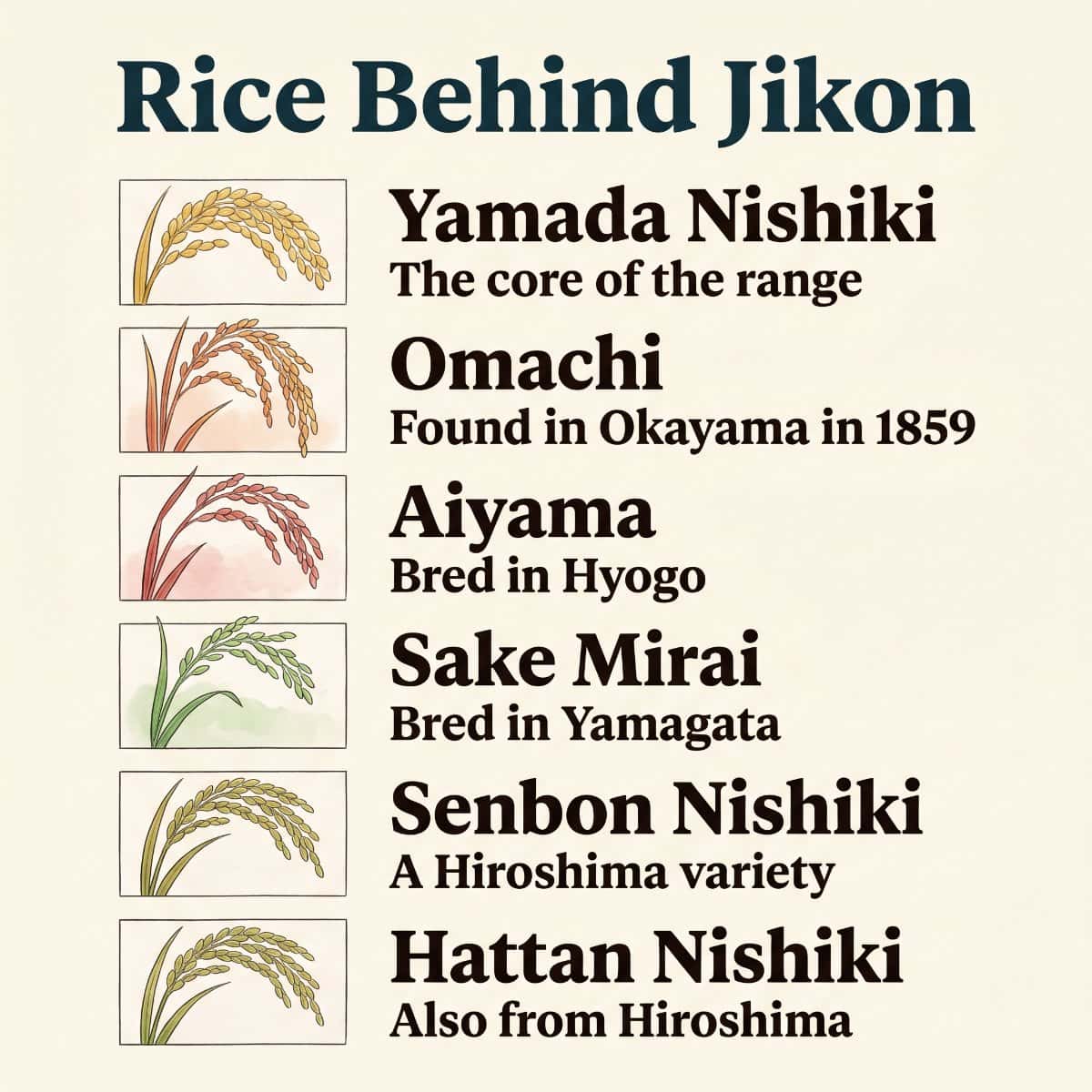
Above all, rice is the clearest way to tell Jikon bottles apart. Kiyasho says it centers on Iga-grown Yamada Nishiki and also sources good sake rice from around Japan. Most bottles then carry the rice name on the label, so the variety becomes part of the product name. Our guide to sake rice covers the basics.
Why Brew Rice by Rice?
First, sake rice differs from table rice. In a 2020 overview, Yoshihiro Tamada of Hakutsuru Sake Brewing explained that brewers prefer large grains with low protein and fat. Many varieties also have a starchy white core called shinpaku. Koji mold grows into this core more easily, which helps it make strong enzymes. Varieties differ in these traits, so each one behaves a little differently in the brewery.
山田錦
Yamada Nishiki
The core of the range. Kiyasho uses Iga-grown rice, plus Hyogo rice from Yoshikawa and Tojo in separate bottles.
雄町
Omachi
An Okayama variety found in 1859. It appears in nama, hiire, kimoto and top junmai daiginjo bottles.
愛山
Aiyama
Bred in Hyogo from Aifune 117 and Yamao 67. Released as a pasteurized bottle in autumn.
酒未来
Sake Mirai
Developed by Takagi Shuzo in Yamagata. Jikon’s version is a nama release in February.
千本錦・八反錦
Senbon Nishiki and Hattan Nishiki
Two Hiroshima varieties, each released as both nama and hiire.
五百万石・朝日
Gohyakumangoku and Asahi
Further varieties on the brewery’s list. Asahi has its own summer bottle.
Yamada Nishiki
Yamada Nishiki is often called the “king of sake rice.” Kiyasho names Iga-grown Yamada Nishiki as its main rice. In addition, the brewery releases bottles named after Yoshikawa and Tojo in Hyogo. A Hyogo Prefecture office describes Yoshikawa and Kato City, which includes Tojo, as ranked in the top “Toku-A-a” class for Yamada Nishiki. Tasting these side by side is one of the quieter pleasures of the range.
Omachi
Next comes Omachi, one of Japan’s oldest surviving sake rice varieties. According to JA Zen-Noh Okayama, a farmer found it in 1859 in Omachi, now part of Okayama City. The group says Okayama grows about 98 percent of it. It also calls Omachi the only sake rice kept as a pure line without crossbreeding. Because it is tall and hard to grow, its production once fell sharply.
Aiyama
Aiyama is a rarer variety bred in Hyogo. A 2017 Serai article traces it to a cross of Aifune 117 and Yamao 67. That pedigree is sometimes misreported, so it is worth getting right. In Jikon’s range, Aiyama appears as a pasteurized October release.
Sake Mirai
Sake Mirai was developed by Takagi Shuzo, the Yamagata brewery behind Juyondai. Serai notes it was bred in 1999 from Yamasake No. 4 and Miyamanishiki. Other breweries now use it as well. For Jikon, it is a February nama release, one of the year’s first new-season bottles.
Senbon Nishiki and Hattan Nishiki
Both of these varieties come from Hiroshima Prefecture. A 2002 bulletin from Hiroshima’s agricultural research center describes Senbon Nishiki as a Yamada Nishiki-type rice. It ripens about a week earlier and grows about 10 centimeters shorter, so it resists falling over in the field. Jikon releases both rice types as fresh nama in winter and as hiire later in the year.
Gohyakumangoku and Asahi
These two round out the list. The brewery names Gohyakumangoku among its rice, and Asahi has its own pasteurized July bottle. The point is clear enough: no single famous rice defines Jikon.
Rice Polishing and Jikon’s Grades
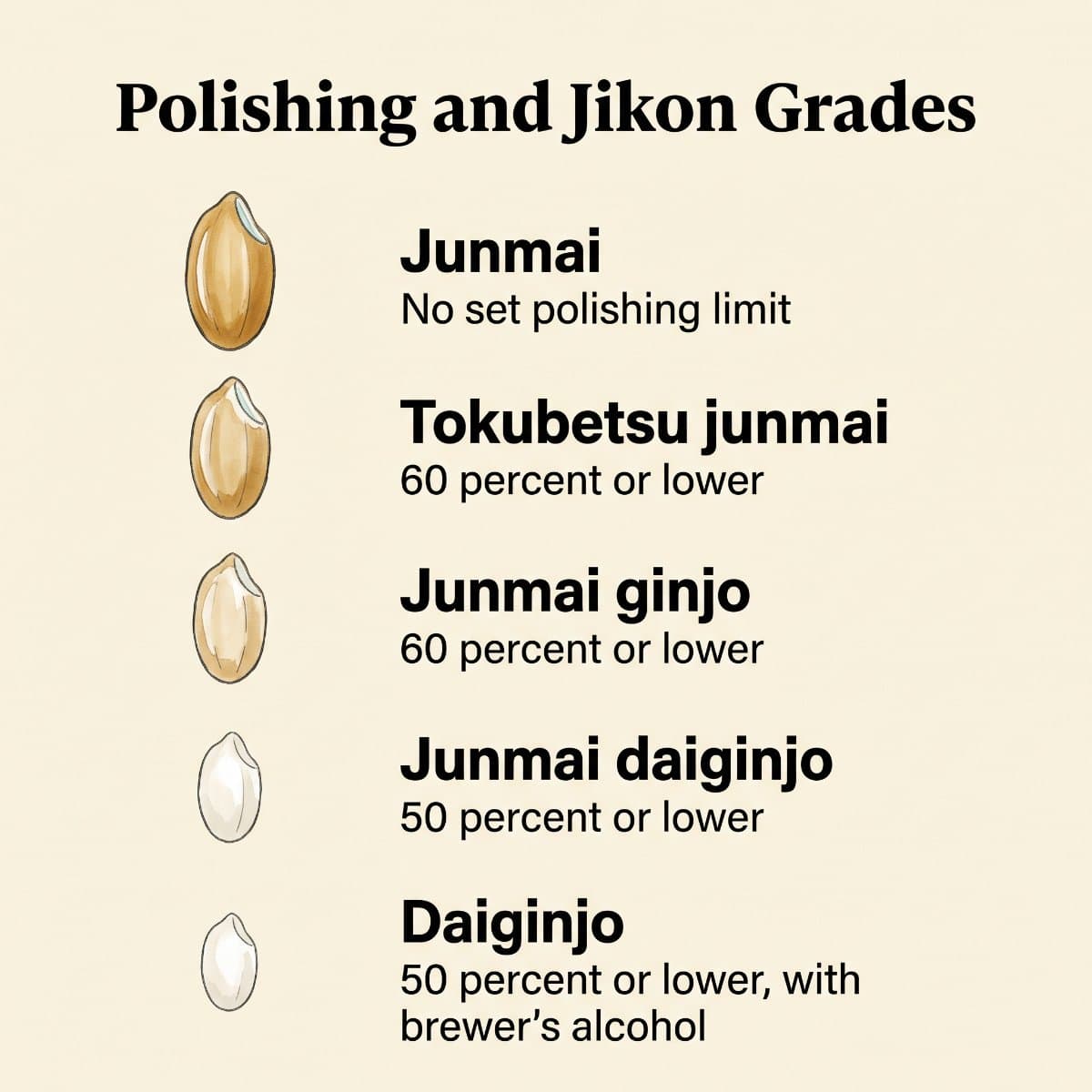
Polishing removes the outer layers of each grain before brewing. Japan’s National Tax Agency defines the polishing ratio as the weight of polished rice against the original brown rice. So a ratio of 60 percent means 60 percent of the grain remains. Our guide to rice polishing shows how this works in practice.
| Grade | Ingredients | Polishing ratio |
|---|---|---|
| Junmai | Rice and rice koji only | No set limit |
| Tokubetsu junmai | Rice and rice koji only | 60% or lower, or a special method explained on the label |
| Junmai ginjo | Rice and rice koji only | 60% or lower, ginjo brewing |
| Junmai daiginjo | Rice and rice koji only | 50% or lower, ginjo brewing |
| Daiginjo | Rice, rice koji and brewer’s alcohol | 50% or lower, ginjo brewing |
Based on the National Tax Agency’s summary of Japan’s sake labeling standards. All grades listed here also require koji rice of at least 15 percent.
Which Grades Does Jikon Make?
Jikon’s list includes a tokubetsu junmai, many rice-named bottles, several junmai daiginjo and two daiginjo. For background, see our guides to tokubetsu junmai, junmai ginjo and daiginjo. The brewery publishes full specs for only one bottle online. Its Tokujo Omachi junmai daiginjo uses Okayama rice polished to 35 percent, at 15 percent alcohol.
Does a Lower Ratio Mean Better Sake?
No, and the labeling rules never say so. A lower ratio changes the style and often the price. Yet whether a sake tastes “better” depends on rice, koji, yeast, fermentation and your own taste. Numbers help you read a label. They cannot rank every bottle.
Nama, Hiire, Nigori and Origarami
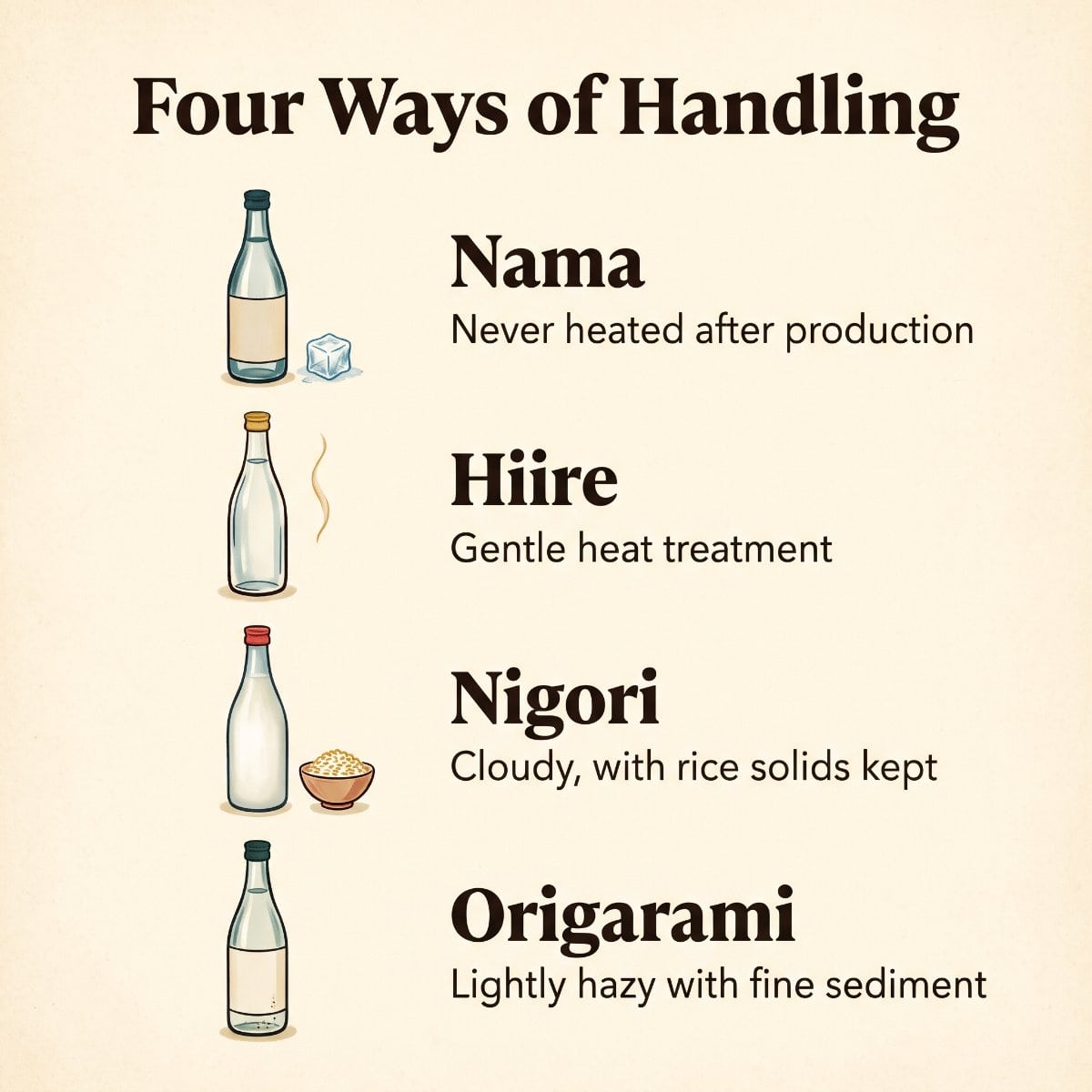
Many Jikon bottles share a rice name but differ in handling. These four terms explain most of that. If labels feel confusing, our guide on how to read a sake label may help too.
| Term | What it means | Jikon examples |
|---|---|---|
| Nama (生) | Never heat-treated after production. Japan’s labeling rules allow the term only for such sake. | Sake Mirai, Senbon Nishiki, Yamada Nishiki and Omachi nama |
| Hiire (火入) | The common term for gentle heat treatment, or pasteurization, which stabilizes the sake. | Most rice-named bottles, plus the daiginjo range |
| Nigori (にごり) | Cloudy sake that keeps more rice solids after pressing. | Nigorizake nama, a November release |
| Origarami (おりがらみ) | Sake bottled with some fine sediment, often lightly hazy. | Origarami nama, a December release |
Nama Sake
Nama sake skips pasteurization, so it often tastes fresh and lively. Because it is more delicate, it needs to stay cold. Our namazake guide explains the style in more depth.
Hiire Sake
Hiire is not a legal grade. Instead, it is the everyday brewing term for heat treatment. Pasteurizing helps keep a sake stable, so the brewer’s intended character lasts longer. See our article on pasteurization in sake brewing for details.
Nigori and Origarami
Nigori and origarami both look cloudy, but they are not the same. Nigori generally keeps more rice solids, so it looks milky. Origarami usually holds only fine lees, so it may look merely hazy. The amount varies by bottle, so check what you are buying. Our nigori sake guide covers the cloudier end.
Why These Terms Matter
Here is the useful part. The same rice can arrive twice in one year, first as nama and later as hiire. Comparing the pair is a simple way to see how handling changes a sake.
The Jikon Lineup Through the Year
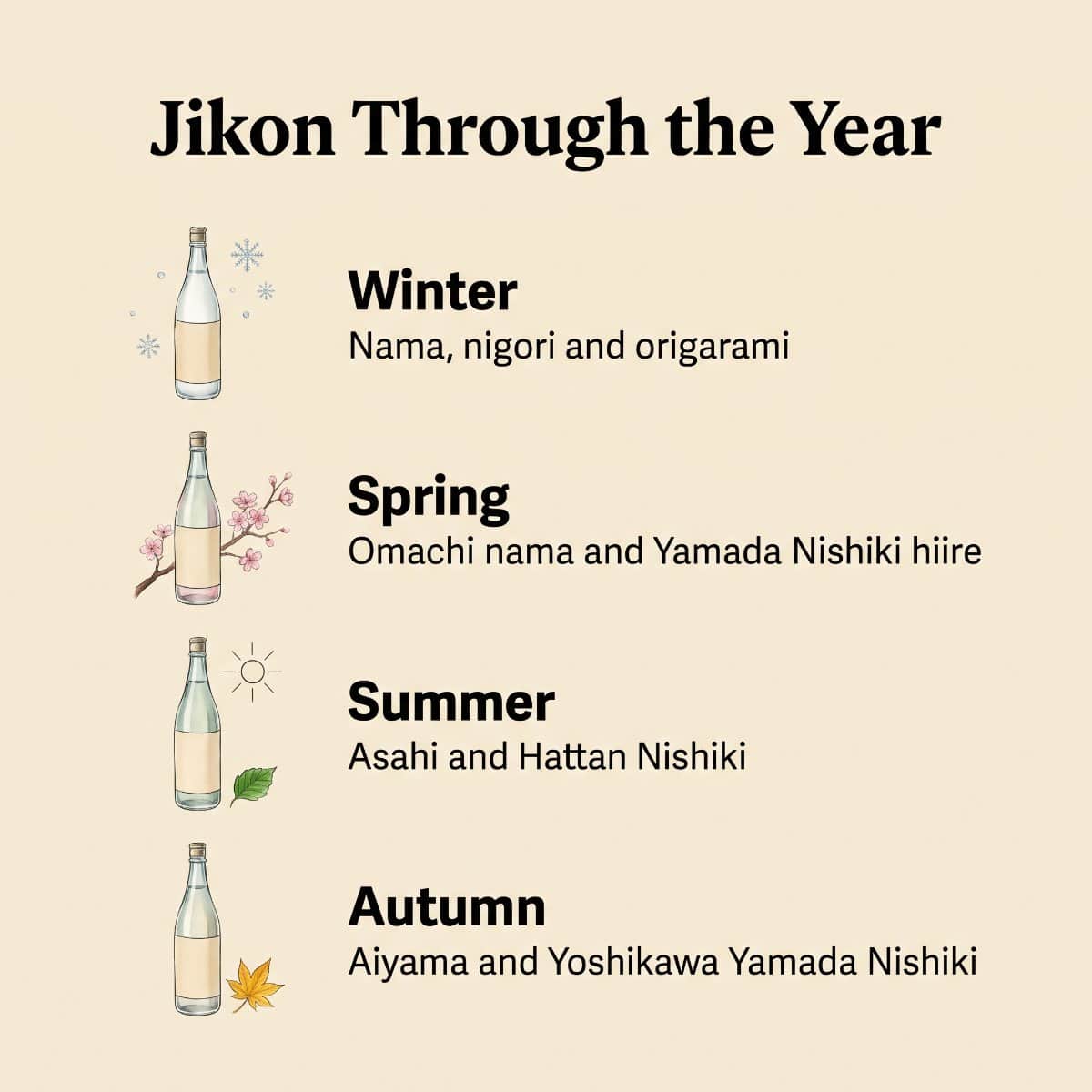
Kiyasho says it ships a different type of sake each month. That does not mean every bottle is always on sale. Instead, each one has a planned shipping month, as the table below shows.
| Month | Jikon bottles on the brewery’s list |
|---|---|
| January | Senbon Nishiki nama |
| February | Sake Mirai nama; Yamada Nishiki nama |
| March | Omachi nama |
| April | Yamada Nishiki hiire; Tokubetsu Junmai hiire (from April) |
| May | Omachi hiire |
| June | Junmai Daiginjo Nabari; Daiginjo Hakutsuru Nishiki; Hattan Nishiki hiire |
| July | Asahi hiire |
| August | Senbon Nishiki hiire; Kimoto Organic Yamada Nishiki |
| September | Yoshikawa Yamada Nishiki; Tojo Yamada Nishiki |
| October | Daiginjo Yanase; Aiyama hiire; Kimoto Akaiwa Omachi; Kimoto Akitsu Yamada Nishiki |
| November | Junmai Daiginjo Tokujo Omachi and Tokuto Omachi; Nigorizake nama |
| December | Hattan Nishiki nama; Tokubetsu Junmai nama (from December); Origarami nama |
Shipping months as listed on Kiyasho Shuzo’s official sake page, as of November 2026. A sparkling-style junmai daiginjo (kasseishu) has no fixed month. Plans can change by year, so check current listings before you buy.
Tokubetsu Junmai
The tokubetsu junmai is the most familiar Jikon for many drinkers. It comes as nama from December and as hiire from April. The brewery’s online list does not give its rice or polishing details, so read the back label of the bottle in hand.
The Yamada Nishiki Bottles
There are three ways to explore Yamada Nishiki here. First, the standard Yamada Nishiki bottle comes as nama in February and hiire in April. Then, in September, the Yoshikawa and Tojo bottles arrive together. Lining up all three is an easy, enjoyable way to think about where rice comes from.
Omachi, Aiyama and Sake Mirai
Omachi has the widest spread, from spring nama to autumn kimoto and November junmai daiginjo. Aiyama arrives in October as hiire. Sake Mirai, meanwhile, is a winter nama.
Junmai Daiginjo and Daiginjo
At the top end, the range includes the Tokujo Omachi and Tokuto Omachi junmai daiginjo, plus one named for Nabari. There are also two daiginjo, made with Hakutsuru Nishiki rice and under the Yanase name. These are special-occasion bottles, and they usually cost more.
Kimoto Bottles and Seasonal Releases
Interestingly, the current list also has three kimoto bottles under the Jikon name. Kimoto is a slow, traditional way of making the yeast starter, explained in our kimoto guide. Beyond these, the cloudy nigori and origarami nama bottles arrive in November and December.
What Does Jikon Sake Taste Like?
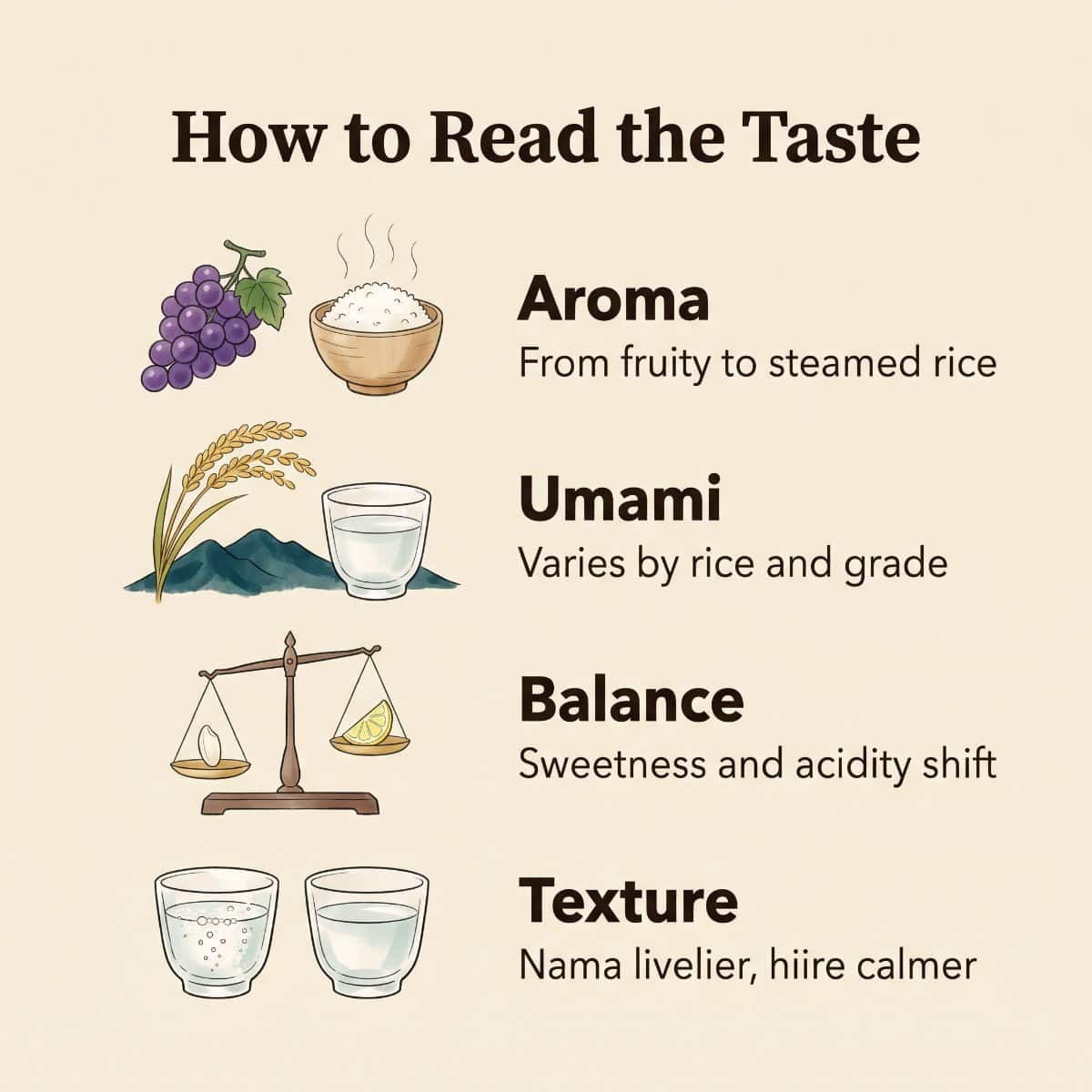
Honestly, there is no single answer. Jikon is a range of bottles, and the brewery does not publish tasting notes for most of them. Still, a few patterns help you know what to look for.
AromaSome bottles lean fruity, others closer to steamed rice
UmamiRice-driven depth that varies by variety and grade
BalanceSweetness and acidity shift from bottle to bottle
TextureNama tends to feel livelier; hiire often feels calmer
Aroma
Aroma depends heavily on grade and yeast. Higher-grade ginjo-style bottles often show fruit-like notes. Meanwhile, simpler or kimoto bottles may smell more of rice or grain. Try warming the glass slightly in your hand, then smell again.
Flavor and Umami
Umami in sake comes from the rice and from the work of koji. Its strength, however, changes with the variety, polishing and fermentation. So an Omachi bottle may feel quite different from a Yamada Nishiki bottle, even from the same brewery.
Sweetness and Acidity
Is Jikon sweet? Some bottles may seem sweet, while others finish drier. Acidity also matters, since it keeps sweetness from feeling heavy. For example, the brewery lists an acidity of 1.5 for its Tokujo Omachi. Those numbers give a hint, but your own palate decides.
Texture and Finish
Texture is where nama and hiire differ most. Nama sake often feels brighter and more energetic. By contrast, pasteurized bottles may feel rounder and more settled. Our guide on how to taste sake offers a simple method for noticing these differences.
Food Pairings and How to Choose a Bottle
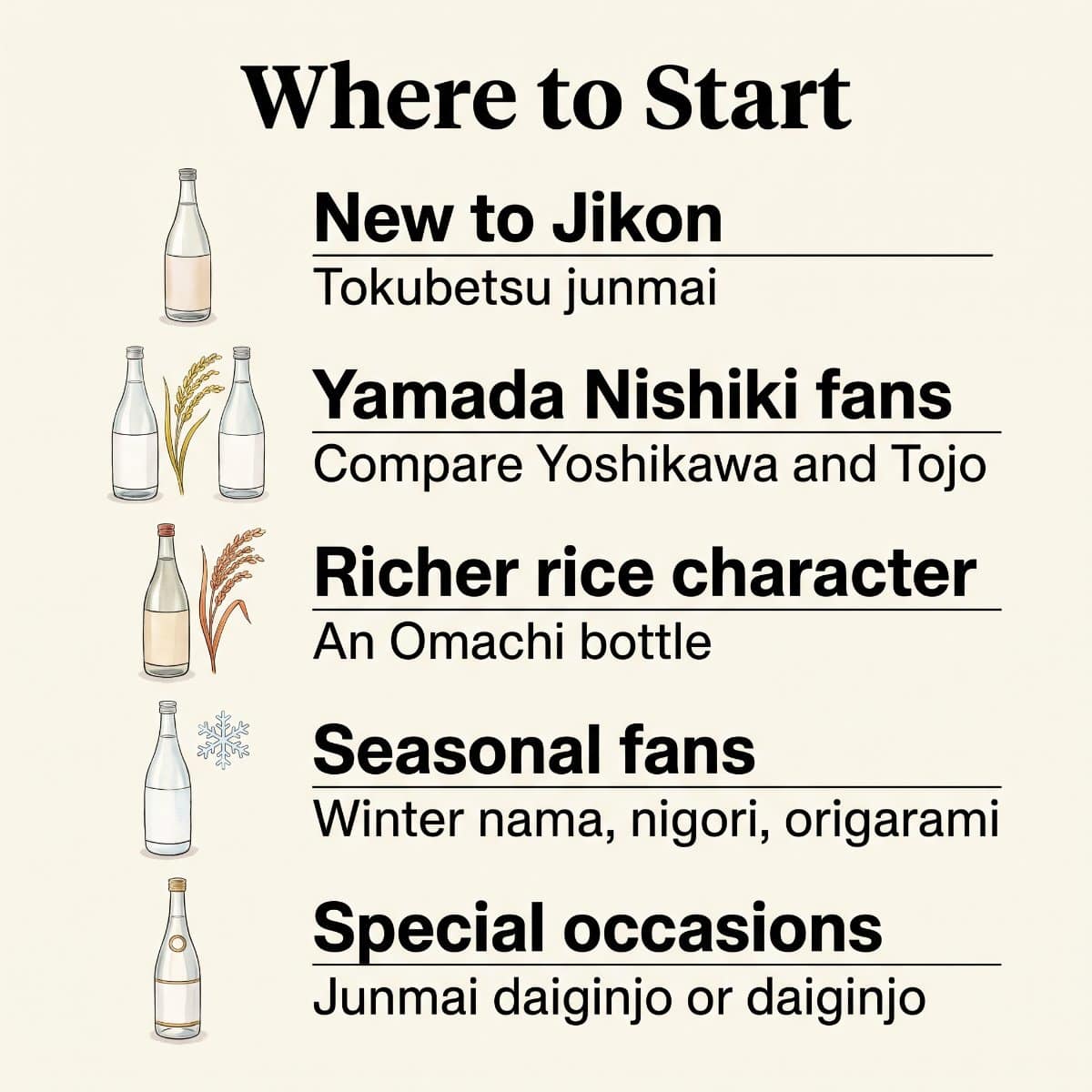
There is no fixed rule for pairing Jikon. Since each bottle differs, match the sake’s weight to the dish. Light, aromatic bottles generally suit delicate food, while fuller bottles can take richer flavors. For more ideas, see our guide to sake and food pairing.
Pairing Ideas by Dish
Sashimi and fresh seafood usually work with lighter, cleaner bottles. Grilled fish and savory dishes, by contrast, pair well with bottles that show more umami and acidity. Tempura can also match a crisp junmai ginjo-style sake. For rich meat, such as Mie’s own Matsusaka beef, a fuller Omachi or kimoto bottle may stand up better.
New to Jikon
Start with the Tokubetsu Junmai, the brand’s most familiar bottle.
Yamada Nishiki fans
Compare the standard, Yoshikawa and Tojo bottles.
Richer rice character
Try an Omachi bottle, nama in spring or hiire in May.
Seasonal fans
Look for winter nama, nigori and origarami releases.
Special occasions
Consider a junmai daiginjo or daiginjo, if you can find one.
Serving and Storing Jikon
Many drinkers serve Jikon chilled, especially nama bottles. Some pasteurized bottles, however, may open up a little closer to room temperature. A wine glass helps catch aroma, while a small sake cup feels more traditional. Keep nama sake in the fridge, and refrigerate any bottle after opening. Then follow the storage advice on the label. Our guides to sake glasses and storing sake go further.
Jikon and Takasago: Two Brands, One Brewery
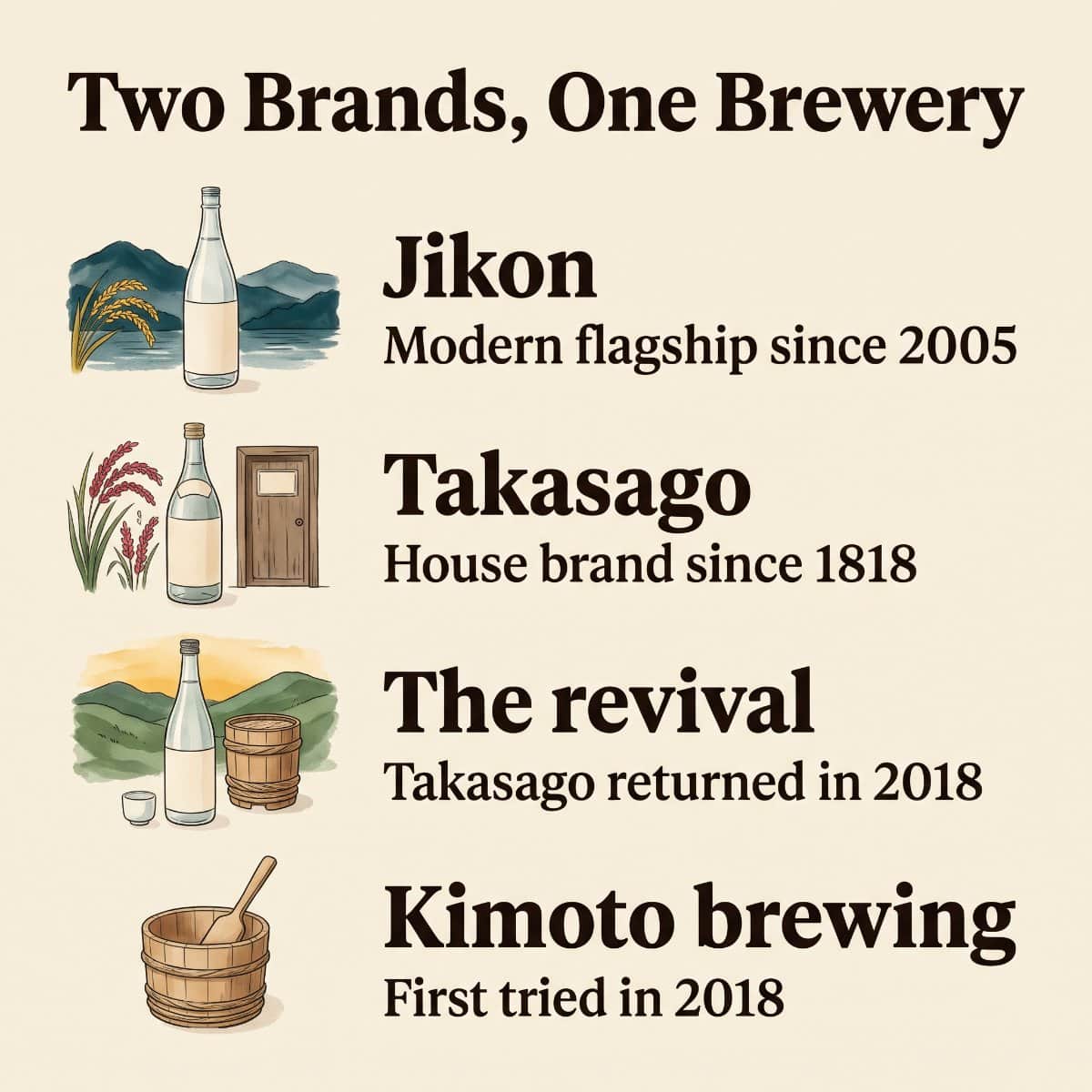
Kiyasho makes two brands, but they play different roles. Takasago is the old house label, dating to the brewery’s founding. Jikon, meanwhile, is the modern flagship built since 2005.
而今Jikon
Modern flagship released in 2005. A wide range of rice-specific and seasonal bottles, sold through specialty sake shops across Japan.
高砂Takasago
House brand since 1818, long sold in the Iga area. Revived in 2018 with the brewery’s first kimoto brewing. Today it includes Shokukaku junmai daiginjo bottles and a year-round futsushu.
The 2018 Revival
After focusing on Jikon from 2005, the brewery brought Takasago back in 2018, its 200th anniversary year. It also used kimoto brewing for the first time in the company’s history. That makes Takasago more than a nostalgic label. It became the place where the brewery first explored a much older method.
Why Keep Both?
Two brands let one brewery hold two ideas at once. Jikon looks at the present, as its name says. Takasago, on the other hand, keeps a 200-year-old name alive. Together they show a brewery that respects its past without being trapped by it.
The Kajimachi Kura: A New Facility in 2026
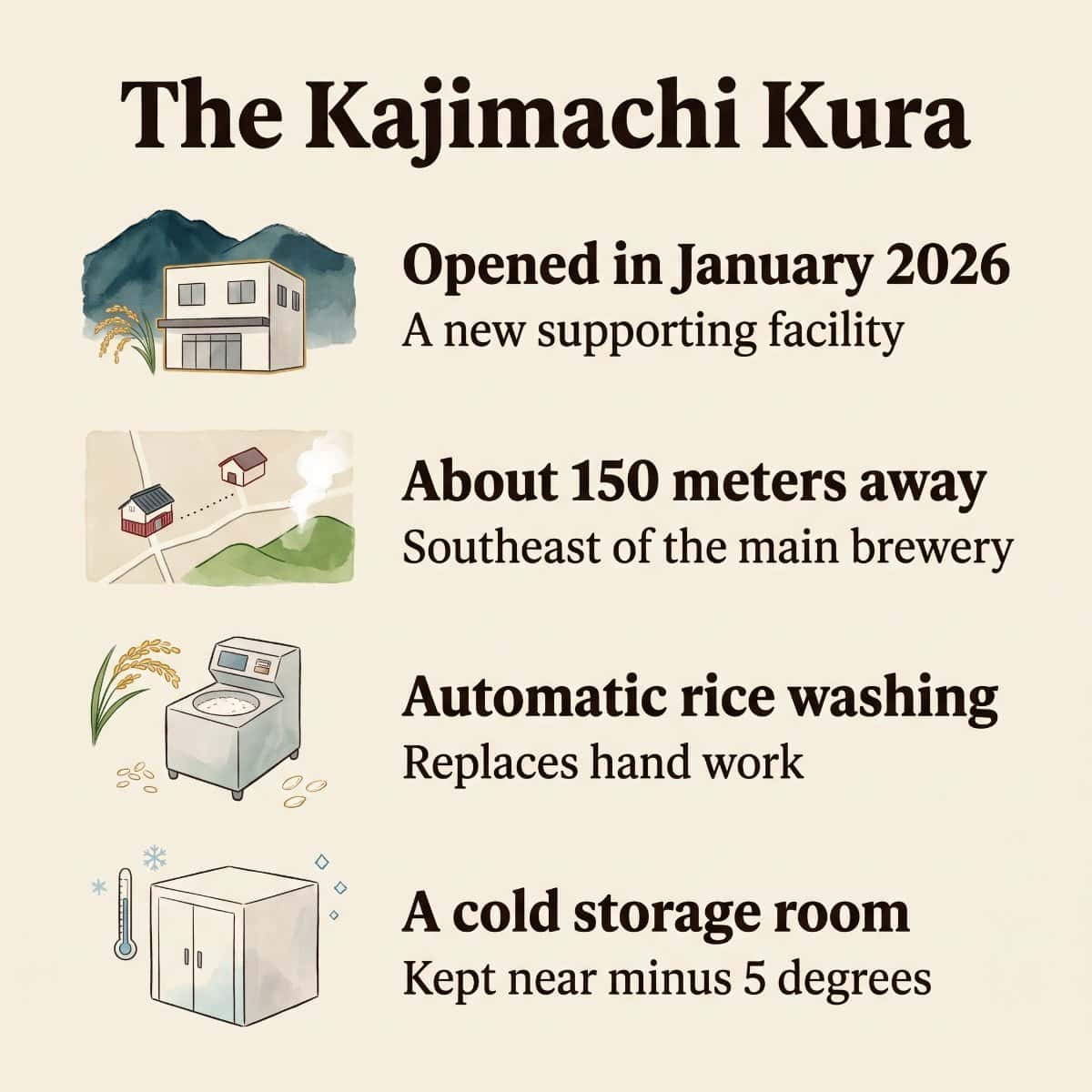
In January 2026, Kiyasho opened a new facility called the Kajimachi kura. The local news outlet Iga Town Information YOU reported that it began operating on January 5. A completion ceremony followed on January 24. The site stands about 150 meters southeast of the main Honmachi brewery.
What the New Building Does
Overall, the two-story steel building has about 956 square meters of floor space. According to the report, it houses an automatic rice washing and soaking machine. Before, four people did that work by hand. It also has a cold storage room of about 330 square meters, kept near minus 5 degrees Celsius. A drying room and a store for labels and packing materials complete the plan.
Supporting, Not Replacing
The report links the project to easing staff workloads, including transport between the main brewery and a separate warehouse. It does not describe the building as a main brewing hall. Nor does it give any figure for higher output. So the safest reading is that Kajimachi supports the historic brewery, which remains the heart of production. The report also says it does not accept tours.
Why Is Jikon So Hard to Find?
Jikon can be hard to buy, and several reasons overlap. First, many bottles appear only once or twice a year. Second, demand among sake fans is strong. Third, the brewery sells through specialty sake shops rather than everywhere. Put together, a single bottle can sell out quickly.
Retail Price vs. Resale Price
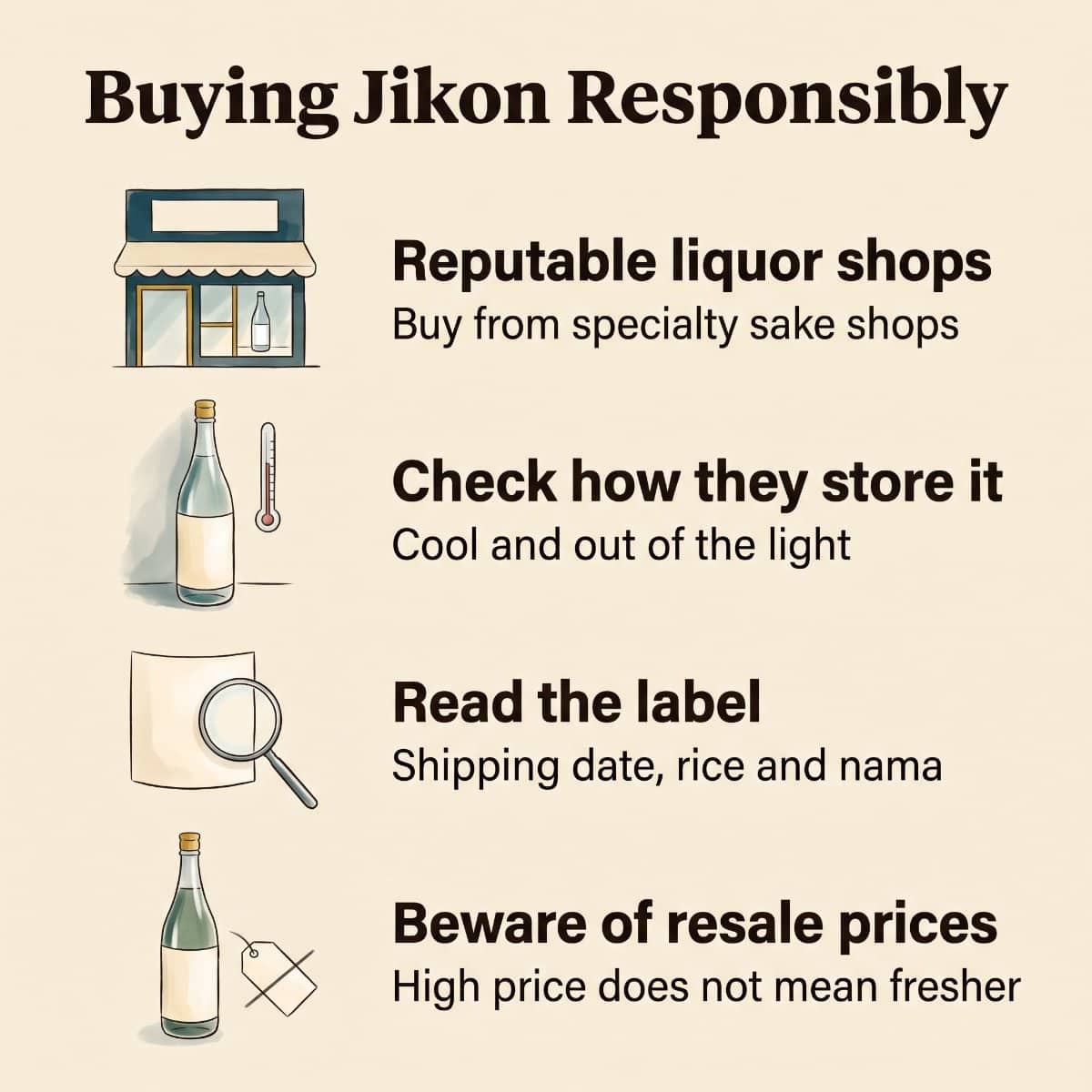
Prices vary widely. Selling at a shop’s normal price is one thing. However, a resale listing at several times that price is quite another. A high price does not mean better quality or fresher sake. In fact, poorly stored nama sake may taste worse than expected.
How to Buy Jikon Responsibly
Buy from reputable liquor shops, and look at how they store their sake. Check the label for the shipping date, the rice and whether it is nama. Be wary of sellers who cannot explain where a bottle came from. Outside Japan, availability depends on local importers and shops.
Visiting Kiyasho Shuzo in Nabari
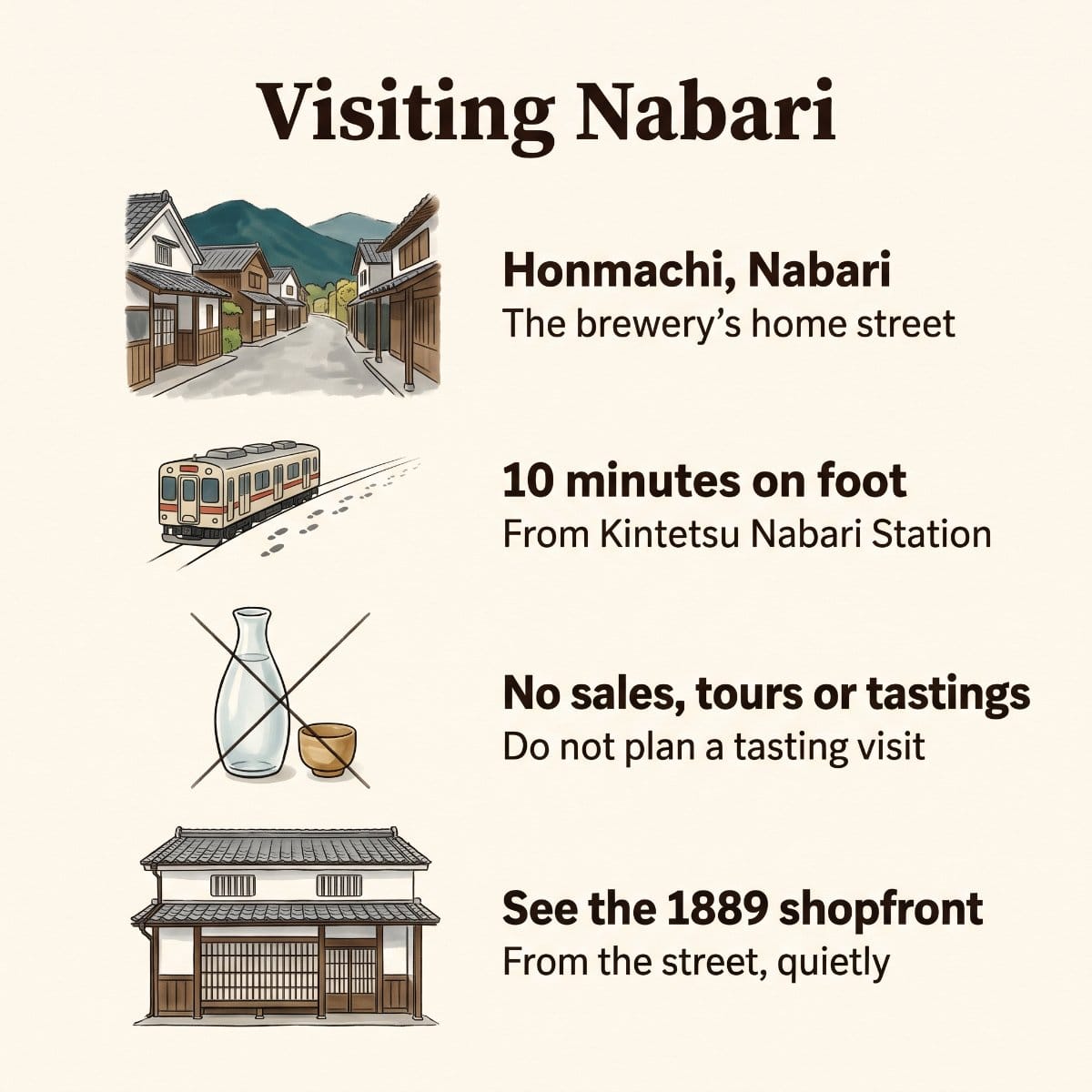
Kiyasho stands at Honmachi 314-1 in Nabari, about a 10-minute walk from Kintetsu Nabari Station. However, plan carefully before you go.
Before you visit
Kiyasho Shuzo states that it does not offer retail sales, brewery tours or tastings at its premises, so it can focus on brewing. Do not plan a tasting visit unless the brewery announces a change.
What You Can Still See
From the street, you can still see the registered 1889 shopfront on the old Hatsuse Kaido route. Please do this quietly, and respect a working business. It is a lovely detail on a walk through Nabari’s older streets.
Exploring Nabari and Iga
The wider Iga region rewards a slower trip. Local sake shops, rice fields and old roads give context to the bottles. Mie Prefecture also has plenty more to eat, such as Ise udon on the way to Ise Grand Shrine.
Common Misconceptions About Jikon
A few ideas about Jikon come up again and again. Here is how they hold up.
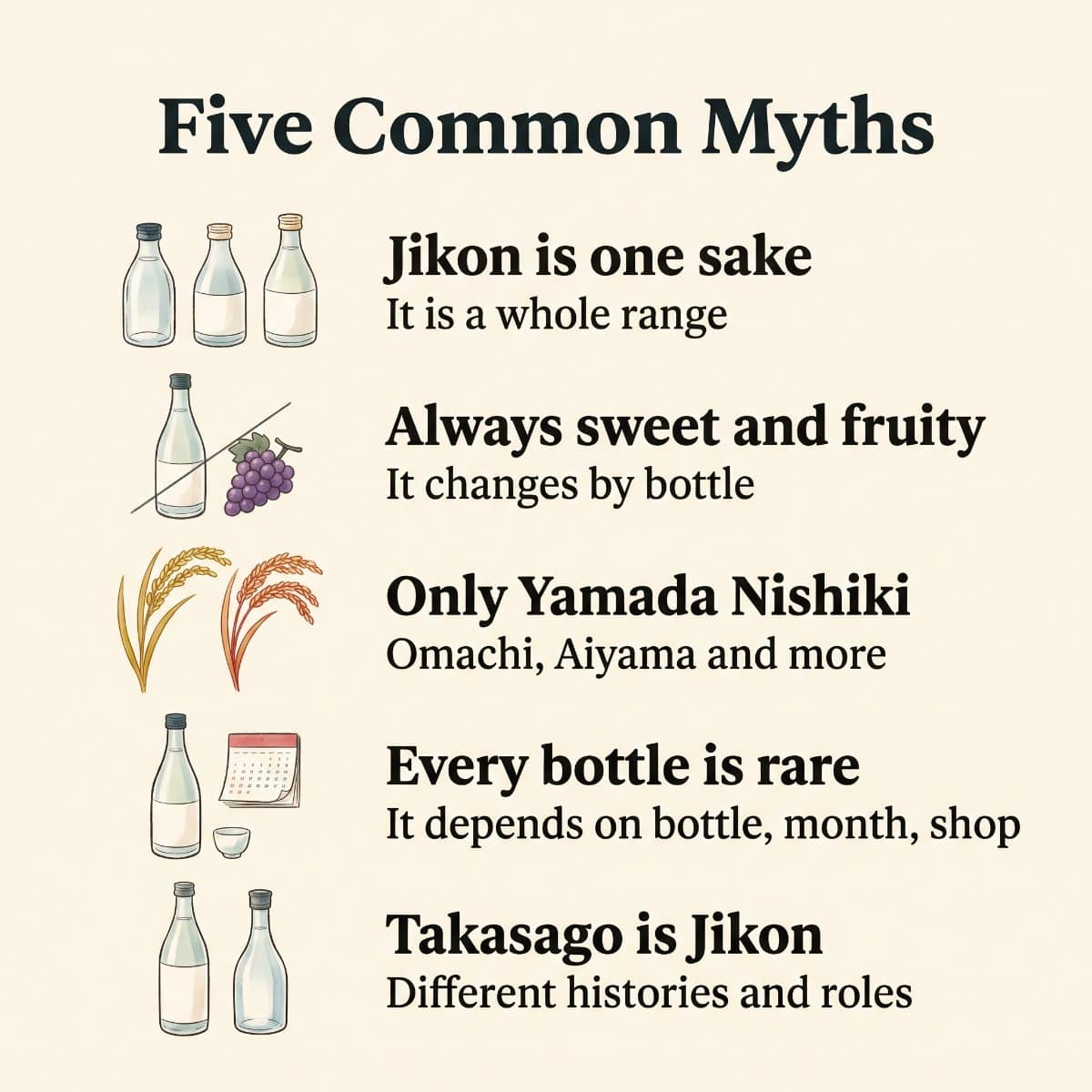
“Jikon is one type of sake.”
It is a range, with many grades, rice varieties and seasonal releases.
“Jikon is always sweet and fruity.”
Flavor changes by bottle, rice and handling, so there is no single profile.
“It is made only with Yamada Nishiki.”
Yamada Nishiki is central, but Omachi, Aiyama, Sake Mirai and others matter too.
“Every bottle is rare.”
Availability depends on the bottle, the month and the shop.
“Takasago and Jikon are the same.”
Both come from Kiyasho, but they have different histories and roles.
Final Thoughts: The Meaning of Jikon Today
Jikon is easy to talk about as a hard-to-find bottle. Yet that misses the more interesting story. Behind the name stand three things worth remembering.
1. A long historyKiyasho Shuzo has brewed in Nabari since 1818, on the old Hatsuse Kaido.
2. A philosophy of the presentThe brewery explains 而今 as living fully now, without being bound by past or future.
3. A study in riceBottle by bottle, Jikon explores how different sake rice varieties behave.
In the end, Jikon’s appeal is not only about scarcity. It reflects a historic brewery choosing, each season, to make the best sake it can right now. If you find a bottle, notice the rice and the month on the label. Then enjoy it for what it is today.
Frequently Asked Questions About Jikon Sake
About the Brand
- What is Jikon sake?
-
Jikon (而今) is a Japanese sake brand made by Kiyasho Shuzo in Nabari, Mie Prefecture. It covers a range of rice-specific and seasonal bottles, not one single sake.
- When was Jikon created?
-
The sixth-generation head began brewing as toji in 2004, according to Nippon.com. The brewery itself gives 2005 as the year it released Jikon.
- What does Jikon mean?
-
The brewery describes 而今 as a Zen phrase linked to Dogen. It explains the idea as living the present fully, without being bound by the past or the future.
- Who makes Jikon?
-
Kiyasho Shuzo, a brewery founded in 1818. Its sixth-generation head, Tadayoshi Onishi (大西唯克), created the brand.
- What is the difference between Jikon and Takasago?
-
Both come from Kiyasho Shuzo. Takasago is the older house brand, revived in 2018 with kimoto brewing. Jikon is the modern flagship released in 2005.
Taste and Buying
- What does Jikon taste like?
-
It depends on the bottle. Rice variety, grade and whether the sake is nama or pasteurized all change the aroma, sweetness and texture.
- What rice varieties does Jikon use?
-
Mainly Iga-grown Yamada Nishiki, plus Omachi, Aiyama, Sake Mirai, Senbon Nishiki, Hattan Nishiki, Gohyakumangoku and Asahi, according to the brewery’s list.
- Should Jikon be served cold?
-
Chilled is a common choice, especially for nama sake. Some pasteurized bottles can also be enjoyed a little warmer, so follow the label and your own taste.
- Why is Jikon difficult to buy?
-
Many bottles ship only in certain months, demand is strong, and the brewery sells through selected specialty shops. Outside Japan, availability depends on local importers.
- Can you visit the Jikon brewery?
-
Not for tastings or tours. Kiyasho Shuzo states that it does not offer retail sales, brewery tours or tastings on site.
References
Show all 13 references
- Kiyasho Shuzo – About Kiyasho Shuzo: Spirit, History and Tradition, Climate and Sake Brewing (Accessed November 2026)
- Kiyasho Shuzo – Sake: Jikon and Takasago Product List (Accessed November 2026)
- Kiyasho Shuzo – Company Profile (Accessed November 2026)
- Agency for Cultural Affairs, Cultural Heritage Online – Kiyasho Shuzo Shop and Main Residence, Registered Tangible Cultural Property (registered 2013) (Accessed November 2026)
- National Tax Agency – Overview of the Labeling Standards for Manufacturing Process and Quality of Sake (Accessed November 2026)
- Mie Prefecture Agricultural Research Institute – Iga Agricultural Research Office: Regional Overview (2021) (Accessed November 2026)
- Hyogo Prefecture, Kita-Harima Prefectural Office – Director’s Message, February 2025: Yamada Nishiki and Japan Agricultural Heritage (2025) (Accessed November 2026)
- JA Zen-Noh Okayama – News Release: The 17th Omachi Summit (2026) (Accessed November 2026)
- Society for Biotechnology, Japan – Tamada, Y. (2020). Characteristics of Sake Rice and Its Varietal Traits. Seibutsu-kogaku Kaishi, 98(1), 32 (Accessed November 2026)
- Hiroshima Prefecture – Katsuba, Z., Tsuchiya, T., and Tamaki, M. (2002). Method of Fertilization on the Basis of Leaf Color at Panicle Formation Stage of a Brewer’s Rice Variety ‘Senbonnishiki’. Bulletin of the Hiroshima Prefectural Agricultural Technology Center, 72, 1–10 (Accessed November 2026)
- Iga Town Information YOU – New Brewery Completed, “Continuing to Make Sake That Moves People”: Kiyasho Shuzo, Maker of Jikon, Nabari (2026) (Accessed November 2026)
- Nippon.com – “Nihonshu” Now: How the Maker of Jikon Turned Mold into Gold (Accessed November 2026)
- Serai (Shogakukan) – Ten Sake Rice Varieties That Shape the Basic Flavor of Sake (2017) (Accessed November 2026)
Related Articles
 Sake Brands
Kaze no Mori Sake: Nara’s Innovative Approach to Fresh, Unfiltered Nihonshu
Surveyed: November 2026
 Sake Rice
 (酒米): The Foundation of Premium Sake
Surveyed: November 2026
 Sake Brewing
Kimoto (生酛): The Traditional Yeast Starter
Surveyed: November 2026
 Mie
Tekonezushi (てこねずし)
Surveyed: November 2026





Comments