




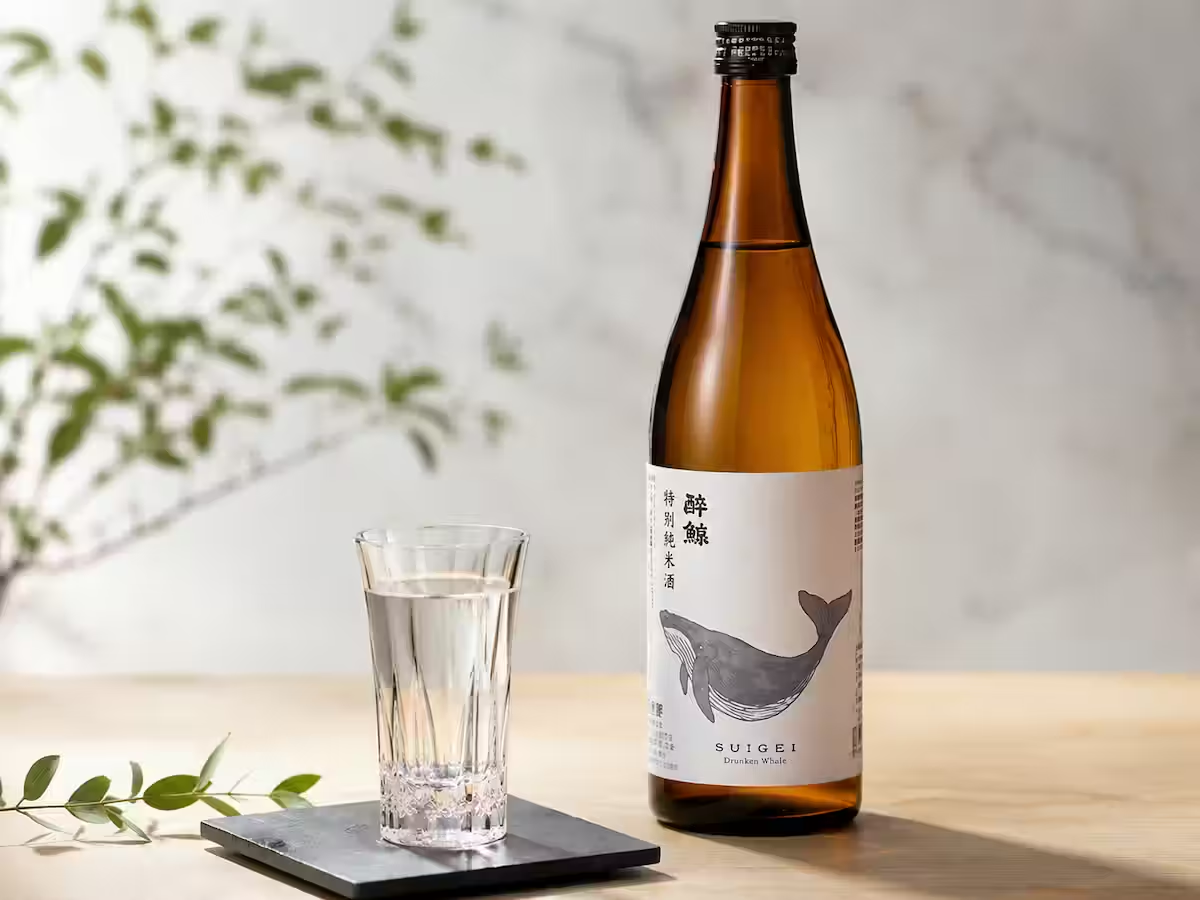
Tokubetsu junmai, also called special junmai, sits comfortably between everyday junmai and aromatic ginjo sake. It keeps the rice depth of junmai while offering a cleaner, more polished finish. That balance makes it a practical premium sake for meals.
In simple terms, tokubetsu junmai is pure rice sake made from rice, rice koji, and water. It has no added brewer’s alcohol. The “special” part usually comes from a 60% polishing ratio or a clearly stated special brewing method.
For many drinkers, this style feels quietly useful. It has rich umami, smooth texture, and a clean finish. More importantly, it supports food instead of stealing attention from it.
Basic Information About Tokubetsu Junmai
So, what is special junmai sake? It is a Japanese sake classification within the premium sake system. The Japanese name “tokubetsu junmai” means special pure rice sake.
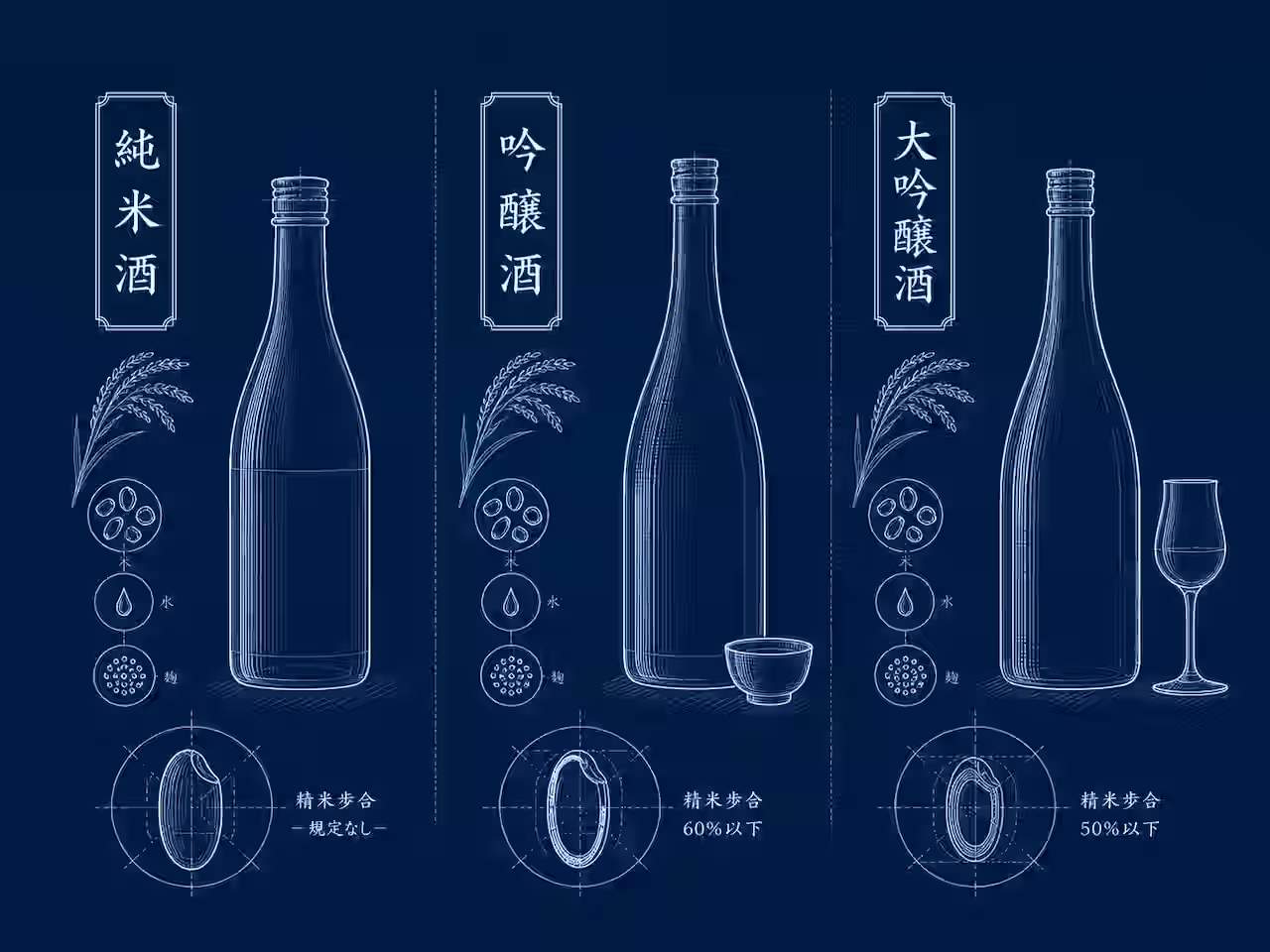
The special junmai definition has two main paths. First, brewers may polish rice to 60% or less. Second, they may use a special brewing method and explain it on the label.
A 60% polishing ratio means 40% of the rice grain has been removed. This can create a clearer and smoother sake flavor. However, the sake still keeps the satisfying rice umami of junmai.
This style is not as perfume-like as ginjo sake. Instead, it often feels savory, balanced, and grounded. That makes it a refined sake for meals.
If you want the basics first, see the sake guide. For category comparison, see the types of Japanese sake guide.
Tokubetsu Junmai Compared With Other Sake Types
| Type | Ingredients | Polishing Rule | Drinking Image |
|---|---|---|---|
| Junmai | Rice, rice koji, water | No fixed minimum | Rich, earthy, rice-forward |
| Tokubetsu Junmai | Rice, rice koji, water | 60% or special method | Clean, savory, food-friendly |
| Junmai Ginjo | Rice, rice koji, water | 60% or less | Fruity, fragrant, smoother |
| Honjozo | Rice, rice koji, water, alcohol | 70% or less | Light, dry, crisp |
| Futsushu | Flexible | No premium rule | Everyday table sake |
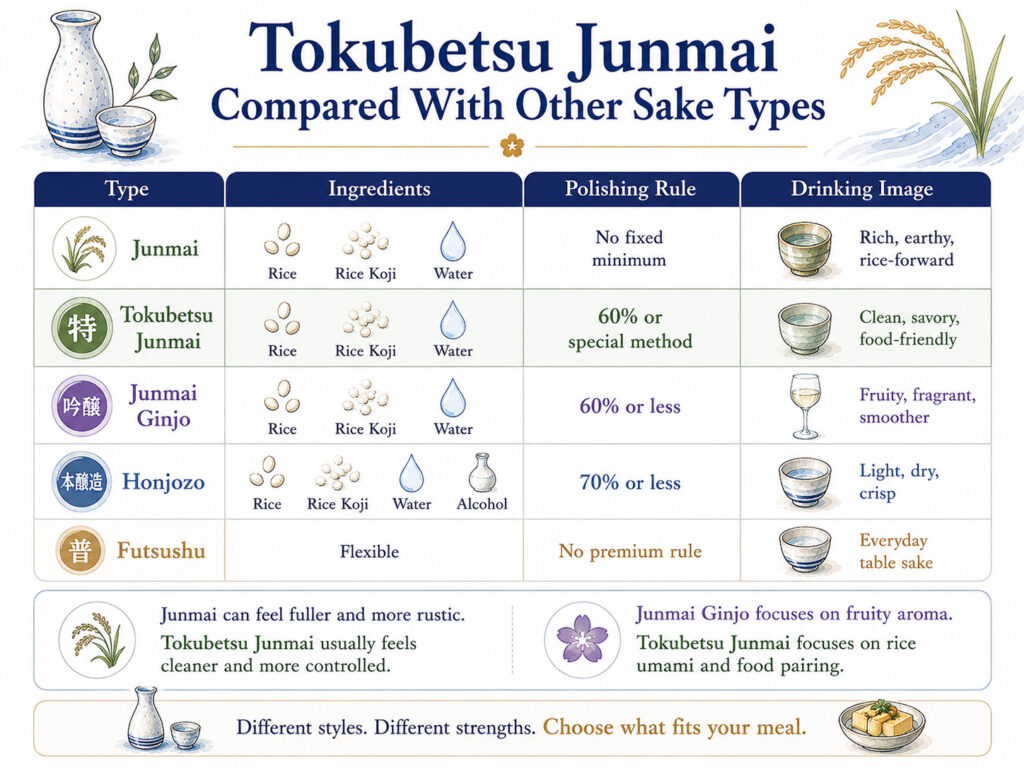
This table shows the difference between junmai and special junmai. Junmai can feel fuller and more rustic. Tokubetsu junmai usually feels cleaner and more controlled.
Special junmai vs junmai ginjo can confuse beginners. Both may use rice polished to 60% or less. However, junmai ginjo usually focuses on fruity aroma. Tokubetsu junmai often focuses on rice umami and food pairing.
For the pure rice category, see the junmai sake guide.
When to Choose Special Junmai Instead of Ginjo
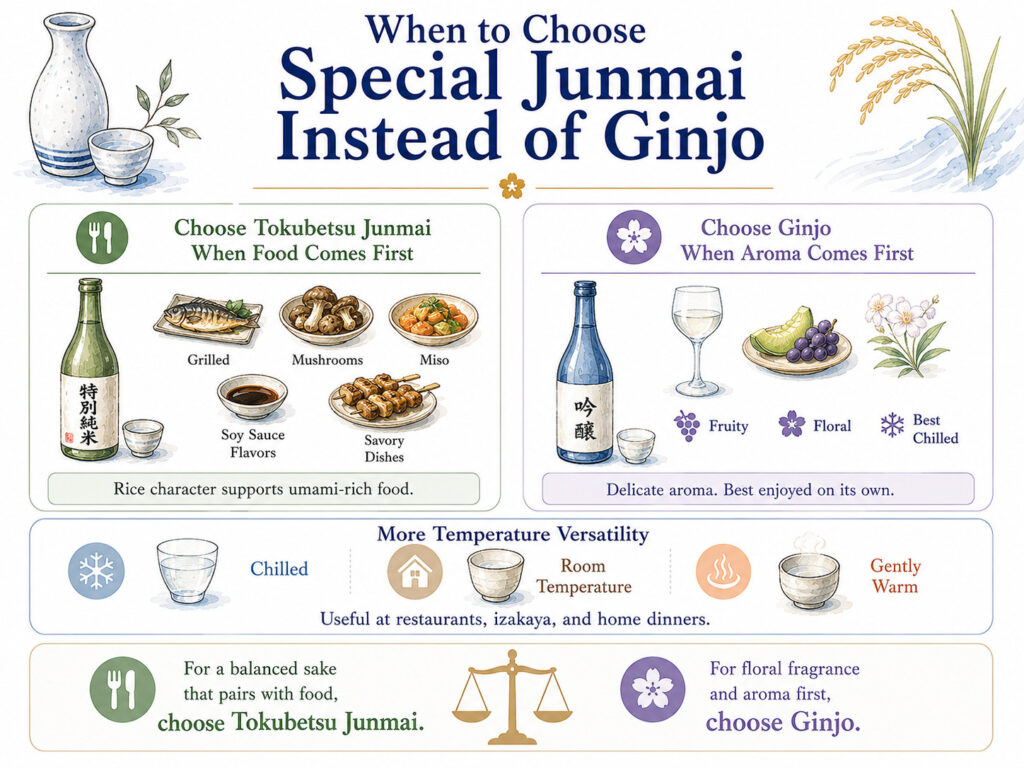
Choose tokubetsu junmai when food comes first. It works well with savory dishes, soy sauce flavors, grilled foods, mushrooms, and miso-based meals. Its rice character supports umami-rich food instead of competing with it.
Ginjo sake is better when aroma comes first. It often feels fruity, delicate, and best served chilled. That can be lovely, but it may not suit every meal.
Tokubetsu junmai has another advantage. It can often taste good chilled, at room temperature, or gently warm. This flexibility makes it useful at restaurants, izakaya, and home dinners.
If you want floral fragrance, choose ginjo. If you want a balanced sake style for food, tokubetsu junmai may be better. That practical role is its quiet strength.
Taste, Aroma, and Texture
Special junmai taste and aroma are usually calm and balanced. You may notice steamed rice, nuts, mushrooms, herbs, mild fruit, or gentle grain sweetness. The aroma is present, but it rarely becomes loud.
The texture often feels round and smooth. Some bottles are dry and crisp. Others show deeper rice umami with a soft finish.
This is sake with rich rice umami, not just aroma. It can feel savory, lightly earthy, and gently sweet. Because of that, it fits many Japanese dishes naturally.
Personally, I like this style because it does not try too hard. It has enough depth to feel serious. Still, it stays relaxed enough for dinner.
How Special Junmai Is Made
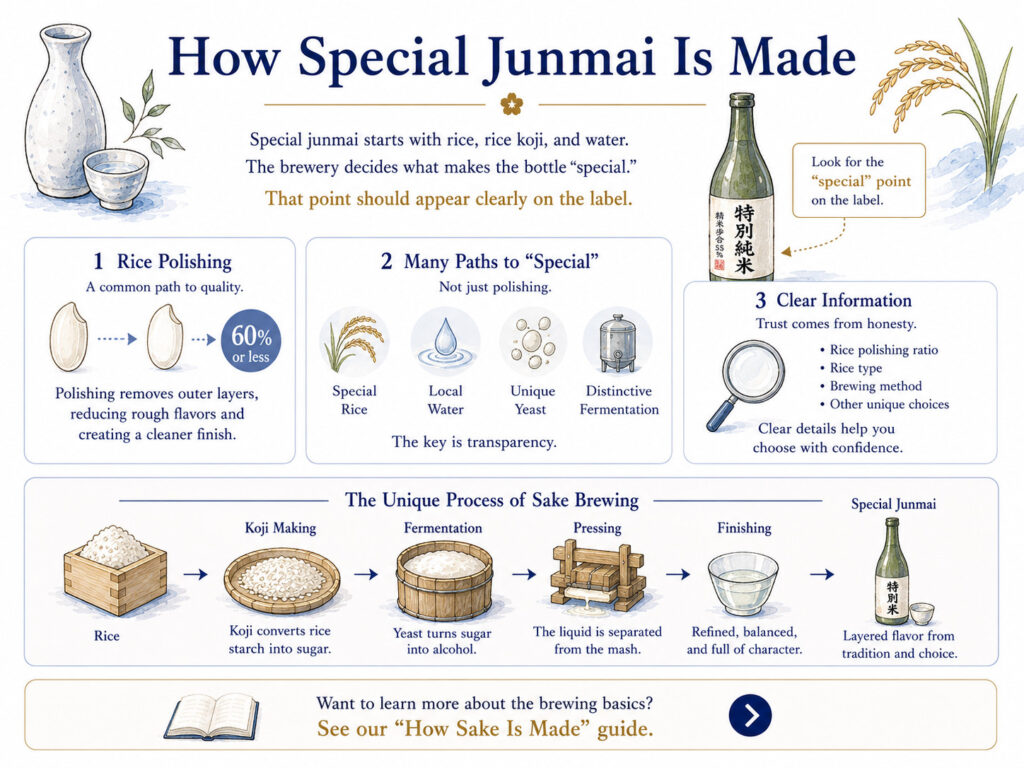
Special junmai starts with rice, rice koji, and water. Then the brewery decides what makes the bottle “special.” That point should appear clearly on the label.
In many cases, rice polishing creates the difference. Brewers polish rice to 60% or less, removing the outer layers. This helps reduce rough flavors and create a cleaner finish.
However, polishing is not the only route. A brewery may use special rice, local water, unusual yeast, or a distinctive fermentation method. The important point is transparency.
Sake brewing itself has a unique structure. Koji changes rice starch into sugar, while fermentation creates alcohol. This gives Japanese rice wine its layered flavor.
For more brewing background, see the how sake is made guide.
Why Tokubetsu Junmai Works Well Warm
Tokubetsu junmai often works well warm because its aroma is stable. It does not depend only on delicate fruit notes. Instead, rice umami, acidity, and texture carry the flavor.
When warmed gently, the sake can feel softer and rounder. The umami expands, and the finish becomes more comforting. This makes it excellent during colder seasons.
Warm sake also fits Japanese dining culture. It feels natural with grilled fish, oden, mushrooms, tofu, and simmered dishes. The warmth supports the food’s savory depth.
Still, not every bottle should be heated strongly. Start gently warm, then adjust. A good bottle should open up, not become flat.
Tokubetsu Junmai and Japanese Dining Culture
Tokubetsu junmai belongs naturally at the table. It is premium, but not too formal. That balance makes it common in izakaya, home meals, and restaurants.
It is not an attention-seeking sake. Instead, it plays a supporting role. That may sound modest, but it is valuable when food is the center.
This style also suits people who enjoy everyday Japanese flavors. Soy sauce, miso, grilled fish, mushrooms, and fermented foods all work well. The sake’s rice character links these flavors together.
In that sense, tokubetsu junmai feels very Japanese. It values balance over showiness. It gives depth without making the meal feel heavy.
Food Pairing With Special Junmai
Tokubetsu junmai pairs especially well with umami-rich Japanese dishes. Its rice character supports savory flavors instead of competing with them. That makes it one of the best premium Japanese sake styles for meals.
Good pairings include:
- grilled fish
- yakitori with salt
- tempura
- mushrooms
- tofu dishes
- soy sauce-based dishes
- miso-marinated fish
- simmered vegetables
- fermented foods
- pork shabu-shabu
- agedashi tofu
- mild cheese
It also works outside Japanese food. Try it with roast chicken, grilled pork, mushroom pasta, or lightly aged cheese. The clean finish helps refresh the palate.
Very sweet desserts are less ideal. Extremely spicy dishes may also hide the flavor. However, most savory meals work well.
Best Special Junmai for Beginners
The best special junmai for beginners should feel balanced, smooth, and easy with food. Beginners who enjoy savory food often find tokubetsu junmai easier to understand than highly aromatic ginjo sake.
If you prefer clean flavors, start slightly chilled. If you like softer and rounder drinks, try it gently warm. Food-first drinking is the easiest way to understand this category.
Look for labels that mention 60% polishing, smooth texture, dry finish, or food pairing. A dry or medium-dry bottle is usually safe. Richer bottles may suit grilled or simmered dishes.
Hakkaisan Tokubetsu Junmai is a good example of a clean and food-friendly style. It uses rice polished to 60% and has a balanced profile. Takara Sho Chiku Bai Tokubetsu Junmai is another approachable option in some markets.
Do not judge only by price. Instead, check the label and serving suggestions. Tokubetsu junmai is often about value, balance, and versatility.
History and Today
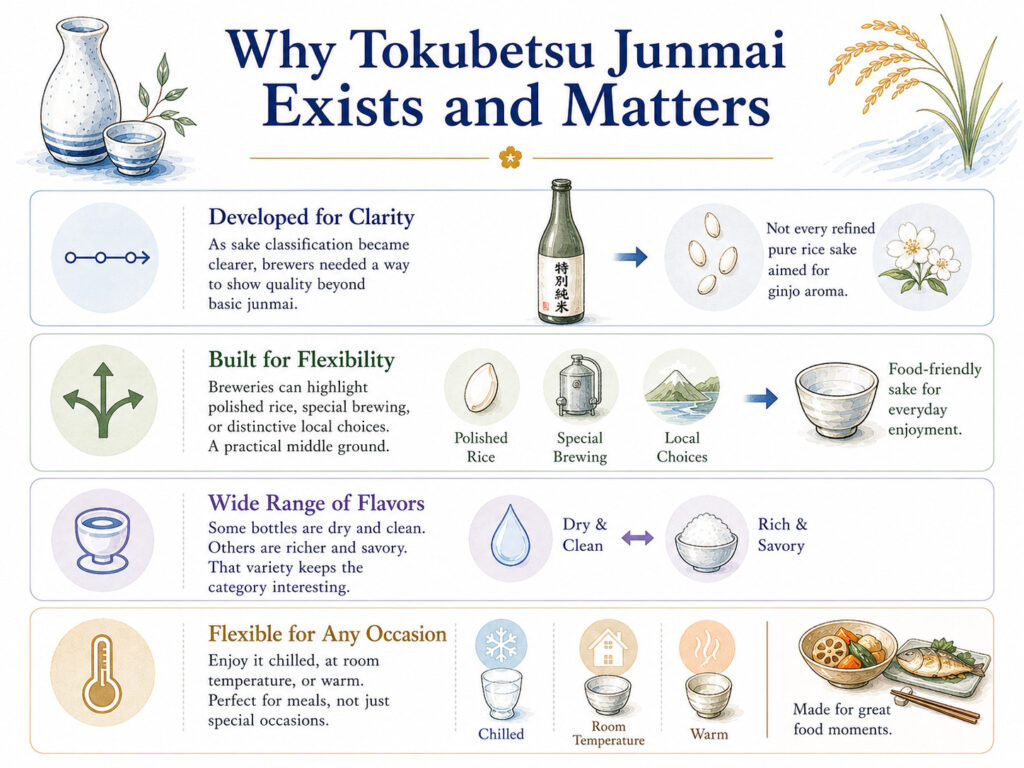
Tokubetsu junmai developed as Japan’s sake classification became clearer. Brewers needed a way to show quality beyond basic junmai. At the same time, not every refined pure rice sake aimed for ginjo aroma.
This category gave breweries flexibility. They could highlight polished rice, special brewing, or distinctive local choices. As a result, tokubetsu junmai became a practical middle ground.
Today, many breweries use this label for food-friendly sake. Some bottles feel dry and clean. Others taste richer and more savory. That range keeps the category interesting.
Modern drinkers often appreciate its flexibility. It works chilled, room temperature, or warm. Therefore, it remains popular for meals rather than only special occasions.
Final Thoughts
Tokubetsu junmai is a step above everyday junmai, yet it stays grounded. It offers pure rice sake with depth, clean finish, and classic Japanese craftsmanship.
The style does not chase perfume or luxury. Instead, it focuses on balance, umami, and meals. That makes it one of the most practical premium sake choices.
If you want a clear and smooth sake style for food, special junmai is worth trying. It may not be flashy, but it often becomes the bottle you return to.
Tokubetsu Junmai FAQ
What is special junmai?
It represents a premium Japanese sake. Brewers craft it using only rice, rice koji, and pure water, adding absolutely no distilled alcohol.
What does tokubetsu junmai mean?
The first word means “special,” while the second means “pure rice sake.” Together, the name indicates a special pure rice beverage.
Is tokubetsu junmai considered premium sake?
Yes, experts classify it strictly within Japan’s premium rice wine categories.
What makes special junmai special?
Brewers often polish the rice down to 60 percent or less. They also frequently apply highly specialized, traditional brewing methods to create a unique flavor.
Can tokubetsu junmai be served warm?
Yes, you can heat it gently. The warm temperature enhances the rich rice umami flavor and softens the overall texture beautifully.
Is tokubetsu junmai dry?
Breweries produce both sweet and dry styles. Many bottles deliver a medium-dry taste, though some makers craft much richer profiles.
Why do breweries use the tokubetsu label?
Brewmasters apply this specific label to highlight a unique feature, such as exceptional polishing rates, premium rice selection, or unique fermentation techniques.
Is special junmai the same as junmai ginjo?
No. The ginjo style focuses heavily on a fruity aroma, while this special category prioritizes a perfect balance that complements hearty meals.
Is special junmai good for beginners?
Yes, newcomers enjoy it immensely. Its balanced flavor and food-friendly nature create an incredibly easy drinking experience.
Where does Tokubetsu Junmai come from?
Breweries across Japan produce this specific category to showcase their local ingredients and unique regional techniques.
Where can I drink Tokubetsu Junmai in Japan?
You will find these bottles easily at authentic izakaya pubs and upscale restaurants nationwide. Local supermarkets also stock them extensively.
How much does Tokubetsu Junmai cost?
A standard 720ml bottle typically costs between 1,200 and 2,500 yen. Prices vary depending on the specific brewery and the quality of the local rice.
Is Tokubetsu Junmai vegetarian or vegan friendly?
This traditional beverage contains absolutely no animal products. Vegans and vegetarians can safely drink this 100% plant-based rice wine anywhere.
Can I make Tokubetsu Junmai at home?
You cannot legally brew this alcoholic beverage at home in Japan. However, liquor stores sell these beautiful bottles everywhere for you to enjoy effortlessly.
Is Tokubetsu Junmai popular outside Japan?
It enjoys massive popularity outside Japan. Global sake enthusiasts eagerly pair these versatile, food-friendly bottles with various international cuisines.
References
- Japan Sake and Shochu Makers Association, “Sake Brewing Processes and Flavor”, checked in 2026, sake classification uses rice polishing ratio and production standards.
- Sake Times, “SAKE 101: What is ‘Tokubetsu’ Anyway?”, checked in 2026, tokubetsu junmai uses rice and koji with 60% polishing or a special brewing method.
- Sake Glossary, “Tokutei Meishō-shu”, checked in 2026, tokubetsu junmai requires 60% or less polishing or a special production method shown on the label.
- Hakkaisan, “Hakkaisan Tokubetsu Junmai”, checked in 2026, rice polishing ratio 60%, alcohol 15.5%, and food-friendly profile.
- Takara Sake USA, “Sho Chiku Bai Tokubetsu Junmai”, checked in 2026, ABV 15.0%, rice polishing ratio 60%, and Calrose rice.
- Sake, checked in 2026, related internal article for Japanese sake basics.
- Types of Japanese Sake, checked in 2026, related internal article for sake classification.




Comments