


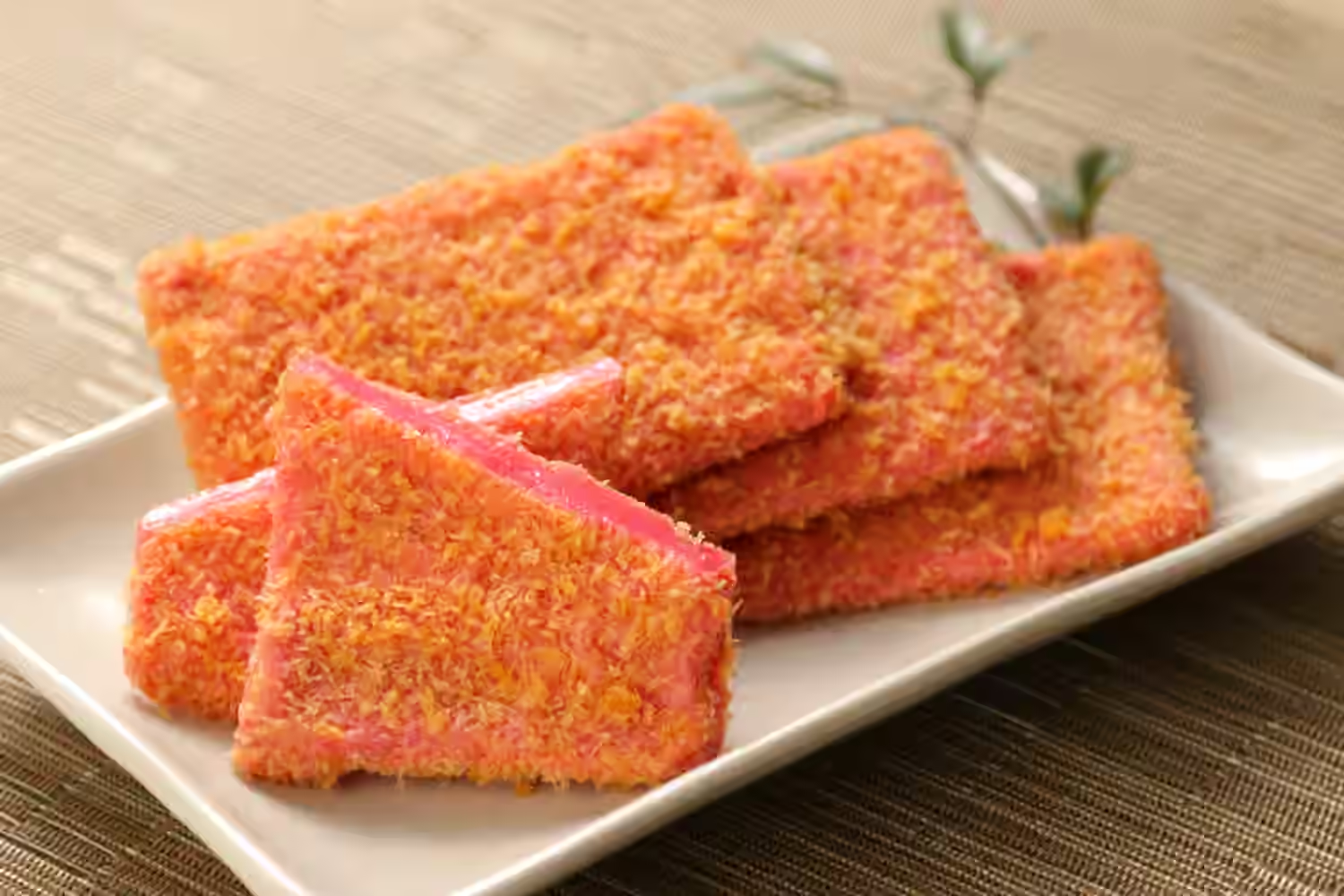


From the outside, akaten looks like a ham cutlet from a Japanese deli case. It is golden, rectangular and coated in crunchy panko. Cut it open, however, and you find a bright pink-red center of springy surimi, or seasoned fish paste, followed by a gentle chili kick.
That contrast is the point. Akaten (赤てん) is a specialty of Hamada, a fishing city on Shimane’s Sea of Japan coast. People still debate its exact origin, but the main stories all link it to postwar efforts to make an affordable alternative to ham cutlet.
What Is Akaten?
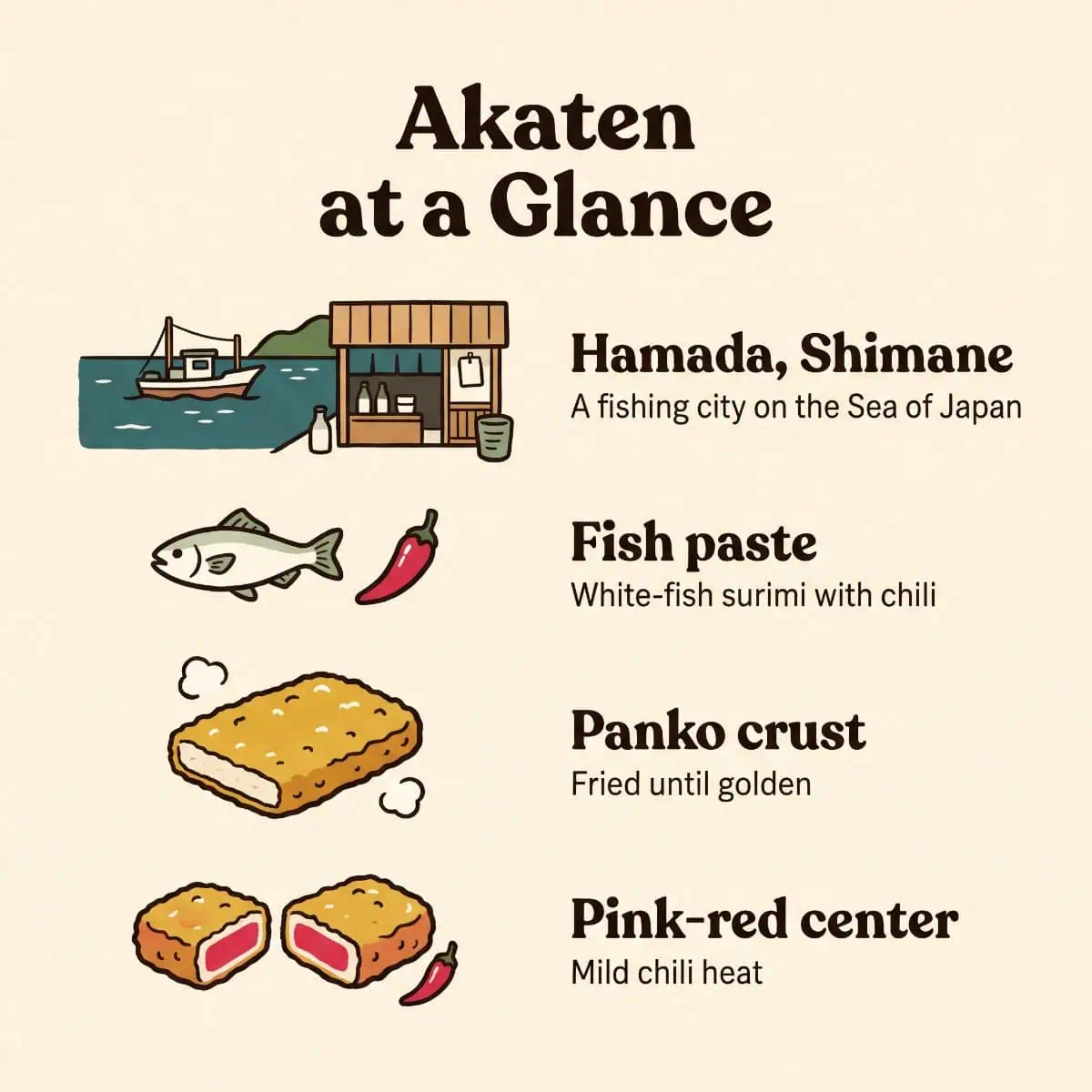
Akaten is a specialty fish cake from Hamada City in Shimane Prefecture. Makers season white-fish surimi with chili, shape it into a flat rectangle, coat it in panko and fry it. The finished fish cake has a crisp golden crust, a springy pink-red center and generally mild heat.
Akaten at a Glance
- Japanese name
- 赤てん (akaten); according to Yamamoto Kamaboko, its original version was called “fry-ten”
- Home
- Hamada City, Shimane Prefecture, in the Chugoku region
- Food type
- Fried fish-paste product (nerimono), breaded with panko
- Main ingredients
- Typically white-fish surimi, starch, chili and panko; exact ingredients vary by maker
- Texture
- Crisp crust, bouncy fish-cake center, mild chili heat
- Origin
- Said to date from the postwar food shortages; exact details unclear
- How to eat
- Lightly toasted, with mayonnaise or soy sauce
- Example price
- ¥432 for two pieces from Yamamoto Kamaboko, as of October 2026
Why Is It Called “Ten”?
“Aka” refers to the red-colored center. The meaning of “ten” is less certain. In Hamada, Yamamoto Kamaboko uses the word tempura for a type of fried fish-paste product, not the light-battered dish familiar from restaurants. So “ten” may be connected to that usage, but the naming history is not firmly documented.
Akaten vs Other Fried Fish Cakes
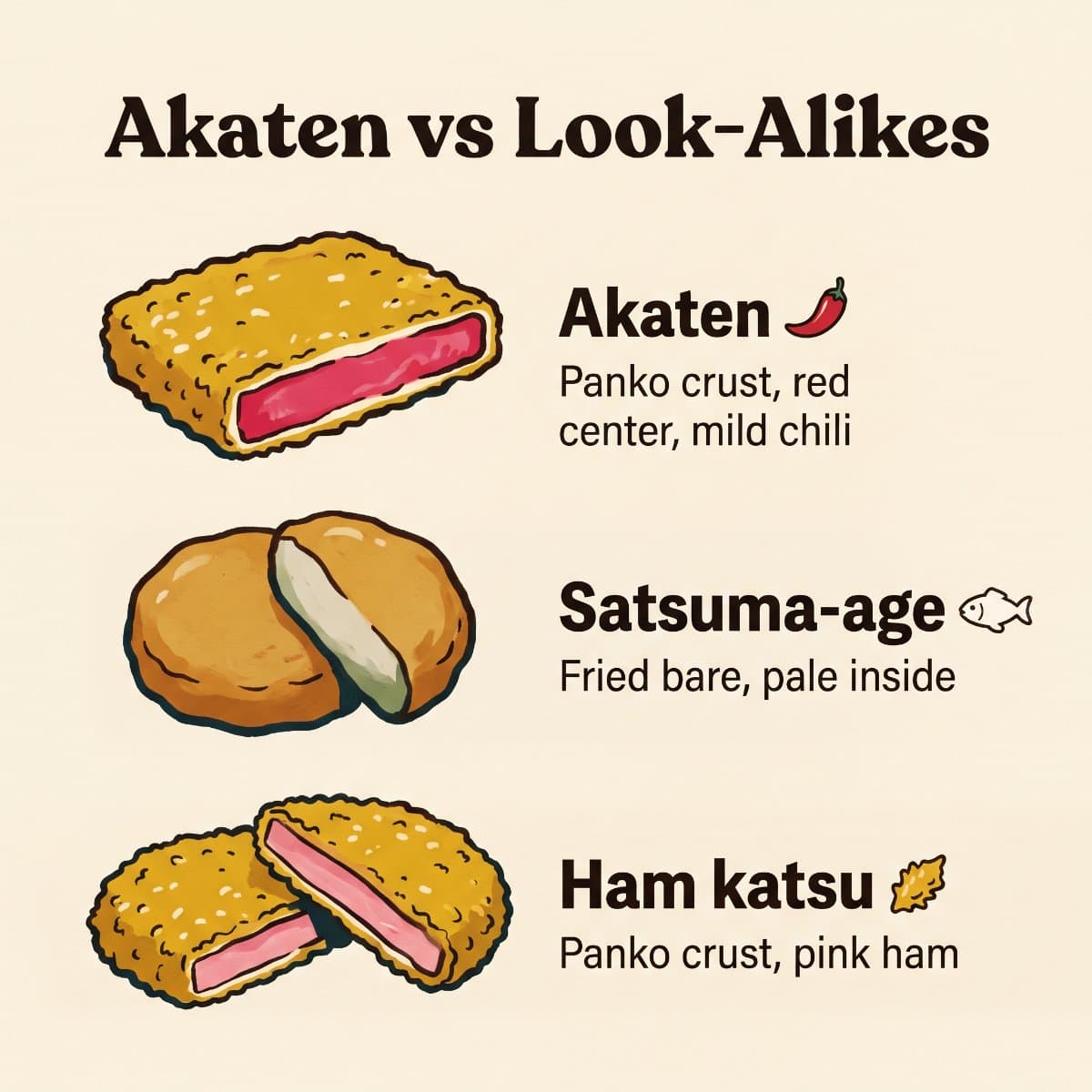
Japan has many fried fish cakes, so how is akaten different? Mainly, it is the panko coating, the red color and the chili. The clearest comparisons are Kagoshima’s satsuma-age, another fried fish-paste product, and ham katsu, the breaded cutlet that akaten is said to imitate.
| Feature | Akaten (Hamada) | Satsuma-age (Kagoshima) | Ham katsu |
|---|---|---|---|
| Base | White-fish surimi, starch | Fish paste; traditional Kagoshima recipes may add tofu, egg, sugar and local sake | Sliced ham |
| Coating | Panko breadcrumbs | None, fried bare | Panko breadcrumbs |
| Inside color | Pink to red | Pale | Pink |
| Flavor | Savory with mild chili heat | Sweet and savory | Salty, meaty |
| Texture | Crisp outside, springy inside | Usually tender to pleasantly springy, with no breadcrumb crust | Crisp outside, tender inside |
Akaten and satsuma-age descriptions follow MAFF’s traditional food profiles. Recipes vary by maker and region.
A quick word on terms helps here. Nerimono is the broad Japanese family of fish-paste products, which includes kamaboko, chikuwa and Tottori’s tofu chikuwa. Akaten belongs to that family but borrows its panko coat from cutlets like tonkatsu.
What Is Akaten Made Of?
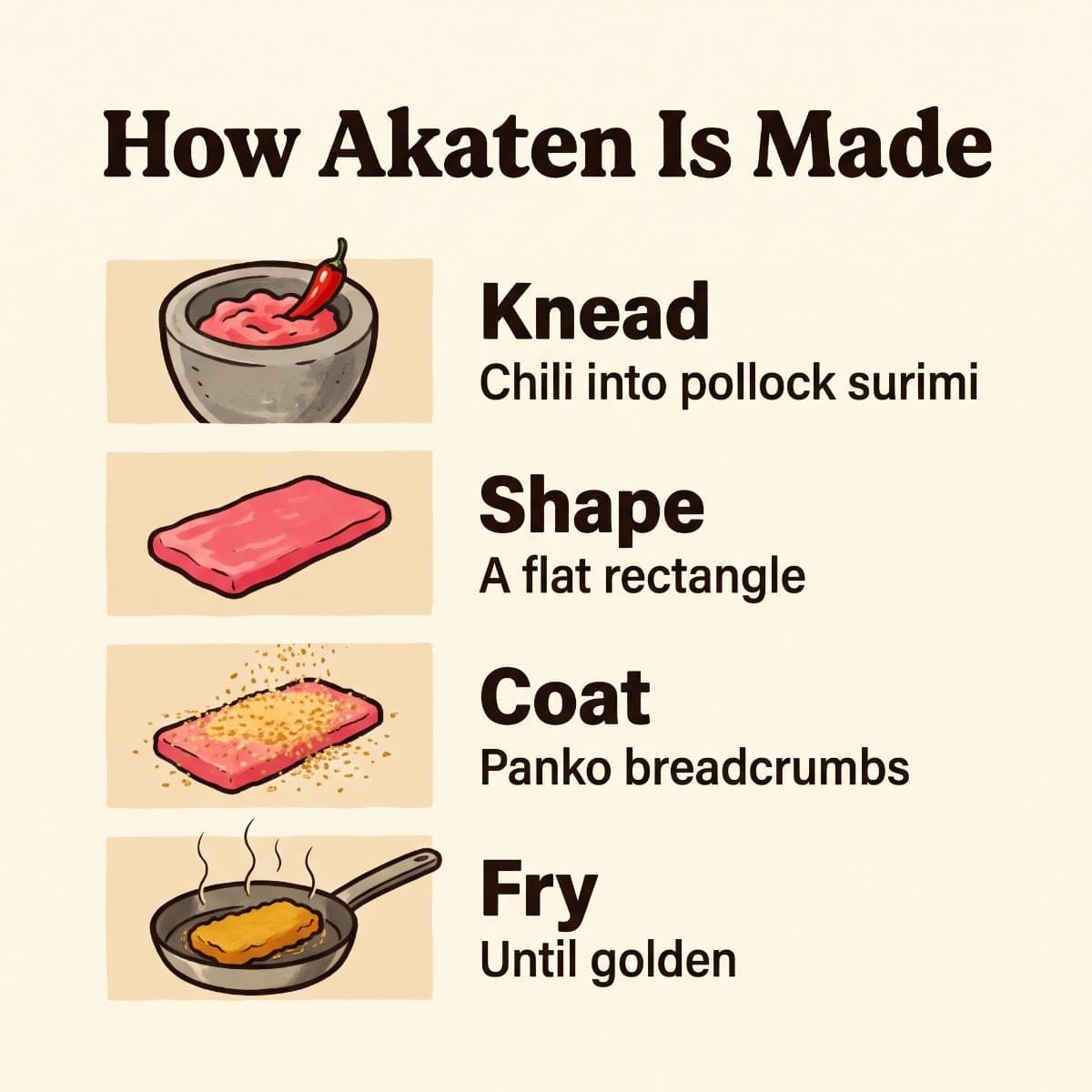
Akaten is made mainly from fish paste, starch, chili pepper and breadcrumbs. However, the exact fish, seasonings, coloring and frying oil vary by producer. Japan’s agriculture ministry (MAFF) describes the following traditional method. Individual makers may use different fish, equipment and recipes.
- 1Knead chili into Alaska pollock surimi using a stone mortar.
- 2Shape the paste into a flat rectangle, like a ham cutlet.
- 3Coat it in panko breadcrumbs.
- 4Deep-fry until the crust turns golden.
Beyond the stone-mortar kneading, MAFF notes that each shop uses its own method and recipe. So two akaten from Hamada can look and taste noticeably different.
Why Is Akaten Red?
You might assume the chili makes it red. Interestingly, at least one maker says otherwise. Yamamoto Kamaboko states that its color was meant to resemble a ham cutlet, not to show off the chili. Today it uses food coloring, and the company says its own akaten is closer to pink than red.
Its current label lists the colorings Red No. 3 and Red No. 106. Other makers may use different colorings, so the shade varies from brand to brand.
Why Is It So Bouncy?
That springy bite comes from the fish-paste gel itself. According to a Nagasaki Prefecture fisheries research center, mixing minced fish with salt and then heating it causes the proteins to form an elastic structure. That produces the firm, resilient bite found in many Japanese fish cakes.
There is no single akaten recipe
Ingredients, colorings and frying oils differ by producer. If you have allergies or dietary restrictions, check the label on the specific package. Standard akaten commonly contains wheat through panko and may use wheat-based starch, so do not assume it is gluten-free.
What Does Akaten Taste Like?
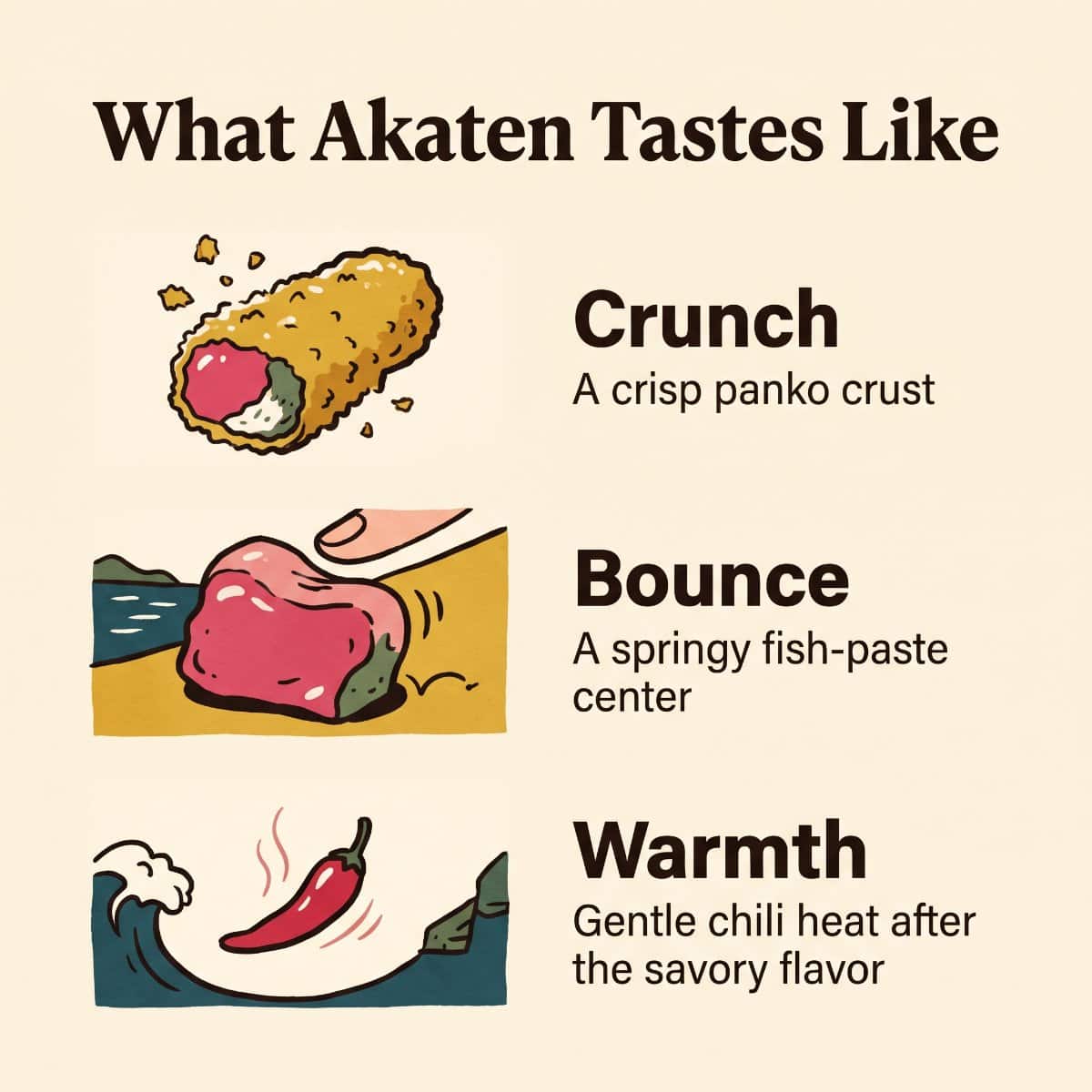
The first thing you notice is the crunch. Then the center gives way with a springy, almost chewy bounce that feels nothing like ham. The fish flavor itself is mild and savory.
How Spicy Is It?
Not very, despite that color. MAFF describes it as pirikara, a Japanese expression for pleasantly spicy rather than intensely hot. The chili shows up as a gentle warmth after the savory flavor. Still, there is no standard heat level, and it varies by maker. If you are sensitive to chili, start with a small piece and check the producer’s description.
History: A Postwar Stand-In for Ham Cutlet
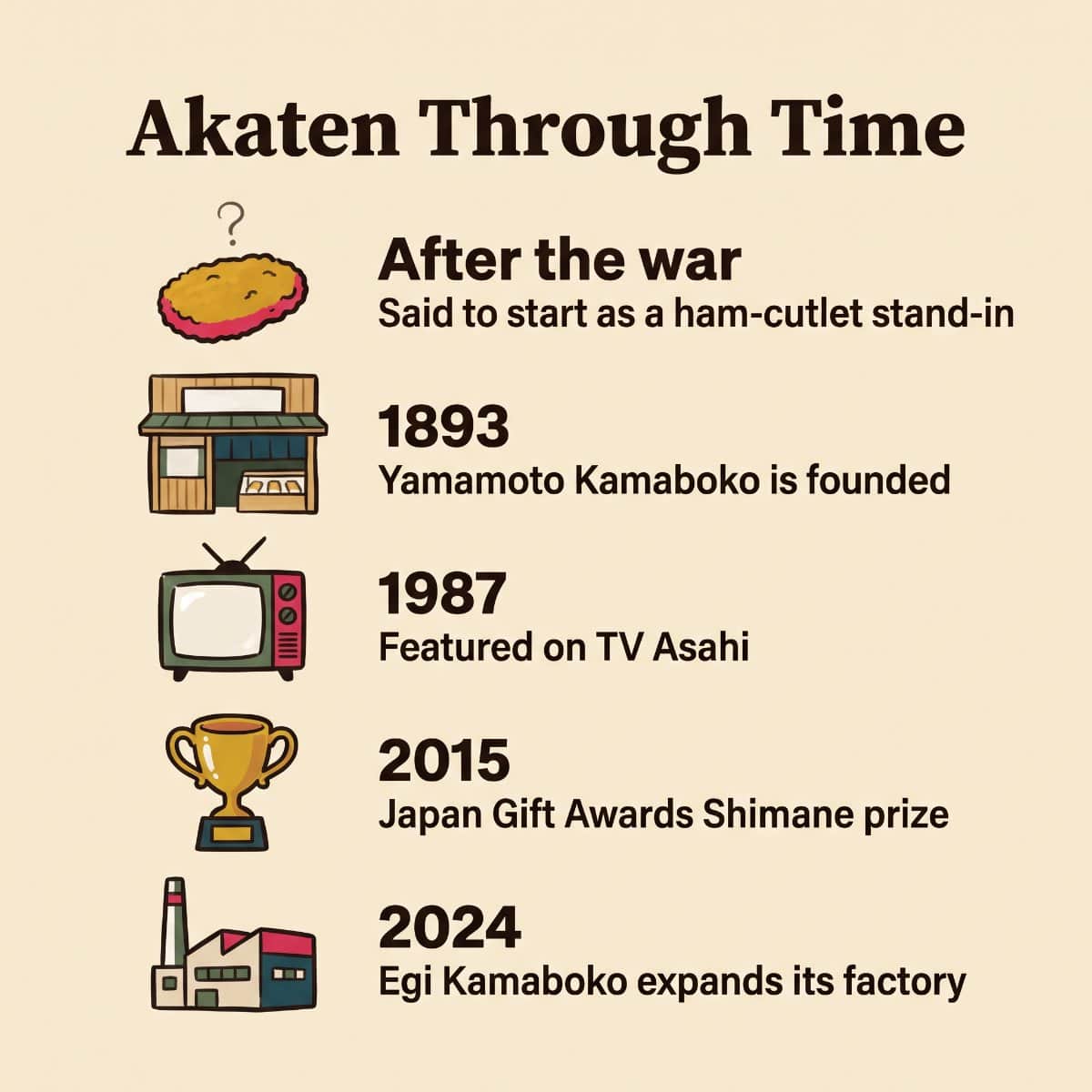
Akaten is generally said to have appeared in Hamada during the food shortages after World War II. At the time, local fish-cake makers wanted an affordable alternative to ham cutlet. However, MAFF notes that the detailed history is not known, so treat any single founding date with care.
Three Origin Stories
Different sources tell the story in different ways. The available public sources do not establish which account came first, so the three explanations are best read side by side.
Yamamoto Kamaboko, founded in 1893, presents itself as the originator. Even so, current public records cannot confirm the first maker.
From Local Snack to Shimane Specialty
For decades, akaten stayed a local food. Then, in 1987, TV Asahi’s information program “Nau NOW Studio” featured it, according to a Shimane Prefecture press release. That broadcast helped make it a Hamada specialty and a recognized Shimane dish. Later, in 2015, it won the Shimane Prefecture prize at the Japan Gift Awards, MAFF notes.
Today, more than one fish-cake maker in Hamada produces it. MAFF’s traditional-food profile states that three kamaboko shops make it, although producer numbers can change. Meanwhile, Egi Kamaboko announced a factory expansion in 2024, citing growing orders from outside the prefecture.
Why Hamada?
Hamada has long been a fish town. Its fishing port is Shimane’s only tokutei daisan-shu gyoko (特定第3種漁港), a Japanese category for fishing ports considered especially important to the national fishing industry. Fish-paste makers have worked in the city for generations, too. Yamamoto Kamaboko was founded in 1893, while Egi Kamaboko traces its history to 1912.
Akaten in Everyday Life
Akaten is not only a souvenir. According to MAFF, locals eat it as a dinner side, pack it in lunch boxes and order it with drinks. It also appears on school lunch menus in Hamada’s elementary and junior high schools.
How Akaten Is Commonly Served in Hamada
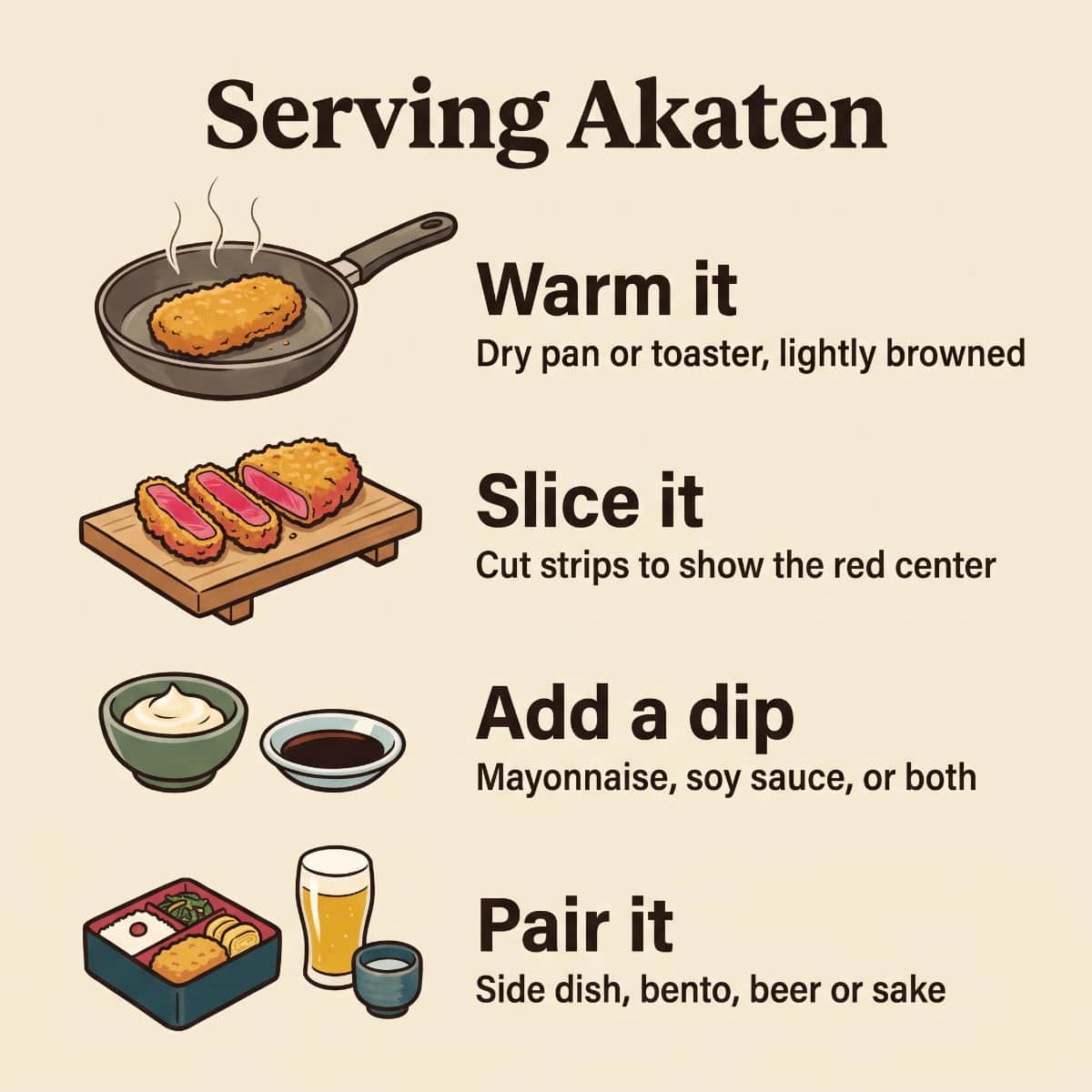
Akaten is already cooked, so you can eat it straight from the pack. Still, many people warm it first. MAFF says people like it lightly toasted and served with soy sauce or mayonnaise.
A simple way to serve akaten
- Warm itHeat it in a dry frying pan, with no oil, until lightly browned. A toaster works too.
- Slice itCut it into strips so the red center shows.
- Add a dipServe with mayonnaise, a dash of soy sauce, or both.
- Pair itEnjoy it as a side dish, in a bento, or with beer or sake.
Yamamoto Kamaboko recommends a dry frying pan until lightly browned, saying it makes the akaten even tastier. Meanwhile, a Shimane prefectural magazine notes that toasting brings out the aroma and crunch of the coating. As a practical alternative, a toaster oven should also preserve the crust better than a microwave, which tends to soften panko. Heating time depends on the product’s thickness and temperature. For frozen akaten, follow the maker’s thawing and reheating instructions.
Where to Buy Akaten and How to Store It
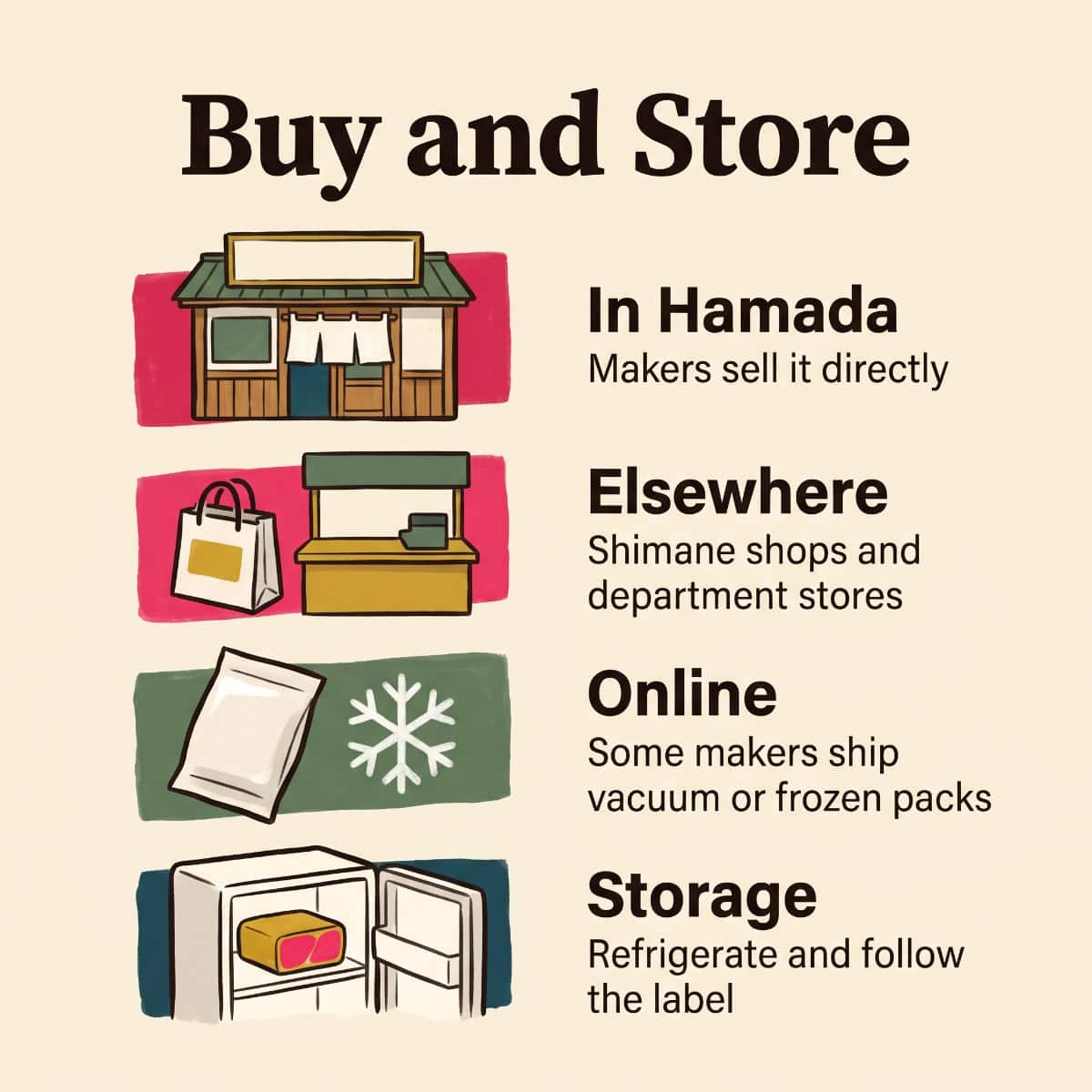
The easiest place to find akaten is Hamada itself, where the makers sell it directly. Beyond Shimane, MAFF notes that it is increasingly available at restaurants, department stores and prefectural antenna shops in Tokyo. Some makers also sell online. Yamamoto Kamaboko, for example, lists vacuum-packed and frozen akaten alongside its regular packs.
In Tokyo, check Shimane specialty shops and regional-food fairs at major department stores. Stock changes often, though, so search for “akaten” or “赤てん” on the shop’s current product page before you go.
Storage Depends on the Product
Keep refrigerated akaten exactly as its label says. Yamamoto Kamaboko’s standard product, for example, must stay at 10°C or below. It also lasts seven days, counting the production date. Packaging, storage temperature and shelf life differ by product, so check the listing and label before ordering. Once opened, keep it refrigerated and follow any after-opening instruction, since the printed date may apply only to an unopened pack.
Conclusion: Why Akaten Is Worth Trying
Akaten is memorable because it combines three familiar ideas in an unfamiliar way: fish cake, chili and a crisp cutlet crust. Warmed until lightly browned, it offers an accessible taste of Hamada’s fishing culture. It also tells a story of resourceful postwar cooking, even if nobody can say for sure who made it first.
Research note: Product ingredients, prices, shelf life and retail availability were checked in October 2026. These details vary by producer and may change.
Frequently Asked Questions About Akaten
About the Food
- What is akaten?
-
Akaten is a panko-fried fish cake from Hamada in Shimane Prefecture. It has a pink-red center, a crisp crust and mild chili heat.
- Is akaten the same as satsuma-age?
-
No. Both are fried fish cakes, but akaten has a panko coating, a red center and chili. Satsuma-age is usually fried without breadcrumbs.
- Why is akaten red?
-
The color does not necessarily come from chili alone. Yamamoto Kamaboko says its version was colored to resemble ham cutlet and lists Red No. 3 and Red No. 106, while other makers may use different coloring.
- Is akaten very spicy?
-
Most versions are mildly spicy rather than hot. However, there is no standard heat level, so start with a small piece if you are sensitive to chili.
- Does akaten contain meat?
-
Akaten is based on fish paste rather than ham. Still, recipes and manufacturing conditions vary, so if you avoid meat-derived ingredients or shared equipment, check directly with the producer.
- Is akaten gluten-free?
-
Do not assume so. Standard akaten commonly contains wheat through the panko and may also use wheat-based starch, so read the specific label.
- Who invented akaten?
-
Nobody knows for sure. MAFF links it to postwar Hamada but calls the details unclear, while Yamamoto Kamaboko says its founder created the first version.
Reheating, Storage and Buying
- How should you reheat akaten?
-
A dry frying pan or toaster oven keeps the coating crisp. One Hamada maker suggests a dry pan until lightly browned.
- How long does akaten keep?
-
It depends on the product. Yamamoto Kamaboko’s standard refrigerated akaten lasts seven days at 10°C or below, counting the production date. Other packs may differ, so check the label.
- Where can you buy akaten outside Shimane?
-
Look for it at Shimane specialty shops, department-store food fairs and maker websites. Check current stock first, because availability changes.
References
Show all 9 references
- Ministry of Agriculture, Forestry and Fisheries (MAFF) – Japan’s Traditional Foods: Akaten (Accessed October 2026)
- Ministry of Agriculture, Forestry and Fisheries (MAFF) – Japan’s Traditional Foods: Satsuma-age (Accessed October 2026)
- Shimane Prefecture – Fishing Port Development Materials: Fishing Port Categories (Accessed October 2026)
- Shimane Prefecture – Press Release: Egi Kamaboko Expands Its Factory in Hamada (2024) (Accessed October 2026)
- Shimane Prefecture – Shimanesque No. 119: Good Things from Shimane (2021) (Accessed October 2026)
- Nagasaki Prefectural Institute of Fisheries – 桑原浩一 (2007). Turning Japanese Flying Squid into Fish-Paste Products. Gyoren Dayori, 147 (Accessed October 2026)
- Yamamoto Kamaboko – Our Methods and Commitment: The Origin of Akaten (Accessed October 2026)
- Yamamoto Kamaboko – Akaten Product List (Accessed October 2026)
- Yamamoto Kamaboko – Ganso Akaten Product Information (Accessed October 2026)




Comments