


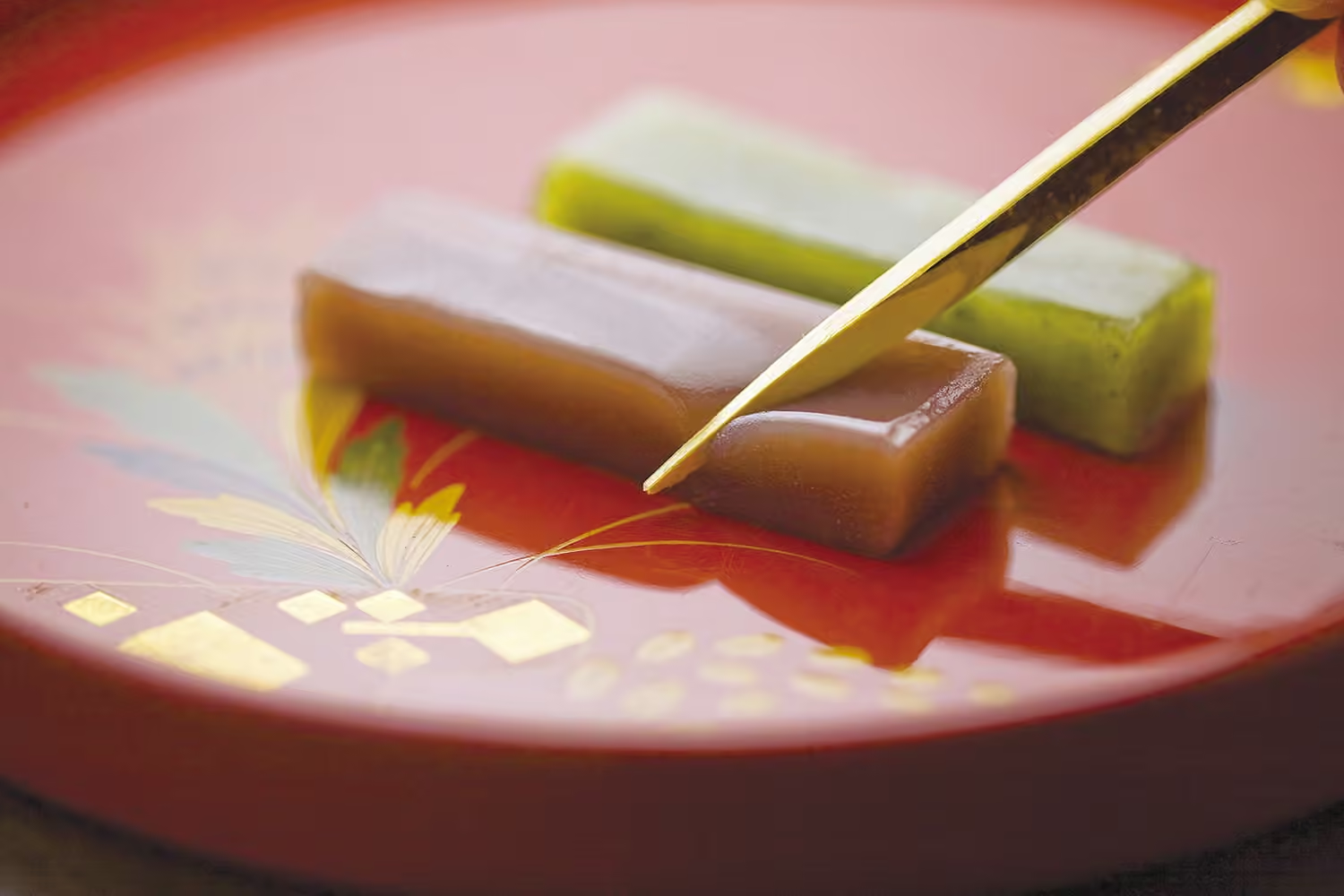
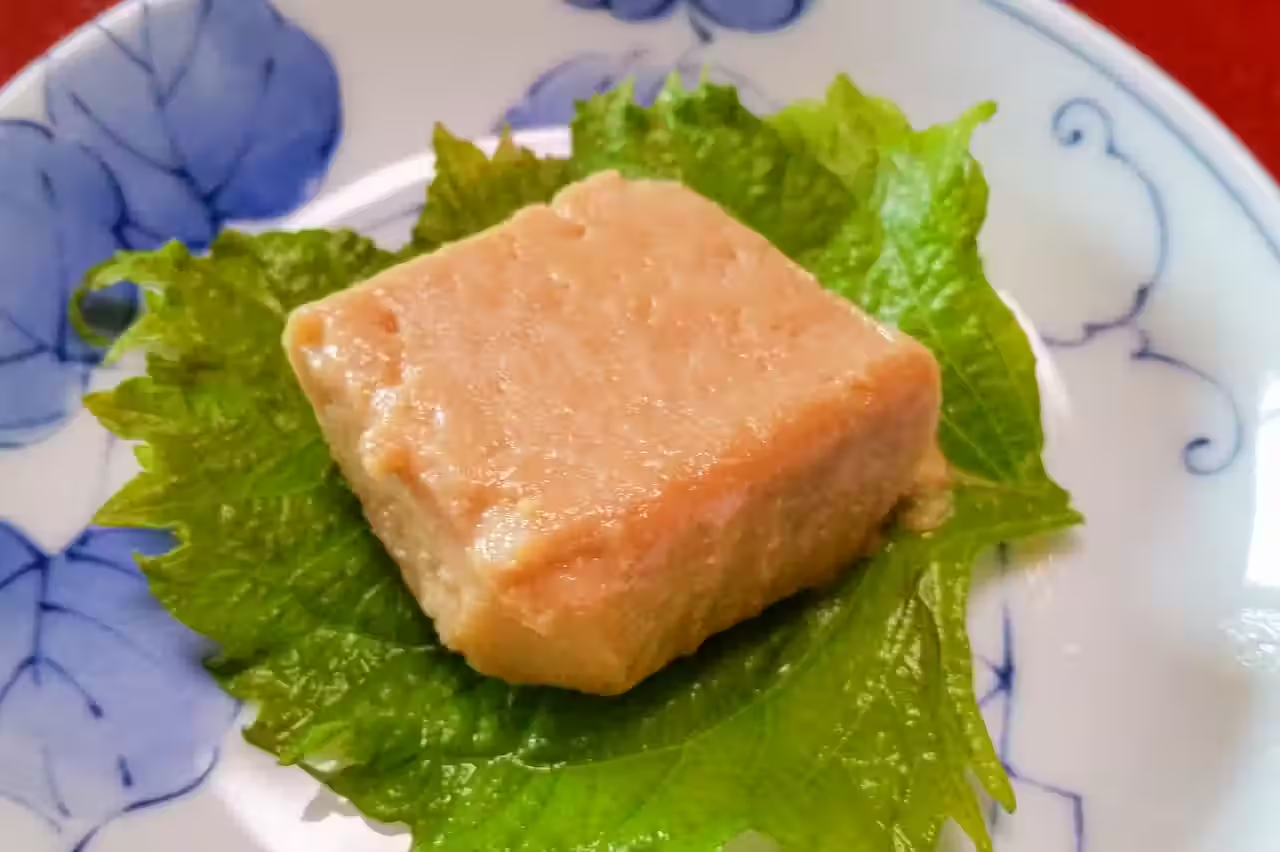

If your idea of uiro comes from Nagoya, Yamaguchi’s version may feel like a different sweet. A fresh slice bends and trembles slightly, then gives way with a smooth, springy bite. Sweet bean paste is mixed into the batter, so the gentle sweetness runs through every piece rather than sitting in a filling.
The main reason is warabi starch, traditionally extracted from bracken rhizomes, although each maker’s flour blend and steaming method also matter. This guide explains how Yamaguchi uiro differs from other regional styles, how to store it and what to look for when buying it fresh.
What Is Yamaguchi Uiro?
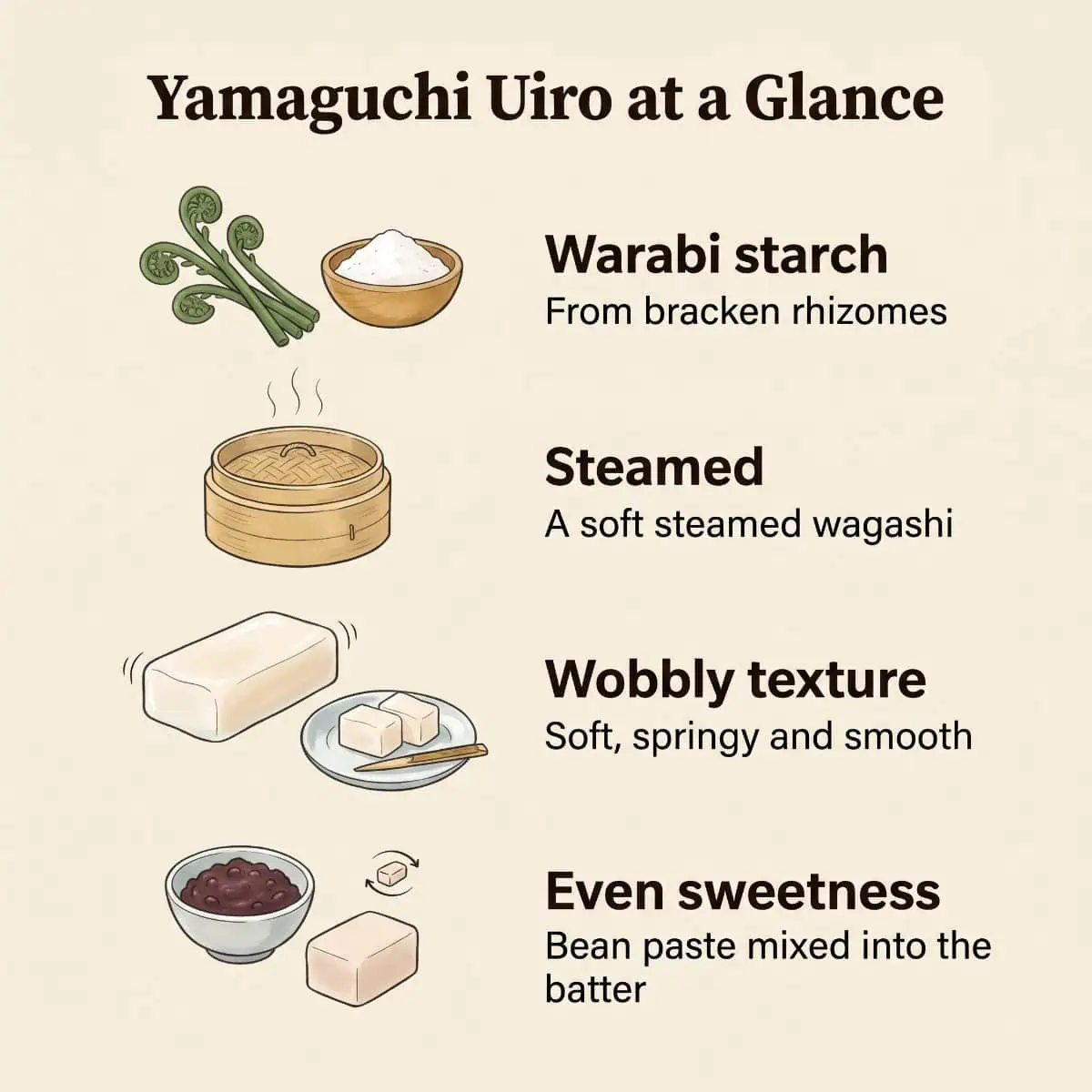
Yamaguchi uiro (山口ういろう) is a steamed Japanese confection from Yamaguchi City, typically made with sweet bean paste, sugar and warabi starch. Unlike the denser rice-flour uiro associated with Nagoya, it is softer, smoother and more elastic. Recipes differ by maker, however, and some products also contain wheat flour or other starches.
Yamaguchi Uiro at a Glance
- Japanese name
- 山口ういろう, often written 外郎 and read uirō
- Home
- Yamaguchi City and nearby areas of Yamaguchi Prefecture
- Food type
- Steamed wagashi (Japanese confection)
- Defining ingredient
- Warabi starch, from bracken rhizomes
- Other ingredients
- Bean paste and sugar; depending on the maker, wheat flour, other starches, matcha or brown sugar
- Texture
- Soft, springy and smooth; locally described as ottori
- Shelf life
- Varies by product; freshly steamed versions last only a few days
- Earliest record
- A 1654 banquet menu in the Chōshū domain
Uiro, Uirō and 外郎
In practice, you will see the name spelled several ways. Shop signs and packages in Yamaguchi often use the kanji 外郎, while menus may write ういろう in hiragana. In English, uirō with a long-vowel mark is more precise, but uiro is easier to search. All of them refer to the same family of steamed sweets.
How Yamaguchi Uiro Differs from Other Regional Styles
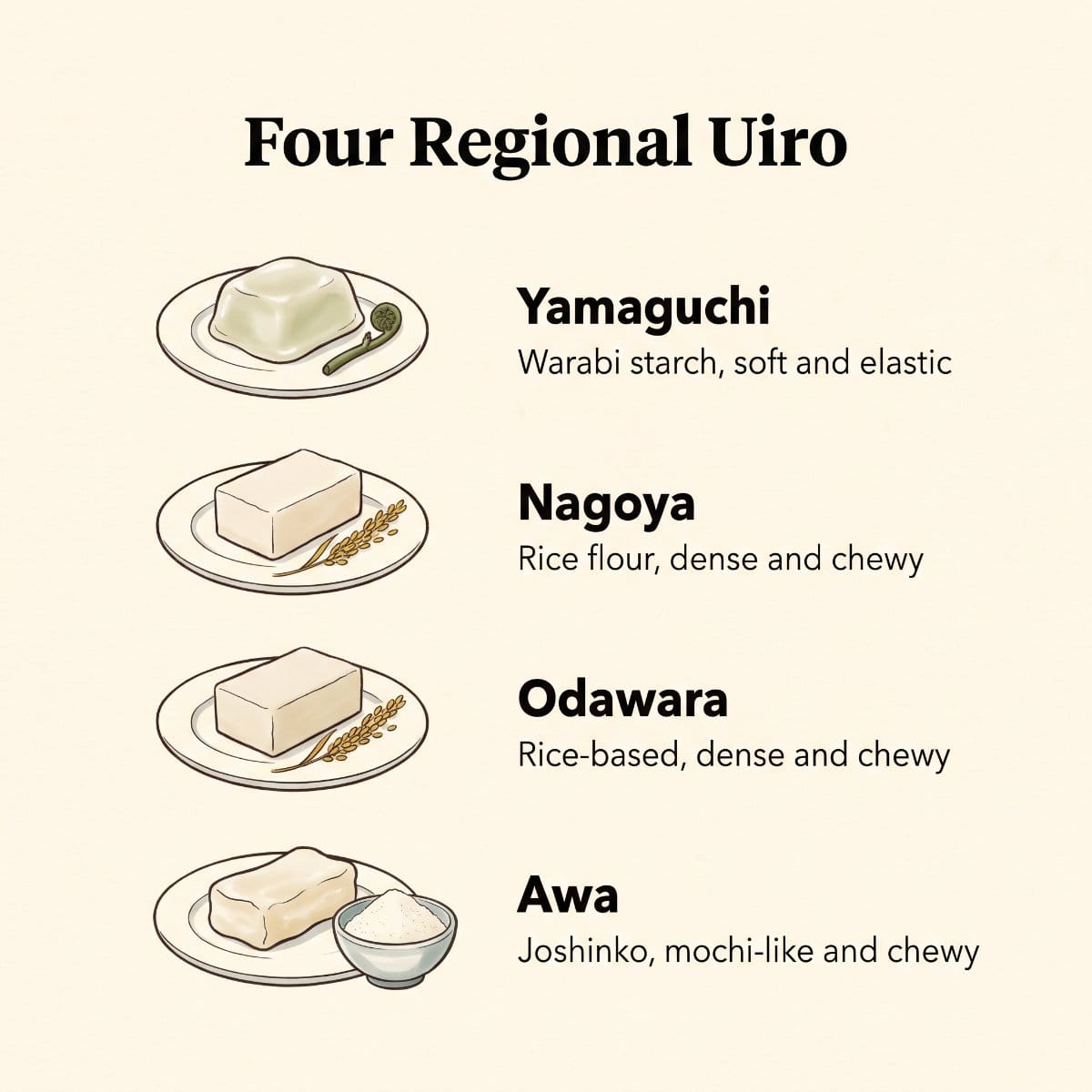
Uiro is made in several parts of Japan, and the base starch changes the whole experience. Yamaguchi’s tourism federation puts it simply. Nagoya and Odawara styles are generally associated with rice-based batters and a heavy, filling texture. Yamaguchi, by contrast, is known for warabi starch and a wobbly, warabi-mochi-like bite.
| Feature | Yamaguchi | Nagoya | Odawara | Awa (Tokushima) |
|---|---|---|---|---|
| Typical base | Warabi starch with bean paste; some recipes add wheat flour | Typically rice flour and sugar | Generally rice-based | Jōshinko, bean paste and sugar, sometimes Awa wasanbon |
| Texture | Typically soft, smooth and elastic | Typically dense and chewy | Generally dense and chewy | Typically mochi-like and chewy |
| Flavor | Even bean-paste sweetness | Mild rice sweetness | Mild rice sweetness | Bean-paste sweetness; some versions use Awa wasanbon |
Based on Yamaguchi Prefecture’s tourism federation and MAFF regional cuisine profiles. These are typical tendencies, not rules for every product.
What about Japan’s “three great uiro”? It is a popular label rather than an official designation. MAFF’s Awa uiro profile uses it for Awa, Nagoya and Yamaguchi, so Odawara appears here only as a useful comparison. For the rice-flour side, see our general guide to uirō.
Why Is It So Wobbly? The Role of Warabi Starch
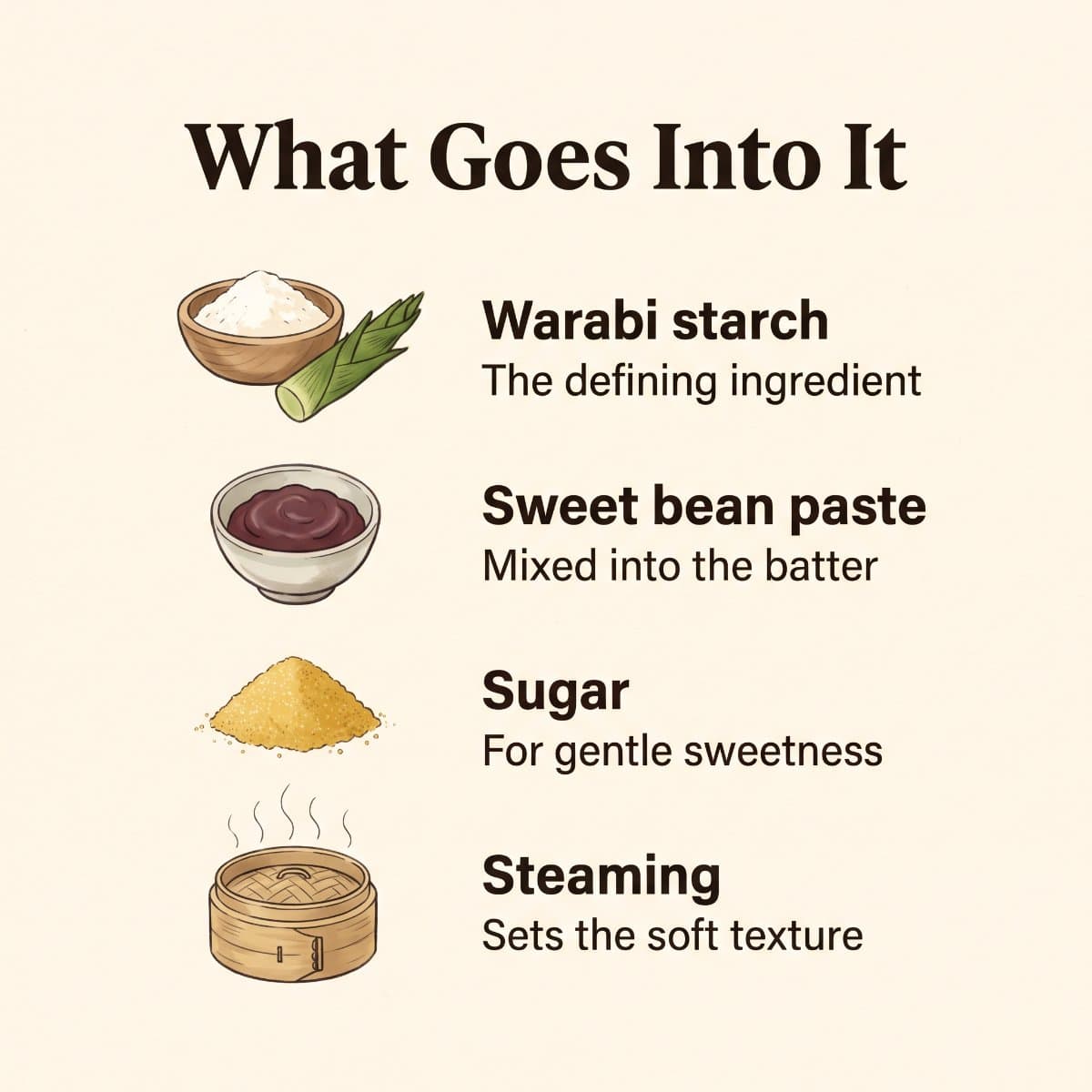
Warabi starch is central to Yamaguchi uiro’s characteristic elasticity, according to MAFF, although the finished texture also depends on the maker’s flour blend and preparation. Warabi starch is also traditionally used in warabi mochi, which helps explain why people compare the two. Commercial warabi-mochi mixes, however, may contain other starches. Unlike warabi mochi, though, uiro mixes bean paste right into the batter, so sweetness runs through every bite.
Why Did Yamaguchi Choose Warabi?
Nobody knows for certain, and Yamaguchi’s own tourism federation says there are several theories. One common explanation is that rice was precious in the past. High-quality warabi starch was produced in Yamaguchi, so it became the natural substitute. It is a tidy story, but treat it as a theory rather than settled history.
There Is No Single Recipe
Interestingly, even MAFF’s own page shows two approaches. Its preparation notes describe mixing wheat flour with warabi starch and then adding dissolved bean paste. Meanwhile, its simple home recipe uses only warabi starch, sugar, water and bean paste.
MAFF’s simple home recipe (serves 4)
- 20 gwarabi starch
- 1 tbspsugar
- 4 tbspwater
- 60 gsmooth sweet red bean paste
MAFF notes that recipes vary by region and household. At home, the batter can be steamed in a microwave.
So when you buy a box, read the label. For instance, one shop’s uiro may be mostly warabi starch, while another blends in wheat flour.
What Does Yamaguchi Uiro Taste Like?
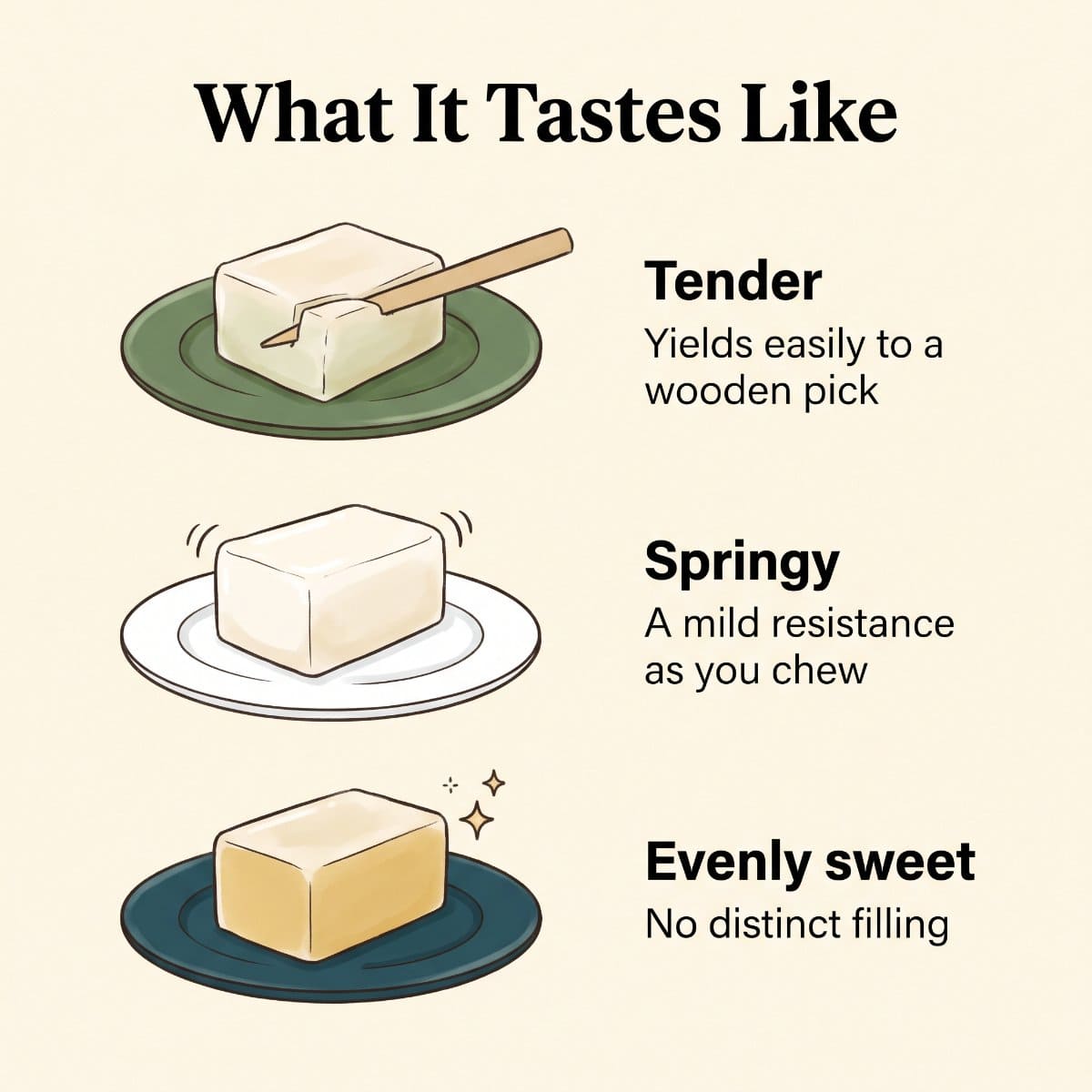
A fresh piece feels tender rather than dense. It yields easily to a wooden pick, then gives a mild resistance as you chew. The bean paste adds an even, restrained sweetness, without the distinct filling of a stuffed mochi. Locally, people use the word ottori for its gentle, smooth mouthfeel. Here, it suggests softness and refinement rather than a technical texture category.
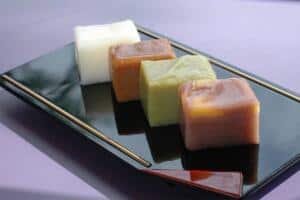
Of course, flavors vary by shop. Beyond the classic red-bean version, MAFF lists matcha, chestnut and yuzu among the varieties you may find. Some makers also offer white, brown-sugar or bean-studded styles, although availability varies by maker and season. A mixed box is a good way to compare.
History: From a 1654 Banquet to Modern Shops
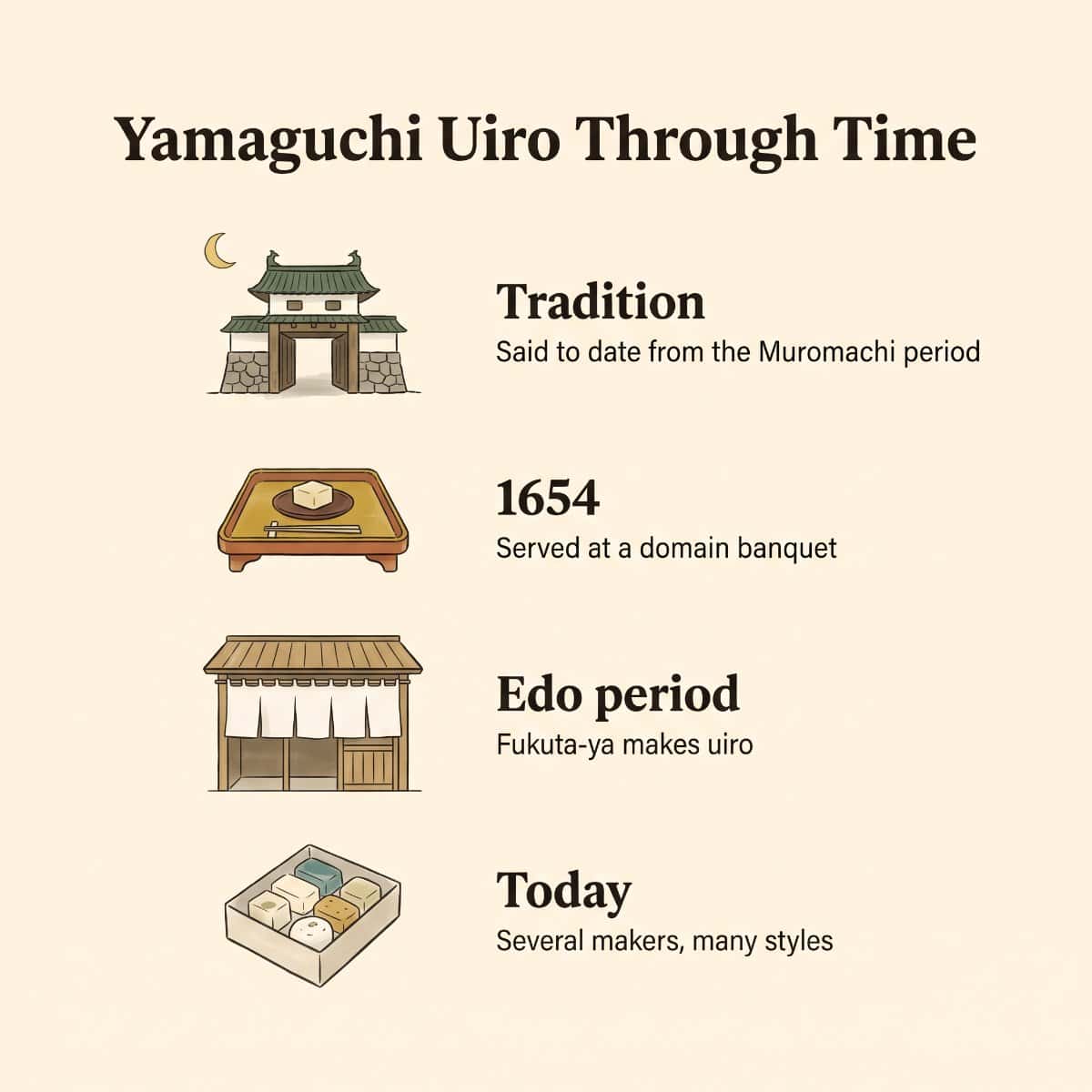
Yamaguchi uiro is traditionally associated with the Muromachi period, when Yamaguchi flourished under the Ōuchi clan. However, the earliest identified written record dates to 1654. In it, a Chōshū-domain banquet menu lists uiro as a sweet served between formal courses.
- TraditionSaid to have been enjoyed since the Muromachi period.
- 1654Uiro appears as a “between-course sweet” at a domain banquet for shogunate inspectors.
- Edo periodFukuta-ya in Ōuchi Mihori, Yamaguchi, produces uiro and enjoys the domain’s patronage.
- TodaySeveral confectioners in Yamaguchi make their own styles.
The 1654 Record
The Yamaguchi Prefectural Archives explains that the record comes from the Mōri family collection. Uiro was served as an ai no okashi, a sweet between the main and second trays of a formal meal. The same record lists warabi starch among the ingredients. As a result, some suggest warabi was already in use. Still, the archives call this a likely interpretation rather than a certainty.
Fukuta-ya and Its Successors
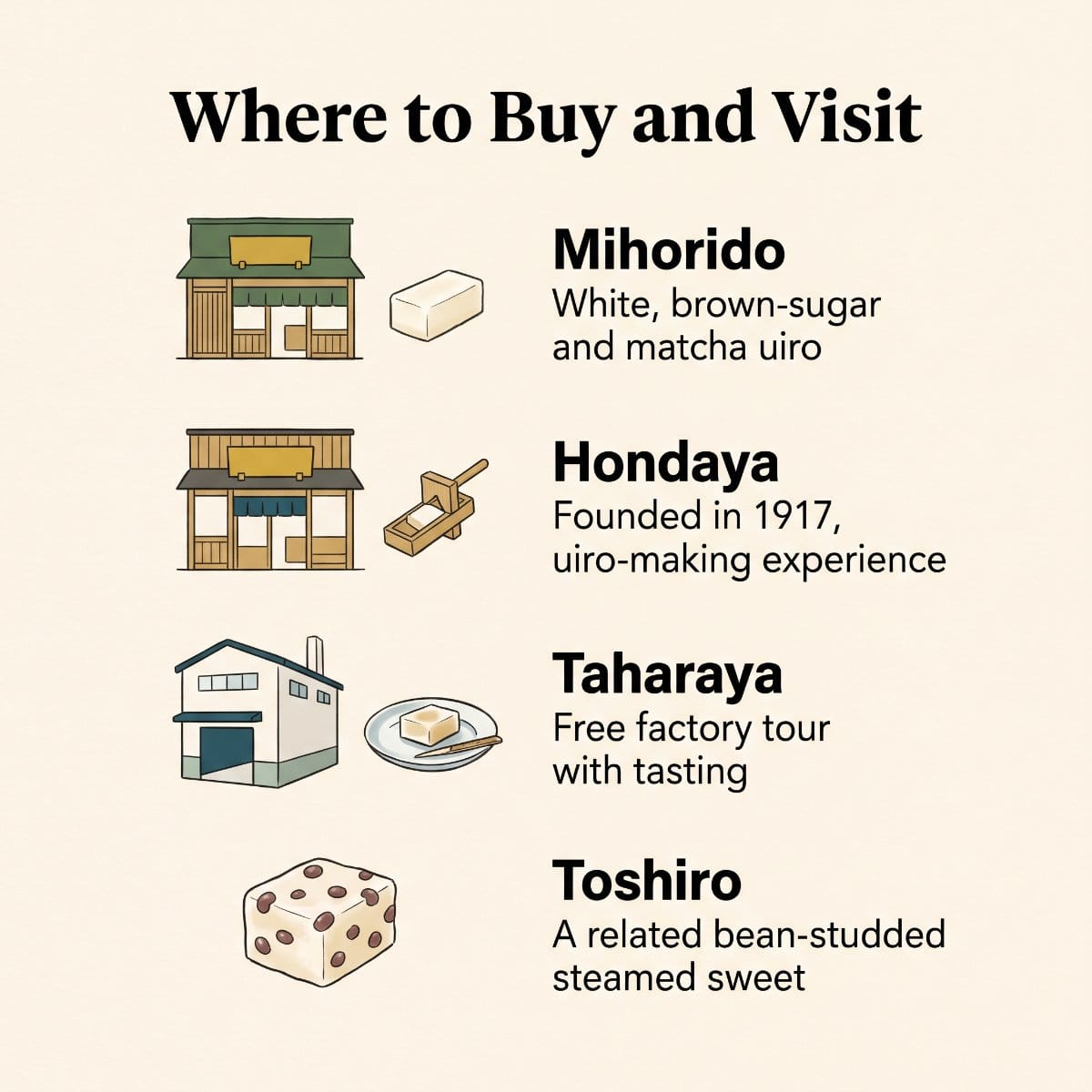
During the Edo period, a shop called Fukuta-ya made uiro in Ōuchi Mihori and was favored by the domain. Later, Mihorido became known for carrying on Fukuta-ya’s methods, according to Yamaguchi’s tourism federation. Other makers took their own paths. Hondaya, founded in 1917, and Toshiro, known for its bean-studded steamed sweets, both developed distinct styles.
From Tea Sweet to School Lunch
Yamaguchi uiro is not just a souvenir. MAFF notes that people serve it as an everyday tea sweet and give it as a gift, including at weddings. It also appears in school lunches now and then, as a dish that connects children with local food culture.
Fresh vs Sealed: The Traveler’s Choice
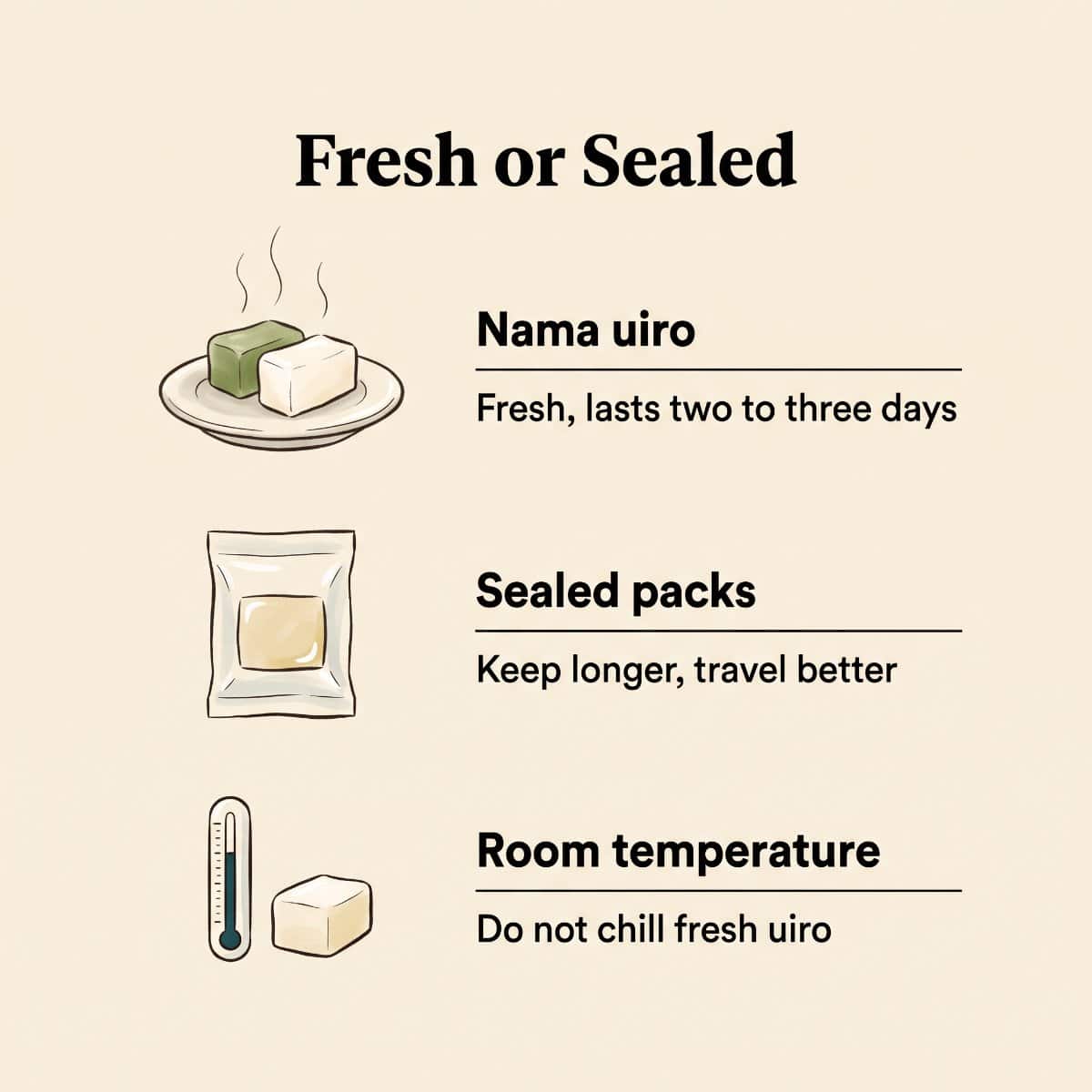
Yamaguchi uiro is sold in both fresh and longer-keeping forms. Fresh nama uiro is fully steamed but usually lasts only a few days, so it is best eaten during your trip. Sealed products generally travel better, although their shelf life and storage rules vary by maker.
Should You Refrigerate It?
Usually not, at least for fresh uiro. MAFF warns that chilling it quickly in a refrigerator makes it firm. Likewise, the tourism federation recommends room temperature for fresh uiro. That said, always follow the storage line on your package, since products differ. If a piece does firm up, the tourism federation notes that warming it brings back its chewy softness. Still, heating methods differ by package and portion size, so follow the product instructions. After opening, eat it promptly.
Where Can Travelers Buy Yamaguchi Uiro?
Yamaguchi City is the most reliable place to find freshly made uiro, because several established makers are based there. However, availability is product-specific, so check the exact item rather than just a shop’s opening hours.
Hondaya’s Shin-Yamaguchi Shop and Online Orders
As of September 24, 2026, Hondaya was accepting telephone reservations for fresh uiro at its main and Shin-Yamaguchi shops. It also resumed online sales of fresh uiro that day. Before ordering online from any maker, check these points:
- Whether the product is fresh or sealed
- Its delivery area and expected arrival date
- Its storage instructions and use-by date
We could not confirm direct international shipping from the makers reviewed for this article.
Shops to Know
The tourism federation and Yamaguchi City highlight these makers.
Traditional uiro makers
A related Yamaguchi steamed sweet
Shop details, hours and booking rules can change, so check each shop’s official page before you go. While you are in the prefecture, try Yamaguchi sake too, or a plate of fugu if the season is right.
How to Enjoy Yamaguchi Uiro
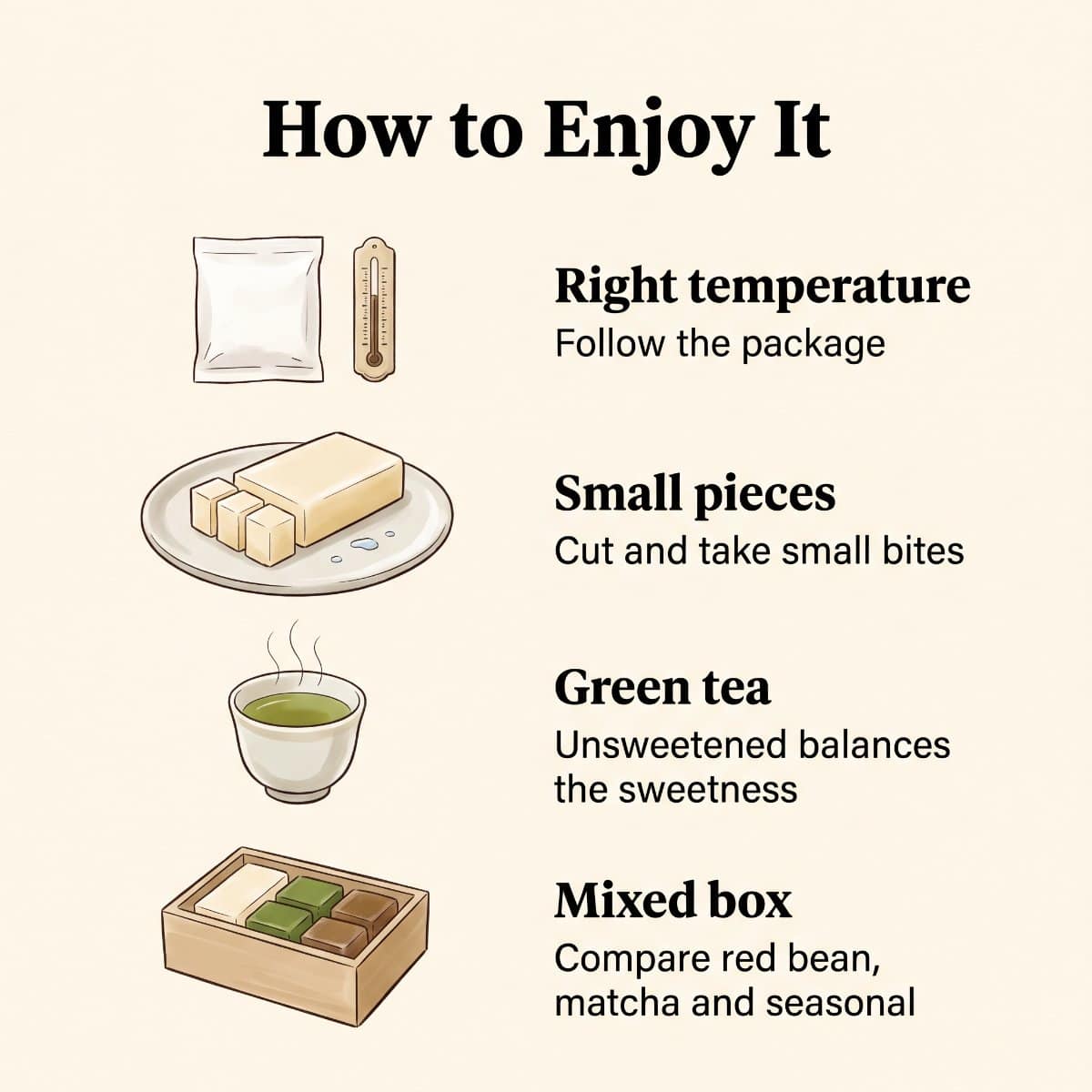
Serve it at the temperature stated on the package, which is often room temperature for fresh products. Cut it into small pieces and pair it with unsweetened green tea, whose bitterness balances the bean-paste sweetness. Because the texture is soft and elastic, take small bites. A mixed box lets you compare red bean, matcha and seasonal flavors side by side. If you enjoy other bean-paste sweets like yōkan, you will likely find uiro lighter and softer. For a wider tour of Japanese confections, see our wagashi guide.
Conclusion: A Sweet Worth Eating Fresh
Yamaguchi uiro shows how a different starch can reshape a familiar sweet into something soft, smooth and quietly elegant. If you visit Yamaguchi, try the fresh kind within a couple of days. Then check the label for storage, because each maker’s instructions come first. It offers the clearest sense of why locals call it ottori.
Research note: Shop details, product types and shelf life were checked in October 2026. They vary by maker and may change.
Frequently Asked Questions About Yamaguchi Uiro
About the Sweet
- What is Yamaguchi uiro made of?
-
Its defining ingredient is warabi starch, combined with bean paste and sugar. Depending on the maker, it may also contain wheat flour, other starches, matcha or brown sugar, so check the label.
- How is Yamaguchi uiro different from Nagoya uiro?
-
Nagoya uiro is typically made with rice flour, which makes it heavy and chewy. Yamaguchi uiro uses warabi starch, so it is softer, springier and smoother.
- How old is Yamaguchi uiro?
-
Tradition links it to the Muromachi period. However, the earliest written record identified so far is a 1654 banquet menu from the Chōshū domain.
- Is warabi starch the same as warabi-mochi powder?
-
Not necessarily. Traditional warabi starch comes from bracken rhizomes, but commercial warabi-mochi powders may blend in other starches.
- Is Yamaguchi uiro the same as yōkan?
-
No. Yamaguchi uiro is a steamed, starch-based sweet, while yōkan is generally bean paste set with agar. Uiro is usually softer and more elastic.
- Is Yamaguchi uiro gluten-free?
-
Not automatically. Some recipes include wheat flour, so check the allergen label or contact the maker.
- Does “nama uiro” mean it is raw?
-
No. Nama uiro is fully steamed; “nama” refers to its fresh, short-shelf-life presentation. Exact definitions vary by maker.
- Is Yamaguchi uiro vegan?
-
Many plain varieties appear to use plant-based ingredients, but recipes vary by maker and season. Check the current ingredient label, and contact the maker if you need strict vegan compliance.
Buying and Storage
- Should I put Yamaguchi uiro in the fridge?
-
Usually not. Rapid chilling can make it firm, and fresh versions are generally kept at room temperature. Always follow the storage instructions on the package.
- How long does Yamaguchi uiro last?
-
It depends on the product. Freshly steamed nama uiro lasts only about two to three days, while sealed packs keep longer.
- Can I buy Yamaguchi uiro outside Yamaguchi?
-
Sealed versions are often sold online by Yamaguchi makers. Fresh nama uiro is most reliably found in Yamaguchi, though some makers offer limited domestic shipping at times.
References
Show all 8 references
- Ministry of Agriculture, Forestry and Fisheries (MAFF) – Our Regional Cuisines: Uiro, Yamaguchi Prefecture (Accessed October 2026)
- Ministry of Agriculture, Forestry and Fisheries (MAFF) – Uiro (Sweet Steamed Cake), Our Regional Cuisines, English Edition (Accessed October 2026)
- Ministry of Agriculture, Forestry and Fisheries (MAFF) – Our Regional Cuisines: Awa Uiro, Tokushima Prefecture (Accessed October 2026)
- Yamaguchi Prefectural Archives – Urban Prosperity and Genroku Culture: Uiro, a Local Confection (Accessed October 2026)
- Yamaguchi Prefecture Tourism Federation – What Is Yamaguchi Uiro? Differences from Nagoya and Odawara, and Recommended Shops (Accessed October 2026)
- Yamaguchi City Tourism and Convention Association – Uiro Factory Tour and Tasting at Taharaya (Accessed October 2026)
- Hondaya – Official Website (Accessed October 2026)
- Hondaya – Notice: Resumption of Fresh Uiro Delivery (2026) (Accessed October 2026)
Related Articles
 Fukuoka
Uirō (ういろう)
Surveyed: October 2026
 Nara
Warabi Mochi (わらび餅)
Surveyed: October 2026
 Yamaguchi
Kawara Soba (瓦そば)
Surveyed: October 2026
 Yamaguchi
Iwakuni sushi (岩国寿司)
Surveyed: October 2026




Comments