


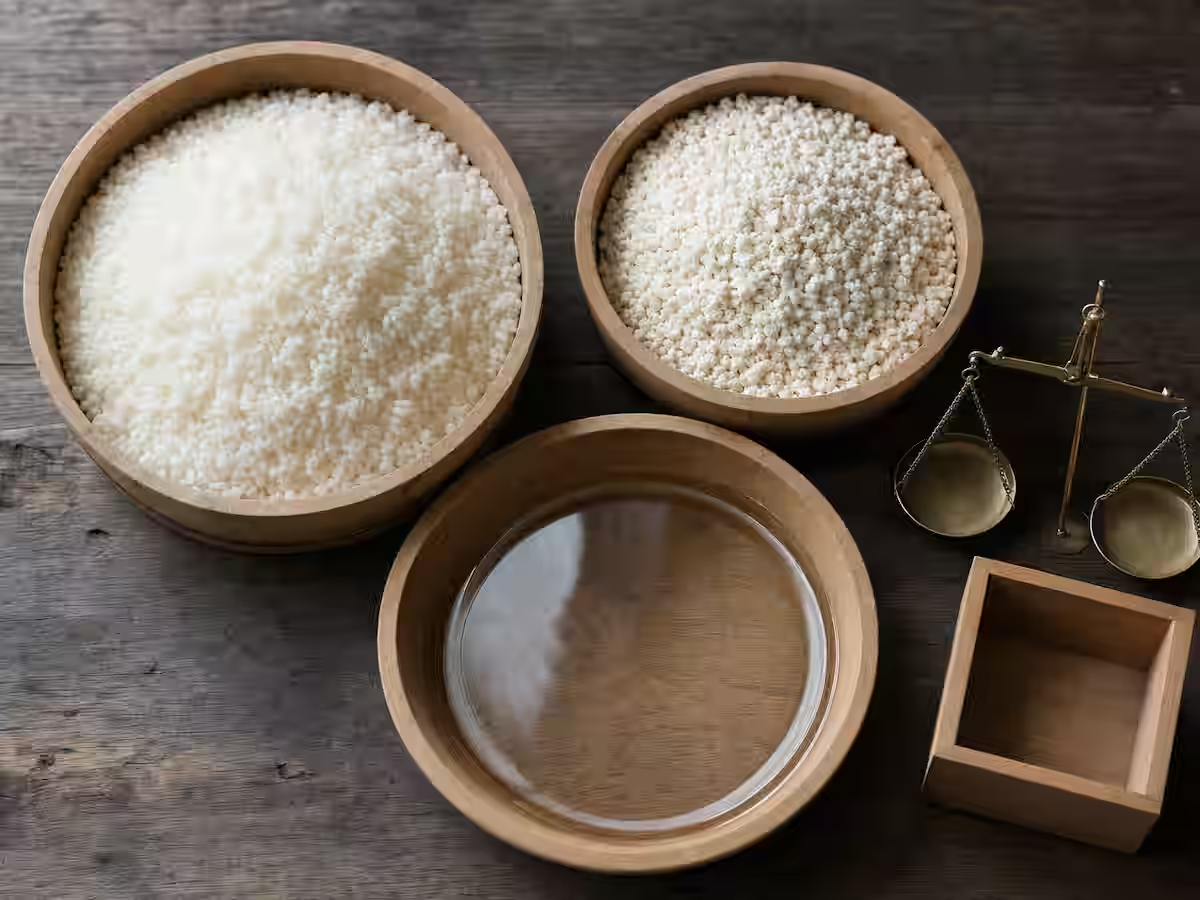
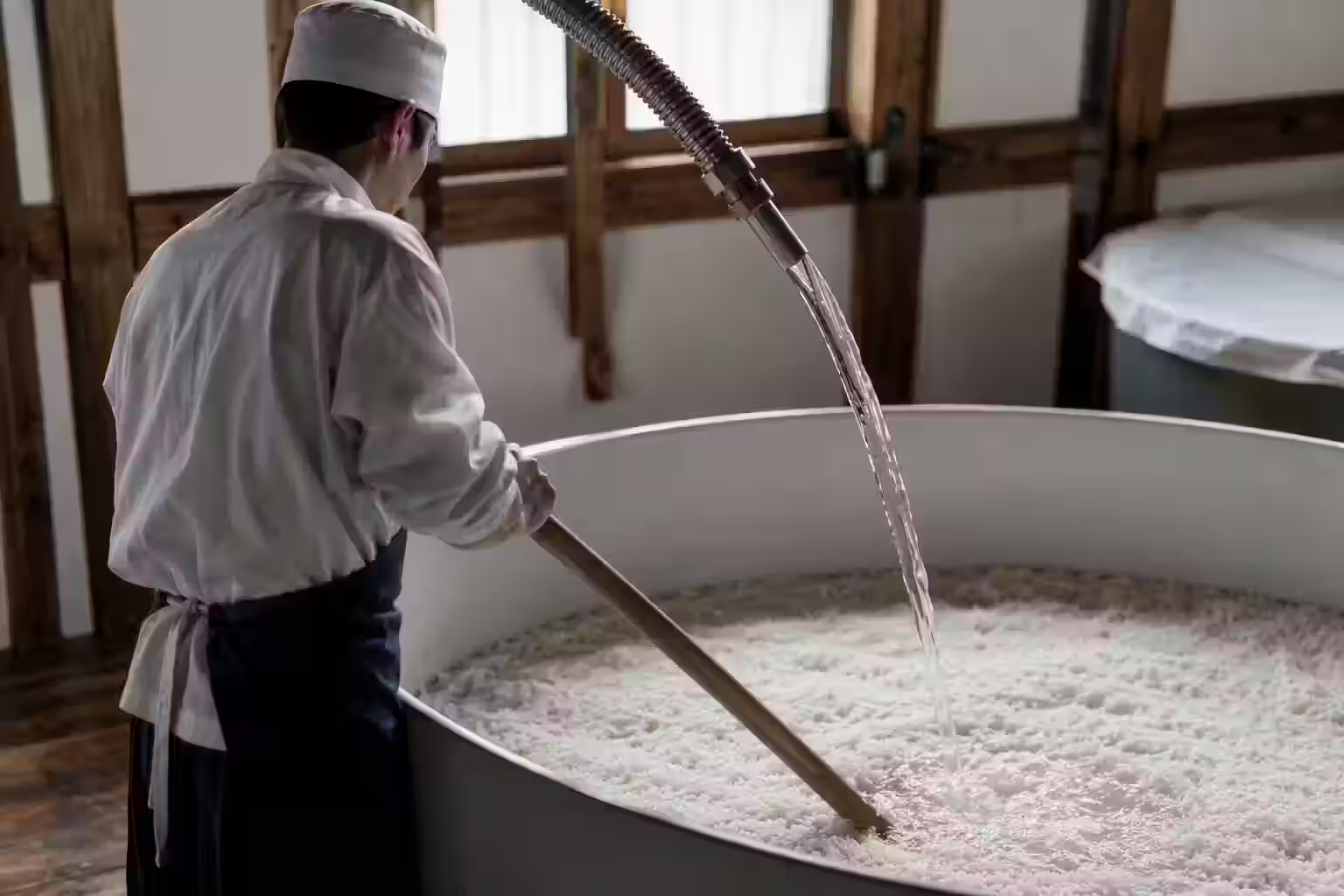
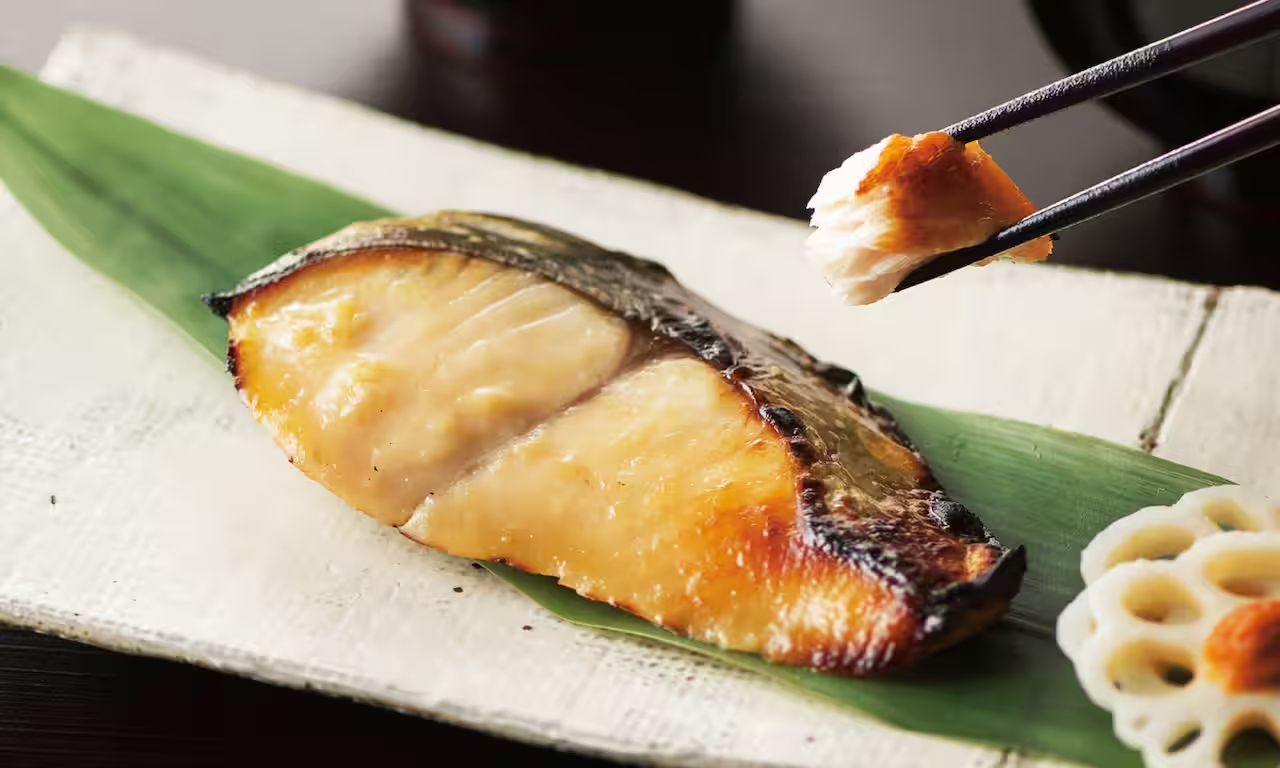
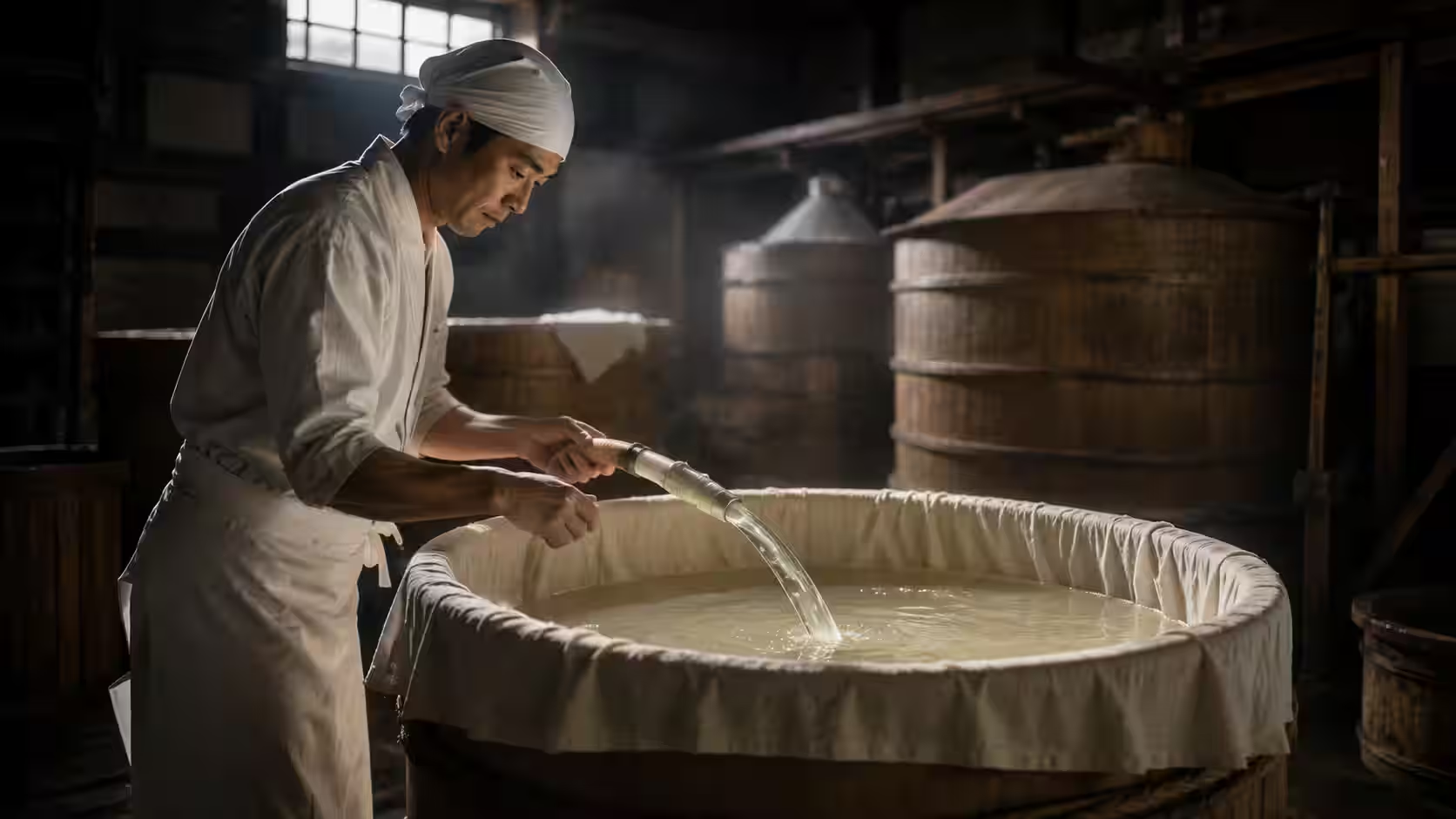

Food in Japan is an English-language guide to Japanese food and drink, covering regional specialties, iconic dishes, sake and brewing, and the culture around all of it.
Why This Site Exists
Japan has an unusual number of dishes that never travel. A soup eaten in three towns and nowhere else. A sweet sold at one shrine. A preserved fish that makes sense only where the winters are long enough to need it. Many of these have no description in English at all.
That gap is the reason this site started. Most visitors to Japan see Tokyo, Kyoto, and Osaka, which is understandable and no bad thing. Yet the food that makes a region a region is usually two or three hours further on, and almost nobody hears about it before they arrive.
We would like more people to get on a train, go somewhere they had not planned to go, and eat the thing that only exists there.
Food turns out to be a good reason to travel. It is specific, it is seasonal, and it gives you somewhere to be at lunchtime. A dish you have read about is a better destination than a town name on a map.
What We Are Building
The long-term aim is a complete English-language reference to Japanese food and drink. Complete means the famous dishes as well as the obscure ones, because a guide with gaps in the middle is not much of a guide.
We have been publishing since 2019, and the reference is still a long way from finished. That is the nature of the task. Japan keeps producing regional food faster than anyone can write it down.
Regional dishes
Local specialties by prefecture and city, including many with no existing English write-up.
Sake and brewing
An encyclopedia of the brewing process and its vocabulary, built from Japanese technical sources.
Iconic dishes
The foods everyone knows, written with the history and origins that usually get skipped.
Regional guides
Prefecture and area pages that pull the individual dishes together into something you can plan around.
Depth over volume
Another surface-level explainer of sushi or ramen helps nobody, and there are plenty already. So our articles go after the parts that tend to be left out. Where did the dish come from, and why did it take this particular form? What problem was it solving, and for whom? Which regional versions survive, and how do they differ?
Those answers sit in Japanese-language material that English writing rarely reaches. Reading it is most of the work.
Including the articles nobody searches for
Some subjects have almost no search demand. A dish being obscure is a reason to cover it here, not a reason to skip it, so we publish those pieces knowing they will stay quiet. Broader regional guides sit alongside them and do the work of bringing readers in.
One honest consequence: coverage is uneven at any given moment. Some prefectures and categories are much better served than others. We are closing those gaps, though it is slow work for a small site.
Who Is Behind It
Ryo Iwa, founder and editor
Born and raised in Japan, Ryo writes from regional travel, market visits, and Japanese-language primary sources that rarely reach English readers. He has been a Google Maps Local Guide for over 10 years, with more than 1,800 reviews and over 41,000 photos viewed hundreds of millions of times. Before this, he spent two decades as an IT consultant in Japan, the US, and the UK.
He is not the only person writing here. Some articles come from freelance writers we commission, and a small number are contributed by regional tourism associations, producers, and shops. Every writer has their own account, so the byline names whoever actually wrote the piece, and contributed articles carry a label at the top of the page.
How We Work
Three commitments shape every article, and they are set out in full on our editorial policy page.
- Primary sources. We work from Japanese government agencies, research institutes, prefectural records, industry bodies, and academic papers. Not from other English food sites.
- No invented detail. Where a figure or origin story cannot be traced to a source, the article says so rather than filling the gap with something plausible.
- Corrections welcome. We get things wrong sometimes. Tell us and we will fix it.
Read our full editorial policy
Using the Site to Plan a Trip
If you already know where you are going, start with the regional guide for that prefecture or area. It will point you to the dishes worth building a day around.
If you are still deciding, browsing the regional dishes is the more interesting route. Plenty of people have picked a destination because of one bowl of something.
A practical note: opening hours, prices, and seasonal availability change, and small regional shops change most of all. Confirm directly with the business before you travel a long way for something.
Working With Us
We are glad to hear from tourism associations, producers, shops, and restaurants with a regional food worth documenting in English. We do not charge for this, and we do not accept payment for coverage. What we ask for is access to accurate information.
Writers who know a region well are also welcome to get in touch.