


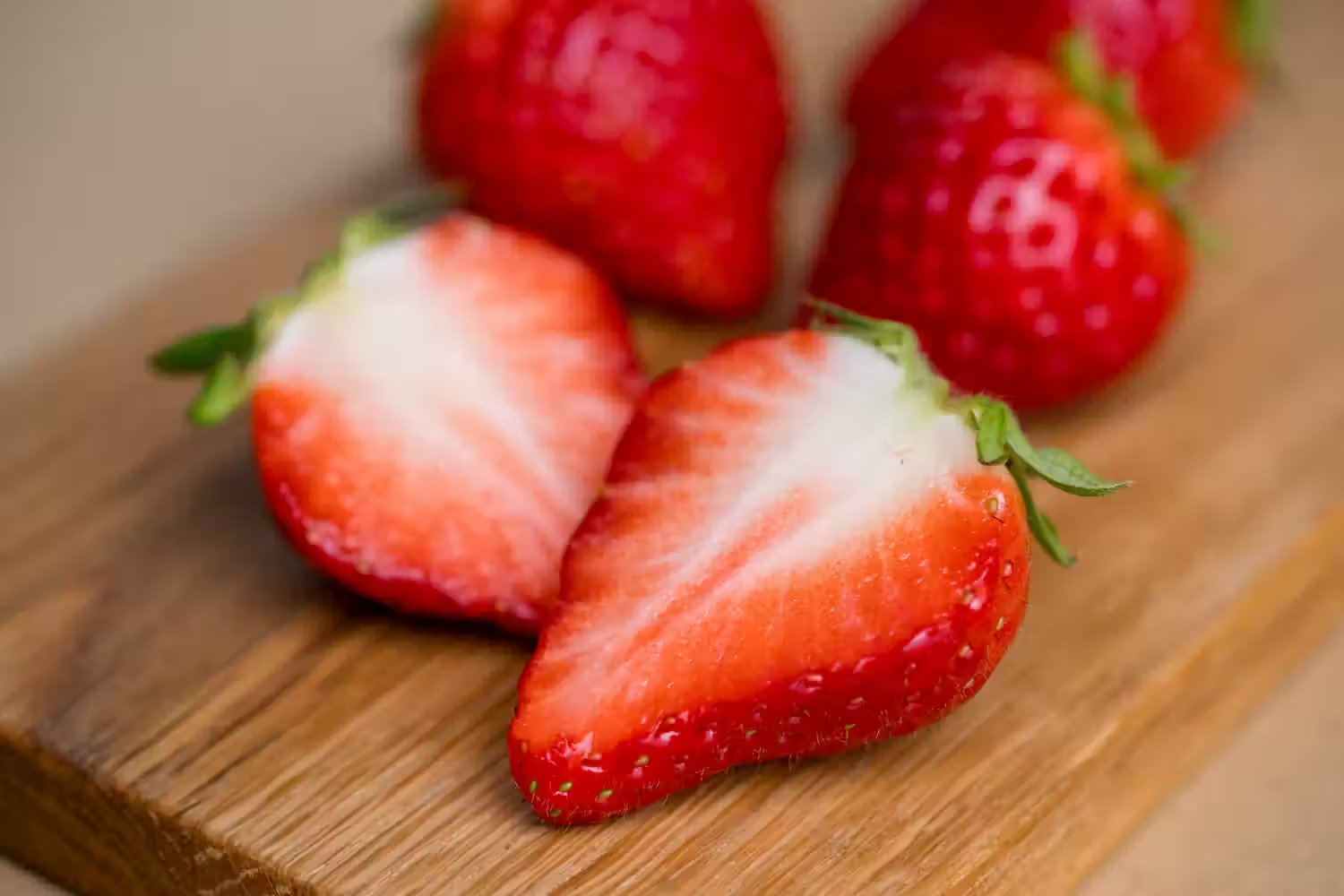


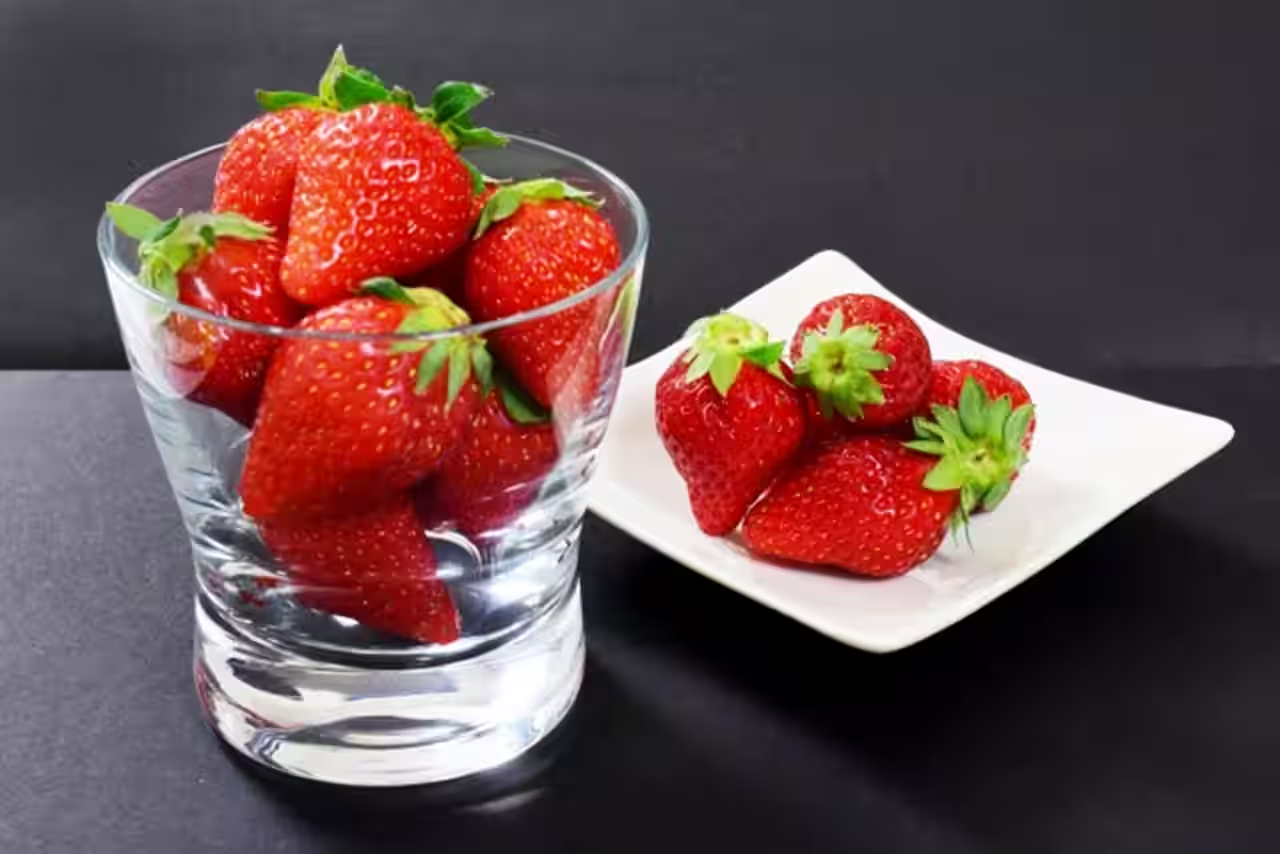
Slice a ripe Sagahonoka strawberry in half, and the contrast is striking. Its glossy red skin surrounds flesh that remains pale or nearly white, even when fully ripe. Sagahonoka (さがほのか) is a Japanese strawberry variety from Saga Prefecture, known for gentle sweetness, low acidity and a firm texture.
It is not a white-skinned strawberry, and the pale center is not a sign of underripe fruit. You may also see it written as Saga Honoka strawberry or Sagahonoka ichigo, since ichigo means strawberry in Japanese. This guide covers its taste, season, history and growing areas, plus how it compares with Ichigosan and Amaou.
What Is Sagahonoka Strawberry?
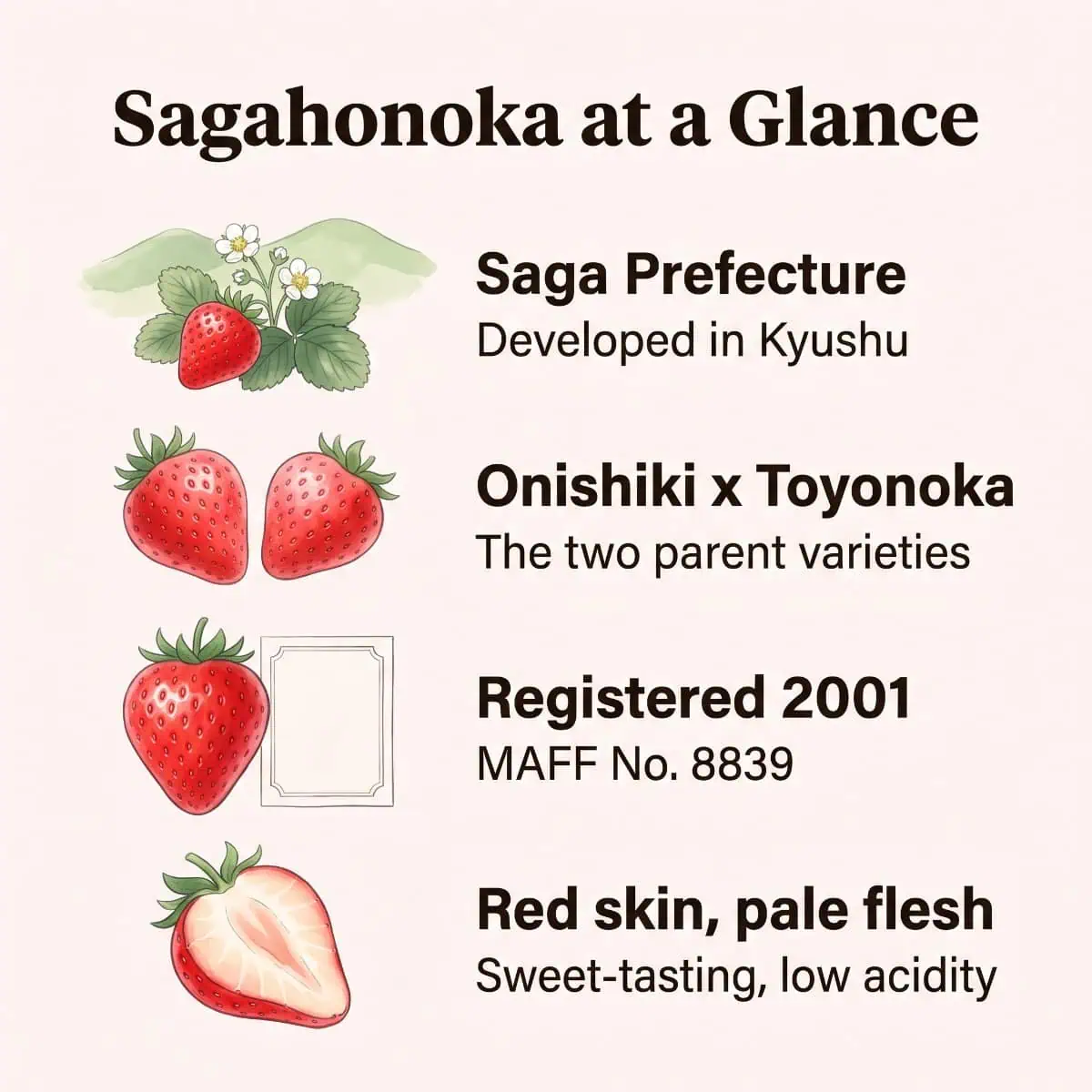
Sagahonoka is a strawberry cultivar developed by Saga Prefecture in Kyushu. Japan’s Ministry of Agriculture, Forestry and Fisheries (MAFF) registered it on March 19, 2001. Its parents are Onishiki (大錦) and Toyonoka. MAFF’s variety record describes large, conical, firm berries with bright red skin, white flesh and a white core.
Quick Facts
- Japanese name
- さがほのか
- Spelling
- Sagahonoka (registered form), also Saga Honoka
- Pronunciation
- sah-gah-hoh-noh-kah, five short even beats (not the English word saga)
- Developer
- Saga Prefecture, Kyushu
- Parents
- Onishiki (大錦) × Toyonoka (とよのか)
- Registration
- March 19, 2001, MAFF No. 8839
- Look
- Red skin, pale flesh, white central core
- Taste
- Sweet-tasting with low acidity
- Typical season
- Late November or December to May
- Grown today
- Listed as a main variety in Kumamoto, Oita, Miyazaki and Kagoshima
Name note: Saga is the prefecture that developed it. Honoka can suggest something gentle or faint in Japanese, but we found no official explanation of the name.
Is Sagahonoka a White Strawberry?
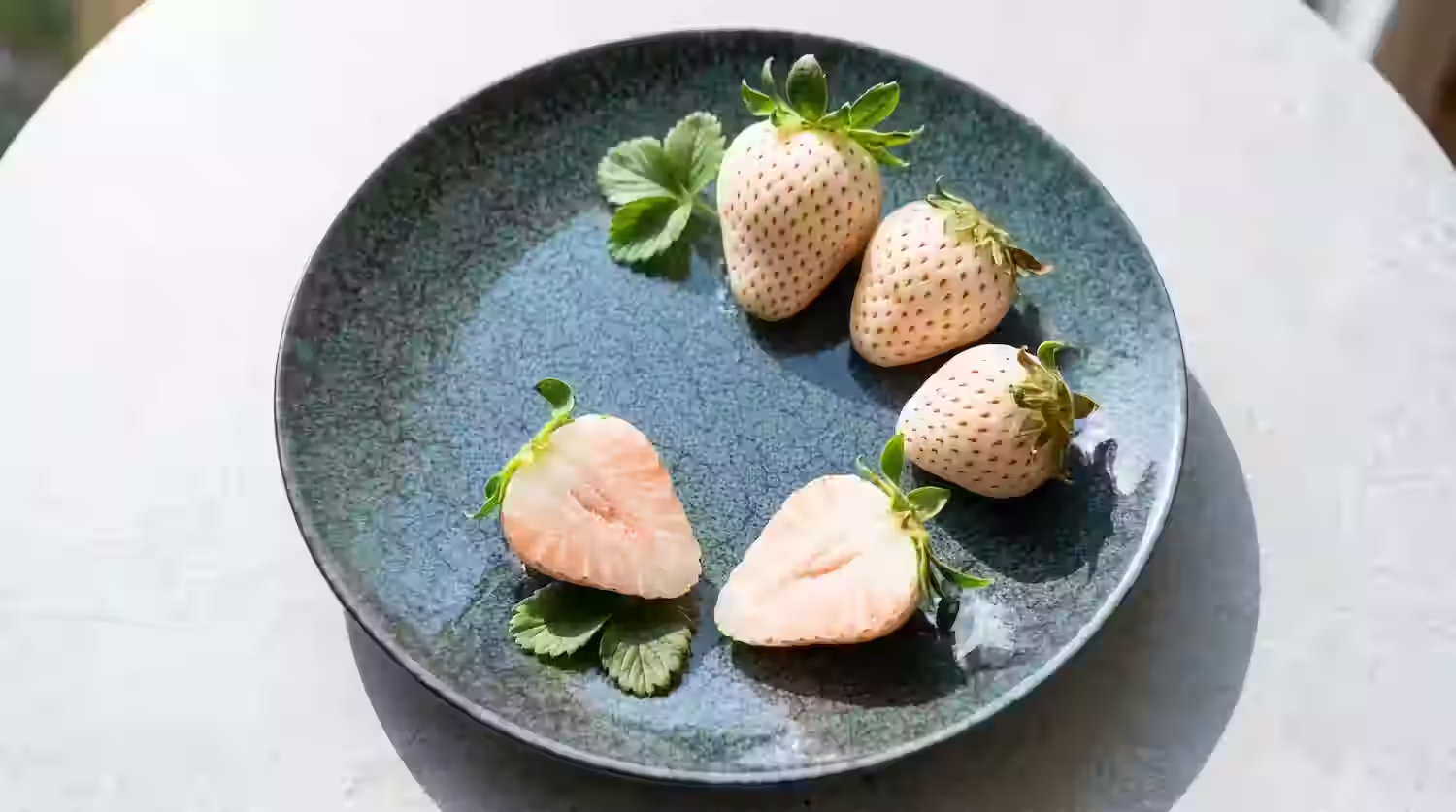
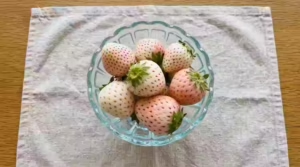
No. In English, white strawberry usually means varieties whose skin stays pale, such as the Yuki Usagi white strawberry from Saga. Sagahonoka ripens to a bright red outside. Only its flesh and central core stay pale, and that is a natural trait of the cultivar.
What Does Sagahonoka Strawberry Taste Like?
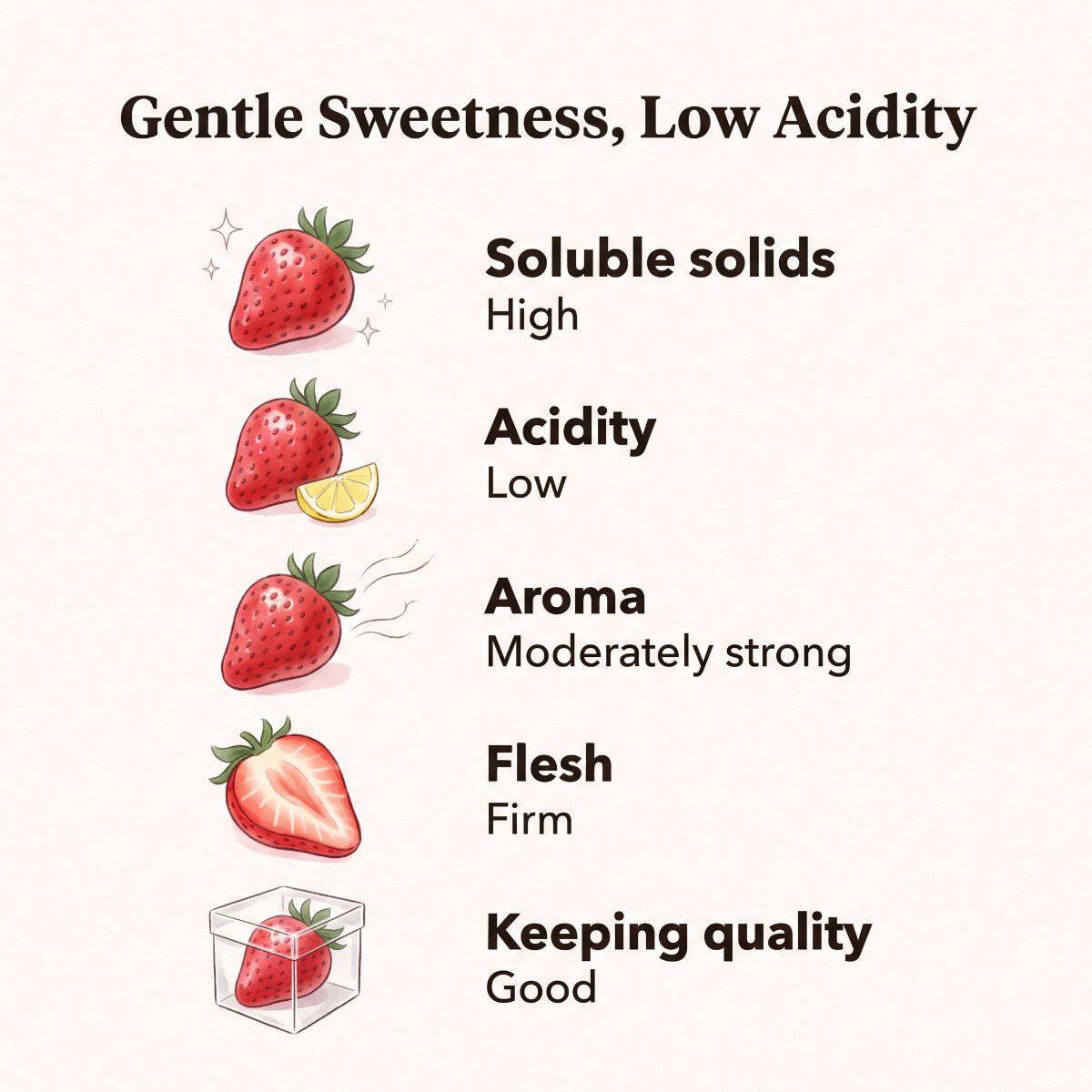
Sagahonoka tastes gently sweet rather than sharply sweet and sour. Its relatively low acidity makes the sweetness feel more pronounced and rounded. The firm flesh gives a clean bite, and its aroma is noticeable without overpowering the mild flavor.
Flavor profile from MAFF’s variety record
These are qualitative terms within the official record’s own classification, not consumer ratings or lab scores.
Sweetness and Mild Acidity
Low acidity changes how sweetness reads on the tongue. Because little sourness competes with the sugar, the fruit seems soft and rounded. Fans of tangy berries may find it a bit too gentle, and that is a fair reaction.
Measured sugar also varies, of course. In a 2014 to 2015 Saga breeding trial, Sagahonoka averaged 8.6°Brix. An Oita trial, by contrast, recorded 9.7°Brix with 0.36% acidity. So treat these as test-field examples, not retail specifications.
Texture and Appearance
The official record classes the fruit as hard, meaning firm flesh that helps the berries hold their shape. As a result, slices keep their edges on a plate. The record also classes the berries as large and conical, with glossy skin. Their red is lighter than deep crimson types such as Ichigosan.
When Is Sagahonoka Strawberry in Season?
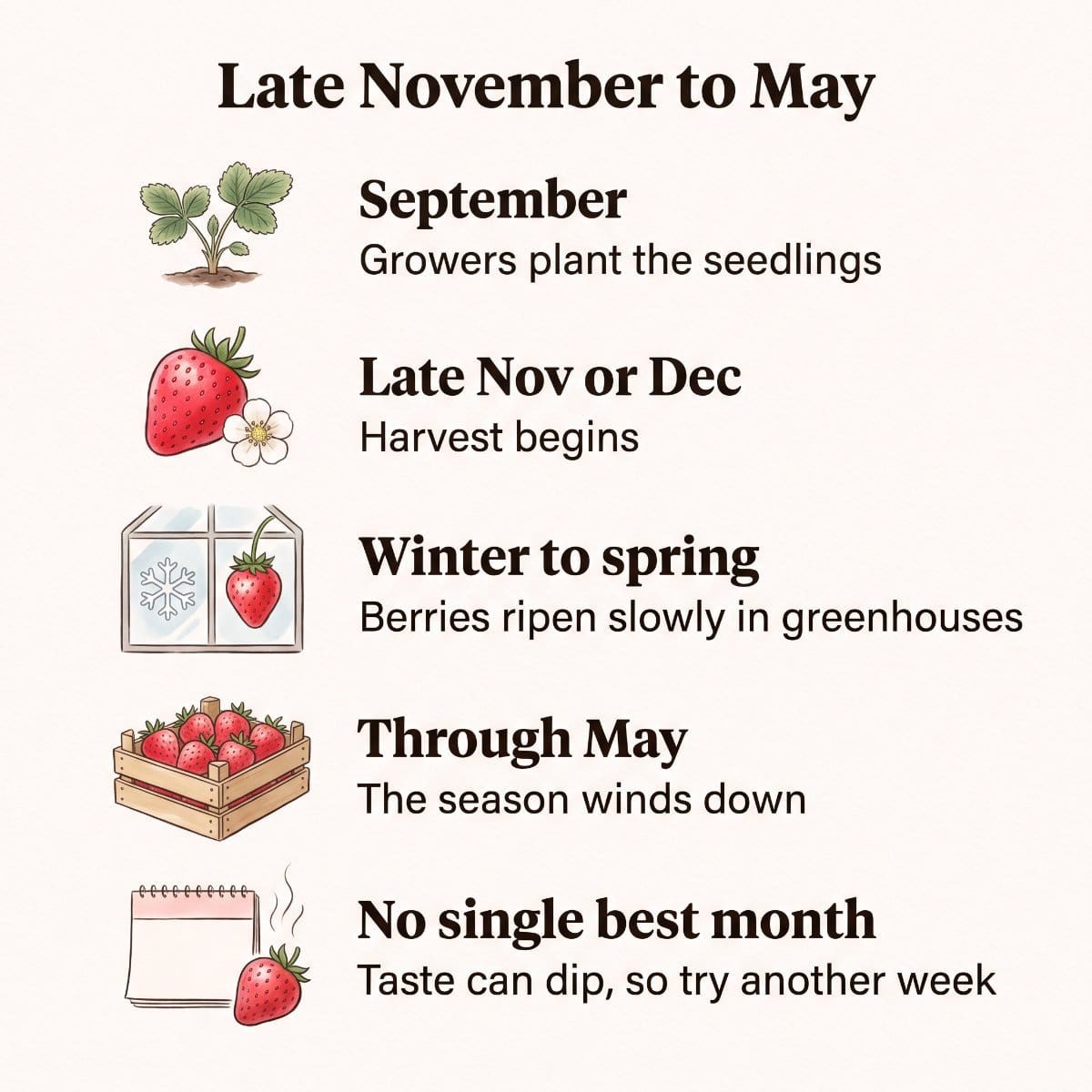
Farms typically harvest Sagahonoka from late November or December through May, although schedules differ by prefecture and farm. Growers usually plant around September and pick through winter and spring.
A typical Saga growing calendar
Exact dates shift by farm, region and weather each year.
Harvest Timing in Saga
A 2022 study describes Saga’s system as September planting with harvest until around May. In one Saga breeding trial, the first Sagahonoka berries came in on November 29. MAFF’s 2025 summary says Saga’s strawberry harvest as a whole can run into June. However, that window covers every variety in the prefecture, not Sagahonoka alone.
Is There a Best Month?
Official sources do not identify a single best month. A Saga study found that flowers opening in late December took about 52 days to ripen. By contrast, May flowers needed about 21 days. Berry size changed too, from 22.3 grams in December to about 15.2 grams in May.
Saga breeders also noted that sugar can dip at certain times. So if a pack tastes flat, try another a few weeks later.
Sagahonoka vs Other Japanese Strawberries
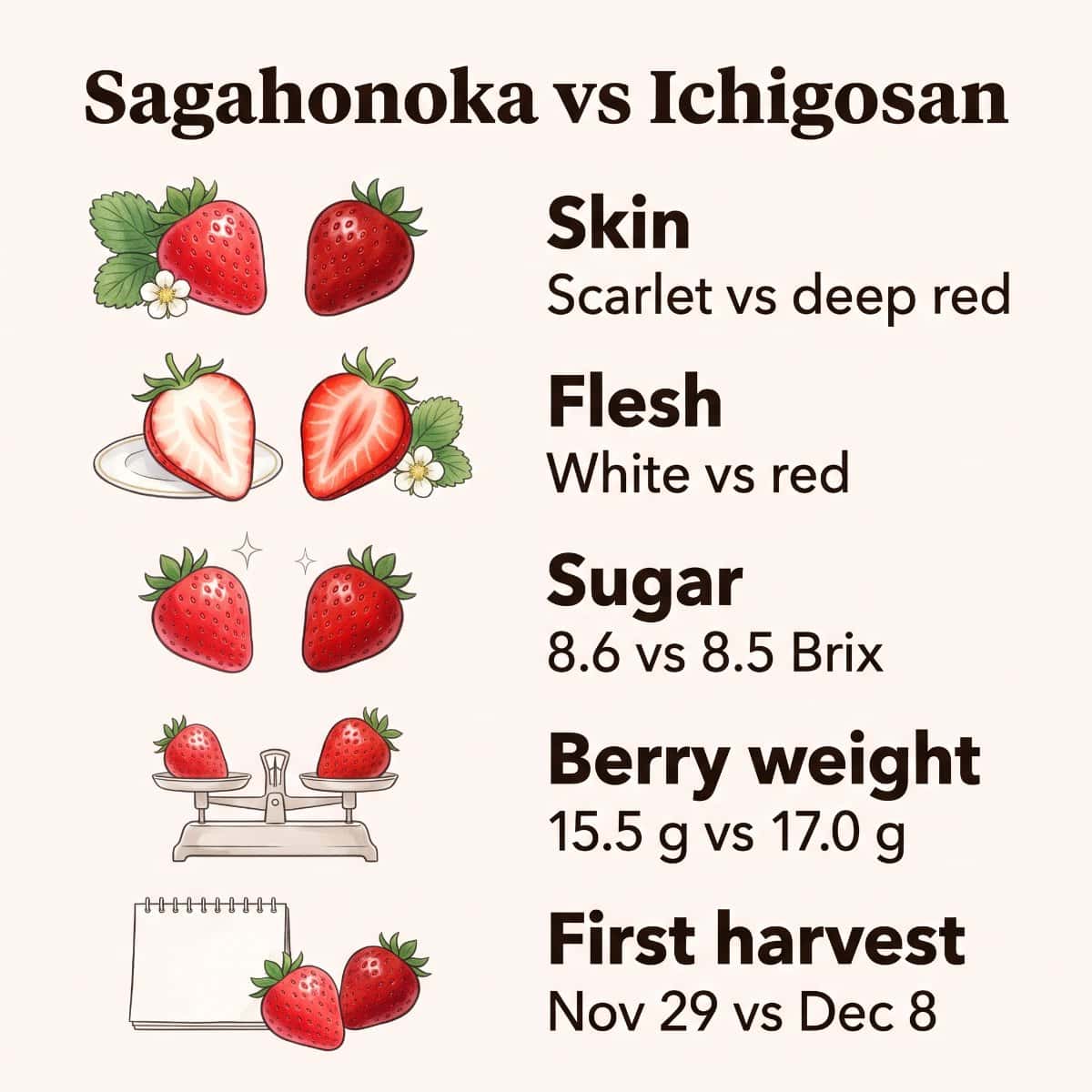
The best choice depends on whether you prefer gentle sweetness or a stronger sweet-tart balance.
Editorial method
The figures below come from the same Saga field trial, so they compare fairly. Still, they are trial averages, not fixed retail specifications.
| Trait (2014 to 2015 Saga trial) | Sagahonoka | Ichigosan (Saga i9) |
|---|---|---|
| Skin color | Bright scarlet | Deep red |
| Flesh color | White | Red |
| Average soluble solids | 8.6°Brix | 8.5°Brix |
| Average berry weight | 15.5 g | 17.0 g |
| Skin firmness (3 mm probe) | 78 g | 87 g |
| First harvest | November 29 | December 8 |
| Marketable yield per plant | 674 g | 810 g |
Source: Saga Prefectural Agricultural Research Center, 2017. Firmness is the force a 3 mm probe needed to pierce the fruit, so compare it only within this study. Real fruit varies by farm and season.
Sagahonoka vs Ichigosan
Ichigosan is Sagahonoka’s successor from the same research center. In the trial, it had deeper red skin, red flesh and higher yield, yet both averaged almost the same Brix. Separately, MAFF’s Saga office describes Ichigosan’s flavor as a balance of sweetness and acidity. So choose Sagahonoka if you prefer softer acidity.
Sagahonoka vs Amaou
Amaou comes from neighboring Fukuoka. ALIC describes it as large, high in sugar, moderately acidic and red inside. That gives a richer sweet-tart bite next to Sagahonoka’s mild profile. Read more about how Amaou strawberries differ in flavor and color.
Sagahonoka vs Tochiotome and Benihoppe
Meanwhile, ALIC describes Tochiotome from Tochigi as sweet, low in acid and firm. On paper, it sounds close, but Sagahonoka’s pale interior is its most visually distinctive trait. Benihoppe from Shizuoka, however, stays red right to the center. Our profile of Tochigi’s Tochiotome strawberry and guide to Japanese strawberry varieties cover more options.
History and Growing Areas
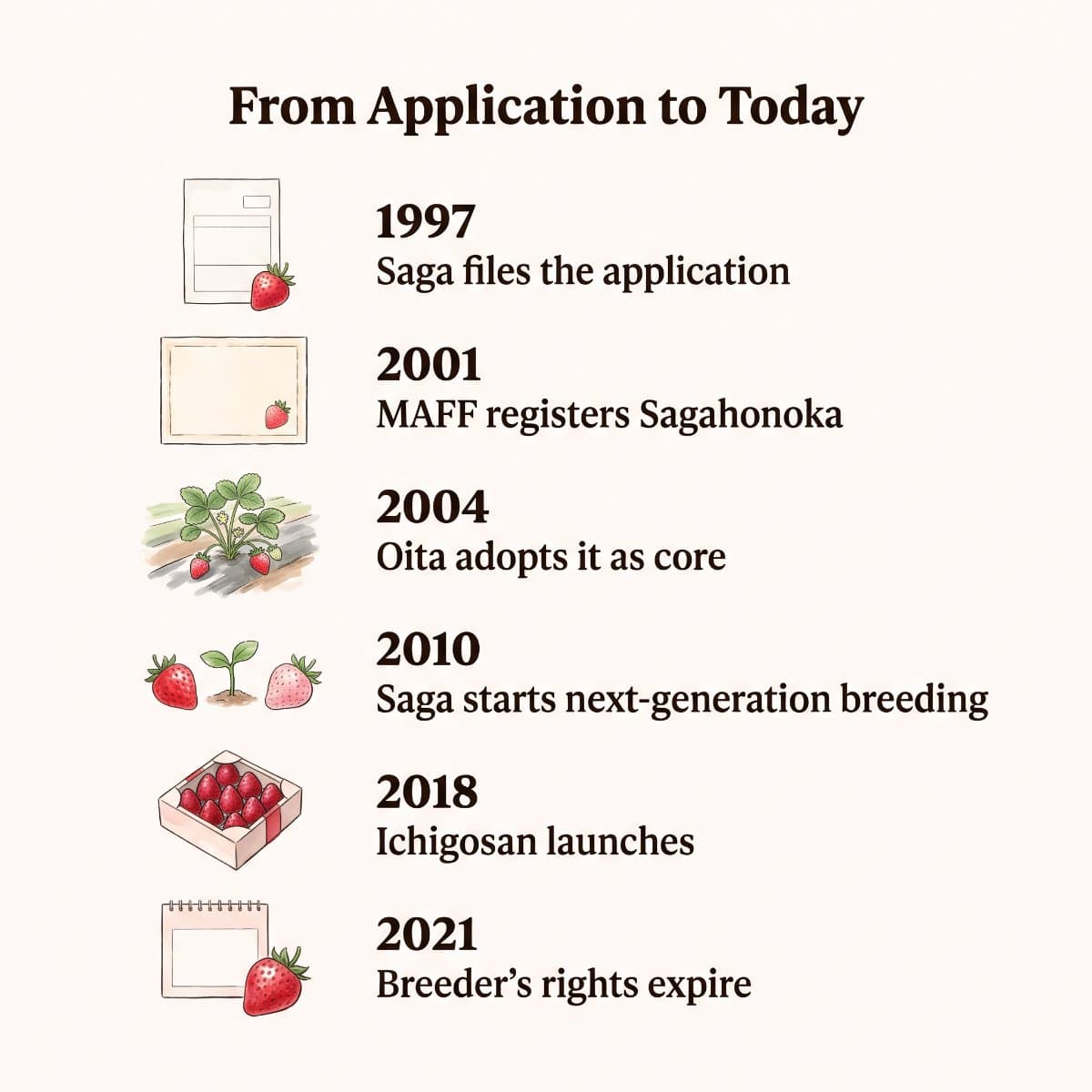
Sagahonoka began in Saga and spread across Kyushu, while Saga itself later shifted to the newer Ichigosan variety. These dates come from MAFF’s database and Saga research papers.
- 1997Saga Prefecture files the variety application in March.
- 2001MAFF registers Sagahonoka on March 19 as No. 8839.
- 2004Oita Prefecture adopts it as a core variety.
- 2010Saga starts breeding a next-generation strawberry.
- 2018Saga introduces Saga i9 commercially under the brand name Ichigosan.
- 2021Sagahonoka’s 20-year breeder’s rights expire in March.
Why Growers Adopted It
Research papers record its breeding line as Saga No. 2 (佐賀2号). Compared with Toyonoka, MAFF’s record notes an upright plant, white flesh and fewer surface grooves. Saga researchers add that it flowers early, keeps producing flower clusters and gives evenly shaped, long-keeping fruit.
As a result, those traits made it popular with farmers. A 2017 Saga report ranked it second in Japan by cultivated area. ALIC also notes that it once covered more than 95% of Saga’s strawberry fields.
The Shift to Ichigosan in Saga
However, Saga’s breeders identified several weaknesses, including lighter skin color, seasonal dips in sugar and fewer early berries. So Saga Prefecture developed Saga i9 as a successor and marketed it as Ichigosan from 2018. In Saga trials, it gave deeper color, larger fruit and higher yield. By 2025, MAFF’s Saga office called Ichigosan the prefecture’s main variety.
Where It Grows Today
Sagahonoka later became established outside Saga. MAFF’s 2025 Kyushu strawberry catalog lists it among the main varieties in Kumamoto, Oita, Miyazaki and Kagoshima. ALIC adds that farms across western Japan have grown it widely.
Most of this fruit comes from protected greenhouse cultivation. Northern Kyushu gets little winter sunlight, so many growers use heating and environmental controls. In fact, Saga research showed that daytime heating can shorten ripening time and raise winter yields.
How to Choose Fresh Sagahonoka Strawberries
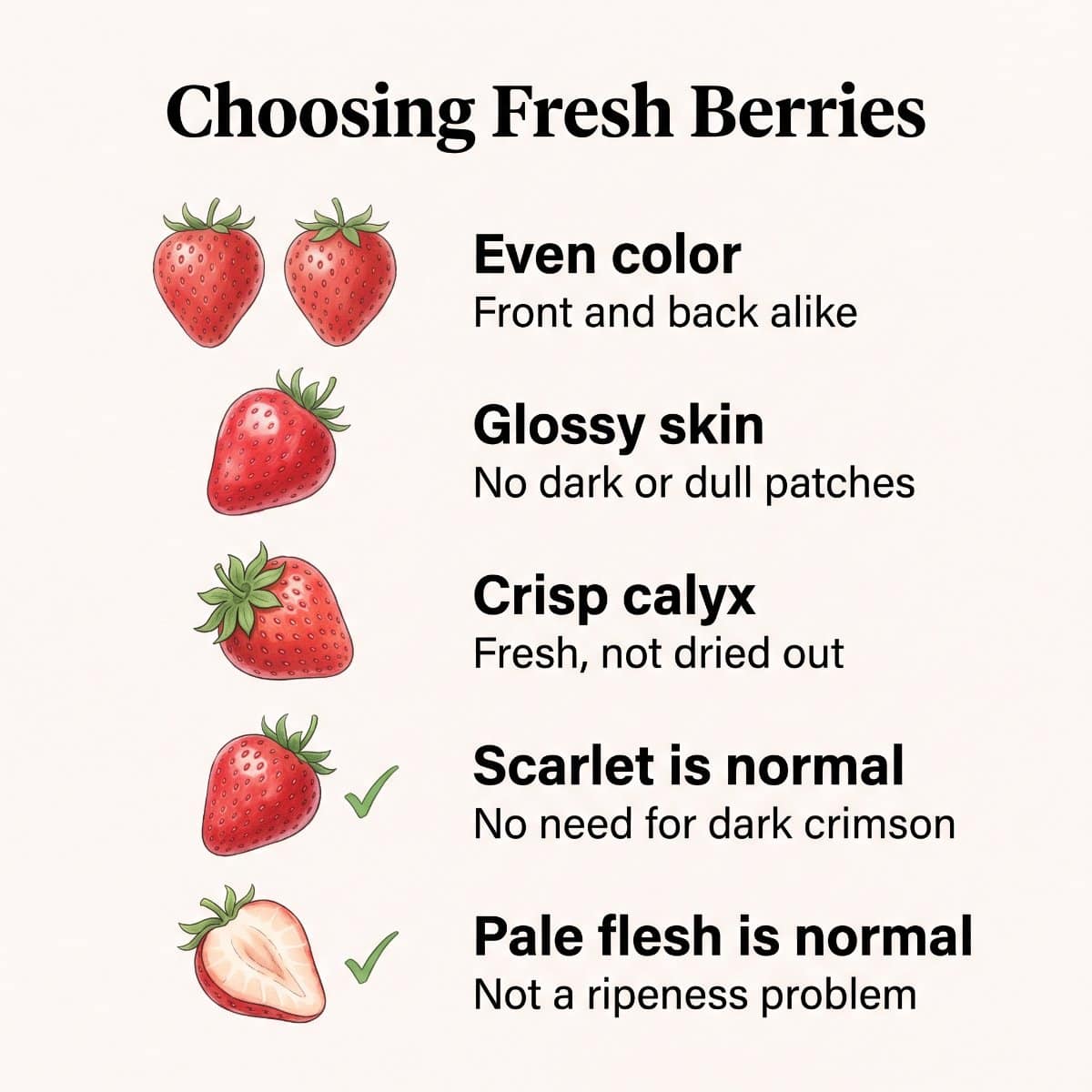
In Japanese shops, look for さがほのか on the front label. The growing prefecture may appear separately, so a pack from Oita or Kumamoto can still be Sagahonoka. Sagahonoka is a variety name, not a guarantee that the fruit came from Saga.
- Even color all over, with little difference between front and back
- Glossy skin with no dark or dull patches
- A crisp, fresh calyx that has not dried out
- Bright scarlet skin is normal, so don’t hunt for dark crimson
- Pale flesh inside is normal for this variety, not a ripeness problem
The first three checks come from Miyagi Prefecture’s farm department and apply to any strawberry. Also, check the bottom of the pack, because squashed berries spoil their neighbors fast.
How to Store Sagahonoka Strawberries
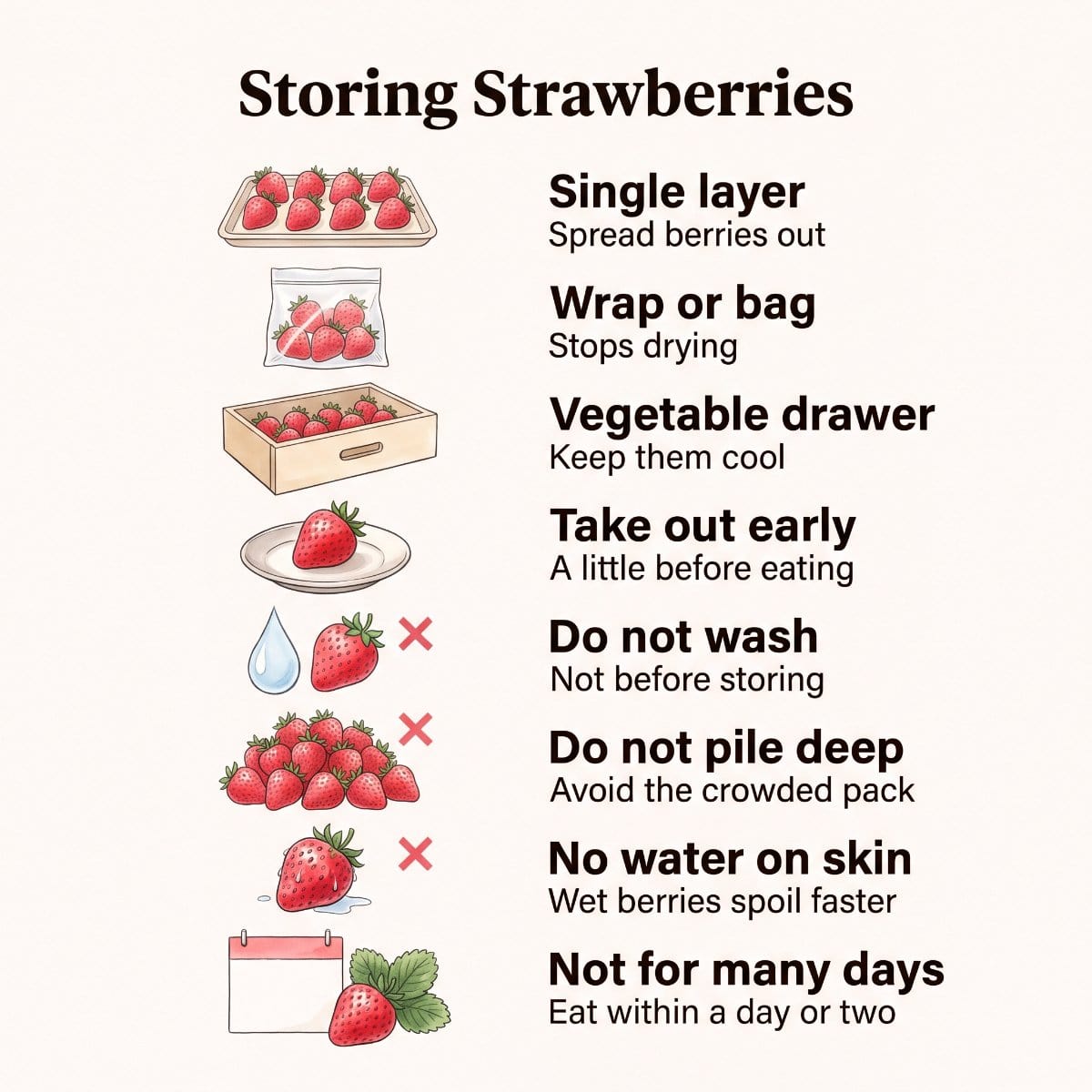
Even firm strawberries are delicate, though. So MAFF suggests taking them out of the crowded pack first. Then lay them in a single layer and refrigerate them in a plastic bag. If you do wash them, dry them well, since moisture invites mold.
Do
- Spread berries out in a single layer
- Bag or wrap them to stop drying
- Keep them in the vegetable drawer
- Take them out a little before eating
Don’t
- Wash them before storing
- Pile them deep in the original pack
- Leave water on the surface
- Plan on keeping them for many days
Miyagi Prefecture advises eating unwashed berries within one or two days for the best texture and flavor. Very cold fruit may taste less sweet and less aromatic. So many people take them out of the fridge about 10 to 20 minutes before eating. For longer storage, MAFF suggests washing, hulling and drying the berries, then freezing them. Thawed berries turn soft, though, so use them for jam or sauce.
How to Eat Sagahonoka Strawberries
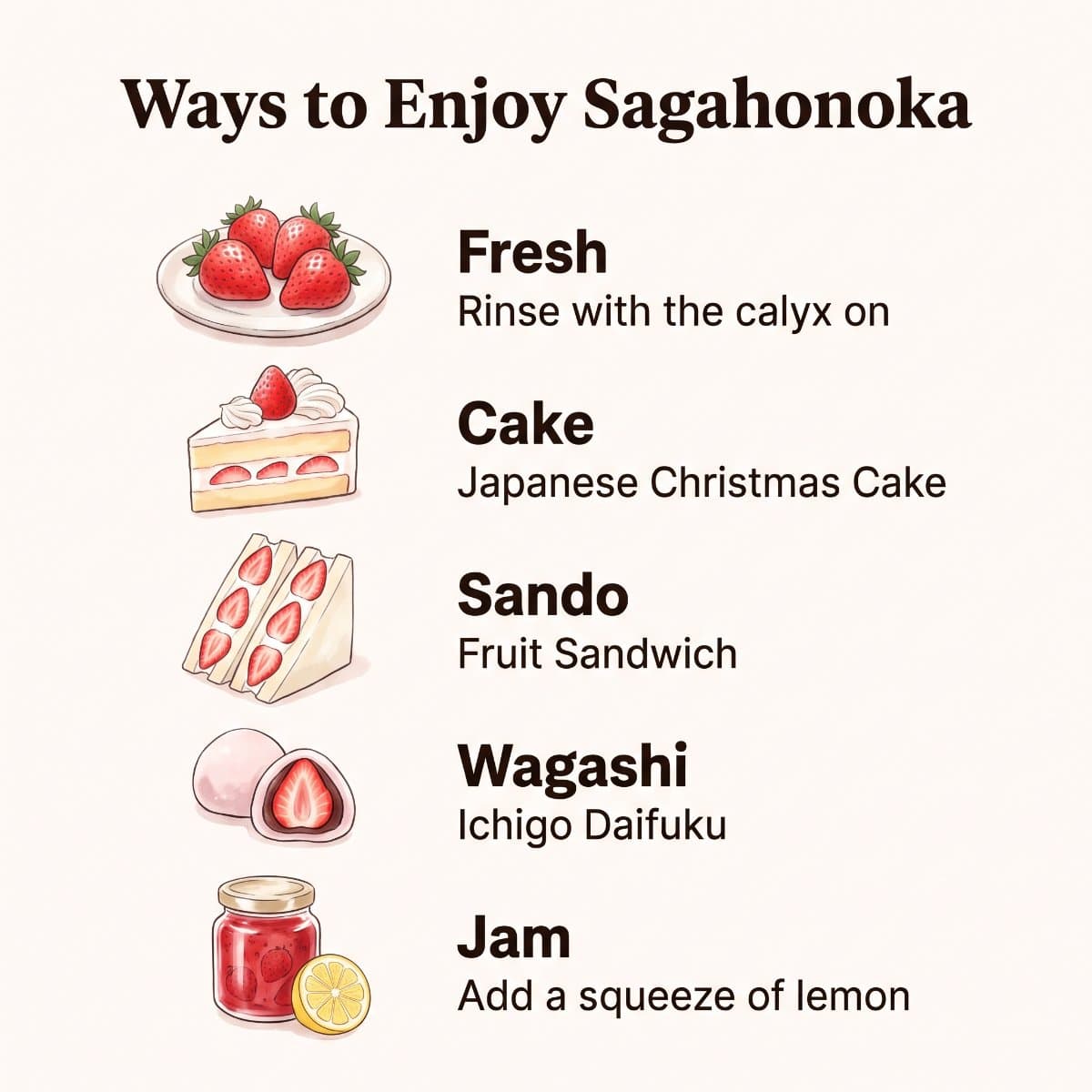
First, rinse each berry with the calyx still on. According to ALIC, hulling first lets vitamin C wash out and makes the fruit taste watery. MAFF also notes that the tip is the sweetest part. So bite from the calyx end and save the best for last.
Firm flesh is a real advantage in these sweets, because the slices stay tidy. The pale interior also gives a softer, pastel look than red-fleshed berries.
For jam, add a squeeze of lemon, since acidity runs low. ALIC notes that lemon juice also brightens the red color. Like other strawberries, Sagahonoka is a source of vitamin C and folate, although levels vary by ripeness and serving size.
Where to Buy Sagahonoka Strawberries
In Japan, search for the variety name さがほのか rather than relying only on the prefecture printed on the pack. During winter and spring, look in supermarkets and farm stands across Kyushu. Elsewhere in Japan, department store food halls often stock several Kyushu varieties side by side. Here is how to shop for premium fruit at Japanese department stores. Prices vary by size, grade and shop, so we don’t list fixed figures.
Buying Outside Japan
Many countries restrict fresh strawberry imports, so check with your national plant-protection agency first. Saga researchers have also raised broader concerns about unauthorized overseas propagation of Japanese cultivars. That does not prove every overseas Sagahonoka is illegal. Still, prefer sellers that clearly name the farm, country of origin and variety.
Sagahonoka Strawberry Picking in Japan
Strawberry picking, or ichigo-gari, is a popular winter and spring outing. Some Kyushu farms grow Sagahonoka for visitors, but varieties, dates and fees change every year. So always confirm on each farm’s official website before you go. To search in Japanese, try さがほのか いちご狩り plus a prefecture name, such as 大分 or 熊本.
Visiting Saga? Pair a farm stop with Yobuko’s live squid sashimi or Ureshino’s hot-spring tofu. Our overview of Kyushu’s regional dishes helps with the rest of the trip.
Why Sagahonoka Is Worth Trying
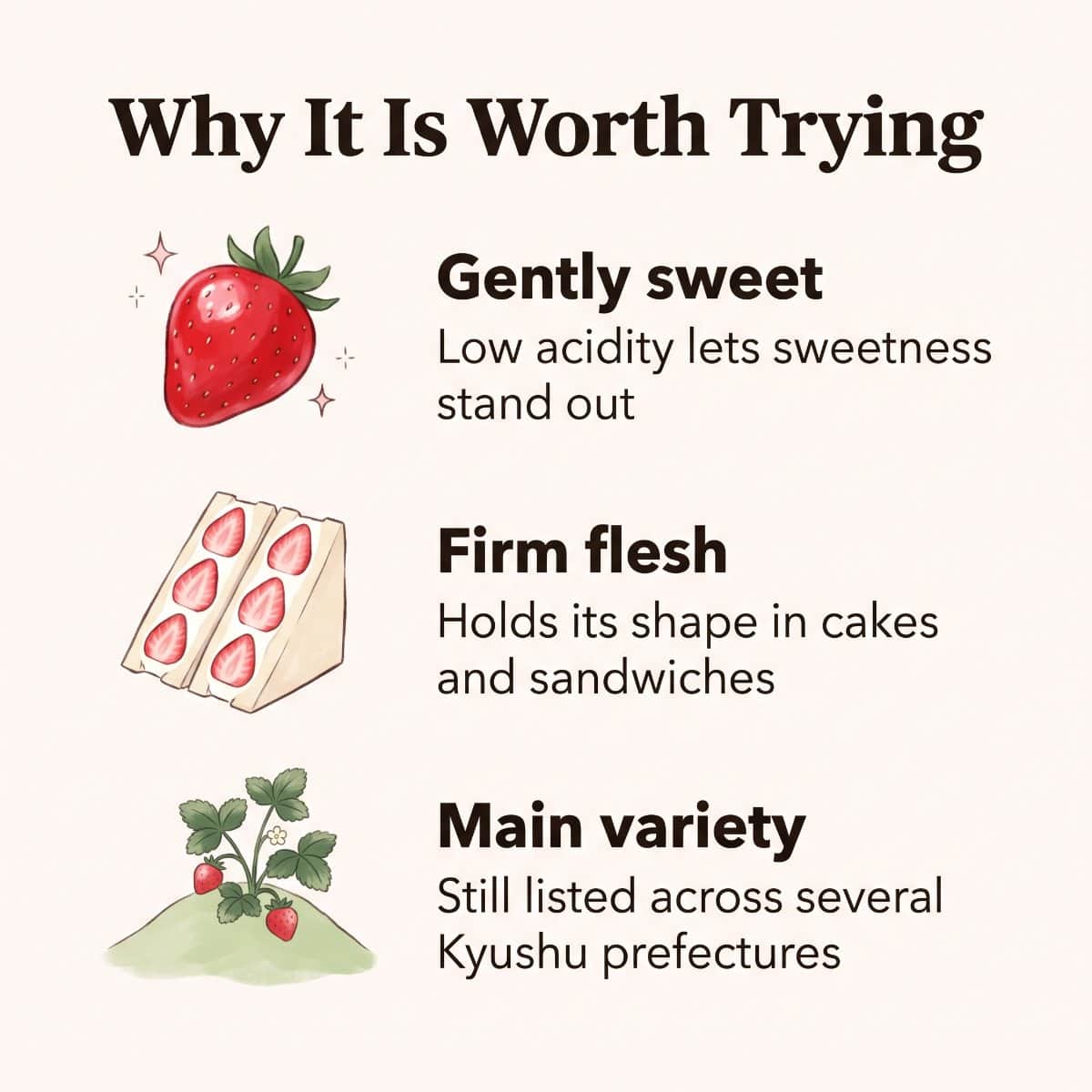
Although Ichigosan has replaced it as Saga’s main variety, Sagahonoka remains distinctive for three reasons.
- Gently sweet, with low acidity that makes the sweetness stand out
- Firm flesh that holds its shape well in cakes and fruit sandwiches
- Still listed as a main variety in several Kyushu prefectures
Finally, browse more regional Japanese fruit varieties to plan your own tasting.
Frequently Asked Questions About Sagahonoka
About the Variety
- What is Sagahonoka strawberry?
-
Sagahonoka is a Japanese strawberry cultivar developed by Saga Prefecture in Kyushu. MAFF registered it in 2001 after breeders crossed Onishiki with Toyonoka. The berries have glossy red skin, pale flesh and a white core. They taste sweet because acidity stays low.
- Is Sagahonoka a white strawberry?
-
No. Sagahonoka ripens with bright red skin, unlike white-skinned varieties such as Yuki Usagi. Only its flesh and central core stay pale. That pale interior is a natural trait, so it does not mean farmers picked the fruit underripe.
- Where is Sagahonoka grown today?
-
Saga developed Sagahonoka, but Ichigosan is now the prefecture’s main strawberry. MAFF’s 2025 Kyushu catalog lists Sagahonoka among the main varieties in Kumamoto, Oita, Miyazaki and Kagoshima. Some small-scale growing may continue elsewhere, but the catalog does not list it as a main Saga variety.
Taste and Comparison
- Is Sagahonoka sweet or sour?
-
Sagahonoka tastes gently sweet rather than sharply tart. MAFF’s variety record classes its soluble solids as high and its acidity as low. Still, actual sweetness changes with farm, weather and ripeness. Its firm flesh also gives a cleaner bite than very soft varieties.
- How is Sagahonoka different from Ichigosan?
-
Ichigosan is Saga’s newer variety and Sagahonoka’s successor. In a Saga trial, Ichigosan showed deeper red skin, red flesh and higher yield. Both averaged similar Brix. Ichigosan aims for a balance of sweetness and acidity, while Sagahonoka feels softer.
Season, Buying and Storage
- When is Sagahonoka in season?
-
Farms typically harvest Sagahonoka from late November or December through May. Growers usually plant in September and pick in heated greenhouses over winter and spring. Schedules differ by prefecture and farm, and timing also shifts with each year’s weather.
- Can I buy Sagahonoka outside Japan?
-
It is difficult in most places, because many countries restrict fresh strawberry imports. Check your national plant-protection rules before ordering. Also, prefer sellers that clearly identify the producing farm, country of origin and variety name.
- How should I store Sagahonoka strawberries?
-
Take them out of the pack and spread them in a single layer. Then put them in a bag and keep them in the fridge without washing. Eat them within a day or two for the best texture and flavor. For longer storage, freeze them and use them for jam or sauce.
References
Show all 12 references
- MAFF Plant Variety Protection Database – Sagahonoka, Registration No. 8839 (Accessed October 2026)
- MAFF Kyushu Regional Agricultural Administration Office – Kyushu Strawberry Catalog, January 2025 update (Accessed October 2026)
- MAFF Kyushu Regional Agricultural Administration Office, Saga – Strawberries of Saga Prefecture, 2025 (Accessed October 2026)
- Saga Prefectural Agricultural Research Center – New Strawberry Cultivar Saga i9 with Deep Color and High Yield, 2017 (Accessed October 2026)
- Saga Prefectural Agricultural Research Center – Center News No. 9: Breeding Saga i5 and Saga i9, 2017 (Accessed October 2026)
- Saga Prefectural Agricultural Research Center – Variety Identification Technology for Saga i9 (Ichigosan), 2020 (Accessed October 2026)
- Saga Prefecture Uwaba Agricultural Center – Ripening Days and Greenhouse Temperature in Sagahonoka, 2013 (Accessed October 2026)
- J-STAGE – Tagawa, A., Ito, Y., Ehara, M., Araki, T., Ozaki, Y., & Shishido, Y. (2022). Effects of daytime heating in winter on yield, photosynthesis and 13C-photosynthate translocation in Sagahonoka strawberry. Horticultural Research (Japan), 21(1), 65–71 (Accessed October 2026)
- Oita Prefectural Agriculture, Forestry and Fisheries Research Center – Ikenaga, A., et al. (2020). Breeding of New Strawberry Cultivar Oita 6gou and Cultivation Characteristics in Oita Prefecture. Research Bulletin, Agricultural Research Division, 7, 1–7 (Accessed October 2026)
- Agriculture and Livestock Industries Corporation (ALIC) – Vegetable Book: Strawberry (Accessed October 2026)
- Ministry of Agriculture, Forestry and Fisheries (MAFF) – aff December 2019: Strawberry Tips and Trivia (Accessed October 2026)
- Miyagi Prefecture Agricultural Policy Department – Sukusuku Miyagikko Newsletter No. 8: Strawberries, 2022 (Accessed October 2026)
Related Articles
 Guide
Japanese Strawberry Guide: 5 White Varieties and 2 Red Favorites
Compare the main white and red strawberry varieties in Japan.
Surveyed: October 2026
 Fukuoka
Amaou Strawberry (あまおう): Japan’s King of Fruits
Fukuoka’s large, sweet-tart strawberry.
Surveyed: October 2026
 Saga
Yuki Usagi Strawberry (雪うさぎ)
Saga’s rare white strawberry.
Surveyed: October 2026
 Tochigi
Tochiotome Strawberry
The classic Tochigi strawberry, sweet with a gentle tang.
Surveyed: October 2026






Comments