



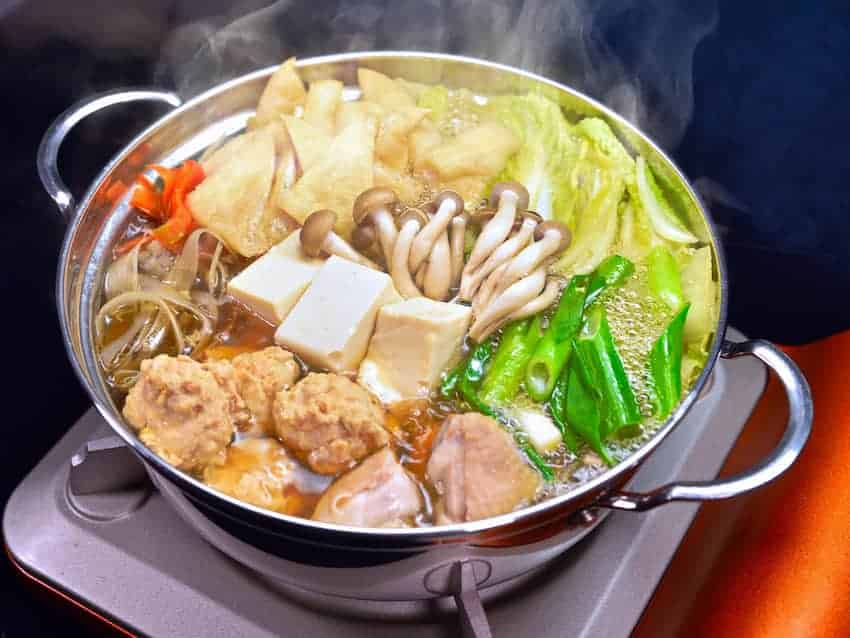
Chanko nabe (ちゃんこ鍋) is a communal Japanese hot pot associated with sumo stables. It combines meat or seafood, tofu, and vegetables in a seasoned broth. Recipes and seasonings vary from stable to stable. In fact, chanko nabe is so closely associated with professional sumo that it has become the best-known example of stable food.
Here is how this hearty hot pot became part of Japan’s sumo culture. This guide covers what goes into it, why wrestlers eat it, and what it costs. It also shows where to eat chanko nabe in Ryogoku, Tokyo’s sumo district.
What Is Chanko Nabe?
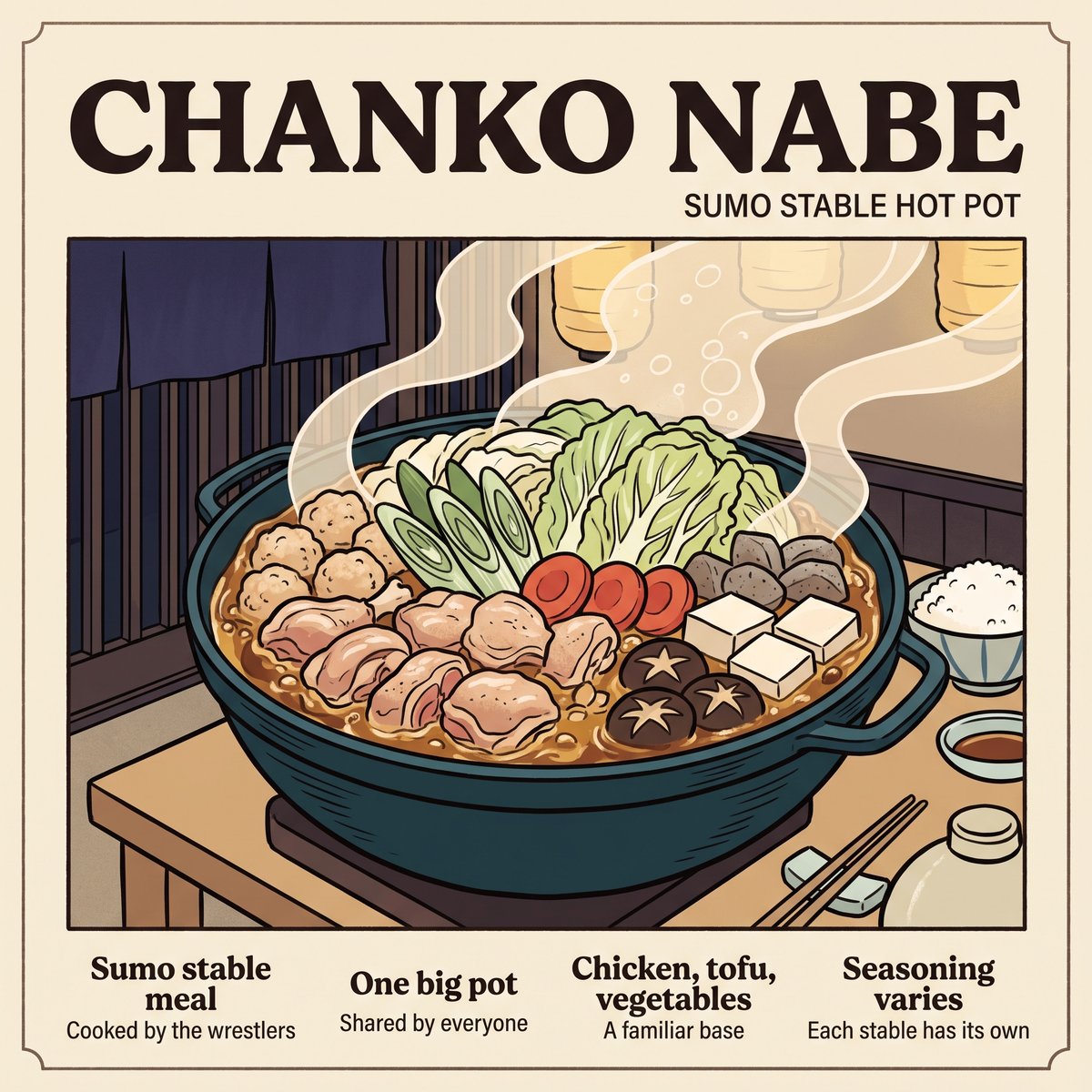
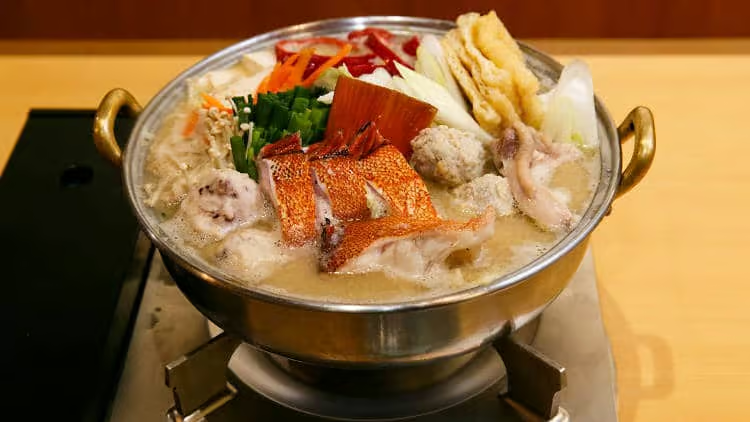
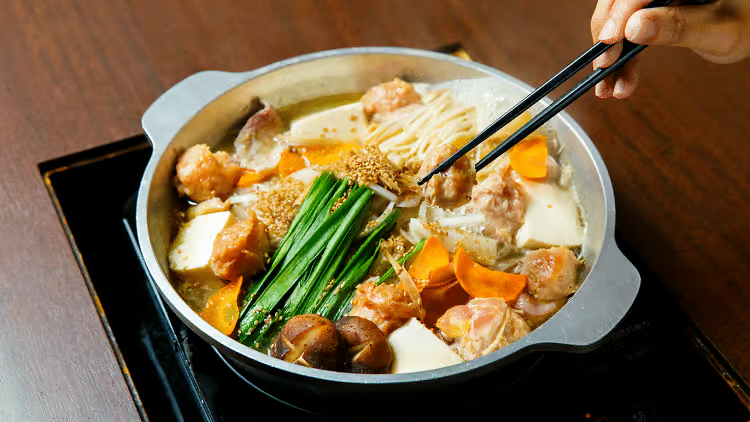
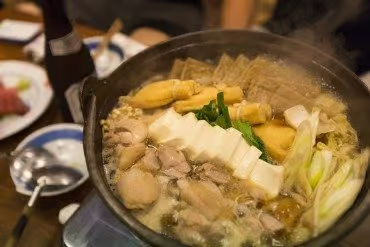
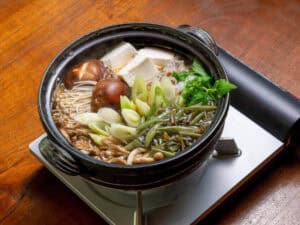
Chanko nabe is the hot pot that sumo wrestlers cook and eat in their stables. Japan’s agriculture ministry lists chicken, napa cabbage, carrot, leek, mizuna, shiitake, fried tofu, and tofu as typical ingredients. The broth is usually dashi or chicken stock, while the seasoning varies.
Quick Facts: Chanko Nabe
- Japanese name
- ちゃんこ鍋 (chanko nabe)
- Main area of tradition
- Sumida Ward, Tokyo
- Associated culture
- Sumo
- Typical broth
- Dashi or chicken stock
- Main ingredients
- Chicken, chicken meatballs, tofu, vegetables
- Where to eat
- Ryogoku and other parts of Tokyo
- Price range
- From a few hundred yen for a tournament bowl to several thousand yen per person at restaurants
Chanko vs. Chanko Nabe
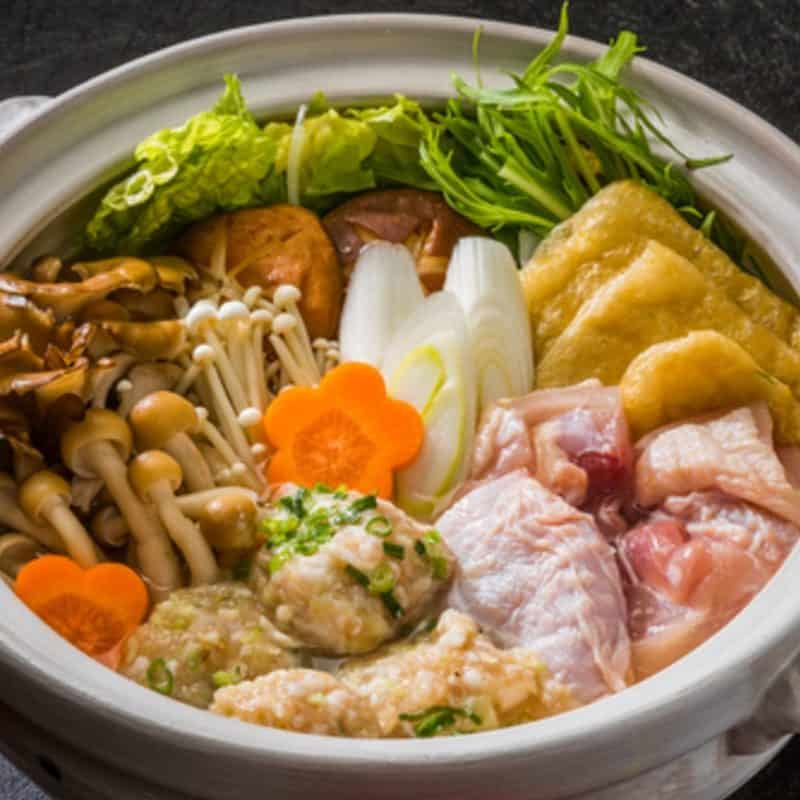
Chanko is a broad term used in professional sumo for food prepared by wrestlers. According to the Japan Sumo Association, even curry or fried chicken counts as chanko when a wrestler cooks it. Chanko nabe is its best-known form: a communal hot pot whose ingredients and seasoning vary from stable to stable.
Where Does the Word “Chanko” Come From?
Nobody knows for certain. The Japan Sumo Association says several theories exist and none is settled. One links the word to a Chinese-made metal pot called a shāguō, which reached Nagasaki. Others, however, connect chan, an old word for father, with ko, meaning child: the stable master and his disciples. A third says Yokozuna Hitachiyama called his elderly cook “chanko,” the father figure. It is an appealing set of stories, but none has become the accepted explanation.
Ryogoku, Sumo Stables, and the Kokugikan
Three names come up constantly. First, Ryogoku is a neighborhood in Sumida Ward, east of central Tokyo. Second, the Ryogoku Kokugikan is the arena there where three of the six annual tournaments take place. Finally, sumo stables are the live-in training houses where wrestlers eat, sleep, and practice, and many of them cluster around Ryogoku. That is why chanko restaurants cluster there too.
History of Chanko Nabe
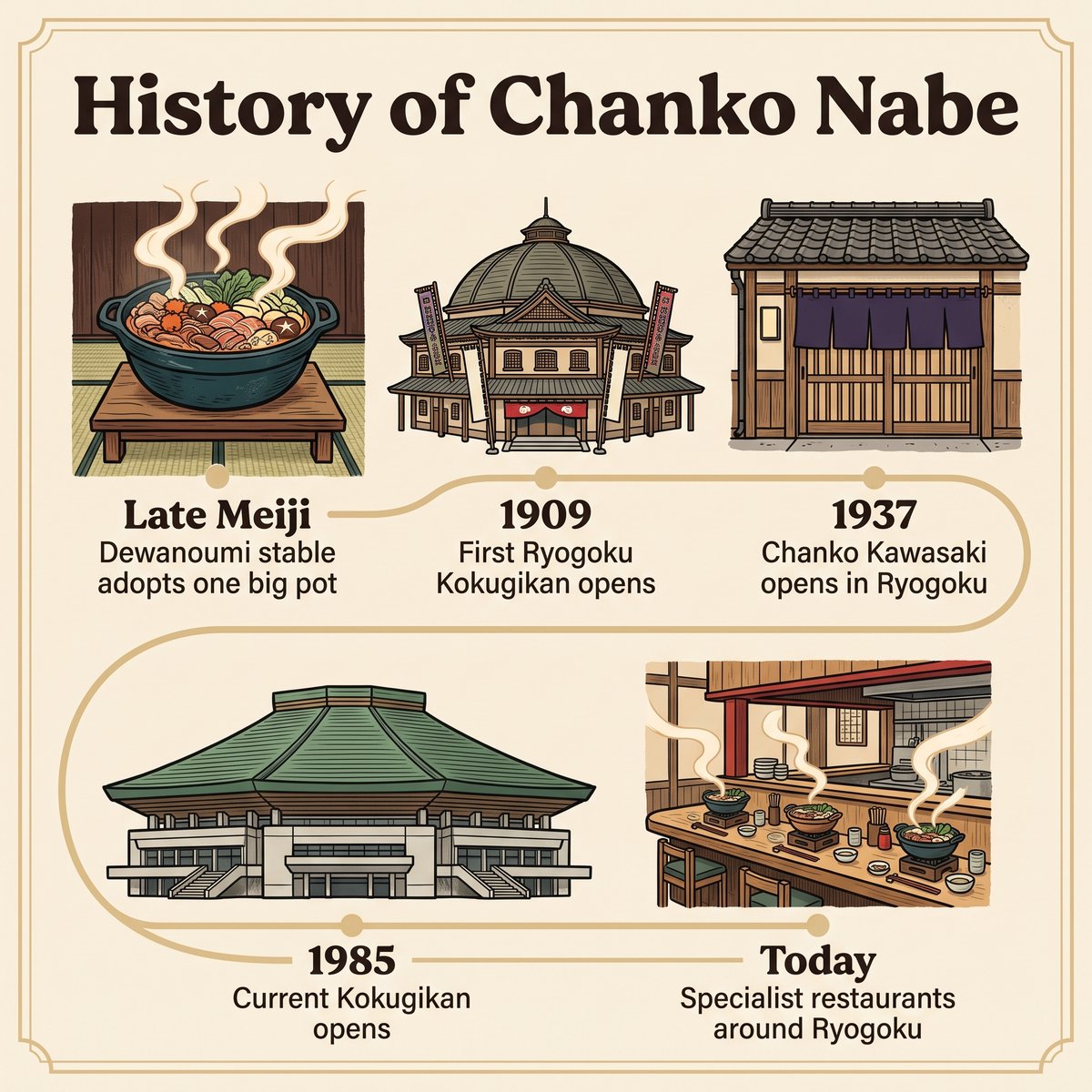
Chanko nabe is said to have begun in the Meiji era (1868 to 1912). In particular, tradition credits the Dewanoumi stable with establishing the big communal pot. Later, retired wrestlers carried the dish into restaurants.
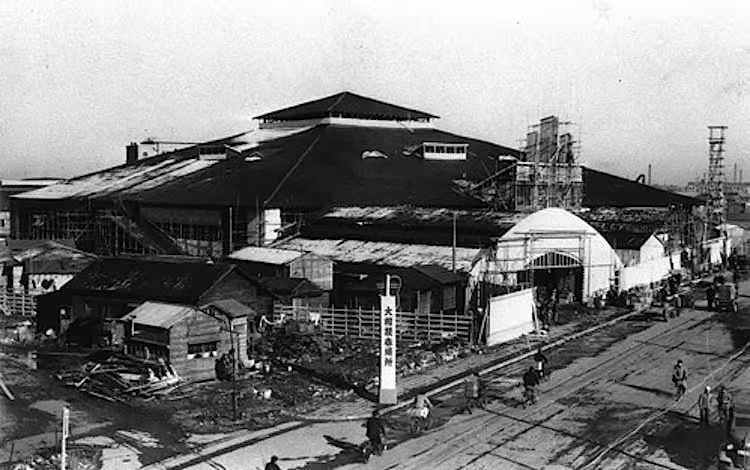
- Late MeijiDewanoumi stable is said to adopt one large shared pot for its many recruits.
- 1909The first Ryogoku Kokugikan holds its opening ceremony on June 2.
- 1937Chanko Kawasaki opens in Ryogoku, described locally as the first chanko restaurant.
- 1985The current Ryogoku Kokugikan opens, bringing sumo back to Ryogoku.
- TodaySpecialist restaurants and other eateries around Ryogoku serve the dish.
Origins in the Dewanoumi Stable
The first Kokugikan opened in 1909. Around that time, yokozuna Hitachiyama attracted many new wrestlers to Dewanoumi stable. According to a Tokyo regional-resource profile, the stable could no longer serve individual meals efficiently. Hitachiyama therefore introduced a large communal pot. From there, this style is widely said to have taken root across sumo. The agriculture ministry is more cautious, saying only that the dish “is said to have begun” in the Meiji era.
Why a pot? In short, large pots suited a house full of hungry young men. One cook could feed many people at once, which would have reduced the need to prepare and serve individual dishes. Detailed records of stable meals before the communal-pot system are limited, however.
From Stable Kitchens to Restaurants
A retired wrestler known by the ring name Yokoteyama (横手山) opened Chanko Kawasaki in Ryogoku in 1937. The Sumida Meihin Meiten Association describes it as the first restaurant to place wrestlers’ chanko on a commercial menu. Independent confirmation of that “first” is hard to find, so treat it as local tradition. Either way, the pattern stuck. Former wrestlers across Tokyo now run chanko restaurants, many passing on the flavor of their old stable.
Why Do Sumo Wrestlers Eat Chanko Nabe?
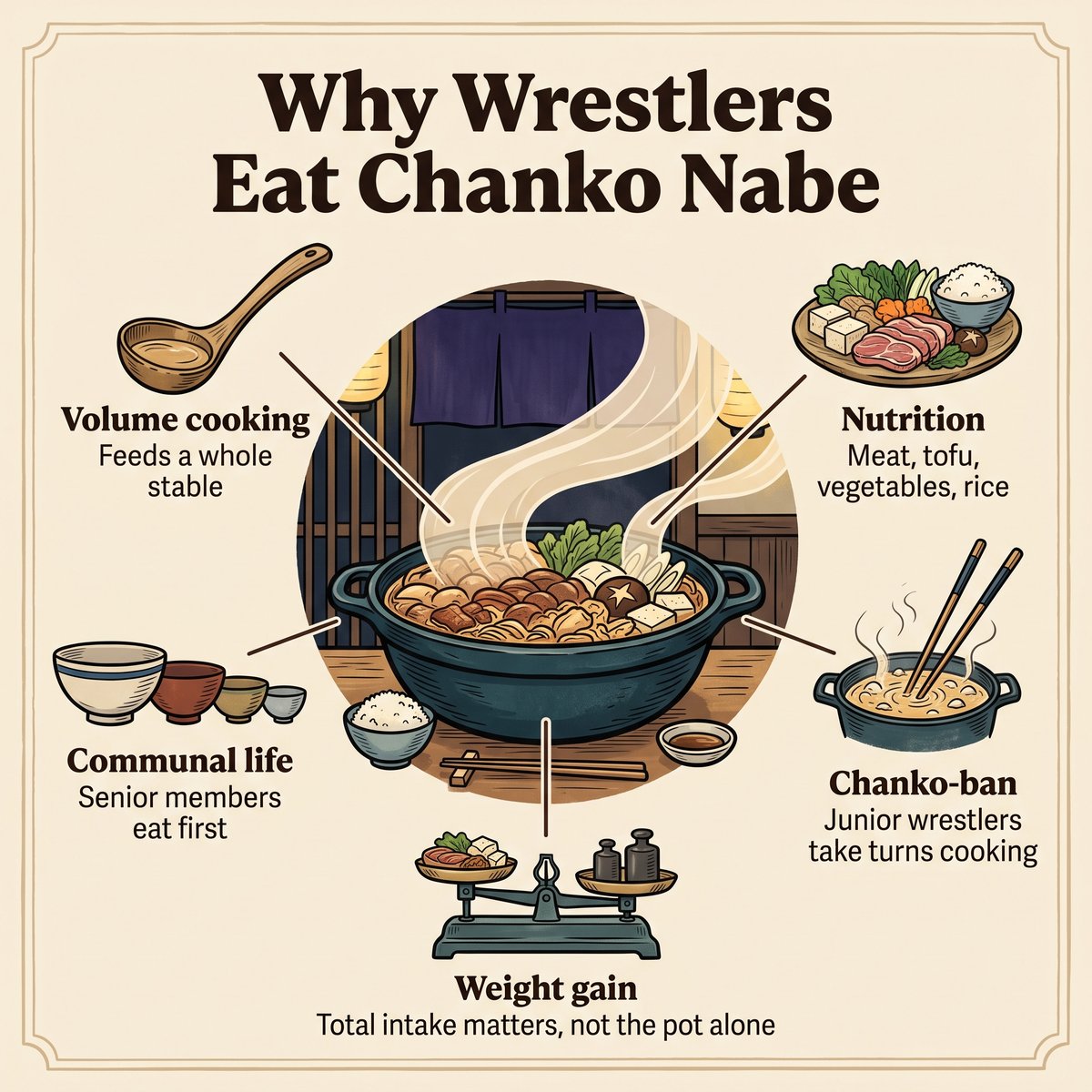
Sumo wrestlers eat chanko nabe because cooks can prepare it in large quantities with protein and vegetables. In short, it is practical, filling, and shared. The agriculture ministry calls it an essential dish for building wrestlers’ bodies, eaten in stables all year round.
- Volume cooking: large pots can feed many members of a stable efficiently after training.
- Nutrition: meat, tofu, and vegetables go in together, usually with rice on the side.
- Communal life: meals have traditionally reflected the stable hierarchy, with senior members generally eating first.
Who Cooks It?
That said, practices vary by stable. Traditionally, lower-ranked wrestlers take turns as chanko-ban, the cooks on duty. An experienced one then becomes the chanko-chō, or head cook. However, that is not a universal rule. During the 2026 Nagoya tournament, a municipal report on the Onomatsu stable’s lodgings found cooking began around 7 a.m. The kitchen was led by a tokoyama, a specialist sumo hairdresser, and a yobidashi, a ring attendant, with help from wrestlers after training.
Does It Make Wrestlers Gain Weight?
Not by itself. Rather, the hot pot is one part of a high-volume diet, and the eating pattern matters as much as the dish. A 1976 study involving 96 wrestlers, published in the American Journal of Clinical Nutrition, described the typical sumo diet of that period as exceeding 5,000 calories a day, generally eaten in two meals. Meanwhile, a small Japanese survey of nine wrestlers at one Ryogoku stable, published in 1975, found around 4,000 to 4,500 calories a day. Also note that both studies are now about half a century old. The smaller survey covered only one stable, and the larger study still reflects its era. Taken together, they suggest that total energy intake and overall eating patterns mattered more than the hot pot itself.
What Does Chanko Nabe Taste Like?
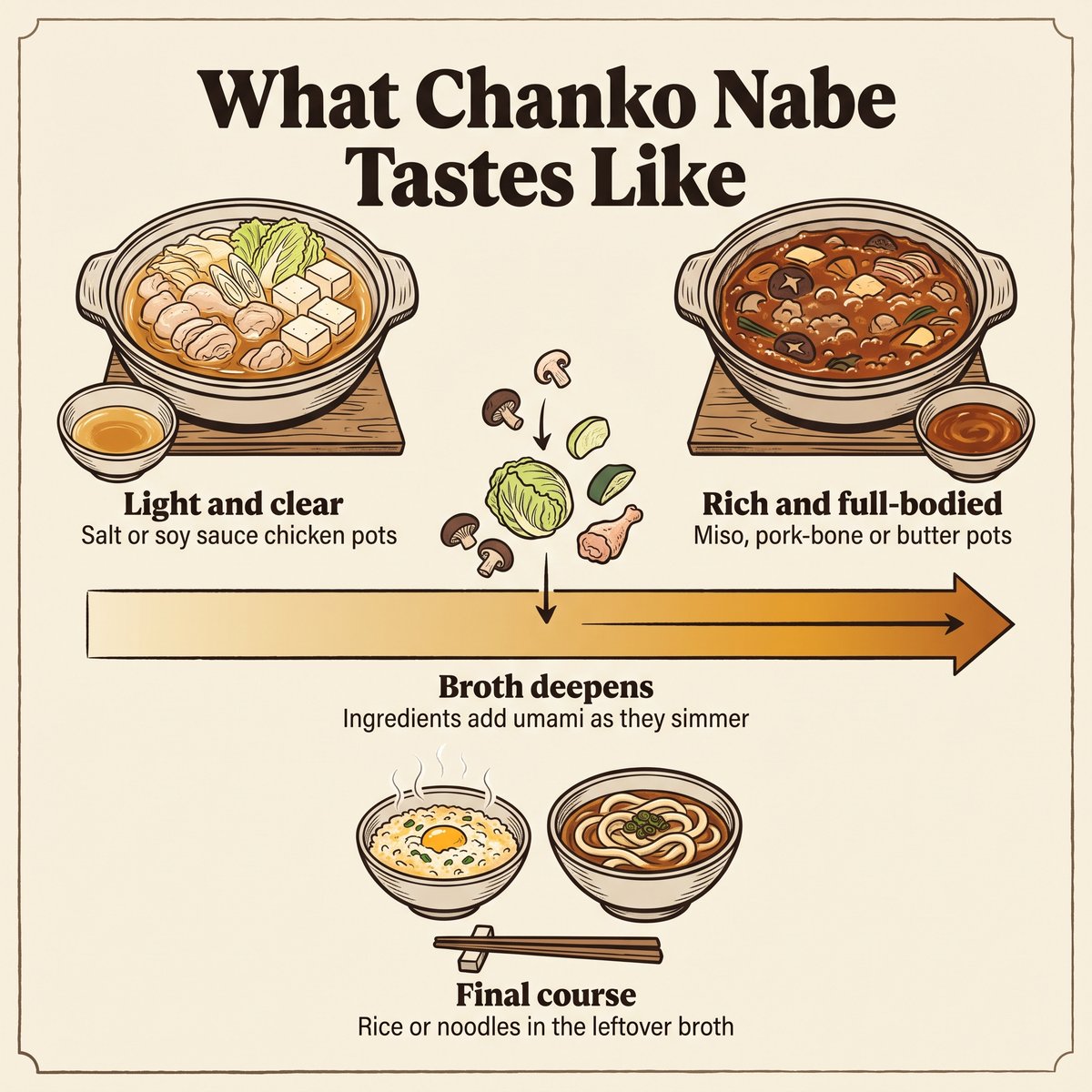
Chanko nabe can range from light and clear to rich and full-bodied. Chicken-based salt and soy-sauce versions are often clean and savory, much like a good chicken soup. Miso, pork-bone, or butter-seasoned pots, by contrast, are heavier. Either way, the broth carries most of the flavor, so the seasoning defines its character.
As the ingredients simmer, they release more flavor into the broth. Chicken bones can give the broth body, while kombu, bonito, mushrooms, seafood, and vegetables add different layers of umami. By the end of the meal, the broth tastes very different from the start. That change is part of the appeal, and it makes the remaining broth ideal for a final course of rice or noodles.
Ingredients and Types of Chanko Nabe
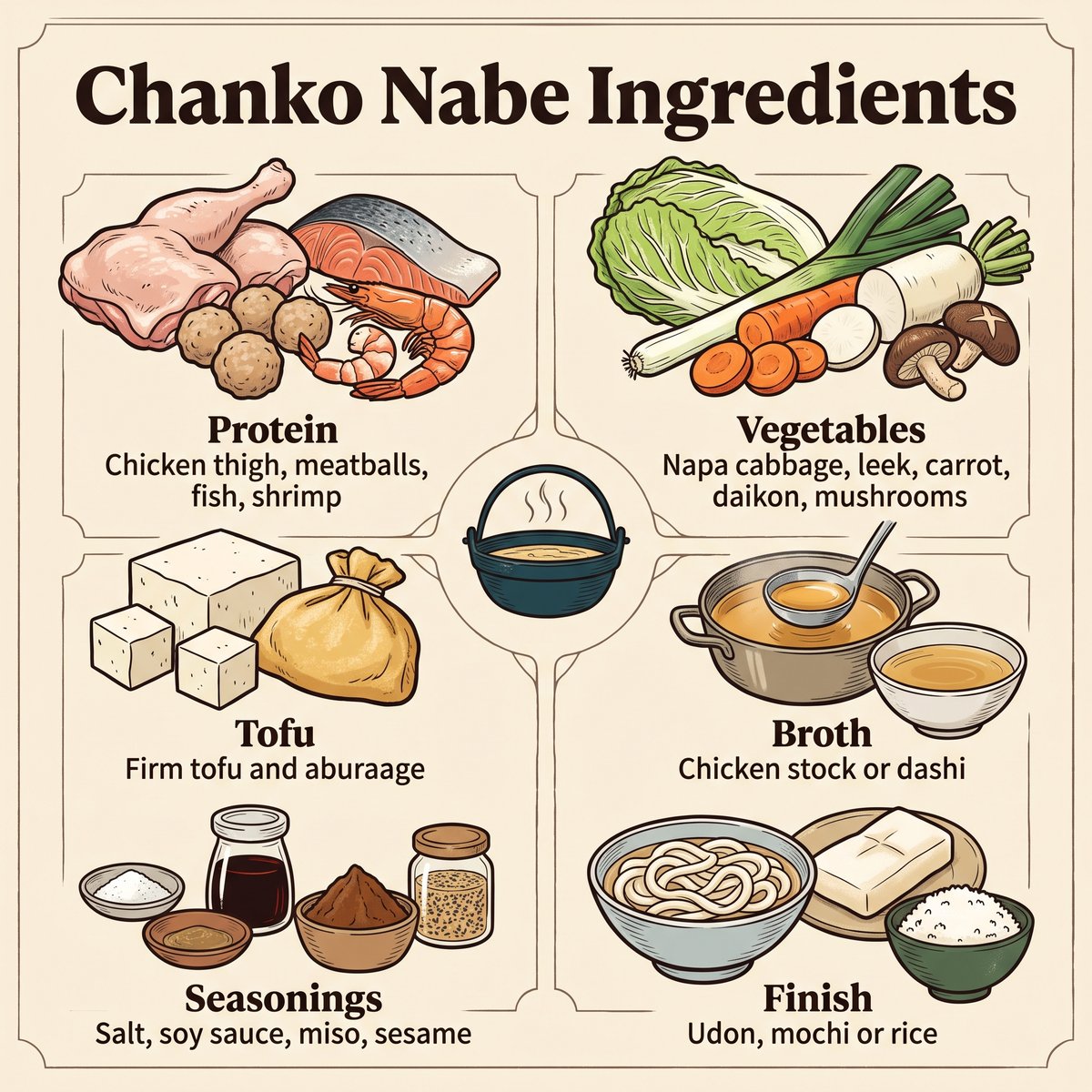
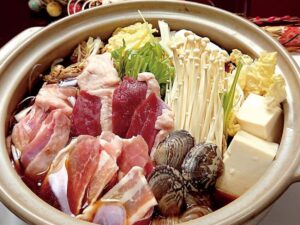
There is no single authentic chanko nabe recipe. Still, chicken, vegetables, and tofu form one of the most familiar combinations. However, seafood and pork-based pots are also well established, and seasoning changes with the stable and the restaurant.
Common Chanko Nabe Ingredients
- Protein: chicken thigh, chicken meatballs (tsukune), fish, shrimp, fish balls made from aji (horse mackerel), and sometimes pork or beef.
- Vegetables: napa cabbage, leek, carrot, daikon radish, burdock, shiitake and other mushrooms, mizuna.
- Tofu products: firm tofu and aburaage, thin sheets of deep-fried tofu.
- Broth: chicken stock, or dashi made from kombu and bonito flakes.
- Seasonings and aromatics: salt, soy sauce, miso, sesame, garlic, and ginger.
- Finishing carbs: udon noodles, mochi rice cakes, or rice for a savory rice porridge called zosui.
Common Chanko Nabe Styles
| Type | Broth and seasoning | Character |
|---|---|---|
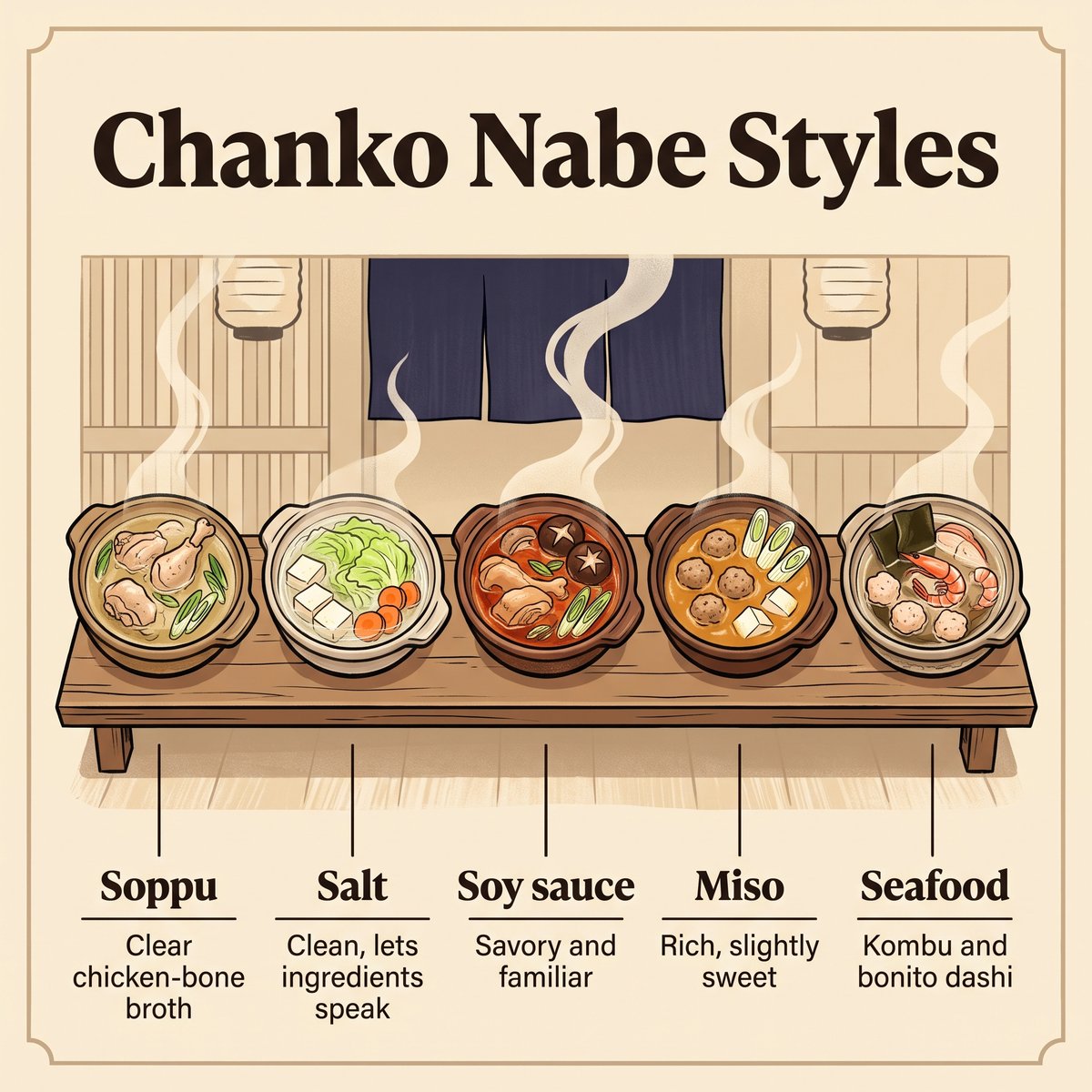
| Soppu (ソップ) | Chicken-bone stock, lightly seasoned | Clear and light; a well-known traditional chicken-based style |
| Salt (塩) | Dashi or chicken stock with salt | Clean, lets the ingredients speak |
| Soy sauce (醤油) | Dashi with soy sauce | Savory and familiar |
| Miso (味噌) | Dashi with miso | Rich, slightly sweet, good in winter |
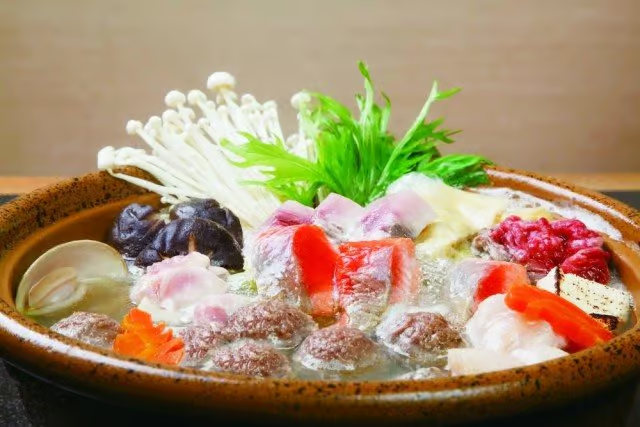
| Seafood | Kombu and bonito dashi, usually salt | Fish balls, shrimp, and white fish |
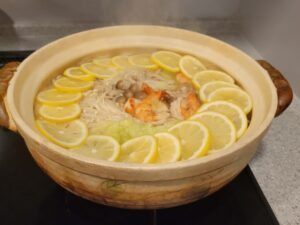
Even so, that list is too tidy. At an official sumo event in 2022, five stables served five different pots. The flavors ran from traditional soppu to miso-and-soy, salt-butter, and pork-bone soy sauce. For example, Takadagawa stable roasts leftover sea bream bones for a sea-bream dashi. Oitekaze stable adopted a grated-daikon chanko after tasting it at a restaurant in Kumamoto. Stable recipes, in other words, keep evolving.
Chicken, Luck, and Four-Legged Animals
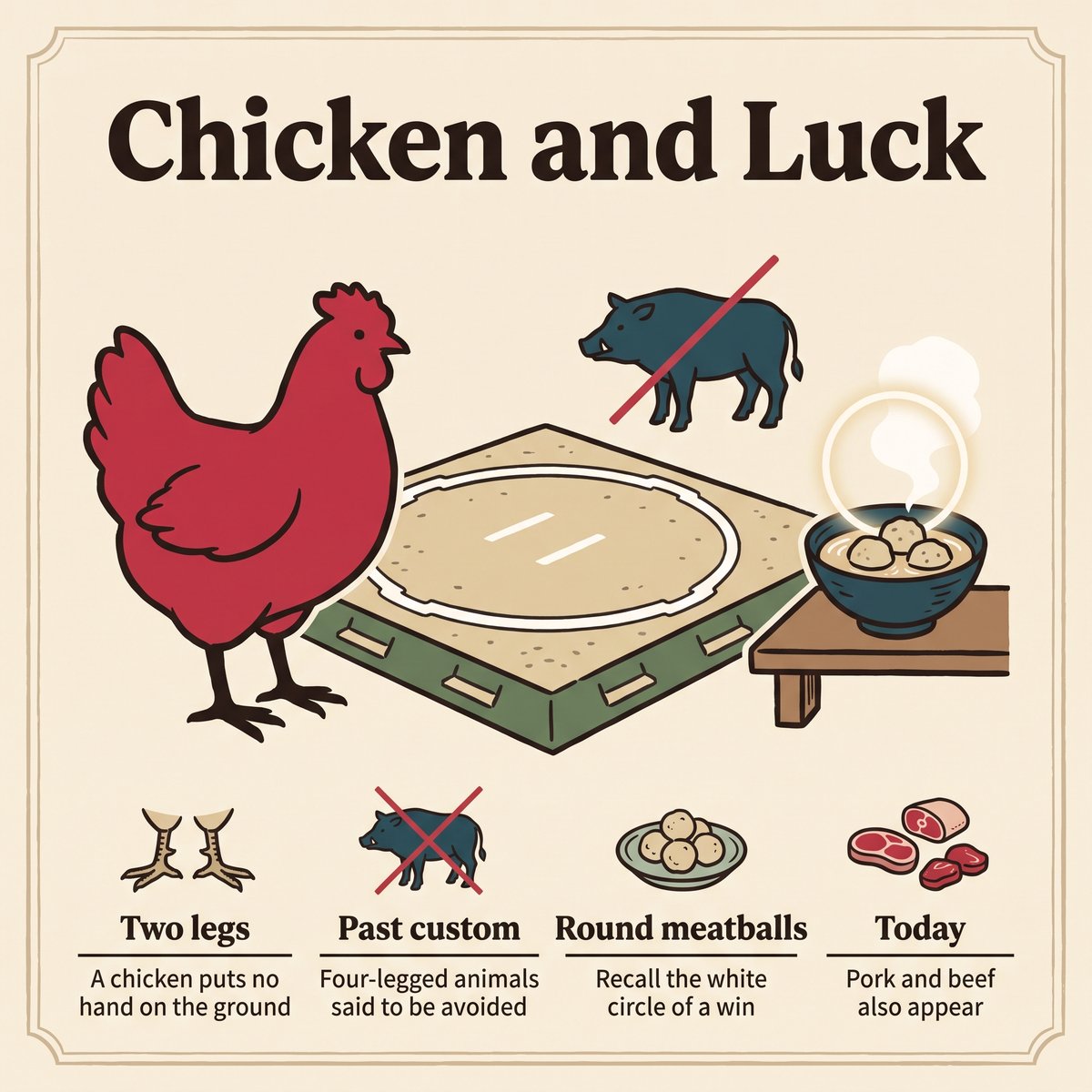
Why is chicken traditional? One traditional explanation starts with the rule that touching the ring with a hand means defeat. A chicken stands on two legs and does not place a “hand” on the ground. The agriculture ministry notes that stables are said to have avoided four-legged animals in the past. Sumida Ward’s tourism guide adds that round chicken meatballs recall the white circle that marks a win. These are customs, though, not rules. As a result, pork and beef also appear in modern stable and restaurant recipes.
Chanko Nabe vs. Other Japanese Hot Pots
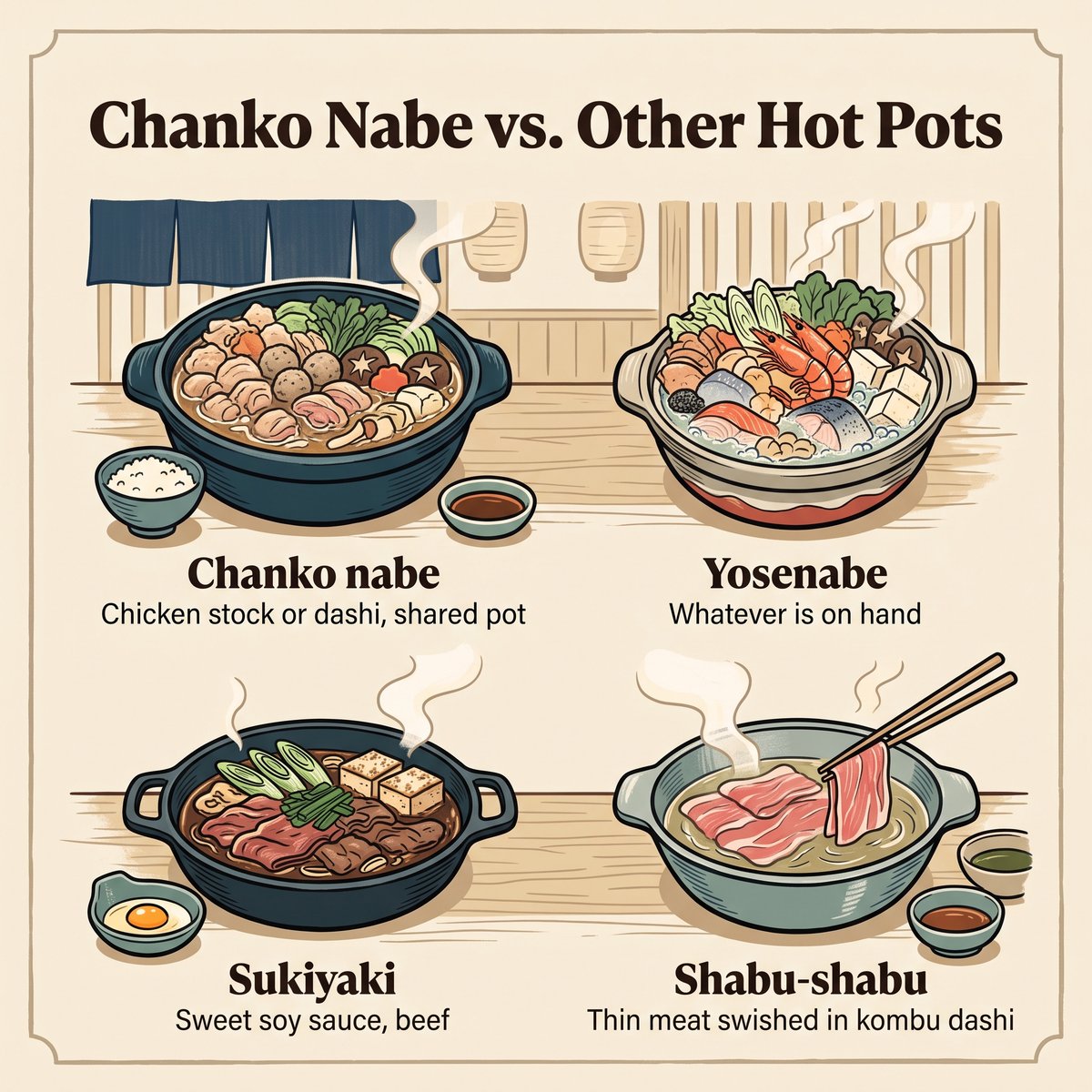
Chanko nabe differs from other Japanese hot pot dishes mainly in its origin and its freedom. The ministry even notes that, outside sumo, a chanko-style pot is essentially a yosenabe, the everyday “mixed” hot pot. The table below shows where it sits.
| Dish | Broth | Main ingredients | How you eat it |
|---|---|---|---|
| Chanko nabe | Chicken stock or dashi; salt, soy, or miso | Chicken, meatballs, tofu, vegetables; varies by stable | Simmered together, shared from one pot |
| Yosenabe | Dashi, lightly seasoned | Whatever is on hand: seafood, chicken, vegetables | Simmered together |
| Sukiyaki | Sweet soy sauce, sugar, mirin | Thinly sliced beef, tofu, vegetables | Commonly dipped in beaten raw egg in Japan |
| Shabu-shabu | Light kombu dashi | Paper-thin beef or pork, vegetables | Swished briefly, dipped in ponzu or sesame sauce |
Some home recipes borrow from Akita’s kiritanpo hot pot by adding grilled rice sticks or grilled onigiri. However, kiritanpo nabe is a distinct regional dish, not a standard type of chanko. For more pots, browse our Japanese hot pot guide.
How Much Does Chanko Nabe Cost?
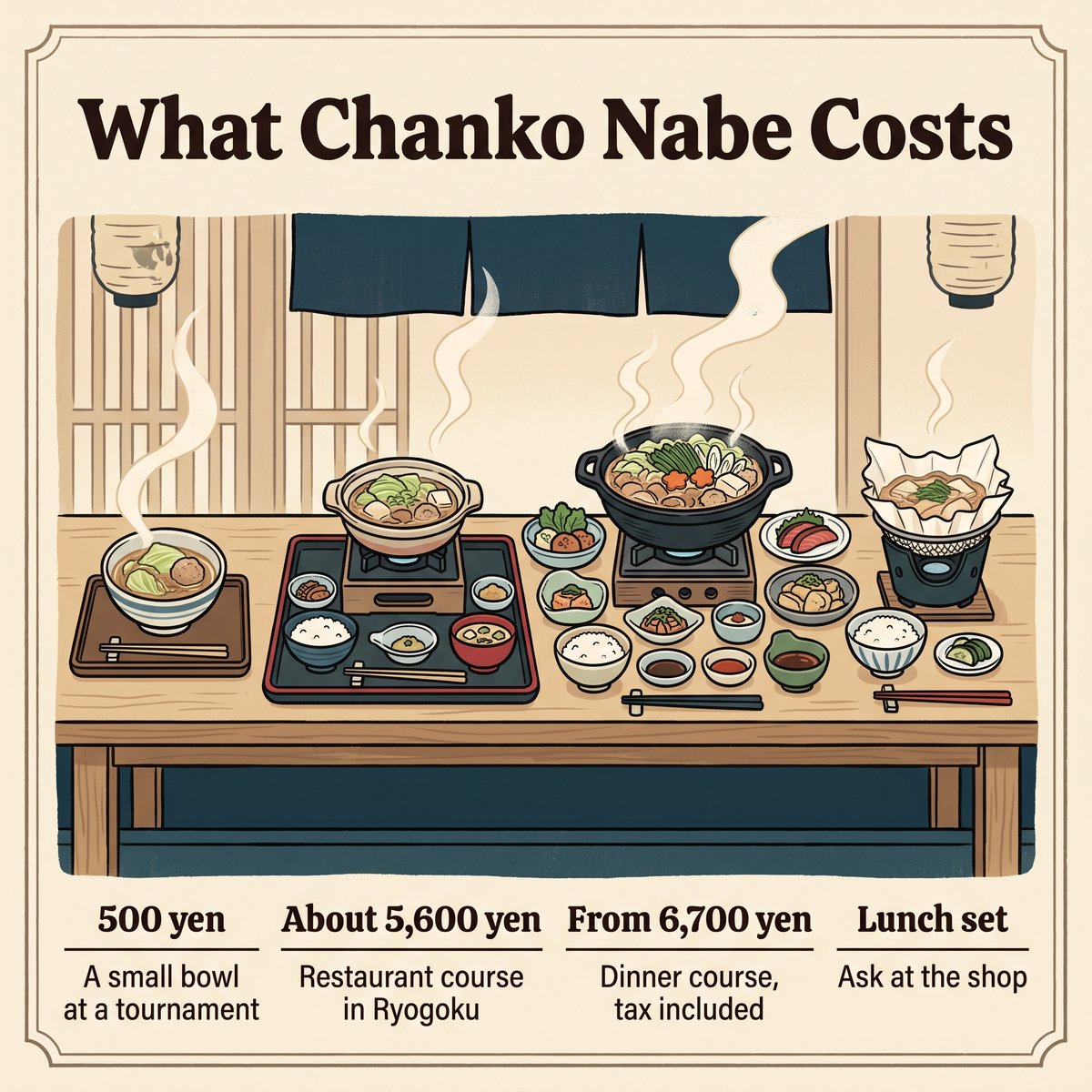
Prices range from a few hundred yen for a small bowl to several thousand yen per person for a restaurant course. Because the format matters more than the dish, the examples below separate the two. Information was rechecked online on October 11, 2026. Source dates vary, and restaurant prices may have changed. Approximate US dollar amounts use the October 10, 2026 exchange rate of 1 yen ≈ 0.00632 US dollars; exchange rates change.
| Format | Example | Price | Source |
|---|---|---|---|
| Small bowl at a tournament | Stable-made chanko at the Kokugikan, September 2026 tournament | ¥500 (about $3.16) per bowl, tax included | Official tournament guide |
| Restaurant course | Chanko Kawasaki, Ryogoku | Reservations from about ¥5,600 (about $35.38) per adult | Third-party listing |
| Restaurant dinner course | Kappo Yoshiba, Ryogoku | From ¥6,700 (about $42.33) per person, tax included | Restaurant website |
| Lunch set | Chanko Kirishima’s single-serving paper-pot lunch | Not listed online; ask at the shop | Restaurant website |
Among the documented examples above, the Kokugikan bowl is the least expensive. During Tokyo tournaments, the association sells more than 2,000 bowls a day, and the cooking stable changes. At the September 2026 tournament, Dewanoumi stable cooked it. The salt version was scheduled for the first eight days and the soy-sauce version from Day 9 to the final day.
Where to Eat Chanko Nabe in Tokyo
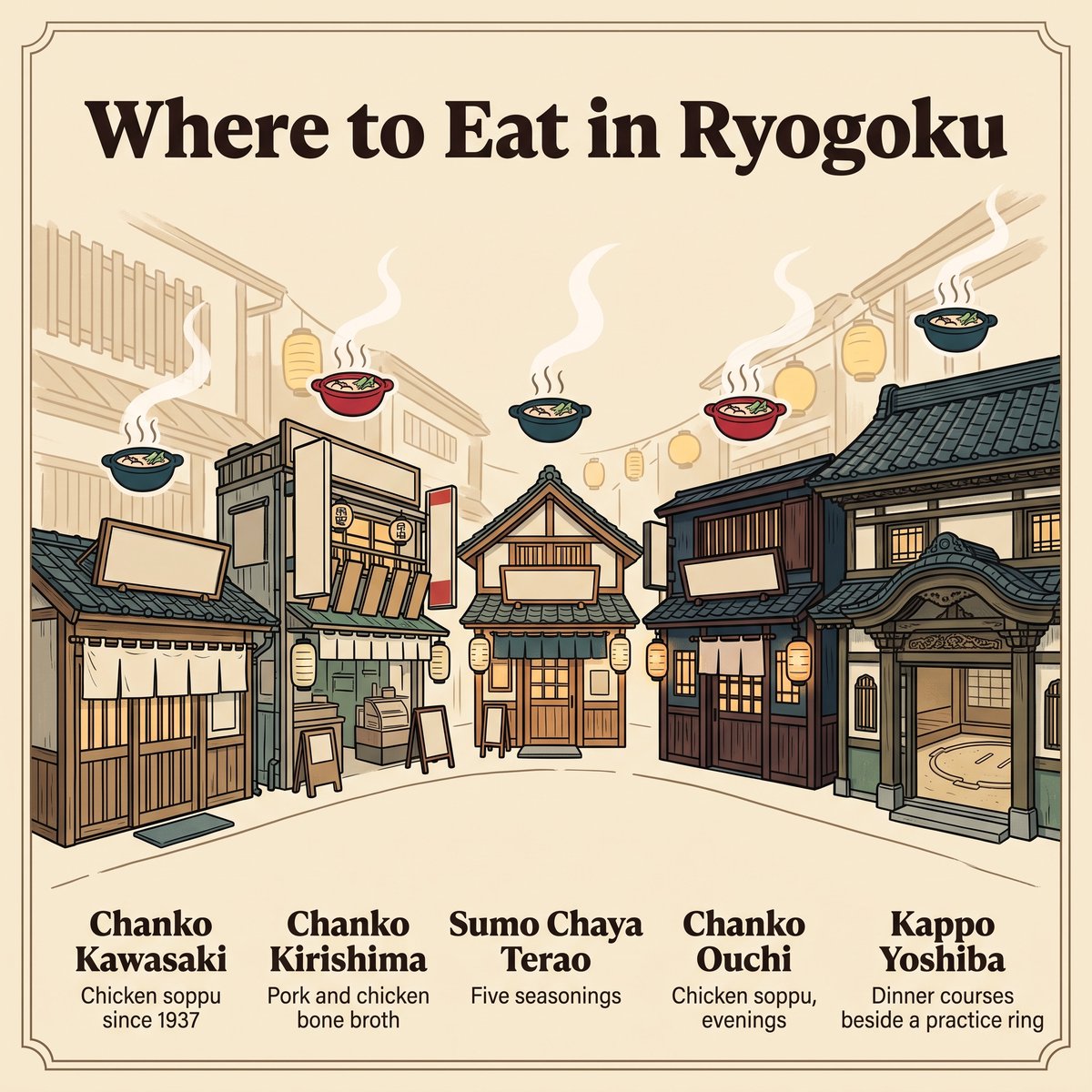
Ryogoku has the densest cluster of chanko nabe restaurants in Tokyo. Rather than ranking them, we selected five established options documented by official, municipal, or local tourism sources, with different broth styles and dining formats. Nobody can objectively name the best chanko nabe restaurants in Tokyo, so take these as a starting point.
| Restaurant | Nearest station | Broth style | Lunch | Reservation |
|---|---|---|---|---|
| Chanko Kawasaki | Ryogoku | Chicken soppu | No | Recommended |
| Chanko Kirishima | Ryogoku | Pork and chicken bone; miso, soy, salt | Yes | Online |
| Sumo Chaya Terao | Ryogoku | Chicken; five seasonings | Some days | By phone |
| Chanko Ouchi | Ryogoku | Chicken soppu | No | Recommended |
| Kappo Yoshiba | Ryogoku | Special chanko course | Apparently suspended; confirm directly | Recommended |
Hours below come from official, municipal, or listing pages, which do not always agree. Information checked online: October 11, 2026. Hours and prices may change, so confirm before you go.
Chanko Kawasaki (ちゃんこ川﨑)
Kawasaki opened in 1937 under a former wrestler known as Yokoteyama. Its signature is soppu-daki, a chicken chanko simmered in chicken-bone broth. The broth develops a mellow flavor as the ingredients cook, and the room is small, so booking helps.
Chanko Kirishima (ちゃんこ霧島)
Former ozeki Kirishima founded this restaurant, which makes its broth from pork and chicken bones. You choose miso, soy sauce, or salt seasoning. It also serves lunch, including a single-serving paper-pot set, which suits solo travelers. A second branch sits inside the Edo Noren food hall next to Ryogoku Station.
Sumo Chaya Terao (相撲茶屋 寺尾)
Terao serves the chicken chanko of the former Izutsu stable in five seasonings: soy sauce, salt, miso, curry, and ponzu. It is a useful option for repeat visitors or groups who want to explore different styles. Lunch is normally served Tuesday through Thursday and on weekends.
Chanko Ouchi (ちゃんこ大内)
Ouchi carries the flavor of the Tokitsukaze stable, where its founder, former ozeki Ouchiyama, trained. The house pot is a chicken soppu, generally associated with a clearer, lighter broth. In addition, the tourism association notes it opens daily during Tokyo tournaments.
Kappo Yoshiba (割烹吉葉)
Yoshiba occupies a former sumo stable, and a real practice ring still stands in the dining room. According to the restaurant, seats beside the ring go first to guests who reserve a course. Above all, the special chanko is the draw. The restaurant announced an indefinite suspension of lunch from January 29, 2024. Its menu pages still show lunch items, though, so confirm the current status directly.
Beyond Ryogoku
Chanko restaurants also operate in other parts of Tokyo beyond Ryogoku. Because independent restaurants change hours frequently, verify current details directly. For Ryogoku, the Sumida City Tourism Association maintains a local directory.
Ordering Tips
- Many restaurant pots are made for two or more, so solo diners should look for a lunch set.
- Ask whether rice or noodles for the finish are included or extra.
- Book ahead during the January, May, and September tournaments, when Ryogoku fills up.
- Vegetarians should ask, because the broth is usually chicken or fish based.
Final Thoughts
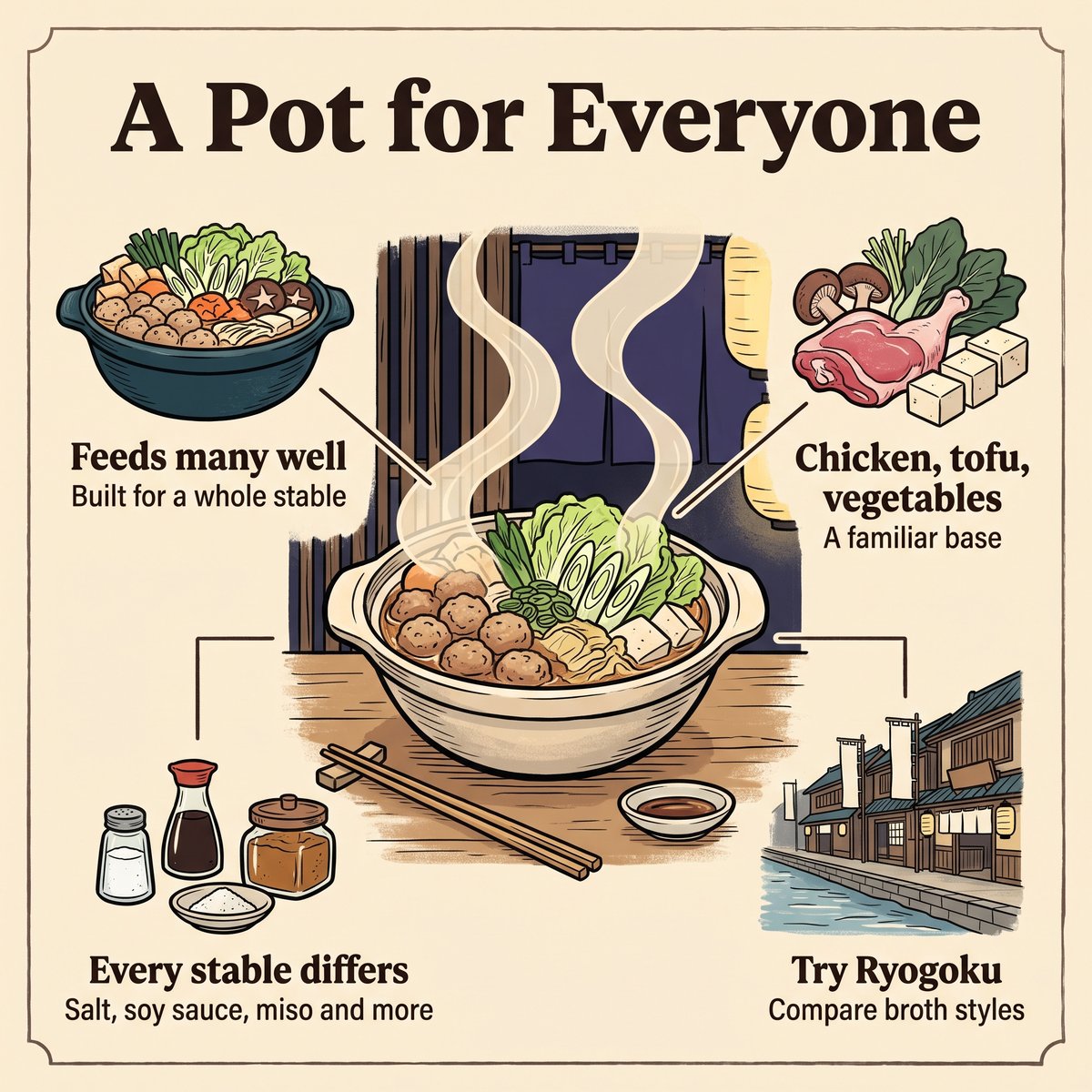
Chanko nabe is a sumo stable’s answer to feeding many people well. It combines chicken, tofu, and vegetables in a broth that each stable seasons its own way. Its ingredients also change with the season and the stable, so no two pots are quite the same. Visit Ryogoku and compare broth styles. If you attend a Tokyo tournament, check the current Kokugikan food guide. At the September 2026 tournament, a bowl of stable-made chanko cost ¥500 (about $3.16).
Hungry for more? Explore other Japanese hot pot dishes, or see what else to eat in Tokyo.
Frequently Asked Questions About Chanko Nabe
Basics
- What is the difference between chanko and chanko nabe?
-
Chanko means any food that wrestlers cook in a sumo stable. The Japan Sumo Association says curry and fried chicken count too. Chanko nabe is the hot pot version, and it is also the most famous one. So every chanko nabe is chanko, but not the other way around.
- Is there one authentic chanko nabe recipe?
-
No. Recipes vary by stable, and restaurants run by former wrestlers often carry those flavors forward. Chicken, vegetables, and tofu form a common base, but the broth may be salt, soy sauce, miso, or something newer such as salt-butter.
- Why is chicken traditional in chanko nabe?
-
A chicken stands on two legs and does not touch the ground with a “hand.” In sumo, a hand on the ring means defeat. This is one traditional explanation for why chicken came to be viewed as auspicious. Japan’s agriculture ministry notes that stables are said to have avoided four-legged animals in the past. Even so, many pots include pork or beef today.
- Does it always contain chicken?
-
Not always. Seafood versions use fish balls, shrimp, and white fish in a kombu and bonito broth. Some stables serve pork-bone or beef pots. Still, chicken-based pots remain a familiar choice, and several Ryogoku restaurants specialize in them.
Health and Eating
- Is chanko nabe healthy?
-
The dish can combine protein, tofu, mushrooms, and vegetables in one pot. However, its nutritional profile varies widely with the broth, meat, portion size, sodium, and the rice or noodles alongside it. For example, a miso pot with pork and a bowl of rice is a heavier meal than a salt chicken pot. In other words, treat it as a normal dinner, not a diet food.
- Does chanko nabe make wrestlers gain weight?
-
Only as part of a much larger diet. Studies from the 1970s described daily energy intakes from about 4,000 to more than 5,000 calories in the groups examined. Most of that came in two big meals. Total energy intake, not the hot pot alone, explains the weight. Eating it occasionally is not the same as following those historical eating patterns.
- Can vegetarians eat chanko nabe?
-
Rarely at restaurants, because the broth is usually chicken or fish based. At home, however, you can make a meat-free version with kombu and shiitake dashi, tofu, aburaage, and mushrooms. If you visit a restaurant, ask before ordering. Some may adapt, but many pots are built around chicken or fish.
- What do you eat at the end of chanko nabe?
-
The leftover broth becomes a second course. For example, restaurants add udon noodles, or they stir in rice and beaten egg to make zosui, a savory porridge. By then, the broth has absorbed flavor from everything cooked in it. Many people consider this finish the best part.
References
- Ministry of Agriculture, Forestry and Fisheries (MAFF) – Our Regional Cuisines: Chanko Nabe, Tokyo (Accessed October 2026)
- Tokyo Metropolitan Government, Tokyo Regional Resources – Chanko (Accessed October 2026)
- Japan Sumo Association – Grand Sumo Quiz No. 1141: The Origin of the Word Chanko (Accessed October 2026)
- Japan Sumo Association, Sumo Museum – Grand Sumo in the Meiji Era (Accessed October 2026)
- Japan Sumo Association – Kokugikan Gourmet, September 2026 Tournament Information (Accessed October 2026)
- Grand Sumo Official Fan Club – Sumo Stable Chanko Grand Prix Update (Accessed October 2026)
- SuMALL, Japan Sumo Association Official Shop – Sumo Stable Chanko: Oitekaze Stable (Accessed October 2026)
- SuMALL, Japan Sumo Association Official Shop – Sumo Stable Chanko: Takadagawa Stable (Accessed October 2026)
- Sumida City – Ryogoku Walking Guide Kawaraban No. 4, August 2025 (Accessed October 2026)
- Sumida City Tourism Association – Chanko Restaurants (Accessed October 2026)
- Sumida Meihin Meiten Association – Chanko Kawasaki (Accessed October 2026)
- Kokugikan-dori Shopping Street Association – Chanko Kawasaki (Accessed October 2026)
- Owariasahi City – Public Relations Owariasahi, August 2026: Onomatsu Stable (Accessed October 2026)
- J-STAGE, The Japanese Journal of Nutrition and Dietetics – Arikawa, T., & Hanada, M. (1975). Nutritional Survey on Sumo Wrestler’s Diet. 33(5), 241-250 (Accessed October 2026)
- PubMed, The American Journal of Clinical Nutrition – Nishizawa, T., et al. (1976). Some factors related to obesity in the Japanese sumo wrestler. 29(10), 1167-1174 (Accessed October 2026)
- Chanko Kirishima – Shop Information (Accessed October 2026)
- Sumo Chaya Terao – Official Website (Accessed October 2026)
- Kappo Yoshiba – Official Website (Accessed October 2026)
- Kappo Yoshiba – Menu (Accessed October 2026)
Related Articles
- Nabe (鍋) (Surveyed: October 2026)
- Sukiyaki (すき焼き) (Surveyed: October 2026)
- Shabu-Shabu (しゃぶしゃぶ) (Surveyed: October 2026)
- Motsunabe (もつ鍋) (Surveyed: October 2026)
- Kiritanpo (きりたんぽ) (Surveyed: October 2026)
- Tsukune (つくね) (Surveyed: October 2026)





Comments