


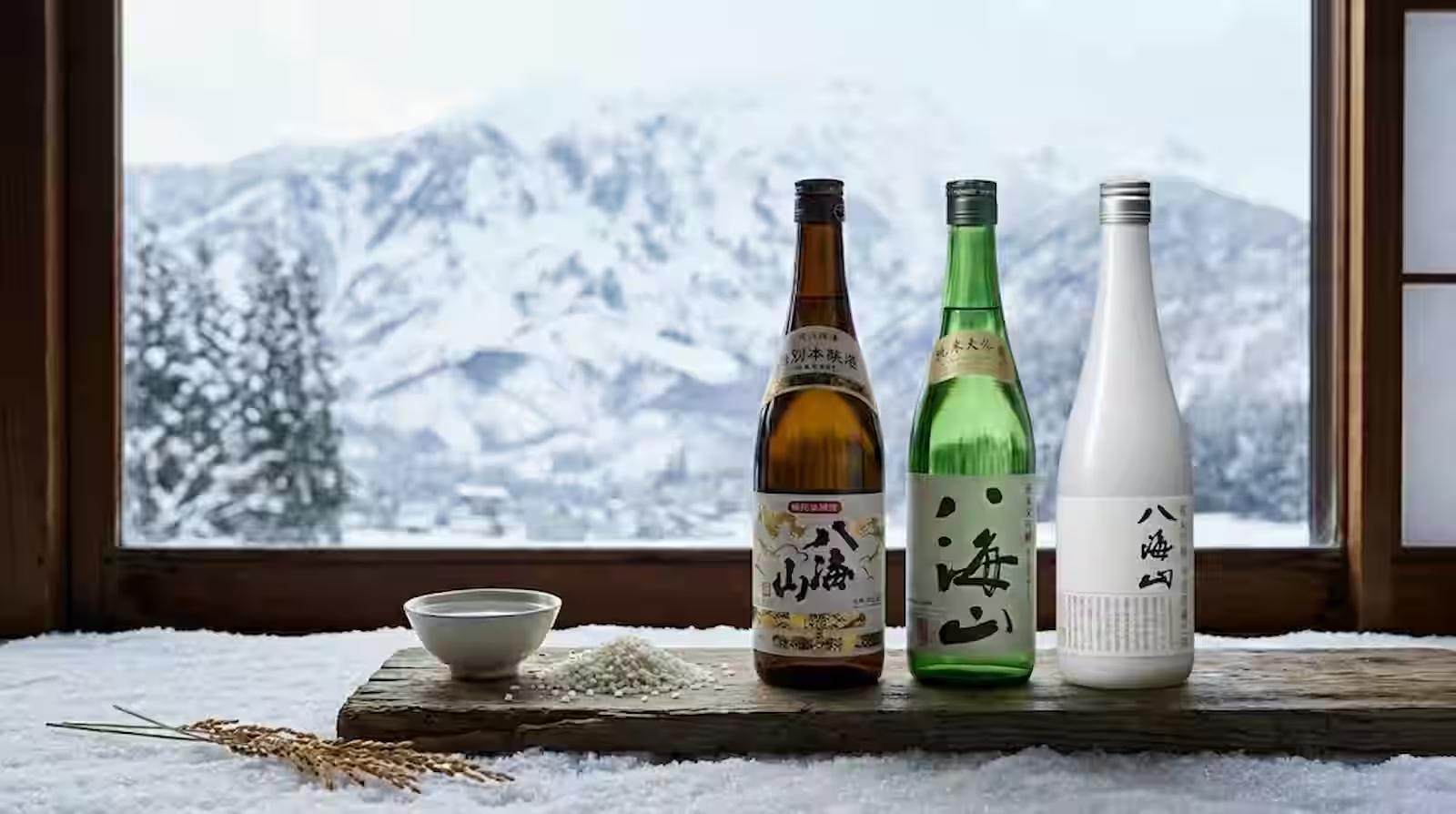

For much of the winter, deep snow covers the valley around Minamiuonuma in Niigata Prefecture, although the depth varies by place and year. However, the brewery there does not treat that snow only as an obstacle. Hakkaisan sake is built around soft snow-country water, carefully selected rice and a quiet ambition: sake that belongs beside a meal.
This guide follows the brand from its 1922 founding to its snow-chilled storage room. Along the way, it explains the water, the rice, the balance of manual skill and modern equipment, and the range of bottles. Where the brewery makes a claim about itself, we say so.
What Is Hakkaisan Sake?
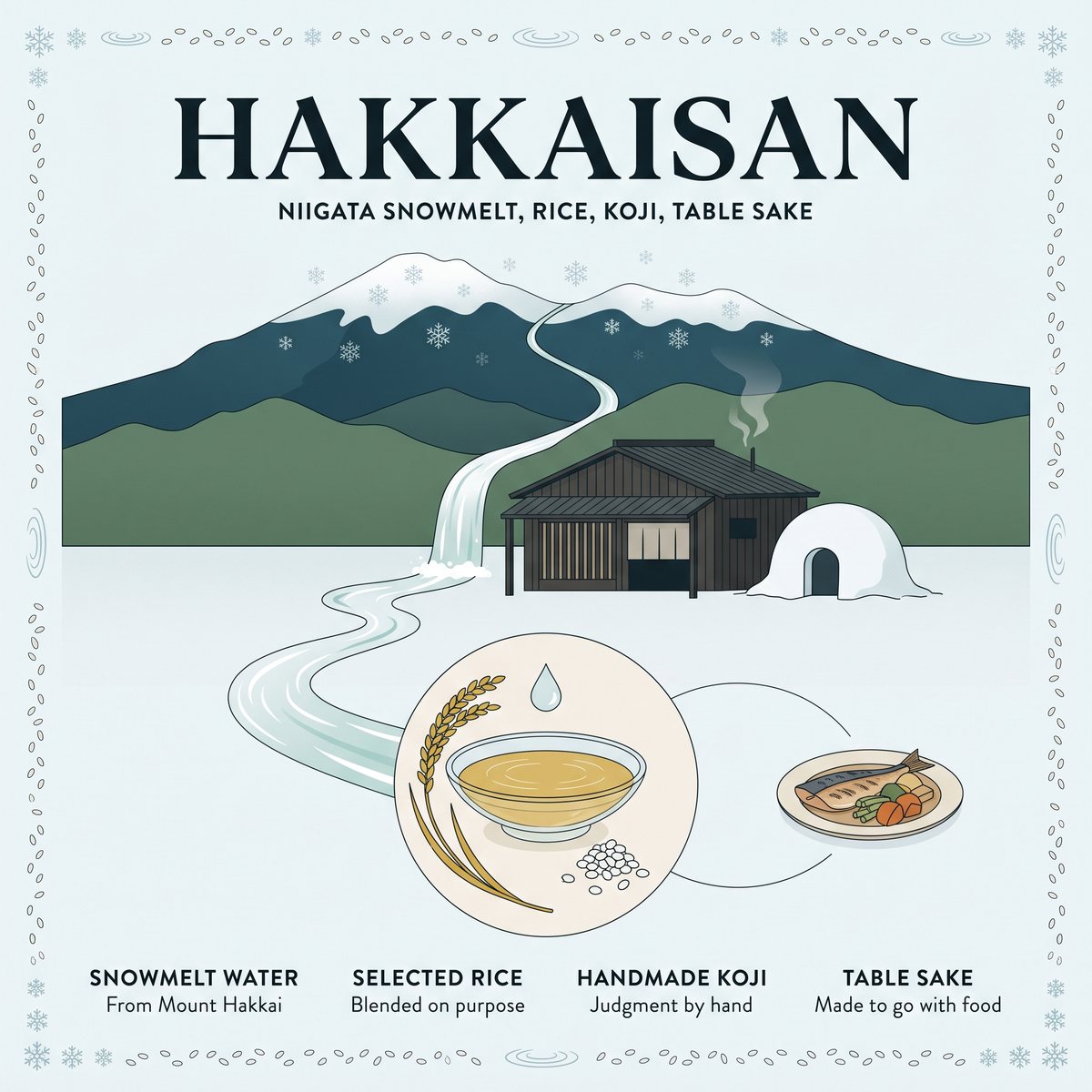
Hakkaisan sake (八海山) is a brand, not a category of sake. Specifically, Hakkaisan Brewery, known in Japanese as Hakkai Jozo, makes it in Nagamori, Minamiuonuma City, Niigata Prefecture. The company dates its founding to 1922, so it marked its centenary in 2022.
Quick Facts
- Brand
- Hakkaisan (八海山)
- Producer
- Hakkaisan Brewery Co., Ltd. (八海醸造)
- Home
- Nagamori, Minamiuonuma, Niigata Prefecture
- Founded
- 1922, according to the company
- Name
- From Mount Hakkai, one of the three mountains known as Echigo Sanzan
- Water
- Raiden-sama no Shimizu, a soft spring on the Hakkai range
- Representative bottle
- Tokubetsu Honjozo Hakkaisan
- Core range
- Clean, light and designed for food
The name comes from Mount Hakkai, whose highest point reaches about 1,778 meters (about 5,830 feet) above sea level. According to the company’s own history, the sake took its name from the mountain. The history does not say who chose the name or exactly when, so we stop there.
Within Niigata sake, Hakkaisan is a prominent example. It is not the only one, though. Niigata has dozens of breweries, and this article looks at just one of them.
Three Ideas That Define Hakkaisan Sake
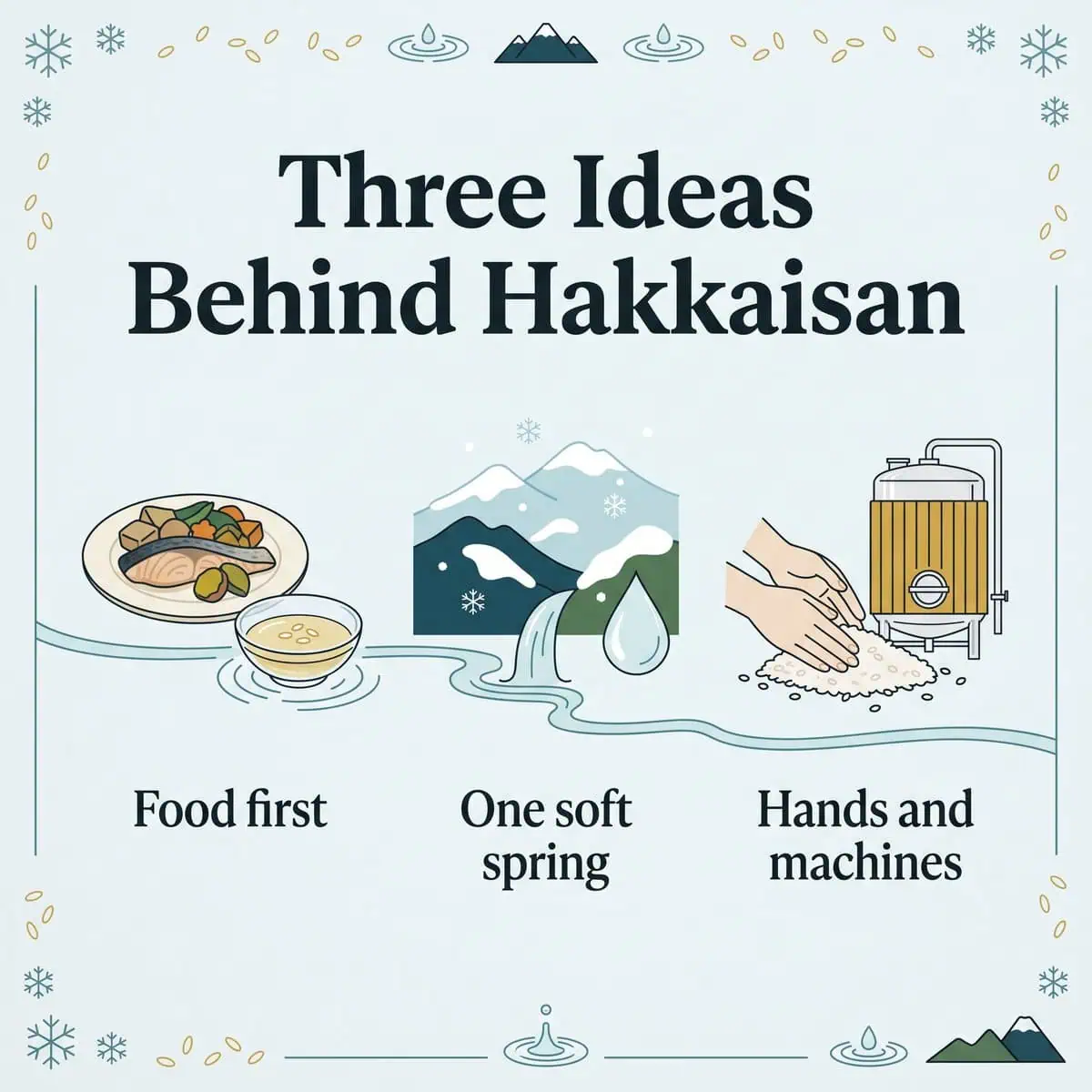
Three things make Hakkaisan sake distinctive, and none of them is a secret. The brewery presents them openly. First, it sets a clear goal: sake that supports a meal rather than competing with it. Second, the brewery says it uses soft spring water from one source throughout its sake making. Third, it pairs hands-on koji making with modern, clean facilities.
Is Hakkaisan the best sake in Niigata? That is not a question this article can answer. Taste is personal, so it is more useful to examine the brewery’s stated aims, methods and range. What we can describe is a consistent idea, followed for decades, about what sake should do at the table.
Claims introduced with “the brewery says” come from Hakkaisan Brewery. Figures from ministries, the prefecture and the Niigata Sake Brewers Association appear with their source. Analysis is ours.
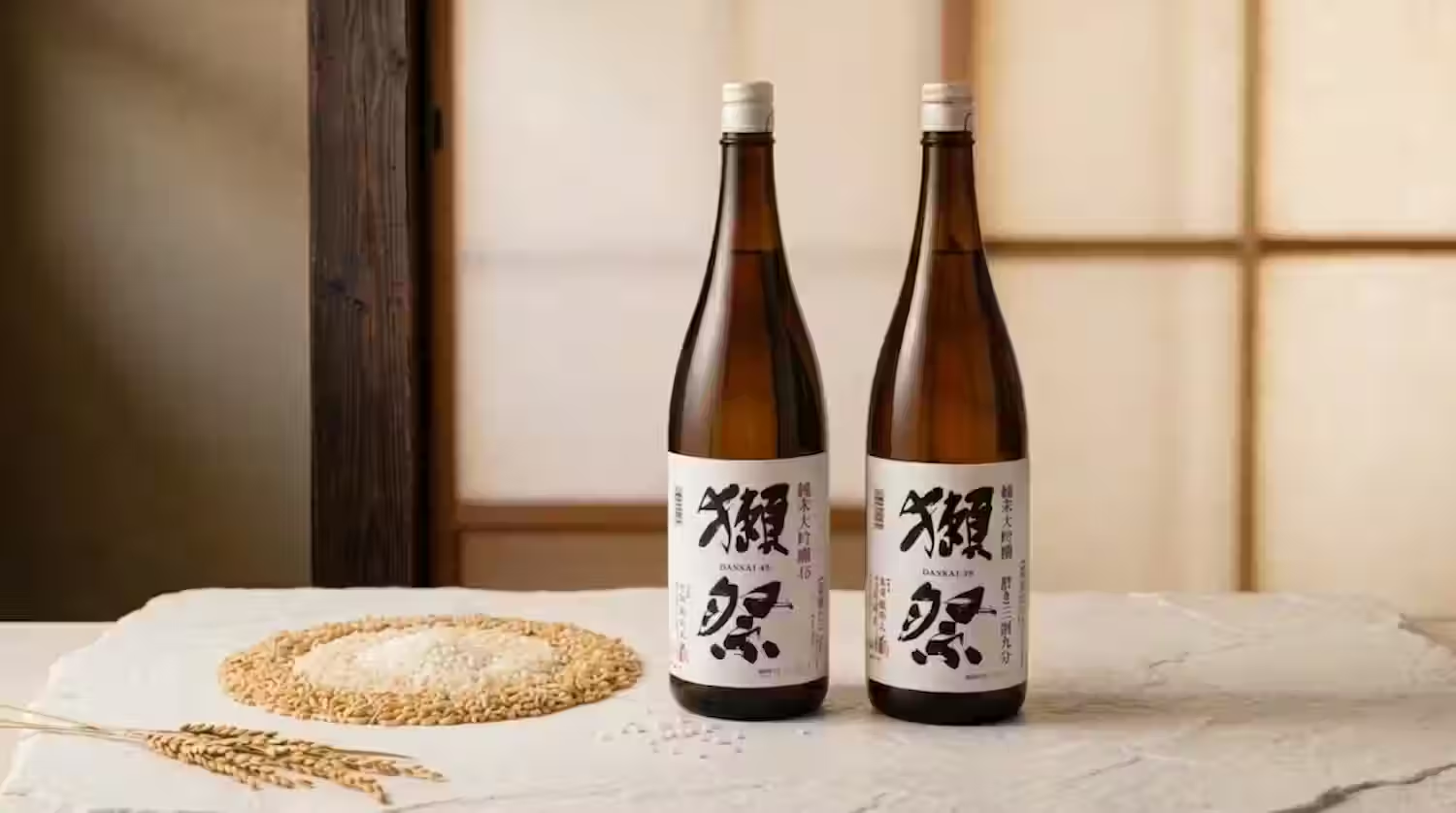
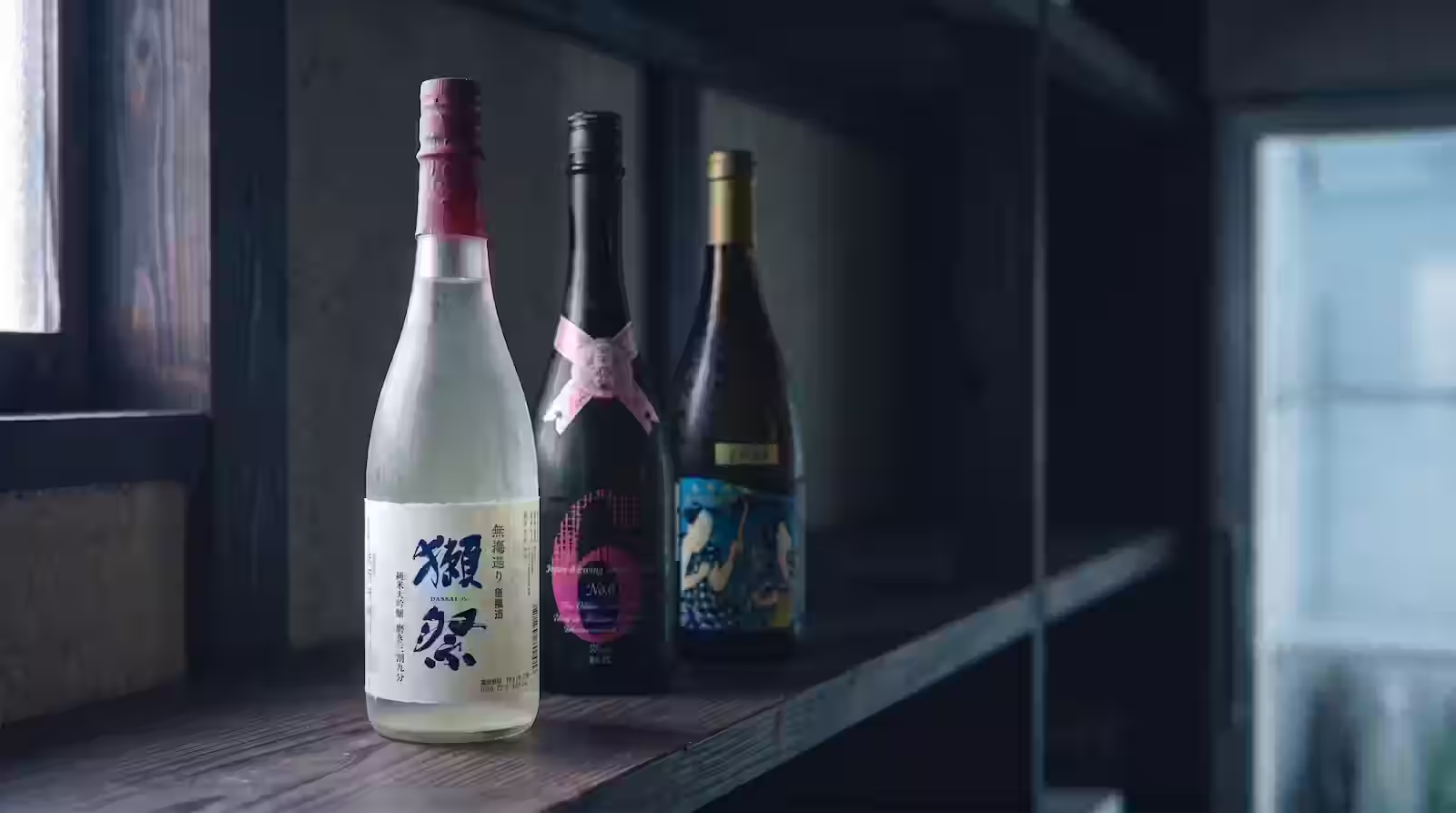
If you read our Dassai article, you will notice a different emphasis. Dassai is strongly associated with junmai daiginjo and highly polished rice. Hakkaisan, by contrast, presents a broader range centered on food-friendly table sake, led by its Tokubetsu Honjozo.
Mount Hakkai and the Snow Country Landscape
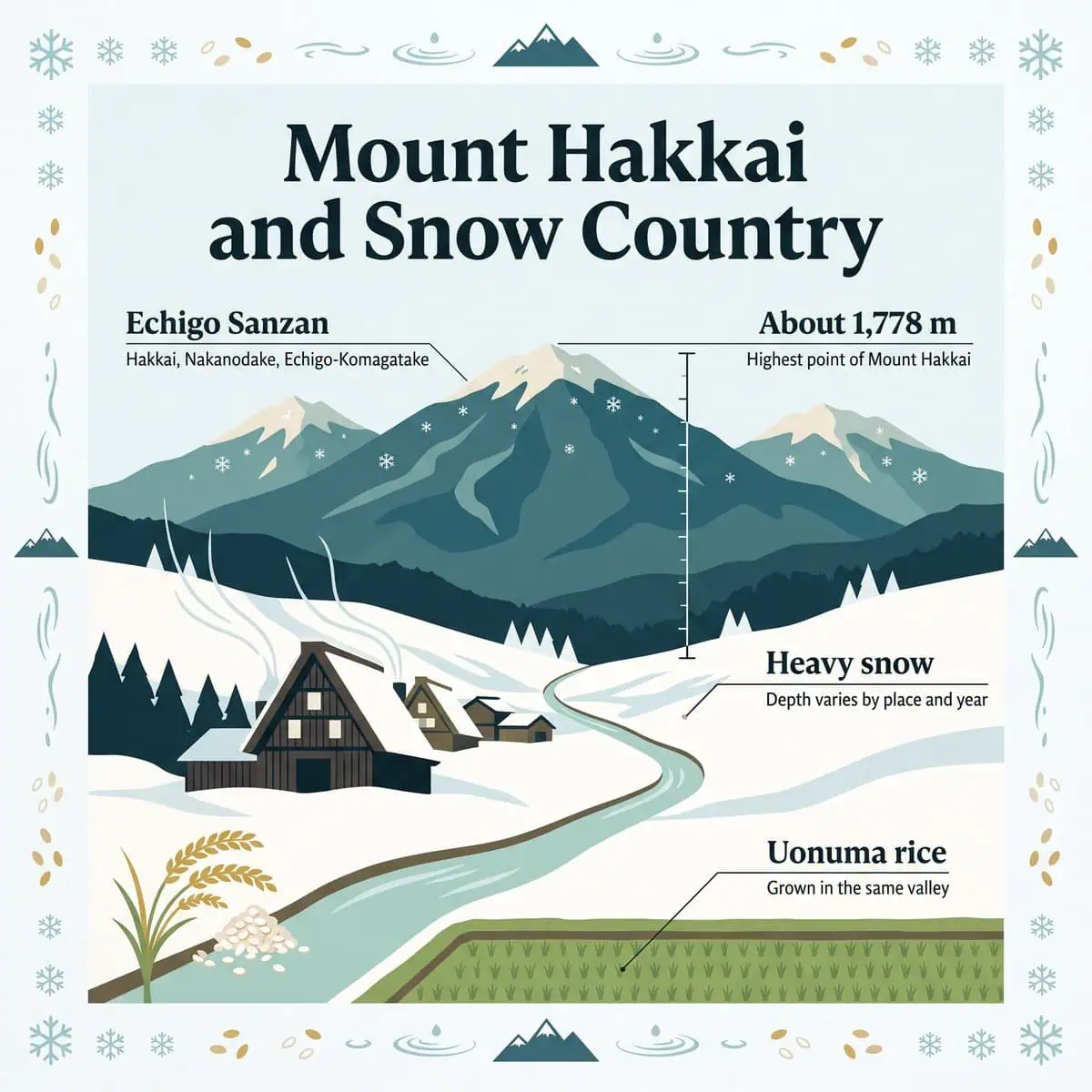
Minamiuonuma sits in a basin ringed by mountains, and the setting matters. To the east stand the Echigo Sanzan, three peaks named Hakkai, Nakanodake and Echigo-Komagatake. Niigata Prefecture describes the area as one of Japan’s heaviest snow regions. Deep snow covers the ground for much of the winter, with depth varying by location and year.
Naturally, that snow shapes daily life. Houses often have steeply pitched roofs, roads need constant clearing, and the farming calendar follows the snowmelt and a relatively short warm season. Meanwhile, the same valley produces Uonuma Koshihikari, the table rice our Koshihikari article covers.
Why Snow Does Not Explain Everything
It is tempting to say that snow makes good sake. Certainly, the brewery mentions it often. Even so, the brewery itself is more careful. In the brewery’s account, snow helps replenish the spring, cools the air during the brewing season, and makes natural cold storage possible. However, the quality of any bottle still depends on rice, koji, yeast, temperature control and human judgment.
So treat the landscape as the setting of the story, not its whole plot. Accordingly, the next sections look at what the brewery actually does with that setting.
A Century of Hakkaisan Brewery
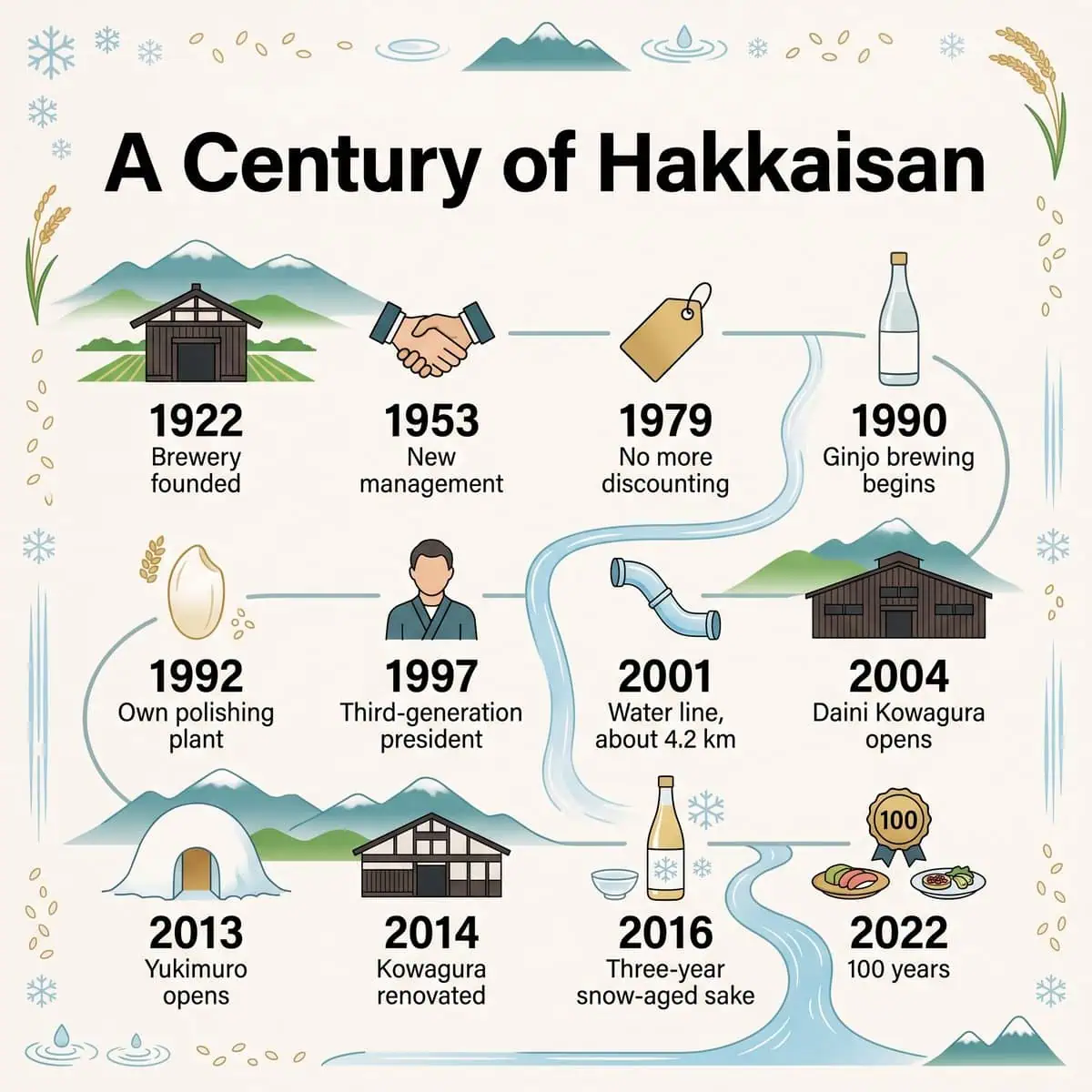
The brewery’s published history reads less like a list of dates and more like a series of decisions. Below, therefore, is a short version, drawn from the company’s centenary website.
- 1922Koichi Nagumo establishes a sake brewery in the former Jonai district.
- 1953Kazuo Nagumo, then 25, takes over management after the founder’s death.
- 1979The company stops discounting and spends the margin on ingredients and staff.
- 1990Ginjo and daiginjo brewing begins in the No. 3 brewery.
- 1992An in-house rice polishing plant opens.
- 1997Jiro Nagumo becomes the third-generation president.
- 2001A dedicated water line of about 4.2 km brings spring water to the brewery.
- 2004A second large brewery, the Daini Kowagura, opens.
- 2013Hakkaisan Yukimuro opens, and the Uonuma no Sato project begins full operation.
- 2014The Kowagura premium brewery undergoes a major renovation.
- 2016A three-year snow-aged sake goes on sale.
- 2022The company marks 100 years.
From a Local Label to a National Name
In the 1920s, the company says, “sake” in Japan mostly meant the big brewers of Nada near Kobe. Hakkaisan, meanwhile, had only a local following, and the first brewery ran into trouble within a few years. Eventually, according to a 1998 company essay, a fresh start in 1931 moved production about a kilometer away to the present site.
The real growth came later, under Kazuo Nagumo. According to the centenary history, output rose from 1,161 koku in 1961 to 22,519 koku by 1997. A koku, for reference, is about 180 liters. That is roughly twentyfold growth in a single leadership span.
Decisions Behind the House Style
Two choices from that era still define the brand today. In 1979, first, the company ended price discounts and put the money into raw materials and labor instead. Then in 1992 it built its own rice polishing plant, which brought that step under its own control.
One note on spelling: names in this section are romanized from the company’s Japanese materials. As far as we could find, Hakkaisan Brewery has not published official English spellings for its early leaders.
Why Hakkaisan Emphasizes Clean, Food-Friendly Sake
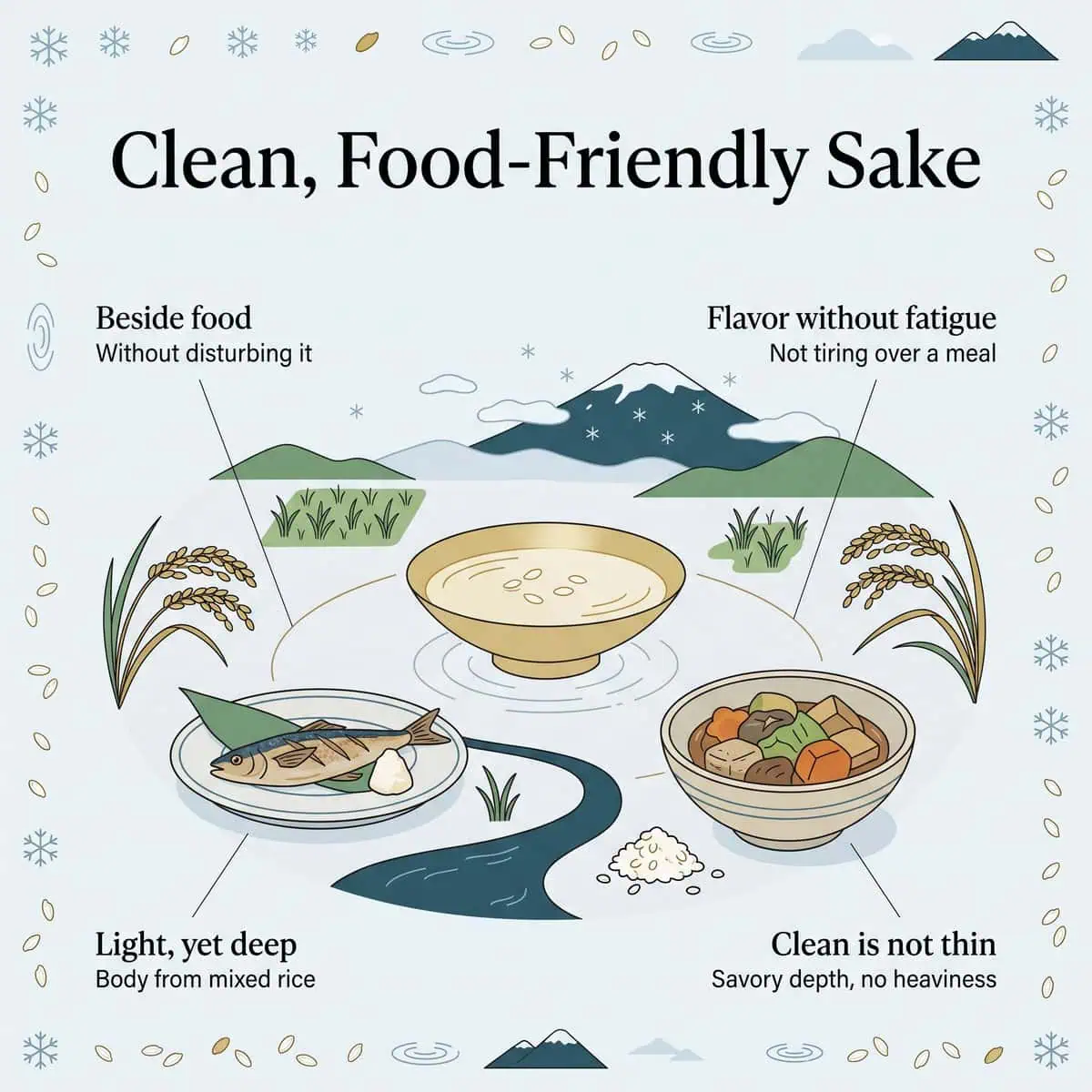
The brewery states its goal in three short lines. Its sake should sit beside food without disturbing it. It should have flavor without becoming tiring over a meal. And it should be light, yet deep.
Those lines sound modest, and that is precisely the point. Some sake is designed to make an immediate impression through aroma. Hakkaisan, instead, aims for the bottle you keep pouring through a long dinner. Consequently, restraint is a feature, not a limitation.
More Than “Tanrei Karakuchi”
Niigata sake is often summed up as tanrei karakuchi, meaning light and dry. The phrase fits Hakkaisan, but it also hides something. A former master brewer, quoted by the Niigata Sake Brewers Association, warned that a very light style can lose umami. For that reason, the brewery adds body by mixing rice varieties, including some Yamada Nishiki.
In other words, clean does not mean thin. The aim is enough savory depth to hold up to food, with none of the heaviness that lingers. Whether a given bottle achieves that is for you to judge. Besides, the bottles differ from one another.
Snowmelt Water: The Role of Water in Hakkaisan Brewing
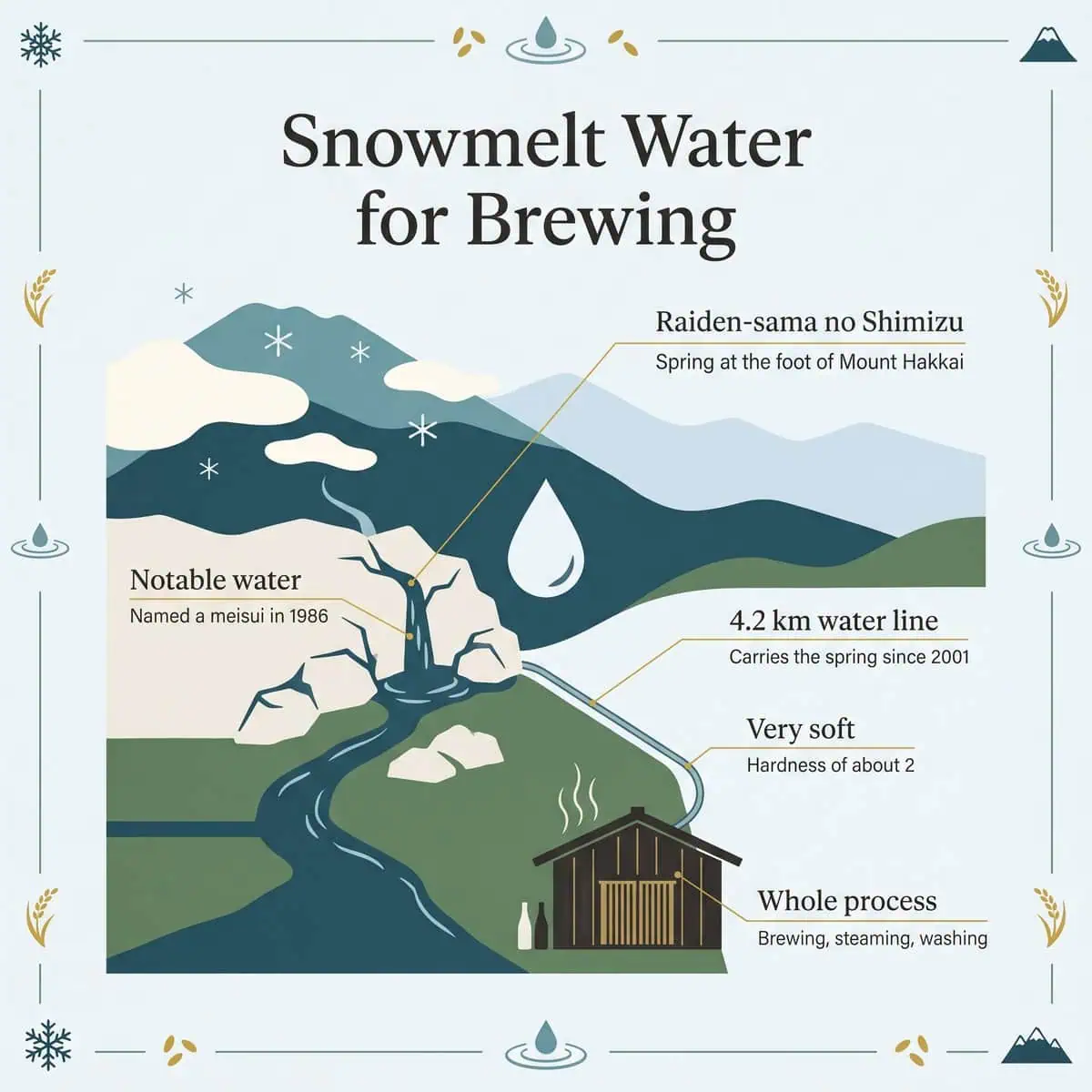
Hakkaisan draws its water from Raiden-sama no Shimizu, a spring at the foot of the Hakkai range. The brewery describes the source this way. Winter snow seeps into the mountain, travels underground for a long time, and emerges from cracks in the rock. According to the brewery, Niigata Prefecture named it one of the prefecture’s meisui, or notable natural waters, in 1986.
The spring lies several kilometers from the brewery, though. Since 2001, however, a dedicated water line of about 4.2 kilometers (2.6 miles) has carried it to the brewery. The company then uses the water for brewing, for steaming rice, and even for washing equipment.
Soft Water and Fermentation Management
By the brewery’s measure, the water has a hardness of about 2. In other words, it is very soft. Very soft water generally supplies fewer of the minerals linked to yeast activity, so brewers may need to manage fermentation carefully. The result still depends on the water’s full makeup and the method. Our water in sake brewing article explains how hardness affects brewing.
Science supports the idea that water matters, although with limits. A 2022 study in the Journal of the Brewing Society of Japan tested 13 brewing waters. It found that calcium, magnesium and sulfate levels correlated with fermentation speed, amino acid content and taste-sensor readings. However, the study did not single out Hakkaisan.
Water chemistry shapes fermentation and flavor, but it does not decide quality by itself. Rice, koji, yeast, temperature and the brewers’ decisions matter just as much.
Rice Selection: Gohyakumangoku, Yamada Nishiki and Miyama Nishiki
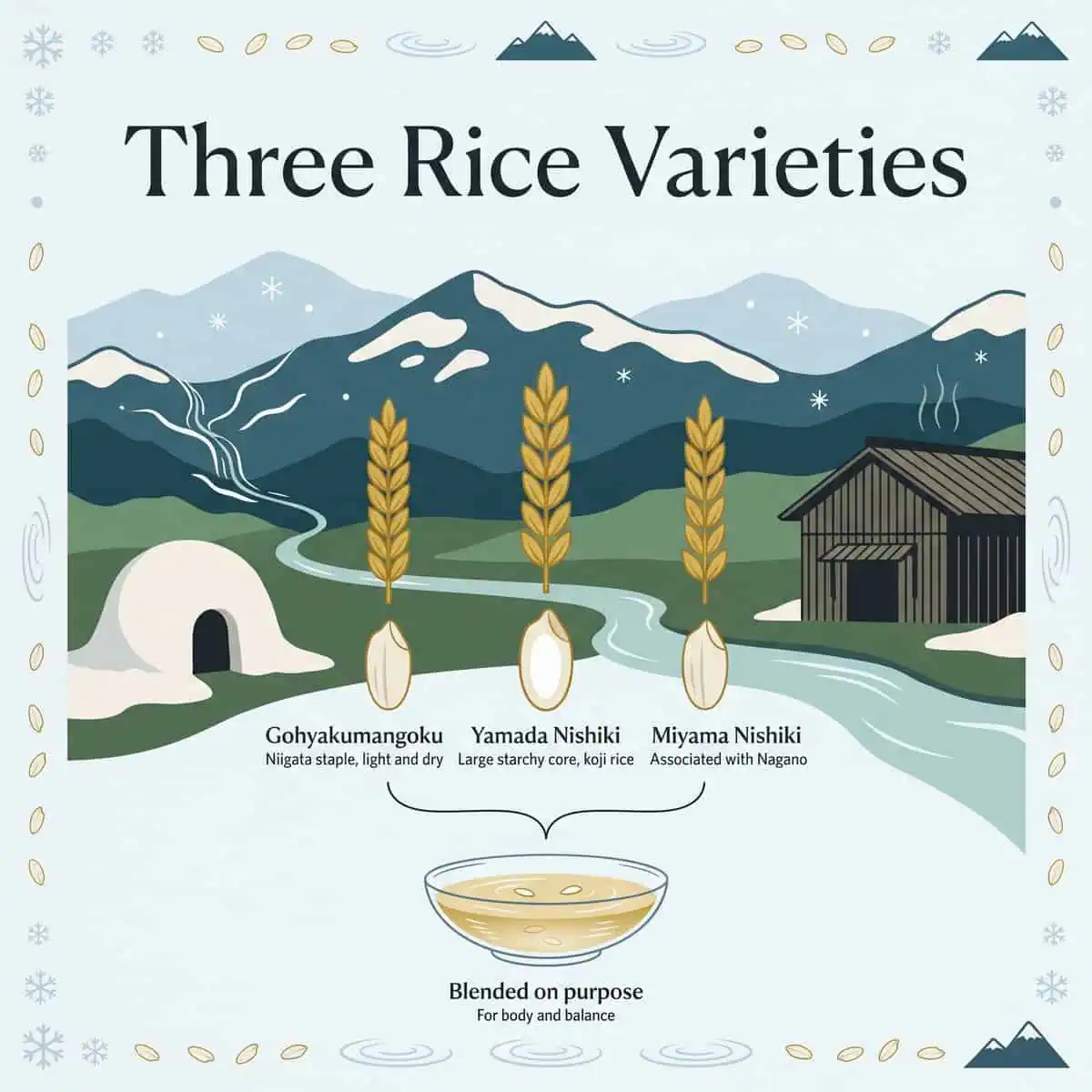
Hakkaisan does not rely on one rice. Instead, its product pages list different combinations for different bottles, so no single blend describes the whole range. Still, three varieties appear again and again, as listed below.
- Gohyakumangoku: One of Niigata’s principal brewing rices and a recurring component in many Hakkaisan products. The brewery calls it essential for the light, dry Niigata style.
- Yamada Nishiki: Prized for its large starchy core. Hakkaisan uses it as koji rice in its daiginjo lines, and a 1999 company article describes sourcing it from Hyogo Prefecture.
- Miyama Nishiki: A brewing rice associated with Nagano, used in blends such as the Junmai Daiginjo.
The agriculture ministry’s August 2026 estimate shows how these fit nationally. Yamada Nishiki accounted for about 37% of the 2025 crop of sake-specific rice, and Gohyakumangoku for about 16%. Niigata produced about 51% of that Gohyakumangoku. Our sake rice guide covers each variety in detail.
Mixing Rice on Purpose
The association’s 2024 profile describes a deliberate approach to blending. Current premium pages often list Yamada Nishiki as the koji rice. Gohyakumangoku, Miyama Nishiki, Koshitanrei or other varieties then appear in the main mash, depending on the bottle. Everyday bottles lean on Todoroki Wase, with Koshiibuki and Yukinosei. Moreover, the brewery varies the rice between koji and the main mash.
Why bother? Again, the answer returns to the house style. In the brewery’s account, leaning too heavily on Gohyakumangoku gives a lighter profile than it wants. Other varieties therefore add body and depth. Rice choice, in short, is one of the brewery’s tools for balance, not a badge of prestige.
Rice Polishing and Brewing Consistency
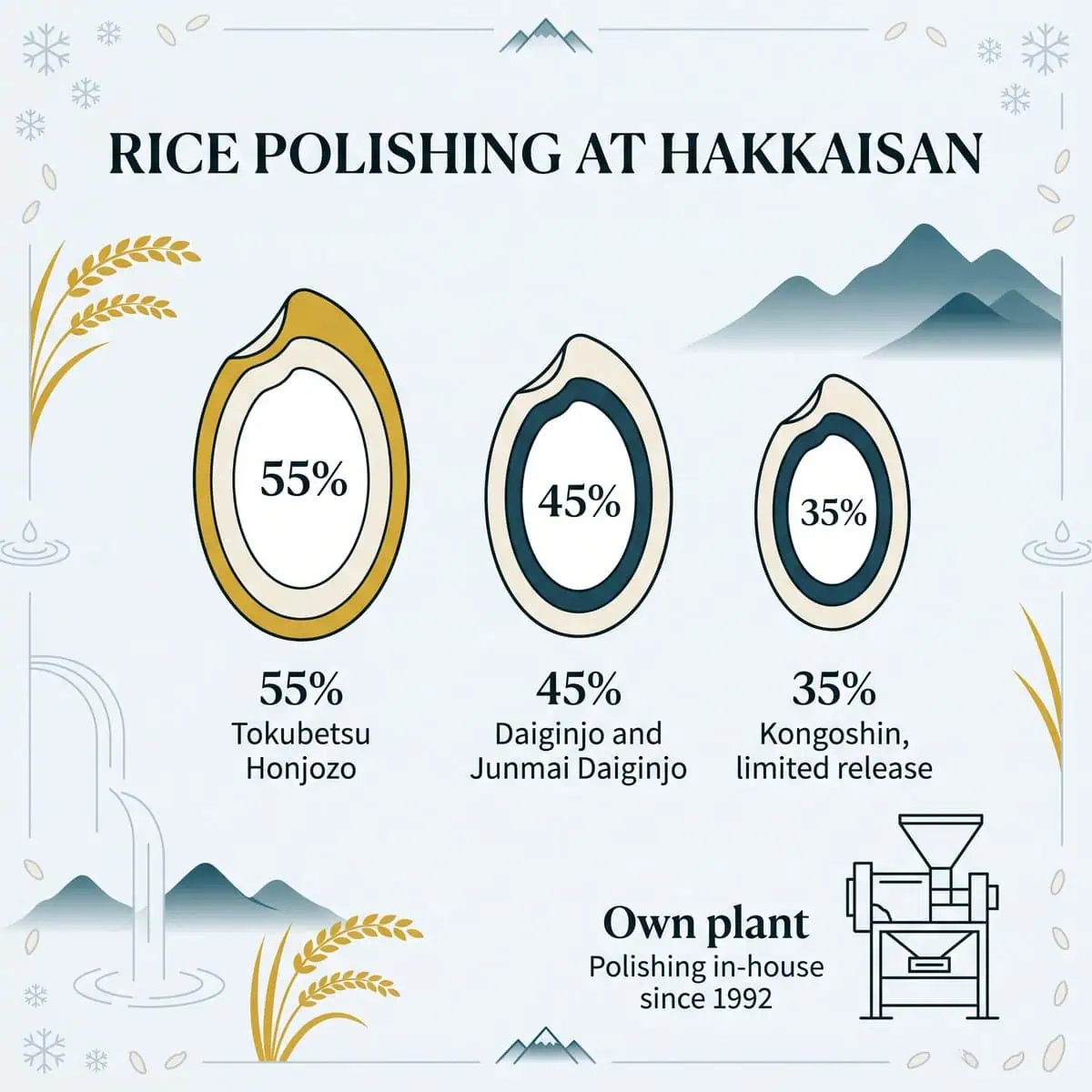
Polishing removes the outer layers of each grain, because fat, protein and minerals concentrate there. Our rice polishing article explains the mechanics. What matters here is a business decision: in 1992, Hakkaisan built its own polishing plant.
Before that, since 1967, the company had used a cooperative mill set up with other local breweries. Owning the plant changed two things. First, the brewery could polish to its own schedule. Second, the quality of the milled rice came under its own control. The company also says it installed high-performance machines at the time.
Polishing ratios across the range show the logic clearly. For example, the Tokubetsu Honjozo uses rice polished to 55%. The Daiginjo and Junmai Daiginjo sit at 45%, and the limited Kongoshin goes to 35%. Under Japan’s labeling standards, the ratio is the weight of polished rice as a share of the original brown rice.
However, a lower number does not rank one bottle above another. It changes cost, yield and style. After all, Hakkaisan’s most representative sake is the 55% honjozo, not the 35% showpiece.
How Hakkaisan Approaches Brewing
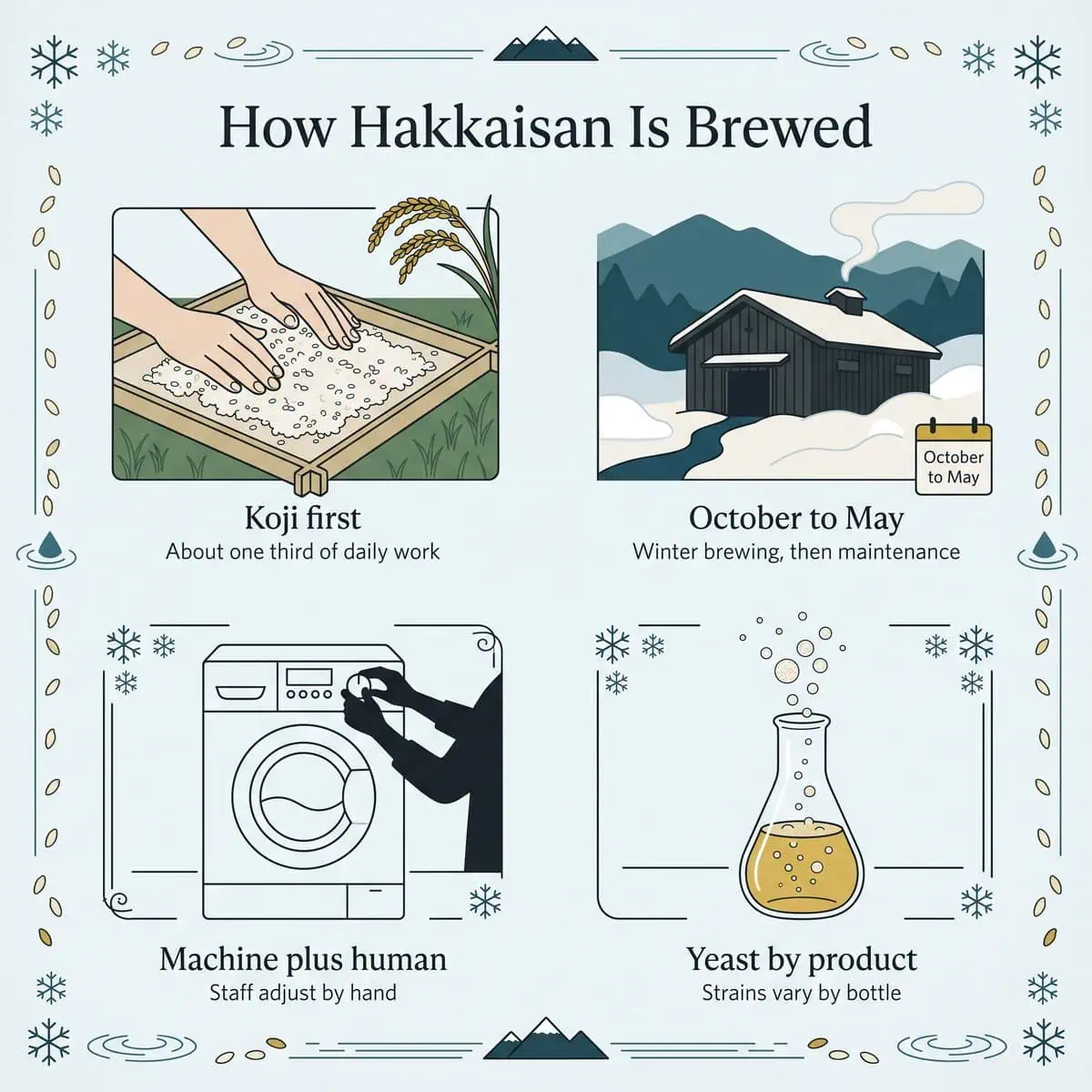
The basic sequence matches any brewery, and our guide to how sake is made walks through it. The interesting part, however, is where Hakkaisan spends its labor. According to the Niigata Sake Brewers Association, about one third of the brewery’s daily work goes into making koji.
Koji, briefly, is the mold-grown rice that turns starch into sugar. The brewery describes its koji as handmade, while using equipment to support temperature control and consistency. Machines can mix a mash, it argues, but they cannot read it. Consequently, the key question is not hand versus machine, but where brewers keep direct judgment, such as when adjusting the moromi.
A Winter Brewery, by Choice
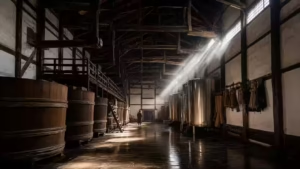
According to the association’s profile, Hakkaisan brews from October to May and then stops for maintenance. The facilities could run all year. Nevertheless, the company chooses not to, which keeps it within the old kan-zukuri rhythm of winter brewing even with modern equipment.
Machines handle most of the rice washing and soaking. Even so, one staff member watches the machine and adjusts by hand. Likewise, the master brewers set the targets from rice variety, moisture and past records, then fine-tune each batch. The association quotes the brewery: even after mechanization, the judgment must be human.
Yeast selection also varies by product. Current pages list strains such as Kyokai No. 701, No. 901, No. 1001 and No. 1801, as well as M310 and Akitakonno No. 2. Our yeast article explains what those numbers mean.
Traditional Skill and Modern Brewery Facilities
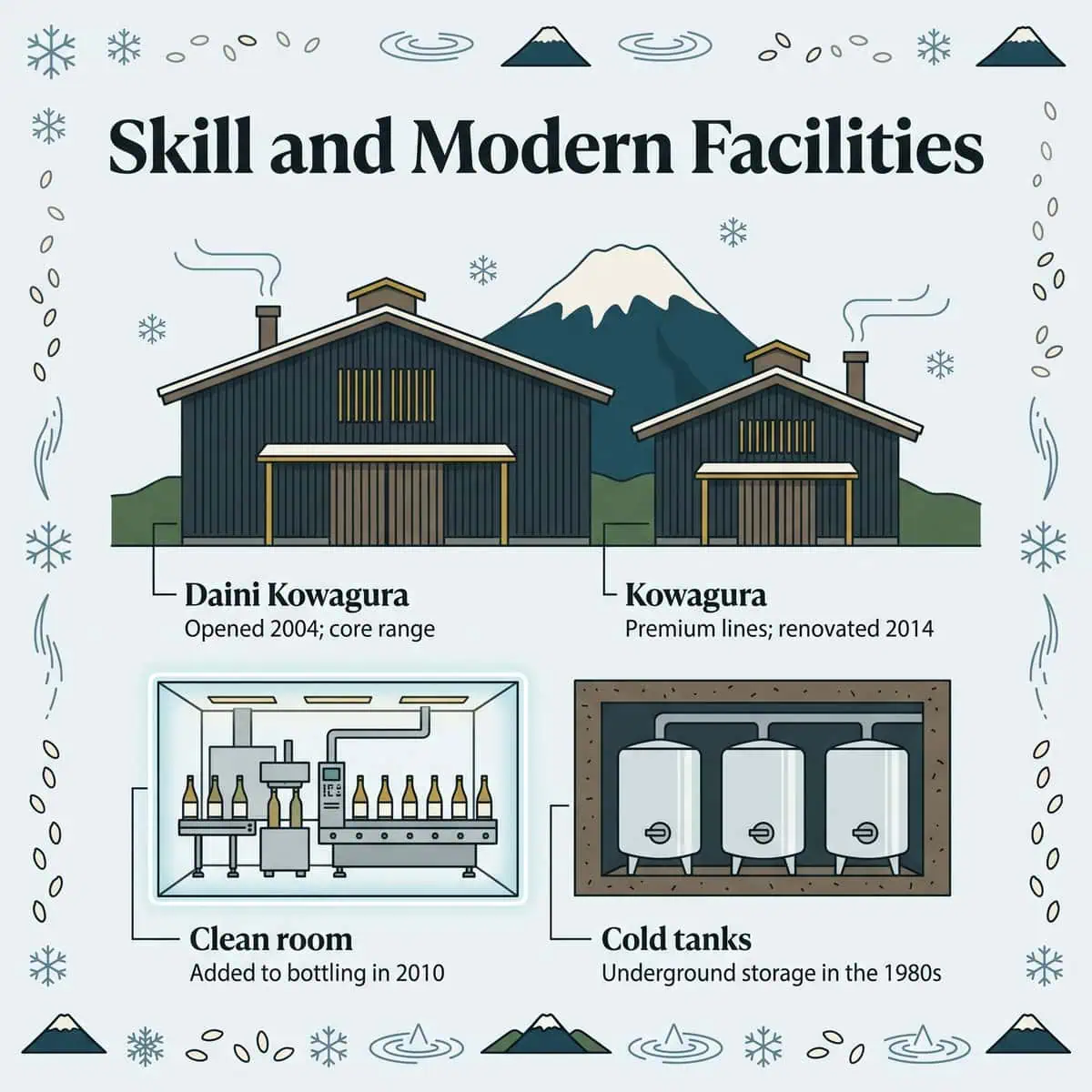
Two buildings tell the story best. The Daini Kowagura, completed in 2004, is the large plant that mainly makes futsushu and Tokubetsu Honjozo. Futsushu falls outside Japan’s legally defined special-designation categories, known as tokutei meishoshu. In 2024, the association reported that the core range from futsushu through Tokubetsu Honjozo accounts for about 80% of output. The company describes the plant’s purpose, simply, as “better sake for more people.”
The Kowagura, extensively renovated in 2014, has a more specialized role. Specifically, it focuses on premium lines, including daiginjo releases and the Kongoshin. The company says its role is to pass on the intuitive, hard-to-explain side of brewing to younger staff. Bottles carrying “Kowagura” on the label therefore come from here.
Why Clean Facilities Matter
A modern brewery is also partly about hygiene. For example, Hakkaisan added a clean room to its bottling line in 2010. It had also introduced underground storage tanks in the 1980s to support stable, low-temperature storage.
Equipment has not removed the need for the toji, either. A 1998 company essay already described a shift from a single master toward teams in which each section head takes responsibility. In short, modern equipment and traditional craftsmanship are not opposites here. They are the same people, working with better tools.
Understanding the Hakkaisan Product Range
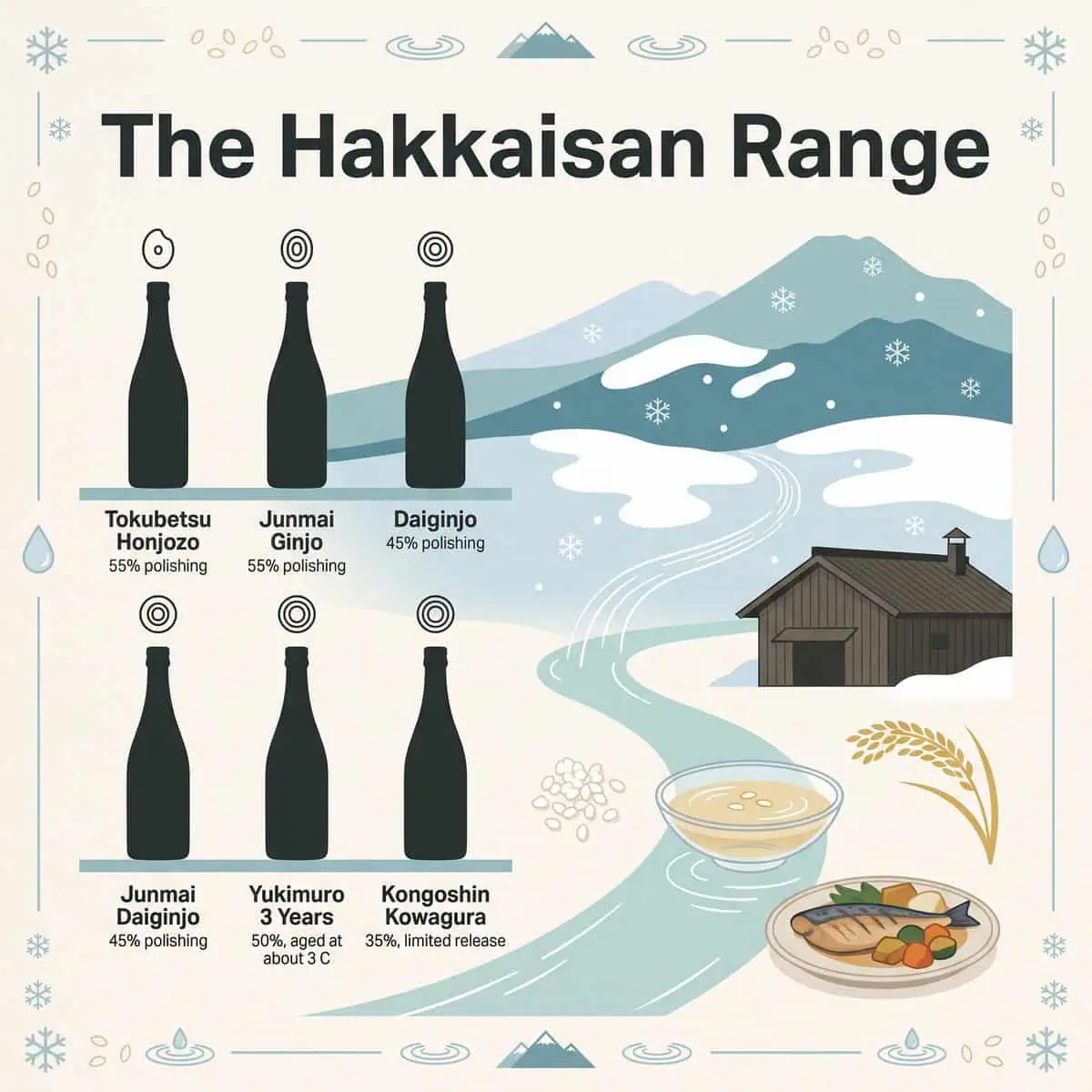
The range changes over time, so the table below reflects the Japanese product pages as of October 10, 2026. Overseas lineups differ slightly, and we return to that point below.
| Bottle | Grade | Polishing | Rice (koji / main) | Brewery description |
|---|---|---|---|---|
| Tokubetsu Honjozo Hakkaisan | Tokubetsu honjozo | 55% | Gohyakumangoku / Gohyakumangoku, Todoroki Wase and others | Soft mouthfeel, light taste; good chilled or warmed |
| Junmai Ginjo Hakkaisan 55% | Junmai ginjo | 55% | Gohyakumangoku / Gohyakumangoku, Todoroki Wase and others | Clean and crisp, with the sake and the food’s umami blending |
| Daiginjo Hakkaisan | Daiginjo | 45% | Yamada Nishiki / Yamada Nishiki, Gohyakumangoku and others | Fine, mellow, with a subtle elegant sweetness |
| Junmai Daiginjo Hakkaisan | Junmai daiginjo | 45% | Yamada Nishiki / Yamada Nishiki, Miyama Nishiki, Gohyakumangoku and others | Transparent and clean; a slightly upscale food sake |
| Junmai Daiginjo Yukimuro Chozo 3 Years | Junmai daiginjo | 50% | Yamada Nishiki / Yamada Nishiki, Gohyakumangoku and others | Mellowed by three years at about 3°C |
| Kongoshin Kowagura | Junmai daiginjo | 35% | Yamada Nishiki / Yamada Nishiki, Koshitanrei, Gohyakumangoku | Aged two years; limited seasonal release |
The Everyday Bottle
The Tokubetsu Honjozo is the brewery’s representative sake, and the Niigata association lists it as such. Like any honjozo, it uses some added brewer’s alcohol, which Japanese rules cap at 10% of the polished rice weight. The brewery suggests serving it chilled or warmed. When heated, it notes, a faint koji aroma appears.
Ginjo and Daiginjo
Next, the 45% Daiginjo and Junmai Daiginjo arrived as a pair in August 2020. The company’s announcement presented them as slightly upscale sake for a slightly special day, and as food sake. Above them, meanwhile, sit limited Kowagura-brewed releases, including the 35% Kongoshin.
Seasonal and Special Bottles
Beyond the core list, the brewery sells a seasonal namazake called Echigo de Soro. It also makes a kijoshu with a soft, refined sweetness, a sparkling nigori and a bottle-fermented awa sake. There are also shochu, umeshu and a craft beer line, which fall outside this article.
One bottle, finally, exists only abroad. The brewery’s international site states that it makes Hakkaisan Tokubetsu Junmai solely for export. Polished to 60% with Gohyakumangoku koji, it targets a wide range of cuisines, not just Japanese food.
What Does Hakkaisan Sake Taste Like?
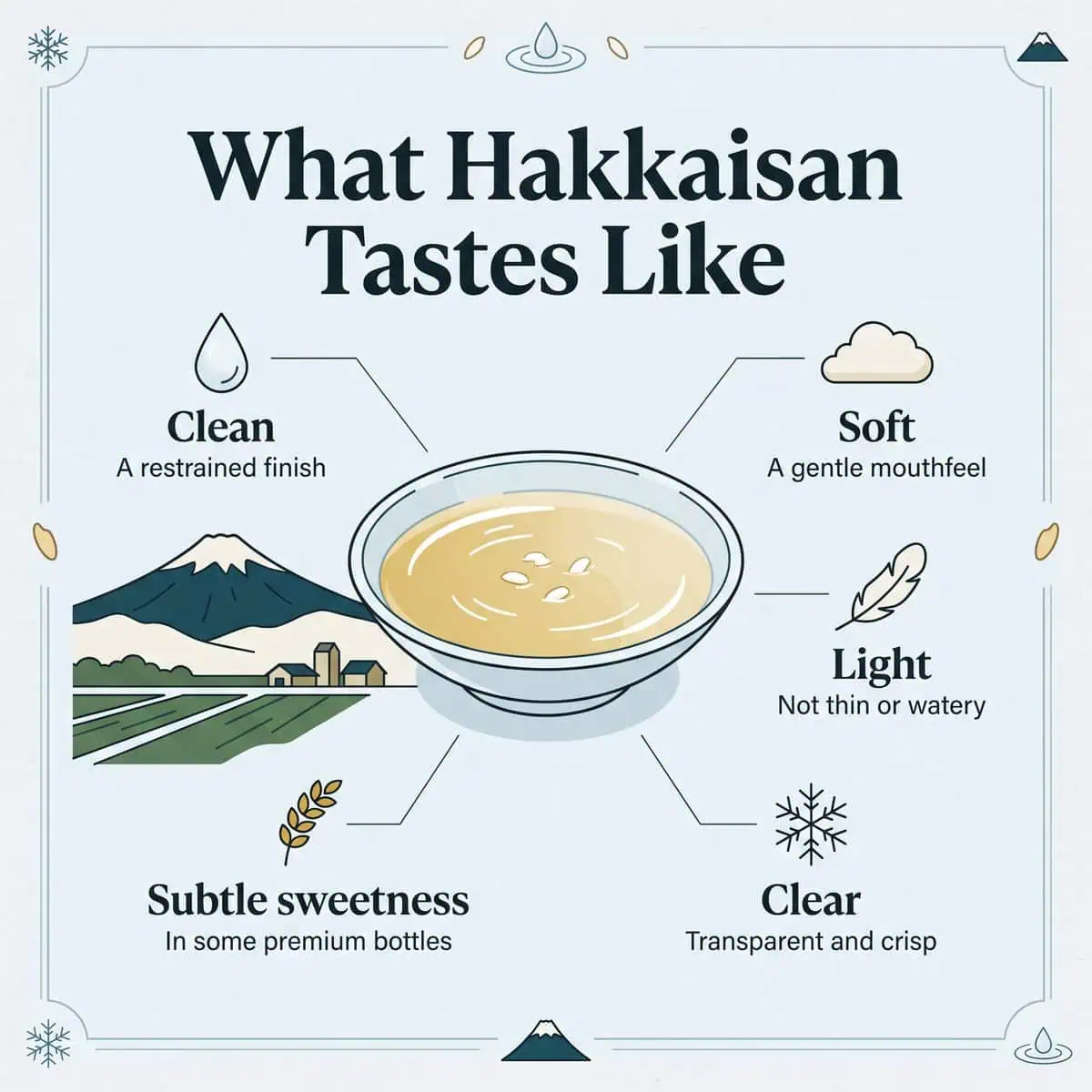
Across the core Hakkaisan sake range, the brewery’s own descriptions repeat a few words: clean, soft, light, clear. They emphasize a restrained finish, and where the premium bottles add sweetness, the company calls it subtle and elegant. However, sweet, sparkling, seasonal and aged bottles depart from that core profile.
Published specifications support that picture. For instance, the Tokubetsu Honjozo sits at a sake meter value of +4.0 and acidity of 1.3. The positive sake meter value fits a relatively dry profile. Still, neither number predicts perceived taste on its own. The snow-aged bottle, by comparison, is listed at -1.0 and 1.5. Those figures differ from the honjozo but, again, do not settle the taste on their own. Our guide to reading a sake label explains how to read those numbers.
Light Does Not Mean Thin
A light style is not a watery one. The junmai ginjo page, for example, describes the umami of food and sake swelling together in the mouth. That is a claim about depth, not thinness.
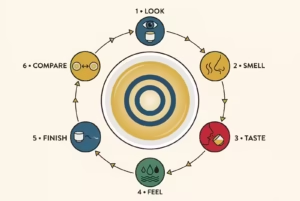
We have not tasted the full range side by side, so these notes rely on the brewery and the association. In addition, temperature changes the impression a great deal. Our how to taste sake guide offers a method for comparing bottles at home.
Why Hakkaisan Works Well With Food
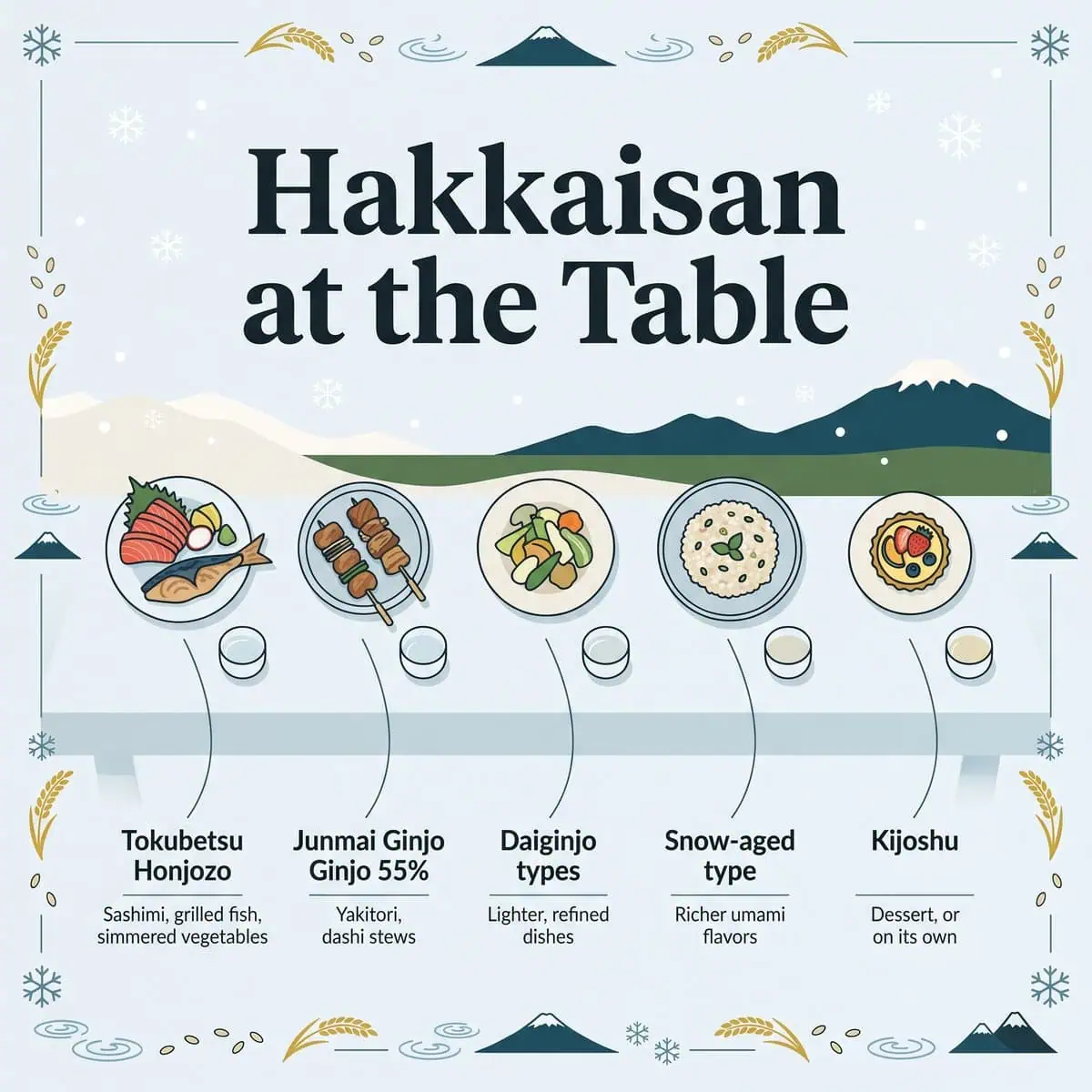
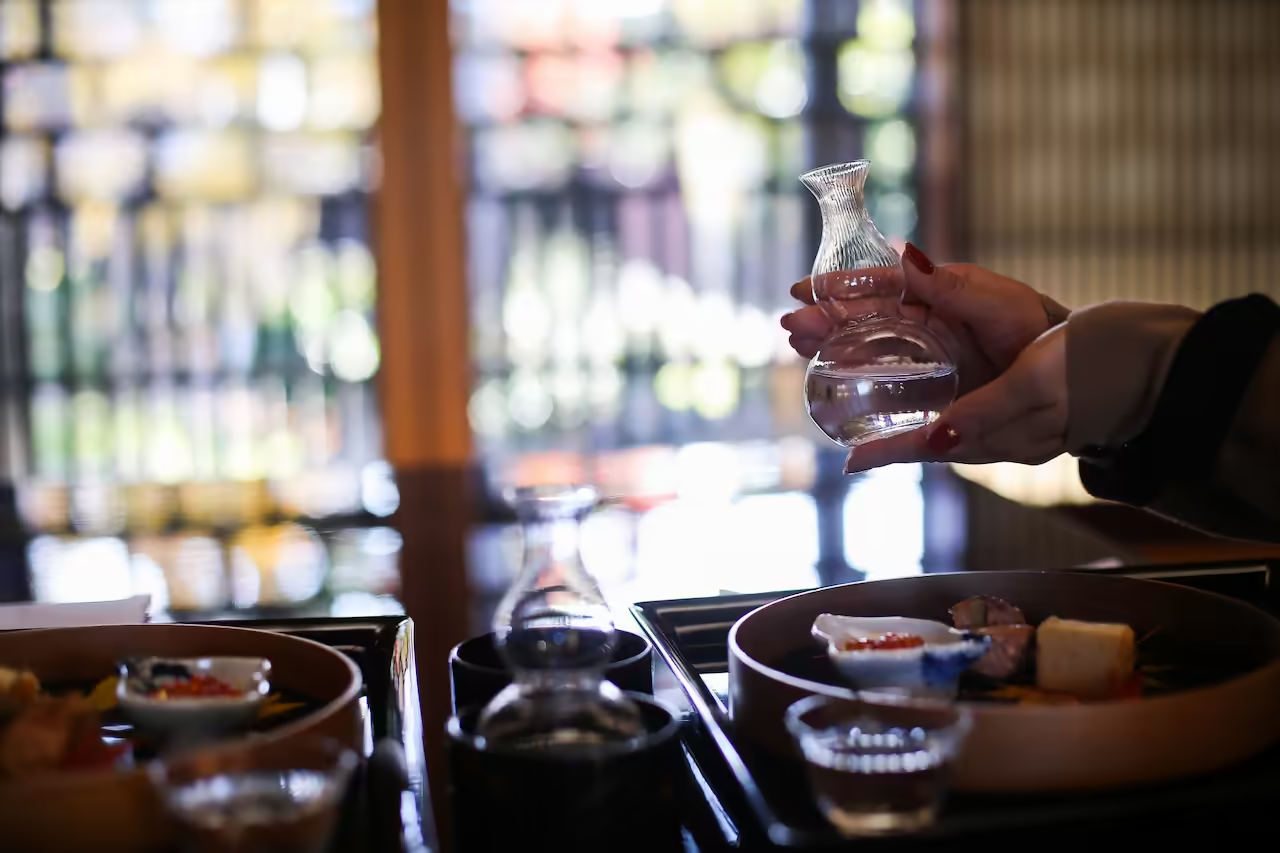
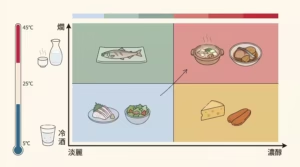
The brewery designs Hakkaisan sake around the table, so pairing is less about rules and more about proportion. Generally, a quiet sake suits food with moderate salt and umami. The core range is easiest to appreciate with moderately seasoned dishes. Sweeter, sparkling and fuller-bodied bottles, on the other hand, can handle stronger flavors.
Official pairings are rare, but a few exist. For example, at an official 2017 Hakkaisan pairing dinner in Hong Kong, the snow-aged sake accompanied a sea urchin and sweet corn risotto. The kijoshu came with a yuzu and lemon tart. Similarly, the brewery’s sparkling nigori page suggests it as an aperitif, with richly flavored or spicy dishes, or with fruit-based desserts.
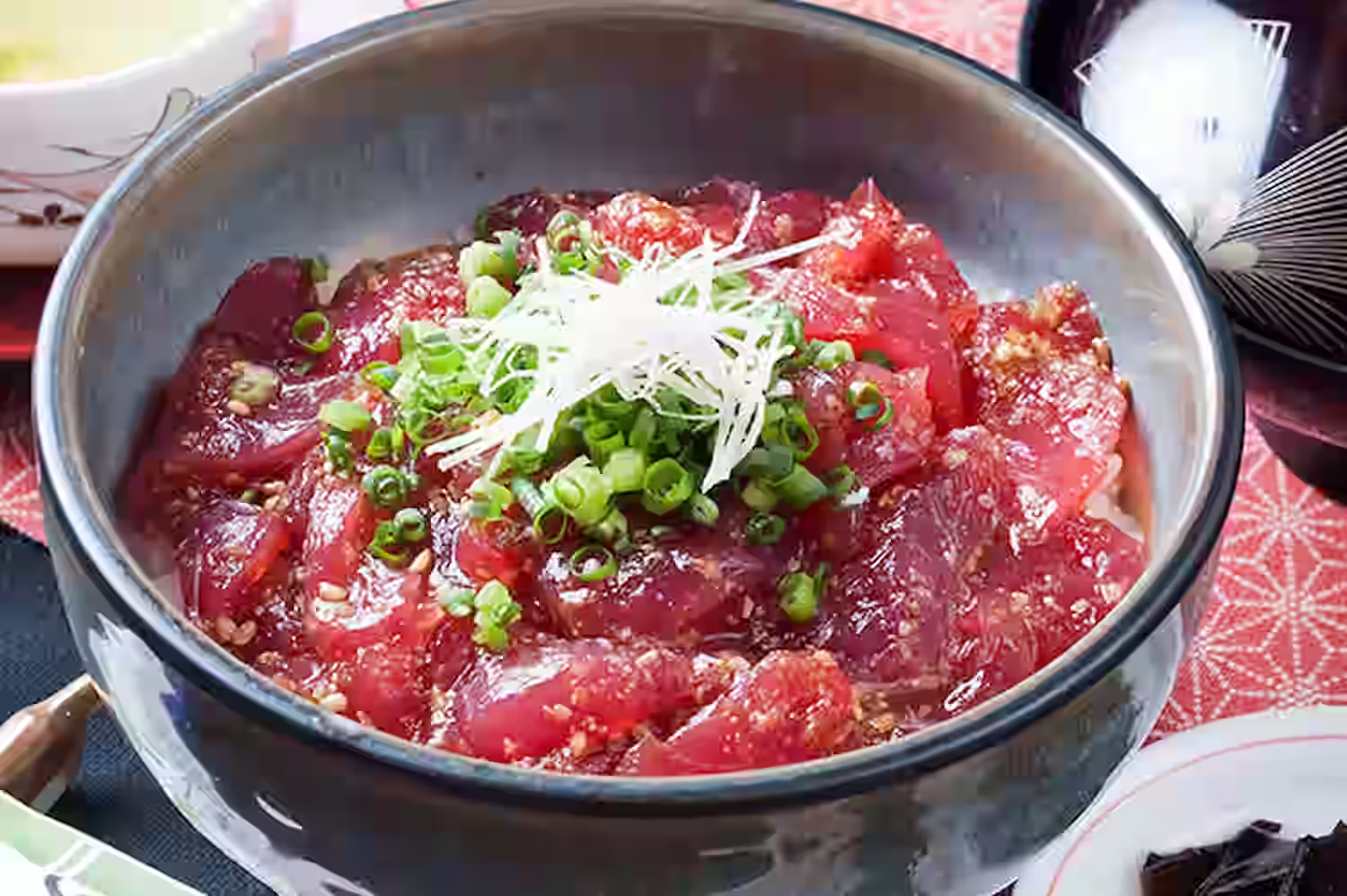
- Tokubetsu Honjozo: Sashimi, grilled fish, simmered vegetables; serve chilled or gently warmed.
- Junmai Ginjo 55%: Dishes with savory depth, such as yakitori or dashi-based stews, where the umami can meet the sake’s.
- Daiginjo and Junmai Daiginjo: Lighter, refined dishes where the subtle sweetness can show.
- Snow-aged Junmai Daiginjo: Richer flavors with umami, following the brewery’s own risotto pairing.
- Kijoshu: Dessert, or on its own after a meal.
The honjozo and ginjo suggestions above are ours, based on style, not official recommendations. In Minamiuonuma itself, local dishes such as hegi soba make an easy match. For the general method, see our sake and food pairing guide.
Yukimuro: Aging Sake With the Power of Snow
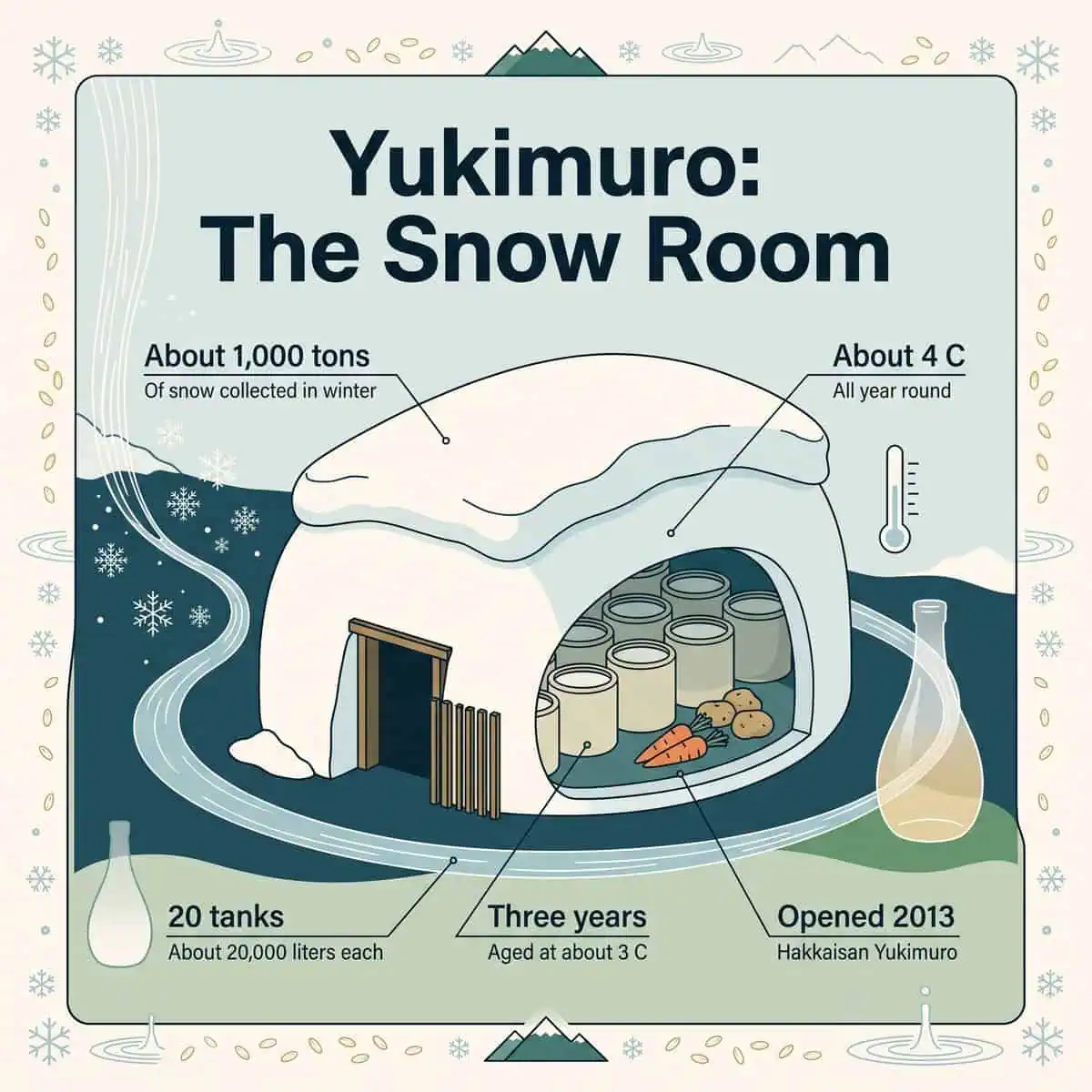
A yukimuro is a snow room. In practice, it is a storehouse that uses packed snow as its main cooling source instead of conventional refrigeration. Snowy regions used them as natural refrigerators for centuries. Indeed, the Uonuma no Sato website notes that they stayed common until electric refrigerators spread in the 1950s.
Hakkaisan adapted the traditional idea on a larger scale. Hakkaisan Yukimuro opened in 2013 and holds about 1,000 tons of snow collected in winter. The facility says it stays at around 4°C (39°F) all year. The storage area contains 20 tanks of about 20,000 liters each, while the facility states a maximum sake storage of about 360,000 liters. Meanwhile, vegetables such as carrots and potatoes share the space.
A Junmai Daiginjo Aged for Three Years
The facility’s signature snow-aged sake is Junmai Daiginjo Hakkaisan Yukimuro Chozo 3 Years. Its product page describes three years of aging at about 3°C (37°F), slightly colder than the facility’s general figure. Polished to 50% and bottled at 17% alcohol, it emerges mellowed by the long cold rest, in the brewery’s words.
One detail, however, deserves care. When the product launched in 2016, the company recorded it as a junmai ginjo. The current Japanese product page classifies it as a junmai daiginjo. The brewery’s public materials confirm the change but do not state when or why. A 50% polishing ratio meets the numerical requirement for junmai daiginjo, although the legal class also depends on production method and quality.
It is not magic. Instead, it is one particular form of controlled aging, based on stable cold storage rather than warmer maturation. Our articles on jukusei and koshu explain the wider world of aged sake.
Beyond Sake: Koji, Amazake and Uonuma no Sato
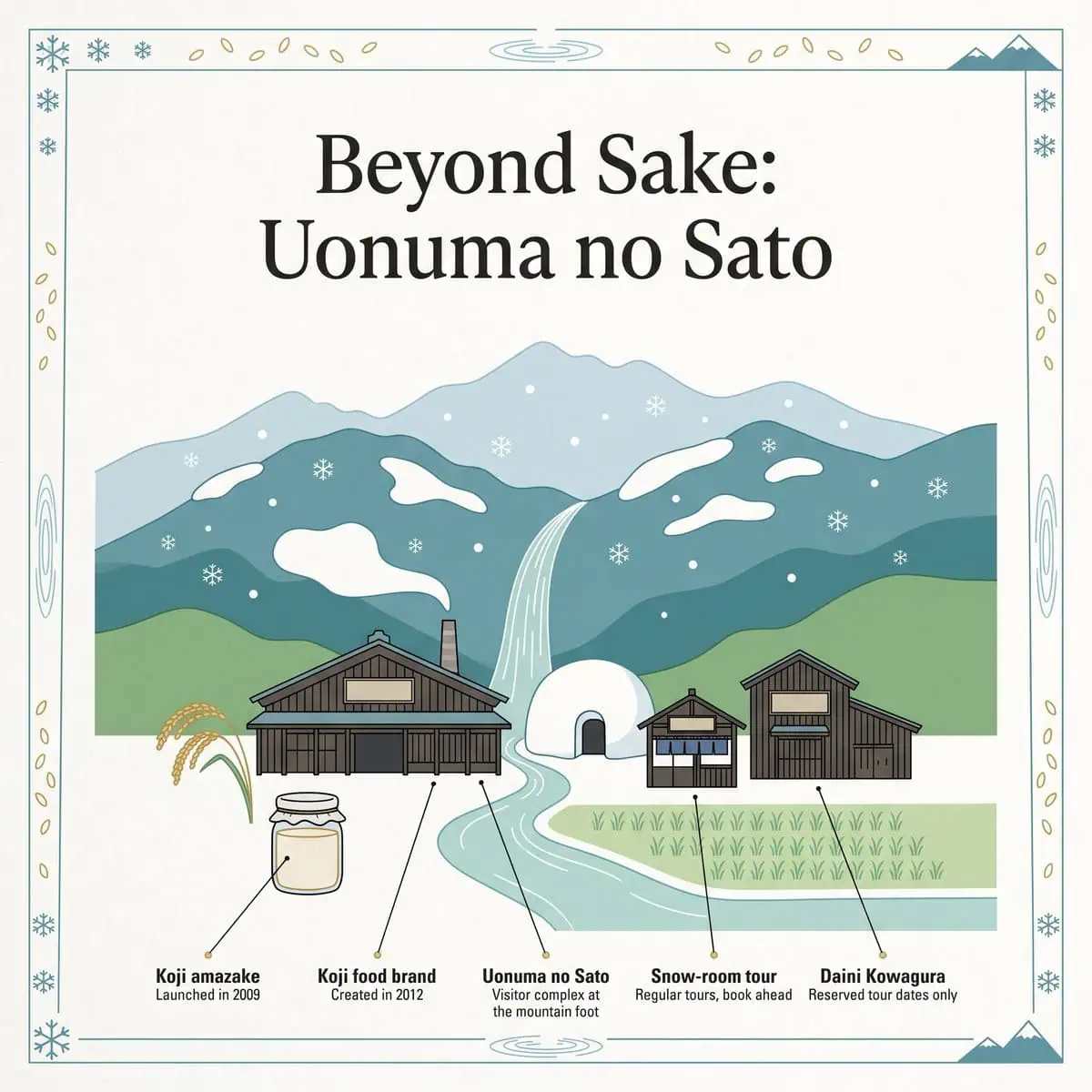
Koji runs through the whole company, not just its sake. For instance, in 2009 Hakkaisan launched an amazake made only from koji. Then in 2012 it created a food brand built around koji products. The brewery frames both as extensions of the same fermentation skill.
Uonuma no Sato is where visitors meet all of this in one place. The company describes it as a rural complex at the foot of Mount Hakkai in Nagamori. It gathers the Daini Kowagura, the snow room, a distillery and a craft beer brewery. Around them sit restaurants, a soba shop, a sweets shop and stores.
Visiting: A Snow-Room Tour and Occasional Brewery Tours
A brewery visit and a snow-room visit are not the same thing, so plan accordingly. The Daini Kowagura normally stays closed to the public. Instead, the company opens it only on specific dates through reserved tours. In May 2025, for example, a tour combined 50 minutes in the brewery with 20 minutes in the snow room for 2,500 yen (about $15.8). (Approximate US dollar amounts use the October 10, 2026 exchange rate of 1 yen ≈ 0.00632 US dollars; exchange rates change.)
By contrast, Uonuma no Sato offers regular guided tours of the snow-storage facility, with advance web booking and a limited number of same-day tickets. Because dates, prices and age rules change, check the official sites before you travel. Tasting is for guests aged 20 and over who are not driving.
Hakkaisan and Niigata’s Sake Identity
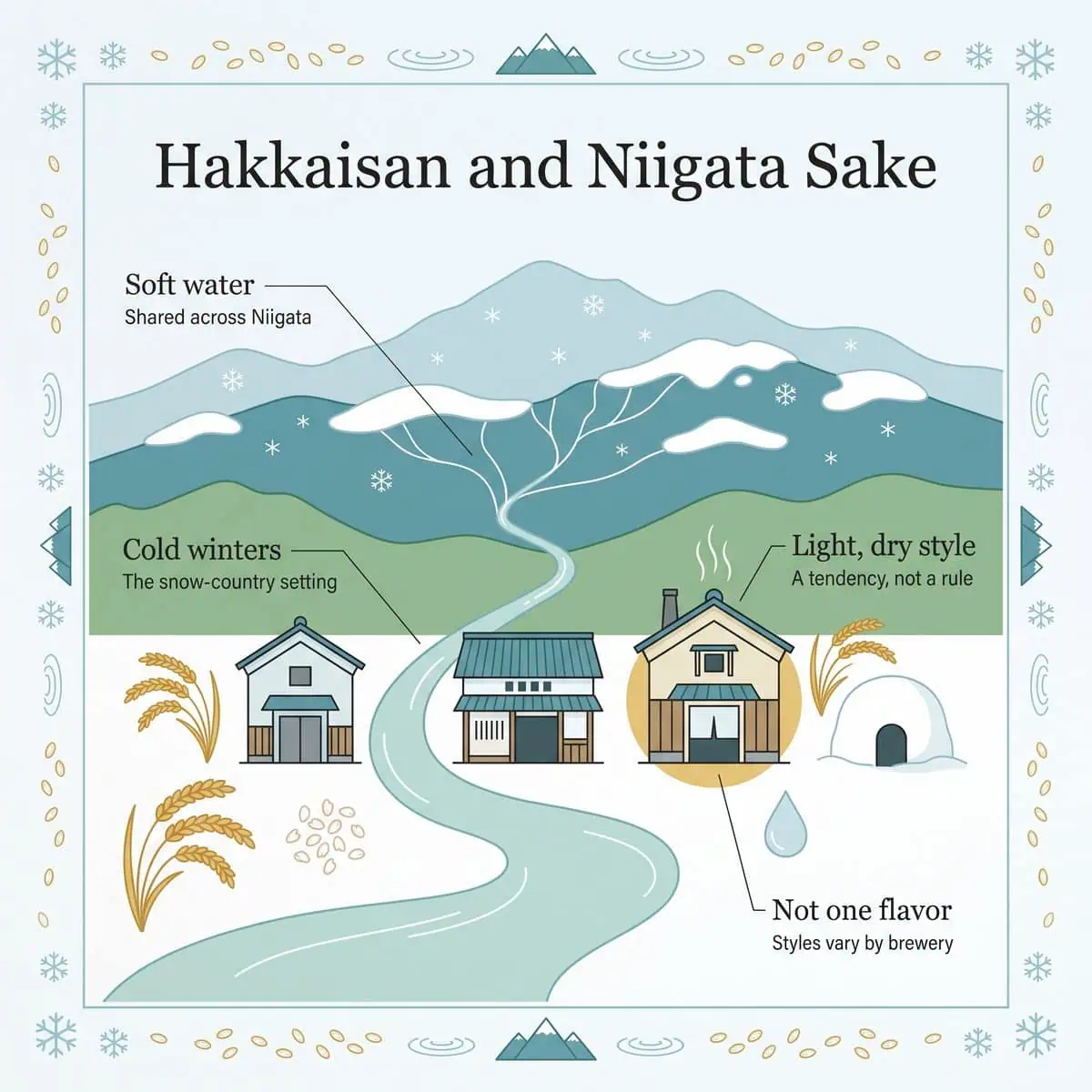
Niigata’s sake image rests on soft water, cold winters and light, dry sake. Hakkaisan fits that image closely. Indeed, our Niigata sake article names it among the brands that helped make the style nationally known.
Yet the prefecture is not one flavor. For instance, some Niigata breweries pursue rich junmai and others aromatic ginjo. Further north, Aramasa in Akita shows how different a snow-country brewery can be. Hakkaisan, therefore, is a useful case study, not a definition.
Its regional role, moreover, goes beyond the bottle. The company buys Niigata rice and has developed Uonuma no Sato as a visitor destination. Whether that counts as tradition or tourism depends on your view. Perhaps it is both.
How to Choose a Hakkaisan Sake Bottle
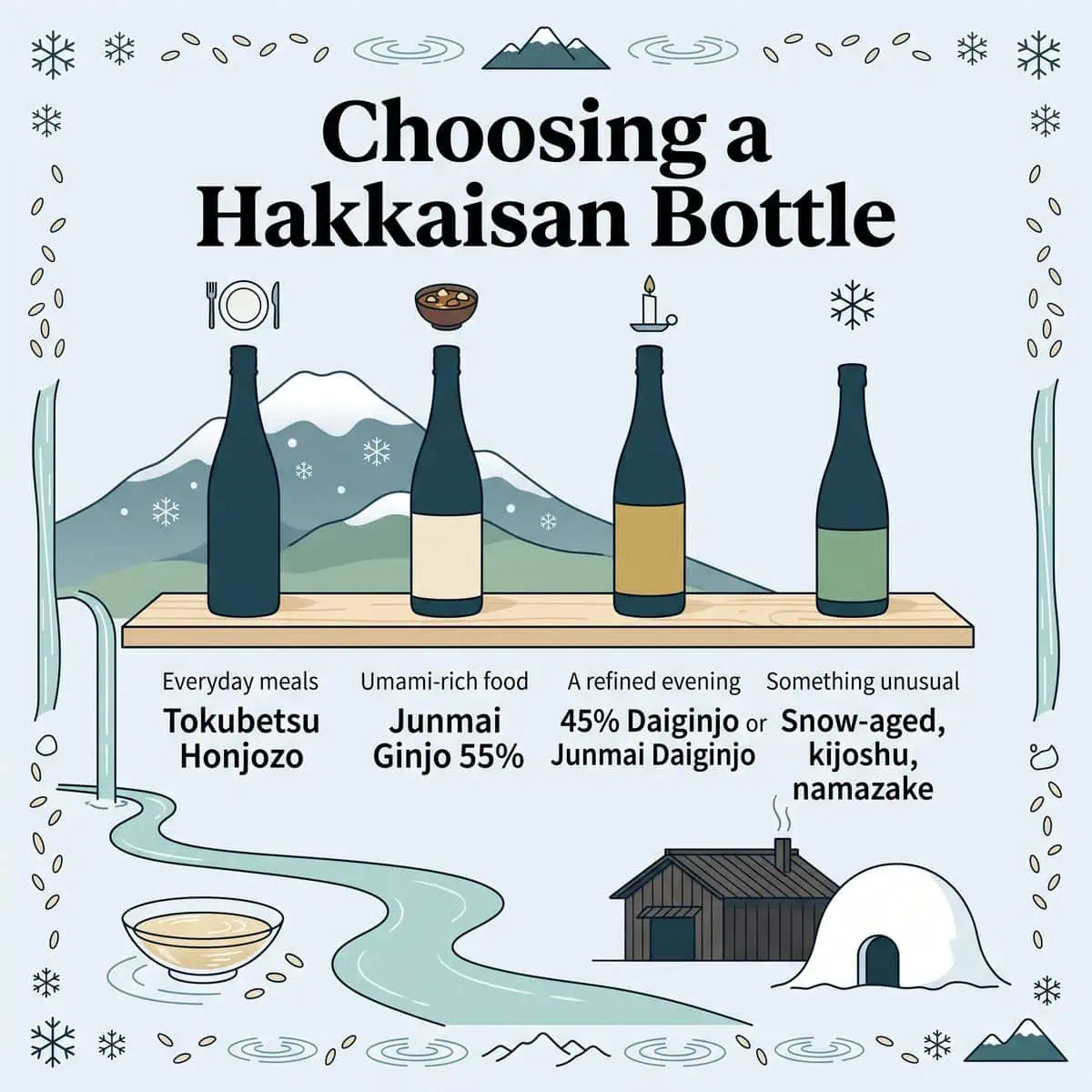
Start with the occasion rather than the grade. Then match it to a bottle.
- For everyday meals: The Tokubetsu Honjozo. It is the brewery’s representative bottle and works well either chilled or warmed.
- With umami-rich food: The Junmai Ginjo 55%, which the brewery describes as made to blend with the flavor of dishes.
- For a refined evening: The 45% Daiginjo or Junmai Daiginjo, designed for slightly special occasions.
- For something unusual: The three-year snow-aged bottle, the kijoshu, or the seasonal namazake.
Price gives a rough sense of how the bottles are positioned. When accessed in October 2026, the Niigata Sake Brewers Association’s brewery profile listed the 720 ml Junmai Daiginjo at 2,244 yen (about $14.2). The snow-aged bottle was listed at 3,850 yen (about $24.3). The page does not state when those prices took effect, and prices abroad differ, so check current listings. (Approximate US dollar amounts use the October 10, 2026 exchange rate of 1 yen ≈ 0.00632 US dollars; exchange rates change.)
Condition matters as much as the choice, too. Look for shops that keep bottles cool and out of bright light, and check the bottling date when it appears. Our guide on how to store sake explains why.
What Makes Hakkaisan Distinctive, and What Does Not?
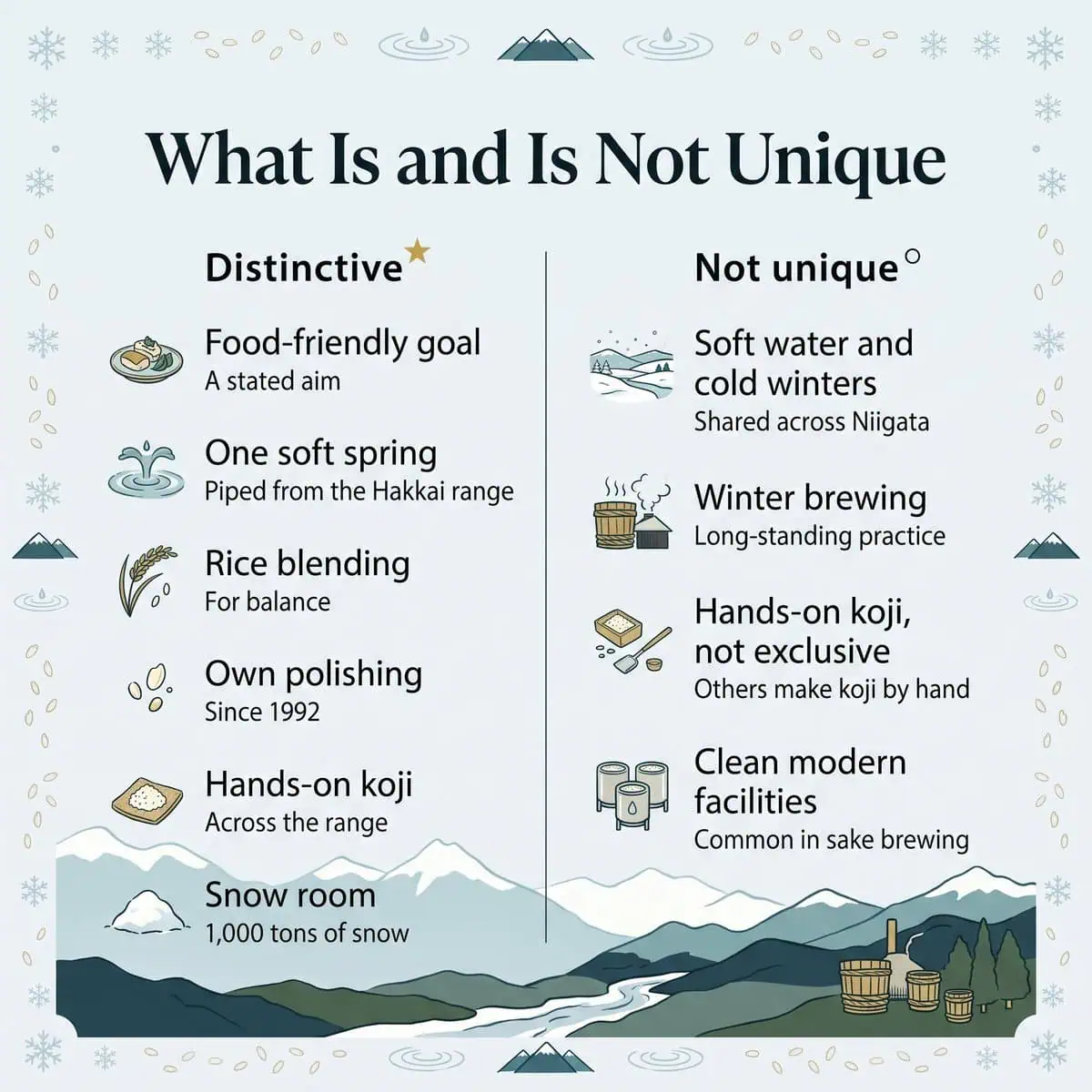
Distinctive about Hakkaisan
- A stated goal of food-friendly, never-tiring sake.
- One soft spring, piped from the Hakkai range.
- Deliberate rice blending for balance.
- In-house polishing since 1992.
- An emphasis on hands-on koji making across the range.
- A 1,000-ton snow room for aging.
Not unique to Hakkaisan
- Soft water and cold winters, shared across Niigata.
- Hands-on koji making, not exclusive to Hakkaisan.
- Seasonal winter brewing, a longstanding practice in sake production.
- Clean, modern facilities.
The combination, then, is what sets the brewery apart. Certainly, many breweries have one of these traits. What distinguishes Hakkaisan in this article is how they come together in one long-running house style, led by an everyday honjozo rather than a prestige bottle.
Common Misconceptions About Hakkaisan
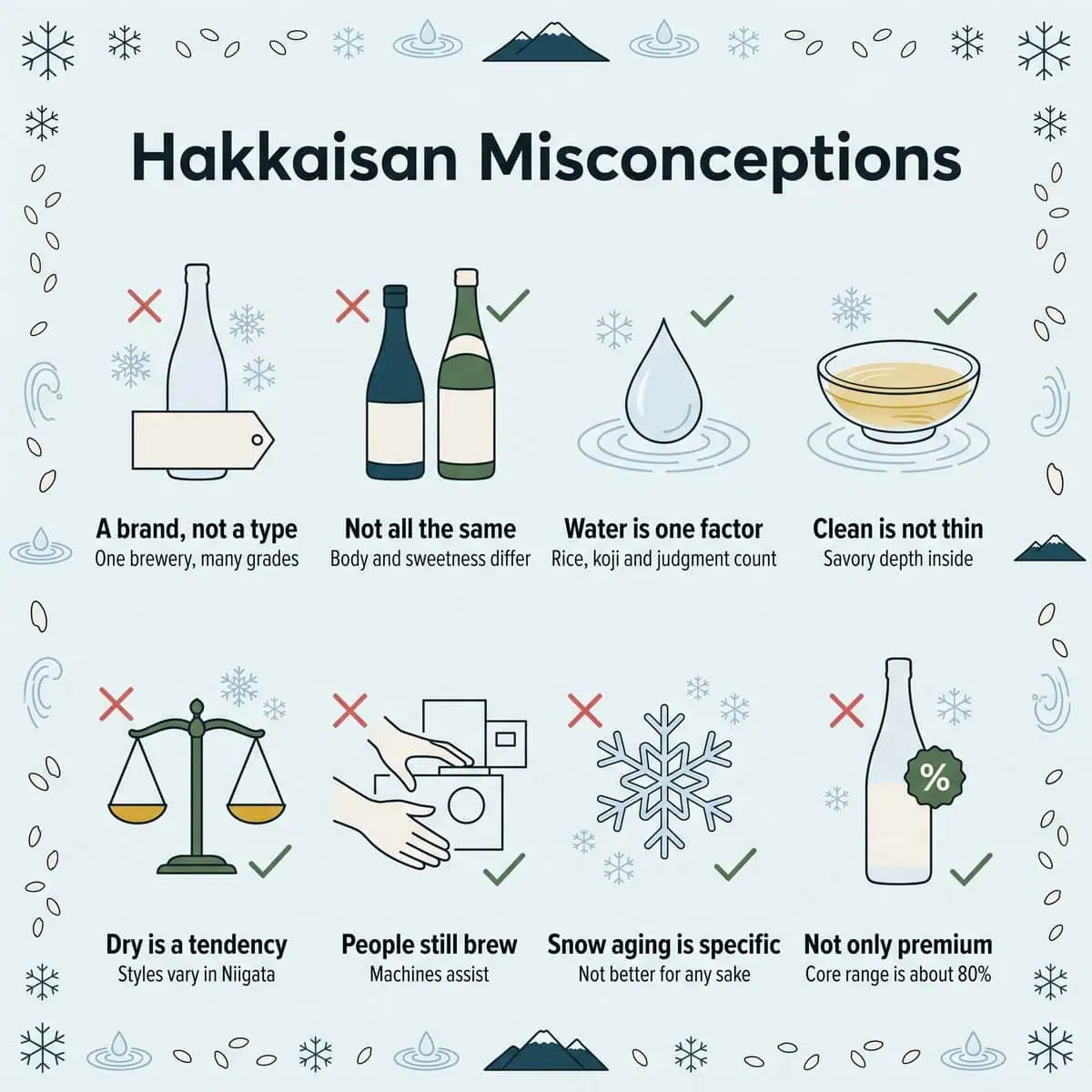
- “Hakkaisan is a type of sake.” It is a brand from one brewery. The grades inside the range vary.
- “Every Hakkaisan tastes the same.” The honjozo, the daiginjo and the snow-aged bottle differ in body, sweetness and aroma.
- “Snowmelt water explains the quality.” Water is one factor. Rice, koji, yeast and judgment matter as much.
- “Clean sake must be light in every way.” The brewery aims for savory depth within a clean frame.
- “Niigata sake is always dry.” Dry is a tendency, not a rule. Styles vary within the prefecture.
- “Machines replaced the brewers.” Automation handles some steps, but people set and adjust every batch.
- “Snow aging makes any sake better.” It is a specific method for a specific product.
- “Hakkaisan only makes premium junmai daiginjo.” The association reports that the core range from futsushu through Tokubetsu Honjozo accounts for about 80% of output.
Final Thoughts
Hakkaisan sake is easy to file under “famous Niigata sake” and move on. The fuller picture, however, is more interesting. Decades ago, a family brewery in a snowbound valley decided that its sake should serve the meal rather than the spotlight.
Each element supports the others. Soft water shapes the conditions of fermentation, and blended rice helps set body and balance. Careful koji making lets the brewers manage saccharification. Clean facilities then help keep the intended character through storage and bottling.
Try the Tokubetsu Honjozo first, ideally with dinner. Then, if you can find it, compare the snow-aged bottle on a quiet evening. The difference between them says more about the brewery than any single bottle could.
Frequently Asked Questions About Hakkaisan Sake
The Brand
- What is Hakkaisan sake?
-
Hakkaisan is a sake brand from Hakkaisan Brewery in Minamiuonuma, Niigata Prefecture. The company dates its founding to 1922. Its core range is known for a clean, light style designed to accompany food, although sweet, sparkling and aged products vary.
- What does Hakkaisan mean?
-
The name comes from Mount Hakkai, a peak of about 1,778 meters in the mountains near the brewery. According to the company, the sake took its name from the mountain. It does not record who chose the name or when.
- Does Hakkaisan use snowmelt water?
-
According to the brewery, yes. Winter snow seeps into the mountain and emerges after a long underground passage at its spring, Raiden-sama no Shimizu. A water line of about 4.2 km carries the soft water to the brewery.
- What rice does Hakkaisan use?
-
It depends on the bottle. Gohyakumangoku appears in many products, while Yamada Nishiki, Miyama Nishiki and other varieties are used according to the bottle. The brewery blends varieties on purpose to add body.
Taste and Pairing
- Is Hakkaisan a dry sake?
-
Mostly, yes. The core range leans dry. For example, the Tokubetsu Honjozo has a sake meter value of +4.0, a value generally linked to a drier profile. Acidity, alcohol and aroma also affect perceived sweetness. However, the snow-aged bottle has a lower sake meter value, and the kijoshu is distinctly sweeter. So check each product rather than assuming the whole range tastes the same.
- What is Hakkaisan Tokubetsu Honjozo?
-
It is the brewery’s representative bottle, polished to 55% with Gohyakumangoku rice. The brewery describes a soft mouthfeel and a light, clean taste. It can be served either chilled or warmed.
- Is Hakkaisan good with food?
-
That is its stated purpose, in fact. The brewery aims for sake that supports a meal without dominating it. Grilled fish and simmered vegetables are sensible editorial pairings, although the brewery does not present them as fixed rules.
- What is Hakkaisan Yukimuro-aged sake?
-
It is a junmai daiginjo aged for three years at about 3°C, according to its product page, in a snow-cooled storehouse. The storehouse holds about 1,000 tons of snow. Earlier company materials called the product a junmai ginjo.
Visiting
- Can I visit the Hakkaisan brewery?
-
Partly. The snow room runs regular guided tours with advance booking. The breweries, however, normally stay closed to the public, and the company opens the Daini Kowagura only on specified reserved tour dates. Check the official website for current dates and rules.
- What is Uonuma no Sato?
-
It is a visitor complex run by the Hakkaisan group at the foot of Mount Hakkai. It includes the snow room, a distillery, a craft beer brewery, restaurants and shops. Hours and tours change, so confirm before going.
References
English titles for Japanese-language sources are editorial translations unless otherwise indicated.
- Hakkaisan Brewery – 100th Anniversary: A Century of History (Accessed October 2026)
- Hakkaisan Brewery – Hakkaisan’s Commitment (Brewing Philosophy) (Accessed October 2026)
- Hakkaisan Brewery – No. 2: Techniques for Water and Rice (1999) (Accessed October 2026)
- Hakkaisan Brewery – No. 1: Nada Sake Once Seemed Beyond Reach (1998) (Accessed October 2026)
- Hakkaisan Brewery – Product List (Accessed October 2026)
- Hakkaisan Brewery – Tokubetsu Honjozo Hakkaisan (Accessed October 2026)
- Hakkaisan Brewery – Junmai Daiginjo Hakkaisan (Accessed October 2026)
- Hakkaisan Brewery – Junmai Ginjo Hakkaisan 55% (Accessed October 2026)
- Hakkaisan Brewery – Daiginjo Hakkaisan (Accessed October 2026)
- Hakkaisan Brewery – New Release: Daiginjo and Junmai Daiginjo Hakkaisan (June 2020) (Accessed October 2026)
- Hakkaisan Brewery – No. 4: A Changing Brewery, Changing People (1998) (Accessed October 2026)
- Hakkaisan Brewery – Junmai Daiginjo Hakkaisan Yukimuro Chozo 3 Years (Accessed October 2026)
- Hakkaisan Brewery – Junmai Daiginjo Hakkaisan Kongoshin Kowagura (Accessed October 2026)
- Hakkaisan Brewery – Hakkaisan Kijoshu (Accessed October 2026)
- Hakkaisan Brewery – Sparkling Nigori Hakkaisan (Accessed October 2026)
- Hakkaisan Brewery – Facilities and Access (Accessed October 2026)
- Hakkaisan Brewery – Daini Kowagura and Snow Storage Tour (May 2025) (Accessed October 2026)
- Hakkaisan Sake (international site) – Hakkaisan Tokubetsu Junmai (Accessed October 2026)
- Hakkaisan Sake (international site) – Hakkaisan x French Food Pairing Dinner in Hong Kong (November 2017) (Accessed October 2026)
- Hakkaisan Brewery – Corporate History (Accessed October 2026)
- Uonuma no Sato – Hakkaisan Yukimuro (Accessed October 2026)
- Uonuma no Sato – Snow Storage Tour: Advance Web Booking (July 2024) (Accessed October 2026)
- Niigata Sake Brewers Association – Brewery Profile: Hakkaisan Brewery (Accessed October 2026)
- Niigata Sake Brewers Association – Sake no Kuni Niigata: Hakkaisan Brewery (Pick Up 2024) (Accessed October 2026)
- Niigata Prefecture – Minamiuonuma Regional Development Department: Overview of the Area (Accessed October 2026)
- Ministry of Agriculture, Forestry and Fisheries – Situation of Rice for Sake Brewing (August 2026) (Accessed October 2026)
- National Tax Agency (Japan) – Overview of the Standards for Manufacturing Methods and Quality Labeling of Sake (Accessed October 2026)
- Journal of the Brewing Society of Japan – Okuda, M., et al. (2022). Influence of the Properties of Brewing Water on Sake Brewing, 117(8), 580–608 (Accessed October 2026)
Related Articles
- Niigata Sake (新潟地酒) (Surveyed: October 2026)
- Dassai Sake: The Story Behind Japan’s Global Junmai Daiginjo Brand (Surveyed: October 2026)
- Sake Rice (酒米): The Foundation of Premium Sake (Surveyed: October 2026)
- Water (水 / Mizu) in Sake Brewing: The Ingredient That Shapes Sake (Surveyed: October 2026)
- Tokubetsu Honjozo (特別本醸造酒) (Surveyed: October 2026)
- Koji (麹) (Surveyed: October 2026)
- Jukusei (熟成): How Aging Transforms Sake (Surveyed: October 2026)
- Sake and Food Pairing: How to Match Japanese Sake with Food (Surveyed: October 2026)
- Koshihikari Rice (コシヒカリ) (Surveyed: October 2026)




Comments