Today, fragrant ginjo sake is easy to find in Japan and overseas. In 1980, however, few everyday drinkers knew the word “ginjo.” Dewazakura is a sake brewery founded in 1892 in Tendo, Yamagata Prefecture, in Japan’s northern Tohoku region. It is best known for Oka Ginjo, released in 1980 to bring competition-style ginjo to ordinary drinkers.
So why does one bottle from 1980 still matter? This guide follows that story, from the brewery’s roots to its export push in 1997. Along the way, it covers ginjo aroma, prices, food pairings, and how to pick a bottle you’ll enjoy.
TOC
What Is Dewazakura Sake?
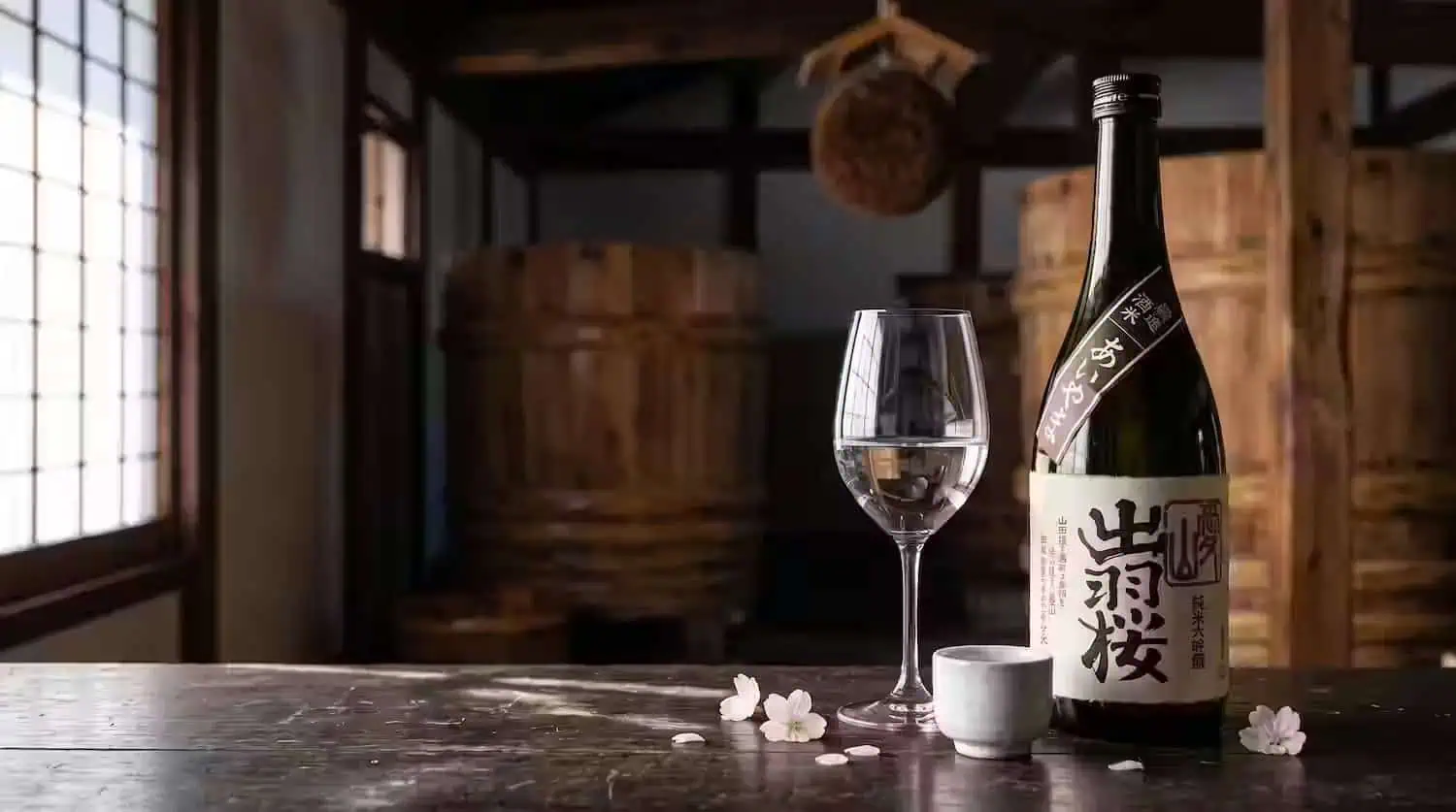
Dewazakura is both a sake brand and the brewery behind it, based in Tendo in central Yamagata. Its signature Oka Ginjo, from 1980, helped make fragrant ginjo something everyday drinkers could buy.
The name itself is easy to unpack, too. Dewa is the old name for the region, while sakura means cherry blossom.
Quick Facts
Brewery
Dewazakura Sake Brewery Co., Ltd.
Location
Tendo City, Yamagata Prefecture
Founded
November 1892
Signature sake
Oka Ginjo, released in 1980
Oka Ginjo specs
Ginjo, 50% polishing ratio, Japanese rice, 15% ABV
Exports
Full-scale exports began in 1997
Known for
Fragrant ginjo and making it easier to buy
However, Dewazakura is not only a ginjo brewery. Its range also includes junmai daiginjo, low-temperature aged daiginjo, Yamagata-rice junmai ginjo, and a three-year aged sake. We’ll get to those later, though.
Tendo and the Yamagata Sake Scene
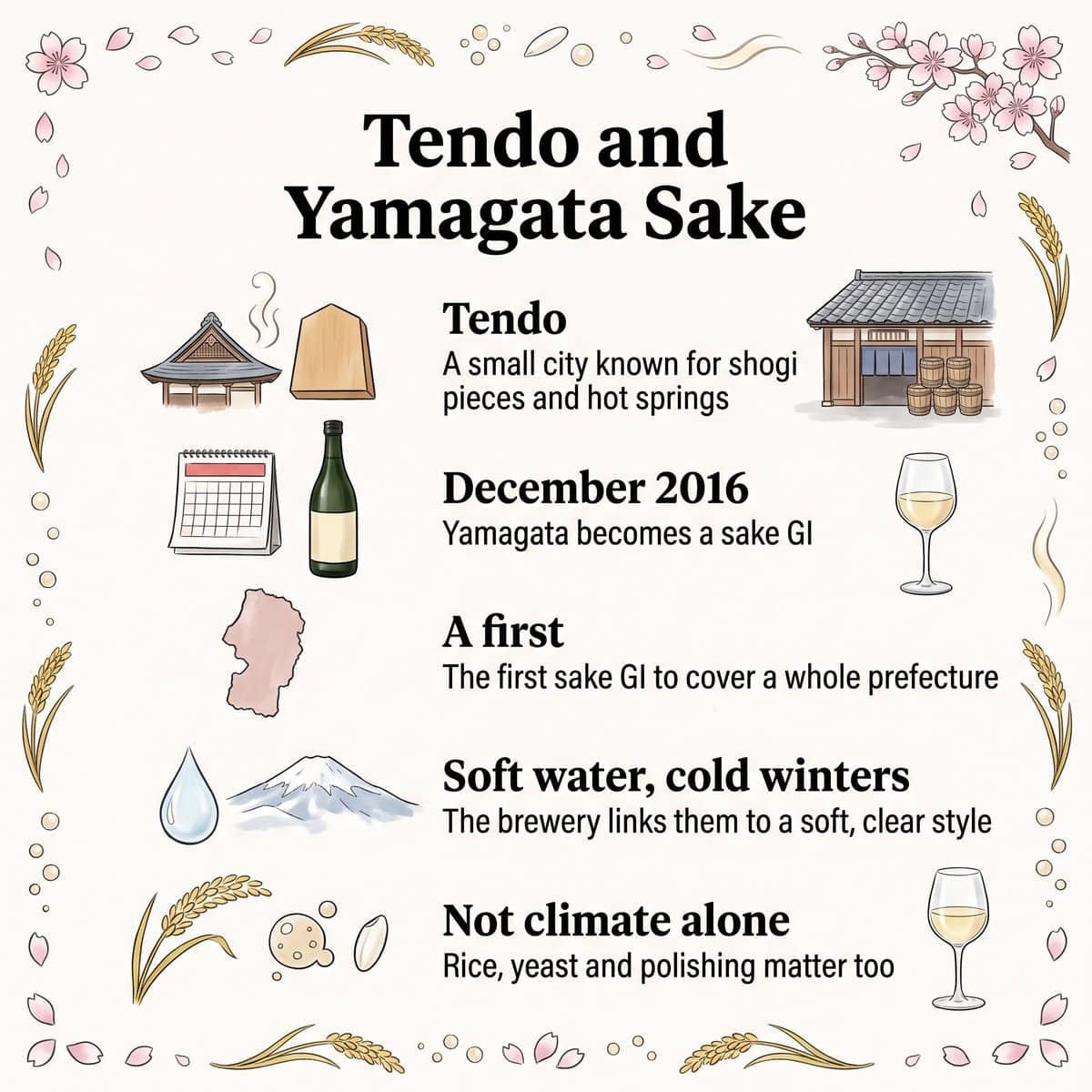
Tendo is a small city in the Yamagata Basin. Many Japanese travelers know it for shogi pieces and hot springs. Still, it sits inside one of Japan’s most respected sake prefectures. Our Yamagata sake guide covers the wider region, including famous names like Juyondai (14dai).
In December 2016, Japan’s National Tax Agency designated “Yamagata” as a geographical indication (GI) for sake. It was the first sake GI to cover an entire prefecture. Since then, many other prefectures, such as Niigata and Nagano, have gained their own.
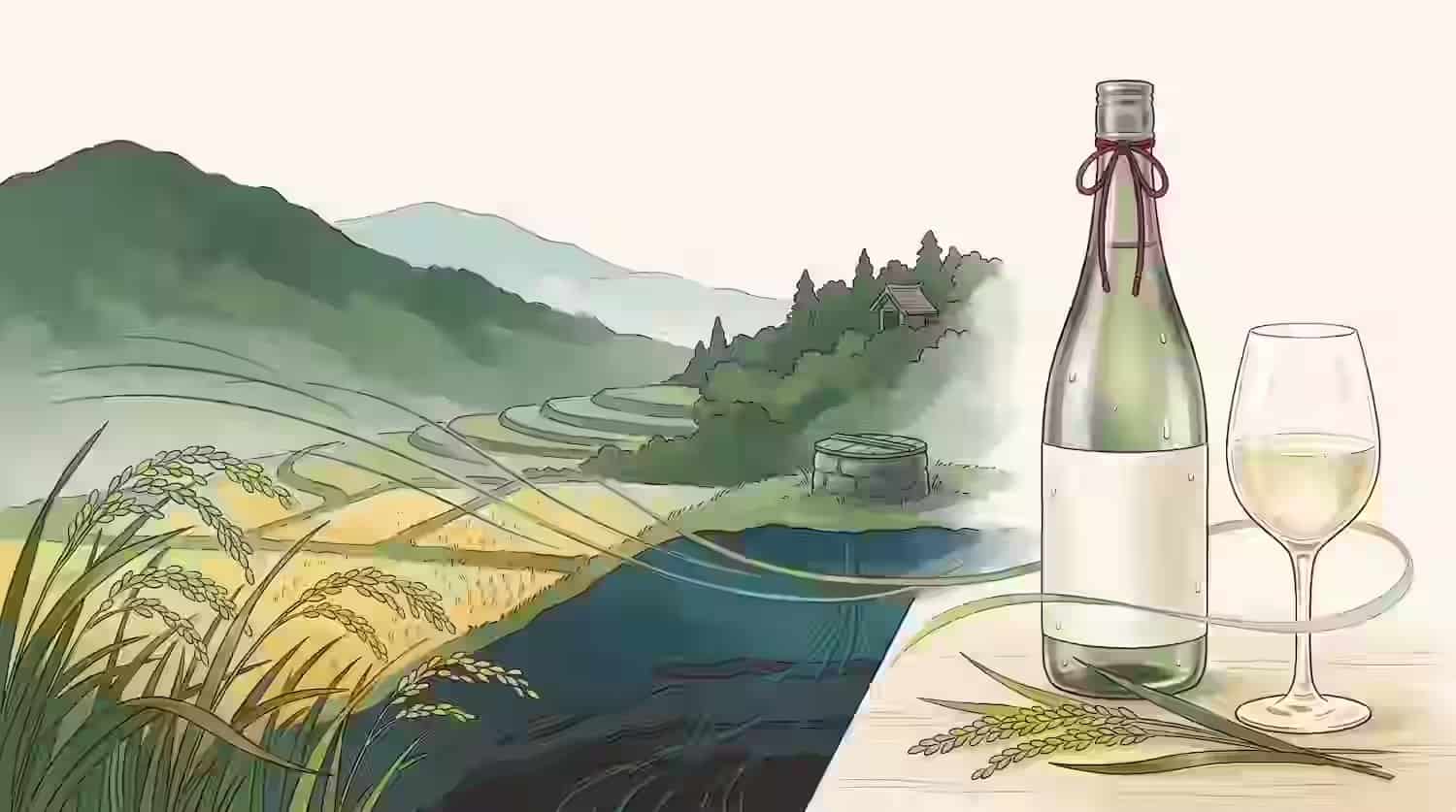
Furthermore, the brewery links Yamagata’s soft water and cold winters to a soft, clear style of sake. That’s a reasonable regional story. Even so, climate alone doesn’t decide flavor. Rice, yeast, polishing, and the brewers’ choices matter just as much.
A Short History of Dewazakura Since 1892
The brewery began in November 1892 as Nakano Shuzo, a maker of the Hakubai label. It took the name Dewazakura Sake Brewery in 1970. Then, a decade later, came the launch that would define it.
1892
Founded in Tendo as Nakano Shuzo, maker of Hakubai
1970
Renamed Dewazakura Sake Brewery
1980
Oka Ginjo goes on sale
1982
Unpasteurized and long-aged sakes released
1984
Karesansui three-year aged sake released
1997
Full-scale exports begin, starting with Europe
2008
Ichiro named Champion Sake at the IWC
2016
Oka Ginjo wins the IWC Ginjo Trophy
Those dates come from the brewery’s own timeline, apart from the award years, which the competitions also list. Also notice how much happens in the early 1980s. That cluster of launches tells you the brewery was actively changing how it sold sake.
The Brewery’s Philosophy
Why would a brewery sell its finest style so cheaply? Dewazakura’s published brewing policy gives some clues. In short, it puts everyday drinkers first.
Local firstWin strong support from local customers.
Visible qualityMake differences ordinary drinkers can notice, not just experts.
Fair priceCut costs like fancy packaging and spend on the sake instead.
Everyday sake tooImprove standard sake, not only ginjo.
Giving backRun an art museum foundation, set up in 1988.
Read that list next to the 1980 launch, and the pieces fit together. A clear label and a fair price were not one-off marketing tricks. Instead, they reflect how the brewery says it still works today.
What Was Ginjo Sake Before 1980?
A Style Shaped by Competitions
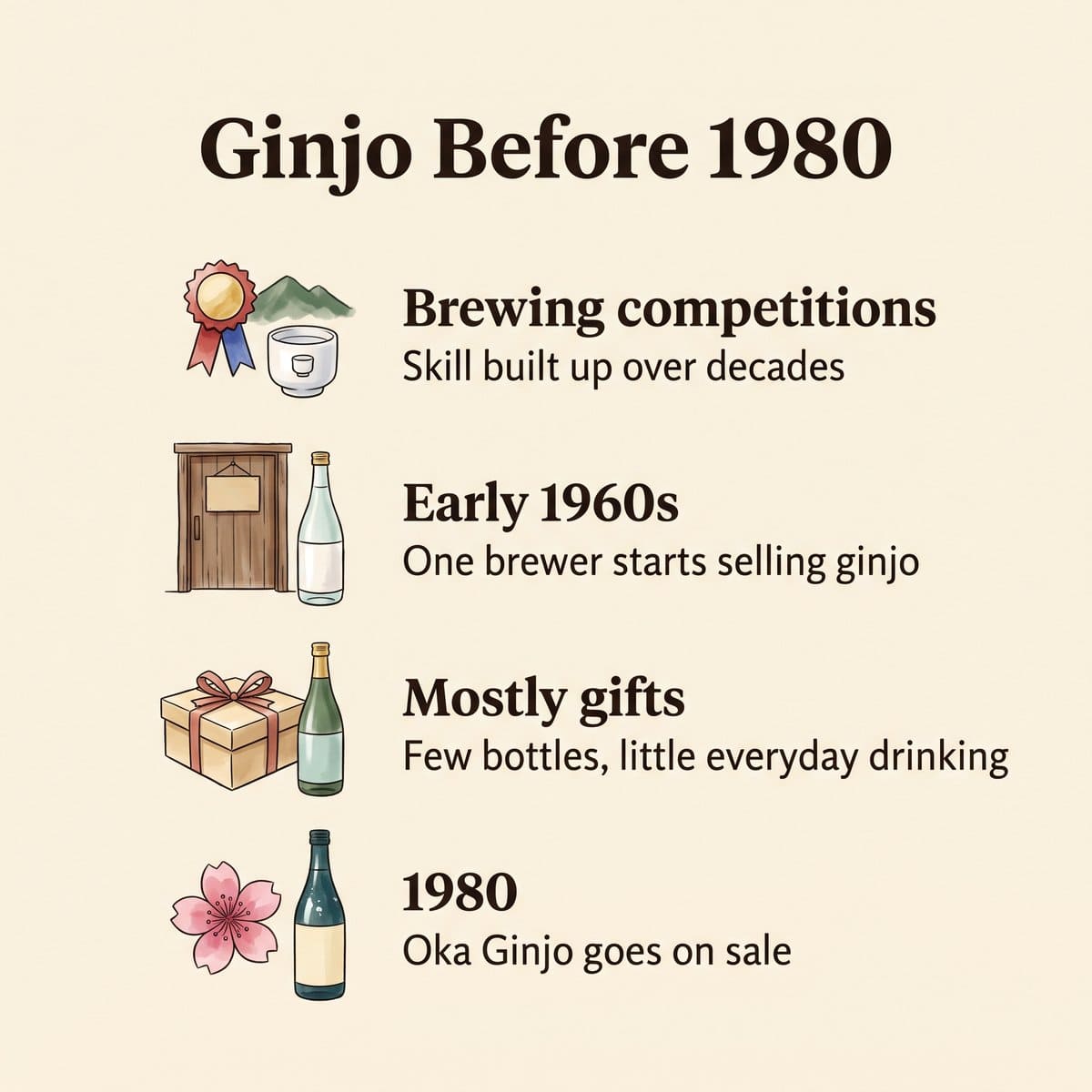
First of all, ginjo didn’t appear out of nowhere in 1980. In a 1999 paper, sake researcher Yuichi Akiyama traced how brewing competitions shaped ginjo over decades. Today, the National Tax Agency describes ginjo brewing as fermenting well-polished rice slowly at low temperature. For years, though, that skill mostly stayed inside the industry.
On Sale, but Hard to Find
Here’s a point many brand stories skip. In fact, commercial ginjo existed before Oka Ginjo. In 1988, brewer Sumaji Kayashima wrote about his brewery’s 25 years of selling ginjo. That puts his first release in the early 1960s.
So what was the problem? According to Dewazakura, ginjo was a special, expensive sake that most people knew nothing about. Most people who bought the few bottles on sale gave them as gifts. In other words, ginjo was available, yet it wasn’t part of everyday drinking.
Worth Knowing
Japan’s legal definitions of ginjo and daiginjo took effect in April 1990, about ten years after Oka Ginjo’s launch. In 1980, “ginjo” was a brewing term, not yet a regulated label category.
1980: The Launch of Oka Ginjo
In 1980, Dewazakura launched Oka Ginjo as a ginjo for everyday buyers. According to the brewery, it put “ginjo” in the middle of the label and priced the bottle below first-grade sake.
Ginjo for Ordinary Drinkers
Dewazakura decided to sell ginjo to the general public in 1980. The brewery says it wanted everyone to enjoy a style that had lived mostly in competition halls. Of course, that goal sounds simple now. Back then, it meant explaining a word most shoppers had never seen.
A Label That Put “Ginjo” First
Because so few people knew the term, the brewery made a bold choice. It placed the word ginjo in the center of the label, instead of its own brand name. Honestly, that’s a clever bit of design, since it taught customers the category before the maker’s name.
A Price Below First-Grade Sake
Meanwhile, price was the other barrier. At the time, Japan sorted sake into official tax grades, such as special grade and first grade. According to the brewery, sake of the same grade sold at the same price. Dewazakura priced Oka Ginjo below first-grade sake. As a result, a premium style cost less than many everyday bottles.
01
Clear name
“Ginjo” sat at the center of the label.
02
Fair price
Priced below first-grade sake.
03
Steady supply
Sold as a regular product, not just a gift.
Admittedly, we don’t know the exact 1980 price, the launch month, or first-year sales. Because public records don’t show them, this article won’t guess. What the brewery does state is that the sake’s aroma and flavor quickly won praise.
“The First of Its Kind”?
Dewazakura’s English site calls the launch the first attempt of its kind among breweries. That’s the brewery’s own framing. However, Kayashima’s brewery sold ginjo earlier. So it’s safer to see Oka Ginjo as an early, influential push to make ginjo affordable.
Oka Ginjo and the Ginjo Boom
Oka Ginjo mattered because it moved a competition-style sake into everyday shops. It didn’t invent ginjo. Instead, it helped popularize the category through a clear label and an accessible price.
The brewery argues that Oka Ginjo’s warm reception helped trigger the “ginjo boom.” That’s worth reporting, as long as we label it as the brewery’s view. Researchers, by contrast, describe a wider shift. Better yeasts, regional sake fans, specialist shops, and more breweries all played a part.
Still, official records hint at how fast the market moved. By 1989, the National Tax Agency’s appraisal offices ran a nationwide survey of commercial ginjo. Then, in 1990, ginjo became a legal label category. Kayashima’s 1988 article also referred to a “ginjo boom,” and he seemed a little uneasy about it.
12 years
Oka Ginjo’s run at No. 1 in a jizake (regional sake) ranking, as of 2005, per the brewery
4.5%
Ginjo share of sake shipments, 2023 brewing year
12.6%
Junmai ginjo share in the same year
Sources: Dewazakura product page (ranking); National Tax Agency shipment data (shares).
Today, by contrast, junmai ginjo outsells plain ginjo by a wide margin. Even so, the idea that fragrant premium sake belongs on a normal dinner table is no longer unusual. Oka Ginjo’s 1980 launch is one well-documented step in that shift.
What Is Ginjo Aroma?
When you pour a glass of good ginjo, you may smell apple, pear, or banana. But is there fruit inside? No. The scent comes from fermentation, not from added fruit.
In a 2015 paper, Hiroko Tsutsumi of Gekkeikan’s research institute described two key compounds. Ethyl caproate smells like apple, while isoamyl acetate smells like banana. Sake yeast produces both during fermentation. Similarly, Dewazakura credits its fruity ginjo aroma to yeast.
Ethyl caproate
Apple-like
Isoamyl acetate
Banana-like
Still, these are general facts about ginjo, not lab results for Oka Ginjo. After all, every bottle balances aroma differently. If you want the science in more depth, our guides to sake yeast and fermentation go further.
How Dewazakura Brews Its Ginjo
Dewazakura’s ginjo style rests on in-house rice polishing, slow low-temperature fermentation, and storage methods meant to protect delicate aromas.
That said, Dewazakura doesn’t publish a full recipe for Oka Ginjo. Its yeast, fermentation days, and koji ratio aren’t public. However, the brewery does describe its general methods, and those help explain the style.
1
Polish in-house
Rice is milled at the brewery, to about 50% on average.
2
Make koji
For daiginjo, small trays allow fine temperature control.
3
Build the mash
Rice, koji, and water are added over four days.
4
Ferment cold
Slow, low-temperature fermentation keeps the taste clean.
5
Protect the aroma
Ginjo-class sake is stored raw at −5°C, then heated in the bottle.
That last step, in particular, deserves a closer look. Normally, brewers heat-treat sake twice. For ginjo-class sake, Dewazakura instead stores it raw, removes oxygen, and pasteurizes after capping the bottle. As a result, delicate aromas are less likely to escape.
Want to understand the numbers on the label? Our rice polishing guide explains what 50% really means, and the koji guide covers the mold behind it all.
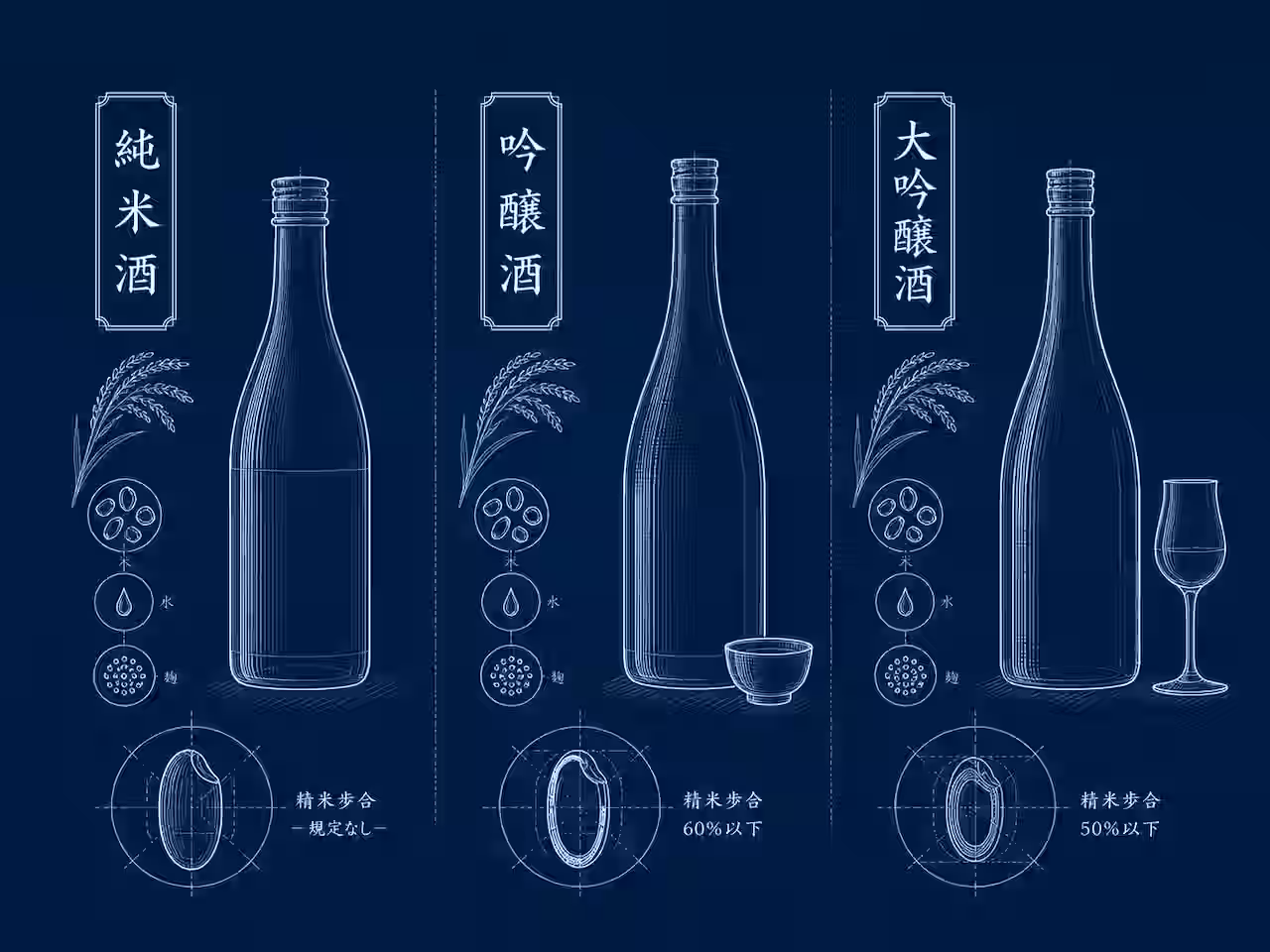
Why 50% Doesn’t Make It Daiginjo
Oka Ginjo uses rice polished to 50%, which meets the number for daiginjo. So why is it labeled ginjo? The legal standard also asks for an especially fine flavor and color. Besides, meeting the polishing number doesn’t force a brewery to label a sake as daiginjo. Producers choose the category that fits the product, and Dewazakura keeps Oka as ginjo.
What Does Dewazakura Sake Taste Like?
Dewazakura is famous for fragrant sake, yet the bottles don’t all taste alike. Even so, the brewery’s own notes give a useful starting point.
Oka Ginjo
Fruity ginjo aroma with a refreshing taste
Ichiro
Fruity aroma and a smooth, easy texture
Dewa Sansan
Green-apple aroma, soft umami, gentle acidity
Yuki Manman
Fruity aroma with a rounded, mellow finish
Karesansui
A light sake grown mellow over three years
Descriptions summarized from Dewazakura’s official product pages.
Is Dewazakura Sweet or Dry?
Surprisingly, Dewazakura’s product pages don’t give a sweet-or-dry rating for these bottles. Instead, the brewery uses words like refreshing for Oka Ginjo and light for Karesansui. Still, keep in mind that a fruit-like aroma, created naturally by yeast, can make a sake seem sweeter than it is. So the simplest way to judge is to smell first, sip slowly, and notice the finish. Our guide on how to taste sake walks through that process.
Understanding the Dewazakura Product Range
Next, here’s a quick map of five well-known bottles. Specs come from the brewery’s product pages, checked in October 2026, so they may change.
Sake
Type
Rice
Polishing
Why it matters
Oka Ginjo (桜花吟醸酒)
Ginjo
Japanese rice
50%
The 1980 signature bottle
Ichiro (一路)
Junmai daiginjo
Yamada Nishiki
45%
IWC Champion Sake in 2008
Yuki Manman (雪漫々)
Daiginjo
Yamada Nishiki
45%
Aged slowly at low temperature
Dewa Sansan Tanjo Kinen (出羽燦々誕生記念)
Junmai ginjo
Dewa Sansan, 100%
50%
Made only with Yamagata rice, koji mold, and yeast
Karesansui (枯山水)
Aged honjozo
Japanese rice
55%
Three-year aged, released in 1984
A quick tip: Yuki Manman also comes as a separate junmai daiginjo with 35% polishing. So check the label carefully before you buy. Likewise, Oka Ginjo has a Yamada Nishiki version and an unpasteurized namazake version.
Dewa Sansan, by the way, is a Yamagata sake rice, and our sake rice guide explains how it compares with Yamada Nishiki. Karesansui, meanwhile, shows the brewery’s other side. If aged sake interests you, read our piece on koshu.
How Much Does Dewazakura Sake Cost?
In short, the brewery lists a 720ml Oka Ginjo at ¥1,771 in Japan, including tax, as of October 22, 2026. Prices change, so check before you buy.
Brewery List Prices in Japan (tax included)
Sake
Size
Price
Oka Ginjo
300ml / 720ml / 1.8L
¥715 / ¥1,771 / ¥3,410
Dewa Sansan Tanjo Kinen
720ml / 1.8L
¥1,947 / ¥3,740
Karesansui (3-year)
720ml / 1.8L
¥2,057 / ¥3,960
Ichiro
720ml
¥4,070
Yuki Manman (daiginjo)
1.8L
¥7,920
These are prices as listed on Dewazakura’s product pages, as of October 22, 2026. Also, store prices may differ, and the brewery may change them. Check the official site before buying.
Overseas prices, however, are a different story. Importers, shipping, and local taxes all affect the shelf price, so expect it to vary by country. Therefore, we haven’t listed overseas price ranges here.
Where Can You Buy Dewazakura Outside Japan?
As of October 2026, Dewazakura’s English site lists distributors in 27 countries and regions, a narrower count than the export page’s “more than 35 countries.” These include the United States, Canada, the United Kingdom, Australia, Singapore, and Hong Kong. The page doesn’t sell directly, though. Instead, it links to each distributor, so a local importer or sake shop is usually the place to ask.
Dewazakura vs Dassai: What’s the Difference?
Both brands appear on many sake lists abroad, so readers often compare them. In fact, though, they tell two different stories. Our Dassai guide covers the second one in depth.
Point
Dewazakura
Dassai
Home
Tendo, Yamagata
Iwakuni, Yamaguchi
Brewery founded
1892
1948, as Asahi Shuzo (now DASSAI Inc.)
Signature brand launched
Oka Ginjo, 1980
Dassai, 1990
Core range
Ginjo, daiginjo, junmai, honjozo, aged sake
Junmai daiginjo only
Rice
Varies by bottle
Yamada Nishiki
Best-known bottle
Oka Ginjo, a 50% ginjo
Dassai 45, 39, and 23
Place in history
Helped bring ginjo to everyday buyers in 1980
Built a global junmai daiginjo brand
So which one suits a beginner? Either can. If you want a taste of the 1980 ginjo story at a modest price, then start with Oka Ginjo. By contrast, Dassai focuses only on junmai daiginjo, made without added alcohol.
From Tendo to the World
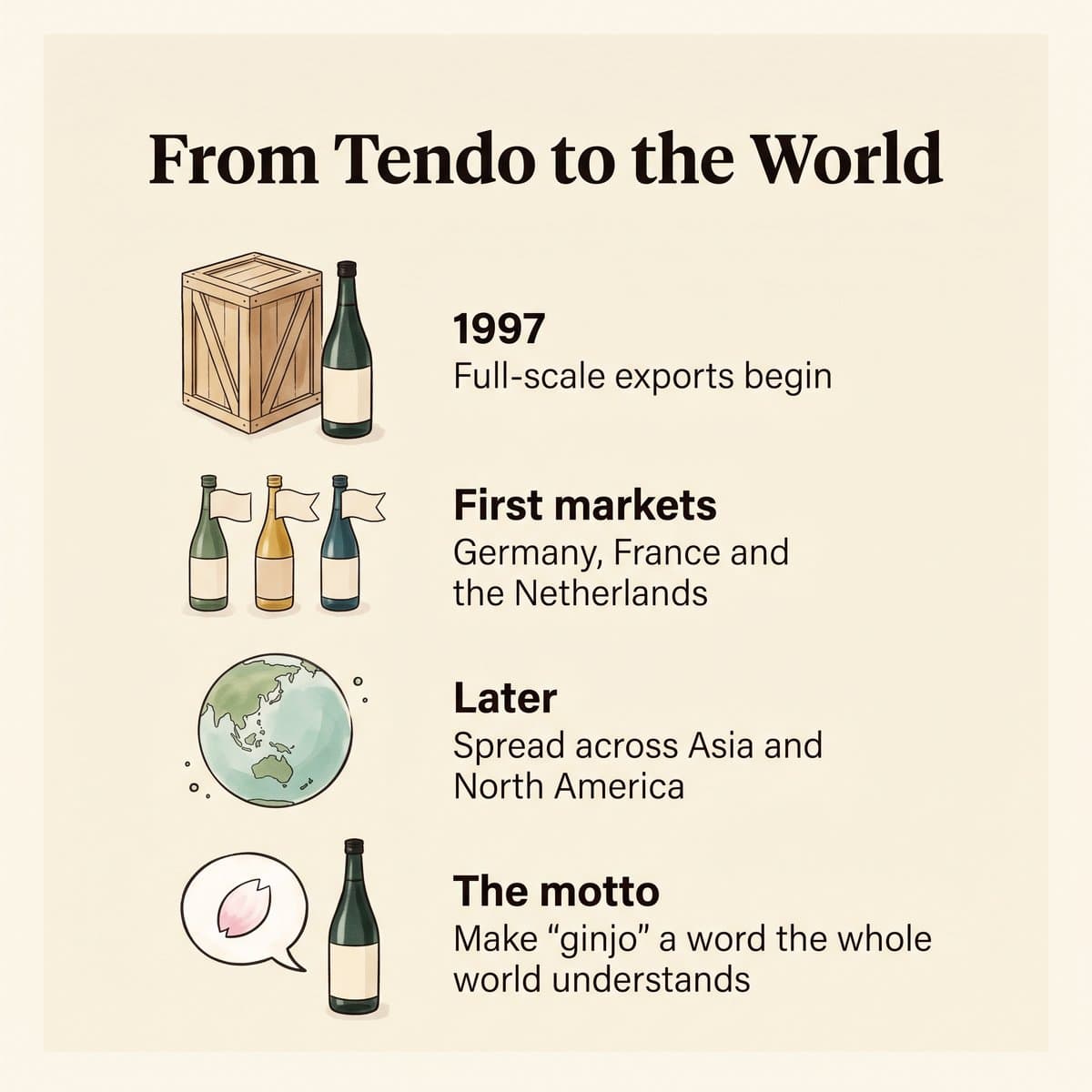
Dewazakura grew from a regional Yamagata brewery into an internationally sold brand. Full-scale exports began in 1997, and as of October 2026, the brewery says it ships to more than 35 countries.
Exports Since 1997
Dewazakura began full-scale exports in 1997, earlier than many Japanese breweries. A 2019 presentation by the company listed Germany, France, and the Netherlands as its first markets. Since then, sales have spread across Asia and North America as well.
The brewery’s stated export motto is to make “ginjo” a word the whole world understands. That motto fits the 1980 story nicely. Once again, the challenge is teaching people a new word.
International Recognition
2008
IWC Champion Sake
Ichiro junmai daiginjo
2014
U.S. National Sake Appraisal, Grand Prix (ginjo)
Oka Ginjo and Oka Ginjo Yamada Nishiki
2016
IWC Ginjo Trophy
Oka Ginjo
For context, the 2014 appraisal in Honolulu drew 370 entries from 159 breweries. Also note that the 2016 IWC Champion Sake was another Dewazakura bottle, Dewa no Sato, not Oka Ginjo. Overall, awards are useful signals. Still, they can’t tell you what you personally will like.
How to Choose and Serve Dewazakura
Best Dewazakura Bottles for Beginners
New to sake? Start with your goal, then pick the bottle that fits. Oka Ginjo is the classic first choice, while the others suit more specific tastes.
For a fragrant first bottle
Oka Ginjo
Serve chilled, around 5 to 15°C.
For a refined special occasion
Ichiro or Yuki Manman
Look for Yamada Nishiki and 45% polishing.
For a taste of Yamagata rice
Dewa Sansan Tanjo Kinen
A junmai ginjo with all-Yamagata ingredients.
For something mellow and aged
Karesansui
Try it at room temperature or gently warmed.
Serving Temperature and Glassware
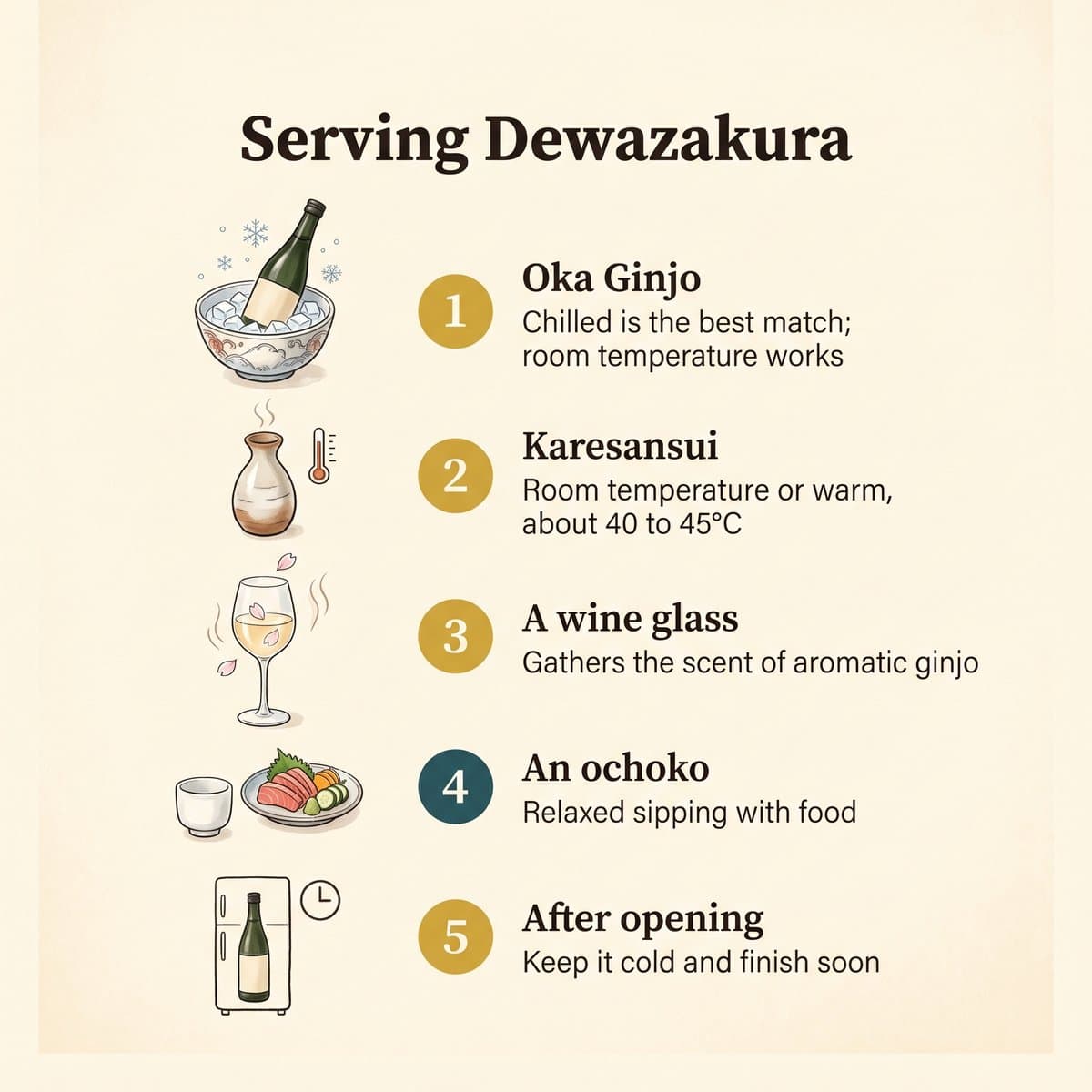
For Oka Ginjo, the brewery recommends chilling as the best match, with room temperature as an option. Karesansui, on the other hand, is different. Its page favors room temperature and warm sake at around 40 to 45°C.
Also, a wine glass works nicely for aromatic ginjo, since its wide bowl gathers the scent. A small ochoko, by contrast, suits relaxed sipping with food. Our guide to sake glasses and cups compares the options. After opening, keep the bottle cold and finish it fairly soon, as explained in how to store sake.
Food Pairing Ideas
Unfortunately, the brewery’s product pages don’t list food pairings. So the ideas below are our suggestions, based on the principles in our sake and food pairing guide. In other words, treat them as starting points, not rules.
Oka Ginjo
Sea bream sashimi, or a green salad with vinaigrette
Ichiro or Yuki Manman
Scallops, crab, or fresh pear
Dewa Sansan Tanjo Kinen
Salt-grilled chicken or simple pork dishes
Karesansui
Aged Gouda or dried fruit
Common Misconceptions About Dewazakura
Dewazakura invented ginjo sake.
Ginjo grew over decades through brewing competitions.
Oka Ginjo was the first ginjo ever sold.
Other breweries sold ginjo in the 1960s.
Fruity aromas mean brewers add fruit.
Yeast creates those aromas during fermentation.
Every Dewazakura sake uses the same rice.
Rice ranges from Japanese rice to Yamada Nishiki and Dewa Sansan.
Dewazakura makes only ginjo.
It also makes daiginjo, junmai, honjozo, and aged sake.
One brewery created the whole ginjo boom.
Many breweries, shops, and new yeasts drove it.
Final Thoughts: Why Dewazakura Matters
So why does Dewazakura matter? It didn’t invent ginjo. Rather, it took a style known mainly to judges and brewers. Then it gave that style a clear name, a fair price, and a place on store shelves.
Later, that idea traveled abroad, with exports from 1997 and awards in London and Honolulu. So if you want to taste a piece of modern sake history, Oka Ginjo is an easy place to start. For more brewery stories, compare it with Kokuryu, which helped pioneer premium daiginjo, or Dassai.
Key Takeaways
Dewazakura began brewing in Tendo, Yamagata, in 1892.
Oka Ginjo launched in 1980 with “ginjo” at the center of its label.
The brewery priced it below first-grade sake to reach ordinary drinkers.
Commercial ginjo existed earlier, so “first” claims need care.
Full-scale exports began in 1997, starting with Europe.
Frequently Asked Questions
About Oka Ginjo
Was Oka Ginjo the first commercial ginjo?
No, other breweries sold ginjo earlier. One brewer wrote in 1988 that his brewery had sold it for about 25 years. Oka Ginjo stands out for making ginjo easier to understand and to buy.
What does Oka Ginjo taste like?
The brewery describes it as having a fruity ginjo aroma and a refreshing taste. Ginjo aromas in general are often compared to apple and banana, which come from compounds that yeast makes. The brewery gives no sweet-or-dry rating, so trust your own palate.
How should I serve Oka Ginjo?
The brewery recommends serving it chilled, at about 5 to 15°C. Room temperature also works. In addition, a wine glass helps you enjoy the aroma.
How long does Dewazakura keep after opening?
As our sake storage guide explains, Japan’s National Research Institute of Brewing gives about one month as a general guide for opened sake. Delicate ginjo aromas may fade sooner, however. Keep the bottle cold, cap it tightly, and store it upright.
Buying Dewazakura
How much does Oka Ginjo cost?
As of October 22, 2026, the brewery lists a 720ml bottle at ¥1,771 and a 1.8L bottle at ¥3,410, including tax. Store prices may differ, though. Overseas prices also vary with import costs and local taxes.
Can I buy Dewazakura outside Japan?
Yes, in many countries. As of October 2026, the brewery’s English site lists distributors in 27 countries and regions, including the United States and the United Kingdom. Ask a local importer or sake shop for current stock.
National Tax Agency – Overview of the Sake Production and Quality Labeling Standards (Accessed October 2026)
National Tax Agency – Taxable Shipments of Specially Designated Sake by Type (Accessed October 2026)
National Tax Agency – List of Geographical Indications for Alcoholic Beverages (Accessed October 2026)
J-STAGE – Akiyama, Y. (1999). 吟醸造りと品評会の歴史から (その1) [Ginjo brewing and the history of sake competitions, Part 1]. Journal of the Brewing Society of Japan, 94(7), 542–547 (Accessed October 2026)
J-STAGE – Kayashima, S. (1988). 吟醸酒を市販して25年 [Twenty-five years of marketing ginjo-shu]. Journal of the Brewing Society of Japan, 83(1), 25–28 (Accessed October 2026)
J-STAGE – National Tax Agency Appraisal Offices. (1991). 平成元年度全国市販吟醸酒調査結果について [Results of the 1989 national survey of commercial ginjo-shu]. Journal of the Brewing Society of Japan, 86(1), 17–23 (Accessed October 2026)
J-STAGE – Tsutsumi, H. (2015). 清酒酵母の香気生成機構 [Aroma-producing mechanisms of sake yeast]. Journal of Japan Association on Odor Environment, 46(5), 346–349 (Accessed October 2026)
Ryo Iwa is the founder and editor of foodinjapan.org. Born and raised in Japan, he writes from regional travel, market visits, and Japanese-language primary sources that rarely reach English readers, including brewing institute publications and industry glossaries. Where a figure cannot be traced to a source, the article says so.
He has been a Google Maps Local Guide for over 10 years, with more than 1,850 reviews and over 42,000 photos viewed hundreds of millions of times. He previously spent two decades as an IT consultant in Japan, the US, and the UK.









Comments