




Most sake drinkers think fresh is best. Crisp, light, and young sake dominates the shelves. But there is another world entirely waiting for those willing to look further.
Koshu (古酒) is Japanese aged sake. It is slow, concentrated, and unlike anything else in the sake category. If you have ever wondered what time does to rice wine, this is the answer.
What Is Koshu? The Basics of Aged Sake
The word koshu combines two kanji. “Ko” (古) means old or ancient. “Shu” (酒) means sake. Together, the meaning is simple: old sake.
But the experience is far from simple.
Koshu refers to sake that matures for at least three years before release. Some bottles age for ten years. A few rare examples carry twenty or thirty. The result is a drink with depth and complexity that young sake simply cannot replicate.
One thing worth noting upfront: koshu makes up only around 1% of total sake production in Japan. It is genuinely rare. That rarity is part of the appeal, but it also means finding a good bottle takes some effort.
How Koshu Tastes: A Flavor Profile Worth Knowing
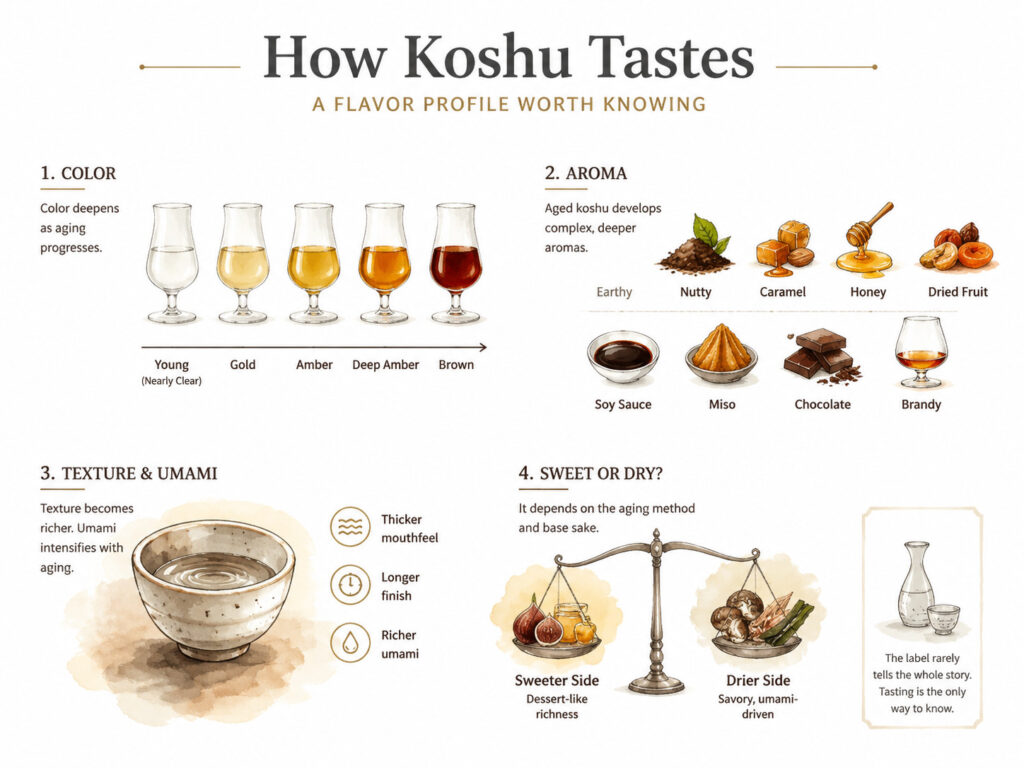
Fresh sake tends to be light and floral. Koshu moves in a completely different direction.
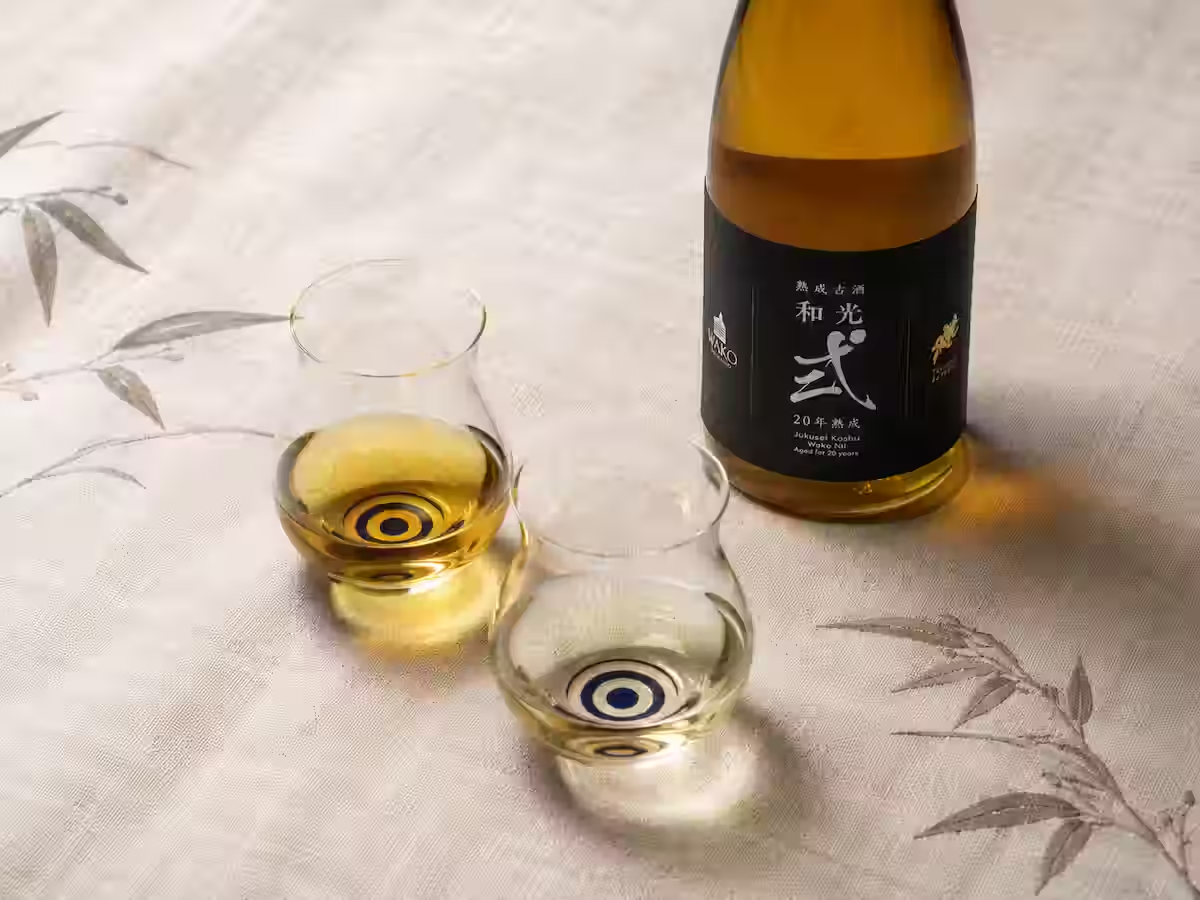
Color shifts first. Young sake is nearly clear. As aging progresses, sake takes on gold, then amber, then sometimes deep brown tones. The color alone signals something different is inside the bottle.
Aroma follows. A three-to-five-year koshu often carries earthy and nutty notes. You might notice hints of caramel, honey, or dried fruit. Longer-aged examples can develop flavors closer to soy sauce, miso, chocolate, or even brandy.
The texture thickens. The finish lingers longer. Rich umami flavor builds through the aging process as amino acid levels increase. What starts as ordinary sake becomes something richer and more layered.
Is it sweet or dry? Honestly, it depends. The aging method and base sake both matter enormously. Some koshu lands on the sweeter side, almost dessert-like. Others are savory and dry. The label alone rarely tells you enough. Tasting is the only real way to understand.
Koshu vs. Regular Sake: Key Differences at a Glance
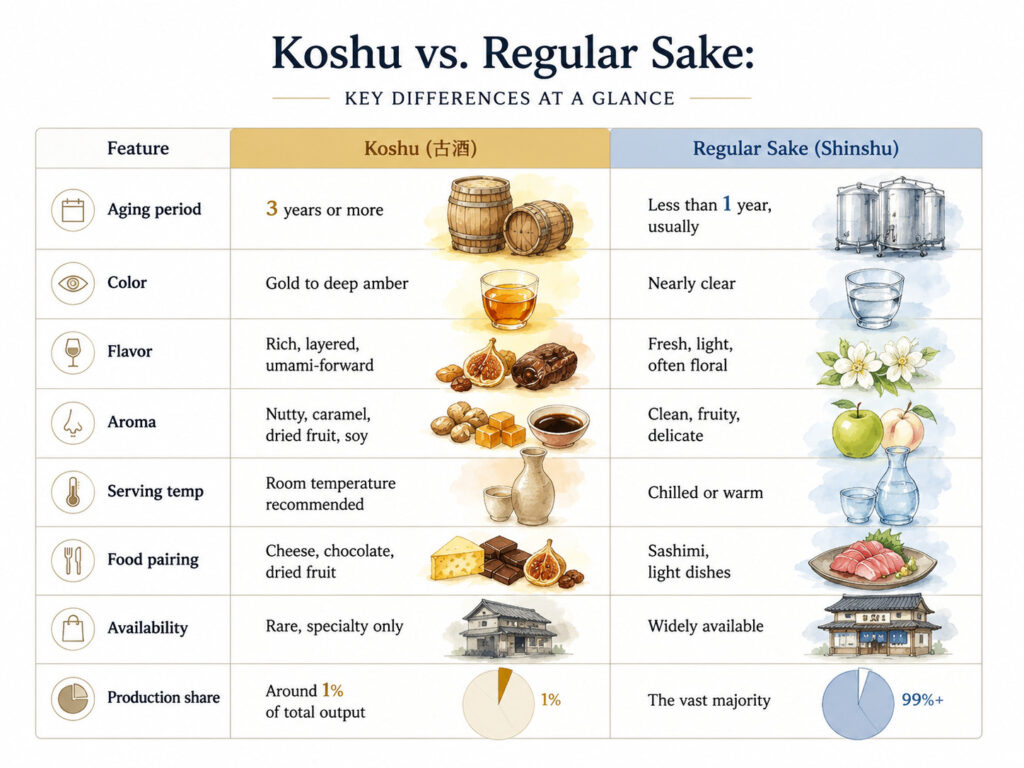
| Feature | Koshu (古酒) | Regular Sake (Shinshu) |
|---|---|---|
| Aging period | 3 years or more | Less than 1 year, usually |
| Color | Gold to deep amber | Nearly clear |
| Flavor | Rich, layered, umami-forward | Fresh, light, often floral |
| Aroma | Nutty, caramel, dried fruit, soy | Clean, fruity, delicate |
| Serving temp | Room temperature recommended | Chilled or warm |
| Food pairing | Cheese, chocolate, dried fruit | Sashimi, light dishes |
| Availability | Rare, specialty only | Widely available |
| Production share | Around 1% of total output | The vast majority |
Understanding the main types of Japanese sake helps here. A junmai can become koshu. A ginjo can become koshu. The term describes the aging condition, not the base style.
The History of Aged Sake in Japan
Koshu has a long story. The roots go back centuries.
Records suggest that matured sake was valued as early as the Nara period. Sake aging was not an accident in those days. Brewers understood that time changed the flavor, and they used that knowledge deliberately.
The Edo period (1603–1868) marked koshu’s peak popularity. A style called kunenshu, or “nine-year sake,” commanded prices two to three times higher than fresh sake. Aristocrats prized it. Wealthy merchants sought it out. Aging sake was a mark of refinement.
Then the Meiji era changed everything. Tax reforms pressured breweries to sell their sake faster. Holding large quantities of aging sake became financially risky. Younger sake was cheaper to produce and easier to move. Slowly, koshu faded from mainstream drinking culture.
For much of the 20th century, aged sake became nearly forgotten. Most drinkers expected and preferred fresh sake. The infrastructure for careful long-term aging largely disappeared.
The revival began quietly in the 1970s and 1980s. A small group of enthusiasts, including the Toki Sake Study Group formed in 1985, began advocating for the rediscovery of koshu. A handful of breweries committed to aging their sake again, not as a side project, but as a serious craft specialty.
Today, koshu sits at an interesting moment. It remains rare. Production is tiny compared to fresh sake. But interest is genuinely growing, particularly among sake drinkers who have explored the main categories and want something more complex. The international market for premium Japanese sake has helped as well.
How Sake Changes During Aging
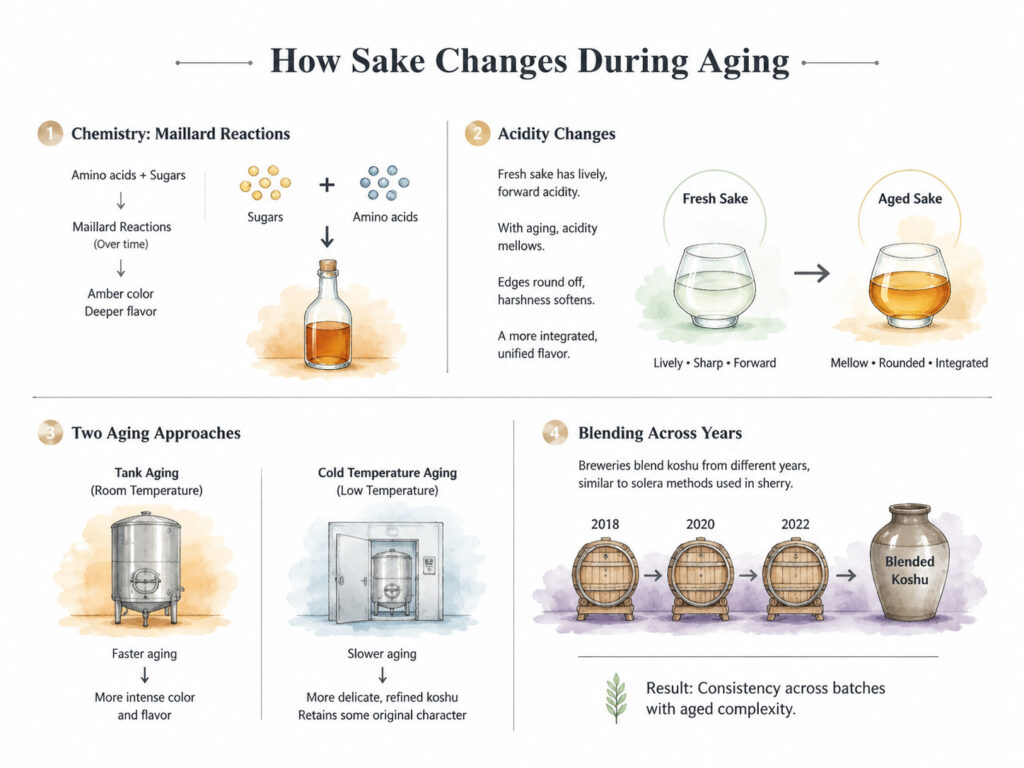
What actually happens inside the bottle or tank over three, five, or ten years?
The short answer: chemistry. Maillard reactions, similar to the browning that happens when bread toasts, develop between amino acids and sugars. These reactions produce the amber color and deepen the flavor.
Acidity changes too. Fresh sake often has a lively, forward acidity. Aged sake tends to mellow. The edges round off. The harshness softens. What remains is a more integrated, unified flavor profile.
Two main aging approaches produce noticeably different results. Tank aging at room temperature accelerates the process and produces more intense color and flavor. Cold temperature aging slows everything down, resulting in a more delicate, refined koshu that retains some of the original sake’s character.
Some breweries blend koshu from different years, similar to solera methods used in sherry production. The result is consistency across batches while still delivering aged complexity.
How to Drink Koshu
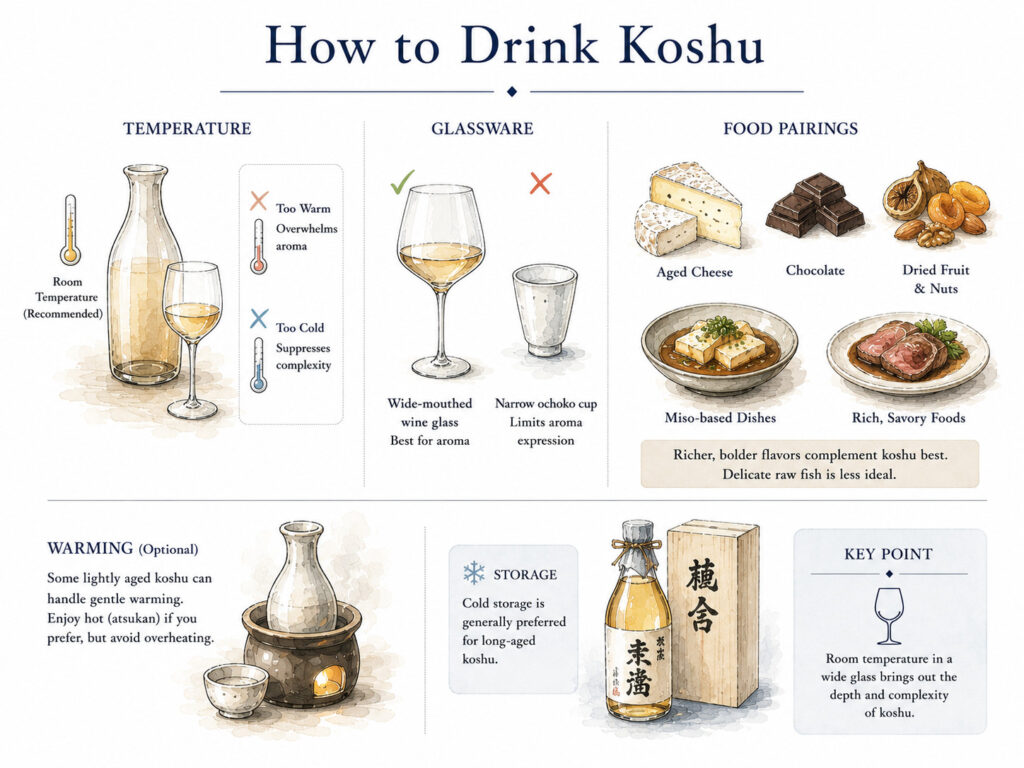
Room temperature is the standard recommendation. Warming koshu too much can overwhelm its delicate aroma. Chilling it suppresses the complexity you paid for.
A wide-mouthed wine glass works better than a narrow ochoko cup for expressing the full range of aromas. Think of it a little like serving a fine sherry or an aged Madeira.
Food pairings work differently with koshu than with fresh sake. Aged cheese is excellent. Chocolate, dried fruit, and nuts all complement the caramel and umami notes well. Miso-based dishes can work surprisingly well with heavily aged examples. Rich savory foods pair better here than the delicate raw fish that suits a fresh ginjo.
If you enjoy hot sake (atsukan) or other warming approaches to sake, some lightly aged koshu can also handle gentle warming, though cold storage is generally preferred for long-aged examples.
Where to Find Aged Sake
Inside Japan, specialty sake shops and izakaya with curated menus are the most reliable sources. Department store sake floors in Tokyo occasionally stock premium koshu from artisanal producers. Brewery direct shops in producing regions sometimes carry aged sake that never reaches retail.
Outside Japan, availability is limited. A few online specialty importers now carry koshu, particularly in the United States and European markets. Look for the kanji 古酒 on the label, or the term “aged sake” or “long-aged sake” in the English description. Check the production year if visible.
For beginners, starting with a three-to-five-year koshu is a sensible approach. Decade-old examples can be striking, but they are also more demanding. Beginning with lighter styles and working toward more intense ones mirrors how most koshu enthusiasts develop their appreciation.
Exploring local sake from regional breweries is another path worth taking. Some small producers in sake-focused regions age limited batches that rarely appear in national distribution.
References
- SAKETIMES Glossary, “Koshu” (2021): https://en.sake-times.com/learn/koshu
- Takara Sake USA, “The Art and Science of Aging Sake” (2024): https://www.takarasake.com/blog/the-art-and-science-of-aging-sake/
- WAMI Japan, “Koshu: The Rarefied World of Aged Sake” (2023): https://wami-japan.com/article/501/
- The Sake Company, “Koshu Sake: History and Varieties” (2025): https://www.thesakecompany.com/blogs/sake-drops/koshu-sake-history-and-varieties
- Taste of Japan / JETRO, “Koshu: The Renaissance of Aged Sake” (2022): https://japan-food.jetro.go.jp/en/feature/detail/711.html




Comments