


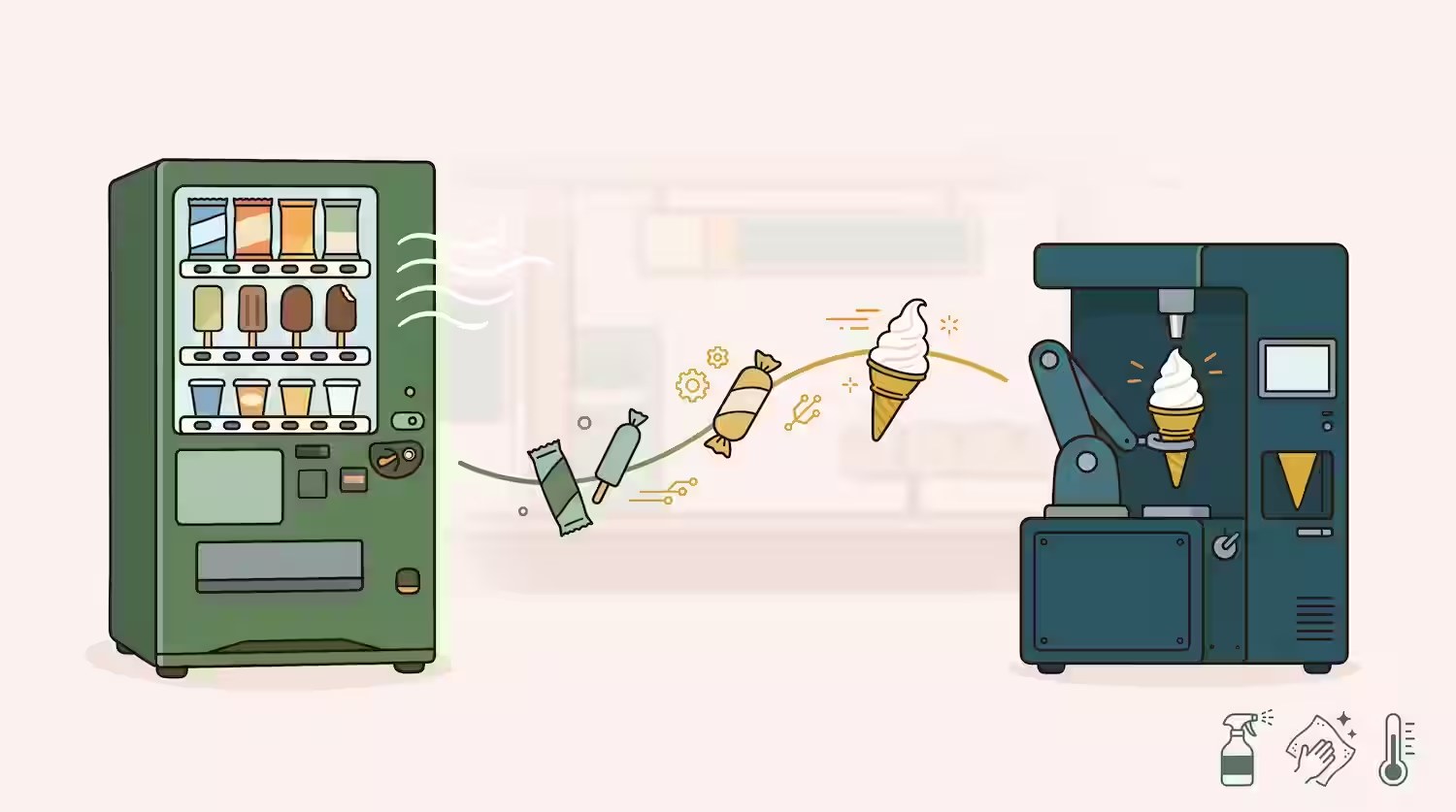

In Japan, an ice cream vending machine can refer to three different systems: packaged frozen-treat machines, automatic soft-serve dispensers, and robotic soft-serve servers. While all sell desserts without a clerk, they work in very different ways.
So which one are you looking at? Here, then, is a quick guide to the differences, where robots appear, and what still depends on people.
What Is an Ice Cream Vending Machine in Japan?
First, the big question is where your dessert comes from. Packaged machines sell factory-made treats, while soft-serve systems make yours on the spot.
Quick Facts
- Main types
- Packaged, soft-serve dispenser, and robotic
- Vending machines in Japan
- About 2.59 million at the end of 2025, per JVMA
- Ice cream machines only
- No official count exists
- Robot serving speed
- 27 to about 35 seconds, according to makers
- Still done by people
- Refills, cleaning, and inspection
A Quick Look at Japan’s Vending Machines
Japan’s vending network is huge, though it shrinks a little each year. Specifically, at the end of 2025, the Japan Vending System Manufacturers Association (JVMA) counted these figures.
2,585,200
Vending machines that sell goods
2,178,800
Beverage machines
81,100
Food machines, all types
Source: JVMA installed base data, end of 2025.
However, that food category also includes instant noodles, frozen food, and snacks. So no one can say how many machines sell only ice cream.
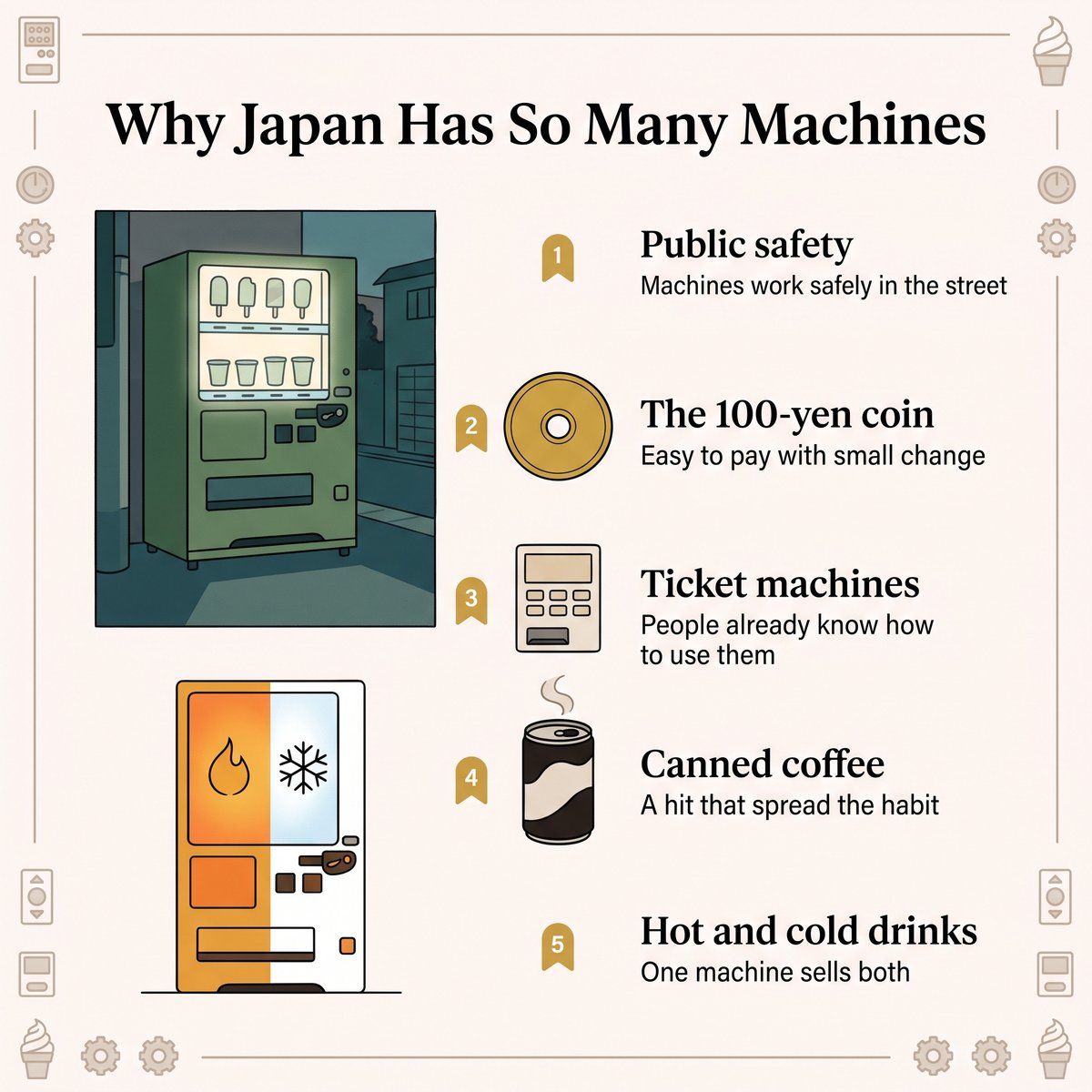
Why so many machines? First, JVMA points to public safety, the 100-yen coin, and familiarity with ticket machines. It also credits canned coffee and machines that sell hot and cold drinks. You can still taste that tradition in a warm can of canned oden.
Three Types of Ice Cream Vending Systems
Packaged machines sell the kind of bars and cups you’d find in a konbini freezer, such as Garigari-kun. The other two types, by contrast, make soft serve after you order.
| Feature | Packaged machine | Soft-serve dispenser | Robotic system |
|---|---|---|---|
| What it sells | Wrapped, factory-made treats | Soft serve after ordering | Soft serve swirled by a robot arm |
| Where it’s made | A factory | The machine | The machine |
| What you see | A quick drop, then done | Fresh dispensing | The robot at work |
| People still do | Restocking, repairs | Mix refills, cleaning | Refills, cleaning, fault fixes |
Soft serve also leaves the machine much warmer than packaged ice cream. As a result, it feels creamy and melts so fast.
Serving Temperature at a Glance
Figures as described by NISSEI, a soft-serve maker.
How a Robotic Soft-Serve System Works
- 1
Order
First, choose on a screen or ticket machine.
- 2
Set the cone
Next, staff, you, or a dispenser places it.
- 3
Swirl
Then the arm turns the cone under the nozzle.
- 4
Hand off
Finally, the robot passes the dessert to you.
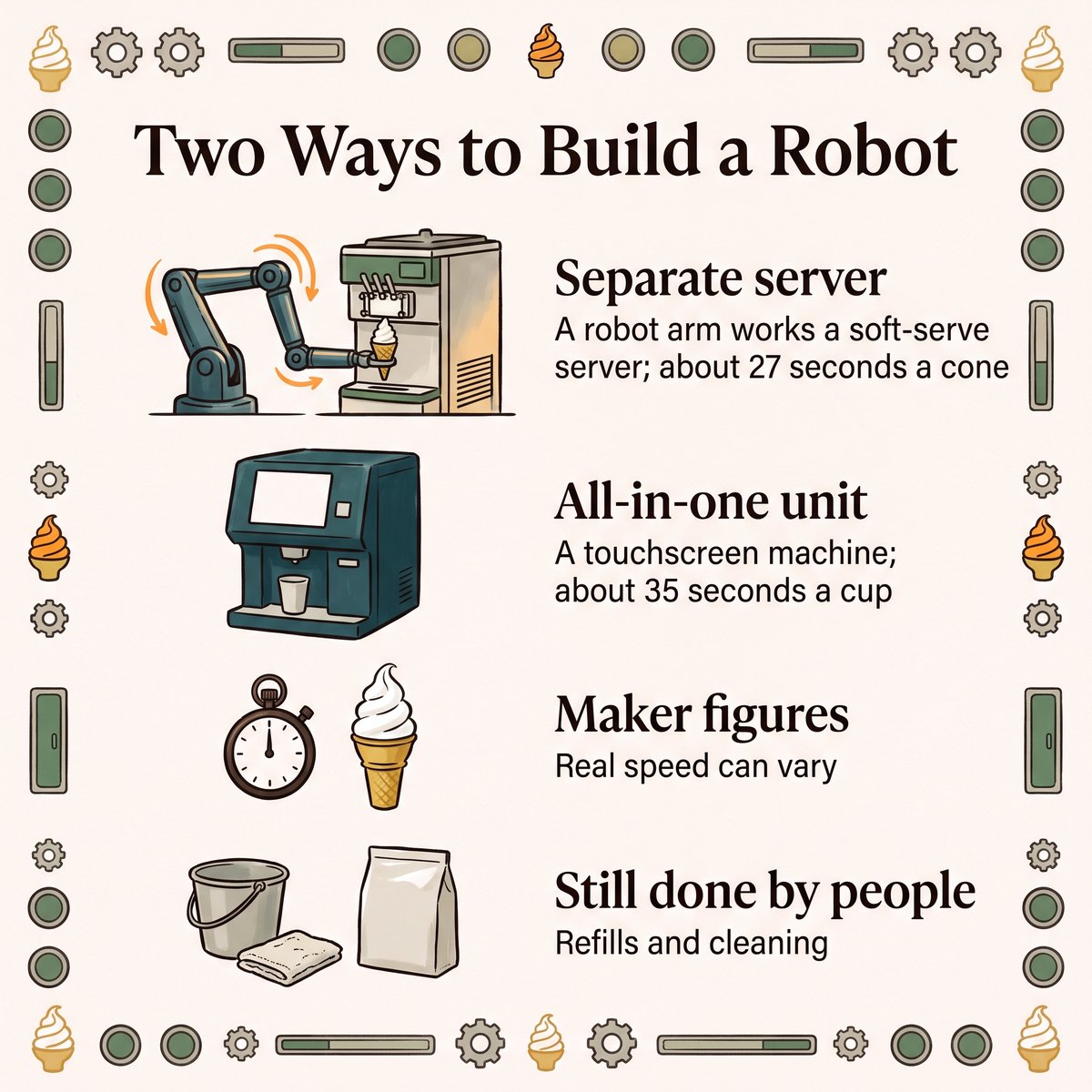
For example, in one Japanese design by Connected Robotics, the robot works a separate commercial soft-serve server. A weight sensor detects the cone, and then the arm swirls and serves it. The company lists 27 seconds per cone, although real output depends on the server.
Overseas makers often build all-in-one units instead. With Sweet Robo’s ice cream vending machine, guests pick a flavor, toppings, and syrup on a touchscreen. The company says a cup takes about 35 seconds, while operators still handle refills and cleaning.
Good to Know
Speeds are maker claims, so they don’t set a Japan-wide standard. Also, Connected Robotics lists its fully linked ticket-machine model as a prototype.
What Does It Taste Like?
It should taste like any soft serve from the same mix and freezer. After all, the robot controls the motion and portion, not the recipe. You may spot flavors like matcha at some shops, but no national data shows which flavors sell most.
Texture
Softer than a frozen bar
Flavor
Shaped by the mix and its milk
Chill
Gentler than a hard bar
Where Can You Find Soft-Serve Robots in Japan?
Most robotic soft-serve installations in Japan sit in service areas, event spaces, and commercial facilities rather than on ordinary streets. Because installations change frequently, travelers should always check the official website of the facility before visiting.
Long-term install
Awaji Service Area, Inbound
Status may have changed, so check the official site first.
Limited event, ended
Pasar Miyoshi, Inbound
Not a current location.
At Awaji, the robot served soft serve made with Awaji Island milk. So it makes an easy add-on to a local Awajishima burger. Both cases also come from the maker’s published client interviews.
Hygiene and Allergens
What Keeps the Machines Clean
Still, contactless does not mean hygienic. That’s because hygiene depends on daily care. In September 2025, Japan’s health ministry and Consumer Affairs Agency issued guidance for unattended cooking machines.
Daily
Site inspection and sensor checks
Daily
Fresh milk and sanitized parts
Yearly
Sensor calibration
10°C or below
Milk storage
If the milk can’t stay that cold, sales must stop. Permits also vary by machine and setup, so operators confirm with local health centers.
Tips for Food Allergies
Japan’s mandatory allergen labels mainly cover packaged foods, so a freshly served cone may not carry one. As of April 2026, these nine items require labeling.
- Shrimp
- Cashew
- Crab
- Walnut
- Wheat
- Buckwheat
- Egg
- Milk
- Peanut
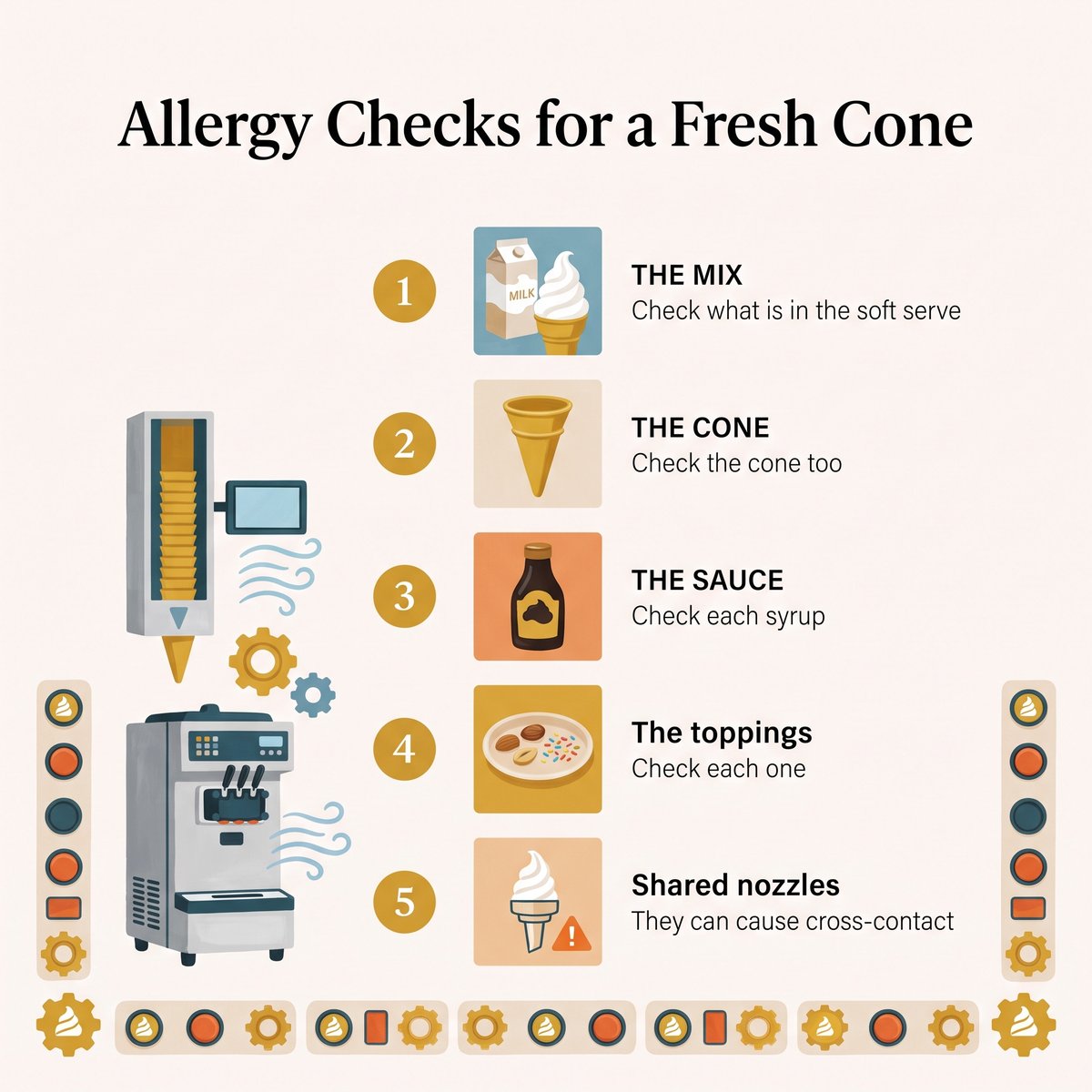
Check the mix, cone, sauce, and toppings separately, since shared nozzles can cause cross-contact. Our tips for picky eaters visiting Japan may also help.
Are Robots Replacing Ice Cream Staff?
Not really, though. Robots take over the sale and the swirl, but people still run the business.
Machines can handle
- Taking orders
- Some payments
- Swirling soft serve
- Handing over the dessert
People still handle
- Refilling mix and cones
- Cleaning and sanitizing
- Checking temperatures
- Fixing faults
Final Thoughts
Overall, Japan’s ice cream machines range from simple freezers to robots that put on a small show. For now, though, robots work best as a fun extra at service areas and events. On a hot day, they’re one more way to cool down, right alongside kakigori.
Key Takeaways
- Three systems share one label: packaged, soft-serve, and robotic.
- Also, no official count exists for ice cream machines alone.
- However, robots automate only the sale and the swirl.
- Then check the facility’s website before you travel.
Frequently Asked Questions
The Basics
- What is an ice cream vending machine in Japan?
-
The term covers three systems. For example, some machines release packaged frozen treats. Others make soft serve after you order, and robotic systems add an arm that swirls the cone.
- Are ice cream vending machines common in Japan?
-
Overall, Japan had about 2.59 million vending machines at the end of 2025. However, ice cream falls inside a wider food category of 81,100 machines. So no official figure shows how many sell only ice cream.
- Is a soft-serve robot the same as a vending machine?
-
Not always. In one Japanese system, for example, the robot works with a separate soft-serve server. Other makers, by contrast, sell all-in-one units with a touchscreen.
Using the Machines
- Where can I find a robotic ice cream machine in Japan?
-
You will most often find them in service areas, commercial facilities, and temporary events. Because locations change over time, check the facility’s official website before traveling. Some maker case studies also describe events that have ended.
- How long does a robot take to serve?
-
Basically, it depends on the model. Connected Robotics lists 27 seconds per cone, while Sweet Robo states about 35 seconds per cup. Both are maker figures, so real speed can vary.
- Are the machines completely unmanned?
-
The sale itself can run without a clerk. Even so, people refill the mix, clean the parts, and check temperatures. Japan’s 2025 guidance also asks operators to inspect unattended sites daily.
- Are they safe for people with food allergies?
-
There’s no blanket answer. Instead, check the mix, cone, sauce, and toppings one by one. Otherwise, ask staff or skip it when information is missing.
References
- Japan Vending System Manufacturers Association (JVMA) – Vending Machine Installed Base Data, 2025 Edition (Accessed October 2026)
- Japan Vending System Manufacturers Association (JVMA) – Official Website and FAQ (Accessed October 2026)
- Weathernews – Soft Serve Day: How Soft Serve Differs from Ice Cream, with NISSEI Comments (Accessed October 2026)
- Connected Robotics – Soft Cream Robot Product Page (Accessed October 2026)
- Connected Robotics – Prototype List, Ticket-Machine-Linked Soft Cream Robot (Accessed October 2026)
- Connected Robotics – Client Interview: URA Co., Ltd., Awaji Service Area (Accessed October 2026)
- Connected Robotics – Client Interview: Pasar Miyoshi Christmas Fair (Accessed October 2026)
- Sweet Robo – Robotic Ice Cream Vending Machine, Robo Ice Cream (Accessed October 2026)
- Ministry of Health, Labour and Welfare – Operational Notes on Unattended Restaurant Businesses Using Fully Automatic Cooking Machines, September 30, 2025 (Accessed October 2026)
- Osaka Prefectural Government – Food Sanitation Notices, Including the Advanced-Function Vending Machine Model List (Accessed October 2026)
- Consumer Affairs Agency – Food Allergy Labeling Information, April 2026 Update (Accessed October 2026)
- Sakai City – Food Allergy Information for Food Businesses (Accessed October 2026)
Related Articles
- Canned Oden (Surveyed: October 2026)
- Japanese Coffee (Surveyed: October 2026)
- Japanese Konbini Culture (Surveyed: October 2026)
- Garigari-kun (Surveyed: October 2026)
- Kakigori (Japanese Shaved Ice) (Surveyed: October 2026)
- Awajishima Burger (Surveyed: October 2026)
- Matcha (Surveyed: October 2026)





Comments