Niigata sake is famous for its clean, dry, and refined flavor profile. Snowy winters, soft water, polished rice, and the Echigo Toji tradition shaped this regional sake culture. Today, Niigata Prefecture ranks among Japan’s most respected sake regions.
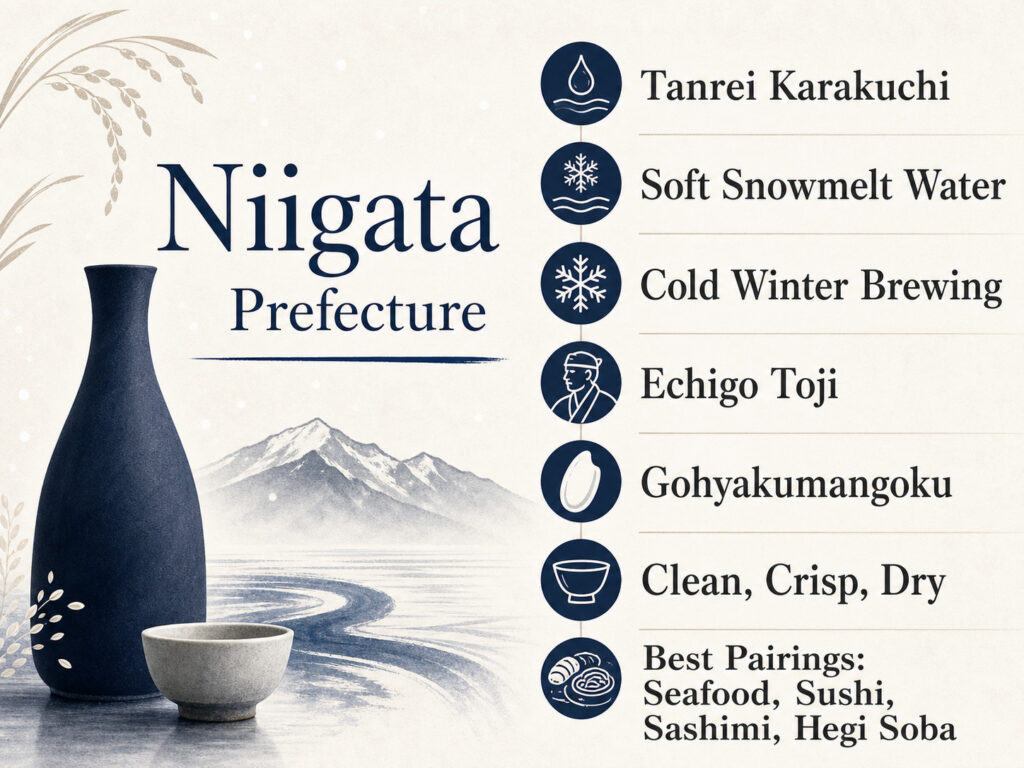
The classic local style is called tanrei karakuchi. In simple terms, it means light, clean, and dry. The best examples finish sharply without feeling harsh. They show balance, clarity, and precision.
Gohyakumangoku, Koshitanrei, and other sake rice varieties
Flavor trend
Clean, crisp, elegant, and dry
Best pairings
Seafood, sushi, sashimi, hegi soba, and light regional dishes
This summary gives the basic answer to what is Niigata sake. It is Japanese sake shaped by snow, rice, soft water, and skilled brewing. The style tends to emphasize dryness and a clean finish rather than weight.
Several forces shape Niigata sake. Water comes first. Niigata is a soft water region, and soft water usually slows yeast fermentation. As a result, brewers can guide fermentation gently and create a smooth, clean sake profile.
Climate also matters. Niigata sits in a snow country zone facing the Sea of Japan. Heavy winter snow cools the brewing environment and supports slow fermentation. This winter fermentation helps reduce rough edges and unwanted aroma.
Rice culture adds another layer. The Niigata Plain is one of Japan’s major rice-growing areas. Local sake rice varieties, especially Gohyakumangoku, support clean fermentation and a light flavor trend. In addition, careful rice polishing helps create clarity and aroma.
The final factor is people. Echigo Toji brewers developed techniques suited to cold climate and soft water brewing. Their work helped define the region’s dry sake style. Without this tradition, Niigata sake would not have the same identity.
Tanrei karakuchi describes the core Niigata sake flavor profile. Tanrei means light, clean, and not heavy. Karakuchi means dry. Together, the phrase describes sake with a crisp body and a sharp finish.
This does not mean thin or flavorless. Good Niigata sake has quiet depth. The flavor often feels controlled, with mild fruit, soft rice notes, and gentle umami. However, the finish usually stays clean and dry.
The phrase became strongly associated with Niigata in the modern sake market. Brands such as Kubota, Hakkaisan, and Koshino Kanbai helped make the style nationally famous. Today, many drinkers still think of Niigata when they hear dry Japanese sake.
Flavor Profile and Characteristics
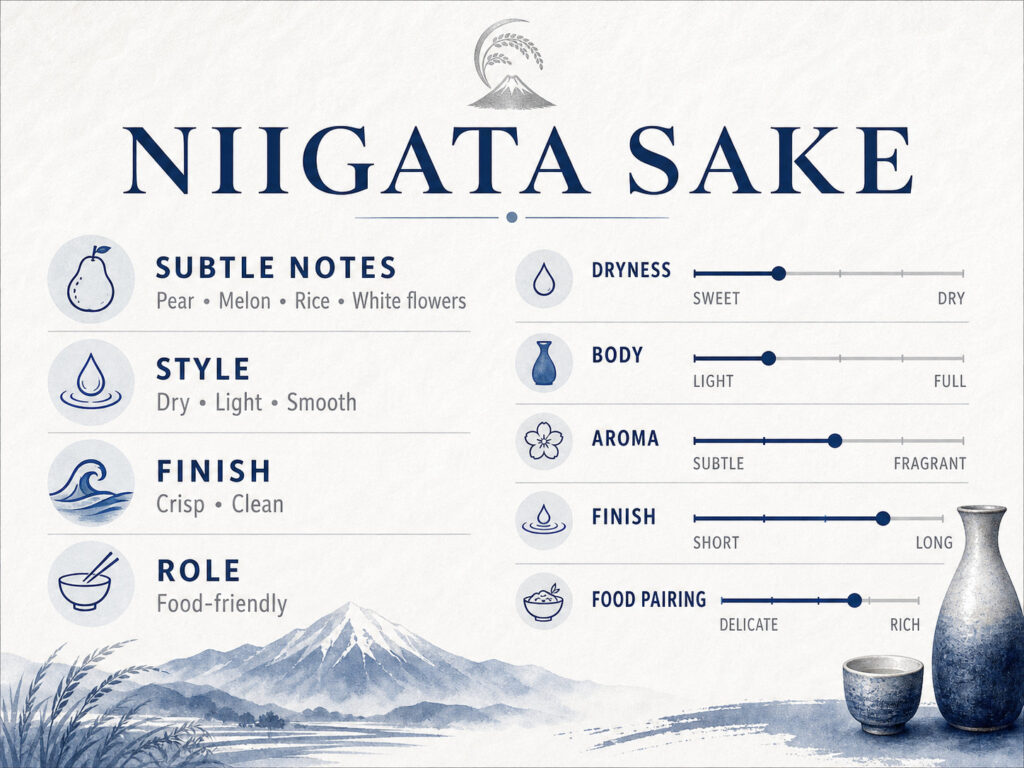
Niigata sake usually feels clean, crisp, and elegant. Aromas are often restrained, especially in classic bottles. You may notice pear, melon, steamed rice, white flowers, or mineral-like freshness.
The taste leans dry rather than sweet. Texture tends to be smooth and light. The finish often cuts quickly, which makes the sake food-friendly. This clean finish is one reason Niigata sake pairs well with seafood.
Some modern breweries now make richer styles. You can find fruity Ginjo, expressive Nama sake, or stronger Genshu. Still, the regional image remains dry, precise, and refreshing.
Character
Typical Niigata expression
Sweetness
Usually dry, with restrained sweetness
Body
Light to medium body
Aroma
Clean, subtle, sometimes fruity
Finish
Crisp, sharp, and refreshing
Texture
Smooth, not heavy
Food role
Strong as a meal sake
This style is especially useful for people who dislike heavy sake. It also suits drinkers who enjoy clean white wine or crisp lager.
How Soft Water Affects Sake Flavor
Soft water changes sake flavor by slowing fermentation. Hard water contains more minerals that can stimulate yeast activity. Soft water has fewer minerals, so fermentation moves more gently.
In Niigata, that softer pace supports delicate flavor. Yeast fermentation can stay controlled during long winter brewing. Koji mold still converts rice starch into sugar, but brewers can manage the process with precision.
This does not make soft water better than hard water. It creates a different style. Nada’s hard water produces firmer, stronger sake. Niigata’s soft water supports a lighter and cleaner expression.
Niigata sake depends heavily on rice quality. The region is famous for Japanese rice, and that local rice culture supports sake brewing. Brewers often use sake rice varieties such as Gohyakumangoku and Koshitanrei.
Gohyakumangoku is closely linked with Niigata. It tends to support clean fermentation and a crisp profile. Meanwhile, Koshitanrei can create more depth and elegance in premium sake.
Rice polishing also matters. Polishing removes outer layers that can create heavier aroma or rough taste. More polishing often leads to cleaner fragrance and a lighter body. However, polish alone does not guarantee quality.
Koji plays the central biochemical role. Koji mold converts rice starch into sugar. Then yeast fermentation turns that sugar into alcohol. This parallel process defines Japanese sake.
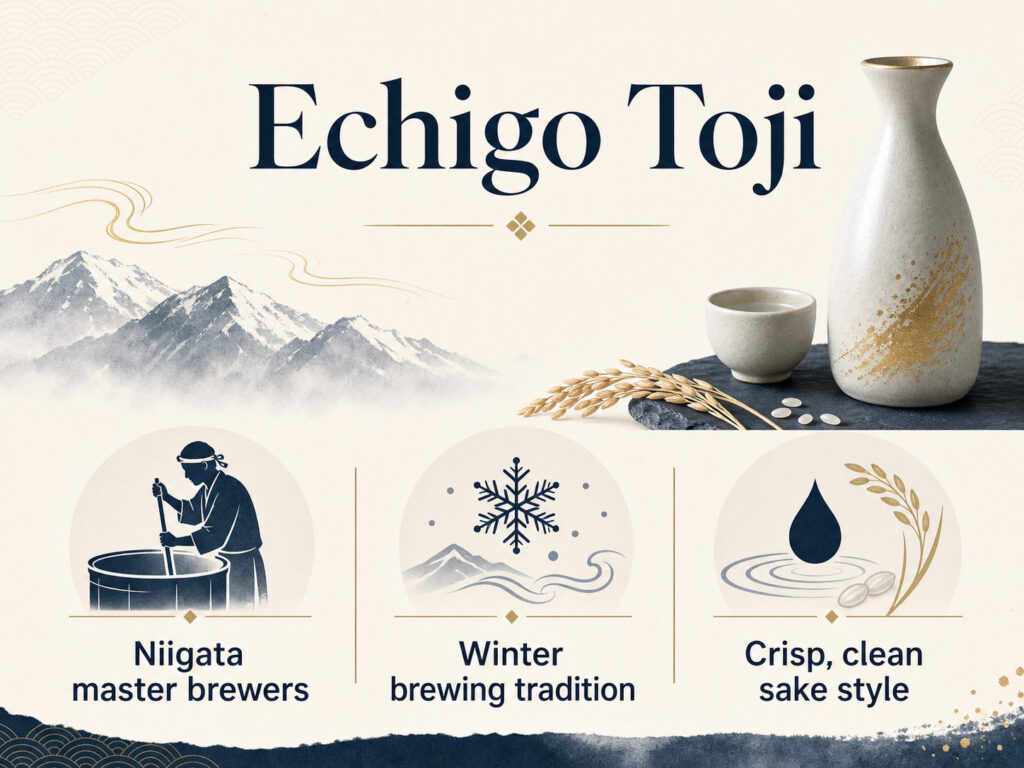
Echigo Toji refers to the traditional brewmaster group from Echigo, the old name for Niigata. These brewers worked across Japan during winter and carried technical knowledge from brewery to brewery. Their discipline helped spread Niigata’s brewing reputation.
The Echigo Toji tradition fits the region’s climate. Cold winters demanded patience, clean work, and careful fermentation control. Over time, that approach helped refine tanrei karakuchi sake.
Echigo Toji also represents regional labor history. In snow country, winter work patterns shaped brewing culture. Sake was not only a product. It was part of northern brewing culture and seasonal life.
History of Niigata Sake
Niigata sake history begins with rice, snow, and the old Echigo region. The area had fertile plains, abundant water, and cold winters. These conditions made sake brewing practical and increasingly specialized.
During earlier periods, local brewing served communities and regional markets. Later, improved transport helped Niigata sake reach wider audiences. Meanwhile, Echigo Toji brewers strengthened technical standards across the region.
In the 20th century, Niigata became strongly associated with dry sake. The tanrei karakuchi style matched changing consumer tastes. Clean, light sake became attractive in urban markets.
Modern Niigata still protects that image. However, breweries now explore broader styles. Some make aromatic daiginjo. Others produce richer junmai, cloudy Nigori, or seasonal nama releases.
Famous Breweries and Brands
Niigata has many breweries, and each expresses the region differently. This section is not a ranking. Instead, it offers a compact reference for understanding major names.
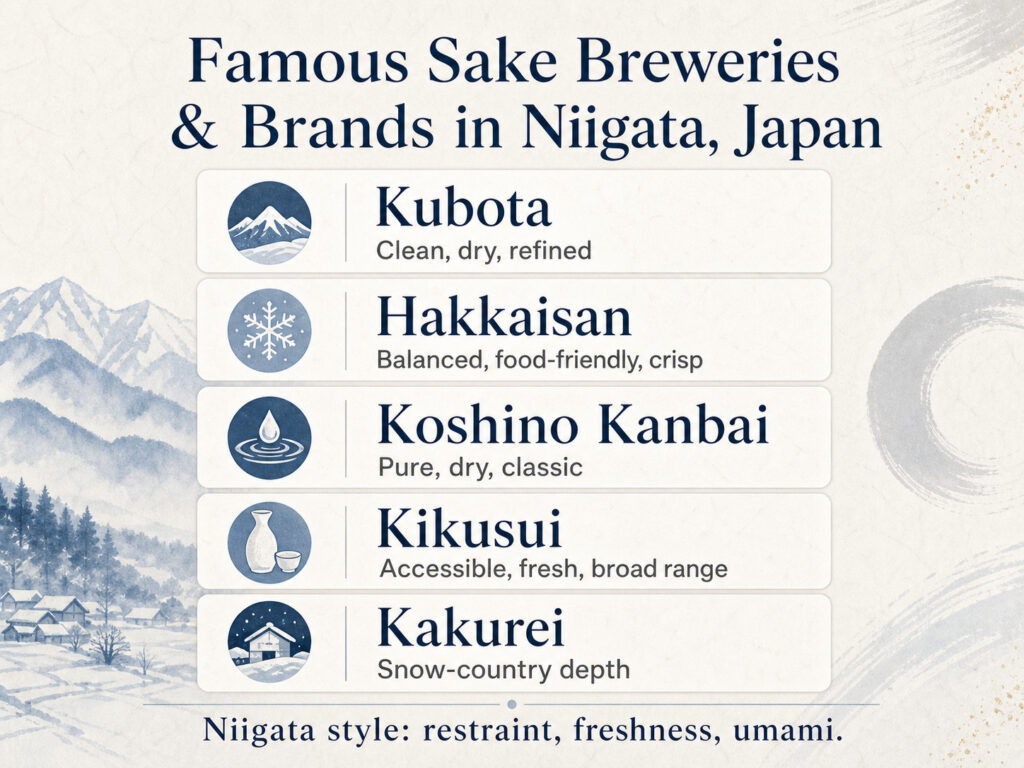
Brewery or brand
General style
Notes
Kubota, Asahi Shuzo
Clean, dry, refined
One of Niigata’s most recognized modern brands
Hakkaisan
Balanced, food-friendly, crisp
Known for clean taste and snow country identity
Koshino Kanbai
Pure, dry, classic
Famous for the tanrei karakuchi image
Kikusui
Accessible, fresh, broad range
Known for approachable products and strong local presence
Kakurei, Aoki Shuzo
Snow country depth
Uonuma-based brewery with Echigo Toji heritage
These breweries show the range inside the Niigata style. Some emphasize restraint. Others explore umami, freshness, or premium aroma. Together, they keep the region relevant.
Famous Local Sake Types
Niigata sake appears across many categories. Classic dry sake often comes as honjozo, junmai, ginjo, or daiginjo. Premium labels may use high polishing to create clean aroma and precision.
Junmai can show rice depth while keeping a dry finish. Ginjo and daiginjo styles highlight aroma and polish. Genshu gives more strength when breweries skip dilution.
Seasonal styles also matter. Nama sake brings freshness, especially after winter brewing. Nigori shows a cloudier, softer side that contrasts with classic tanrei karakuchi.
Best Food Pairings
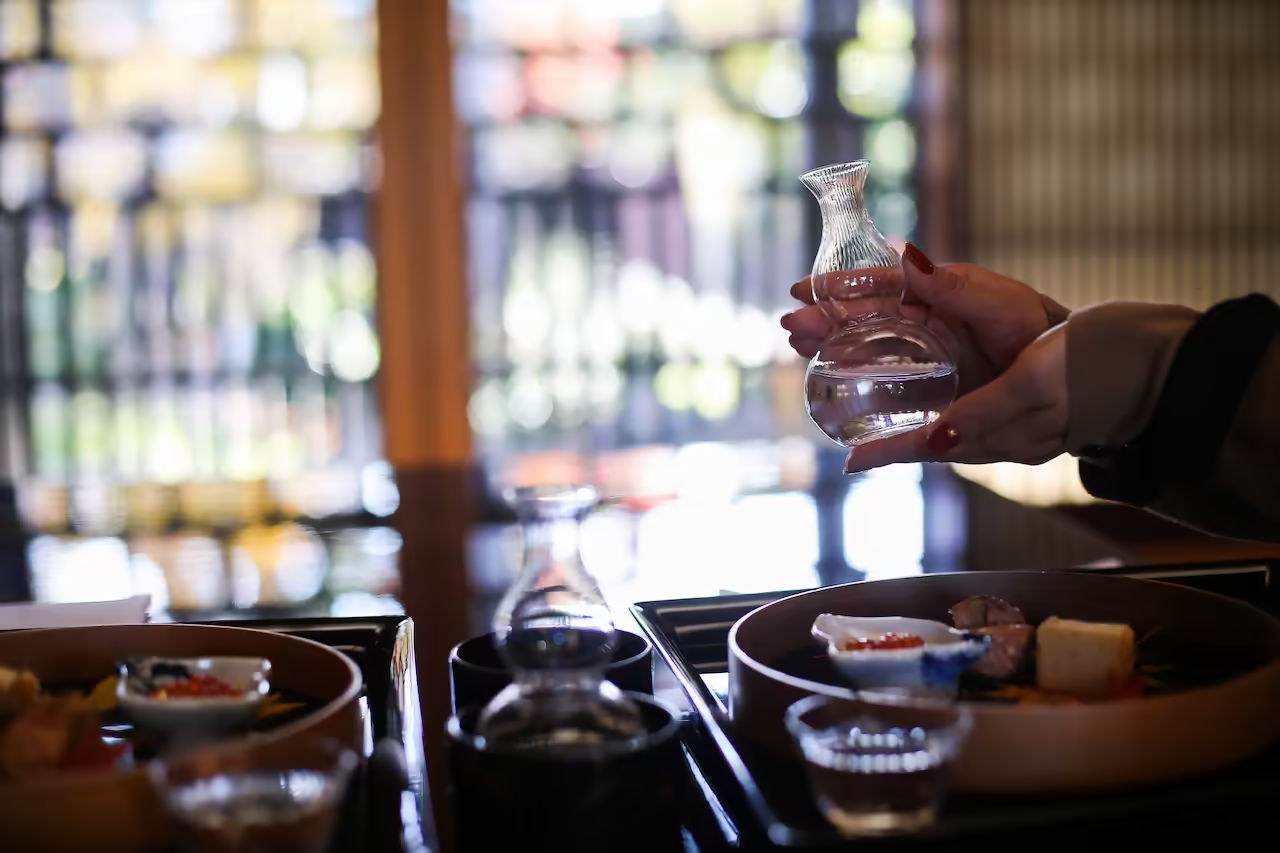
Niigata sake pairs well with food because of its dry style and clean finish. The sake refreshes the palate instead of overwhelming the dish. This is why it works well with seafood and light regional cuisine.
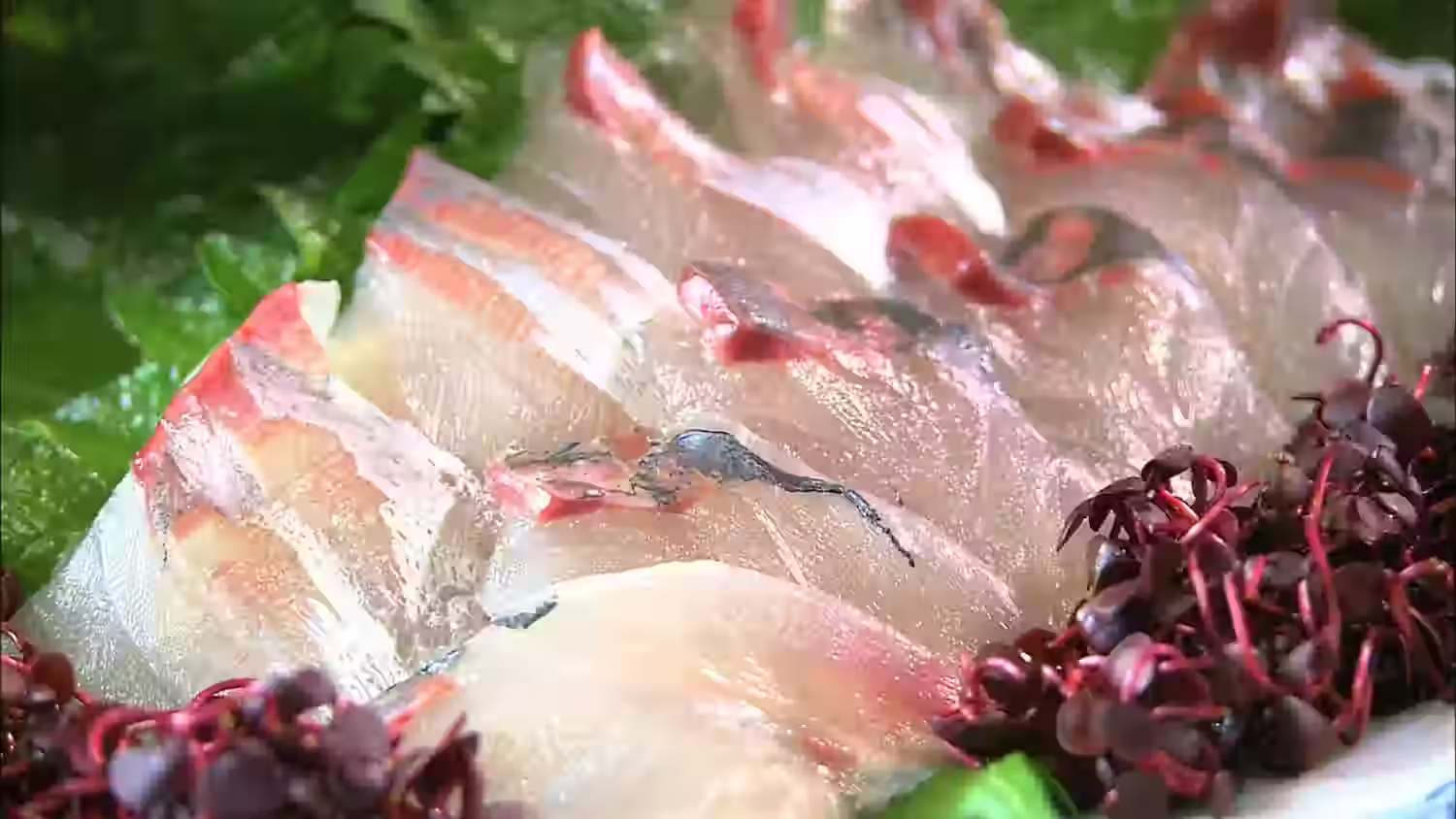
Hegi soba is a particularly useful local pairing. The smooth noodle texture and seaweed binder match dry sake well. Meanwhile, seafood from the Sea of Japan coast connects naturally with Niigata’s clean brewing style.
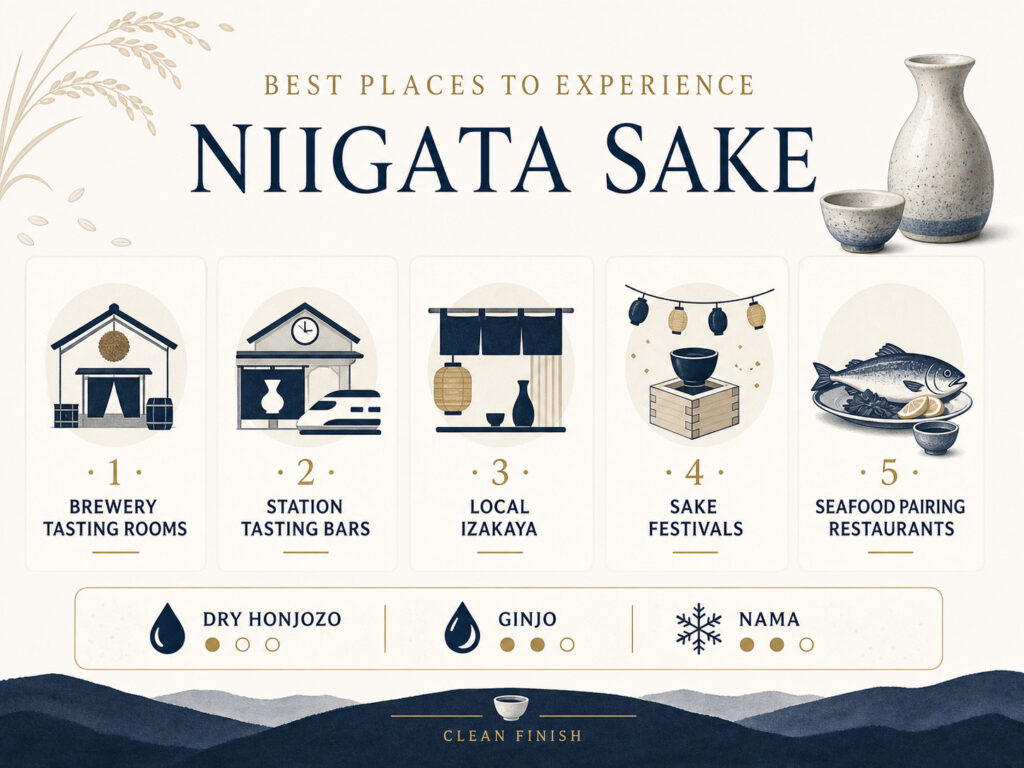
Best Places to Experience Niigata Sake
Niigata sake is best understood through comparison. Brewery towns, tasting rooms, sake events, and serious izakaya can all help. However, the goal is not just tourism. The goal is to understand regional sake culture.
Useful places include these.
Brewery tasting rooms in Niigata Prefecture
Ponshukan-style tasting facilities near major stations
Local izakaya with seasonal sake lists
Sake festivals and brewery open days
Restaurants pairing Niigata sake with seafood
Tasting several bottles side by side is helpful. Compare a dry honjozo, a ginjo, and a nama sake. The shared clean finish often remains visible, even when styles differ.
Final Thoughts
Niigata sake is a refined expression of Japanese brewing culture. It is shaped by snow, rice, soft water, and disciplined brewers. The result is a classic dry style from Japan, known for balance, clarity, and precision.
The region no longer produces only one style. Modern breweries explore aroma, umami, and seasonal freshness. Still, the central identity remains clear. Niigata sake is clean, crisp, and elegant.
Niigata Sake FAQ
What is Niigata sake?
This regional specialty represents premium Japanese rice wine from a snowy northern prefecture. Local breweries craft it in a light, dry style that locals call “tanrei karakuchi.” Heavily snowed-in winters, soft mountain water, premium local rice, and traditional brewing techniques shape its clean flavor. Many bottles deliver outstanding clarity, flawless balance, and an exceptionally crisp, refreshing finish.
Why is Niigata sake dry?
These local brews taste dry because regional brewmasters prioritize clean, low-temperature fermentation and a sharp, refreshing finish. Pure soft water and cold winter temperatures help creators design a beautifully restrained flavor profile. High rice polishing rates also eliminate heavier, richer notes before brewing begins. Consequently, brewers keep the sweetness level highly controlled and balanced.
What makes Niigata sake unique?
A harsh snow-country climate, soft mountain water, and elite master brewers shape this unique regional style. The coastal region beautifully combines perfect natural conditions with rigorous, technical brewing discipline. This harmonious environment creates exceptional rice wines that gourmets praise for their peerless balance and extreme precision. Very few places in the world connect so strongly to a single, signature dry profile.
What is Echigo Toji?
This term refers to the historic guild of master brewers from the old Echigo province. These elite craftsmen originally refined low-temperature fermentation techniques and perfected the crisp, dry style of rice wine. Their highly disciplined traditions heavily influenced breweries both within the local prefecture and across Japan. Today, the legendary name still carries immense cultural weight and commands deep respect among alcohol producers.
How does soft water affect sake?
Soft water typically slows down yeast activity during the brewing process because it contains very few minerals. This slow reaction allows brewmasters to guide the fermentation gently and precisely over a longer period. In the northern snow country, this delicate water source supports a clean aroma and an exceptionally smooth mouthfeel. Conversely, hard water in southern areas often creates much stronger, more robust styles of rice wine.
What food pairs well with Niigata sake?
This dry rice wine pairs beautifully with fresh sushi, sashimi, local seafood, buckwheat noodles, and light tempura. Its remarkably crisp finish instantly refreshes your palate after every bite. The clean flavor profile completely avoids masking the delicate taste of raw fish or soft tofu. This versatile, food-friendly nature makes it an excellent companion for a traditional multi-course Japanese dinner.
Where does Niigata sake come from?
This legendary beverage originates from the coastal and mountainous regions of central-northern Japan. Local breweries utilize the heavy winter snowpack, which naturally filters into pure, soft underground water. Today, the prefecture hosts the highest number of active breweries in Japan, proudly continuing centuries of production.
How much does Niigata sake cost?
A standard 720ml bottle typically costs between 1,200 and 3,000 yen at a local liquor shop. Prices vary depending on the specific brewery, the rice-polishing ratio, and the premium classification. High-end, aged masterpieces can command prices exceeding 10,000 yen. It still offers fantastic value for those seeking a highly refined and clean drinking experience.
Is Niigata sake vegetarian or vegan friendly?
This traditional alcoholic drink contains absolutely no animal products. Master brewers craft the liquid using only premium rice, pure water, yeast, and natural koji mold. Vegans and vegetarians can safely consume this 100% plant-based beverage with any seasonal meal.
Is Niigata sake popular outside Japan?
It enjoys massive popularity among wine lovers and gourmets around the world. High-end Japanese steakhouses and sushi bars in North America, Europe, and Asia proudly showcase these dry bottles. Global diners love its clean, light profile because it pairs effortlessly with Western seafood and cream-based dishes.
Ryo Iwa is the founder and editor of foodinjapan.org. Born and raised in Japan, he writes from regional travel, market visits, and Japanese-language primary sources that rarely reach English readers, including brewing institute publications and industry glossaries. Where a figure cannot be traced to a source, the article says so.
He has been a Google Maps Local Guide for over 10 years, with more than 1,800 reviews and over 41,000 photos viewed hundreds of millions of times. He previously spent two decades as an IT consultant in Japan, the US, and the UK.















Comments