





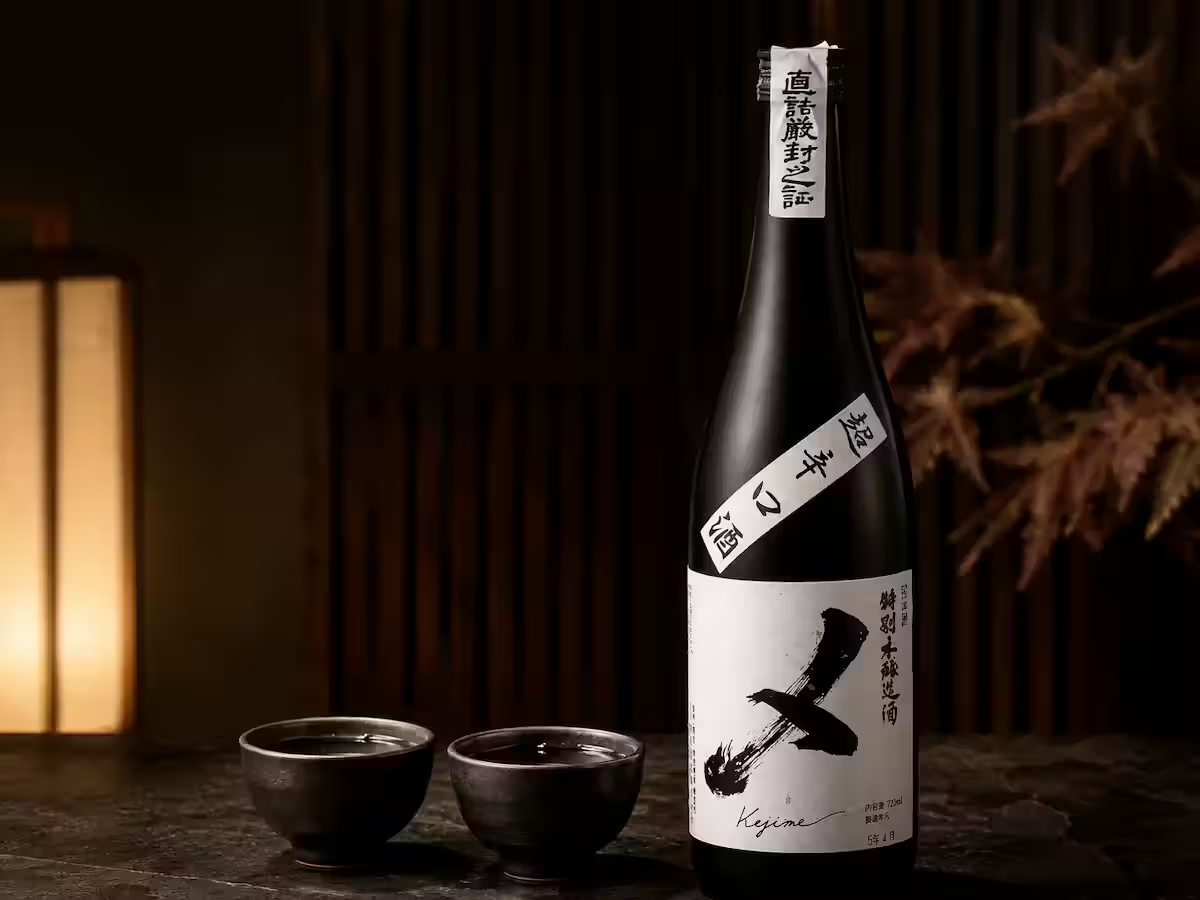
Tokubetsu honjozo is Japanese sake made with rice polished to 60% or less, plus a small amount of brewed alcohol. It tastes clean, dry, and smooth. It works chilled, warm, or at room temperature. “Tokubetsu” means special, while “honjozo” means sake with added brewed alcohol.
This is the key difference between regular honjozo and the special grade. Tokubetsu honjozo must show either a 60% polishing ratio or a clearly stated special brewing method. Because of that, it feels more refined than standard honjozo.
This style is not flashy. Instead, it is practical, crisp, and food-friendly. It is refined enough for premium sake drinkers, yet useful enough for everyday Japanese meals.
What Is Tokubetsu Honjozo?
Tokubetsu honjozo, also called special honjozo, belongs to Japan’s premium sake classification. Brewers make it with rice, rice koji, water, and a small amount of brewed alcohol. The added brewed alcohol adjusts balance and aroma. It does not simply make the sake stronger.
Regular honjozo usually uses rice polished to 70% or less. In contrast, tokubetsu honjozo often uses rice polished to 60% or less. A brewery may also use another special brewing method. That special point should appear clearly on the label.
For beginners, this category can feel very useful. It gives clean sake flavor without too much perfume. It also pairs well with food, which makes it easier to understand.
For a wider overview, see the sake guide. If you want brewing basics first, read the how sake is made guide.
What Is the Difference Between Honjozo and Tokubetsu Honjozo?
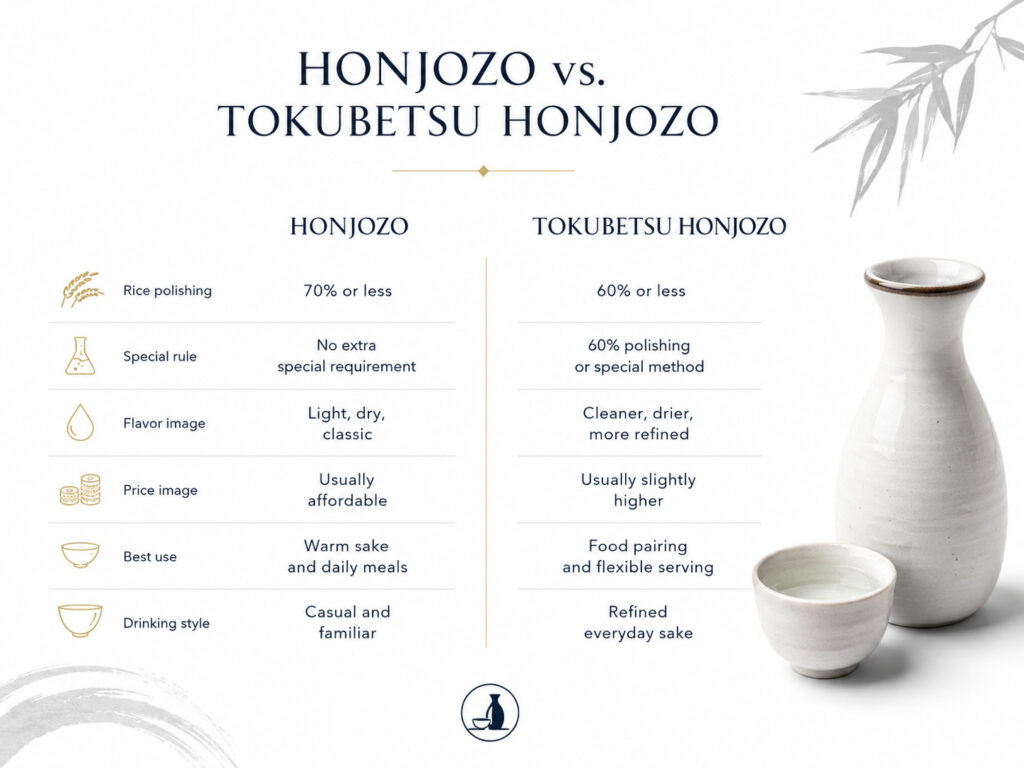
| Point | Honjozo | Tokubetsu Honjozo |
|---|---|---|
| Rice polishing | Usually 70% or less | Often 60% or less |
| Special rule | No extra special requirement | 60% polishing or special method |
| Flavor image | Light, dry, classic | Cleaner, drier, more refined |
| Price image | Usually affordable | Usually slightly higher |
| Best use | Warm sake and daily meals | Food pairing and flexible serving |
| Drinking style | Casual and familiar | Refined everyday sake |
The difference between honjozo and special honjozo is not only technical. Regular honjozo feels light and familiar. Tokubetsu honjozo often feels cleaner, smoother, and more polished.
Price can also differ. Most tokubetsu honjozo bottles cost around ¥1,200 to ¥2,500 for 720ml in Japan. Export prices vary by country and shop. Still, this style usually sits below ginjo and daiginjo in price.
That price position matters. It gives drinkers a premium sake experience without a luxury price. For many meals, that balance feels just right.
When Should You Choose Tokubetsu Honjozo Instead of Junmai?
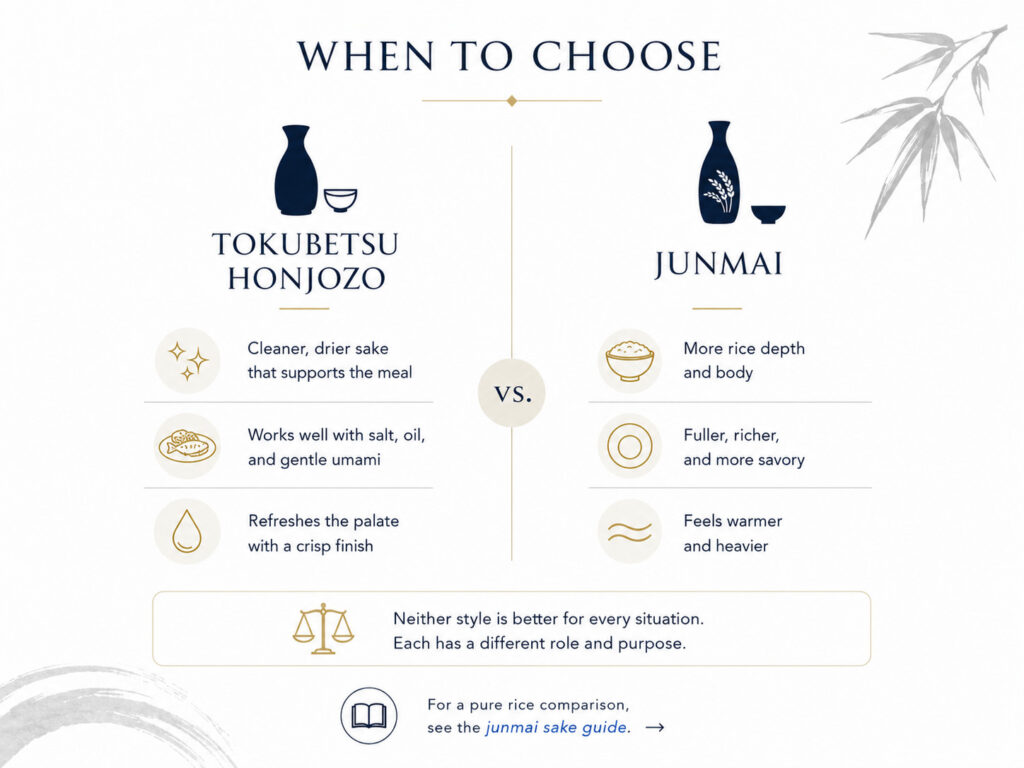
Choose tokubetsu honjozo when you want a cleaner, drier sake that supports the meal. It works well with salt, oil, and gentle umami. The finish refreshes the palate instead of adding weight.
Choose junmai when you want more rice depth and body. Junmai often tastes fuller, richer, and more savory. It can feel warmer and heavier than special honjozo.
Neither style is better for every situation. Instead, each has a different role. Tokubetsu honjozo suits crisp drinking and meal support. Junmai suits people who want stronger rice character.
For a pure rice comparison, see the junmai sake guide.
What Does Tokubetsu Honjozo Taste Like?
Tokubetsu honjozo typically tastes dry, clean, and lightly savory. The aroma stays subtle, with notes of steamed rice, mild grain, and faint fruit. The finish is usually crisp and refreshing. Unlike ginjo sake, it does not feel perfumed or floral.
The texture often feels smooth and light. Many bottles avoid heaviness, which helps them pair with fried or grilled dishes. This dry sake style is one reason restaurants like it. Personally, I find it underrated.
A good bottle can feel precise without feeling cold. It may not impress through aroma alone. However, it quietly makes food taste better. That is a valuable quality.
How Is Tokubetsu Honjozo Made?

Tokubetsu honjozo starts with rice, rice koji, water, and careful fermentation. Brewers then add a small amount of brewed alcohol during production. This step can lift aroma and refine the finish.
The “special” part must connect to the label standard. In many cases, brewers polish rice to 60% or less. Alternatively, a brewery may use a special brewing method and explain it clearly.
Because of that, label reading matters. Look for rice polishing ratio, brewing method, rice variety, or dry taste notes. Those clues help you understand why the bottle uses the tokubetsu label.
For broader category details, see the types of Japanese sake guide.
Why Does Tokubetsu Honjozo Work Well Warm?
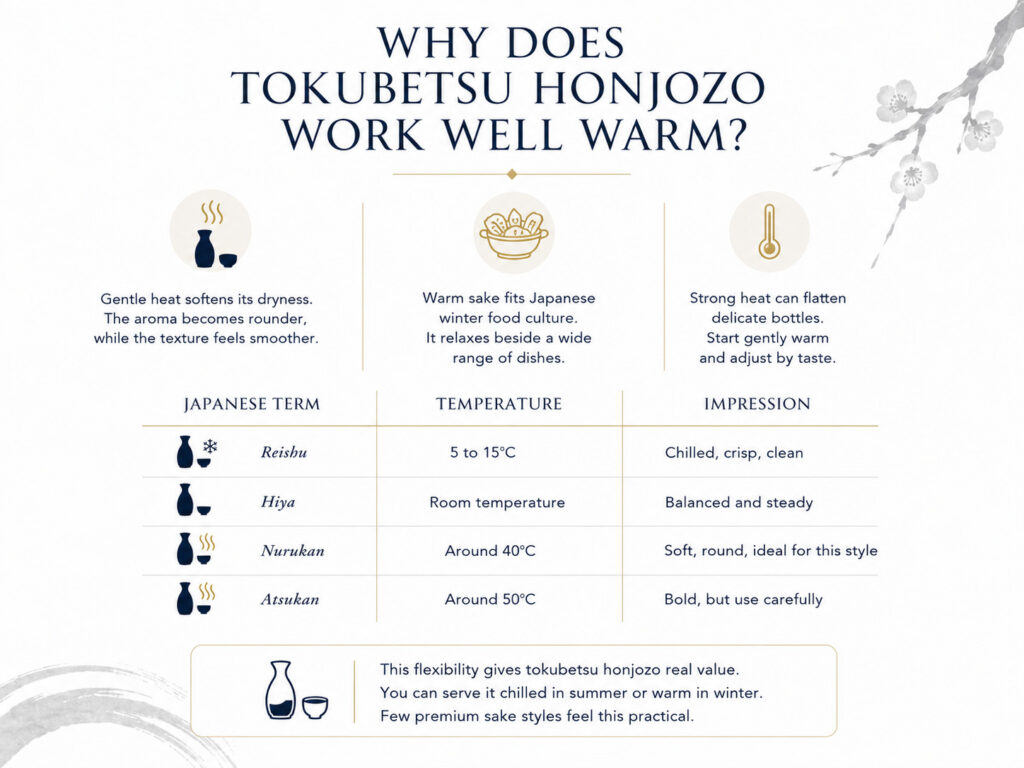
Tokubetsu honjozo is one of the best premium sake styles for warm drinking. Gentle heat softens its dryness. The aroma becomes rounder, while the texture feels smoother.
Warm sake also fits Japanese winter food culture. Oden, nabe, yakitori, and grilled fish all work well. The sake relaxes beside these dishes without becoming heavy.
However, strong heat can flatten delicate bottles. Start gently warm first. Then adjust by taste.
| Japanese Term | Temperature | Impression |
|---|---|---|
| Reishu | 5 to 15°C | Chilled, crisp, clean |
| Hiya | Room temperature | Balanced and steady |
| Nurukan | Around 40°C | Soft, round, ideal for this style |
| Atsukan | Around 50°C | Bold, but use carefully |
This flexibility gives tokubetsu honjozo real value. You can serve it chilled in summer or warm in winter. Few premium sake styles feel this practical.
Best Food Pairings for Tokubetsu Honjozo
Tokubetsu honjozo is a food-friendly sake because it stays clean and dry. It supports dishes without covering them. Moreover, its crisp finish refreshes the palate.
Grilled and fried dishes
- Yakitori with salt
- Grilled fish
- Karaage
- Tempura
Simmered and umami-rich dishes
- Oden
- Nabe
- Simmered vegetables
- Tofu dishes
Light Japanese dishes
- Sushi
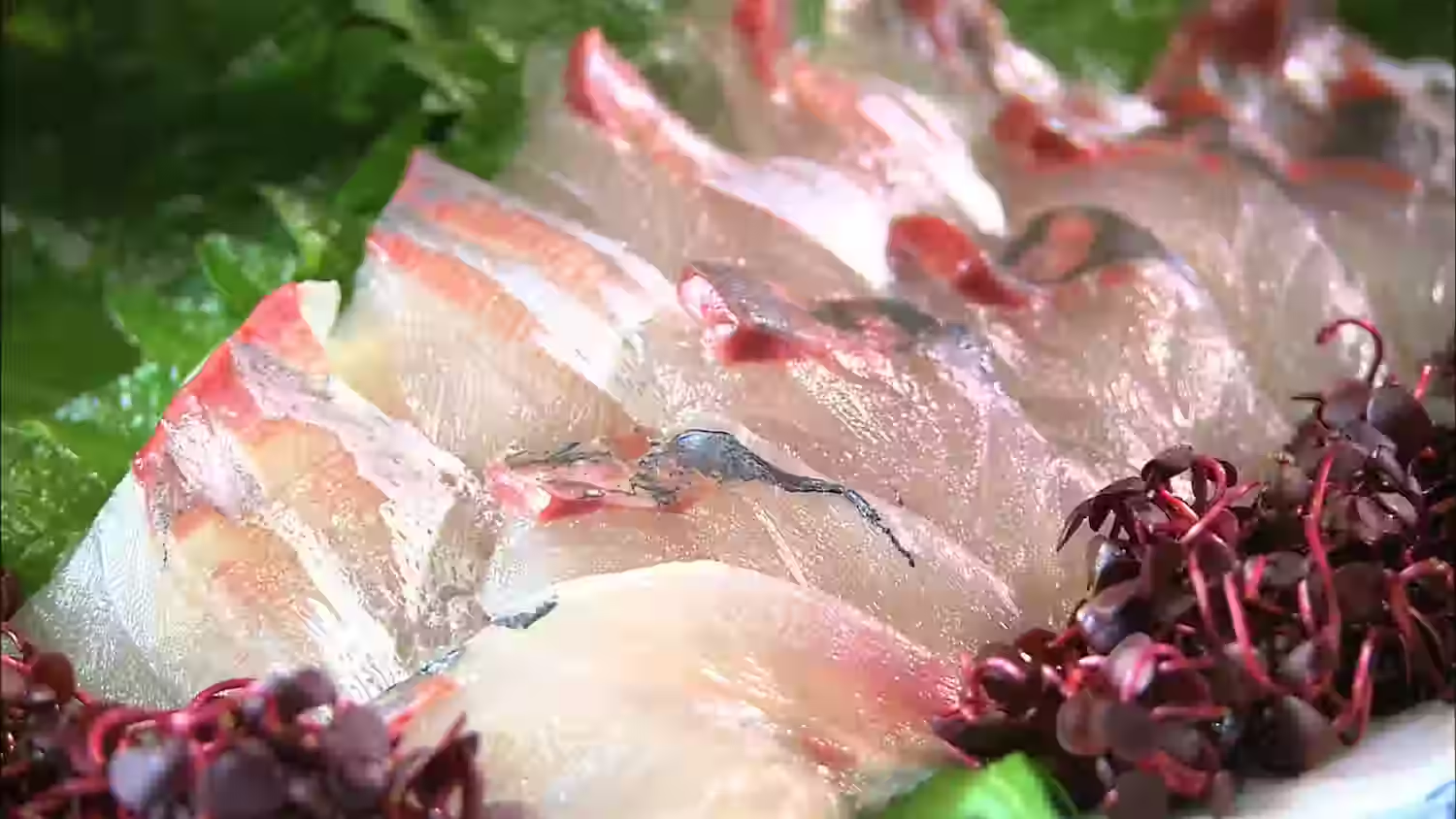
- Sashimi
- Chilled tofu
- Soba
Casual izakaya food
- Grilled mackerel
- Pork shabu-shabu
- Fried chicken
- Light cheese
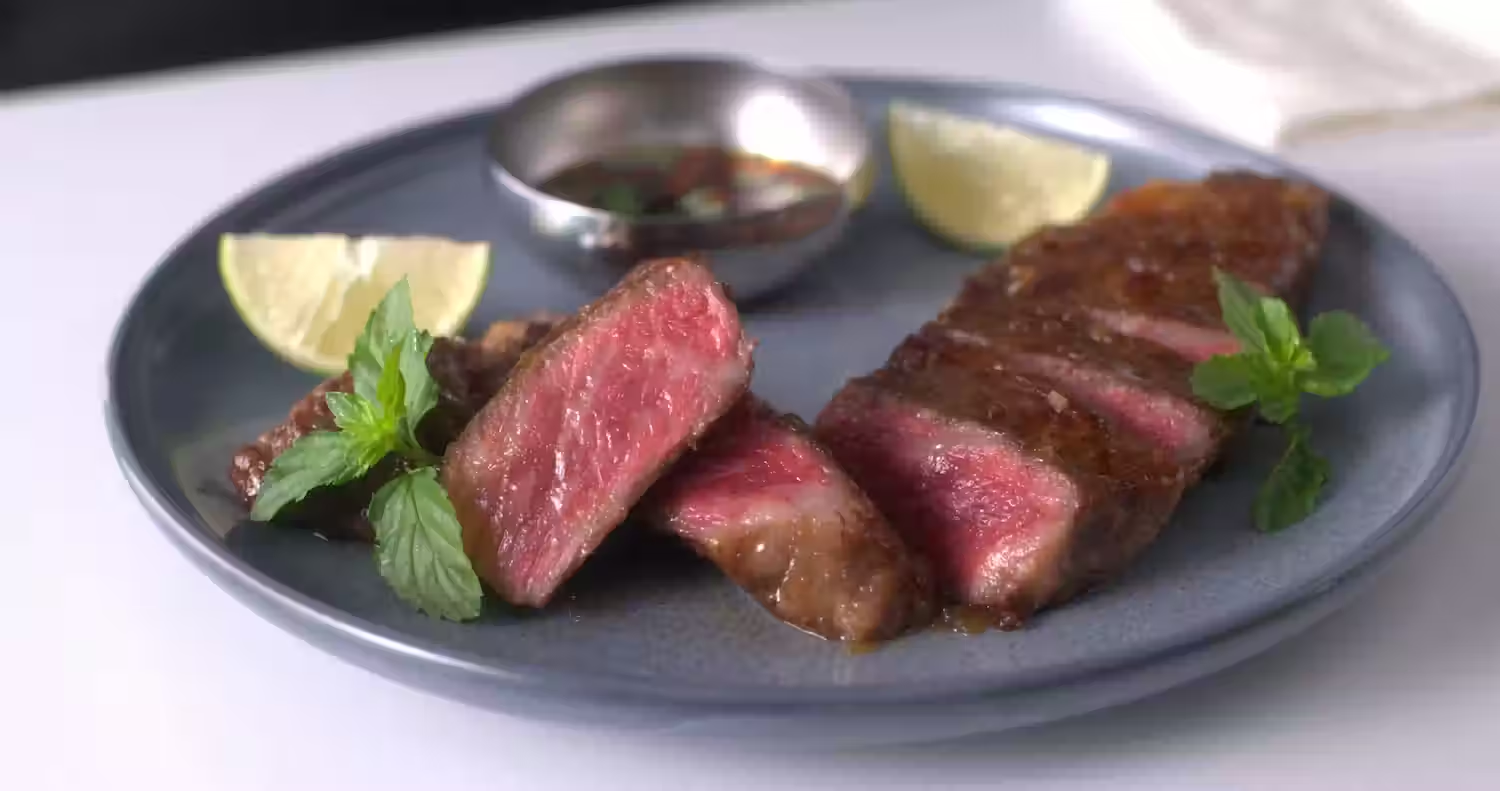
Karaage, oden, yakitori, and grilled fish are especially strong pairings. The sake makes rich food feel lighter. At the same time, its dry finish keeps the meal moving.
Very sweet dishes are harder to pair. Extremely spicy food can also hide the clean flavor. Still, most salty and savory meals work well.
Recommended Tokubetsu Honjozo Bottles
Specific bottles help beginners understand the category. Availability changes by country, but these names offer useful starting points.
| Bottle | Style Image | Good For |
|---|---|---|
| Hakkaisan Tokubetsu Honjozo | Clean, dry, smooth | First bottle and food pairing |
| Kubota Senju | Light, refined, easy | Chilled or gently warm drinking |
| Urakasumi Tokubetsu Honjozo | Balanced and classic | Seafood and Japanese meals |
Hakkaisan Tokubetsu Honjozo is a reliable choice for clean sake flavor. It feels dry, smooth, and food-friendly. Many beginners find it easy to understand.
Kubota Senju offers a polished everyday premium style. It is often enjoyed chilled, but gentle warming also works. The flavor feels light and controlled.
Urakasumi Tokubetsu Honjozo has a classic, balanced character. It suits seafood, grilled dishes, and simple Japanese meals. If you want a traditional impression, it is worth trying.
Is Honjozo Lower Quality Than Junmai?
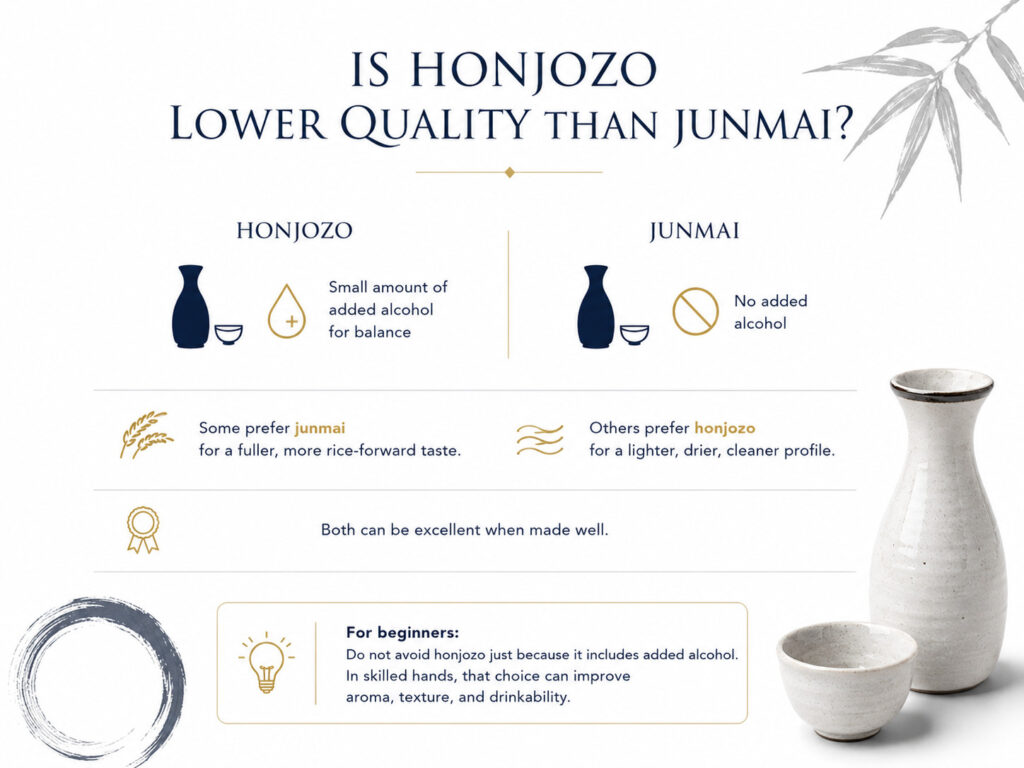
Honjozo is not automatically lower quality than junmai. The difference comes from brewing style, not a simple ranking. Junmai uses no added alcohol, while honjozo uses a small amount for balance.
Some drinkers prefer junmai because it feels fuller and more rice-forward. Others prefer honjozo because it tastes lighter, drier, and cleaner. Both can be excellent when made well.
This point matters for beginners. Do not avoid honjozo only because it includes added alcohol. In skilled hands, that choice can improve aroma, texture, and drinkability.
Tokubetsu Honjozo and Japanese Dining Culture
Tokubetsu honjozo fits naturally into Japanese dining culture. It feels premium, but not too formal. Therefore, it works in izakaya, restaurants, and relaxed home meals.
This is not a sake that demands attention. Instead, it helps the meal flow. That quiet role gives it classic sake character with modern appeal.
Many people overlook honjozo because of the added alcohol. However, that view misses the point. Brewers can use it to support elegance, dryness, and drinkability.
For beginners, this category can be a smart choice. It is less heavy than many junmai styles. At the same time, it is less aromatic than ginjo sake.
Best Tokubetsu Honjozo for Beginners
The best tokubetsu honjozo for beginners should feel clean, dry, and smooth. Look for labels that mention 60% polishing ratio, dry taste, or food pairing. Those clues often lead to balanced bottles.
Beginners who enjoy crisp drinks may like this style quickly. It has enough character to feel interesting, but not too much weight. That makes it a strong entry point into Japanese rice wine.
Try it with food first. A meal gives the sake context. Without food, some bottles may seem too quiet. With yakitori or grilled fish, the balance becomes clearer.
If possible, taste the same bottle chilled and warm. The difference can be surprising. You may find one temperature much better for your palate.
The History of Tokubetsu Honjozo
Honjozo developed as brewers explored ways to make sake clean, stable, and easy to drink. The careful use of brewed alcohol became part of that tradition. Over time, this method gained its own identity.
As Japan’s sake classification became clearer, tokubetsu honjozo offered another level. Breweries could show a refined version of honjozo through polishing or special production. This helped consumers understand the difference.
Today, tokubetsu honjozo remains practical and respected. It may not always get the attention of daiginjo or junmai daiginjo. Still, it has a loyal place at the table.
Its appeal is simple. Clean, crisp Japanese sake works with real meals. That usefulness keeps the style alive.
Final Thoughts
Tokubetsu honjozo is clean, crisp Japanese sake with quiet confidence. It is refined, but not showy. It is premium, yet practical enough for everyday meals.
The style works because it understands food. You can enjoy it chilled, warm, or at room temperature. That flexibility gives it lasting charm.
If you want an easy Japanese sake guide in one bottle, start here. Special honjozo offers smooth finish, balanced flavor, and classic sake comfort.
Tokubetsu Honjozo FAQ
What is tokubetsu honjozo?
It represents a premium Japanese rice wine. Brewers craft it using highly polished rice and a small, precise amount of distilled alcohol. They typically polish the rice grains down to 60 percent or less to refine the flavor. Some brewmasters also apply unique fermentation methods to elevate the quality. You will usually find the specific special brewing details clearly printed on the bottle label.
What does special honjozo mean in Japanese?
The first word means “special,” while the second refers to rice wine containing a touch of distilled alcohol. Brewers add this extra alcohol specifically to perfect the aromatic balance and smooth the texture. They completely avoid using it merely to increase the alcohol content. Consequently, this refined beverage delivers a much lighter and cleaner profile than pure rice varieties. This careful blending technique creates an incredibly refreshing drinking experience.
Is tokubetsu honjozo considered premium sake?
Yes, experts officially classify it within Japan’s premium rice wine categories. The government enforces strict rules regarding its rice polishing rates and production methods. These strict regulations clearly separate this high-quality beverage from ordinary, mass-produced table alcohol. Despite its premium status, liquor stores usually price it much more affordably than highly polished ginjo styles. This affordable price tag makes it a popular choice for daily enjoyment.
What makes special honjozo special?
Brewers typically earn this classification by polishing their rice down to 60 percent or lower. Alternatively, brewmasters might apply an exceptional, traditional brewing technique to distinguish their product. These unique production choices make this specific bottle far more refined than the standard category. Drinkers therefore experience a significantly cleaner, sharper, and more elegant flavor profile. You can always check the back label to discover the exact specialized method the brewery used.
Does added alcohol make honjozo stronger?
No, brewers do not add the extra distilled spirit to increase the overall potency. Instead, they carefully pour in a tiny amount to extract delicate aromas and refine the texture. This precise technique creates a remarkably light, clean, and crisp finish on the palate. Diners absolutely love this refreshing quality because it complements rich meals perfectly without overpowering the food. The alcohol addition actually smooths out the beverage rather than making it harsh.
How does tokubetsu honjozo taste?
This premium drink typically delivers a dry, clean, and lightly savory flavor profile. The aroma remains incredibly subtle, offering pleasant notes of steamed rice, mild grain, and occasional faint fruit. You will enjoy a crisp, refreshing finish that clears your palate instantly. Unlike highly polished ginjo styles, this beverage entirely avoids heavy floral perfumes. Many food lovers describe it as the ultimate supporting drink that enhances meals without ever competing with them.
Is special honjozo good warm?
Yes, you can heat this versatile beverage gently to unlock incredible flavors. The gentle heat effortlessly softens the dry edges and creates a much rounder, creamier texture. Drinkers often find that heating it to around 40 degrees Celsius produces the absolute best results. This warm preparation pairs beautifully with winter hot pots, savory grilled chicken, and fresh seafood. The elevated temperature thoroughly enhances the savory umami notes hidden inside the rice.
What is the difference between honjozo and special honjozo?
The primary difference involves the rice milling rate and the overall refinement. Brewers only need to polish rice to 70 percent for the standard version. To achieve the upgraded status, craftspeople must polish the grains down to 60 percent or implement a unique brewing technique. Consequently, diners experience a noticeably cleaner, sharper, and more elegant taste from the upgraded bottle. Liquor stores naturally charge a slightly higher price to reflect this extra labor and care.
Is honjozo lower quality than junmai?
No, experts never consider this category automatically inferior to pure rice styles. Pure rice varieties deliver a heavier, richer grain depth since brewers add zero alcohol. In contrast, this alcohol-added version provides a much lighter, drier, and crisper drinking experience. You should simply choose the style that best matches your personal palate and your current meal. Both categories represent authentic, high-quality Japanese craftsmanship.
Is special honjozo good for beginners?
Yes, newcomers who appreciate clean and dry profiles love this accessible drink. The liquid feels wonderfully light on the tongue, and the aroma remains pleasantly gentle. Diners find it incredibly easy to understand when they pair it with a hearty meal. We highly recommend starting your journey by drinking it alongside savory grilled chicken, fresh fish, or crispy tempura. This approachable style effectively teaches beginners the beauty of subtle, food-friendly rice wine.
References
- Japan Sake and Shochu Makers Association, “Sake Brewing Processes and Flavor”, checked in 2026, sake classification uses rice polishing ratio and production standards.
- Sake Times, “SAKE 101: What is ‘Tokubetsu’ Anyway?”, checked in 2026, tokubetsu labels use 60% polishing or a special brewing method.
- Sake Glossary, “Tokutei Meishō-shu”, checked in 2026, tokubetsu honjozo requires 60% or less polishing or special production shown on the label.
- Hakkaisan, “Hakkaisan Tokubetsu Honjozo”, checked in 2026, related product reference for Hakkaisan Tokubetsu Honjozo.
- https://www.asahi-shuzo.co.jp/global/kubota/lineup/senju/, checked in 2026, related product reference for Kubota Senju.
- https://www.urakasumi.com/en/, checked in 2026, related brewery reference for Urakasumi honjozo-style sake.
- Sake, checked in 2026, related internal article for Japanese sake basics and drinking culture.
- Types of Japanese Sake, checked in 2026, related internal article for sake classification.
- How Sake Is Made, checked in 2026, related internal article for sake brewing and ingredients.
- Junmai Sake, checked in 2026, related internal article for pure rice sake comparison.




Comments