'/%3E%3Cpath%20fill='%23b2b2b2'%20d='M241%20382q0%2016%2017%2026%2017%2011%2042%2011t42-11q16-11%2017-26V269H241'/%3E%3Cpath%20fill='%239f7e00'%20d='M241%20379q0%2014%208%2023%209%209%2021%209%2014%200%2021-9%209-9%209-23V269h-59'/%3E%3Cpath%20d='M241%20339v-70h59v110q0%2014-9%2023l-6%205v-68h-15v72q-8%200-14-4v-68zm59%2040c0%2022%2015%2032%2029%2032%2021%200%2030-18%2030-32v-40h-59'/%3E%3Cpath%20fill='%239f7e00'%20d='M266%20277v5h2v12h-3v-5h2v-5h-9v5h2v5h-4v9h3v18h-5v10h34v-10h-5v-18h3v-9h-4v-5h2v-5h-9v5h2v5h-3v-12h2v-5zm42%20101q0%2010%206%2017%206%206%2015%207%2010-1%2016-7%206-7%206-17v-29h-43'/%3E%3Ccircle%20fill='%230044ad'%20cx='329.5'%20cy='372'%20r='6'/%3E%3Cellipse%20fill='%230044ad'%20cx='300'%20cy='340'%20rx='16'%20ry='21'/%3E%3C/svg%3E)


'%3E%3Cpath%20stroke='%23000'%20stroke-width='4'%20d='m-35-37-13%2020m5%203%2013-20m5%203-13%2020m63%2042%206-9m1-2%206-9m5%203-6%209m-1%202-6%209m5%203%206-9m1-2%206-9m-96%200%2013%2020m5-3-6-9m-1-2-6-9m5-3%2013%2020m63-42-6-9m-1-2-6-9m5-3%2013%2020m5-3-6-9m-1-2-6-9'/%3E%3Ccircle%20r='24'%20fill='%23cd2e3a'/%3E%3Cpath%20fill='%230047a0'%20d='M0%200a12%2012%200%201%201%2020%2013%2024%2024%200%201%201-40-26A12%2012%200%201%200%200%200'/%3E%3C/g%3E%3C/svg%3E)





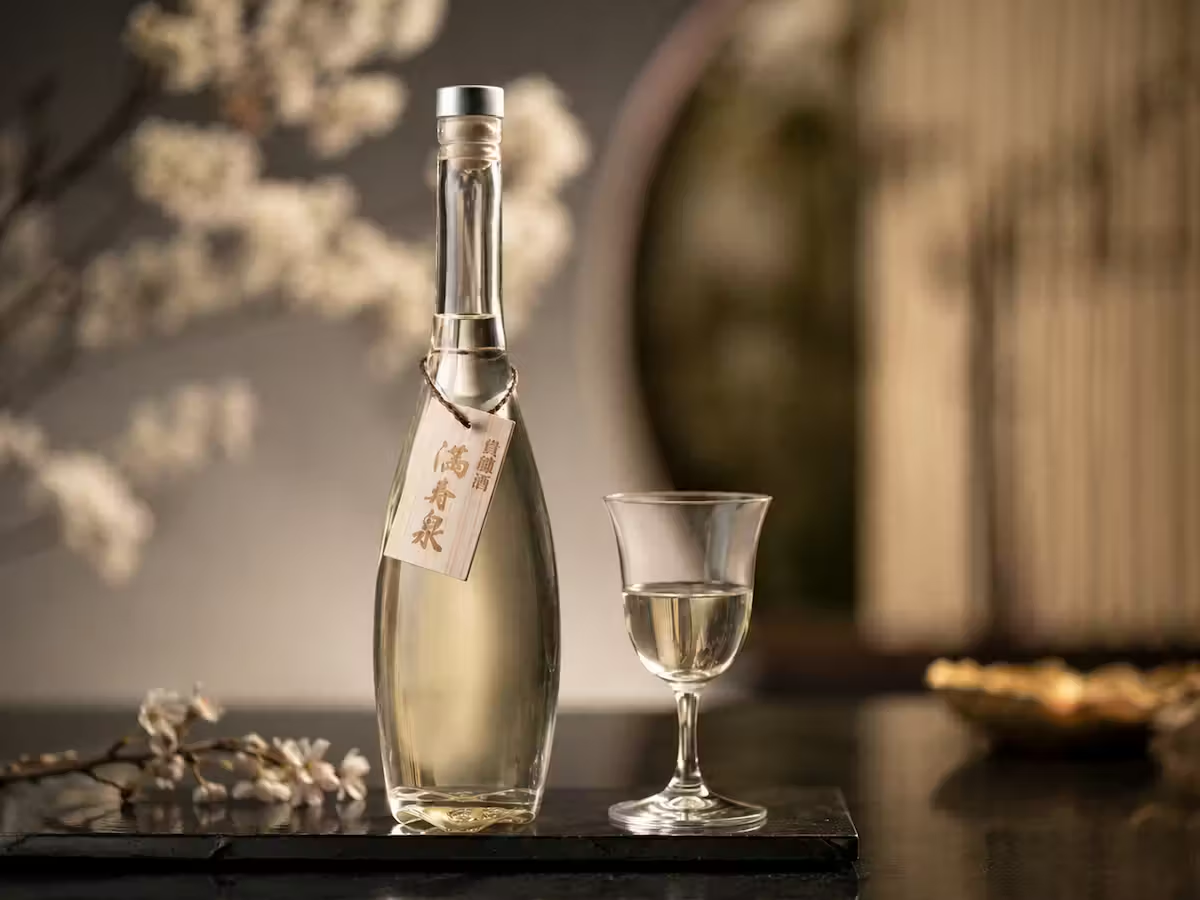
Kijoshu is a rare Japanese sake brewed by replacing part of the water with sake during fermentation, which creates a naturally sweet, rich, and luxurious flavor. That single difference changes everything. The result is a smooth, deep, and elegant sake unlike most standard styles.
This is not a typical meal sake. Instead, kijoshu sits closer to a dessert wine-like experience. It feels calm, layered, and meant for slow drinking. If you expect something light and dry, it may surprise you. If you enjoy sweet drinks, it may feel immediately familiar.
What Is Kijoshu?
Kijoshu is a Japanese sake style defined by its brewing technique. During fermentation, brewers use sake instead of part of the water. This slows the fermentation process and leaves more residual sugar in the final liquid.
So, what is kijoshu in Japanese sake terms? It is a specialty sake known for its sweet and rich sake profile, smooth mouthfeel, and layered complexity. Compared with regular sake, it feels denser and more concentrated.
Unlike most Japanese sake, which aims for balance and versatility, this style leans into richness and depth. Because of that, many people treat it as a premium Japanese drink or an after-dinner experience rather than a daily table sake.
For a broader context, see the Japanese sake guide.
Why Kijoshu Tastes Sweet
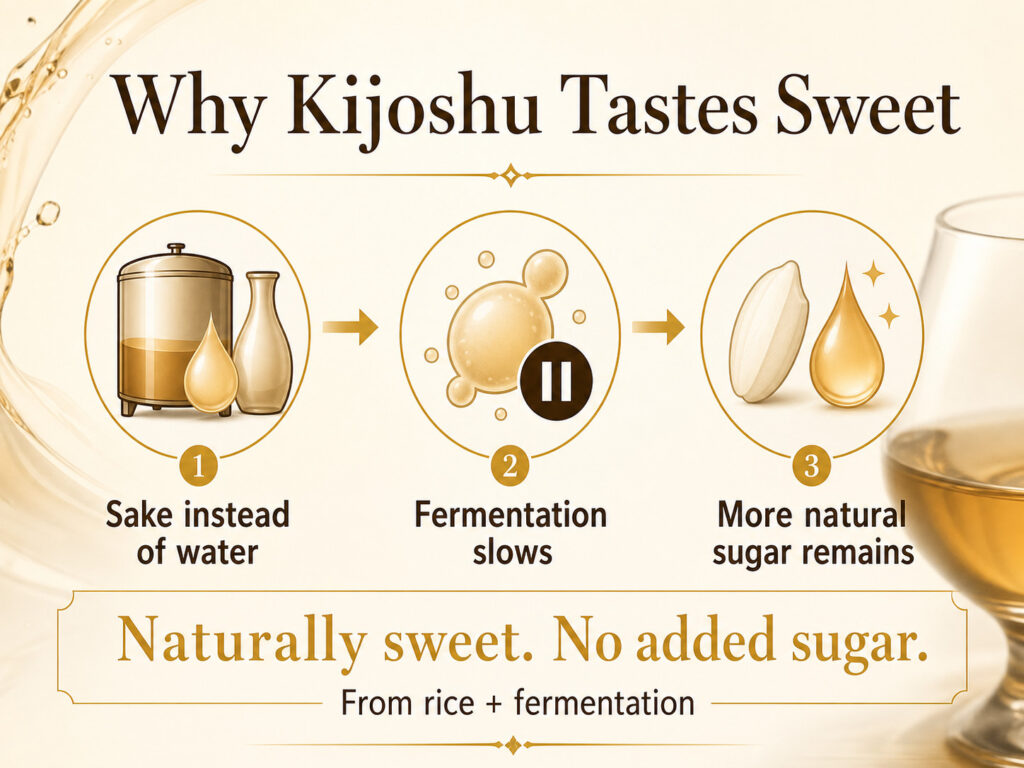
The sweetness in kijoshu comes directly from the brewing process. When brewers add sake instead of water, fermentation slows down because alcohol already exists in the mixture. Yeast activity becomes more limited.
As a result, sugar conversion remains incomplete. That means more natural sweetness stays in the liquid. There is no added sugar. Everything comes from rice and fermentation.
This explains why kijoshu feels different from artificially sweet drinks. The sweetness feels integrated, not separate. It connects naturally with the structure of the sake.
In simple terms, the method creates a naturally sweet sake by controlling fermentation speed.
What Does Kijoshu Taste Like?
Kijoshu flavor and aroma often feel rich, mellow, and elegant. You may notice honey, dried fruit, caramel, or even subtle chocolate notes. At the same time, the texture is smooth rather than syrupy.
That contrast matters. It is rich, but not heavy. The sweetness is present, but controlled. Some bottles feel slightly thick, while others remain lighter and more fluid.
Chilled serving tightens the flavor and highlights clarity. At warmer temperature, deeper notes come forward. The experience shifts depending on how you serve it.
From personal experience, the first sip can feel quiet. Then the layers build slowly. It is not aggressive. It stays gentle but persistent.
Many people compare it to dessert wine. That comparison makes sense, but kijoshu still keeps a distinct sake identity.
What Makes Kijoshu Different from Other Sweet Sakes?
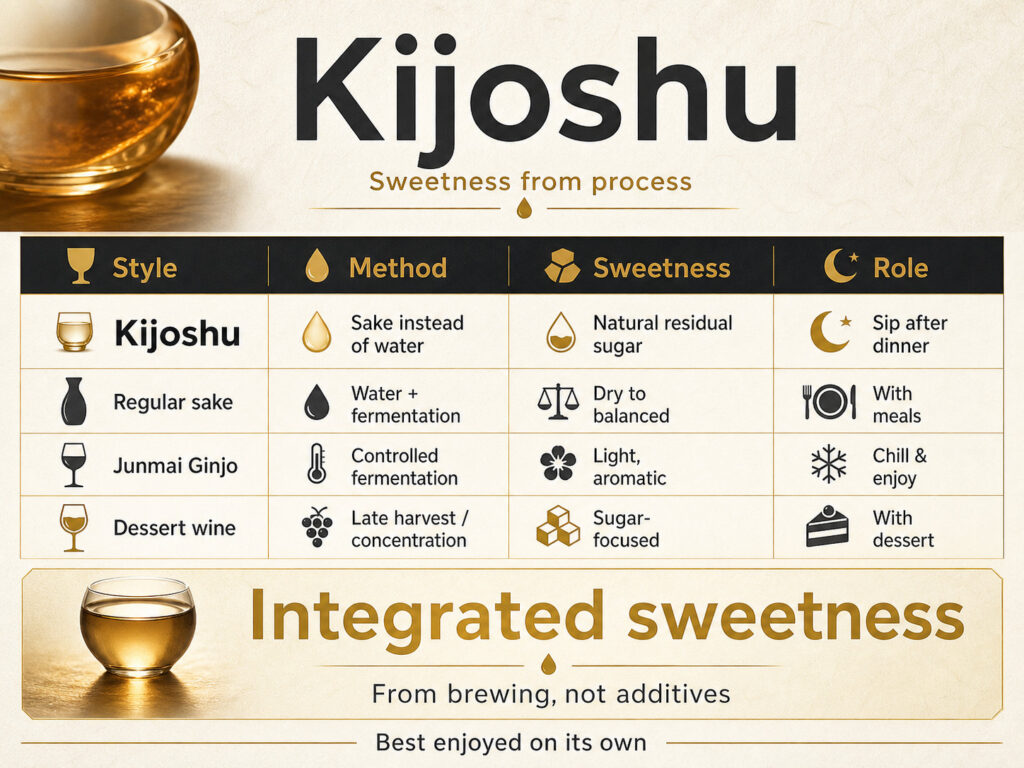
This is where kijoshu becomes easier to understand. Not all sweet sake follows the same idea.
| Style | Method | Sweetness Style | Role |
|---|---|---|---|
| Kijoshu | Uses sake instead of water | Natural residual sugar | Sipping / after dinner |
| Regular sake | Water + fermentation | Balanced or dry | Meal pairing |
| Junmai Ginjo | Controlled fermentation | Light and aromatic | Drinking chilled |
| Dessert wine | Late harvest or concentration | Sugar-focused sweetness | Dessert pairing |
Kijoshu differs because its sweetness comes from process, not concentration or additives. That creates a more integrated flavor.
Another important point is usage. Regular sake works with meals. Kijoshu works after meals or alone. It behaves more like a sipping sake than a table drink.
How Kijoshu Is Made
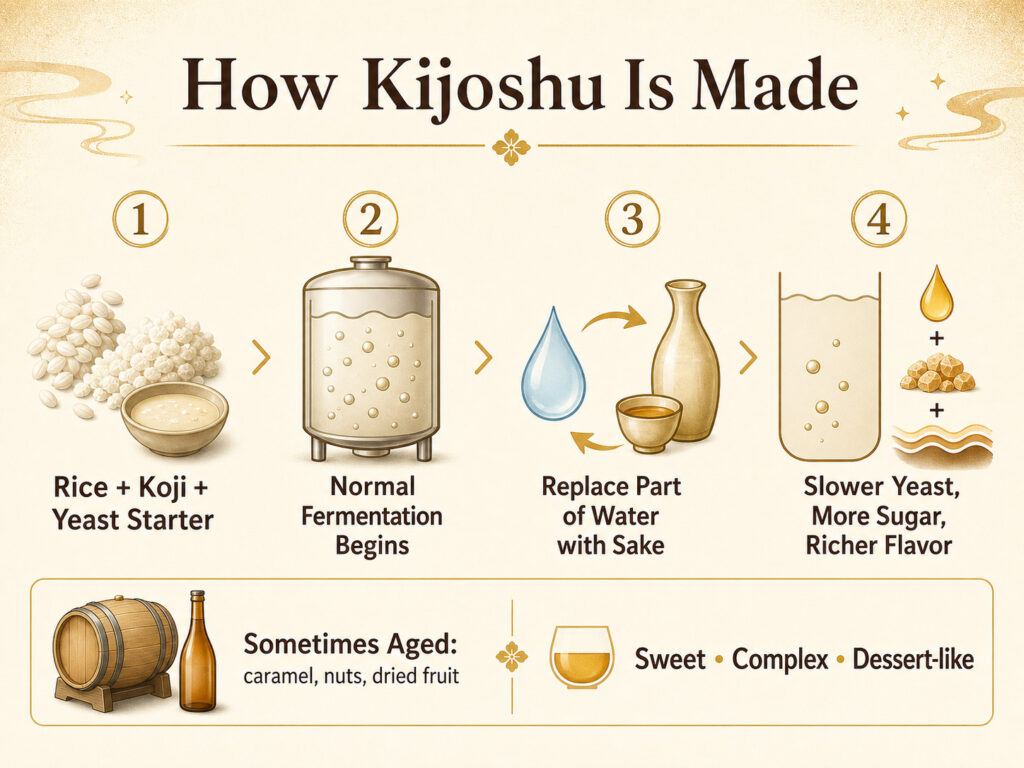
The brewing method starts like standard Japanese sake. Brewers prepare rice, koji mold, and yeast starter. Fermentation begins normally.
At a key stage, they replace part of the brewing water with sake. This change increases alcohol presence early in fermentation. Yeast activity slows as a result.
This slower fermentation keeps more sugar in the liquid. It also creates a deeper flavor structure. The balance between sweetness and alcohol becomes more complex.
Some producers also age kijoshu after brewing. Aging adds notes like caramel, nuts, or dried fruit. This gives the drink an aged sake flavor similar to certain dessert wines.
For more brewing details, see how sake is made.
What Is the History Behind Kijoshu?
Modern kijoshu developed in the late 20th century. Brewers intentionally created this category as an experimental sake style.
However, the idea itself is not entirely new. Historical techniques in East Asia included variations where alcohol appeared during early fermentation. Kijoshu quietly echoes those older concepts.
So the structure is modern, but the inspiration is older. That balance makes the style feel both innovative and traditional.
Today, it remains a rare sake category. Only a limited number of breweries produce it regularly. That rarity helps maintain its premium image.
How Should You Drink Kijoshu?
Kijoshu works best in a slow, quiet setting. It suits the end of a meal rather than the beginning.
After dinner is the ideal moment. Pour a small amount, then let it open gradually. There is no need to rush.
A wine glass works well because it allows aroma to spread. Small pours are better than large servings. The flavor is concentrated, so a little goes far.
It pairs nicely with desserts like chocolate, cheesecake, or fruit tarts. It also works with cheese or dried fruit. Still, drinking it alone can feel just as complete.
If I had to choose one image, it would be a calm evening, not a busy dinner table.
Is Kijoshu Good for Beginners?
Kijoshu can be a good starting point, but it depends on expectations.
If you enjoy sweet drinks, dessert wines, or liqueurs, this style feels approachable. The smooth mouthfeel and natural sweetness make it easy to understand.
However, people who prefer dry sake might find it heavy at first. The richness stands out immediately. It is not subtle in that sense.
Trying a small portion is the best approach. A full glass may feel too much if you are new. A few sips, taken slowly, give a better impression.
So, it works for beginners, but not in every situation. Context matters.
Why Kijoshu Stands Out
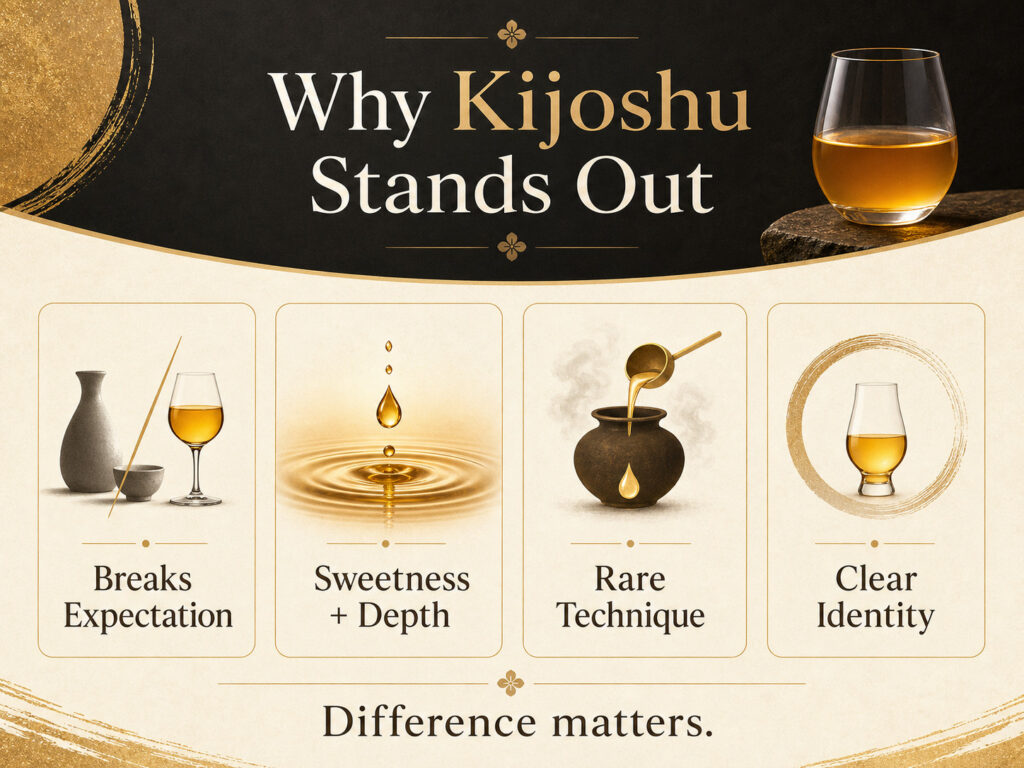
Kijoshu stands out because it breaks expectation. Most people associate Japanese sake with dryness or balance. This style shows something different.
It highlights sweetness, depth, and texture without losing structure. The technique also makes it unique. Very few alcoholic drinks use the same approach.
It does not try to be versatile. Instead, it focuses on a specific experience. That clarity gives it identity.
In a world of similar products, that difference matters more than ever.
Final Thoughts
Kijoshu is a rare and luxurious sake that offers something entirely different from standard Japanese sake. By replacing water with sake, brewers create a drink that feels rich, smooth, and quietly complex.
It is not meant for everyday drinking. Instead, it suits slow moments and small pours. That limitation is part of its appeal.
Once you understand it, the experience becomes clear. It is less about quantity and more about depth.
Densuke Watermelon FAQ
What is Densuke Watermelon?
It represents a world-famous, premium luxury fruit from Japan. Farmers grow these large, round melons with a distinctive pitch-black rind and no stripes. Food lovers prize them for their incredible crispness, thick flesh, and exceptionally high sugar content.
Where does Densuke Watermelon come from?
This black-skinned fruit originates from Toma Town in Hokkaido, Japan’s northern island. Local farmers developed the brand in 1984 as an alternative crop to support their local agricultural economy. Today, only a limited number of certified growers in this specific region cultivate these premium plants.
What does Densuke Watermelon taste like?
It delivers a remarkably sweet, clean, and refreshing flavor. The deep red flesh feels extraordinarily crisp and crunchy with every single bite. Diners often compare its clean sweetness to premium berries rather than standard summer melons.
Why do people call this fruit Densuke?
The name pays tribute to a beloved 1960s Japanese comedic actor, Toshimitsu Omiya. Additionally, the word combines the Japanese kanji for “rice field” and “help”. Farmers planted the crop to rescue their paddies during agricultural rice reduction policies.
Where can I buy Densuke Watermelon in Japan?
You will find these exclusive melons at luxury department stores in major cities like Tokyo and Sapporo. High-end fruit parlors also serve seasonal slices during the peak summer months. You can also purchase them directly from local agricultural markets in Hokkaido.
How much does Densuke Watermelon cost?
A single premium fruit typically costs between 5,000 and 10,000 yen at standard retail. However, the historic first auction of the season in June regularly commands astronomical prices, sometimes reaching up to 750,000 yen. The rarity and extreme labor involved in growing each unit justify this luxury pricing.
Is Densuke Watermelon vegetarian or vegan friendly?
This natural crop contains absolutely no animal products. Vegans and vegetarians can safely enjoy this 100% plant-based summer luxury anywhere without any worries.
Can I eat Densuke Watermelon at home?
Yes, you can easily enjoy it at home if you purchase a whole fruit or a sliced portion. Many online farms and high-end department stores ship these carefully packed boxes directly to your doorstep. Home cooks simply chill the fruit and slice it into thick wedges for an unforgettable summer treat.
What is the difference between Densuke Watermelon and regular watermelon?
The main difference involves the outer appearance and the internal texture. This premium variety features a solid, glossy black rind instead of green stripes and offers much higher sweetness with a distinctively crispy crunch.
Is Densuke Watermelon popular outside Japan?
It enjoys massive popularity as a luxury status symbol outside Japan, especially among wealthy buyers in Asia. You will occasionally find these rare fruits at high-end markets in international metropolises. Food lovers worldwide view it as the ultimate masterpiece of luxury agriculture.
References
- Food in Japan – Sake Guide
https://www.foodinjapan.org/japan/sake/
checked in 2026 - Food in Japan – How Sake Is Made
https://www.foodinjapan.org/japan/how-sake-is-made/
checked in 2026 - Japan Sake and Shochu Makers Association
https://japansake.or.jp/sake/en/
checked in 2026




Comments