


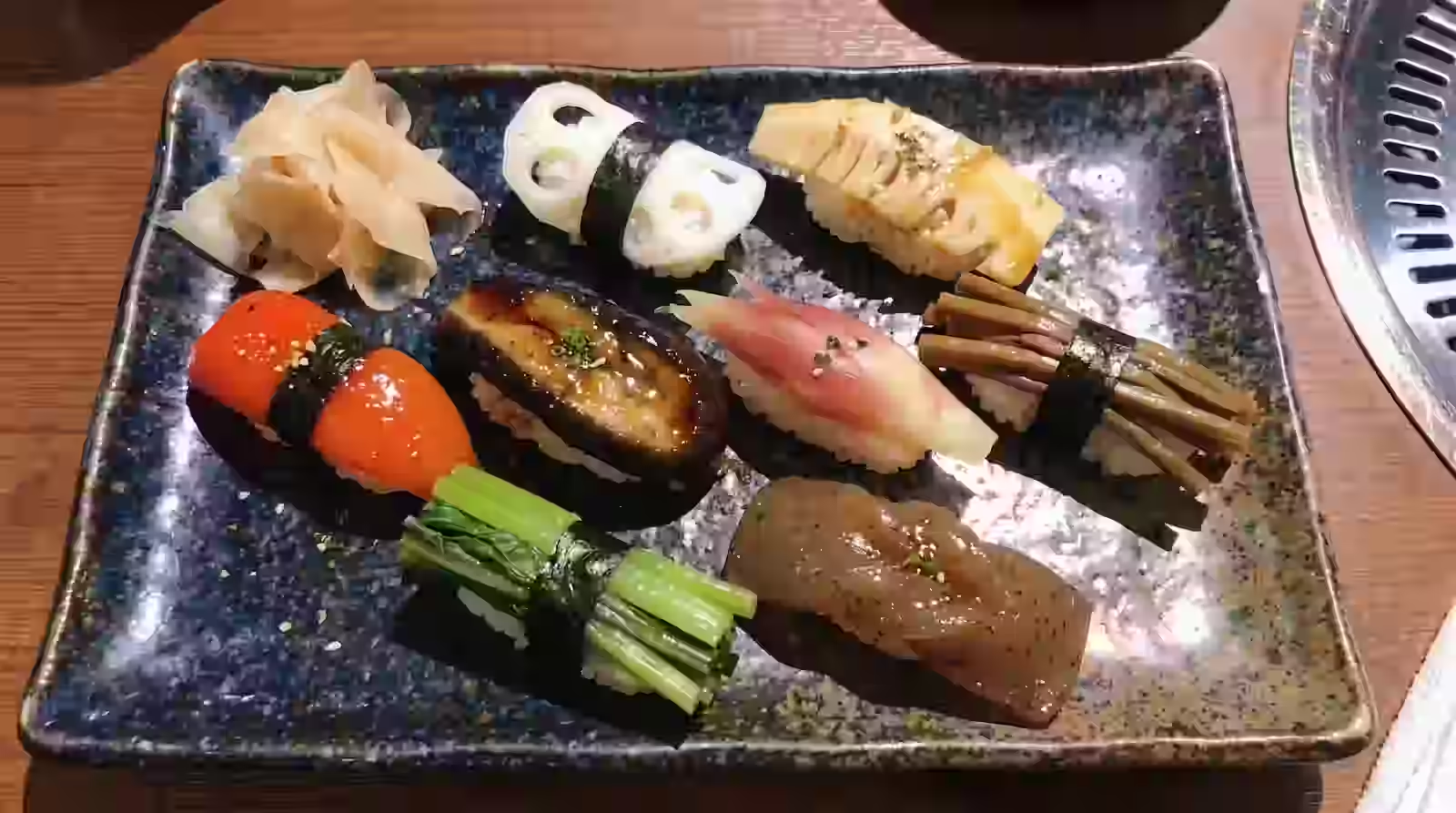

At Kochi’s Sunday Market, packs of local sushi may look nothing like the nigiri you know. Pink buds, green stalks, and dark mushrooms replace the seafood that many visitors expect. This is Tosa Inaka Sushi (土佐田舎寿司), the mountain-vegetable sushi of Kochi Prefecture.
Japan’s agriculture ministry spells the name Tosa Inakazushi. Cooks season the rice with yuzu and top it with vegetables from the hills. So what are those toppings, and is the dish really vegan? This guide covers the ingredients, taste, history, and where to buy it.
What Is Tosa Inaka Sushi?
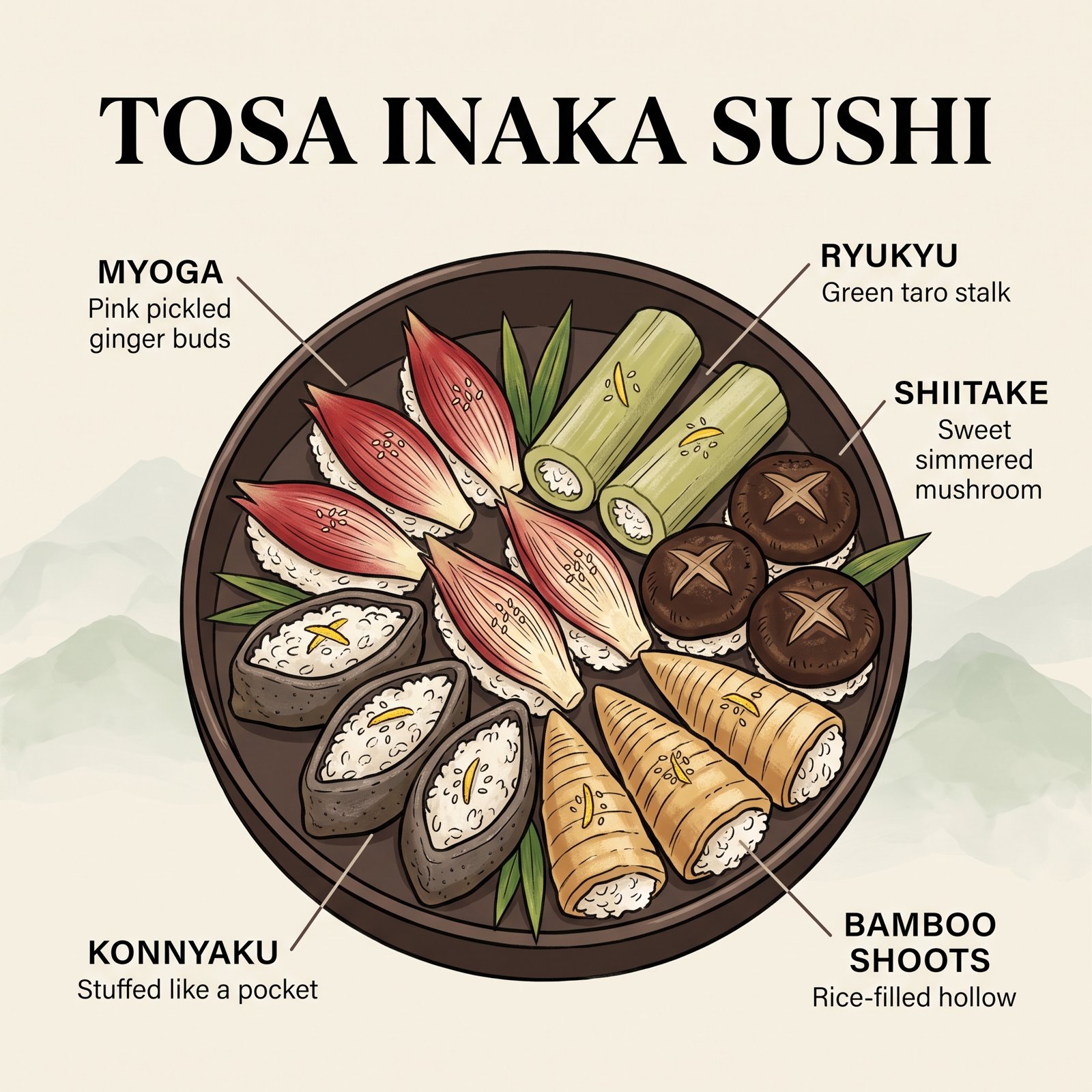
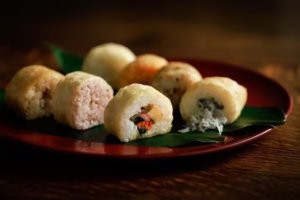
Tosa Inaka Sushi is a regional sushi tradition from Kochi Prefecture on Shikoku. It uses seasoned mountain vegetables and wild plants instead of raw fish. Typical toppings include myoga, bamboo shoots, shiitake, konnyaku, and ryukyu. In addition, yuzu juice flavors the rice, so each piece tastes bright and citrusy.
Quick Facts
- Japanese name
- 土佐田舎寿司 (Tosa inaka-zushi)
- Official English spelling
- Tosa Inakazushi (MAFF)
- Region
- Kochi Prefecture, Shikoku, especially mountain areas
- Main toppings
- Myoga, ryukyu, shiitake, konnyaku, bamboo shoots
- Rice seasoning
- Rice vinegar, yuzu juice, sugar, salt, ginger, sesame
- Shapes
- Nigiri, stuffed, and pressed
- Soy sauce
- Usually none. The pieces are already seasoned.
- Diet note
- Toppings are plant-based, but the simmering broth may contain fish dashi
Meaning of the Name and Its Spellings
Inaka means countryside, and Tosa is the old provincial name for Kochi. Put together, the name reads as “countryside sushi of Tosa.” You will also see Tosa Inakazushi, inaka-zushi, and inaka zushi. They all point to the same dish, because “sushi” often becomes “zushi” after another word in Japanese.
How It Differs from Regular Nigiri Sushi
Most visitors picture sushi as a slice of fish on rice. Here, however, the kitchen swaps the sea for the hillside. The shapes vary too. Some pieces are hand-pressed nigiri, while others are stuffed or pressed into bars.
| Tosa Inaka Sushi | Typical nigiri sushi | |
|---|---|---|
| Topping | Pickled or simmered vegetables | Mostly raw or cured seafood |
| Rice seasoning | Vinegar plus yuzu juice, ginger, and sesame | Vinegar, sugar, and salt |
| Shape | Nigiri, stuffed, or pressed | Hand-pressed |
| Soy sauce | Usually not needed | Common |
Main Tosa Inaka Sushi Ingredients
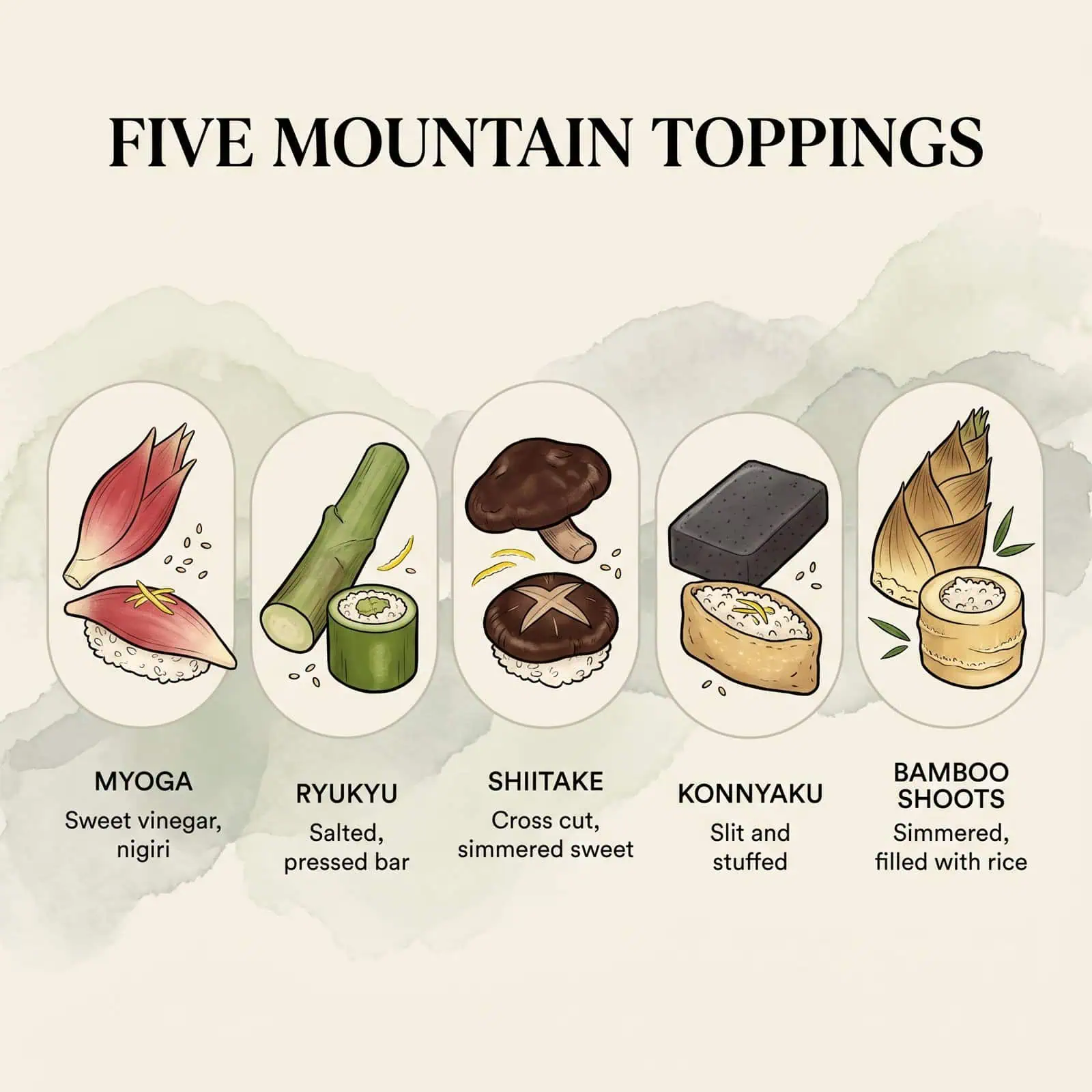
Five toppings appear again and again. Still, no single recipe exists, and MAFF’s recipe page notes that methods vary by area and household. The table below follows the method that Japan’s Ministry of Agriculture, Forestry and Fisheries (MAFF) publishes.
| Topping | What it is | Preparation | Shape |
|---|---|---|---|
| Myoga (みょうが) | Japanese ginger buds | Blanched, salted, then soaked in sweet vinegar | Nigiri |
| Ryukyu (りゅうきゅう) | Stalks of hasuimo, a type of taro | Peeled, salted, then soaked in sweet vinegar | Pressed bar |
| Shiitake (しいたけ) | Dried or fresh mushrooms | Scored with a cross and simmered sweet | Round nigiri |
| Konnyaku (こんにゃく) | Firm konjac jelly | Boiled, slit, and simmered sweet and savory | Stuffed like a pocket |
| Bamboo shoots (たけのこ) | Several kinds, including shihouchiku | Simmered in seasoned broth and rested overnight | Hollow packed with rice |
Ryukyu Does Not Mean Okinawan Cuisine Here
The word confuses many readers, and fairly so. Ryukyu is also the historic name of Okinawa. In Kochi, though, it means the leaf stalk of hasuimo, a type of taro. MAFF notes that the plant is said to have reached Shikoku from Okinawa, which explains the name. Cooks peel it, salt it to draw out bitterness, and pickle it in sweet vinegar. Then they press it onto rice with a bamboo mat.
Myoga, Bamboo Shoots, and Other Toppings
Myoga is better known as one of Japan’s yakumi garnishes. Sweet vinegar turns it a vivid pink, one of the colors that gives the platter its look. Bamboo shoots work differently, since the cook fills their natural hollow with rice. Konnyaku, meanwhile, holds rice in a slit, much like inari sushi.
The list does not stop at five. MAFF also mentions salted itadori, a wild knotweed shoot. A local women’s group in Tsuno adds bracken, a leafy green called ona, and Chinese cabbage. In other words, the dish follows whatever grows nearby.
Yuzu Juice in the Sushi Rice
English menus, and even MAFF’s English page, say “yuzu vinegar.” That phrase can mislead, though. In this Kochi cooking context, yuzu-su often refers to freshly squeezed yuzu juice used as a souring agent, not a brewed vinegar. The published recipe combines it with ordinary vinegar, sugar, and salt. After that, chopped ginger and toasted sesame go into the rice.
Why yuzu? Kochi’s culture magazine Tosabushi notes that the prefecture leads Japan in yuzu production. It also describes a wider family of sour citrus, called su-mikan, that households use through the seasons. Naoshichi and bushukan belong to it, although the sources link inaka sushi specifically to yuzu.
What Does Tosa Inaka Sushi Taste Like?
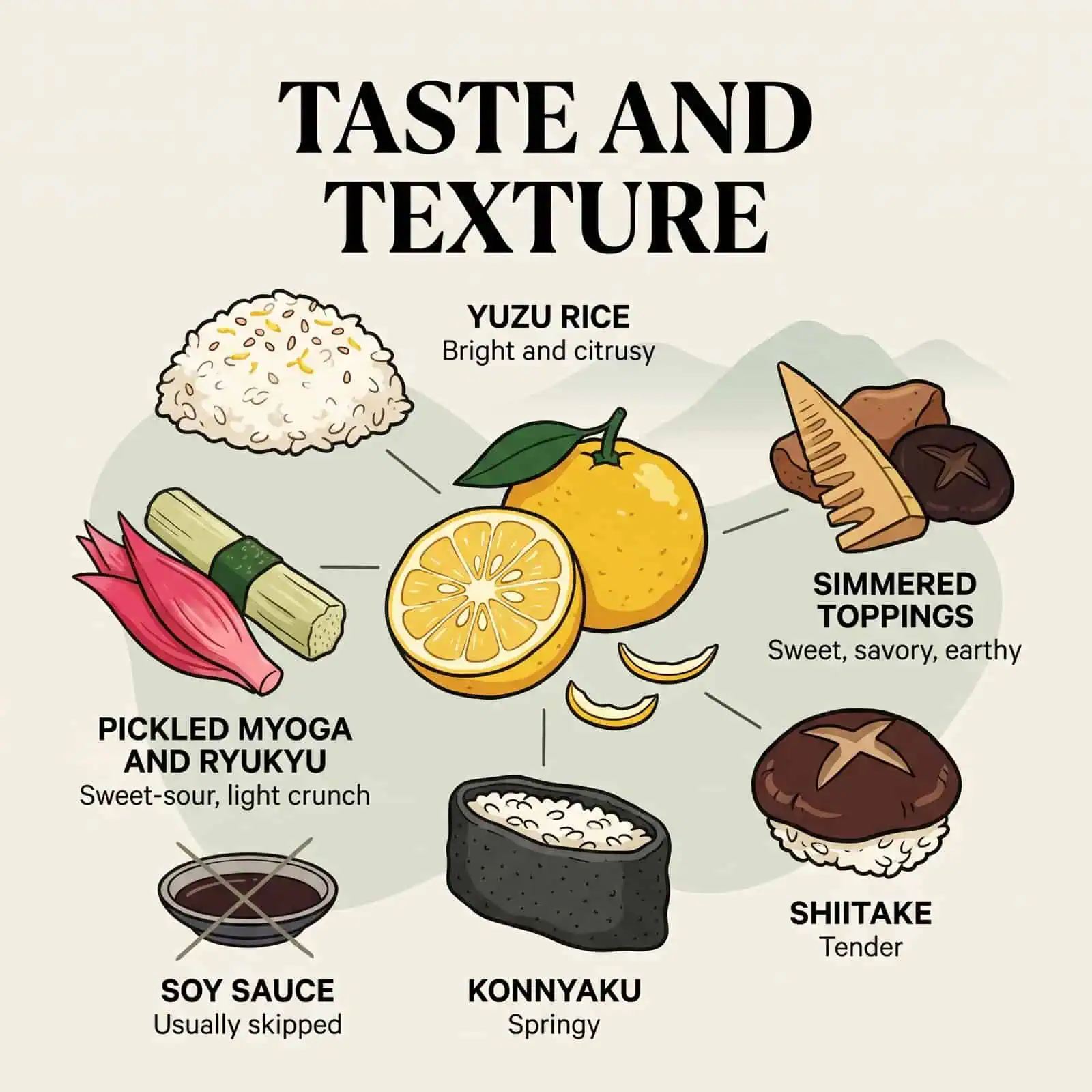
MAFF describes the flavor as refreshing and rustic, and it credits the yuzu in the rice for that lift. Then the toppings split in two directions. Pickled myoga and ryukyu bring sweet-sour notes, while simmered shiitake and konnyaku lean sweet, savory, and earthy.
Texture is where the platter gets interesting. Depending on the preparation, myoga and ryukyu keep a light crunch. Shiitake turns tender, whereas konnyaku stays springy. Bamboo shoots sit somewhere between the two. Is it still sushi without fish? Yes, because sushi is defined by its seasoned rice, not by raw fish.
Where Does Tosa Inaka Sushi Come From?
Mountain Kitchens Far from the Sea
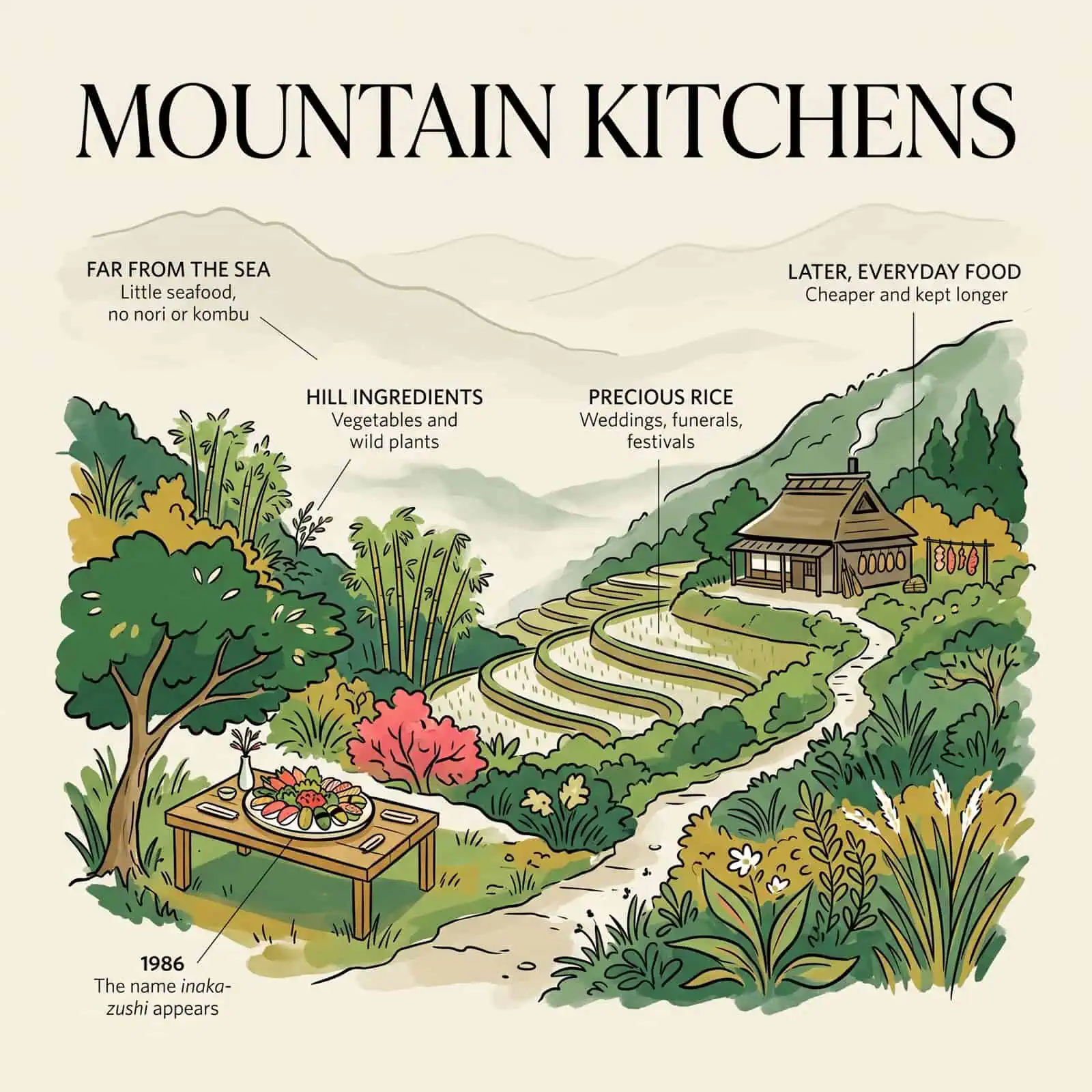
Kochi faces the Pacific, yet much of it is mountainous, with hills running close to the sea. According to MAFF, mountain communities once struggled to get seafood. Nori and kombu were hard to find too. So families turned to what the hills offered and built sushi around it.
Rice itself was precious then. For that reason, MAFF says, people ate this sushi mainly at weddings, funerals, festivals, and other events. Later it became everyday food, because it cost less and kept longer than sushi made with fish. Kochi City frames it a little differently. It describes inaka sushi as food for outings, valued for its seasonal colors, unlike the rolled and whole-fish sushi served at ceremonies.
How the Name Took Hold in 1986
Here is a detail many articles get wrong. Nobody invented the dish in 1986. People had long made these pieces. They named each one by its topping, such as “myoga sushi.” What changed that year was the collective name.
- Before 1986Families name each piece by its topping.
- 1986A women’s group from Kubokawa, in today’s Tsuno, joins a national program. They assemble several local kinds on one plate and submit it to a national selection of 100 hometown onigiri, or rice-ball dishes. The name they give it is inaka-zushi.
- 1990The group joins a Kochi produce fair in Los Angeles.
- 2018Kochi Prefecture launches the Tosa Sushi Promotion Committee in May.
- 2026Kochi Prefecture schedules eight food heritage classes across six municipalities.
Tosabushi interviewed the women involved. By their account, the entry needed a name, and the plate held only mountain ingredients. “Inaka-zushi” was the casual answer. After the selection, the group shared its recipe. Within about a year, similar inaka-zushi had appeared across the prefecture.
What Older Records Do and Do Not Show
Can we call it an Edo-period dish? Not safely. Tosabushi cites a samurai family diary from 1799 that records sushi on sawachi platters. However, one entry names horse mackerel sushi, and the other simply says “sushi.” Neither describes vegetable toppings. Kochi’s banquet sushi culture is therefore old, while the vegetable assortment got its name much later.
How Tosa Inaka Sushi Is Made
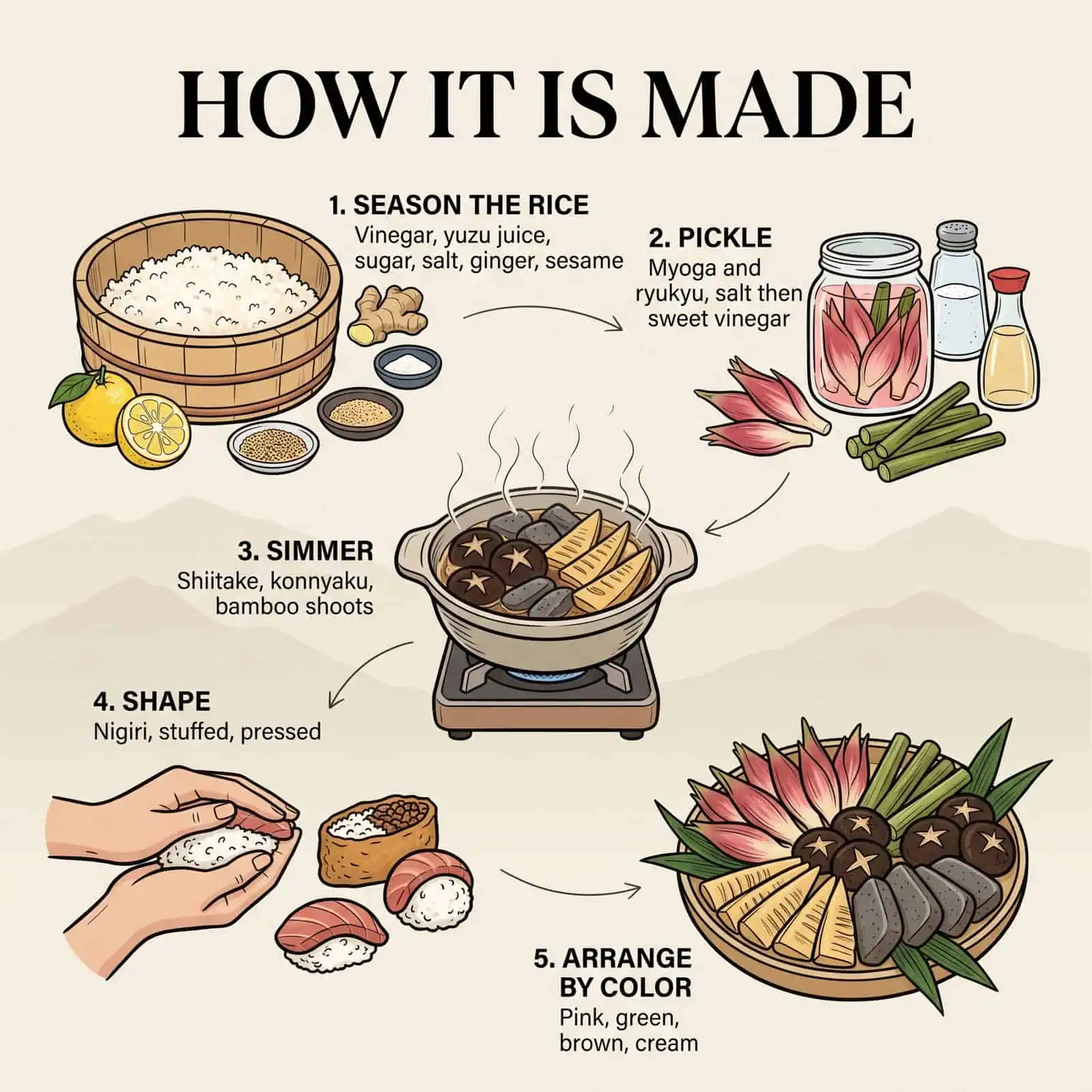
We have not tested a recipe ourselves, so this section only outlines the traditional steps. MAFF publishes a full recipe from a Kochi food heritage group. It also warns that every area and household does things differently.
- Season the rice. Cooks fold rice vinegar, yuzu juice, sugar, salt, and ginger into hot rice. Sesame goes in last.
- Pickle the fresh toppings. Myoga and ryukyu get salt first, then a bath in sweet vinegar.
- Simmer the rest. Shiitake, konnyaku, and bamboo shoots cook in a sweet, soy-seasoned broth.
- Shape each piece. Some become nigiri. Others are stuffed, and ryukyu is pressed into a bar and sliced.
- Arrange by color. Finally, the cook sets pink, green, brown, and cream side by side.
Much of this is preservation work. Salted bamboo shoots keep for the whole year, and pickled myoga lasts as well. Similar thinking runs through Japanese pickles (tsukemono).
Is Tosa Inaka Sushi Vegan or Vegetarian?
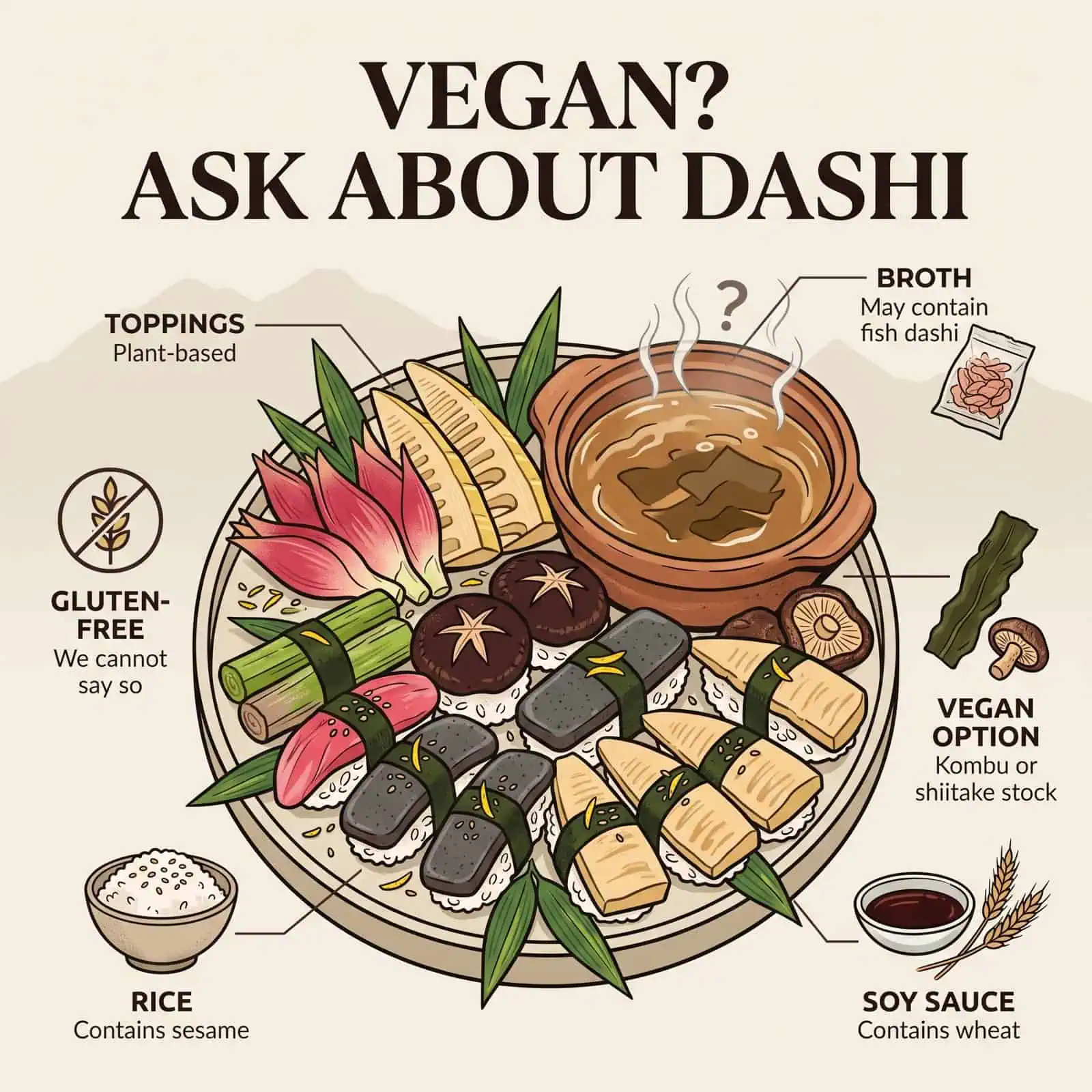
Often close, but not automatically. MAFF describes the dish as free of fish, meat, and egg. It also mentions new products aimed at vegan diners. That sounds simple. The catch, however, hides in the broth.
Why You Should Ask About the Dashi
The published recipe simmers several toppings in dashi. It does not say which kind. Because many Japanese kitchens use bonito flakes, a fish-based stock is possible. The dish can be vegan when the cook uses kombu or shiitake stock. So ask the seller before you buy.
Planning a plant-based trip? Our guide to vegan sushi in Japan lists more options beyond Kochi.
Okyaku Banquets and Sawachi Platters
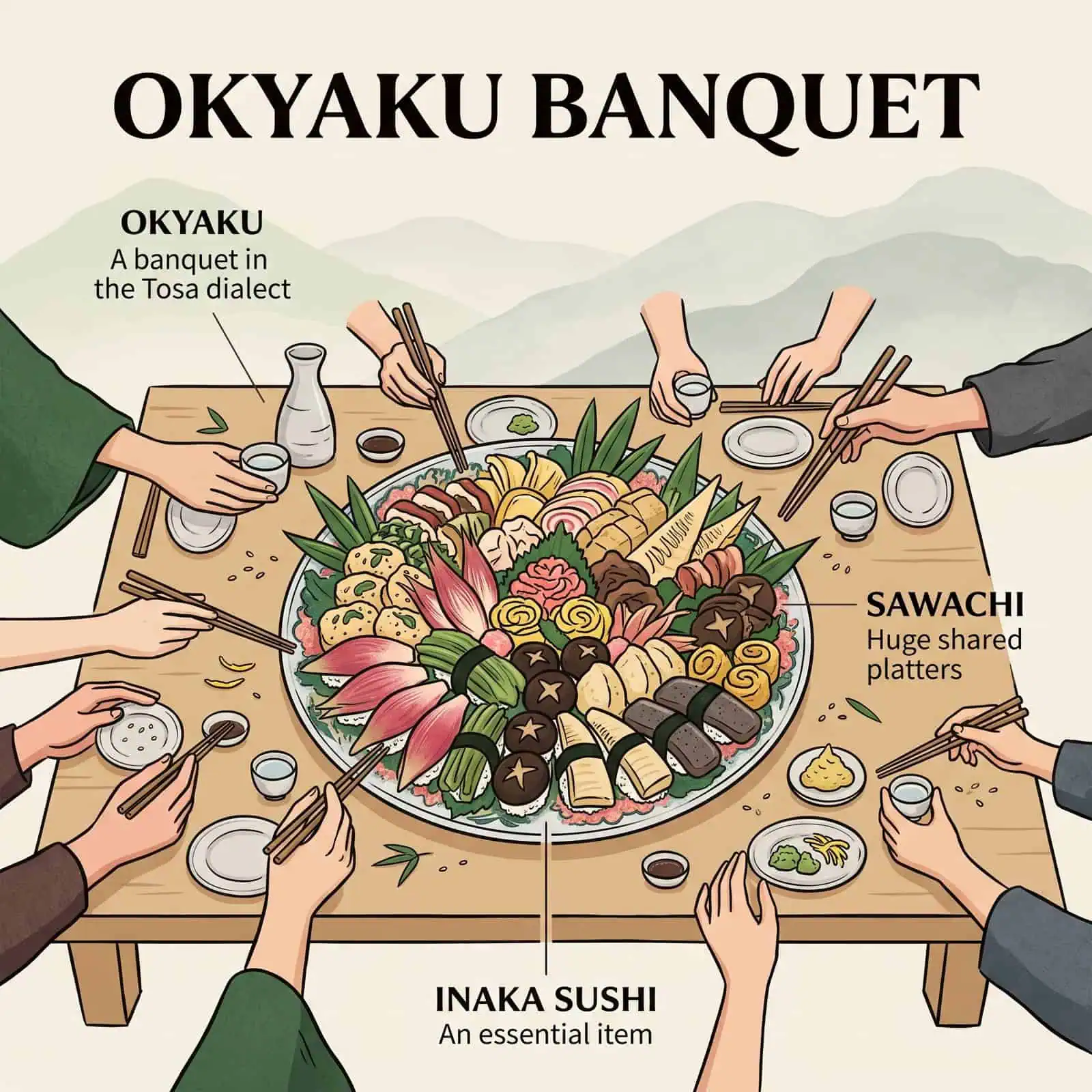
In the Tosa dialect, okyaku means a banquet. Hosts serve food on sawachi, which are huge shared platters. MAFF calls inaka sushi an essential item on these platters. Another Kochi classic is Katsuo no Tataki, Kochi’s seared bonito.
Kochi has other celebration sushi as well. Kokera Sushi, for instance, is a layered pressed sushi. For a wider view, see our roundup of unique local sushi styles across Japan.
Where to Eat Tosa Inaka Sushi in Kochi
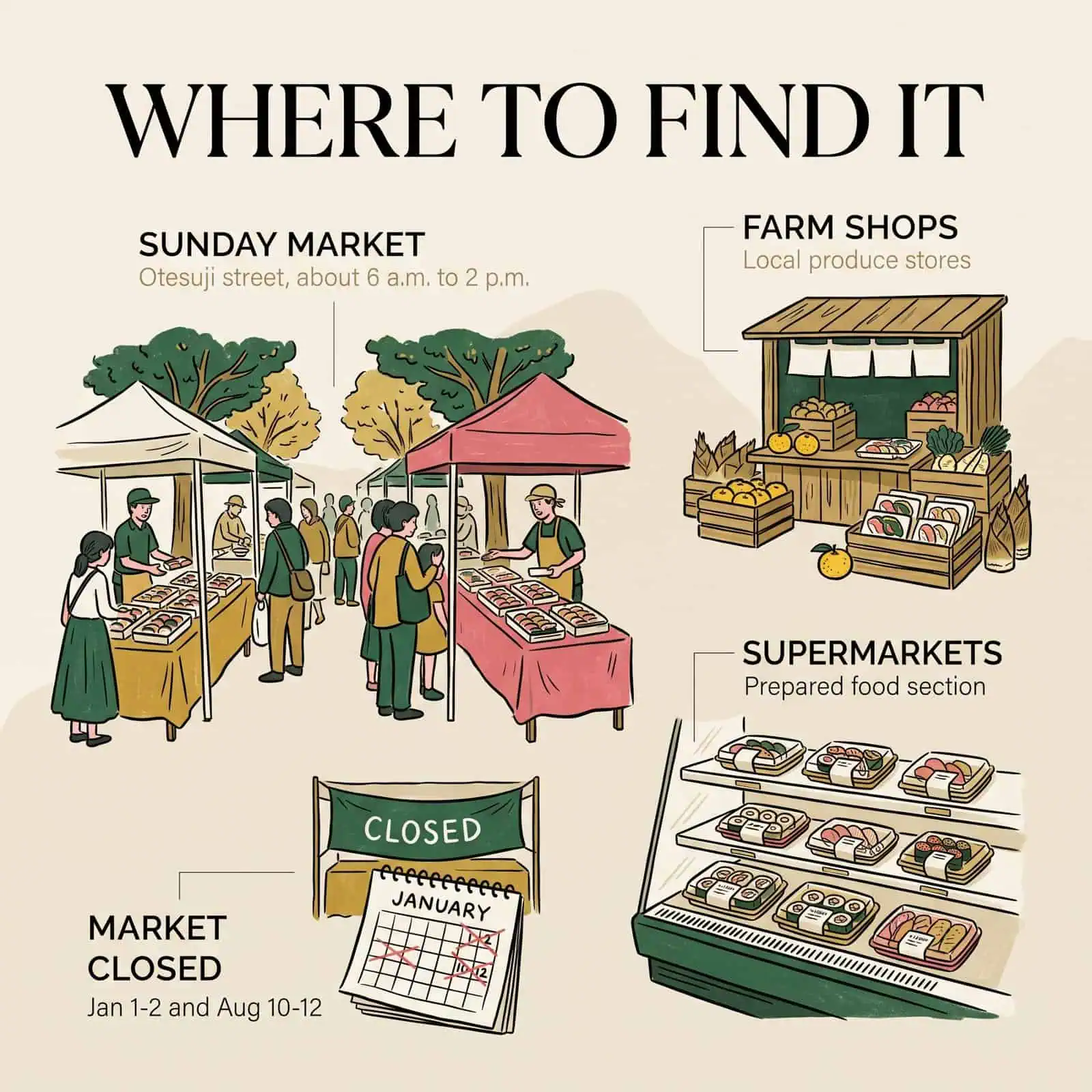
Finding it is fairly easy. According to Kochi City, it is regularly sold at street markets, farm shops, and supermarkets. MAFF adds restaurants and tourist spots to that list. We name no individual restaurants here, because we could not confirm current menus.
- Kochi Sunday Market: Stalls line Otesuji street every Sunday, from about 6:00 a.m. to 2:00 p.m., including setup and cleanup. The market closes on January 1 and 2 and from August 10 to 12.
- Farm shops: Direct-sales shops for local produce often stock it too.
- Supermarkets: Look in the prepared food section.
Tips for Checking Availability
Stalls open from about 6:00 a.m., so an early visit gives you the most time to browse. Please check the official Sunday Market page before your visit, in case of temporary changes. We last checked these details in October 2026.
Toppings change through the year too. Fresh bamboo shoots and myoga have their own seasons, although preserved versions fill the gaps. If one topping is missing, that is normal. More regional dishes wait on our Kochi food page.
Summary
Tosa Inaka Sushi is Kochi’s colorful mountain-vegetable sushi. It developed partly as a response to limited seafood in mountain communities. Yuzu-seasoned rice carries toppings such as myoga, shiitake, bamboo shoots, konnyaku, and ryukyu. People usually eat it without soy sauce, and markets, farm shops, and supermarkets sell it. The toppings are plant-based. Even so, vegan travelers should ask whether the cook used fish-based dashi.
Tosa Inaka Sushi FAQ
Basics and Ingredients
- What does “Inaka Sushi” mean?
-
Inaka means countryside or rural area in Japanese. The name points to the mountain ingredients on top of the rice. Tosa, the first word, is the old name for Kochi. A local women’s group chose the name in 1986.
- Why is Tosa Inaka Sushi made without fish?
-
Mountain villages in Kochi once had little access to seafood. So cooks used vegetables and wild plants from nearby hills instead. They pickled or simmered each one to add flavor. That habit turned into a regional style.
- What is ryukyu in Kochi cuisine?
-
It is the leaf stalk of hasuimo, a taro relative. In this context, the word does not refer to Okinawan cuisine. However, MAFF says the plant is thought to have come to Shikoku from Okinawa. Cooks peel, salt, and pickle the stalks in sweet vinegar, then press them onto rice as a green bar.
- Why do cooks add yuzu to the sushi rice?
-
Yuzu juice adds a fresh aroma and a sharp sourness to the rice. Kochi leads Japan in yuzu production, so it was close at hand. Cooks usually mix the juice with ordinary vinegar. MAFF’s recipe also advises adding more sugar when the share of yuzu rises.
Diet and Travel
- Is Tosa Inaka Sushi vegan?
-
The toppings are plant-based, but the dish is not automatically vegan. The vegetables may be simmered in fish-based dashi. It becomes vegan when kombu or shiitake stock replaces that broth. Therefore, confirm the stock and seasonings with the seller.
- Does Inaka Sushi contain raw fish?
-
The traditional vegetable assortment does not. Every topping is pickled or cooked first. However, mixed packs or banquet platters may include fish sushi alongside it. Check the label if you avoid seafood completely.
- Can you buy Tosa Inaka Sushi at Kochi Sunday Market?
-
Yes. Kochi City says street markets such as the Sunday Market sell it regularly. Farm shops and supermarkets carry it as well. The market runs from about 6:00 a.m. to 2:00 p.m.
References
- Ministry of Agriculture, Forestry and Fisheries (MAFF) – Tosa Inakazushi | Traditional Foods in Japan (Accessed October 2026)
- Ministry of Agriculture, Forestry and Fisheries (MAFF) – Tosa Inakazushi | Traditional Foods in Japan, English edition (Accessed October 2026)
- Ministry of Agriculture, Forestry and Fisheries (MAFF) – Inakazushi, Kochi Prefecture | Our Regional Cuisines (Accessed October 2026)
- Kochi City Tourism Information – Inaka Sushi (Accessed October 2026)
- Kochi City Tourism Information – Sunday Market (Accessed October 2026)
- Kochi Prefecture, Oishii Fudo Kochi – Kubokawa Seikatsu Kaizen Group (Accessed October 2026)
- Kochi Prefecture – About Tosa Sushi (Accessed October 2026)
- Kochi Prefecture – Tosa Food Culture Heritage Classes 2026 (Accessed October 2026)
- Tosabushi, Kochi Prefecture culture magazine – Feature: The Roots of Inaka-zushi (Accessed October 2026)
- Tosabushi, Kochi Prefecture culture magazine – Feature 4: Kochi’s Delicious “Su” (Accessed October 2026)
- J-STAGE, Journal of Cookery Science of Japan – 松﨑淳子 (2021), On Tosa Cuisine (土佐料理について), 54(5), 253-256 (Accessed October 2026)
Related Articles
- Katsuo no Tataki (鰹のたたき) (Surveyed: October 2026)
- Kokera Sushi (こけら寿司) (Surveyed: October 2026)
- Sushi (寿司) (Surveyed: October 2026)
- Inari Zushi (いなり寿司) (Surveyed: October 2026)
- Takenoko (たけのこ) (Surveyed: October 2026)
- Tsukemono (漬物) (Surveyed: October 2026)
- Vegan Sushi in Japan (Surveyed: October 2026)




Comments