



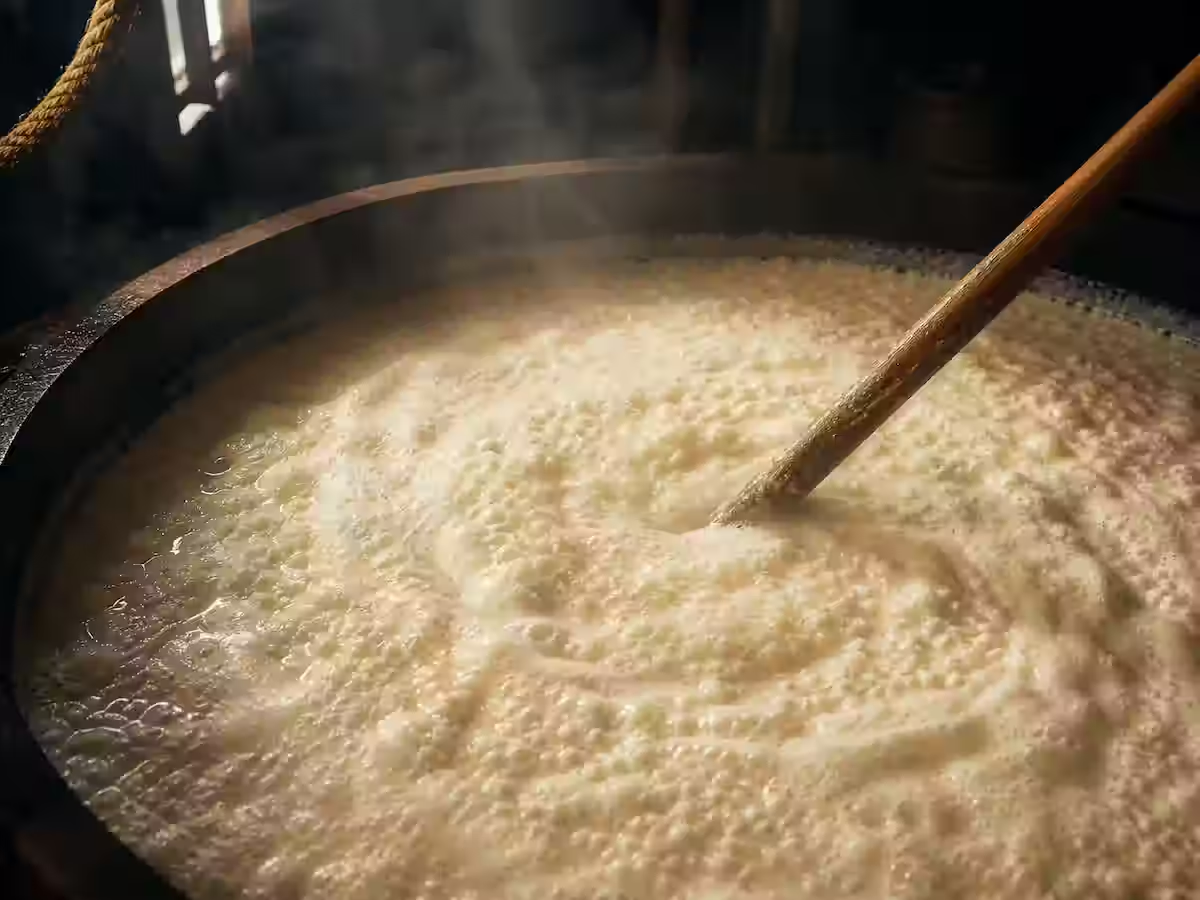
Sake truly takes shape in one bubbling tank. That tank holds the moromi. So what is moromi in sake brewing? Moromi, written 醪 in Japanese, is the main fermentation mash of sake. It is the thick mixture of steamed rice, koji, water, and yeast starter. There, sake undergoes its full-scale alcoholic fermentation. In simple terms, the moto prepares the yeast, while the moromi turns rice into sake.
Two ideas will guide this entire guide. First, the moto grows the yeast, while the moromi makes the sake. Second, the moromi is where multiple parallel fermentation runs at full scale. Keep both points in mind as we go deeper. For the wider process, see our guide on how sake is made. Let me walk you through this remarkable stage.
Quick Facts About Moromi
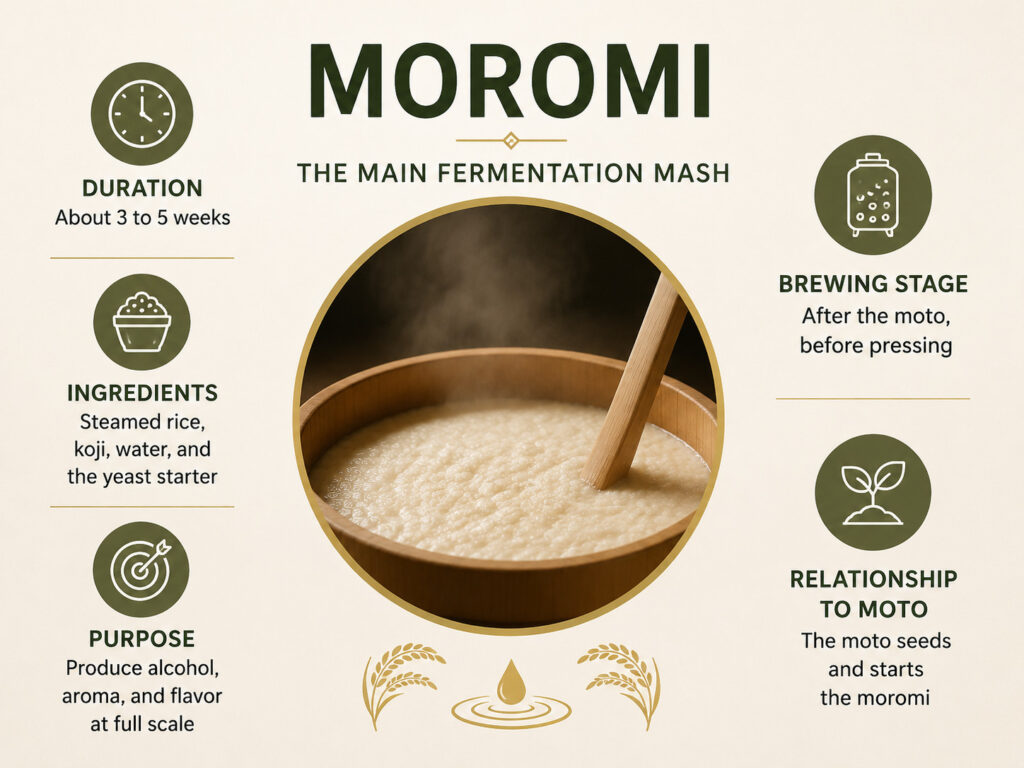
Here is a fast snapshot before the details begin.
| Japanese Name | 醪 / もろみ (moromi) |
| English Meaning | The main fermentation mash |
| Brewing Stage | After the moto, before pressing |
| Main Ingredients | Steamed rice, koji, water, and the yeast starter |
| Typical Duration | About 3 to 5 weeks |
| Purpose | Produce alcohol, aroma, and flavor at full scale |
| Relationship to Moto | The moto seeds and starts the moromi |
What Is Moromi?
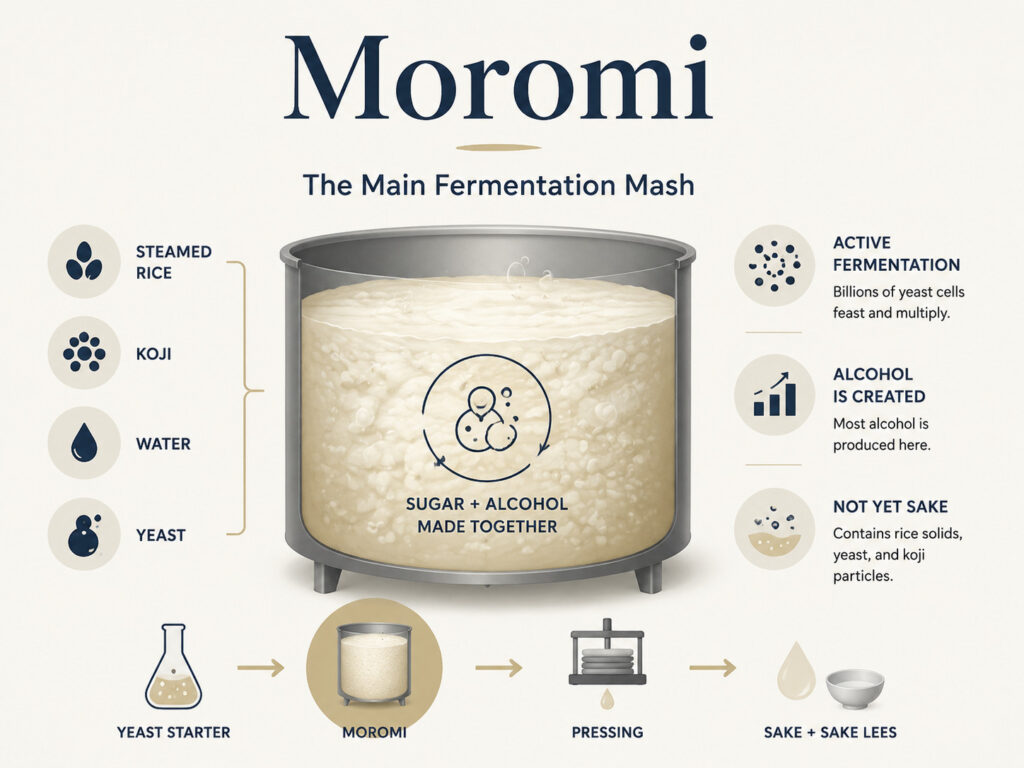
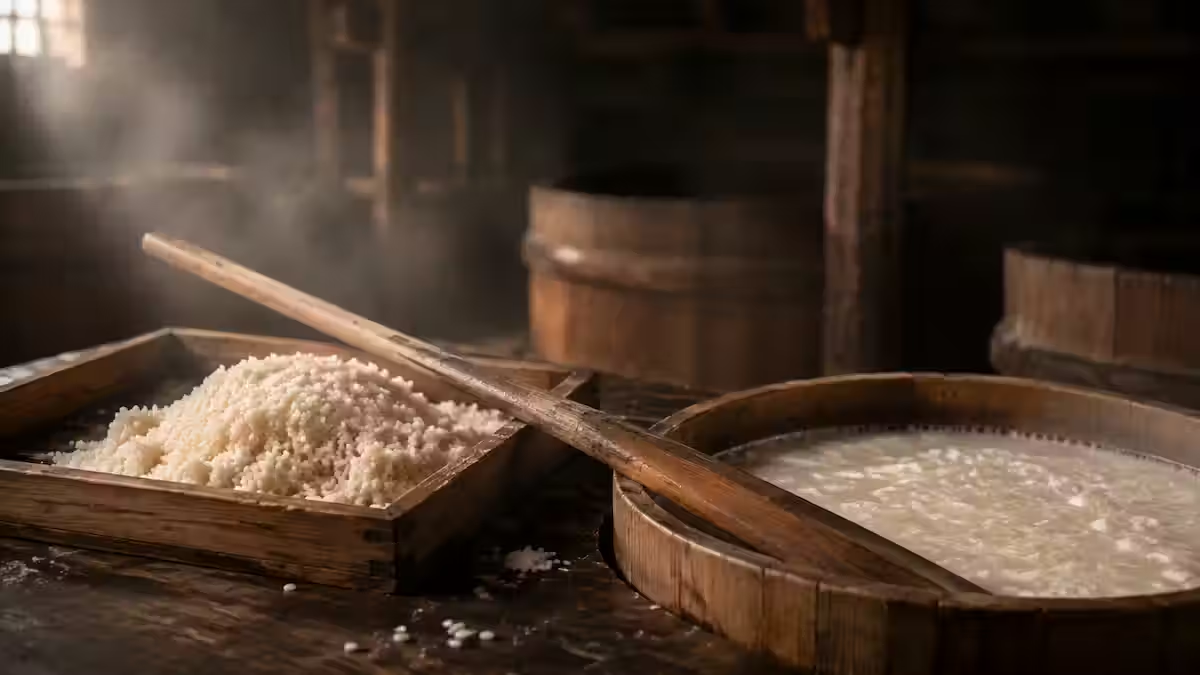
Moromi is the main fermenting mash of sake. It is a thick, soupy mixture inside a large tank. The mash contains steamed rice, koji, water, and yeast. Within it, sugar and alcohol form at the same time. So the moromi is a living, working system.
This stage is where most alcohol appears. The small yeast starter cannot do that alone. Instead, brewers scale it up into the moromi. There, billions of yeast cells feast and multiply. As a result, the mash slowly transforms into sake.
At this point, the liquid is not yet clear sake. Moromi still contains rice solids, yeast, and koji particles alongside the liquid. Only after pressing does it separate into sake and sake lees. So the moromi is a stage, not a finished drink.
The Difference Between Moto and Moromi
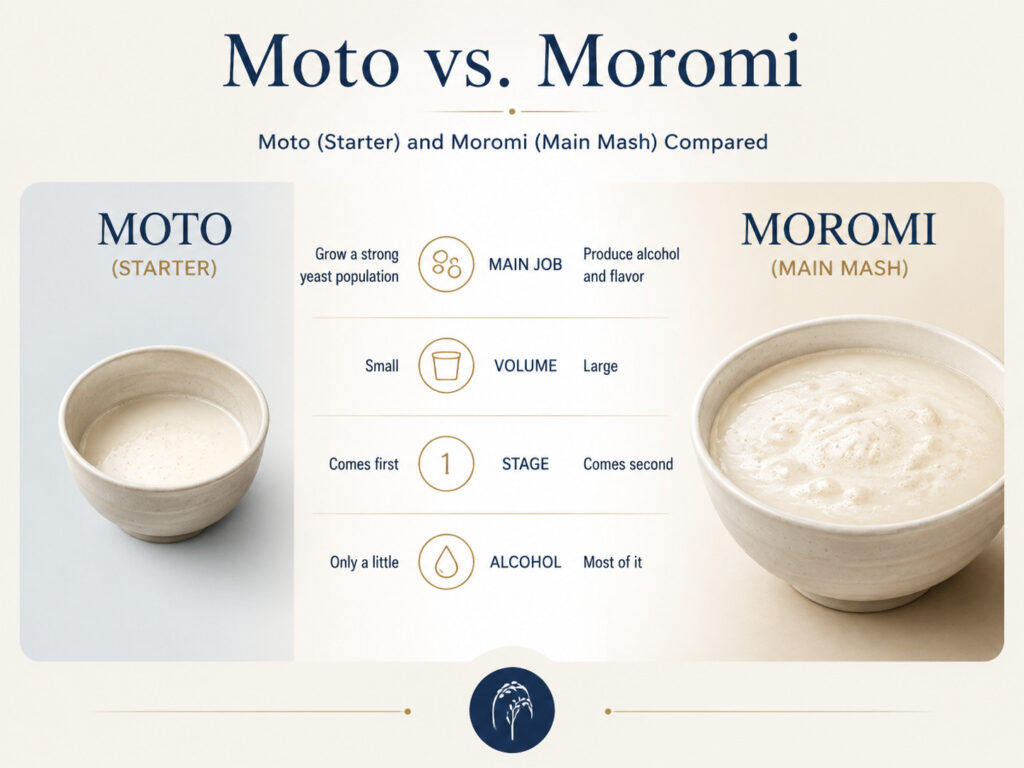
Many beginners confuse moto and moromi. The two are closely linked, yet quite different. Understanding the gap is essential. So let us compare them directly.
| Point | Moto (starter) | Moromi (main mash) |
|---|---|---|
| Main job | Grow a strong yeast population | Produce alcohol and flavor |
| Volume | Small | Large |
| Stage | Comes first | Comes second |
| Alcohol | Only a little | Most of it |
The relationship is simple at heart. The moto builds a healthy, dense yeast colony. The moromi then puts that yeast to work. To learn the first stage fully, see our moto guide. In short, the moto prepares, and the moromi performs.
How Moromi Is Created
The moromi grows out of a finished moto. The starter must be strong and acidic first. Only then do brewers begin building the main mash. The process takes a few careful days.
Brewers move the moto into a larger tank. Then they add steamed rice, koji, and water. They do not add everything at once, though. Instead, they build the mash in stages. This staged method is called sandan jikomi. As a result, the moromi forms gradually, not suddenly.
The Shikomi Recipe: Water and Rice Ratios
Behind every moromi sits a careful recipe. Brewers call this the shikomi, or preparation formula. The ratios shape the speed and style of fermentation. So small numbers carry big meaning here.
Kumimizu: The Water Ratio
One key figure is the kumimizu-buai, or water ratio. It compares the brewing water to the total rice. A common range sits near 125 to 130 percent. A higher ratio lowers the sugar concentration. As a result, the yeast can grow and ferment more actively. So water is not a passive ingredient at all.
Koji and Starter Ratios
Two more ratios guide the mash design. The koji ratio sets how much koji rice goes in. The starter ratio sets how much moto is used. Raising either one tends to speed up fermentation. Brewers tune these against their target style. So the recipe is a quiet act of design.
A Real Example
A concrete batch makes this easier to picture. Imagine a total of 700 kilograms of rice. The hatsuzoe might use 35 kg koji and 85 kg steamed rice, with 147 liters of water. The nakazoe might use 45 kg koji and 195 kg rice, with 313 liters of water. The tomezoe might use 48 kg koji and 242 kg rice, with 242 liters of water. So each stage adds far more than the last.
Understanding Sandan Jikomi
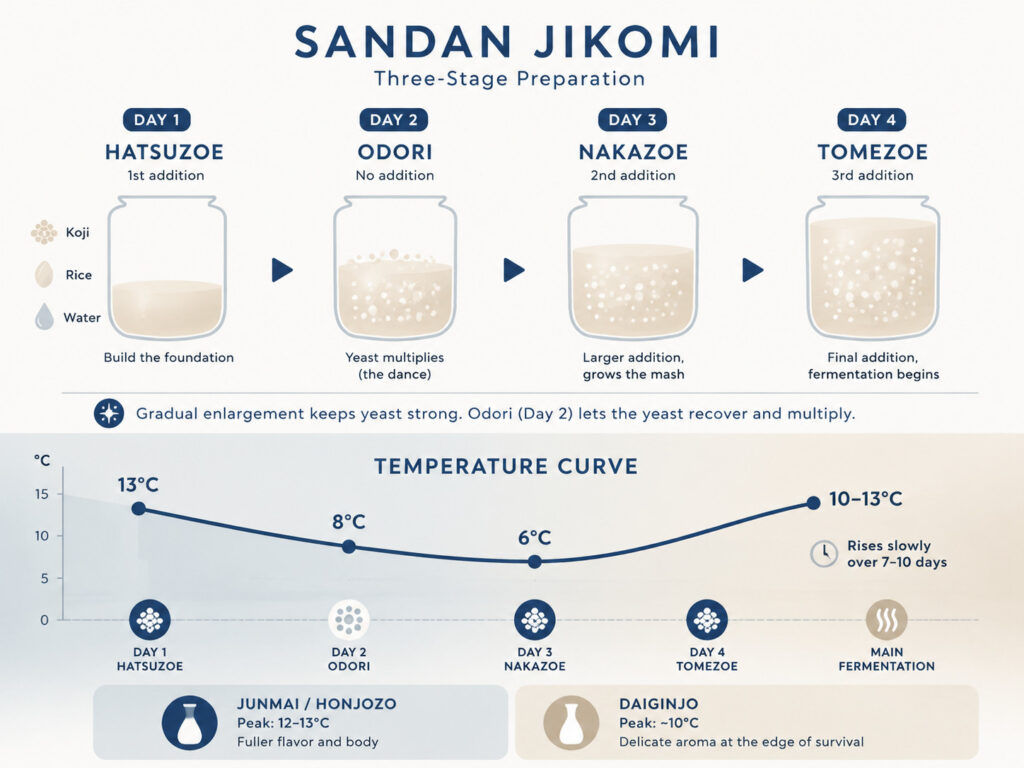
Sandan jikomi means “three-stage preparation.” It is one of sake brewing’s cleverest ideas. Brewers add the ingredients over four days. Each addition builds on the last.
The Three Additions
The build follows a clear, steady rhythm. Here is how the four days unfold:
- Day 1, hatsuzoe: the first addition of koji, rice, and water to the starter
- Day 2, odori: a rest day with no additions, while the yeast multiplies
- Day 3, nakazoe: the second, larger addition of koji, rice, and water
- Day 4, tomezoe: the final, largest addition that completes the mash
Each stage increases the mash volume substantially, often in a roughly stepwise pattern. This gradual enlargement keeps the yeast strong relative to the total mash. The day-two rest has a charming name, odori, meaning “dance.” During it, the mash bubbles and seems to dance.
The odori day is not simply a pause, though. It gives the yeast time to recover and multiply after the first dilution. As a result, the mash stays microbiologically strong before the next, larger addition. After tomezoe, the long main fermentation finally begins.
The Temperature Curve
Each addition also follows a falling temperature plan. The hatsuzoe may start near 13 degrees Celsius. The nakazoe often drops to around 8 degrees. The tomezoe may fall to about 6 degrees. After the final addition, the mash slowly warms. It may reach a peak of 10 to 13 degrees over 7 to 10 days. So the curve is gentle, deliberate, and closely watched.
The peak temperature depends on the target style. A junmai or honjozo may rise to 12 or 13 degrees. This draws out fuller rice flavor and body. A daiginjo, by contrast, may stay near 10 degrees. There, the yeast works at the edge of survival. As a result, it releases that prized, delicate aroma.
Why Sake Uses Three-Stage Addition
Why bother with such a careful build? The reasons are both clever and practical. A sudden, single addition would cause problems. So the staged method protects the brew.
- It prevents dilution shock: the yeast and acid never get watered down too fast
- It supports yeast growth: each stage feeds the cells in steps
- It keeps fermentation stable: the mash builds strength gradually
- It lowers contamination risk: strong acidity blocks unwanted microbes
The key idea is concentration. Each addition keeps the yeast dense and dominant. As a result, harmful microbes never get a chance to spread. The acidity also stays protective throughout. In this way, tradition solved a real biological problem.
Multiple Parallel Fermentation Inside Moromi
Now we reach the true magic of sake. Inside the moromi, two jobs happen at once. This is multiple parallel fermentation. It defines sake among the world’s drinks.
Two Reactions Together
Picture the busy mash inside the tank. Koji breaks the rice starch into sugar. At the same moment, yeast eats that sugar. The yeast then turns it into alcohol. For a deeper look, read our sake fermentation guide.
This differs from beer brewing in a key way. There, starch conversion and fermentation usually happen in separate stages. In sake, koji enzymes keep creating glucose while yeast immediately consumes it. This continuous balance keeps sugar levels moderate. Yet the mash still reaches a high alcohol concentration.
Why It Matters
This dual system gives sake real power. Sugar never floods the mash all at once. Instead, koji feeds the yeast slowly and steadily. As a result, the yeast stays calm and keeps working. Alcohol can therefore climb very high. Undiluted sake often reaches 18 to 20 percent. Brewers sell that strong, undiluted style as genshu.
The two key organisms each play one role. Koji makes sugar, while yeast makes alcohol. Our guides to koji and yeast explain each one. Inside the moromi, the two finally unite at full scale. This tank is where theory becomes sake.
What Happens During Moromi Fermentation?
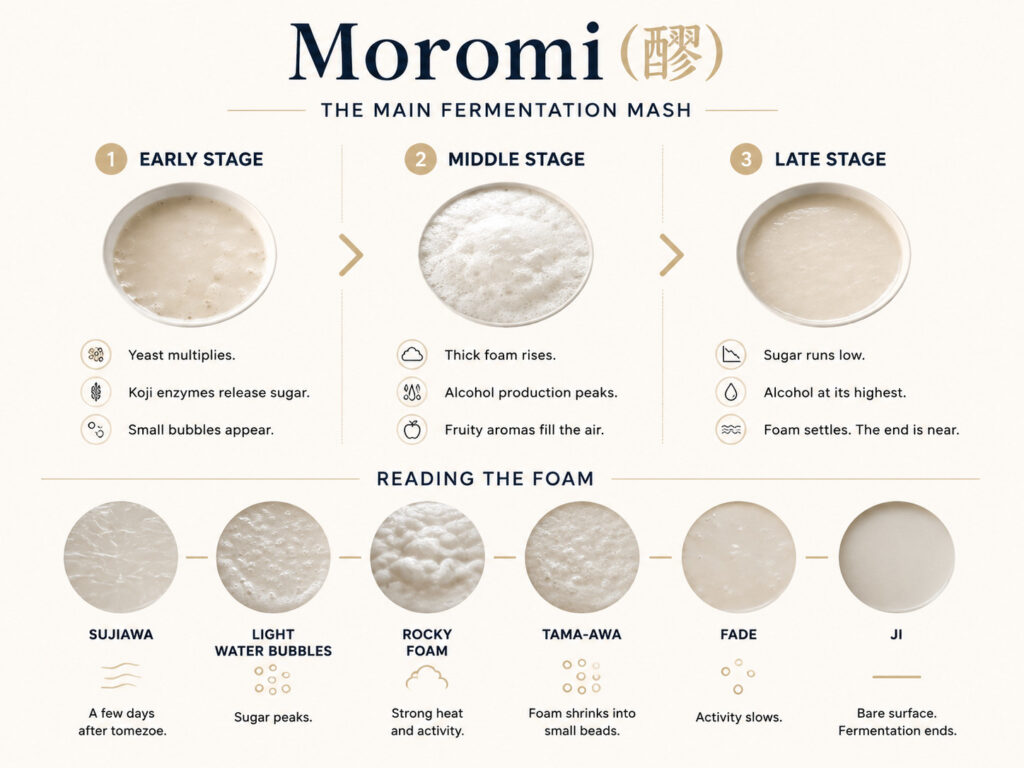
The moromi changes dramatically over its life. It moves through clear stages across several weeks. Each phase has its own look and mood. Let us follow the timeline.
Early Stage
The first days feel quiet but busy. The yeast multiplies rapidly throughout the mash. Koji enzymes start releasing sugar from the rice. Small bubbles begin to dot the surface. So the mash slowly comes alive.
Middle Stage
Now the mash roars into full activity. Thick foam rises and caps the surface. Alcohol production hits its peak here. Fruity aromas begin to fill the air. So this is the loudest, liveliest phase.
Late Stage
Finally, the mash grows calm again. The sugar runs low as the yeast slows. Alcohol now sits at its highest level. The foam settles into a quiet sheen. So the brewer knows the end is near.
Reading the Foam
For centuries, brewers read the foam like a diary. Each stage of bubbles has its own name. Thin streaks called sujiawa appear a few days after tomezoe. Then come light water bubbles as sugar peaks. Next, rocky, billowing foam signals strong heat and activity. Later, the foam shrinks into tama-awa, small bead-like bubbles. Finally, it fades to a bare surface known as ji. So the foam quietly charts the whole fermentation.
Reading the Mash: Baumé and the Sake Meter
Modern brewers do not rely on foam alone. They also measure the mash every single day. These numbers reveal the hidden state of fermentation. So data and instinct now work side by side.
Daily Measurements
Each day, brewers test a sample of the liquid. They check the Baumé value, which tracks remaining sugar. They also record the sake meter value, or nihonshudo. Alcohol, acidity, amino acids, and glucose get measured too. Together, these numbers tell a clear story. So the brewer can steer with real precision.
Why Numbers Are Not Enough
Yet the mash resists perfect control. In simple fermentation, gravity alone tracks progress well. Sake is different, though, because sugar keeps appearing. Koji feeds new glucose as the yeast consumes it. As a result, no single reading captures everything. So brewers blend the data with taste and smell. This is one reason some yeasts are now foam-less. With less foam, the daily analysis matters even more.
Kai-ire: Stirring the Mash
The moromi cannot simply be left alone. Brewers stir it with a long pole, called kai-ire. They often do this in the morning and evening. This simple act does several important jobs.
Stirring evens out the temperature across the tank. It also blends the components so solids do not settle. Moreover, it gently nudges the rice to dissolve. Fermentation gives off real heat as it works. Left alone, the mash could climb past 20 degrees. So brewers stir and cool to hold the planned curve. This careful guidance shapes the final sake.
How Brewers Know When Moromi Is Ready
Judging the end of fermentation is a real skill. Brewers combine measurement with sensory judgment. No single number tells the whole story. So they read many signs together.
They monitor alcohol level, acidity, sugar, and temperature. They also watch the aroma and the fading foam. The sake meter value tracks how much sugar remains. The target style shapes the final call, too. A fragrant ginjo, a dry junmai, and a cloudy nigori may all need different timing. So the decision blends data and experience.
Optional Additions Before Pressing
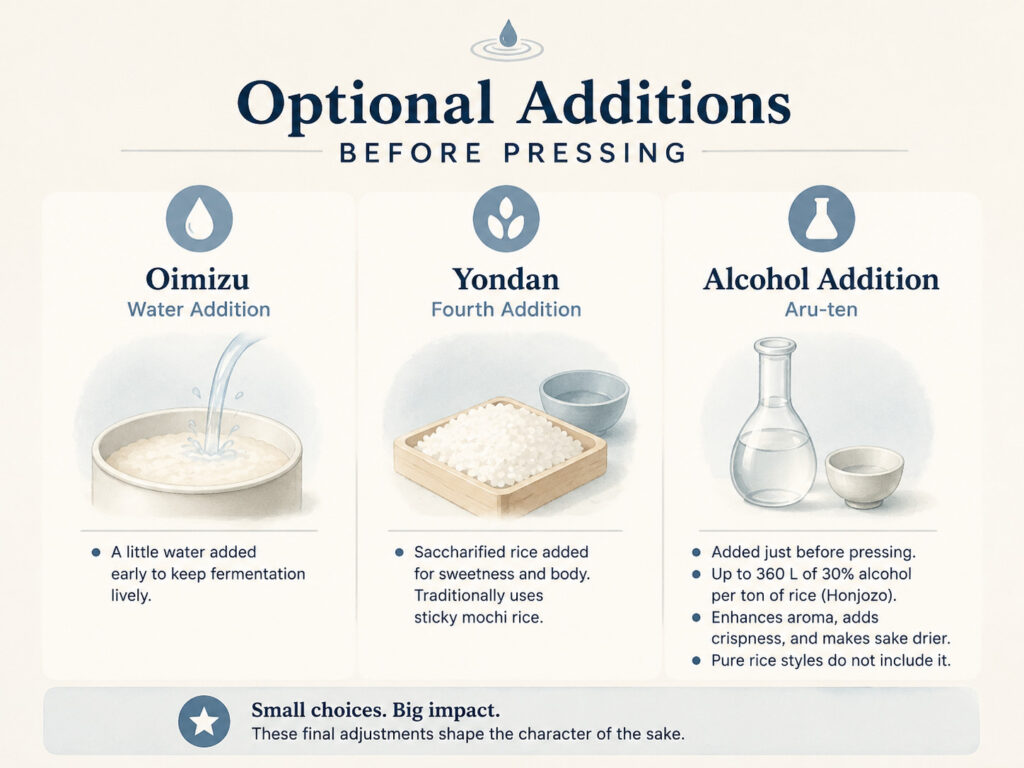
Near the end, brewers may fine-tune the mash. Several optional steps adjust flavor and balance. Each one is a deliberate, style-driven choice. So the final days carry real weight.
Oimizu and Yondan
Sometimes brewers add a little water, called oimizu. Early on, this can keep fermentation lively. Another option is the fourth addition, or yondan. Here, brewers add saccharified rice for sweetness and body. A traditional version uses sticky mochi rice. So these steps round out the taste.
Alcohol Addition
Some styles receive a small alcohol addition near the end. Brewers call this aru-ten, done just before pressing. For honjozo, the limit is about 360 liters of 30 percent alcohol per ton of rice. This step can lift aroma and add a crisp finish. It also tends to make the sake drier. Pure rice styles, by definition, skip it entirely. So this single choice separates whole families of sake.
Temperature Control During Moromi
Temperature may be the brewer’s greatest tool. It shapes both speed and flavor deeply. A few degrees can change everything. So brewers watch the mash constantly.
Cool fermentation brings out delicate, fruity aromas. Ginjo and daiginjo styles often ferment slowly at low temperatures. These can sit in the single-digit Celsius range, depending on the brewery and yeast. The exact target also reflects the desired aroma. Warmer mashes, by contrast, work faster and fuller. So sake is traditionally brewed in cold winter.
How Moromi Influences Flavor
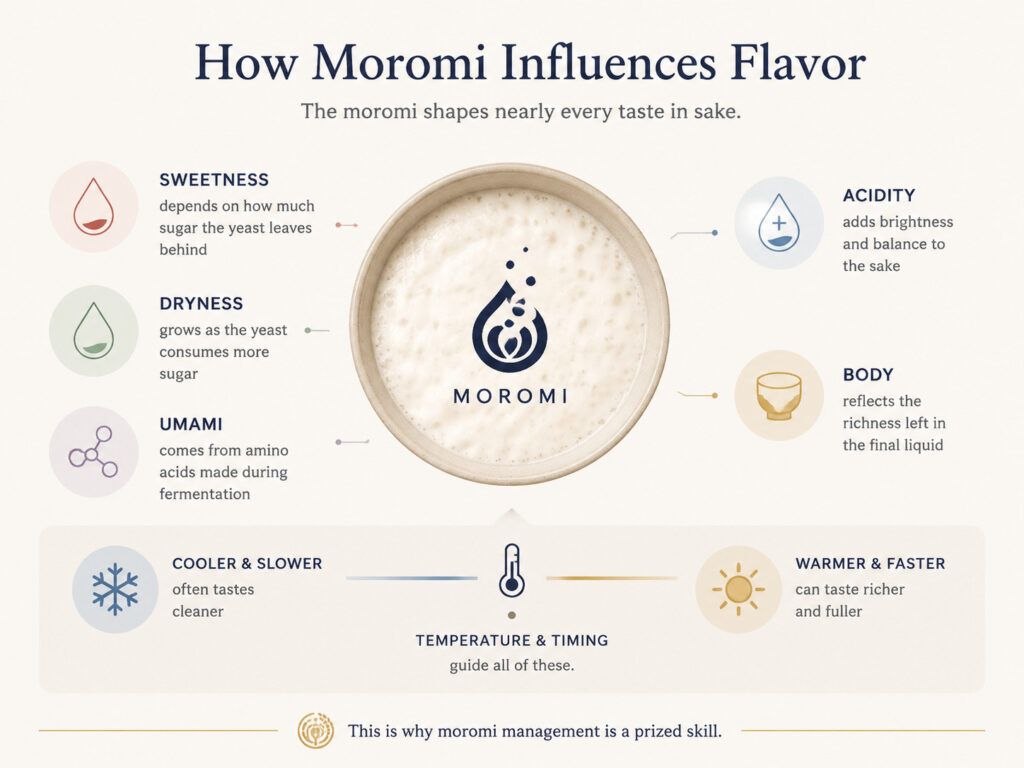
The moromi shapes nearly every taste in sake. Brewers steer it toward a target style. Small choices create big differences. So this stage demands real skill.
- Sweetness: depends on how much sugar the yeast leaves behind
- Dryness: grows as the yeast consumes more sugar
- Umami: comes from amino acids made during fermentation
- Acidity: adds brightness and balance to the sake
- Body: reflects the richness left in the final liquid
Temperature and timing guide all of these. A cooler, slower mash often tastes cleaner. A warmer one can taste richer and fuller. So the brewer balances each factor with care. This is why moromi management is a prized skill.
Aroma Development During Moromi
Aroma is born inside the moromi too. As yeast works, it releases scent compounds. Many of these belong to a group called esters. So the mash slowly grows fragrant.
Two aroma compounds often come up in ginjo-style sake. Isoamyl acetate can suggest banana-like notes. Ethyl caproate, also called ethyl hexanoate, can evoke apple or melon. Cool fermentation tends to boost these scents. So fragrant styles ferment slow and cold. A junmai ginjo shows this beautifully.
Moromi and Sake Styles
Moromi management shapes every sake style. The same ingredients can become many drinks. So the brewer’s choices matter enormously. To explore the range, see our types of Japanese sake guide.
The pattern is clear across styles. A junmai often ferments for a fuller, rounder taste. A ginjo uses a cool mash for delicate aroma. A honjozo gains a light, crisp finish from a small alcohol addition. A nigori keeps some unpressed mash for a cloudy body. So each style reflects a different moromi.
Traditional Moromi Management
For centuries, brewers managed moromi by hand. They relied on senses, memory, and instinct. The master brewer, or toji, led this work. So deep experience shaped every batch.
A toji would watch the foam closely each day. They listened to the bubbling and smelled the mash. They tasted it and judged its progress. Then they adjusted temperature with careful skill. So brewing was an art built on observation. That human touch still earns great respect.
Modern Moromi Management
Modern tools have transformed mash control. Yet the core biology stays the same. Technology simply makes the work more precise. So tradition and science now blend.
Temperature sensors now track the mash closely. Cooling jackets hold tanks at exact levels. Some breweries log data across many seasons. Research keeps refining yeast and methods. As a result, brewers gain more control than ever. Still, human judgment remains at the center.
Regional Approaches to Moromi
Region shapes the moromi in quiet ways. Climate, water, and tradition all play a part. So local sake carries a sense of place.
Cold northern areas favor long, slow fermentation. Niigata uses this for clean, dry sake, as our Niigata sake guide shows. Akita and Yamagata craft refined, fragrant styles. Kyoto’s soft water tends toward gentle, mellow sake. Hyogo, home of famous sake rice, supports rich brewing.
These are broad tendencies, not fixed rules. Individual breweries may choose different yeasts and rice. They may also vary polishing, temperature, and timing. So even neighbors can craft very different sake. The moromi reflects both place and personal vision.
Common Problems During Moromi Fermentation
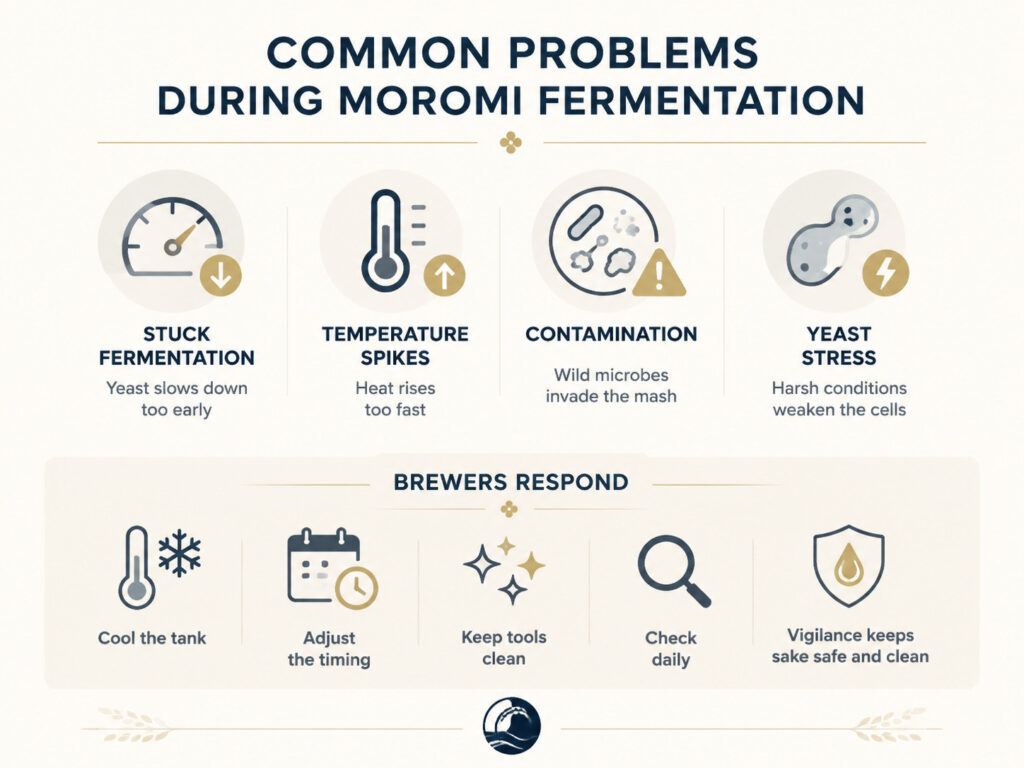
The moromi looks calm, yet it carries risk. Many things can go wrong inside the tank. So brewers stay alert at all times.
- Stuck fermentation: the yeast slows down too early
- Temperature spikes: heat from fermentation rises too fast
- Contamination: wild microbes invade the mash
- Yeast stress: harsh conditions weaken the cells
Brewers respond to these issues quickly. They cool the tank or adjust the timing. Clean tools prevent most contamination. Daily checks catch trouble early. So vigilance keeps the sake safe and clean.
From Moromi to Sake: Pressing
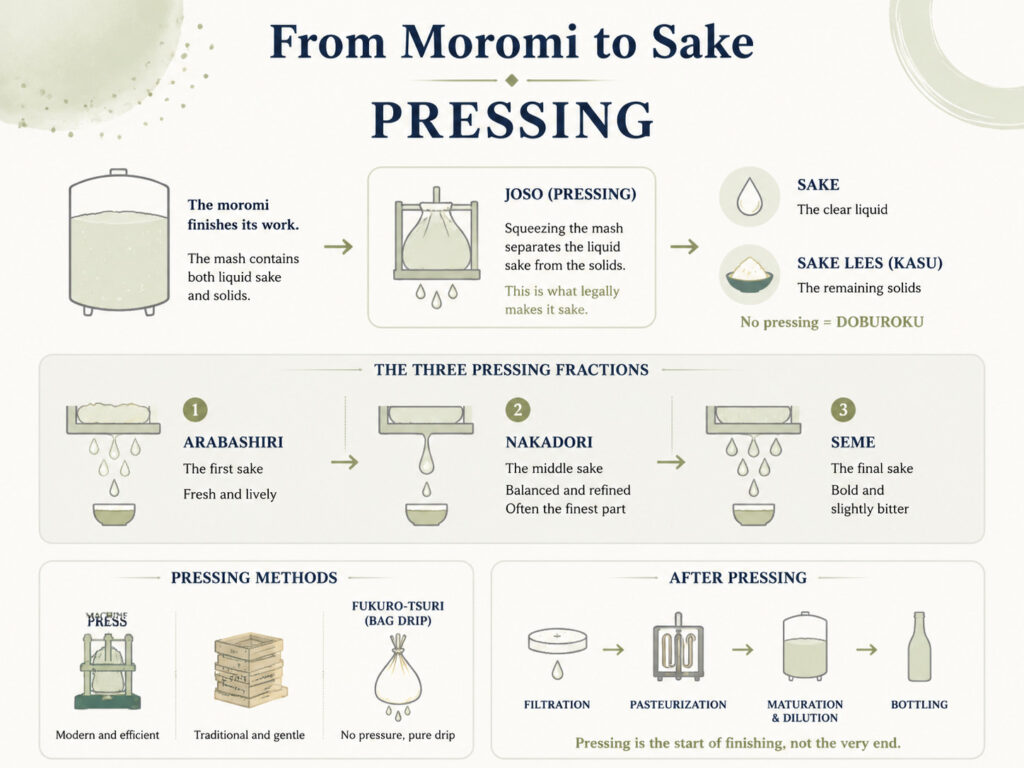
Eventually, the moromi finishes its work. The yeast quiets and the flavor settles. Now the brewer must separate the parts. The mash holds both liquid sake and solids.
This separation step is called joso, or pressing. By law, sake must have its solids removed. Brewers squeeze the mash to extract clear sake. The leftover solids become sake lees, or kasu. A mash left unpressed becomes doburoku instead. So pressing is what legally turns mash into sake.
The Three Pressing Fractions
Pressing does not yield one uniform liquid. The sake changes as the pressing goes on. Brewers name three fractions in order:
- Arabashiri: the free-run first sake, fresh and lively
- Nakadori: the balanced middle sake, often the finest part
- Seme: the final pressed sake, bold and a little bitter
The first flows out under the mash’s own weight. The middle comes with gentle, controlled pressure. Many brewers reserve this nakadori for contests. The final fraction needs the hardest pressing. So one tank can yield several different sakes.
Pressing Methods
Brewers use several pressing methods today. A modern machine presses many sake quickly and cleanly. Traditional box presses, called fune, work more gently. The most premium method hangs the mash in bags. This drip method, fukuro-tsuri, uses no pressure at all. So the chosen method also shapes the final character.
After pressing, the sake is still not finished. It may pass through filtration and pasteurization. Maturation, dilution, and bottling can follow. A future article will cover these final steps. So pressing is the start of finishing, not the very end.
Common Misconceptions About Moromi
Moromi invites a few common mix-ups. Let us clear them up plainly.
- Is moromi the finished sake? No. It must still be pressed and refined.
- Is moromi the same as moto? No. Moto is the starter; moromi is the main mash.
- Does moromi contain alcohol? Yes. Most of the sake’s alcohol forms here.
- Is moromi only used in sake? No. Similar mashes appear in miso and soy sauce.
The second myth causes the most confusion. So recall the central idea once more. The moto grows the yeast, and the moromi makes the sake. The two stages are partners, not the same thing. Keep that clear, and brewing makes sense.
Final Thoughts
Moromi is the beating heart of sake production. It is where rice, koji, yeast, and skill unite. Through multiple parallel fermentation, plain rice becomes sake. So this single stage shapes the whole drink. Remember the two core ideas once again. The moto grows the yeast; the moromi makes the sake. And inside the moromi, two reactions run as one. Understand the moromi, and you understand sake itself.
Moromi FAQ
What is moromi?
Moromi is the main fermentation mash of sake. It contains rice, koji, water, and yeast. Most of the alcohol forms during this stage. It comes after the moto starter.
Is moromi the same as sake mash?
Yes. In sake brewing, moromi is often translated as the main fermentation mash. However, it is not finished sake yet. It still needs pressing to separate the liquid from the solids.
How long does moromi fermentation last?
It usually lasts about three to five weeks. Cooler, premium styles take longer. A daiginjo may ferment for around 35 days. The brewer decides when to stop it.
What is sandan jikomi?
It is the three-stage addition method. Brewers add rice, koji, and water over four days. The stages are hatsuzoe, nakazoe, and tomezoe. A rest day called odori sits between the first two.
What is the difference between moto and moromi?
Moto is the small yeast starter. Moromi is the large main mash. The moto grows the yeast first. The moromi then makes most of the alcohol.
Why is moromi important?
It is where sake truly forms. Most alcohol, aroma, and flavor develop here. Multiple parallel fermentation runs at full scale. So it shapes the final character.
Does moromi contain alcohol?
Yes, and quite a lot of it. Most of the sake’s alcohol forms in the moromi. Undiluted sake can reach 18 to 20 percent. The yeast produces it from sugar.
How does moromi affect flavor?
It shapes sweetness, dryness, umami, and acidity. Temperature and timing guide these traits. Cool mashes often taste cleaner and fruitier. Warmer mashes can taste richer.
What happens after moromi?
The mash gets pressed to separate the liquid. Clear sake comes out, and solids remain. Those solids become sake lees, or kasu. Later steps may include filtration and pasteurization.
References
- Japan Sake and Shochu Makers Association, glossary of sake terms (joso, kumimizu-buai, odori, pressing fractions). (Surveyed: June 2026)
- National Research Institute of Brewing, research and technical information on sake fermentation, brewing microorganisms, and brewing science. (Surveyed: June 2026)
- Brewing Society of Japan, koji, yeast, and the sake brewing process. (Surveyed: June 2026)
- National Tax Agency of Japan, sake manufacturing and quality labeling standards. (Surveyed: June 2026)
Related Articles
- Moto (Shubo): The Sake Yeast Starter (Surveyed: June 2026)
- Sake Fermentation (Surveyed: June 2026)
- Koji in Sake Brewing (Surveyed: June 2026)
- Yeast in Sake Brewing (Surveyed: June 2026)
- How Sake Is Made (Surveyed: June 2026)
- Types of Japanese Sake (Surveyed: June 2026)
- Junmai Sake (Pure Rice Sake) (Surveyed: June 2026)
- Niigata Sake (Surveyed: June 2026)




Comments