



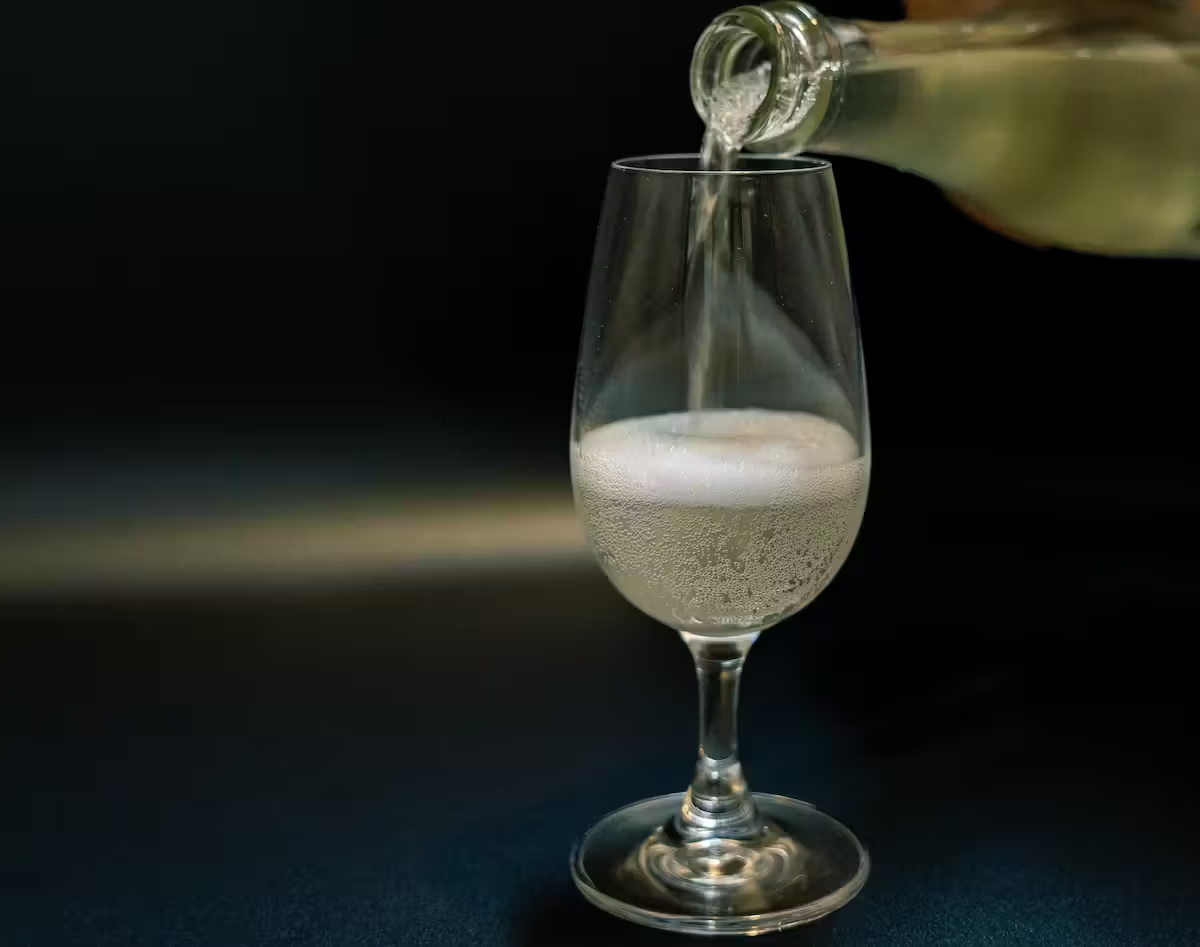
Sparkling sake is Japanese sake with carbonation. Some bottles use natural secondary fermentation, while others add carbon dioxide. Styles range from sweet cloudy nigori to refined premium awa sake.
At first, sparkling sake feels simple. It has bubbles, fruit notes, and a friendly mood. Yet it still carries rice, koji, water, yeast, and Japanese brewing skill. For beginners, that first glass often feels much easier than still sake.
So, what is sparkling sake? It is sake with bubbles, but the taste can vary widely. Some bottles are sweet and low in alcohol. Others feel dry, crisp, and elegant. Crisp bubbles meet rice elegance in this modern sake style.
Basic Information About Sparkling Sake
Sparkling sake belongs to the wider world of sake. Brewers usually start with rice, koji, yeast, and water. The key difference is carbonation, which creates bubbles and a refreshing mouthfeel.
You may see many names on labels. Sparkling sake, Japanese sparkling sake, bubbly sake, sparkling junmai sake, sparkling nigori, and awa sake all appear. They sound similar, but they are not always the same. Reading the label helps more than guessing from the name.
A normal sake bottle often sits around 15% to 16% alcohol. Many sparkling sake bottles range from about 5% to 13%. That lighter feel makes low-alcohol sake easier for new drinkers. It also suits casual meals and warm-weather drinking.
The taste can feel bright and gentle. Some bottles taste like white peach, pear, melon, or apple. Others show yogurt nuance, rice sweetness, citrus, and a refreshing finish. For a wider view of sake categories, see the types of Japanese sake guide.
Main Types of Sparkling Sake
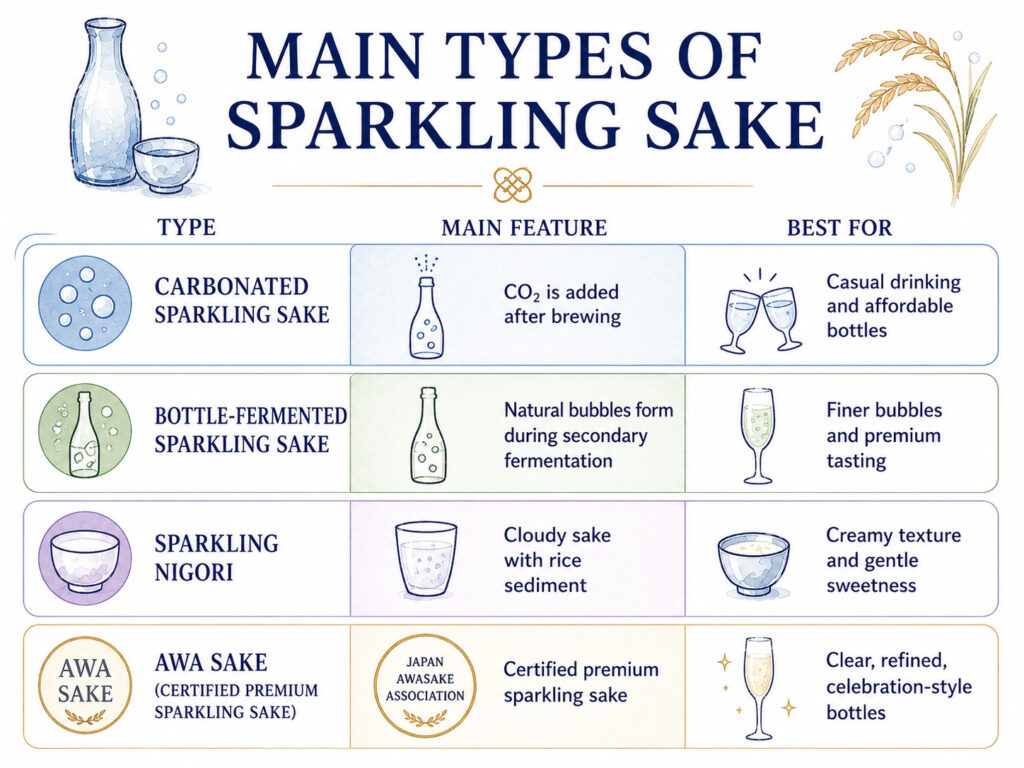
| Type | Main Feature | Best For |
|---|---|---|
| Carbonated sparkling sake | CO2 is added after brewing | Casual drinking and affordable bottles |
| Bottle-fermented sparkling sake | Natural bubbles form during secondary fermentation | Finer bubbles and premium tasting |
| Sparkling nigori | Cloudy sake with rice sediment | Creamy texture and gentle sweetness |
| AWA SAKE | Certified premium sparkling sake | Clear, refined, celebration-style bottles |
Carbonated sparkling sake is usually the easiest to find. Brewers add carbon dioxide to finished sake. This method keeps the price friendly and the style casual. It can be a good starting point for people buying sparkling sake online.
Bottle-fermented sake feels more refined. Fermentation continues in the bottle or tank, creating natural bubbles. The mousse-like bubbles often feel softer and better integrated. This style usually gives a more polished mouthfeel.
Sparkling nigori has a different charm. It keeps some rice sediment, so the sake looks cloudy. The texture can feel creamy, playful, and slightly sweet. For more detail, see the nigori sake guide.
AWA SAKE is the strictest category here. It is not just a loose nickname for bubbly sake. It means certified premium sparkling sake approved by the Japan Awasake Association. That difference matters when comparing labels.
What Makes AWA SAKE Different?
AWA SAKE uses natural secondary fermentation only. It does not use artificial carbonation. The sake must look clear and transparent, with fine bubbles rising after pouring. This makes it different from sparkling nigori and casual carbonated sake.
The Japan Awasake Association certifies AWA SAKE. Products must meet strict quality standards and pass quality checks. Because of that, the term is more precise than “sparkling sake.” It points to a certified premium style.
This detail is important for travelers and buyers. A sweet sparkling nigori can be enjoyable, but it is not AWA SAKE. A casual carbonated bottle may taste refreshing, but it does not follow the same rules. AWA SAKE often feels closer to a refined toast drink.
Sparkling Sake Taste and Flavor
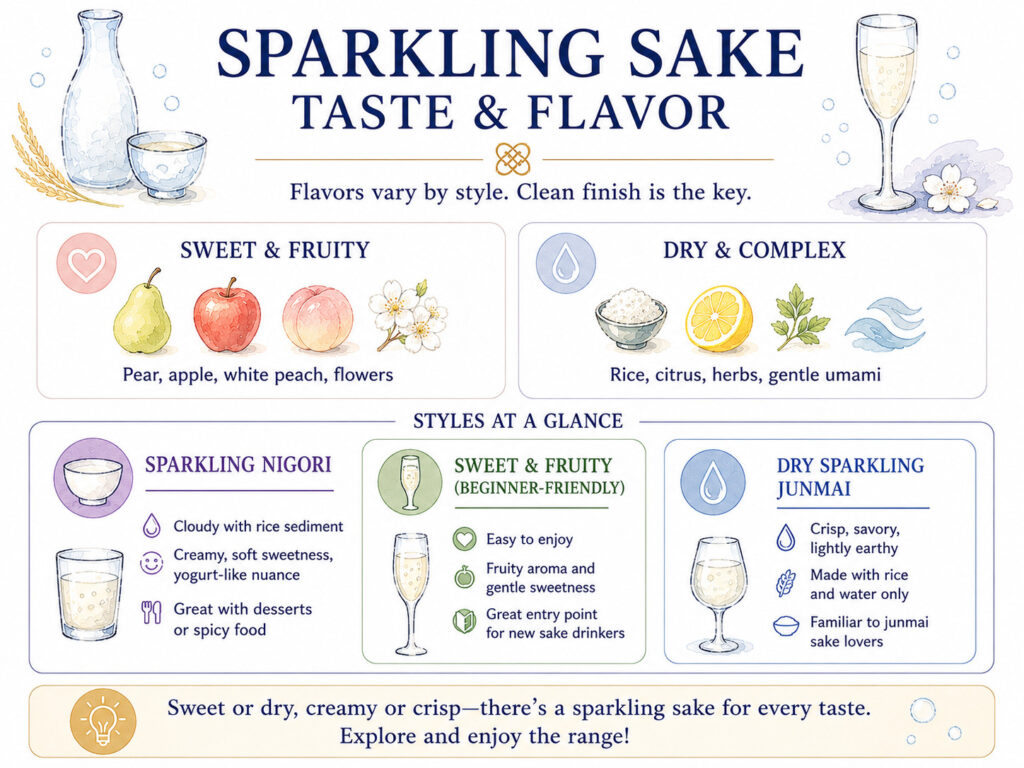
Sparkling sake tasting notes and flavors change by style. A fruity sparkling sake may smell like pear, apple, white peach, or flowers. A drier bottle may show rice, citrus, herbs, and gentle umami. The best examples finish cleanly, without feeling heavy.
Is sparkling sake sweet or dry? Both styles exist. Many beginner-friendly bottles lean sweet and fruity. Premium awa sake often tastes drier, cleaner, and more structured. That range is part of the category’s appeal.
Sparkling nigori can feel rounder than clear styles. It often gives a creamy mouthfeel, soft sweetness, and yogurt-like nuance. That makes it a good match for desserts or spicy food. It is also a friendly entry point for people new to sake.
Dry sparkling junmai sake brings another side. It can feel crisp, savory, and lightly earthy. If you enjoy junmai sake, this style may feel familiar. Personally, I think sparkling sake works best with flexible expectations.
Sparkling Sake vs Champagne and Sparkling Wine
| Point | Sparkling Sake | Champagne | General Sparkling Wine |
|---|---|---|---|
| Main ingredient | Rice, koji, yeast, and water | Grapes from Champagne, France | Grapes from many regions |
| Fermentation base | Sake brewing | Wine fermentation | Wine fermentation |
| Flavor focus | Rice sweetness, umami, fruit, soft acidity | High acidity, yeast, fruit, minerality | Varies by country and method |
| Bubbles | Added CO2 or natural fermentation | Traditional bottle fermentation | Many production methods |
| Character | Soft, aromatic, and rice-based | Dry, structured, and wine-based | Wide range of styles |
Sparkling sakes vs Champagne differences begin with ingredients. It starts from rice and koji. Champagne starts from grapes grown in a legally defined French region. Sparkling wine is a wider category, but sparkling sake sits outside grape wine completely.
The biggest flavor difference is acidity versus umami. Champagne often has firm acidity and a dry finish. Sparkling sake can feel softer, rounder, and more aromatic. The bubbles may also feel gentler, especially in low-alcohol sake.
Some people describe AWA SAKE as the Champagne of the sake world. That image makes sense for celebrations. Still, sparkling sake deserves its own identity. It is not wine, and it should not be judged only as wine.
Best Food Pairings for Sparkling Sake
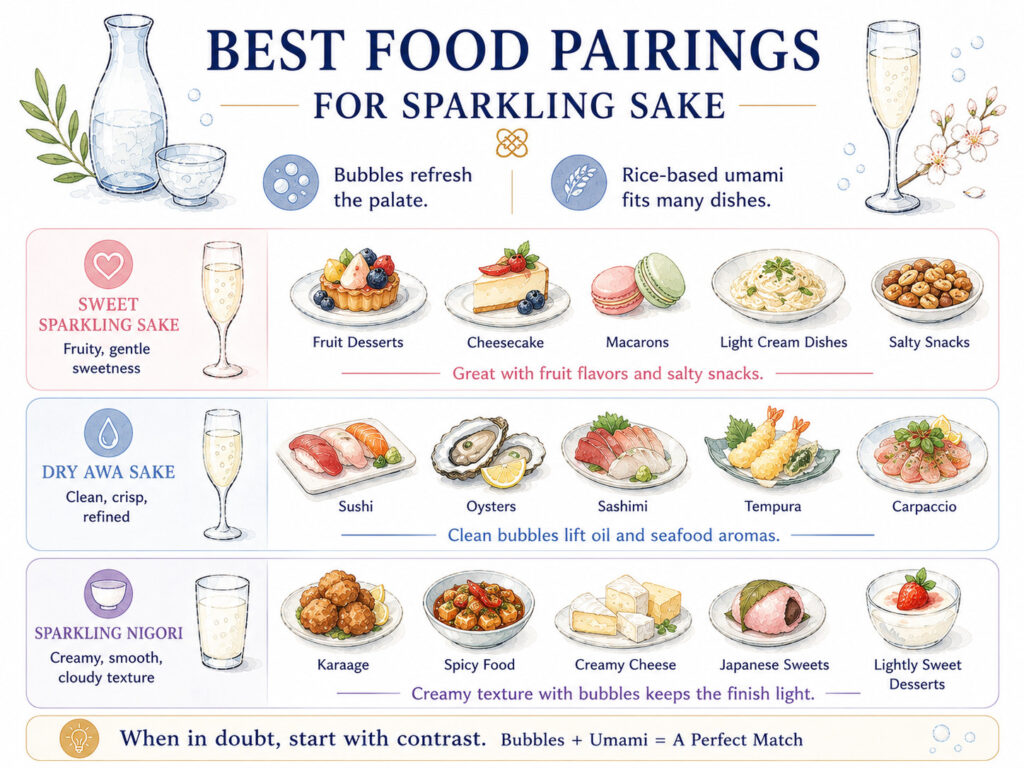
Sparkling sake works well with food because bubbles refresh the palate. The rice-based umami also helps it fit many dishes. This is where the category becomes more useful than expected. It can feel casual, but it also works at a serious table.
Sweet sparkling sake pairs well with fruit desserts, cheesecake, macarons, and light cream dishes. The sweetness feels natural with peach, pear, strawberry, or citrus flavors. It can also soften salty snacks. This makes it useful for relaxed gatherings.
Dry awa sake suits sushi, oysters, sashimi, tempura, and carpaccio. Its clean bubbles lift oil and seafood aromas. It can also work with Mediterranean dishes, especially seafood and olive oil. Fine effervescence with umami depth gives it quiet strength.
Sparkling nigori pairs nicely with karaage, spicy food, creamy cheese, and lightly sweet Japanese sweets. The cloudy texture gives weight. The bubbles keep the finish from feeling too heavy. If you feel unsure, start with contrast.
How to Serve Sparkling Sake
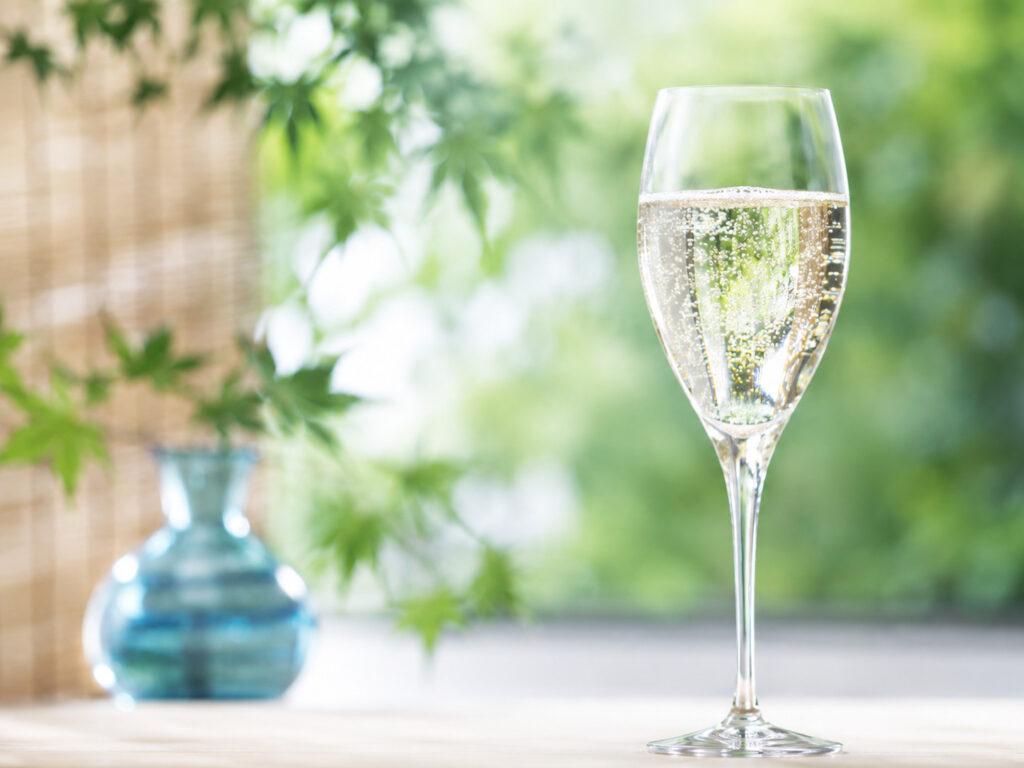
Serve sparkling sake well chilled. A temperature around 5°C often works nicely. Sweeter styles may taste cleaner when colder. Dry awa sake can also open nicely in a wine glass.
Do not shake the bottle. Pressure can vary, especially with bottle-fermented sake. Open it slowly and keep the bottle pointed away from people. This sounds simple, but it saves a messy table.
A flute glass keeps bubbles neat and elegant. A white wine glass gives more aroma. Either works, so choose based on the bottle and the mood. For tasting, I prefer a small wine glass.
Small bottles are helpful for beginners. They let you compare styles without spending too much. Try one sweet bottle, one dry awa sake, and one sparkling nigori. Once opened, drink it soon because the bubbles fade with time.
Popular Japanese Sparkling Sake Brands
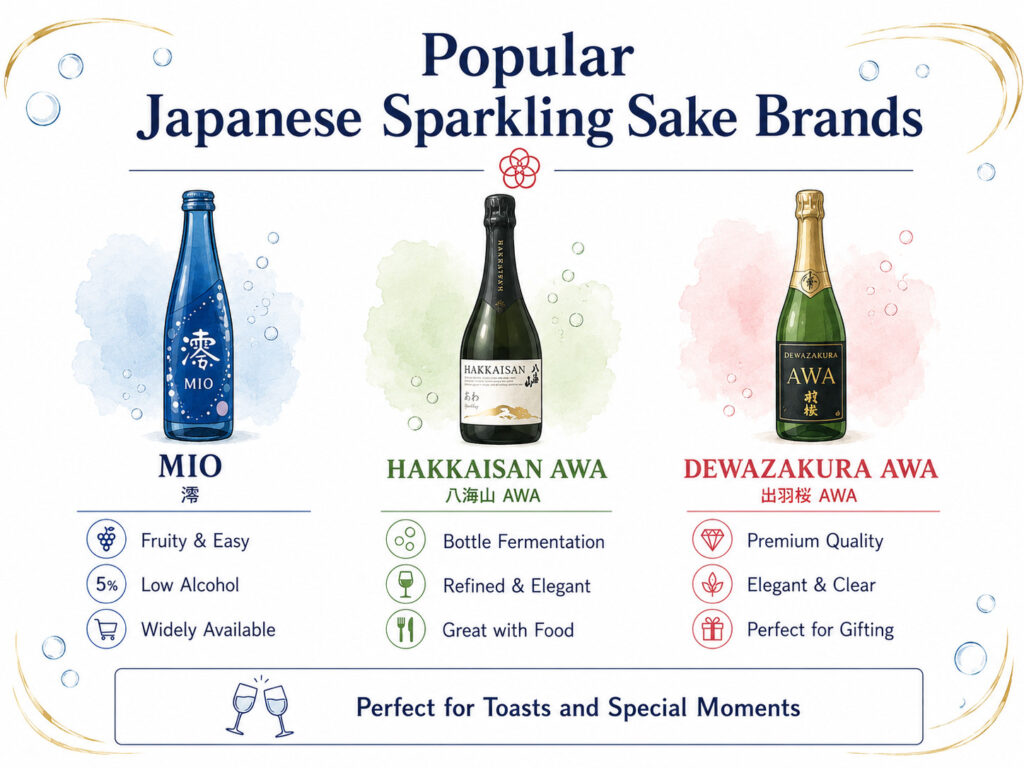
Several sparkling sake brands helped this category grow. Mio is one of the most beginner-friendly names. It is fruity, low in alcohol, and easy to find in many markets. People who usually avoid sake may still enjoy it.
Hakkaisan AWA shows the premium side. It uses bottle fermentation and offers clear bubbles with a refined finish. The alcohol level feels closer to serious dining sake. It suits a toast, but it also works with food.
Dewazakura AWA is another premium example. It represents a clear, elegant awa sake style from Yamagata. It suits people looking for a gift or special bottle. These are not rankings, but they give buyers useful starting points.
Sparkling Sake History and Today
Sparkling sake history is newer than classic sake history. Traditional sake has deep roots in Japan. Modern sparkling styles became more visible as drinkers wanted lighter, festive options. The category also fit export markets well.
The category gained more attention in the 2000s. Low-alcohol and fruity bottles made sake easier for younger drinkers. Bubbles also felt familiar to people who already enjoyed sparkling wine. That helped Japanese bubbly sake travel overseas.
The Japan Awasake Association began in 2016. Its certification program gave premium sparkling sake a clearer identity. That step helped separate awa sake from casual carbonated bottles. Today, sparkling sake connects tradition and modern taste.
Beginner-Friendly Sparkling Sake Styles
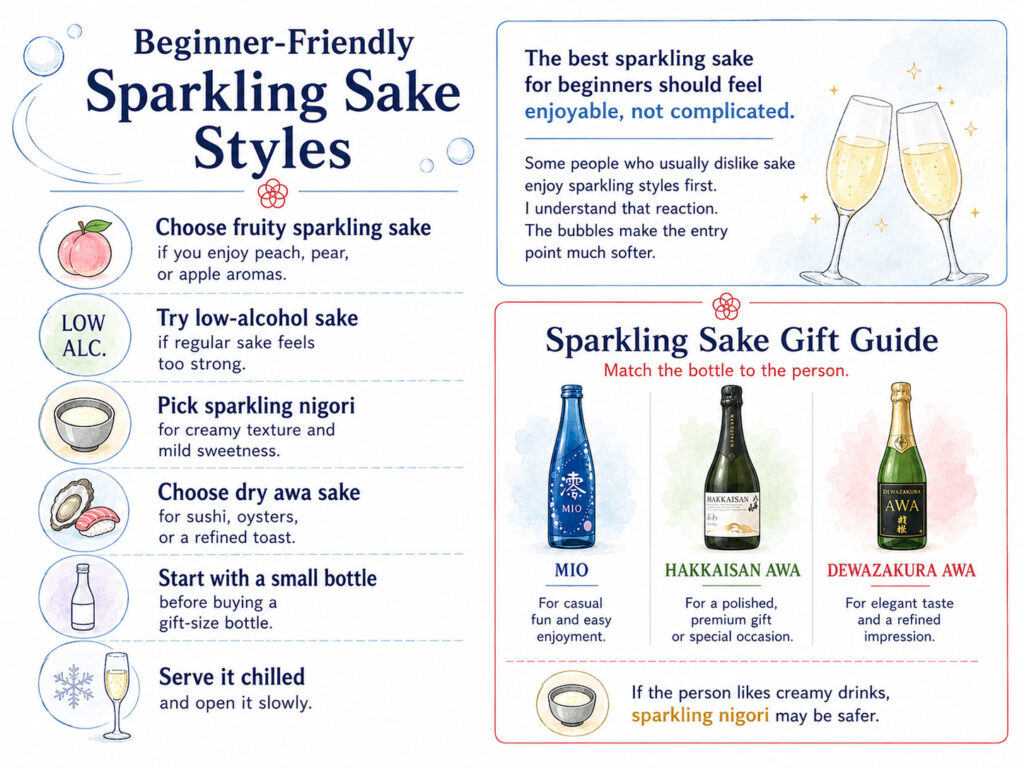
- Choose fruity sparkling sake if you enjoy peach, pear, or apple aromas.
- Try low-alcohol sake if regular sake feels too strong.
- Pick sparkling nigori for creamy texture and mild sweetness.
- Choose dry awa sake for sushi, oysters, or a refined toast.
- Start with a small bottle before buying a gift-size bottle.
- Serve it chilled and open it slowly.
The best sparkling sake for beginners should feel enjoyable, not complicated. Some people who usually dislike sake enjoy sparkling styles first. I understand that reaction. The bubbles make the entry point much softer.
For a sparkling sake gift guide for sake lovers, match the bottle to the person. Choose Mio for casual fun. Pick Hakkaisan AWA or Dewazakura AWA for a polished gift. If the person likes creamy drinks, sparkling nigori may be safer.
Where to Buy Sparkling Sake Online
Where to buy sparkling sake online depends on your country. Start with licensed sake retailers, Japanese grocery stores, and online import shops. Some wine stores also carry Japanese sparkling sake. Availability changes by region and importer.
Check shipping rules before ordering. Alcohol delivery laws vary by region. Refrigeration also matters for some bottles, especially delicate or premium styles. If possible, buy from shops that list alcohol level, sweetness, and serving temperature.
Final Thoughts
Sparkling sake is more than a novelty. It can be sweet, dry, cloudy, clear, casual, or highly refined. That range makes the category surprisingly flexible. It also makes choosing a bottle more fun.
For beginners, it offers an easy entry into Japanese sake. For sake fans, awa sake shows how serious bubbles can become. Either way, the best glass feels light, refreshing, and quietly memorable. Enjoy it responsibly and follow local drinking laws.
Sparkling Sake FAQ
What is sparkling sake?
It is a carbonated Japanese rice wine. Brewers make it by trapping natural fermentation gas or injecting carbon dioxide into the bottle. Drinkers know it for its refreshing fizz and light, fruity flavor.
Where does sparkling sake come from?
This bubbly beverage originates from traditional breweries across Japan. Innovative brewmasters developed this modern style extensively during the late 1990s to attract younger generations to rice wine.
Is sparkling sake sweet?
It delivers a predominantly sweet and fruity flavor profile. The natural rice fermentation creates a gentle sweetness that perfectly balances the crisp, refreshing acidity.
What is AWA SAKE?
AWA SAKE represents a strictly certified, premium category of this carbonated drink. The Japan Awasake Association requires breweries to use only rice, koji, and water, and to generate the beautiful bubbles strictly through natural in-bottle fermentation.
Is sparkling sake like Champagne?
The main difference involves the base ingredients and the flavor depth. This premium rice beverage features a slightly sweeter, umami-rich profile, while Champagne relies on fermented grapes yielding a drier taste. However, AWA SAKE brewers use the exact same secondary in-bottle fermentation method as elite Champagne makers.
How strong is sparkling sake?
It usually has a relatively low alcohol content. Most brands contain between 5 and 10 percent alcohol, making them much lighter and easier to drink than standard 15-percent rice wine.
Should sparkling sake be refrigerated?
Yes, you must keep it strictly refrigerated. The live yeast continues to ferment at room temperature, so you need cold temperatures to maintain the delicate flavor and prevent the pressurized bottle from bursting.
Where can I drink sparkling sake in Japan?
You will find these fun bottles at upscale restaurants and modern bars in Tokyo and Osaka. Convenience stores and local liquor shops also sell casual, mass-market brands nationwide.
How much does sparkling sake cost?
A standard casual bottle typically costs between 500 and 1,500 yen. Premium AWA SAKE bottles often exceed 5,000 yen depending on the brewery and the complex fermentation process.
Is sparkling sake vegan friendly?
This modern beverage contains absolutely no animal products. Vegans and vegetarians can safely enjoy this 100% plant-based drink anywhere.
What are the main ingredients in sparkling sake?
The main ingredients include premium sake rice, koji mold, and pure water. The natural rice fermentation gives the drink its distinctive sweet aroma and gentle bubbles.
Can I make sparkling sake at home?
You cannot legally brew this alcoholic beverage at home in Japan. However, liquor stores stock these beautiful bottles everywhere. You simply chill them well and open the cap carefully before celebrating.
Is sparkling sake popular outside Japan?
It enjoys rapidly growing popularity outside Japan. You will easily find these elegant bottles at trendy Japanese restaurants in North America and Europe. This bubbly drink successfully attracts wine lovers and new enthusiasts all over the world.
References
- AWASAKE, “About AWA SAKE”, checked in 2026, AWA SAKE uses natural carbonation after secondary fermentation and requires certification standards.
- AWASAKE, “Association”, checked in 2026, Japan Awasake Association was established in November 2016 and introduced certification in 2017.
- JETRO, “Awa Sake: a bubbly message to the world”, checked in 2026, AWA SAKE requires natural carbonation, clear appearance, 10% or higher alcohol, and 3.5 bar or higher gas pressure.
- Takara Sake USA, “Sho Chiku Bai Shirakabegura MIO Sparkling Sake”, checked in 2026, MIO has 5.0% ABV and launched in June 2011.
- Hakkaisan USA, “AWA Clear Sparkling Sake”, checked in 2026, Hakkaisan AWA uses secondary fermentation inside the bottle and has 13.0% alcohol.
- Dewazakura Sake Brewery, “Dewazakura AWA SAKE”, checked in 2026, Dewazakura AWA SAKE is a sparkling sake product from Dewazakura.





Comments