



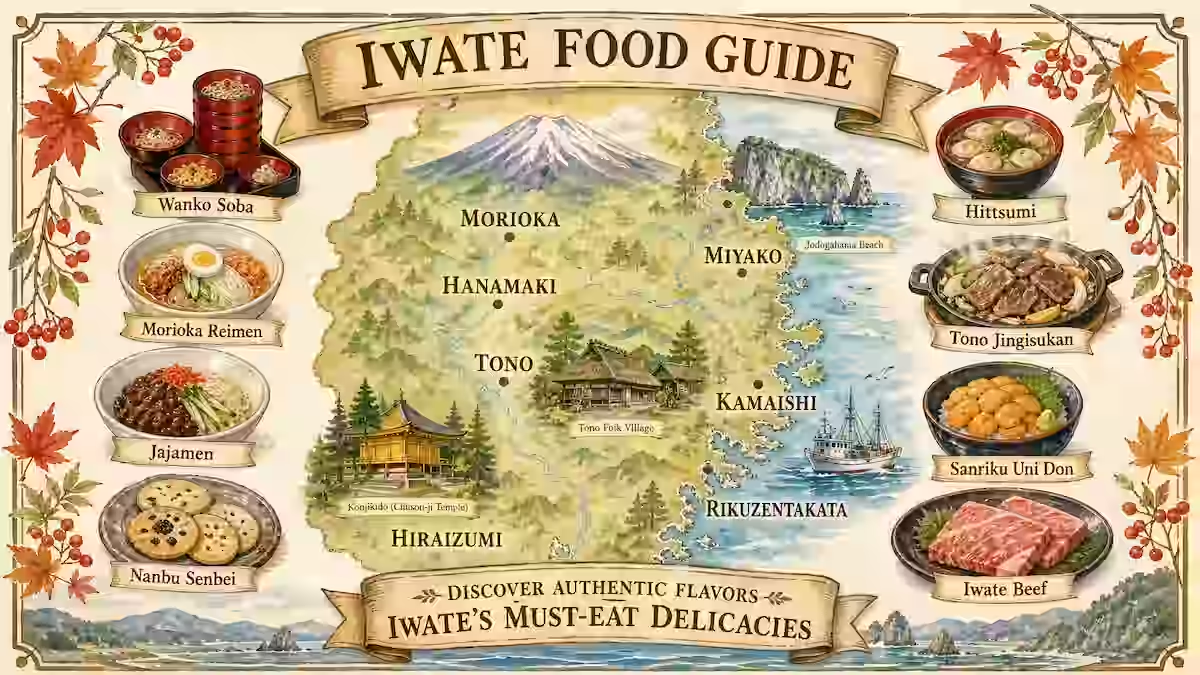
Iwate food rests on three things: noodles, a cold northern coast, and a long habit of turning scarcity into cooking. In fact, the largest prefecture on Honshu splits into two kitchens that barely overlap, lands more wild abalone than anywhere else in Japan, and eats a bowl of noodles that finishes as egg soup. This Iwate food guide covers the fourteen dishes worth planning a trip around, the season each one belongs to, and how to eat well on both sides of the mountains.
- 要点At a Glance
- 麺処Three Noodles
- 名物Must-Try
- 味覚Taste
- 三陸Sanriku
- 地域By Area
- 恵みIngredients
- 旅路Access
- 歴史History
- 問答FAQ
Iwate Food Guide at a Glance
Iwate sits in northern Tohoku, about two and a quarter hours from Tokyo by shinkansen. It leads Japan in hops and in wild abalone landings, ranks second for farmed wakame and kombu, and holds seven geographical indication registrations, the second highest count of any prefecture. The Sanriku coast, meanwhile, sits where the cold Oyashio current meets the warm Kuroshio.
If you eat only three things here, make them Morioka jajamen in the capital, a mochi set around Ichinoseki, and Sanriku oysters or sea urchin on the coast. Overall, Iwate food is cheap by Japanese standards, with the single glaring exception of Maesawa beef.
Two notes on geography. Morioka is the prefectural capital, yet many specialties on this page come from towns two or three hours away. Second, locals split Iwate into the inland side and the coastal side, and the two really do eat differently.
| 🍜 Quick Facts – Iwate Food | |
|---|---|
| Prefecture | Iwate (岩手県) |
| Region | Tohoku, the largest prefecture on Honshu |
| Two Halves | Inland basins and highlands in the west, the Sanriku coast in the east |
| Food Identity | Noodles, mochi and grain dishes, cold-water seafood, and brand livestock |
| Famous Dishes | Wanko soba, Morioka reimen, Morioka jajamen, hittsumi, Maesawa beef |
| National Rankings | First for hops and wild abalone, second for farmed wakame and kombu |
| Signature Ritual | Wanko soba, a meal that only ends when you put the lid on the bowl |
| Sake | Home of the Nanbu Toji, one of Japan’s best-known brewmaster guilds |
| Best Food Areas | Morioka, Hanamaki and Tono, Ichinoseki, Oshu, the Sanriku coast |
What Makes Iwate Food Unique?
One Prefecture, Four Landscapes
Iwate covers more ground than any other prefecture on Honshu, and that scale shows on the plate. The Ou Mountains hold snow into spring, while the Kitakami highlands run cool and dry. Between them, the Kitakami River basin grows rice and vegetables. The Pacific edge, meanwhile, is a drowned ria coastline with deep sheltered bays. Therefore, a single prefecture supports mountain foraging, dairy farming, brand wagyu, and serious aquaculture at the same time.
Grain, Mochi, and the Culture of Making Do
Cold summer winds from the Pacific, known as yamase, wrecked rice harvests in northern Iwate for centuries. Households therefore leaned on wheat, buckwheat, soybeans, and millet instead. Hittsumi, a torn-dough dumpling soup, came directly out of that habit. So did Nanbu senbei, a plain wheat cracker that stores almost indefinitely. Further south, where rice grew reliably, the same instinct produced the opposite result. Ichinoseki and Hiraizumi turned mochi into a formal cuisine with dozens of separate toppings.
The Sanriku Coast and Two Currents
Off the Sanriku coast, the cold Oyashio current collides with the warm Kuroshio. That meeting feeds enormous plankton blooms, which in turn feed everything above them. The bays run deep and sheltered, so aquaculture works well here. Nutrients washing down from forested mountains help too, which is why local fishermen have planted trees inland for decades. Consequently, Iwate ranks first nationally for wild abalone and second for farmed wakame and kombu.
Morioka’s Three Great Noodles
Morioka has no single blockbuster sight, so the city built its reputation on noodles instead. Three dishes carry the title, and they have almost nothing in common. One is a competitive eating ritual, one arrived from Korea, and one came home from Manchuria. Above all, they are the easiest entry point into Iwate food.
-
 三大麺
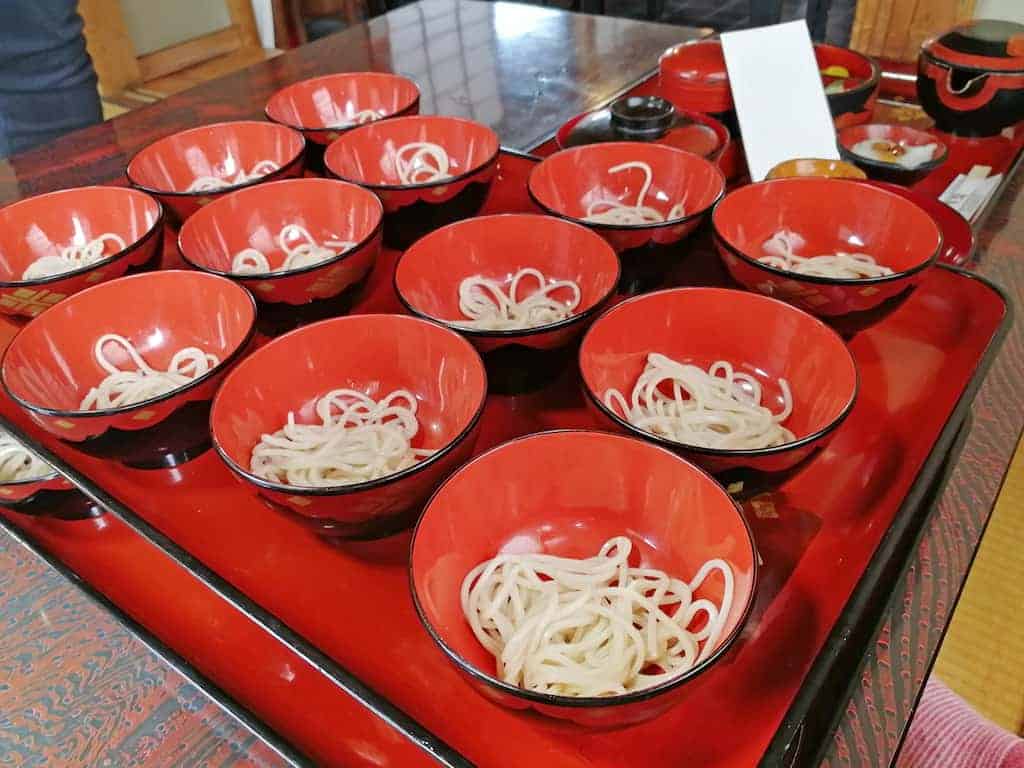
三大麺Wanko Soba (わんこそば)
Bite-sized soba refilled the moment your bowl empties. Servers chant, empty bowls stack up, and the meal ends only when you close the lid.
Read the Wanko Soba guide -
 三大麺
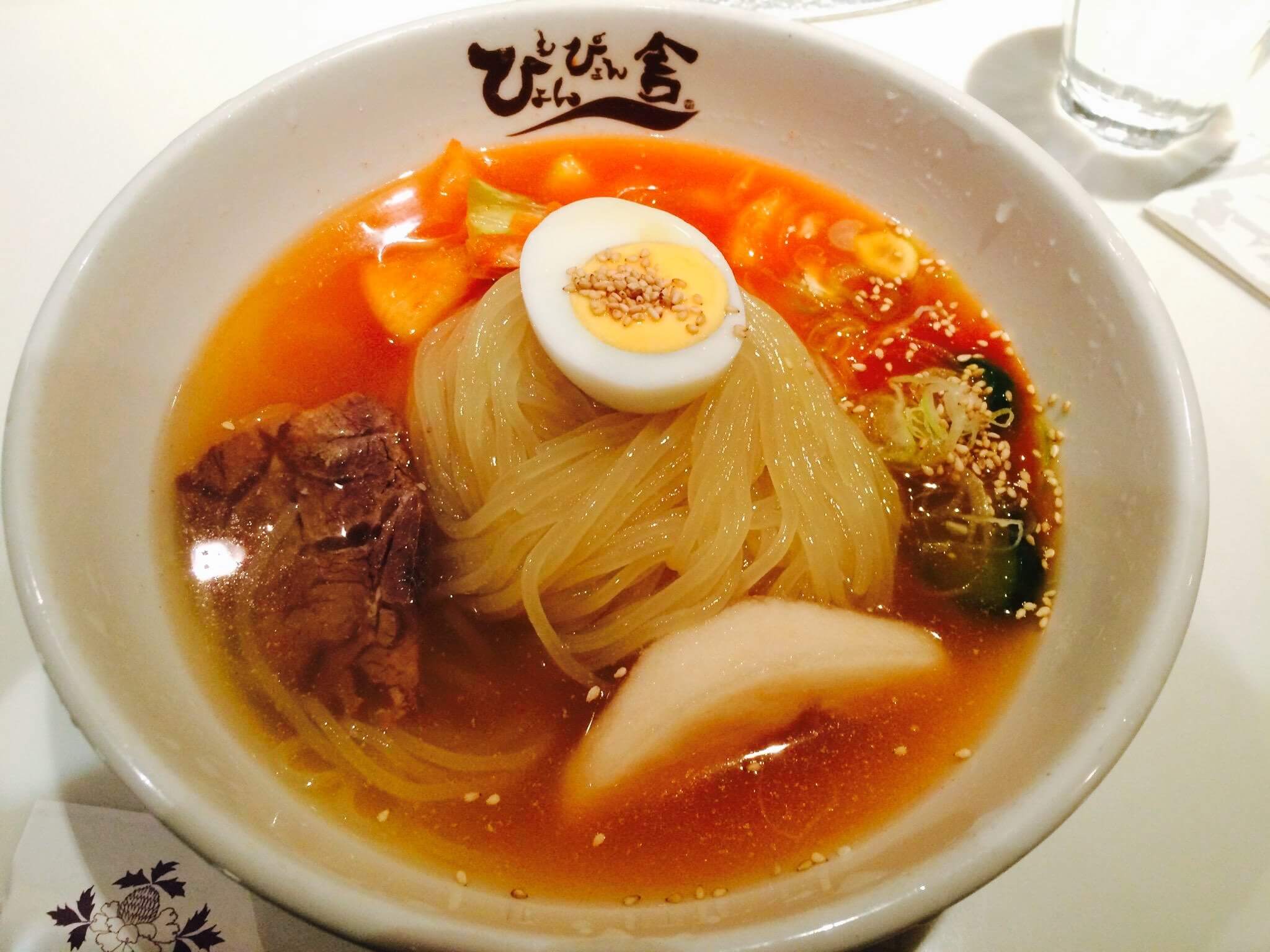
三大麺Morioka Reimen (盛岡冷麺)
Springy starch noodles in a chilled beef broth, topped with kimchi and a slice of fruit. A Hamhung native introduced it to Morioka in 1954.
Read the Morioka Reimen guide -
 三大麺
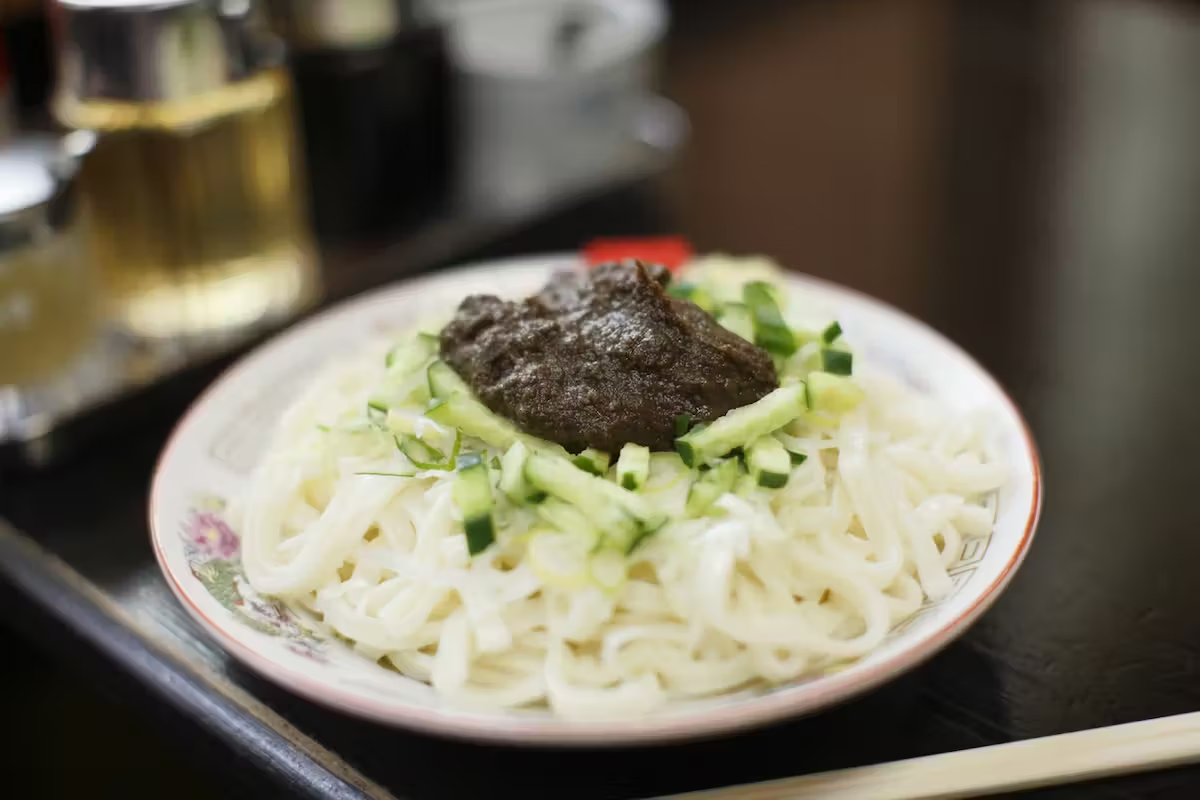
三大麺Morioka Jajamen (盛岡じゃじゃ麺)
Flat noodles under meat miso, cucumber, and green onion. Crack an egg into the leftover bowl and staff turn it into chitantan soup.
Read the Morioka Jajamen guide
How to order jajamen like a local. Mix everything hard before the first bite, because the miso sits on top and the flavour hides underneath. Add chilli oil, garlic, and vinegar to taste. When about a mouthful of noodles remains, crack the egg in and hand the bowl back. Staff add hot noodle water and more miso, then return it as chitantan soup.
Iwate Food Guide: Dishes Beyond the Noodles
Past Morioka, the prefecture opens up quickly. First of all, the inland side runs on wheat, mochi, and grilled meat. The coast, by contrast, runs on shellfish and cold-water fish. Both sides deserve a day.
Inland Classics and Comfort Food
-
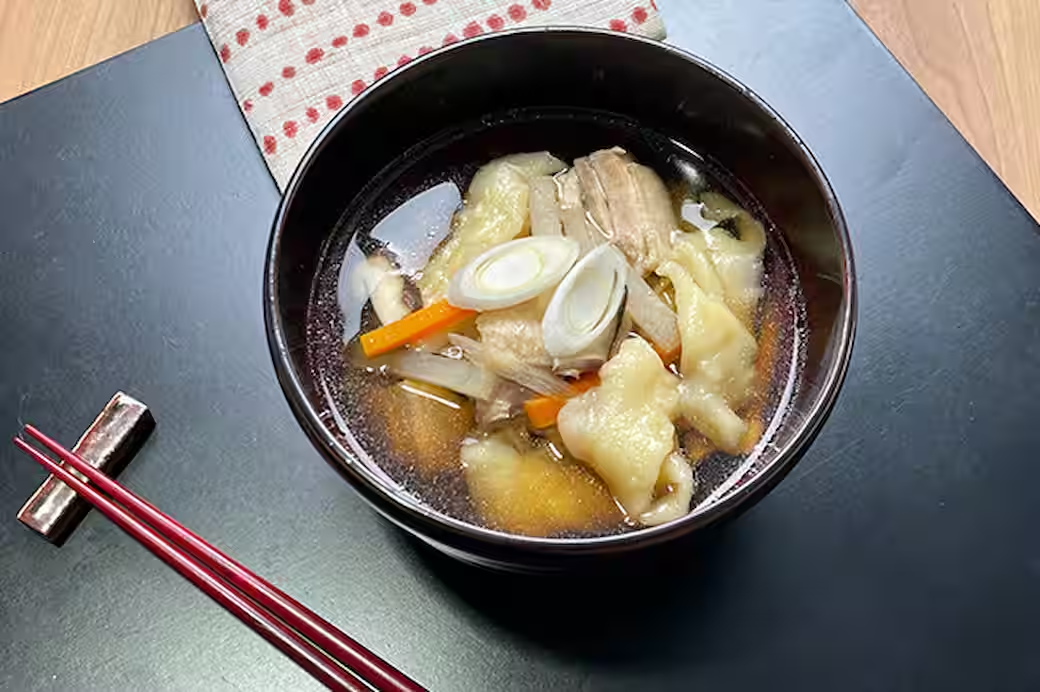
 郷土
郷土Hittsumi (ひっつみ)
Wheat dough torn by hand into a soy-based broth with chicken, mushrooms, and root vegetables. The name comes from the dialect verb for tearing.
Read the Hittsumi guide -
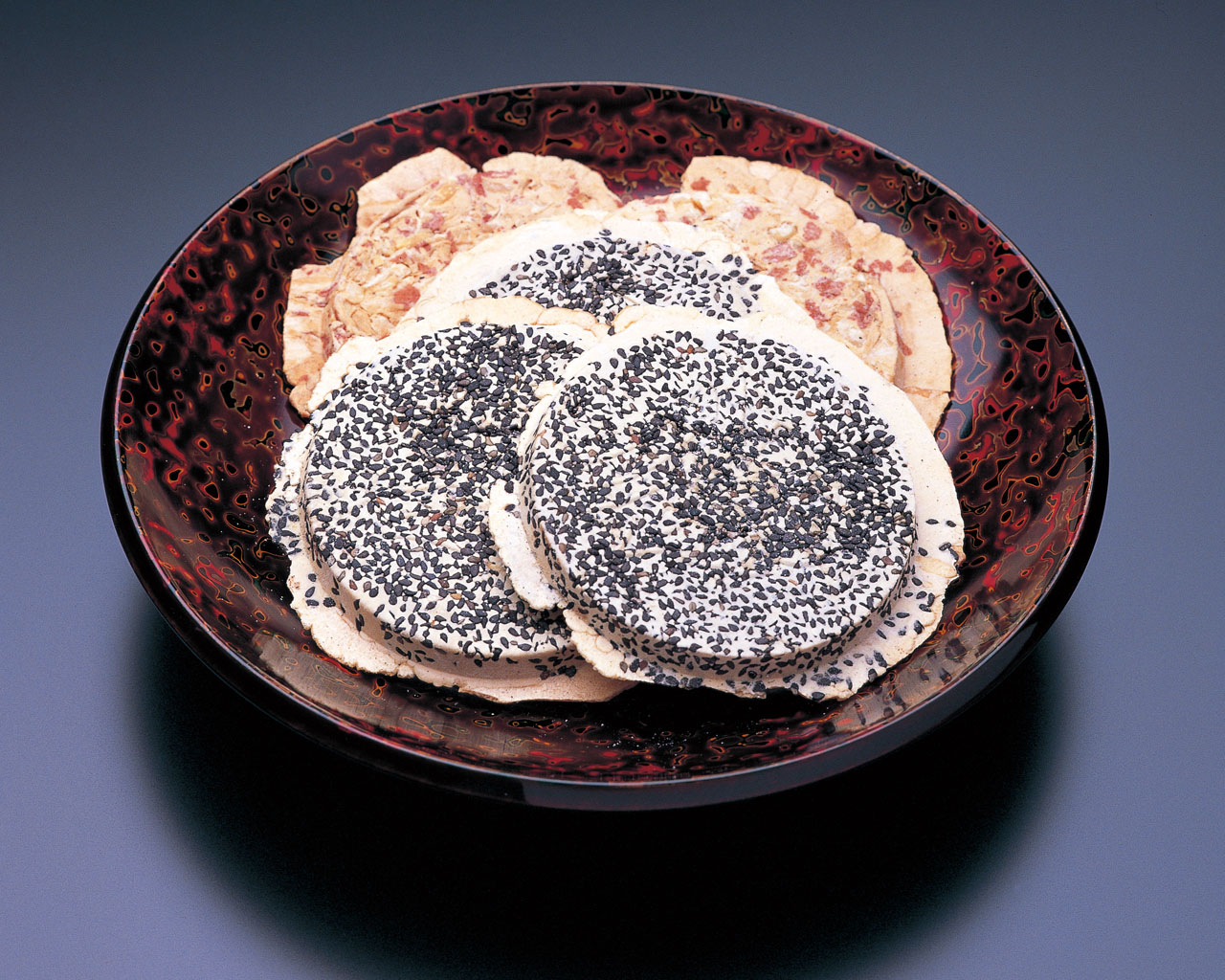
 銘菓
銘菓Nanbu Senbei (南部せんべい)
A wheat cracker pressed in round iron moulds, not the usual rice kind. Sesame and peanut lead the range, and locals also simmer it in soup.
Read the Nanbu Senbei guide -
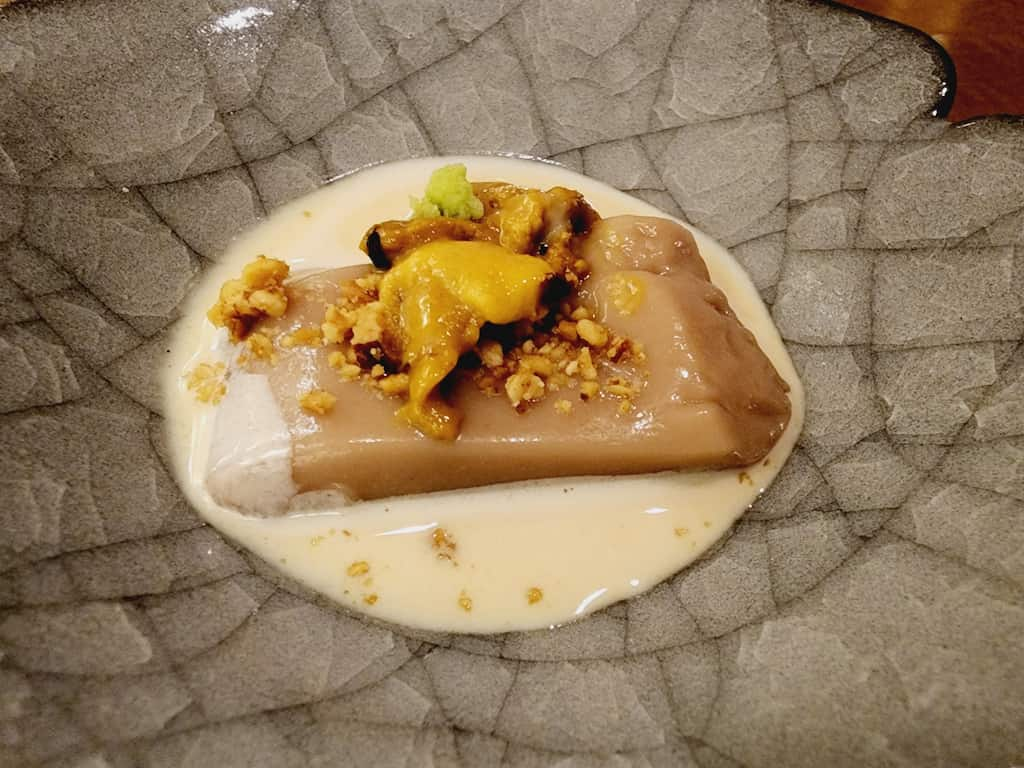 郷土
郷土Walnut Tofu (胡桃豆腐)
Ground walnuts set with starch into a silky block. Iwate grows wild oni-gurumi walnuts, which taste leaner and less oily than imported kinds.
Read the Walnut Tofu guide -
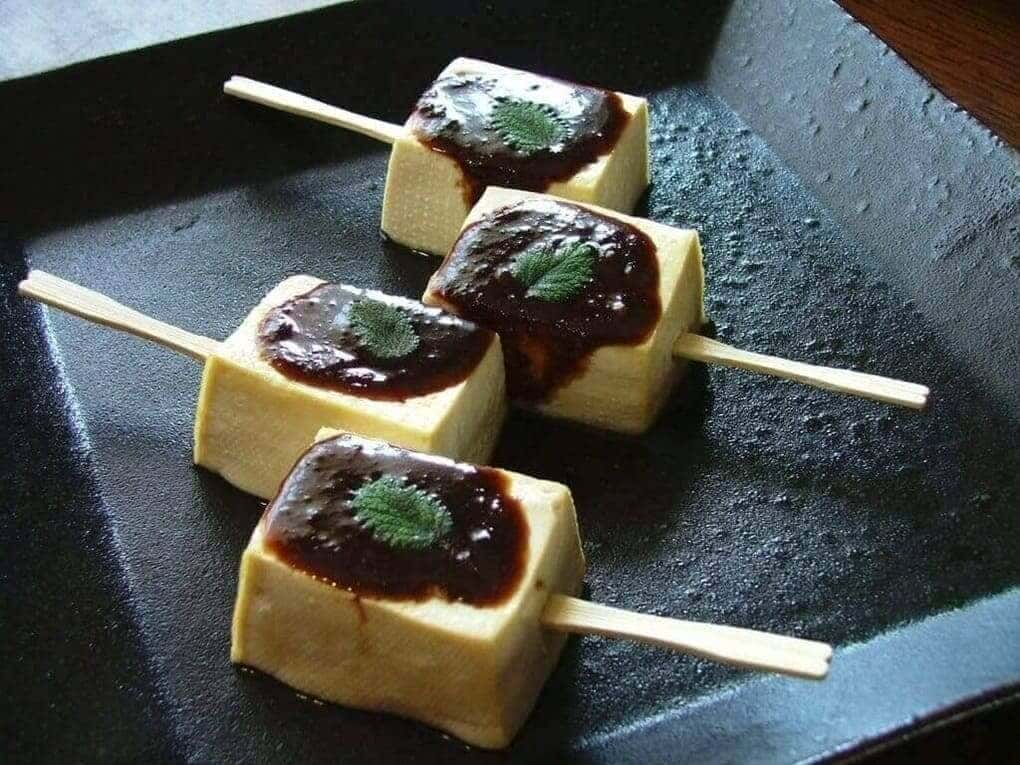
 郷土
郷土Tofu Dengaku (豆腐田楽)
Skewered tofu grilled over charcoal and brushed with sweet miso. Northern Iwate serves a firm, dense tofu that holds up well on the skewer.
Read the Tofu Dengaku guide -
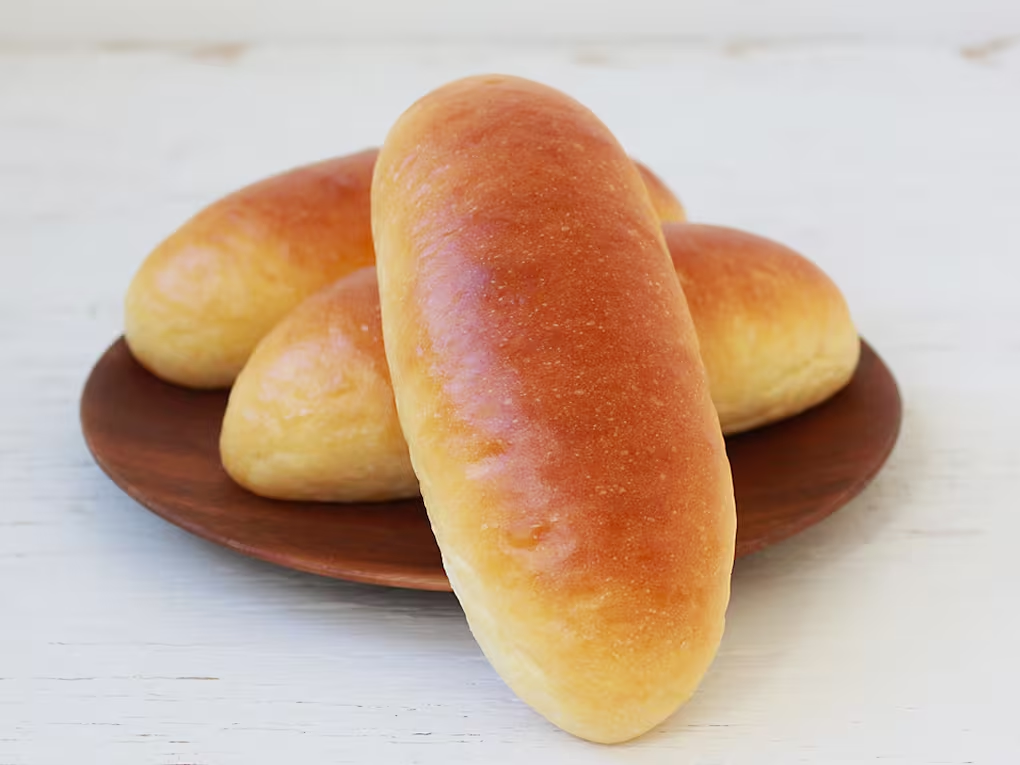 名物
名物Koppe Pan (コッペパン)
A soft oval roll split and filled to order. Morioka turned a plain school-lunch bread into a local institution with dozens of sweet and savoury fillings.
Read the Koppe Pan guide -
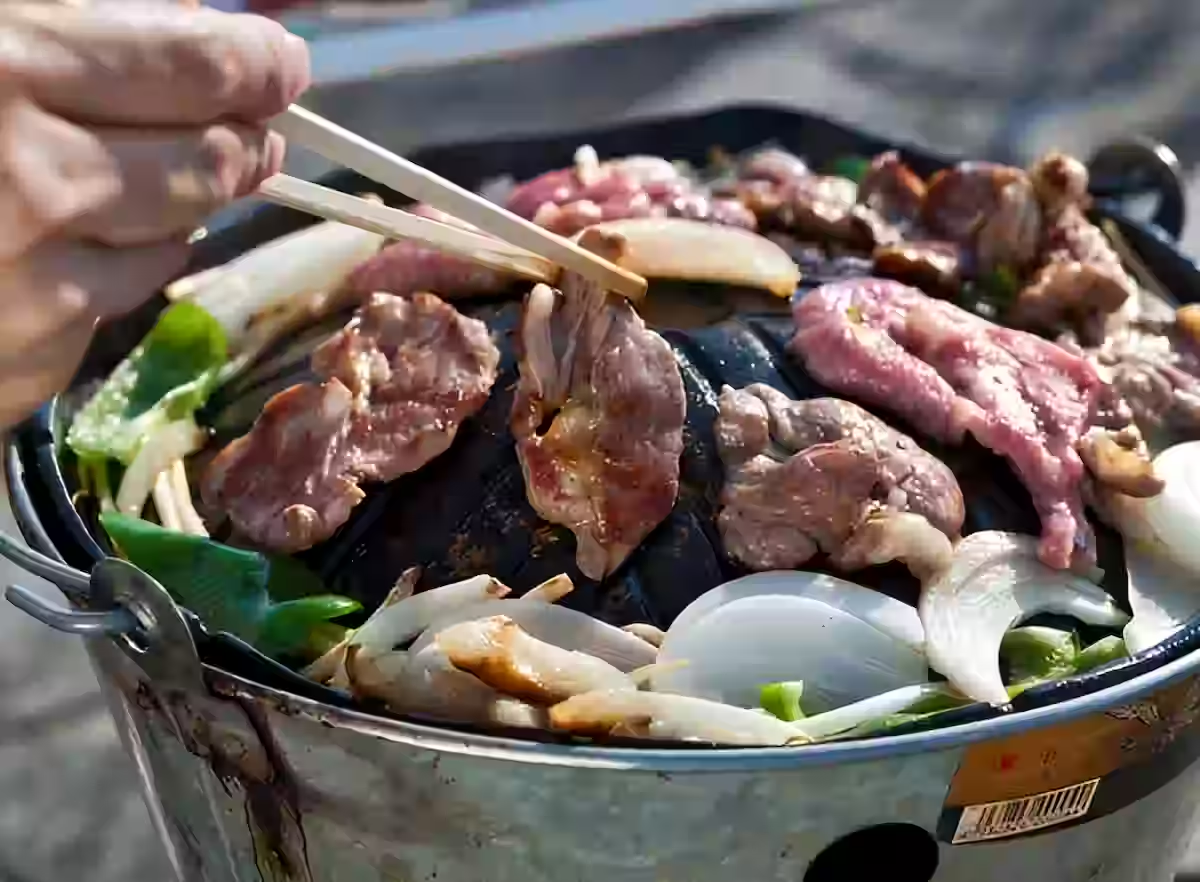
 名物
名物Tono Jingisukan (遠野ジンギスカン)
Lamb grilled plain on a domed iron pan, then dipped in soy sauce. Tono cooks it outdoors on a perforated tin bucket at picnics and sports days.
Read the Tono Jingisukan guide
Brand Meat, Coastal Hot Pots, and Local Ramen
-
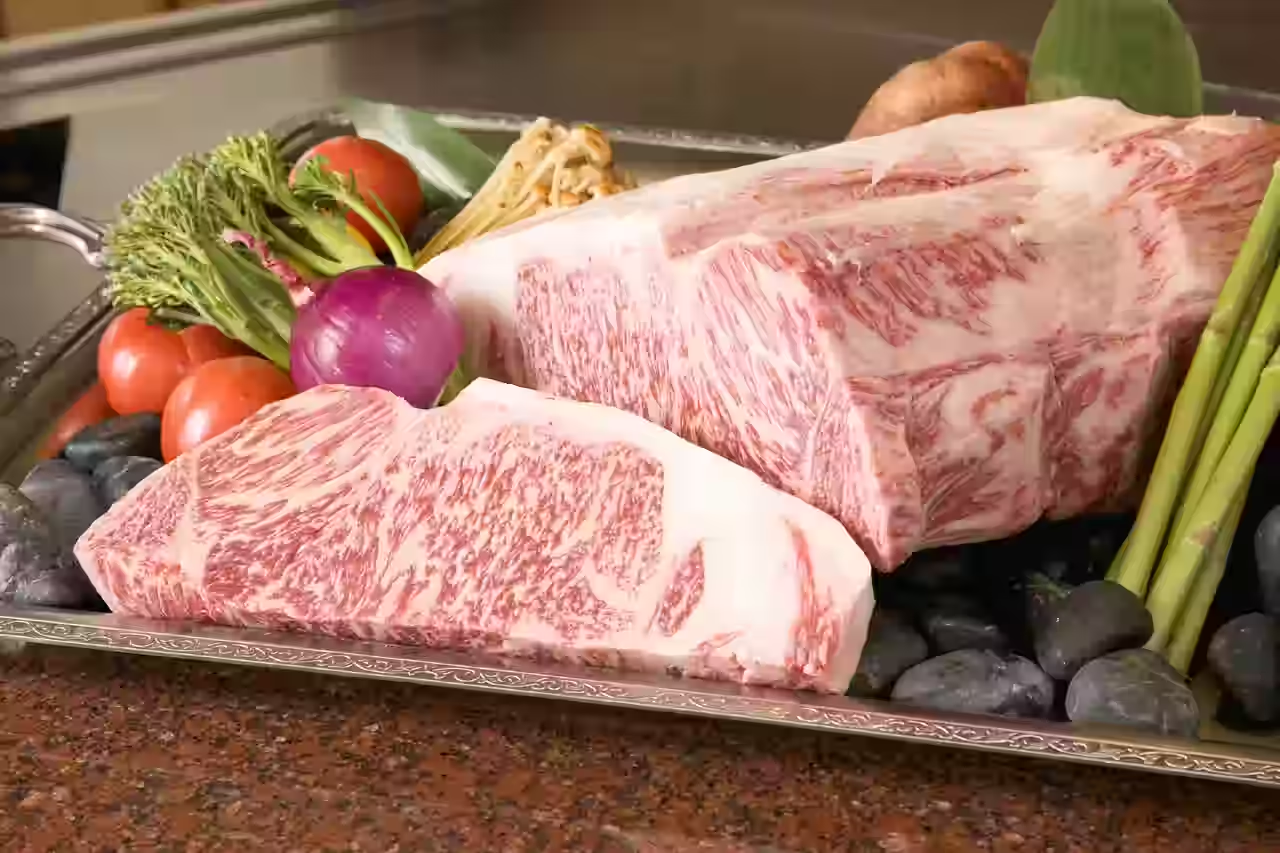
 銘牛
銘牛Maesawa Beef (前沢牛)
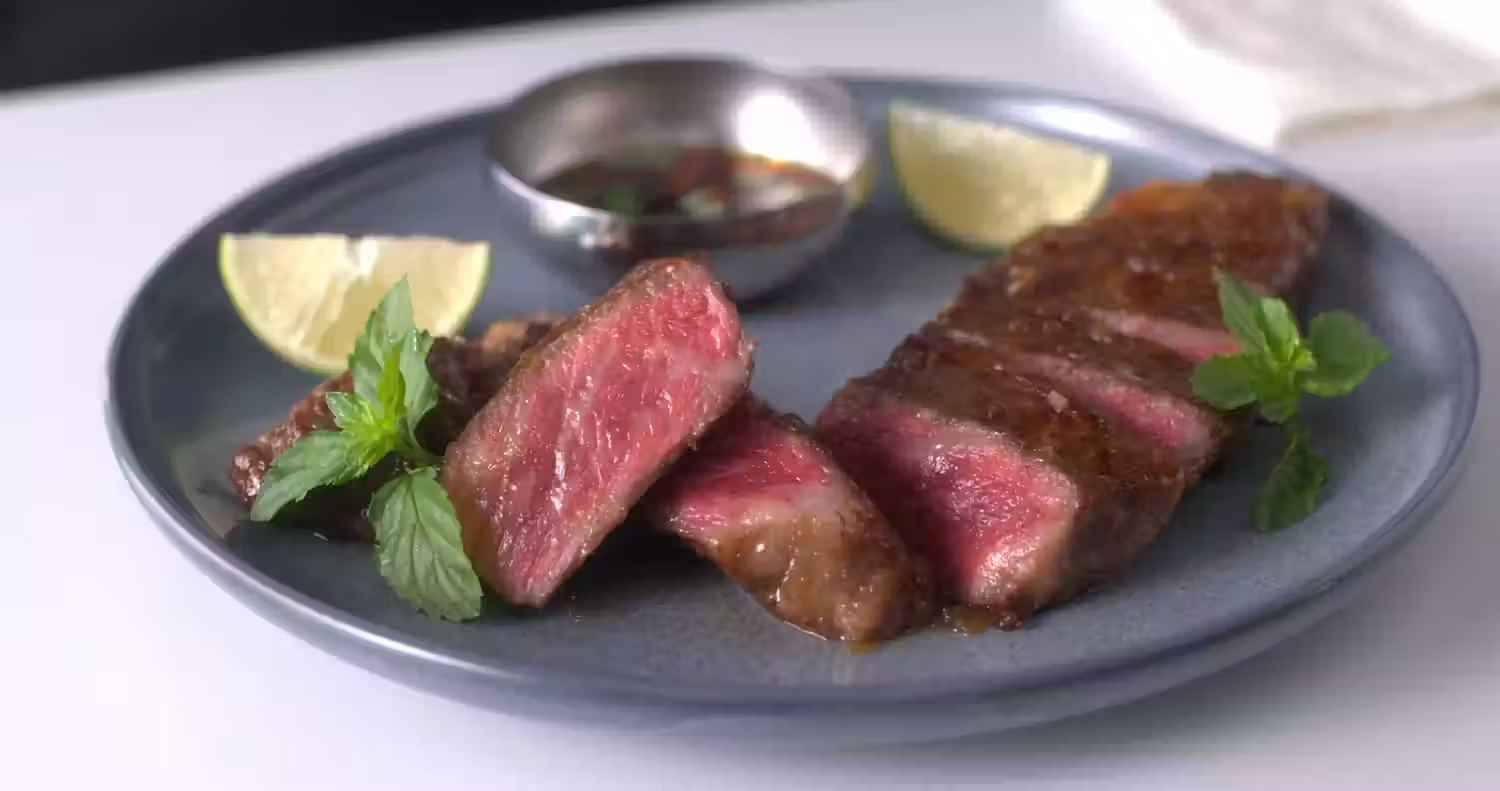
Iwate’s flagship wagyu, raised around Maesawa in Oshu City. The fat melts low and the flavour stays gentle, which suits sukiyaki and shabu-shabu.
Read the Maesawa Beef guide -
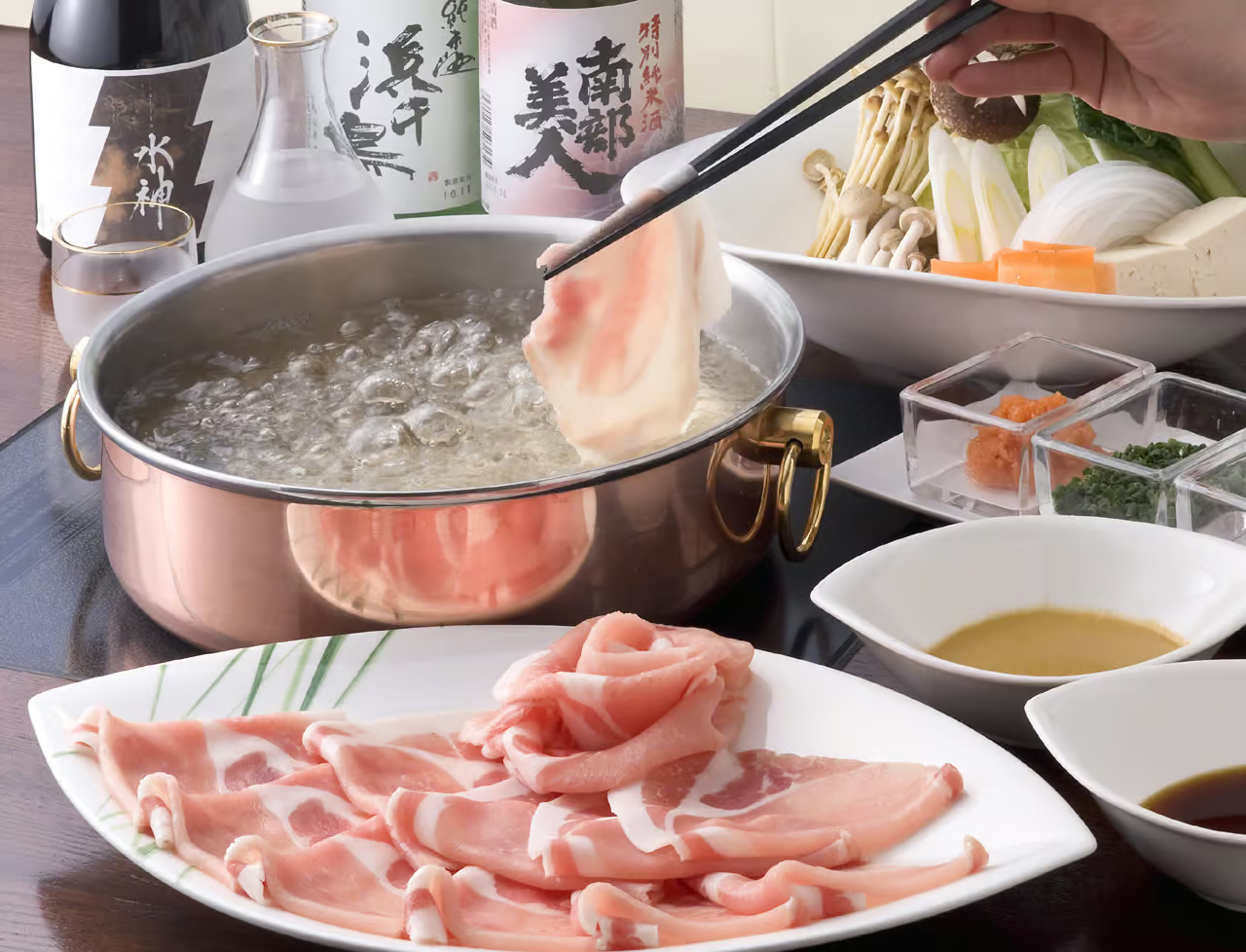
 銘豚
銘豚Sasuke Pork (佐助豚)
A three-breed pork brand from Ninohe in the far north. The fat tastes clean and sweet, so shabu-shabu shows it off better than heavy sauces.
Read the Sasuke Pork guide -
 郷土
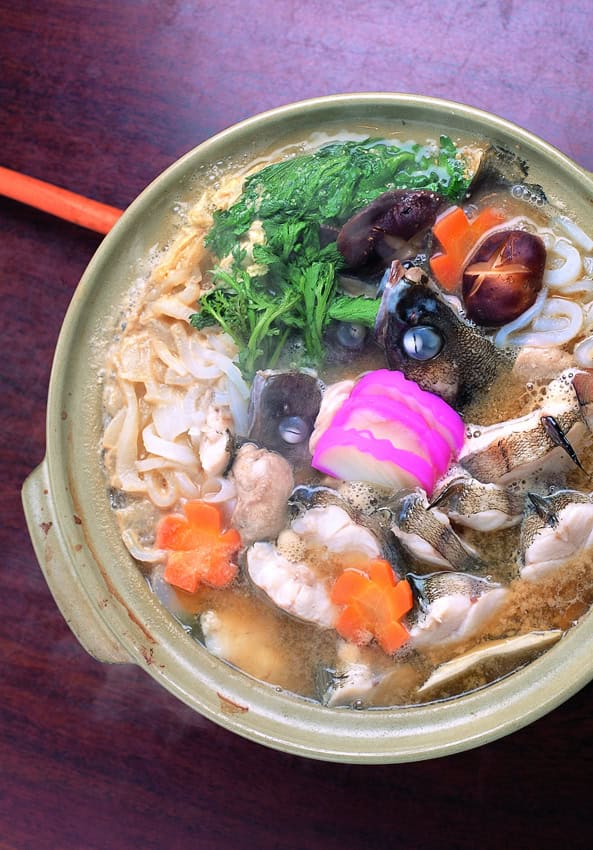
郷土Donko Nabe (どんこ鍋)
A Sanriku winter hot pot built on donko fish and its rich liver, whisked into miso broth. Fishermen ate it first, and it still tastes like a working meal.
Read the Donko Nabe guide -
 ご当地
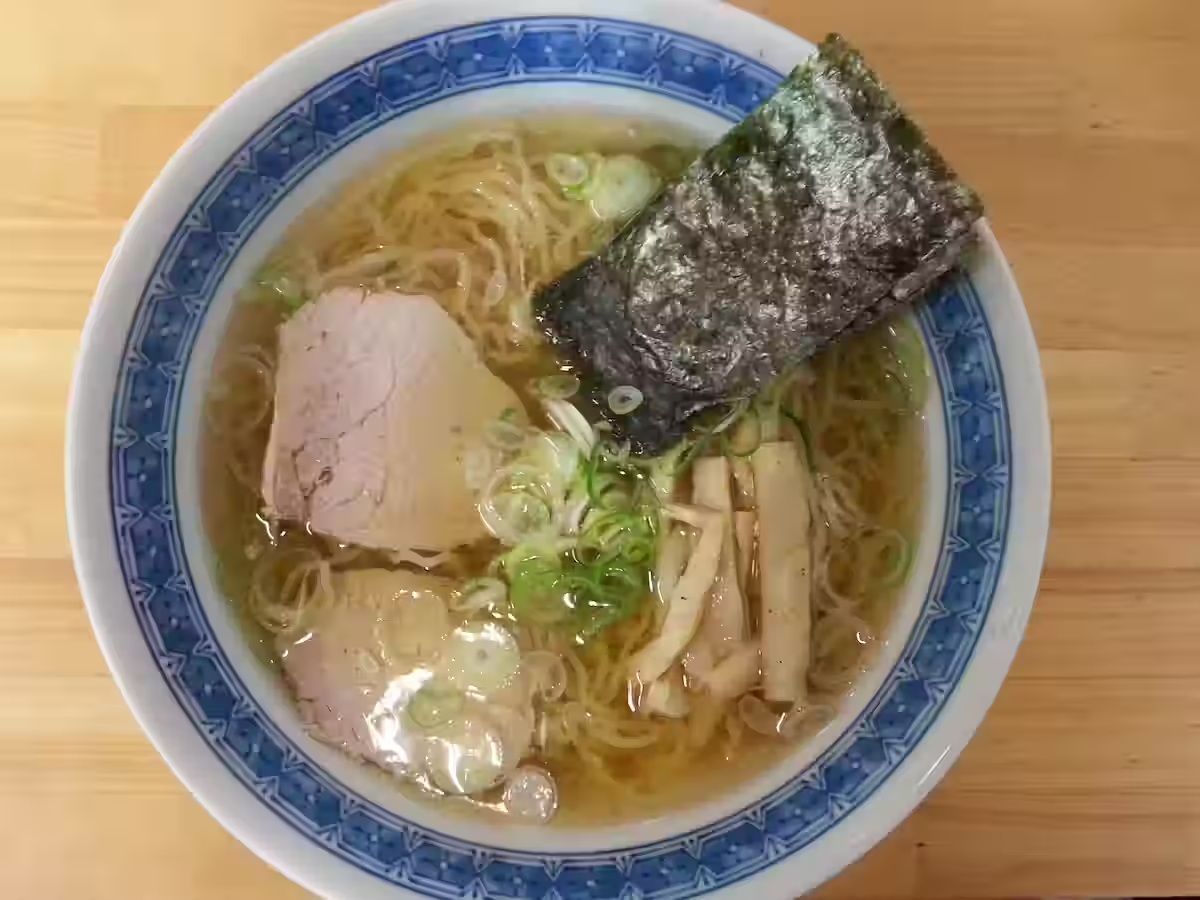
ご当地Kamaishi Ramen (釜石ラーメン)
Ultra-thin curly noodles in a clear soy broth. Steel-town workers wanted a bowl that cooked in seconds, and the recipe never grew heavier.
Read the Kamaishi Ramen guide -
 ご当地
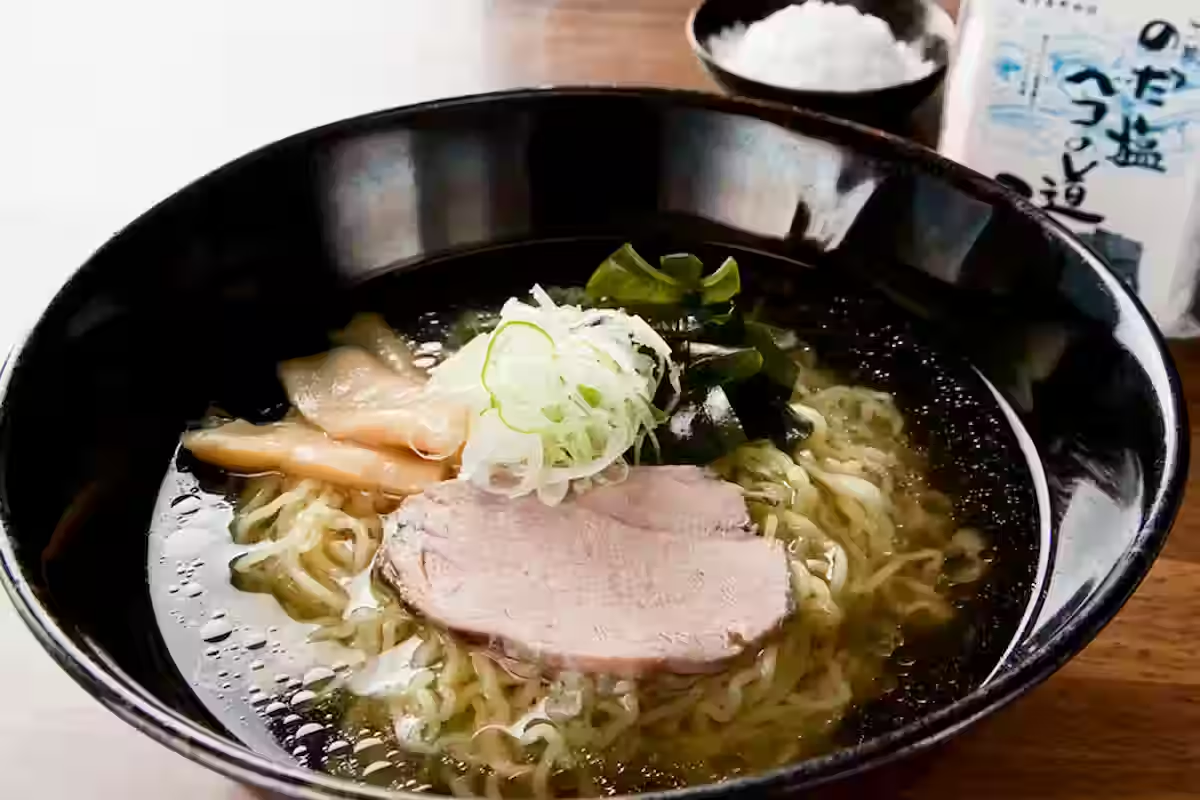
ご当地Noda Shio Ramen (野田塩ラーメン)
Salt ramen seasoned with Noda sea salt, made in the village that once traded it inland by ox. Clean, mineral, and quietly moreish.
Read the Noda Shio Ramen guide
Iwate Food Guide: What to Eat by Season
Iwate changes hard with the calendar, especially on the coast. Therefore, use the table below to match a visit to what is actually being served.
| Season | What to eat | Where it is strongest |
|---|---|---|
| Winter Dec-Feb | Oysters at their fattest, donko nabe, hittsumi, New Year mochi and kurumi zoni | Sanriku coast, Miyako, inland towns |
| Spring Mar-May | New-season wakame, mountain vegetables, hoya starting | Sanriku coast, Kitakami highlands |
| Summer Jun-Aug | Sea urchin, hoya at its peak, Morioka reimen, wanko soba events | Hirono, Kuji, Morioka |
| Autumn Sep-Nov | Pacific saury, autumn salmon, new-crop rice, matsutake, the hop harvest | Ofunato, Kamaishi, Tono |
| Year-round | Morioka jajamen, Maesawa beef, Kamaishi ramen, Tono jingisukan indoors | Morioka, Oshu, Kamaishi, Tono |
Peak seasons for Iwate specialties. Availability varies by shop and by year.
What Does Iwate Food Taste Like?
Iwate food tastes restrained, and that restraint takes a little getting used to. Broths lean on soy sauce and dried fish rather than sugar, so the first spoonful of hittsumi can read as plain. Give it a minute. The wheat dough softens the stock, the mushrooms come forward, and the whole bowl turns quietly savoury. Jajamen works the opposite way, since the miso hits hard and the cucumber cuts straight back through it. On the coast, meanwhile, the seasoning almost disappears. Sanriku oysters taste of cold seawater and little else, and the sea urchin is sweeter and cleaner than most people expect. I hesitated over the hoya, honestly, because its aroma is genuinely strange at first. Two pieces later I understood why locals wait all year for it.
Sanriku Seafood: What to Eat and When
The Sanriku coast runs from northern Miyagi up through Iwate into Aomori. Iwate holds the long middle section, and its deep ria bays make ideal aquaculture ground. Above all, this is where the prefecture’s food gets genuinely world class.
| Product | Season | How it is eaten |
|---|---|---|
| Oysters (牡蠣) | Roughly Nov-Mar | Raw, grilled in the shell, or steamed at coastal huts |
| Sea urchin (ウニ) | Roughly May-Aug | Raw over rice, or the Hirono style steamed in seawater |
| Wakame (わかめ) | Harvest Feb-May | Blanched and salted, then used in soups and salads |
| Hoya, sea squirt (ホヤ) | Roughly May-Aug | Sliced raw with vinegar, or dried and grilled |
| Abalone (アワビ) | Roughly Nov-Dec | Sashimi, steamed, or simmered whole |
| Pacific saury (サンマ) | Roughly Sep-Nov | Salt-grilled whole, or raw when very fresh |
| Scallops (ホタテ) | Year-round, best in winter | Raw, grilled in the shell, or in nabe |
Core Sanriku products in Iwate and their usual peak windows. Quotas and weather shift these dates.
Kaisen-don and the Coastal Markets
Every fishing town along the coast serves some version of a seafood bowl. Miyako, Kamaishi, and Ofunato all have market halls or roadside stations built around them. Prices sit well below Tokyo levels, and the mix changes with the boats. Consequently, ask what landed that morning rather than ordering from the photo menu.
Kurumi Zoni and Coastal New Year
Around Miyako, New Year morning starts with kurumi zoni. Grilled mochi goes into a clear soy broth with daikon, carrot, burdock, and mushroom. A separate dish holds sweetened ground walnut paste, and you dip each piece of mochi before eating it. Some households add salmon roe or abalone. According to the Ministry of Agriculture, Forestry and Fisheries, the practice grew out of the coast’s unreliable rice harvests, since scarce mochi deserved two flavours rather than one.
A note on the 2011 tsunami. The Great East Japan Earthquake destroyed most of Iwate’s aquaculture infrastructure. Wakame farming had led the country until 2010, and harvests resumed the year after the disaster. Iwate now ranks second nationally. Many coastal restaurants and market halls you will visit are rebuilt, and several tell that story on the wall.
Iwate Food Guide by Area
The mountains split Iwate down the middle, and the two halves developed separately. Crossing that line changes the menu completely. Therefore, plan at least one stop on each side.
| Inland (west) | Coast (east) | |
|---|---|---|
| Main cities | Morioka, Hanamaki, Kitakami, Ichinoseki, Oshu | Miyako, Kamaishi, Ofunato, Kuji, Rikuzentakata |
| Staple base | Rice, wheat, buckwheat, millet, and mochi | Rice plus a heavy share of seafood |
| Protein from | Wagyu, pork, lamb, chicken, and dairy | Oysters, sea urchin, abalone, saury, salmon |
| Signature dishes | Three great noodles, mochi cuisine, hittsumi, jingisukan | Donko nabe, kaisen-don, kurumi zoni, mamebu soup |
| Getting around | Shinkansen plus local lines | Sanriku Railway and the coastal expressway, car preferred |
How the inland and coastal halves of Iwate differ. The traditions overlap, although the emphasis is clear.
- MoriokaThe capital and the noodle capital. All three great noodles, a dense cafe scene, and Nanbu ironware shops sit within walking distance of the station.
- Hanamaki & TonoHot springs, wanko soba in its quieter original form, and Japan’s leading hop-growing district. Tono adds lamb and craft beer.
- Ichinoseki & HiraizumiThe heart of mochi country. Formal mochi sets run through dozens of separate toppings, from walnut to sesame to grated daikon.
- Oshu & MaesawaCattle country and the home of Maesawa beef. Steakhouses, yakiniku counters, and shabu-shabu specialists cluster around the old town.
- Sanriku CoastMiyako, Kamaishi, Ofunato, and Rikuzentakata. Oysters, sea urchin, abalone, seafood bowls, and hot pots straight off the boats.
- Northern IwateNinohe, Kuji, and Hirono. Sasuke pork, soba kakke, tofu dengaku, steamed sea urchin, and the mamebu soup of Kuji.
Iwate Food Guide: Famous Ingredients
Mochi, Grain, and the Ichinoseki Tradition
Southern Iwate treats mochi as a formal cuisine rather than a snack. Around Ichinoseki, a full mochi set arrives as a lacquer tray of small bowls, each with a different topping. Walnut, sweet red bean, sesame, grated daikon, ginger, and salted salmon roe all appear. Households once served this at weddings, festivals, and seasonal rituals, and several restaurants still follow the old order of courses. Elsewhere in the prefecture, wheat and buckwheat carry the same role. Soba kakke, for instance, cuts buckwheat dough into triangles and serves them with miso and garlic.
Sanriku Seafood and Seaweed
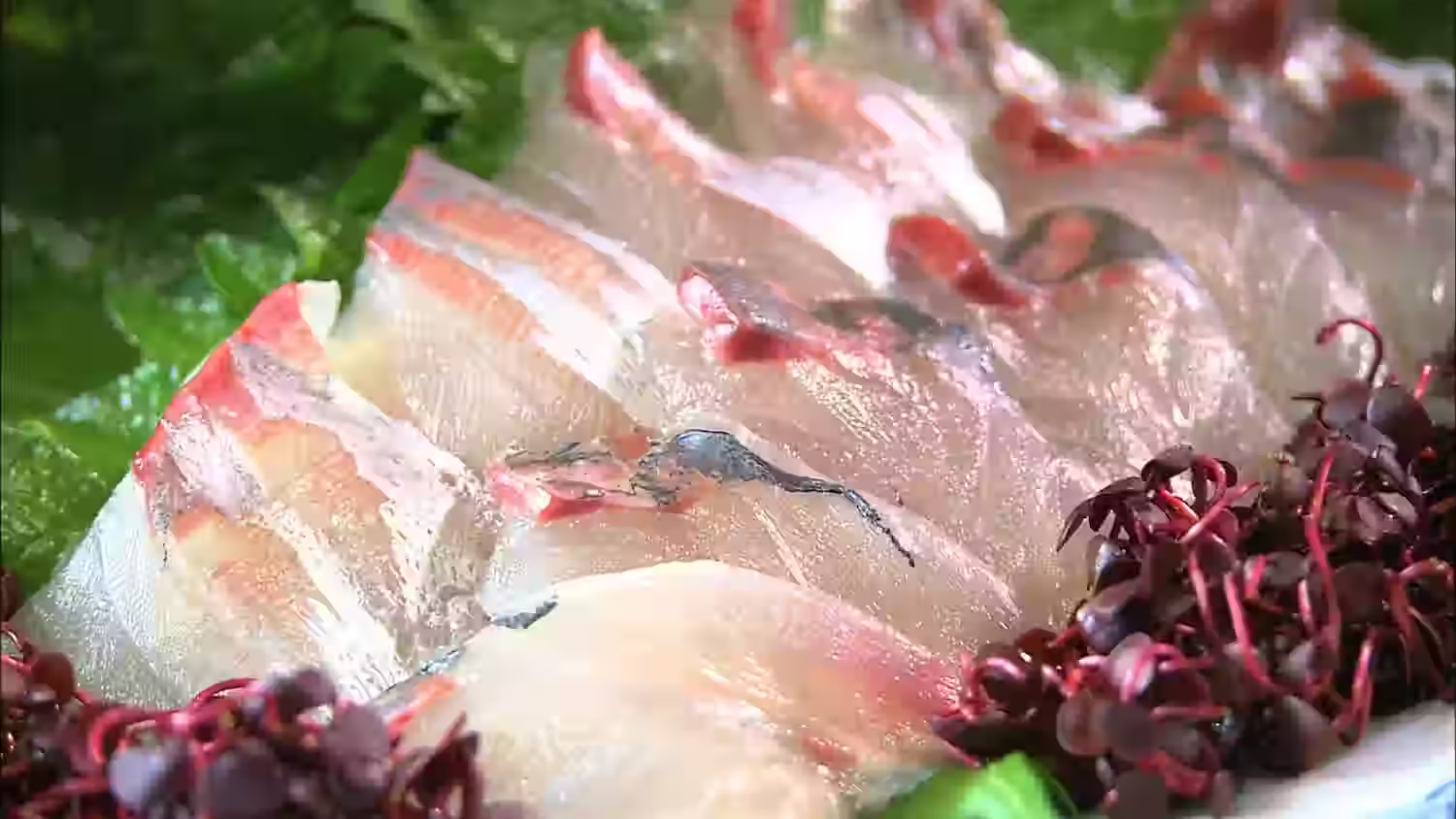
Iwate lands more wild abalone than any other prefecture, and it ranks second nationally for farmed wakame and kombu. Sanriku as a whole, counting Iwate and Miyagi together, produces roughly seventy percent of Japan’s wakame. Growers here also run the country’s only grading inspection for it. Oysters, scallops, sea urchin, and hoya fill out the aquaculture list, while saury and autumn salmon come from the open sea. Cold water keeps the texture firm, which is why Sanriku shellfish holds its shape better than warmer-water equivalents.
Wagyu, Pork, and Dairy
Maesawa beef carries a geographical indication registration and anchors the prefecture’s wagyu reputation. Iwate also raises Japanese Shorthorn cattle on highland pasture, and that breed gives lean, deeply beefy meat rather than heavy marbling. Sasuke pork from Ninohe leads the pork brands. Dairy matters here too, since the cool highlands suit grazing, and farms around Mount Iwate have supplied milk, butter, and cheese for well over a century. Iwate holds seven GI registrations in total, the second highest count in Japan.
Sake, Hops, and Fermentation
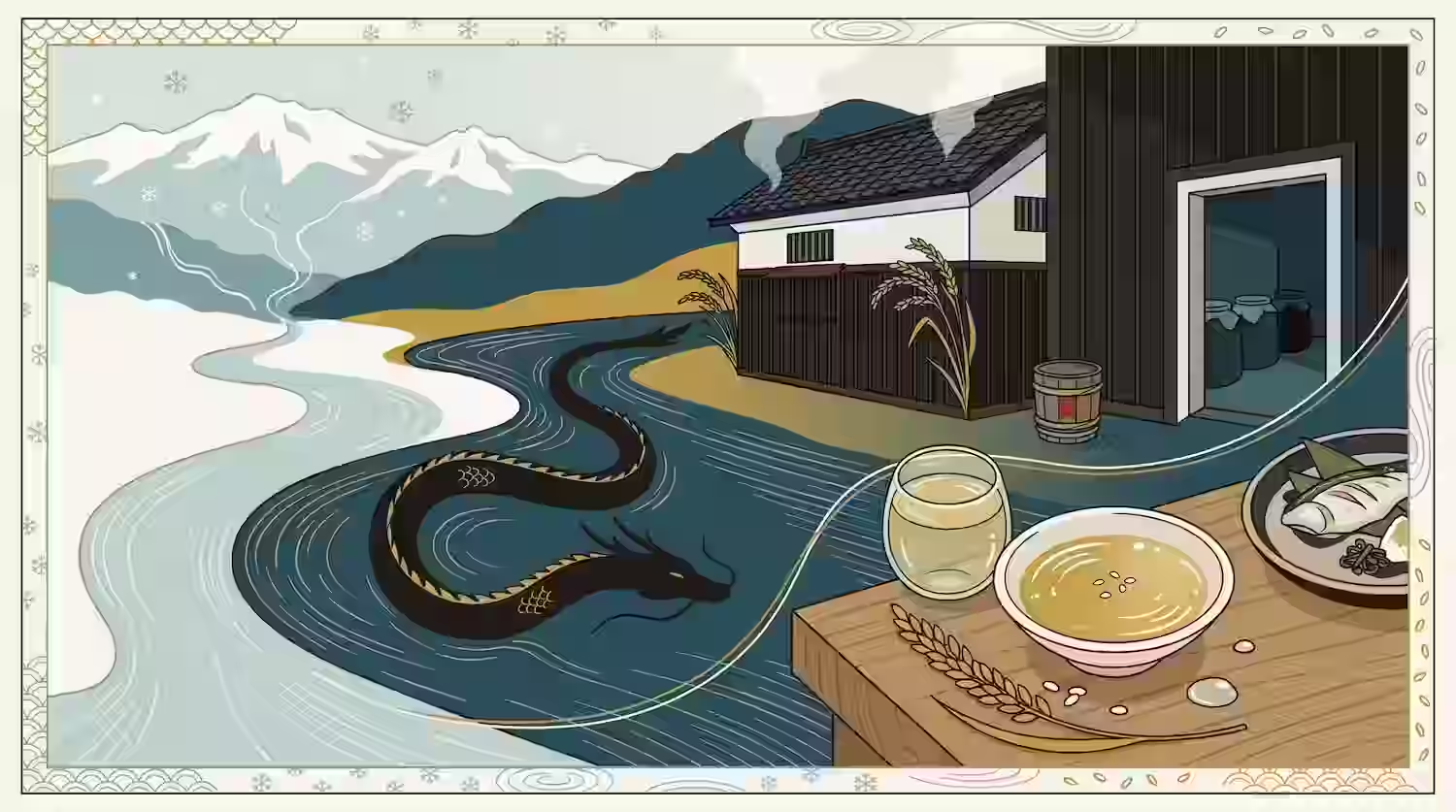
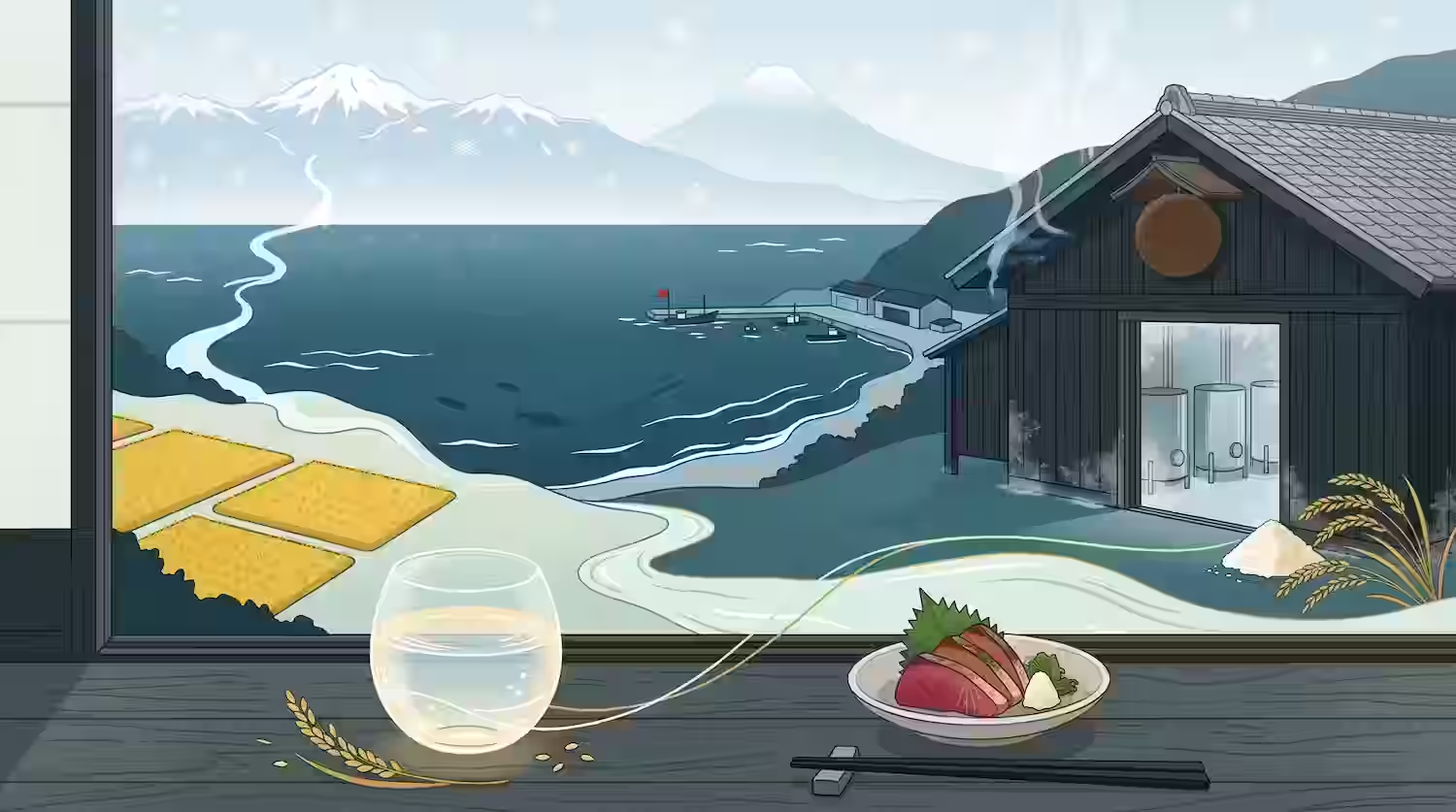
Iwate is the home of the Nanbu Toji, a brewmaster guild whose members have run breweries across Japan for generations. Cold winters and soft mountain water suit slow, clean fermentation. Local names to look for include Nanbu Bijin and AKABU. The prefecture also leads Japan in hop production, with roughly half the national growing area, and Tono has grown contract hops since 1963. On the coast, Rikuzentakata built a fermentation complex called CAMOCY, where producers work with koji, miso, soy sauce, beer, and chocolate under one roof. Salt-koji marinated Sanriku fish is worth seeking out there.
A note for travelers with dietary restrictions. Hittsumi and Nanbu senbei both contain wheat. Jajamen miso contains soy and usually wheat. Donko nabe, kaisen-don, and most coastal dishes contain fish or shellfish. Walnut tofu contains tree nuts, and so does the walnut paste served with mochi. Vegetarian options exist, although most soup bases use dried fish stock, so ask before ordering.
Iwate Food Guide: Access and Model Route
Getting to Iwate from Tokyo
The Tohoku Shinkansen reaches Morioka from Tokyo in about two hours and fifteen minutes on the fastest Hayabusa services. Ichinoseki comes earlier on the same line, at roughly one hour and forty minutes, and Shin-Hanamaki sits between them. From Shin-Hanamaki, the JR Kamaishi Line runs east to Tono and the coast. The Sanriku Railway then links the coastal towns from Kuji down to Sakari. In addition, Hanamaki Airport connects to several domestic cities. A rental car helps a great deal on the coast, since the bays sit far apart.
A Two-Day Morioka and Coast Route
Two days covers the two halves of Iwate without rushing. For example, this route works with one rental car day.
- 1Day 1, morning – Arrive in Morioka.Drop bags and walk the old merchant streets. Pick up a Nanbu ironware kettle or a bag of Nanbu senbei on the way.
- 2Day 1, lunch – Jajamen.Order the medium size, mix hard, then finish with chitantan soup. Save wanko soba for a day when you skip breakfast.
- 3Day 1, evening – Reimen and yakiniku.Locals eat reimen at the end of a grill meal. Order Maesawa beef first, then the cold noodles to close.
- 4Day 2, morning – Drive east.Cross to the coast via Tono. Stop for hops, folklore, and a jingisukan lunch if the timing works.
- 5Day 2, afternoon – Sanriku seafood.Reach Miyako or Kamaishi by early afternoon. Build a kaisen-don at a market hall, then walk the harbour.
- 6Day 2, evening – Hot pot or oysters.In winter, order donko nabe. In summer, choose sea urchin over rice instead and eat it while it is cold.
Food Souvenirs Worth Carrying Home
Nanbu senbei travels best, since it keeps for months and packs flat. Salted wakame and dried kombu from Sanriku are light and genuinely good. Beyond those, look for Noda salt, walnut sweets, Iwate sake, Tono craft beer, and dairy products from the Mount Iwate farms. A small Nanbu ironware skillet is not food, admittedly, yet it is the most Iwate object you can buy.
The History of Iwate Food Culture
The Nanbu Domain and the Grain Belt
Most of modern Iwate belonged to the Nanbu clan, whose territory also covered eastern Aomori. That shared history explains why Nanbu senbei and hittsumi appear in both prefectures. Northern Iwate sat in the path of the yamase, a cold Pacific wind that repeatedly ruined rice crops. Famines struck hard through the Edo period. Households therefore built a kitchen around wheat, buckwheat, millet, and soybeans, and those crops still shape the region’s comfort food. Southern Iwate, under the Date domain, grew rice reliably and developed mochi cuisine instead.
Salt, Iron, and the Old Trade Roads
Noda Village boiled seawater into salt for centuries, then carried it inland by ox along a route still called the salt road. Iron changed the prefecture too. Nanbu ironware grew out of the Morioka domain’s tea-kettle workshops, and Kamaishi opened Japan’s first Western-style blast furnace in the 1850s. Kamaishi ramen came much later, yet it belongs to that industrial story, since shift workers wanted noodles that cooked instantly.
Three Modern Dishes, All Postwar
Morioka’s noodle reputation is younger than it looks. Teruhito Aoki, originally from Hamhung in what is now North Korea, opened a shop in Morioka and launched reimen in 1954. Takashina Kanshou returned from Manchuria after the war and spent years rebuilding a zhajiangmian miso to suit local tastes, which produced jajamen. Wanko soba is older in spirit, since it grew from soba-burumai hospitality, although the competitive format only formalised in the late 1950s. None of these dishes is ancient, therefore, yet all three now define the city.
Explore More Iwate Foods
- Wanko Soba (わんこそば) – bottomless bowls and Iwate hospitality
- Morioka Reimen (盛岡冷麺) – chewy cold noodles in beef broth
- Morioka Jajamen (盛岡じゃじゃ麺) – meat miso noodles and chitantan
- Hittsumi (ひっつみ) – hand-torn dumpling soup
- Nanbu Senbei (南部せんべい) – the wheat cracker of the north
- Tono Jingisukan (遠野ジンギスカン) – bucket-grilled lamb
- Maesawa Beef (前沢牛) – Iwate’s flagship wagyu
- Sasuke Pork (佐助豚) – premium pork from Ninohe
- Donko Nabe (どんこ鍋) – the Sanriku winter hot pot
- Kamaishi Ramen (釜石ラーメン) – thin noodles, clear broth
- Noda Shio Ramen (野田塩ラーメン) – salt ramen from the old salt road
- Koppe Pan (コッペパン) – Morioka’s filled bread rolls
- Walnut Tofu (胡桃豆腐) – smooth, nutty, and quietly rich
- Tofu Dengaku (豆腐田楽) – charcoal-grilled tofu with sweet miso
- Browse all Iwate foods
Explore More Japanese Regional Food Guides
- Aomori Food Guide – apples, Oma tuna & senbei jiru
- Miyagi Food Guide – gyutan, zunda & Sanriku seafood
- Akita Food Guide – kiritanpo, Inaniwa udon & snow country cuisine
- Yamagata Food Guide – imoni, soba & the ramen capital
- Fukushima Food Guide – Kitakata ramen, kozuyu & peaches
- Tohoku Food – dishes from all six northern prefectures
- Discover Tohoku – 11 Japanese foods you need to taste
- Japan Food Guide – complete overview of all regions
In conclusion, bookmark this Iwate food guide and explore each dish in depth through the articles above. Then build a route that crosses the mountains at least once, because the inland and coastal halves really do taste different.
Iwate Food Guide FAQ
Iwate Food Guide FAQ: What to Eat First
問What food is Iwate most famous for?+
Iwate is most famous for Morioka’s three great noodles, which are wanko soba, Morioka reimen, and Morioka jajamen. Beyond those, Maesawa beef and Sanriku seafood carry the prefecture’s reputation. Inland towns add mochi cuisine, hittsumi, and Nanbu senbei. Most of this food is inexpensive, with premium wagyu as the clear exception.
問What are Morioka’s three great noodles?+
They are wanko soba, Morioka reimen, and Morioka jajamen. Wanko soba serves bite-sized portions that staff refill until you stop them. Reimen uses chewy starch noodles in a chilled beef broth with kimchi. Jajamen tops flat noodles with meat miso, then turns the leftovers into an egg soup called chitantan.
問How does wanko soba actually work?+
You sit down with a small bowl, and a server tips in a mouthful of soba. Each time you empty the bowl, they refill it immediately. Empty bowls stack on the table so you can count them. The meal ends when you close the lid before the next serving arrives, and roughly fifteen bowls equal one normal portion of soba.
Iwate Food Guide FAQ: Inland Classics and Mochi Culture
問What is Morioka jajamen and how do I eat it?+
Jajamen is a flat wheat noodle dish topped with meat miso, cucumber, and green onion. Mix it thoroughly before eating, then adjust with chilli oil, garlic, and vinegar. When a small amount of noodles remains, crack the provided egg into the bowl and hand it back. Staff add hot noodle water and miso, returning it as chitantan soup.
問Why is Iwate famous for mochi?+
Southern Iwate, especially around Ichinoseki and Hiraizumi, grew rice reliably and turned mochi into a formal cuisine. A full set arrives as a tray of small bowls with different toppings, including walnut, red bean, sesame, ginger, and grated daikon. Households served this at weddings, festivals, and seasonal rituals. Some restaurants still follow the traditional order of courses.
問What is hittsumi, and how does it differ from suiton?+
Hittsumi is a soup of wheat dough torn by hand into a broth with chicken, mushrooms, and root vegetables. The name comes from the local verb for tearing. Cooks stretch the dough thin before tearing, which gives a smoother, more slippery texture than a rolled dumpling. Other regions call very similar dishes suiton, tottenage, or hatto.
Iwate Food Guide FAQ: The Sanriku Coast and Brand Meat
問What seafood is the Sanriku coast known for?+
Oysters, sea urchin, wakame, kombu, hoya, abalone, scallops, and Pacific saury all come from this coast. Iwate lands more wild abalone than any other prefecture and ranks second nationally for farmed wakame and kombu. The cold Oyashio current meets the warm Kuroshio here, which feeds the whole system. Cold water also keeps the texture firmer than seafood from further south.
問What is Maesawa beef?+
Maesawa beef is wagyu raised around the Maesawa district of Oshu City in southern Iwate. It carries a geographical indication registration, which protects the name and the production standards. The marbling melts at a low temperature, so the flavour stays gentle rather than heavy. Steak, sukiyaki, shabu-shabu, and yakiniku all suit it well.
問Is Iwate good for sake?+
Yes, and its influence reaches far beyond the prefecture. Iwate is the home of the Nanbu Toji, a brewmaster guild whose members have run breweries across Japan for generations. Cold winters and soft mountain water suit slow fermentation. Nanbu Bijin and AKABU are two well-known names to look for.
Iwate Food Guide FAQ: Travel, Seasons, and Souvenirs
問How many days do I need in Iwate?+
Two days covers Morioka and one coastal town at a comfortable pace. Add a third day for the mochi country around Ichinoseki, or for Tono and its hop fields. Distances are longer than most visitors expect, since Iwate is the largest prefecture on Honshu. A rental car makes the coastal section much easier.
問How do I get to Iwate from Tokyo?+
The Tohoku Shinkansen reaches Morioka in about two hours and fifteen minutes on the fastest services. Ichinoseki takes roughly one hour and forty minutes on the same line. For the coast, change at Shin-Hanamaki for the JR Kamaishi Line, or ride the Sanriku Railway along the shore. Hanamaki Airport also connects to several domestic cities.
問What is the best season to eat in Iwate?+
Autumn is the strongest all-round season, since saury, salmon, new-crop rice, and the hop harvest arrive together. Winter, by contrast, brings oysters, donko nabe, and hot pot cooking at their peak. Summer means sea urchin and hoya on the coast, plus cold reimen inland. Spring is quieter, though excellent for new-season wakame.
問What should I buy as a food souvenir from Iwate?+
Nanbu senbei is the safest choice, since it keeps for months and packs flat. Salted wakame and dried kombu from Sanriku are light and genuinely good. Noda salt, walnut sweets, local sake, and Tono craft beer also travel well. A small Nanbu ironware skillet is heavier, although it lasts a lifetime.
References
- Ministry of Agriculture, Forestry and Fisheries, Our Regional Cuisines – Iwate index. maff.go.jp (Surveyed: July 2026)
- Ministry of Agriculture, Forestry and Fisheries, Our Regional Cuisines – Hittsumi-jiru, Iwate. maff.go.jp (Surveyed: July 2026)
- Ministry of Agriculture, Forestry and Fisheries, Our Regional Cuisines – Kurumi Zoni, Iwate. maff.go.jp (Surveyed: July 2026)
- Ministry of Agriculture, Forestry and Fisheries, Prefectural Agriculture, Forestry and Fisheries Overview (Iwate) – national rankings for hops, abalone, wakame, and kombu, plus GI registrations. maff.go.jp (PDF) (Surveyed: July 2026)
- Iwate Prefectural Government, Iwate Okuni Jiman – wakame aquaculture history and current national ranking. pref.iwate.jp (Surveyed: July 2026)
- National Federation of Fisheries Cooperative Associations, Sanriku Wakame – share of national production and grading inspection. zengyoren.or.jp (Surveyed: July 2026)
Editorial Note and Sourcing
About this guide. Food in Japan is an English-language reference to Japanese regional food, written and edited in Japan. This Iwate food guide draws on the individual dish articles linked throughout, cross-checked against the public sources listed above.
What is verified and what is not. National rankings for hops, abalone, wakame, and kombu, the GI registration count, and the wakame production history come from the government sources above. Origin accounts for Morioka reimen and jajamen follow the versions given by the shops and by local tourism bodies, and appear here as such rather than as documented fact. Seasonal windows are typical ranges and shift with weather and quota. Descriptions of taste and texture, by contrast, are editorial judgement.
Prices, hours, and seasons. Figures were checked in July 2026. Market days, restaurant closing days, and coastal seasons change with weather and with festival periods. Therefore, confirm with the venue or the local tourism association before building a day around one.
Corrections. If you spot an error, please get in touch through the contact page. This guide is updated when its content is re-checked, not on a fixed schedule.