





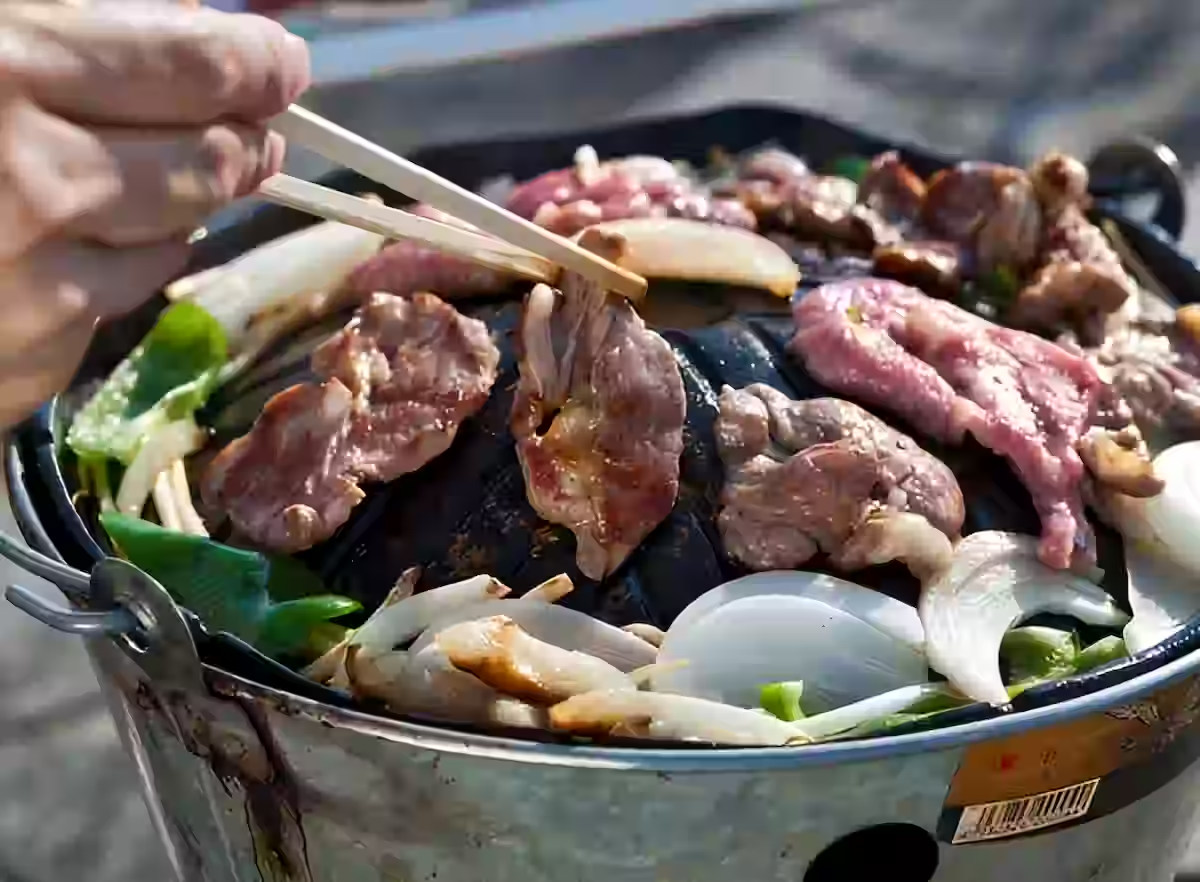
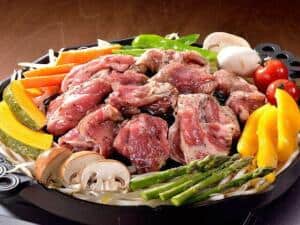
Tono Jingisukan (遠野ジンギスカン) is a regional lamb barbecue from Tono City in Iwate Prefecture. Thin slices of lamb or mutton go onto a domed iron pan unseasoned, then get dipped in a soy-based sauce. Its signature feature is the portable Jingisukan bucket, a perforated tin pail that holds solid fuel under the pan. Unlike a restaurant-only specialty, residents serve it at picnics, school sports days, festivals and family gatherings.
Most travelers associate Jingisukan with Hokkaido, and that association is fair. Tono, however, built a parallel lamb culture of its own from the 1950s. This guide explains the flavour, the restaurants, the budget and the practical differences from the northern version.
Tono Jingisukan at a Glance
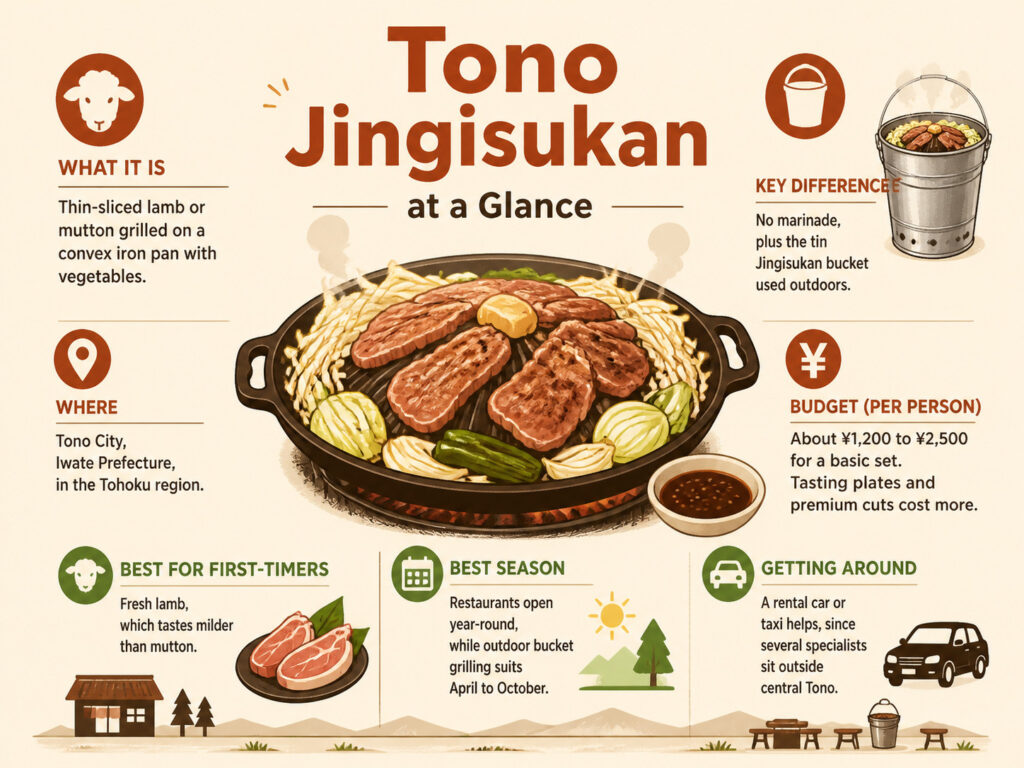
- What it is: thin-sliced lamb or mutton grilled on a convex iron pan with vegetables
- Where: Tono City (遠野市), Iwate Prefecture (岩手県), in the Tohoku region
- Key difference: no marinade, plus the tin Jingisukan bucket (ジンギスカンバケツ) used outdoors
- Typical restaurant budget: about ¥1,200 to ¥2,500 per person for a basic set, with tasting plates and premium cuts costing more
- Best for first-timers: fresh lamb, which tastes milder than mutton
- Best season: restaurants open year-round, while outdoor bucket grilling suits April to October
- Getting around: a rental car or taxi helps, since several specialists sit outside central Tono
What Is Tono Jingisukan?
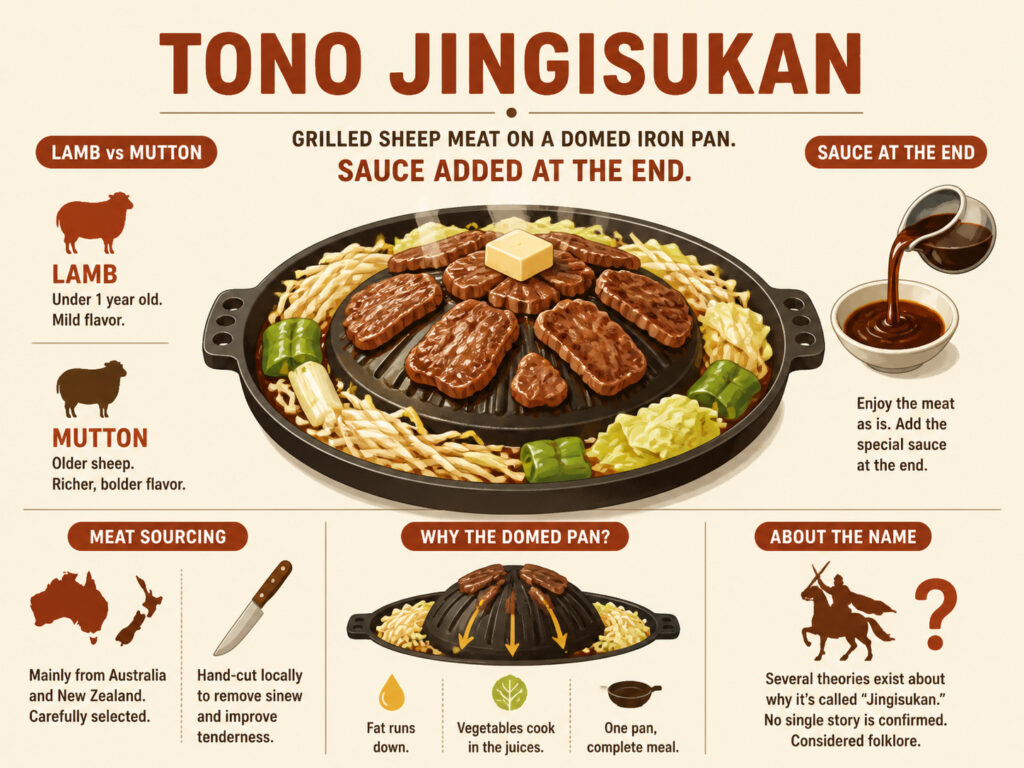
Jingisukan means grilled sheep meat cooked on a domed iron pan. The Tono version keeps the meat unseasoned on the pan. Sauce arrives only at the end.
Lamb, Mutton and Local Preparation
Menus split the meat into two categories. Lamb (ラム) comes from sheep under one year old and tastes mild. Mutton (マトン) comes from older animals and carries a deeper, more distinctive flavour. Most shops now lead with fresh lamb, although mutton keeps a following among longtime customers.
One point often gets lost in travel articles. Sheep farming has largely disappeared from Tono, so the meat now arrives from overseas. Anbe states that its owner selects lamb and mutton in Australia personally. Hitsujimaru Michi describes using Australian and New Zealand lamb. What stays local is the butchery: shops trim and slice by hand, which removes sinew and softens the aroma.
Why the Domed Pan Matters
Standard Japanese yakiniku centres on beef cuts and a flat grill. Jingisukan works differently. The pan rises into a dome, so melted fat runs down toward the rim. Vegetables sit in that channel and absorb the juices, which means one pan handles everything.
The name itself is less settled than it looks. Several theories explain why a Japanese lamb dish borrowed the name of Genghis Khan. One traces it to Chinese grilled mutton, another to a railway executive who coined the term. No single account has been confirmed, so treat the story as folklore.
What Does It Taste Like?
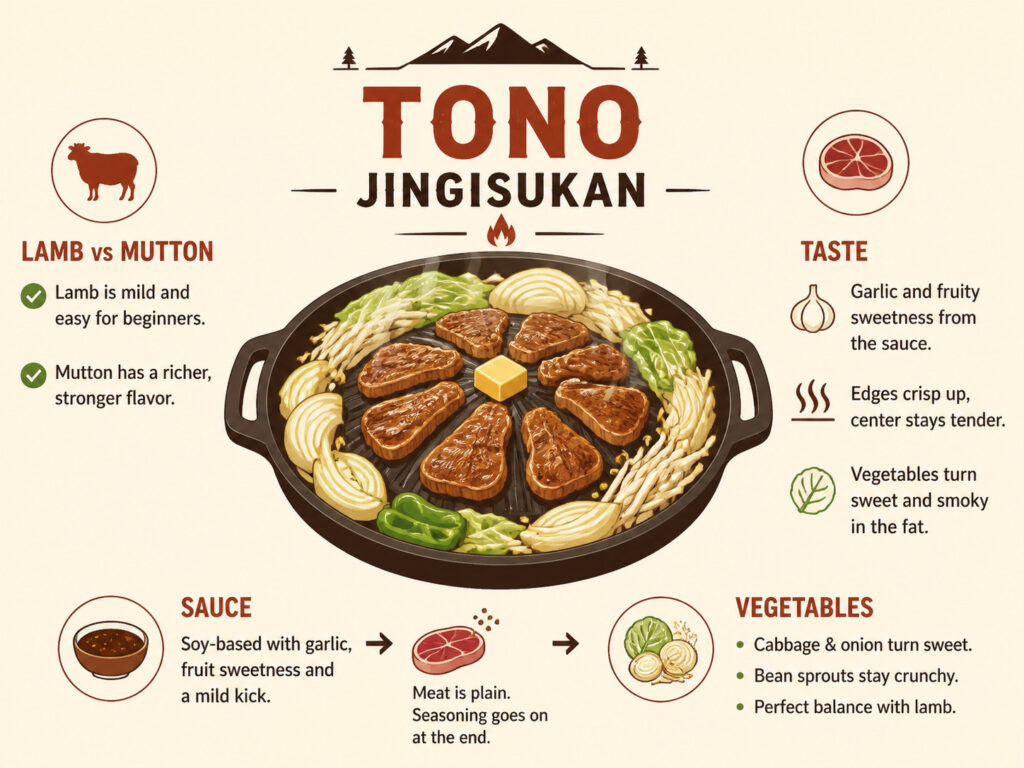
Properly trimmed fresh lamb has a milder aroma than many first-time visitors expect. The sauce adds garlic and a fruity sweetness, while the vegetables at the rim turn smoky in the dripping fat.
Lamb vs Mutton
Thin slices cook in well under a minute. The edges crisp slightly while the centre stays soft. Mutton delivers a fuller, more lingering sheep flavour, which suits colder weather. Lamb is usually the easier starting point. Most shops recommend it to anyone new to sheep meat.
Sauce and Vegetables
Tono sauces are soy-based, usually with garlic, fruit sweetness and a mild kick. Because the meat starts plain, the seasoning lands only at the end, and the lamb flavour stays in front. Cabbage and onion turn sweet in the fat below. Bean sprouts stay crunchy, which balances the richness.
Tono Jingisukan vs Hokkaido Jingisukan
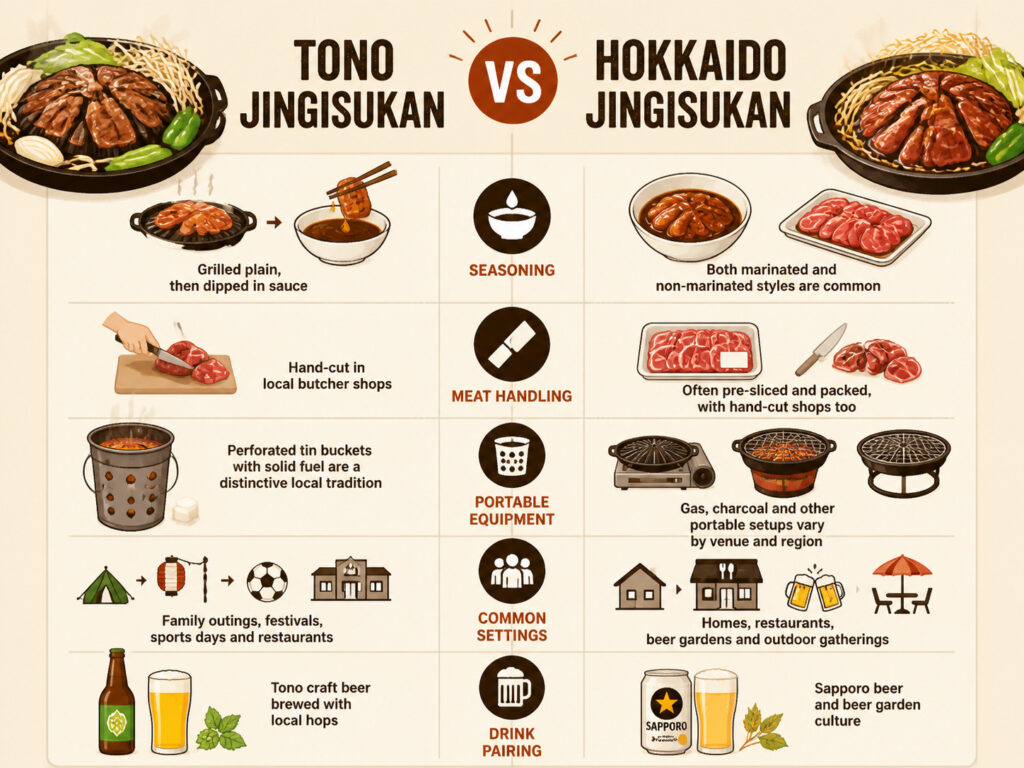
The clearest difference is timing. Tono grills the meat plain and applies sauce afterwards, while parts of Hokkaido marinate it first. The perforated tin bucket is the second obvious marker.
| Point | Tono (Iwate) | Hokkaido |
|---|---|---|
| Seasoning | Grilled plain, then dipped in sauce | Both marinated and non-marinated styles are common |
| Meat handling | Hand-cut in local butcher shops | Often pre-sliced and packed, with hand-cut shops too |
| Portable equipment | Perforated tin buckets with solid fuel are a distinctive local tradition | Gas, charcoal and other portable setups vary by venue and region |
| Common settings | Family outings, festivals, sports days and restaurants | Homes, restaurants, beer gardens and outdoor gatherings |
| Drink pairing | Tono craft beer brewed with local hops | Sapporo beer and beer garden culture |
Hokkaido holds two camps of its own. Around Takikawa, cooks marinate the meat beforehand, a style associated with the Matsuo brand. In Sapporo, by contrast, fresh lamb goes on plain. Tono belongs firmly to that second camp. The tin-bucket setup is especially associated with Tono. It remains the clearest visual difference from better-known Hokkaido presentations. Our Jingisukan guide covers the northern version in detail.
Where to Eat Tono Jingisukan
First-time visitors should start with a specialist such as Anbe or Tono Shokuniku Center. Travelers who want the outdoor bucket experience can book an equipment-inclusive set at one of Tono’s tourism facilities.
| Restaurant | Best for | Style | Access |
|---|---|---|---|
| Anbe | First-timers and history | Lamb and mutton with a house sauce, plus a souvenir shop | About 5 minutes by car from Tono IC |
| Tono Shokuniku Center | Comparing cuts | Butcher-run, fresh lamb tasting sets | Matsuzaki district, car recommended |
| Maruman Jingiskan | Travelers without a car | Thick-cut set meals, casual local atmosphere | About 6 minutes on foot from Tono Station |
| Hitsujimaru Michi | Tender lamb with minimal odour | Australian and New Zealand lamb, carefully trimmed | On the bypass, car recommended |
| Yonetaya | A relaxed family meal | Town diner founded in 1957, all ages welcome | Miyamori district, car recommended |
Opening hours and closing days differ at every shop, and several close one weekday. Check each restaurant before travelling (details last checked July 2026).
Hands-Free Outdoor Experiences
Three places let you try bucket grilling without buying equipment. Michi-no-Eki Tono Kaze-no-Oka runs it from roughly April to October, on a first-come basis and subject to weather. Takamuro Suikoen accepts lunchtime bookings, and Tono Furusato Village offers reserved sets. Several butchers and supermarkets also lend a pan and bucket when you buy meat, though minimum purchase rules apply.
Prices and Ordering
Menus stay short. You choose lamb or mutton, then a portion by weight. Basic sets with rice and soup generally run between ¥1,200 and ¥2,500 per person, while multi-cut tasting plates cost more. Staff usually bring the pan already hot, plus one bowl of sauce each.
English-language service varies by restaurant. Save the shop name, your preferred meat type and any reservation details in Japanese before you go. Prices last checked: July 2026.
How to Eat It
Heat the pan and grease it. Cook the meat in the centre and the vegetables at the rim, then dip each piece in sauce. Restaurants set this up for you, so the sequence matters most when you use a bucket yourself.
Cooking Sequence
Light the solid fuel inside the bucket, then rest the pan on the rim. Burn time depends on the fuel product and the weather, so follow the instructions supplied with the set. Once the iron heats, spread fat across the surface. Locals then park a small piece of lard in the central dip, because it trickles down and seasons everything below.
- Meat: fresh lamb or mutton, sliced thin
- Vegetables: cabbage, onion, carrot, green pepper, bean sprouts and shiitake
- Sauce: one bowl of soy-based dipping sauce per person
- Restaurant sets: rice, miso soup and pickles in many shops
- Optional pairing: local craft beer, which Tono brews with its own hops
First-Time Tips and Safety
Resist the urge to fill the pan. Cook a few slices, dip them, and eat while they stay hot. Keep separate chopsticks or tongs for raw meat. Outdoor sessions leave smoke in your clothes, so wear something washable.
Safety matters more than anything else here. Use a Jingisukan bucket only outdoors in a well-ventilated area, and follow the equipment provider’s instructions. Never use one in an enclosed room, a tent or a vehicle.
The History of Tono Jingisukan
Tono’s lamb culture grew out of the region’s former sheep and homespun wool industry. Anbe began serving Jingisukan around 1955. A later invention, the portable tin bucket, then turned it into a dish for outdoor gatherings.
Sheep and Homespun Wool
Japan pushed domestic sheep farming during the First World War period, when wool imports collapsed. Hokkaido became the centre of that policy. Farmers around Tono, meanwhile, kept sheep for homespun, a hand-dyed and hand-woven wool textile with deep roots in Iwate. Meat was therefore a by-product rather than the point, and local mutton stayed cheap.
Anbe and the 1950s
Abe Umekichi opened a butcher shop and diner called Anbe in 1947. He had served in Manchuria during the war, where he first tasted grilled mutton. Back home, he cooked sheep meat as a family staff meal. A visitor tried it, loved it, and Abe added Jingisukan to the menu around 1955. According to the tourism association, neighbours found the idea strange at first, yet his homemade sauce gradually won them over.
The Invention of the Bucket
Mountains ring Tono, and highland festivals were frequent. Anbe delivered meat, pans and clay braziers to those events, but the rough roads kept cracking the braziers. Abe Yoshio, the second-generation owner, punched air holes into a tin bucket instead. The pan sat on top, heated by solid fuel, and lighting took seconds.
He then lent buckets and pans out free of charge, which spread the style quickly. The tourism association describes owning a Jingisukan pan as common among local households today. Residents carry them to cherry blossom picnics, river outings, sports days and autumn imoni gatherings.
Getting to Tono and the Best Time to Visit
Tono Station sits on the JR Kamaishi Line. From Tokyo, take the Tohoku Shinkansen to Shin-Hanamaki, then change to the local line. Drivers reach the city in roughly forty minutes from Kitakami. Only one specialist sits within walking distance of the station, so plan for a car or taxi.
Restaurants serve Jingisukan all year. Outdoor bucket grilling, however, belongs to the warmer months, from cherry blossom season in late April into October. Late August gets especially lively, since the Tono Hop Harvest Festival falls then. A Bucket Jingisukan gathering has run near Tono Station since 2013. The city has also hosted a Jingisukan Marathon in late summer. Event dates shift each year, so check the tourism association site.
Can You Cook It at Home?
Yes, and the dome pan is not essential. A hot cast-iron skillet works if you cook in small batches and keep the heat high.
Ingredients. Start with lamb shoulder or leg, sliced about three millimetres thick. Ask a butcher to cut it if possible, since thickness matters more than the exact cut. Add cabbage, onion, carrot, bean sprouts and a block of lard.
Method. Tilt the skillet slightly and pile the vegetables on the lower side, so the fat pools where you want it. A grill plate over a portable gas stove also works outdoors. Crowding the pan makes the lamb steam instead of sear, so cook a few slices at a time.
Sauce. Mix soy sauce, mirin, grated apple, garlic and ginger, then rest it overnight. Fruit softens the salt and rounds the flavour. Salt and pepper alone also work with good lamb.
Where to buy. Anbe and Tono Shokuniku Center both run online shops. As a rough guide, 300 grams of fresh lamb with sauce costs around ¥2,300. A 600 gram pack runs closer to ¥4,200. Tono City also lists Jingisukan sets on the major hometown tax portals. Overseas shipping is generally unavailable.
What to See and Eat Nearby
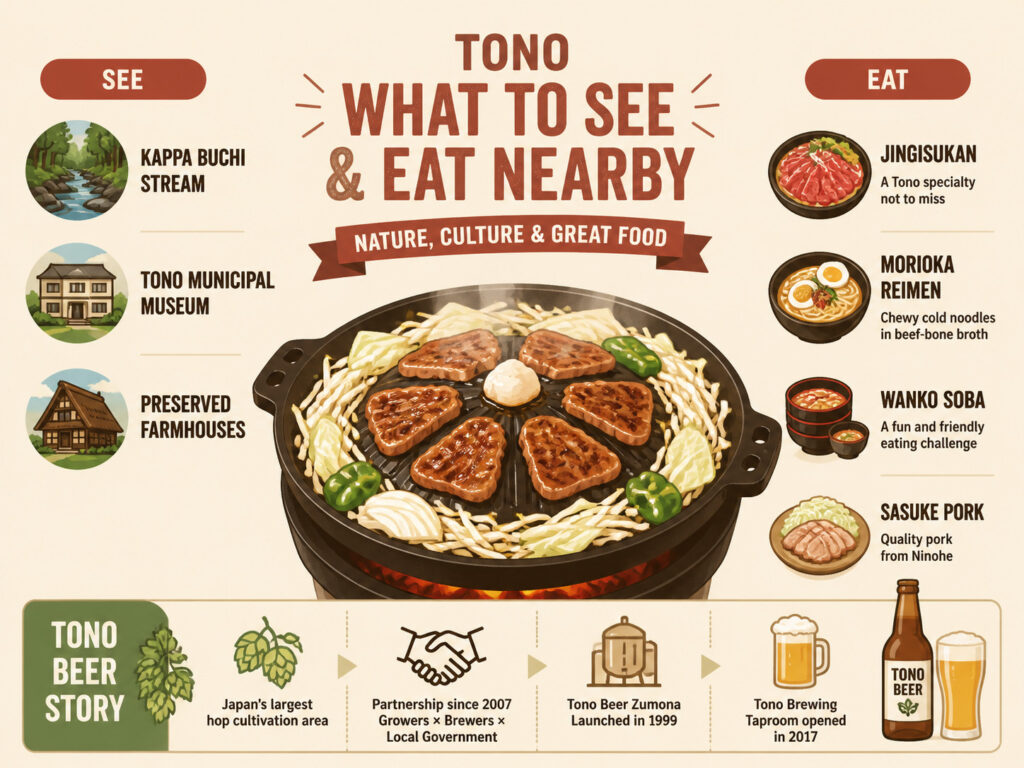
Tono rewards a full day. Kappa Buchi stream, the Tono Municipal Museum and the preserved farmhouses fill the morning. A Jingisukan lunch fits neatly between them.
According to the Ministry of Agriculture, Forestry and Fisheries, Tono has Japan’s largest hop cultivation area. Contract farming with a major brewer began in 1963. Since 2007, the city has run a “Beer Village” project linking growers, brewers and local government. Isurugi (2024) documents how that partnership works. A local sake maker launched Tono Beer Zumona in 1999, and Tono Brewing opened a taproom in 2017.
Elsewhere in the prefecture, Morioka Reimen serves chewy cold noodles in a beef-bone broth. Wanko Soba turns lunch into a friendly competition. Meat lovers should also look at Sasuke pork from Ninohe. Our wider Iwate food section and Tohoku food guide cover the rest.
Conclusion
Tono Jingisukan earns attention because it grew out of ordinary life. Wool farming supplied the sheep, a returning soldier supplied the recipe, and a broken brazier supplied the bucket. Nobody designed this dish for tourism.
Planning a Tohoku trip? Book a table at one Tono specialist, then reserve a bucket set at a tourism facility. Doing both takes half a day and shows you two sides of the same dish.
Tono Jingisukan FAQ
How much does Tono Jingisukan cost?
Basic restaurant sets generally run between ¥1,200 and ¥2,500 per person. Tasting plates and premium cuts cost more, and mail-order packs start near ¥2,300 for 300 grams with sauce.
Is the lamb raised in Tono?
Not usually. Tono once raised sheep for its homespun wool industry. Shops today state that they source lamb and mutton from Australia and New Zealand. Local specialists distinguish themselves through hand-cutting, meat selection and their own dipping sauces.
How is Tono Jingisukan different from Hokkaido Jingisukan?
Tono grills the meat plain and dips it in sauce afterwards, while parts of Hokkaido marinate it first. The perforated tin bucket used as an outdoor burner is the other clear marker of the Tono style.
What is the best season to eat it?
Restaurants serve it all year, so any season works indoors. Outdoor bucket grilling runs from late April to October. Late August is liveliest, because the hop harvest festival falls then.
How do I get to Tono from Tokyo?
Take the Tohoku Shinkansen to Shin-Hanamaki, then change to the JR Kamaishi Line for Tono Station. The journey takes roughly four hours. A car or taxi helps once you arrive, since most shops sit outside the centre.
Are there options for vegetarians or restricted diets?
Vegetarians will find this dish difficult, because the whole meal centres on lamb and the vegetables cook in meat fat. Standard sauces contain soy and wheat, and many add garlic and apple. Ask staff directly about any specific ingredient.
Can you cook Tono Jingisukan at home?
Yes, and the dome pan is optional. A hot cast-iron skillet works if you slice the lamb thinly and cook in small batches. Mix soy sauce, mirin, grated apple, garlic and ginger for a simple dipping sauce.
Will my clothes smell of smoke afterwards?
Outdoors, almost certainly. Bucket grilling produces steady smoke at table height, so wear something washable. Restaurants with extraction hoods are much gentler.
About This Guide
Food in Japan editorial team. This guide draws on Japanese-language material from Tono City and the Tono Tourism Association. Further sources include the Ministry of Agriculture, Forestry and Fisheries and an academic study of the city’s hop industry. The official pages of the restaurants named above were also consulted. Restaurant details, prices and event information were last checked in July 2026. Please confirm hours and prices with each shop before visiting.
References
- Isurugi, S. (2024). Development of Hop Cultivation and the “Beer Village Concept” in Tono City. Bulletin of the Institute for Regional Studies, Tohoku Gakuin University, No. 1, 21-40. Accessed July 2026.
- Ministry of Agriculture, Forestry and Fisheries. Cheers with Beer: Town Revitalisation Through Japanese Hops. Source for Tono’s hop cultivation area and the 1963 start of contract farming. Accessed July 2026.
- Ministry of Agriculture, Forestry and Fisheries. Jingisukan (Hokkaido), Our Local Cuisine Database. Source for the wartime wool policy and the spread of mutton eating. Accessed July 2026.
- Tono Tourism Association. Why Jingisukan in Tono? Source for Abe Umekichi, the homespun wool background and the bucket method. Accessed July 2026.
- Tono Tourism Association. Tono Jingisukan Restaurant List. Source for restaurant names, locations, access and outdoor bucket venues. Accessed July 2026.
- Tono City. Bucket Jingisukan Contest Report. Source for the community event held near Tono Station. Accessed July 2026.
- Jingisukan Anbe. Why Is It a Tono Specialty? Source for the 1947 founding, the menu from around 1955 and the invention of the Jingisukan bucket. Accessed July 2026.
- Tono Shokuniku Center. About Tono Lamb and Local Eating Habits. Source for locally slaughtered mutton in the past and for applying sauce after grilling. Accessed July 2026.
- Tohoku Tourism Promotion Organization. Tono Speciality: Bucket Jingisukan. Source for the outdoor bucket tradition at picnics, sports days and festivals. Accessed July 2026.
Related Articles
- Jingisukan (ジンギスカン)
- Japanese Yakiniku Guide: BBQ Cuts, Sauces and How to Eat
- Iwate Food: Traditional Noodles and Regional Cuisine
- Morioka Reimen (盛岡冷麺)
- Wanko Soba (わんこそば)
- Discover Tohoku: 11 Japanese Foods You Need to Taste



Comments