




Sasuke Pork is a premium pork brand from Ninohe in Iwate Prefecture, Japan. It is known for tender meat, sweet melting fat, and careful farm-based production at Kuji Farm.
This Iwate pork is also called Oritsume Sangenton Sasuke. “Sangenton” means three-way crossbreed pork. The idea is balance, not excess. It aims for tenderness, fat quality, and rich flavor.
At first, Sasuke pork may look like ordinary Japanese pork. Yet the difference becomes clear in simple dishes. A little salt can feel enough. The meat tastes refined without needing heavy sauce.
So, what is Sasuke pork from Iwate? It is a farm-raised brand pork with a clear local identity. For travelers and Japanese food lovers, it offers a quieter regional specialty with real character.
Basic Information About Sasuke Pork
Sasuke pork from Iwate comes from Kuji Farm in Ninohe, northern Iwate. The area sits near the Oritsume mountain region. Its cool northern climate, clean water, and rural setting support steady pork production.
Northern Iwate’s climate is part of the story. Cooler conditions can help reduce stress on pigs and support slower growth. That slower rhythm may sound simple, but it shapes the final taste.
This Japanese pork brand is not just about luxury. Unlike Wagyu beef, Sasuke pork focuses on balance and everyday versatility. It feels premium, but not too heavy. That makes it useful for home cooking and restaurant dishes.
The name “Sasuke” comes from Kuji Sasuke, the first-generation farmer behind the brand’s roots. His family continued pig farming through three generations. Over time, they refined breeding, feeding, processing, and sales.
Sasuke pork is an Iwate Prefecture specialty with a strong farm-to-table story. Kuji Farm controls raising, processing, and sales to keep quality consistent. That simple structure helps protect the brand’s taste.
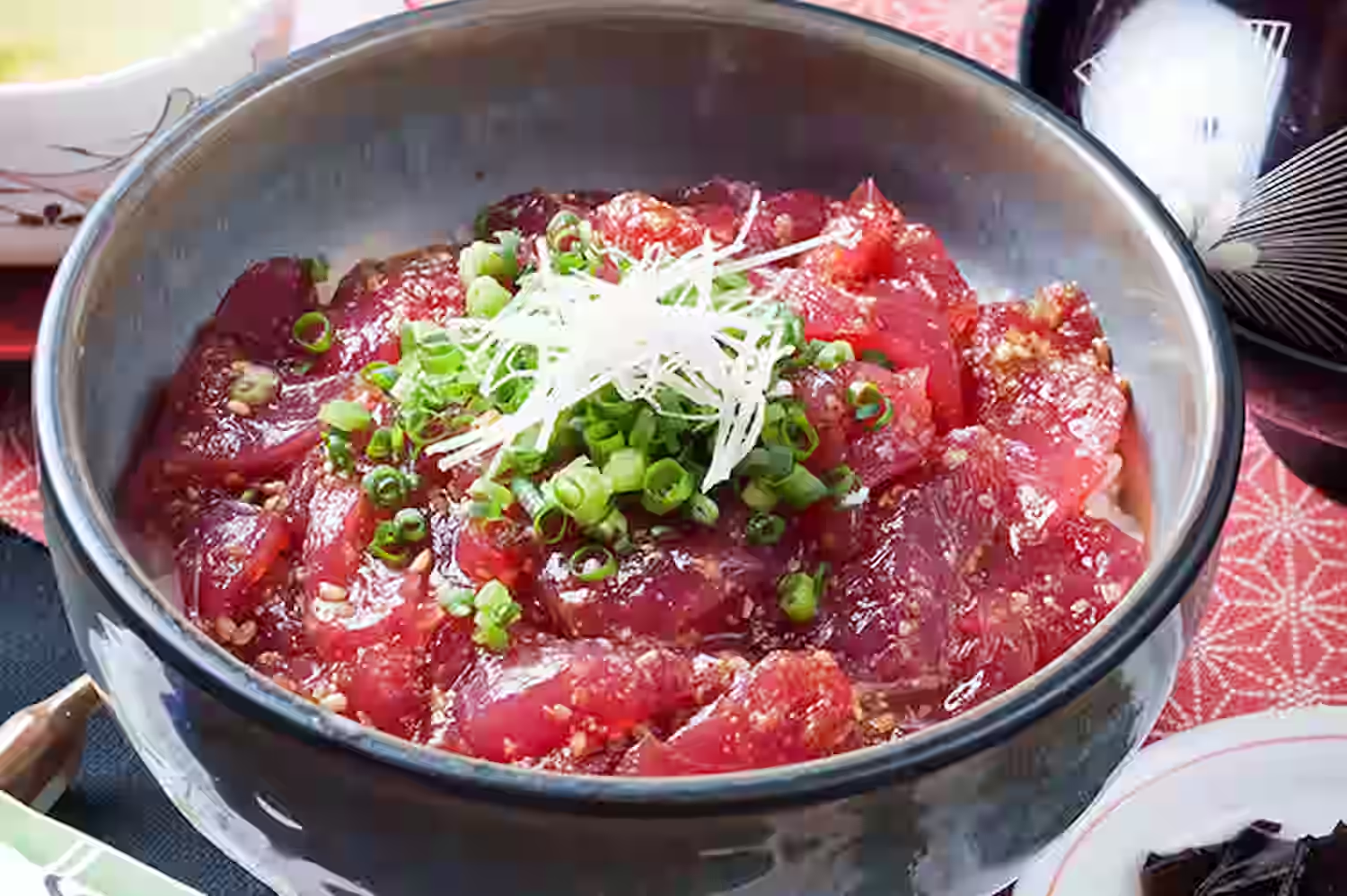
If you enjoy pork dishes, this local pork works in many Japanese meals. It suits shabu-shabu, tonkatsu, yakiniku, ginger pork, and pork rice bowls. For related dishes, see the tonkatsu guide and buta don guide.
Sasuke Pork Taste and Texture
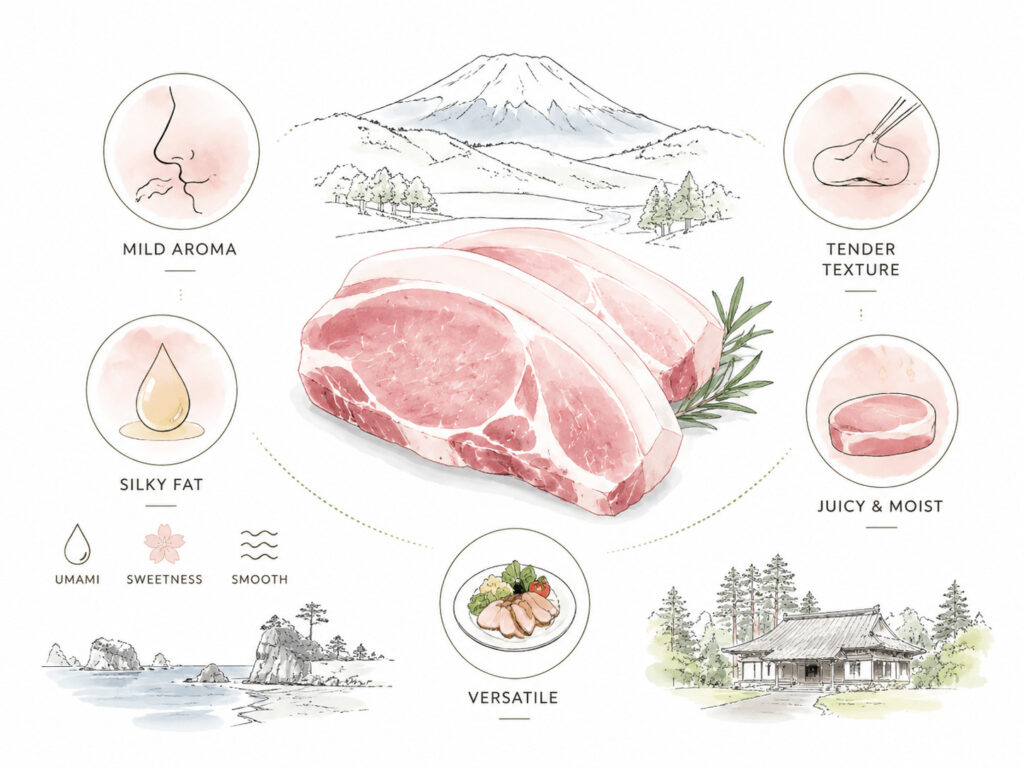
Sasuke pork taste and texture feel gentle, juicy, and clean. The meat has a fine grain and a tender pork texture. The fat feels silky when warmed. It melts smoothly and leaves a lightly sweet finish.
The aroma is also important. Good pork should not smell heavy or rough. Sasuke pork has a mild scent, which makes simple cooking work well. I would hesitate to cover it with strong sauce.
Its fat gives the strongest impression. It brings delicate umami, soft sweetness, and a smooth mouthfeel. The flavor is rich, but the finish stays clean. This is pork with rich flavor, not oily heaviness.
The lean meat also matters. It keeps moisture and gives a juicy bite when cooked gently. That balance makes Sasuke pork useful across both everyday meals and special dishes.
Sasuke Pork Compared With Regular Pork
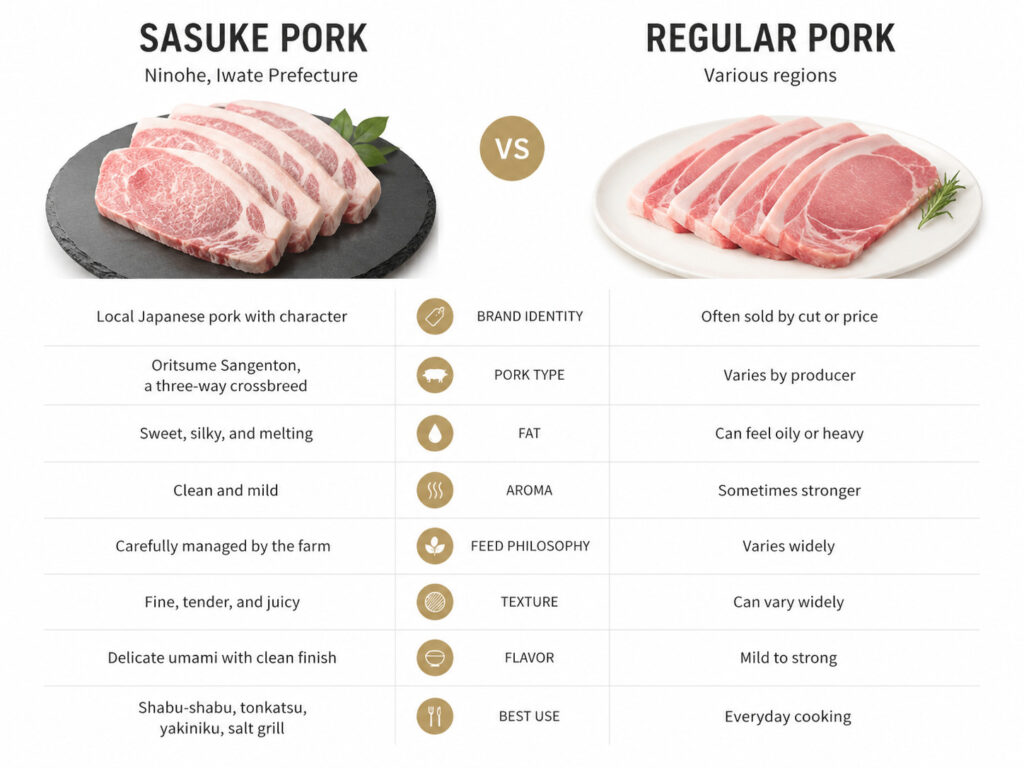
| Point | Sasuke Pork | Regular Pork |
|---|---|---|
| Region | Ninohe, Iwate Prefecture | Various regions |
| Brand identity | Local Japanese pork with character | Often sold by cut or price |
| Pork type | Oritsume Sangenton, a three-way crossbreed | Varies by producer |
| Fat | Sweet, silky, and melting | Can feel oily or heavy |
| Aroma | Clean and mild | Sometimes stronger |
| Feed philosophy | Carefully managed by the farm | Varies widely |
| Texture | Fine, tender, and juicy | Can vary widely |
| Flavor | Delicate umami with clean finish | Mild to strong |
| Best use | Shabu-shabu, tonkatsu, yakiniku, salt grill | Everyday cooking |
This comparison helps answer a common question. What is the difference between Sasuke pork and regular pork? The answer is not only price. It involves breeding, feed philosophy, fat quality, aroma, and farm control.
Regular Japanese pork can be very good, of course. Still, a named Japanese brand pork gives more context. Sasuke pork tells you where it comes from and why it tastes different.
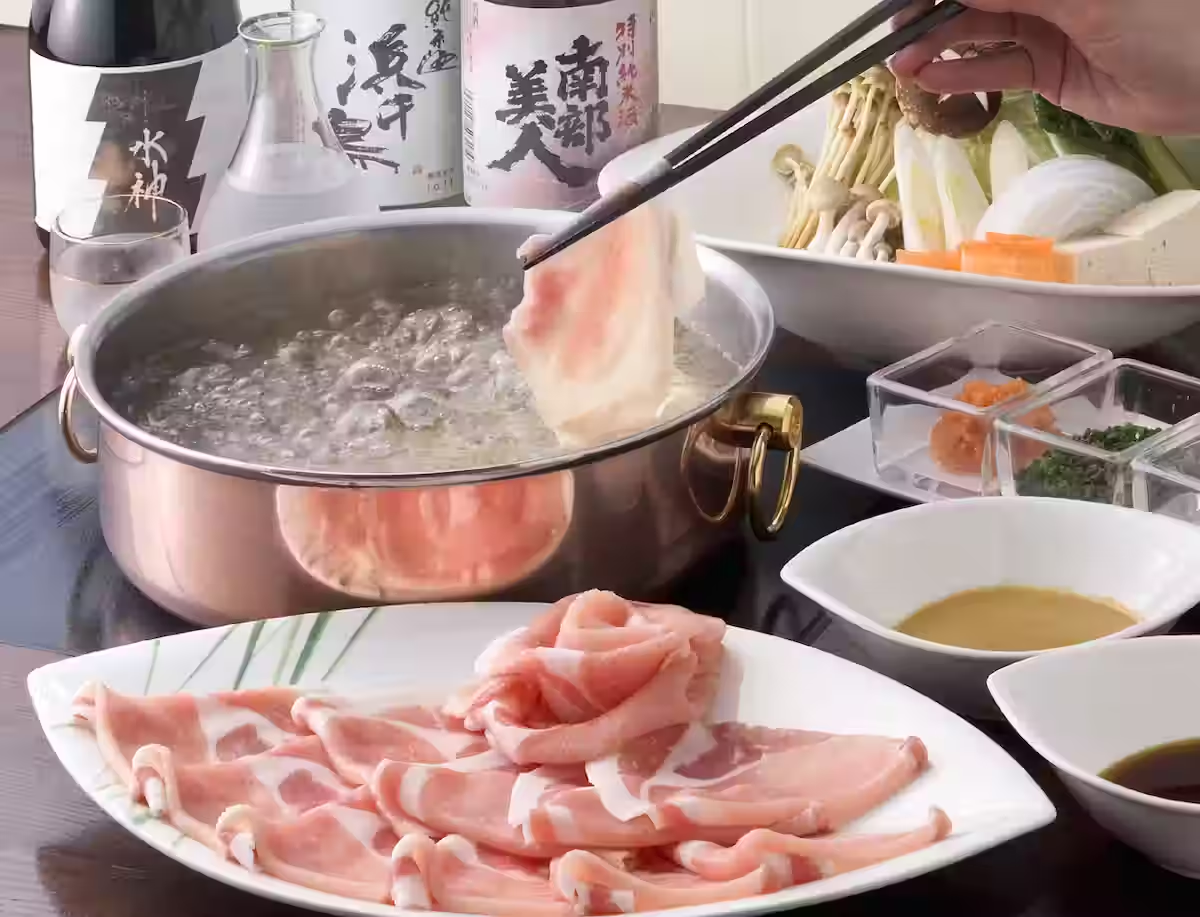
The difference becomes clear in simple dishes like shabu-shabu or salt-grilled pork. The fat melts without feeling heavy. The meat stays tender. The clean aroma makes the pork easy to enjoy.
That is why Sasuke pork is famous in Japan among people who know Iwate foods. It is not as globally known as Wagyu. Still, as premium pork from Japan, it has a quiet and convincing appeal.
Best Cooking Methods for Sasuke Pork
Sasuke pork works best when the cooking method respects its fat. Shabu-shabu is a safe first choice. Thin slices need only a quick dip in hot broth. Overcooking can hide the soft texture.
Tonkatsu is another strong option. Loin or fillet gives a juicy center and crisp crust. The pork flavor comes through clearly, especially with light seasoning. For another comforting pork-based rice dish, see the https://www.foodinjapan.org/kanto/yamanashi/katsu-don/.
Yakiniku also works well. Belly and shoulder loin can show the sweetness of the fat. A quick grill with salt or a light tare sauce is enough. Heavy sauces may hide the clean finish.
Miso-marinated pork and ginger pork are good home-style choices. These dishes bring out sweetness without making the meat feel too rich. If you want the clearest taste, start with salt.
Best Cuts and How to Use Them
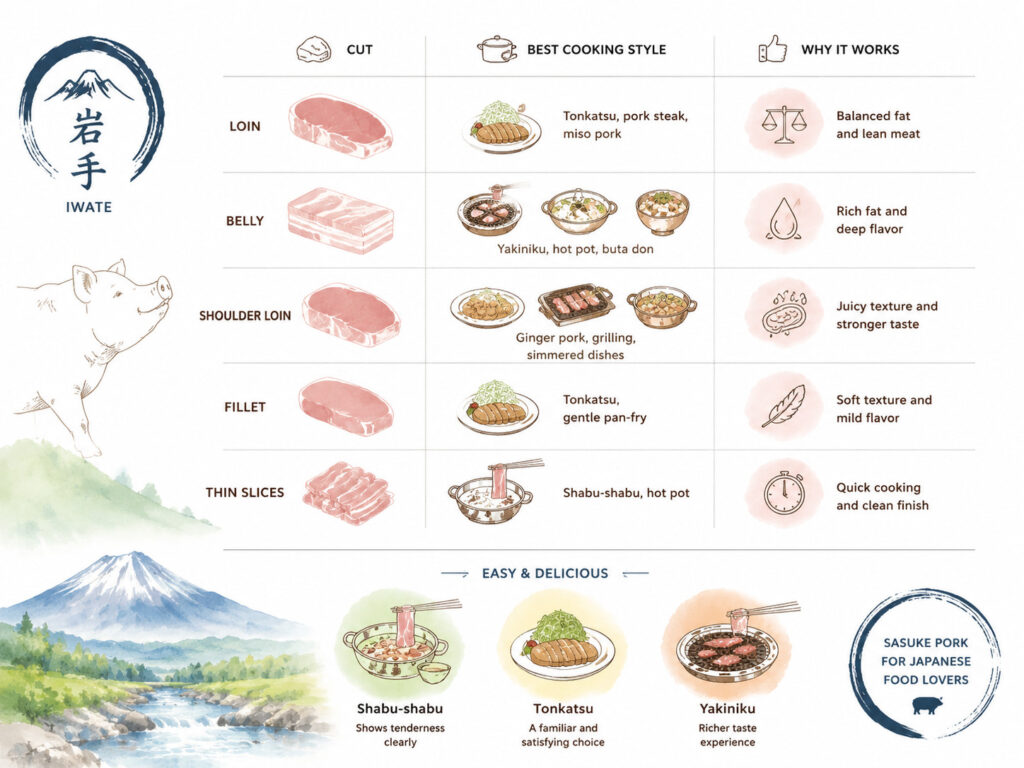
| Cut | Best Cooking Style | Why It Works |
|---|---|---|
| Loin | Tonkatsu, pork steak, miso pork | Balanced fat and lean meat |
| Belly | Yakiniku, hot pot, buta don | Rich fat and deep flavor |
| Shoulder loin | Ginger pork, grilling, simmered dishes | Juicy texture and stronger taste |
| Fillet | Tonkatsu, gentle pan-fry | Soft texture and mild flavor |
| Thin slices | Shabu-shabu, hot pot | Quick cooking and clean finish |
High-quality pork cuts do not need complicated cooking. Sasuke pork for Japanese food lovers works best when the flavor remains visible. That may sound obvious, but it matters.
For beginners, thin slices are easiest. Shabu-shabu shows the tender pork texture clearly. Tonkatsu gives a more familiar entry point. Yakiniku offers a richer taste.
Sasuke Pork History and Today
Sasuke pork history begins near Mount Oritsume in northern Iwate. More than 70 years ago, Kuji Sasuke started raising pigs there. His work became the foundation for today’s Oritsume Sangenton Sasuke.
The family did not build the brand overnight. They improved breeding, feeding, meat quality, and processing over time. That slow progress gives the pork its current identity.
Today, Kuji Farm manages the process from raising to processing and sales. This farm-based system helps maintain steady quality. It also gives buyers a clearer connection to the producer.
The brand now includes several product categories. Fresh pork is the main attraction. Sausages, ham, charcuterie, hamburg steak, and gift sets also appear. These products make Sasuke pork easier to enjoy beyond local restaurants.
If you search for a Sasuke pork restaurant in Iwate, start around Ninohe and nearby areas. Some restaurants use it in local dishes. Availability changes, so checking ahead is always wise.
Why Sasuke Pork Is Worth Trying
Sasuke pork is not just another premium pork name. It shows how local Japanese meat can carry place, family, and technique. The result feels honest rather than flashy.
For beginners, the appeal is easy to understand. The fat tastes sweet. The texture feels tender. The aroma stays clean. These qualities make it a regional pork brand worth trying.
It also fills an interesting space in Japanese food. Many visitors know Wagyu beef first. Fewer know that Japan also has excellent brand pork. Sasuke pork helps show that premium Japanese meat is not only about beef.
If you want the best Japanese pork brands from Iwate, Sasuke pork belongs on the list. It offers tender, flavorful Japanese pork with a calm local character. For anyone exploring Iwate specialty pork, it is a delicious place to begin.
Sasuke Pork FAQ
What is Sasuke pork?
It represents a premium meat brand from Ninohe, Iwate Prefecture. Kuji Farm produces this high-quality ingredient, and locals also call it Oritsume Sangenton Sasuke.
Why is Sasuke pork famous?
Food lovers prize it for its tender meat, sweet melting fat, and clean aroma. Kuji Farm maintains careful production methods, and its strong local identity adds to its special appeal.
What does Sasuke pork taste like?
It delivers a rich but incredibly clean flavor. Diners enjoy its silky fat, juicy meat, delicate umami, and lightly sweet finish.
Where is Sasuke pork produced?
Farmers raise these pigs in Ninohe, northern Iwate Prefecture. The brand maintains strong ties to the beautiful Oritsume mountain area.
Is Sasuke pork Wagyu pork?
No, the term Wagyu strictly refers to Japanese beef. This ingredient represents premium Japanese pork, so you should not confuse it with Wagyu.
What does Sangenton mean?
The term “Sangenton” means three-way crossbreed pork. Breeders mix three specific pig types to perfectly balance tenderness, fat quality, and flavor.
How do you cook Sasuke pork?
You can perfectly prepare it as shabu-shabu, tonkatsu, yakiniku, or ginger pork. Home cooks use gentle salt grilling to protect the tender texture.
Is Sasuke pork good for beginners?
Yes, diners of all levels easily enjoy it. The clean aroma, soft texture, and sweet fat appeal to everyone, and we highly recommend trying it first as shabu-shabu.
Where can I eat Sasuke pork in Japan?
You will find the best cuts right in Iwate Prefecture. High-end tonkatsu restaurants and upscale izakaya pubs in Tokyo also serve this premium meat daily.
Is Sasuke pork popular outside Japan?
It remains relatively rare outside Japan. You will almost never find this specific brand at butchers in North America or Europe. This luxury meat successfully maintains its exclusive status entirely within the domestic market.
References
- Kuji Farm Official Website, “About Sasuke Pork”, checked in 2026, Sasuke pork has over 70 years of history and three generations of development.
- Kuji Farm Official Website, “Home”, checked in 2026, Kuji Farm produces Sasuke pork in Ninohe, northern Iwate, with melting fat and fine meat texture.
- Kuji Farm Official Online Store, “Product List”, checked in 2026, the store listed 74 Sasuke pork products, including fresh cuts and processed items.
- Pocket Marche, “Kuji Farm Producer Profile”, checked in 2026, Kuji Farm raises, processes, and sells Oritsume Sangenton Sasuke in Ninohe and Karumai.
- Japan Livestock Products Export Promotion Council, “Restaurant Sankairi”, checked in 2026, Restaurant Sankairi in Iwate serves a hamburger using Yamagata short-horn beef and Sasuke pork.




Comments