


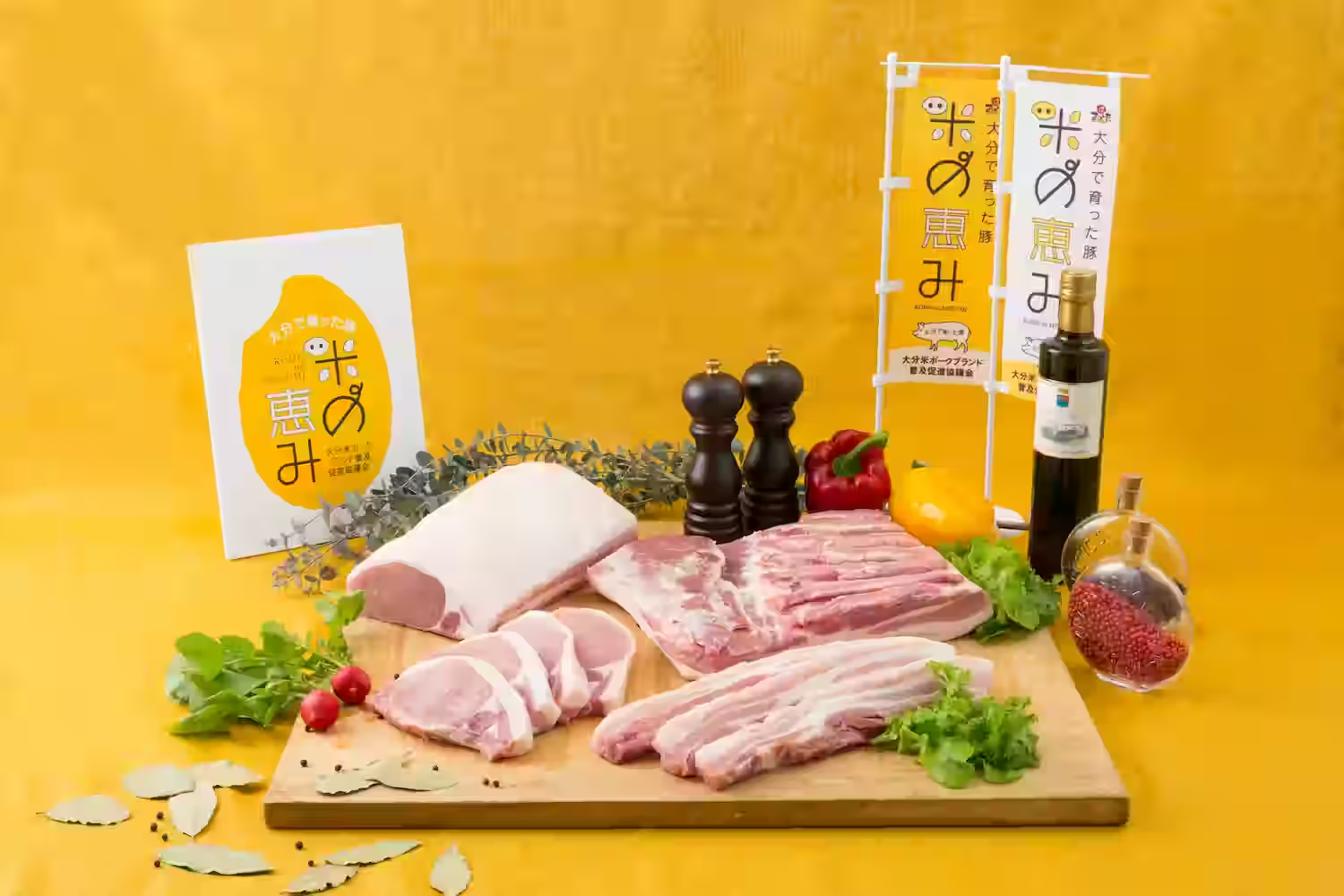


In Oita, some pigs eat rice before they reach the table. That simple detail sits behind Kome no Megumi pork (米の恵み), the prefecture’s unified pork brand. The name means “blessing of rice,” and it covers pork from pigs given feed with at least 10% rice during the last stage of fattening.
So is it a special breed, and does the rice really change the taste? The short answers are no, and partly. This guide explains how the brand works, what testing it requires, what research says about rice feed, and where to try the pork in Oita.
Quick Facts: Kome no Megumi Pork
- Japanese name
- 米の恵み (kome no megumi, pronounced koh-meh noh meh-goo-mee), “blessing of rice”
- What it is
- A unified brand for pork raised in Oita Prefecture under shared feeding and testing standards
- Region
- Oita Prefecture, on the island of Kyushu in southwestern Japan
- Feed rule
- At least 10% rice in the total feed, given in the final fattening stage for about 60 days or more
- Testing
- Fat analysis for oleic acid and related components; carcass grade of “medium” (中) or higher
- Premium tier
- Kome no Megumi Premium: oleic acid of 42% or more
- Brand launched
- Name announced in December 2016
- Managed by
- Oita Rice Pork Brand Promotion Council
What Is Kome no Megumi Pork?
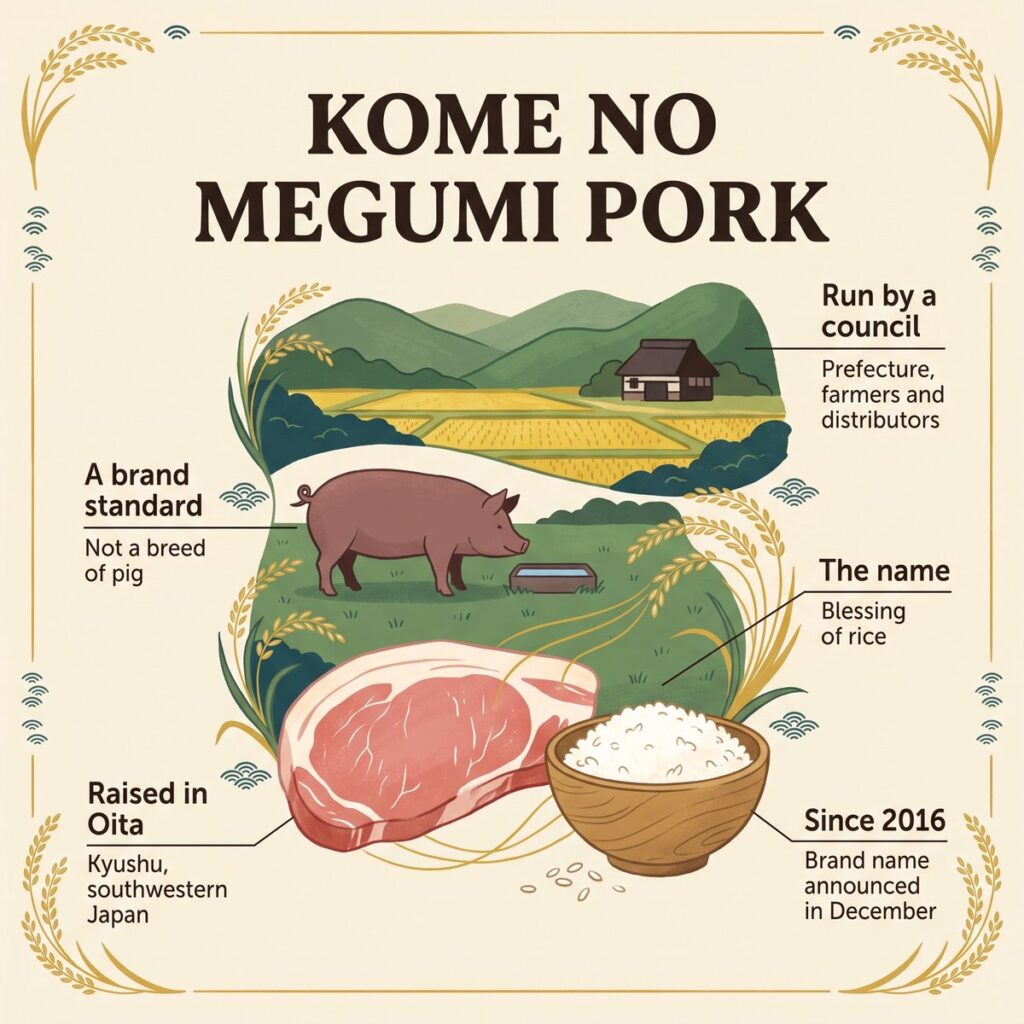
Kome no Megumi is a brand standard for Oita-raised pork, not a breed of pig. Oita-raised pork can qualify for the brand if it meets the council’s feeding, testing, and carcass-grade requirements.
The Oita Rice Pork Brand Promotion Council manages the brand. According to Oita Prefecture, the council brings together the prefecture, agricultural organizations, and pig farming and distribution groups. Its new name was announced to the governor on December 19, 2016.
Meaning of the Name
Kome means rice, and megumi means a blessing or gift of nature. Together, the name points straight at the feed. It also hints at a link between Oita’s rice paddies and its pig farms, which comes up again later.
One small but useful note: “rice-fed” here does not mean the pigs eat only rice. Rice makes up at least 10% of the feed in the final fattening stage, alongside other feed ingredients.
A Shared Brand, Not a Single Farm
Because it is a standard, several Oita pork names can sit under it. The official brand site says pork sold under its own brand name can also be certified as Kome no Megumi if it meets the rules. For example, local broadcaster TOS reported in 2026 that Kokonoe “Yume” Pork and Nakatsu’s Kin’unton (錦雲豚) are certified products.
So you may see two names on one package. That can be confusing at first, but it simply means a farm brand that also meets the council’s shared brand standard.
How Is Kome no Megumi Pork Raised?
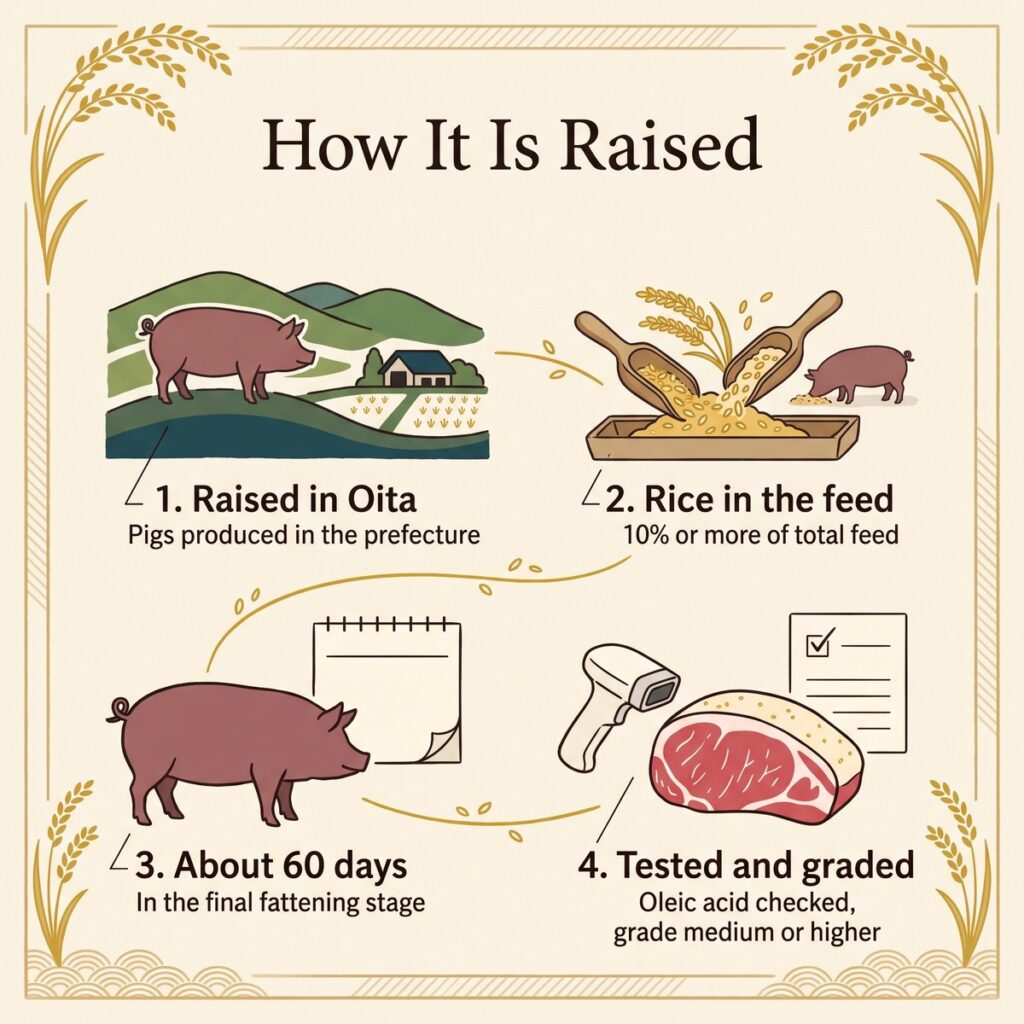
The rules are short, yet each one does a specific job. Oita Prefecture lists four conditions for the brand.
- Raised in OitaThe pigs must be produced within Oita Prefecture.
- Rice in the feedAt least 10% rice in the total feed during the final fattening stage.
- About 60 daysThat rice-based feed is given for roughly 60 days or more.
- Tested and gradedFat is measured for oleic acid, and the carcass must grade “medium” or higher.
Rice in the Feed
The final fattening stage is the last stretch before pigs go to market. During this period, farmers mix rice into the feed at 10% or more, for about 60 days or longer. The rule sets a minimum, so actual rice levels can differ from farm to farm.
The sources do not specify one kind of rice, though. They say “rice,” and they do not state that all of it is grown in Oita. So it is safest not to assume the rice is always local.
Testing the Fat
After that, fat analysis is part of the certification process. According to Oita Prefecture, the Oita Prefectural Livestock Public Corporation measures oleic acid and other components with a meat-fat analyzer. Oleic acid is a monounsaturated fatty acid found naturally in pork fat.
Oita’s livestock researchers developed this system around a near-infrared device. They chose the shoulder fat as the test point, since a reading there takes about 12 seconds. To check accuracy, they compared device readings with laboratory gas chromatography on 80 carcasses. The correlation was 0.748. So the device gives a rapid estimate based on that calibration, rather than testing each sample by gas chromatography.
Carcass Grade
Finally, the Japan Meat Grading Association grades the carcasses. Kome no Megumi requires a grade of “medium” (中) or higher. This step is easy to overlook, but it means the brand covers carcass quality as well as feed.
Kome no Megumi vs Kome no Megumi Premium
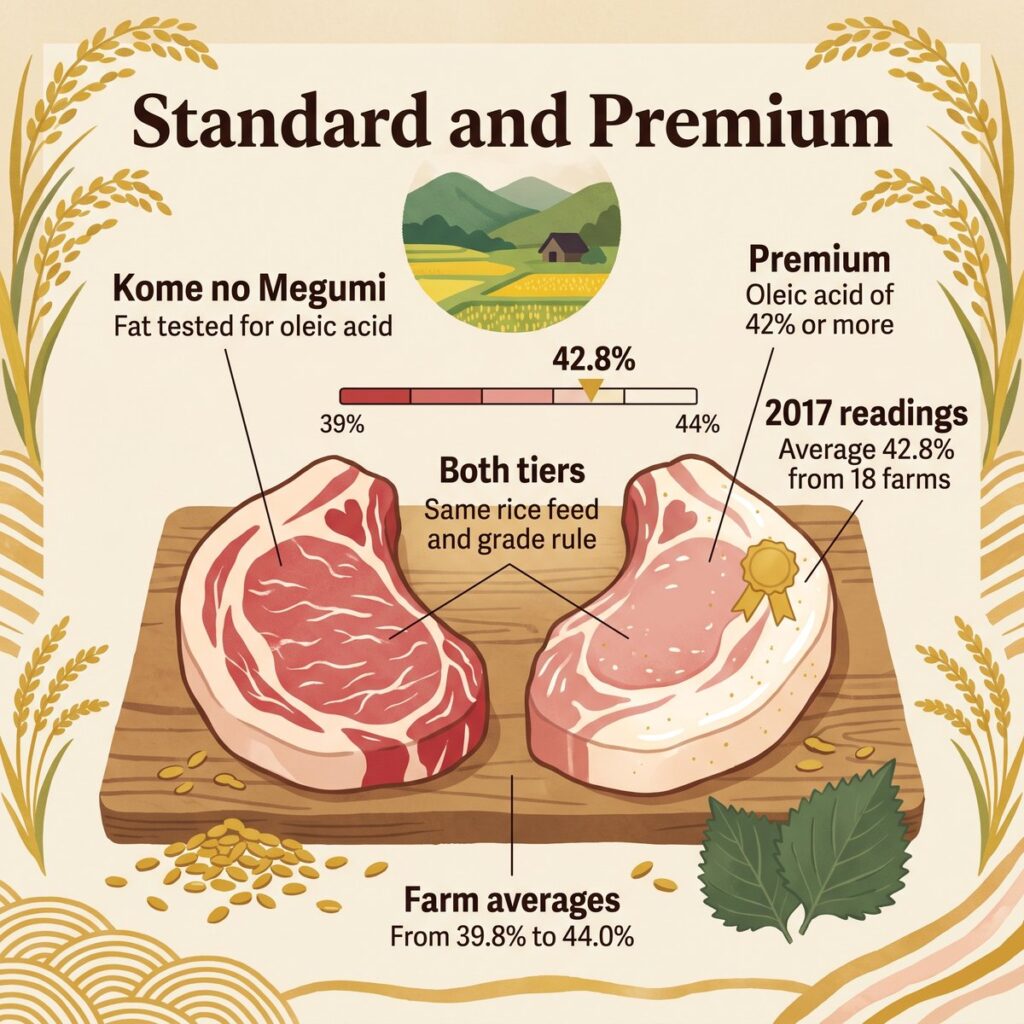
There are two tiers, and the difference is clear once you see it. All certified pork is tested for oleic acid. Only pork with 42% or more, however, qualifies for the Premium label.
| Point | Kome no Megumi | Kome no Megumi Premium |
|---|---|---|
| Origin | Raised in Oita | Raised in Oita |
| Rice in feed | 10% or more, final fattening stage, about 60 days or more | Same as standard |
| Fat test | Oleic acid and other components measured | Oleic acid of 42% or more |
| Carcass grade | Medium (中) or higher | Medium (中) or higher |
| How to spot it | Kome no Megumi pack seal | Kome no Megumi Premium pack seal |
Based on Oita Prefecture, the brand council, and Oita’s livestock research reports. Rules may be revised, so check the official site.
How often does pork reach 42%? In 2017, Oita researchers collected 23,499 readings from 18 farms. The overall average was 42.8%, while farm averages ranged from 39.8% to 44.0%. However, the report does not say what share of individual carcasses qualified as Premium.
Does Rice Feed Really Change the Pork?
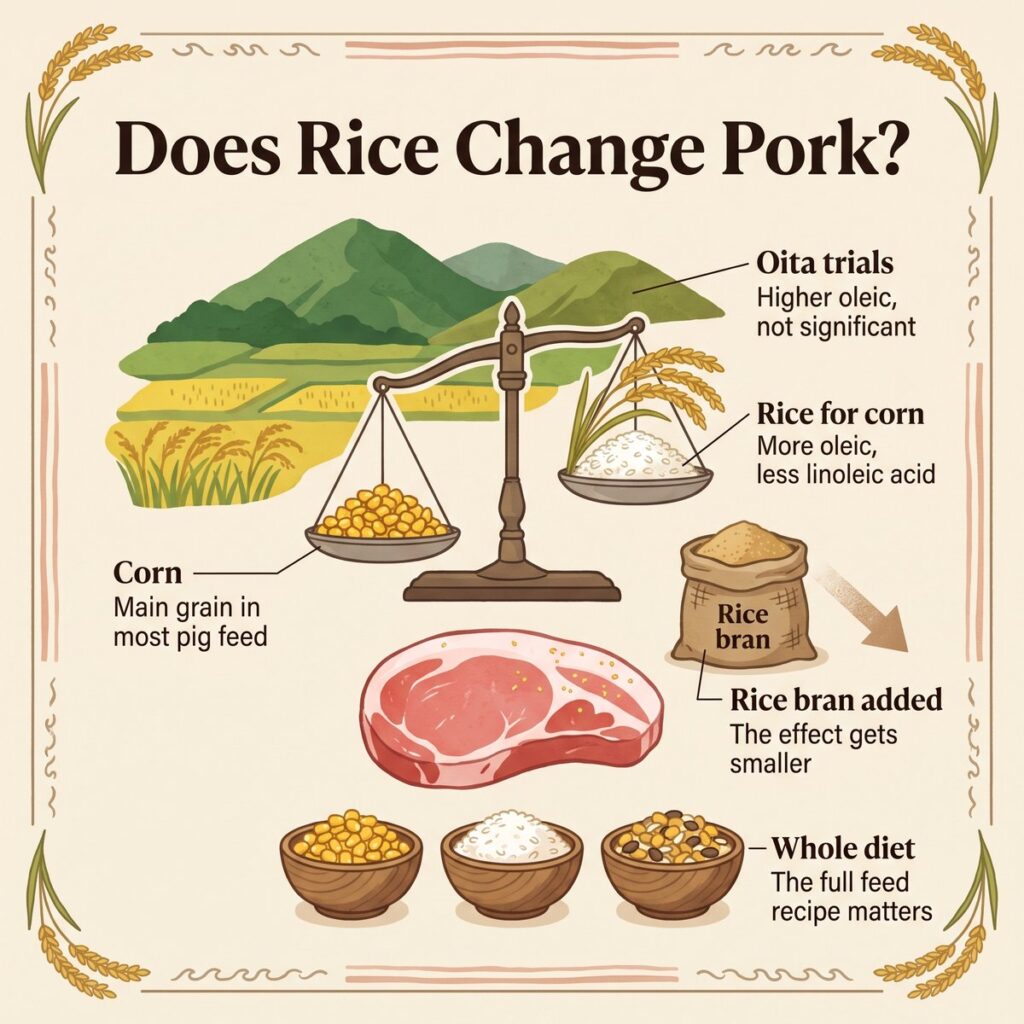
This is where the story gets more interesting, and a little less simple. Rice can change pork fat, but the result depends on the whole diet.
What Japanese Research Shows
In Japan, corn is the main grain in most pig feed. When rice replaces part of that corn, studies often find more oleic acid and less linoleic acid in the fat. For example, a 2020 Gifu study in the Japanese Society of Animal Science’s journal fed polished rice in place of corn. Backfat oleic acid rose, while linoleic acid fell.
However, the same study found that adding rice bran shrank the effect. Moreover, a NARO research summary on brown-rice feeding found more oleic acid and less linoleic acid, a profile linked with firmer fat. In one trial, melting point did not change at all. So “rice” is not one ingredient with one effect.
What Oita’s Own Trials Found
Oita ran its own feeding trials from 2010 to 2012, replacing corn with rice at 30%, 50%, and 70%. Oleic acid in the backfat tended to be higher in the rice groups, but the difference was not statistically significant. Linoleic acid fell as rice increased, while melting point showed no significant difference.
A later, small Oita trial compared two complete feeds. Pigs given one farm’s feed had significantly more oleic acid in their fat, 41.6% versus 36.3% by gas chromatography. That feed contained more plant-based oilseed meal, although the study did not isolate it as the sole cause. Still, the result suggests the rest of the diet matters too.
Worth Knowing
Rice-based feed can shift the fatty-acid balance of pork, but the effect depends on the type of rice, how much is used, and the full feed recipe. This helps explain why direct fat testing is useful, rather than relying on the feed rule alone.
What Does Kome no Megumi Pork Taste Like?
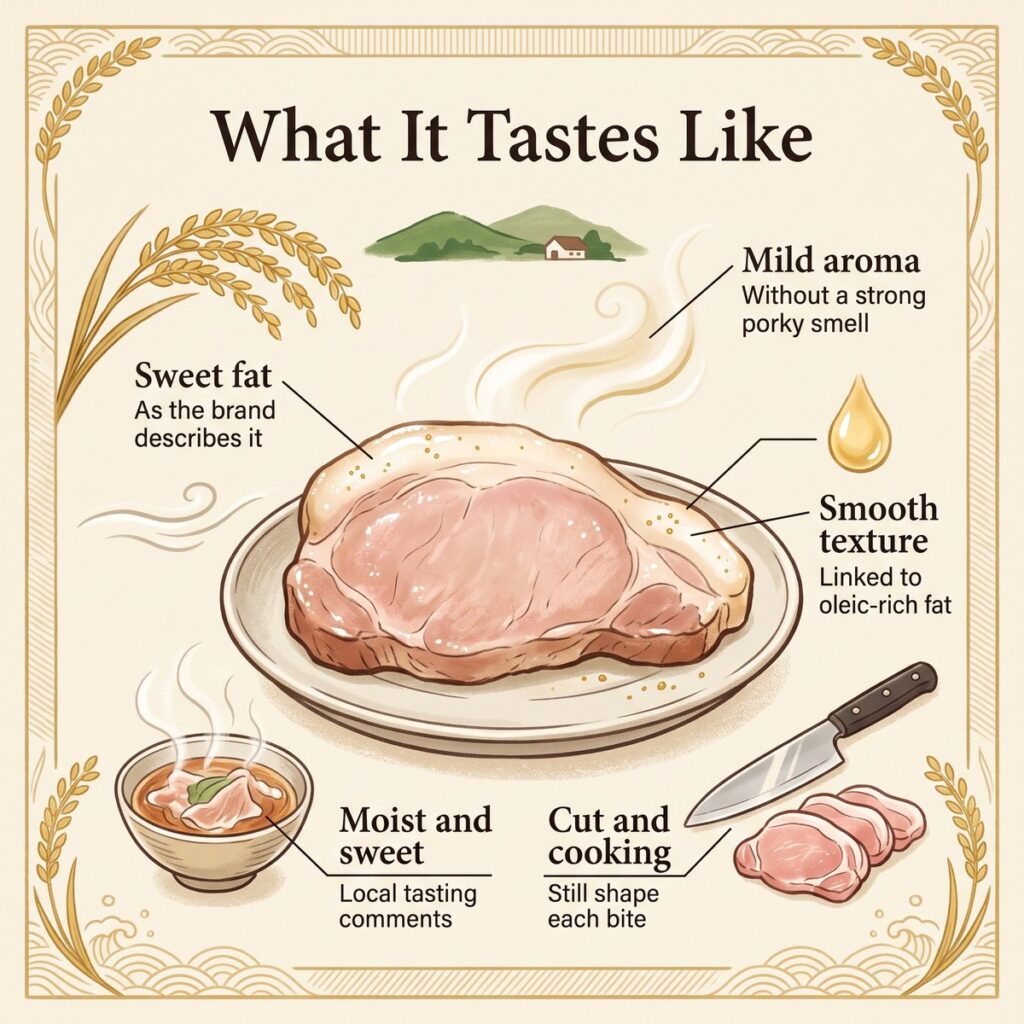
The official brand site describes the pork as sweet, with a mild aroma free of strong porky odor and a smooth feel on the tongue. It links that to the pork’s oleic acid content. Oita Prefecture’s product page adds that the fat is said to have a low melting point.
Of course, those are the brand’s own descriptions, not results from a blind taste test. Still, local media comments point in the same direction. In a March 2026 TOS report, one restaurant owner called the ginger pork “very sweet,” and a reporter described the shabu-shabu as “moist and sweet.”
So what should you actually expect? Based on the brand’s description and these tasting comments, diners may notice sweet-tasting fat, a relatively mild aroma, and a smooth mouthfeel. However, the cut, freshness, and cooking method will still shape each impression.
How It Differs from Regular Pork
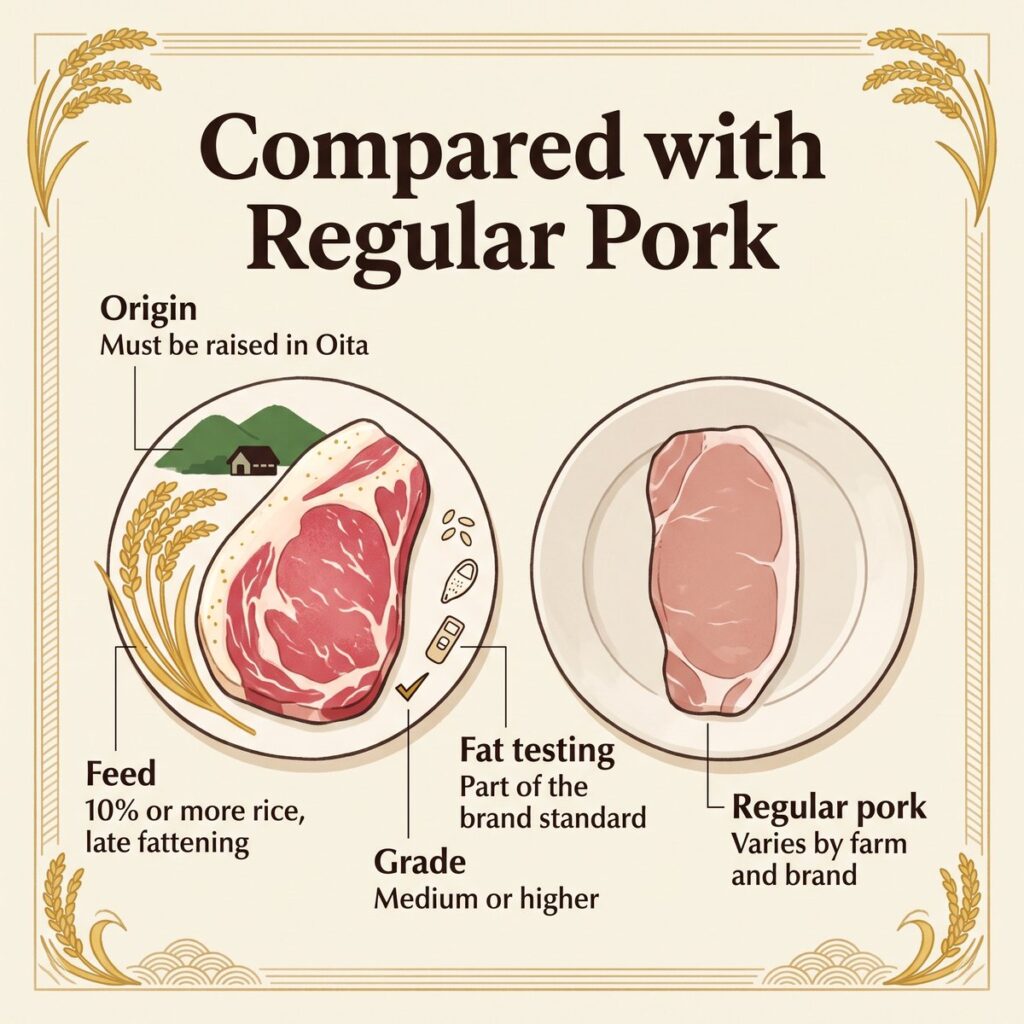
Ordinary Japanese pork is often excellent, so this is not about good versus bad, either. The real difference is that Kome no Megumi sets specific, checkable rules.
| Point | Kome no Megumi | Pork without the Kome no Megumi label |
|---|---|---|
| Origin | Must be raised in Oita | Any region |
| Feed | 10%+ rice in the final fattening stage | Varies by farm; often corn-based |
| Fat testing | Oleic-acid-related fat analysis is part of the brand standard | No equivalent universal requirement |
| Grade | Must grade “medium” or higher under the brand standard | Requirements vary by producer and brand |
| Taste claim | Sweet, mild aroma, smooth texture (brand description) | Varies widely by brand and farm |
Other Japanese pork brands take different routes. Kagoshima black pork, for example, centers on the Berkshire breed. By contrast, Kome no Megumi centers on feed and testing.
Best Ways to Eat Kome no Megumi Pork
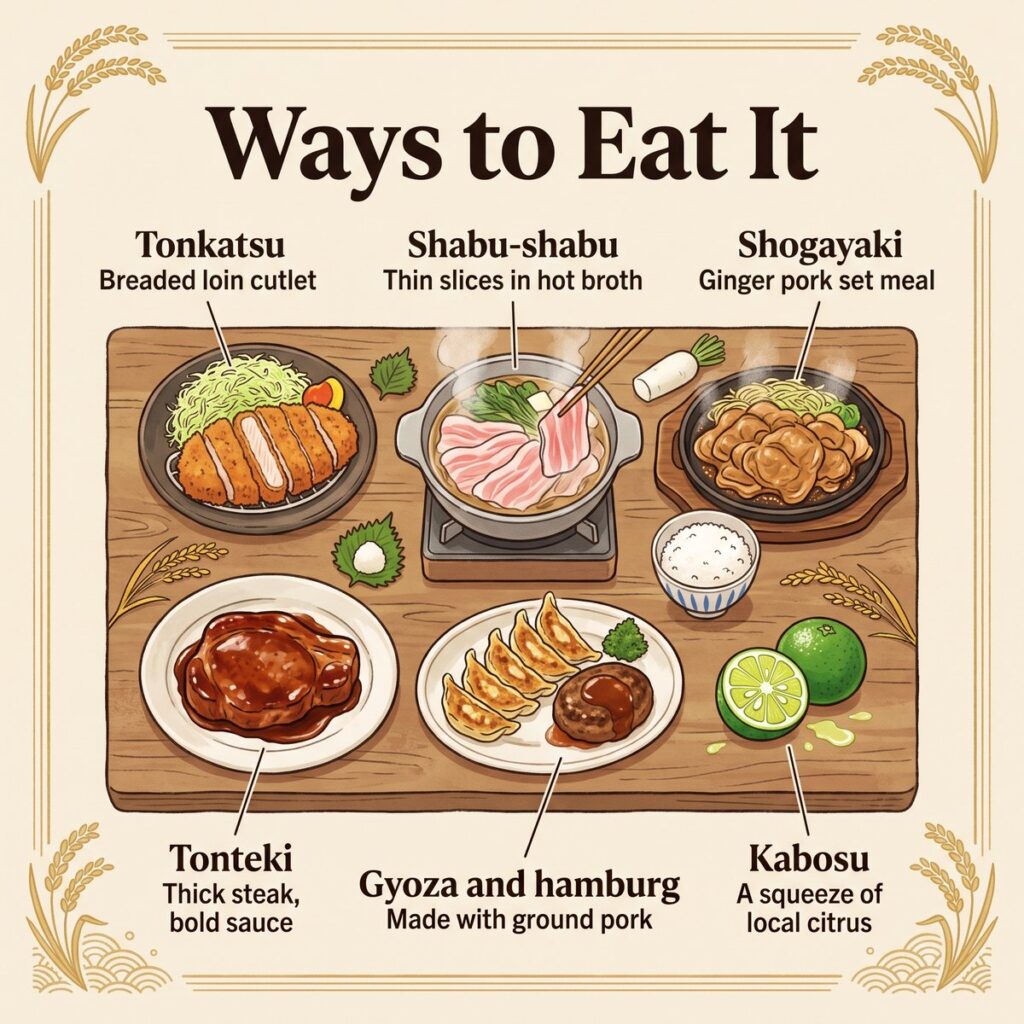
The brand site suggests tonkatsu, shabu-shabu, tonteki, ginger pork, hamburg steak, and gyoza. Here is a quick guide to each:
- Tonkatsu: a breaded, deep-fried cutlet, usually loin. For a first taste, the fat around a loin cutlet is easy to notice. See our tonkatsu guide.
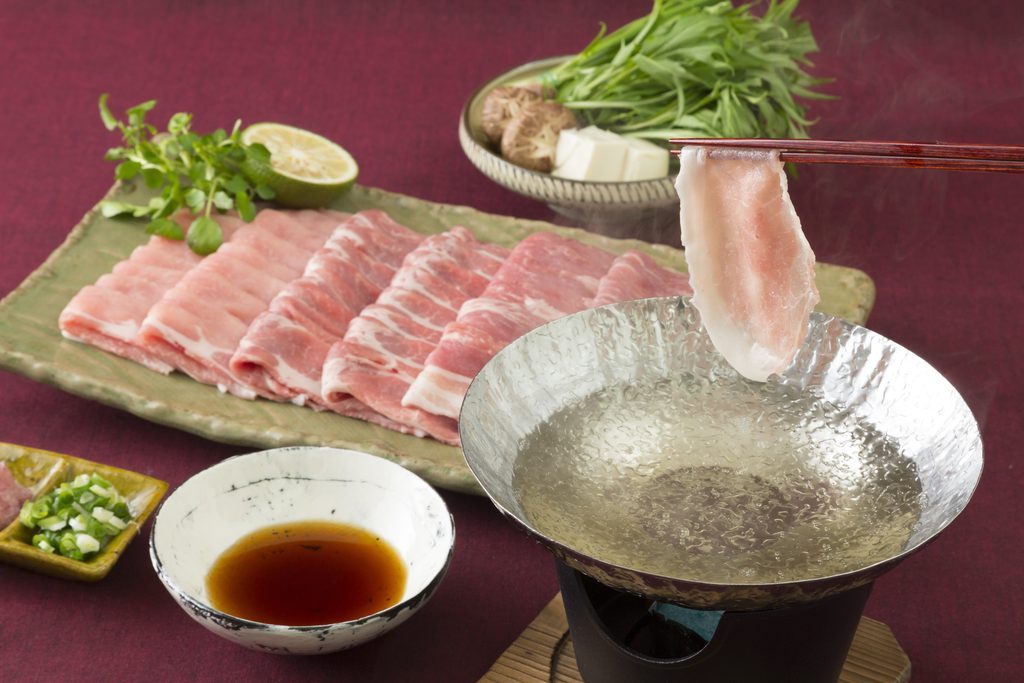
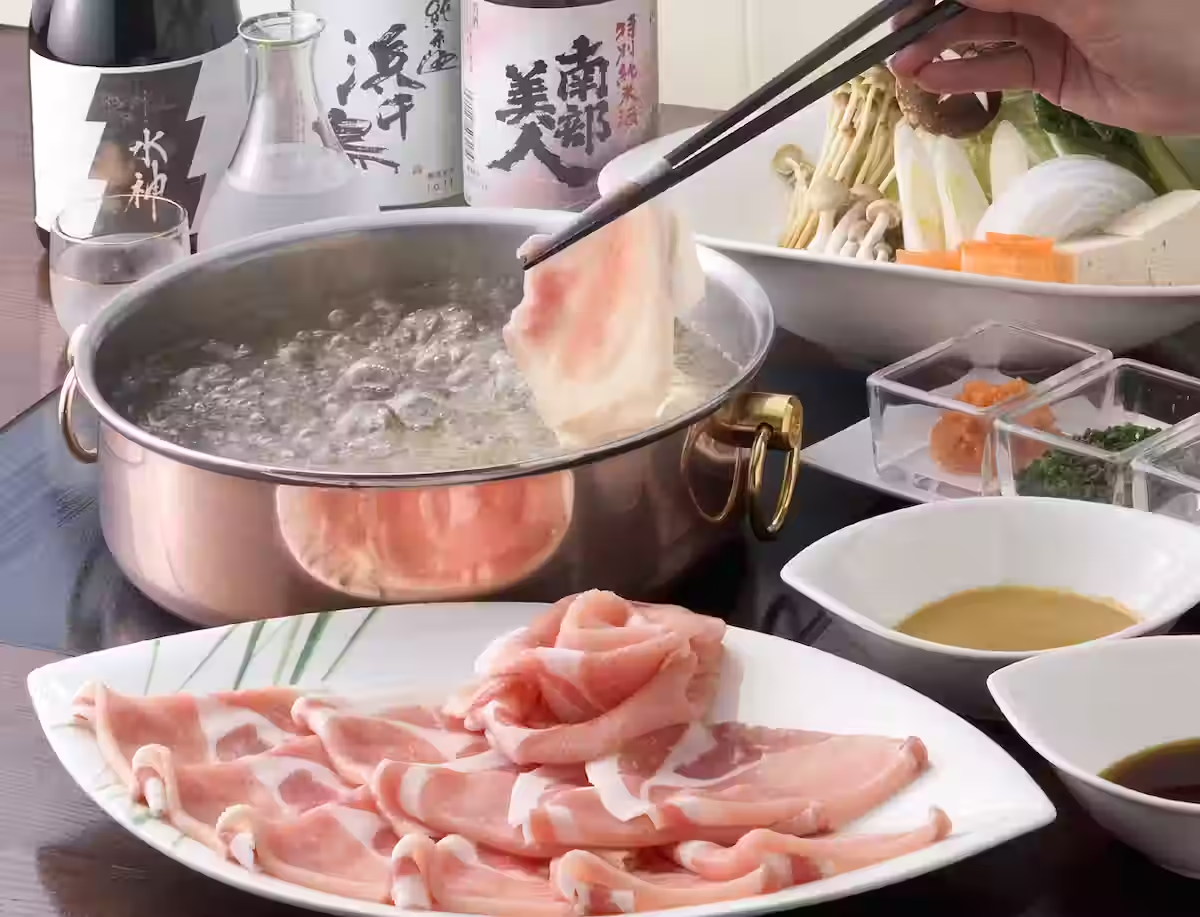
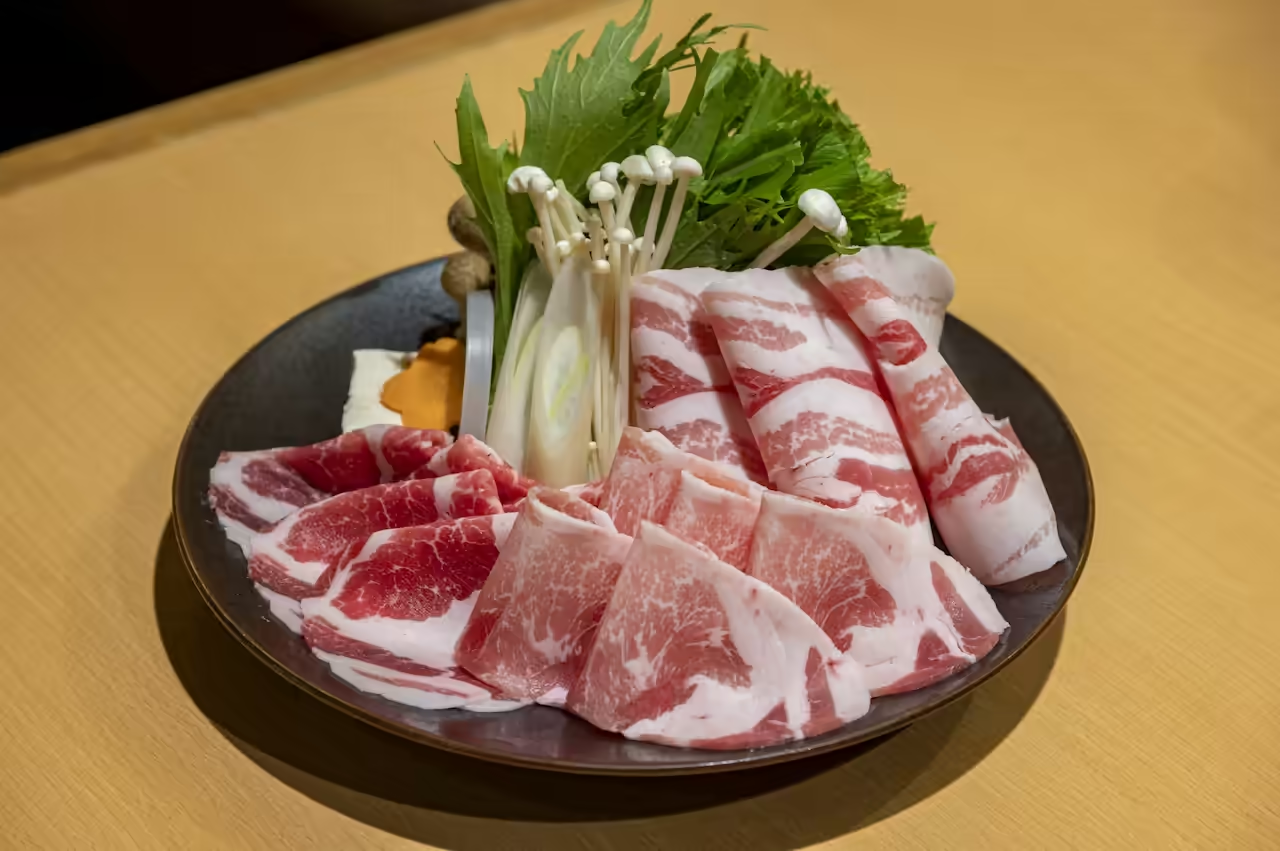
- Shabu-shabu: thin slices swished in hot broth. Thin slices make the texture and fat easy to notice. Learn more in our shabu-shabu guide.
- Shogayaki: ginger pork, a classic set-meal dish. Our shougayaki page explains it.
- Tonteki: a thick pork steak with a bold sauce, made famous in Yokkaichi.
- Gyoza and hamburg steak: dumplings and a Japanese-style hamburger patty, both made with ground meat. See our gyoza guide.
Cooking Tips
As a general guide, loin or shoulder suits cutlets and steaks, while thin belly or loin slices suit shabu-shabu. Try a little salt first, or a squeeze of kabosu, Oita’s local citrus. Also, cook pork thoroughly, but avoid cooking it far past done, which dries out even good meat. If you buy it raw, keep it refrigerated and use it by the date on the pack.
Where to Eat and Buy Kome no Megumi Pork
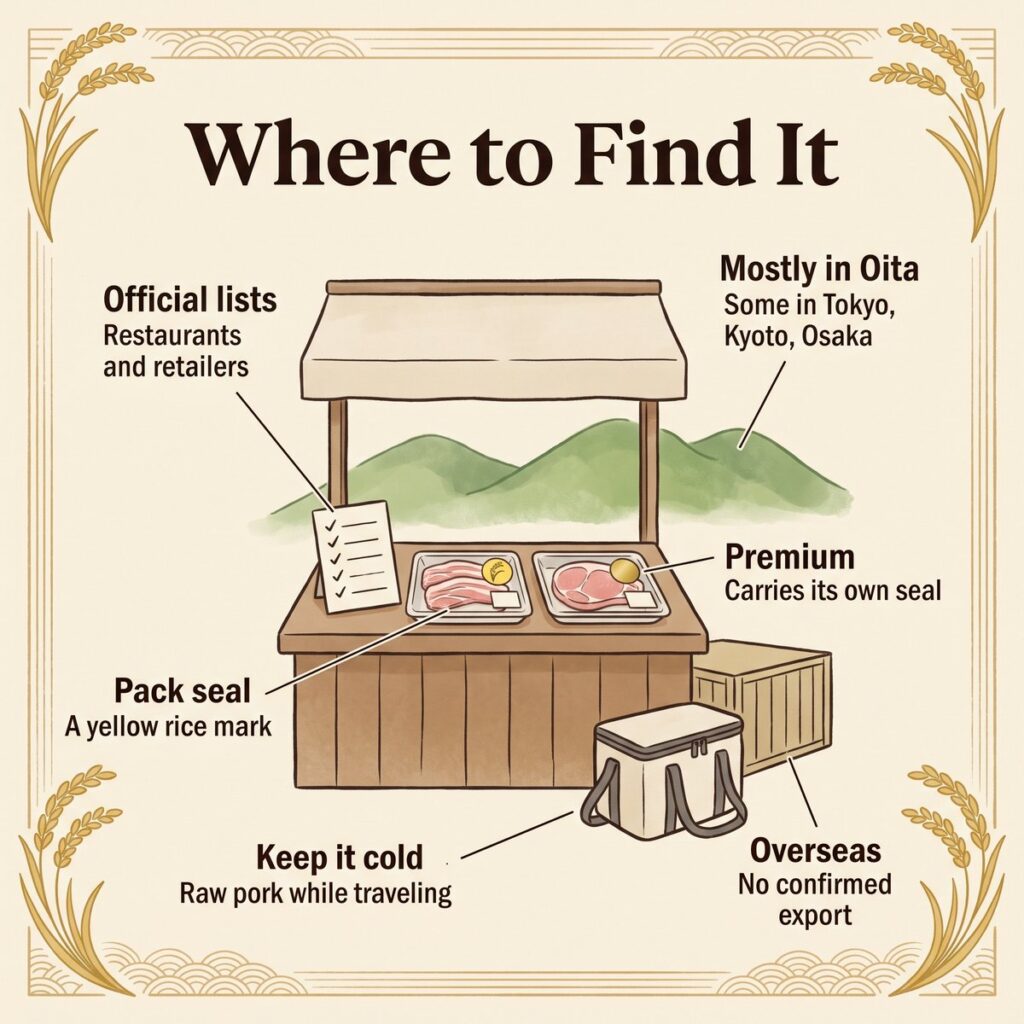
The brand council keeps two official lists, one for retailers and one for restaurants. The restaurant list is split into Oita and outside-Oita sections. It covers many towns across Oita, including inland towns such as Kokonoe and Taketa, and also includes listings in Tokyo, Kyoto, and Osaka. Listings can change, and menus are not guaranteed.
Local TV gives a feel for what is on offer. In March 2026, TOS visited a set-meal restaurant in Taketa serving ginger pork and tonkatsu. It also visited a shop near the prefectural office in Oita City that serves Kokonoe “Yume” Pork as a katsu bowl and in shabu-shabu.
At shops, look for the Kome no Megumi pack seal, which TOS described as a yellow rice mark. Premium pork carries its own seal. Within Japan, the pork also appears in hometown tax donation (furusato nozei) programs. Before you go, check:
- The latest restaurant and retailer lists on the official brand site
- Whether the restaurant still serves Kome no Megumi pork on your date
- Which cuts or products the shop has in stock
- How you will keep raw pork cold while traveling
Can You Buy It Outside Japan?
We could not confirm an official overseas retailer or export program from the sources reviewed. Moreover, many countries restrict bringing meat across borders. So the realistic way to try it is in Japan, ideally in Oita itself.
Why Kome no Megumi Matters to Oita
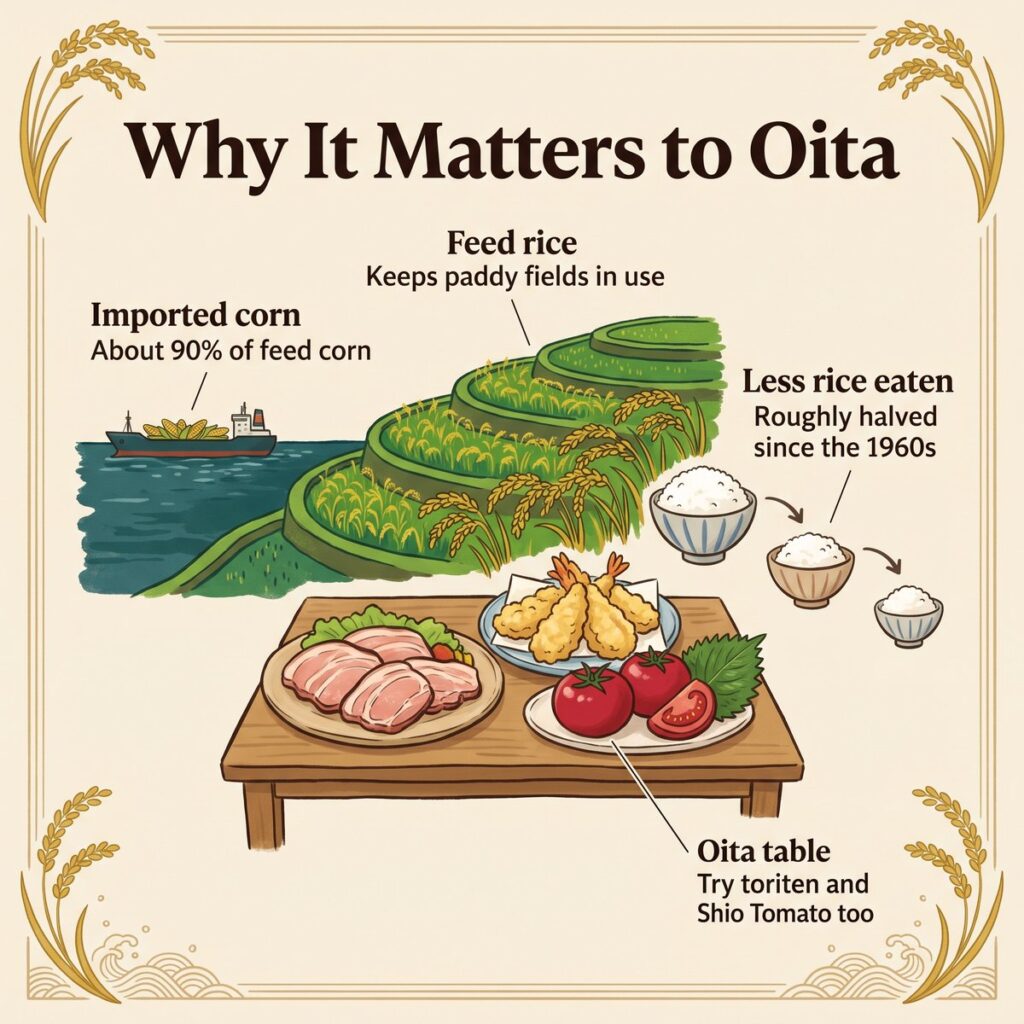
The brand fits a wider national push. According to Japan’s agriculture ministry, about 90% of the corn used in pig and chicken feed is imported. Meanwhile, rice eating per person has roughly halved since the 1960s, leaving paddy fields underused.
As a result, the ministry presents feed rice as a way to keep paddy fields in productive use and reduce reliance on imported feed grain. Kome no Megumi fits that broader policy, although we found no published data on the brand’s own contribution.
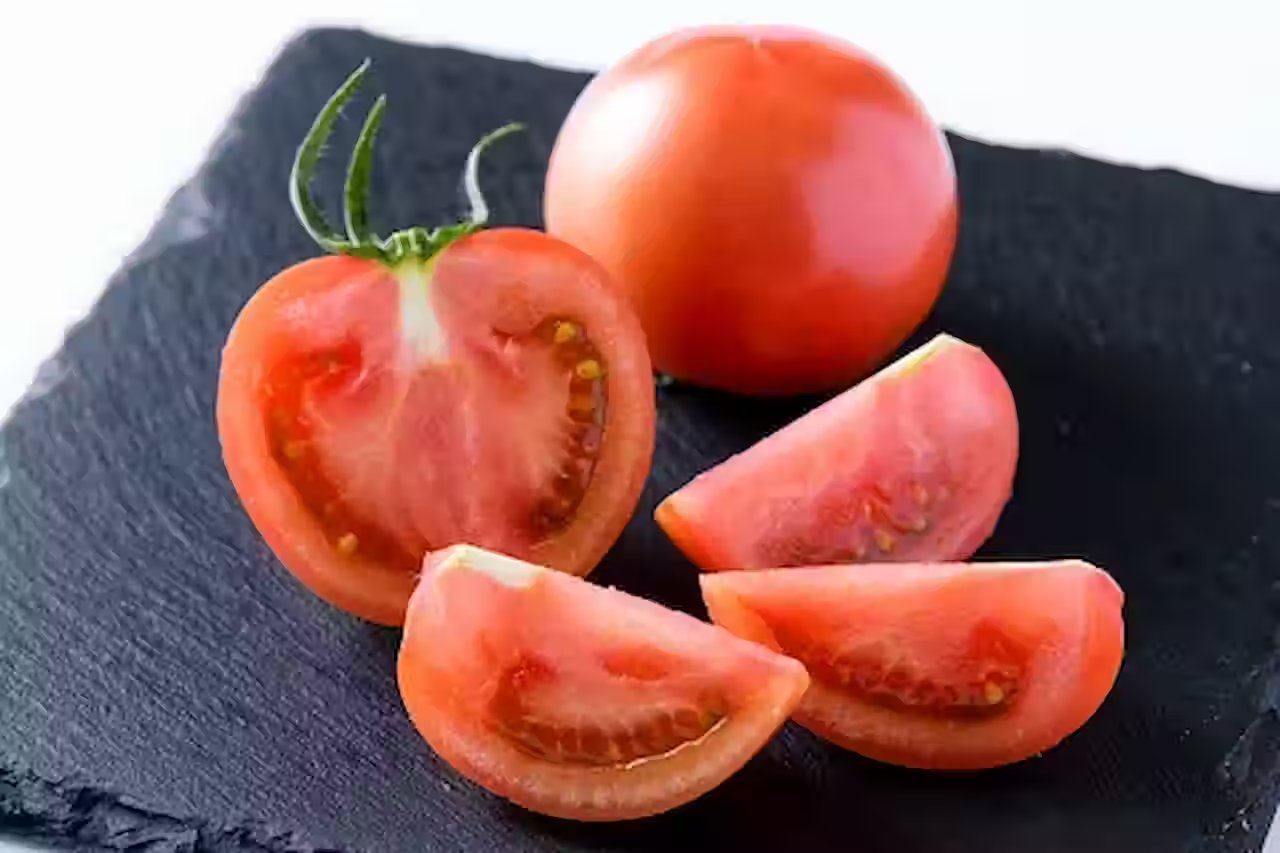
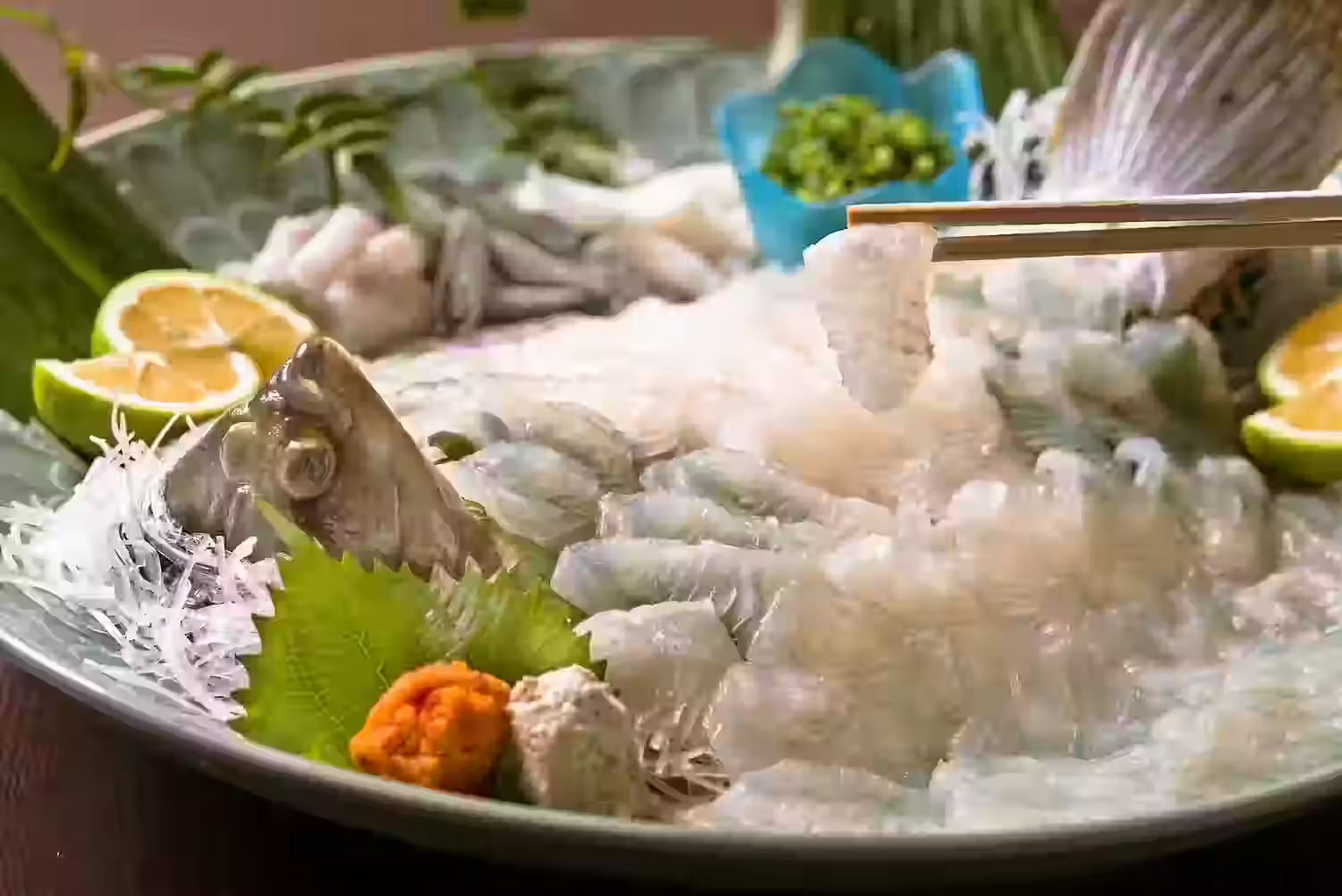
For visitors, the brand is also a reason to explore Oita’s table. Pair a pork meal with toriten, the prefecture’s chicken tempura, or a stop in Hiji for Shio Tomato.
Final Thoughts on Kome no Megumi Pork
Kome no Megumi is not a breed, and rice is not a magic ingredient. What it offers instead is a clear standard: Oita-raised pork, rice in the late feed, fat analysis, and a minimum carcass grade. The Premium tier adds a measurable oleic acid target on top.
If you visit Oita, try it in a simple dish first, such as shabu-shabu or a tonkatsu set. Then explore more of Kyushu food.
Facts in this article were last checked in October 2026.
Frequently Asked Questions About Kome no Megumi Pork
About the Brand
- What is Kome no Megumi pork?
-
It is a unified brand for Oita-raised pork. Pigs get feed with at least 10% rice in the final fattening stage, and certification includes fat analysis and a carcass grade.
- Is Kome no Megumi a breed of pig?
-
No. It is a brand standard managed by a council. Oita-raised pork, including some farm brands with their own names, can qualify if it meets the requirements.
- How much rice is in the pigs’ feed?
-
At least 10% of the total feed, given in the final fattening stage for about 60 days or more.
- What is Kome no Megumi Premium?
-
It is the higher tier. Premium pork must measure 42% or more oleic acid in the brand’s fat test.
Testing and Taste
- How is it tested?
-
A near-infrared device estimates oleic acid and related components in shoulder fat, and the carcass must grade “medium” or higher.
- Does rice feed always increase oleic acid?
-
Not always. Studies show rice can shift fat composition, but the effect depends on the rice type, the amount, and the rest of the feed.
Buying and Eating
- Where can I eat Kome no Megumi pork?
-
The official brand site lists restaurants, mostly in Oita, with some in Tokyo, Kyoto, and Osaka. Check the list before visiting.
- Can I buy it outside Japan?
-
We could not confirm an official overseas retailer or export program. The easiest way to try it is to visit Oita.
References
- Oita Prefecture – Governor’s Report on the Unified Prefectural Pork Brand Kome no Megumi (December 19, 2016) (Accessed October 2026)
- Oita Rice Pork Brand Promotion Council – Kome no Megumi: Pork Raised in Oita (Accessed October 2026)
- Oita Rice Pork Brand Promotion Council – Restaurants Serving Kome no Megumi (Accessed October 2026)
- The Oita (Oita Prefecture) – Introducing Kome no Megumi (Accessed October 2026)
- Oita Prefecture – What’s up Oita, Vol. 47 (January 2017) (Accessed October 2026)
- Oita Prefectural Agriculture, Forestry and Fisheries Research Center – Research Now Vol. 101: A Simple Method for Measuring Oleic Acid in Pork Fat (June 15, 2020) (Accessed October 2026)
- Oita Prefecture – Shimura, H., Sato, K., Goto, M., Ono, M., Kudo, K., & Toshimitsu, A. (2018). Development of a Pork Fat Measurement System Using a Meat-Fat Analyzer and Techniques to Raise Oleic Acid in Pork Fat (Accessed October 2026)
- Oita Prefecture – Akiyoshi, T., et al. Development of Feed-Rice Feeding Techniques for Fattening Pigs (trials 2010–2012) (Accessed October 2026)
- NARO – Feeding Feed Rice to Pigs (technical manual chapter) (Accessed October 2026)
- J-STAGE – Yoshioka, G., Suzuki, K., Hayashi, K., & Mukaijima, K. (2020). Effects of Replacing Corn with Polished Rice and of Combined Polished Rice and Rice Bran Feeding on Pork Quality. Nihon Chikusan Gakkaiho, 91(4), 381–388 (Accessed October 2026)
- Ministry of Agriculture, Forestry and Fisheries – Branding of Livestock Products Using Feed Rice (Accessed October 2026)
- TOS (Television Oita System) – Enjoying Dishes Made with Rice-Fed Brand Pork Kome no Megumi (updated March 23, 2026) (Accessed October 2026)
Related Articles
- Kagoshima Black Pork (鹿児島黒豚) (Surveyed: October 2026)
- Sasuke Pork (佐助豚) (Surveyed: October 2026)
- Chibaza Pork (チバザポーク) (Surveyed: October 2026)
- Tonkatsu (とんかつ) (Surveyed: October 2026)
- Shabu-Shabu (しゃぶしゃぶ) (Surveyed: October 2026)
- Shougayaki (生姜焼き) (Surveyed: October 2026)
- Yokkaichi Tonteki (四日市とんてき) (Surveyed: October 2026)
- Toriten (とり天) (Surveyed: October 2026)
- Shio Tomato (潮トマト) (Surveyed: October 2026)
- Seki Saba (関サバ) (Surveyed: October 2026)
- The Ultimate Kyushu Food Guide (Surveyed: October 2026)




Comments