



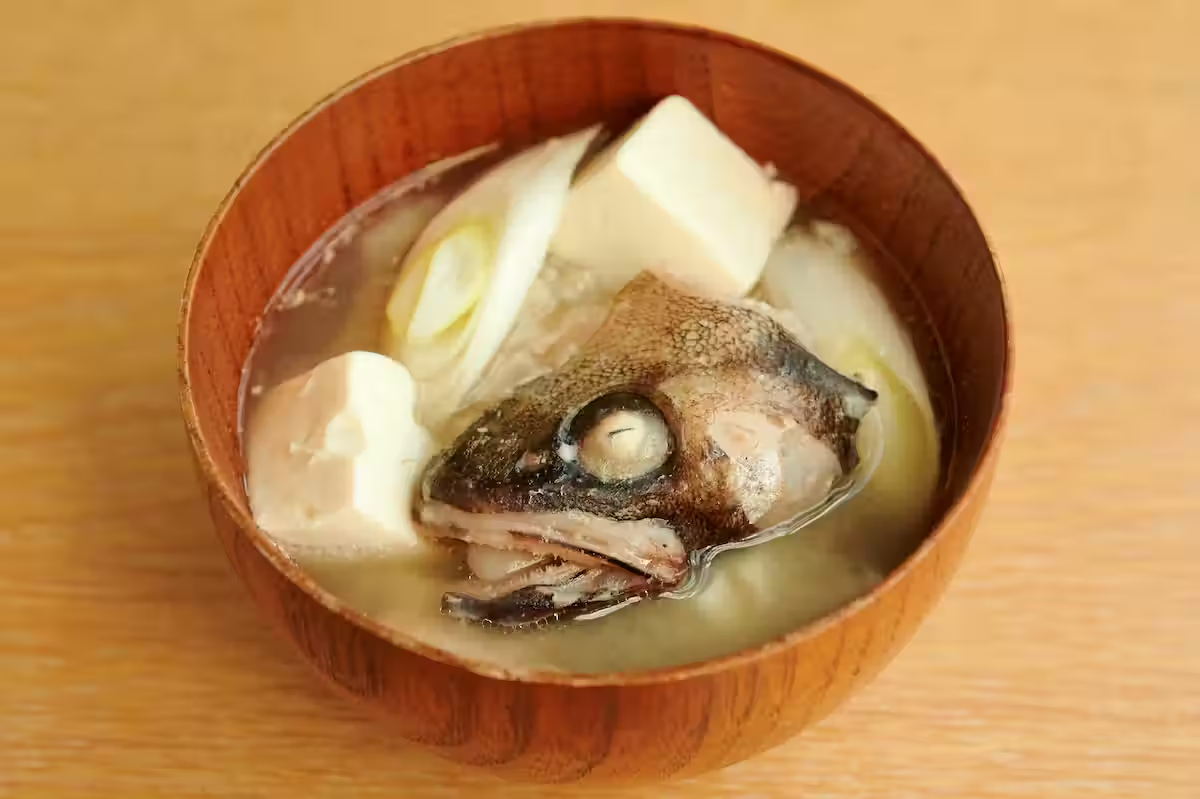
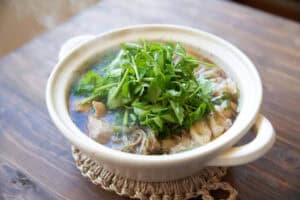
Donko nabe is a rich winter hot pot from Japan’s Sanriku coast, made with donko fish and its creamy liver dissolved into miso broth.
Popular in Miyagi and Iwate, this rustic seafood stew delivers deep flavor from the sea and a warming taste of northern Japan.
At first glance, donko fish may look plain. It is a deep-sea coastal fish with soft white flesh and a large edible liver. Once simmered, however, the broth becomes surprisingly rich and satisfying.
So, what is donko nabe in Japan? It is a Japanese fish hot pot where the liver melts into the soup, creating a naturally thickened and deeply savory broth. A true winter comfort food from Tohoku.
Basic Information About Donko Nabe
Donko nabe, also called donko jiru in some regions, is a Japanese regional hot pot from the Sanriku coastline. It is widely eaten as a Miyagi local dish and an Iwate local dish during cold months.
The key ingredient is donko fish. This fish lives in cold Pacific waters along the rugged coastline. Its soft flesh cooks quickly, while the liver provides rich depth.
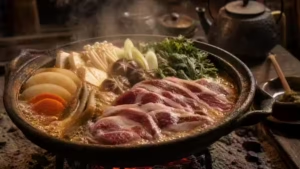
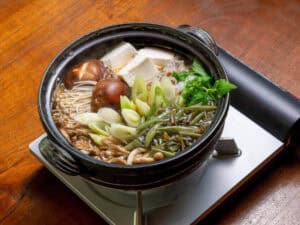
Unlike many hot pots, this dish relies on a miso-based soup. Vegetables such as napa cabbage, tofu, and daikon add texture and balance. The result feels simple but deeply satisfying.
This hot pot from Tohoku reflects fishing village life. Long winters and cold seas encouraged hot, nourishing meals. Donko nabe answers that need with warmth and flavor.
If you want to explore similar dishes, check the nabe guide, which explains regional hot pot styles.
Taste, Flavor, and Texture
Donko nabe offers rich miso broth with fish and a creamy finish. The donko liver melts into the soup, creating a smooth and slightly thick texture.
The flavor stands out for its balance. It feels deep and savory, yet not heavy. Many people expect fish liver to be strong, but the taste becomes mild and blended once cooked.
The fish itself stays soft and juicy. The broth carries gentle sweetness and sea umami. It feels rustic and comforting, not refined or delicate.
This dish shows that simple ingredients can create strong flavor. Its appeal comes from warmth rather than elegance. That makes it a perfect example of Japanese seafood stew from coastal regions.
Donko Nabe Compared With Other Japanese Hot Pots
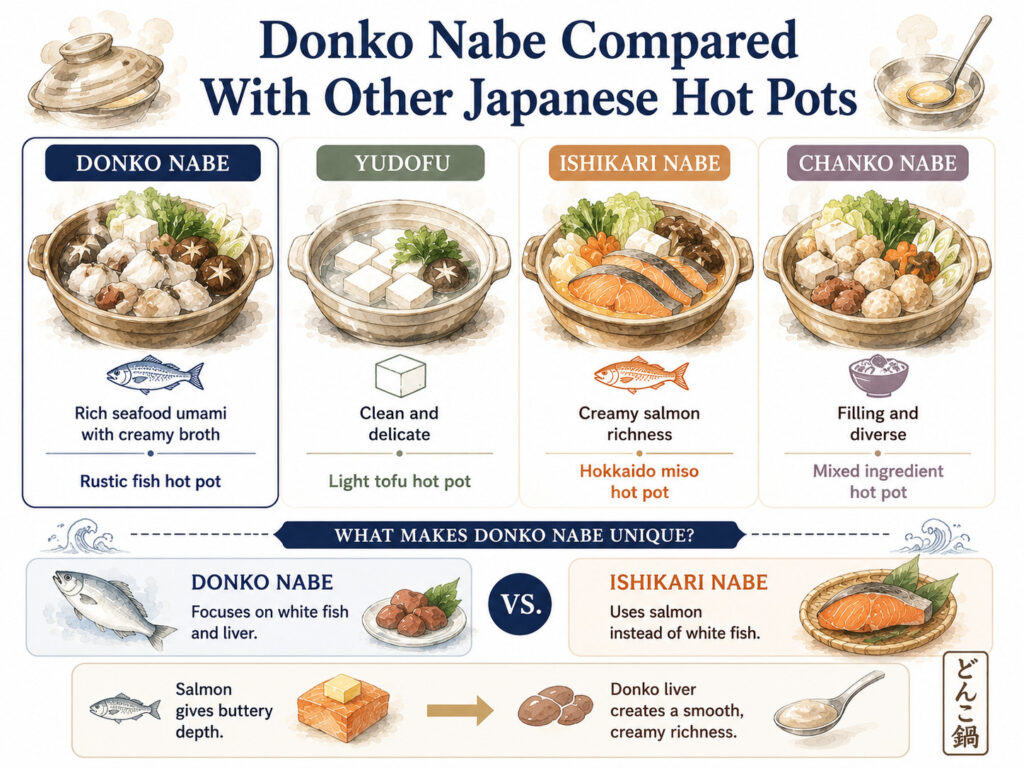
| Dish | Flavor Image | Style |
|---|---|---|
| Donko Nabe | Rich seafood umami with creamy broth | Rustic fish hot pot |
| Yudofu | Clean and delicate | Light tofu hot pot |
| Ishikari Nabe | Creamy salmon richness | Hokkaido miso hot pot |
| Chanko Nabe | Filling and diverse | Mixed ingredient hot pot |
This comparison highlights its uniqueness. Donko nabe focuses on white fish and liver, unlike Ishikari nabe, which uses salmon.
Salmon gives buttery depth, while donko liver creates a softer, creamy richness. That difference makes donko nabe a Sanriku coastal local dish with a distinct identity.
How Donko Nabe Is Made
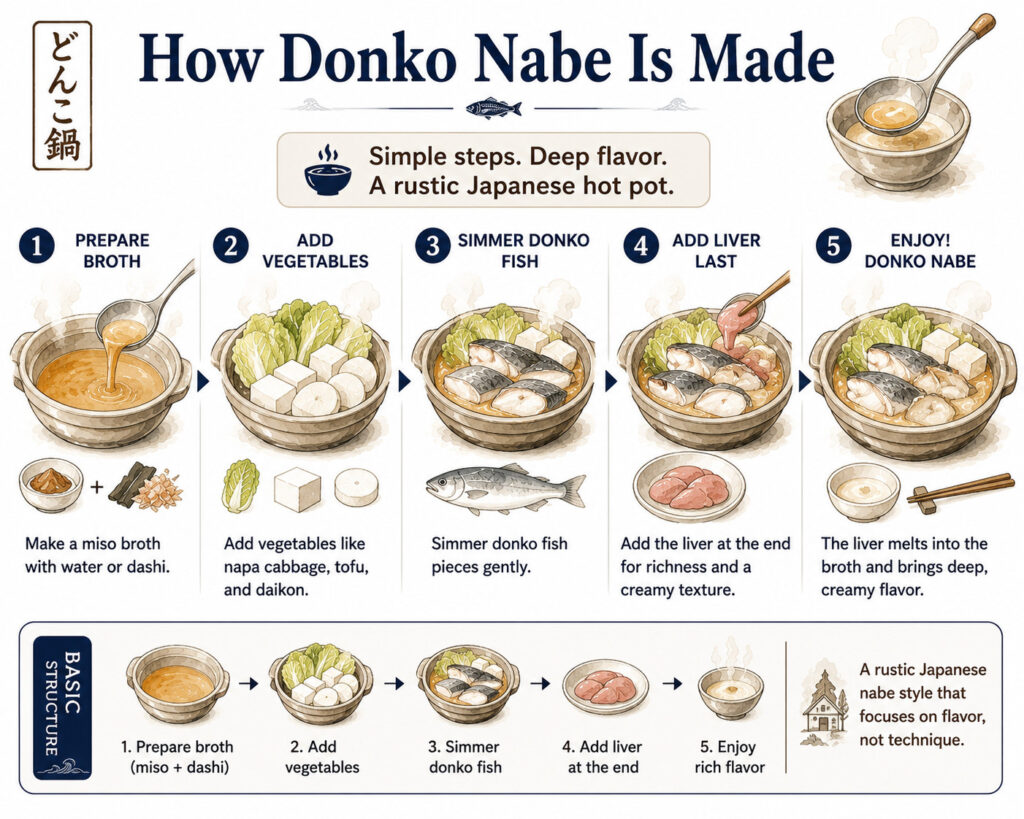
The cooking process is simple but intentional. A pot begins with miso-based broth, often combined with dashi.
Vegetables go in first. Cabbage, tofu, and daikon build the base. Donko fish pieces are added next.
The liver is placed last. It melts into the broth and creates a creamy texture. Timing matters, but the method stays straightforward.
Here is the basic structure:
- Prepare a miso broth with water or dashi
- Add vegetables like napa cabbage and tofu
- Simmer donko fish pieces gently
- Add the liver at the end for richness
This style reflects a rustic Japanese nabe cooking approach. It focuses on flavor rather than technique.
History and Coastal Culture
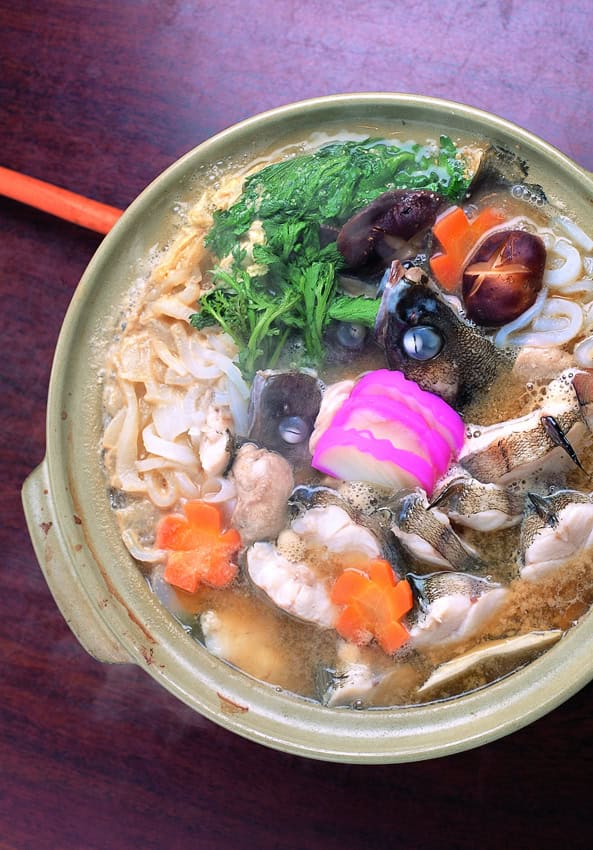
Donko nabe developed in fishing villages along the Sanriku coast. This region faces long winters and cold ocean winds.
Fishermen needed food that warmed them after work. A hearty fish stew became a natural solution.
Using the liver also reflects local habits. Fishing communities avoided waste and used every part of the catch. Over time, that practice turned into tradition.
The dish remained regional rather than nationwide. It feels more like a homemade meal than restaurant cuisine. That authenticity makes it special.
Today, you can find donko nabe at coastal izakaya and winter seafood festivals. It remains a strong symbol of northern Japanese comfort food.
Why Donko Nabe Matters
Donko nabe represents a different side of Japanese food culture. It is not luxury cuisine. Its strength comes from depth, warmth, and simplicity.
The dish connects land, sea, and daily life. Cold weather, fresh fish, and local cooking habits all shape its identity.
For travelers, it offers something real. A humble fishing-village dish with deep flavor. A warming seafood hot pot that feels both traditional and personal.
If you are exploring a Tohoku local food guide, this dish deserves attention. It is a true taste of coastal Japan.
Final Thoughts
Donko nabe is a hearty winter hot pot shaped by coastal life. Its flavor comes from fish, miso, and the gentle richness of liver.
It may not look impressive at first. Still, the taste tells a deeper story. Warm, balanced, and full of character.
For Japanese food lovers, it offers a rustic and memorable experience. A quiet dish, perhaps, but one that stays in your mind.
Donko Nabe FAQ
What is Donko Nabe?
It is a rustic winter hot pot from the Sanriku coast. Chefs make it with a local deep-sea fish, winter vegetables, and miso paste. Food lovers know this dish for its rich, warming, and hearty broth.
What is donko fish?
It represents a deep-sea coastal fish. Diners prize this specific catch for its soft white flesh and large, highly edible liver.
Where does Donko Nabe come from?
This local specialty originates from the Sanriku coastal region in northern Japan. Fishermen created this hearty meal originally to warm their freezing bodies after long winter days at sea.
What does Donko Nabe taste like?
It tastes savory, slightly sweet, and incredibly rich. The broth delivers a perfectly balanced seafood depth and comforting miso warmth.
Why do cooks use the fish liver in the hot pot?
The rich organ melts completely into the hot broth. This natural process creates a luxurious, creamy texture and provides a much deeper umami flavor.
Is Donko Nabe spicy?
No, it delivers a very mild and soothing taste. Cooks base the recipe entirely on sweet miso and natural seafood flavors without adding any hot spices.
Where can you eat Donko Nabe?
You will find it easily at coastal restaurants in the Tohoku region. Establishments in Miyagi and Iwate prefectures serve this winter specialty frequently to hungry locals and tourists.
Is Donko Nabe vegetarian or vegan friendly?
This authentic stew contains whole fish and fish broth. Vegans and vegetarians cannot eat this specific meal, but they can easily request a plant-based vegetable hot pot instead.
Can you make Donko Nabe at home?
Yes, you can easily cook this meal at home. Home cooks use fresh fish, winter vegetables, and miso paste, simmering everything gently in a large pot.
Is Donko Nabe popular outside Japan?
It remains completely unknown outside Japan. You will rarely find this specific regional stew at Japanese restaurants abroad. This rustic fisherman’s meal successfully maintains its historic status exclusively within northern Japan.
References
- https://www.miyagi-tourism.jp/ Miyagi Prefecture Tourism, “Local Cuisine Donko Nabe”, checked in 2026
- Iwate Tourism Association, “Sanriku Coastal Cuisine”, checked in 2026
- https://www.jafic.or.jp/Japan Fisheries Information Service Center, “Greenling Fish”, checked in 2026
- https://www.maff.go.jp/j/keikaku/syokubunka/k_ryouri/search_menu/menu/donko_jiru_miyagi.html 農林水産省ウェブサイト checked in 2026





Comments