






Akita Food Guide
Rice Country · Snow Country · Tohoku
Welcome to the complete Akita food guide from Food in Japan. Akita Prefecture sits on the Sea of Japan coast in northern Tohoku. Thanks to deep snow, pure mountain water, and centuries of rice farming, the region built a cuisine of hot pots, noodles, and fermentation. For example, locals grill kiritanpo rice sticks and smoke iburigakko pickles over hearth fires. In short, this Akita food guide covers everything worth eating in the prefecture.
| Prefecture | Akita (秋田県) |
|---|---|
| Region | Tohoku, northern Honshu |
| Food Identity | Rice cuisine, winter hot pots, smoke and fermentation |
| Famous Dishes | Kiritanpo nabe, Inaniwa udon, Hinai Jidori, iburigakko, Yokote yakisoba |
| Signature Flavor | Hinai Jidori chicken broth and shottsuru fish sauce umami |
| Key Ingredients | Akita Komachi rice, Hinai Jidori chicken, hatahata sandfish, sansai vegetables |
| Sake Culture | One of Japan’s great sake regions, with many century-old breweries |
| Best Food Areas | Akita City, Odate, Yokote, Yuzawa, Oga Peninsula, Kakunodate |
IdentityWhat Makes Akita Food Unique?
Japan’s Rice Country
Akita grows some of the best rice in Japan. In fact, the prefecture developed the famous Akita Komachi variety, prized for its sweetness and stickiness. Rice also appears in Akita cooking far beyond the rice bowl. For instance, locals mash it, grill it on cedar skewers, roll it into dumplings, and brew it into sake. As a result, no other prefecture celebrates rice in so many edible forms.
Food Built for Deep Winter
Akita winters bring some of the heaviest snowfall in Japan. Consequently, the cuisine answers with hot pots. Kiritanpo nabe, damako nabe, shottsuru nabe, and jyunsai nabe all warm the table through the cold months. Preservation mattered just as much. Therefore, families smoked daikon over hearth fires and fermented fish into sauce to survive the snowbound season.
A Fermentation Heartland
Above all, fermentation defines Akita’s flavor identity. Shottsuru, one of Japan’s three great fish sauces, ferments hatahata sandfish with salt for years. In addition, hatahata becomes narezushi, a preserved sushi aged with rice and koji. Add miso, soy sauce, pickles, and a deep sake brewing tradition, and Akita stands among Japan’s true fermentation capitals.
Must-TryAkita Food Guide: Must-Try Dishes
Akita’s essential dishes range from Edo-period farm cooking to postwar B-class gourmet favorites. First of all, start with these signature names.
Signature Dishes in This Akita Food Guide
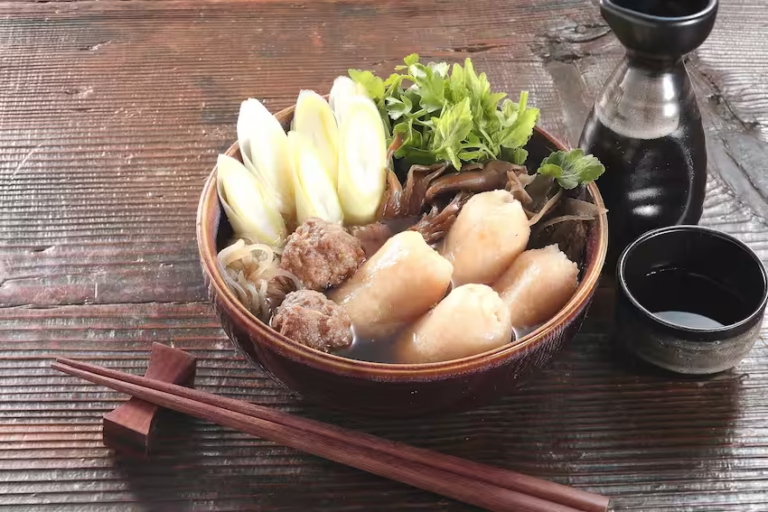

Kiritanpo (きりたんぽ)
Mashed rice grilled on cedar skewers, then simmered in Hinai Jidori chicken hot pot. Above all, it is Akita’s most iconic dish, born in Odate.
Read the Kiritanpo guide →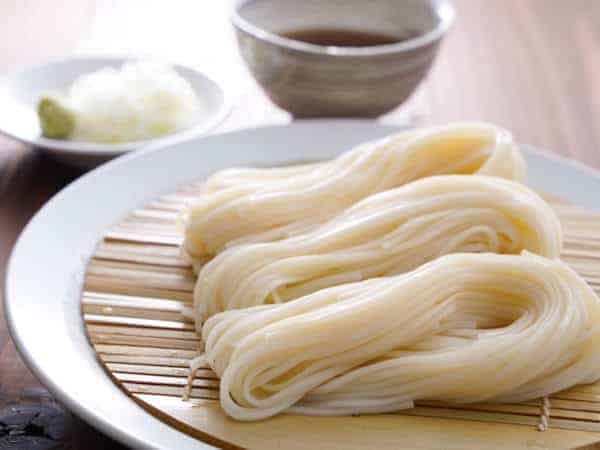
Inaniwa Udon (稲庭うどん)
Thin, hand-stretched noodles from Yuzawa with a silky, glossy texture. In fact, it is one of Japan’s three great udon styles.
Read the Inaniwa Udon guide →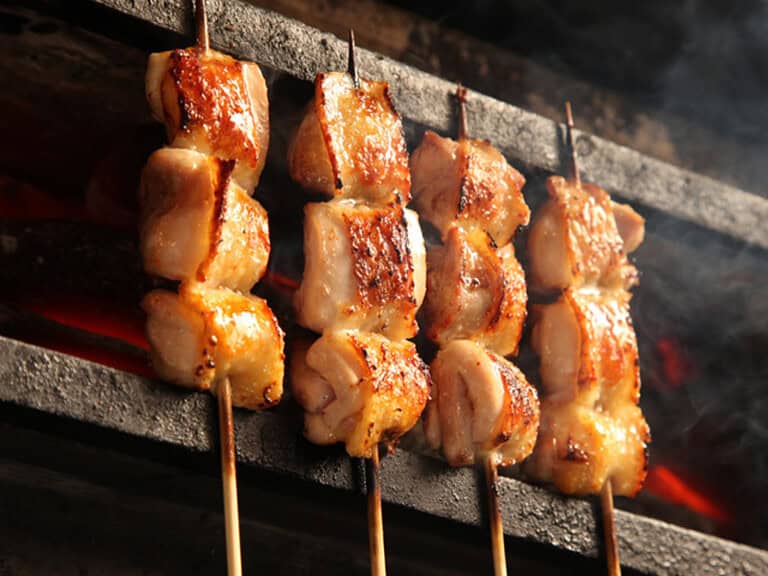

Hinai Jidori (比内地鶏)
One of Japan’s three great jidori chickens. As a result of its firm texture and deep umami, it became the soul of Akita’s hot pots.
Read the Hinai Jidori guide →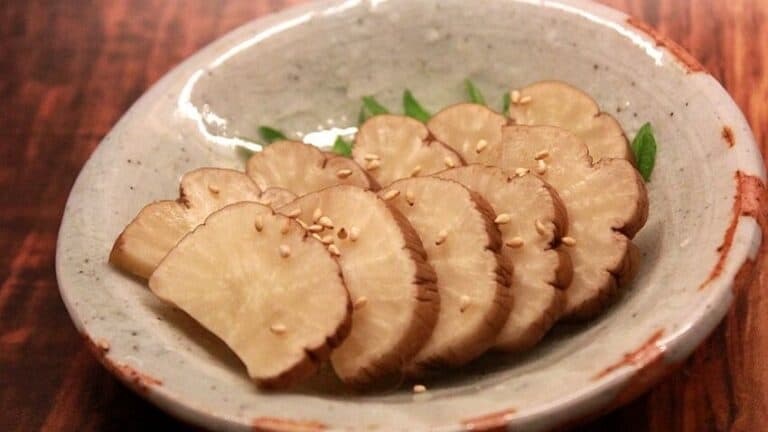

Iburigakko (いぶりがっこ)
Daikon smoked over hearth fires, then pickled in rice bran. Consequently, it tastes smoky, crunchy, and unlike anything else in Japan.
Read the Iburigakko guide →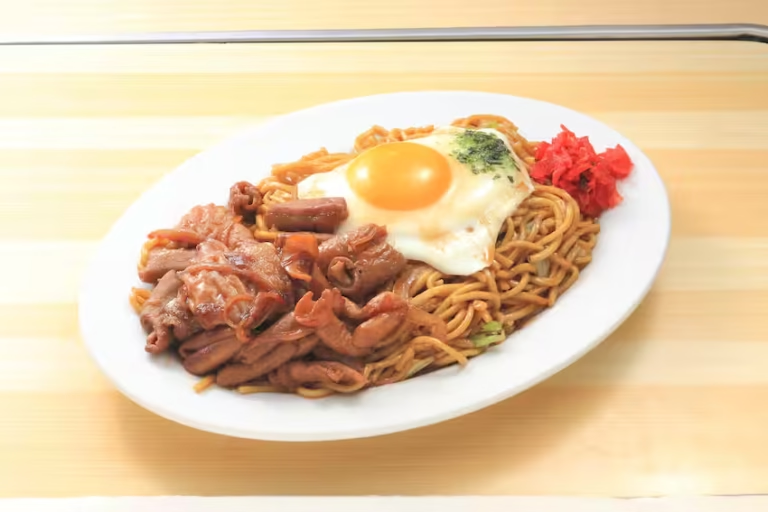
Yokote Yakisoba (横手やきそば)
Sweet Worcester-sauce noodles topped with a sunny-side-up egg. Moreover, it ranks among Japan’s three major yakisoba styles.
Read the Yokote Yakisoba guide →
Local Favorites and Sweet Treats
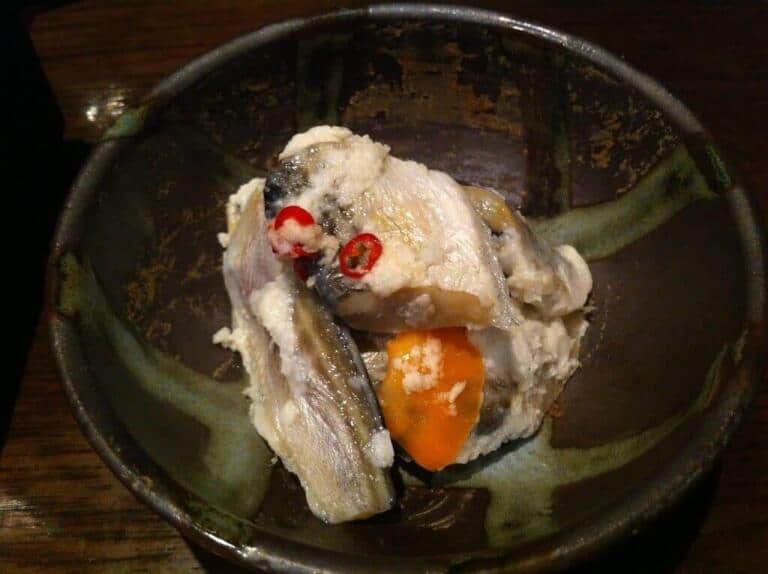

Hatahata Sushi (ハタハタ寿司)
Sandfish preserved with rice and koji into a tangy narezushi. In other words, it is the taste of winter on the Akita coast.
Read the Hatahata Sushi guide →Damako Nabe (だまこ鍋)
Rice mashed into chewy dumplings and simmered in Hinai Jidori broth. In short, it is kiritanpo’s homestyle cousin from the Hachirogata area.
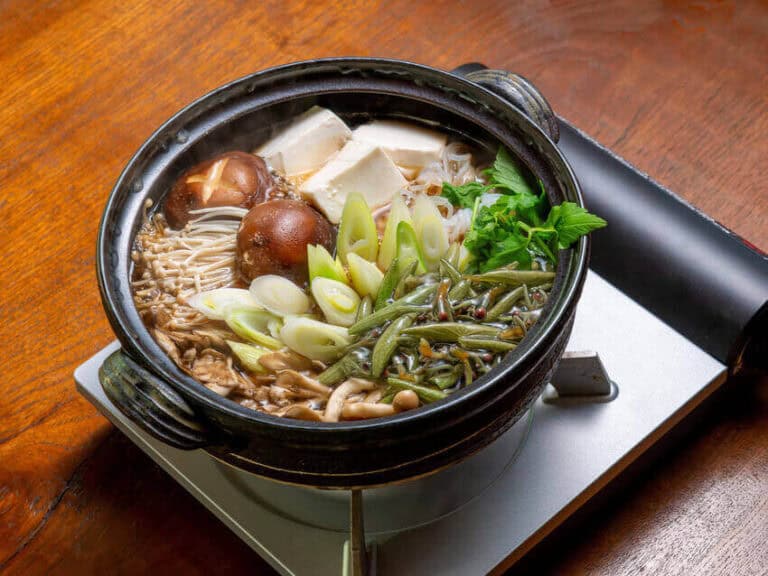
Jyunsai Nabe (じゅんさい鍋)
A hot pot starring jyunsai water shield, a slippery aquatic plant. Locals still harvest it by hand from small boats in Mitane.
Read the Jyunsai Nabe guide →
Babahera Ice (ババヘラ)
Banana and strawberry sherbet shaped into a rose by spatula-wielding grandmothers. Indeed, it is Akita’s beloved roadside summer treat.
Read the Babahera Ice guide →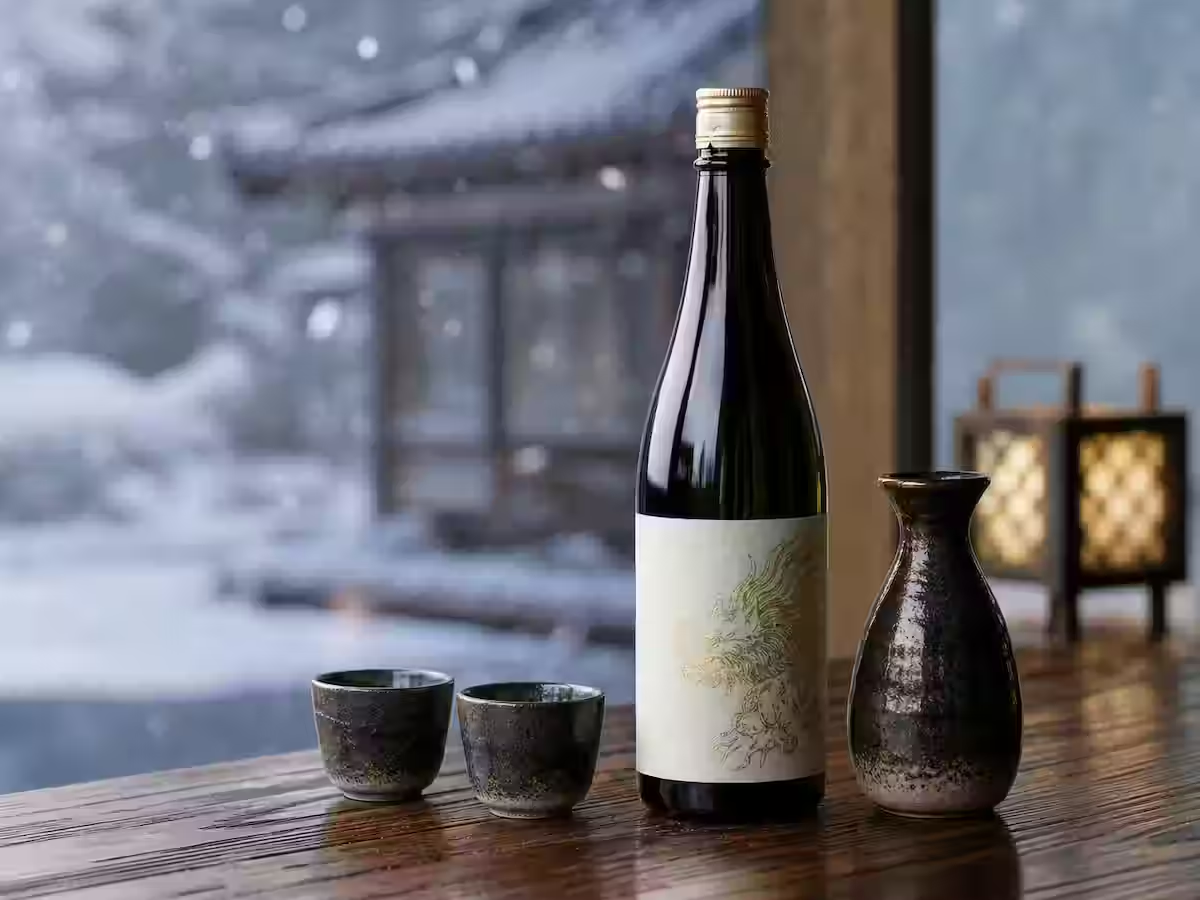
Akita Sake (秋田の酒)
Smooth, mellow sake brewed from local rice and snowmelt water. In fact, two-thirds of Akita’s breweries are over a century old.
Read the Akita Sake guide →
FlavorWhat Does Akita Food Taste Like?
Akita food tastes gentle first, then deep. Hinai Jidori broth turns golden and rich, and the aroma of toasted rice rises from the kiritanpo soaking in it. Meanwhile, Inaniwa udon slips across the tongue with almost no resistance. Then iburigakko arrives and changes everything. The smoke hits before the crunch, and honestly, the first bite can feel startling. Still, stay with it. Gradually, the smoky, bran-cured depth grows addictive, especially beside a cup of soft local sake. In the end, Akita flavors reward patience the way its long winters do.
Where to EatAkita Food Guide by Area
Akita’s food culture is intensely local. In fact, each city and coastline claims its own dish. Therefore, use this Akita food guide to plan an eating route between them.
Akita City
The gateway to the prefecture’s cuisine. For instance, restaurants around Akita Station serve kiritanpo nabe, Hinai Jidori yakitori, and local sake side by side.
Odate & Kazuno
The birthplace of kiritanpo and the home of Hinai Jidori chicken. Therefore, northern Akita is the place for the definitive hot pot experience.
Yokote & Yuzawa
Southern Akita’s noodle belt. In fact, Yokote yakisoba and Inaniwa udon both come from this snowy inland region famous for wheat and water.
Oga Peninsula
The coast of hatahata and shottsuru fish sauce. Above all, winter shottsuru nabe here carries the purest taste of the Sea of Japan.
Kakunodate & Semboku
A samurai town known for sakura, mountain vegetables, and refined sake. Moreover, Semboku brews some of the finest sake in Japan.
Mitane & Hachirogata
Marsh country north of Akita City. Hand-harvested jyunsai and homestyle damako nabe define the local table here.
IngredientsAkita Food Guide: Famous Ingredients
Akita Komachi Rice
Akita Komachi was bred in the prefecture with Koshihikari as a parent. It balances refined sweetness, gentle aroma, and stickiness. Moreover, it stays delicious even when cooled. The rice takes its name from Ono no Komachi, the Heian-era poet born in Akita. Today it forms the base of kiritanpo, damako, sake, and everyday meals. For more detail, read our Akita Komachi guide.
Hinai Jidori Chicken
Hinai Jidori ranks among Japan’s three great jidori chicken breeds. Farmers raise it slowly under strict prefectural guidelines around Odate. Because the meat carries high levels of inosinic acid, it delivers exceptional umami. As a result, its golden broth defines kiritanpo nabe and damako nabe. The meat also shines in yakitori and oyakodon.
Hatahata and Shottsuru
Hatahata, the sailfin sandfish, arrives on Akita’s coast with the winter thunder. Locals grill it, simmer it in hot pots, and preserve its roe, called buriko. Furthermore, salted and fermented hatahata becomes shottsuru, one of Japan’s three great fish sauces. Before soy sauce became affordable, shottsuru seasoned nearly every soup in coastal Akita.
Sansai and Jyunsai
Akita’s mountains and marshes supply wild vegetables through the warmer months. For example, seri parsley, warabi, and maitake mushrooms fill the region’s hot pots. Meanwhile, jyunsai, a rare water shield plant, is still harvested by hand from wooden boats in Mitane. Its slippery, delicate texture has no equivalent anywhere else in Japanese cuisine.
HistoryThe History of Akita Food Culture
Rice, Feudal Wealth, and the Edo Period
The Satake clan governed Akita from 1602 and built its economy on rice. Surplus harvests funded sake brewing, and rice culture seeped into every corner of daily cooking. Meanwhile, woodcutters in the northern mountains grilled leftover rice on sticks over open fires. Eventually, that campfire habit evolved into kiritanpo, now the prefecture’s culinary symbol. In the south, the Inaniwa area perfected hand-stretched udon in the 1600s. In fact, the noodles became prized gifts for feudal lords.
Smoke, Salt, and Snowbound Survival
Long winters forced Akita households to master preservation. For example, farmers hung daikon above the irori hearth, where smoke dried it before bran pickling created iburigakko. Similarly, coastal families salted the winter hatahata catch and fermented it into shottsuru and hatahata sushi. Over time, these survival techniques matured into the defining flavors of the prefecture. In other words, what began as necessity now reads as craft.
Postwar B-Class Gourmet and Modern Akita
After the war, cheap and filling street dishes took root in Akita’s market towns. Yokote yakisoba appeared around 1950 and later won the national B-1 Grand Prix. Likewise, babahera ice began around 1948 and still colors summer roadsides in pink and yellow. Today Akita balances both worlds. For instance, century-old sake breweries innovate with wild yeast while festivals celebrate kiritanpo and hatahata every season.
Read NextExplore More Akita Foods
- Kiritanpo (きりたんぽ) – Akita’s grilled rice stick and hot pot tradition
- Inaniwa Udon (稲庭うどん) – one of Japan’s three great udon
- Hinai Jidori (比内地鶏) – Akita’s premium local chicken
- Iburigakko (いぶりがっこ) – the smoked daikon pickle
- Yokote Yakisoba (横手やきそば) – sauce noodles with a fried egg
- Hatahata Sushi (ハタハタ寿司) – preserved sandfish sushi
- Jyunsai Nabe (じゅんさい鍋) – the water shield hot pot
- Babahera Ice (ババヘラ) – Akita’s rose-shaped street ice cream
- Akita Komachi (あきたこまち) – the prefecture’s signature rice
- Akita Sake Guide (秋田の酒) – smooth northern sake from rice country
- Browse all Akita foods
More RegionsExplore More Japanese Regional Food Guides
- Tohoku Food – dishes from all six northern prefectures
- Discover Tohoku – 11 Japanese foods you need to taste
- Hokkaido Food Guide – dairy, seafood & miso ramen
- Kanto Food Guide – Tokyo, Kanagawa, Saitama & beyond
- Kansai Food Guide – Osaka, Kyoto, Kobe & more
- Kyushu Food Guide – Fukuoka ramen & southern cuisine
- Japan Food Guide – complete overview of all regions
In conclusion, bookmark this Akita food guide and explore each dish in depth through the articles above. Then plan your own eating route across Japan’s snow country.
FAQAkita Food Guide FAQ
Akita Food Guide FAQ: Signature Dishes
What food is Akita most famous for?
Akita is most famous for kiritanpo nabe, Inaniwa udon, Hinai Jidori chicken, and iburigakko smoked pickles. In addition, the prefecture ranks among Japan’s greatest sake regions. Above all, rice culture connects nearly every famous Akita dish.
What is kiritanpo and where should I eat it?
Kiritanpo is mashed rice wrapped around cedar skewers and toasted over charcoal. Cooks then cut the sticks into a hot pot with Hinai Jidori broth, burdock, maitake, and seri parsley. Odate in northern Akita is the birthplace, so it is the best place to try it. However, restaurants around Akita Station also serve excellent versions.
What is Inaniwa udon?
Inaniwa udon is a thin, hand-stretched noodle from the Inaniwa area of Yuzawa. Artisans stretch and dry the dough over several days. As a result, the noodles gain a smooth, glossy texture. It also counts among Japan’s three great udon styles. Locals enjoy it chilled with dipping sauce or warm in a light broth.
What is Hinai Jidori chicken?
Hinai Jidori is a premium chicken breed from the Hinai region near Odate. It ranks among Japan’s three great jidori chickens. Because the meat contains high levels of inosinic acid, it creates deep umami. Consequently, its rich golden broth forms the base of kiritanpo nabe and damako nabe.
What is Yokote yakisoba?
Yokote yakisoba is a local noodle dish from Yokote City in southern Akita. Cooks fry thick straight noodles in a sweet Worcester-based sauce. Then they top the plate with a sunny-side-up egg and fukujinzuke pickles. Moreover, it ranks among Japan’s three major yakisoba styles and won the national B-1 Grand Prix.
Akita Food Guide FAQ: Ingredients and Flavors
What is iburigakko?
Iburigakko is a smoked daikon pickle unique to Akita. First, farmers hang daikon over hearth smoke to dry it. Next, they pickle it in rice bran for months. As a result, it combines smoky aroma with savory bran-cured depth. Locals slice it thin and serve it with rice, sake, or even cream cheese.
What is shottsuru?
Shottsuru is a fish sauce made by fermenting hatahata sandfish with salt, often for years. It counts among Japan’s three great fish sauces. Akita households once used it in place of expensive soy sauce. In addition, it seasons shottsuru nabe, the classic winter hot pot of the Oga coast.
What is hatahata and why does it matter in Akita?
Hatahata is the sailfin sandfish that reaches Akita’s coast during winter storms. Locals therefore call it the thunder fish, because it arrives with December lightning. Cooks grill it, simmer it in hot pots, and ferment it into shottsuru and hatahata sushi. In addition, its roe, called buriko, pops pleasantly in the mouth.
What is damako nabe and how does it differ from kiritanpo?
Damako nabe is a homestyle hot pot from the Hachirogata area. Cooks mash rice halfway, roll it into small dumplings, and simmer them in Hinai Jidori broth. In contrast, kiritanpo is grilled on cedar skewers before it enters the pot. Families across Akita therefore make damako at home during winter.
What is babahera ice?
Babahera is a roadside sherbet sold across Akita in summer. Elderly women, called baba in the local dialect, shape banana and strawberry ice into a rose. They use a metal spatula, called a hera, hence the name. The treat began around 1948 and still costs only a few hundred yen. Therefore, look for pink and yellow umbrellas along main roads and at festivals.
Akita Food Guide FAQ: Travel Tips and Costs
Is Akita good for sake lovers?
Akita is one of the best sake destinations in Japan. Abundant Akita Komachi rice, soft snowmelt water, and cold winters create ideal brewing conditions. In fact, around two-thirds of the prefecture’s breweries have operated for over a century. Styles range from soft traditional sake to bright modern bottles from innovative brewers.
What is the best time of year to eat in Akita?
Every season offers something distinct. For example, winter brings kiritanpo nabe, shottsuru nabe, and fresh hatahata. Meanwhile, spring and summer deliver sansai mountain vegetables, jyunsai, and babahera ice. Autumn celebrates the new rice harvest, so kiritanpo tastes best then. Finally, breweries release fresh nama sake through late winter and spring.
Where should I go for food in Akita City?
Start around Akita Station, where local restaurants concentrate. For instance, specialty izakaya serve kiritanpo nabe, Hinai Jidori yakitori, iburigakko, and regional sake in one sitting. The Kawabata district also offers a classic nightlife dining strip. In addition, department store food floors stock iburigakko and shottsuru for souvenirs.
Is Akita food expensive?
Akita eats very affordably compared with Tokyo. For example, a plate of Yokote yakisoba costs around 500 to 700 yen. Meanwhile, a full kiritanpo nabe course with Hinai Jidori runs about 2,000 to 4,000 yen. Finally, babahera ice costs only 200 to 300 yen, and local sake starts under 1,000 yen per glass.