





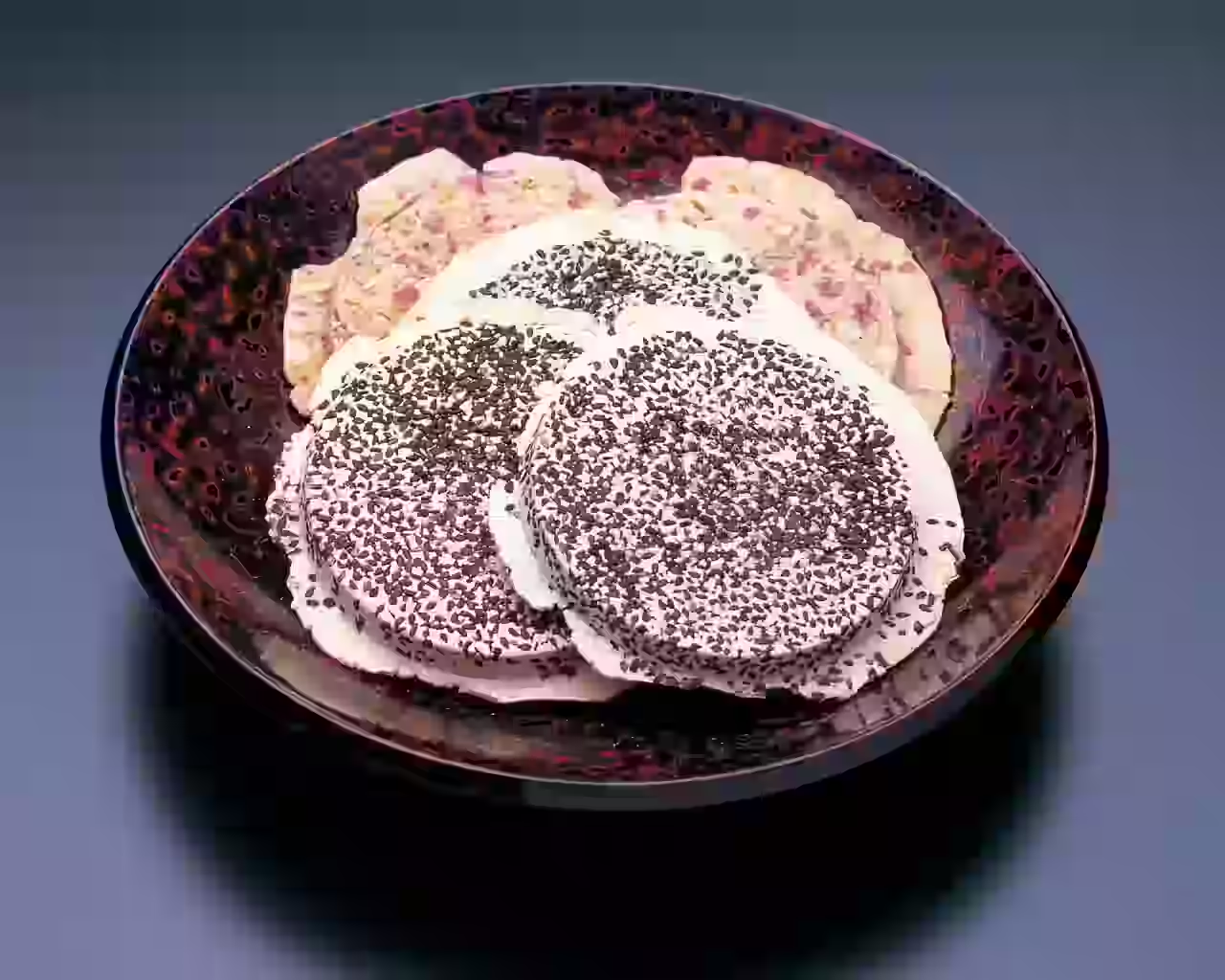
Nanbu senbei is a wheat-based cracker from Aomori and Iwate, unlike most rice-based senbei found across Japan. Bakers press the dough in round iron molds, giving it a mild, slightly nutty flavor. Locals in Tohoku even simmer it in soup, which surprises most first-time visitors.
You sit down at a small café in Hachinohe, and someone offers you this pale, round cracker. It looks like a rice cracker at first glance. However, it is made entirely from wheat flour, not rice. That single detail sets it apart from almost every other senbei you will find across Japan.
This snack comes from the old Nanbu domain, an area spanning parts of Aomori and Iwate. Locals there have baked it for centuries, using little more than flour, water, and salt. Some people eat it plain with tea. Others crumble it straight into soup. So this guide will walk through what makes Nanbu senbei worth knowing, from its texture to its long history in Tohoku.
What Is Nanbu Senbei?
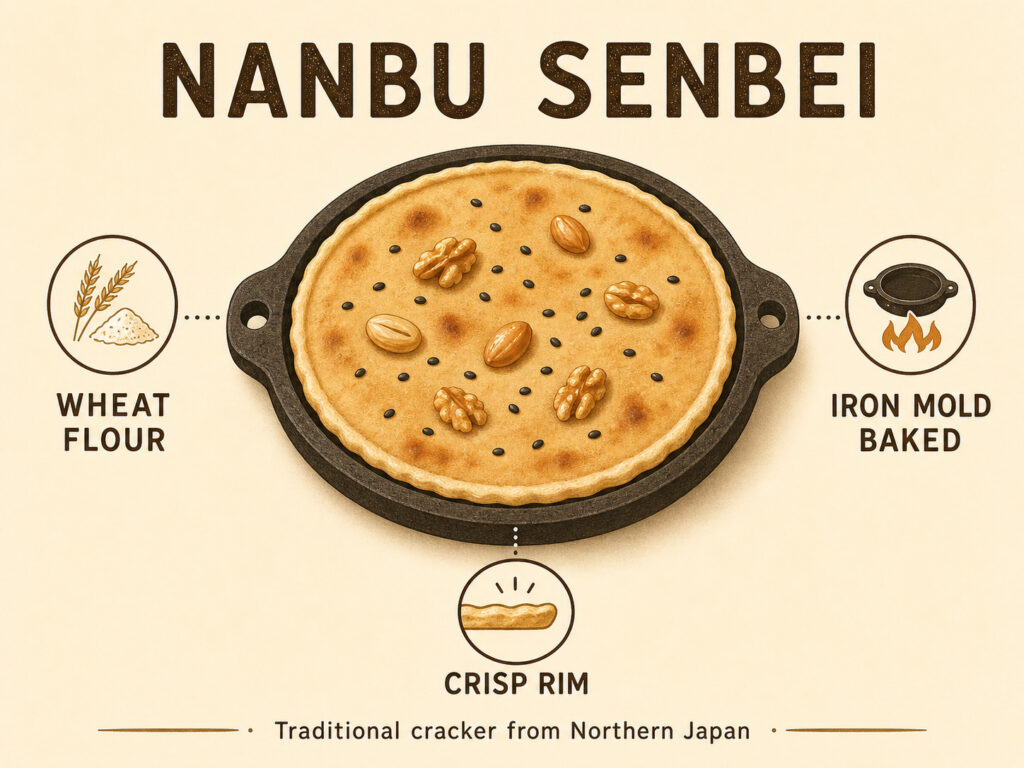
Nanbu senbei is a traditional Japanese cracker baked in round, iron molds. The dough contains wheat flour, water, and a pinch of salt. Cooks press it flat, then bake it until the surface turns crisp and lightly golden. A thin, brittle edge forms around the rim, which locals affectionately call “mimi,” meaning ear.
A Traditional Cracker from Northern Japan
You will mostly find Nanbu senbei in Aomori and Iwate prefectures, particularly around Hachinohe and Morioka. It has stayed a regional staple for hundreds of years. Unlike trendy snacks that fade after a season, this cracker never really left daily life in Tohoku.
Why It Is Different from Regular Senbei
Most Japanese people picture rice crackers when they hear the word senbei. That assumption makes sense, since rice-based senbei dominates supermarket shelves nationwide. Nanbu senbei breaks that pattern completely. It uses wheat instead of rice, giving it a softer bite and a lighter color overall.
Is Nanbu Senbei Made from Rice or Wheat?
Wheat flour forms the base, always. No rice goes into a traditional batch at all. This wheat foundation explains why Nanbu senbei tastes milder than the soy sauce soaked rice crackers sold elsewhere in Japan.
Origin and History of Nanbu Senbei
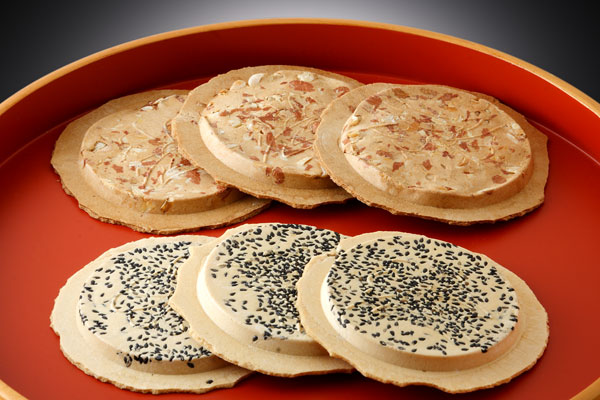
Historians disagree on exactly how Nanbu senbei began. Still, one legend gets repeated more than any other, tracing back roughly 600 years to the Nanboku-cho period. According to this story, Emperor Chokei once passed through the Hachinohe area during a difficult military campaign. Food was scarce, and his retainers scrambled to prepare something suitable. One retainer reportedly gathered buckwheat flour and sesame from local farmers, then baked it into a round shape using his own iron helmet. The emperor apparently enjoyed it enough that the recipe stuck around. This remains folklore rather than confirmed history, but it explains why the round shape still matters so much today.
The Nanbu Region and Tohoku Food Culture
The name “Nanbu” refers to the Nanbu clan, which once ruled a large stretch of land from northern Iwate to southeastern Aomori. This region struggled with cold weather and rocky soil, so rice farming rarely thrived there. Wheat and buckwheat grew far more reliably. That agricultural reality shaped the whole identity of Nanbu senbei from the very beginning.
Connection to Iwate and Aomori
Both prefectures claim a piece of this cracker’s identity today. Historical records lean toward Aomori, specifically the Hachinohe area, as the birthplace most commonly cited. Yet Iwate built such a strong reputation around it that many travelers now associate Nanbu senbei with Morioka instead. It genuinely belongs to both regions in daily practice, even if one town gets more of the historical credit.
How Nanbu Senbei Became a Local Specialty
Local accounts suggest the Nanbu clan later used these crackers as field rations for soldiers. Wheat based dough kept well without spoiling, which mattered enormously before refrigeration existed. Over time, that practical wartime food evolved into a beloved everyday snack, sold in nearly every local shop across the region.
Ingredients Used in Nanbu Senbei
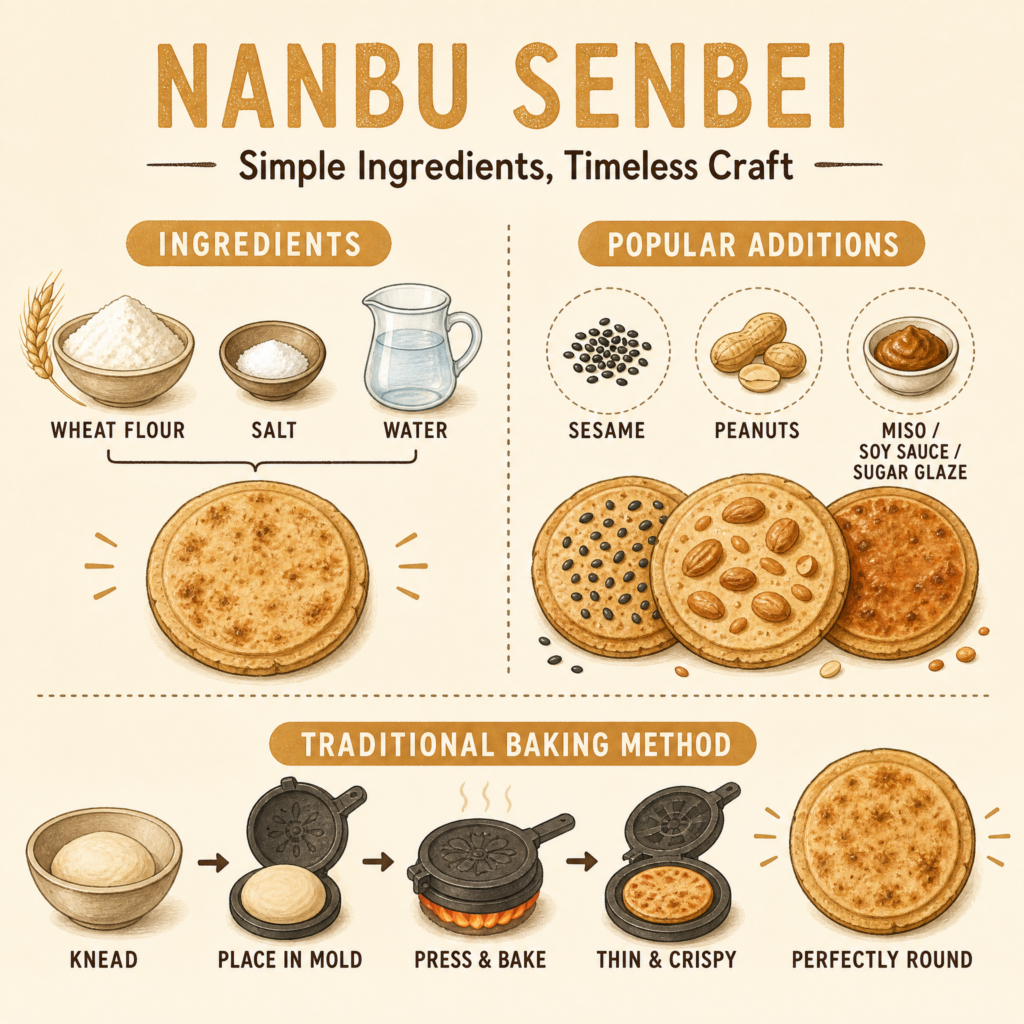
The base recipe stays remarkably simple. That simplicity is part of the appeal.
Wheat Flour, Salt, and Water
Traditional dough needs only three things: wheat flour, salt, and water. Bakers knead this mixture until smooth, then press it into a thin, round shape. No preservatives or artificial flavoring exist in the classic version.
Sesame, Peanuts, and Other Popular Additions
Modern bakers add extra ingredients for variety. Sesame Nanbu senbei brings a nutty aroma to every bite. Peanut Nanbu senbei, meanwhile, offers a crunchier texture with a slightly sweet edge. You will also spot versions flavored with miso, soy sauce, or even sugar glaze in souvenir shops.
Traditional Baking Methods
Bakers use round, cast iron molds called “Nanbu Tekki,” heated directly over a flame. This method has barely changed in generations. The mold presses the dough flat while cooking it evenly, which is exactly why the finished cracker keeps such a distinctive round shape and thin, crispy rim.
What Does Nanbu Senbei Taste Like?
People often ask this before trying it for the first time. Fair enough, since it looks unfamiliar next to typical rice crackers.
Texture and Crunch
The center feels firm but not overly hard. That thin edge, the mimi, delivers most of the crunch. Biting into one gives a satisfying snap, followed by a softer, almost bread-like chew toward the middle.
Savory, Nutty, and Mild Flavors
Plain Nanbu senbei tastes subtly salty, with a light toasted wheat flavor underneath. It is far milder than soy sauce coated rice crackers. Some first time tasters even find it a bit bland at first. Give it a few bites, though, and the roasted aroma starts to grow on you.
Common Flavor Variations
Beyond the plain version, sesame and peanut remain the most popular choices nationwide. Sweeter varieties exist too, dusted lightly with sugar or coated in a thin glaze. Souvenir shops in Morioka often stock several flavors packaged together, perfect for sampling more than one at once.
How to Eat Nanbu Senbei
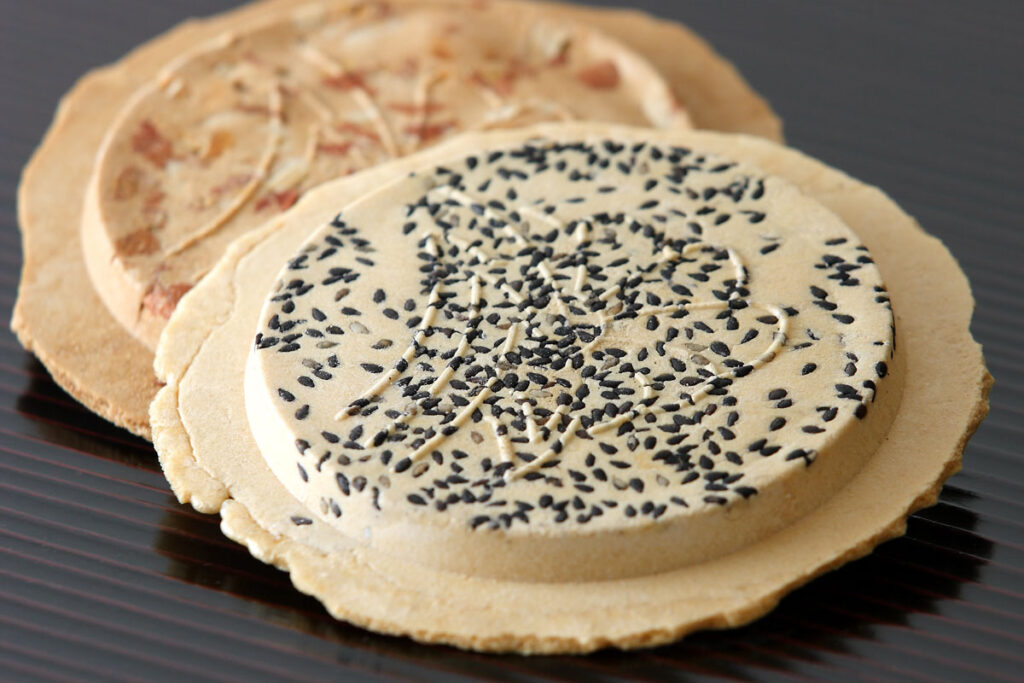
There is no single correct way to enjoy this cracker. Most people eat it straight from the bag as a light afternoon snack, and it travels well since the texture holds up for weeks without going stale too quickly.
Pairing Nanbu Senbei with Tea
Green tea pairs beautifully with the mild, toasted flavor. The bitterness of the tea balances the cracker’s subtle saltiness nicely. Many households in Aomori and Iwate serve it this way during casual visits from neighbors or family.
Using It in Soup Instead of as a Snack
This is where things get genuinely interesting. Locals break the cracker into pieces and simmer it directly in soup. Rather than turning mushy, it holds its shape and takes on a surprisingly chewy texture. If that sounds unusual, you are not alone in thinking so, and the next section explains exactly how that works.
Nanbu Senbei and Senbei Jiru
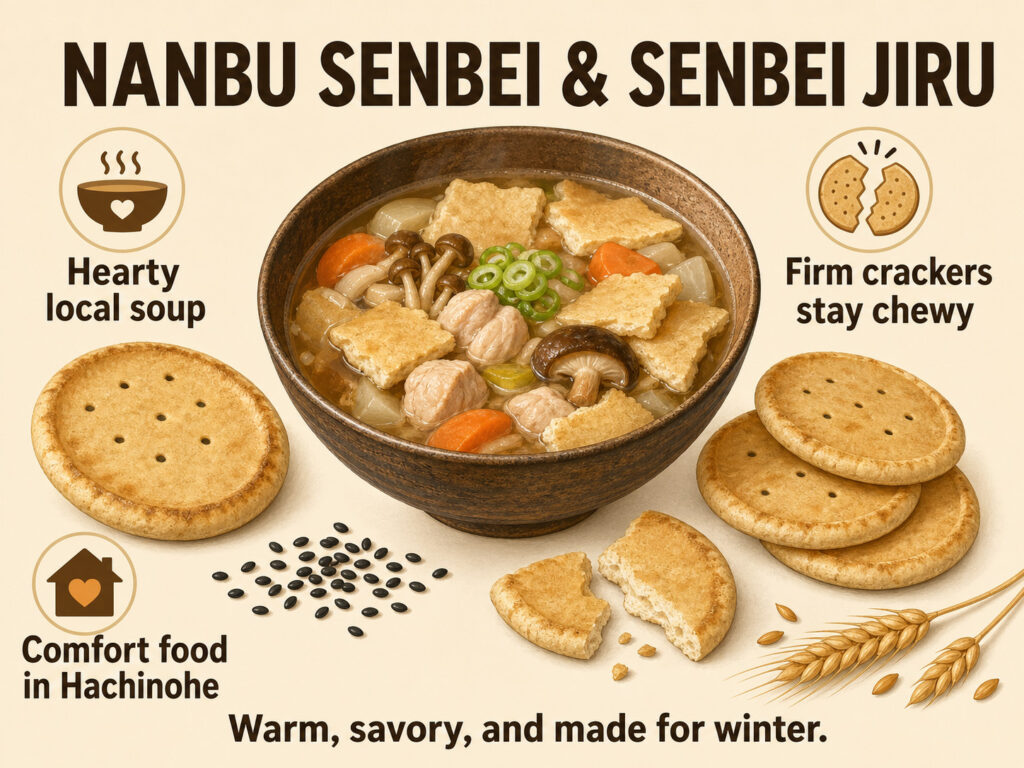
Senbei jiru is a hearty soup from the Hachinohe area, simmered with chicken, seasonal vegetables, mushrooms, and broken pieces of cracker. Locals have reportedly eaten some version of it for over 200 years, according to regional food writers.
Why a Special Cracker Works Better in Soup
Regular Nanbu senbei can go into the pot, but cooks usually prefer a firmer variety called “kayaki senbei” or “otsuyu senbei.” This version resists falling apart even after several minutes of boiling. Regular crackers dissolve almost instantly in liquid, while this denser, wheat based version soaks up the broth’s flavor while staying firm enough to chew.
Regional Comfort Food in Tohoku
Families across Hachinohe grew up eating this soup on cold winter nights. It carries the kind of nostalgic weight that comfort food usually does. Even now, local restaurants proudly serve it as the region’s signature dish, and tourism boards actively promote it to visitors.
Nanbu Senbei vs Regular Senbei
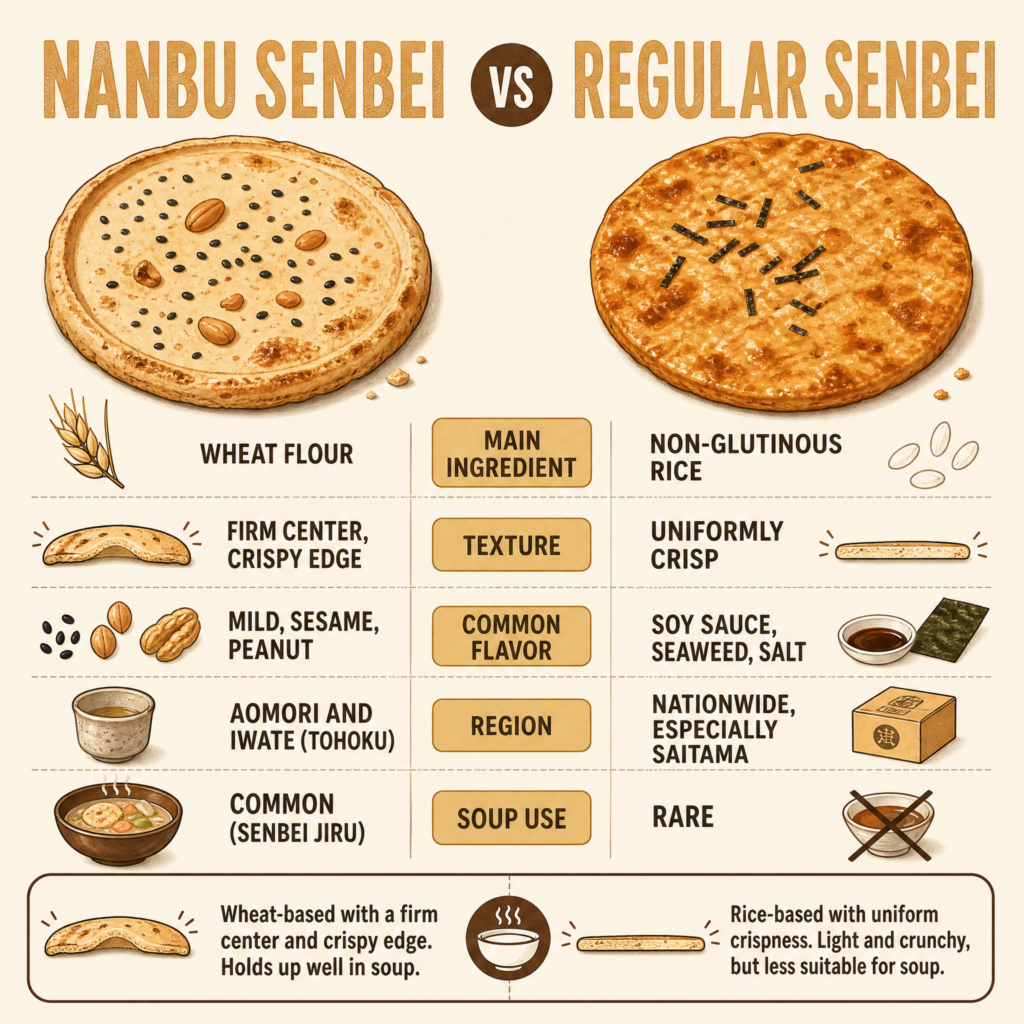
People frequently mix these two up, which makes sense given the shared name. Here is a simple breakdown to clear up the confusion.
| Feature | Nanbu Senbei | Regular Senbei |
|---|---|---|
| Main Ingredient | Wheat flour | Non-glutinous rice |
| Texture | Firm center, crispy edge | Uniformly crisp |
| Common Flavor | Mild, sesame, peanut | Soy sauce, seaweed, salt |
| Region | Aomori and Iwate (Tohoku) | Nationwide, especially Saitama |
| Soup Use | Common (senbei jiru) | Rare |
Wheat versus rice remains the single biggest distinction, and it changes nearly everything else, from color to flavor to how well the cracker holds up in liquid. Rice based senbei usually feels crisp all the way through, while Nanbu senbei stays firmer in the middle, with crunch concentrated mostly at the edges. That contrast surprises a lot of first time eaters. Rice crackers also spread nationwide through mass production, whereas Nanbu senbei stayed tightly connected to Tohoku identity until fairly recently.
Where to Try Nanbu Senbei in Japan
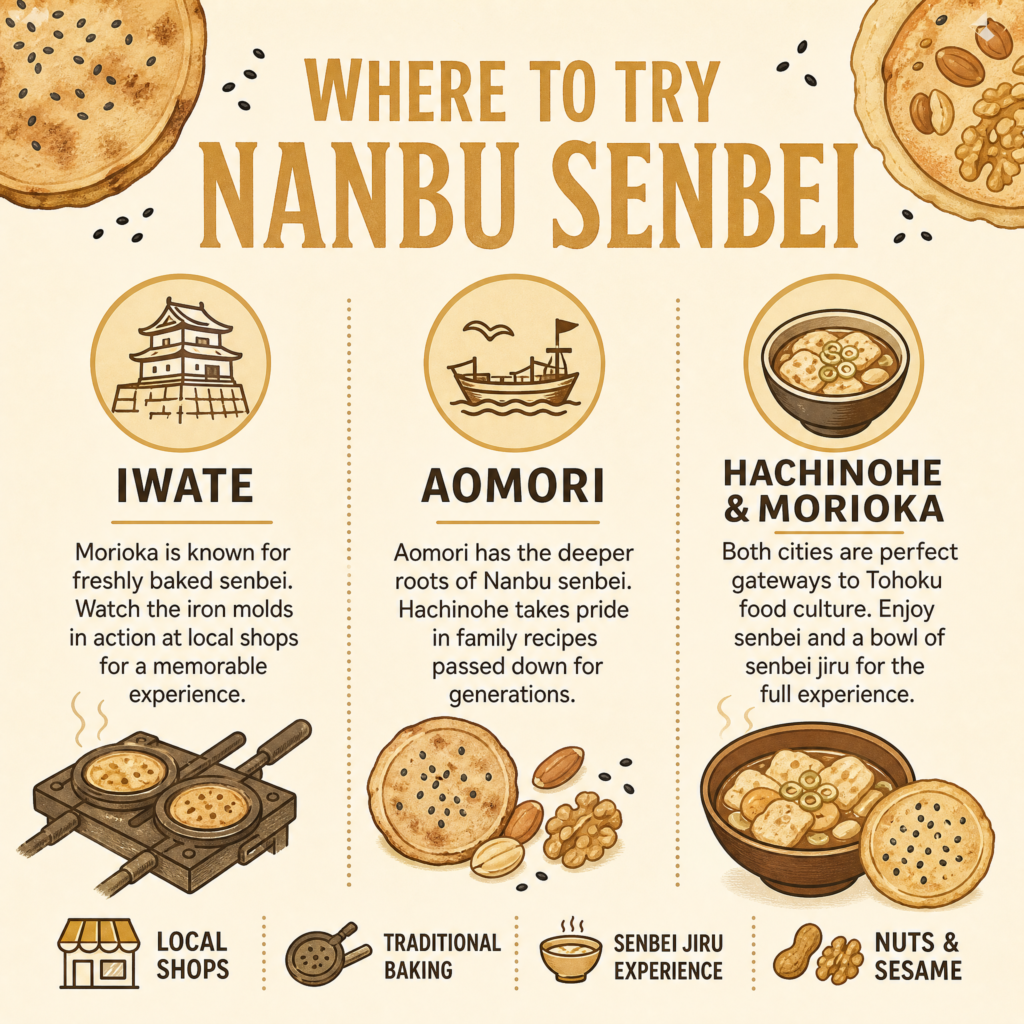
Visiting the source always adds something a photo or description cannot capture.
Iwate
Morioka has built a strong reputation around this cracker, with several long-running bakeries selling it fresh. Local shops often let visitors watch the iron molds in action, which makes for a memorable stop during a Tohoku trip.
Aomori
Historically, Aomori holds the stronger claim to Nanbu senbei’s origin. Hachinohe city in particular treats the cracker as a point of local pride, with small shops passing down family recipes for generations.
Hachinohe and Morioka
Both cities make excellent starting points for anyone curious about Tohoku food culture. Combine a cracker tasting with a bowl of senbei jiru, and you get a fairly complete picture of what makes this regional snack so beloved.
Where to Buy Nanbu Senbei
Not everyone can travel to Tohoku right away. Fortunately, there are other ways to track it down, and prices stay quite reasonable wherever you find it.
Local Shops and Souvenir Stores
Train stations across Aomori and Iwate almost always stock Nanbu senbei in gift-ready packaging. A pack of about seven pieces typically costs somewhere between 300 and 500 yen, depending on the flavor and brand. It fits neatly into Japan’s broader omiyage culture, where travelers bring edible souvenirs home for coworkers and family.
Japanese Supermarkets and Specialty Stores
Larger supermarkets in Tokyo occasionally carry regional snack sections featuring Nanbu senbei. Specialty stores focused on Tohoku products are usually a safer bet if you want a wider selection of flavors.
Buying Nanbu Senbei Online
Several long-established manufacturers now ship internationally, which makes the cracker far easier to find outside Japan than it used to be. Searching for established Iwate or Aomori based senbei makers online usually turns up reliable options.
Is Nanbu Senbei Healthy?
This question comes up a lot, especially from health conscious travelers.
Calories and Nutrition
A single plain cracker, weighing around 15 grams, contains roughly 60 to 65 calories. Peanut and sesame versions land in a similar range, sometimes slightly higher due to added fat. That is fairly moderate compared to many fried snacks, though portion size varies by brand.
Gluten and Allergy Notes
Since the base ingredient is wheat flour, Nanbu senbei is not gluten free. Anyone with gluten sensitivity should avoid it entirely. Sesame and peanut varieties also raise obvious concerns for people with nut allergies, so checking the packaging carefully really matters here.
Tips for Enjoying It in Moderation
Pair it with tea instead of sugary drinks to keep things balanced. Portion control matters too, since it is easy to eat several pieces without noticing. A handful alongside green tea makes a reasonably light snack overall.
Nanbu senbei might not be flashy, but it earns its place in Japan’s food story through sheer consistency. It survived cold winters and centuries of changing tastes without losing its identity. That kind of staying power is worth respecting. If you ever pass through Hachinohe or Morioka, do not skip it. Try it plain first, then dunk a piece straight into a bowl of senbei jiru. You might find yourself craving that odd, chewy texture long after the trip ends.
Nanbu Senbei FAQ
What is Nanbu senbei?
Nanbu senbei is a traditional wheat-based cracker from northern Japan. Bakers shape it in round iron molds and bake it until crisp. It comes from the old Nanbu region of Aomori and Iwate.
Where does Nanbu senbei come from?
It is most commonly traced to the Hachinohe area of Aomori Prefecture. Northern Iwate also shares a long history with the cracker. Both regions still consider it a local specialty today.
Is Nanbu senbei a rice cracker?
No, it is not. Despite the name senbei, it uses wheat flour instead of rice. That makes it quite different from most Japanese crackers.
What is Nanbu senbei made of?
The base recipe uses wheat flour, water, and salt. Some varieties add sesame seeds, peanuts, or a light sugar glaze. Nothing fancy goes into the traditional version.
What does Nanbu senbei taste like?
Plain versions taste mildly salty with a toasted wheat flavor. It is much lighter than soy sauce coated rice crackers. Sesame and peanut versions add extra richness.
What is the difference between Nanbu senbei and regular senbei?
Nanbu senbei uses wheat flour, while regular senbei typically uses non-glutinous rice. The texture, flavor, and regional history also differ significantly between the two.
Can Nanbu senbei be eaten in soup?
Yes, this is actually a signature use for it. Cooks usually choose a firmer variety called kayaki senbei, which holds its shape well in broth. This forms the base of the famous senbei jiru soup.
Does Nanbu senbei contain gluten?
Yes, it does. Wheat flour is the main ingredient, so it is not suitable for gluten-free diets. Anyone with gluten sensitivity should avoid it.
How many calories are in Nanbu senbei?
A single plain cracker of about 15 grams has roughly 60 to 65 calories. Peanut and sesame versions sit in a similar range.
How much does Nanbu senbei cost?
A pack of around seven pieces usually costs between 300 and 500 yen in souvenir shops. Prices vary slightly by brand and flavor.
Is Nanbu senbei a good Japanese souvenir?
Absolutely, it travels well and comes in gift-ready packaging. Many train stations in Aomori and Iwate sell it specifically for omiyage purposes.
References
- Visit Hachinohe, official tourism site, “Nanbu Senbei 101,” origin legends and ingredient details. (Surveyed: July 2026)
- Visit Hachinohe, official tourism site, recipe and background on Senbei-jiru. (Surveyed: July 2026)
- Harukoma Transport, regional guide describing traditional Nanbu Tekki iron mold baking method. (Surveyed: July 2026)
- Tohoku Tourism Promotion Organization, official regional guide, Hachinohe Senbei-jiru overview. (Surveyed: July 2026)
- Kikkoman Food Forum, “Aomori Senbei-jiru,” regional food culture article. (Surveyed: July 2026)
- Jeepe Japan Travel Guide, detailed explanation of otsuyu senbei (kayaki senbei) used specifically for senbei jiru. (Surveyed: July 2026)
- Slism Nutrition Database, calorie and nutrition data for plain and peanut Nanbu senbei per 15g serving. (Surveyed: July 2026)
- Nanbu Senbei official retailer, product pricing and package size reference for sesame variety. (Surveyed: July 2026)
Related Articles
- Senbei: Japanese Rice Crackers (Surveyed: July 2026)
- Senbei jiru (Surveyed: July 2026)
- Japanese Snacks Guide: Wagashi, Dagashi & Traditional Treats (Surveyed: July 2026)
- Omiyage Packaging and How to Choose (Surveyed: July 2026)




Comments