




Morioka jajamen is a rich mixed noodle dish from Iwate Prefecture. It features chewy flat noodles, savory meat miso sauce, fresh cucumber, and a final egg soup called chitantan. Messy, customizable, and deeply comforting, it has become one of Morioka’s true soul foods.
This is not ramen. Instead, it is a brothless noodle dish where diners build their own flavor in the bowl. You mix, taste, season, and finish the meal with soup. Because of that, every bowl feels slightly personal.
For many locals, jajamen is not just a tourist dish. It is an everyday comfort food, often eaten for lunch or after work. The bowl may look plain in photos. However, its flavor grows more addictive with each bite.
Basic Information About Jajamen
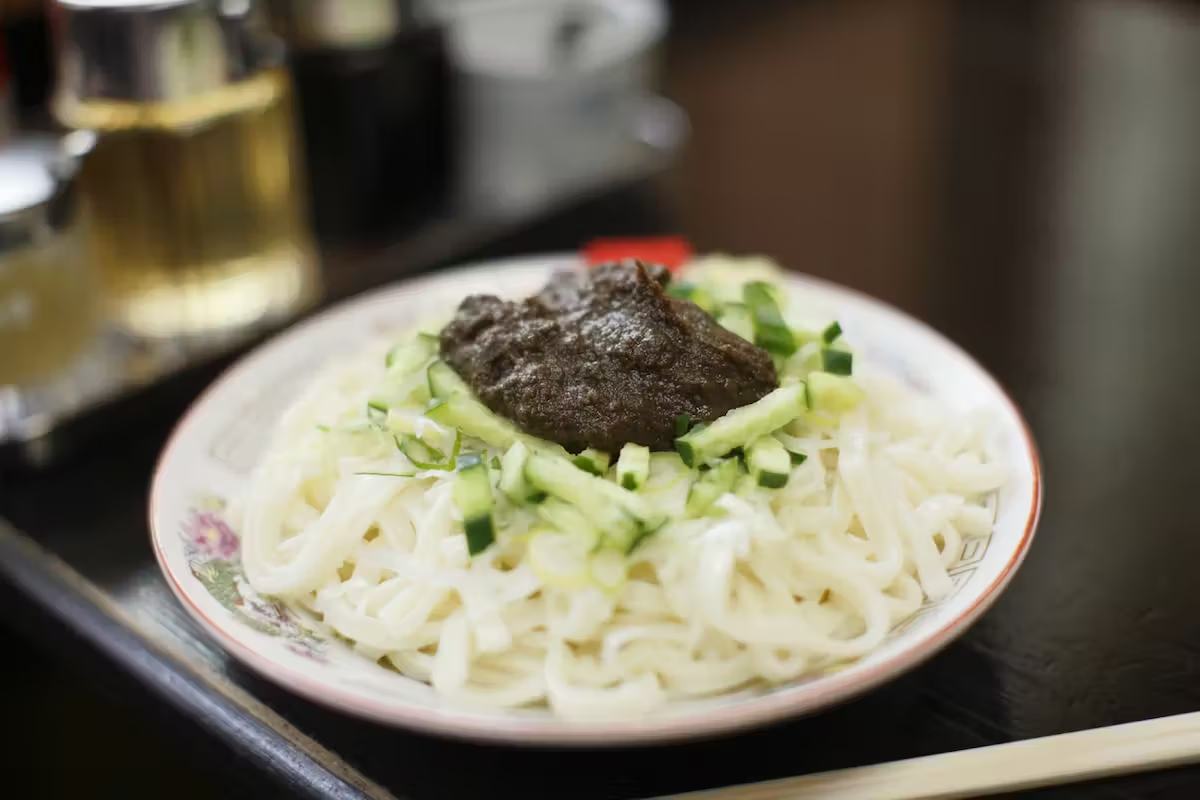
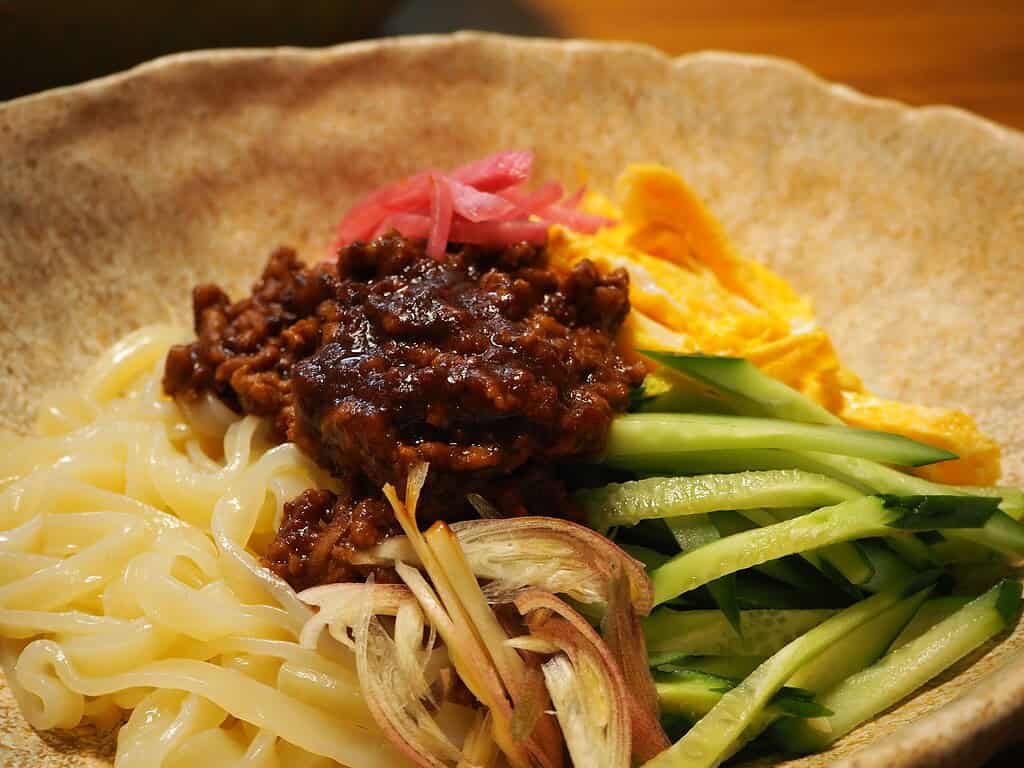
So, what is Morioka jajamen in Japan? It is a Japanese mixed noodle dish from Morioka City, Iwate Prefecture. A typical bowl includes flat noodles, meat miso sauce, cucumber, green onion, and ginger.
The noodles are thick, flat, and chewy. They feel closer to udon than ramen. Meanwhile, the sauce brings fermented miso depth, minced meat richness, sesame nuttiness, and a savory-sweet finish.
Fresh cucumber plays an important role. It cuts through the richness and keeps the bowl from feeling too heavy. Ginger adds brightness, while garlic can give the dish a stronger local edge.
This noodle dish belongs to the Morioka three major noodles. The other two are Morioka reimen and wanko soba. Together, they show how deeply noodle culture runs in the city.
For more regional dishes, see the Iwate food guide.
Why Locals Love It
Jajamen is not elegant eating. Mixing sauce, vinegar, garlic, chili oil, and noodles can feel chaotic at first. Still, that messy quality is part of the charm.
No two bowls taste exactly the same. One person may add more vinegar, while another may use plenty of raw garlic. Some diners prefer chili oil, and others keep the flavor mild.
As a result, the dish feels interactive. It does not arrive as a finished answer. Instead, it gives you a base and lets you decide the final balance.
That diner-controlled style explains why locals return to it. The dish is affordable, casual, and filling. Moreover, it works as a quick lunch, a late meal, or a relaxed after-work bowl.
Taste, Texture, and First Impression
The first bite often tastes salty, nutty, and slightly sweet. Then the cucumber brings a fresh crunch. After mixing, the noodles become coated with a thick, savory sauce.
The flat noodles have a soft, chewy bite. They hold the meat miso well, which makes each mouthful satisfying. However, the flavor changes once you begin adding condiments.
Vinegar gives the bowl a sharper edge. Chili oil adds heat and depth. Garlic creates a much stronger finish, so beginners may want to add it slowly.
A good approach is simple. Taste the original sauce first. Then adjust little by little. This helps you avoid overpowering the bowl too early.
Morioka Three Great Noodles Compared
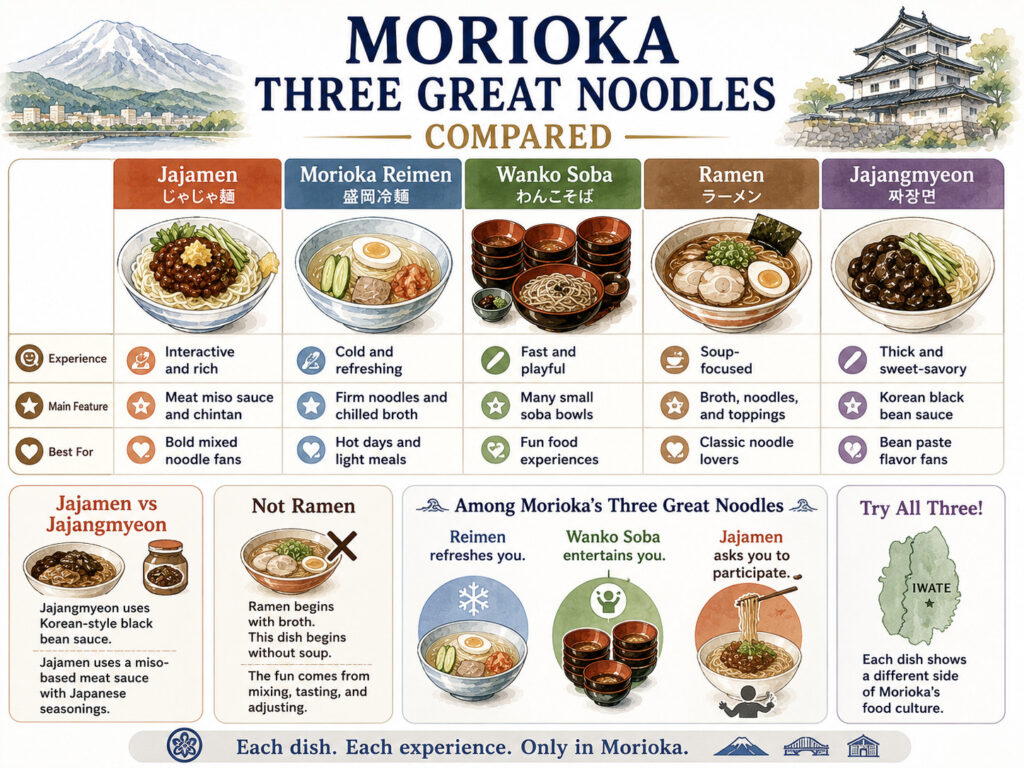
| Dish | Experience | Main Feature | Best For |
|---|---|---|---|
| Jajamen | Interactive and rich | Meat miso sauce and chitantan | Bold mixed noodle fans |
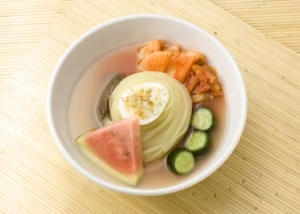
| Morioka Reimen | Cold and refreshing | Firm noodles and chilled broth | Hot days and light meals |
| Wanko Soba | Fast and playful | Many small soba bowls | Fun food experiences |
| Ramen | Soup-focused | Broth, noodles, and toppings | Classic noodle lovers |
| Jajangmyeon | Thick and sweet-savory | Korean black bean sauce | Bean paste flavor fans |
This table helps explain the difference between jajamen and jajangmyeon. Jajangmyeon usually uses Korean-style black bean sauce. In contrast, the Morioka version uses a miso-based meat sauce with Japanese seasonings.
Ramen also feels very different. Ramen begins with broth, while this dish begins without soup. Therefore, the fun comes from mixing, tasting, and adjusting.
Among the three famous local noodles, this one feels the most hands-on. Reimen refreshes you. Wanko soba entertains you. Jajamen asks you to participate.
Trying all three is one of the best food experiences in northern Japan. Each dish shows a different side of Morioka’s food culture.
How to Eat Jajamen
Learning how to eat jajamen makes the meal much better. First, mix the flat noodles and meat miso sauce completely. Do not leave the sauce sitting on top.
Many locals recommend tasting the original sauce before adding condiments. That first bite helps you understand the base flavor. After that, adjust the bowl to your taste.
Add vinegar for brightness. Use chili oil if you want heat. Garlic adds punch, although it can become strong quickly. Meanwhile, extra ginger can make the bowl feel fresher.
Common beginner mistakes are easy to avoid. Some people add too much vinegar too early. Others finish every noodle before ordering chitantan. For that reason, a little restraint helps.
The basic flow is simple:
- Mix the noodles and meat miso sauce well.
- Taste before adding condiments.
- Add vinegar little by little.
- Use chili oil for heat.
- Be careful with raw garlic.
- Leave some sauce and noodles for chitantan.
This is a personalized noodle experience. Although it feels casual, the order makes a difference.
Chitantan: The Egg Soup Finale
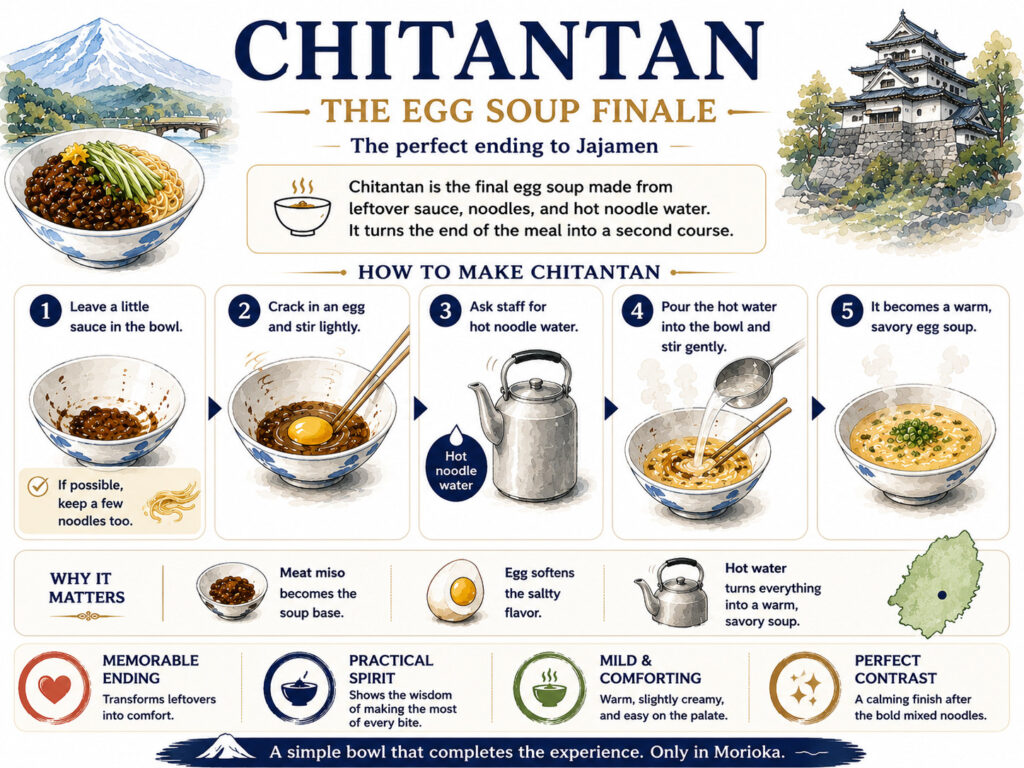
Chitantan is the final egg soup made from leftover sauce, noodles, and hot noodle water. It turns the end of the meal into something like a second course.
To make it, leave a little sauce in the bowl. If possible, keep a few noodles too. Then crack in an egg, stir lightly, and ask staff for hot noodle water.
The remaining meat miso becomes the soup base. The egg softens the salty flavor. Finally, the hot water turns everything into a warm, savory soup.
This ending may be the most memorable part of the meal. It transforms leftovers into comfort. Also, it shows the practical spirit behind the dish.
Chitantan tastes mild, warm, and slightly creamy. After the strong mixed noodles, it feels calming. That contrast makes the full meal feel complete.
History and Local Roots
The history begins after World War II. Takashina Kansho, the founder of Pairon, brought inspiration from noodle dishes he encountered in Manchuria.
The original idea came from Chinese zhajiangmian. However, Morioka adapted the dish in its own way. It became less oily, more miso-focused, and more suited to local tastes.
Pairon started with humble roots and later became a local institution. Its postwar food-stall background gives the dish a working-class feeling. This was never fancy restaurant cuisine.
Customers also helped shape the style. Sauce balance, toppings, and the chitantan ritual developed through daily eating habits. Over time, the dish became deeply connected to the city.
Today, Pairon remains the classic starting point for first-time visitors. Nevertheless, many other shops now serve their own versions. Some use sweeter miso, while others focus on garlic, sesame, or stronger saltiness.
Where to Try It
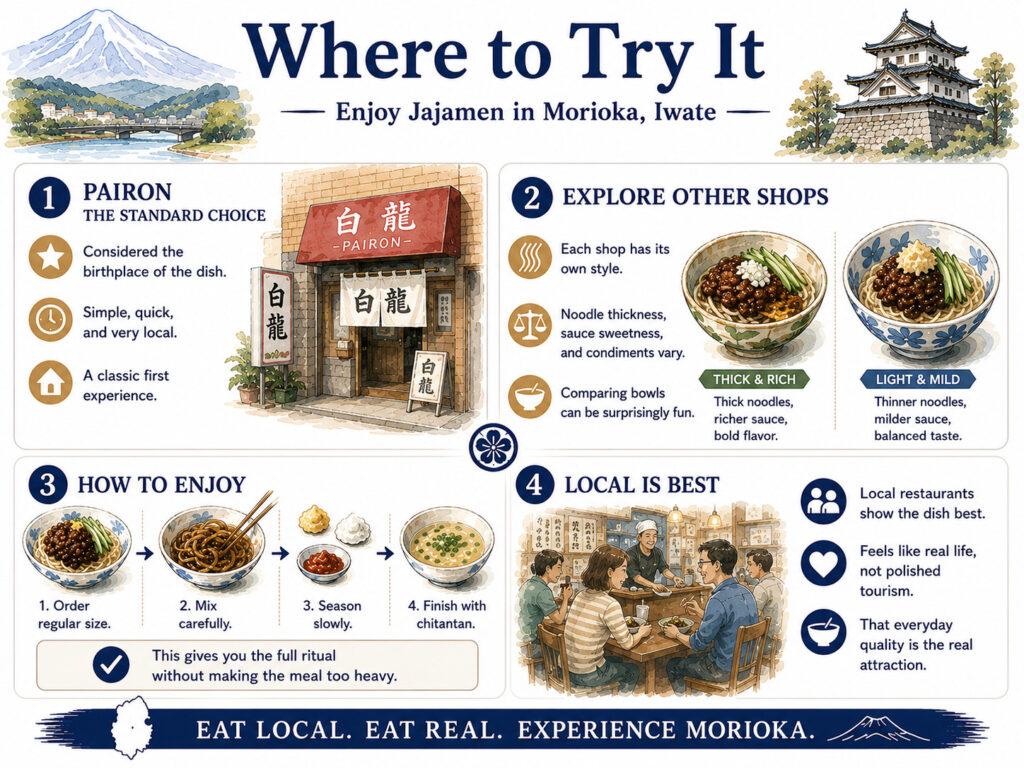
For first-time visitors, Pairon is the standard choice. Many people see it as the birthplace of the dish. The experience feels simple, quick, and very local.
Other restaurants are also worth trying. Different shops change the noodle thickness, sauce sweetness, and condiment balance. Because of this, comparing bowls can be surprisingly fun.
If you are new to the dish, order a regular size first. Mix it carefully, season slowly, and finish with chitantan. That gives you the full ritual without making the meal too heavy.
Local restaurants often show the dish best. It feels less like polished tourism and more like something people actually eat. That everyday quality is the real attraction.
Why This Noodle Dish Matters
This dish matters because it is interactive Japanese soul food. It combines local habit, postwar adaptation, and diner-controlled flavor. Few Japanese noodles feel this personal.
It also tells a story about food travel. A Chinese noodle idea moved through history, changed in Morioka, and became an Iwate local dish. As a result, the bowl carries more depth than it first suggests.
Its appeal is not beauty. Instead, it comes from taste, routine, and comfort. The dish may be messy, but it is deeply loved.
For Japanese food lovers, it offers something different from ramen. You get rich miso sauce, chewy noodles, fresh cucumber, bold condiments, and a warm soup ending.
Final Thoughts
Jajamen is Morioka’s soul food noodle for good reason. It is chewy, savory, messy, customizable, and strangely addictive.
The dish does not try to be elegant. In fact, that is exactly why it works. The bowl feels local, practical, and alive.
If you visit Iwate, try it with chitantan. Then compare it with Morioka reimen and wanko soba. Together, they show why Morioka noodles deserve attention.
Morioka Jajamen FAQ
What is Morioka Jajamen?
It is a mixed noodle dish from Iwate Prefecture. Chefs prepare the bowl using flat noodles, savory meat miso sauce, fresh cucumber, and various condiments.
Is Morioka Jajamen a type of ramen?
No, it represents a brothless mixed noodle dish. Traditional ramen usually starts with a deep, hot liquid soup.
How is Morioka Jajamen different from Jajangmyeon?
The Korean dish features a black bean sauce. This Iwate specialty relies on a savory miso-based meat sauce and Japanese seasonings instead.
Is Morioka Jajamen spicy?
It delivers a mild taste at first. However, diners easily add chili oil or fresh garlic to make the flavor much stronger.
Why do chefs use cucumber in Morioka Jajamen?
Fresh cucumber adds crispness and a satisfying crunch. The watery vegetable perfectly balances the rich, heavy meat miso sauce.
What does the Chitantan egg soup taste like?
This after-meal soup tastes warm, mild, savory, and slightly creamy. The fresh egg perfectly softens the leftover meat sauce.
How do you finish Morioka Jajamen with Chitantan?
You leave a little sauce in the bowl, crack a raw egg into it, and stir the mixture. Finally, you ask the staff to pour hot noodle-boiling water over the egg to create a comforting soup.
Does Morioka Jajamen have Chinese or Japanese origins?
It traces its roots back to China. However, local chefs adapted the original recipe into a distinctly Japanese regional noodle dish after World War II.
What are Morioka’s three great noodles?
Locals proudly list this savory miso dish, Reimen (cold chewy noodles), and Wanko Soba (tiny bowls of buckwheat noodles) as the city’s three signature meals.
Is Morioka Jajamen good for first-time visitors?
Yes, newcomers enjoy it immensely. You can easily adjust the bold flavors to your liking, and the fun egg-soup ritual makes the dining experience unforgettable.
Where can I eat Morioka Jajamen in Japan?
You will find the best bowls right in Morioka City. Famous spots include Pairon, the original restaurant that invented the recipe. Many local noodle eateries also serve it to hungry customers daily.
How much does Morioka Jajamen cost?
A standard bowl typically costs between 600 and 900 yen. Prices vary slightly depending on the portion size and the specific restaurant you visit.
Is Morioka Jajamen vegetarian or vegan friendly?
Traditional recipes contain minced pork in the meat miso paste. Vegans and vegetarians cannot eat the standard restaurant versions, but they can easily cook plant-based bowls at home using soy meat.
Can I make Morioka Jajamen at home?
Yes, you can easily prepare this meal at home. Japanese grocery stores sell ready-made meat miso and flat noodles. Home cooks simply boil the noodles and add the fresh toppings effortlessly.
Is Morioka Jajamen popular outside Japan?
It remains completely unknown outside Japan. You will rarely find this specific regional dish at Japanese restaurants abroad. This unique culinary experience successfully maintains its exclusive status entirely within Iwate Prefecture.
References
- Pairon Official Website, “Morioka Jajamen”, checked in 2026, Pairon began as a food stall and describes the dish as one of Morioka’s three major noodles.
- GOOD LUCK TRIP, “Pairon Honten”, checked in 2026, Pairon Honten has served jajamen for over 70 years and explains chitantan.
- Tokimeku Tohoku, “Exploring the roots of Morioka Jajamen”, checked in 2026, the dish originated from a Manchurian noodle dish and was adapted in Morioka.
- LIVE JAPAN, “Morioka’s Three Great Noodles”, checked in 2026, Morioka’s three major noodles include Morioka Reimen, Jajamen, and Wanko Soba.
- Morioka Reimen, checked in 2026, related internal article for one of Morioka’s three major noodles.
- Wanko Soba, checked in 2026, related internal article for Iwate’s famous small-bowl soba.
- Iwate Food Guide, checked in 2026, related internal category for Iwate local dishes and regional noodle culture.




Comments