




Maesawa beef feels quiet at first. It does not shout like Kobe beef. Still, one bite can explain why Maesawa beef is famous in Japan. This premium beef brand comes from Maesawa, Oshu City, in Iwate Prefecture.
For travelers, it offers a refined taste of northern Japan. For Wagyu lovers, it gives rich marbling, deep umami, and a gentle finish. So, what is Maesawa beef from Iwate? It is a top-class Iwate beef made from Kuroge Wagyu.
These Japanese black cattle grow in a region known for clean water, rice fields, and patient farming. Many people also ask where Maesawa beef is produced. The answer is Maesawa Ward, Oshu City, in southern Iwate.
Basic Information About Maesawa Beef
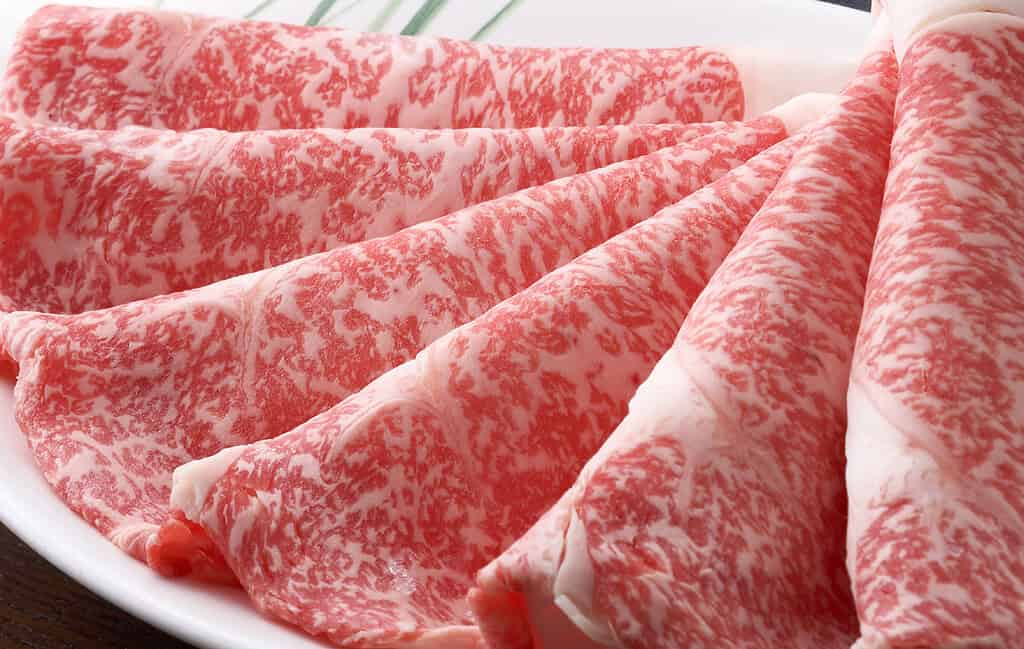
Maesawa beef from Iwate belongs to the world of Japanese Wagyu. More specifically, it comes from Kuroge Wagyu, also called Japanese Black cattle. This breed gives the beef its fine marbling and soft texture.
Compared with regular Wagyu, Maesawa beef feels more regional and carefully defined. The difference between Maesawa beef and regular Wagyu lies in place, rules, farming skill, and local identity. Not every Wagyu from Japan can use the Maesawa name.
This Iwate Prefecture Wagyu follows strict quality control. Farmers focus on calm raising methods, good feed, and careful fattening. That care creates premium marbled beef from Oshu City, rather than just another luxury steak.
If you are new to Iwate Wagyu, Maesawa beef may suit beginners well. It tastes luxurious, yet the flavor stays clean. That balance makes it easy to enjoy, even if you rarely eat marbled wagyu beef.
For broader background, see the Food in Japan Wagyu beef guide. You can also explore related regional beef on the Food in Japan Japanese Wagyu category.
Maesawa Beef Taste and Texture
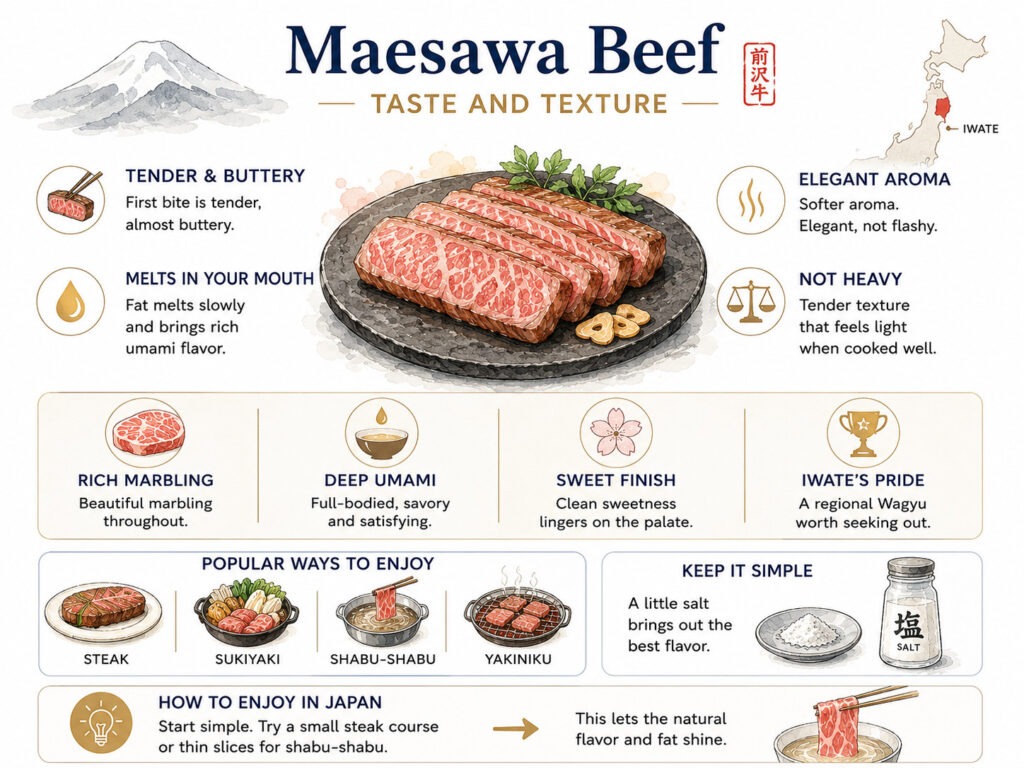
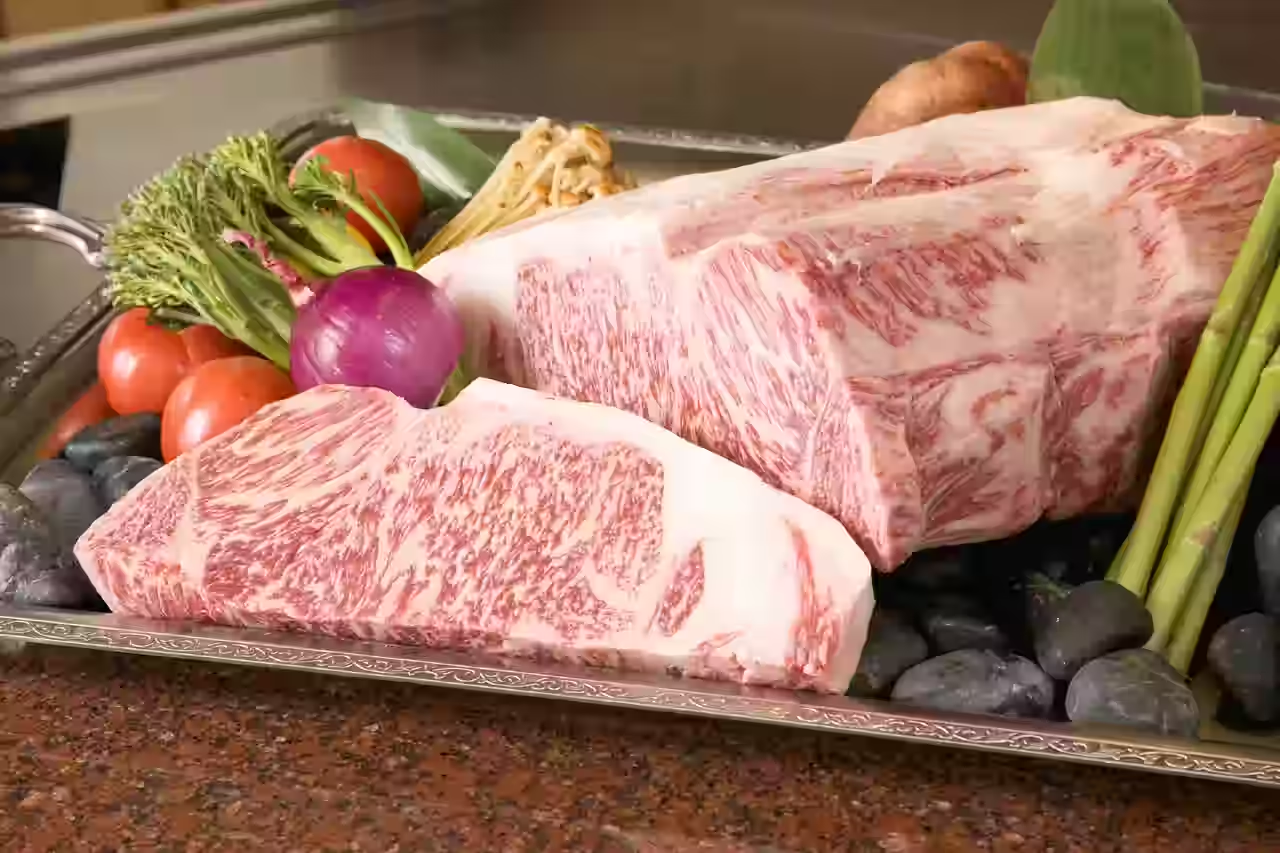
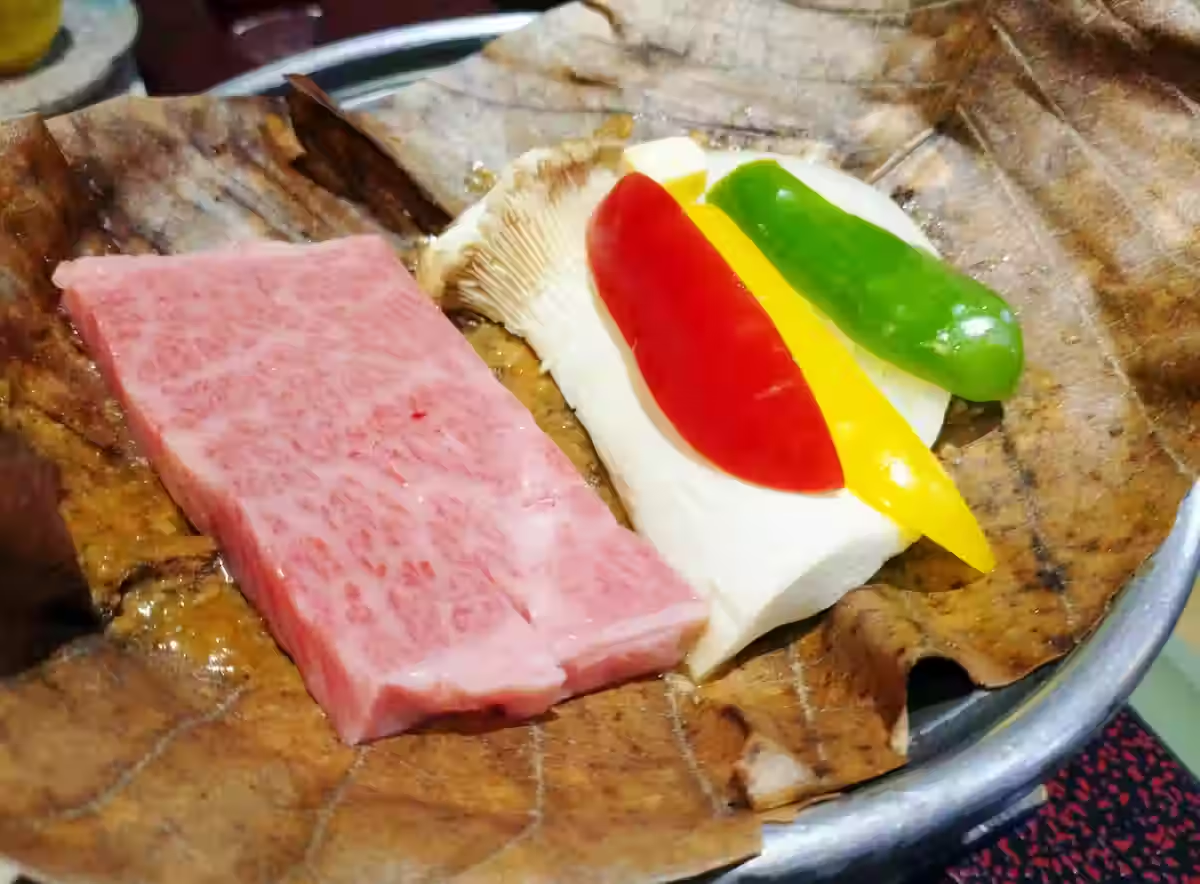
Maesawa beef taste and texture leave a strong memory. The first bite feels tender, almost buttery. Then the fat melts slowly and carries a rich umami flavor across the tongue.
This tender beef texture does not feel heavy when cooked well. The aroma also feels softer than expected. I might even call it elegant, not flashy. That may be why travelers remember it after leaving Iwate.
Rich marbling, deep umami, and a sweet finish define the experience. The fat has presence, but it does not cover the taste of the meat. This is tender, buttery Japanese beef with a calm northern character.
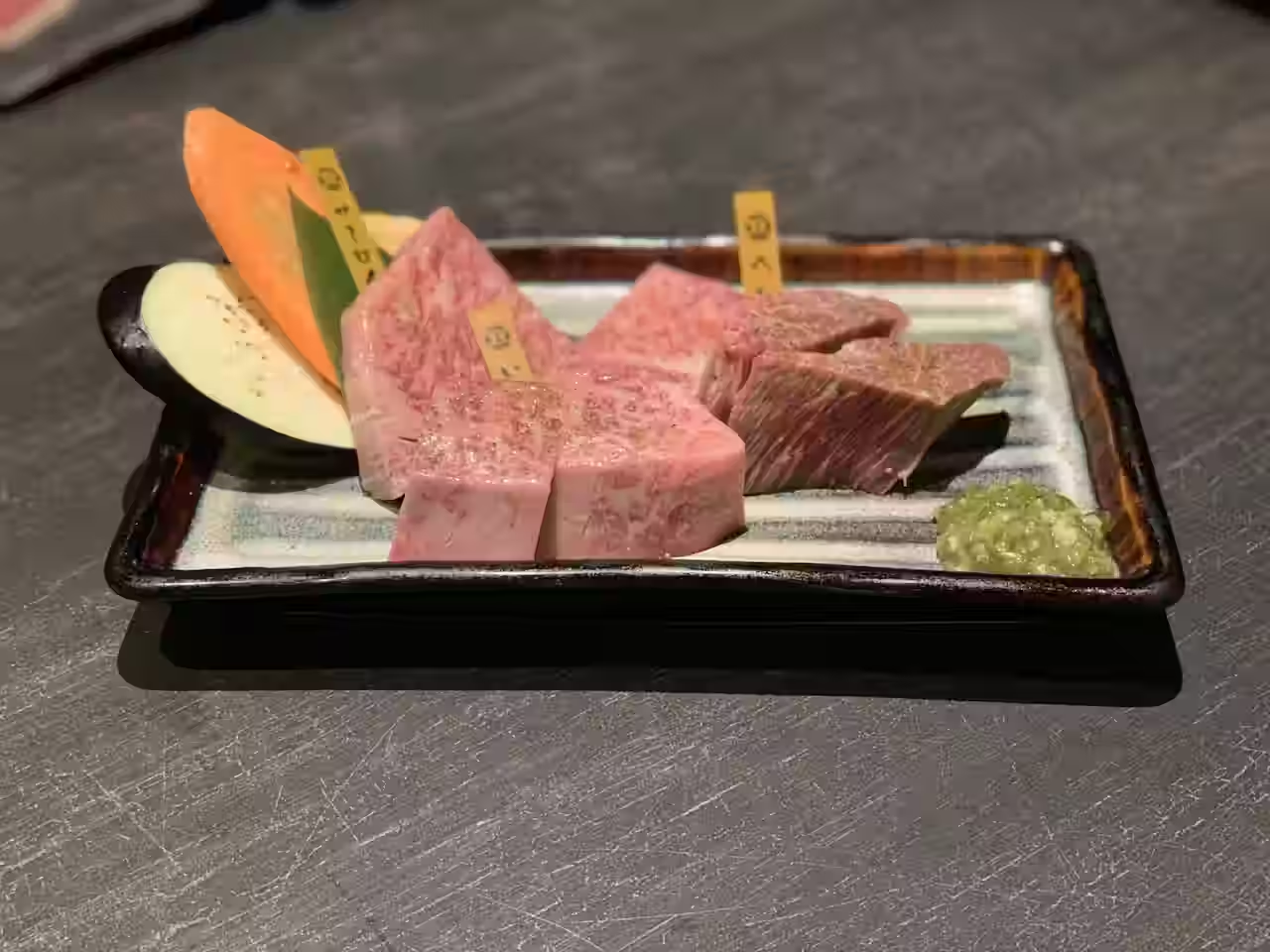
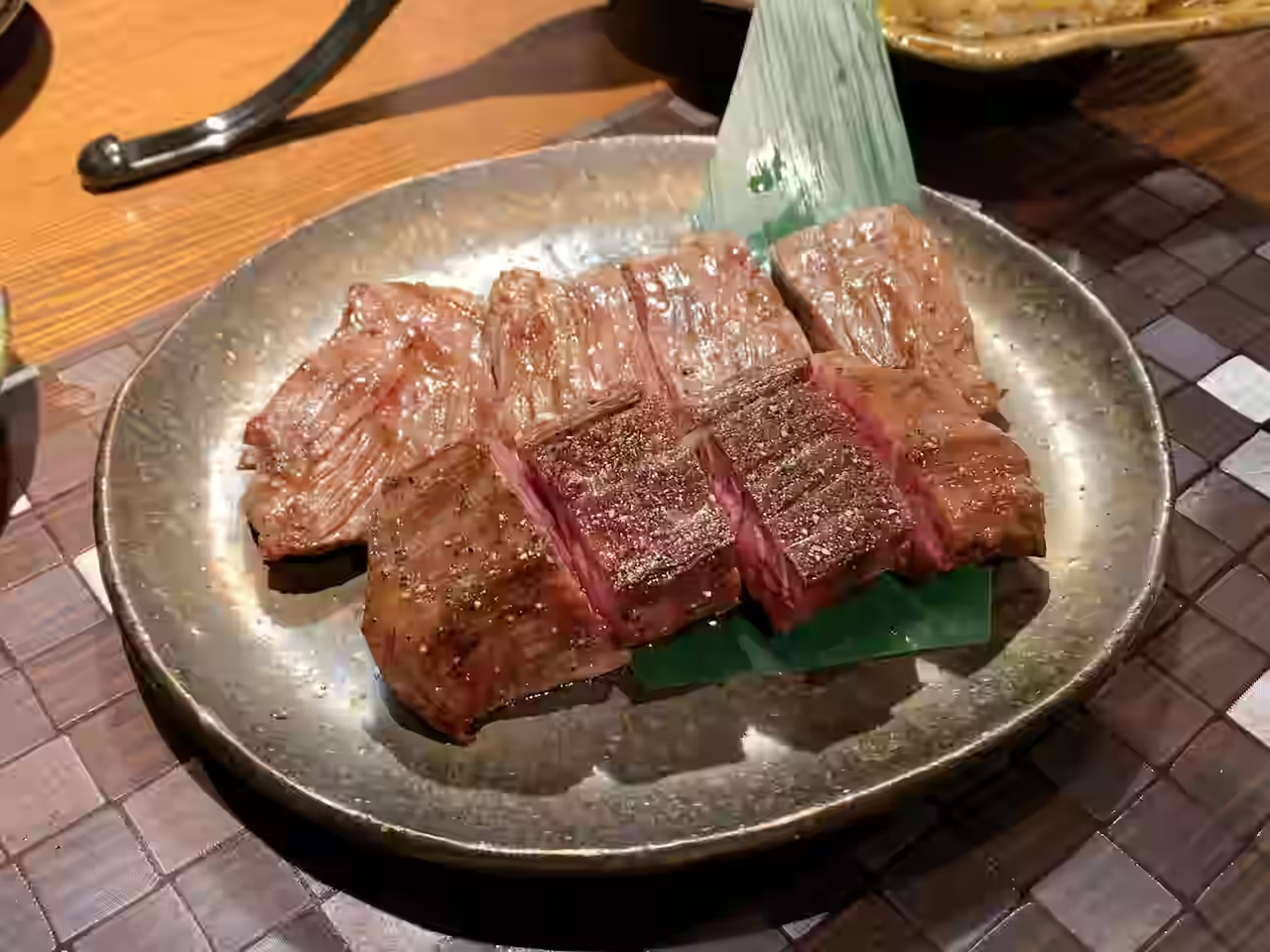
Many visitors enjoy it as steak. Others prefer sukiyaki, shabu-shabu, or yakiniku. A little salt often works better than a thick sauce, especially when you want to feel the natural sweetness.
If you wonder how to enjoy Maesawa beef in Japan, start simply. Choose a small steak course or thin slices for shabu-shabu. This lets the fat, aroma, and meat flavor speak clearly.
Maesawa Beef Compared With Regular Wagyu
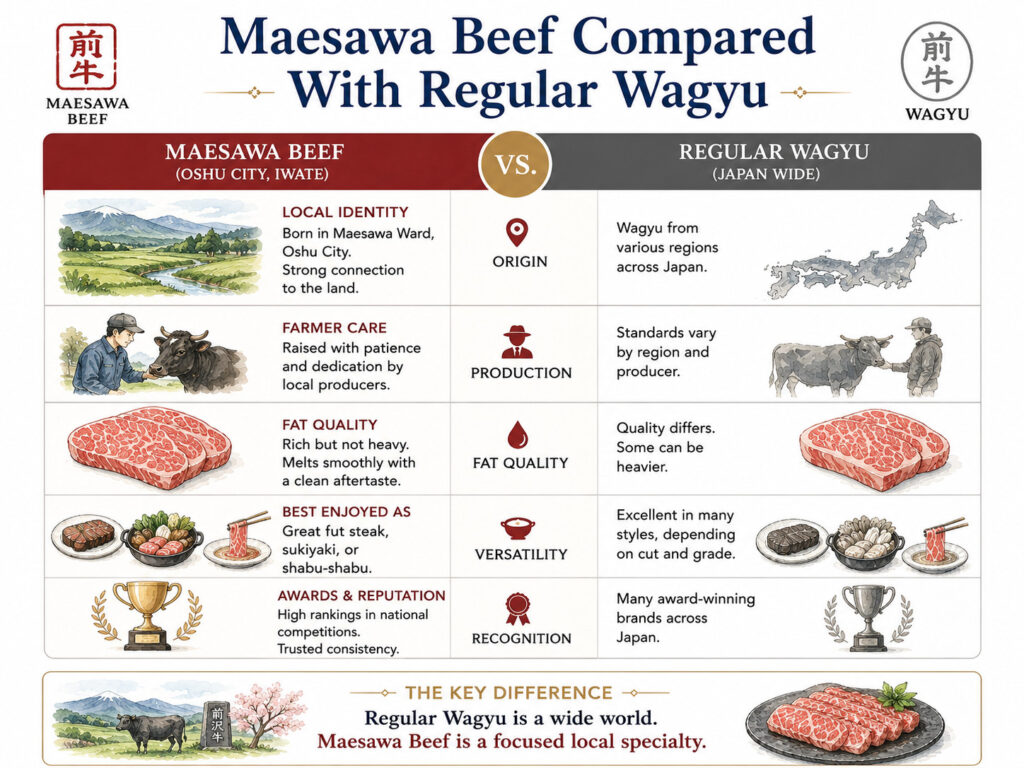
This comparison helps answer another common question. Why is Maesawa beef famous in Japan? Its fame comes from consistency, awards, and a strong link with local land. The biggest difference is not only marbling, but also place and identity.
Maesawa beef carries the character of Maesawa Ward in Oshu City. The area has fertile fields, clean water, and a long farming culture. Regular Japanese Wagyu can be excellent, of course. Still, the name “Wagyu” alone does not explain everything.
Breed, feed, place, farmer skill, and Wagyu grading all shape the final taste. Maesawa beef has a more specific identity than general Japanese Wagyu. It is beef from Oshu City, not just any Japanese wagyu from Iwate Prefecture. That local focus gives it a clear story.
The cattle grow with careful attention from local producers. This patient style helps create a tender beef texture. Another key point is fat quality. Maesawa beef often feels rich, but not too heavy. The fat melts smoothly and leaves a clean aftertaste.
For beginners, this makes Maesawa beef easier to understand. It has visible marbling, but the taste feels balanced. That is why it works well as steak, sukiyaki, or shabu-shabu. If you want the difference in one phrase, think of place and precision.
Regular Wagyu is a wide world. Maesawa beef is a focused local specialty of Iwate. That may sound subtle at first. Yet, when the beef reaches the table, the difference feels clearer. It offers a regional Wagyu worth seeking out.
Maesawa Beef History and Today
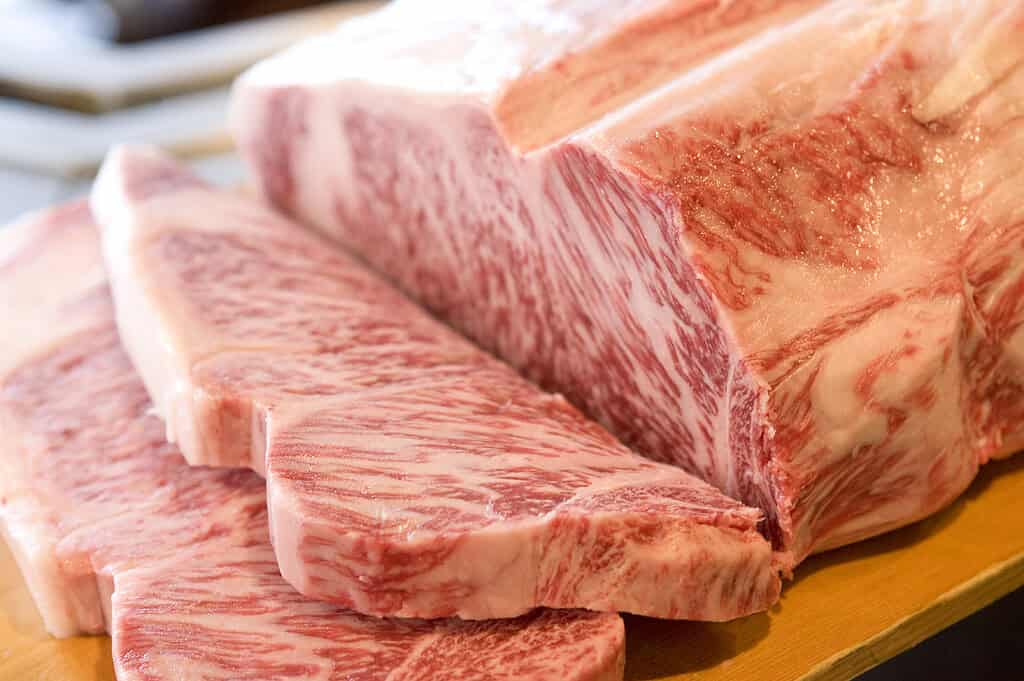
Maesawa beef history begins with Iwate’s older livestock culture. The area was once known more for horses than beef cattle. In the 1950s, local producers began introducing Japanese black cattle and improving breeding methods.
At first, Maesawa did not instantly become a famous beef town. Prices were not always strong, and local demand was limited. That part of the story feels surprisingly human. Farmers had to build trust step by step.
In 1965, the local agricultural cooperative formed a special group for fattening cattle. Producers studied better feeding, management, and carcass quality. They also shared feedback from shipped cattle, which helped improve the whole region.
Over time, those steady efforts changed the reputation of Maesawa beef. It became a respected Iwate beef brand with national recognition. Today, many people see it as Iwate’s premium Wagyu treasure and the signature beef of Iwate.
Wagyu grading also supports its value. Japan checks yield, marbling, color, firmness, texture, and fat quality. These details help buyers understand quality before tasting. Still, the real answer arrives on the plate.
How to Enjoy Maesawa Beef in Iwate
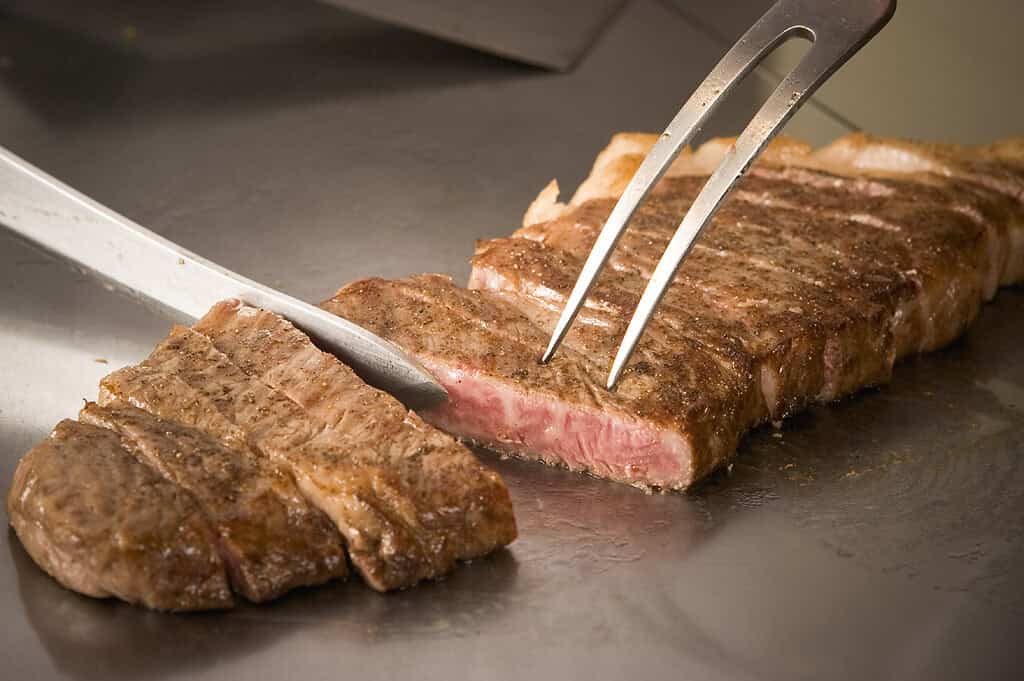
- Try steak if you want to taste the fat directly.
- Choose sukiyaki for a sweet and comforting meal.
- Order shabu-shabu for a lighter experience.
- Pick yakiniku when you want to compare several cuts.
- Ask staff about daily cuts before ordering.
For travelers, a Maesawa beef restaurant in Iwate gives the best experience. Oshu City has restaurants serving steak, yakiniku, and sukiyaki. Morioka and nearby areas may also offer this local specialty of Iwate.
Before visiting, check opening days and reservation rules. Popular restaurants can fill quickly, especially during weekends and holidays. If you feel unsure, a lunch set may be the easiest first step.
Maesawa beef is not the loudest name in Japanese Wagyu. Maybe that is part of its charm. It feels local, refined, and deeply tied to northern Japan. For curious travelers, it is authentic Japanese beef from Iwate worth seeking out.
For more on Kuroge Wagyu, see Food in Japan’s Kuroge Wagyu guide.
References
- Ministry of Agriculture, Forestry and Fisheries, “Product Summary Registration No.28”, https://www.maff.go.jp/e/policies/intel/gi_act/register/s28.html, checked in 2026, Registration Number 28 and Honorary Awards 6 times.
- Japan Geographical Indication Product Information Website, “Maesawa Gyu”, https://pd.jgic.jp/en/register/entry/28.html, checked in 2026, Date of Protection 2017/03/03.
- Food in Japan, “Wagyu beef”, https://www.foodinjapan.org/japan/wagyu-beef/, checked in 2026, Wagyu includes 4 native Japanese cattle breeds.
- Food in Japan, “Japanese Wagyu”, https://www.foodinjapan.org/japanese-food/wagyu/, checked in 2026, related Wagyu category and internal link source.




Comments