




Fukushima Food Guide
Ramen Towns · Fruit Kingdom · Aizu Tradition
Welcome to the complete Fukushima food guide from Food in Japan. This is a prefecture where people line up for ramen at 7 a.m., eat soba with a green onion as chopsticks, and flavor sweets with a seed said to add ten years to your life. Three regions stretch from the Aizu mountains to the Pacific coast, and each one eats differently. In short, this Fukushima food guide covers the famous bowls, the samurai soups, the cream box, and the award-winning sake worth traveling for.
| Prefecture | Fukushima (福島県) |
|---|---|
| Region | Tohoku, the southern gateway to northern Japan |
| Food Identity | Ramen towns, Aizu samurai cuisine, fruit farming, fermentation |
| Famous Dishes | Kitakata ramen, kozuyu, Namie yakisoba, cream box, ikaninjin |
| Signature Flavor | Light shoyu ramen broth and gentle Aizu dashi |
| Key Ingredients | Peaches, egoma (jyunen) perilla, Aizu rice, Joban-mono seafood |
| Sake Culture | A record-setting champion at Japan’s national sake awards |
| Best Food Areas | Aizu-Wakamatsu, Kitakata, Fukushima City, Koriyama, Shirakawa, Iwaki |
IdentityWhat Makes Fukushima Food Unique?
Three Regions, Three Cuisines
Fukushima is Japan’s third largest prefecture, and mountains divide it into three regions. Aizu in the west preserves samurai-era dishes such as kozuyu and dried preserved foods. Nakadori in the center grows fruit and hosts the famous ramen cities. Hamadori on the Pacific coast, meanwhile, lands prized Joban-mono seafood. As a result, one prefecture offers three completely different tables.
A Ramen Kingdom
Few prefectures love ramen like Fukushima. In Kitakata, shops open at 7 a.m. and locals eat Kitakata ramen for breakfast, a custom called asa-ra. The style counts among Japan’s three great ramen, alongside Sapporo and Hakata. In addition, Shirakawa ramen offers handmade curly noodles, and Kooriyama Black serves a striking dark shoyu soup. Ramen fans can therefore tour three famous noodle towns within a single prefecture.
Fruit, Fermentation, and Champion Sake
Locals call Nakadori the Fruit Kingdom, and its summer peaches are legendary. Fukushima also maintains deep fermentation traditions, from sagohachi pickles to miso-based mountain dishes. Fukushima sake, above all, has dominated Japan’s national sake awards with a record-setting run of gold medals. The prefecture therefore ranks among Japan’s most respected sake origins.
Must-TryFukushima Food Guide: Must-Try Dishes
Fukushima’s essential dishes range from Aizu samurai banquets to postwar B-class gourmet stars. First of all, start with these signature names.
Signature Dishes in This Fukushima Food Guide
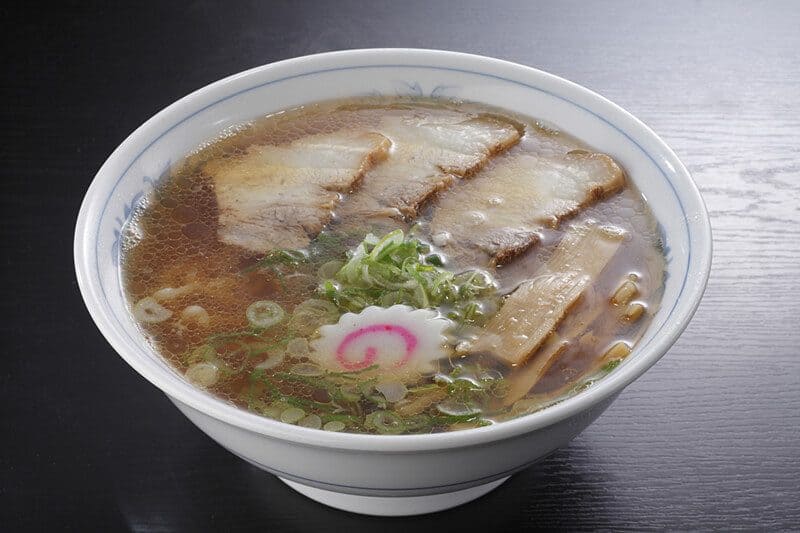

Kitakata Ramen (喜多方ラーメン)
Flat wavy noodles in a clear shoyu broth of pork bones and sardines. It is, in fact, one of Japan’s three great ramen styles, and locals eat it for breakfast.
Read the Kitakata Ramen guide →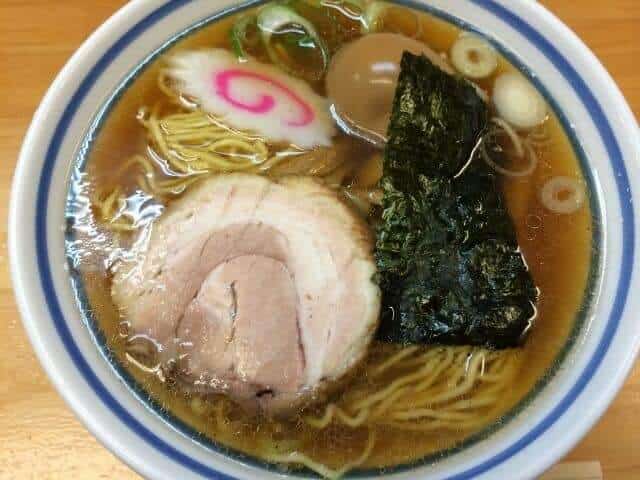

Shirakawa Ramen (白河ラーメン)
Handmade curly noodles in a clear chicken and pork broth. Many shops also still cut the noodles by hand each morning.
Read the Shirakawa Ramen guide →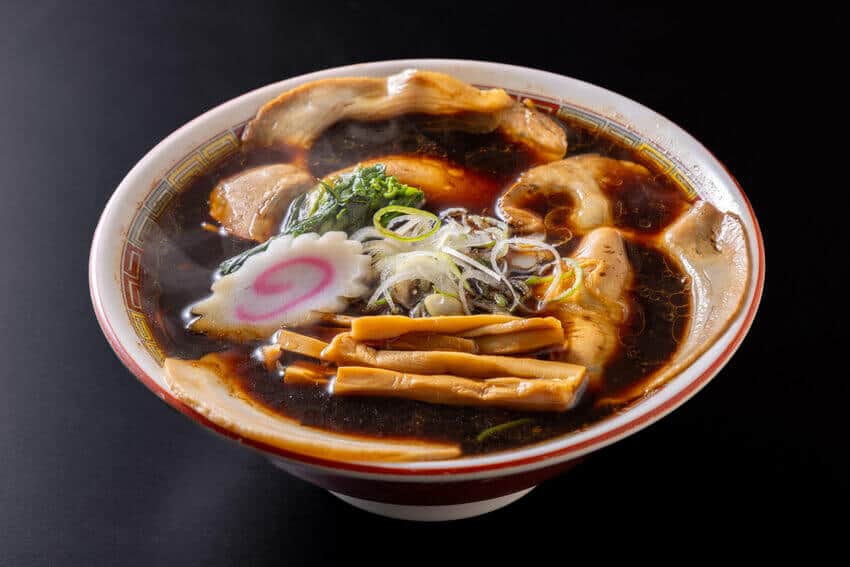

Kooriyama Black Ramen (郡山ブラック)
A striking jet-black shoyu ramen from Koriyama City. The flavor, however, stays surprisingly mellow rather than salty.
Read the Kooriyama Black guide →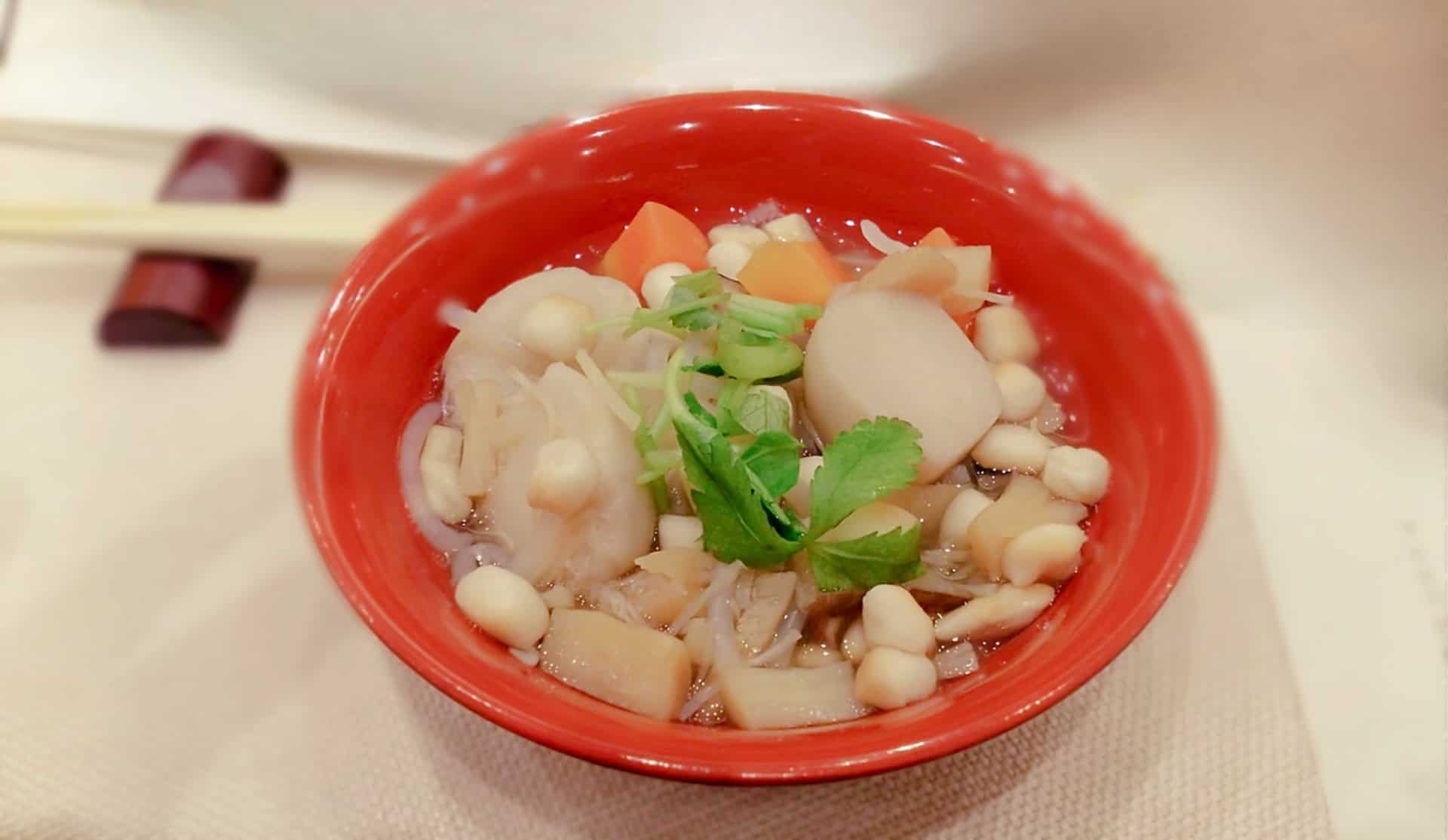

Kozuyu (こづゆ)
Aizu’s celebration soup of scallop dashi, vegetables, and wheat gluten balls. Traditionally, families serve it in shallow red lacquer bowls.
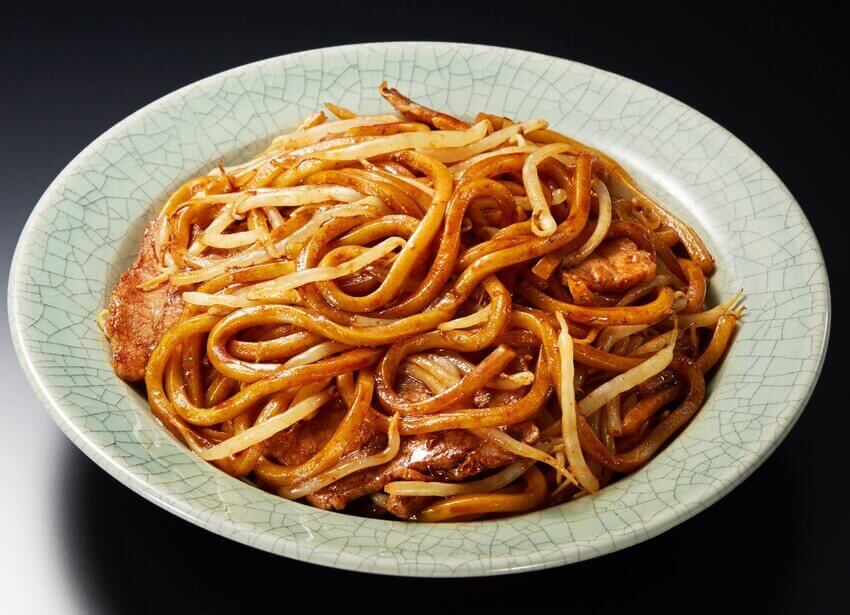

Namie Yakisoba (なみえ焼きそば)
Extra-thick chewy noodles with pork and bean sprouts in rich sauce. It also stands, above all, as a symbol of the coastal town of Namie’s revival.
Read the Namie Yakisoba guide →
Local Favorites and Sweet Treats
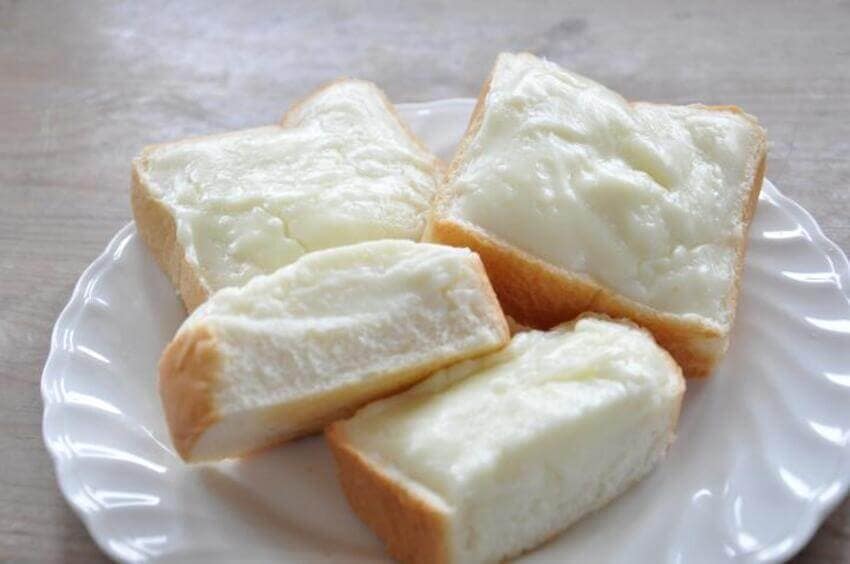

Cream Box (クリームボックス)
Thick white bread topped with sweet milky cream, born in Koriyama bakeries. Locals indeed eat it from school days into adulthood.
Read the Cream Box guide →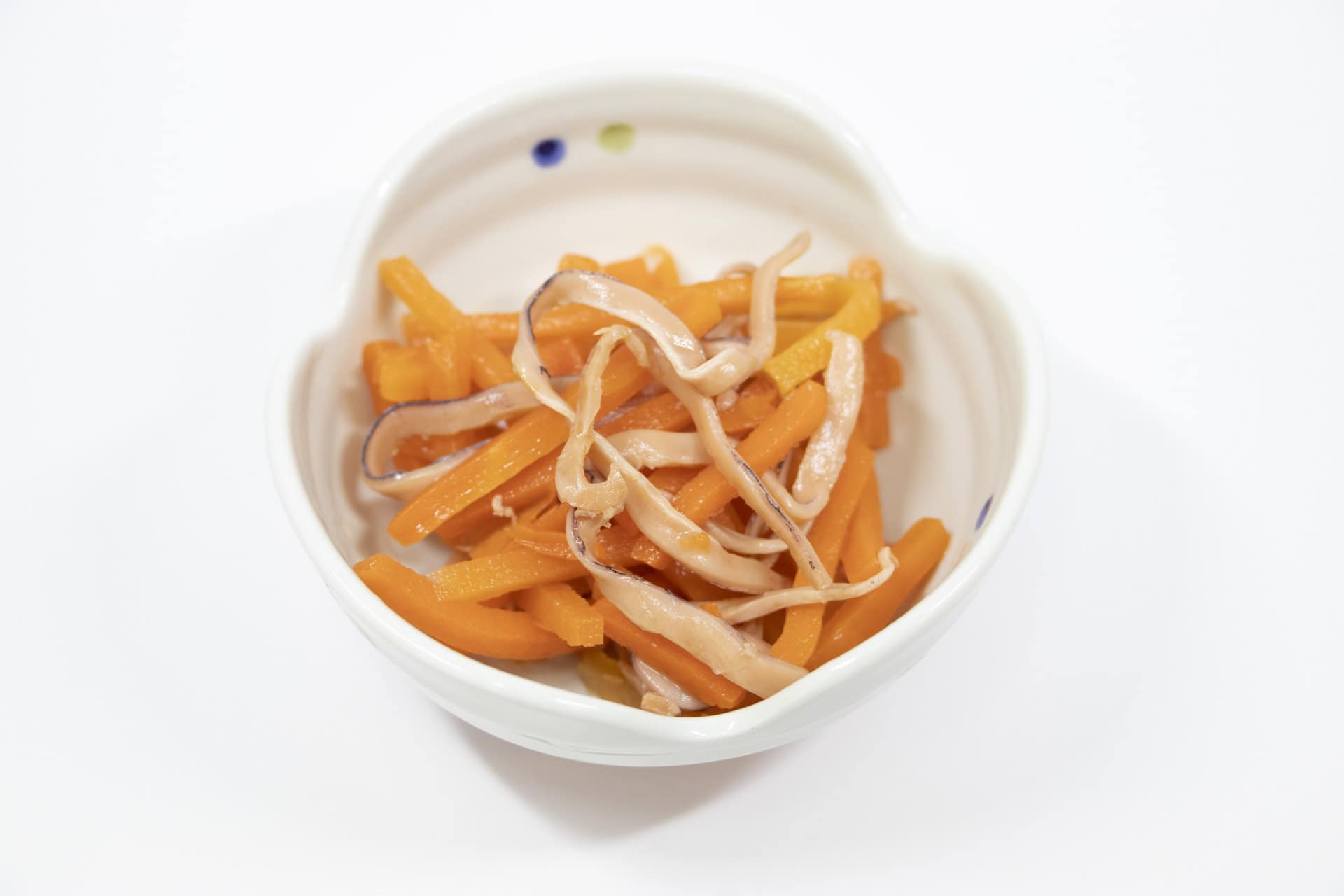

Ikaninjin (いかにんじん)
Shredded dried squid and carrot marinated in soy and mirin. This simple winter side dish appears, in fact, in nearly every Fukushima home.
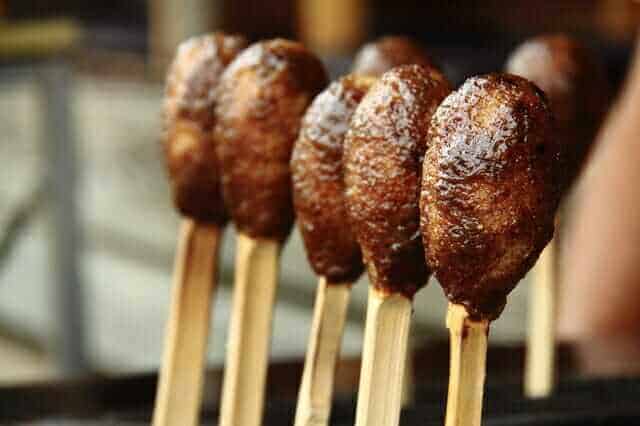

Shingoro (しんごろう)
Half-mashed rice balls brushed with jyunen miso and grilled over charcoal. The nutty perilla aroma then fills Minamiaizu kitchens every autumn.
Read the Shingoro guide →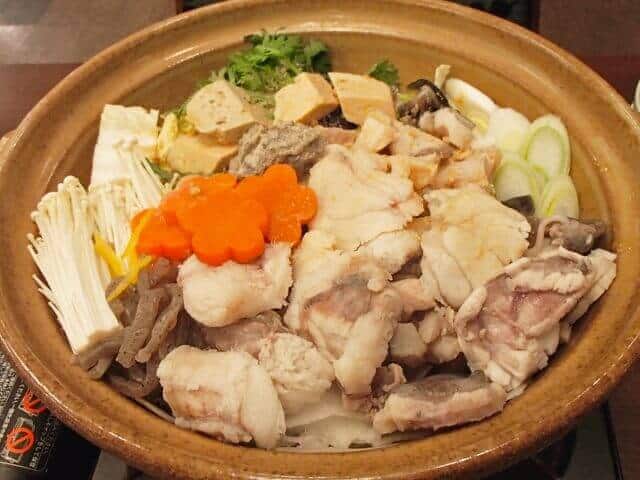
Ankou Nabe (あんこう鍋)
A collagen-rich anglerfish hot pot from the winter Pacific coast. Its miso broth warms Iwaki’s fishing towns all through the cold season.
Read the Ankou Nabe guide →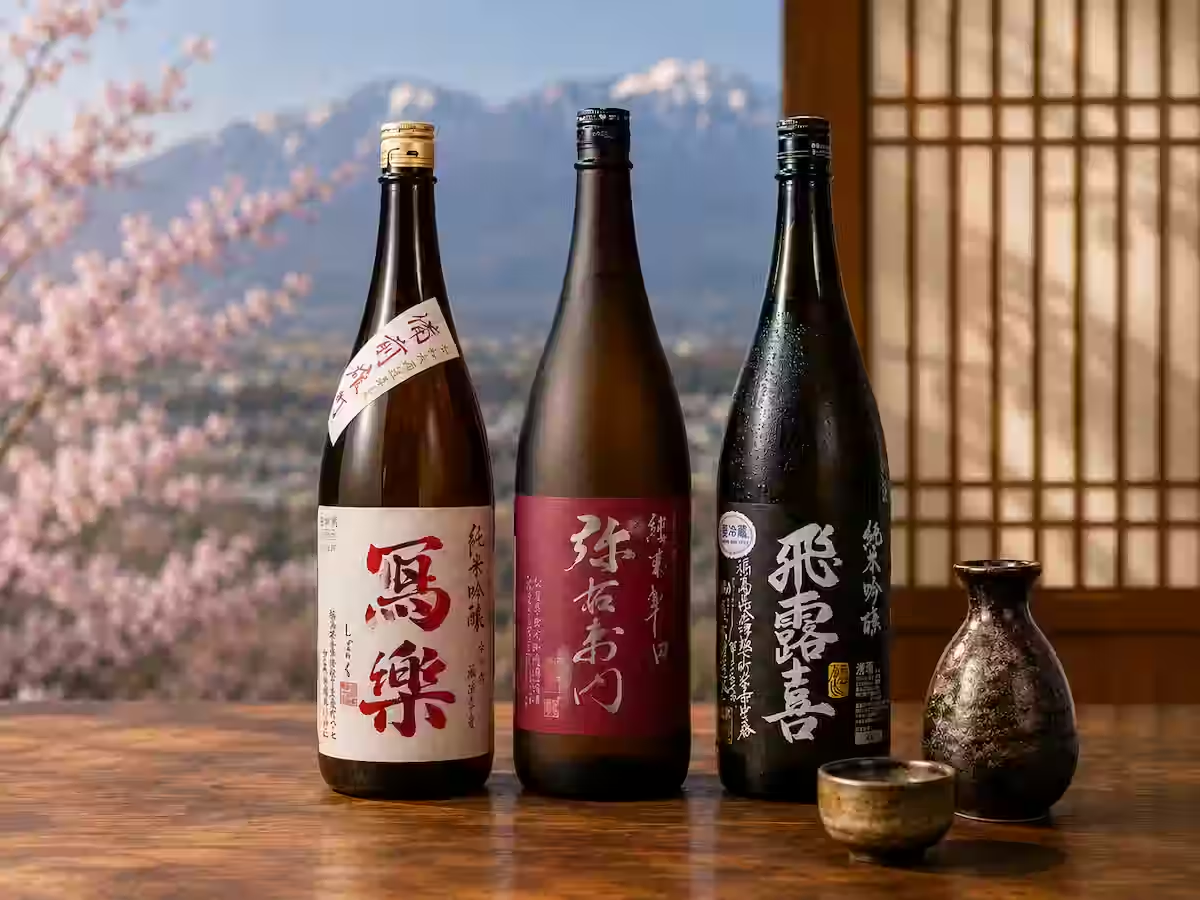

Fukushima Sake (福島の酒)
Soft, clean sake from Aizu rice and mountain water. The prefecture, in fact, set a national record for gold medal wins.
Read the Fukushima Sake guide →
FlavorWhat Does Fukushima Food Taste Like?
Fukushima food tastes clear, gentle, and quietly confident. Kitakata ramen broth looks light, yet the sardine umami lingers far longer than expected. Kozuyu, meanwhile, delivers a delicate scallop dashi that feels almost ceremonial in its red lacquer bowl. Then the surprises arrive. Ikaninjin seems humble, and honestly, the first cream box can look almost too simple. Still, give them a chance. Gradually, the sweet cream, the chewy squid, and a cup of soft Aizu sake win you over completely. In the end, Fukushima flavors feel like hospitality itself, warm and unhurried.
Where to EatFukushima Food Guide by Area
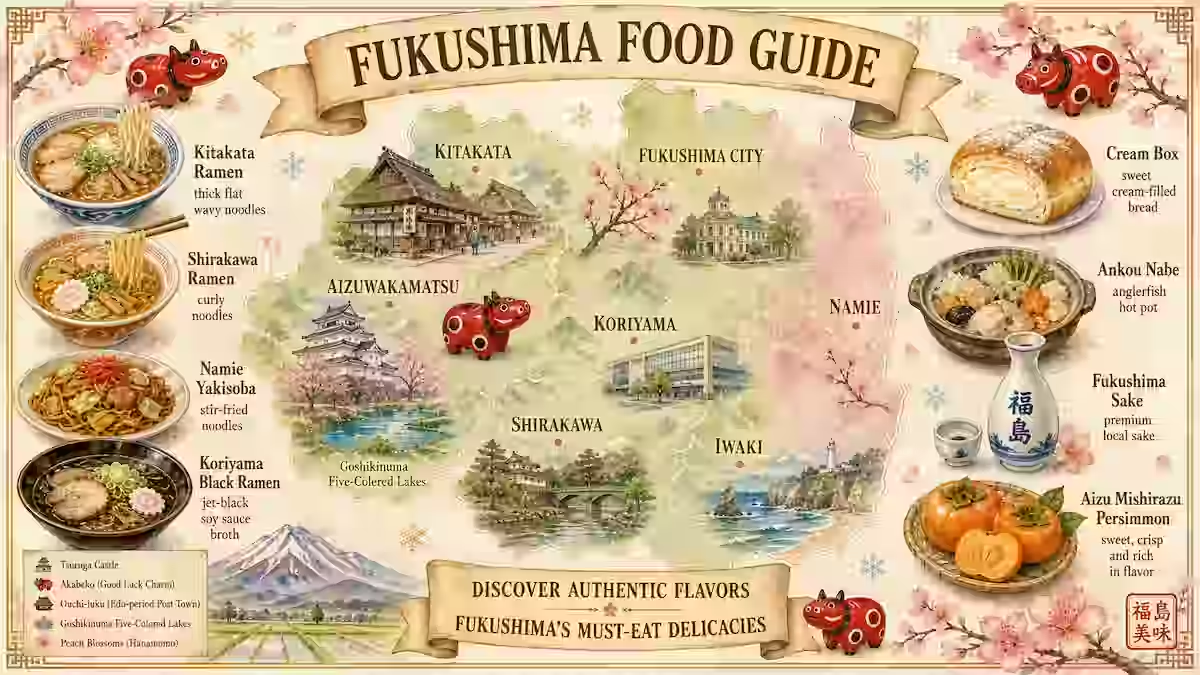
Fukushima’s food culture changes with each basin, castle town, and coastline. Every city, in fact, claims its own dish. Therefore, use this Fukushima food guide to plan an eating route between them.
Aizu-Wakamatsu
The samurai castle town of western Fukushima. Restaurants beside Tsuruga Castle serve kozuyu, sauce katsudon, and local sake, for instance, in one sitting.
Kitakata
A storehouse town with more than 100 ramen shops. Locals moreover eat “asa-ra”, a bowl of ramen for breakfast, before work.
Fukushima City
The prefectural capital among the orchards. Enban gyoza, a crispy disc of pan-fried dumplings, and summer peaches define the city’s table.
Koriyama
The commercial hub of central Fukushima. In addition to Kooriyama Black ramen, its bakeries invented the beloved cream box.
Shirakawa
The historic southern gateway to Tohoku. Its handmade ramen culture, above all, draws noodle pilgrims from across Japan.
Iwaki & the Hamadori Coast
Fukushima’s Pacific shore. Joban-mono seafood, winter ankou nabe, and revived Namie yakisoba carry the coast’s fighting spirit.
IngredientsFukushima Food Guide: Famous Ingredients
Peaches and Orchard Fruit
Fukushima ranks among Japan’s top peach producers, and summer fruit stands line the Fruit Line road. The Akatsuki peach, bred in the prefecture, balances dense flesh with honeyed sweetness. Autumn furthermore brings the rare Aizu Mishirazu persimmon, once presented to the imperial court. Pears, apples, and cherries follow through the seasons. As a result, locals proudly call the region a year-round Fruit Kingdom.
Egoma, the Jyunen Perilla
Aizu farmers have grown egoma perilla seeds for centuries. Locals call it jyunen, meaning ten years, because eating it supposedly adds ten years to your life. The nutty seeds become miso for grilled shingoro skewers. Similarly, they coat sweet jyunen botamochi rice cakes. In other words, one tiny seed flavors both dinner and dessert in Aizu.
Aizu Rice and Champion Sake
The Aizu basin grows some of the highest-rated rice in Japan. Soft snowmelt water from the surrounding mountains completes the brewing equation. Consequently, Fukushima sake earned the most gold medals at Japan’s Annual Sake Awards for a record run of consecutive years. Fermentation skills extend beyond sake too. Sagohachi, a salt-rice-koji pickling bed, still seasons vegetables in Aizu kitchens, for example.
Joban-mono Seafood
Off the Hamadori coast, the warm Kuroshio and cold Oyashio currents collide. Fish fattened in these mixing waters earn the prestigious Joban-mono label. Winter anglerfish for ankou nabe is the most celebrated catch. In addition, flounder, mehikari, and skipjack fill Iwaki’s markets. Tokyo chefs, in fact, have prized Joban-mono for generations.
HistoryThe History of Fukushima Food Culture
Castle Towns and the Edo Period
The Aizu clan ruled western Fukushima from its castle at Aizu-Wakamatsu. Far from the sea, the domain treasured dried scallops, herring, and kelp carried over mountain roads. Consequently, banquet dishes such as kozuyu and nishin no sanshozuke grew from preserved ingredients. Post towns like Ouchi-juku, meanwhile, fed travelers along the trade routes. Its famous negi soba, eaten with a single green onion as chopsticks, survives from that era.
Merchants, Storehouses, and Fermentation
Kitakata prospered as a brewing town of miso, soy sauce, and sake. Wealthy merchants built thousands of thick-walled kura storehouses, which still line the streets today. Inside them, fermentation culture matured for generations. Sagohachi pickling and jyunen miso, for example, became everyday Aizu flavors. Later, noodle makers arrived, and the storehouse town unexpectedly became a ramen capital.
B-Class Gourmet and Modern Revival
The postwar era added new comfort foods to Fukushima’s table. Enban gyoza spread through Fukushima City’s izakaya, and Koriyama bakeries created the cream box around 1976. Namie yakisoba, born in coastal diners, later won the national B-1 Grand Prix. After the 2011 disaster, food became a symbol of recovery. Today, record-breaking sake medals and revived Joban-mono catches, above all, tell Fukushima’s comeback story.
Read NextExplore More Fukushima Foods
- Kitakata Ramen (喜多方ラーメン) – one of Japan’s three great ramen
- Shirakawa Ramen (白河ラーメン) – handmade noodles from the southern gateway
- Kooriyama Black Ramen (郡山ブラック) – the jet-black shoyu bowl
- Namie Yakisoba (なみえ焼きそば) – thick noodles with a revival story
- Cream Box (クリームボックス) – Koriyama’s sweet bakery icon
- Shingoro (しんごろう) – grilled rice skewers with jyunen miso
- Ankou Nabe (あんこう鍋) – winter anglerfish hot pot
- Sagohachi-zuke (三五八漬け) – Aizu’s koji pickling tradition
- Jyunen Botamochi (じゅうねんぼたもち) – perilla-coated rice cakes
- Daikon Mochi (大根餅) – a humble radish rice cake
- Ego (えご) – seaweed jelly from mountain trade routes
- Hatto (はっと) – hand-torn wheat dumplings in broth
- Aizu Mishirazu Persimmon (会津身不知) – the imperial gift fruit
- Fukushima Sake (福島の酒) – Japan’s gold medal champion
- Browse all Fukushima foods
More RegionsExplore More Japanese Regional Food Guides
- Akita Food Guide – kiritanpo, Inaniwa udon & snow country cuisine
- Tohoku Food – dishes from all six northern prefectures
- Discover Tohoku – 11 Japanese foods you need to taste
- Hokkaido Food Guide – dairy, seafood & miso ramen
- Kanto Food Guide – Tokyo, Kanagawa, Saitama & beyond
- Kansai Food Guide – Osaka, Kyoto, Kobe & more
- Kyushu Food Guide – Fukuoka ramen & southern cuisine
- Japan Food Guide – complete overview of all regions
In conclusion, bookmark this Fukushima food guide and explore each dish in depth through the articles above. Then plan your own eating route from the Aizu mountains to the Pacific coast.
FAQFukushima Food Guide FAQ
Fukushima Food Guide FAQ: Signature Dishes
What food is Fukushima most famous for?
Fukushima is most famous for Kitakata ramen, kozuyu soup, Namie yakisoba, and ikaninjin. The prefecture also leads Japan in peaches and gold-medal sake. Above all, its three regions each bring a distinct food culture.
What is Kitakata ramen?
Kitakata ramen is a soy sauce ramen from Kitakata City in the Aizu region. Flat, wavy, hand-cut noodles swim in a clear broth of pork bones and dried sardines. As a result, the bowl tastes light yet deeply savory. It counts among Japan’s three great ramen styles, so noodle fans travel far to try it.
What is kozuyu?
Kozuyu is the celebration soup of the Aizu region. Cooks simmer dried scallop dashi with taro, carrots, wood ear mushrooms, and wheat gluten balls. Traditionally, families serve it in shallow red lacquer bowls at weddings and New Year feasts. Guests may moreover refill the bowl as many times as they like.
What is Namie yakisoba?
Namie yakisoba is a noodle dish from the coastal town of Namie. Cooks fry extra-thick chewy noodles with pork and bean sprouts in a rich sauce. It won, in fact, the national B-1 Grand Prix in 2013. After the 2011 disaster, the dish also became a proud symbol of the town’s revival.
How is Shirakawa ramen different from Kitakata ramen?
Both are clear shoyu ramen, yet the bowls differ clearly. Shirakawa ramen uses hand-kneaded curly noodles and a chicken-and-pork broth with a firmer bite. In contrast, Kitakata ramen features flat, silky noodles and a sardine-scented soup. Tasting both towns back to back is therefore a popular ramen pilgrimage.
Fukushima Food Guide FAQ: Local Flavors and Sweets
What is ikaninjin?
Ikaninjin is a home-style side dish from northern Fukushima. Cooks marinate shredded dried squid and carrots in soy sauce and mirin. Consequently, the chewy squid and crisp carrot soak up sweet-savory umami. Families prepare it in winter, and it reportedly inspired Hokkaido’s matsumae-zuke.
What is a cream box?
A cream box is a sweet bread from Koriyama City. Bakers spread thick milky cream over a slab of soft white bread. It first appeared in a local bakery around 1976. Today, school students and office workers alike, in fact, treat it as the city’s soul food.
What is shingoro?
Shingoro is a grilled rice snack from the Minamiaizu area. Cooks half-mash non-glutinous rice, form it onto skewers, and brush it with jyunen miso. Then they roast the skewers over charcoal until fragrant. As a result, the nutty perilla aroma defines autumn festivals in the region.
What is jyunen and why does Aizu love it?
Jyunen is the Aizu name for egoma, a perilla seed rich in healthy oils. Locals say eating it adds ten years to your life, hence the name. The roasted seeds become miso for shingoro and a coating for botamochi rice cakes. In other words, one small seed seasons both savory and sweet Aizu classics.
Are Fukushima peaches really that good?
Yes, Fukushima ranks among Japan’s top peach producers. The prefecture’s Akatsuki variety offers dense flesh and honey-like sweetness. During summer, fruit stands along the Fruit Line road sell peaches picked that morning. Many orchards furthermore let visitors pick and eat their own fruit.
Fukushima Food Guide FAQ: Travel Tips and Costs
Is Fukushima good for sake lovers?
Fukushima is one of Japan’s most decorated sake prefectures. Its breweries won the most gold medals at the Annual Japan Sake Awards for a record run of consecutive years. Soft Aizu water and local rice create a clean, gentle style. Brewery visits around Aizu-Wakamatsu and Kitakata therefore reward any sake fan.
What is the best time of year to eat in Fukushima?
Every season has a highlight. For example, summer brings peak peaches and morning ramen in Kitakata. Autumn delivers new rice, persimmons, and shingoro festivals in Aizu. Meanwhile, winter means ankou nabe on the coast and fresh sake in the breweries. Finally, spring pairs castle cherry blossoms with kozuyu banquets.
Where should I go for food in Aizu-Wakamatsu?
Start around Tsuruga Castle and the Nanokamachi-dori shopping street. Historic restaurants there serve kozuyu, sauce katsudon, and wappameshi steamed rice. In addition, sake breweries in the city offer tastings and tours. For a day trip, Ouchi-juku’s thatched post town serves its famous negi soba nearby.
Is Fukushima food expensive?
Fukushima eats very affordably compared with Tokyo. For example, a bowl of Kitakata ramen costs around 700 to 900 yen. Meanwhile, a cream box costs only 150 to 250 yen at local bakeries. Finally, a kozuyu set in Aizu-Wakamatsu runs about 1,500 to 2,500 yen with sides.