




Aomori Food Guide
Apple Kingdom · Oma Tuna · Nebuta Nights
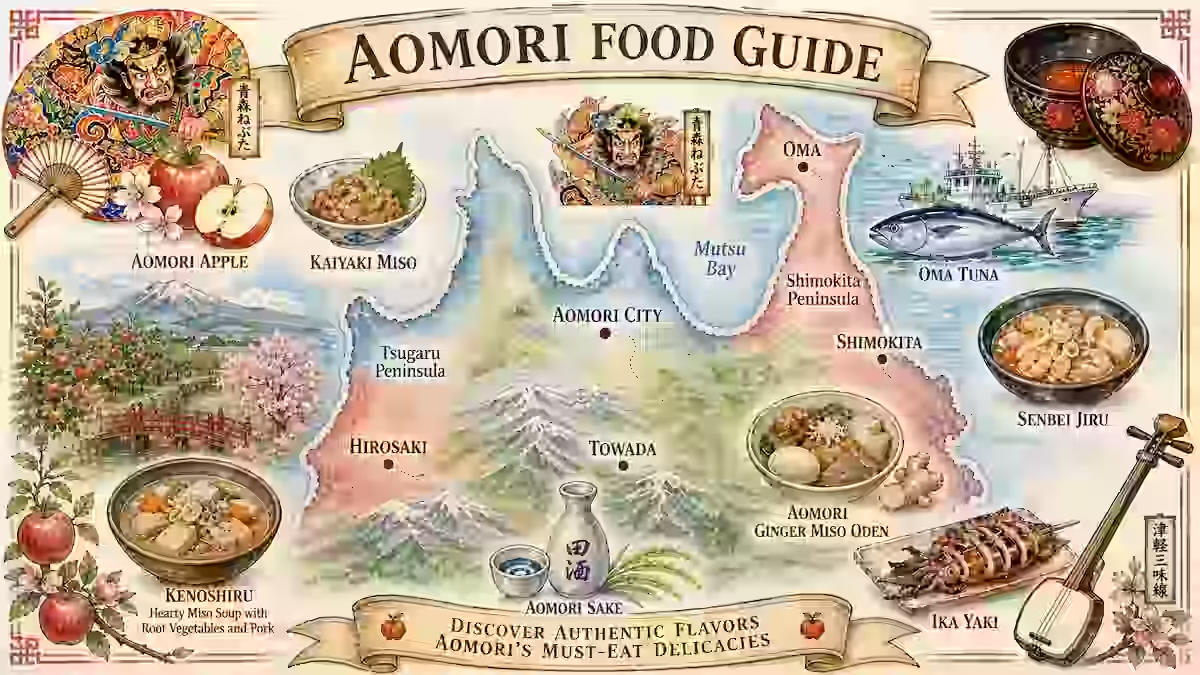
Aomori food rests on three things: apples, cold northern seas, and a stubborn streak of local invention. In fact, the prefecture at the top of Honshu grows roughly six out of every ten apples in Japan, lands the country’s most valuable bluefin tuna at Oma, and eats a ramen made with miso, curry, and milk in the same bowl. This Aomori food guide covers the twelve dishes worth planning a trip around, the season each one belongs to, and how to eat well in both halves of a prefecture that was once two separate countries.
Start HereAomori Food Guide at a Glance
Aomori sits at the northern tip of Honshu, about three hours from Tokyo by shinkansen. It leads Japan in apples, garlic, burdock, farmed scallops, and squid, and the Tsugaru Strait produces the bluefin tuna that sets record prices at Tokyo auctions every January.
If you eat only three things here, make them a build-your-own seafood bowl at Furukawa Market in Aomori City, senbei jiru in Hachinohe, and a Fuji apple from an orchard around Hirosaki. Overall, Aomori food is cheap by Japanese standards, with the single glaring exception of Oma tuna.
Two notes on names. Aomori City is the prefectural capital, but many specialties on this page come from other parts of Aomori Prefecture. Second, Oma tuna is also written Ooma or Oma maguro in English, and all three refer to the same fish from the town of Oma.
| Prefecture | Aomori (青森県) |
|---|---|
| Region | Tohoku, the northern tip of Honshu |
| Two Cultures | Tsugaru in the west, Nanbu in the east, historically separate domains |
| Food Identity | Apples, cold-water seafood, root vegetables, and inventive local dishes |
| Famous Dishes | Oma tuna, senbei jiru, ichigoni, Towada barayaki, kayaki miso |
| National Rankings | First in Japan for apples, garlic, burdock, farmed scallops, and squid |
| Signature Oddity | Miso curry milk ramen, a bowl that should not work but does |
| Sake | Around 17 breweries; the prefecture received GI status in 2025 |
| Best Food Areas | Aomori City, Hirosaki, Hachinohe, Towada, Oma |
IdentityWhat Makes Aomori Food Unique?
Japan’s Apple Kingdom
Aomori grew about 60 percent of Japan’s apples in the 2024 harvest, far ahead of second-place Nagano. Orchards blanket the Tsugaru plain around Hirosaki, where cold nights and warm days concentrate the sugar. Generally, the season stretches from early varieties in August to late Fuji in November. Apples appear well beyond the fruit bowl too, turning up in cider, pies, curry, and even ramen toppings. Hirosaki, furthermore, markets itself as an apple pie city, with dozens of shops baking their own version.
Two Seas and Two Cultures
Aomori touches three bodies of water, and that, above all, shapes everything. Mutsu Bay produces the sweet farmed scallops behind kayaki miso, while the Tsugaru Strait yields the bluefin of Oma. On the Pacific side, meanwhile, sea urchin and abalone go into ichigoni. The prefecture also splits culturally, since Tsugaru in the west and Nanbu in the east were separate domains with different dialects. Their kitchens still disagree, which is why one prefecture supports two very different food traditions.
Cold Climate, Bold Inventions
The Nanbu side suffered repeated crop failures from the yamase, a cold summer wind off the Pacific. Wheat and buckwheat crackers therefore filled the gap, which is how senbei jiru came to exist. That same practicality still shows in modern Aomori cooking. Miso curry milk ramen and ginger miso oden both began as ways to make cheap food taste warmer. Neither sounds appealing on paper. Nevertheless, both are excellent.
Must-TryAomori Food Guide: Must-Try Dishes
Aomori’s essential list runs from the most expensive fish in Japan to a cracker dropped in soup. Above all, it rewards curiosity. First of all, start with these signature names.
Signature Dishes in This Aomori Food Guide
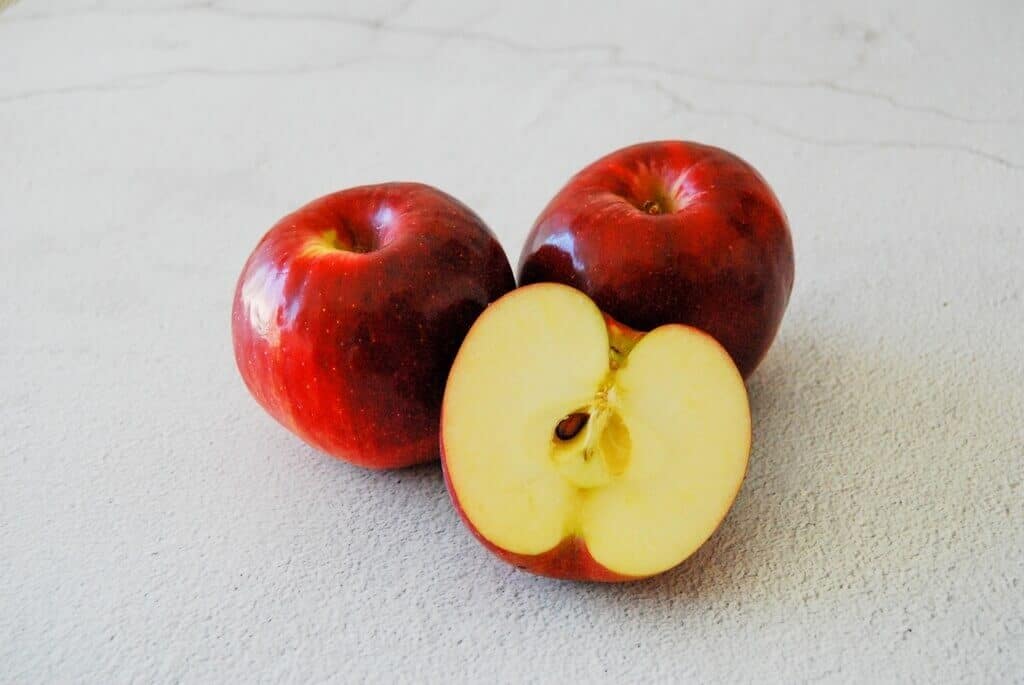

Aomori Apple (青森りんご)
Roughly six in ten Japanese apples come from here. Fuji leads the lineup, although Tsugaru, Orin, and Jonagold each have their own season.
Read the Aomori Apple guide →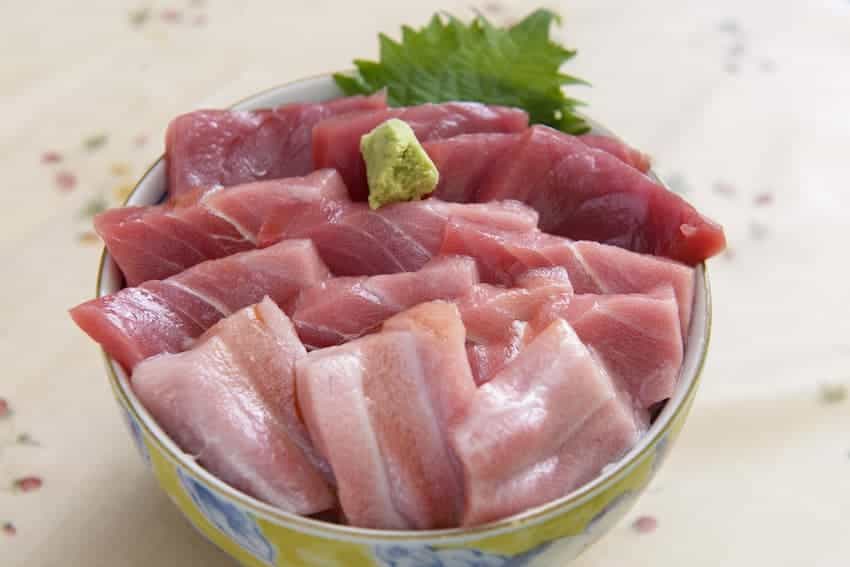

Oma Tuna (大間マグロ)
Bluefin caught by single-line pole in the Tsugaru Strait. Oma fish, in fact, regularly set the record price at Tokyo’s New Year auction.
Read the Oma Tuna guide →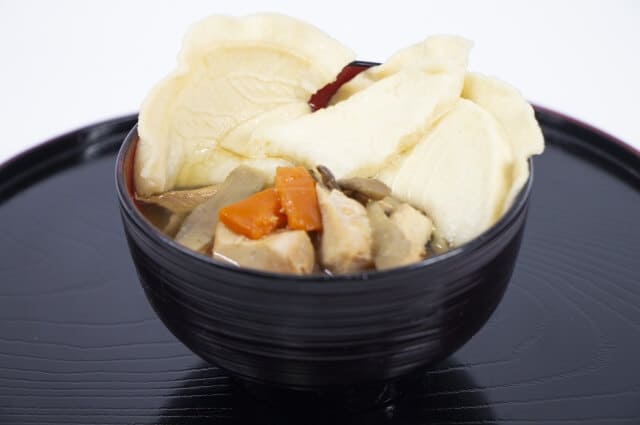

Senbei Jiru (せんべい汁)
Nanbu wheat crackers simmered in chicken or fish broth until chewy. Hachinohe’s signature dish, in fact, tastes nothing like soggy.
Read the Senbei Jiru guide →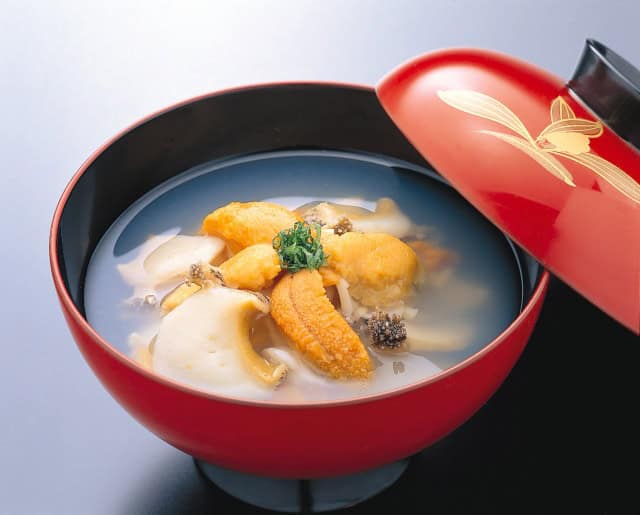

Ichigoni (いちご煮)
A clear soup of sea urchin and abalone from Hachinohe and Hashikami. The name means stewed strawberries, although no strawberries are involved.
Read the Ichigoni guide →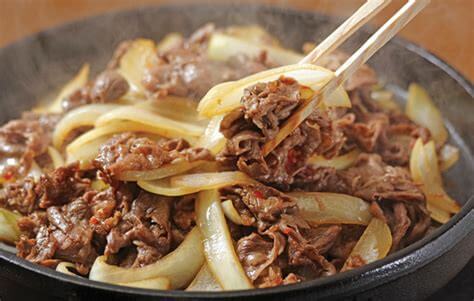

Towada Barayaki (十和田バラ焼き)
Thin beef and a mountain of sliced onion griddled in sweet soy sauce. A food stall near the Misawa air base created it after the war. Since then, Towada has become the town most associated with it.
Read the Towada Barayaki guide →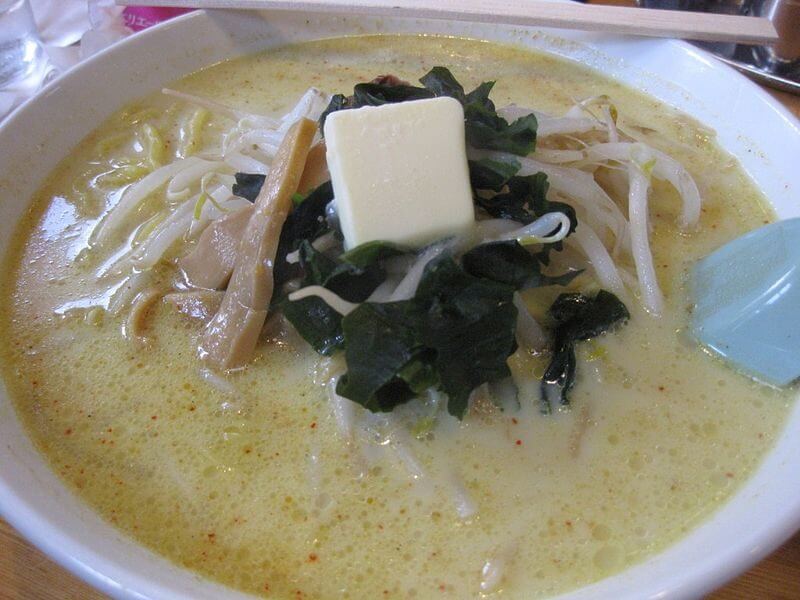

Miso Curry Milk Ramen (味噌カレー牛乳ラーメン)
Miso, curry powder, and milk in one bowl, topped with butter and wakame. Locals call it white ramen, and in practice it works far better than it sounds.
Read the White Ramen guide →
Local Favorites, Sweets, and Sake
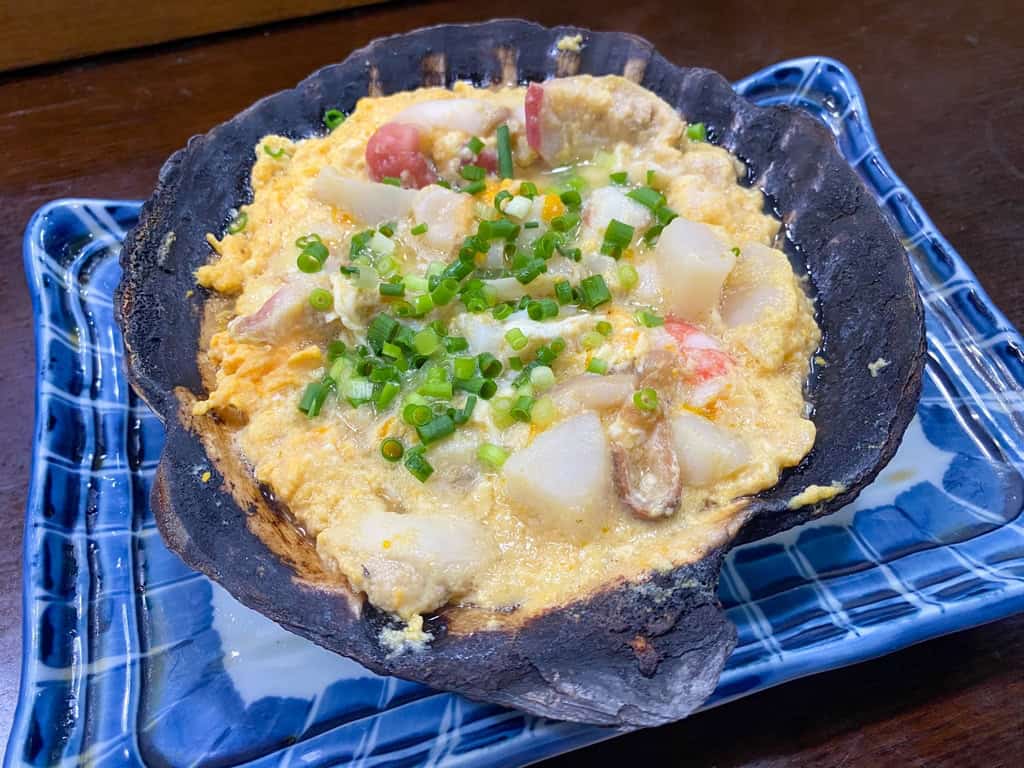

Kayaki Miso (貝焼き味噌)
Scallop, egg, and miso cooked in a large scallop shell used as the pot. Fishermen around Mutsu Bay have cooked this way since the Edo period.
Read the Kayaki Miso guide →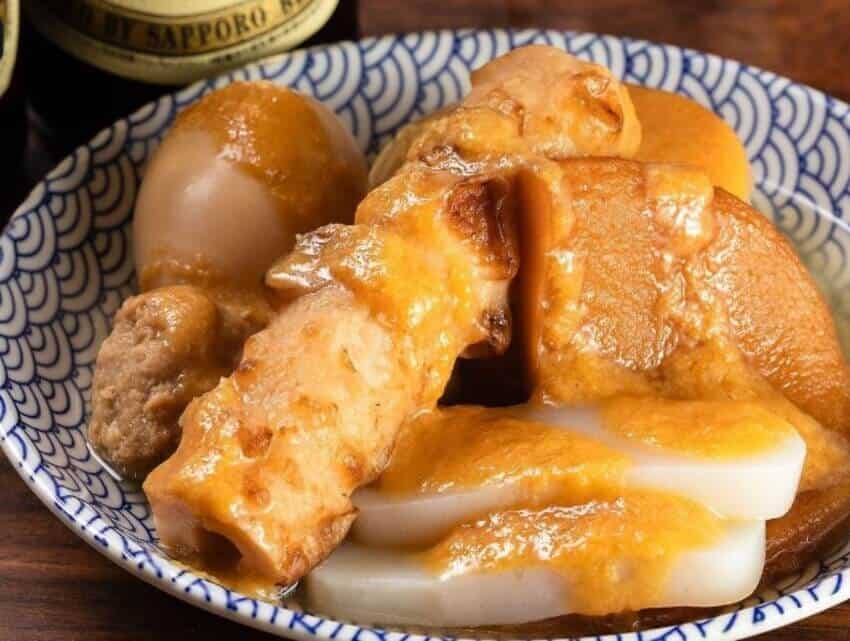

Shoga Miso Oden (生姜味噌おでん)
Oden eaten with a thick miso sauce loaded with grated ginger. Postwar stalls near Aomori Station created it to warm waiting travellers.
Read the Shoga Miso Oden guide →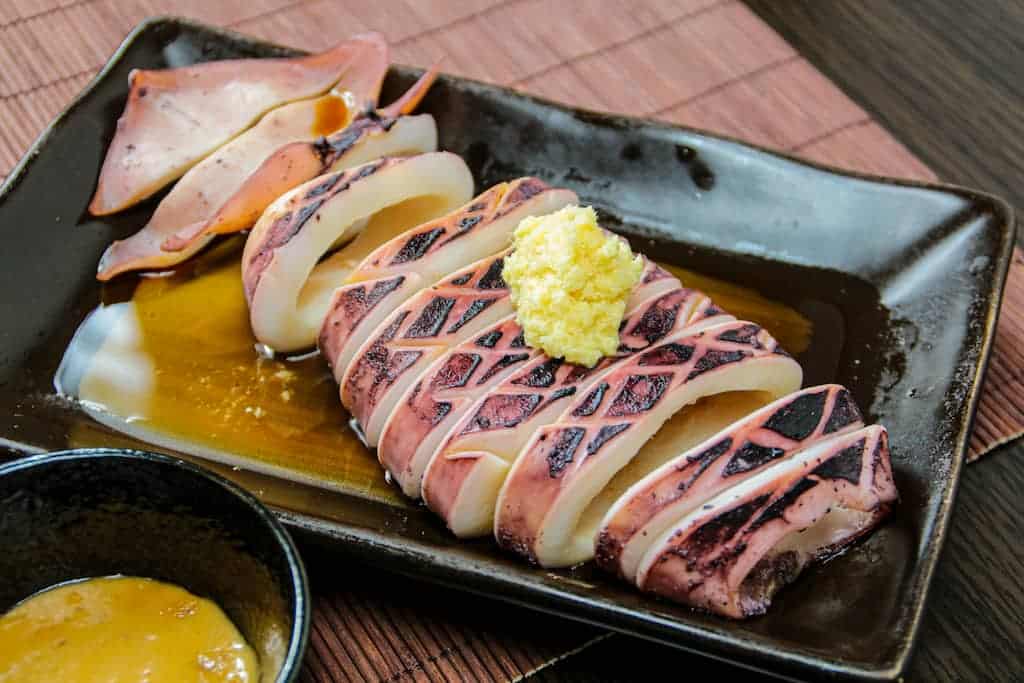

Grilled Squid (いかの鉄砲焼き)
Surumeika squid stuffed with sweet ginger miso, then grilled whole over coals. Aomori, moreover, lands more squid than any other prefecture.
Read the Grilled Squid guide →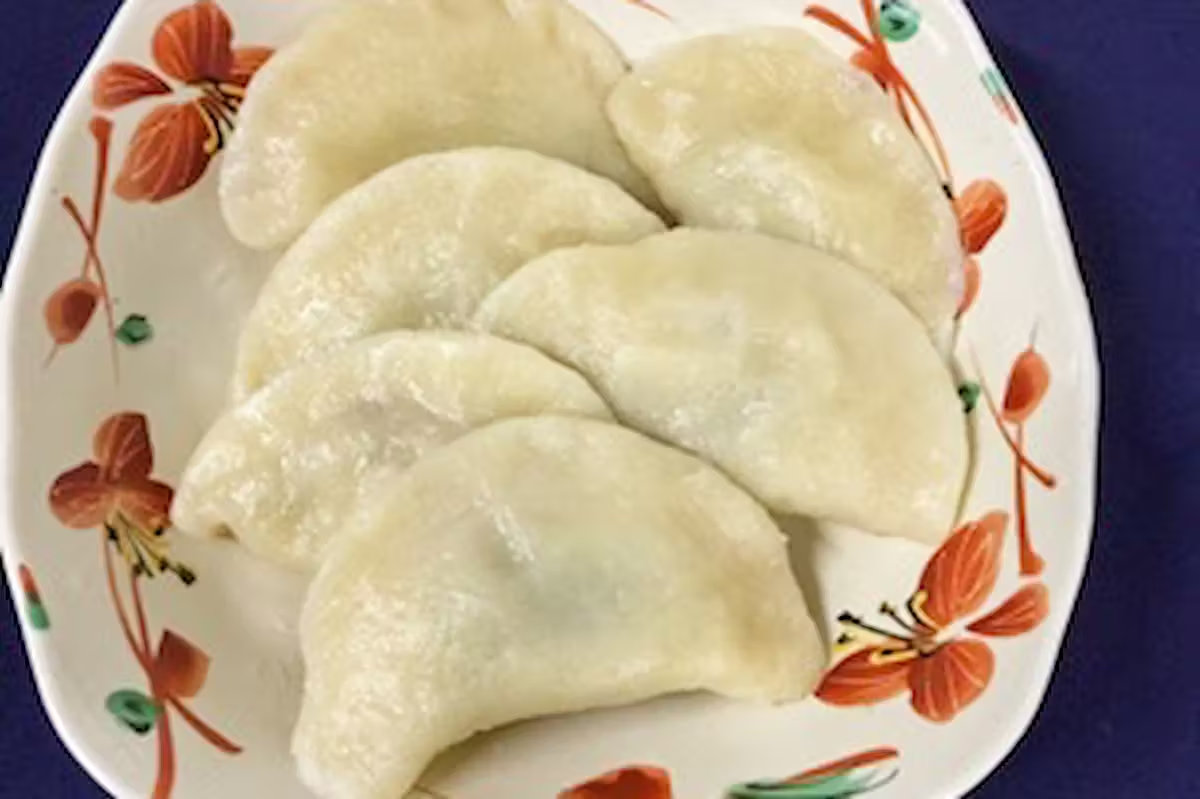

Kinka Mochi (きんかもち)
A half-moon wheat dumpling boiled until glossy, filled with black sugar, walnut, and miso. The name refers to gold coins, since sugar was once a luxury.
Read the Kinka Mochi guide →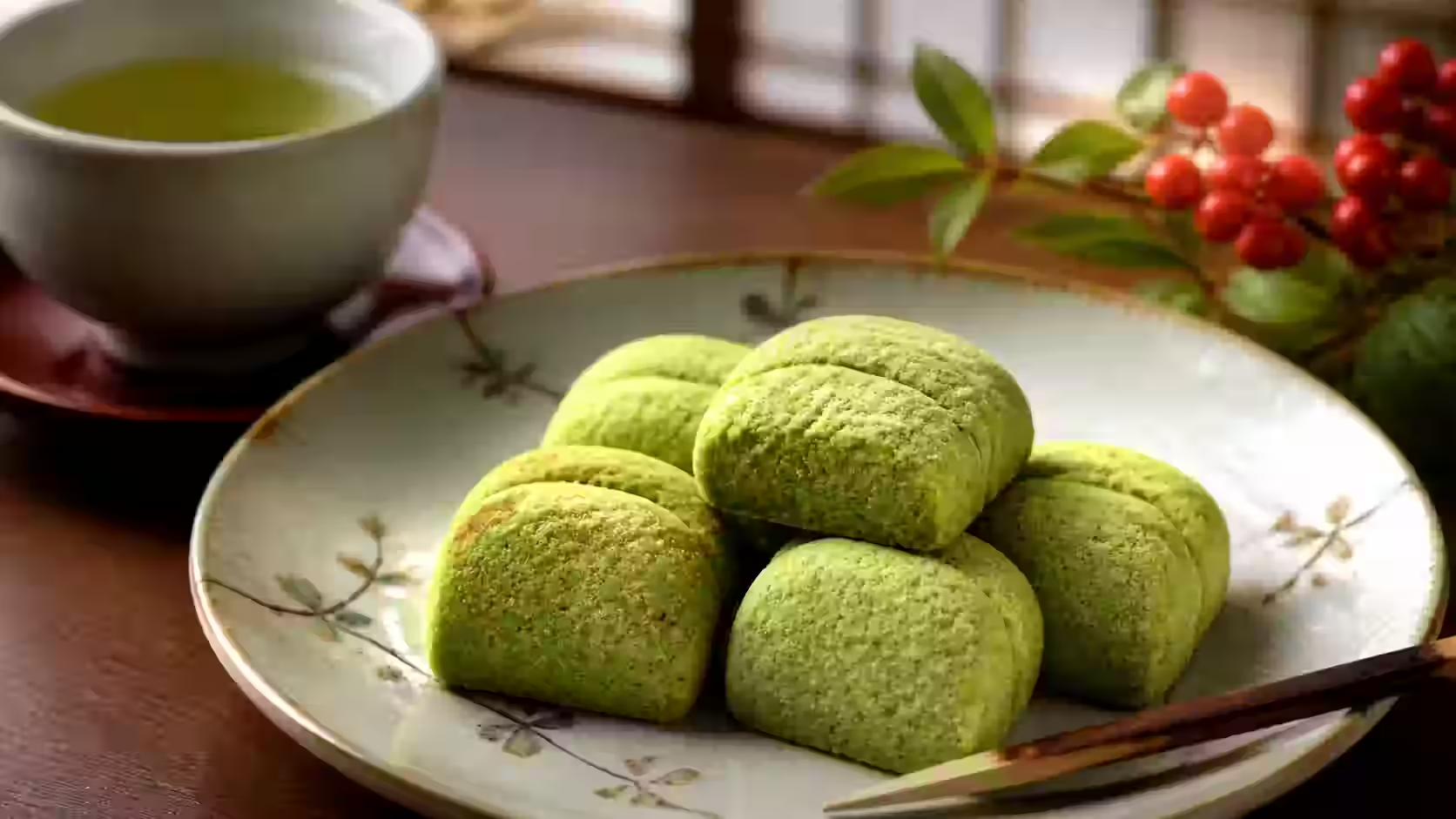

Mame Shitogi (まめしとぎ)
Mashed green soybeans and rice flour pressed into a soft, crumbly cake. Before it was ever a snack, it was a December offering to the harvest gods.
Read the Mame Shitogi guide →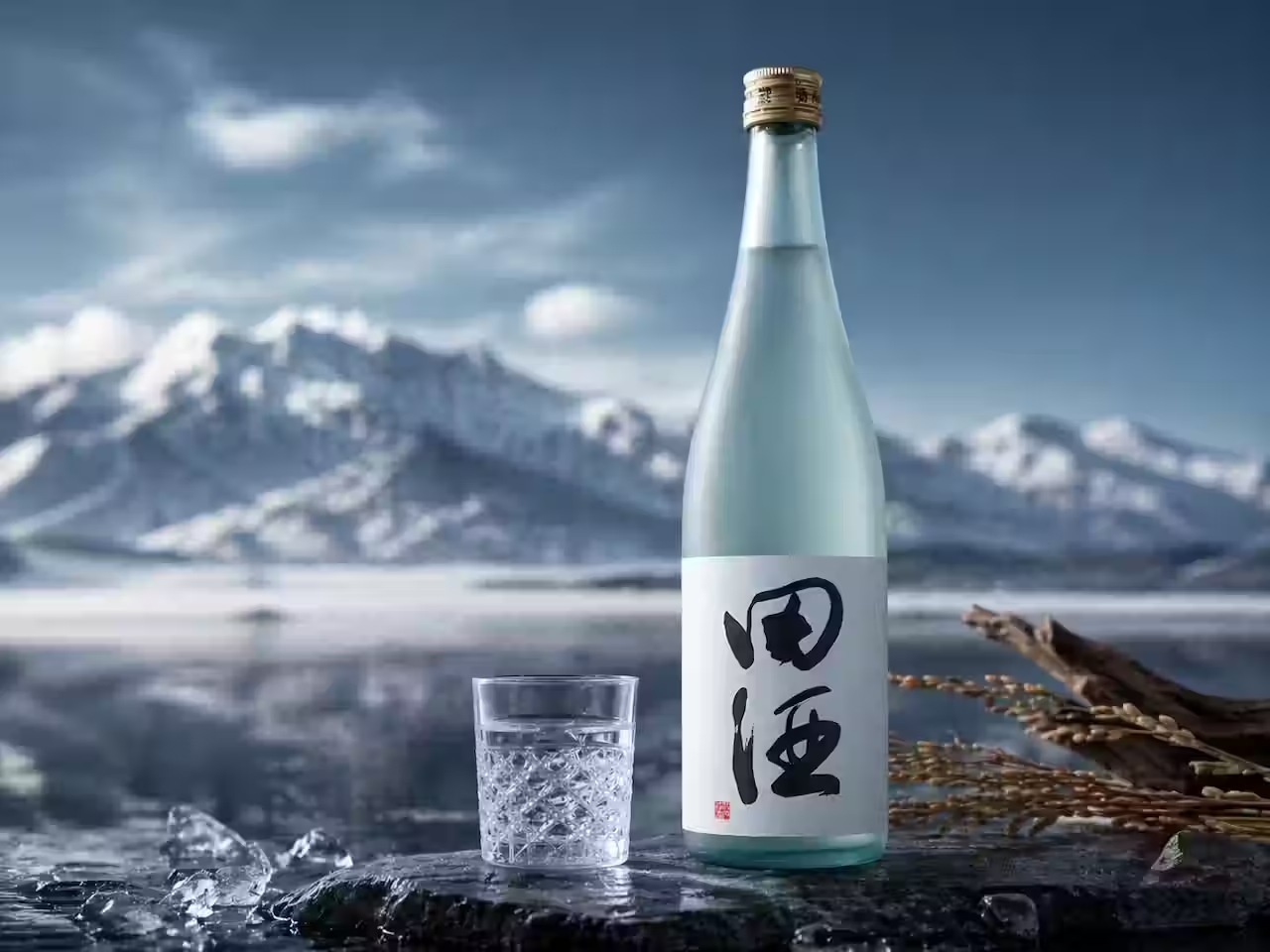

Aomori Sake (青森地酒)
Hard winters let brewers ferment slowly and cleanly at low temperatures. Today, Denshu and Mutsu Hassen lead a scene of around 17 breweries.
Read the Aomori Sake guide →
Aomori Food Guide: What to Eat by Season
Aomori is unusually seasonal even by Japanese standards, so timing changes the menu more than it does further south. Therefore, use the table below to match a visit to what is actually being served.
| Season | What to eat | Where it is strongest |
|---|---|---|
| Autumn-Winter Oct-Jan | Oma tuna at its fattest, ginger miso oden, kayaki miso, senbei jiru | Oma, Aomori City, Hachinohe |
| Spring Mar-May | Mutsu Bay scallops, mountain vegetables, spring squid | Hiranai, Mutsu Bay coast |
| Summer Jun-Aug | Ichigoni with sea urchin, grilled squid, Nebuta street food | Hachinohe, Aomori City |
| Autumn Sep-Nov | Apples at their peak, garlic, nagaimo yam, new-crop rice | Hirosaki, Takko, Towada |
| Late winter Feb-Mar | Stored Fuji apples, hot pot cooking, late-season cod | Tsugaru plain, Mutsu Bay |
| Year-round | Miso curry milk ramen, Towada barayaki, nokke-don bowls | Aomori City, Towada |
FlavorWhat Does Aomori Food Taste Like?
Aomori food tastes sweeter and saltier than the rest of Tohoku, and it makes no apology for it. Ginger miso sauce on oden, for example, is thick, sugary, and sharp all at once. Barayaki leans the same way, with onions collapsing into caramelised soy. Then there is the ramen. Miso, curry powder, and milk in one bowl sounds like a dare, and the first spoonful is genuinely disorienting. Give it four or five more. The curry rounds out, the milk softens the salt, and the whole thing settles into something oddly comforting. Ichigoni, by contrast, goes the other direction entirely, clean and briny, tasting mostly of the sea. Aomori swings between extremes, which is exactly what makes it memorable.
Where to EatAomori Food Guide by Area
The old Tsugaru and Nanbu boundary still runs through the middle of Aomori. Cross it, and the dialect, the festivals, and the food all change accordingly. Therefore, use this Aomori food guide to plan stops on both sides.
| Tsugaru (west) | Nanbu (east) | |
|---|---|---|
| Main cities | Aomori City, Hirosaki, Goshogawara | Hachinohe, Towada, Misawa |
| Staple base | Rice and apples | Wheat, buckwheat, and soybeans |
| Seafood from | Mutsu Bay and the Sea of Japan | The Pacific and the Sanriku grounds |
| Signature dishes | Kayaki miso, ginger miso oden, apple dishes | Senbei jiru, ichigoni, barayaki, mame shitogi |
| Historic domain | Tsugaru clan, castle at Hirosaki | Nanbu clan, based around Hachinohe and Morioka |
Aomori City (Tsugaru)
The Nebuta city and the prefecture’s dining hub. Furukawa Market, ginger miso oden stalls, and Mutsu Bay scallops all sit near the station.
Hirosaki (Tsugaru)
The apple capital and a former castle town. Orchards, cider makers, and an unusually deep cafe and apple pie culture define it today.
Tsugaru Coast & Shirakami
The Sea of Japan side below the Shirakami beech forest. Ajigasawa is locally known for whole roast chicken, and the coast for squid.
Hachinohe (Nanbu)
A major fishing port with senbei jiru, squid, and huge morning markets. Ichigoni comes from this stretch of the Pacific coast.
Towada & Misawa (Nanbu)
Inland ranch and farm country. Barayaki is the local obsession, while nearby Takko grows some of Japan’s best-known garlic.
Shimokita & Oma
The axe-shaped peninsula at the northern tip. Oma tuna, sea urchin, and dramatic coastline certainly reward the long drive.
On the GroundAomori Food Guide: Markets Worth Building a Morning Around
Aomori’s market culture is arguably the best in Tohoku, and two of these are experiences rather than shops. Each one runs on its own schedule, so timing matters more than usual.
Aomori City: Building Your Own Nokke-don
At Furukawa Market, officially the Aomori Gyosai Center, you assemble a seafood bowl yourself. First of all, buy the tickets. Booklets go on sale at the information desk. After that, exchange one ticket for a bowl of rice and walk the aisles, trading tickets for whatever you want on top. Roughly thirty shops take part, selling scallops, tuna, squid, salmon roe, and cooked side dishes as well. As of the May 2025 revision, a twelve-ticket booklet costs 2,200 yen and single tickets 190 yen. Nokke-don service runs from about 7:00 to 16:00, the market closes on Tuesdays, and it is a five to ten minute walk from Aomori Station. Finished bowls cannot be taken away, however, since everything is raw.
Hachinohe: Sunday at the Tatehana Wharf Morning Market
Hachinohe runs a Sunday morning market along the Tatehana wharf that is frequently described as one of the largest in Japan. It operates on Sundays only, from around mid-March through December, and stall counts in the hundreds are commonly reported. Expect seafood, produce, hot food, coffee, and, in addition, a fair amount of cheerful clutter that has nothing to do with food. Go at dawn rather than mid-morning, because stalls start closing early. Otherwise you will arrive to half-empty tables. For a wet-weather alternative, the indoor Hasshoku Center nearby lets you buy seafood and grill it yourself at a charcoal counter.
Oma: The Tuna Town at the End of the Road
Oma occupies the northernmost point of Honshu, facing Hokkaido across the Tsugaru Strait. Its fishermen catch bluefin one at a time on a single line, which is precisely why the fish command such extraordinary prices. Restaurants near the port serve Oma tuna at a fraction of Tokyo rates, though it is still not cheap. Peak fat, in particular, arrives late in the year. Reaching Oma takes real effort by road. Consequently, most visitors combine it with the Shimokita Peninsula rather than treating it as a day trip.
Plan Your TripAomori Food Guide: Access and Model Route
Getting to Aomori from Tokyo
The Tohoku Shinkansen reaches Shin-Aomori from Tokyo in about three hours on the fastest Hayabusa services. Hachinohe, meanwhile, comes earlier on the same line, at roughly two hours and forty-five minutes. From Shin-Aomori, a short local hop reaches Aomori Station, and the Ou Line continues to Hirosaki in about forty minutes. In addition, Aomori Airport and Misawa Airport connect to Tokyo, Osaka, and Sapporo. Renting a car matters more here than in most of Tohoku, especially for Oma and the Shirakami coast.
A One-Day Aomori City and Hirosaki Route
The Tsugaru side, in particular, packs the most food into a single day without a car. For example, here is a route that works on trains alone.
- Morning – Nokke-don at Furukawa Market.
Arrive by 8:00 while the selection is widest. Buy the twelve-ticket booklet and build a bowl around Mutsu Bay scallops.
- Late morning – Train to Hirosaki.
Take the Ou Line, roughly forty minutes. Walk the castle park, then find an apple pie shop.
- Lunch – Apple country.
Try local cider or an apple curry. In autumn, an orchard visit outside the city is worth the taxi fare.
- Afternoon – Back to Aomori City.
Stop at the Nebuta museum by the harbour, then pick up apple sweets and dried scallops as souvenirs.
- Evening – Ginger miso oden and sake.
Finish at an oden counter near the station. Order the ginger miso sauce and a flight of local sake.
IngredientsAomori Food Guide: Famous Ingredients
Apples and Orchard Fruit
Apples are the prefecture’s identity, and the 2024 harvest put Aomori at roughly 60 percent of the national crop. Fuji dominates the volume. Tsugaru, however, arrives in early autumn, while Orin brings a honeyed, aromatic finish. Hirosaki and the surrounding Tsugaru plain hold the densest concentration of orchards. Beyond the fresh fruit, the prefecture also produces cider, juice, vinegar, and confectionery at scale. Picking season generally runs from September into November.
Seafood from Three Coasts
Aomori leads Japan in farmed scallops and in squid landings, which explains how often both appear on local menus. Mutsu Bay scallops are the sweeter, smaller kind used in kayaki miso. The Tsugaru Strait produces the bluefin behind Oma tuna, while the Pacific coast supplies the sea urchin and abalone for ichigoni. Flatfish and shijimi clams, similarly, round out the list. Because the water stays cold, the texture tends to be firmer than seafood from further south.
Garlic, Yam, and Root Vegetables
Aomori grew roughly 67 percent of Japan’s garlic as of 2021, with the Fukuchi White variety prized for its large, snow-white cloves. Takko Town built the best-known brand. Even so, the crop is grown widely across the eastern half of the prefecture. Aomori also ranks first nationally for burdock and second for nagaimo yam. These roots store well through the long winter, which is precisely why the region still relies on them. Grated nagaimo over rice or soba, for instance, is a common everyday dish here.
Rice, Water, and Sake
Cold winters give Aomori brewers an advantage, since low temperatures allow slow and precise fermentation. Soft, low-iron snowmelt from the Hakkoda Mountains and the Shirakami range feeds both the paddies and the breweries. The prefecture bred its own sake rice, including Hanafubuki and Hanaomoi, and developed local yeasts to match. Around seventeen breweries operate across the Tsugaru and Nanbu sides today, and Aomori sake received its own GI designation in 2025. Denshu and Mutsu Hassen are the names to look for, and both pair naturally with Mutsu Bay scallops.
HistoryThe History of Aomori Food Culture
One Prefecture, Two Old Countries
Modern Aomori was assembled in 1871 from two rival domains. The Tsugaru clan governed the west and the Nanbu clan governed the east. Moreover, the two had a long history of hostility. Even now, their dialects differ enough that speakers sometimes struggle with each other. Food followed the same divide. Tsugaru cooking leans on rice, scallops, and apples, while Nanbu cooking leans on wheat, crackers, and Pacific seafood. Consequently, understanding that split explains almost every regional dish in the prefecture.
The Yamase and the Culture of Making Do
Cold summer winds from the Pacific, known as yamase, repeatedly destroyed rice crops on the Nanbu side. Famines struck hard in the Edo period. As a result, households turned to wheat, buckwheat, soybeans, and root vegetables instead. Nanbu senbei, a plain baked wheat cracker, subsequently became a staple that stored indefinitely. Dropping those crackers into a pot of broth then produced senbei jiru. Mame shitogi comes from the same instinct. When rice ran short for the traditional shitogi offering, farmers substituted green soybeans, and the December ritual carried the recipe forward for generations. Kinka mochi belongs to that world too. Its name refers to gold coins, because the brown sugar inside was once an expensive luxury, and households have made it for well over a century as an offering at Obon and New Year.
Apples, Ports, and Postwar Invention
Apple cultivation reached Aomori in the 1870s, when the new Meiji government distributed saplings to promote Western agriculture. The Tsugaru climate suited them, and within a few decades apples had reshaped the local economy.
Three Modern Dishes, All Younger Than They Look
The twentieth century then added its own layers. Ginger miso oden grew out of postwar stalls near Aomori Station that served travellers waiting for trains and ferries. Barayaki, similarly, emerged at a food stall outside the Misawa air base, at a time when cheap cuts of beef were all that was affordable.
Miso curry milk ramen traces to Kiyoshi Sato, who moved from Sapporo and opened a shop in Aomori City in 1968. The bowl itself is usually dated to around 1970. According to the story told locally, students asked him to combine the curry, milk, and miso bowls already on his menu. None of these dishes is ancient, therefore, yet all of them are now unmistakably Aomori.
Read NextExplore More Aomori Foods
- Aomori Apple (青森りんご) – the fruit that defines the prefecture
- Oma Tuna (大間マグロ) – Japan’s most valuable bluefin
- Senbei Jiru (せんべい汁) – crackers simmered into soup
- Ichigoni (いちご煮) – sea urchin and abalone soup
- Towada Barayaki (十和田バラ焼き) – beef and onions on the griddle
- Miso Curry Milk Ramen (味噌カレー牛乳ラーメン) – Aomori’s white ramen
- Kayaki Miso (貝焼き味噌) – scallop, egg, and miso in a shell
- Shoga Miso Oden (生姜味噌おでん) – oden with sweet ginger miso
- Grilled Squid (いかの鉄砲焼き) – squid stuffed with ginger miso
- Kinka Mochi (きんかもち) – the half-moon sweet and savory dumpling
- Mame Shitogi (まめしとぎ) – the Nanbu region’s ancient soybean slab
- Aomori Sake (青森地酒) – crisp sake from the far north
- Browse all Aomori foods
More RegionsExplore More Japanese Regional Food Guides
- Miyagi Food Guide – gyutan, zunda & Sanriku seafood
- Akita Food Guide – kiritanpo, Inaniwa udon & snow country cuisine
- Yamagata Food Guide – imoni, soba & the ramen capital
- Fukushima Food Guide – Kitakata ramen, kozuyu & peaches
- Tohoku Food – dishes from all six northern prefectures
- Discover Tohoku – 11 Japanese foods you need to taste
- Hokkaido Food Guide – dairy, seafood & miso ramen
- Japan Food Guide – complete overview of all regions
In conclusion, bookmark this Aomori food guide and explore each dish in depth through the articles above. Then build a route that crosses the old Tsugaru and Nanbu line at least once, because the two halves really do taste different.
FAQAomori Food Guide FAQ
Aomori Food Guide FAQ: What to Eat First
What food is Aomori most famous for?
Aomori is most famous for apples and for Oma bluefin tuna. Beyond those, senbei jiru, ichigoni, Towada barayaki, and miso curry milk ramen are the dishes locals name first. The prefecture also leads Japan in garlic, burdock, farmed scallops, and squid. Almost everything on that list is cheap except the tuna.
Why is Aomori famous for apples?
Aomori accounted for roughly 60 percent of Japan’s apple harvest in 2024, well ahead of Nagano in second place. Cultivation began in the 1870s when the Meiji government distributed saplings, and the Tsugaru climate proved ideal. Large day-to-night temperature swings concentrate sugar and acidity. The harvest runs from August through November, with Fuji the dominant variety.
What is Oma tuna and why is it so expensive?
Oma tuna is Pacific bluefin caught off Oma at the northern tip of Honshu, in the Tsugaru Strait. Fishermen there use single-line pole and hand-line methods, landing one fish at a time and handling it carefully. The strait’s strong currents and rich feeding produce dense, fatty meat. The fishing season runs from roughly August to early January, and the fish carry the most fat from autumn into winter. Oma tuna regularly sets the headline price at Tokyo’s first auction of the year, which has pushed the brand’s reputation far beyond what most restaurants actually charge.
Aomori Food Guide FAQ: Nanbu and Tsugaru Classics
What is senbei jiru?
Senbei jiru is a soup from the Hachinohe area with Nanbu wheat crackers simmered directly in the broth. The crackers are a special type made for cooking, so they turn chewy rather than dissolving. Chicken, pork, mushrooms, and vegetables usually flavor the base. The dish grew out of the Nanbu region’s reliance on wheat after repeated rice crop failures.
What is ichigoni, and why is it called stewed strawberries?
Ichigoni is a clear soup of sea urchin and abalone from Aomori’s Pacific coast. The name comes from appearance rather than ingredients, because pale sea urchin floating in the cloudy broth was said to resemble wild strawberries. It is a celebration dish, served at weddings and festivals. Summer is the season, when sea urchin is at its best.
What is miso curry milk ramen?
Miso curry milk ramen combines miso broth, curry powder, and milk in a single bowl, usually finished with butter and wakame seaweed. Locals also call it white ramen. The commonly told origin story places it in Aomori City in the 1970s, and today it is served across the prefecture. The milk softens the salt and the curry adds depth, so the result tastes far more balanced than the description suggests.
Aomori Food Guide FAQ: Markets and Seafood
What is nokke-don and how does it work?
Nokke-don is a build-your-own seafood bowl at Furukawa Market in Aomori City. You buy a booklet of meal tickets, trade one for a bowl of rice, then walk about thirty shops exchanging tickets for toppings. Following the May 2025 price revision, a twelve-ticket booklet costs 2,200 yen and single tickets 190 yen. Service runs roughly 7:00 to 16:00, and because the market closes on Tuesdays, check before going.
What is the difference between Tsugaru and Nanbu food?
Tsugaru covers western Aomori, including Aomori City and Hirosaki, and its cooking centers on rice, apples, and Mutsu Bay scallops. Nanbu covers the east, including Hachinohe, Towada, and Misawa, and relies more on wheat, crackers, and Pacific seafood. The two were separate domains until 1871 and still speak noticeably different dialects. Senbei jiru and ichigoni are Nanbu dishes, whereas kayaki miso and ginger miso oden belong to Tsugaru.
What seafood is Aomori known for?
Aomori ranks first in Japan for farmed scallops and for squid landings, according to national agriculture and fisheries statistics. Mutsu Bay scallops are the sweet, smaller kind used in kayaki miso, while Hachinohe built its economy on squid. The prefecture also produces flatfish, sea urchin, abalone, and shijimi clams. Cold water, moreover, keeps the texture firmer than seafood from further south.
How many days do I need in Aomori?
Two days covers Aomori City and Hirosaki comfortably, which is enough for the market, the apple country, and a proper oden dinner. Add a third day for the Hachinohe side, and remember that the wharf morning market only runs on Sundays. Reaching Oma realistically needs a fourth day and a rental car. In short, distances inside Aomori are longer than most visitors expect.
Aomori Food Guide FAQ: Travel, Seasons, and Costs
How do I get to Aomori from Tokyo?
The Tohoku Shinkansen reaches Shin-Aomori in about three hours on the fastest Hayabusa services, with Hachinohe roughly fifteen minutes earlier. From Shin-Aomori, a short local train reaches Aomori Station, and Hirosaki is about forty minutes away on the Ou Line. Aomori and Misawa airports also serve Tokyo and other major cities. For Oma and the Shirakami coast, however, a rental car helps considerably.
What is the best season to eat in Aomori?
Autumn is the strongest all-round season, since apples, garlic, nagaimo, and new-crop rice all arrive together. Winter, by contrast, brings Oma tuna, ginger miso oden, and hot pot cooking at their peak. Summer means sea urchin for ichigoni and the enormous Nebuta festival in early August. Spring is quieter, though still excellent for Mutsu Bay scallops.
How much does Aomori food cost, and what should I buy as a souvenir?
Aomori is inexpensive by Japanese standards. As of July 2026, a nokke-don bowl typically lands between 1,500 and 2,500 yen depending on how many tickets you use, and a bowl of ramen runs around 800 to 1,000 yen. Oma tuna is the obvious exception, since it can cost several thousand yen for a small serving. For souvenirs, apple sweets and juice, dried scallops, Nanbu senbei, and local sake all travel well.
SourcesReferences
- Ministry of Agriculture, Forestry and Fisheries, Our Regional Cuisines – Kinka Mochi, Aomori. maff.go.jp (Surveyed: July 2026)
- Ministry of Agriculture, Forestry and Fisheries, Our Regional Cuisines – Kaiyaki Miso, Aomori. local-cuisine.maff.go.jp (Surveyed: July 2026)
- Ministry of Agriculture, Forestry and Fisheries, Uchi no Kyodo Ryori (Local Dishes of Japan) – Shoga Miso Oden, Aomori. maff.go.jp (Surveyed: July 2026)
- Ministry of Agriculture, Forestry and Fisheries, Prefectural Agriculture, Forestry and Fisheries Overview (Aomori) – national rankings for apples, garlic, burdock, farmed scallops, and squid. maff.go.jp (PDF) (Surveyed: July 2026)
- Aomori Prefectural Government, FAQ on vegetables ranked first nationally – garlic at 67 percent and burdock at 39 percent of national output. pref.aomori.lg.jp (Surveyed: July 2026)
- Aomori Prefectural Government, Agriculture, Forestry and Fisheries overview. pref.aomori.lg.jp (Surveyed: July 2026)
- Aomori Apple Council, Aomori Apple Production Statistics. aomori-ringo.or.jp (Surveyed: July 2026)
- Aomori Prefectural Government, Aomori Apple annual report (PDF). pref.aomori.lg.jp (PDF) (Surveyed: July 2026)
- Amazing AOMORI, official Aomori Prefecture tourism site – Aomori Gyosai Center and nokke-don ticket prices, hours, and closing days. aomori-tourism.com (Surveyed: July 2026)
- Ganso Aomori Nokkedon, official site – how the ticket system works and participating shops. nokkedon.jp (Surveyed: July 2026)
Editorial Note and Sourcing
About this guide. Food in Japan is an English-language reference to Japanese regional food, written and edited in Japan. This Aomori food guide draws on the individual dish articles linked throughout, cross-checked against the public sources listed above.
What is verified and what is not. Production rankings, the apple harvest share, garlic and burdock figures, and the nokke-don ticket system and prices come from the government and official tourism sources listed above, with the year stated where the figure is dated. Origin stories for miso curry milk ramen, barayaki, and ginger miso oden are the accounts commonly given locally, and are presented as such rather than as documented fact. Stall counts and size claims for the Tatehana Sunday market are widely reported but not drawn from an official count. Descriptions of taste and texture, by contrast, are editorial judgement.
Prices, hours, and seasons. Figures were checked in July 2026 and are typical ranges, not quotes. Market opening days and morning market seasons shift with weather and festivals, particularly around Nebuta in early August. Therefore, confirm with the market or local tourism association before travelling.
Corrections. If you spot an error, please get in touch through the contact page. This guide is updated when its content is re-checked, not on a fixed schedule.