







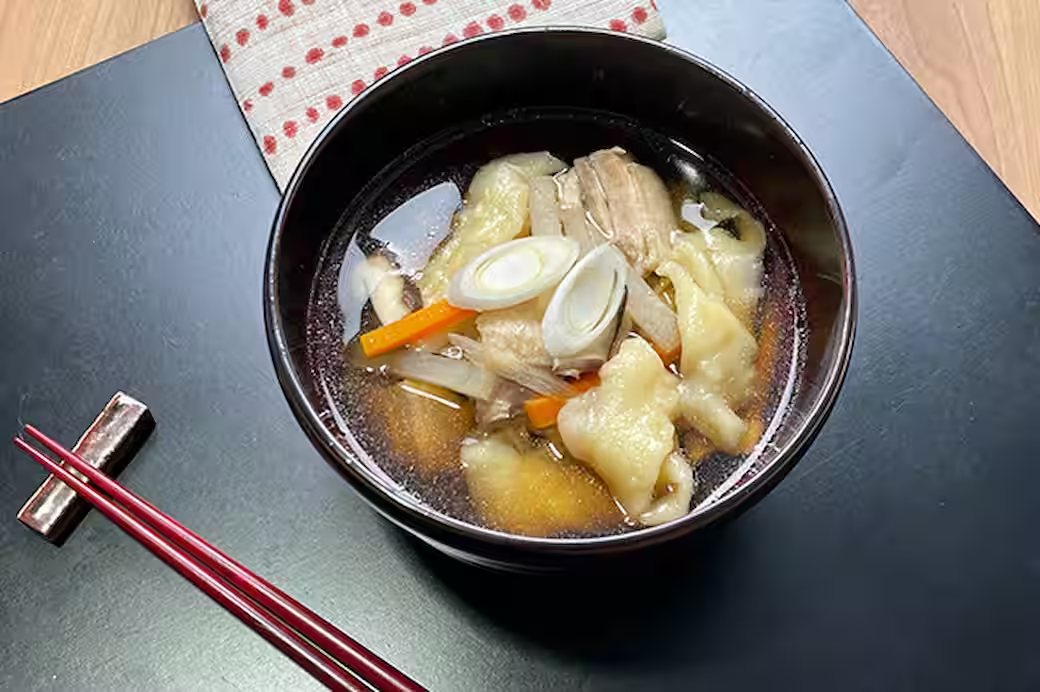
Hittsumi (ひっつみ) is a traditional dumpling soup from Iwate Prefecture. Cooks tear wheat-flour dough by hand and simmer it with chicken, root vegetables, mushrooms, and soy-based broth. The dish is known for its soft, chewy texture and warming flavor, and it remains a staple of home cooking across Tohoku.
What Is Hittsumi?
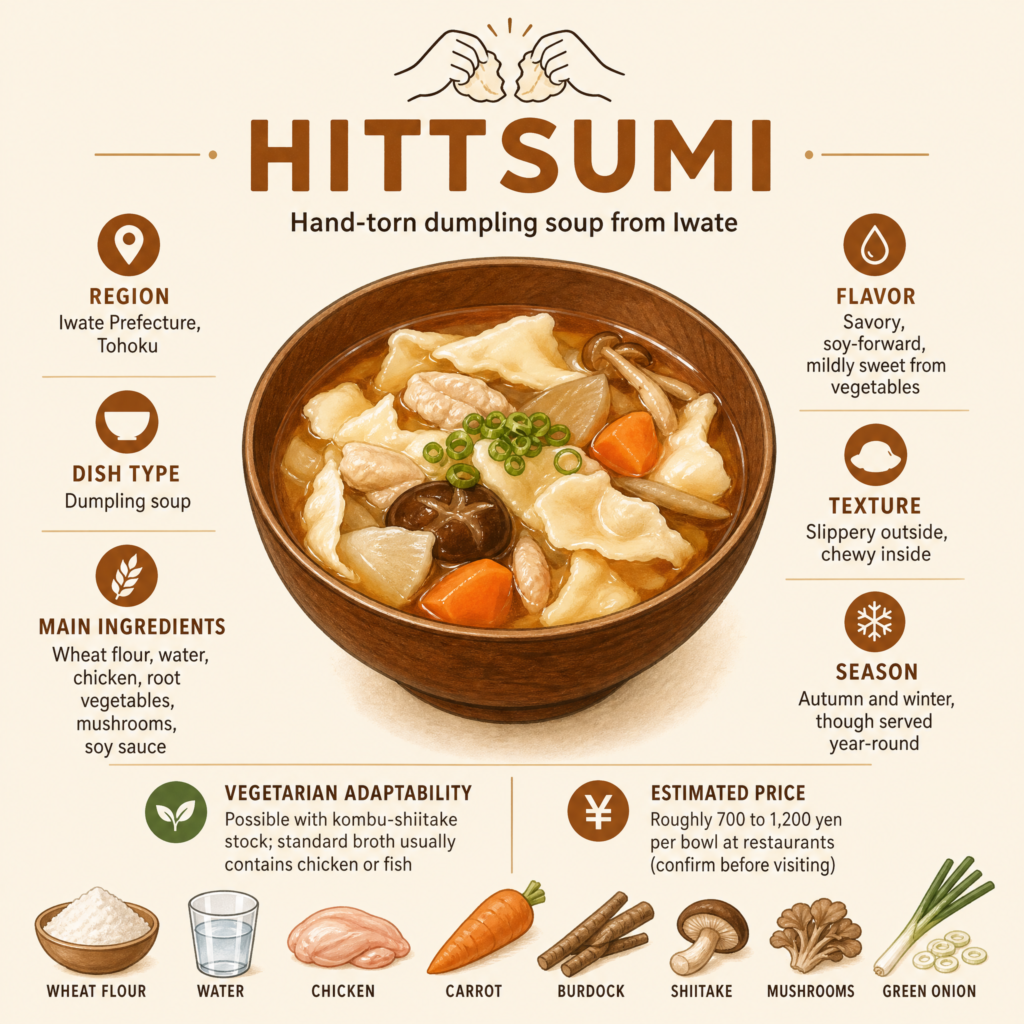
Hittsumi is a hand-torn dumpling soup native to Iwate Prefecture in northern Japan. Home cooks knead wheat flour and water into dough, tear it by hand, and simmer it in a chicken and soy-based broth with root vegetables and mushrooms. Ingredients shift by region and household, but the soft, chewy dumpling stays the constant.
The name comes from the regional verb “hittsumu,” meaning to tear by hand. Unlike noodles that are cut with a knife, hittsumi dumplings are pulled apart into thin, irregular pieces. That rustic shape is actually the point. It helps the dough cook evenly and soak up the broth.
| Region | Iwate Prefecture, Tohoku |
| Dish type | Dumpling soup |
| Main ingredients | Wheat flour, water, chicken, root vegetables, mushrooms, soy sauce |
| Flavor | Savory, soy-forward, mildly sweet from vegetables |
| Texture | Slippery outside, chewy inside |
| Typical season | Autumn and winter, though served year-round |
| Estimated price | Roughly 700 to 1,200 yen per bowl at restaurants (confirm before visiting) |
| Vegetarian adaptability | Possible with kombu-shiitake stock; standard broth usually contains chicken or fish |
Curious travelers can compare hittsumi with traditional foods from Iwate to see how the prefecture’s noodle and dumpling culture fits together.
What Does Hittsumi Taste Like?
The dough itself tastes mild. It’s thin, irregular, soft, and a little slippery on the tongue, with a chewy bite underneath. The broth carries most of the flavor instead. It’s clean, savory, and soy-forward, enriched by chicken fat or whatever seasonal ingredient the cook adds that day.
Burdock root gives the broth an earthy, slightly bitter edge that many first-time eaters notice right away. Mushrooms add depth, and root vegetables soften into the soup until they nearly melt. Every household seasons it a bit differently, so no two bowls taste exactly alike.
Hittsumi vs Suiton vs Hatto vs Udon
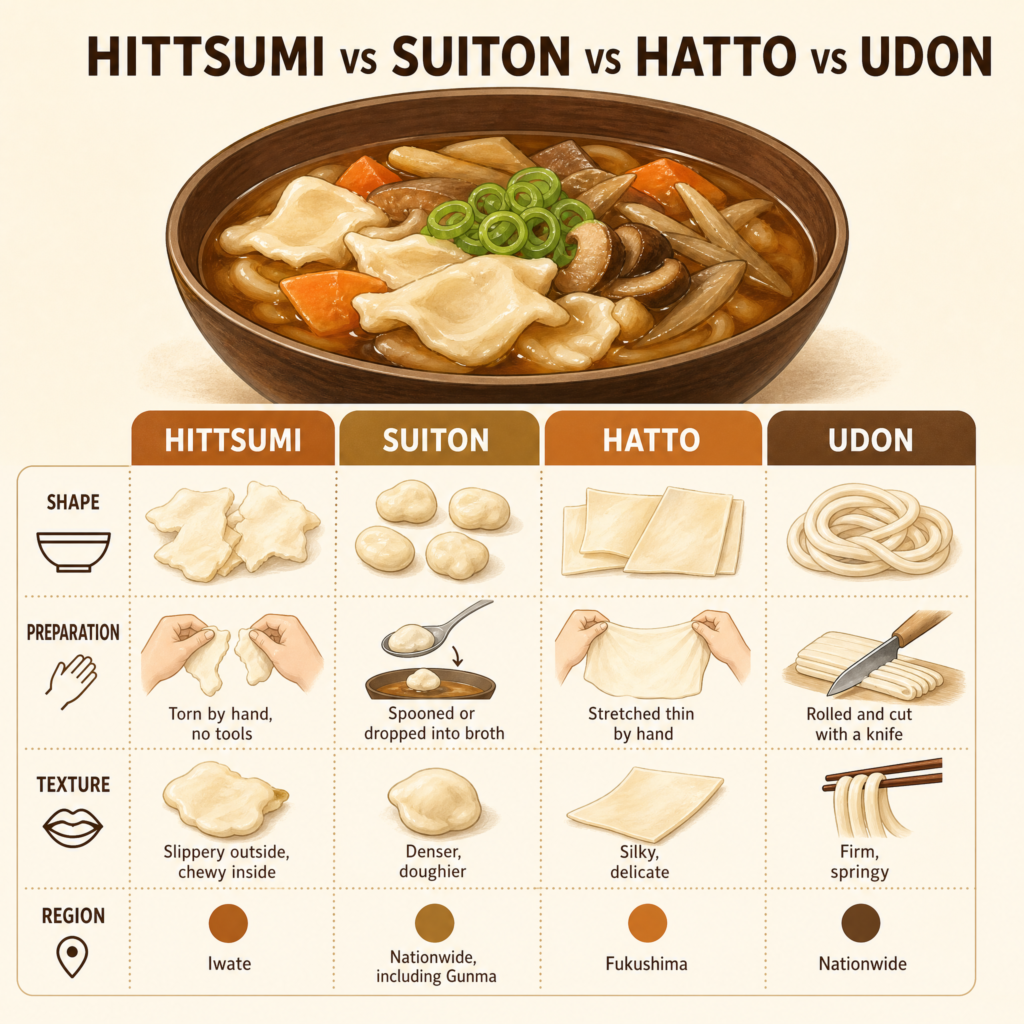
People often mix up hittsumi with suiton, hatto, and udon, since all four use wheat flour dough. The differences come down to shape, technique, and where each dish comes from.
| Dish | Dough Shape | Preparation Method | Texture | Region |
|---|---|---|---|---|
| Hittsumi | Thin, irregular torn pieces | Torn by hand, no tools | Slippery outside, chewy inside | Iwate |
| Suiton | Small, rounded dumplings | Spooned or dropped into broth | Denser, doughier | Nationwide, including Gunma |
| Hatto | Flat, hand-stretched sheets | Stretched thin by hand | Silky, delicate | Fukushima |
| Udon | Long, cut noodles | Rolled and cut with a knife | Firm, springy | Nationwide |
Hittsumi and suiton look similar at a glance, but the tearing technique sets hittsumi apart. Suiton from Gunma uses rounder, spooned dumplings, while hittsumi stays flatter and thinner by design.
History of Hittsumi in Iwate
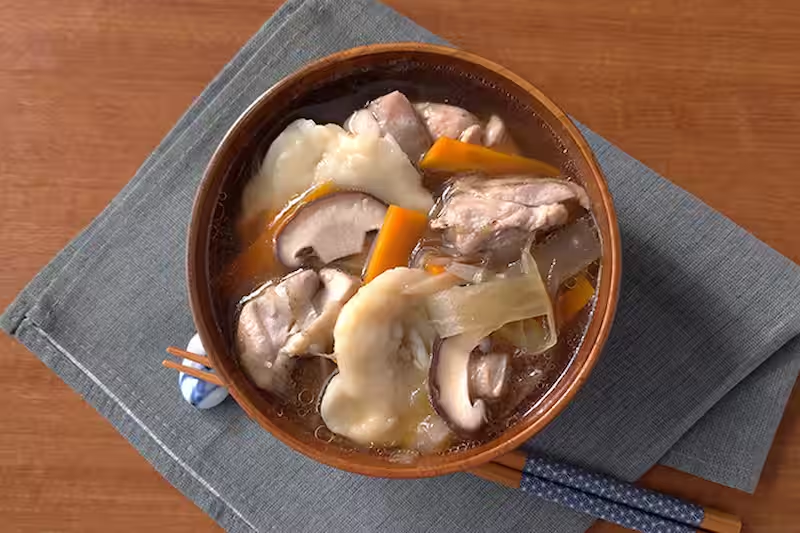
Iwate’s cold summer winds often damaged rice crops in past centuries. Farmers turned to wheat and buckwheat instead, since both crops handled the chill better than rice. Hittsumi grew out of that struggle. It required no rolling pin, no cutting board, and no special equipment, just flour, water, and hands.
The dish connects to a wider regional tradition sometimes called shito-nemono, the practice of kneading flour with water to stretch a rice harvest further. When rice ran short, families relied on wheat-based dishes like this one to fill the gap. Over time, hittsumi shifted from a survival food into a dish families genuinely looked forward to.
Today, Iwate still treats hittsumi as an everyday family dish. People serve it at dinners, farm-work gatherings, community events, and cold-weather meals, not just as something for tourists to try once.
A Living Tradition Every December 3rd
The Iwate Fresh Noodle Cooperative Association established December 3rd as “Hittsumi Day” to promote the dish nationwide. The date plays on a Japanese number pun, since 1-2-3 can be read as “hi-fu-mi,” which sounds close to “hittsumi.” Most households still make the classic chicken and vegetable version on this day. Some cooks experiment with curry or tomato broth instead, though the hand-torn dough stays the same no matter the flavor.
Regional Variations
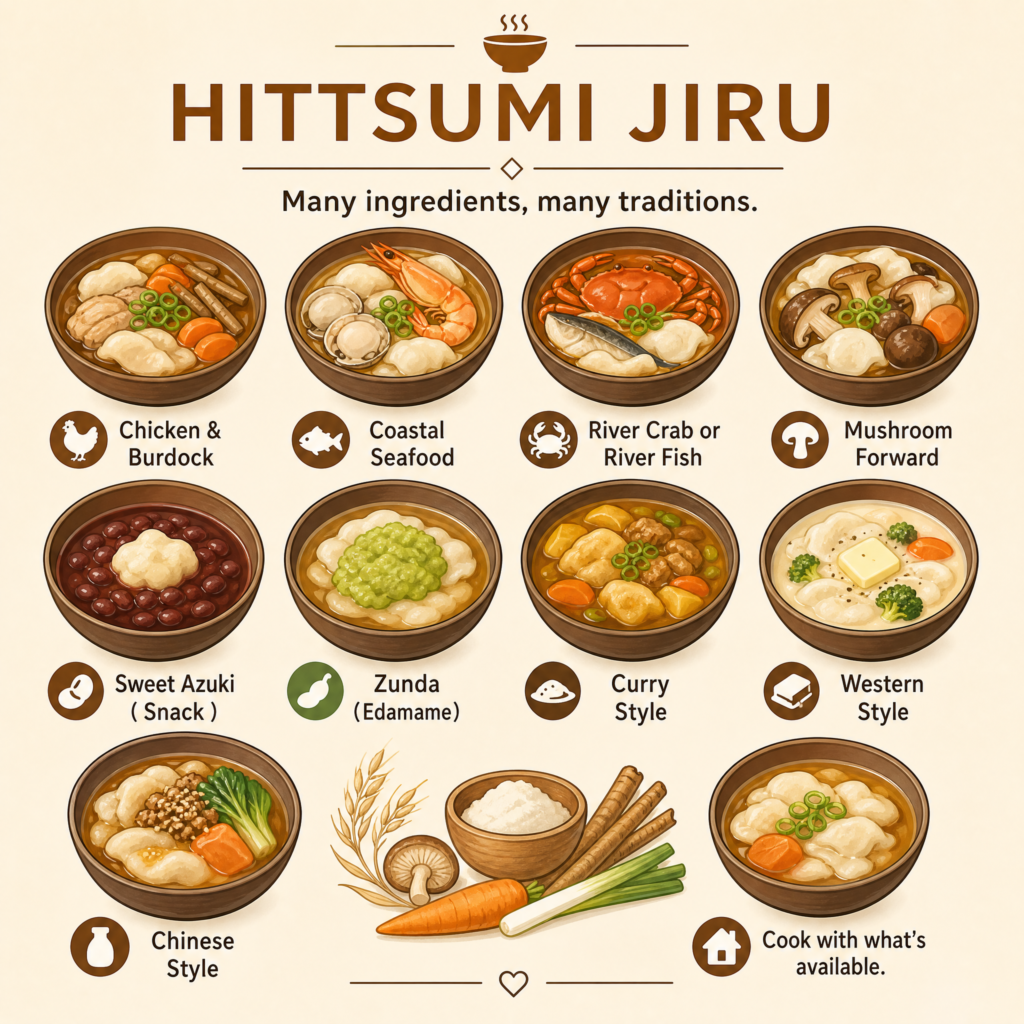
Ingredients differ by household and region, and coastal towns cook hittsumi quite differently from inland areas. Inland families often lean on chicken, river fish, mushrooms, or root vegetables, while coastal versions bring in local seafood instead.
- Chicken and burdock, the most common inland version
- Coastal seafood versions using local catch
- River crab or river fish broth in mountain areas
- Mushroom-forward bowls, sometimes featuring matsutake in autumn
- Sweet azuki bean versions served as a snack rather than a meal
- Zunda, made with mashed edamame, for a lightly sweet twist
- Curry-flavored hittsumi, a modern household experiment
- Western-style versions with butter or cream
- Chinese-style versions seasoned with sesame oil or soy paste
None of these count as the single correct version. Iwate families simply cook with what’s available, and that flexibility is part of why the dish has lasted so long.
How Is Hittsumi Made?
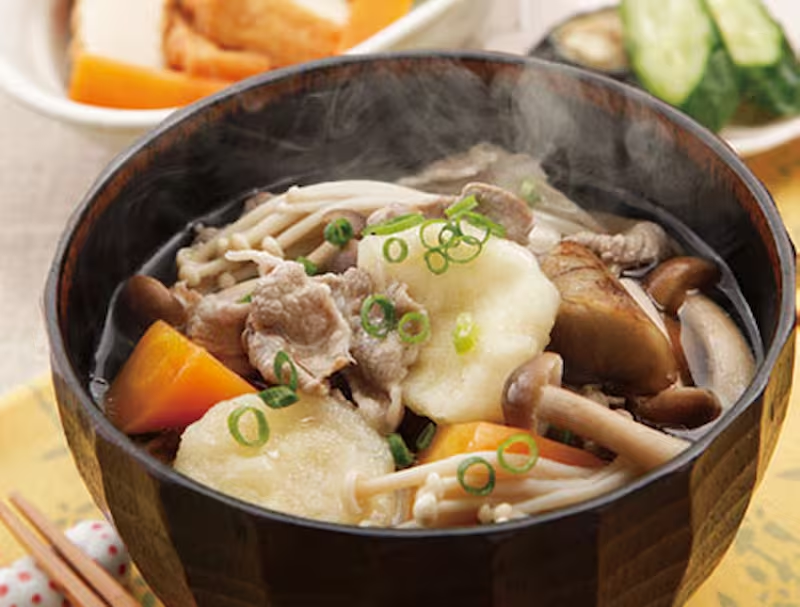
Ingredients
Dough
- All-purpose wheat flour, 300g (about 2.5 cups)
- Water, 150ml (about 2/3 cup), room temperature
- Salt, a small pinch
Soup
- Dashi stock, 1.2 liters (about 5 cups); substitute kombu-shiitake stock for a vegetarian version
- Soy sauce, 3 tablespoons
- Sake, 2 tablespoons (optional)
- Chicken thigh, 200g, sliced thin; substitute tofu or extra mushrooms for a vegetarian bowl
Vegetables
- Carrot, 1 medium, sliced
- Burdock root, 1 small, shaved thin
- Shiitake mushrooms, 4 to 6, sliced
- Green onion, 2 stalks, sliced
Optional toppings
- Shichimi togarashi (seven-spice blend)
- Grated ginger
- A splash of extra soy sauce
Method
- Mix. Combine flour, water, and salt in a bowl until a rough dough forms.
- Knead. Knead the dough thoroughly for about five minutes, until it feels smooth and slightly elastic, close to the softness of an earlobe.
- Rest. Cover the dough and let it rest for one to two hours. Resting develops the gluten, which gives hittsumi its thin yet pleasantly firm texture. Skipping this step leaves the dough weak and prone to tearing apart in the broth.
- Prepare the broth. Bring dashi to a simmer. Add soy sauce, sake, chicken, carrot, and burdock. Simmer for about ten minutes until the vegetables soften.
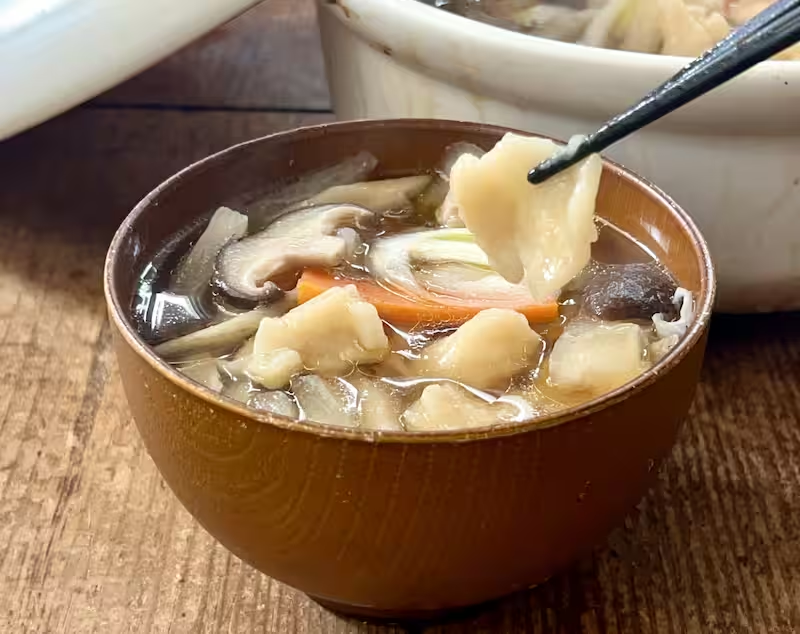
- Tear and simmer. Pull off thin, bite-sized pieces of dough, roughly five centimeters across, directly over the pot and drop them into the simmering broth. Add the shiitake mushrooms at the same time. Simmer for five to seven minutes.
- Season and serve. Taste the broth and adjust with extra soy sauce if needed. Stir in green onion just before serving and ladle into bowls while hot.
Watch for a simple doneness cue. The torn dough pieces rise toward the surface as they cook. Still, cut into the thickest piece before serving to make sure no raw flour remains in the center.
Troubleshooting
| Problem | Likely Cause | Fix |
|---|---|---|
| Dough tears too easily | Not enough resting time | Rest the dough longer, up to two hours |
| Dough feels sticky | Too much water | Add a little flour and knead again |
| Dumplings too thick | Pieces torn too large | Stretch each piece thinner before dropping it in |
| Cloudy broth | Boiling too vigorously | Lower the heat to a gentle simmer |
| Weak flavor | Not enough soy sauce or dashi concentration | Add soy sauce gradually and taste as you go |
| Overcooked vegetables | Added too early | Add delicate vegetables closer to the end of cooking |
Readers with wheat allergies should know that hittsumi dumplings contain wheat gluten by nature, and soy sauce may also contain wheat. Anyone with a gluten allergy should verify every broth and seasoning before eating, since recipes vary by household and restaurant.
Leftover hittsumi keeps in the refrigerator for about two days. Freezing works better for the dough alone rather than the finished soup, since frozen broth can separate slightly once reheated.
Where Can You Eat Hittsumi?
Hittsumi-tei (ひっつみ亭)
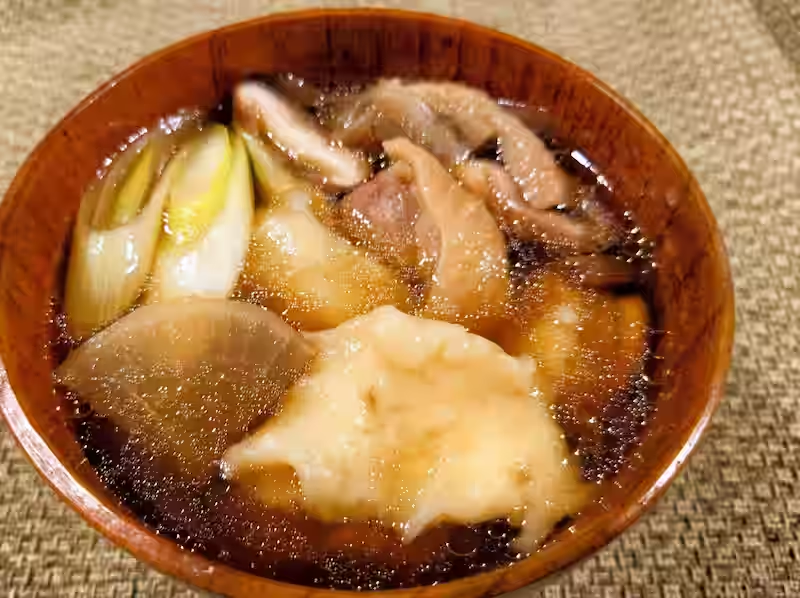
Hittsumi-tei sits in Morioka City and offers one of the most traditional settings for trying this dish. The building looks like an old farmhouse, with straw tatami mats and a quiet garden view. Cooks here still tear the dough by hand rather than using shortcuts, which gives the dumplings a gentler, more natural texture.
A bowl typically runs somewhere between 700 and 1,200 yen at sit-down restaurants like this one, though prices shift with ingredients and season. Packaged souvenir versions sold at train stations or supermarkets tend to cost less, since they skip the fresh vegetables and dine-in service. Always check current menu prices before visiting, since these figures can change.
More Iwate Comfort Foods to Try
Hittsumi isn’t the only dish that defines Iwate’s food culture. Another traditional Iwate flour-based dish, wanko soba, uses buckwheat noodles rather than hand-torn wheat dough, so the texture and eating style differ quite a bit. For something heartier, Morioka’s chewy mixed noodles bring a completely different, brothless experience to the table. Coastal visitors might also enjoy a warming Sanriku winter hot pot known as donko nabe.
Final Thoughts
Hittsumi carries the story of a region that adapted to hard winters and thin harvests. It started as a practical way to stretch a wheat crop, and somehow it became a dish families genuinely crave. The dough’s irregular shape and the broth’s quiet, soy-forward flavor still feel honest in a way polished dishes sometimes don’t.
If you enjoy this kind of warming, chewy comfort food, you might also like Suiton, Senbei-jiru, and Hatto, three more Japanese soups built around simple wheat dough.
Hittsumi FAQ
What is Hittsumi?
Hittsumi is a traditional dumpling soup from Iwate Prefecture, made by tearing wheat-flour dough by hand and simmering it in a soy-based broth. Cooks usually add chicken, root vegetables, and mushrooms, though ingredients vary by household. The dish has roots in Iwate’s cold-climate farming history, when wheat replaced rice during poor harvests. Today it remains a common family meal rather than a rare specialty.
How does it differ from suiton?
The main difference lies in the dough shape and technique. Hittsumi uses thin, irregular pieces torn directly by hand, which gives it a flatter, more delicate texture. Suiton dumplings are usually rounder and spooned into the broth instead of torn. Suiton also tends to come from other regions, including Gunma, while hittsumi is specific to Iwate.
What does it taste like?
The dumplings themselves taste mild, with a soft, slippery, chewy bite. Most of the flavor comes from the broth, which tastes clean, savory, and soy-forward. Chicken adds richness, and root vegetables like burdock bring a slightly earthy note. Since every household seasons it a little differently, the taste can shift noticeably from one bowl to the next.
Is it vegetarian?
Standard versions usually aren’t vegetarian, since most broths include chicken or dried fish. A vegetarian version is possible using kombu-shiitake stock and tofu or extra mushrooms instead of meat. Restaurant broths often contain animal products even when the menu doesn’t say so clearly. Vegetarian travelers should ask directly or cook it at home to control every ingredient.
Can it be frozen?
The raw dough freezes reasonably well for later use. The finished soup doesn’t freeze as cleanly, since the broth can separate slightly after thawing. For best results, freeze the torn dough pieces separately and make fresh broth when you’re ready to cook. Leftover finished soup keeps in the refrigerator for about two days.
Where can you eat it in Iwate?
Morioka City has several restaurants serving traditional hittsumi, including Hittsumi-tei, which prepares the dough by hand in a farmhouse-style setting. Supermarkets and train station shops across Iwate also sell packaged versions for a quicker option. Prices at sit-down restaurants generally range from 700 to 1,200 yen per bowl, though this shifts by location and season.
How do you prevent tough dumplings?
Resting the dough is the most important step for a soft, chewy result. Skipping the rest period, or cutting it too short, leaves the dough tight and rubbery once cooked. Tearing the pieces thin also helps them cook through evenly without turning dense. Simmering gently, rather than boiling hard, keeps the texture tender as well.
References
- Ministry of Agriculture, Forestry and Fisheries of Japan — Regional Cuisine of Iwate Prefecture: Hittsumi (Surveyed: July 2026)
- TABERUKOTO Japan Local Food Map — Local Food of Iwate: Hittsumi (Surveyed: July 2026)
- Japan Travel — Iwate: Food Guide (Surveyed: July 2026)
Related Articles
- Iwate Food Guide (Surveyed: July 2026)
- Wanko Soba (Surveyed: July 2026)
- Morioka Jajamen (Surveyed: July 2026)
- Donko Nabe (Surveyed: July 2026)
- Suiton (Surveyed: July 2026)
- Hatto (Surveyed: July 2026)



Comments