




Yamagata Food Guide
Ramen Capital · Soba Holy Land · Fruit Kingdom
Welcome to the complete Yamagata food guide from Food in Japan. This is the prefecture that spends more on ramen than anywhere else in Japan, and it invented a version served ice cold. Every autumn, thousands gather on a riverbank to cook imoni stew in a pot six meters wide. Add 70 percent of Japan’s cherries, prized Yonezawa beef, and a UNESCO gastronomy city, and one truth emerges. In short, this Yamagata food guide covers a prefecture that eats extremely well.
| Prefecture | Yamagata (山形県) |
|---|---|
| Region | Tohoku, on the Sea of Japan side |
| Food Identity | Ramen culture, soba tradition, fruit farming, mountain cuisine |
| Famous Dishes | Imoni, ita soba, hiyashi ramen, Yonezawa beef, dashi |
| Signature Flavor | Sweet soy imoni broth and clean chilled dashi |
| Key Ingredients | Cherries, La France pears, taro, konnyaku, sansai vegetables |
| Sake Culture | Home of GI Yamagata and the legendary 14dai |
| Best Food Areas | Yamagata City, Yonezawa, Sagae, Tsuruoka, Sakata, Ginzan |
IdentityWhat Makes Yamagata Food Unique?
Japan’s Ramen Capital
Yamagata City regularly tops national household surveys for ramen spending. Shops crowd every neighborhood, and locals treat a bowl as an everyday meal rather than a treat. The obsession even produced hiyashi ramen, a full bowl of chilled soy sauce broth invented here in 1952. On the coast, meanwhile, Sakata ramen keeps its own hand-kneaded wonton tradition alive. As a result, ramen fans can eat differently in every corner of the prefecture.
The Holy Land of Soba
Yamagata calls itself the holy land of soba, and the claim holds up. Farmhouse restaurants serve ita soba, dark buckwheat noodles piled in a shallow cedar box for sharing. Several routes through the countryside are officially branded soba kaido, or soba highways. Because the noodles use unpolished buckwheat, they taste nuttier and chew firmer than city soba. Locals therefore judge a shop by aroma before flavor.
Fruit Kingdom and Mountain Cuisine
Yamagata grows roughly 70 percent of Japan’s cherries and most of its La France pears. Summer means Sato Nishiki season, when orchards fill with visitors. The mountains contribute just as much, from sansai wild vegetables to edible chrysanthemum dishes. Tsuruoka, moreover, became Japan’s first UNESCO Creative City of Gastronomy in 2014. Few prefectures balance farm, mountain, and sea so evenly.
Must-TryYamagata Food Guide: Must-Try Dishes
Yamagata’s essential dishes range from riverside autumn stews to premium wagyu. First of all, start with these signature names.
Signature Dishes in This Yamagata Food Guide
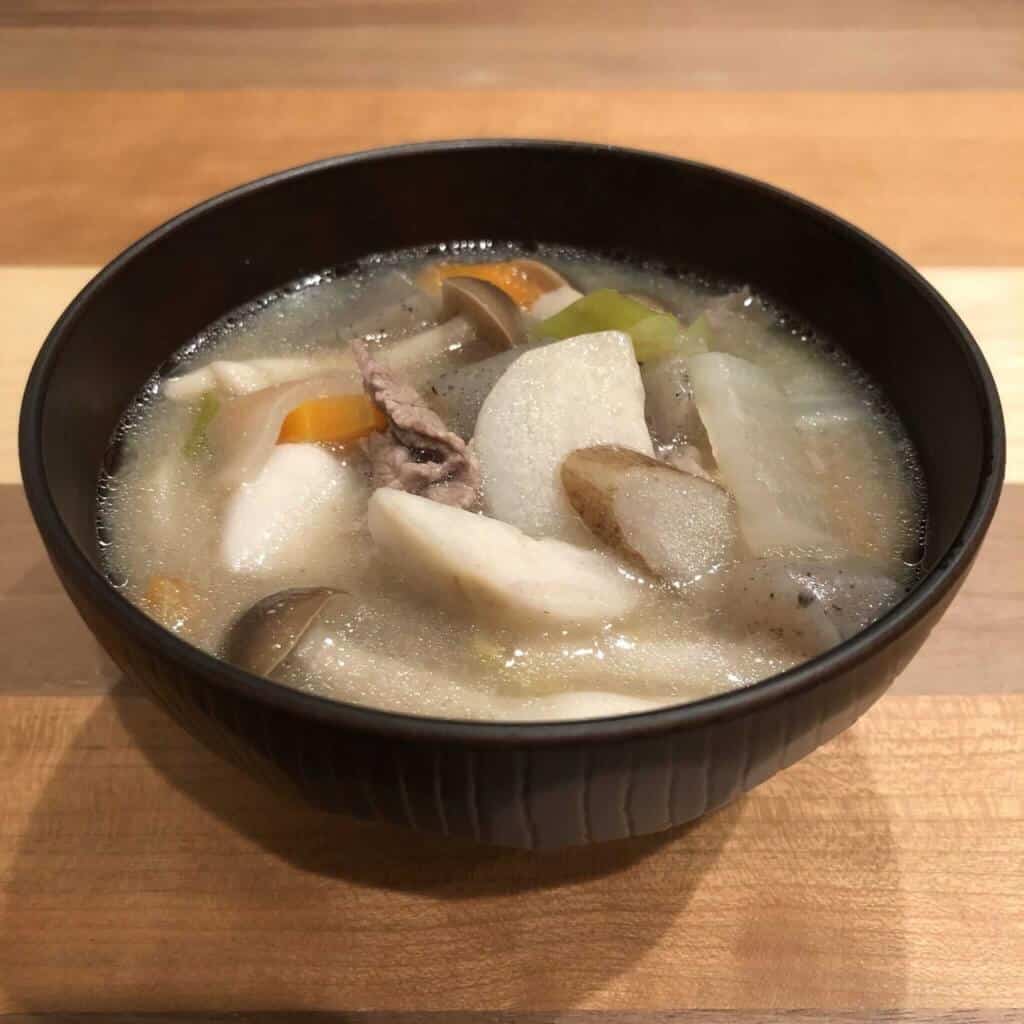

Imoni (芋煮)
Taro, beef, konnyaku, and leeks simmered in sweet soy broth. Families gather on riverbanks each autumn, in fact, to cook it outdoors together.
Read the Imoni guide →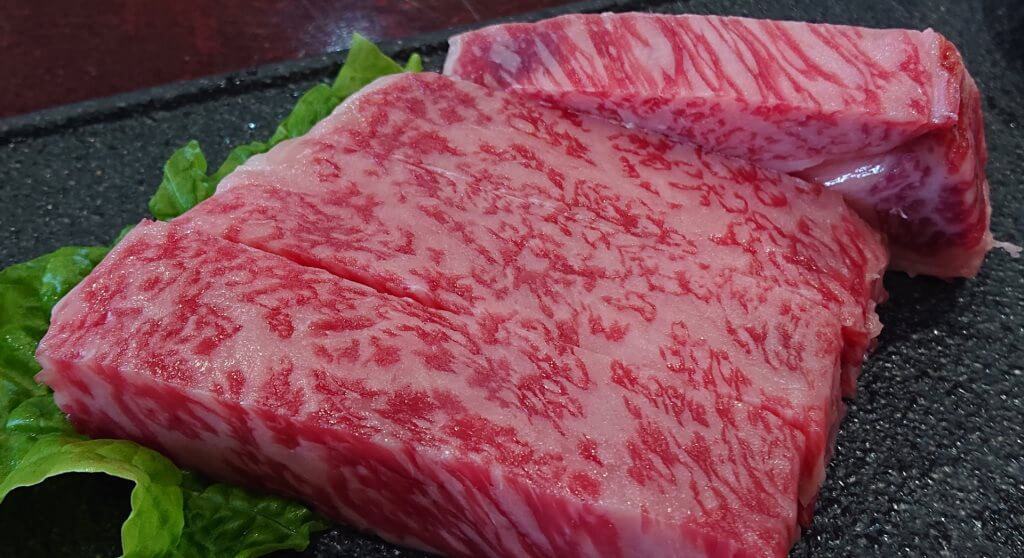

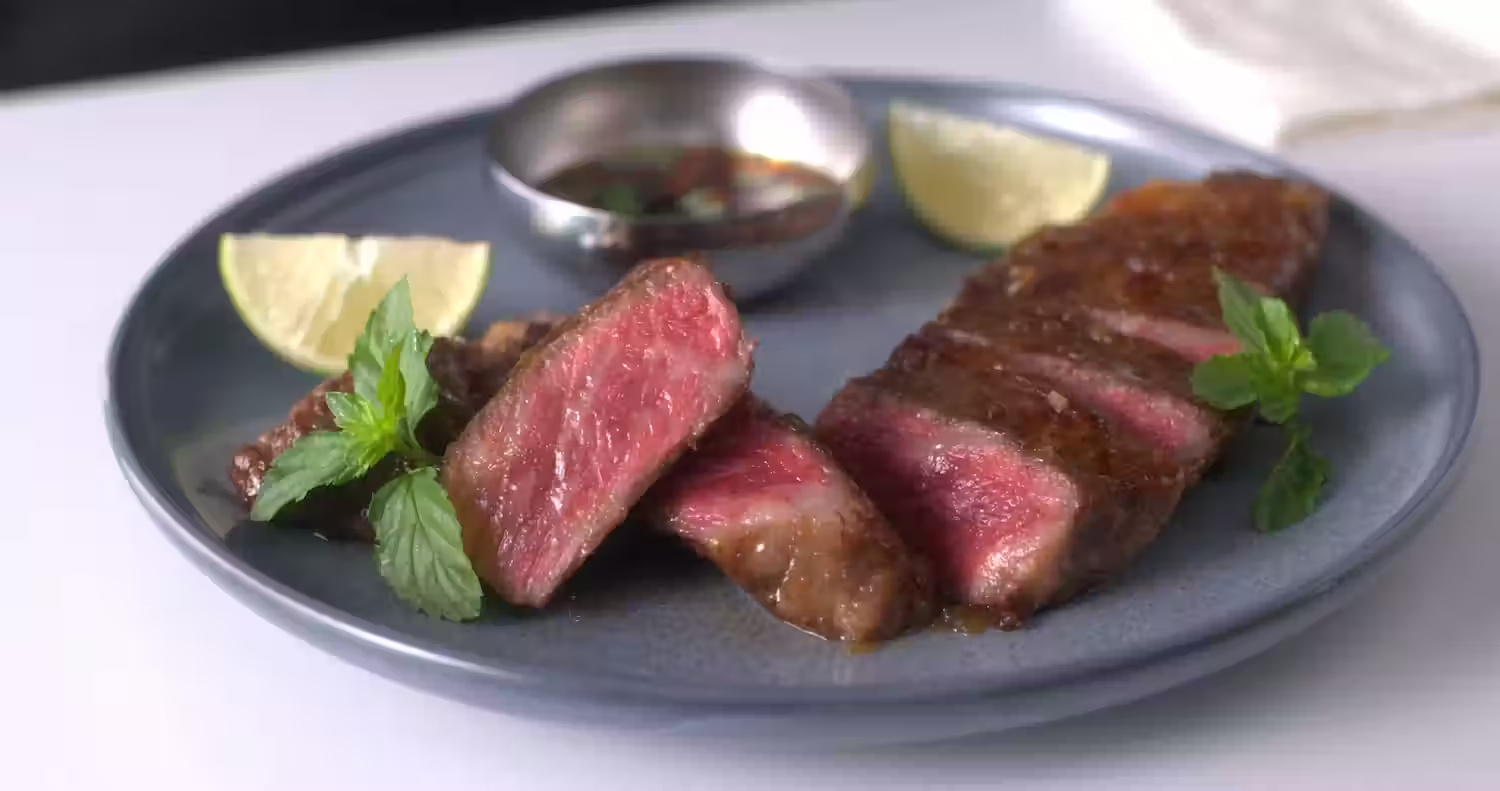
Yonezawa Beef (米沢牛)
Finely marbled wagyu raised in the cold Okitama basin. It ranks, above all, among Japan’s most celebrated beef brands.
Read the Yonezawa Beef guide →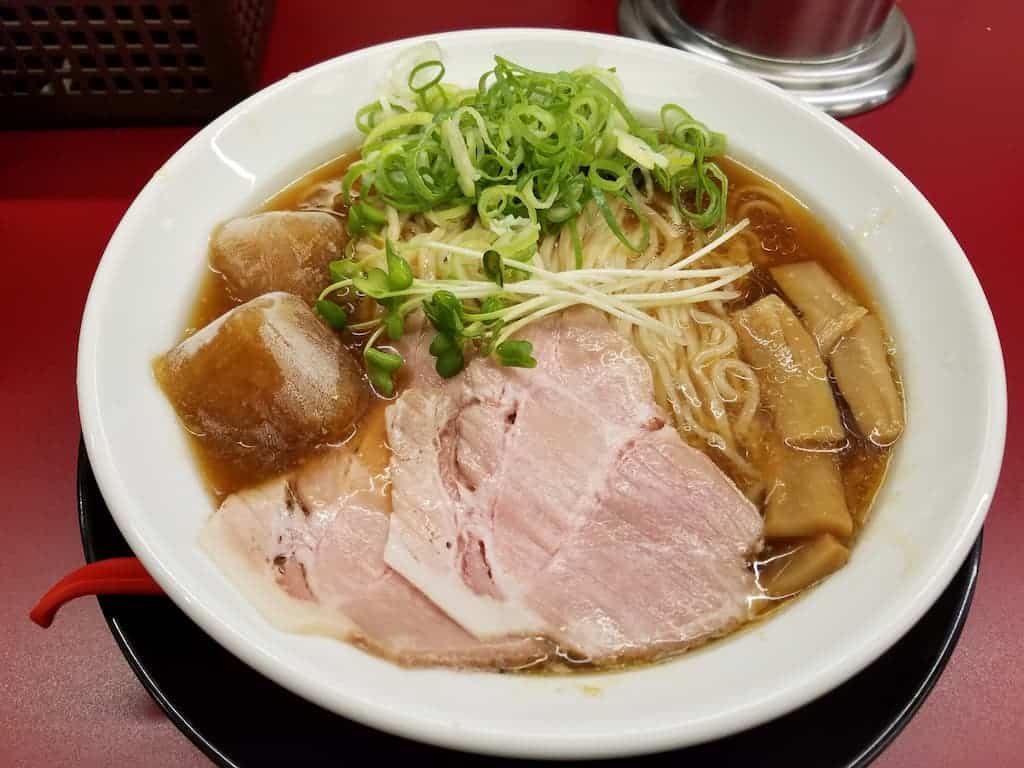

Hiyashi Ramen (冷やしラーメン)
A full bowl of ice-cold soy sauce broth with firm chilled noodles. Yamagata City invented it in 1952, and locals order it even in winter.
Read the Hiyashi Ramen guide →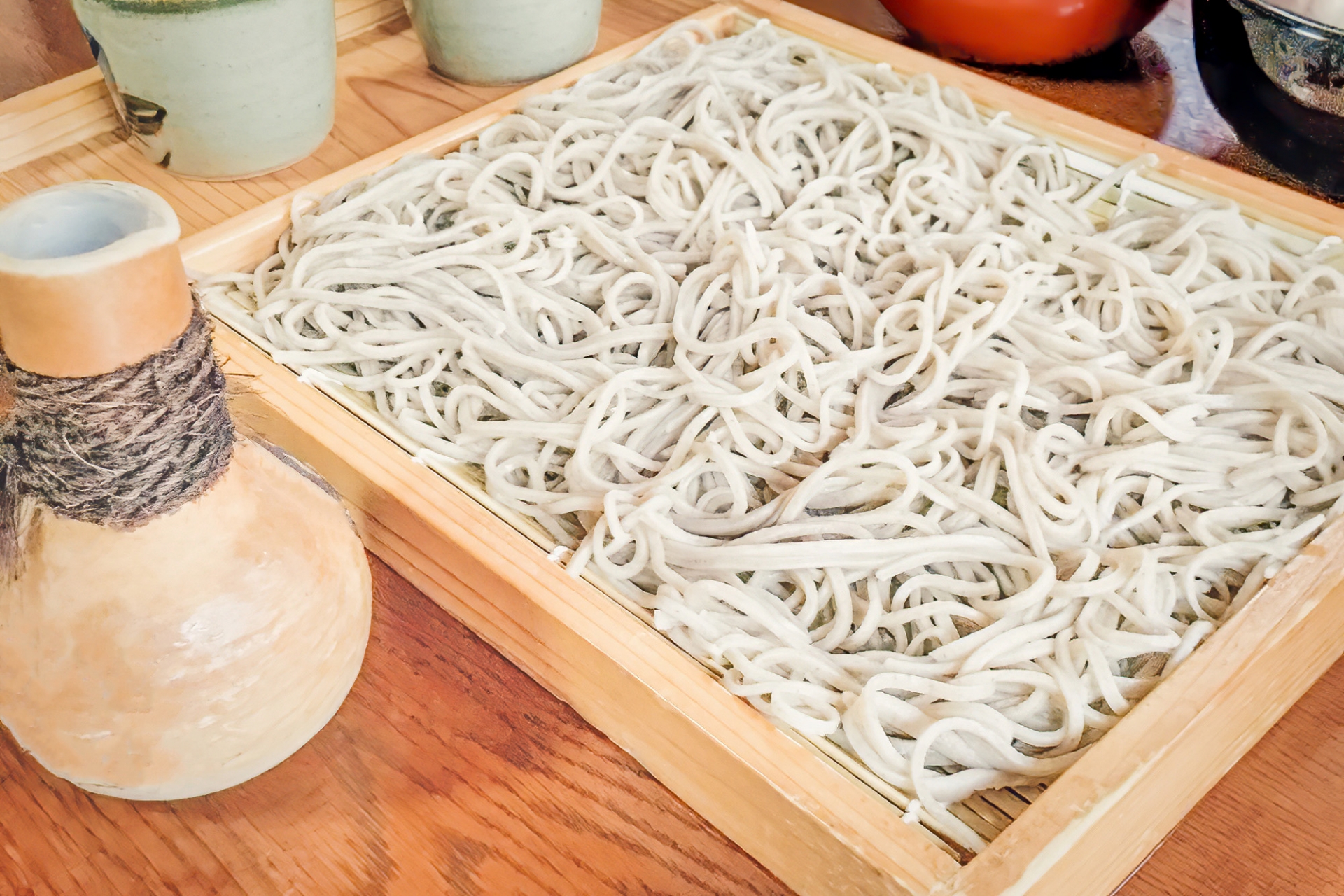

Ita Soba (板そば)
Dark, aromatic buckwheat noodles served in a shallow cedar box. Groups share one board, moreover, exactly as farmers once did.
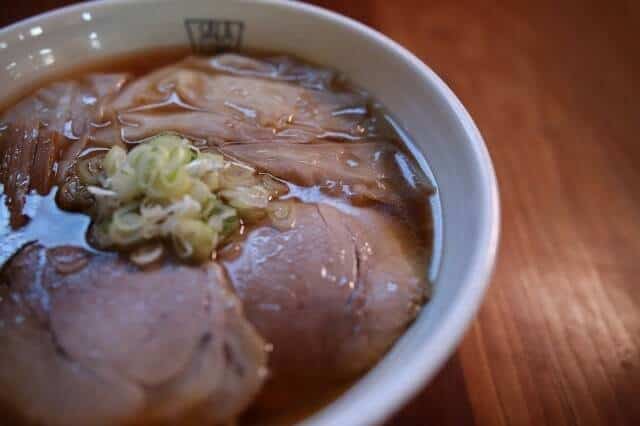

Sakata Ramen (酒田ラーメン)
Clear seafood and pork broth with hand-kneaded noodles from the port city. Many shops also fold their own feather-light wontons daily.
Read the Sakata Ramen guide →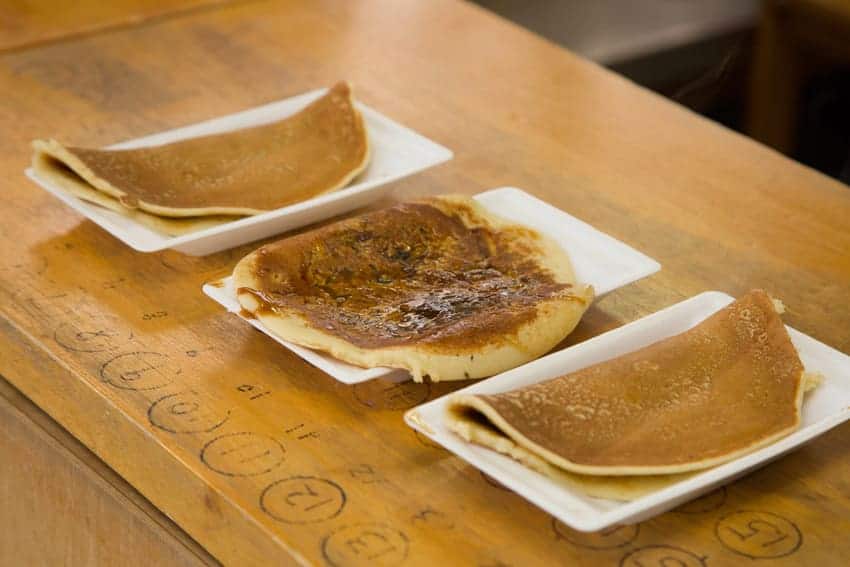

Dondon Yaki (どんどん焼)
Thin savory batter rolled onto chopsticks with sauce and seaweed. Yamagata children, in fact, grow up eating it at festivals.
Read the Dondon Yaki guide →
Local Favorites, Fruit, and Sake
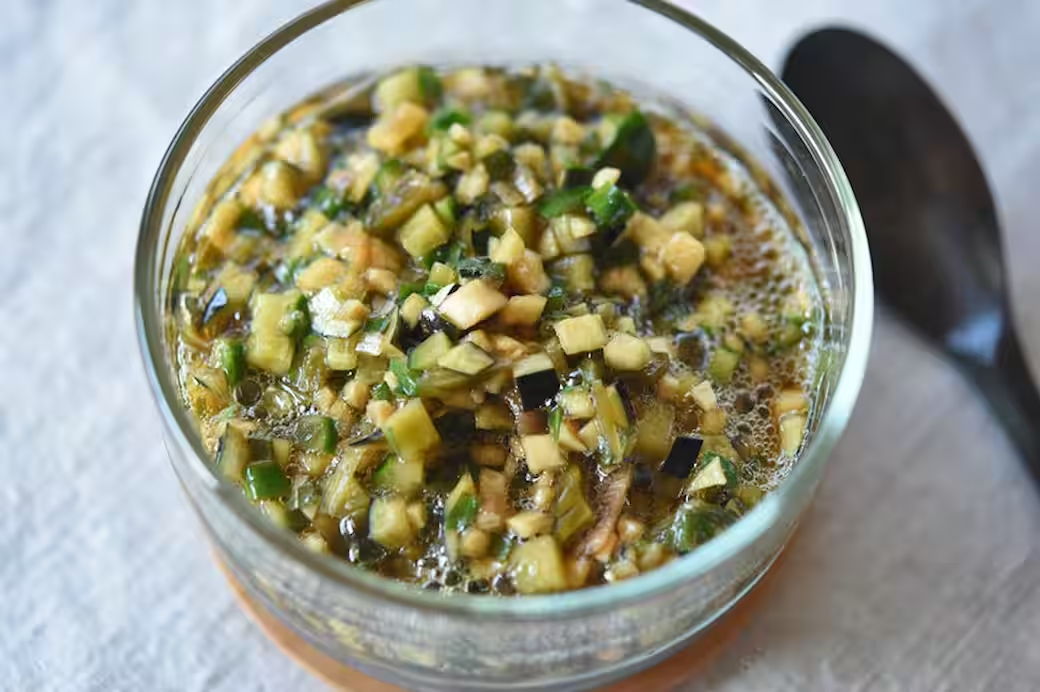

Yamagata Dashi (だし)
Chopped cucumber, eggplant, myoga, and shiso in a light soy dressing. Locals spoon it over rice, meanwhile, all through the humid summer.
Read the Yamagata Dashi guide →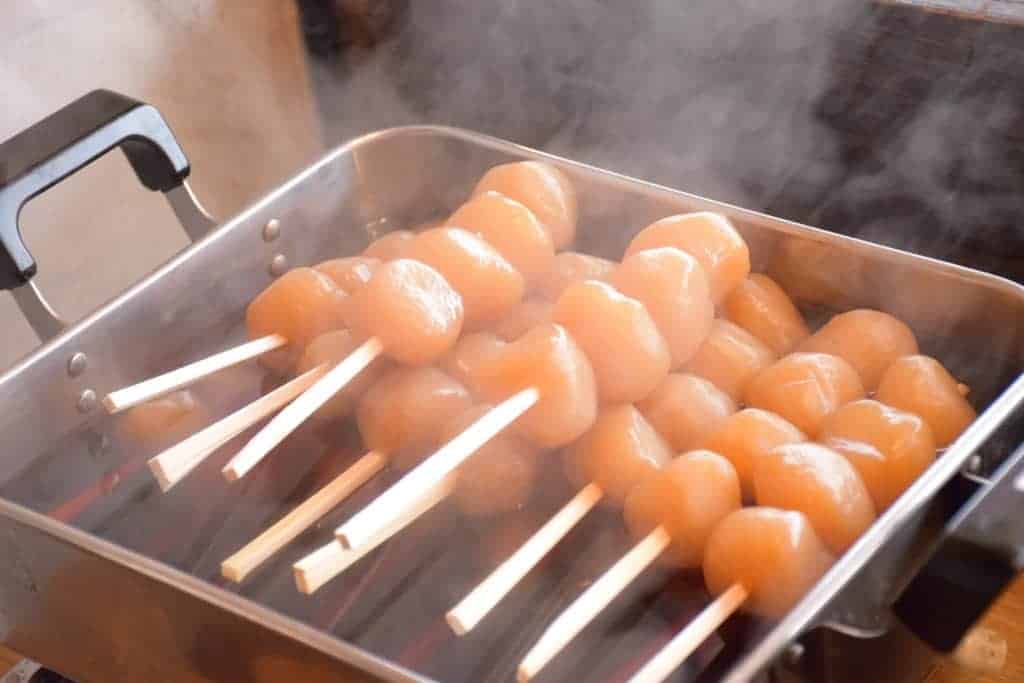

Tama Konnyaku (玉こんにゃく)
Round konnyaku balls simmered in soy broth and served on skewers. Temple gates and onsen streets sell them, therefore, at every season.
Read the Tama Konnyaku guide →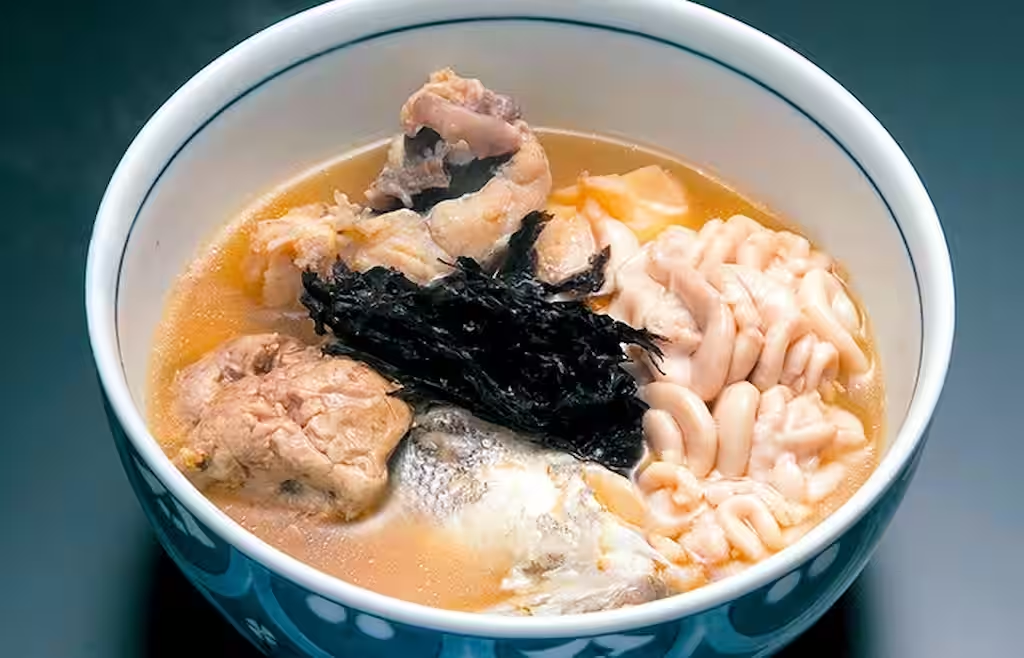

Dongara Jiru (どんがら汁)
A rich winter cod soup from the Shonai coast, miso-seasoned and hearty. Fishermen use the whole fish, including the prized liver.
Read the Dongara Jiru guide →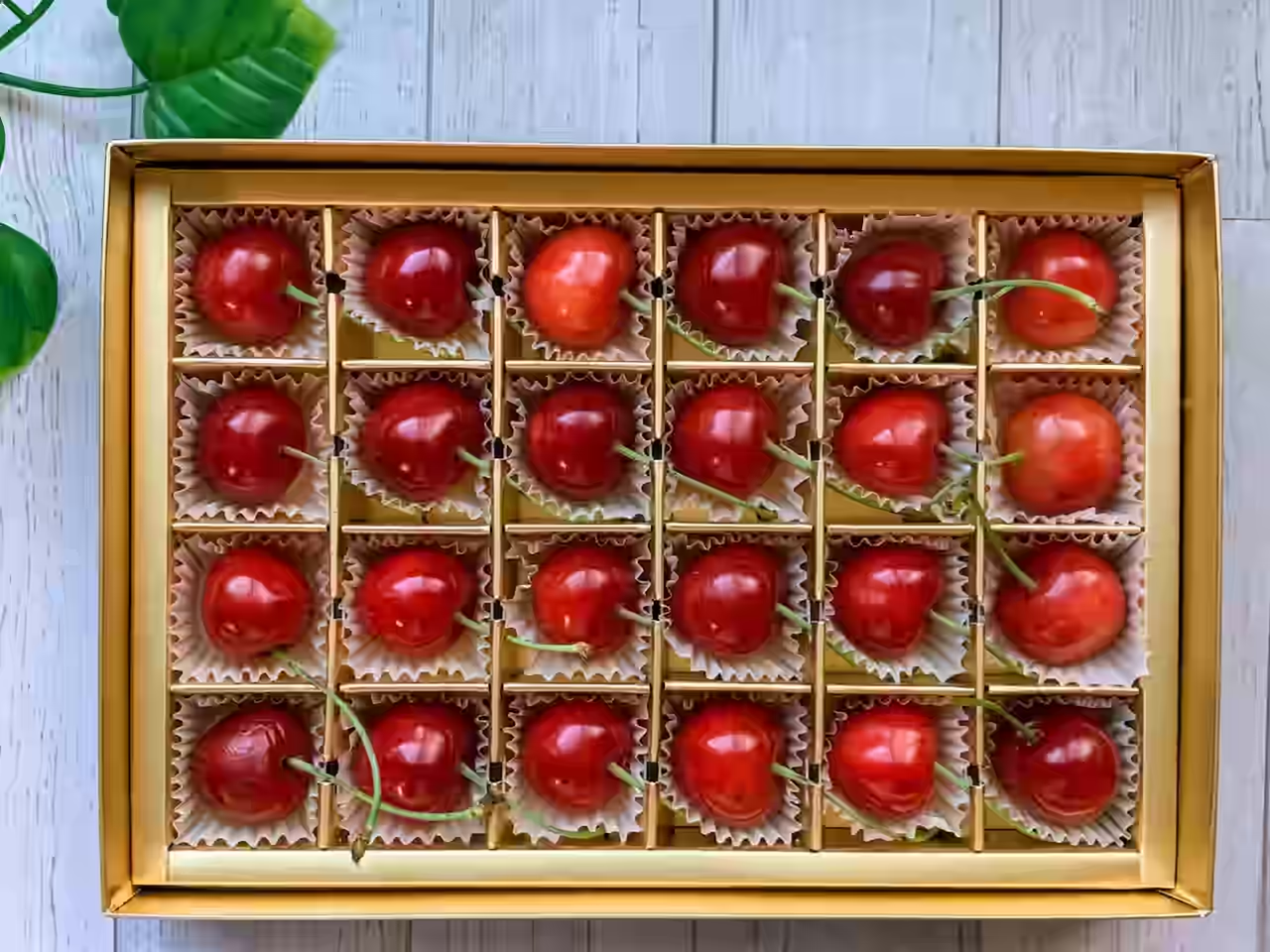

Sato Nishiki Cherry (佐藤錦)
Japan’s most famous cherry, glossy red and perfectly balanced. Premium boxes, indeed, sell as luxury gifts every June.
Read the Sato Nishiki guide →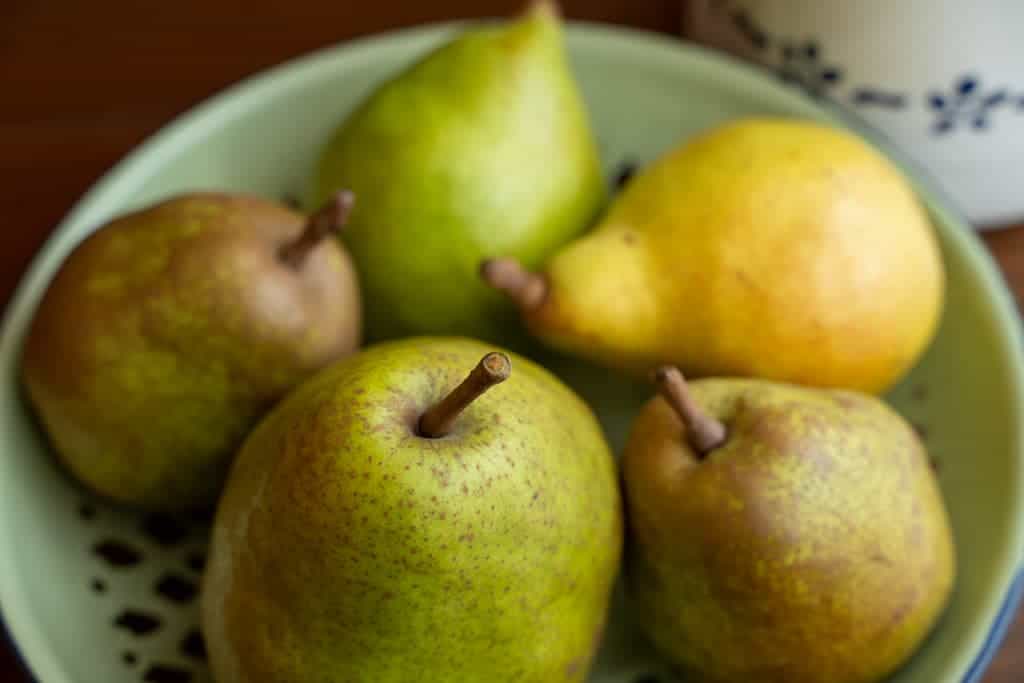
La France Pear (ラフランス)
A buttery western pear with floral aroma and mellow sweetness. Yamagata grows the vast majority of Japan’s crop.
Read the La France guide →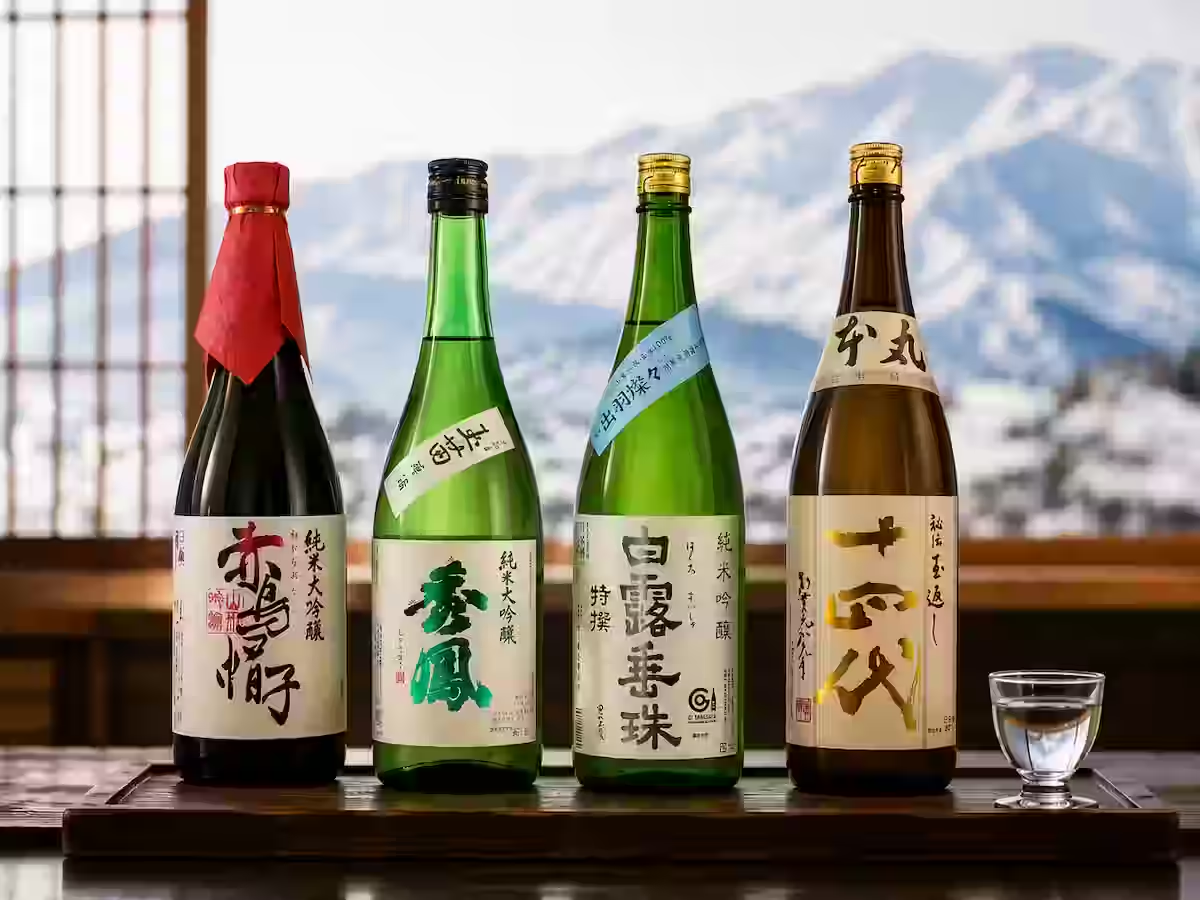

Yamagata Sake (山形の酒)
Fragrant, clean ginjo sake protected by a national GI designation. The prefecture also produces 14dai, a famously hard-to-find bottle.
Read the Yamagata Sake guide →
FlavorWhat Does Yamagata Food Taste Like?
Yamagata food tastes clean first, then quietly rich. Imoni broth reads simple, yet the taro turns silky and the sweet soy deepens with every ladle. Ita soba, meanwhile, arrives with an almost grassy buckwheat aroma that city soba rarely carries. Then the surprises land. Cold ramen sounds wrong, and honestly, the first spoonful feels like a mistake. Stay with it. Gradually, the chilled dashi sharpens rather than dulls, and the same thing happens with chopped dashi over hot rice. In the end, Yamagata flavors feel generous without ever shouting.
Where to EatYamagata Food Guide by Area
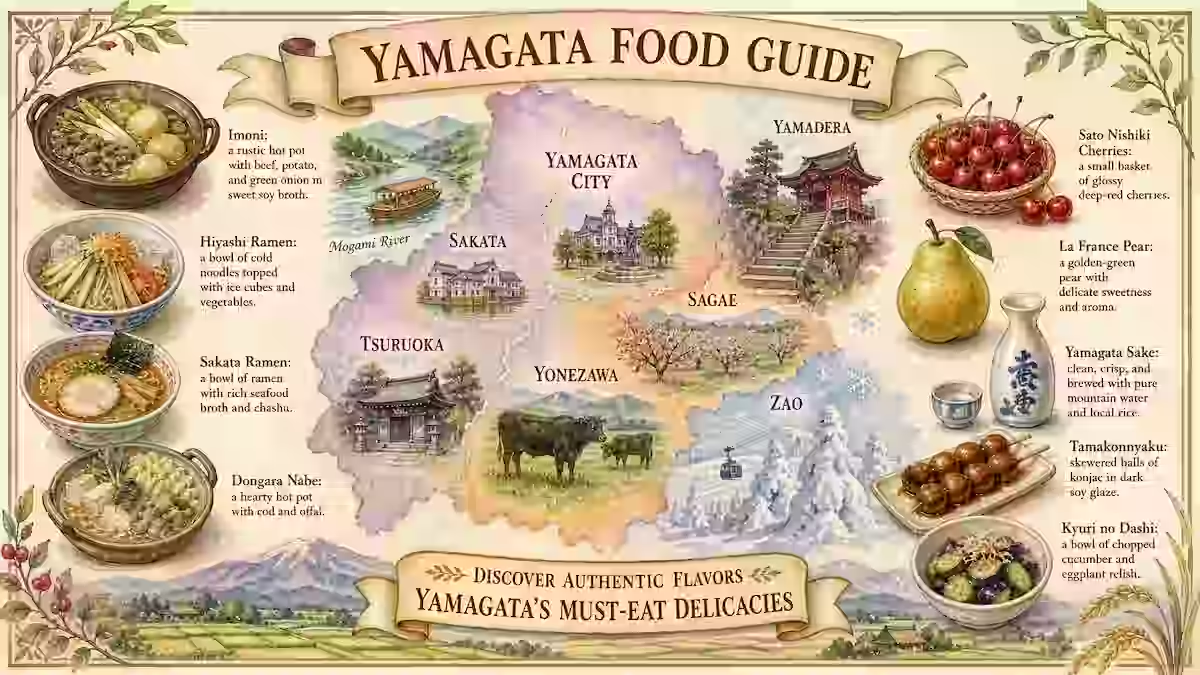
Mountains split Yamagata into four historic regions, and each one eats differently. Every city, in fact, claims its own specialty. Therefore, use this Yamagata food guide to plan a route between them.
Yamagata City
The ramen capital and home of imoni. Sakaeya Honten still serves the original hiyashi ramen, for instance, near the city center.
Yonezawa & Okitama
Southern castle country famous for Yonezawa beef. Local shops serve it as steak, sukiyaki, and surprisingly affordable croquettes.
Sagae & Murayama
The orchard belt of the Mogami basin. Cherry picking, soba highways, and roadside fruit stands, above all, define summer here.
Tsuruoka
Japan’s first UNESCO Creative City of Gastronomy. Heirloom zairai vegetables and Dewa Sanzan temple cuisine anchor its reputation.
Sakata & the Shonai Coast
An old Kitamae trade port on the Sea of Japan. Sakata ramen, winter cod, and Shonai rice fill the local table.
Ginzan & Zao
Onsen and ski country in the mountains. Skewered tama konnyaku and hot pots taste best, moreover, in deep snow.
Plan Your TripYamagata Food Guide: Access and Model Route
Getting to Yamagata from Tokyo
The Yamagata Shinkansen runs directly from Tokyo Station without a transfer. Trains reach Yonezawa in about two hours and Yamagata City in roughly two and a half. The same line continues north to Sagae and Shinjo. For the Shonai coast, meanwhile, take the Joetsu Shinkansen to Niigata and transfer to the Inaho limited express for Tsuruoka and Sakata. Flights to Shonai Airport from Haneda take about an hour instead.
A One-Day Yamagata City Eating Route
The Murayama region packs the most food into a single day. For example, here is a route that locals would recognize.
- Morning – Ita soba on the soba highway.
Drive or bus out to a farmhouse soba shop. Order the cedar box and, in fact, share it the traditional way.
- Late morning – Orchard stop.
Visit a Sagae fruit farm for cherries in June or La France in autumn. Many orchards also offer all-you-can-pick sessions.
- Lunch – Hiyashi ramen in Yamagata City.
Head to Sakaeya Honten for the original cold bowl. Arrive before noon, because summer queues form quickly.
- Afternoon – Yamadera and tama konnyaku.
Climb the thousand stone steps to the cliffside temple. Then reward yourself with skewered konnyaku at the bottom.
- Evening – Imoni and local sake.
Finish at an izakaya near Yamagata Station. Order imoni, Yonezawa beef, and a flight of GI Yamagata sake.
IngredientsYamagata Food Guide: Famous Ingredients
Cherries and Orchard Fruit
Yamagata produces roughly 70 percent of Japan’s cherries, and the season peaks in June. Sato Nishiki remains the benchmark variety, prized for its balance of sweetness and acidity. Earlier in the season, however, deep red Beni Sayaka arrives first. Autumn then belongs to La France pears, which ripen after harvest into something buttery and floral. Consequently, the fruit calendar shapes travel plans across the prefecture.
Sansai and Heirloom Vegetables
Spring in the mountains means sansai, the wild vegetables that define Yamagata’s table. Warabi, udo, and bamboo shoots appear in tempura, hot pots, and pickles. Tsuruoka additionally preserves dozens of zairai heirloom vegetables, some cultivated for centuries. Edible chrysanthemum, called mokkou locally, turns autumn plates purple and gold. That preservation work, in fact, helped earn the city its UNESCO gastronomy status.
Taro, Konnyaku, and Soybeans
Taro forms the heart of imoni, and Yamagata farmers grow varieties bred for silky texture. Konnyaku appears everywhere too, from the stew pot to skewered tama konnyaku sold at temples. Soybeans matter just as much in the cold months. Thick, warming natto jiru soup, for example, remains a winter staple in farmhouse kitchens.
Rice, Water, and Sake
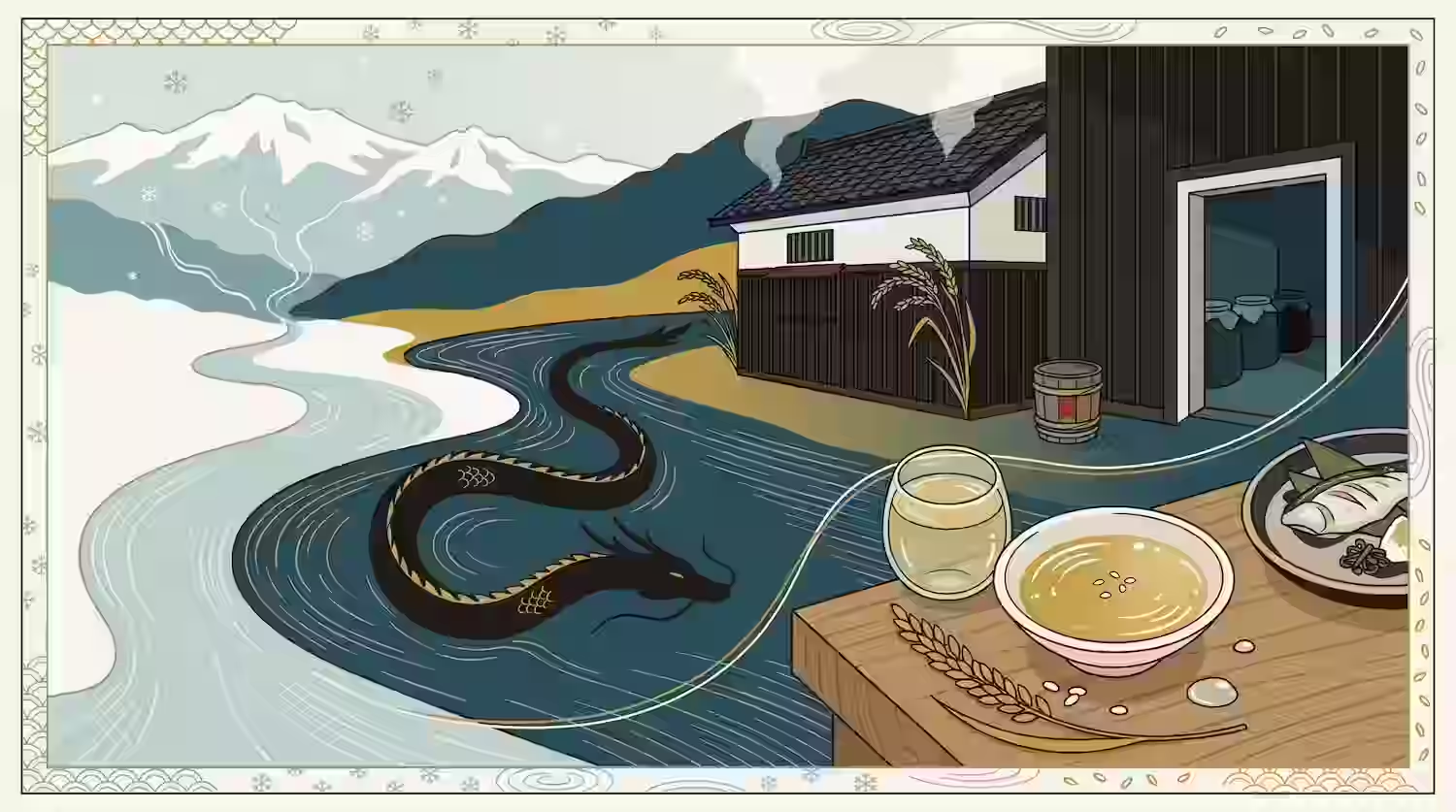
The Shonai plain grows Tsuyahime, a premium rice bred in the prefecture over ten years. Snowmelt from Gassan and Zao feeds both the paddies and the breweries. Yamagata subsequently became the first prefecture in Japan to win a GI designation for its sake. Fragrant ginjo defines the local style, and cult bottles like 14dai draw collectors nationwide.
HistoryThe History of Yamagata Food Culture
Safflower, the Mogami River, and Kyoto
In the Edo period, Yamagata grew rich on benibana safflower, the source of precious red dye. Boats carried the crop down the Mogami River to Sakata, then on to Kyoto and Osaka. Those same boats returned with kelp, dried fish, and refined cooking ideas. Imoni, for example, is said to trace back to boatmen simmering taro on the riverbank. As a result, a landlocked mountain region absorbed the tastes of the imperial capital.
Mountains, Monks, and Preservation
The Dewa Sanzan mountains shaped a second food tradition entirely. Yamabushi ascetics and temple kitchens developed shojin ryori built on sansai, mushrooms, and sesame. Long winters forced villages to master drying, salting, and pickling as well. Tsuruoka farmers meanwhile kept saving seeds, which preserved heirloom vegetables that vanished elsewhere. Those habits, centuries later, became the foundation of the city’s UNESCO recognition.
Ramen Obsession and Modern Yamagata
Chinese noodles reached the prefecture in the early twentieth century and never left. Soba shops added ramen to their menus, which explains the region’s unusually clear broths. Then, in 1952, a Yamagata City soba restaurant answered a customer’s odd request and created cold ramen. Household surveys have ranked the city first in Japan for ramen spending ever since. Today, above all, Yamagata pairs that everyday obsession with world-class beef, fruit, and sake.
Read NextExplore More Yamagata Foods
- Imoni (芋煮) – the riverside taro and beef stew of autumn
- Yonezawa Beef (米沢牛) – Yamagata’s celebrated wagyu
- Hiyashi Ramen (冷やしラーメン) – the original cold ramen
- Sakata Ramen (酒田ラーメン) – port city noodles with handmade wontons
- Dondon Yaki (どんどん焼) – the festival street snack on a stick
- Yamagata Dashi (きゅうりのだし) – the chopped summer topping
- Tama Konnyaku (たまこんにゃく) – skewered konnyaku balls
- Dongara Jiru (どんがら汁) – the Shonai winter cod soup
- Kandara (寒鱈) – cold-season cod from the Sea of Japan
- Natto Jiru (納豆汁) – the thick, warming winter soup
- Chrysanthemum Dishes (菊料理) – edible flowers on the autumn table
- Sato Nishiki (佐藤錦) – Japan’s most famous cherry
- Beni Sayaka (べにさやか) – the deep red early-season cherry
- La France (ラフランス) – the buttery western pear
- Yamagata Sake (山形の酒) – fragrant ginjo from snow country
- 14dai (十四代) – the phantom sake collectors chase
- Browse all Yamagata foods
More RegionsExplore More Japanese Regional Food Guides
- Akita Food Guide – kiritanpo, Inaniwa udon & snow country cuisine
- Tohoku Food – dishes from all six northern prefectures
- Discover Tohoku – 11 Japanese foods you need to taste
- Hokkaido Food Guide – dairy, seafood & miso ramen
- Kanto Food Guide – Tokyo, Kanagawa, Saitama & beyond
- Kansai Food Guide – Osaka, Kyoto, Kobe & more
- Kyushu Food Guide – Fukuoka ramen & southern cuisine
- Japan Food Guide – complete overview of all regions
In conclusion, bookmark this Yamagata food guide and explore each dish in depth through the articles above. Then build your own route from the orchards of the Mogami basin to the Shonai coast.
FAQYamagata Food Guide FAQ
Yamagata Food Guide FAQ: Signature Dishes
What food is Yamagata most famous for?
Yamagata is most famous for imoni stew, ita soba, hiyashi ramen, and Yonezawa beef. The prefecture also leads Japan in cherries and La France pears. Above all, it consistently ranks first nationwide for ramen spending.
What is imoni?
Imoni is an autumn stew of taro, beef, konnyaku, and leeks in sweet soy broth. Families cook it outdoors on riverbanks at gatherings called imonikai. The Murayama region uses beef and soy, while Shonai prefers pork and miso. In September, moreover, Yamagata City holds a festival using a pot about six meters wide.
What is ita soba?
Ita soba is Yamagata’s signature soba, served in a shallow wooden box for sharing. Cooks use unpolished buckwheat, which gives the noodles a darker color and nuttier aroma. The texture chews firmer than typical city soba. Farmhouse restaurants along the soba kaido routes, in fact, serve the best examples.
What is hiyashi ramen?
Hiyashi ramen is a complete ramen bowl served genuinely cold, ice cubes included. A Yamagata City soba shop created it in 1952 after a customer asked why cold soba existed but cold ramen did not. Cooks remove animal fat so the broth stays smooth when chilled. Unlike hiyashi chuka, therefore, it keeps a full bowl of soup rather than a dressing.
What makes Yonezawa beef special?
Yonezawa beef comes from cattle raised in the cold Okitama basin of southern Yamagata. Large temperature swings produce fine marbling and fat with a low melting point. Farmers fatten the heifers for well over two years under strict local rules. Sukiyaki and steak show it best, though croquettes offer an affordable taste.
How is Sakata ramen different from other Yamagata ramen?
Sakata ramen comes from the port city on the Sea of Japan coast. Its broth leans on seafood alongside pork, producing a clear and gentle soup. Many shops still knead noodles in house and fold paper-thin wontons daily. Yamagata City bowls, in contrast, are better known for the cold summer version.
Yamagata Food Guide FAQ: Local Flavors and Fruit
What is Yamagata dashi?
In Yamagata, dashi means a chopped vegetable topping rather than a soup stock. Cooks dice cucumber, eggplant, myoga, and shiso, then season them lightly with soy sauce. Some versions add sticky ingredients like natto kombu for texture. Locals spoon it over hot rice, tofu, or noodles, so it appears constantly in summer.
What is tama konnyaku?
Tama konnyaku is round konnyaku simmered in soy sauce broth and served on a skewer. Vendors sell it at temples, festivals, and onsen towns across the prefecture. Locals usually add a dab of Japanese mustard. It costs only about 100 to 150 yen, and it is almost fat free.
What is dongara jiru?
Dongara jiru is a winter cod soup from the Shonai coast. Cooks use the whole fish, including the head, roe, and rich liver, in a miso broth. Sea greens called iwa nori often top the bowl. Coastal towns hold cod festivals in January and February, so winter is the season to try it.
Why is Yamagata famous for cherries?
Yamagata grows roughly 70 percent of Japan’s cherries thanks to its basin climate and low rainfall at harvest. Sato Nishiki, developed in the prefecture, became the national benchmark variety. The season runs from mid-June into early July. Orchards around Sagae and Higashine, moreover, offer all-you-can-eat picking.
What is La France pear?
La France is a western pear that Yamagata grows in overwhelming volume. Unlike crisp Japanese pears, it ripens after harvest into a soft, buttery texture. The aroma turns floral and honeyed when ready. Press gently near the stem to check, and wait if the fruit still feels firm.
Does Yamagata really eat the most ramen in Japan?
Yes, national household surveys have repeatedly placed Yamagata City first for ramen spending. The prefecture also has one of the highest shop counts per person. Soba restaurants commonly serve ramen too, which spreads the habit further. Locals eat it hot in winter and cold in summer, so demand never really drops.
Yamagata Food Guide FAQ: Travel Tips and Costs
How do I get to Yamagata from Tokyo?
Take the Yamagata Shinkansen directly from Tokyo Station with no transfer needed. The trip takes about two hours to Yonezawa and two and a half to Yamagata City. For Tsuruoka and Sakata, instead ride the Joetsu Shinkansen to Niigata and transfer to the Inaho limited express. Flights from Haneda to Shonai Airport take roughly one hour.
Is Yamagata good for sake lovers?
Yamagata is an excellent sake destination. It became the first prefecture in Japan to receive a GI designation covering all its sake. Snowmelt water and local rice varieties produce a fragrant, clean ginjo style. Breweries around Yamagata City, Tsuruoka, and Murayama, in addition, welcome visitors for tastings.
What is the best time of year to eat in Yamagata?
Each season offers something different. June brings cherries at their peak, while summer means cold ramen and chopped dashi. Autumn delivers imoni festivals, mushrooms, and La France pears. Winter, finally, is the season for cod soup, hot pots, and freshly pressed sake.
Is Yamagata food expensive?
Everyday Yamagata food is very affordable. A bowl of ramen costs around 700 to 900 yen, and skewered tama konnyaku runs about 100 to 150 yen. Ita soba sets usually land between 1,000 and 1,500 yen. Yonezawa beef sits at the other extreme, however, with sukiyaki courses often starting near 6,000 yen.