



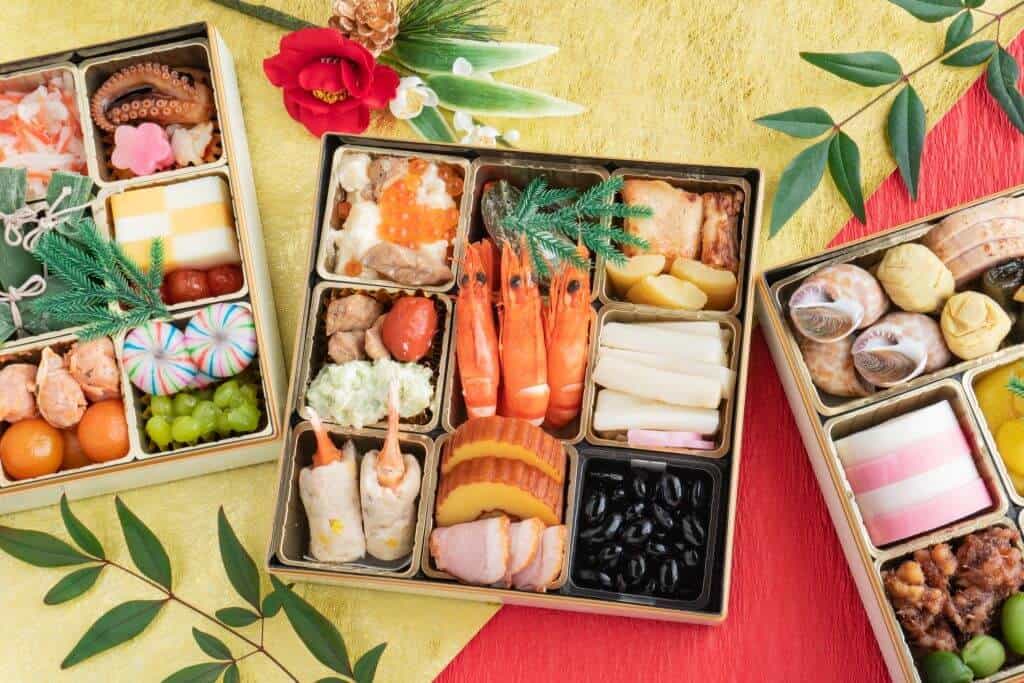
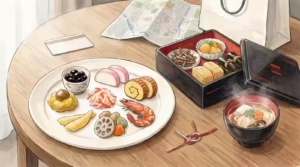
Osechi ryori is a collection of traditional Japanese New Year dishes served in tiered jubako boxes, usually during the first days of January. Families share the meal to welcome the New Year, and many of its dishes stand for a wish: health, prosperity, long life, or a good harvest. The contents vary by region, household, and seller.
This guide explains the dishes, their meanings, and the basic etiquette for enjoying osechi in Japan. It also covers taste, prices, storage, and simple home preparation. For the wider holiday table, see our overview of Japanese food for New Year. Already in Japan and short on time? Our traveler’s guide shows where to buy osechi in Japan without a reservation.
What is osechi ryori?
Osechi ryori (おせち料理), often shortened to osechi, is Japan’s traditional New Year feast rather than one fixed recipe. It brings together many small dishes, such as sweet black beans, herring roe, rolled omelet, fish cake, and chestnut paste. Families and friends share it during Shogatsu, Japan’s New Year celebration.
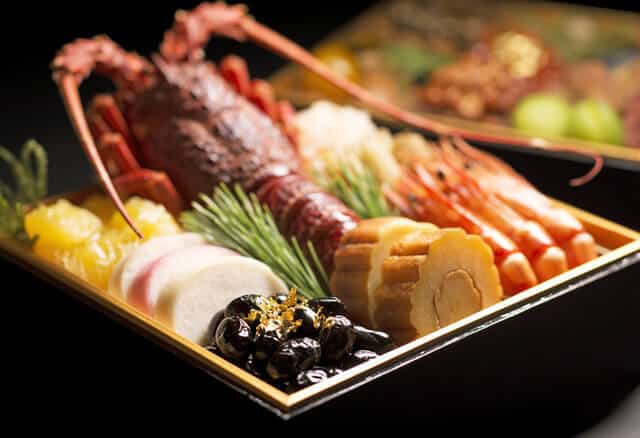
Quick facts
- What it is
- A collection of traditional Japanese New Year dishes
- When it is eaten
- Commonly January 1 to 3, although customs vary
- Typical container
- Tiered lacquer boxes called jubako (重箱)
- Serving temperature
- Many dishes are eaten without reheating; zoni soup is served hot
- Why people eat it
- To welcome the New Year and share wishes for health, prosperity, and happiness
- Where to buy it
- Department stores, supermarkets, convenience stores, restaurants, hotels, and online shops
- Typical price
- Varies widely; a 2026 survey reported a ¥29,098 average for comparable three-tier or three-to-four-person products
- Important note
- Ingredients, arrangement, storage, and shelf life differ by product
The name is associated with seasonal observances known as sekku. According to Japan’s agriculture ministry, osechi once referred more broadly to food prepared for the five seasonal festivals. Over time, however, the term became closely tied to New Year dishes.
Why do Japanese people eat osechi?
Japanese families eat osechi to welcome the New Year and to share dishes linked with good fortune, health, and family prosperity. The ministry explains that people originally prepared the food as an offering to Toshigami, the deity of the New Year. Eating it meant sharing a meal with that deity. Preparing many dishes in advance also reduced cooking during the holiday and gave the people responsible for the meal time to rest.
Today, many people enjoy osechi primarily as a family tradition or a familiar taste of New Year, without consciously focusing on its religious background. The custom of preparing food ahead also helps explain why many traditional dishes use seasonings and cooking methods suited to advance preparation.
A brief history of osechi
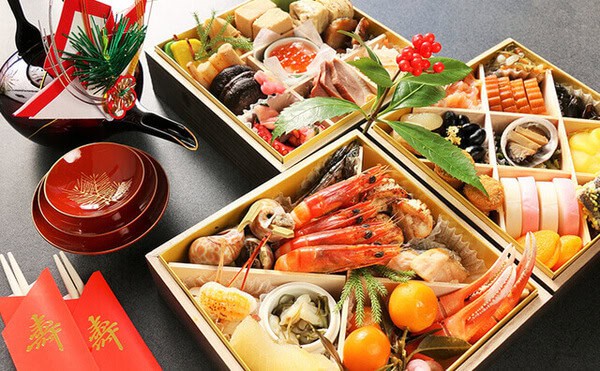
Osechi grew out of older seasonal offerings, while the familiar stacked boxes spread gradually from the late Edo period into the Meiji era. Those early practices differed from the modern New Year meal, and surviving sources do not establish a single starting date.
From the Nara to the Heian period, Japanese court ceremonies gradually incorporated calendar customs from China. Food for those seasonal occasions is often described as the background of the word osechi. Later, in the Edo period, the shogunate fixed five seasonal festivals as official occasions. Ordinary townspeople then adopted the custom, and the New Year feast became the most important of the five.
The agriculture ministry places the prototype of today’s osechi at the very end of the Edo period. By then, kuromame, tazukuri, and kazunoko already counted as the standard trio. Sources also describe stacked boxes as becoming widespread between the late Edo and Meiji periods. That change was gradual, so no single year marks it.
Why osechi dishes have symbolic meanings
Many osechi dishes carry wishes expressed through wordplay, color, shape, or the way an ingredient grows. For example, kobu (kelp) echoes yorokobu, to rejoice. Likewise, lotus root has holes, so it suggests a clear view of the future. Cooks generally group these symbolic dishes into celebratory dishes, kuchitori (sweet appetizers), grilled foods, vinegared foods, and simmered foods.
Explanations differ between sources, so treat each meaning as a common reading rather than a rule. Datemaki shows this well. Some link its rolled shape to scrolls and learning, while the ministry ties it to a kimono pattern and a wish never to lack clothing.
Popular osechi dishes and their meanings
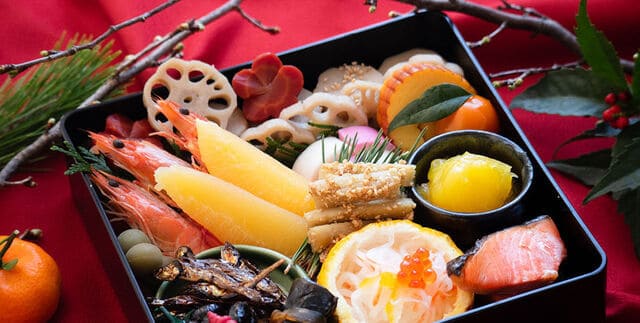
The table lists ten well-known dishes that often appear in traditional osechi. Each name links to a full guide where we have one.
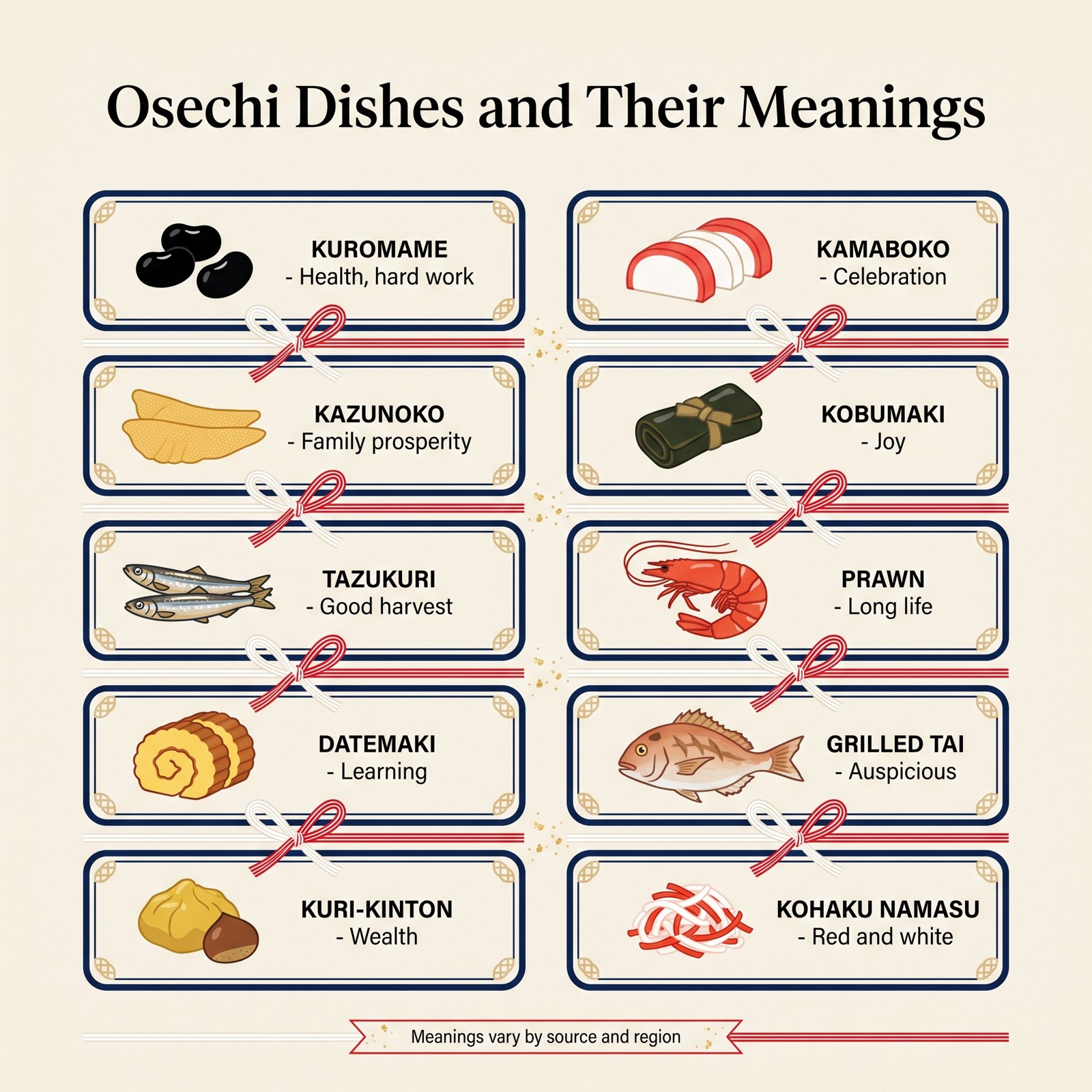
| Dish | Main ingredient | Symbolic meaning | Typical flavor |
|---|---|---|---|
| Sweet kuromame black beans | Black soybeans | Health and diligent work | Sweet, soft, and glossy |
| Kazunoko herring roe | Salted or seasoned herring roe | Family continuity and prosperity for future generations | Briny, savory, and crisp |
| Tazukuri candied sardines | Small dried sardines | A good harvest | Sweet-savory with a firm bite |
| Datemaki rolled omelet | Egg and fish paste | Learning in one common reading; other sources link it with fine clothing | Sweet, soft, slightly springy |
| Kuri-kinton chestnut paste | Chestnut and sweet potato | Wealth, from its golden color | Smooth and sweet |
| Kamaboko fish cake | Steamed fish paste | Celebration; red and white colors | Mild, savory, and springy |
| Kobumaki kelp rolls | Kelp, often around fish | Joy and good fortune | Savory and slightly chewy |
| Prawn | Prawn or shrimp | Long life | Savory with a firm texture |
| Grilled tai | Sea bream | Celebration, from the word medetai | Mild and savory |
| Kohaku namasu | Daikon, carrot, and vinegar | Celebration through red and white | Bright, crisp, and tangy |
A closer look at the best-known dishes
Kuromame. The word mame also means diligent, so the beans express a wish to work hard and stay healthy. Kuromame may be served with red pickled chorogi, a small tuber with a curled shape.
Kazunoko. Kazunoko is salted or seasoned herring roe, with many eggs held together in one roe sac. Because the eggs are so numerous, the dish stands for a family that continues and prospers.
Tazukuri. Farmers once used small sardines as fertilizer for rice fields. As a result, these candied fish came to represent a rich harvest.
Kuri-kinton. The name uses characters associated with a golden mass or treasure. Its bright yellow color therefore reinforces the link with wealth.
Prawn and sea bream. A cooked prawn’s curved back represents old age, so families serve it as a wish for longevity. Tai, meanwhile, sounds like medetai, meaning auspicious. Buri (yellowtail) plays a similar role, because the fish changes names as it grows and so suggests promotion.
Kobumaki and simmered vegetables. Kelp rolls borrow the luck of yorokobu. In the simmered tier, burdock stands for deep roots and a stable home, and taro for many descendants. Hamaguri clams sometimes appear too, since their paired shells suggest a happy marriage.
How osechi is packed in jubako boxes
Cooks stack osechi in jubako boxes because the layers express a wish to “pile up” good fortune. The agriculture ministry presents this as one traditional explanation. The boxes are also practical, since they store neatly and keep food covered.
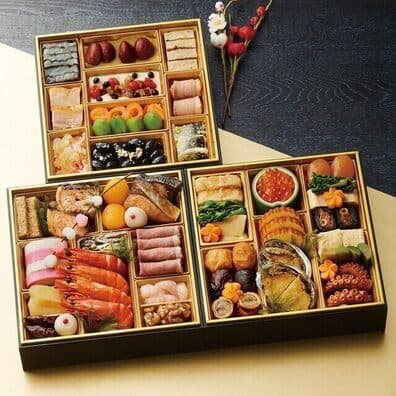
How many tiers are correct? There is no single answer. Formal explanations describe four or five tiers, and one version leaves the fifth box empty to receive future blessings. Today, however, many shops and households use two- or three-tier boxes. Arrangements also differ by household and seller, so read the diagram below as one example.
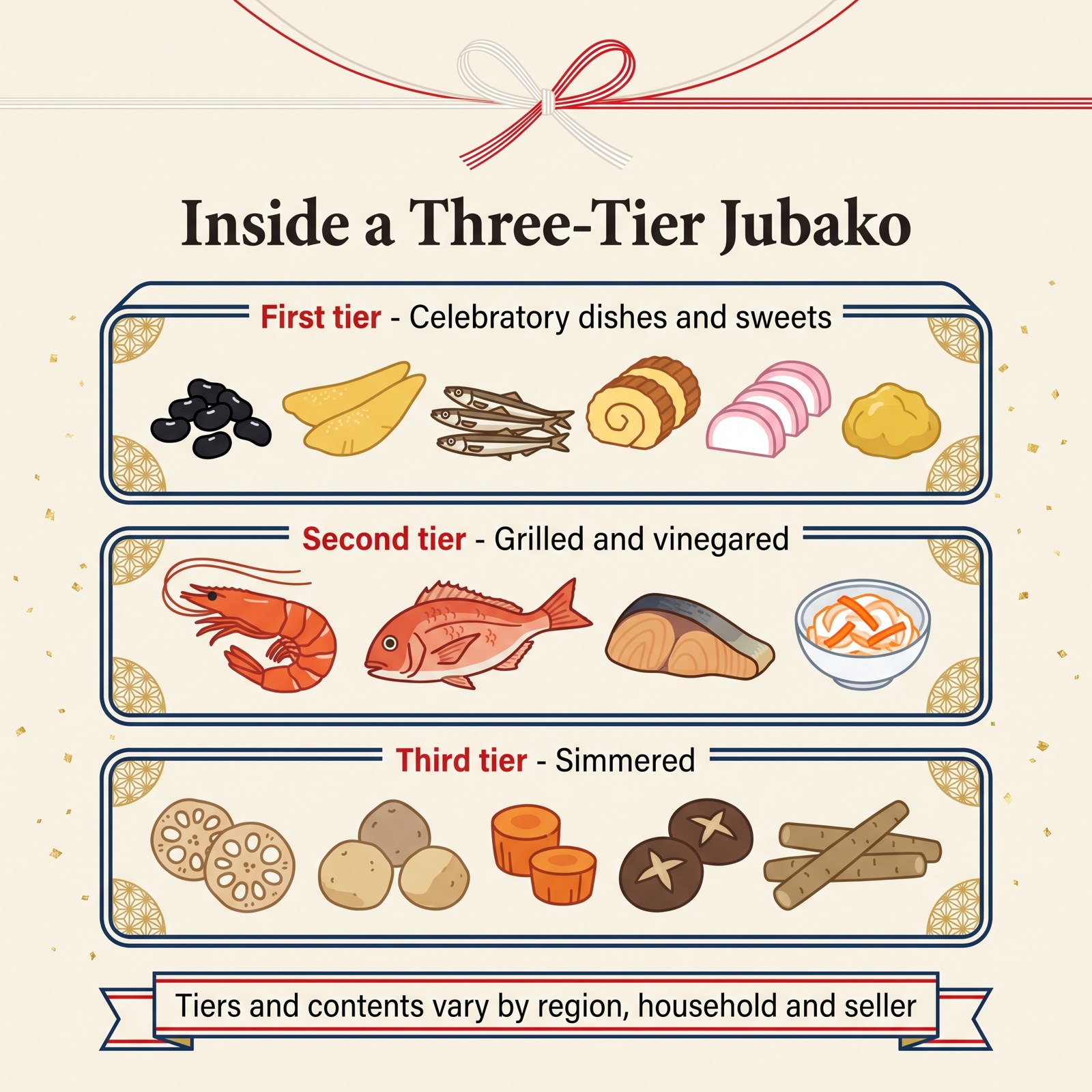
One common three-tier example
The number of tiers and the placement of dishes vary by region, household, restaurant, and seller.
What does osechi taste like?
Osechi tastes sweet, savory, and tangy in turn, because each dish uses a different seasoning. Many traditional dishes rely on sugar, salt, vinegar, and soy sauce, which suit advance preparation. Unlike many Western holiday platters, osechi combines simmered vegetables, seafood, fish cake, egg dishes, pickles, and sweets.
Each bite offers a different texture, from crisp lotus root to smooth chestnut paste and chewy seafood. Kamaboko is springy, while kazunoko gives a firm, crisp bite. Some first-timers find certain dishes sweeter or saltier than expected. Preferences vary, so it is perfectly normal to enjoy some dishes more than others.
Modern boxes widen the range. Many sellers now add roast beef, ham, or Chinese and Western dishes beside the classics. Traditional boxes, in contrast, emphasize symbolic seafood, vegetables, preserved foods, and sweet-savory seasonings.
First-time tasting
Start with small portions and aim for contrast. Choose one sweet dish, one vinegared dish, one seafood dish, one vegetable dish, and one egg or fish-cake item. Then add a bowl of hot zoni if you can.
When do Japanese people eat osechi?
Osechi is commonly eaten during the first three days of January, known as sanganichi. Some regions and households, however, begin on New Year’s Eve.
Not everyone eats it every year, either. In one survey of 569 students enrolled in the Tohoku region between 1999 and 2004, 78.9 percent reported eating zoni every year, compared with 47.8 percent for osechi. Because it covered a specific student group, the result is not a national estimate.
Is osechi served hot or cold?
Many osechi dishes are eaten without reheating, either chilled or after a short time out of the refrigerator. Dishes such as kazunoko, namasu, and kamaboko go straight from the box to the plate. Some people, though, like to warm grilled fish or simmered vegetables. Either way, do not leave perishable dishes at room temperature for long.
If the package allows heating, move a portion to a microwave-safe dish first. Do not microwave traditional lacquerware, metal-decorated boxes, or any container that the maker has not labeled microwave-safe.
Osechi, zoni, and other Japanese New Year foods
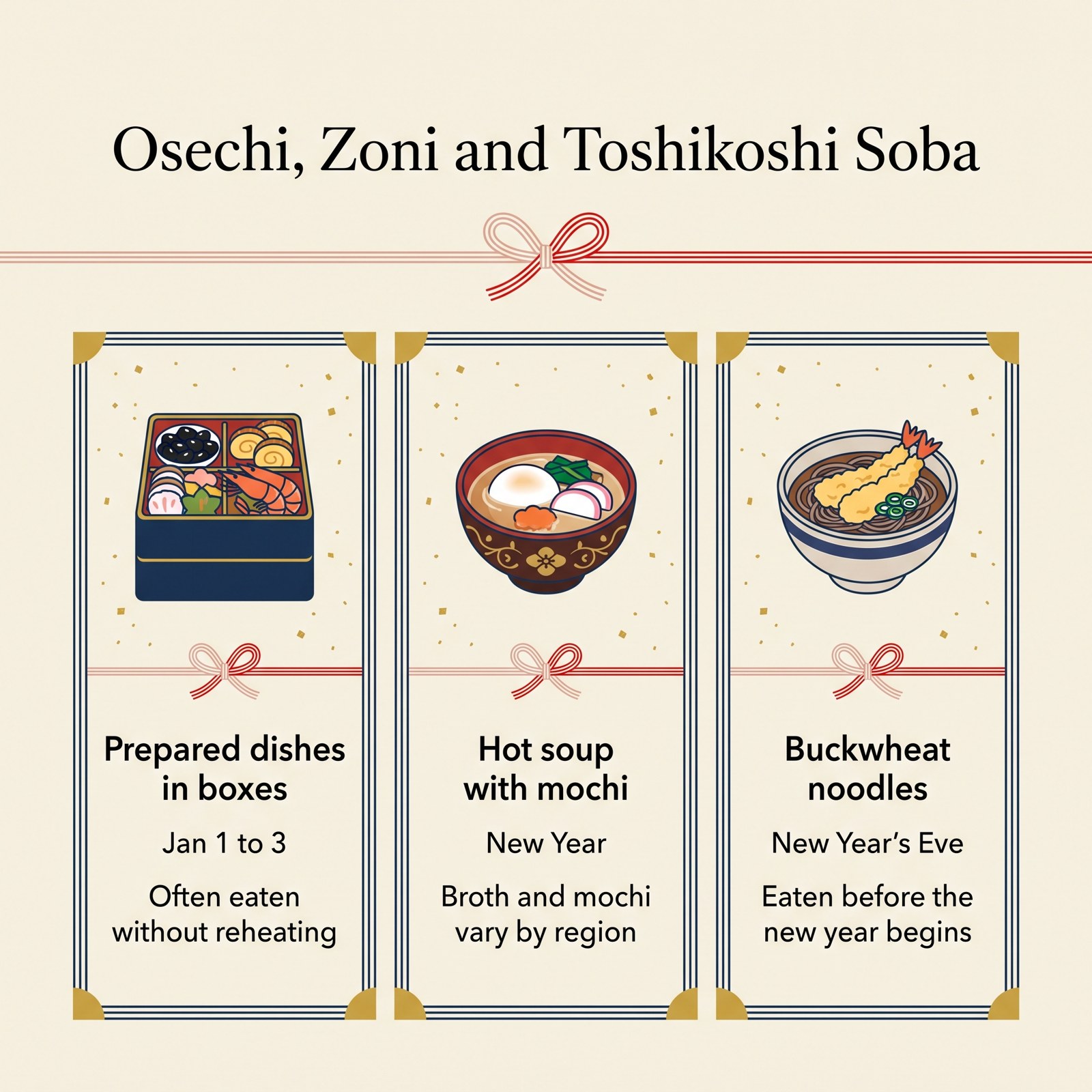
Osechi is a collection of prepared dishes arranged in boxes, while zoni is a hot soup containing mochi rice cakes. Both belong to the New Year table, yet the terms are not interchangeable. Toshikoshi soba, meanwhile, is traditionally eaten on New Year’s Eve, while osechi and zoni belong mainly to the New Year period. Our guide to the regional styles of zoni soup covers the broth and mochi differences.
Regional styles of osechi and zoni
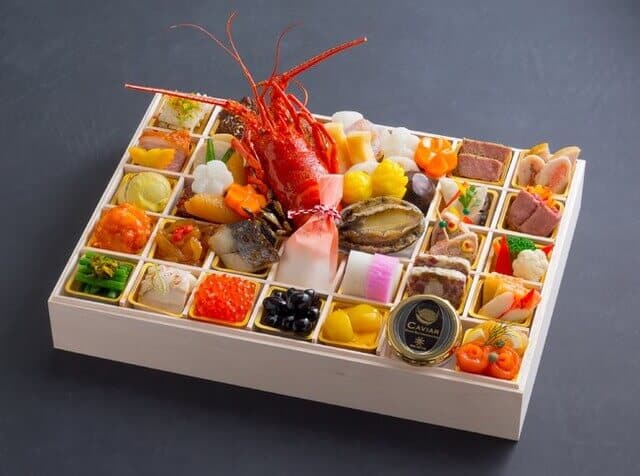
Osechi changes from region to region, because families add local specialties to the standard dishes. Even the celebratory trio differs. In Kanto, the trio is usually described as kazunoko, kuromame, and tazukuri. In Kansai, however, pounded burdock often takes the place of tazukuri.
| Region | Dish associated with New Year | Main ingredient | Distinctive feature |
|---|---|---|---|
| Iwate (Tohoku) | Hizu namasu | Salmon head cartilage | Thin, crunchy slices in vinegar |
| Aomori (Tohoku) | Ichigoni | Sea urchin and abalone | A clear, luxurious coastal soup |
| Akita (Tohoku) | Hatahata zushi | Sandfish, rice, and koji | Fermented pressed fish |
| Fukushima (Tohoku) | Ika ninjin | Dried squid and carrot | Shredded and marinated in soy |
| Niigata (Chubu) | Noppe | Taro and root vegetables | A thick, gently simmered stew |
| Ishikawa (Chubu) | Berobero | Egg set in agar | A sweet-savory jelly with egg ribbons |
| Kyoto (Kansai) | Bodara | Dried cod | Simmered slowly until tender |
| Kagawa (Shikoku) | An-mochi zoni | Mochi filled with sweet bean paste | Served in white miso soup |
| Fukuoka (Kyushu) | Buri zoni | Yellowtail | Zoni built around the “promotion fish” |
How to make a simple osechi at home
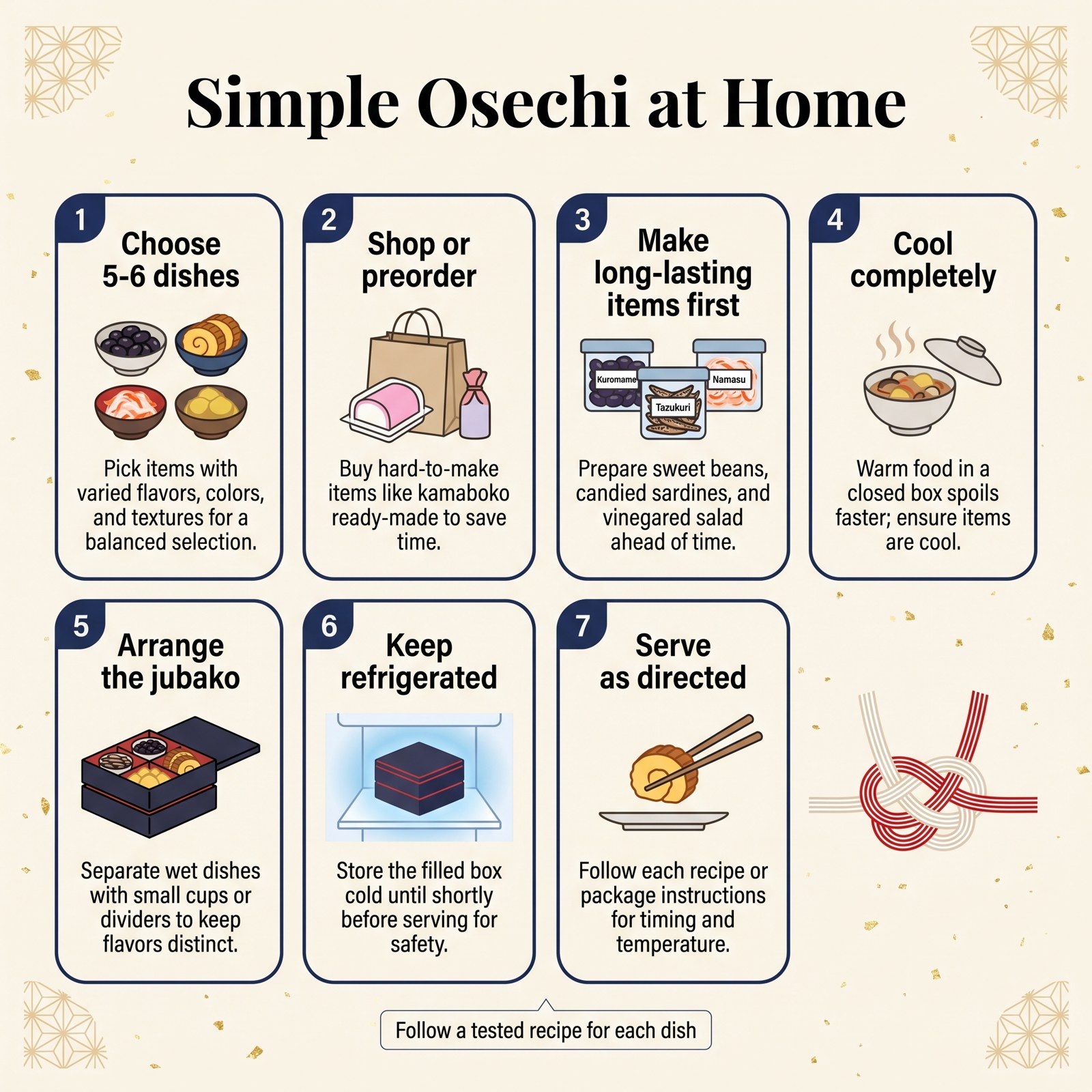
You can make a simple osechi with five or six dishes instead of a full box. A sensible beginner set is kuromame, tazukuri, kohaku namasu, datemaki, kuri-kinton, and simmered vegetables. Because this is a plan and not a single osechi recipe, follow a tested recipe for each dish. The agriculture ministry, for instance, publishes quick versions for busy cooks.
Beginner preparation plan
- Choose the dishes. Pick five or six with different flavors and colors.
- Shop or preorder. Buy hard-to-make items, such as kamaboko, ready-made.
- Prepare long-lasting items first. Sweet beans, candied sardines, and vinegared salad come before delicate dishes.
- Cool foods completely. Warm food in a closed box spoils faster.
- Arrange the jubako. Separate wet dishes with small cups or dividers.
- Refrigerate safely. Keep the box cold until shortly before serving.
- Serve as directed. Follow each recipe or package for timing and temperature.
Vegetarian osechi and other dietary needs
Vegetarian osechi exists, but a vegetable-based look does not guarantee a vegetarian or vegan dish. Dashi may contain bonito, kamaboko contains fish paste, and simmered vegetables may use seafood or meat stock. Many soy sauces contain wheat, although formulations vary. Many boxes also include egg, shellfish, fish, and soy.
Pescatarian diners have more choices, although meat-based stock still needs checking. Halal-conscious travelers should review alcohol-based seasonings such as mirin, meat sources, and preparation practices. Anyone avoiding gluten should check soy sauce, fish products, marinades, and cross-contact warnings. Shojin-style boxes are generally designed without meat or seafood, but ingredients and preparation standards vary by maker. In every case, the label and the seller’s answer matter more than appearance.
Where to buy osechi in Japan
You can buy osechi at department stores, supermarkets, convenience stores, restaurants, hotels, and online shops. Premium tiered boxes usually require a reservation. Major department stores often begin limited early-order campaigns in September, followed by general reservations later that month or in October. For the 2027 season, for example, Isetan offered early reservations for selected products from September 9, 2026, and opened general online reservations on September 30. Dates vary by store and year.
No reservation? You still have options. In late December, department-store food halls and large supermarkets sell individual dishes and small assortments. One-person boxes have also become common. Delivery rules deserve attention, because chilled boxes often ship only within a limited area, while frozen ones travel nationwide.
Travelers face a few extra hurdles. Hotel refrigerators are small, and some hotels refuse chilled parcels. Therefore, buying four to six single dishes is usually easier than a full box. Our practical guide to buying osechi in Japan walks through shops, timing, and hotel storage. This page no longer lists individual restaurants, since their New Year menus and hours change every season.
How much does osechi cost?
The osechi price in Japan varies widely, because portion size, ingredients, seller, and the number of tiers all move the figure. Individual dishes cost much less than complete boxes, while premium multi-tier products can exceed ¥30,000.
As a dated benchmark, a Teikoku Databank survey for the 2026 New Year covered 110 companies and brands. It reported an average tax-inclusive price of ¥29,098 for a standard three-tier box or a product for three to four people. That was ¥1,054, or 3.8 percent, higher than the year before. However, the figure applies only to the survey’s comparable products. It should not be treated as the average for single-person boxes, individual dishes, or every premium product.
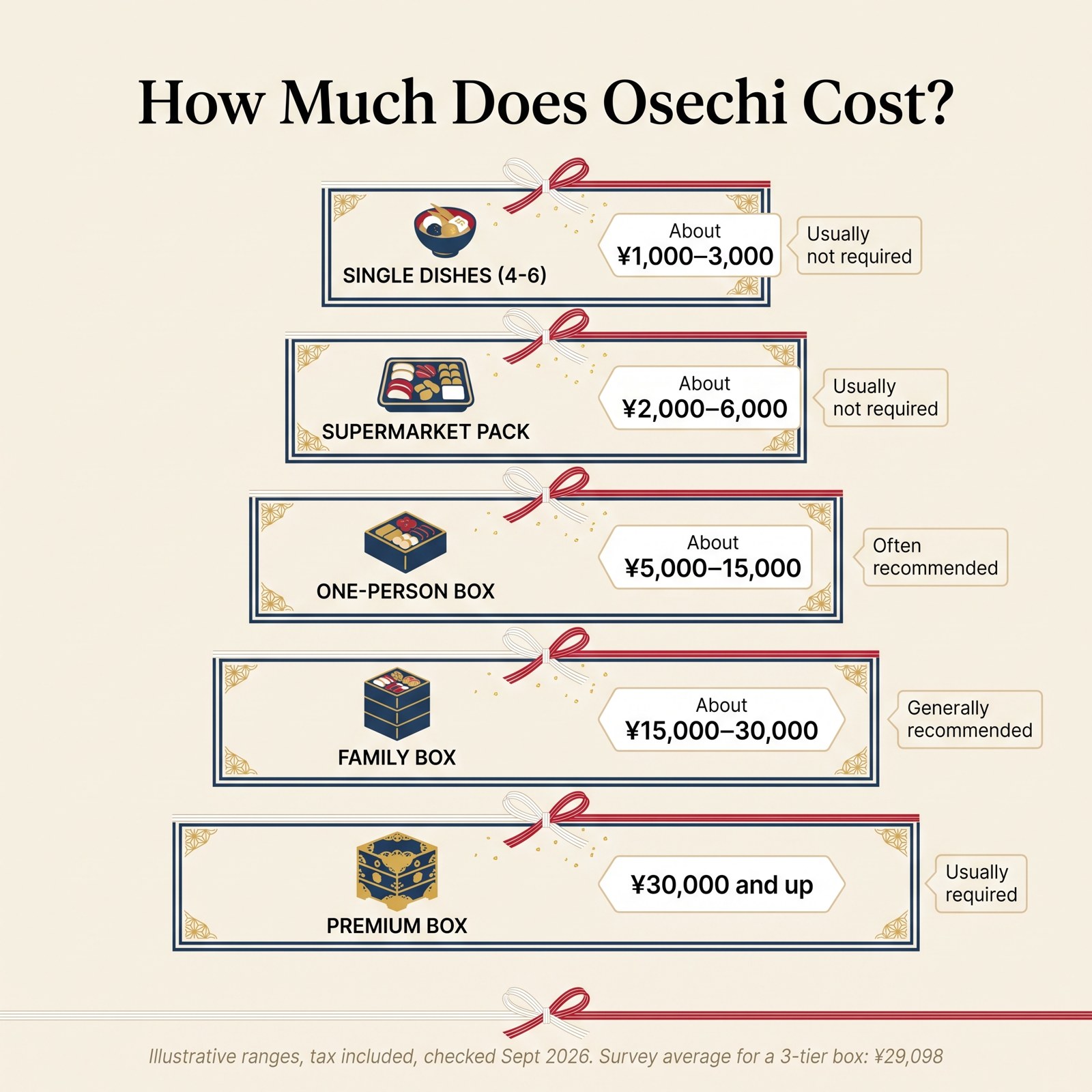
| Type | Rough price (tax included) | Reservation |
|---|---|---|
| Budget tasting of 4 to 6 single dishes | About ¥1,000 to ¥3,000 | Usually not required |
| Supermarket assortment pack | About ¥2,000 to ¥6,000 | Usually not required |
| One-person or single-tier box | About ¥5,000 to ¥15,000 | Often recommended |
| Standard family box | About ¥15,000 to ¥30,000 | Generally recommended |
| Premium department-store, restaurant, or hotel box | ¥30,000 and up | Usually required or strongly recommended |
Storage, delivery, and thawing
Storage rules differ among chilled, frozen, shelf-stable, homemade, and freshly prepared osechi, so no single shelf life applies. Always follow the temperature, the date, and the serving instructions on the package. Japan uses two date labels. A use-by date (shohi kigen) applies to foods that can become unsafe relatively quickly. A best-before date (shomi kigen), in contrast, shows how long an unopened product should keep its expected quality when stored as directed.
Keep a frozen box frozen until the recommended thawing time. Many sellers tell customers to thaw it slowly in the refrigerator, although the hours vary by product. Do not refreeze a thawed box unless the maker allows it. For homemade dishes, cool them fully, refrigerate them, and eat the delicate items first.
How to eat osechi
Eating osechi is relaxed: unstack the tiers, lay them side by side, and take small portions onto your own plate. Use serving chopsticks if the host provides them. Many households set out iwai-bashi, festive chopsticks tapered at both ends. Beyond that, simply try a little of everything and return to what you like. Take only what you will eat, and put the rest back in the refrigerator.
Conclusion
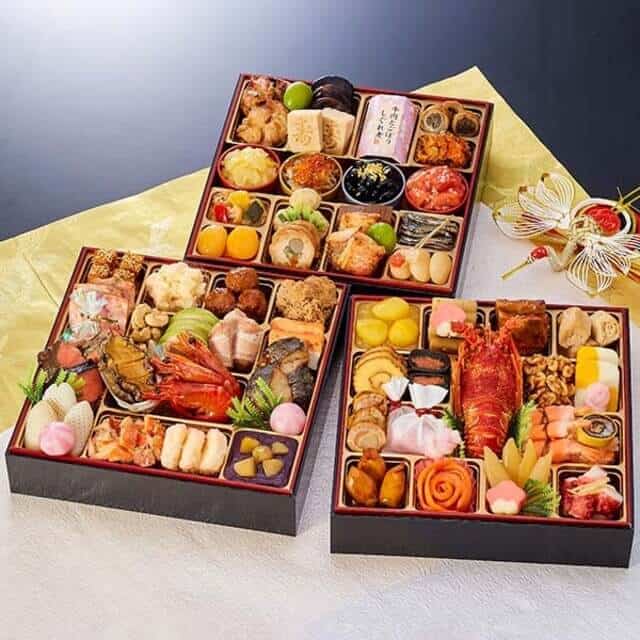
Osechi ryori is Japan’s New Year feast: many small dishes, prepared ahead and shared from stacked boxes during the first days of January. Its dishes carry meaning because cooks chose ingredients whose names, colors, or shapes suggested health, harvest, and family luck. The contents differ across households and sellers, and that variety is part of the tradition.
You can experience it in three ways. Cook five or six dishes at home, preorder a box in autumn, or simply buy a few single items in late December. If available, pair the dishes with a bowl of hot zoni. Together, they show how Japan begins its year.
Osechi FAQ
Basics
- What is osechi ryori?
-
It is a collection of traditional Japanese New Year dishes, usually packed in tiered jubako boxes. The meal has no single fixed recipe. Instead, it combines many small dishes, and many traditional ones carry a symbolic wish. Contents vary by region, household, and seller.
- Why do Japanese people eat osechi?
-
Families eat it to welcome the New Year and share wishes for good fortune and prosperity. Traditional explanations connect the dishes with offerings to Toshigami, the New Year deity. Preparing many items ahead also reduced holiday cooking and gave the people responsible for the meal time to rest.
- When do Japanese people eat osechi?
-
The meal is commonly eaten during the first three days of January. Some regions and families, however, start on New Year’s Eve. Customs vary, and not every household prepares a box each year.
Serving and storing
- Is osechi served hot or cold?
-
Many dishes are eaten without reheating. You can warm some grilled or simmered items if the package allows it. Move them to a microwave-safe dish first. Do not microwave traditional lacquerware or any container not labeled microwave-safe. Zoni, the soup served alongside, is hot.
- How long does osechi last?
-
It depends on the product. Chilled, frozen, shelf-stable, and homemade dishes all follow different rules. Check the printed date and storage temperature on each package instead of assuming a number of days. Once you open or thaw a box, eat it promptly.
- Is vegetarian osechi available?
-
Yes, but you need to look for it specifically. Standard boxes use fish stock, fish paste, egg, and seafood, even in dishes that look vegetable-based. Shojin-style boxes are generally designed without meat or seafood, although ingredients and preparation standards vary by maker. Always read the ingredient and allergen list.
Buying
- How much does osechi cost?
-
It depends on size and seller. A 2026 survey reported an average of ¥29,098 for comparable three-tier or three-to-four-person products. Individual dishes and small assortments cost far less, while premium boxes can exceed ¥30,000.
- Do I need to reserve osechi?
-
Advance reservations are usually recommended for tiered boxes from department stores, restaurants, and hotels, especially for popular or limited products. Orders often open in early autumn. Single dishes and small assortments, on the other hand, usually need no reservation. Shops put them out in the last days of December.
- Can travelers buy individual osechi dishes?
-
Yes. Department-store food halls and large supermarkets sell single packs of kuromame, datemaki, kamaboko, and more in late December. Selection may become limited as December 31 approaches, so buying earlier in the sales period gives more choice. Small packs also fit a hotel refrigerator far better than a full box.
About this guide
- Last verified
- October 4, 2026
- Editorial review
- Food in Japan editorial team
- Sources checked
- MAFF, Teikoku Databank’s original 2026 osechi price survey, retailer pages, and an academic conference abstract
- Update note
- We rebuilt the history and symbolism sections on government sources, corrected the description of kazunoko, removed an unsupported explanation about water and the gods, and replaced the restaurant directory with dated buying and price guidance.
References
- Ministry of Agriculture, Forestry and Fisheries (MAFF) – Osechi is a meal that wishes for a year of good fortune (おせちは一年の幸を願う料理) (Accessed October 2026)
- Ministry of Agriculture, Forestry and Fisheries (MAFF) – Prayers for happiness packed into osechi (おせち料理に、しあわせへの祈りを詰め込んで) (Accessed October 2026)
- Ministry of Agriculture, Forestry and Fisheries (MAFF) – Use-by dates and best-before dates (消費期限と賞味期限) (Accessed October 2026)
- Government of Japan, Highlighting Japan – Osechi ryori and its New Year wishes, January 2025 (Accessed October 2026)
- Teikoku Databank – 2026 New Year Season Osechi Price Survey (2026年正月シーズン「おせち料理」価格調査), published November 15, 2025 (Accessed October 2026)
- Isetan Mitsukoshi – Isetan Osechi 2027 (Accessed October 2026)
- Japan Society of Cookery Science – Ueda, F., & Kanda, A. (2005). A study of New Year dishes as traditional food culture. Conference abstract, Annual Meeting Abstracts, 17, 169 (Accessed October 2026)
Related Articles
- Where to Buy Osechi in Japan: Traveler’s Guide (Last checked: October 2026)
- Japanese Food for New Year (Last checked: October 2026)
- Zoni (雑煮) (Last checked: October 2026)
- Kuromame (黒豆) (Last checked: October 2026)
- Kazunoko (数の子) (Last checked: October 2026)
- Datemaki (伊達巻) (Last checked: October 2026)
- Kamaboko (蒲鉾) (Last checked: October 2026)
- Kobumaki (昆布巻き) (Last checked: October 2026)
- Kuri Kinton (栗きんとん) (Last checked: October 2026)
- Toshikoshi Soba (年越しそば) (Last checked: October 2026)



Comments