


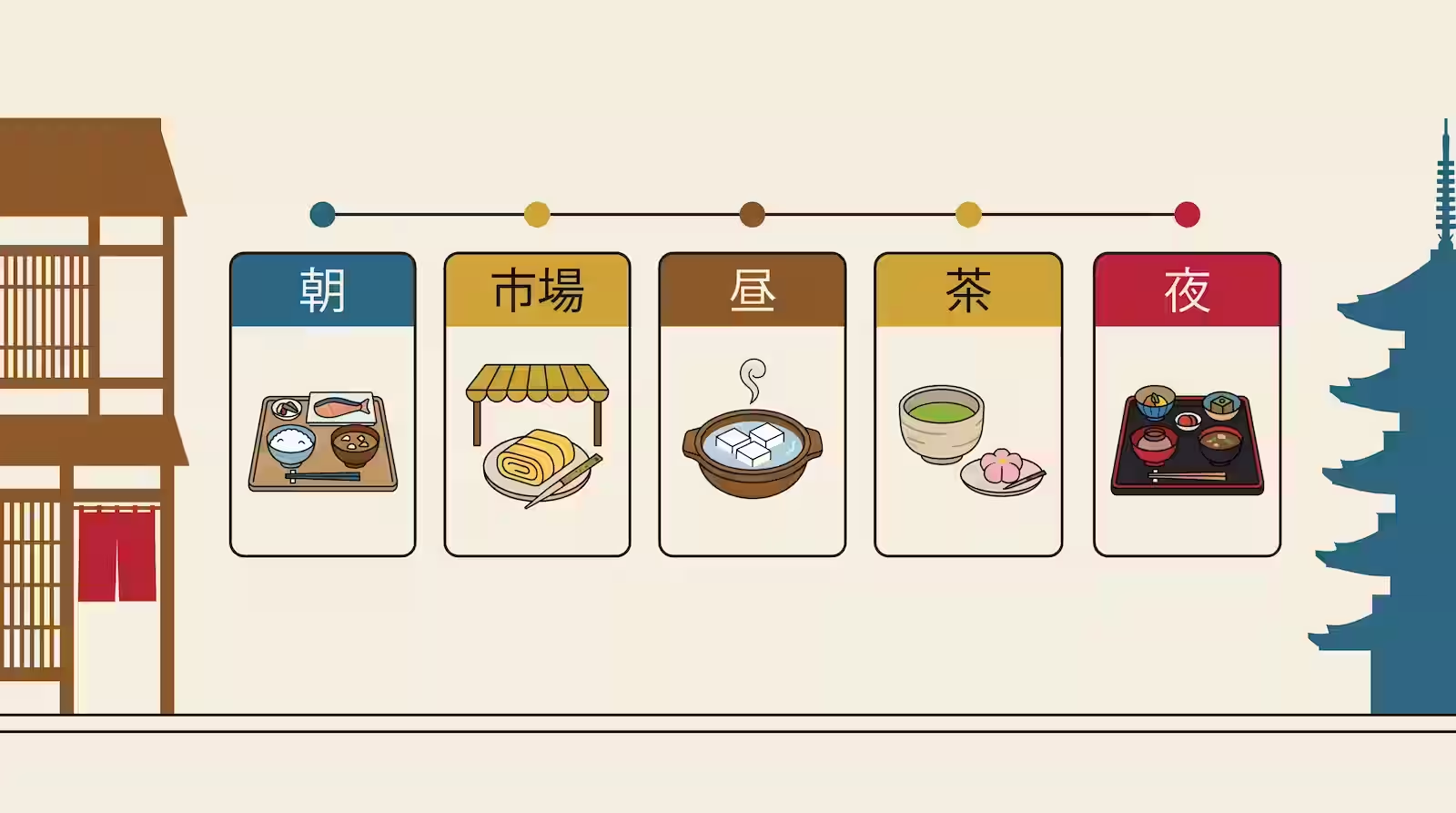

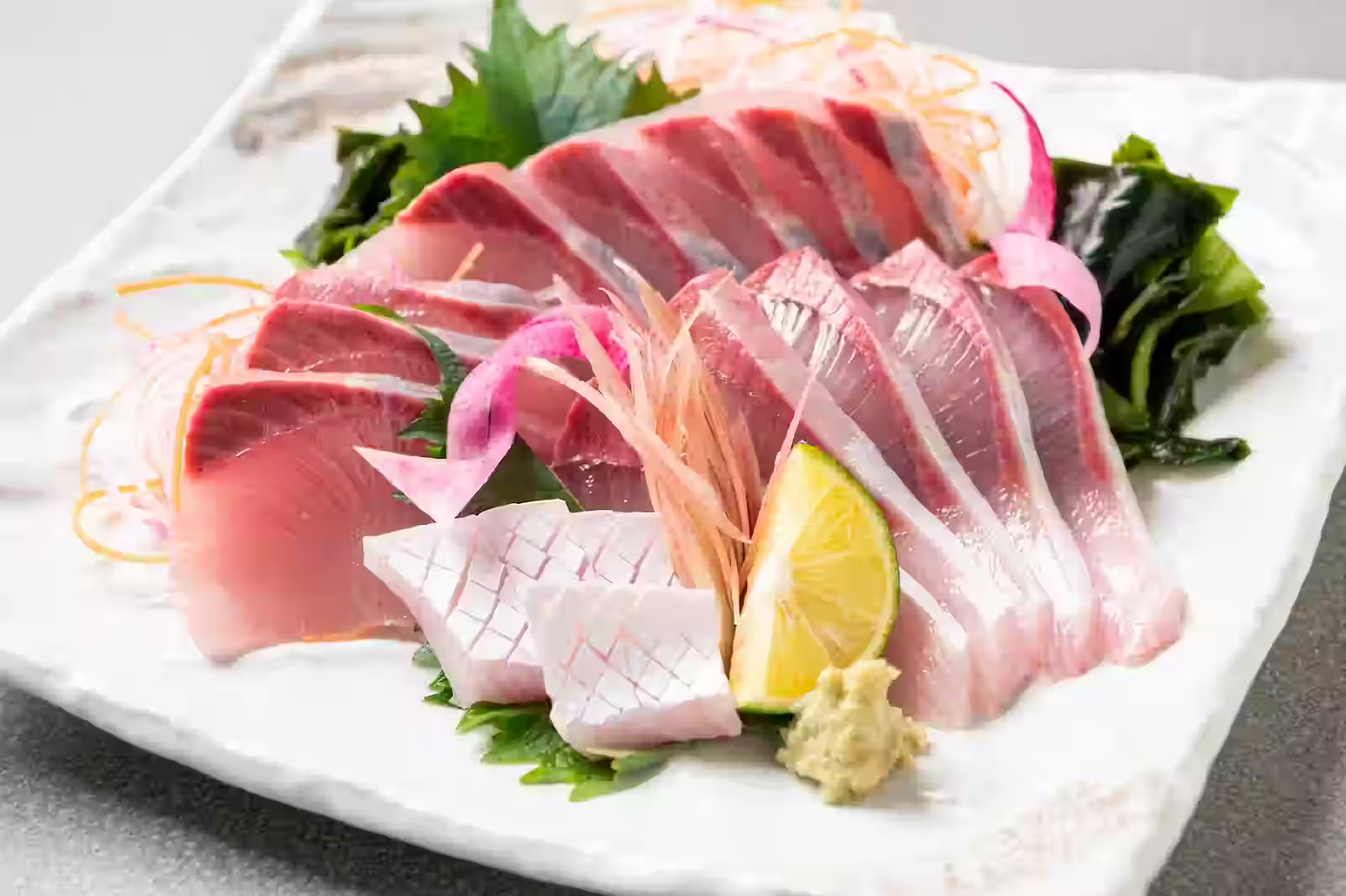

You have one day in Kyoto, a list of temples, and room for a few memorable meals. So where should you begin? Many first-time visitors eventually ask 京都で何食べる (Kyoto de nani taberu?), meaning “What should I eat in Kyoto?”
The answer is not to chase every famous dish across the city. Instead, match a few distinctly Kyoto meals to the neighborhoods already on your route. This guide follows one realistic day, from breakfast and Nishiki Market to lunch, tea, and dinner.
How to Plan a Kyoto Food Day
Plan meals around your sightseeing, not the other way around. Kyoto looks compact, but its main districts are spread across the city, and buses can slow down during peak seasons. For that reason, the city’s official travel guide suggests combining trains or the subway with buses.
Quick Facts
- Best for
- First-time visitors with one full day
- Main areas
- Central Kyoto, Higashiyama (the eastern temple district), Kyoto Station
- Reserve ahead
- Kaiseki dinners and popular lunch restaurants
- Dietary note
- Tofu and vegetable dishes may contain fish-based dashi (soup stock)
Choose lunch near your morning sights and dinner near your hotel or route home. Then give each stop a different role, so that no two heavy meals land on the same day. If you prefer to browse individual dishes, see our complete guide to what to eat in Kyoto.
The Day at a Glance
- MorningLight Japanese breakfast or a coffee-shop setNear your hotel
- Late morningTwo or three small tastesNishiki Market
- LunchYudofu, obanzai, or nishin sobaWherever you are sightseeing
- AfternoonTea with a seasonal sweetA tea room in central Kyoto
- EveningObanzai or kaisekiNear your hotel
What Traditional Kyoto Food Tastes Like
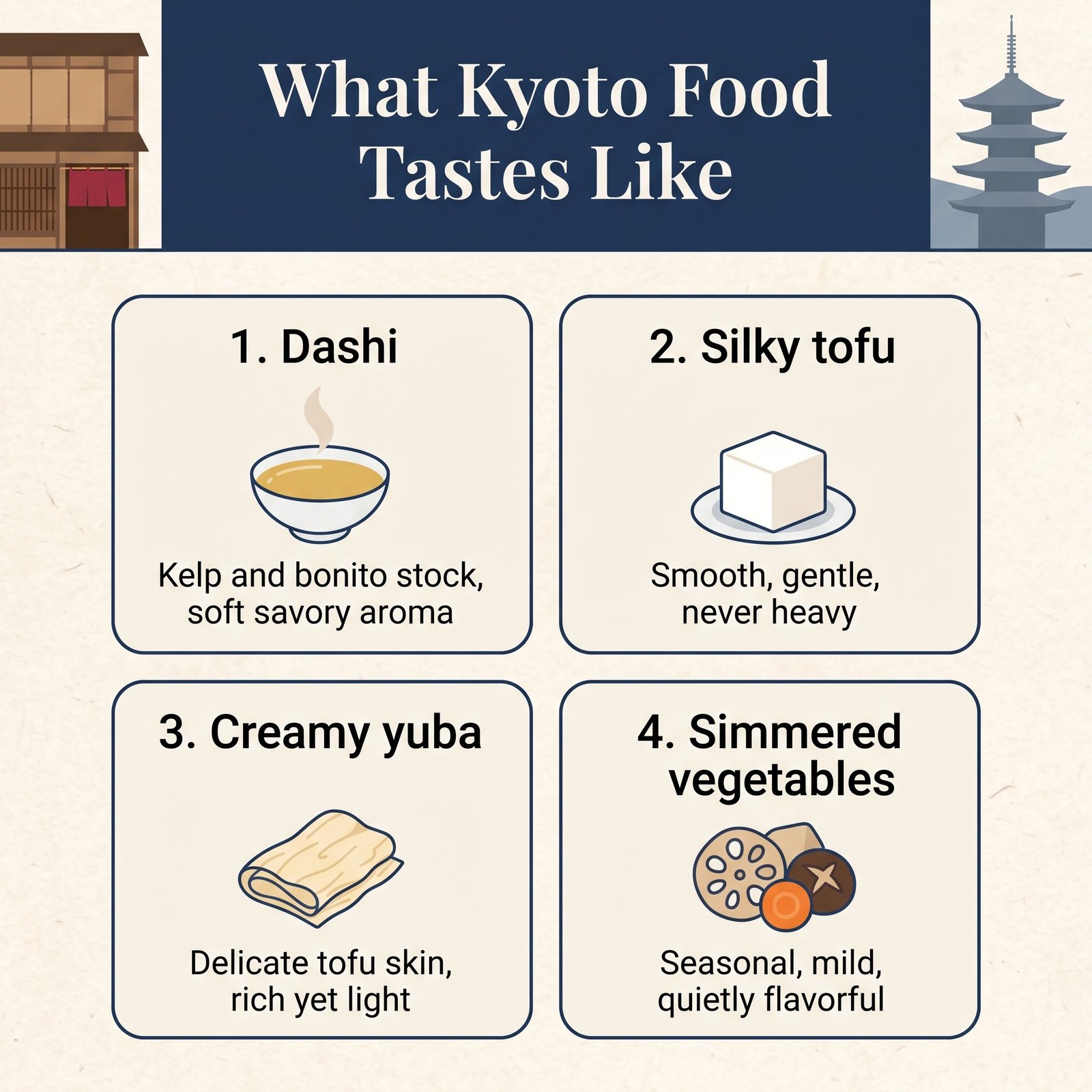
Many traditional Kyoto dishes taste more restrained than first-time visitors expect. Their foundation is often dashi, a stock made with ingredients such as kombu (kelp) and bonito flakes, so the first impression is a soft, savory aroma rather than salt or spice. Texture matters as well: silky tofu, creamy yuba (tofu skin), and gently simmered vegetables. At first these flavors can seem almost too subtle, yet that restraint is often what people remember most fondly. Our overview of Kyoto cuisine and its culinary traditions covers the history behind them.
Morning: Begin with a Light Japanese Breakfast
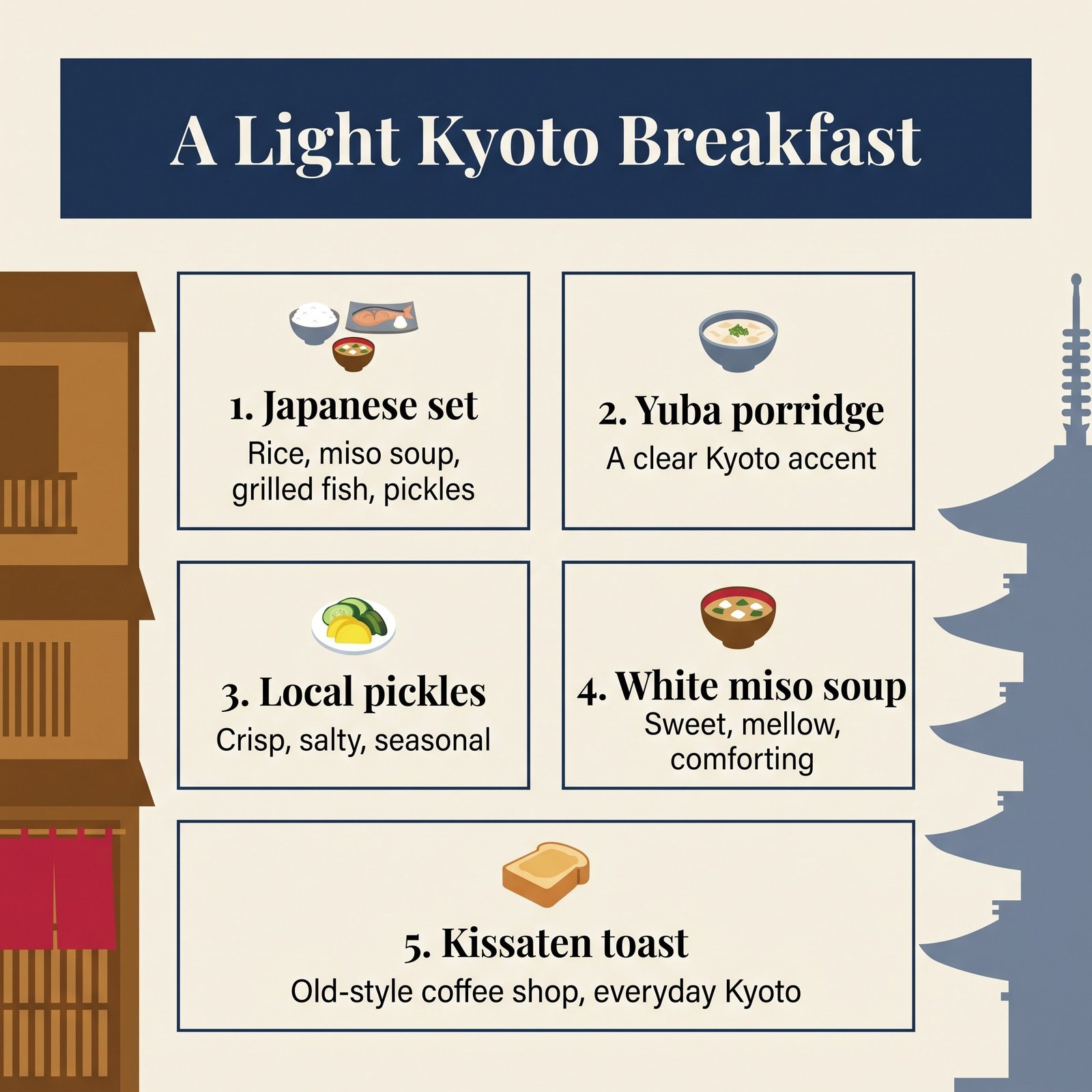
Start with a light breakfast that leaves room for the rest of the day. A Japanese set of rice, miso soup, grilled fish, and pickles offers a traditional beginning. For a clearer Kyoto accent, look for yuba porridge, local pickles, or sweet white miso soup.
Toast and coffee at a neighborhood kissaten, an old-style Japanese coffee shop, is another good choice because it shows a more everyday side of the city. Eat early if you plan to visit a popular temple before the largest crowds. Also, check current opening hours before leaving your hotel, since they can change.
Late Morning: Explore Nishiki Market Without Overeating
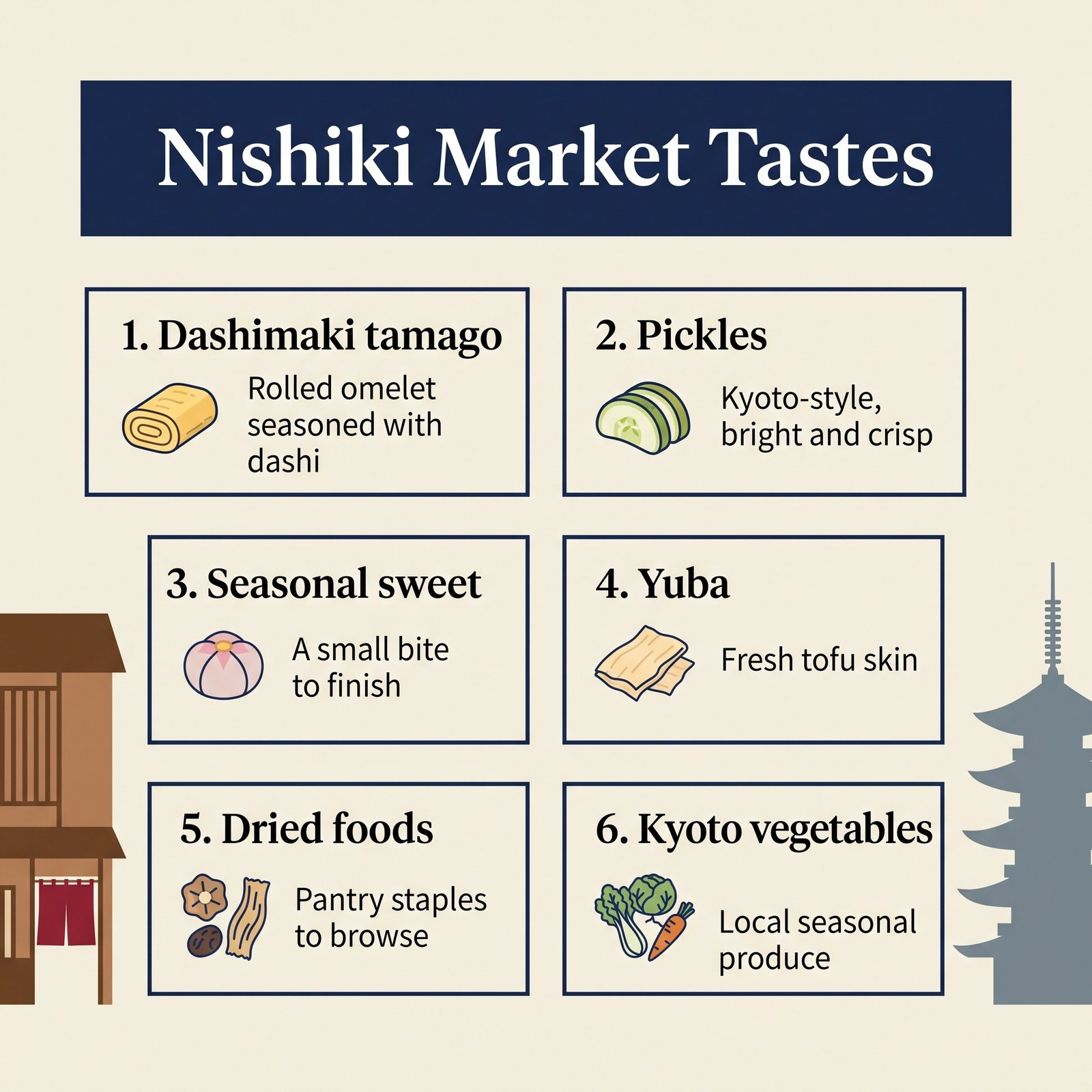
Nishiki Market is a historic food market in central Kyoto, not simply a street-food strip. According to the city’s official travel guide, the roughly 400-meter arcade is known as the “Kitchen of Kyoto.” Its shops sell fish, dried foods, side dishes, yuba, pickles, and Kyoto vegetables.
Treat it as a place to sample rather than as lunch. Choose two or three small items, such as dashimaki tamago (a rolled omelet seasoned with dashi), pickles, or a seasonal sweet. Each shop sets its own hours and closing days, so check before you go.
Market rule: do not eat while walking
Eat at the shop where you bought the food, either at the storefront or in its seating area. Then return the packaging to that same shop.
Lunch: Choose One Distinctly Kyoto Meal
Choose one lunch that fits where you already are. Each option shows a different side of Kyoto cooking, so let your route decide.
Near Nanzenji
湯豆腐
Yudofu
Gently warmed tofu; light enough to leave room for a sweet
Central Kyoto
おばんざい
Obanzai
Home-style small dishes; easy to sample as a set meal
Near Kyoto Station
にしんそば
Nishin soba
Hot noodles with simmered herring; a quick lunch
Near Nanzenji: Yudofu
If your morning includes Nanzenji, a Zen temple in northern Higashiyama, 湯豆腐 (yudofu) is a natural lunch choice. The gently warmed tofu is light enough to leave room for an afternoon sweet. However, its dipping sauce or side dishes may contain fish-based dashi, so vegetarian and vegan diners should ask before ordering. Learn more in our guide to Kyoto yudofu.
In Central Kyoto: Obanzai
Staying downtown after Nishiki Market? Then try おばんざい (obanzai), Kyoto-style home cooking centered on seasonal vegetables, tofu, dried ingredients, and small simmered dishes. Set meals make it easy to sample several flavors without ordering a formal course. Our dedicated article explains this traditional Kyoto home cooking in more detail.
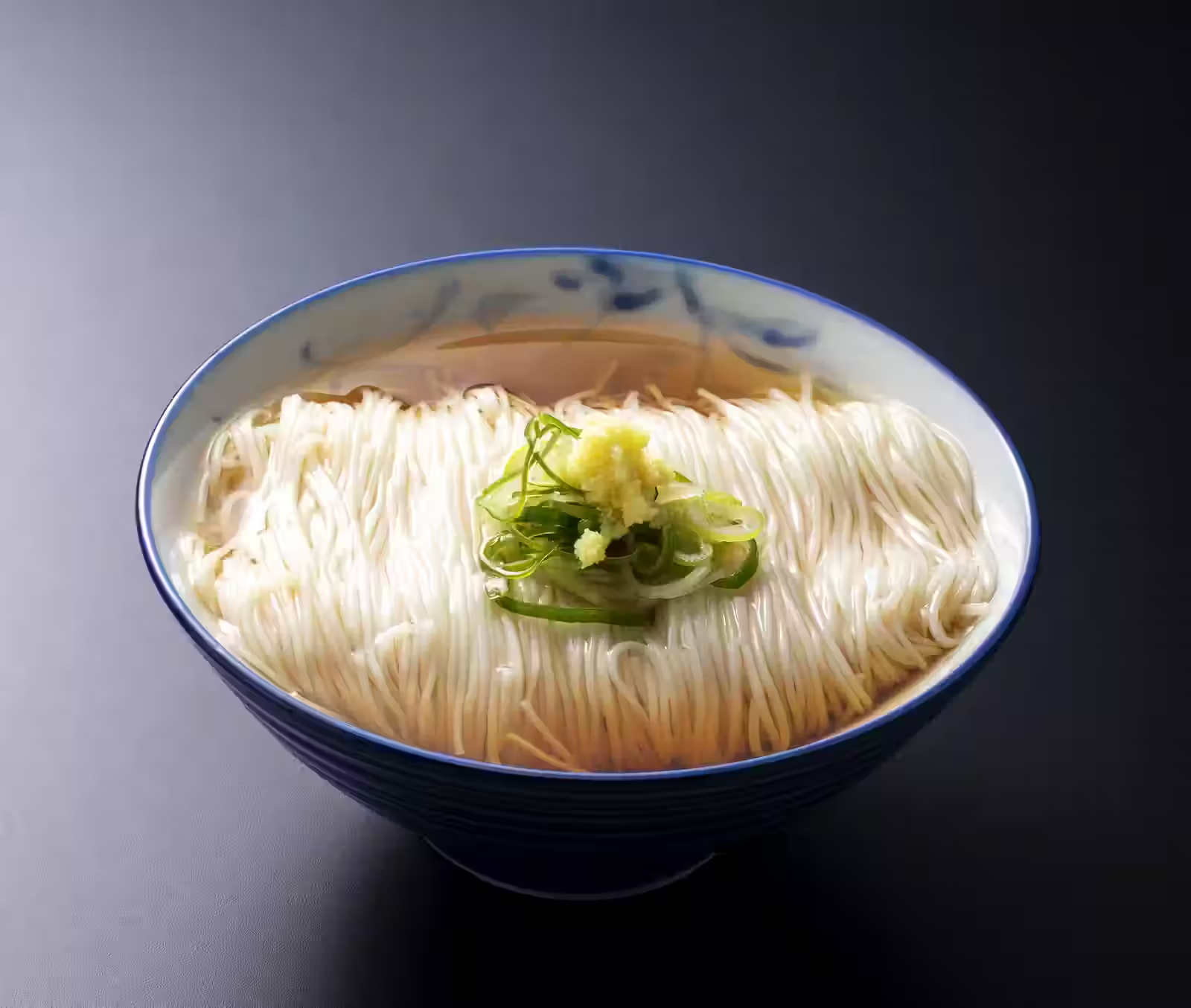
Near Kyoto Station: Nishin Soba
If you are near Kyoto Station or short on time, choose にしんそば (nishin soba). The dish pairs hot buckwheat noodles with sweet-savory simmered herring, and it works well as a quick lunch. Read our guide to Kyoto-style nishin soba for its history.
Afternoon: Matcha, Uji Tea, or Seasonal Wagashi
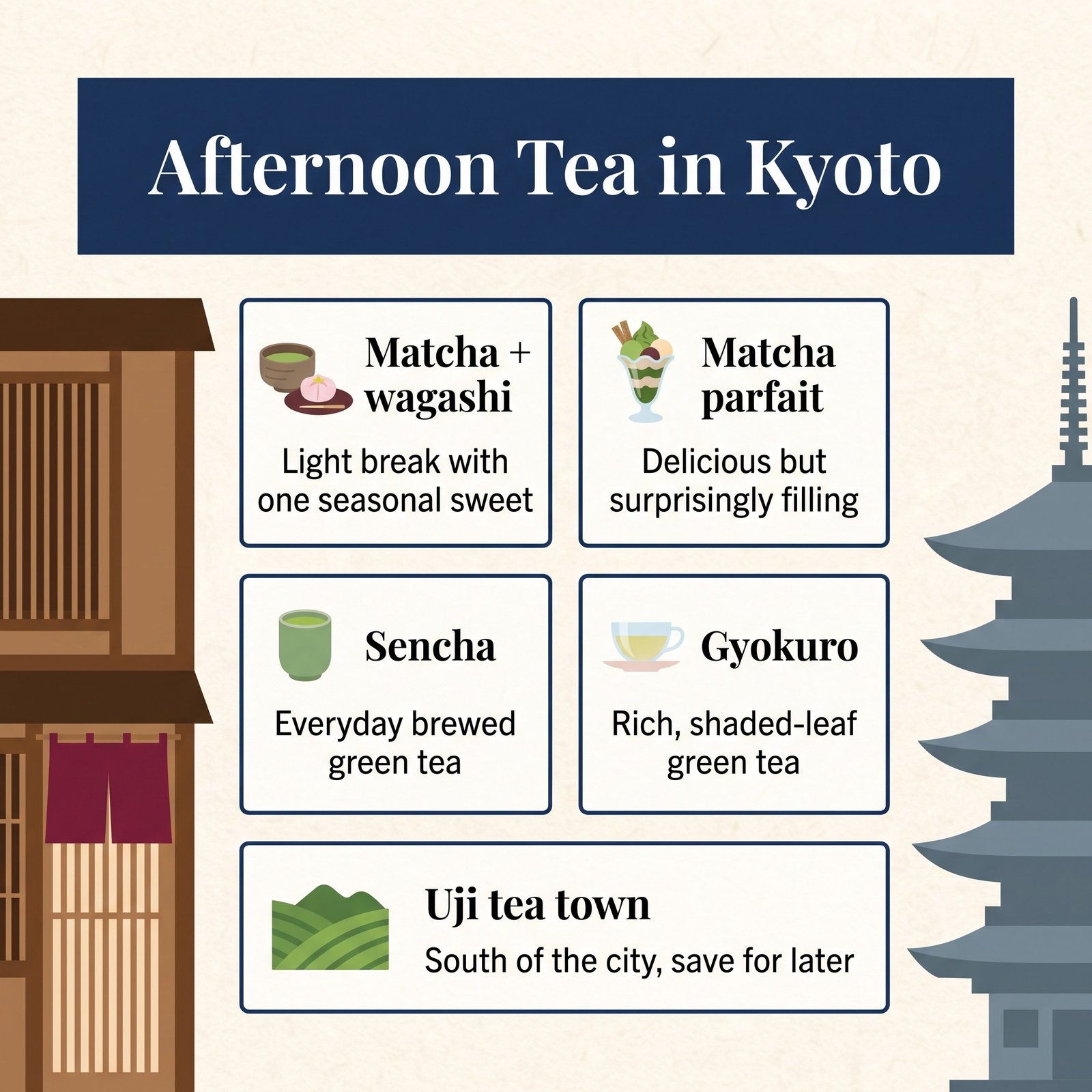
After lunch, slow down with tea. A matcha parfait can be surprisingly filling, so order matcha with one seasonal wagashi, a traditional Japanese sweet, if you want a lighter break. According to the Kyoto Prefectural Tea Industry Chamber, 宇治茶 (Uji cha) also includes sencha and gyokuro, two styles of brewed green tea, not only matcha.
With only one day in central Kyoto, choose a nearby tea room rather than making a separate trip to Uji, the tea town south of the city. Save Uji for a longer visit, and read our guide to Uji tea and matcha for the different tea styles.
Staying Connected While Following Your Kyoto Food Route
Kyoto’s food districts are spread across the city, so mobile data is useful for checking opening hours, following train and bus routes, confirming reservations, and translating menu items. It can also help you show dietary requirements in Japanese.
Travelers who prefer not to replace their physical SIM card can consider holafly, an eSIM website that provides virtual SIM cards for compatible devices. Before purchasing, confirm that your phone supports eSIM technology, is carrier-unlocked, and is compatible with the selected plan.
Dinner: Choose Between Obanzai and Kaiseki
Dinner comes down to budget and mood. Do you want a relaxed counter meal, or should dinner itself be the main event?
Casual
Obanzai おばんざい
- Best for
- A relaxed evening
- Format
- Small plates, sometimes displayed at the counter
- Plan ahead
- Ask about dashi if you have dietary restrictions
Special
Kaiseki 懐石料理
- Best for
- An evening built around the meal
- Format
- A seasonal multi-course meal served in a set order
- Plan ahead
- Reserve, share allergies, and arrive on time
Casual Dinner: Obanzai
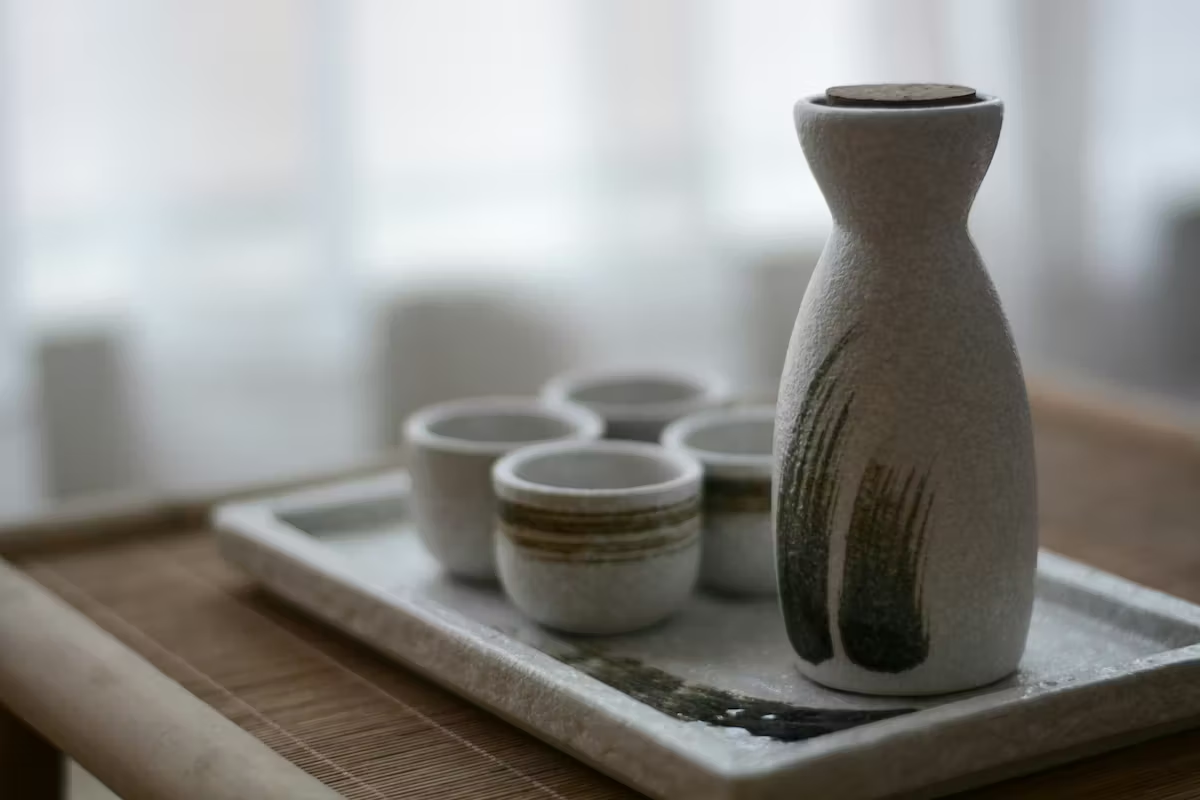
Choose obanzai for a relaxed evening. Some restaurants display the day’s dishes at the counter, so you can see what is available before ordering. Small plates also pair well with local sake. Ask about dashi if you have dietary restrictions.
Special Dinner: Kyo-Kaiseki
Choose 懐石料理 (kaiseki ryori), Kyoto’s formal multi-course cuisine, when dinner itself is the evening’s main experience. The course unfolds through seasonal ingredients, carefully selected tableware, and a deliberate order of dishes. As a result, dinner generally takes longer and costs more than lunch.
Reservations are strongly recommended, especially for popular restaurants and seasonal courses. Share allergies when booking, arrive on time, and check cancellation and service-charge policies directly with the restaurant. For the tradition behind the meal, see our guide to kaiseki ryori.
Three Alternative Kyoto Food Itineraries
There is no single answer to 京都で何食べる, because budget, diet, and occasion all change the plan. Here are three ways to adapt the same day.
Budget-Friendly Route
- BreakfastBakery or simple Japanese set
- Nishiki MarketTwo small tastes
- LunchNishin soba or Kyoto ramen
- AfternoonWagashi with tea
- DinnerCasual obanzai
Vegetarian-Friendly Route
- BreakfastRice, pickles, and soup after checking the dashi
- Nishiki MarketConfirmed plant-based snacks
- LunchYudofu or shojin ryori (Buddhist temple cuisine)
- AfternoonMatcha and wagashi
- DinnerVegetarian-friendly obanzai reserved in advance
Before you order
Tofu and vegetable dishes are not automatically vegetarian or vegan. Dashi, dipping sauces, and soup bases may contain fish ingredients, so explain exactly what you cannot eat, as JNTO advises.
Special-Occasion Route
- BreakfastLight hotel breakfast
- Late morningOne seasonal wagashi
- LunchTofu or yuba set
- AfternoonTea experience
- DinnerReserved kaiseki course
Practical Tips for Eating Around Kyoto
- First, check current opening hours and closing days.
- Reserve kaiseki and popular restaurants in advance.
- Arrive on time, and cancel properly if your plans change.
- Explain allergies and dietary restrictions when booking or before ordering.
- Also, carry some cash and check accepted payment methods.
- Finally, follow Nishiki Market’s rules for eating and returning packaging.
Hours, prices, and reservation rules can change, so always confirm them on each restaurant’s official website.
Conclusion: One Day, Several Sides of Kyoto
There is no single answer to 京都で何食べる. For a first visit, combine one local breakfast, a few market tastes, a distinctly Kyoto lunch, seasonal tea and sweets, and a dinner that suits your budget. You will not taste everything in one day, but you will experience several sides of Kyoto without spending the whole trip traveling between restaurants.
Frequently Asked Questions
- Can I eat while walking in Nishiki Market?
-
No. The market asks visitors not to eat while walking through the arcade. Instead, eat at the shop where you bought the food or in its seating area, then return the packaging to the same shop.
- Is yudofu vegetarian or vegan?
-
Not automatically. The tofu may be heated in kombu stock, but dipping sauces and side dishes can contain bonito or other fish ingredients. Ask specifically about dashi before ordering.
- Do I need a reservation for kaiseki in Kyoto?
-
Reservations are strongly recommended, especially for dinner, popular restaurants, and seasonal courses. Share dietary restrictions when booking. Also, confirm the restaurant’s cancellation policy before you commit.
References
- Kyoto City Official Travel Guide – Food & Drink (Accessed October 2026)
- Kyoto City Official Travel Guide – Getting Around Kyoto (Accessed October 2026)
- Kyoto City Official Travel Guide – Kyoto Nishiki Food Market (Accessed October 2026)
- Kyoto Nishiki Market Shopping District Promotion Association – Request and Information for Visitors (Accessed October 2026)
- Kyoto Prefectural Tea Industry Chamber – Learn about Uji Tea (Accessed October 2026)
- Japan National Tourism Organization – A Vegetarian and Vegan Guide to Japan (Accessed October 2026)
- Holafly – eSIM Plans for Travelers (Accessed October 2026)
Related Articles
- What to Eat in Kyoto: 20 Must-Try Foods for Every Visitor (Surveyed: October 2026)
- Obanzai (おばんざい) (Surveyed: October 2026)
- Yudoufu (湯豆腐) (Surveyed: October 2026)
- Nishin soba (にしんそば) (Surveyed: October 2026)
- Uji cha (宇治茶) (Surveyed: October 2026)
- Shojin ryori (精進料理) (Surveyed: October 2026)






Comments