



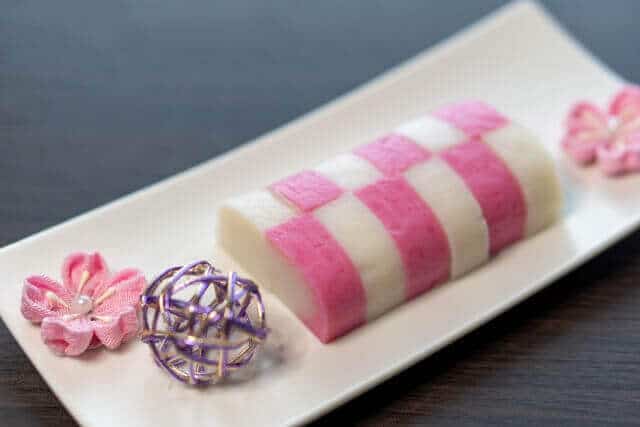
Kamaboko is a traditional Japanese fish cake made from seasoned white fish paste. Most versions have a soft, springy texture and a mild, clean seafood flavor. In Miyagi Prefecture, the most beloved style is sasa kamaboko — a bamboo-leaf-shaped fish cake lightly grilled for a smoky aroma and elastic bite. If you have heard of kamaboko but are not quite sure what it is, this guide covers everything you need to know.
What Is Kamaboko?
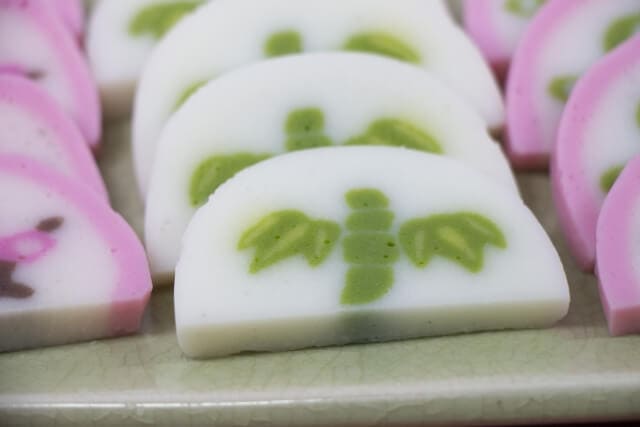
Kamaboko (蒲鉾) is a Japanese processed seafood product made from white fish paste called surimi. Surimi comes from white-fleshed fish like cod, threadfin bream, or pollock. Craftsmen season the paste, shape it, and cook it by steaming, grilling, or deep-frying. The result is a protein-rich, low-fat food that works as a standalone snack or as an ingredient in soups, hot pots, and celebration meals.
There is no perfect English translation. “Fish paste,” “fish loaf,” and “fish cake” all come close, but none fully captures what kamaboko is. Using the Japanese name is the most accurate choice.
The texture is what surprises many first-time eaters. Kamaboko is not flaky or soft like cooked fish. Instead, it has a bouncy, elastic chew — firm but yielding at the same time. That springy quality, called ashi in Japanese, is a sign of quality.
Sasa Kamaboko: Miyagi’s Grilled Fish Cake
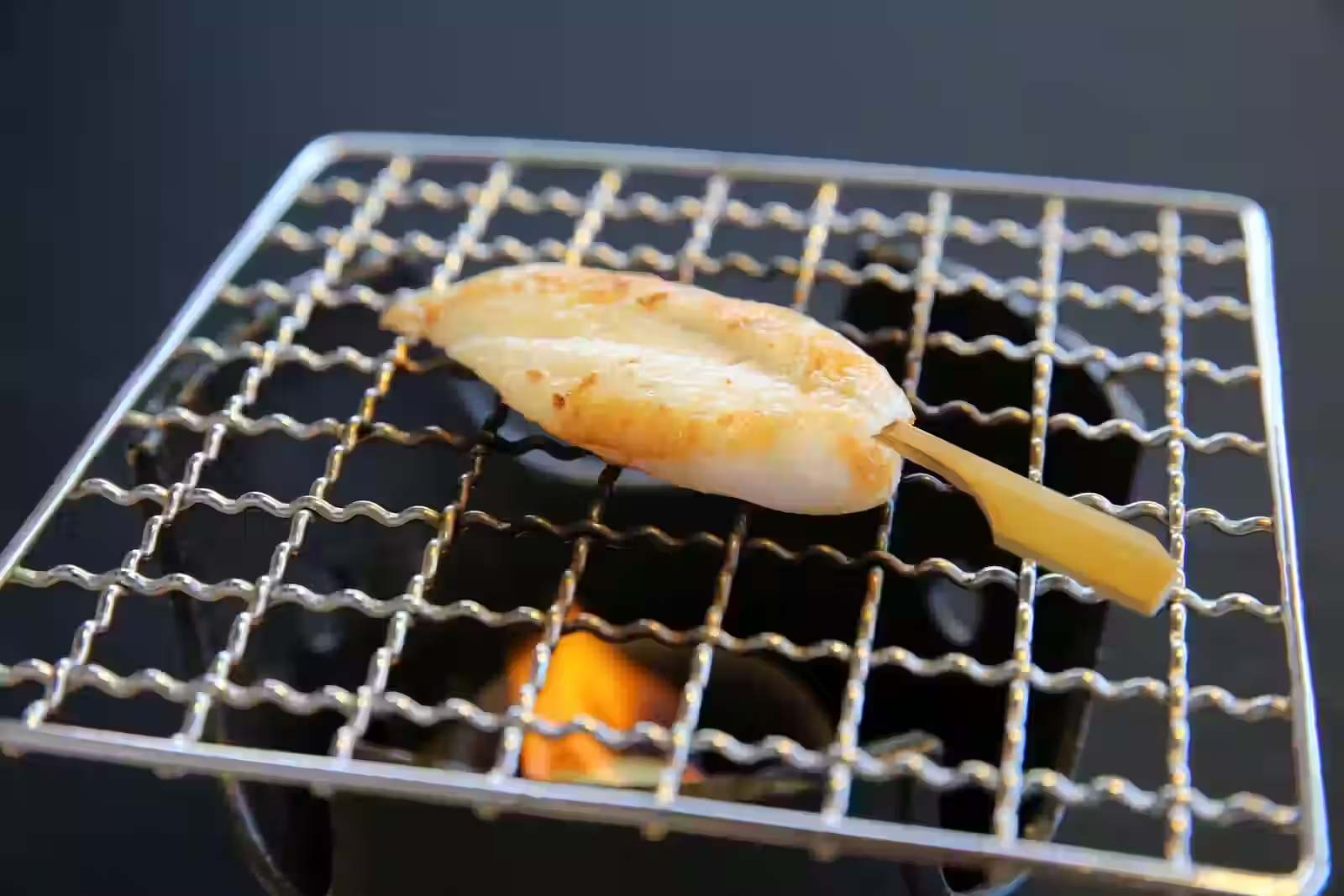
Sasa kamaboko is the most distinctive kamaboko style in the Tohoku region. Craftsmen mold white fish paste into a shape that mimics a bamboo leaf, then grill it lightly before serving. The surface develops a pale golden char. That gentle smokiness sets it apart from steamed varieties.
Eating sasa kamaboko fresh from the grill is a completely different experience from the packaged version. The texture is warmer and slightly looser, with a faint woodsy aroma. In Sendai, specialist shops at the station and downtown offer it freshly grilled on the spot. Many visitors line up just for this.
Sasa kamaboko is one of the three major Sendai specialties, alongside gyutan (grilled beef tongue) and zunda mochi. It is also one of the most popular omiyage (souvenir) foods to take home from Miyagi. The name “sasa” refers to bamboo grass leaves, which the shape resembles.
A Brief History of Kamaboko
Kamaboko has a long history in Japan. The first written record dates back to 1115 during the Heian period. Documents from that era show it as a banquet dish at celebratory feasts. That historical reference is why November 15th became “Kamaboko Day” in Japan.
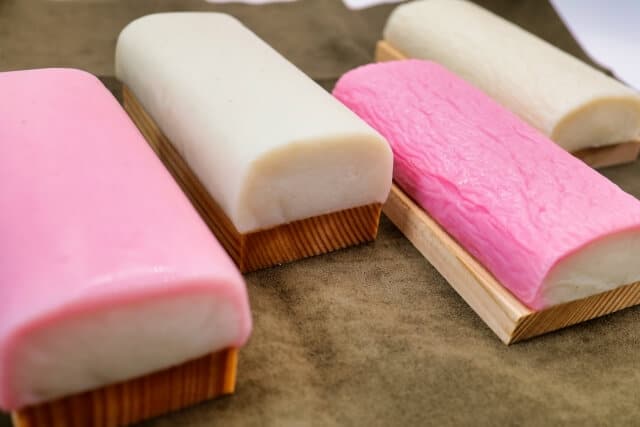
Early versions looked quite different from today’s product. Fish paste was originally molded onto a bamboo skewer and grilled over fire. That tube-like shape eventually developed into what we now call chikuwa. Over time, the board-mounted steamed version became the standard kamaboko.
During the Edo period, craft techniques for making kamaboko matured significantly. Apprenticeship systems kept production knowledge tightly controlled. The development of mechanical grinders in the Meiji era made large-scale production possible. After World War II, kamaboko became widely accessible as an affordable, protein-rich food for everyday meals.
How Kamaboko Is Made
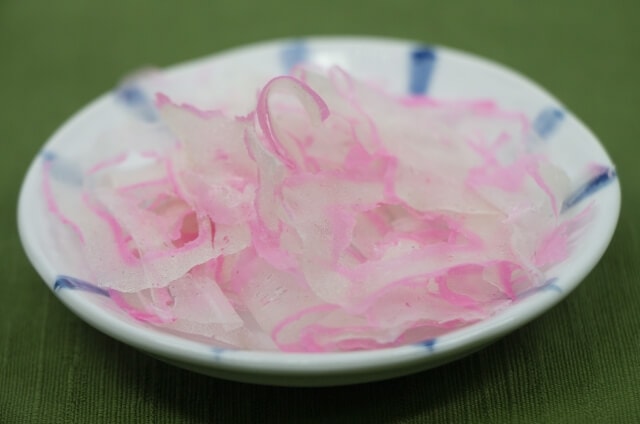
The process starts with white fish. Cod, shark, lizardfish, and threadfin bream are common choices. The fish gets filleted and processed into a smooth paste called surimi. In Odawara, one of Japan’s most famous kamaboko production cities, craftsmen use local groundwater from the Hakone area called Hakone Hyakunenmizu (Hakone 100-year-old water) to wash and purify the fish paste.
This water-bleaching step removes fat, blood, and enzymes that would otherwise affect the texture and smell. The result is a clean, white paste with a glossy surface. Salt, sugar, and starch then combine with the surimi before shaping and cooking.
Quality varies widely. Traditional producers use only high-quality fish with no additives. Some mass-produced versions include MSG and preservatives. Checking the ingredient list before buying gives a clearer picture of what you are getting.
How to Make Kamaboko at Home
Making steamed kamaboko at home takes some patience but is surprisingly straightforward. The recipe below makes two logs.
Grind white fish fillets in a food processor until smooth. Add one egg, a small amount of ginger juice, cornstarch, and salt. Blend until fully combined and the paste holds together.
Divide the paste into two equal portions. Brush two 12″ x 10″ sheets of aluminum foil with oil. This prevents the paste from sticking during steaming.
Shape each portion into a log roughly 4.5 inches long and 2 inches wide. Roll each log in foil and seal both ends tightly to hold the shape during cooking.
Steam over high heat for 30 minutes. Insert a skewer into the center of the log. If it comes out clean with no sticky paste, the kamaboko is done. Let it cool before slicing.
Key Types of Kamaboko
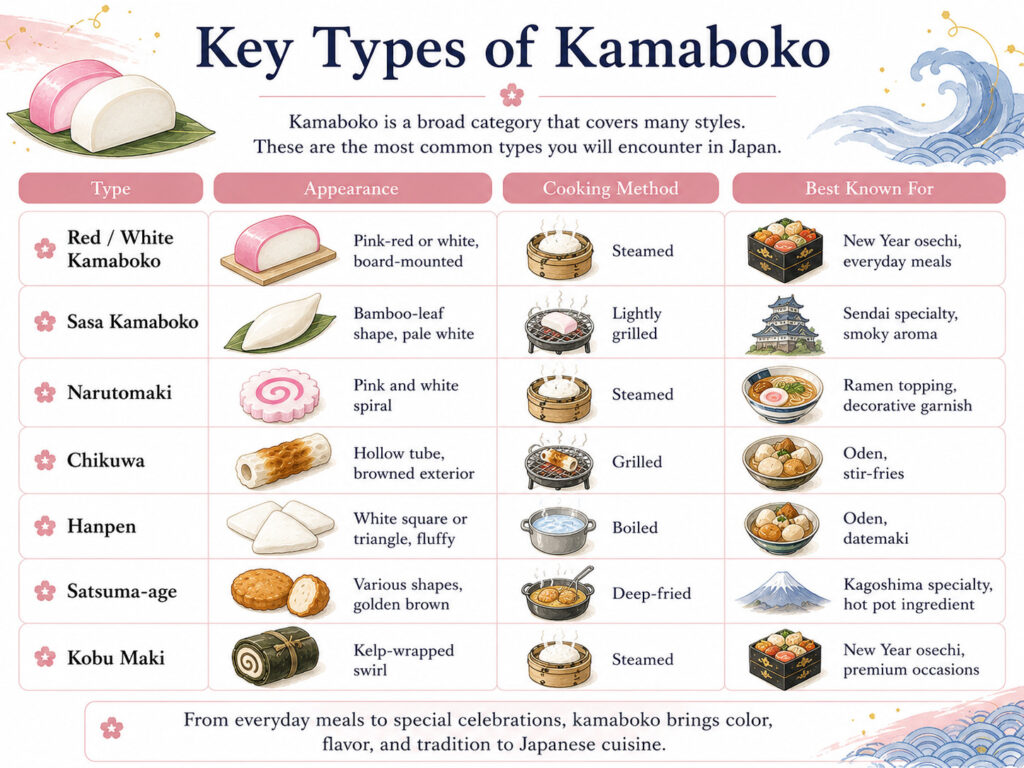
Kamaboko is a broad category that covers many styles. These are the most common types you will encounter in Japan.
| Type | Appearance | Cooking Method | Best Known For |
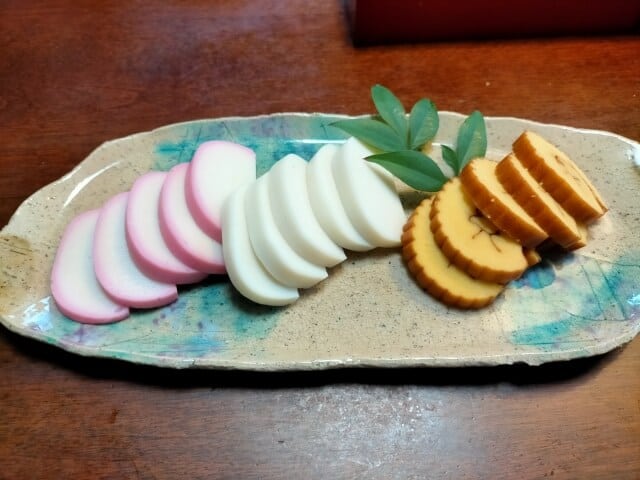
| Red / White Kamaboko | Pink-red or white, board-mounted | Steamed | New Year osechi, everyday meals |
| Sasa Kamaboko | Bamboo-leaf shape, pale white | Lightly grilled | Sendai specialty, smoky aroma |
| Narutomaki | Pink and white spiral | Steamed | Ramen topping, decorative garnish |
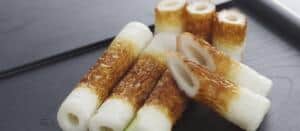
| Chikuwa | Hollow tube, browned exterior | Grilled | Oden, stir-fries |
| Hanpen | White square or triangle, fluffy | Boiled | Oden, datemaki |
| Satsuma-age | Various shapes, golden brown | Deep-fried | Kagoshima specialty, hot pot ingredient |
| Kobu Maki | Kelp-wrapped swirl | Steamed | New Year osechi, premium occasions |
How to Eat Kamaboko
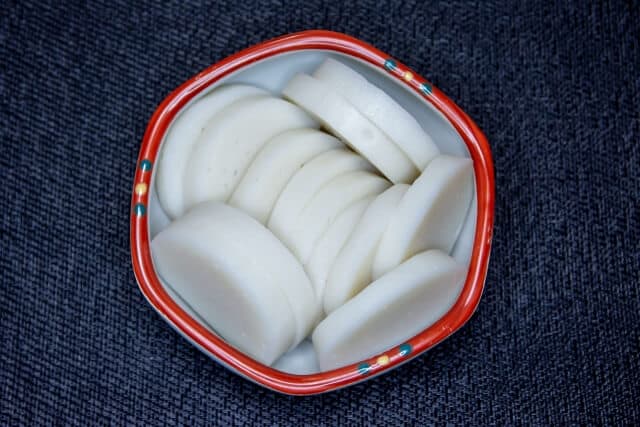
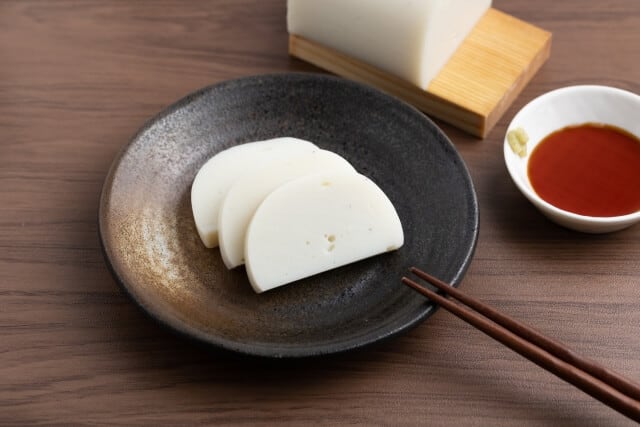
The simplest way to enjoy kamaboko is cold, sliced thin, with wasabi and soy sauce. This presentation is called itawasa and is a classic izakaya snack. The fish umami pairs naturally with the heat of wasabi. It is quick, satisfying, and pairs well with sake or cold beer.
Kamaboko also works in many cooked dishes. Sliced narutomaki is a common ramen topping. Whole pieces go into oden, absorbing the dashi broth slowly during long simmering. Red and white kamaboko appears regularly in Sendai zouni soup during New Year celebrations.
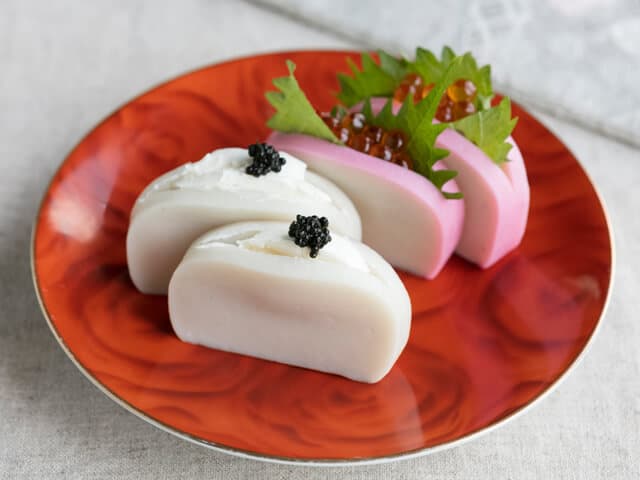
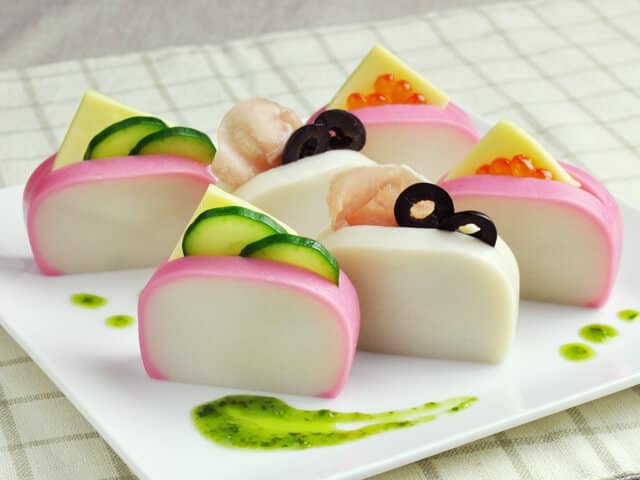
For a quick snack, kamaboko can be sliced, stuffed with a little cream cheese or cucumber, and eaten cold. Frying thin slices in sesame oil brings out a crispy outer layer with a soft, chewy interior. Some people also enjoy it as tempura, wrapped in nori for an extra layer of ocean flavor.
Kamaboko and New Year’s in Japan
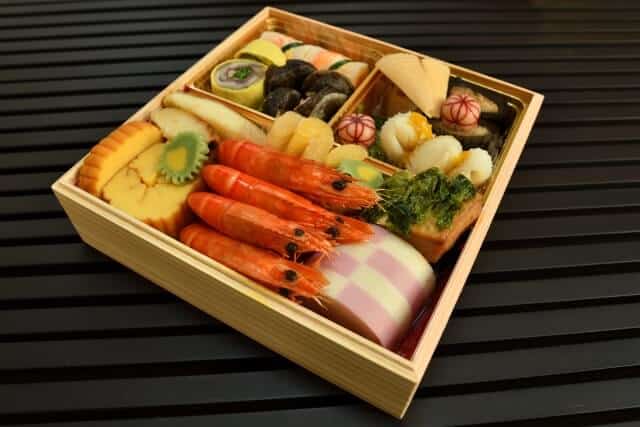
Red and white are Japan’s colors of celebration and good fortune. Kamaboko, with its signature pink-red and white appearance, fits naturally into the New Year table. The arched shape also carries meaning: it resembles the rising sun at dawn on New Year’s morning.
Red kamaboko represents protection from evil. White represents purity and a fresh start. Together, they express hopes for a good year ahead. For this reason, red and white kamaboko is a standard component of osechi ryori, the traditional Japanese New Year feast. The kobu maki (kelp-wrapped) variety also appears in osechi, typically reserved for more formal or festive meals.
Is Kamaboko Healthy?
Kamaboko is relatively high in protein and low in fat compared with many snack foods. A typical serving contains all nine essential amino acids, making it a complete protein source. The calorie count is modest, and it contains various vitamins and minerals from the fish.
That said, sodium content varies by brand. Some commercial products also include additives and preservatives. Choosing traditional or artisan-produced kamaboko, made from fish alone with no fillers, gives the best nutritional profile. Checking the label before buying is always worth the extra moment.
Where to Try Kamaboko in Japan
Sendai (Miyagi) — For Sasa Kamaboko
Sendai Station is one of the best places in Japan to try freshly grilled sasa kamaboko. Several specialty shops inside and near the station offer it hot from the grill. Some shops allow visitors to watch craftsmen grill the fish cakes by hand. Sasakama is a souvenir that keeps well, making it one of the most popular Tohoku takeaways.
Suzuhiro Asakusa Store (Tokyo)
Suzuhiro is a kamaboko specialty producer originally from Odawara in Kanagawa, known for using high-quality white fish and Hakone groundwater. Their Asakusa shop in Tokyo sells chewy kamaboko, roasted chikuwa, and oden seeds. Customers frequently recommend the freshly roasted chikuwa as a must-try.
Chouwarou (Kanagawa)
Chouwarou sits within Suzuhiro’s Gamo no Sato complex in Odawara. The restaurant occupies a renovated traditional building with lacquered walls and old farmhouse architecture. Kamaboko features prominently on the menu alongside craft beer and regional artisan foods. A visit here connects the dining experience directly to the production heritage of Odawara kamaboko.
Yao Kamaboko Store (Osaka)
A three-minute walk from Temma Station, Yao Kamaboko specializes in creative kamaboko dishes. Their gyoza maki, a dumpling wrapped in fish paste, draws curious first-time visitors. The texture is unusual in the best way: firm outside, savory all the way through. A short stop well worth making.
Curious about other Japanese fish cakes? Explore satsuma-age, chikuwa, and hanpen to discover how Japan’s surimi tradition plays out across different regions. For more traditional Sendai specialties, don’t miss the guide to zunda mochi.
Kamaboko FAQ
What is kamaboko made from?
Kamaboko is made from surimi, a paste of minced white fish such as cod, pollock, or threadfin bream. Salt, starch, and seasonings combine with the fish paste before the mixture is shaped and cooked.
What does kamaboko taste like?
Kamaboko has a mild, clean seafood flavor with a slightly sweet finish. The texture is firm and springy, similar to a dense fish sausage but more refined. High-quality versions have a subtle umami depth that comes from the fish itself.
What is sasa kamaboko?
Sasa kamaboko is a Sendai specialty shaped like a bamboo leaf and lightly grilled before serving. It is one of the three major Sendai specialties and is a popular souvenir from Miyagi Prefecture. The grilling gives it a smoky aroma and slightly firmer texture than standard steamed kamaboko.
Why is kamaboko red and white?
Red and white are Japan’s traditional celebratory colors. Red kamaboko represents protection from evil, and white represents purity. The combination appears in osechi ryori (New Year’s feast) because both colors carry auspicious meaning for the start of a new year.
Is kamaboko used in ramen?
Yes. Narutomaki, a type of kamaboko with a pink and white spiral, is one of the most recognizable ramen toppings. It adds visual contrast and a mild seafood flavor to the bowl. Other kamaboko types also appear in ramen and soba.
Can you eat kamaboko cold?
Yes. Sliced cold kamaboko with wasabi and soy sauce is a classic izakaya snack called itawasa. It requires no cooking and is one of the most common ways to enjoy it at home or in a restaurant.
Is kamaboko healthy?
Kamaboko is high in complete protein and low in fat. Sodium content can be high depending on the brand, and some commercial products contain additives. Traditional or artisan versions made solely from fish tend to have the cleanest ingredient list and best nutritional profile.
References
Japan Kamaboko Association, “Kamaboko History and Overview” (2022): https://www.suisankai.or.jp
Japan Food Research Laboratories, “Protein Content in Surimi Products” (2019): https://www.jfrl.or.jp
Suzuhiro Kamaboko, “Kamaboko Production and History” (2023): https://www.kamaboko.com
NHK World, “Japan’s Traditional Fish Cake: Kamaboko” (2021): https://www3.nhk.or.jp/nhkworld
Food in Japan, Chikuwa (2025): https://www.foodinjapan.org/japan/chikuwa/
Food in Japan, Satsuma-age (2022): https://www.foodinjapan.org/kyushu/kagoshima/satsuma-age/



Comments