




Kazunoko is Japanese herring roe, usually served in osechi ryori during the New Year season. Its tightly packed eggs symbolize family prosperity and future generations. This guide explains its meaning, taste, varieties, preparation, storage, and buying tips.
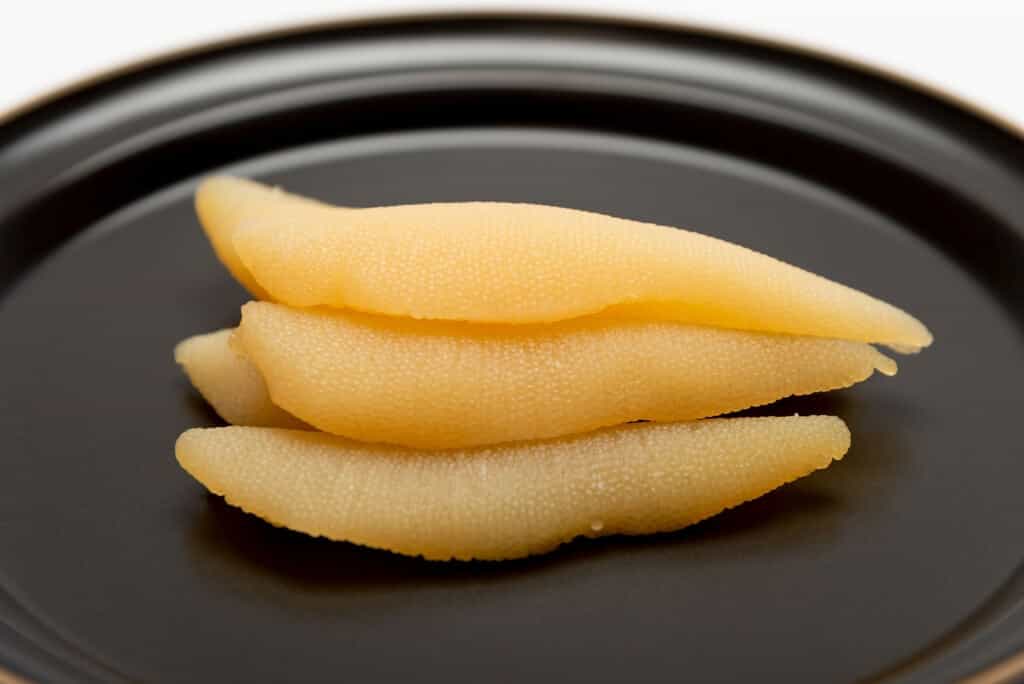
Kazunoko is a cluster of herring eggs held together in a natural roe sac. Japanese families traditionally serve it in osechi ryori at New Year. Its many eggs symbolize a large family and prosperity for future generations.
What Is Kazunoko?
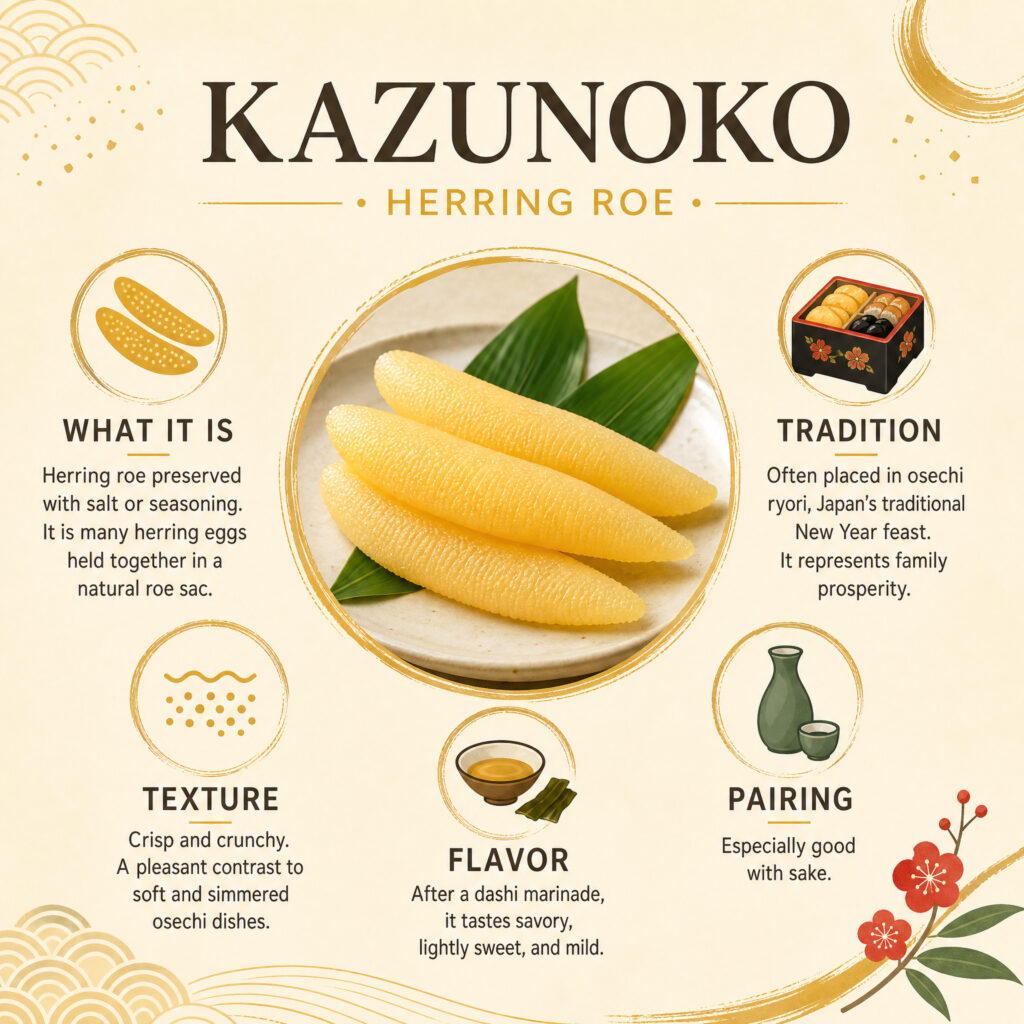
Kazunoko, written as 数の子, is herring roe preserved with salt or seasoning. It is not baby herring. Instead, it is many herring eggs held together in a natural roe sac.
Families often place it in osechi ryori, Japan’s traditional New Year feast. Japanese people regard kazunoko as an auspicious food that represents family prosperity. Its crisp texture also contrasts nicely with soft and simmered osechi dishes.
Its appearance can seem unusual at first. However, the flavor is milder than many people expect. After a dashi marinade, it tastes savory, lightly sweet, and especially good with sake.
Kazunoko Meaning in Osechi
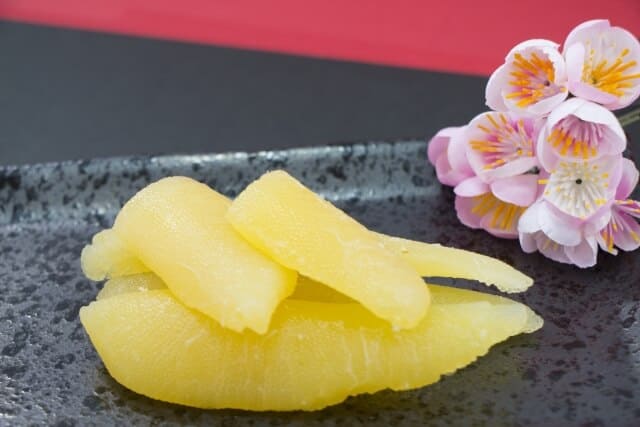
Families include kazunoko in osechi to wish for prosperity across future generations. A roe sac contains many eggs. Therefore, it came to represent a growing family and a hopeful future.
The name also supports this symbolism. The word kazu can suggest number or abundance, while ko means child. Still, people serve it not only for its meaning, but also for its pleasant crunch and savory flavor.
Kazunoko often appears with other celebratory dishes. For example, Tadukuri is another traditional New Year food with an auspicious meaning. Together, these dishes make osechi both symbolic and enjoyable to eat.
What Does Kazunoko Taste Like?
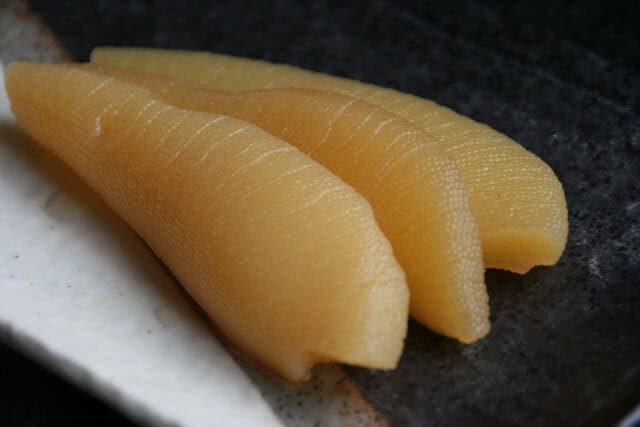
Kazunoko has a mild seafood aroma, firm crunch, and clean salty taste. As you bite it, the tiny eggs separate slightly. That crisp sensation is its most memorable feature.
Salted kazunoko tastes strongly briny before preparation. After desalting, dashi adds umami and soy sauce gives it depth. Katsuobushi can also bring a fuller, more savory aroma.
The texture matters more than richness. Unlike creamy roe, kazunoko feels crisp and almost snappy. For that reason, it works well beside sweet black beans, soft datemaki, and simmered vegetables.
Kazunoko History
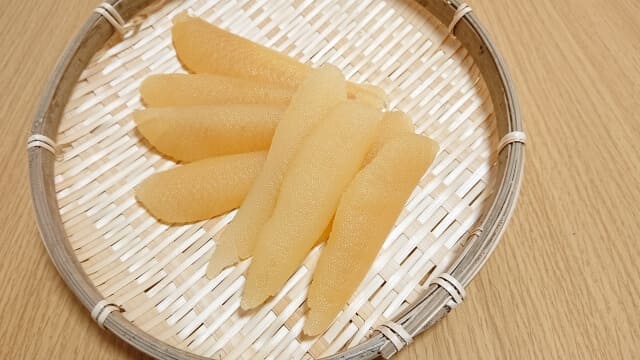
Kazunoko became important through northern herring fisheries and preserved seafood trade. During the Edo period, herring fishing supported many coastal communities. Hokkaido and Sea of Japan ports played key roles in that economy.
Fresh roe spoils quickly, so salting made transport and storage easier. As a result, herring roe could travel far from fishing grounds. It eventually became a valued seasonal ingredient in celebratory meals.
People prized herring roe for its taste and symbolic value. Its many eggs came to represent family prosperity and future generations. Over time, that meaning secured its place in osechi ryori.
Historical ecology research also treats Hokkaido herring as important to regional society and the wider North Pacific ecosystem. Therefore, kazunoko belongs to a larger history of fishing, trade, and preservation, not only to a New Year menu.
Where Kazunoko Comes From
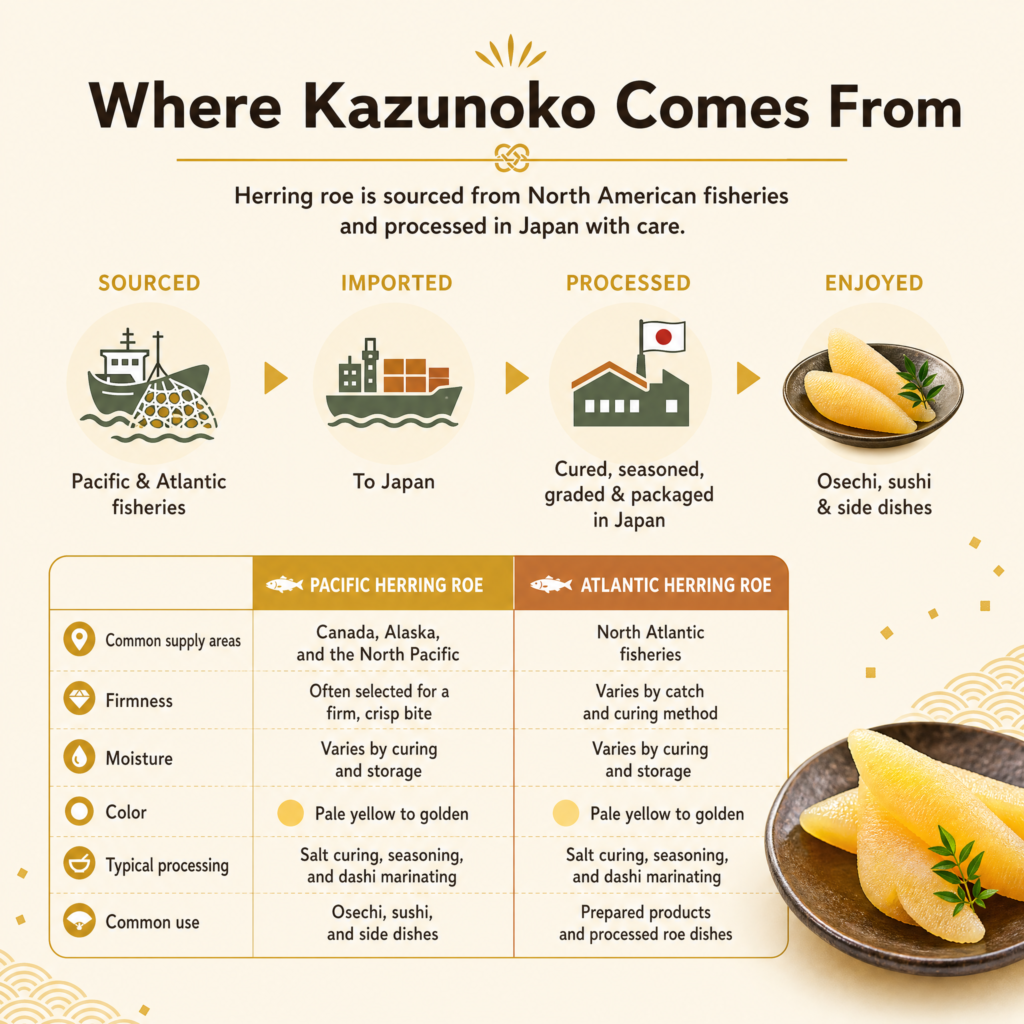
Producers source herring roe from Pacific and Atlantic herring fisheries. Japan has a long history of herring fishing, especially around Hokkaido. However, local catches are more limited than they were in earlier periods.
Many products sold in Japan use roe from North American fisheries, including Canadian and Alaskan waters. Japanese companies may cure, grade, season, and package imported roe in Japan. Therefore, the catching area and processing location are not always the same.
| Feature | Pacific Herring Roe | Atlantic Herring Roe |
| Common supply areas | Canada, Alaska, and the North Pacific | North Atlantic fisheries |
| Firmness | Often selected for a firm, crisp bite | Varies by catch and curing method |
| Moisture | Varies by curing and storage | Varies by curing and storage |
| Color | Pale yellow to golden | Pale yellow to golden |
| Typical processing | Salt curing, seasoning, and dashi marinating | Salt curing, seasoning, and dashi marinating |
| Common use | Osechi, sushi, and side dishes | Prepared products and processed roe dishes |
Origin alone does not determine quality. Buyers should also consider shape, egg firmness, color, salt level, and processing standards. Broken pieces may taste excellent, although they often cost less than neatly shaped whole sacs.
Types of Kazunoko
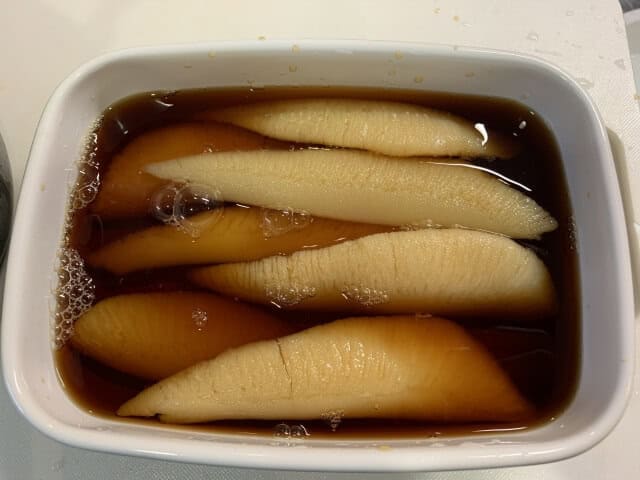
Salted Kazunoko
Salted kazunoko is the most common choice for home preparation. Producers cure it heavily with salt to preserve it. Before serving, you soak it in weak saltwater and remove the thin membrane. This version usually provides the clearest crunch, but it needs planning.
Seasoned Kazunoko
Seasoned kazunoko is ready to eat or nearly ready to serve. It often contains soy sauce, dashi, mirin, or bonito flavor. As a result, it is convenient during busy New Year preparations. Check the label because seasoning affects salt, wheat, soy, and fish ingredients.
Dried Kazunoko
Dried kazunoko, or hoshi kazunoko, is a specialty product with concentrated flavor. It needs rehydration before serving. Storage directions vary by brand, so follow the package instructions rather than assuming room-temperature storage is safe.
Kazunoko in Matsumae Zuke
Matsumae zuke is a Hokkaido preserved dish that often combines kazunoko, squid, and kombu. Soy sauce, sake, mirin, and sugar create its sweet-savory marinade. Here, the roe adds crunch against chewy squid and slippery kelp.
How to Prepare Kazunoko at Home
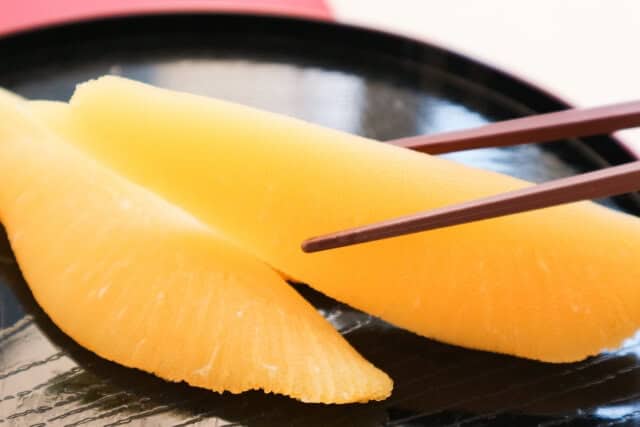
Salted kazunoko needs gentle desalting before it can absorb a dashi marinade. Do not soak it in plain water for long periods. Weak saltwater removes excess salt more gradually. Salt levels vary by brand, thickness, and curing method, so taste a very small piece during soaking.
Ingredients for Four Servings
- 4 to 5 pieces salted kazunoko, about 200 to 250 g
- 1.5 liters cold water for soaking
- 3 teaspoons salt for weak saltwater
- 240 ml dashi
- 2 tablespoons soy sauce
- 1 tablespoon sake
- 1 tablespoon mirin
- 10 g katsuobushi, optional
- Wasabi and extra katsuobushi for serving, optional
Preparation Steps
- Soak: Dissolve 1 teaspoon salt in 500 ml cold water. Cover the roe with this weak saltwater, then refrigerate for two hours.
- Change the saltwater: Replace the liquid every two hours. After about six hours, taste a small edge. Continue only if it remains harshly salty.
- Remove the membrane: Rinse the roe, pat it dry, and loosen the thin white membrane with your fingers. Pull slowly to avoid breaking the egg cluster.
- Make the marinade: Heat sake and mirin for one minute. Add dashi and soy sauce, simmer briefly, then cool fully. Add katsuobushi, steep one minute, and strain if desired.
- Marinate and serve: Cover the roe with cold marinade and refrigerate overnight, or up to two days. Cut into bite-size pieces and serve chilled.
Troubleshooting Kazunoko
- It remains too salty: Soak it longer in fresh weak saltwater, checking every one or two hours.
- It tastes bitter: Remove membrane remnants carefully, then use fresh and fully cooled dashi marinade.
- It becomes watery: Pat the roe dry before marinating and never pour hot marinade over it.
- It breaks apart: Handle the roe with your fingers and do not pull the membrane too quickly.
- It lacks flavor: Marinate it overnight, then add katsuobushi or a little soy sauce before serving.
How to Serve Kazunoko
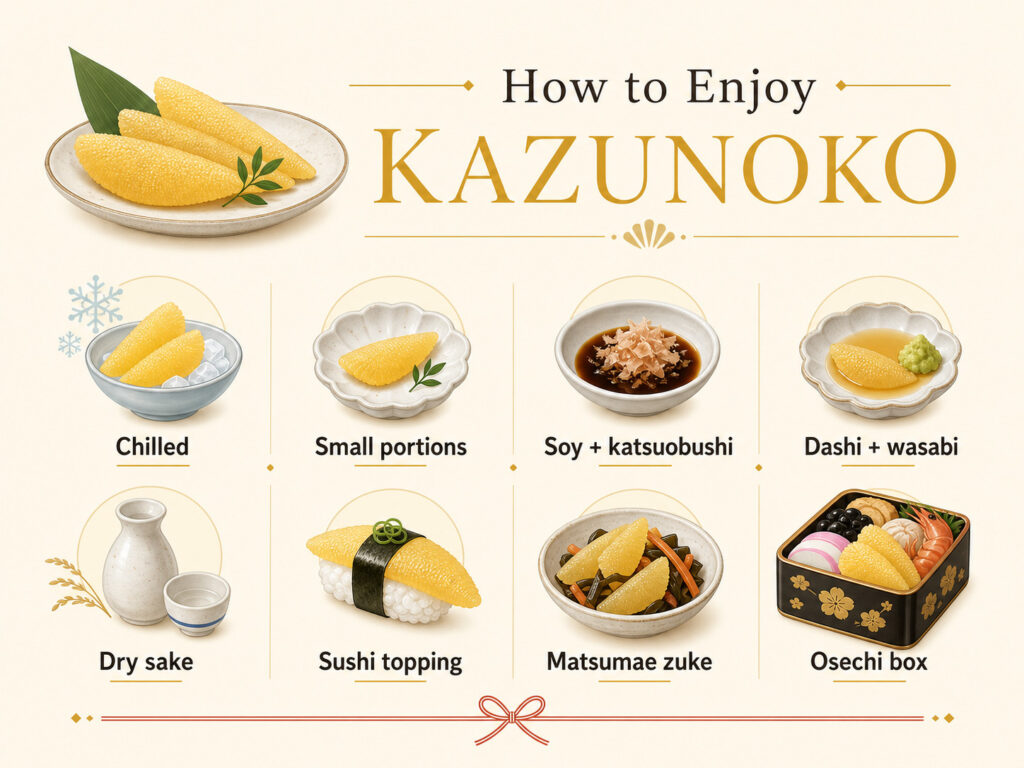
Kazunoko is usually served chilled in small portions. Its crunch works best when the pieces remain simple. However, a few classic additions can change the mood of the dish.
- Top with katsuobushi and a few drops of soy sauce
- Serve in a light dashi marinade with a small amount of wasabi
- Pair with dry sake, such as a crisp junmai or ginjo style
- Use as a sushi topping with rice and a narrow strip of nori
- Add chopped pieces to Matsumae zuke with squid and kombu
- Place it in an osechi box beside black beans, fish cake, and simmered vegetables
Where to Buy Kazunoko
In Japan, supermarkets stock more kazunoko as New Year approaches. Department-store food halls often carry premium brands and gift-ready packages. Fish markets may offer several grades, including broken pieces for home use.
Outside Japan, Japanese grocery stores are the most reliable option. Some online seafood retailers also sell salted or seasoned packs. However, check cold-shipping conditions, ingredient labels, and delivery dates before ordering.
Kazunoko Price in Japan
Kazunoko prices vary widely. Origin, size, shape, firmness, salt curing, seasoning, and season all affect the cost. Whole golden pieces with even shape usually cost more than small or broken pieces. Prices often rise before New Year, so compare net weight and labels, not only the package price.
Storage and Food Safety
Kazunoko is seafood, so careful cold storage matters. It is not vegetarian or vegan. People with fish or seafood allergies should avoid it, while diners with soy or wheat allergies should check seasoned products closely.
- Unopened salted roe: Follow package instructions and the use-by date. Refrigerate unless the label clearly states otherwise.
- Prepared roe: Store in a sealed container in the refrigerator and use within the stated period.
- Seasoned roe: Keep it cold after opening and use it promptly.
- Freezing: Freeze only if the package allows it. Thaw slowly in the refrigerator because texture can soften.
- Before serving: Discard roe with an unpleasant smell, excessive leakage, or an unexpected color change.
Takeaway
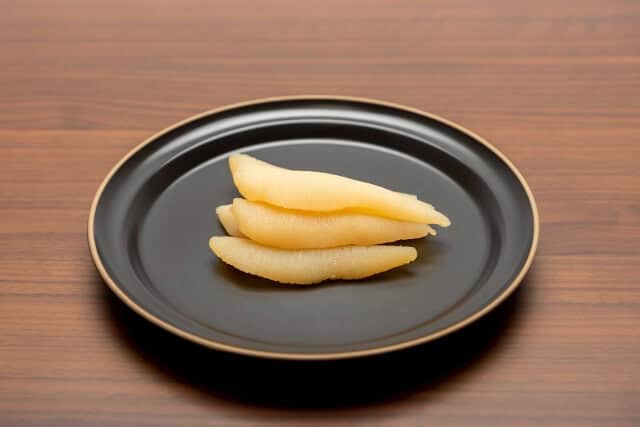
Kazunoko is salted or seasoned herring roe with a firm, distinctive crunch. Families serve it in osechi ryori because its many eggs represent prosperity and future generations. Its flavor is mild, briny, and especially good with dashi. To prepare salted kazunoko, begin by soaking it in weak saltwater. Then remove the membrane and marinate it overnight. Whether served simply or in Matsumae zuke, it offers a memorable taste of Japanese New Year food.
Kazunoko FAQ
What is kazunoko?
Kazunoko is herring roe, usually preserved with salt or seasoning. It contains many eggs held together in a natural roe sac. Japanese families often serve it during New Year osechi ryori. It represents prosperity for future generations.
What does kazunoko taste like?
It tastes mildly briny, savory, and slightly sweet after dashi marinating. Its firm crunch is more noticeable than its richness. The seafood aroma is usually gentle. Katsuobushi, soy sauce, and wasabi pair well with it.
How do you desalinate herring roe?
Soak salted roe in weak saltwater in the refrigerator. Change the liquid every two hours, then taste a small piece after about six hours. Continue only if it remains too salty. Exact timing varies by product and curing level.
What is the difference between salted and seasoned kazunoko?
Salted kazunoko needs desalting and usually has a firmer bite. Seasoned kazunoko comes flavored with dashi or soy sauce, so it is more convenient. However, it may be softer. Check labels because ingredients and storage periods vary.
Where can I buy kazunoko?
Japanese supermarkets, department-store food halls, and fish markets sell it most widely before New Year. Overseas, Japanese grocery stores and online seafood retailers may carry it. Choose a seller that maintains cold shipping. Check origin, allergens, and use-by dates.
Why is kazunoko expensive?
Price depends on origin, size, shape, firmness, processing, and season. Whole pieces with even color and shape often cost more. Demand rises before New Year. Broken pieces can offer similar flavor at a lower cost.
Is kazunoko suitable for vegetarians or people with seafood allergies?
No, it is seafood and is not suitable for vegetarians or vegans. People with fish or seafood allergies should avoid it. Seasoned products may also contain soy, wheat, or bonito. Read the full ingredient label before serving.
Can you use kazunoko in Matsumae zuke?
Yes, chopped roe is a classic ingredient in Matsumae zuke. It combines well with kombu and shredded squid in a sweet-savory marinade. The roe adds bright crunch. Desalt it properly before use if you start with salted kazunoko.
References
- Ministry of Agriculture, Forestry and Fisheries — The Meaning of Osechi Ryori (Government Educational Material, Surveyed: July 2026)
- Ministry of Agriculture, Forestry and Fisheries — Matsumae Zuke, Hokkaido (Government Food Culture Database, Surveyed: July 2026)
- Hamada, Shingo — Possibilities of Historical Ecology in the North Pacific: A Case Study of Hokkaido Herring (Academic Paper, Surveyed: July 2026)
- Fisheries and Oceans Canada — The Kazunoko Market and Pacific Herring Roe Trade (Government Research Report, Surveyed: July 2026)
- National Oceanic and Atmospheric Administration — Japan’s Herring and Herring Roe Supplies and Trade (Government Research Report, Surveyed: July 2026)
Related Articles
- Osechi (Surveyed: July 2026)
- Matsumae zuke (Surveyed: July 2026)
- Tadukuri (Surveyed: July 2026)



Comments