


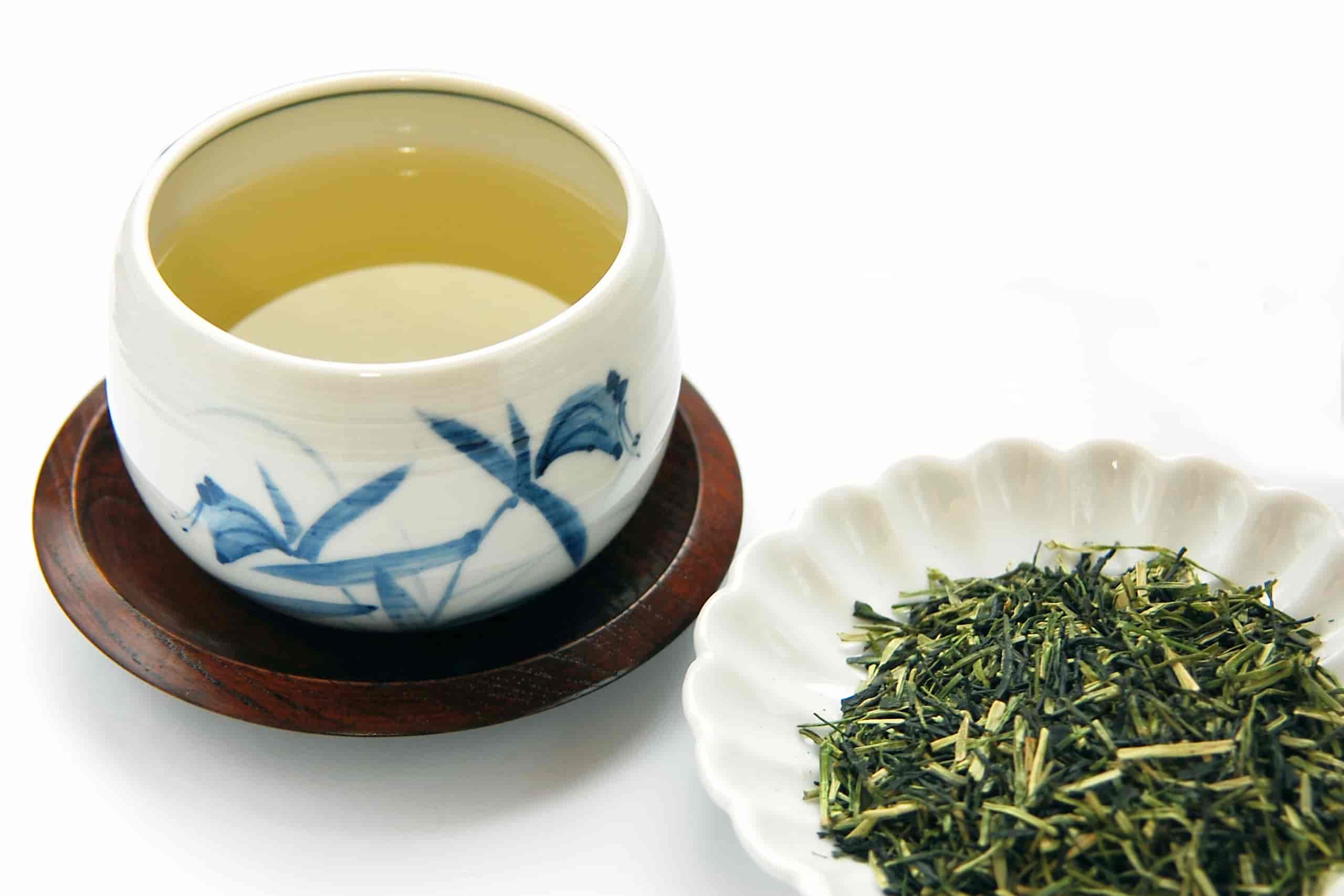


Browse the tea shelves of a shop in Fukuoka or Saga and you’ll often find a bag that looks almost too plain beside the polished gyokuro tins. It holds pale, flat little stems instead of dark, needle-like leaves, and its label carries two simple characters: 白折. That’s shiraore, and in much of Kyushu it’s one of the most familiar teas on the shelf.
Shiraore (白折) is a regional name for Japanese green stem tea, especially in Kyushu and other parts of western Japan. It’s made from tea stems separated while finishing green tea, and depending on the producer, those stems may come from gyokuro, sencha or, in parts of Kyushu, tamaryokucha. It brews a light, clear cup that tastes sweeter and softer than its pale color suggests.
The short answer
Shiraore is green stem tea (kukicha), and the name is especially common in Kyushu. In Kyoto, a very similar tea is usually sold as karigane. The name isn’t a fixed grade: gyokuro shiraore, such as from Yame in Fukuoka, is one premium style, while sencha and even tamaryokucha stems are also sold under the name.
What Is Shiraore?
It belongs to the stem-tea family. During finishing, tea makers sort crude tea into leaf, stems, buds and fine particles, and the stem portion can be sold as its own tea. This is what that stem tea is often called in Kyushu, especially when the stems come from good leaf tea.
Shiraore Quick Facts
- Japanese name
- 白折, read shiraore; sometimes romanized shiraori
- Type
- Green stem tea (kukicha), usually unroasted
- Where the name is used
- Kyushu and other parts of western Japan
- Main sources
- Stems from gyokuro, sencha and, in parts of Kyushu, tamaryokucha
- Best-known area
- Yame, Fukuoka Prefecture, a leading gyokuro region
- Flavor
- Sweet, fresh and clean, with little bitterness
- Brewing
- Follow the package; sellers often suggest about 70 to 80°C for gyokuro shiraore and 70 to 90°C for sencha shiraore
Shiraore, Karigane and Kukicha
Several tea sellers describe shiraore and karigane as the same kind of tea under different regional names: shiraore in Kyushu, karigane in Kyoto. Both names are often used for better stem teas, and both sit under the broader name kukicha. If you’ve read the Karigane guide, much of what it says about stem tea applies here too.
The differences are mostly about place and raw material. The Kyushu version often comes from local teas, including Yame gyokuro and local sencha. In parts of Kyushu, it can even come from tamaryokucha, the region’s curly green tea. As with karigane, the names overlap and aren’t an official grading system.
What the Name Shiraore Means
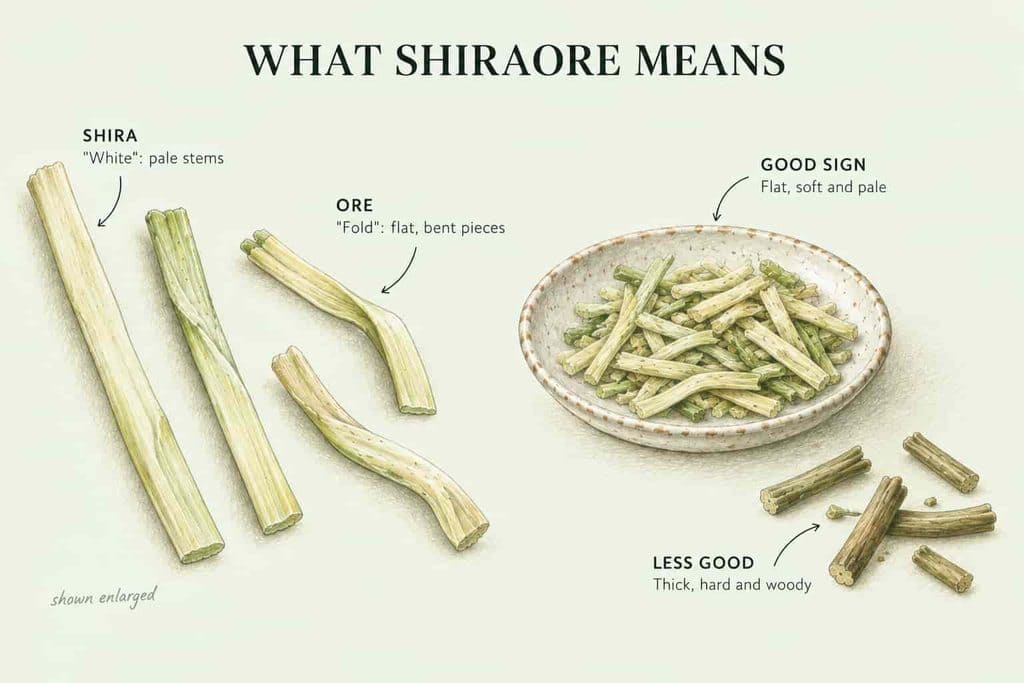
The name is written 白折. Read literally, the character 白 (shira) means white, and 折 (ore) carries the sense of folding or breaking, which is why the name is often rendered as “white fold” or “white broken.” Tea sellers commonly link it to the pale, flattened pieces of stem that make up the tea, though the exact origin of the name isn’t documented. Unlike karigane, with its poetic image of wild geese, shiraore is a plain, practical name.
That look is also a useful quality clue, though not a formal grade. A Saga tea shop notes that flat, soft, pale stems are a sign of good quality. Thick, hard, woody pieces point to coarser material.
You may see the name written or read in a few ways:
- 白折the usual spelling
- 白折茶“shiraore tea,” with 茶 added
- しらおれthe common reading
- しらおりa reading found in some dictionaries
One Japanese dictionary entry describes it as stem tea sorted from tea meant for grinding into powdered tea. It adds that although technically a byproduct, it’s a high-grade product that commands a high price, and that it holds up well over several infusions. Today the name is used much more broadly, but that description shows the tea has long been valued rather than treated as scraps.
Where Shiraore Comes From
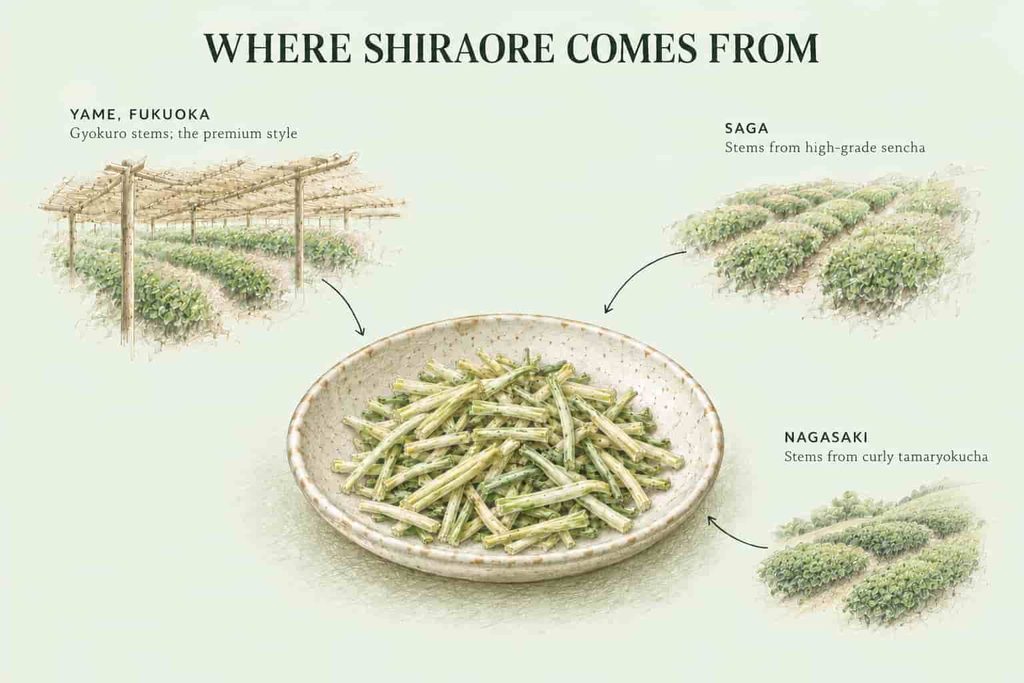
Because the name is mainly used in Kyushu, it’s closely tied to Kyushu’s tea regions. The base tea varies from shop to shop, and it changes the cup more than the name does. Three examples show the range.
Yame, Fukuoka
八女・玉露白折
Yame is one of Japan’s best-known gyokuro areas. Local producers sell shiraore from Yame gyokuro as a premium stem-tea style.
Saga
佐賀・煎茶白折
Saga tea shops sell sencha shiraore sorted from high-grade sencha. One describes the stems as coming from tea equal to its top-grade sencha.
Nagasaki
長崎・玉緑茶白折
Some Nagasaki producers sort it from tamaryokucha, Kyushu’s curly green tea. Tamaryokucha is made mainly in Kyushu, so this is a regional style.
Yame deserves a special note. The area is famous for gyokuro, and “Yame Dentō Hon Gyokuro,” made with traditional straw shading and hand-picking, was registered as a Geographical Indication (GI) in Japan in December 2015. That protection covers this specific traditional gyokuro, not every tea or stem tea from Yame. Stems sorted from Yame gyokuro can still carry some of its shaded sweetness into a lighter cup. Producers there often call this gyokuro shiraore, and some use the name karigane for it as well. For background on shaded tea, see the complete Gyokuro guide.
Shiraore and Other Names Across Japan
Japan has no single name for better stem tea, and usage overlaps between regions, producers and shops. The table below shows where you’re likely to see each name. Treat it as a general pattern rather than a strict map.
| Name | Where you may see it | What it generally refers to |
|---|---|---|
| Shiraore (白折) | Especially Kyushu and western Japan | Stem tea, often from local gyokuro or sencha; usage varies by producer |
| Karigane (雁ヶ音) | Especially Kyoto and Shiga | Often better stem tea, sometimes specifically gyokuro stems |
| Kukicha (茎茶) | Across Japan | The general category for stem tea; also the labeling-standard term |
| Bōcha (棒茶) | Various regions, including eastern Japan | Another common name for stem tea |
For shoppers, the practical lesson is simple. A stem tea from Yame and a karigane from Uji may be closer to each other than two teas that share the same name. The base tea named on the package tells you more than the regional label.
What Does Shiraore Taste Like?
The cup is gentle and clean. The first sip is sweet, with a soft savory note, and the finish has very little of the astringency of a strong sencha. Kyushu sellers often describe a fresh, cooling aroma, sometimes compared with young green shoots.
Pale Color, Real Flavor
The brewed tea is usually pale, a clear yellow-green rather than a deep green. A Yame producer puts this down to the stems carrying out much less photosynthesis than leaves. The light color says nothing about strength, though, and the sweetness is often fuller than the color suggests.
Sweeter as It Cools
A Saga tea shop points out that the sweetness comes forward as the tea cools. That makes it a good tea to sip slowly. It also explains why many sellers suggest cooler water for the first infusion rather than water straight off the boil.
Gyokuro Shiraore vs. Sencha Shiraore
The gyokuro version is the richer of the two, with more of the deep, savory sweetness that shaded tea is known for. The sencha version is lighter and brighter, with a crisper, greener edge. Neither is better. They simply suit different moods and different water temperatures.
How to Brew Shiraore
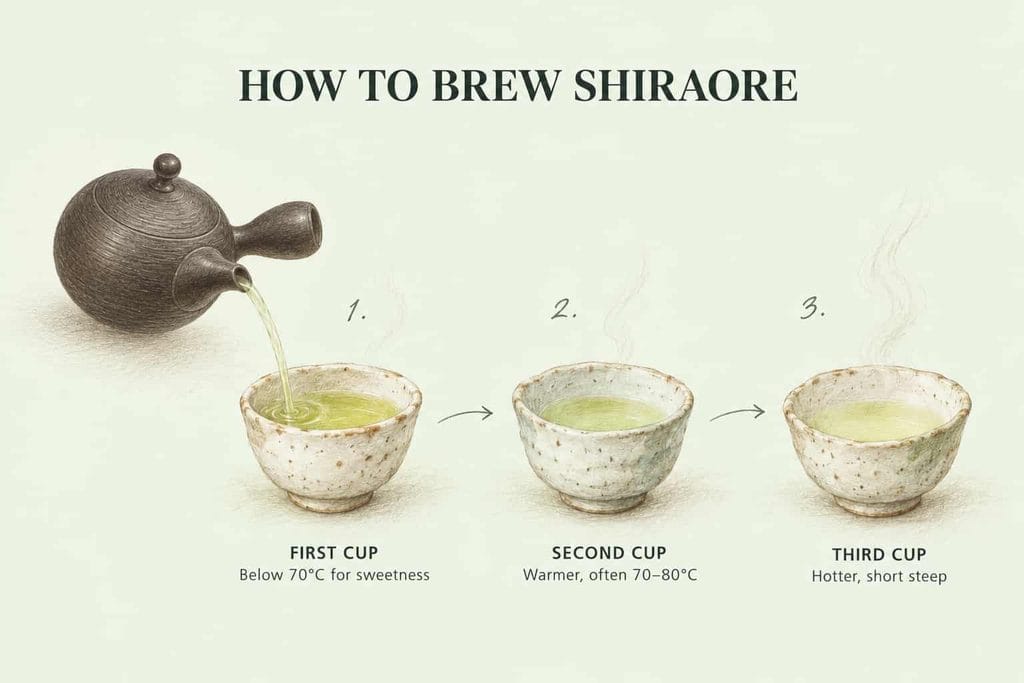
There’s no single official temperature for shiraore. Kyushu tea shops give slightly different numbers, but they agree on the basics: stems from gyokuro want cooler water than stems from sencha. The cards below show typical seller recommendations; if your package gives its own method, use that first.
Gyokuro shiraore
Richer and sweeter; brew a little cooler
- Temperature
- About 70 to 80°C, or below 70°C for the first cup
- Infusions
- Two or three, raising the temperature each time
Sencha shiraore
Lighter and fresher; more forgiving
- Temperature
- About 70 to 90°C
- Example
- One Saga seller suggests about 150ml per cup at 70°C for about 50 seconds
- Steep
- Shorter if the water is hotter
Start Cool, Then Go Hotter
One helpful approach from Japanese tea guides is to raise the temperature step by step over several infusions. Cooler water brings out sweetness first. Hotter water then draws out the remaining aroma and a little more body from stems that have already opened.
| Infusion | Water | What you get |
|---|---|---|
| First cup | A little below the recommended range, under 70°C | Soft sweetness and savory depth |
| Second cup | Within the range on the package, often 70 to 80°C | Fresher aroma, lighter body |
| Third cup | Hotter again, with a short steep | Clean, light and refreshing |
These numbers are a starting point, not a rule. Adjust to taste, and to the guidance printed on your package. To cool water without a thermometer, pour it from the kettle into your cups, then into the teapot. Japan’s Ministry of Agriculture notes that each transfer lowers the temperature by about 5 to 10°C, depending on the vessel and the season.
Cold Brew and Other Uses
It also works well with cold water or ice, which keeps bitterness low and brings out its sweetness, a popular way to drink it in summer. One Japanese tea shop even suggests it for chameshi, rice cooked or finished with tea, where its gentle flavor won’t overpower the rice.
Shiraore Compared With Karigane, Kukicha and Gyokuro
This tea sits in a family of closely related teas. The table below shows where it fits.
| Tea | Main material | Name mainly used in | Typical character |
|---|---|---|---|
| Shiraore | Stems, often from gyokuro or good sencha | Kyushu, western Japan | Sweet, clean, pale cup |
| Karigane | Stems, often from gyokuro or high-grade tea | Kyoto, Shiga | Sweet, mellow, light |
| Kukicha | Stems from any grade, most often sencha | Nationwide | Light and fresh; varies widely |
| Gyokuro | Shaded leaf | Nationwide | Deep umami, rich, thick |
Like other stem teas, it generally contains less caffeine than the leaf tea it was sorted from. A 1993 Japanese study comparing stem tea with sencha found less caffeine and catechins in the stem-tea sample, though the difference varies with the tea and how it’s processed. It still contains caffeine, so treat it like any other green tea rather than a caffeine-free drink.
How to Choose and Store Shiraore
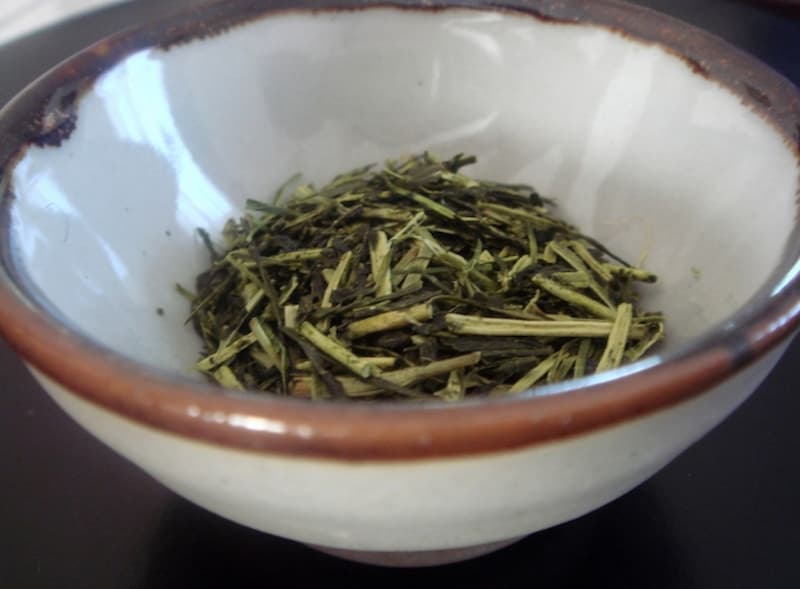
Even good stem tea of this kind is usually more affordable than top-grade sencha or gyokuro. That makes it easy to compare a few bags, and these points help.
- Look at the stems: flat, soft, pale pieces are a good sign; thick, hard, woody ones suggest coarser material.
- Check the base tea: “gyokuro shiraore” (玉露白折) is the richest style; “sencha shiraore” (煎茶白折) is lighter and fresher.
- Note the origin: Yame in Fukuoka is the best-known source of the gyokuro style, but Saga, Nagasaki and other Kyushu areas also produce it.
- Read the grade words: shops often use 特上 (tokujō, top grade) and 上 (jō, fine) for their better bags. These are each seller’s own grades, not a national standard.
- Buy small amounts: unroasted green tea loses its fresh aroma within weeks of opening.
Once opened, store the tea in an airtight container in a cool, dark place, away from strong smells, rather than moving it in and out of the refrigerator. Unopened bags can be kept in the refrigerator or freezer; let a chilled bag reach room temperature before opening so moisture doesn’t condense on the cold stems. Japanese tea guides suggest finishing an opened bag within a few weeks to a month, but follow the package if it says otherwise.
Why Shiraore Is Worth Trying
This is an easy way to taste Kyushu’s tea culture in an everyday cup.
- A taste of Yame gyokuro: the gyokuro version carries some of the region’s famous shaded sweetness at a friendlier price.
- Gentle and forgiving: low bitterness and a wide brewing range make it easy to enjoy.
- A regional name worth knowing: once you know shiraore, karigane and kukicha, Japanese stem tea labels become much easier to read.
If you can, try a Kyushu stem tea side by side with a karigane from Kyoto. The names differ, but the cups may tell you how much they have in common.
Shiraore FAQ
About the Tea
What is shiraore tea?
Shiraore is a Japanese green stem tea, made from stems separated while finishing gyokuro, sencha and other green teas. The name is used mainly in Kyushu and other parts of western Japan.
Is shiraore the same as kukicha?
Shiraore is a regional name for stem tea, while kukicha is the broader category name used across Japan. The two overlap, but usage varies by region and producer.
Is shiraore the same as karigane?
They’re very similar stem teas, often described as the same tea under regional names: shiraore in Kyushu, karigane in Kyoto. The base tea matters more than the name.
Does shiraore have caffeine?
Yes. Stems generally contain less caffeine than leaves, so it’s usually milder than the leaf tea it comes from, but it isn’t caffeine-free.
Brewing and Buying
What temperature should I use for shiraore?
Start with the method on your package. As a general guide, sellers suggest about 70 to 80°C for gyokuro shiraore and about 70 to 90°C for sencha shiraore, and starting a little cooler for the first cup brings out more sweetness.
Where is shiraore made?
Shiraore is made and sold mainly in Kyushu. Gyokuro shiraore from Yame in Fukuoka Prefecture is especially well known, and Saga, Nagasaki and other parts of Kyushu also produce it.
How do I choose good shiraore?
Look for a label that names the base tea, such as gyokuro or sencha, and for flat, soft, pale stems. Thick, woody pieces usually mean coarser material, but flavor and grade still depend on the producer.
References
Official and Reference Sources
- Ministry of Agriculture, Forestry and Fisheries of Japan – GI Registered Products (登録産品一覧), on the Geographical Indication registration of Yame Dentō Hon Gyokuro (December 22, 2015). (Accessed October 2026)
- Ministry of Agriculture, Forestry and Fisheries of Japan – How to Brew Tea (お茶の淹れ方), on how much water cools with each transfer between vessels. (Accessed October 2026)
- Japan Tea Central Public Interest Incorporated Association – Green Tea Labeling Standard (緑茶の表示基準), on the definition of kukicha/bōcha. (Accessed October 2026)
- Hara, Fukatsu and Ina – Comparison of Flavor Components Between Kukicha and Sencha (茎茶と煎茶の香味成分の比較), Tea Research Journal, 1993, on lower caffeine and catechins in stem tea. (Accessed October 2026)
- Ocha.tv – How to Store Tea (お茶の保存方法), on airtight storage, refrigerated tea and how soon to use an opened bag. (Accessed October 2026)
- Kotobank – Shiraore (白折), on the dictionary definition and reading of the term. (Accessed October 2026)
Tea Shops and Producers
- Yuge Seicha (Yame, Fukuoka) – Shiraore (白折), on regional names, pale color and brewing temperature. (Accessed October 2026)
- Kawaguchi Kinsuien (Yame, Fukuoka) – Shiraore (白折), on gyokuro and sencha shiraore and their brewing temperatures. (Accessed October 2026)
- Tanaka Chaho (Saga) – Special-Grade Sencha Shiraore (特上煎茶白折), on stem quality, sweetness as the tea cools, and brewing. (Accessed October 2026)
- Nagasaki Ikedoki – Shiraore (白折), on shiraore sorted from tamaryokucha. (Accessed October 2026)
- Shinryokuen – Shiraore Tea (白折茶), on regional names across Japan, flavor, cold brewing and use in tea rice. (Accessed October 2026)
- Chakatsu – Shiraore and Karigane (白折茶、雁が音茶), on the meaning of the name, price and raising water temperature across infusions. (Accessed October 2026)



Comments