






Miyazaki ramen is the local tonkotsu ramen of Miyazaki Prefecture, on the southeast coast of Kyushu. Its pork bone broth is full of umami, yet it is often less dense than richer Kyushu styles. A typical bowl also comes with medium-thick noodles, boiled bean sprouts, and pork belly chashu.
Then come the small local touches. Some shops keep garlic soy sauce on the table, and some serve yellow pickled radish with the ramen. This guide covers the bowl itself, its early shops, how it compares with its neighbors, and where to try it.
What Is Miyazaki Ramen?
Miyazaki ramen is a pork bone ramen style rooted in Miyazaki Prefecture. Like Hakata-style ramen, it belongs to Kyushu’s tonkotsu family. However, the prefecture’s official tourism site calls the classic version a slightly light tonkotsu. It also says the broth lacks the thick, heavy texture of Kurume or Hakata ramen. As a result, the bowl usually feels more approachable than the richest Kyushu styles.
Miyazaki Ramen Quick Facts
- Region Miyazaki Prefecture, southeastern Kyushu
- Broth Pork bone (tonkotsu), classically on the lighter side; richer shops also exist
- Noodles Smooth, springy, medium-thick noodles
- Typical toppings Bean sprouts, pork belly chashu, green onion
- Local extras Takuan pickles or garlic soy sauce at some shops
- Early shops Several long-running shops date to the 1950s and 1960s

What Makes It Distinctive?
For me, the appeal is balance. You still get a clear pork bone flavor, but the soup rarely feels like a challenge. The noodles are thick enough to stay satisfying, while the bean sprouts add crunch. And at shops with garlic soy sauce, you can make the second half of the bowl bolder.
Ingredients of Miyazaki Ramen: Broth, Noodles, and Toppings
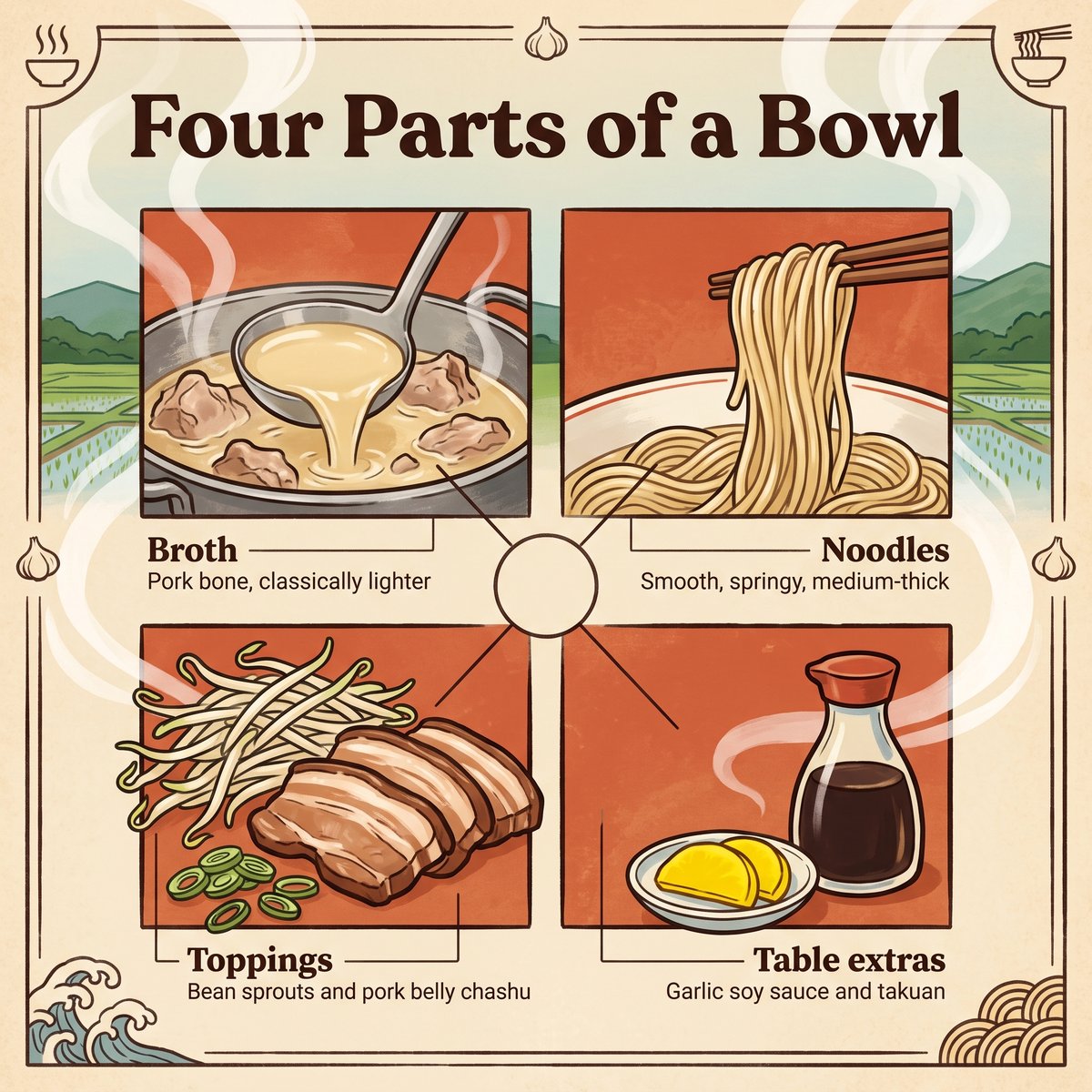
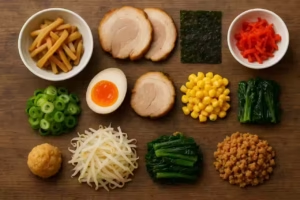
Every shop has its own recipe. Still, the prefecture’s tourism site notes that many shops top their bowls with boiled bean sprouts and pork belly chashu.

Broth Characteristics
The broth starts from pork bones, and many shops then season it with soy sauce. For example, Miyazaki City describes Eiyoken’s soup as a pork bone base with soy sauce flavor. The shop also adds aromatic browned lard (kogashi lard) for a toasty edge.
However, “light” is a tendency, not a rule. The prefecture’s tourism site notes that quite a few shops serve rich, heavy tonkotsu too. Some of them simmer bones in a large pot and keep topping it up, a method called yobimodoshi. The same site names Furaiken, with several locations in the prefecture, as known for establishing the rich style. So the bowl you get depends a lot on where you sit down.
Noodle Characteristics
Shops usually serve medium-thick noodles, commonly made with a relatively high level of hydration. As a result, these high-hydration noodles have a smooth surface and a springy bite. Kimura Ramen, for instance, describes its medium-thick straight noodles as firm and chewy. By contrast, Hakata ramen is famous for very thin noodles.
Popular Toppings
| Topping | What it adds | How common |
|---|---|---|
| Boiled bean sprouts | Crunch and freshness | Many shops |
| Pork belly chashu | Tender, fatty richness | Many shops |
| Green onion | Sharp, fresh aroma | Common |
| Menma (bamboo shoots) | Chewy, savory bite | Varies by shop |
| Aromatic browned lard | Toasty aroma | Some shops, such as Eiyoken |
Miyazaki Ramen History and Early Shops
In short, the records point to several early shops rather than one clearly documented birthplace. Long-running Miyazaki ramen shops documented today include businesses established in the 1950s and 1960s. In addition, the prefecture’s tourism site says the postwar pig-farming boom is often linked to the style.

The 1953 Shops
First, consider Kimura Ramen, which dates its establishment to 1953. According to its official history, it opened in the Gintengai shopping arcade and follows the Kurume ramen tradition. The shop also recalls lines of customers when ramen was still unusual in the city.
Kimura was not alone, though. Marukin Honten also gives 1953 as its founding year. This suggests that more than one ramen shop was operating in Miyazaki during the same period. Then, in 1964, Eiyoken opened, and Miyazaki City now features it as a classic local shop.
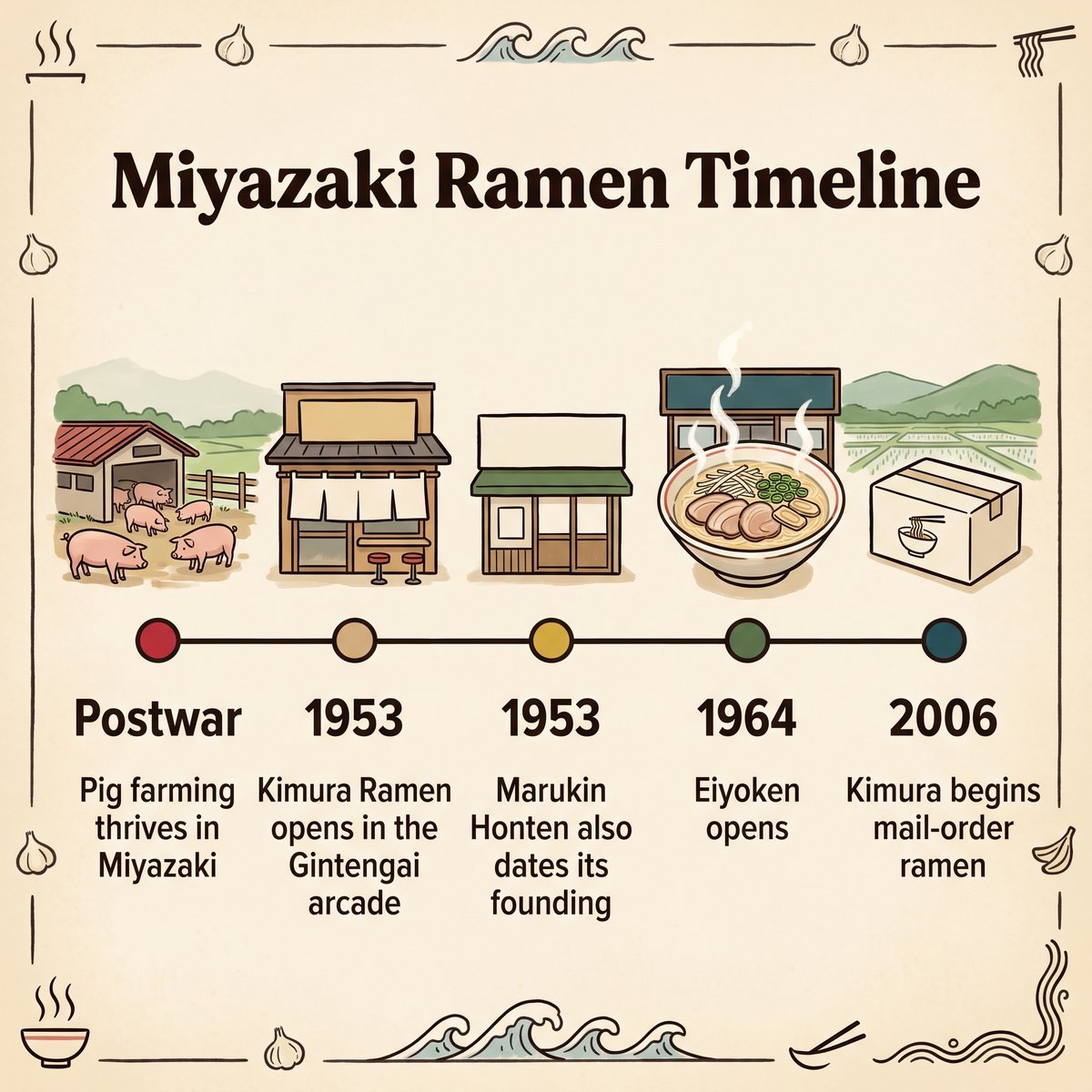
Miyazaki Ramen Timeline
- Postwar Pig farming thrives in Miyazaki; the prefecture’s tourism site links it to the local tonkotsu style.
- 1953 Kimura Ramen opens in the Gintengai arcade, in the Kurume ramen tradition.
- 1953 Marukin Honten also dates its founding to this year.
- 1964 Eiyoken opens; Miyazaki City later features it as a classic shop.
- 2006 After its original shop closed, Kimura says it began a mail-order ramen business.
More broadly, research on Japan’s ramen history treats the spread of ramen to Kyushu as one key stage. The rise of tonkotsu broth also belongs to that same stage. Miyazaki pork bone ramen, then, is one local chapter of a much wider story.
Miyazaki vs Hakata vs Kagoshima Ramen
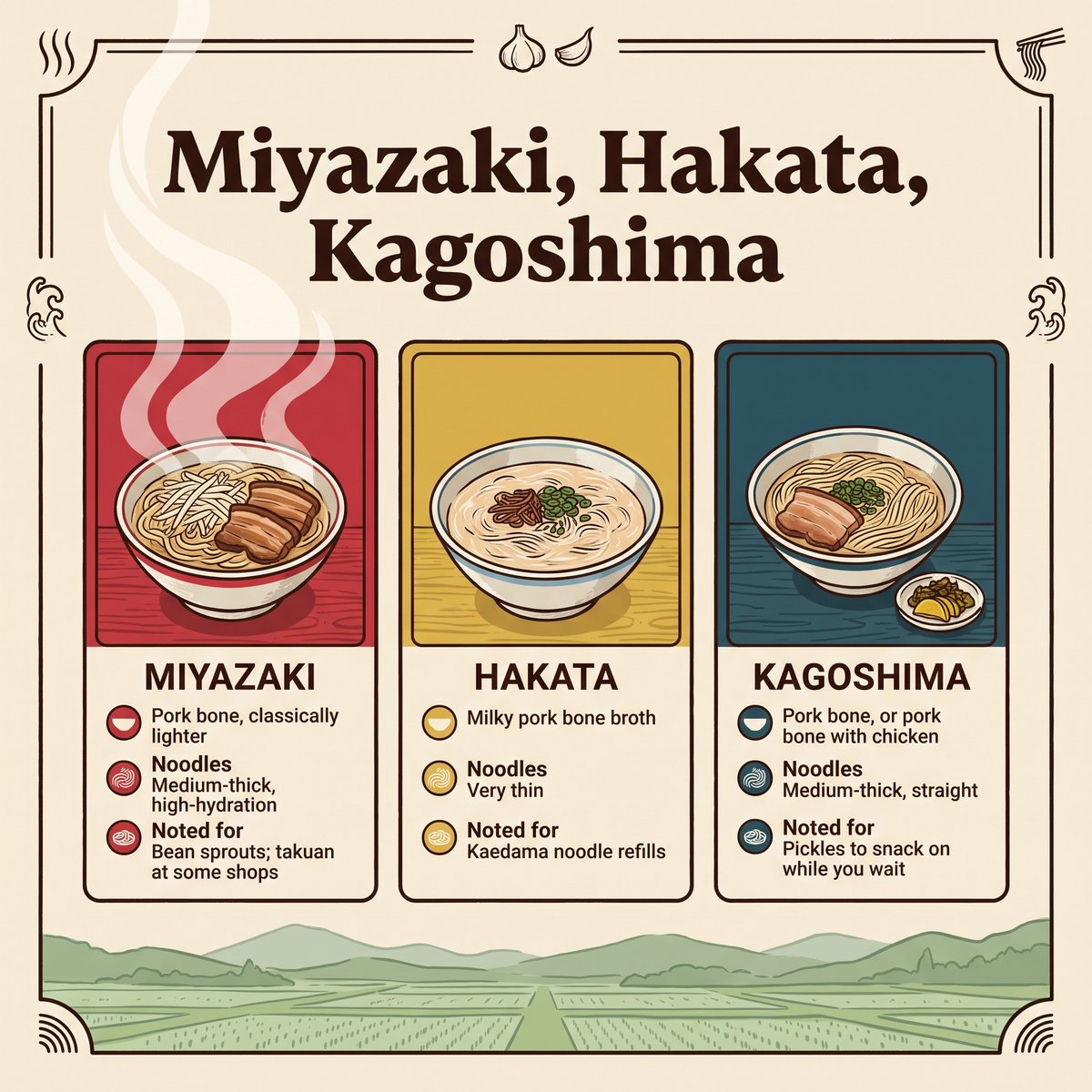
All three are pork bone ramen from Kyushu. Even so, the noodles and local habits differ, and richness varies a lot by shop. The table below sums up how people commonly describe each style.
| Style | Broth | Noodles | Often noted for |
|---|---|---|---|
| Miyazaki ramen | Pork bone, classically on the lighter side | Medium-thick, high-hydration | Bean sprouts; takuan at some shops |
| Hakata ramen | Milky pork bone broth | Very thin | Kaedama (noodle refills) |
| Kagoshima ramen | Pork bone, or pork bone blended with chicken | Medium-thick, straight | Pickles to snack on while you wait |
Difference from Hakata Ramen
In fact, Japan’s farm ministry describes Hakata ramen as a milky pork bone soup with very thin noodles. It also traces the noodle-refill custom to Nagahama in Fukuoka. Compared with those very thin noodles, Miyazaki ramen commonly uses smoother, medium-thick ones. Its broth is often presented locally as relatively mild, although richness varies by shop. For the Fukuoka styles, see our guides to Hakata ramen and Kurume ramen.
Difference from Kagoshima Ramen
Here the line is blurrier, honestly. Kagoshima, Miyazaki’s southern neighbor, also uses medium-thick straight noodles. According to the travel guide Rurubu, its broth is often pork bone alone or blended with chicken. Diners there also snack on pickles while they wait. Learn more in our Kagoshima ramen guide.
How to Eat Miyazaki Ramen
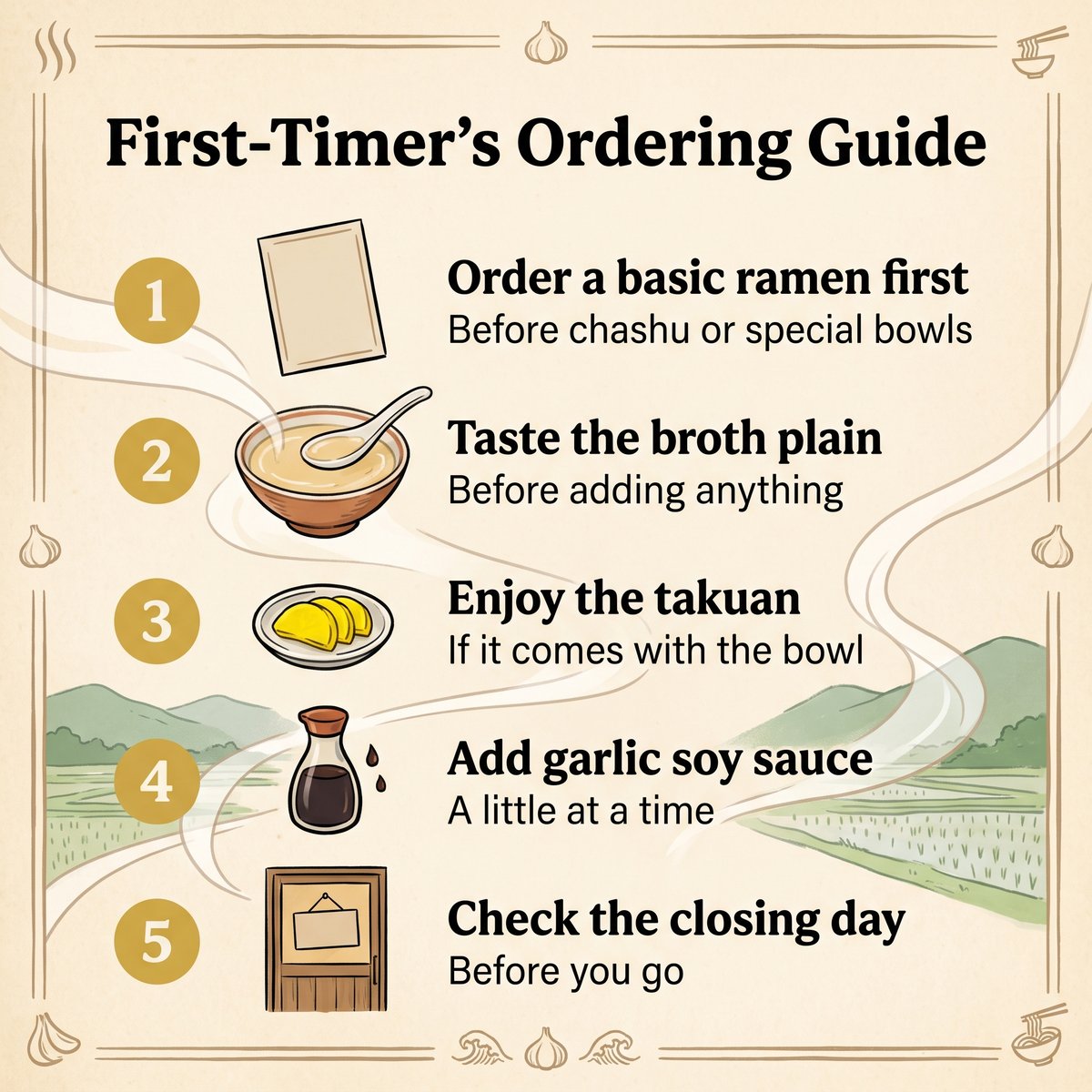
There is no strict etiquette here. At some traditional shops, takuan, bright yellow pickled radish, comes automatically with the ramen. Eiyoken is one documented example. Practices vary by restaurant, though, so do not worry if your bowl arrives without it.
Similarly, garlic soy sauce sits on the table at some shops. If it is available, taste the broth first. Then add a small amount if you want a stronger flavor. That is my serving suggestion rather than a fixed local rule.
First-timer’s ordering guide
- Order a basic ramen first, before trying chashu or special bowls.
- Taste the broth plain before adding anything.
- If takuan comes with the bowl, enjoy it as a crisp side.
- If garlic soy sauce is on the table, add a little at a time.
- Check the shop’s closing day before you go.
Where to Eat Miyazaki Ramen
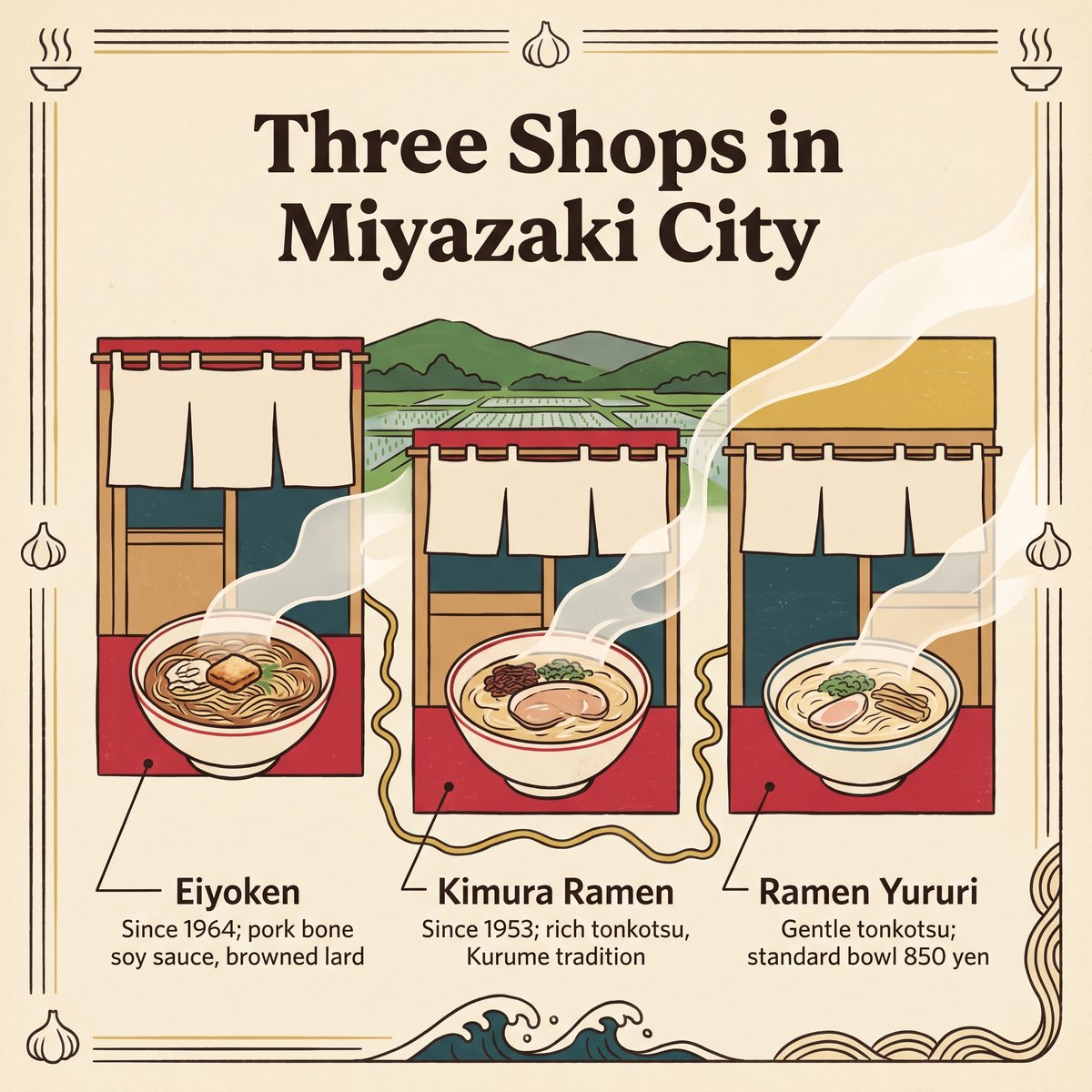
Miyazaki City is the easiest place to start, with long-running shops and newer favorites close together. The three below are well-documented examples rather than a definitive list of the best Miyazaki ramen restaurants.
Eiyoken (栄養軒)
Founded in 1964, Eiyoken is one of Miyazaki City’s classic ramen shops. The city’s own food feature describes a pork bone and soy sauce soup, homemade medium-thick straight noodles, and browned lard. Takuan comes with every ramen order.
- Style Classic tonkotsu soy sauce with browned lard
- Address 2-1-6 Ehira-nishi, Miyazaki City, Miyazaki
- Phone 0985-22-7758
- Hours 11:00 to 15:00; 17:00 to 20:00; closed Mondays (next day if Monday is a holiday)
- Source Miyazaki City food feature
Kimura Ramen (きむらラーメン)
Kimura traces its history to 1953 and is now run by its fourth generation. The shop describes its ramen as a rich tonkotsu style rooted in the Kurume tradition. Today, two branches operate, one in the north and one in the south of the city.
- Style Rich tonkotsu, by the shop’s own description
- Oyodo branch 4942-2 Tsunehisa, Miyazaki City; 0985-59-6477; 11:00 to 21:30; closed Wednesdays
- Kita branch 137-3 Gongen-cho, Miyazaki City; 0985-27-1683; 11:00 to 21:30; closed Tuesdays
- Source Kimura Ramen official site
Ramen Yururi (らーめん悠瑠里)
Yururi calls its bowl a gentle tonkotsu ramen. According to its official site, the recipe combines techniques honed in Kurume with a Miyazaki touch. Besides the standard bowl, the menu lists soy sauce, miso, and salt versions.
- Style Gentle tonkotsu; standard ramen listed at ¥850
- Address 1445-70 Harano-mae, Oshima-cho, Miyazaki City (listed as the Oshima main branch)
- Phone 0985-40-1621
- Hours 7:00 to 20:30 (as listed online); closing days not listed
- Source Ramen Yururi official site
Online information last checked: October 15, 2026. Hours, prices, closing days, branch status, and mail-order availability can change, so check with each shop before visiting.
Price Range
A standard bowl is usually affordable. For example, Yururi lists its basic ramen at ¥850 and its miso version at ¥930. Chashu bowls and extra toppings cost more, so check the menu when you arrive.
Souvenirs and Ramen to Take Home
Want the taste after your trip? Some shops have sold packaged ramen. Kimura, for instance, says it began a mail-order ramen business in 2006. However, its site currently lists vending machine sales as suspended. Availability changes, so ask in the shop or check its official site first.
Travel Tips for Ramen Lovers
Ramen in Miyazaki works in any season, so plan around shop hours rather than the calendar. Most of the shops above are in Miyazaki City, which makes planning easy. However, each one closes on a different weekday. If you like richer bowls, though, ask locals about the heavier tonkotsu shops. While you are there, explore more Miyazaki food and regional cuisine, including the prefecture’s famous Chicken Nanban.
Bonus Recipe: A Miyazaki-Style Spicy Noodle Soup
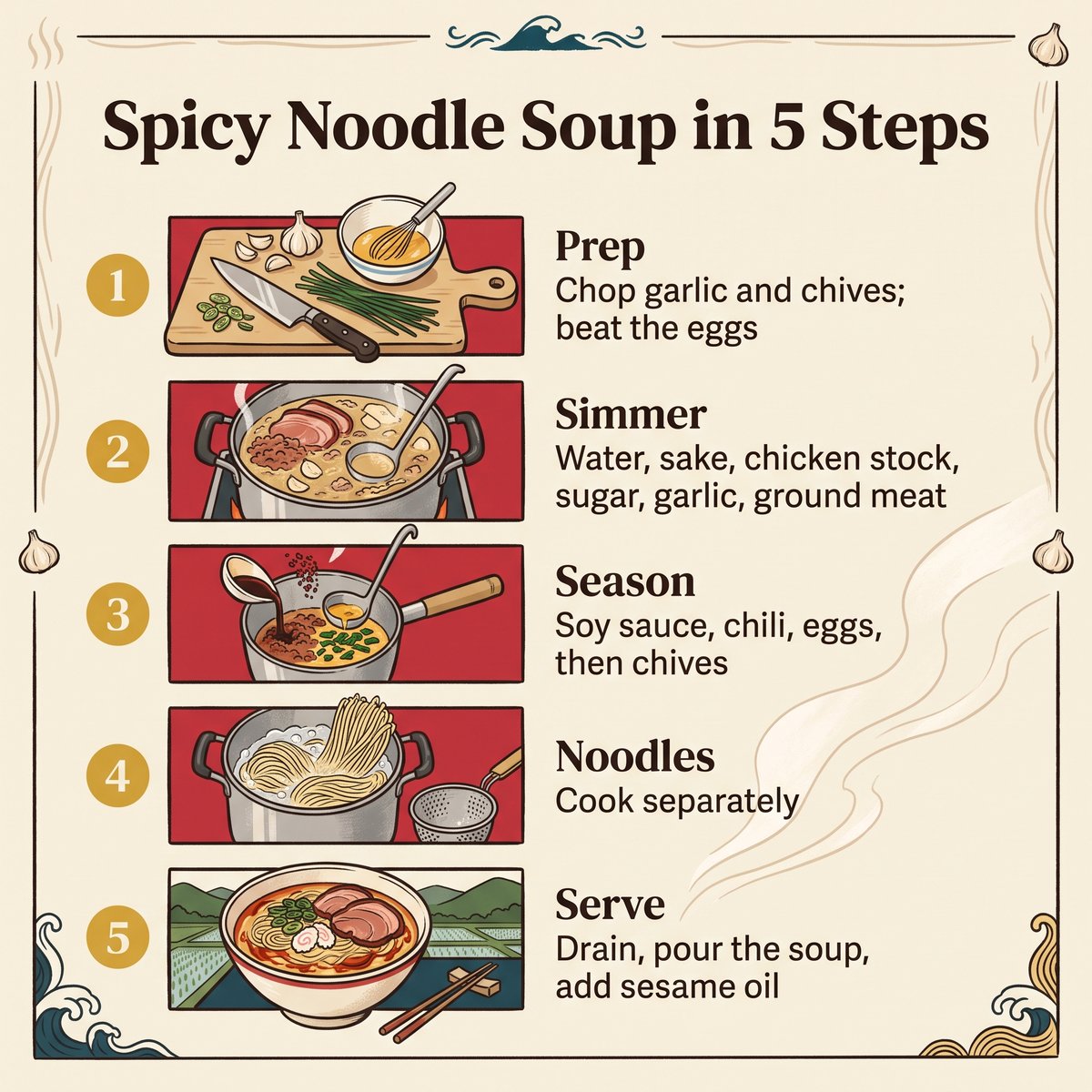
First, a note for anyone searching for a Miyazaki ramen recipe. Shop-style tonkotsu broth simmers for many hours, which is hard to manage at home. So this is not an authentic Miyazaki ramen recipe. Instead, it is a quick noodle soup with chicken stock, ground meat, egg, garlic, and chili. As a result, its spicy, garlicky flavor sits closer to karamen, Miyazaki’s other famous noodle dish.
Ingredients
- Chinese noodles: 120 g
- Eggs: 46 g
- Mixed ground meat: 100 g
- Garlic: 10 g
- Chinese chives (nira): 50 g
- Soy sauce: 5 g
- Coarsely ground chili pepper: 8 g
- Sesame oil: 5 g
Soup base
- Water: 500 g
- Sake: 15 g
- Chicken stock base: 15 g
- Sugar: 4 g
Instructions
- Chop the garlic and chives, then beat the eggs until smooth.
- Bring the water, sake, chicken stock, sugar, garlic, and ground meat to a boil. Break up the meat while it cooks.
- Add the soy sauce, chili pepper, and beaten eggs. Stir in the chives and turn off the heat.
- Meanwhile, cook the noodles separately.
- Drain the noodles, pour the soup over them, drizzle with sesame oil, and serve.
Final Thoughts on Miyazaki Ramen

Miyazaki ramen rewards a slow, curious meal. It shows how one region shaped Kyushu’s pork bone tradition in its own way. Springy noodles, crisp sprouts, and small local habits all play a part. Begin with a classic shop in Miyazaki City. After that, compare it with bowls such as Kumamoto ramen, or browse our Japanese ramen collection.
Miyazaki Ramen FAQ
About the Dish
- What is Miyazaki ramen?
-
Miyazaki ramen is the local pork bone ramen of Miyazaki Prefecture in Kyushu. The prefecture’s tourism site describes the classic broth as slightly light. Shops then typically add medium-thick noodles, bean sprouts, and chashu. Richer tonkotsu shops also exist in the prefecture.
- How is it different from Hakata ramen?
-
Hakata ramen uses very thin noodles in a milky pork bone broth. Miyazaki ramen usually uses smoother, medium-thick noodles instead. Locally, its broth is often presented as milder. Still, richness varies from shop to shop in both cities.
- Does Miyazaki ramen always come with takuan?
-
No, not always. Some traditional shops serve takuan automatically with the ramen. Eiyoken, for example, includes it with every ramen order. Other shops handle it differently, so just enjoy it if it arrives.
- Is garlic soy sauce always provided?
-
It depends on the shop. Some keep garlic soy sauce on the table, while others do not. If you see it, taste the broth first. Then add a small amount for a bolder flavor.
- Does “light” mean it is low in salt or calories?
-
Not necessarily. Instead, “light” mostly describes the broth’s texture and body. Most shops do not publish nutrition figures, and any ramen soup can be salty. If you are watching salt, simply leave some of the broth.
Visiting Miyazaki
- Where can I eat Miyazaki ramen?
-
Generally, Miyazaki City is the most convenient base. Long-running shops such as Eiyoken and Kimura Ramen are there. Meanwhile, Ramen Yururi offers a gentle tonkotsu with several flavor options. Check hours before you go, because each shop closes on different days.
- Can I find richer tonkotsu in Miyazaki?
-
Yes. The prefecture’s tourism site notes that quite a few shops serve rich, heavy tonkotsu. It names Furaiken, which has several locations, as known for establishing that style. So if you prefer a thicker broth, you have options too.
References
- Miyazaki Prefecture Tourism Navi – Miyazaki Noodle Feature: Tonkotsu Ramen, Karamen, and More [editor’s translation] (Accessed October 2026)
- Miyazaki City – Eiyoken, Miyazaki Shokudo [editor’s translation] (Accessed October 2026)
- Kimura Ramen – Official Site and History (Accessed October 2026)
- Marukin Honten – Shop Introduction Page [editor’s translation] (Accessed October 2026)
- Ramen Yururi – Official Site (Accessed October 2026)
- Ministry of Agriculture, Forestry and Fisheries (MAFF) – Local Ramen Featuring Pork, Beef, and Chicken [editor’s translation] (Accessed October 2026)
- Rurubu & more – Popular Kagoshima Ramen Shops around Tenmonkan and Kagoshima-Chuo Station [editor’s translation] (Accessed October 2026)
- The Japan Society of Home Economics (J-STAGE) – Fukudome, N., & Takashima, A. (2024). Changes and type classification of ramen in Japan [editor’s translation] (Accessed October 2026)
Related Articles
- Hakata Ramen (博多ラーメン) (Surveyed: October 2026)
- Kurume Ramen (久留米ラーメン) (Surveyed: October 2026)
- Kagoshima Ramen (鹿児島ラーメン) (Surveyed: October 2026)
- Kumamoto Ramen (熊本ラーメン) (Surveyed: October 2026)
- Chicken Nanban (チキン南蛮) (Surveyed: October 2026)
- Japanese Ramen (Surveyed: October 2026)




Comments