



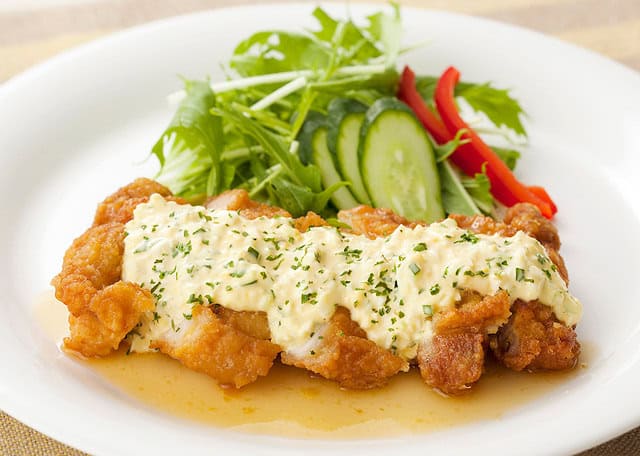
Chicken Nanban is a Miyazaki dish made with fried chicken, sweet vinegar sauce, and tartar sauce. Cooks first dust boneless chicken with flour, then coat it in beaten egg and deep-fry it until golden. Then they dip the hot chicken straight into a sweet-and-sour nanban sauce before adding creamy tartar sauce on top.
In fact, the result tastes sweet, tangy, savoury, and rich all at once. Because the vinegar cuts through the frying oil, the dish feels lighter than it looks. Miyazaki chicken nanban has since travelled far beyond its home prefecture. You will now find it in bento shops and supermarket delis nationwide.
Still, the story starts in one small city on the Pacific coast. Here is how the dish began, how it tastes, and where to try it in Miyazaki.
| Origin | Nobeoka City, Miyazaki Prefecture |
| Main area | All of Miyazaki Prefecture; now nationwide |
| Main ingredients | Chicken breast or thigh, flour, egg |
| Sauces | Nanban sweet vinegar sauce; tartar sauce |
| Best served with | Steamed rice, shredded cabbage, miso soup |
| Similar dishes | Karaage, tatsuta age, toriten, nanbanzuke |
What is Chicken Nanban?
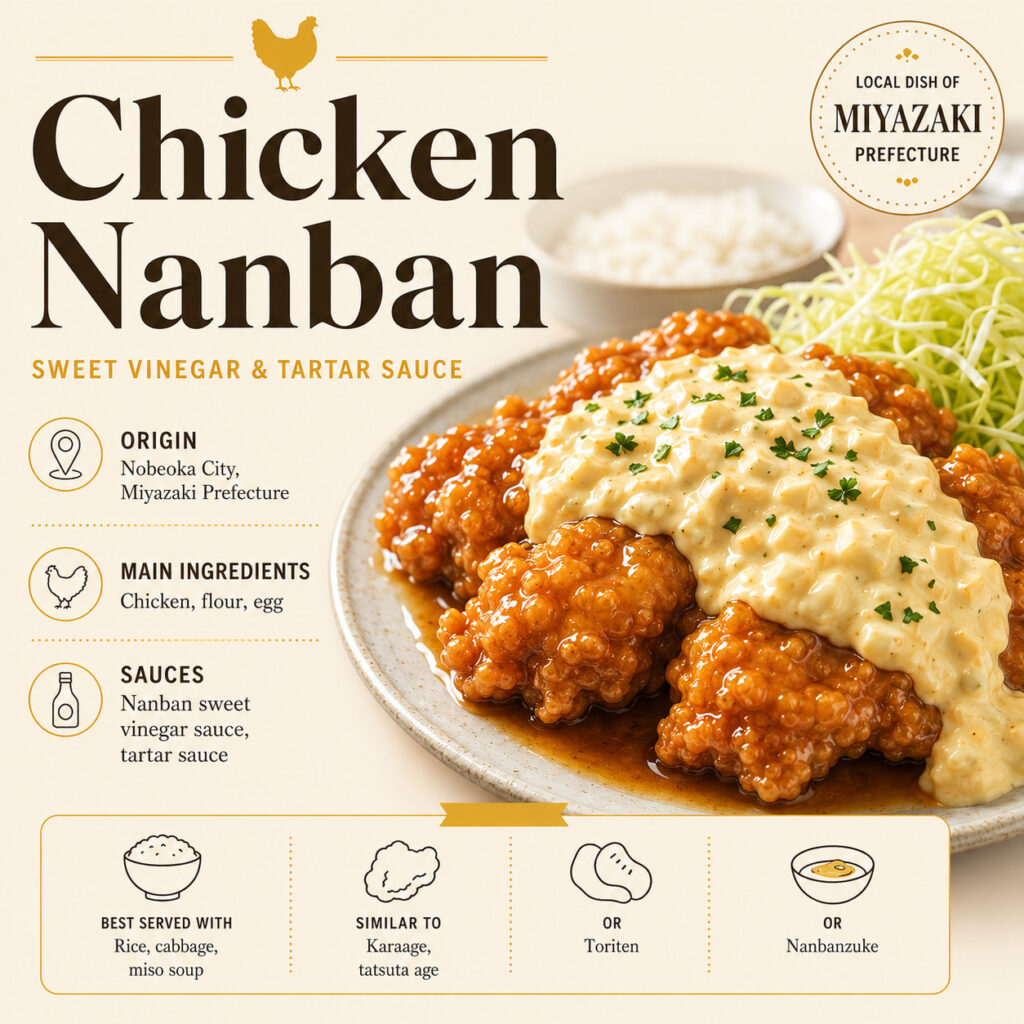
Chicken Nanban is Japanese fried chicken that cooks dip in sweet vinegar sauce and finish with tartar sauce. The Ministry of Agriculture, Forestry and Fisheries lists it as a local dish of Miyazaki Prefecture. Unlike karaage, the recipe uses no potato starch. Unlike chicken katsu, it uses no breadcrumbs either.
Above all, that flour-and-egg coating does real work. It fries into a soft, slightly custardy layer rather than a hard crust, so the sweet vinegar soaks in quickly. As a result, the sauce reaches the meat instead of sliding off the surface. Home cooks in Miyazaki treat this step as the whole point of the dish.
Traditional shops usually use chicken breast, which the sauce keeps moist. Meanwhile, many modern restaurants choose boneless thigh for a richer, meatier bite. Both versions count as authentic Chicken Nanban.
What does “Nanban” mean?
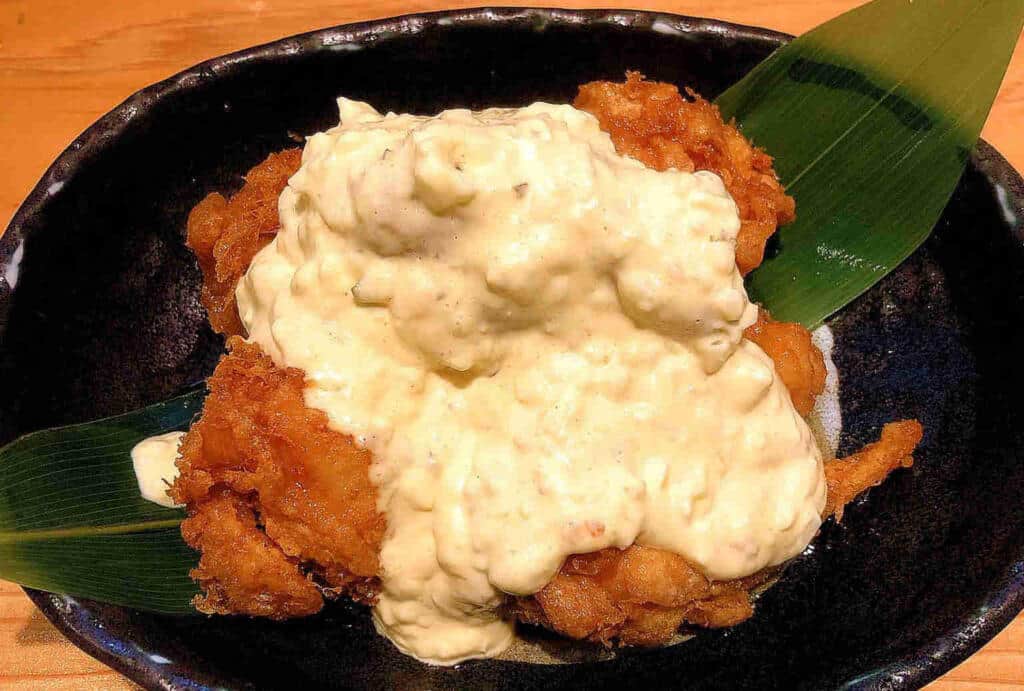
Nanban originally referred to Portuguese and other foreign influences, and later to sweet-vinegar marinated dishes. People of the Warring States period used the word for the Portuguese who arrived by sea. So the term carries history rather than a flavour.
In contrast, nanbanzuke is a cooking technique. Cooks fry an ingredient, then marinate it in sweet vinegar with chilli and often sliced onion. Aji nanbanzuke, made with horse mackerel, remains the classic example. Because early versions of this Miyazaki dish used chicken in that same sweet vinegar, the name Chicken Nanban stuck.
What does Chicken Nanban taste like?
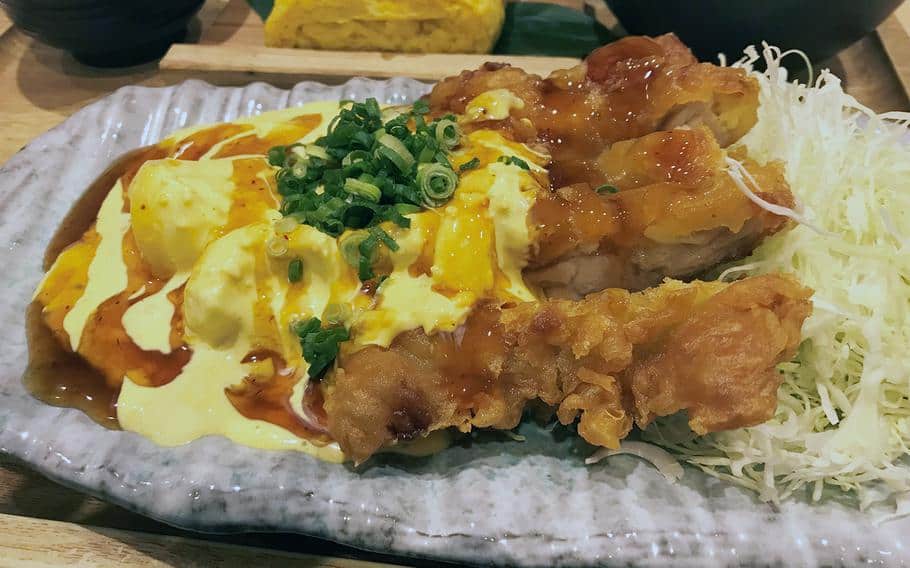
At first, the impression is sweet and sharp together. Vinegar hits first, sugar follows a beat later, and soy sauce grounds both in savoury depth. Then the tartar sauce arrives, cool and thick, softening every edge.
Equally, texture matters just as much. The coating never stays fully crisp, since the sweet vinegar soaks in on purpose. Instead you get a tender, almost silky layer around the meat, with a faint crunch at the corners. In comparison, breast meat turns out lean and clean, while thigh runs juicier.
Honestly, that soft coating divides people at first. I expected something shatteringly crunchy, and the reality took a few bites to appreciate. Once the vinegar and mayonnaise start playing off each other, though, the appeal makes complete sense.
Where did Chicken Nanban originate?
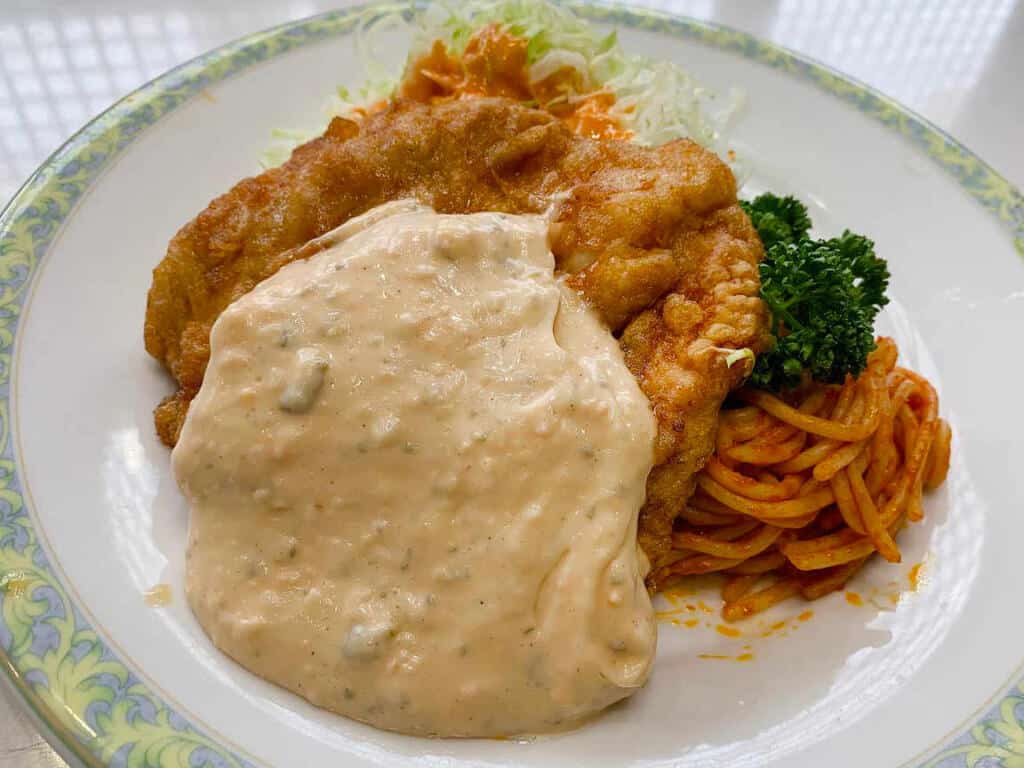
Chicken Nanban originated in Nobeoka City, Miyazaki Prefecture. Widely cited accounts trace it to a western-style restaurant called London, which operated in Nobeoka during the 1950s. Staff there ate a simple meal of battered fried chicken dipped briefly in sweet vinegar. Back then people called it something closer to “fried chicken in sweet vinegar.”
Notably, two restaurants in Nobeoka connect closely to that origin. Both drew on that same staff meal, yet they took the idea in different directions. Regardless, neither claim cancels out the other.
From there the dish climbed the social ladder fast. During the 1960s families ordered it as a treat when eating out. Afterwards it reached school lunches, home kitchens, and restaurant menus across the prefecture. In 2007 the agriculture ministry listed it among Japan’s notable regional dishes.
Ogura vs Nao-chan: two origin stories
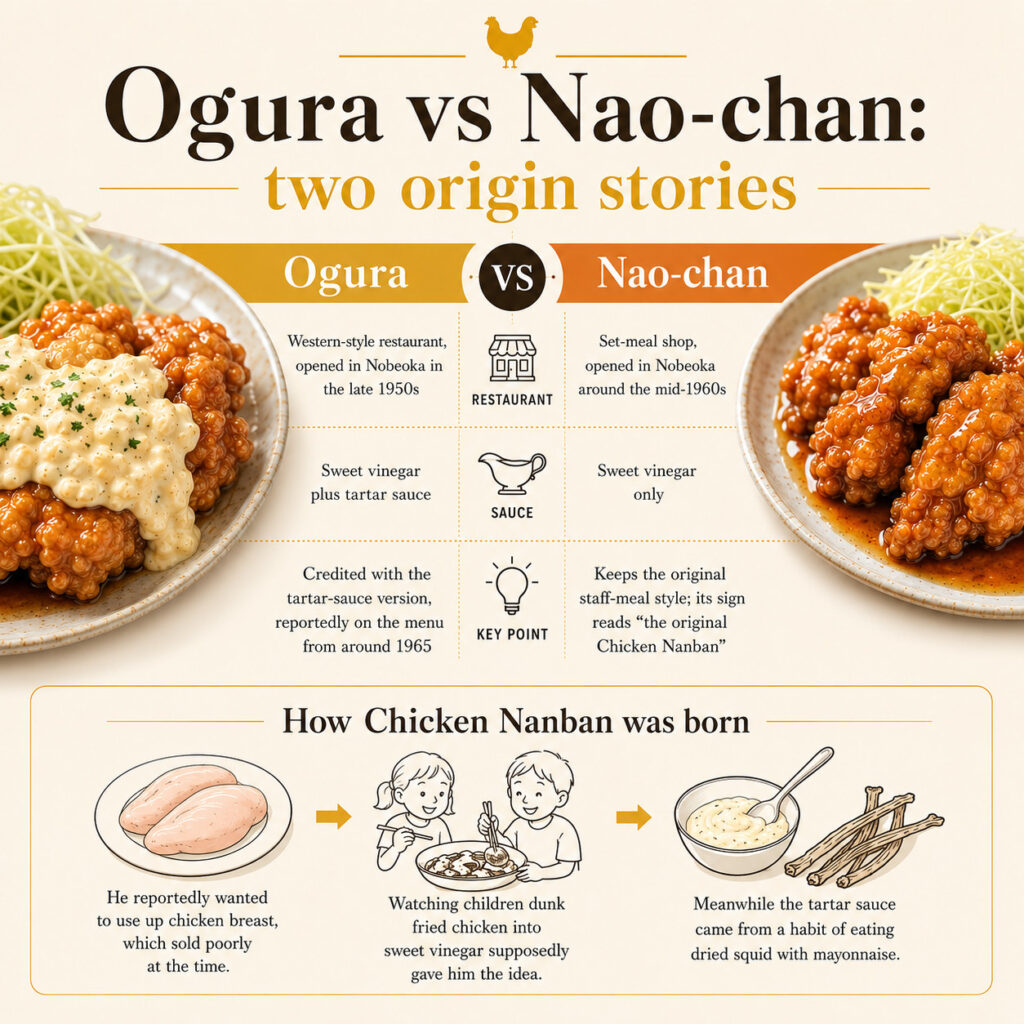
| Restaurant | Style | Sauce | Key point |
|---|---|---|---|
| Ogura | Western-style restaurant, opened in Nobeoka in the late 1950s | Sweet vinegar plus tartar sauce | Credited with the tartar-sauce version, reportedly on the menu from around 1965 |
| Nao-chan | Set-meal shop, opened in Nobeoka around the mid-1960s | Sweet vinegar only | Keeps the original staff-meal style; its sign reads “the original Chicken Nanban” |
Ogura’s own account credits Kai Teruyuki, brother of founder Kai Yoshimitsu, with developing the dish. He reportedly wanted to use up chicken breast, which sold poorly at the time. Watching children dunk fried chicken into sweet vinegar supposedly gave him the idea. Meanwhile the tartar sauce came from a habit of eating dried squid with mayonnaise.
In contrast, Nao-chan took the opposite path. Its founder trained at London, then reproduced the staff meal without tartar sauce. Instead the shop lets a secret sweet vinegar soak deep into the coating. Published references date Ogura’s version roughly five years earlier.
Nobeoka marks July 8 as Chicken Nanban Day. A citizens’ group formed in 2009 still runs events around the dish.
Chicken Nanban vs karaage
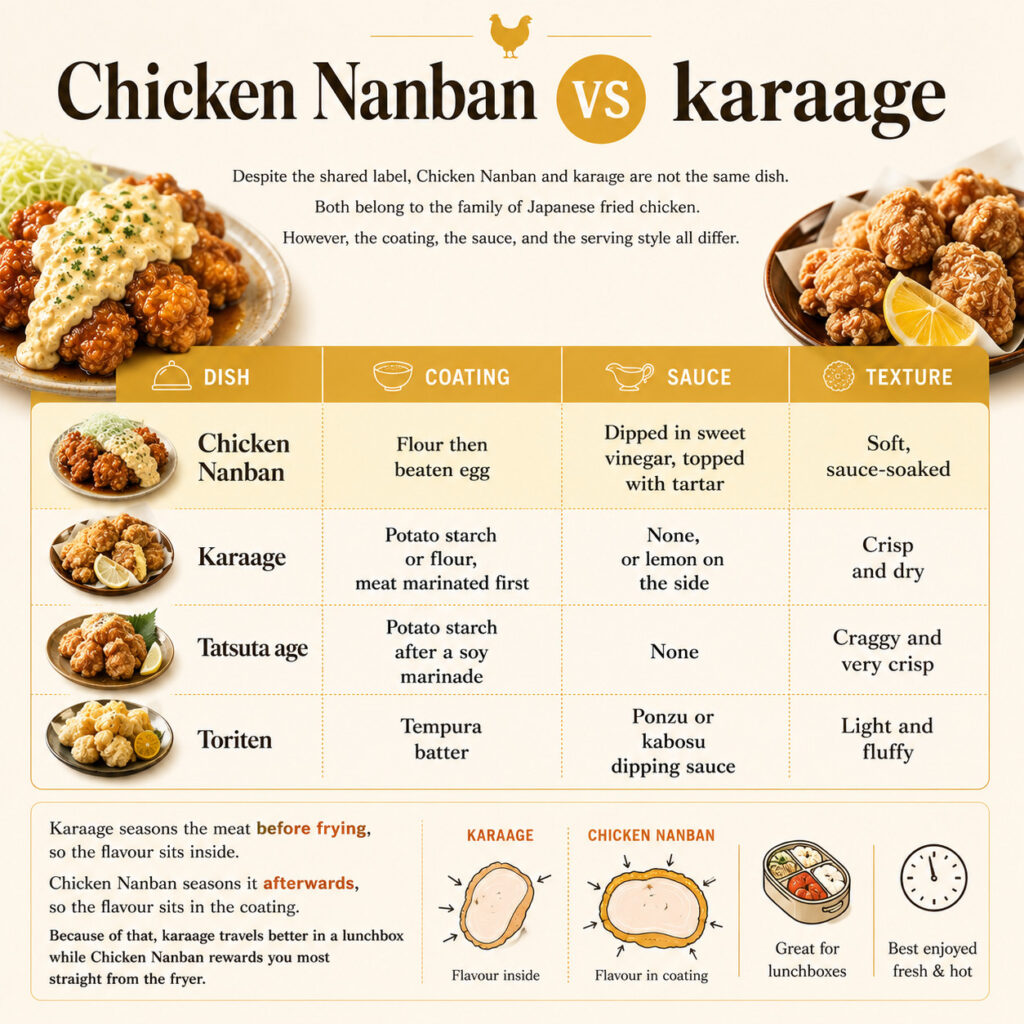
Despite the shared label, Chicken Nanban and karaage are not the same dish. Both belong to the family of Japanese fried chicken. However, the coating, the sauce, and the serving style all differ.
| Dish | Coating | Sauce | Texture |
|---|---|---|---|
| Chicken Nanban | Flour then beaten egg | Dipped in sweet vinegar, topped with tartar | Soft, sauce-soaked |
| Karaage | Potato starch or flour, meat marinated first | None, or lemon on the side | Crisp and dry |
| Tatsuta age | Potato starch after a soy marinade | None | Craggy and very crisp |
| Toriten | Tempura batter | Ponzu or kabosu dipping sauce | Light and fluffy |
Karaage seasons the meat before frying, so the flavour sits inside. Chicken Nanban seasons it afterwards, so the flavour sits in the coating. Because of that, karaage travels better in a lunchbox while Chicken Nanban rewards you most straight from the fryer.
Best chicken cuts for Chicken Nanban
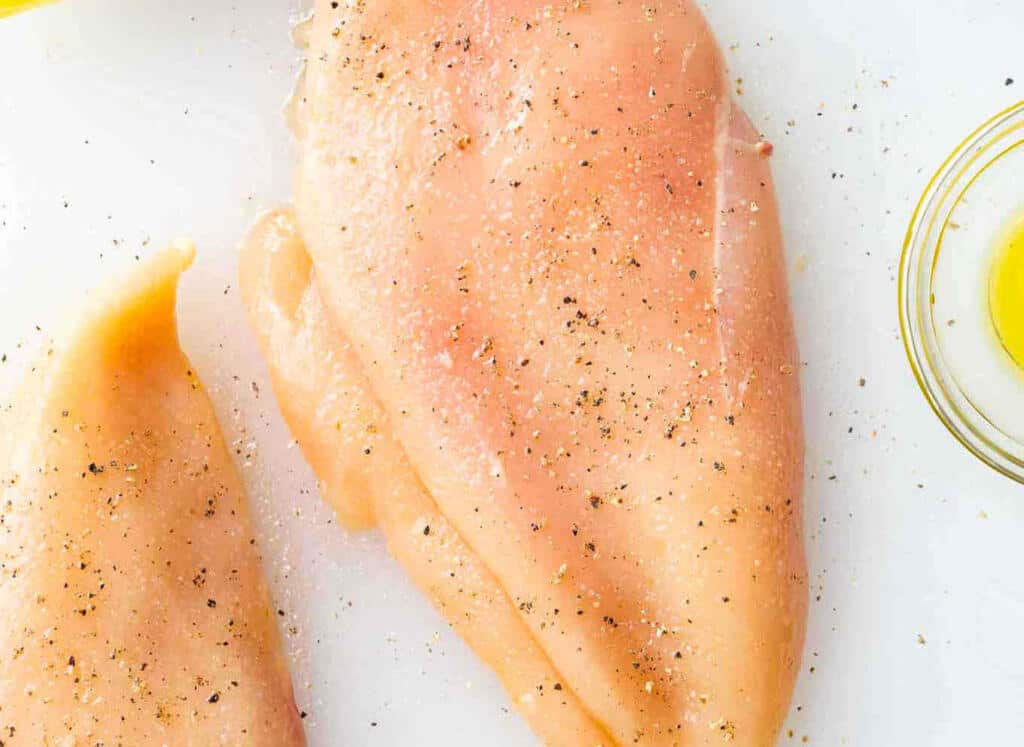
To begin with, many traditional shops use chicken breast. The cut carries little fat, so the sweet vinegar and the tartar sauce supply the richness instead. Breast also slices cleanly into neat pieces, which suits the plated presentation of a set meal.
Thigh has become the popular alternative, especially in izakaya and bento versions. It stays juicy even when slightly overcooked, so it suits a first attempt at home. On the other hand, it can taste heavy once tartar sauce joins the plate. Switch to breast once you trust your oil temperature.
How to make Chicken Nanban at home
| Servings | 2 |
| Difficulty | Easy to moderate |
| Prep time | 20 minutes |
| Cook time | 15 minutes |
| Total time | 35 minutes |
Ingredients
First, the recipe splits neatly into four groups. Quantities below serve two people.
- Chicken: 260 g chicken breast or boneless thigh, 1/4 cup flour, 1 large egg, a pinch each of salt and pepper, 2 cups cooking oil
- Nanban sweet vinegar sauce: 2 tbsp vinegar, 2 tbsp soy sauce, 1 tbsp sugar
- Tartar sauce: 4 tbsp mayonnaise, 1/2 boiled egg (chopped), 1 tbsp finely chopped onion, 1 tbsp chopped pickles or cucumber, salt and pepper
- Garnish: 1/4 head shredded cabbage, 1/2 cucumber sliced, 1 small tomato
Step-by-step method
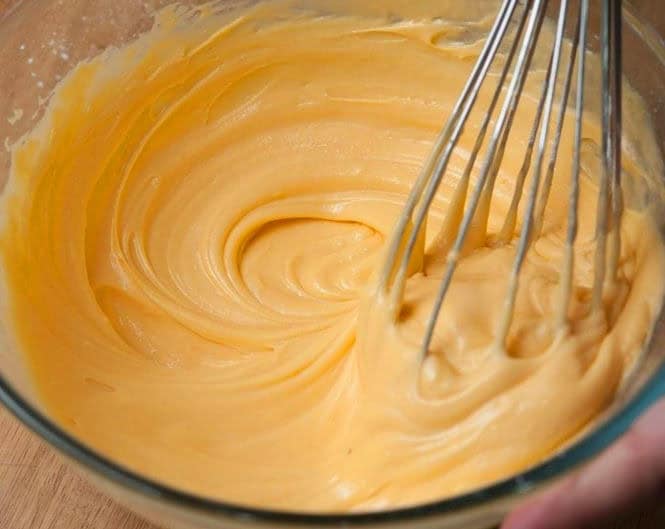
Prepare the sauces first. Combine the vinegar, soy sauce, and sugar in a shallow dish, then warm the mixture briefly until the sugar dissolves. Meanwhile, mix the tartar ingredients in a separate bowl and chill them.
Coat the chicken next. Pat the meat dry, season it with salt and pepper, and dust it evenly with flour. Then dip each piece in beaten egg so the surface looks glossy rather than dripping.
After that, fry at around 170°C for roughly six to eight minutes, depending on thickness. Turn the pieces once, and avoid crowding the pan. The coating should turn pale gold rather than deep brown.
Dip the chicken in the sweet vinegar while it is still hot. Ten to twenty seconds per side is plenty. Hot meat absorbs the sauce fast, so a long soak only makes the coating soggy.
Slice the chicken, then arrange it over shredded cabbage with cucumber and tomato. Finally, spoon the cold tartar sauce across the top and serve immediately with rice.
How to make Japanese tartar sauce
To start, Japanese tartar sauce needs mayonnaise, ideally a Japanese brand for its richness. Chop one boiled egg coarsely so the texture stays visible. Then add finely chopped onion, plus pickles, cucumber, or pickled rakkyo for crunch.
After that, season with salt, pepper, and a small squeeze of lemon. Some Miyazaki shops add a spoonful of ketchup or a little sugar, which softens the tang. Finally, rest the sauce in the fridge for at least ten minutes before serving.
Tip for juicy chicken: pound thick breast to an even thickness. Salt it 15 minutes ahead, then rest the fried pieces briefly before the vinegar dip.
Common mistakes when making Chicken Nanban
First of all, dry chicken tops the list. Breast overcooks in seconds, so pull it out as soon as the surface turns light gold. Carryover heat finishes the job while the meat rests.
Weak sauce absorption comes next. If the chicken cools before the dip, the coating seals and the vinegar simply runs off. Conversely, a soggy result means you left it swimming too long. Aim for a quick bath, not a marinade.
Too much tartar sauce spoils the balance as well, since the vinegar should still cut through on every bite. Finally, never skip the flour dusting, because egg alone slides straight off the meat.
Can you make Chicken Nanban without tartar sauce?
Yes, and that version has a proud pedigree. Nao-chan in Nobeoka serves the dish with sweet vinegar alone, exactly as the original staff meal appeared. Without the mayonnaise, the vinegar tastes sharper and the chicken feels noticeably lighter.
Regional variations exist too. In Kochi and parts of Shikoku, cooks reach for aurora sauce instead of tartar. That pink blend mixes mayonnaise with ketchup. Bento chains meanwhile sell several sauce versions side by side.
How locals eat Chicken Nanban in Miyazaki
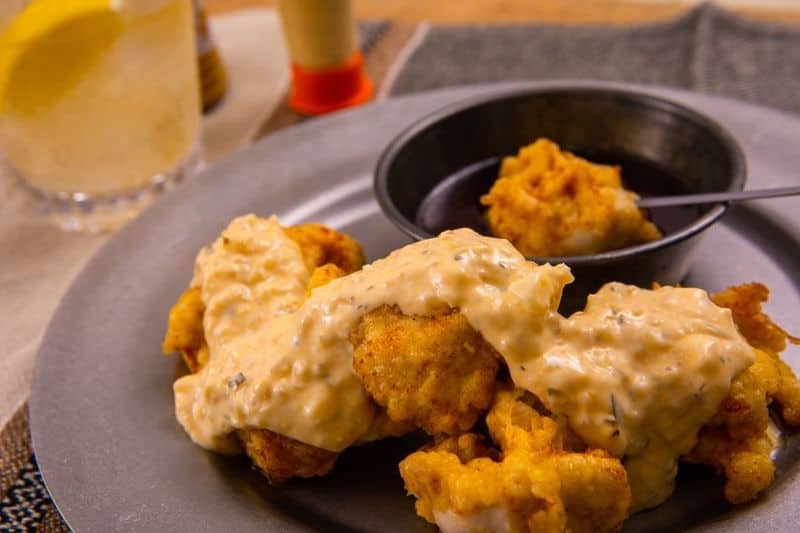
In general, most people in Miyazaki meet this dish as a teishoku set meal. A plate of fried chicken arrives with rice, miso soup, shredded cabbage, and a small pickle dish. Locals alternate bites of chicken and rice so the sweet vinegar never overwhelms the palate.
The dish also runs deep through everyday life. Schools serve it in lunches, families cook it on weeknights, and supermarkets stack it in the deli case by mid-afternoon. Many households keep a personal tartar recipe, arguing quietly about onion versus pickles.
Still, bento boxes carry it furthest of all. Because the coating absorbs sauce rather than shedding crumbs, it survives a few hours in a lunchbox. That practicality explains much of its spread across Japan.
Is Chicken Nanban healthy?
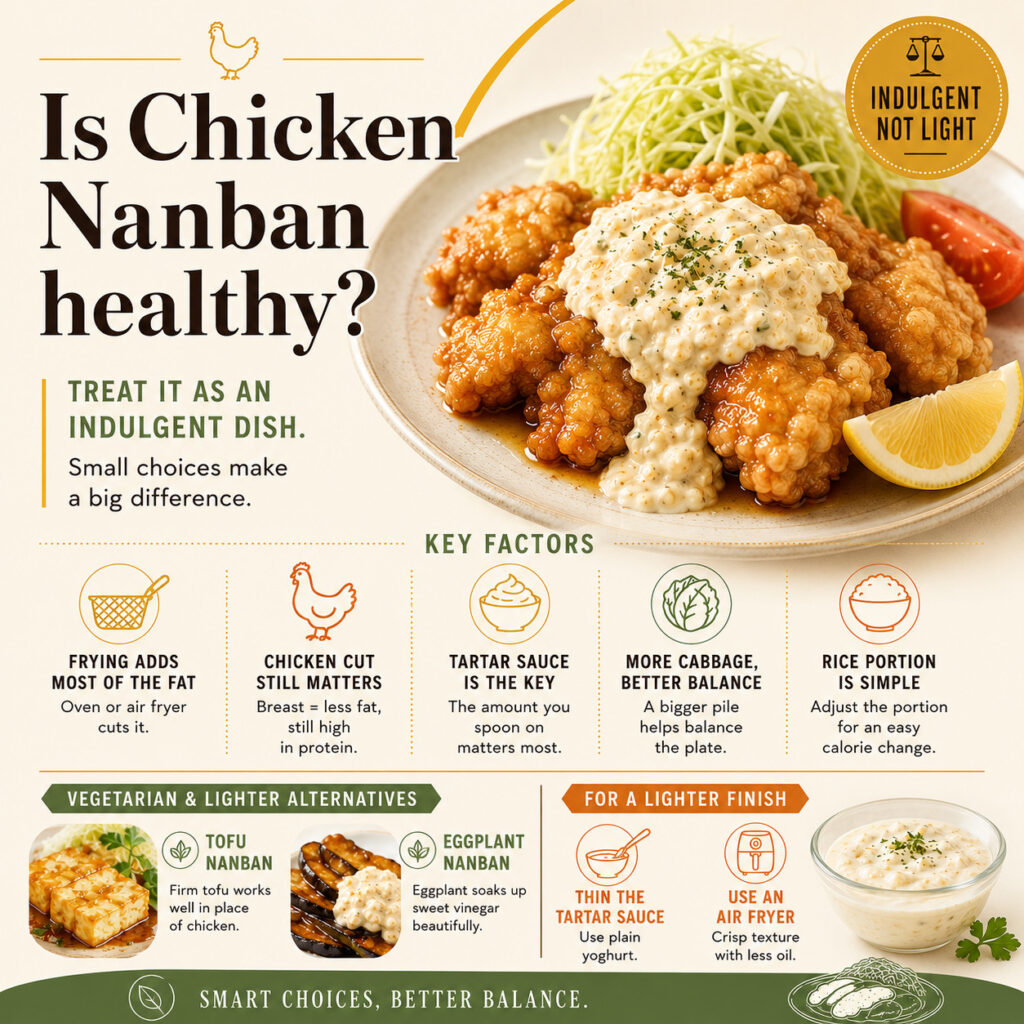
Treat it as an indulgent dish rather than a light one. Portion sizes, sauce quantities, and cooking methods vary enormously between shops, so single calorie figures rarely mean much. Here are the factors that actually move the needle.
- Deep frying adds most of the fat, so oven or air-fryer versions cut it substantially.
- Chicken breast delivers protein with less fat than thigh, so the cut still matters.
- Tartar sauce is mayonnaise-based, so the amount you spoon on matters more than the chicken cut.
- Vegetables come standard, and above all a bigger cabbage pile helps balance the plate.
- Set meals arrive with rice, so adjusting portion size is the simplest change of all.
Vegetarian and lighter alternatives
For example, firm tofu works surprisingly well in place of chicken. Press it, coat it the same way, and shorten the frying time. Eggplant nanban is another popular home variation, since the flesh drinks up sweet vinegar beautifully.
For a lighter finish, thin the tartar sauce with plain yoghurt. An air fryer also produces a decent result, though the coating stays drier than the deep-fried original.
Where to eat Chicken Nanban in Miyazaki
For travellers: look for it at teishoku shops and western-style restaurants in Nobeoka and Miyazaki City. Also check Miyazaki Airport, the shops near JR Miyazaki and Nobeoka stations, and supermarket deli counters after 4pm.
Nobeoka remains the pilgrimage destination, and dozens of shops around town serve their own version. Miyazaki City offers wider choice, from lunch counters to izakaya using local jidori chicken. Please confirm addresses and opening hours before you travel, since details change.
Ogura Idekita (味のおぐらチェーン 出北店)
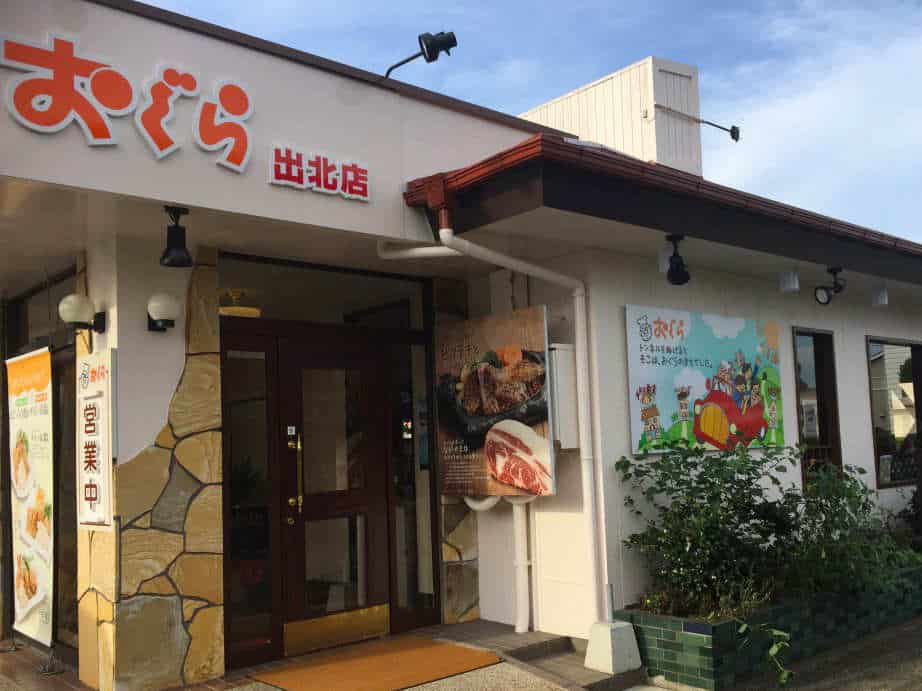
Of course, order the standard Chicken Nanban set for the tartar-sauce style at its source. The kitchen sticks with chicken breast, and the tartar tastes rich, thick, and heavy on chopped egg. Many regulars add the Napolitan pasta, a nod to the restaurant’s western-style roots.
Nao-chan (元祖チキン南蛮 直ちゃん)
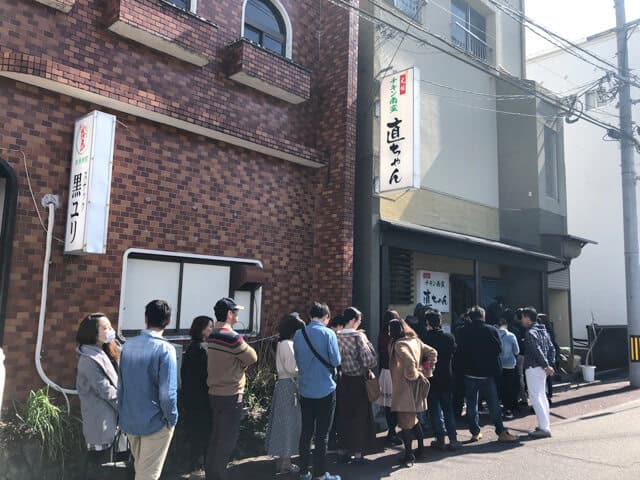
Come here for the no-tartar version, and order the set meal. Golden breast fillets arrive glazed rather than sauced, with sweet vinegar soaked through the coating. The flavour reads sharper and cleaner than the Ogura style. Usefully, the shop also sits within walking distance of Nobeoka Station.
Suisen (地鶏炭火焼 粋仙)
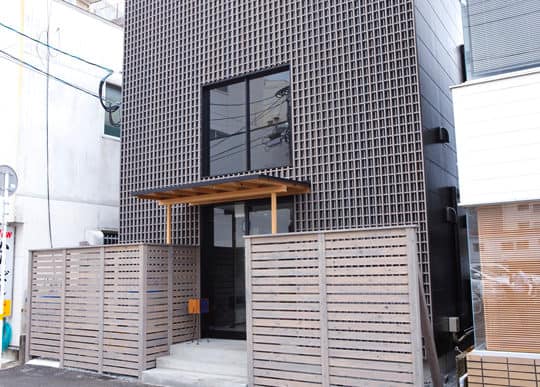
This izakaya in Miyazaki City is better known for charcoal-grilled chicken. However, its Chicken Nanban uses locally raised jidori for a firmer bite. Order it alongside Miyazaki Jitokko grilled chicken and a local beer. Naturally, tartar sauce comes as standard here.
Where to eat Chicken Nanban in Tokyo
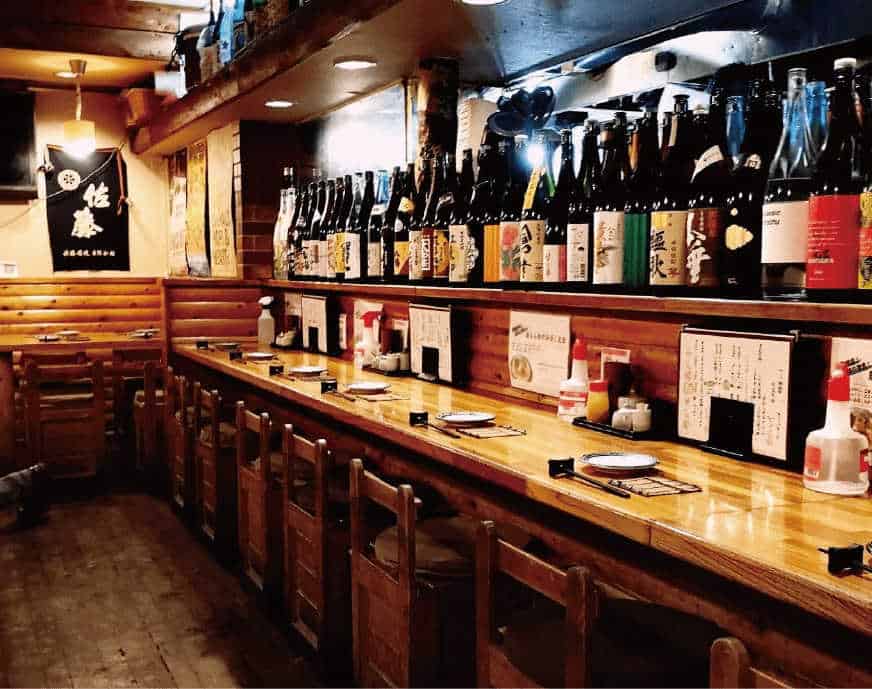
Sake Gura Tori Sake in Tameike-Sanno serves a lunch set built around its own sweet vinegar sauce. Order it at midday, then return in the evening for the yakitori. Notably, the tartar leans mild here.
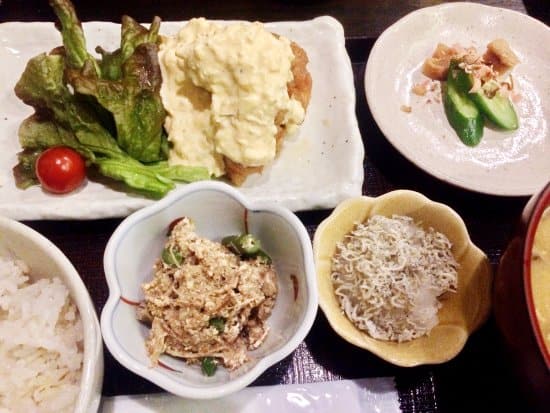
Den Den Den, also in Akasaka, builds its version on boneless thigh. The result runs juicier, and the kitchen packs its tartar sauce with chopped boiled egg. Pair it with sake rather than rice.
Buying Chicken Nanban sauce as a souvenir
In particular, bottled nanban sauce makes an excellent, compact souvenir. Furthermore, Miyazaki supermarkets stock several brands of sweet vinegar tare, often with a matching tartar sauce beside it. Specifically, look for bottles labelled 南蛮酢 or チキン南蛮のたれ.
Miyazaki Airport and the shops around JR Miyazaki Station carry gift-boxed versions. For a broader tour of the region’s specialities, browse our Kyushu food guide before you travel.
Conclusion
Chicken Nanban is one of Miyazaki’s most beloved comfort foods, and it earns that status honestly. Sweet vinegar, creamy tartar, and tender fried chicken add up to something far more interesting than ordinary fried chicken. Above all, the dish rewards curiosity about small differences between shops.
If you visit Nobeoka, try both styles on the same trip and decide which you prefer. Otherwise, make it at home this week. The recipe needs nothing unusual beyond vinegar and a decent mayonnaise.
Enjoyed this one? Explore more Japanese chicken dishes, and follow us on Facebook for our latest food recommendations.
Chicken Nanban FAQ
Is Chicken Nanban the same as karaage?
No, the two dishes differ in coating, sauce, and texture. Karaage uses a marinade and a starch coating, then arrives crisp and dry. This dish uses flour and egg, then goes straight into sweet vinegar before tartar sauce lands on top. As a result, the Miyazaki specialty tastes sweeter, tangier, and considerably softer.
Where did Chicken Nanban originate?
Chicken Nanban originated in Nobeoka City, Miyazaki Prefecture. Widely cited accounts trace it to a staff meal served at a western-style restaurant there during the 1950s. In addition, two Nobeoka shops, Ogura and Nao-chan, both connect to that origin story. The dish then spread across the prefecture through school lunches and everyday restaurant menus.
Does authentic Chicken Nanban always have tartar sauce?
No, both versions count as authentic. Tartar sauce dominates today, and most restaurants across Japan serve it that way. However, Nao-chan in Nobeoka uses sweet vinegar alone, matching the earliest style. Overall, food guides recognise both approaches as legitimate takes on the dish.
What sauce is used for Chicken Nanban?
In fact, two separate sauces do the work. Specifically, nanban sauce is a sweet vinegar tare made from vinegar, sugar, and soy sauce, sometimes with mirin or chilli. Cooks dip the fried chicken into it while the meat is still hot. Tartar sauce, a cold mixture of mayonnaise, boiled egg, and chopped onion or pickles, then goes on top.
Can I use chicken thigh instead of breast?
Yes, and plenty of restaurants already do. Thigh contains more fat, so it stays juicy and forgives slight overcooking. Meanwhile, breast tastes leaner and lets the sweet vinegar come forward more clearly. Traditional Nobeoka shops favour breast, while izakaya and bento versions often choose thigh.
Why is tartar sauce used on a Japanese dish?
Initially, tartar sauce arrived through Japan’s western-style yoshoku restaurant tradition. Ogura’s own account links the idea to a local habit of eating dried squid with mayonnaise. Practically speaking, the creamy sauce also balances the sharp vinegar and adds richness to lean breast meat. That combination is exactly why the version caught on nationwide.
How do locals eat Chicken Nanban in Miyazaki?
Generally, locals eat it as a teishoku set meal. In addition, the plate comes with rice, miso soup, shredded cabbage, and pickles. People alternate bites of chicken and rice so the sweet vinegar stays balanced. Bento boxes and supermarket deli portions are equally common for lunch.
Can I buy Chicken Nanban sauce to take home?
Yes, bottled sweet vinegar tare sells widely across Miyazaki. Moreover, supermarkets stock several brands, and gift shops at Miyazaki Airport carry boxed versions. In addition, many producers sell a matching tartar sauce. Finally, look for labels reading 南蛮酢 or チキン南蛮のたれ.
References
- Ministry of Agriculture, Forestry and Fisheries, Chicken nanban | Our Regional Cuisines, https://www.maff.go.jp/e/policies/market/k_ryouri/search_menu/223/index.html (Surveyed: August 2026)
- Nobeoka City Official Website, Chicken Nanban Day announcement, https://www.city.nobeoka.miyazaki.jp/soshiki/41/42604.html (Surveyed: August 2026)
- Ogura (Nobeoka) Official Site, The story of how Chicken Nanban was created, https://ogura-nobeoka.com/y-staffblog/ (Surveyed: August 2026)
- Kyushu Tourism Organization, A Kyushu Feast for Every Taste, https://www.visit-kyushu.com/en/blogs/kyushu-feast-every-taste/ (Surveyed: August 2026)
Related Articles
- Miyazaki Jitokko grilled chicken (Surveyed: August 2026)
- Karaage (Surveyed: August 2026)
- Toriten (Surveyed: August 2026)
- Miyazaki Food (Surveyed: August 2026)
- Kyushu Food Guide (Surveyed: August 2026)



Comments