


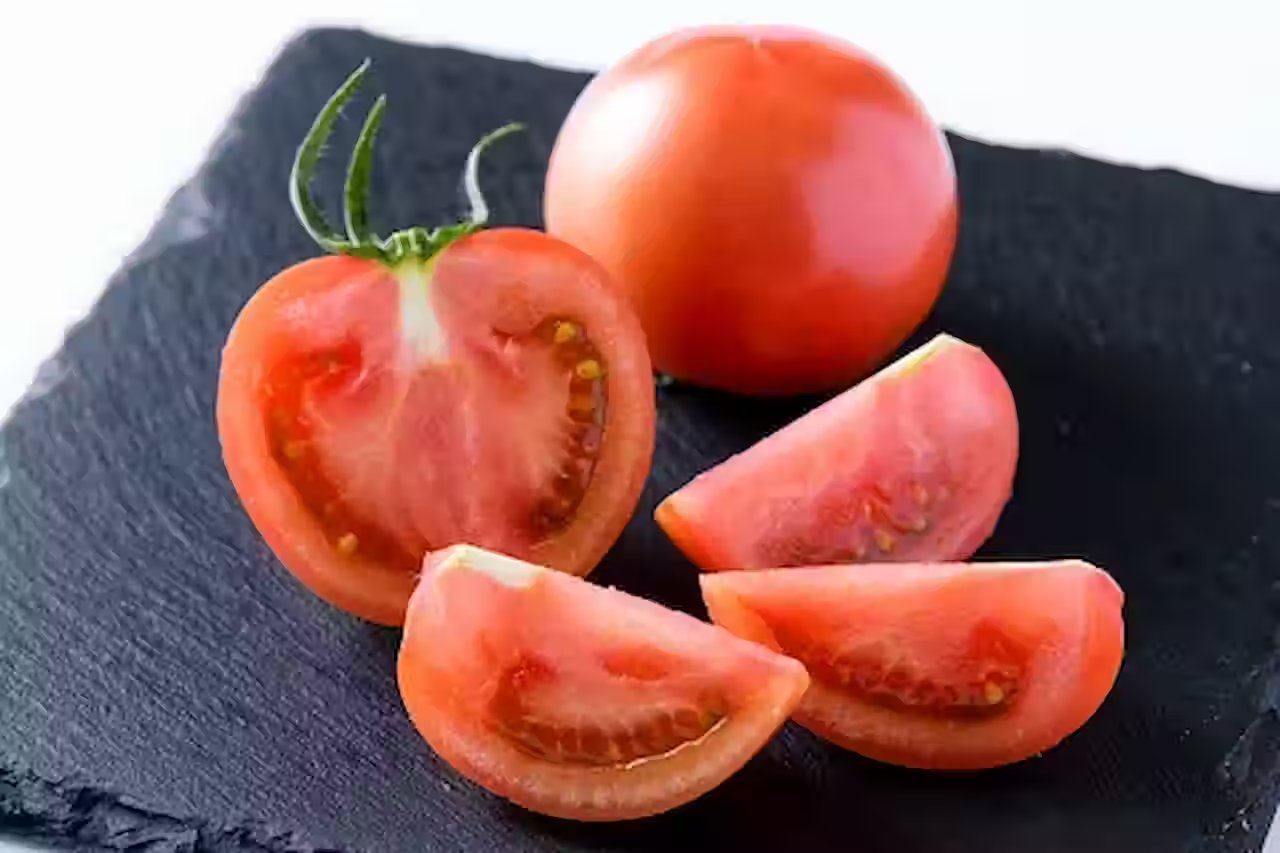


Adding seawater to tomato soil sounds as if it should make the fruit salty. Yet in Hiji, a small town on Beppu Bay in Oita Prefecture, growers use carefully controlled seawater cultivation for a different reason. It limits how much water the plants take in, and the result is a smaller, firmer tomato with far more concentrated flavor.
Locals call it Shio Tomato (潮トマト). Hiji Town describes it as a seawater-cultivated tomato with a Brix reading of 8 or higher. Below, this guide explains what the name means, how the method works, and what producers and tasters say it tastes like. It also covers the season, how to eat and store it, and where to buy it in Hiji.
Quick Facts: Shio Tomato
- Japanese name
- 潮トマト (shio tomato)
- What it is
- A high-Brix tomato grown with carefully controlled seawater in the soil
- Where it comes from
- Mainly the Manai district of Hiji Town, Oita Prefecture, Kyushu
- Sweetness
- Hiji Town describes it as Brix 8 or higher. A 2024 local report saw grades of 8 to under 10 and 10 or higher at the farm shop
- Local brand
- Tomaou (トマ王), sold by the Manai Tomato Farm Producers’ Cooperative
- Official shipping season
- About January to April (Hiji Town); some growers sell into early summer
- Best way to try it
- Raw, on its own or in a simple salad
What Is Shio Tomato?
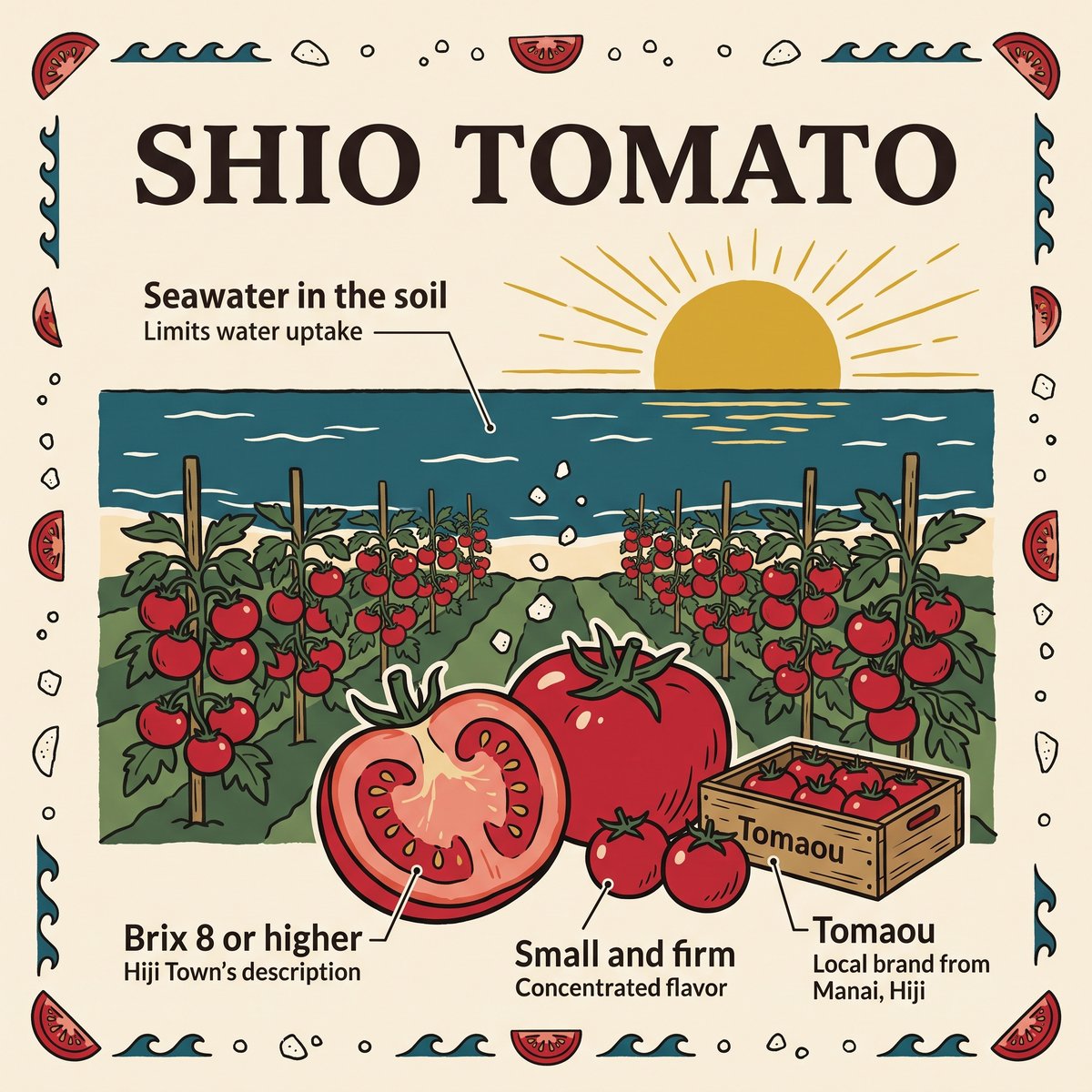
Shio Tomato is a high-Brix tomato produced mainly in the Manai district of Hiji, Oita. According to Hiji Town, it takes its name from the use of seawater in cultivation. The town also says it reaches a Brix reading of 8 or higher, with a flavor “just like fruit.”
The town lists it alongside its other main farm products. Still, the name causes a little confusion outside Japan, so it helps to unpack it.
Meaning of the Name “Shio Tomato”
In Japanese, shio written as 潮 means the tide or seawater. However, a different character, 塩, is also read shio and means salt. Hiji uses the sea character, which points to where the salt comes from.
So “salt tomato” is not quite the right translation. In English, that phrase could suggest a salted or pickled tomato. A clearer description is “a high-Brix tomato grown using seawater.”
Where Shio Tomato Comes From
Hiji Town sits on the north shore of Beppu Bay, right next to Beppu and its hot springs. The main growing area is the town’s Manai district. Growers there also sell their tomatoes under the brand name Tomaou (トマ王), which combines “toma” with ō (王), meaning king.
Some Japanese sales pages tell a story that the idea began after tomatoes survived seawater flooding from a typhoon and tasted unusually sweet. It is a lovely origin tale. Even so, we could not find it in any town or cooperative record, so treat it as a local story for now.
Is It a Variety or a Growing Method?
Shio Tomato does not appear to refer to a single cultivar. Instead, Hiji uses the name for tomatoes whose size and flavor come from seawater-based cultivation. However, Hiji Town’s public description does not identify the cultivars the Manai cooperative uses, so that detail remains unconfirmed.
A separate Hiji producer, Okumura Farm, offers a useful example. It explains that it grows a large-fruited variety that normally weighs about 300 grams. In its seawater-treated soil, the finished fruit comes out at roughly 50 to 120 grams. Its methods may differ from the Manai cooperative’s, but the example shows how cultivation, rather than seed alone, can shape the result.
How Is Shio Tomato Grown?
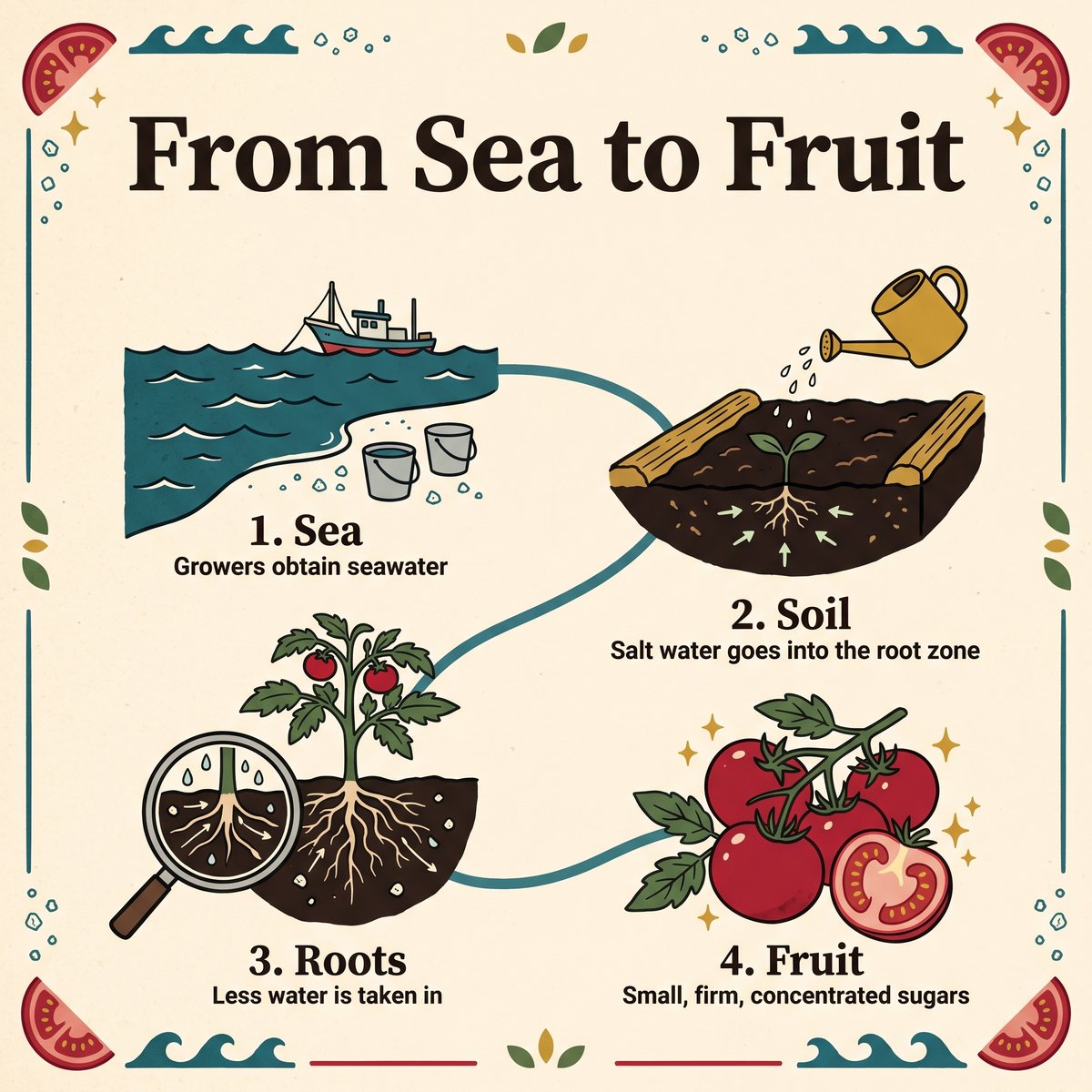
The basic idea sounds almost backward. Instead of giving the plants plenty of water, growers make it harder for the roots to take it in. Salt in the soil does that job.
Seawater in the Greenhouse Soil
Hiji Town describes Shio Tomato simply as seawater-cultivated. In addition, product descriptions for Hiji-grown tomatoes say growers work seawater into the soil so the plants cannot absorb water freely, and that the crop grows in greenhouses. Okumura Farm describes storing seawater in greenhouses beside the sea and mixing it into soil with organic material. Even so, the Manai cooperative’s exact method and salinity levels have not been publicly documented.
Getting the balance right is not easy. In a 2016 review, Takeshi Saito of NARO, Japan’s national agricultural research organization, shows that the strength and timing of salt stress decide the result. Mild or late stress may barely lift sweetness. On the other hand, strong or early stress can more than halve the harvest.
- SeaGrowers obtain seawater for use in cultivation.
- SoilSalt water goes into the root zone under controlled conditions.
- RootsSalt raises osmotic pressure, so the roots take in less water.
- FruitTomatoes stay small and firm, with more concentrated sugars.
Why Salt Stress Concentrates Flavor
Scientists call this salt stress, and Saito’s review also explains how it works. Salt in the root zone raises osmotic pressure and limits water uptake, so less water flows into the fruit. As a result, the fruit stays small and its contents become more concentrated.
But that is not the whole story. In a 2009 University of Tsukuba study, salt-stressed tomatoes reached a Brix of 9.2, compared with 6.5 in the control plants. Yet fruit weight fell to 59% of the control. The plants also sent a larger share of their sugars to the fruit, so concentration alone could not explain the rise.
There is a cost, too. Saito notes that stress strong enough to raise sugar also tends to cut yield and can increase blossom-end rot. Lower yields and demanding crop management are two factors behind the higher price of high-Brix tomatoes.
Worth Knowing
Seawater does not sweeten the tomato by adding minerals. Research links the higher Brix to restricted water uptake, concentration of soluble solids, and changes in how the plant moves sugars into the fruit. We found no published comparison showing that Shio Tomato is more nutritious than ordinary tomatoes.
Size, Color and Texture
Because the plants take in less water, the fruit stays noticeably smaller than a typical slicing tomato. Producer and local media descriptions mention glossy red skin, thick walls, and firm flesh that holds its shape when cut. That firmness is one of the clearest differences from a watery supermarket tomato.
What Does Shio Tomato Taste Like?
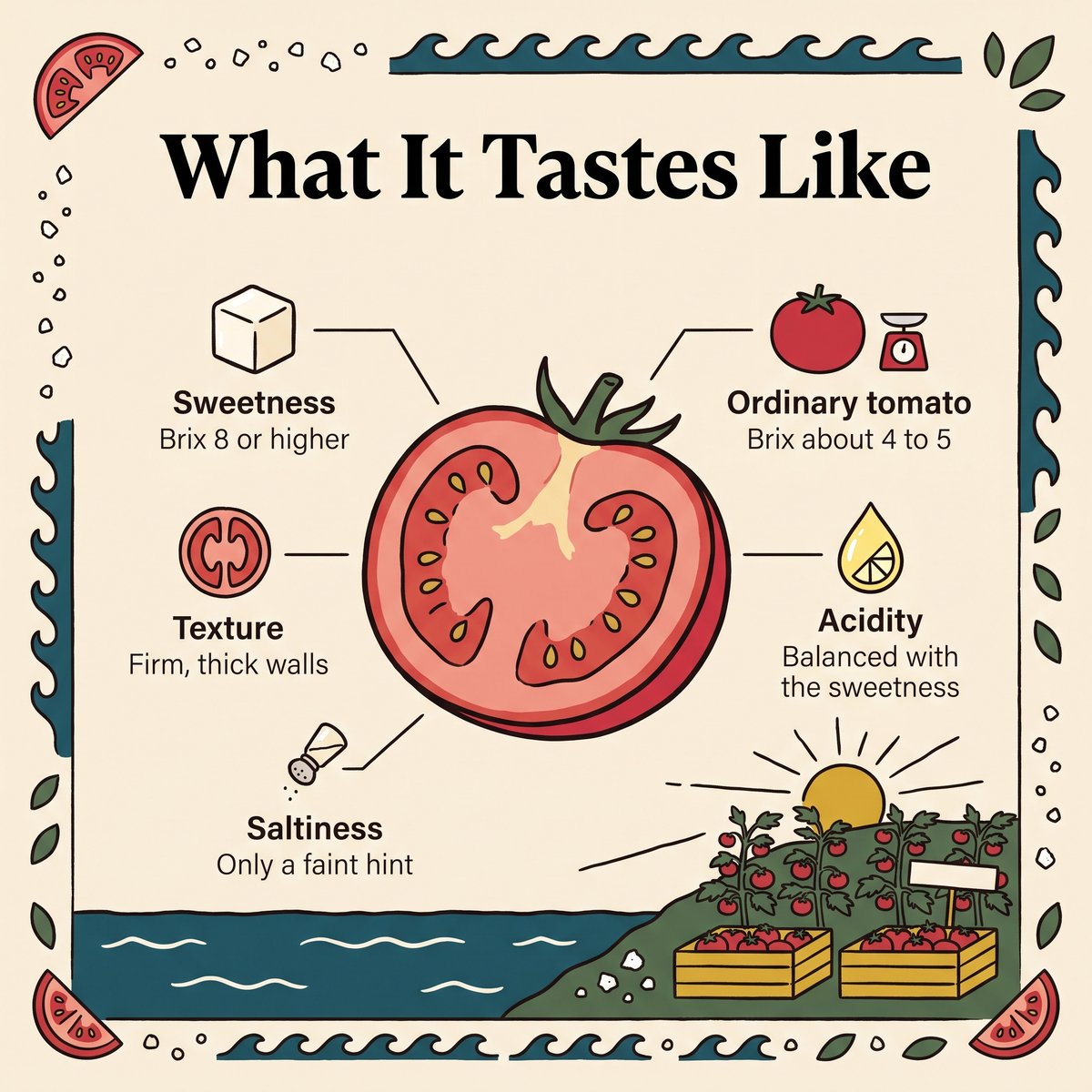
Most descriptions start with sweetness, but the better ones talk about balance. The Manai cooperative describes a rich flavor with sweetness and acidity in good balance. In other words, it still tastes like a tomato, only more so.
Sweetness and Brix Level
Brix measures the soluble solids in the juice, which are mostly sugars. Ordinary tomatoes usually read around 4 to 5, according to Saito’s review. By comparison, Hiji Town gives 8 or higher for Shio Tomato, and the premium grade starts at 10.
For context, Saito also notes that people start to notice a clear difference in taste at roughly 7 to 8 Brix. Japan has no official standard for a “high-sugar tomato,” though. So grades depend on each producer or brand.
Acidity, Umami and a Hint of Salt
Sugar is only part of it. A 2005 study by researchers at Kyushu University and the Prefectural University of Kumamoto compared tomatoes grown under raised salinity with unstressed plants. As a result, the salt-stressed fruit held more sugars, organic acids, and most amino acids per unit of fresh weight. Simple water stress did not produce the same pattern. One caution: the study used a concentrated nutrient solution rather than seawater, so it explains salinity stress in general, not Hiji’s exact method.
Does it taste salty? Not really, at least not in the way a salted tomato does. A local food writer who visited the Manai farm shop described only a faint saltiness. That is a tasting impression rather than a lab result, so your own experience may differ.
How It Differs from an Ordinary Tomato
Producer descriptions commonly characterize Shio Tomato as smaller, firmer, and less watery than an ordinary large-fruited tomato. Likewise, they describe the flavor as concentrated, with enough acidity to keep it from tasting like candy. If you can, compare one with a regular tomato side by side. The difference in juice on the cutting board should tell the story.
Shio Tomato vs Other High-Brix Tomatoes
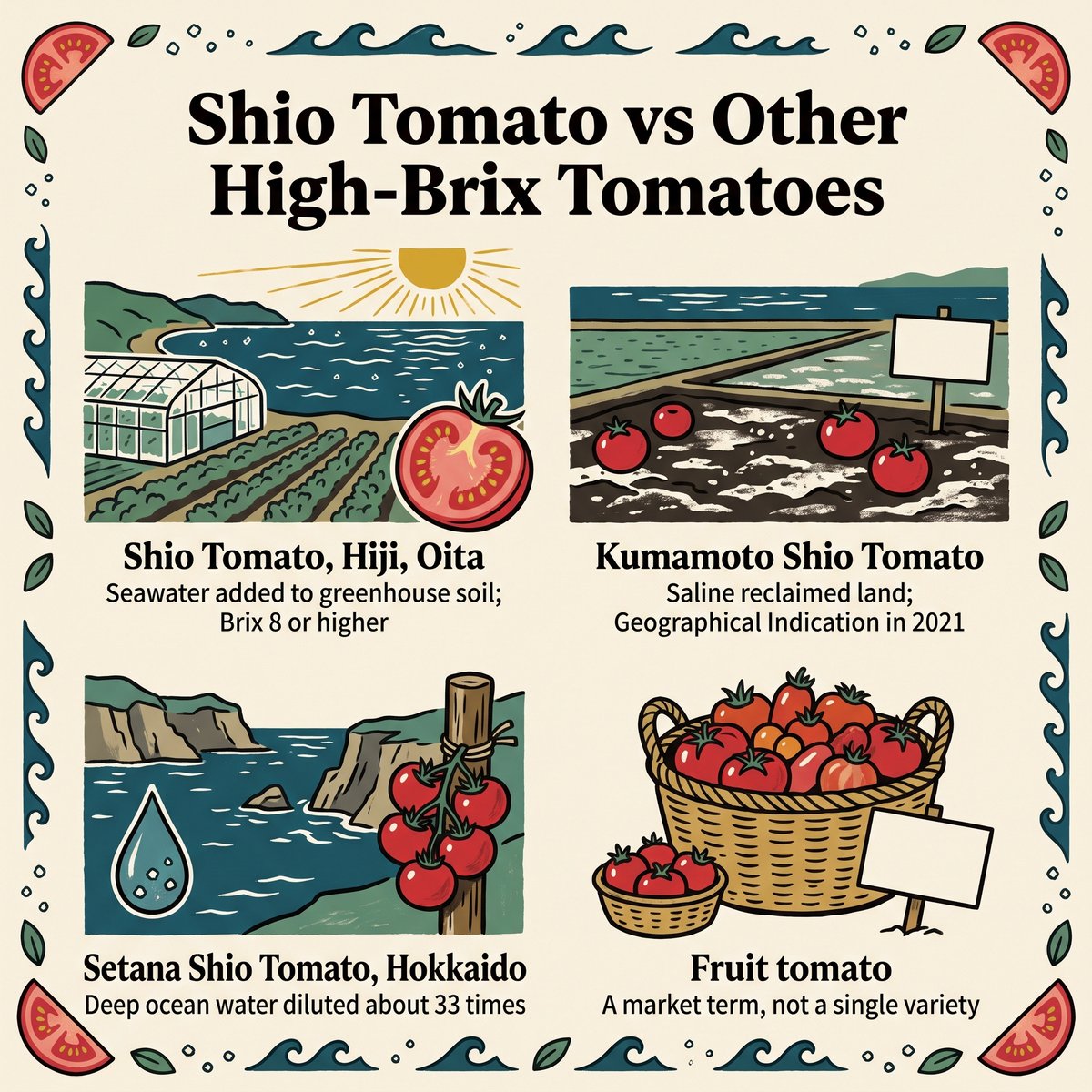
Hiji is not the only place in Japan using salt to grow sweet tomatoes. That is why the place name matters when you search for Shio Tomato. The table below compares the best-known examples.
| Tomato | Where | Salt source | Key point |
|---|---|---|---|
| Shio Tomato (潮トマト) | Hiji Town, Oita | Seawater added to greenhouse soil | Brix 8 or higher; sold as Tomaou |
| Kumamoto Shio Tomato (くまもと塩トマト) | Reclaimed land in Yatsushiro, Hikawa and Uki, Kumamoto | Saline soils in coastal reclaimed land | Registered as a Geographical Indication in 2021; Brix 8 or higher |
| Setana Shio Tomato (潮トマト) | Setana Town, Hokkaido | Deep ocean water, diluted about 33 times | Brix 8 or higher; sold from summer to around November (2022) |
| Fruit tomato (general) | Many regions | Varies; often water or salt stress | A market term, not a single variety |
Kumamoto’s version uses the salt character 塩. Hiji and Setana use the sea character 潮.
Is Every Shio Tomato a Fruit Tomato?
In Japan, “fruit tomato” usually means any very sweet, high-Brix tomato. It is a market term rather than a botanical one. Shio Tomato fits that description, so you will often see it sold as a fruit tomato. However, Okumura Farm draws a distinction. It says many fruit tomatoes are medium-sized varieties bred for sugar, while its own fruit comes from a large variety held small by salt.
Tomaou Shio and Its Brix Grades
The Manai Tomato Farm Producers’ Cooperative sells its tomatoes in grades based on Brix. When a local media outlet visited its farm shop in March 2024, it found the tomatoes sorted into three groups.
Tomaou
Under 8
Tomaou Shio
8 to under 10
Tomaou Shio Premium
10 or higher
Grades as seen at the farm shop in March 2024 (LOG OITA). The cooperative’s own product listings confirm the 8+ and 10+ grades.
The 10-plus figure is a product grade, not the sweetness of every Shio Tomato. It also remains unclear whether the cooperative measures each tomato or tests samples. Even so, the grades give buyers a useful guide. If you want to compare them, taste the higher-Brix fruit raw first. The less expensive grades can also be eaten fresh, and they may offer better value for sauces and other cooked dishes.
When Is Shio Tomato in Season?
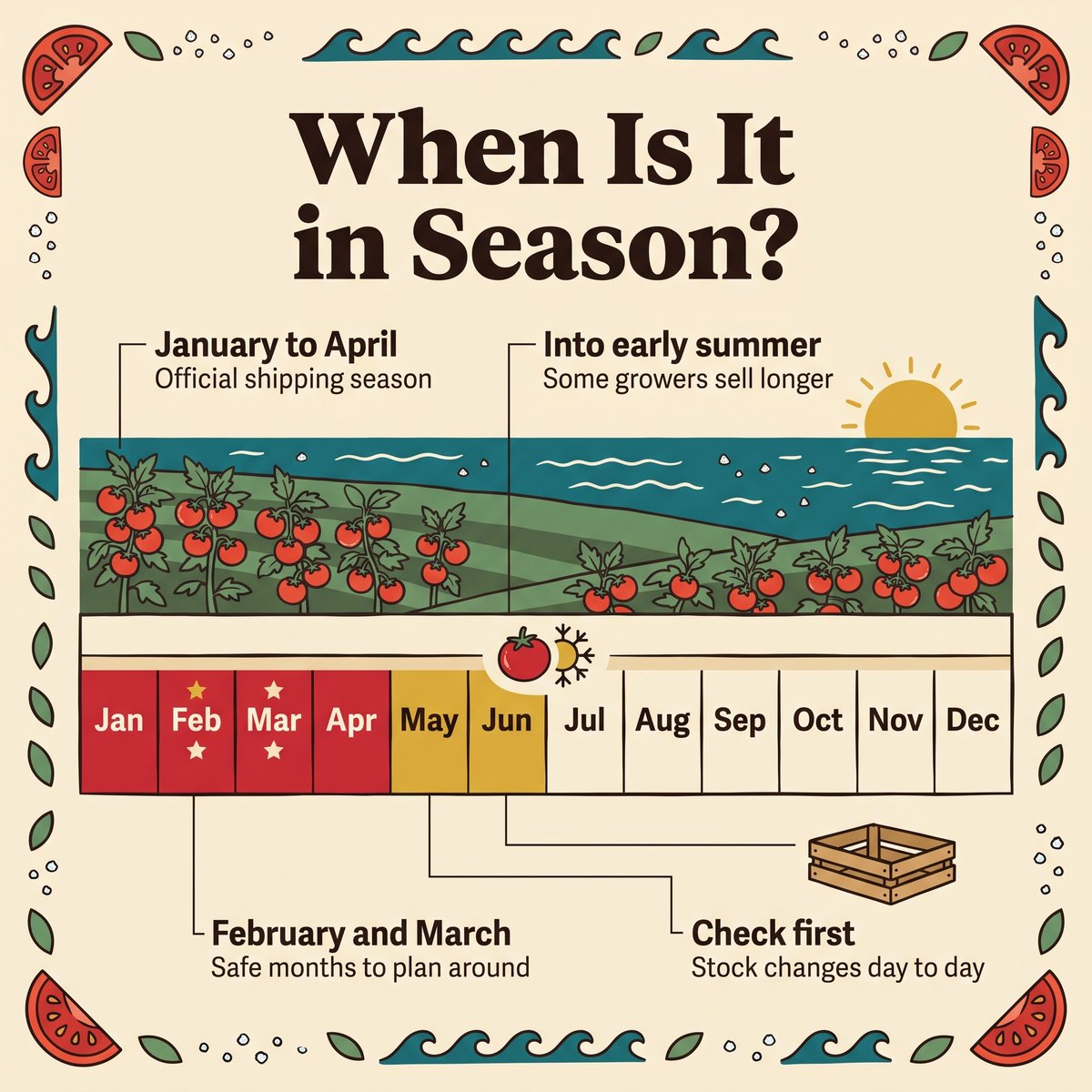
Shio Tomato is a winter and spring crop, which surprises people who think of tomatoes as a summer vegetable. Hiji Town gives its shipping season as roughly January to April.
Some growers sell longer than that. The March 2024 report on the Manai farm shop listed sales from about January to July. Okumura Farm shipped from late January until June 30 in 2026. Meanwhile, the cooperative’s gift boxes ship from late January to the end of March.
These differences likely reflect growers, product lines, and weather. February and March fall inside every version of the season, so they are a safe time to plan around. Then check the farm shop’s latest notices before you go, since stock changes from day to day.
How to Eat Shio Tomato
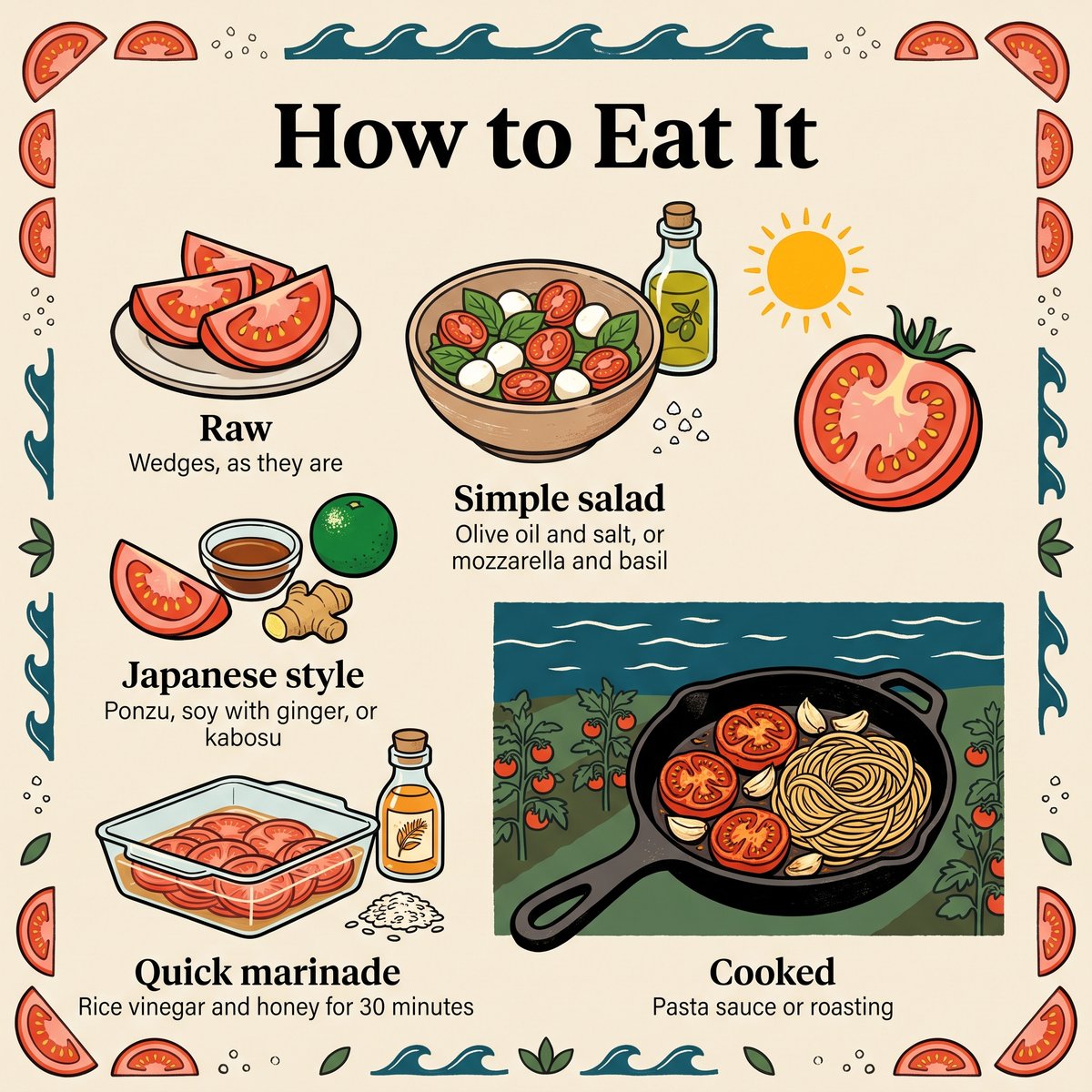
With a tomato this sweet, less is more. Try the first one plain, without dressing, just to taste what all the fuss is about. After that, here are a few simple ideas:
- Raw: cut into wedges and eat as is, at room temperature or briefly chilled, whichever you prefer.
- Simple salad: pair with olive oil and a pinch of salt, or with mozzarella and basil.
- Japanese style: try a splash of ponzu, a little soy sauce with grated ginger, or a squeeze of kabosu, Oita’s local citrus.
- Quick marinade: toss slices with rice vinegar and a little honey, then rest for 30 minutes.
- Cooked: a local food writer who visited the farm shop suggests cooking them too. Pasta sauce and roasting are easy places to start.
If ponzu is new to you, our guide to ponzu explains the citrus-soy sauce. It makes a natural match for sweet, tangy tomatoes.
How to Store Shio Tomatoes
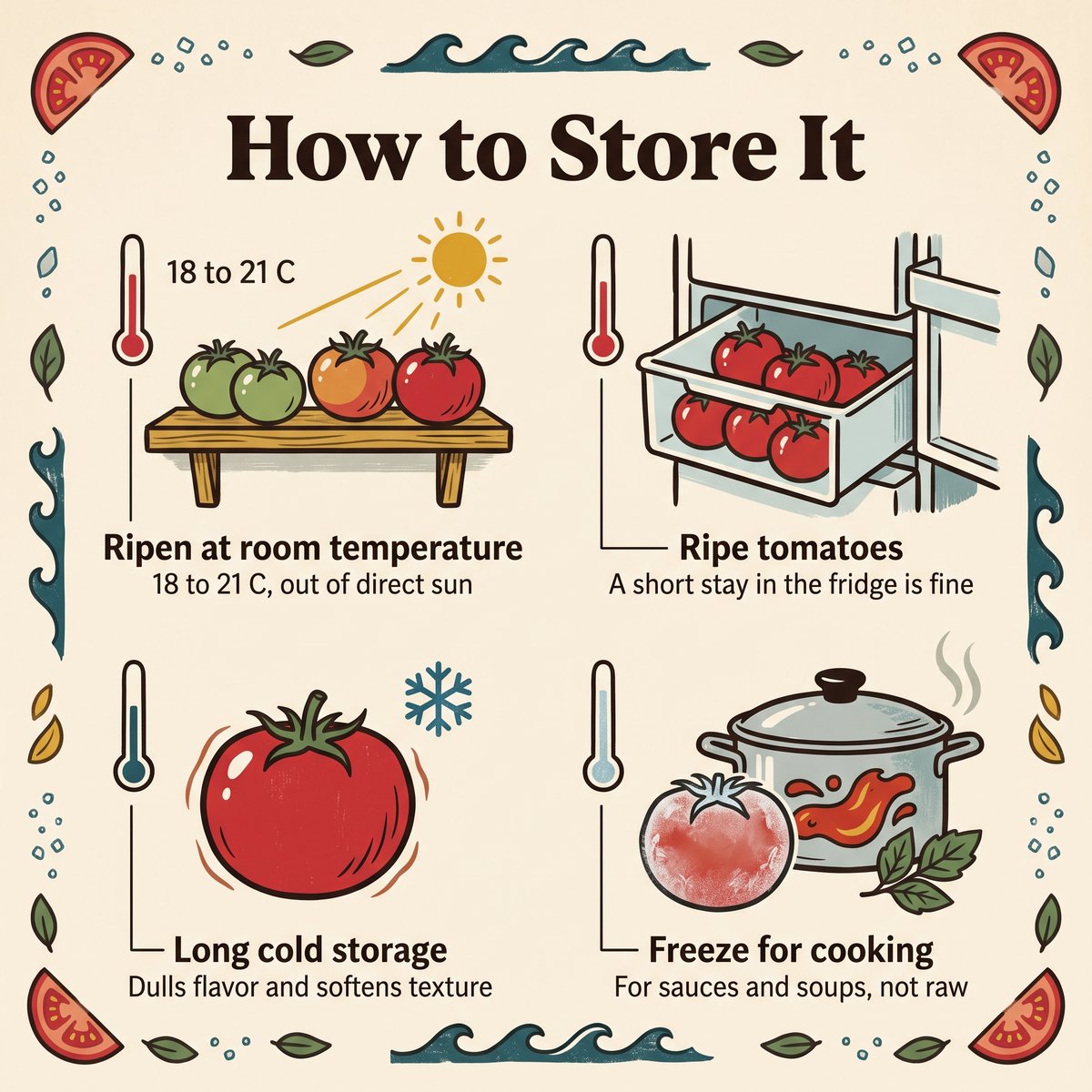
There is no published storage guide specific to Shio Tomato. So general tomato advice applies, and it is worth following, because these are not cheap.
Ripening at Room Temperature
If the tomatoes are not fully red yet, leave them at room temperature, out of direct sun. Avoid the fridge at this stage. UC Davis postharvest research gives 18 to 21°C (65 to 70°F) as the standard ripening range, with the best quality at about 20°C.
Refrigerating Ripe Tomatoes
Once ripe, tomatoes taste best eaten promptly at room temperature. If you cannot eat them right away, a short stay in the fridge can slow deterioration. UC Davis notes that long cold storage causes chilling injury, with dull flavor and soft texture, so do not leave them there for weeks. Before serving, let them sit out for a while to recover their aroma.
Freezing for Cooking
Freezing ruins the firm texture for eating raw. Still, frozen whole tomatoes work fine in sauces and soups, and the skins slip off easily after thawing.
Where to Buy Shio Tomato

The most direct option is the Manai Tomato Farm Producers’ Cooperative farm shop in Hiji. According to the March 2024 report, it opens at 8:00 and closes when tomatoes sell out. The cooperative posts harvest and sales days on its Facebook page, and popular grades can sell out in the morning.
Beyond the farm shop, you may also find Shio Tomato at local farmers’ markets and roadside stations around Hiji and Beppu. The cooperative also offers boxes through Hiji Town’s furusato nozei program, a hometown tax donation scheme for taxpayers in Japan. Before heading out, check these points:
- Whether the shop is open and selling on your date
- Which Brix grades are available that day
- Whether you can buy small packs, or only boxes
- Payment options, since small farm shops may prefer cash
- How you will keep the tomatoes cool on the way back
What Overseas Buyers Should Know
We found no official overseas shipping for Shio Tomato. Fresh tomatoes may also face plant-quarantine rules at your destination, so check the customs and plant-health rules of the country you are entering first. Realistically, the way to taste one is in Japan, ideally in Hiji itself.
Visiting Hiji for Shio Tomato
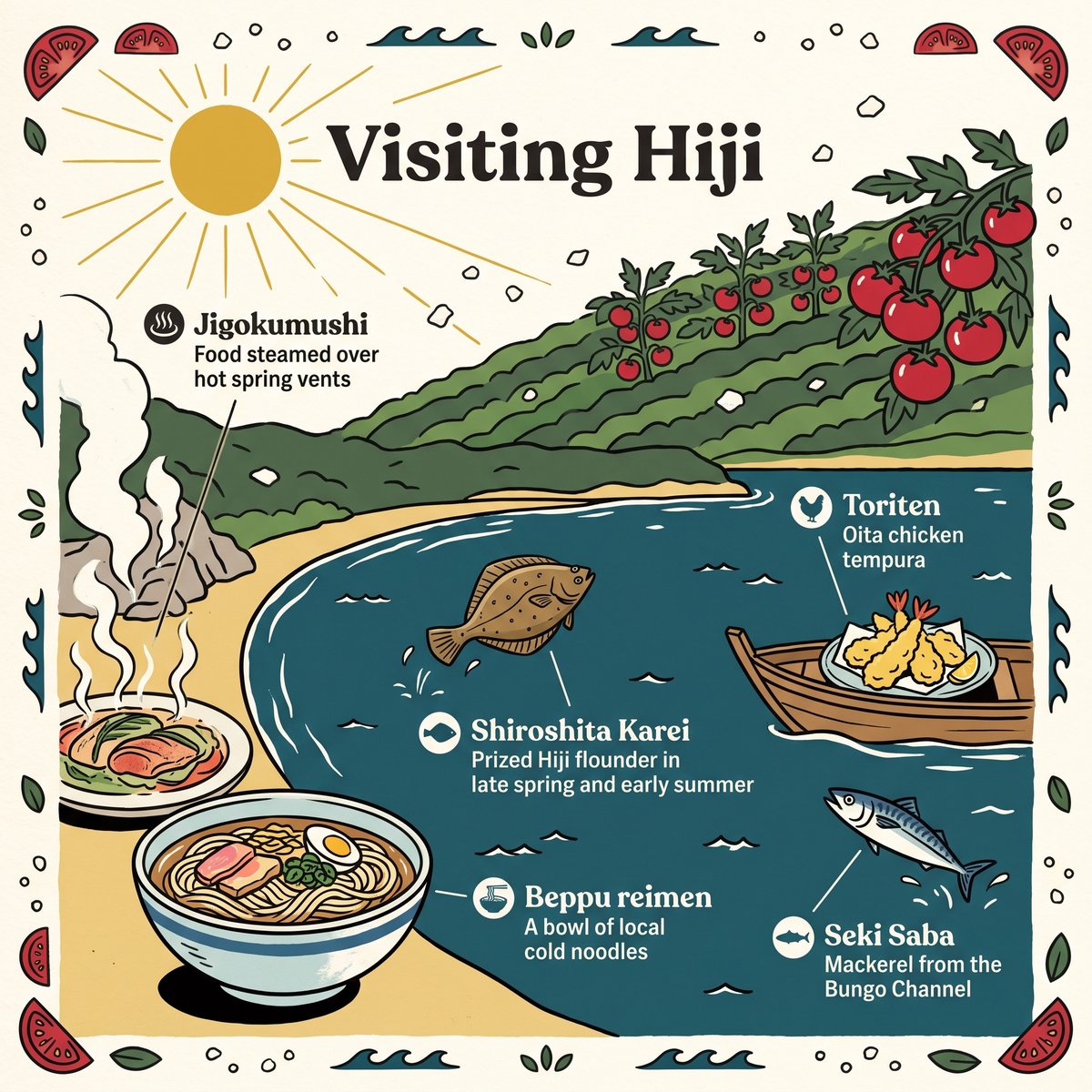
Hiji sits next to Beppu, so a morning trip to the farm shop pairs easily with a hot spring stay. While in Beppu, you could also try jigokumushi, food steamed over hot spring vents, or a bowl of Beppu reimen.
Hiji is also proud of Shiroshita Karei, a prized local flounder, in late spring and early summer. Elsewhere in Oita, look for toriten, the prefecture’s chicken tempura, and Seki Saba mackerel from the Bungo Channel.
Why Shio Tomato Is Worth Trying
Shio Tomato shows how growers in Hiji turn salt, usually a problem for crops, into a tool. Carefully controlled salinity, irrigation, and greenhouse management produce a tomato that is small, firm, and deeply flavored.
If you are in Oita between late winter and spring, it is worth a detour to Hiji. Taste one plain first. Then explore more of Kyushu food and seasonal Japanese food.
Facts in this article were last checked in October 2026.
Frequently Asked Questions About Shio Tomato
About the Tomato
- What is Shio Tomato?
-
Shio Tomato is a high-Brix tomato from Hiji, Oita, grown with seawater added to greenhouse soil. Hiji Town says it reaches a Brix reading of 8 or higher.
- Is Shio Tomato grown in seawater?
-
Not directly. Growers mix seawater into the soil, which limits how much water the roots can take in. The plants themselves do not grow in the sea.
- Is Shio Tomato a specific variety?
-
Hiji Town does not present it as a named cultivar. It is better understood as a regional product tied to seawater-based cultivation, but the cultivars the Manai cooperative uses have not been publicly confirmed.
Taste and Sweetness
- Does Shio Tomato taste salty?
-
Mostly not. Producers describe it as sweet and rich, with balanced acidity. One local food writer noticed a faint saltiness, but that is an impression rather than a measured result.
- Why is Shio Tomato so sweet?
-
Salt in the soil limits water uptake, so the fruit stays small and its sugars become concentrated. Research also shows that salt-stressed plants send more sugar to the fruit.
- What is the Brix level of Shio Tomato?
-
Hiji Town gives 8 or higher. The cooperative’s premium grade, Tomaou Shio Premium, starts at 10. Ordinary tomatoes usually read around 4 to 5.
Buying Shio Tomato
- When is Shio Tomato in season?
-
Hiji Town gives roughly January to April. Some growers sell into June or July, so check current notices before you go.
- Where can I buy Shio Tomato?
-
The Manai Tomato Farm Producers’ Cooperative runs a farm shop in Hiji. You may also find it at local markets in the Hiji and Beppu area.
- Can I buy Shio Tomato outside Japan?
-
We found no official overseas sales, and fresh tomatoes may face plant-quarantine rules abroad. The easiest way to try it is to visit Oita during the season.
References
- Hiji Town – Agricultural Products of Hiji Town (Accessed October 2026)
- Furusato Choice – Tomaou Shio, Brix 8 or Higher (Manai Tomato Farm Producers’ Cooperative) (Accessed October 2026)
- Satofull – Tomaou Shio Premium, Brix 10 or Higher (Manai Tomato Farm Producers’ Cooperative) (Accessed October 2026)
- LOG OITA – Manai Tomato Farm Producers’ Cooperative Farm Shop (March 19, 2024) (Accessed October 2026)
- Okumura Farm – Okumura Farm Tomatoes (Accessed October 2026)
- Ministry of Agriculture, Forestry and Fisheries – GI Registration No. 111: Kumamoto Shio Tomato (Accessed October 2026)
- Agri Mynavi (PR TIMES) – Setana Shio Tomato Grown with Deep Ocean Water Now on Sale (August 30, 2022) (Accessed October 2026)
- UC Davis Postharvest Technology Center – Tomato: Recommendations for Maintaining Postharvest Quality (Accessed October 2026)
- AgriKnowledge – Saito, T. (2016). 塩ストレスがトマト果実品質に及ぼす効果 [Effects of salt stress on tomato fruit quality]. Agriculture and Horticulture, 91(5), 507–510 (Accessed October 2026)
- J-STAGE – Saito, T., Fukuda, N., Matsukura, C., & Nishimura, S. (2009). Effects of Salinity on Distribution of Photosynthates and Carbohydrate Metabolism in Tomato Grown using Nutrient Film Technique. Journal of the Japanese Society for Horticultural Science, 78(1), 90–96 (Accessed October 2026)
- J-STAGE – Zushi, K., Matsuzoe, N., Yoshida, S., & Chikushi, J. (2005). 水ストレス下および塩ストレス下で栽培したトマトにおける果実内成分の比較 [Comparison of fruit components in tomatoes grown under water stress and salinity stress]. Shokubutsu Kankyo Kogaku, 17(3), 128–136 (Accessed October 2026)
Related Articles
- Toriten (とり天) (Surveyed: October 2026)
- Seki Saba (関サバ) (Surveyed: October 2026)
- Jigokumushi (地獄蒸し) (Surveyed: October 2026)
- Beppu Reimen (別府冷麺) (Surveyed: October 2026)
- Houtyou (鮑腸) (Surveyed: October 2026)
- Ponzu (ポン酢) (Surveyed: October 2026)
- Fresh Vegetables in Japanese Cuisine (Surveyed: October 2026)
- Japanese Summer Food Guide (Surveyed: October 2026)
- The Ultimate Kyushu Food Guide (Surveyed: October 2026)
- Kyushu Food Guide (Surveyed: October 2026)




Comments