





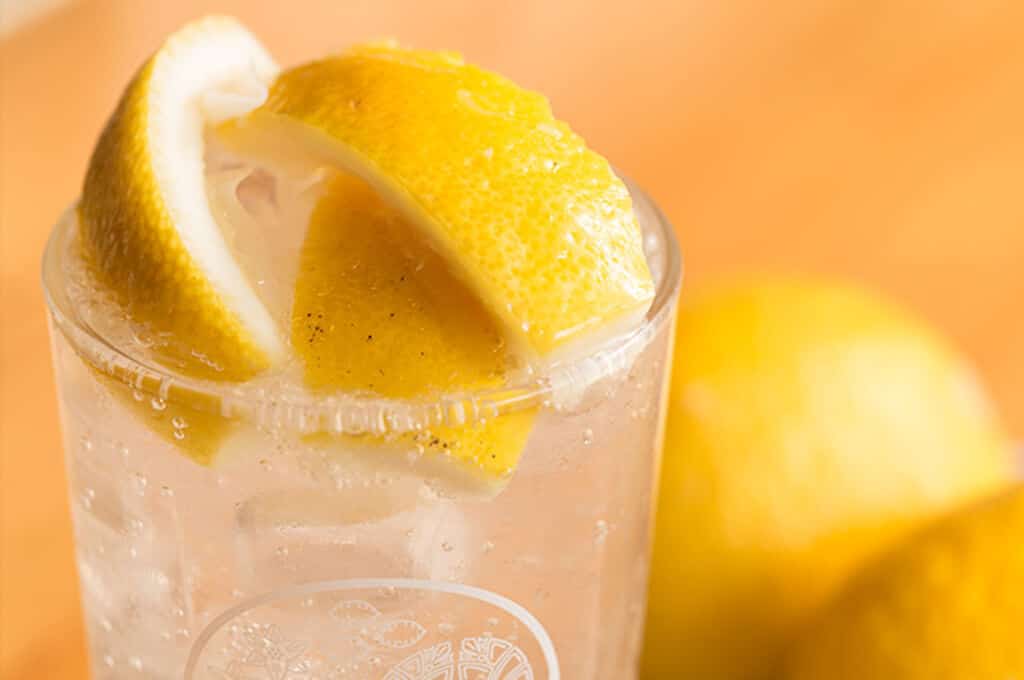
Chuhai is a Japanese mixed alcoholic drink made with shochu or another neutral spirit, sparkling water, and flavoring. Lemon is the classic choice, although canned versions now come in many fruit flavors. Many cans fall between about 3% and 9% alcohol, but no law fixes that range.
You will also see the name written as chūhai, chu-hi, or chuhi. All of them point to the same drink, so this guide simply uses chuhai. It covers what goes into the drink, how it took shape in postwar Tokyo, and how to choose a can. A simple lemon chuhai recipe follows.
What Is Chuhai and What Is It Made From?
At its simplest, chuhai combines three parts: a neutral spirit, a flavoring, and usually soda water. Traditionally, that spirit is shochu, a Japanese distilled liquor. If the base is new to you, our guide to what is shochu explains how makers produce it. Today you can order chuhai at izakaya pubs or buy it in cans at convenience stores.
Chuhai at a Glance
- Name チューハイ / 酎ハイ, short for shochu highball (焼酎ハイボール)
- Base spirit Shochu, vodka, or another neutral spirit
- Typical ABV Often about 3% to 9% in cans, so check the label
- Classic flavor Lemon; other common flavors include grapefruit, ume, peach, and yuzu
- Where to find it Izakaya, as well as convenience stores, supermarkets, and liquor shops
- Legal status No separate category under Japan’s Liquor Tax Act
- Drinking age 20 in Japan, even for low-alcohol cans
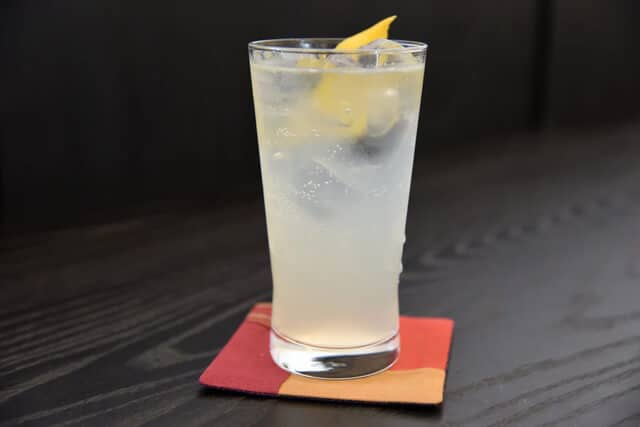
A tall, cold glass over ice is what most people picture first. Still, the definition stays loose. Japanese law does not define chuhai as a separate beverage category. In everyday use, the name describes shochu or another neutral spirit mixed with flavoring and usually carbonated water.
Etymology: Where the Name Comes From
The name is commonly explained as a combination of two elements: chu from shochu and hai from highball. In other words, it reflects the original recipe of shochu mixed with carbonated water like a highball. Because the term developed through everyday drinking culture rather than as a legal category, its practical meaning remains flexible.
Does Chuhai Always Contain Shochu?
No, not always. Traditional shochu highballs use shochu, but many modern canned products use vodka or another spirit. Kirin’s official product information, for example, identifies vodka in products such as Hyoketsu Sicilian Lemon. So if the base spirit matters to you, read the label before you buy.
Is Chuhai Carbonated?
Usually, yes. Classic shochu highballs use soda, and canned chuhai is generally carbonated too. However, many izakayas also group non-carbonated drinks such as oolong high, shochu with oolong tea, with chuhai. Bubbles are typical, then, though not strictly required.
What Does Chuhai Taste Like?
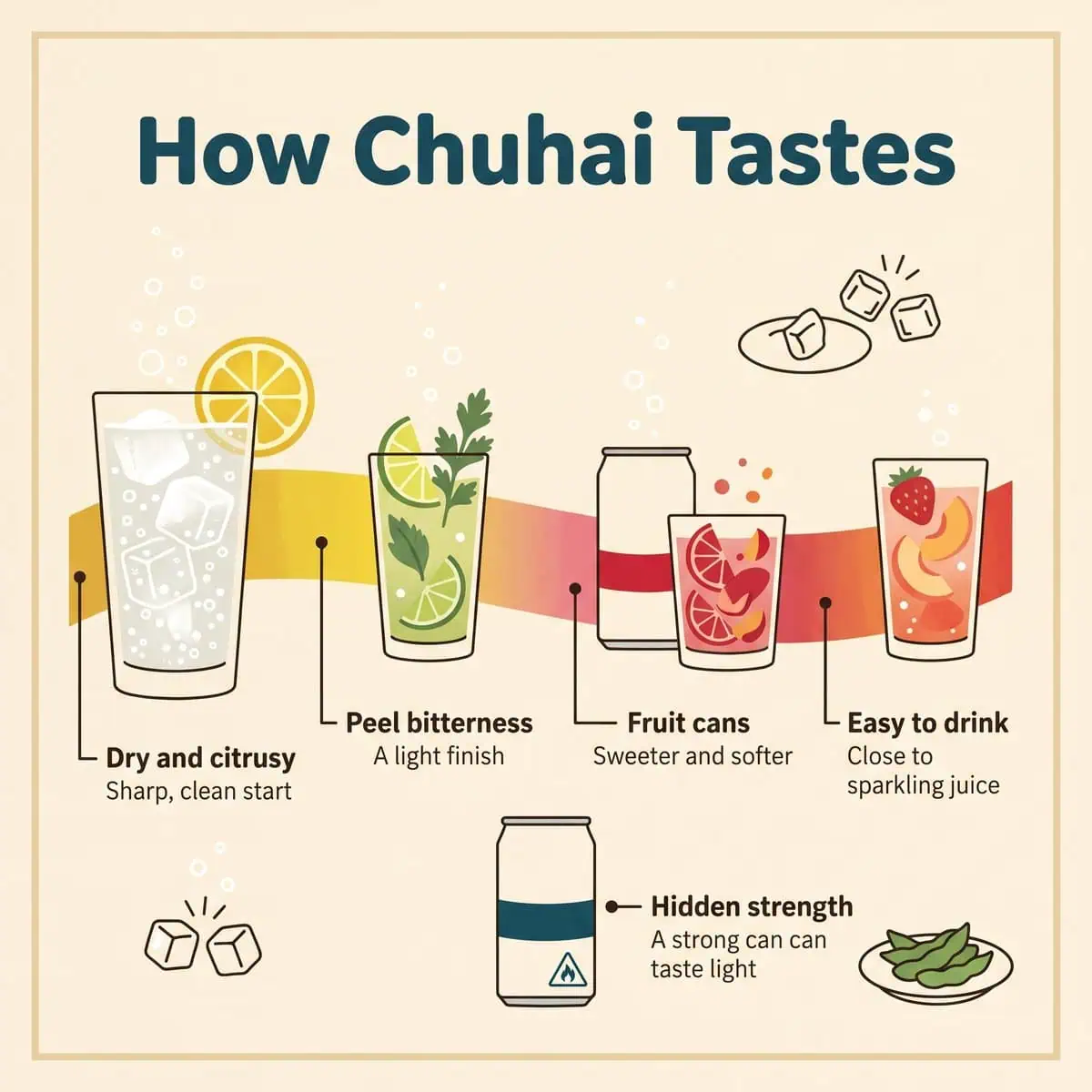
Its flavor ranges from dry and citrusy to sweet and fruit-forward. A classic lemon chuhai tastes sharp and clean at first, and then a light bitterness from the peel follows. Fruit cans, by contrast, lean sweeter and softer, closer to a sparkling juice. That easy drinkability is part of the appeal, but it can also mask the difference in strength. A strong can may taste almost as light as a weak one.
History of Chuhai in Postwar Japan
The 1951 Origin Account
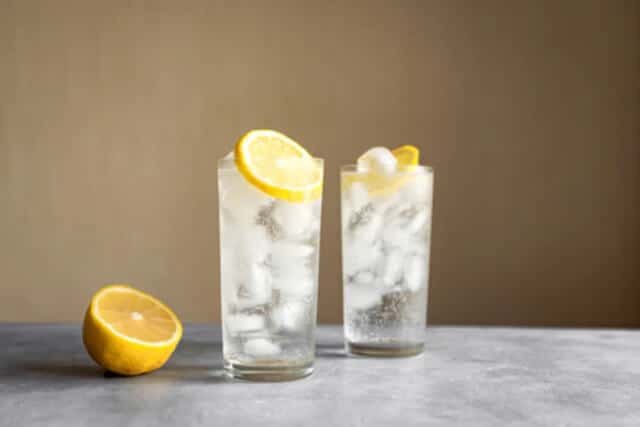
Chuhai is closely associated with the casual drinking bars of postwar Tokyo, although its precise origin is disputed. One account traces the shochu highball to a Tokyo bar in 1951. That bar is Sanyu Sakaba, whose Yahiro branch still operates in Sumida. According to the bar’s operators, a relative of the former owner met the whisky highball at an occupation forces base.
He then tried the same idea with shochu. At the time, much of the available shochu smelled harsh, so soda made it easier to drink. Even so, this story comes from the bar’s own history, retold in a sponsored interview. Other bars and products also appear in early chuhai history, so read 1951 as one origin theory rather than an undisputed fact.
From the Bar Glass to the Can
Later, Takara Shuzo, a Kyoto drinks maker, started a canned chuhai project in January 1983. The company then launched Takara Can Chuhai on January 24, 1984. It describes that product as Japan’s first canned chuhai. Takara Shuzo says the original lineup consisted of Lemon, Jun-hai, Plum, and Grapefruit.
Afterward, other major drinks makers followed with their own brands. Canned chuhai remains popular because it is convenient and available in many flavors. Today, makers use shochu, vodka, and other spirits, while strength varies from can to can.
Chuhai Timeline
- 1950s Shochu mixed with soda becomes associated with casual bars in postwar Tokyo; one account dates a shochu highball to 1951.
- 1983 Takara Shuzo then begins a project to develop a canned chuhai.
- Jan 1984 Takara Can Chuhai goes on sale, and the company calls it Japan’s first canned chuhai.
- Today Cans use shochu, vodka, or other spirits, so strength varies by product.
Types of Chuhai: Regular, Strong, Low-Alcohol and Fruit
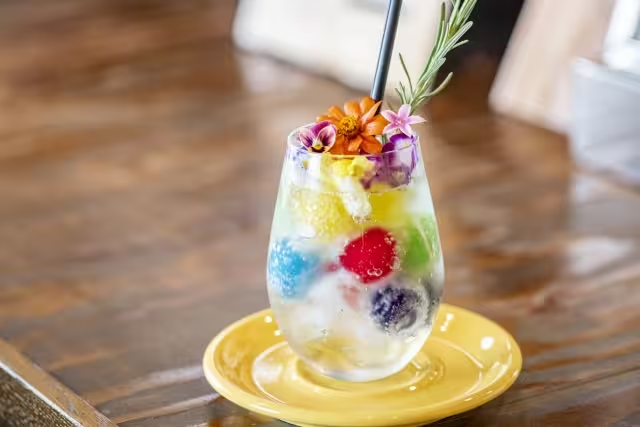
A Japanese drinks shelf can look chaotic at first. However, most cans fit a few general categories. The categories below compare their strength, taste, and typical drinking occasions. Use the comparison to choose a suitable flavor and alcohol level, and then confirm the details on the label.
| Type | Typical ABV | Taste | Common flavors | Best for |
|---|---|---|---|---|
| Regular | About 5% to 7% | Balanced, mostly citrusy | Lemon, grapefruit | Meals, especially at home |
| Strong | About 7% to 9% | Crisp, often less sweet | Lemon, grapefruit | Slow, careful sipping |
| Low-alcohol | Under 4% | Light, but often sweet | Peach, grape, apple | A lighter option with food |
| Non-alcoholic chuhai-style | 0.00% | Juice-like, yet fizzy | Lemon, grapefruit | Days without alcohol |
| Fruit | About 3% to 7% | Sweet, then tart | Peach, yuzu, grape | Fruit lovers |
| Specialty | About 5% to 7% | Salty, savory, or tannic | Ume, tea | Food pairing, particularly rich dishes |
These ranges describe what tends to appear on shelves, not a legal standard. Product lineups also change often, so the label always has the final word.
Regular Chuhai
- ABV About 5% to 7%
- Taste Balanced and refreshing, with citrus in front
- Best for Everyday drinking with dinner
- Examples Many standard Kirin Hyoketsu flavors at 5%, although lineups and alcohol levels may change
Many widely sold cans fall into this general range. Because citrus leads, these cans go easily with fried and salty food.
Strong Chuhai
- ABV About 7% to 9%
- Taste Crisp, often drier than regular cans
- Best for Slow sipping in small amounts
- Examples Takara Can Chuhai lemon at 8%, as well as 9% lines from major brewers
Strong chuhai contains more alcohol than standard products and can taste deceptively light. Some strong varieties also taste less sweet and finish more crisply than regular chuhai. So check the alcohol percentage, pace each serving, and never treat a high-ABV can like a low-alcohol one.
Low-Alcohol Chuhai
- ABV Under 4%, often 3%
- Taste Light and sweet, close to a soft drink
- Best for A lighter option with a meal or at a casual gathering
- Examples Current 3% fruit-flavored products from major Japanese brewers, although lineups change
Low-alcohol chuhai has a lighter taste, but you should still check the label and drink responsibly. Its sweet, approachable flavor appeals to anyone who prefers lighter drinks.
Non-Alcoholic Chuhai-Style Drinks
- ABV 0.00% on products sold as non-alcoholic
- Taste Fizzy and juice-like, with a cocktail feel
- Best for Days when you are not drinking alcohol
- Examples Lemon and grapefruit drinks that carry a 0.00% label
Japan’s industry advertising standards define non-alcoholic beverages in this category as products labeled 0.00%. Drinks below 1% ABV are not treated as liquor under the Liquor Tax Act, but they may still contain alcohol. Check the exact percentage rather than relying only on the product category.
If you plan to drive, do not consume any product that contains alcohol. Check for a clear 0.00% label, and follow the product guidance and applicable law.
Fruit Chuhai
- ABV About 3% to 7%
- Taste Sweet and tart, with clear fruit aroma
- Best for Warm evenings and seasonal tasting
- Examples Peach, pear, grape, apple, and yuzu editions
Fruit chuhai may contain juice, flavoring, or both. Check the ingredient label for the actual juice percentage, since some cans hold less than 1%. Limited-time flavors also appear every season.
Specialty Chuhai
- ABV About 5% to 7%
- Taste Salty, savory, or slightly astringent
- Best for Drinking alongside a full meal
- Examples Pickled plum, green tea, and spiced flavors
Salty ume or tannic tea flavors especially cut through rich dishes. As a result, these cans suit anyone who finds fruit versions too sweet.
How Strong Is Chuhai?
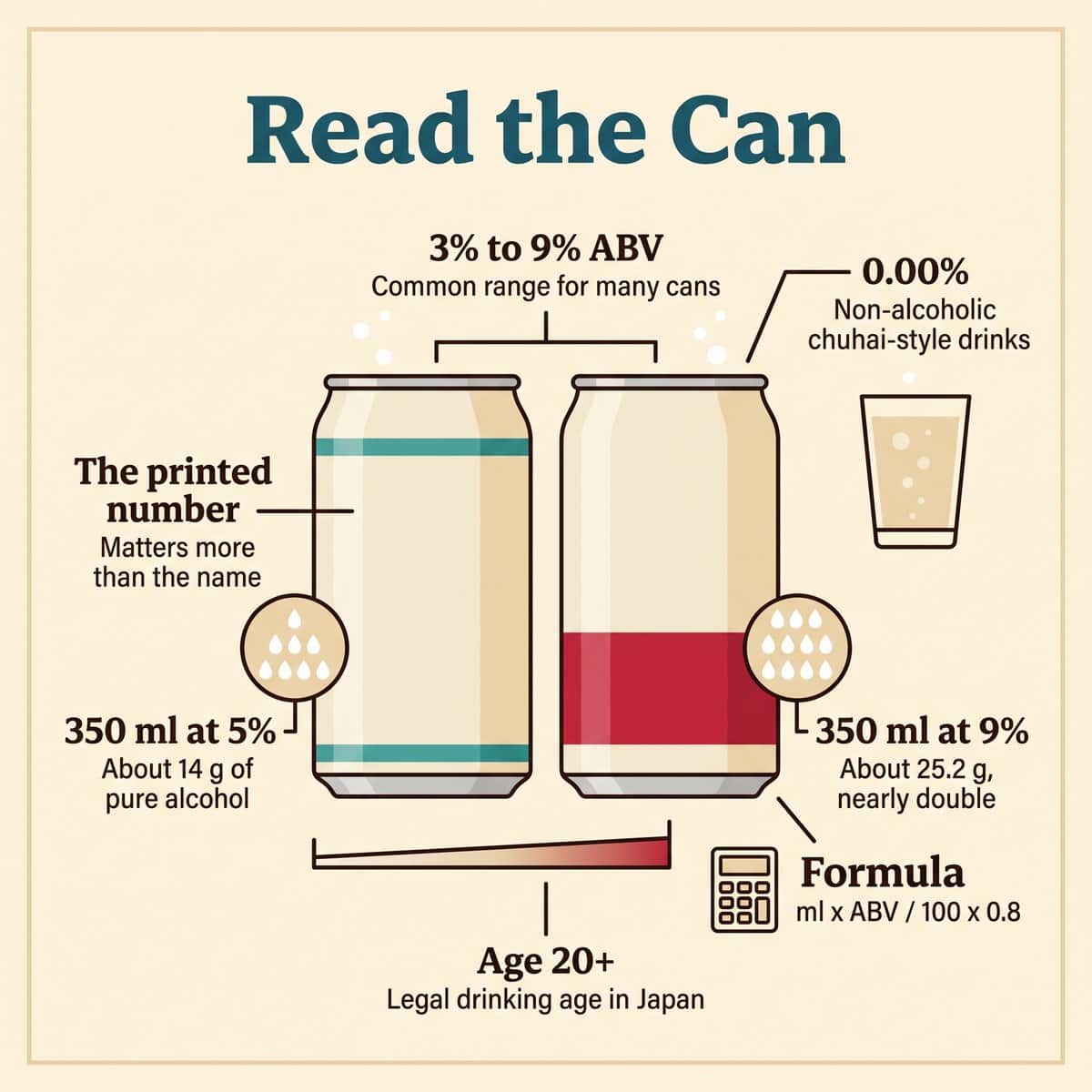
Chuhai has no single strength. Many cans fall between about 3% and 9% ABV, while non-alcoholic chuhai-style products are labeled 0.00%. Because the range is so wide, the number printed on the can matters more than the product name.
How to Read a Chuhai Can
Most labels are in Japanese, yet a few key words are easy to spot. Look for these on the back of the can, especially when you compare two brands.
- ABV (アルコール分): the alcohol percentage, which usually appears in large type.
- Pure alcohol (純アルコール量): grams of alcohol per can, which many major brands now also print.
- Juice (果汁): the real juice share, although that figure is often just a few percent.
- Sugar (糖類): 無糖 appears on products marketed as unsweetened, so check the nutrition panel if sugar matters to you.
- Base spirit: 焼酎 means shochu, while ウオッカ means vodka.
- Volume: common can sizes include 350 ml and 500 ml, so compare like with like.
Responsible Drinking Notes
Check the can size and the ABV together
Japan’s Ministry of Health, Labour and Welfare recommends tracking pure alcohol in grams, rather than volume alone. Its formula is simple: volume in ml × ABV ÷ 100 × 0.8. A 350 ml can at 5% therefore contains about 14 g of pure alcohol. At 9%, however, the same can holds about 25.2 g, nearly double. Pace each serving, and remember that the legal drinking age in Japan is 20.
Popular Chuhai Flavors
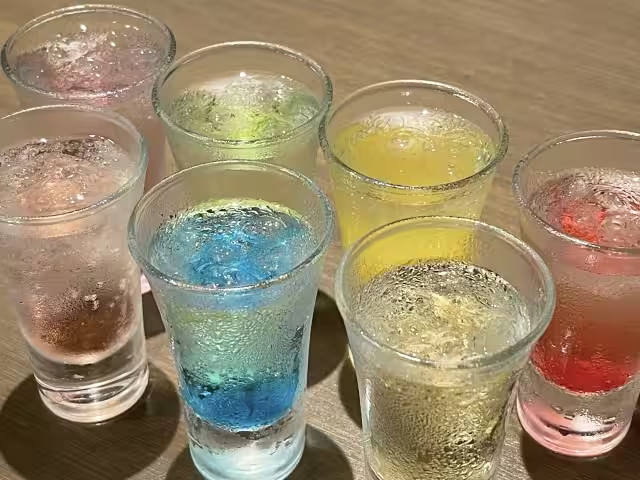
Options include lemon, grapefruit, peach, ume, tea, and other seasonal flavors. If you are unsure where to start, lemon is the safe bet.
- Lemon Sour and clean, but with a slight bitterness from the peel.
- Grapefruit Juicier than lemon, with a gentle bitter finish.
- Ume Tart and fruity, while umeboshi-style products may also taste salty.
- Peach Soft and sweet, so it often appears in lighter cans.
- Yuzu A fragrant Japanese citrus, similar to lemon but more floral.
- Tea Green tea or oolong versions, by contrast, taste dry and savory.
Ume chuhai, however, is not the same as umeshu. Umeshu is a sweet plum liqueur, whereas ume chuhai is a lighter, fizzy mixed drink.
Chuhai vs Sour: What Is the Difference?
In everyday Japanese usage, there is often little practical difference. Bartenders make a sour with a spirit, acidic fruit juice, a sweetener, and often soda. As a result, that formula sits very close to a lemon chuhai.
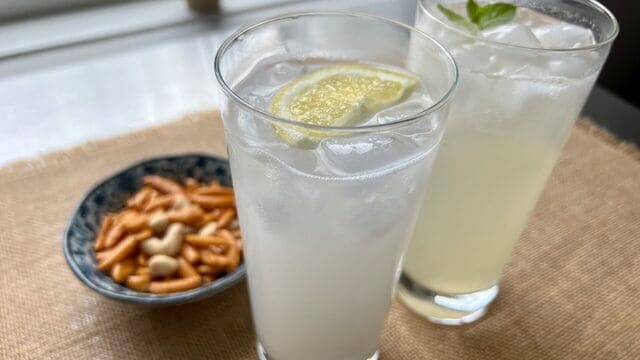
In many Japanese izakayas, chuhai and sour refer to nearly the same style of mixed drink. Some izakayas call the drink chuhai, while others list it as a sour. Menus simply follow local habit, so do not read too much into the name.
Chuhai vs Highball vs Sour
| Drink | Base spirit | Mixer | Sweetness | Typical setting |
|---|---|---|---|---|
| Chuhai | Shochu, vodka, or neutral spirit | Soda with fruit or other flavoring; some bar-made versions use tea instead | Dry, or sometimes sweet | Izakaya and cans at home |
| Highball | Usually whisky | Soda water | Usually dry | Bars and izakaya |
| Sour | Any spirit, often shochu in Japan | Citrus juice, sweetener, and soda | Tart, but lightly sweet | Izakaya and cocktail bars |
Since the highball inspired the name, the two drinks share a tall glass and plenty of soda. For the whisky side of the story, see our guide to Japanese whisky.
Canned Chuhai vs Izakaya Chuhai
| Point | Canned chuhai | Izakaya chuhai |
|---|---|---|
| Base | Shochu or vodka, set by the maker | Often shochu, chosen by the bar |
| Carbonation | Sealed in, so consistent | Mixed to order in many bars; carbonation varies by venue |
| Sweetness | Unsweetened to sweet | Varies, depending on the bar |
| Serving | From the can or over ice | Glass or mug, usually with ice |
| Strength | Printed on the label | Often not listed, unlike cans |
Izakaya menus may also list other shochu mixers, such as Hoppy, a beer-flavored soda from Tokyo. If you are curious, order one of each and then compare.
Food Pairings
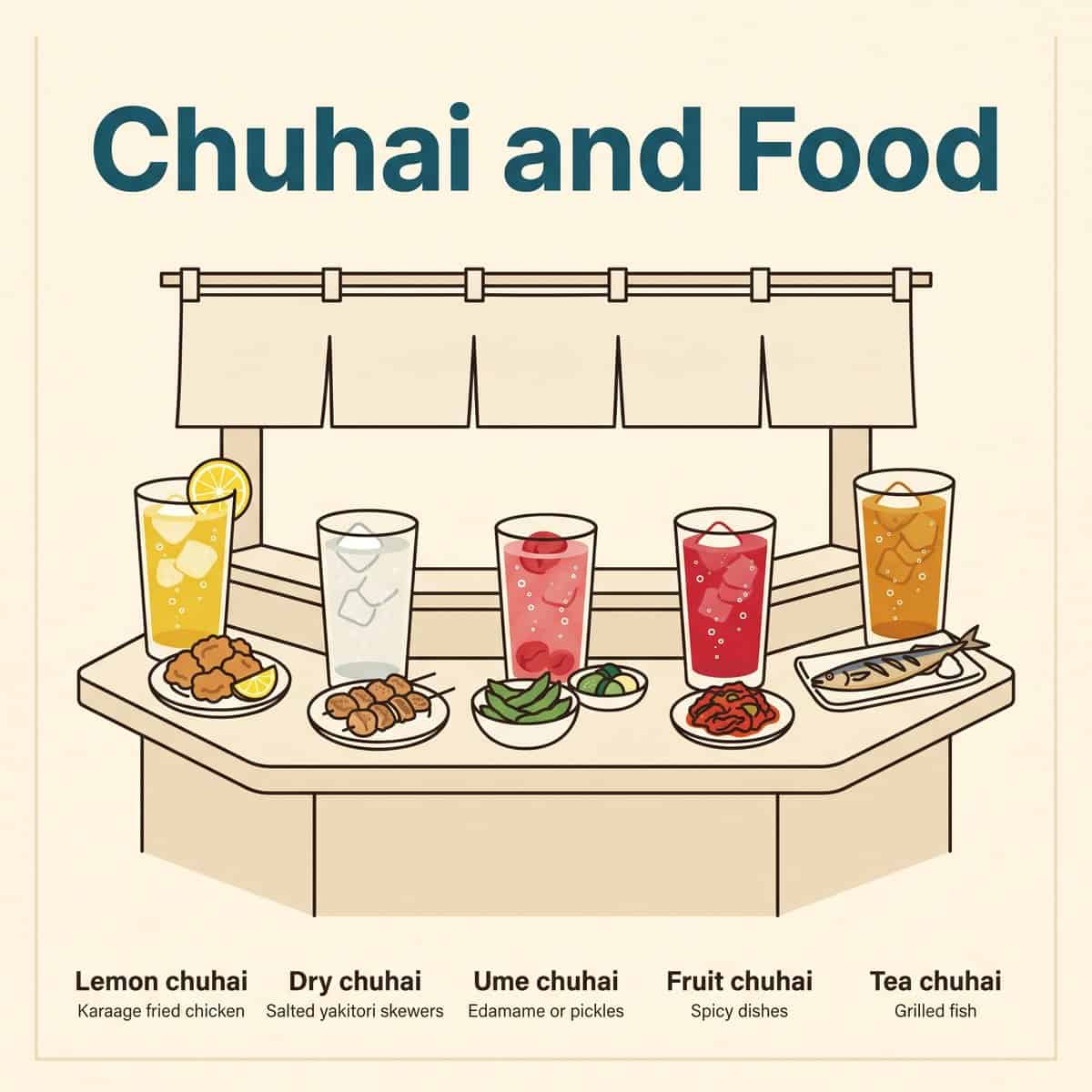
Chuhai grew up in casual bars, so it suits salty, fried, and grilled food. None of these pairings count as rules, of course.
- Lemon chuhai and karaage: the acidity cuts through the oil, especially with Japanese fried chicken.
- Dry chuhai and yakitori: salt-seasoned skewers also keep both flavors clean.
- Ume chuhai and small plates: edamame or pickles, for instance, match its salty, tart edge.
- Fruit chuhai and spicy dishes: a little sweetness softens the heat.
- Tea chuhai and grilled fish: the dry finish never overwhelms delicate flavors.
Easy Lemon Chuhai Recipe
This lemon chuhai recipe starts from a prepared lemon sour base, which is a mix of lemon syrup and shochu. Once the base is ready, each glass takes about five minutes to build. Use a base with a known shochu content. If you make the base at home, follow a tested recipe and record the amount and ABV of the shochu, so you can estimate the finished strength.
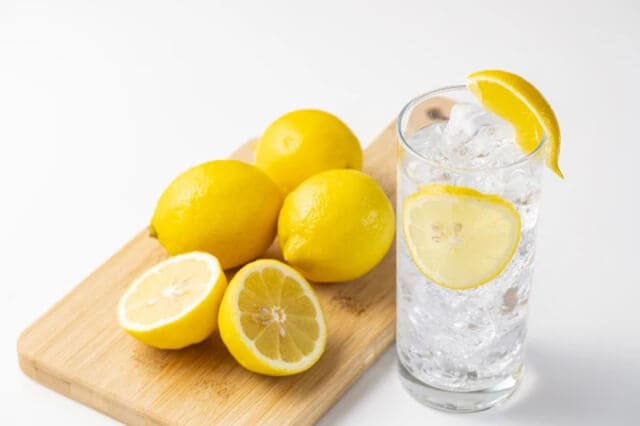
Ingredients
- Lemon sour base (lemon syrup and shochu): 30 to 50 g
- Lemon juice: 5 to 10 g (about 1 to 2 tsp)
- Carbonated water: 150 to 200 g (about 150 to 200 ml)
- Lemon slices: 1 to 2 (about 5 g)
- Ice: enough to fill the glass
Equipment
- Tall glass, about 350 ml
- Long spoon or bar spoon
- Kitchen scale
Strength
The finished strength depends on the proportion and ABV of the shochu in your base. For a lighter serving, use the lower end of the base range and more soda.
How to Make Lemon Chuhai
Fill a tall glass with ice and add one or two lemon slices.
Pour in the lemon sour base, then add the lemon juice for extra tartness. Stir the base and juice together well.
Pour the carbonated water gently down the side of the glass. Lift the mixture once from the bottom with a spoon to preserve the bubbles. Add a little more soda if you prefer a lighter drink.
Where to Buy Chuhai in Japan
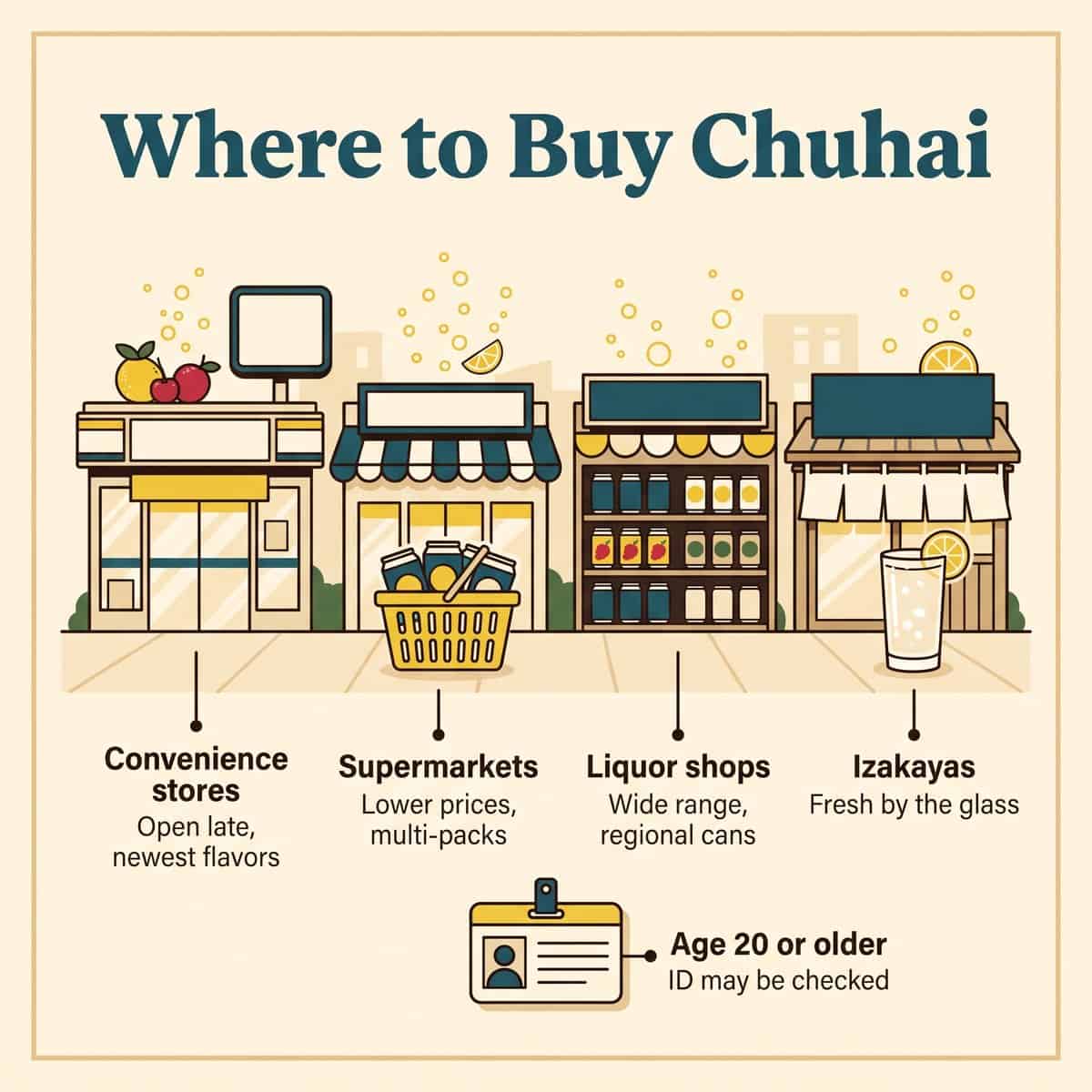
In Japan, you can find chuhai at convenience stores, supermarkets, liquor shops, and izakayas. Each option works a little differently, though.
- Convenience stores: open late, and they often keep the newest flavors beside the beer. Our Japanese convenience store food guide explains how the register works.
- Supermarkets: usually lower prices, as well as multi-can packs.
- Liquor shops: a wide range, especially for regional and craft-style cans.
- Izakayas: freshly made chuhai and lemon sours, served by the glass instead of cans.
Remember that you must be 20 or older to buy alcohol in Japan. Retailers may ask you to confirm your age or show identification. For prices and etiquette beyond chuhai, also see our guide to alcohol in Japan.
Where to Drink Chuhai in Tokyo and Osaka
The two bars below are examples, not a ranking, and Japan has countless other good spots. Details change often, so check the official listing before visiting.
Ojinjo (おじんじょ), Ebisu, Tokyo
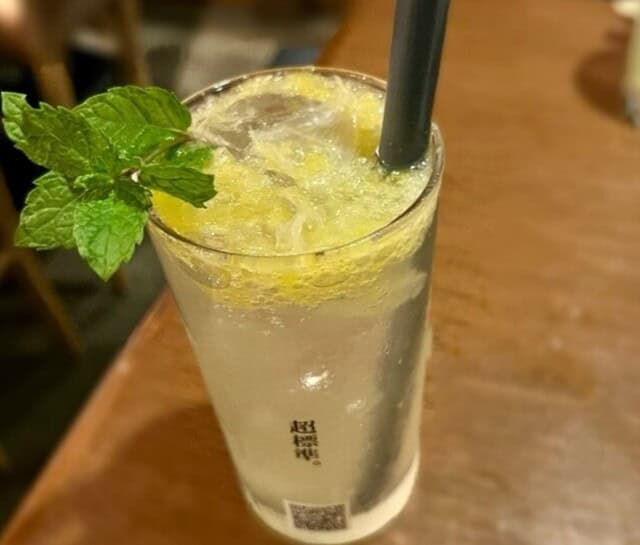
Ojinjo is an izakaya in Ebisu known for drinks made with Setoda lemons. Earlier menus and reports featured six lemon chuhai variations, including versions flavored with salt or mint. However, the lineup may change, so ask what is available on the day.
- Address Nishimaki Building 1F, 2-2-10 Ebisu-Nishi, Shibuya-ku, Tokyo
- Phone 03-5784-1775
- Hours Hours differ between listings, so check the official booking page or Instagram before visiting.
- Website Ojinjo on Tabelog
Information checked: October 2026. Details may change.
Tachinomi Jinbei (立ち飲みじんべえ), Sonezaki, Osaka
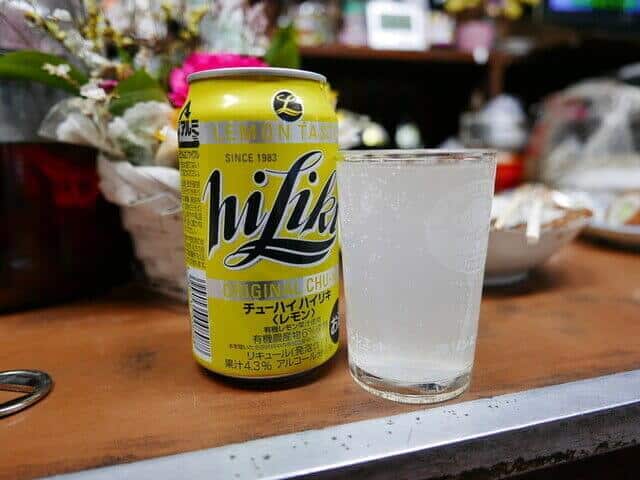
Meanwhile, Tachinomi Jinbei is a standing bar in Sonezaki, close to Osaka’s Umeda area. Its current listed drink menu includes fresh lemon chuhai with optional refills, alongside several other chuhai and shochu-based drinks. The selection may change, so check the latest menu before visiting.
- Address Grande Sonezaki Building 1F, 2-14-7 Sonezaki, Kita-ku, Osaka
- Phone 06-6367-4300
- Hours Weekdays 16:00 to 23:30, Saturdays 15:00 to 23:30, Sundays and holidays 15:00 to 23:00 (as listed in October 2026)
- Website Tachinomi Jinbei on Instagram
Information checked: October 2026. Check the official listing before visiting.
Is Chuhai Worth Trying in Japan?
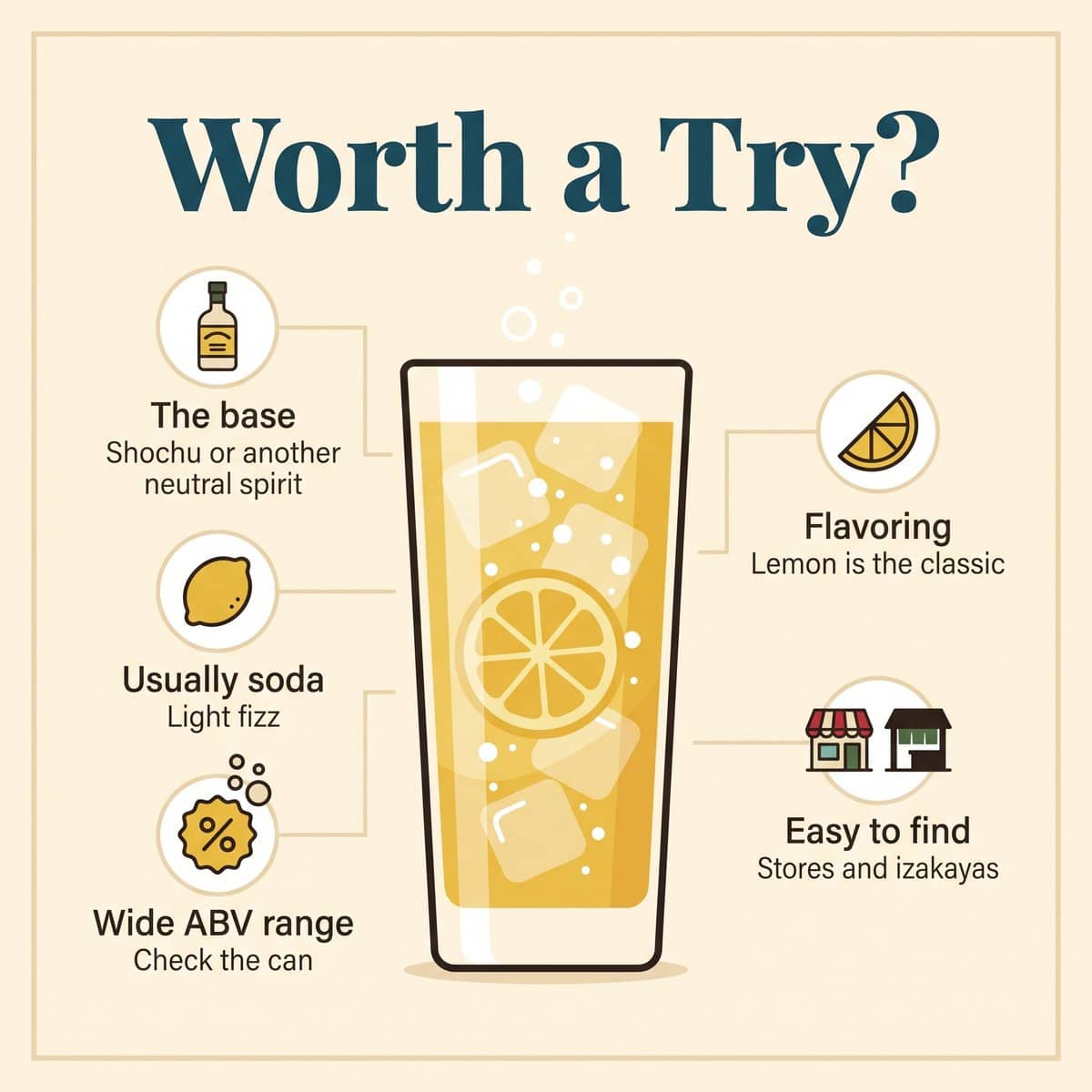
Chuhai is a Japanese mixed drink made with shochu or another neutral spirit, flavoring, and usually soda. Lemon is the classic choice, while canned products cover many fruit and tea flavors and a wide range of alcohol levels. In Japan, you can buy it at convenience stores, supermarkets, and liquor shops or order it by the glass at an izakaya.
Chuhai FAQ
Chuhai Basics
- What is chuhai?
-
It is a Japanese mixed alcoholic drink made with shochu or another neutral spirit, flavoring, and usually soda water. Lemon is the classic flavor, although grapefruit, peach, ume, and tea versions are common too. You can also order the drink at izakayas or buy it in cans across Japan.
- Is chuhai the same as a lemon sour?
-
In daily use, the two overlap almost completely. Both combine a spirit, citrus, and soda, while recipes rarely differ in any meaningful way. Some izakayas simply call the drink chuhai, whereas others list it as a lemon sour.
- Does chuhai contain shochu?
-
Not always. Traditional bar-made versions often use shochu, while many canned products use vodka or another spirit. So check the ingredient list for 焼酎 (shochu) or ウオッカ (vodka) if the base matters to you.
Strength and Taste
- What is the alcohol percentage of chuhai?
-
There is no fixed figure, so you need to check the label. Many cans sit between about 3% and 9% ABV, and 0.00% versions also exist. Look at the pure alcohol figure in grams as well, because can size changes the total.
- Is chuhai sweet?
-
Some versions are sweet, but many are not. Fruit-forward and some low-alcohol cans tend to taste sweeter, while dry and unsweetened styles finish more crisply. Look for 無糖 on the label, then check the nutrition panel if sugar matters to you.
- Is chuhai carbonated?
-
Most of the time, yes, although not always. Canned products and classic shochu highballs are generally carbonated. Even so, izakayas often group still drinks such as oolong high under the same broad style.
Buying and Making Chuhai
- Where can I buy chuhai in Japan?
-
Convenience stores, supermarkets, and liquor shops all stock it, mostly in cans. Izakayas also serve the drink fresh by the glass. You must be 20 or older to buy alcohol, and retailers may ask for ID.
- Can I make chuhai at home?
-
Yes, because the basic version needs only shochu, citrus juice, and soda water. Mix the shochu and juice over plenty of ice, then top the glass with soda. Our recipe above uses a prepared lemon sour base for a deeper lemon flavor.
References
- Japan Spirits & Liqueurs Makers Association – Chuhai (Accessed October 2026)
- National Tax Agency – Sake no Shiori 2026: Classification and Definitions of Liquor under the Liquor Tax Act [editor’s translation] (Accessed October 2026)
- National Tax Agency – Initiatives to Prevent Drinking by Persons Under 20, in Sake no Shiori 2026 [editor’s translation] (Accessed October 2026)
- Liquor Advertising Review Committee – Voluntary Standards on Liquor Advertising and Container Labeling [editor’s translation] (Accessed October 2026)
- Takara Shuzo – Takara Can Chuhai (Accessed October 2026)
- J-Net21 (SME Support, JAPAN) – The Story Behind Takara Can Chuhai [editor’s translation] (Accessed October 2026)
- Colocal – Interview with the Operators of Sanyu Sakaba Yahiro Branch, published as part of a sponsored Takara Shuzo project (2021; Accessed October 2026)
- Kirin Brewery – Kirin Hyoketsu Sicilian Lemon Product Information (Accessed October 2026)
- Kirin Brewery – Kirin Hyoketsu Lineup (Accessed October 2026)
- Ministry of Health, Labour and Welfare – Guidelines on Drinking with Consideration for Health [editor’s translation] (Accessed October 2026)
Related Articles
- Shochu (焼酎) (Surveyed: October 2026)
- Alcohol in Japan: A Complete Guide to Drinks, Culture and Izakaya Prices (Surveyed: October 2026)
- Mugi Shochu (Surveyed: October 2026)
- Umeshu (Surveyed: October 2026)
- Hoppy (Surveyed: October 2026)
- Japanese Whisky (Surveyed: October 2026)
- Karaage (唐揚げ) (Surveyed: October 2026)
- Yakitori (やきとり) (Surveyed: October 2026)
- What to Buy at a Japanese Convenience Store: Complete Food Guide for Travelers (Surveyed: October 2026)



Comments