Alcohol in Japan: Historical Continuity and the Modern Paradigm Shift
From the 16th-century distillation routes of Shochu and the rise of “Natural Sake,” to techno-infused sake shrines and the izakaya culture that defines Japanese social life.
To understand alcohol in Japan is to understand the country’s profound history of cultural assimilation and its modern pursuit of perfection. While Western narratives have long fixated almost exclusively on sake, Japan’s drinking culture is a complex tapestry. It weaves together the 16th-century maritime trade that birthed distilled Shochu, the post-war innovations of everyday highballs, and the modern, health-conscious “Natural Sake” movement. This guide explores the historical origins of Japanese beverages, the immersive modern venues redefining how younger generations drink, and the social etiquette that makes the Japanese drinking experience completely unique.
Sake boasts a 2,000-year history of craftsmanship, brewed from polished rice, pristine water, yeast, and koji mold. The traditional quality indicator is the polishing ratio (seimai-buai)—the more bran is removed, the more refined the flavor (yielding premium Daiginjo or Ginjo). Sake is inextricably linked to Shinto rituals, marking seasons and life transitions. However, as global tastes evolve, the metric of “highly polished equals better” is being actively challenged by a new generation of brewers.
The “Natural Sake” (Shizenshu) Movement
2026 Major Trend
Mirroring the global natural wine boom, 2026 has seen an explosive rise in “Natural Sake” (自然酒 – Shizenshu). Appealing to highly health-conscious consumers and eco-aware millennials, this movement completely rejects artificial additives, lactic acid additions, and heavily polished rice. Brewers like Terada Honke have championed returning to ancient, zero-additive methods (like the *bodaimoto* or *kimoto* techniques) utilizing organic, pesticide-free rice and ambient natural yeast. The result is a more robust, sour, and complex flavor profile that has captivated a new demographic seeking authentic, transparent, and terroir-driven beverages.
⛩️
Experiential Venues: The Rise of “Sake Shrines”
Redefining historical breweries for Gen Z and Millennials
Nada-Gogo and the Immersive Brewery
Experiential Dining
To combat declining domestic consumption among younger generations, historic brewing districts are undergoing radical transformations. In Kobe’s Nada-Gogo (Japan’s most famous sake-producing region), centuries-old breweries are being reimagined as “Sake Shrines”. These are no longer just production facilities; they are immersive, multi-sensory entertainment complexes. Historic wooden warehouses are now equipped with projection mapping, contemporary art installations, and curated techno or ambient music soundscapes. By fusing the sacred historical weight of brewing with cutting-edge sensory experiences, these venues have successfully transformed sake tasting into a highly sought-after lifestyle experience for modern travelers and domestic youth alike.
🔥
Shochu: The 16th-Century Distillation Route
A historical narrative of maritime trade and cultural convergence
While global audiences often equate Japanese alcohol entirely with sake, Shochu represents a vital historical narrative of international trade. The roots of Japanese distillation date back to the 15th and 16th centuries. Distillation technology traveled from Siam (modern-day Thailand), China, and the Korean Peninsula, converging first in the Ryukyu Kingdom (modern Okinawa) to create Awamori. This technology then moved north into Kyushu, giving birth to Shochu.
Today, Shochu is distilled from diverse bases like sweet potato (imo), barley (mugi), and rice (kome), typically sitting at 25% ABV. Its deep, earthy flavor profiles and rich history as a product of ancient Asian maritime routes make it one of the most culturally significant spirits in Japan. It is typically enjoyed on the rocks (rokku), with cold water (mizuwari), or hot water (oyuwari).
🥃
Whisky, Beer, and Everyday Spirits
The foundations of modern Japanese drinking culture
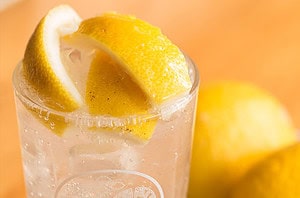
Japanese whisky continues to dominate the global stage. Born in the 1920s from a deep reverence for Scottish methods, pioneers like Masataka Taketsuru and Shinjiro Torii created a spirit characterized by harmony and delicate precision. While premium single malts (Yamazaki, Hakushu) are sipped neat, the defining Japanese whisky experience is the Highball—a meticulous blend of whisky and highly carbonated soda over crystal-clear ice, designed perfectly to pair with food.
Beer and the Izakaya Staples
¥500 to ¥800 draft
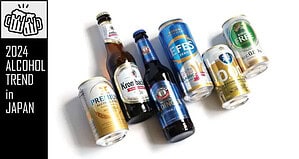
The undisputed king of the first round is a crisp Japanese lager (Asahi, Kirin, Sapporo). Beyond beer, budget-friendly options like Chuhai (shochu mixed with flavored soda) and Tokyo’s retro Hoppy (a beer-flavored mixer) remain the lifeblood of working-class drinking districts. Sweet fruit liqueurs like Umeshu (plum wine) also offer an accessible, traditional entry point for those avoiding bitter flavors.
🌐
Alcohol Perceptions: A Global Comparison
How Japan’s definition of a “standard drink” reflects its cultural priorities
To understand the Japanese drinking experience, one must understand how alcohol is culturally measured. Japan views alcohol fundamentally as a social lubricant and a ritualistic tool, rather than purely an instrument of personal recreation. This difference is embedded in the very definition of a standard drink.
Country
Standard Pure Alcohol
Main Calculation Basis
Cultural Perception
Japan
Approx. 19.75 g
Equivalent to approx. half of 1 go (180ml) of sake, etc.
Fusion of socialization and ritual
United States
Approx. 14.0 g
12 oz (approx. 355ml) of standard beer
Entertainment and personal freedom
United Kingdom
Approx. 8.0 g
1 Alcohol Unit
Strict health management via the Unit system
Japan’s higher standard measure reflects the historical norm of serving sake in a tokkuri (flask) meant for sharing. The act of pouring for others creates a higher baseline metric, emphasizing communal bonding over strict individual unit tracking.
🏮
Izakaya Culture & Etiquette
The social rules that govern the Japanese pub experience
The Izakaya (居酒屋) is the beating heart of Japanese social life. It is where hierarchical corporate structures dissolve, and communal harmony is built over shared plates and flowing drinks.
🥂 Kanpai (乾杯)
Never take a sip until everyone has their drink and the group toasts with “Kanpai!” (Cheers). Make eye contact and gently clink glasses.
🍶 Pouring for Others
The golden rule: never pour your own drink (te-tsuki). You pour for your companions, and they pour for you. This mutual attentiveness defines the izakaya experience.
🚫 The “Otoshi” System
Instead of tipping (which is not practiced), a mandatory small starter dish called an otoshi is served. This acts as a table charge (usually ¥300 to ¥500).
⏱️ Nomihodai
Many izakayas offer “Nomihodai” (All-you-can-drink) for a set time (usually 90-120 minutes). It is highly economical, but the culture values steady enjoyment over aggressive intoxication.
Ryo Iwa is the founder and editor of foodinjapan.org. Born and raised in Japan, he writes from regional travel, market visits, and Japanese-language primary sources that rarely reach English readers, including brewing institute publications and industry glossaries. Where a figure cannot be traced to a source, the article says so.
He has been a Google Maps Local Guide for over 10 years, with more than 1,800 reviews and over 41,000 photos viewed hundreds of millions of times. He previously spent two decades as an IT consultant in Japan, the US, and the UK.
















Comments