


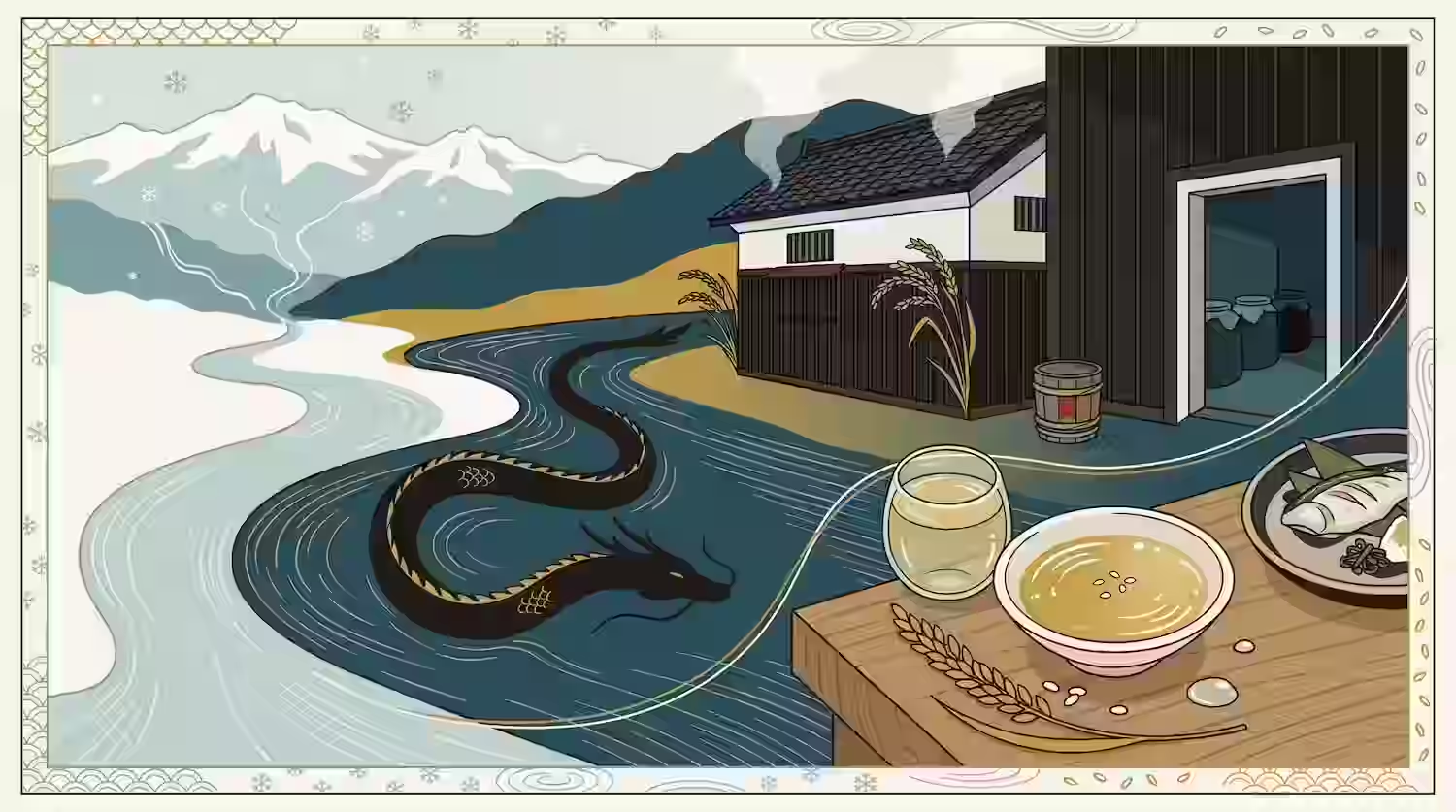


Every bottle of sake leaves something behind. After the fermented mash is pressed, a soft, pale, fragrant solid remains in the press. The Japanese call it sake kasu, and many people wrongly dismiss it as waste. In reality, it is not waste at all. Sake kasu is a nutrient-rich ingredient with real culinary and cultural value. For centuries, Japanese cooks have turned it into soups, pickles, sweets, and warming winter drinks.
So what exactly is it? Sake kasu (酒粕) is the solid lees left over after sake is pressed from the fermented mash. In Japanese brewing terms, it is simply the solids that remain once the moromi is squeezed. Yet that simple description hides a lot of flavor. Sake kasu still carries rice, koji, and yeast, along with their aromas and nutrients. This guide follows it from the press to the kitchen, and beyond.
We will cover how sake kasu is made, why different types exist, and what it contains. We will also look at its many uses, its role in sustainable brewing, and its place in regional food culture. Along the way, a few surprises appear. Ultimately, this humble byproduct sits close to the heart of Japanese fermentation.
Quick Facts
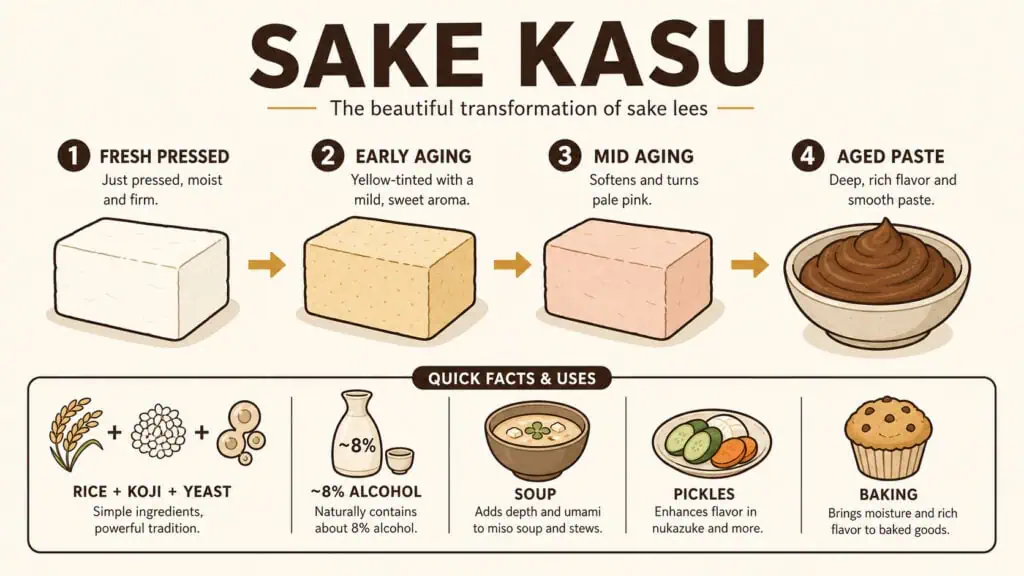
- Japanese Name: 酒粕 (sake kasu), also written sakekasu
- Literal Meaning: “Sake lees” or “sake dregs”
- Produced During: Pressing (joso), when sake is separated from the mash
- Main Components: Rice, koji, yeast, residual sugars, proteins, and fiber
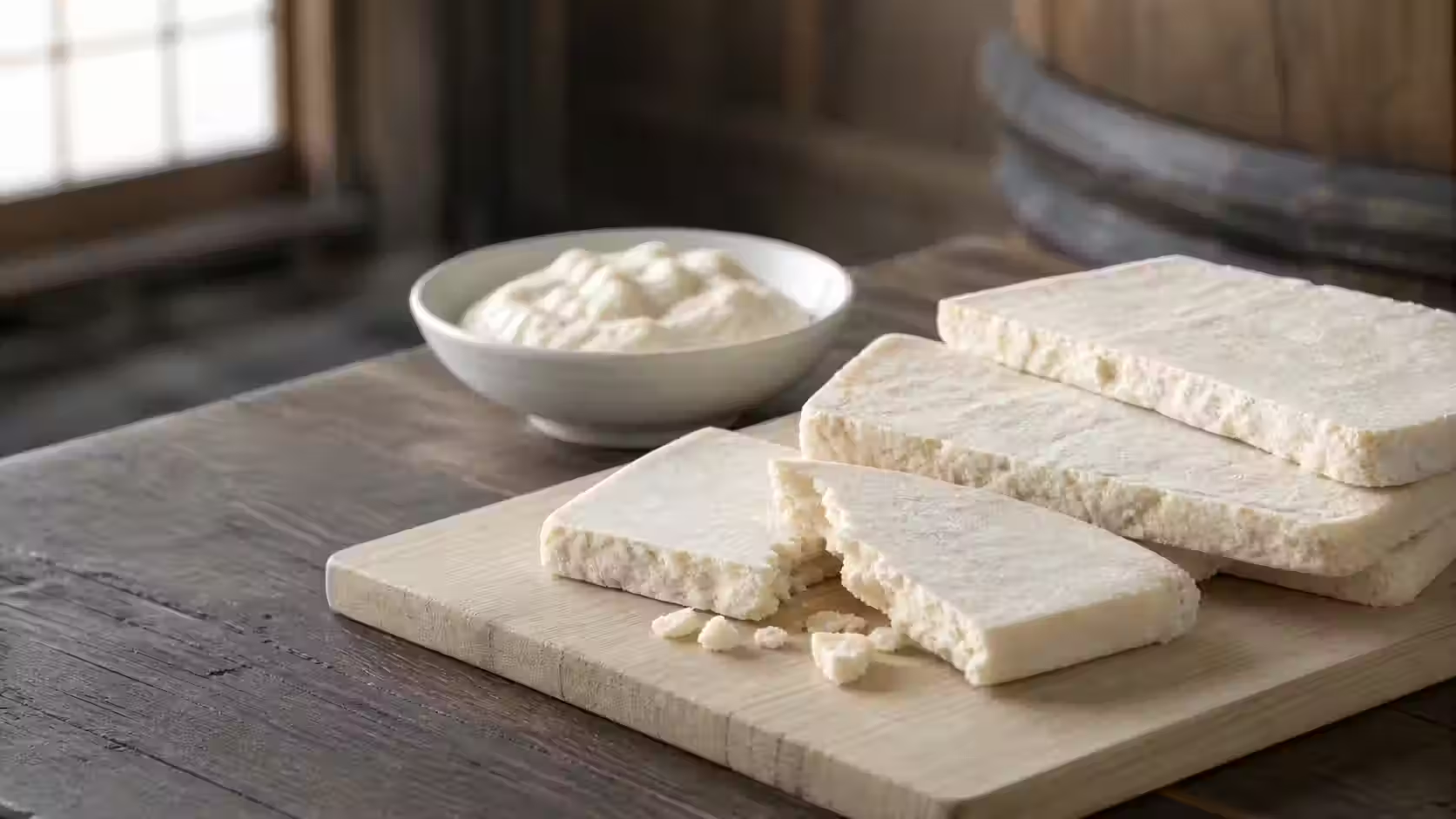
- Texture: Firm board, soft crumble, or smooth paste, depending on the type
- Alcohol Content: Around 8 percent, so it is not alcohol-free raw
- Typical Uses: Soup, marinades, pickles, sweet drinks, baking, and more
One number deserves an early flag. In fact, raw sake kasu contains roughly 8 percent alcohol by weight. That matters for cooking and for who can safely eat it. We return to this point in the misconceptions section. For now, just remember that heat and time can reduce, but not always fully remove, that alcohol.
What Is Sake Kasu?
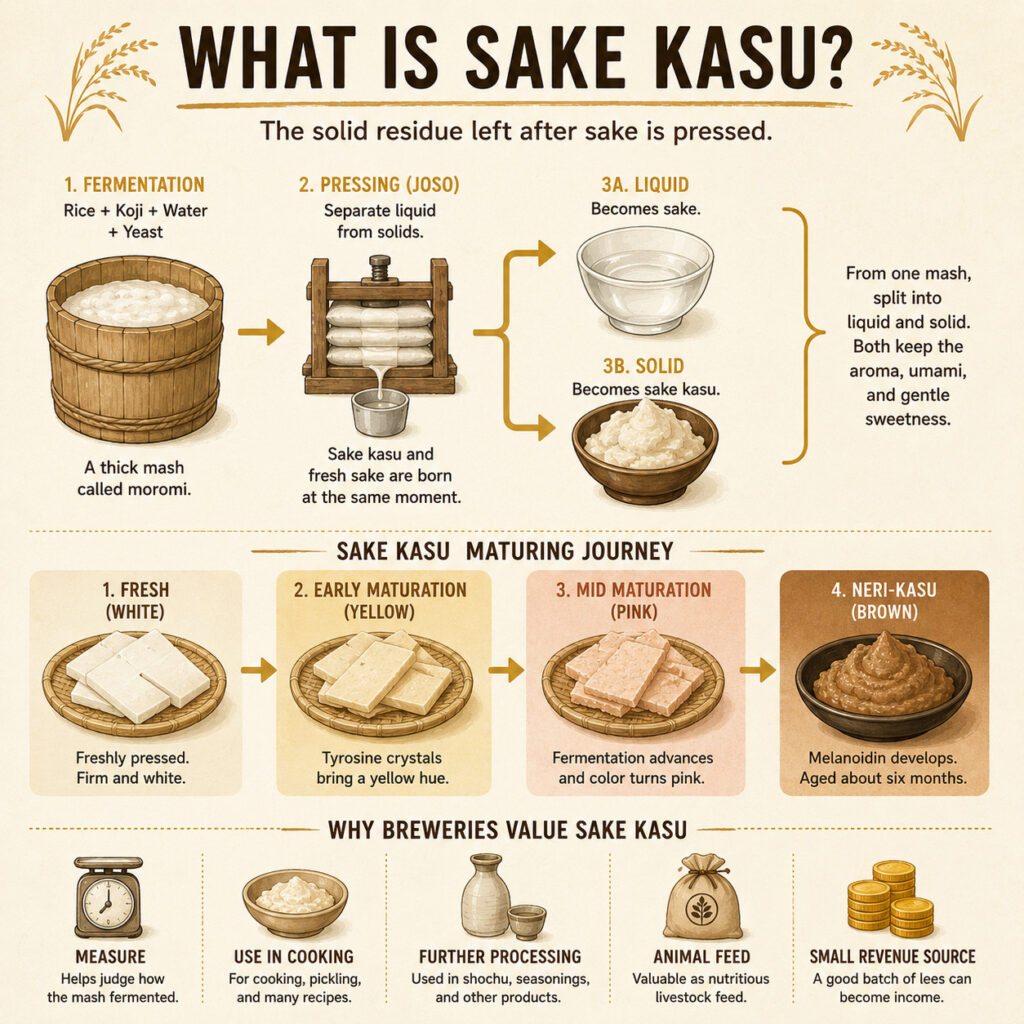
Sake kasu is the solid residue produced when finished sake is pressed. During brewing, rice, koji, water, and yeast ferment together into a thick mash called moromi. When fermentation ends, brewers separate the liquid sake from the solids. The clear liquid then becomes sake. Meanwhile, the pale solid left behind is sake kasu.
This separation happens at the pressing stage, known in Japanese as joso. So sake kasu and fresh sake are born at the very same moment. They come from one mash, split into liquid and solid. Because of that shared origin, the lees keep much of the mash’s character. Think aroma, umami, and a gentle sweetness.
Not the Same as Brewing Waste
It helps to separate sake kasu from true waste. Rice-washing water, cleaning runoff, and spent materials are byproducts with little food value. However, sake kasu is different. It still holds concentrated nutrients from rice, koji, and yeast. In fact, many components become more concentrated once the liquid is gone. So calling it mere waste sells it short.
Why Breweries Value It
Breweries have long treated sake kasu as a second product, not a problem. For example, they weigh it to judge how the mash fermented. They also sell it for cooking, for pickling, and for further processing. Some of it goes into shochu, seasonings, or livestock feed. As a result, a good winter batch of lees can become a small revenue stream. That practical value shaped centuries of tradition.
How Sake Kasu Is Produced
The birth of sake kasu happens during pressing. To understand it, we first need the mash. After weeks of fermentation, the moromi is a soupy blend of dissolved rice, koji, yeast, alcohol, and unfermented solids. Brewers then apply pressure to split it. Naturally, the method they choose shapes the lees that result.
The Yabuta Press
Most everyday sake goes through an automatic machine press. The common type is the Yabuta press, an accordion-style filter press that squeezes the mash between panels. Yabuta is actually a brand name, though the term now stands for this whole style of machine. It applies firm air pressure from both sides. As a result, the lees come out as flat, fairly dry sheets. Overall, this method is efficient, reliable, and widely used across Japan.
Fune and Fukuro-tsuri
By contrast, premium sake often uses gentler methods. In fune pressing, brewers stack mash-filled bags inside a long wooden box and press slowly from above. This treats the mash more kindly than a machine. For the top grades, some use fukuro-tsuri, also called drip pressing. Here, bags of mash simply hang, and only the drops that fall by gravity are collected.
Of course, gentle pressing leaves more sake behind in the solids. That sounds wasteful, yet it produces richer lees. Because the squeeze is light, ginjo and daiginjo lees stay moist and fragrant. So the same care that makes elegant sake also makes prized sake kasu. The two goals move together.
Kasu Buai: How Much Is Left
Brewers track the yield of lees with a figure called kasu buai. Specifically, it measures lees weight against the polished rice used. In ordinary sake, that ratio sits around 25 to 30 percent. Ginjo brewing pushes it up to roughly 30 to 40 percent, while daiginjo can reach 50 to 60 percent. Higher-grade brewing, quite simply, leaves more behind.
That relationship links directly to pressing and, later, to filtration. After pressing, the young sake continues its journey toward the bottle. The lees, meanwhile, begin a life of their own. It is a neat division of one mash into two futures.
Types of Sake Kasu
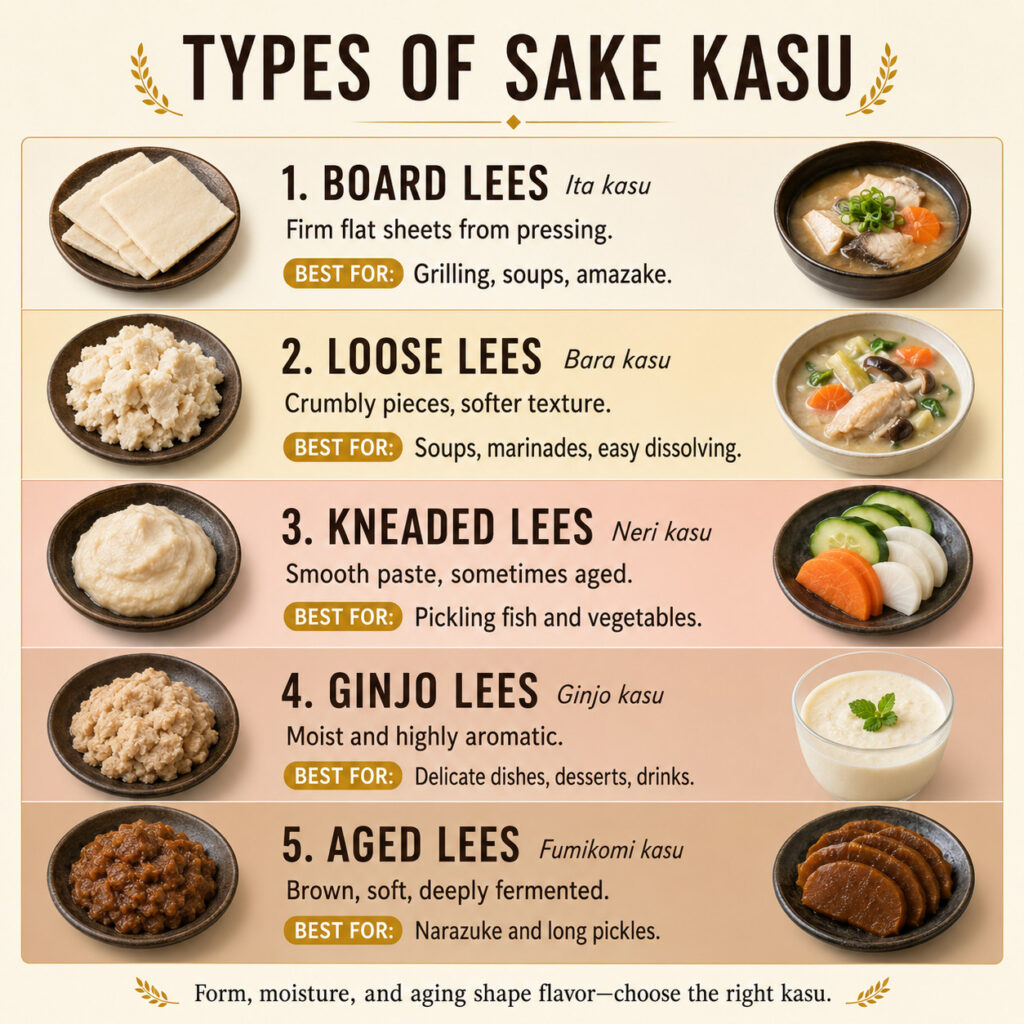
Not all sake kasu looks or behaves the same. Indeed, form, moisture, and grade all vary. Accordingly, Japanese cooks choose a type to suit the dish. The table below lays out the main kinds side by side.
| Type | Japanese | Form | Best For |
|---|---|---|---|
| Board lees | Ita kasu | Firm flat sheets from machine pressing | Grilling, soups, amazake after softening |
| Loose lees | Bara kasu | Crumbly pieces, softer than board | Soups, marinades, easy dissolving |
| Kneaded lees | Neri kasu | Smooth paste, sometimes aged | Pickling fish and vegetables |
| Ginjo lees | Ginjo kasu | Moist, highly aromatic | Delicate dishes, desserts, drinks |
| Aged lees | Fumikomi kasu | Brown, soft, deeply fermented | Narazuke and other long pickles |
Board, Loose, and Kneaded
Board lees, or ita kasu, are the familiar flat sheets in supermarkets. They come straight from machine pressing, then get cut to size. Loose lees, called bara kasu, are the softer crumbs that fall away during pressing. Their quality matches board lees, but they dissolve more easily. Kneaded lees, or neri kasu, are board or loose lees worked into a smooth paste. Therefore, cooks favor this form for pickling.
Ginjo and Aged Lees
Ginjo kasu comes from aromatic ginjo and daiginjo brewing. Since the mash is pressed gently, these lees stay moist and fragrant. Consequently, they carry the fruity ginjo aroma that many drinkers love. In contrast, aged lees take a different path entirely. Left to ferment for months, they turn brown, soft, and mellow. This deeply matured type, sometimes called fumikomi kasu, is the classic base for narazuke pickles.
Nutritional Composition
Sake kasu is surprisingly nutrient-dense for a byproduct. According to Japan’s official food composition tables, 100 grams provides about 215 kilocalories. That same portion holds roughly 14.9 grams of protein and 5.2 grams of dietary fiber. It also supplies B vitamins, folate, and minerals like zinc. For comparison, its protein content rivals some cuts of meat by weight.
Protein, Fiber, and Resistant Protein
Notably, one component draws special research attention. Sake kasu contains resistant protein, a hard-to-digest protein that behaves a bit like fiber. Japanese brewing scientists have studied it closely. Researchers at Gekkeikan traced its bile-acid-binding activity to rice-derived prolamin proteins of about 10 to 15 kilodaltons. In effect, these proteins pass through digestion and may carry fats and bile acids with them.
Because brewing concentrates these compounds, sake kasu holds more resistant protein than plain rice. That has made it a target for functional food research. Still, honesty matters here. Many studies are early, small, or industry-led. So I would treat sweeping health claims with some caution. The composition is genuinely rich, but it is not a miracle cure.
Amino Acids and Fermentation Compounds
Fermentation also fills sake kasu with flavor-active compounds. Koji enzymes break rice proteins into amino acids, which bring umami. Yeast activity leaves behind peptides and aromatic molecules. Together, these give the lees their savory-sweet depth. Brewing research bodies continue to map the many metabolites present. So the flavor is not an accident. It is the fingerprint of a living process.
Culinary Uses of Sake Kasu
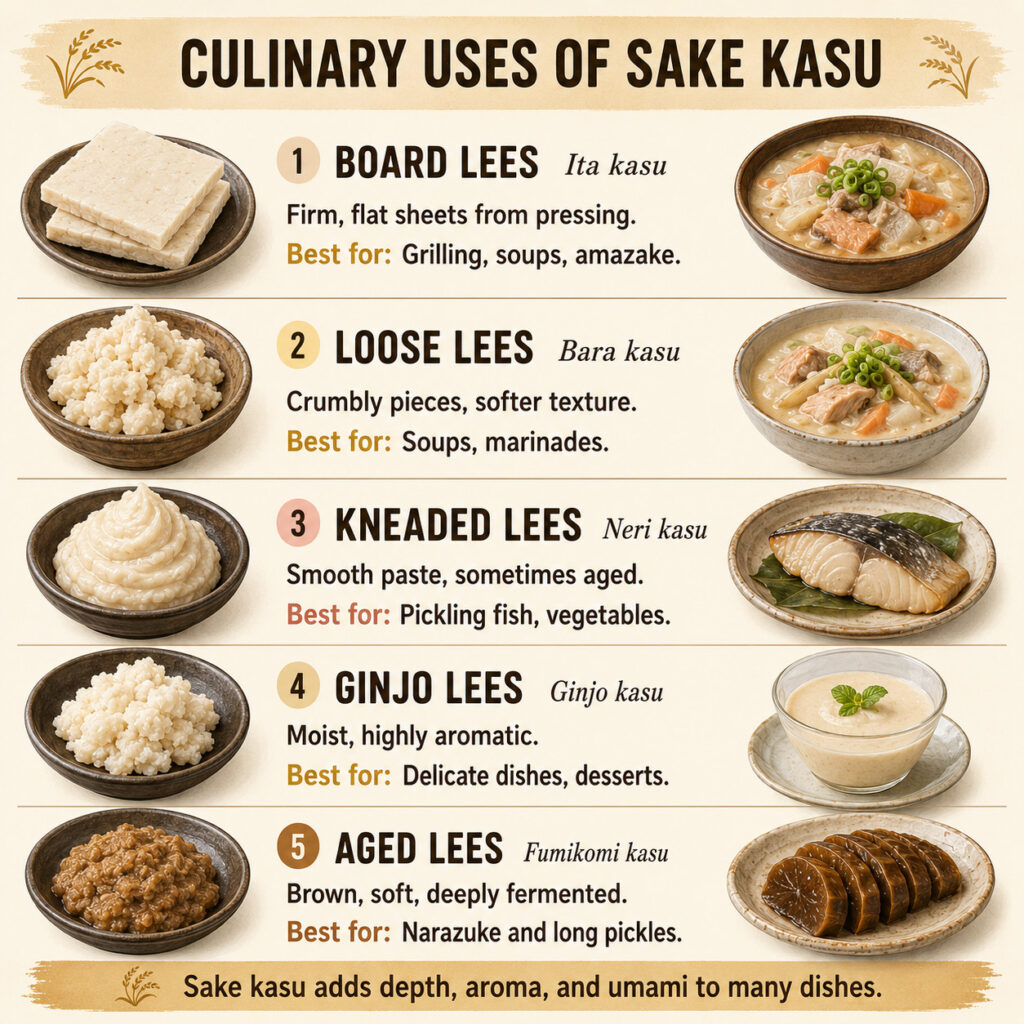
This is where sake kasu truly shines. Its uses span everyday home cooking and fine dining alike. The flavor is hard to describe, sitting between savory, sweet, and lightly fermented. Once you know it, you recognize it instantly. Here are the dishes worth knowing.
Kasujiru and Amazake
In winter, two warm classics lead the way. Kasujiru is a hearty soup of sake kasu, root vegetables, and often salted salmon or pork. It coats the spoon and warms the body fast. The other classic is amazake, a sweet, creamy drink. Sake kasu amazake melts the lees into hot water with a little sugar. Shrines often serve it during the New Year holiday.
Kasuzuke and Narazuke
Sake kasu also makes an outstanding pickling bed. Kasuzuke ferments fish, meat, or vegetables in seasoned lees. Cooks build the bed by mixing sake kasu with miso, sugar, salt, and mirin. The result carries a rich aroma and deep umami. Narazuke, a famous Nara specialty, takes this further. Vegetables sit in aged lees for months or even years, turning brown and intensely flavored.
Sweets, Bakery, and Beyond
Modern kitchens keep finding new tricks. Bakers fold sake kasu into bread for a soft crumb and gentle aroma. Pastry chefs add it to cookies, where it can taste faintly of cheese. It appears in ice cream, chocolate, and even dressings. Some cooks compare its funk to a mild cheese, which explains the pairing ideas. Consider these popular applications:
- Marinades: tenderize and flavor fish or meat before grilling.
- Soups and stews: add body and umami to nabe hot pots.
- Baking: enrich bread, muffins, and cookies.
- Desserts: flavor ice cream, cheesecake, and truffles.
- Seasonings: ferment further into sauces and spreads.
Because it pairs with so much, sake kasu rewards experimentation. Start small, since the flavor is assertive. A spoonful can transform a plain soup. That versatility is exactly why chefs abroad have taken notice.
Sustainability and Zero-Waste Brewing
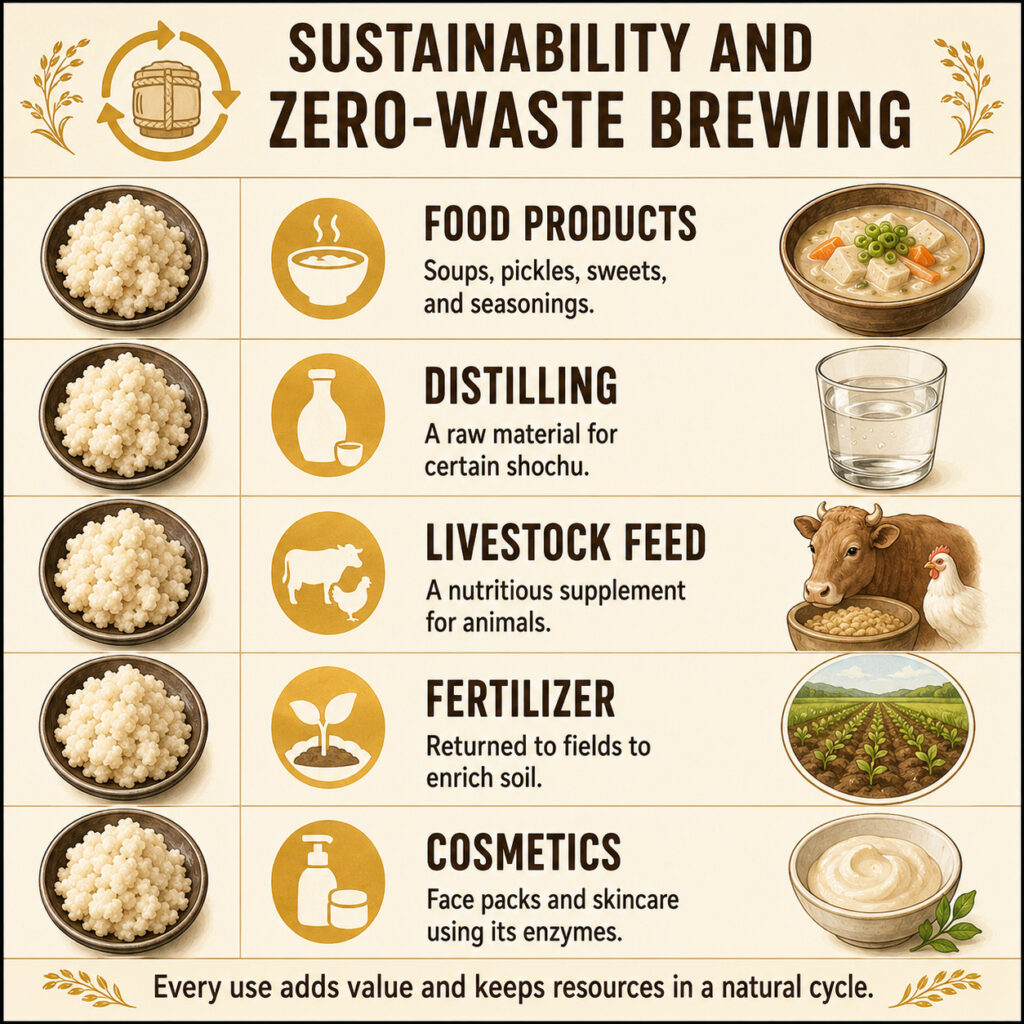
Sake kasu also tells a story about waste. Long before “zero waste” became a slogan, breweries used nearly everything. The lees are a prime example of that thrifty spirit. Rather than discard the solids, brewers turned them into food and other goods. In modern terms, this looks a lot like a circular economy.
The uses reach well past the kitchen. Consider where sake kasu goes today:
- Food products: soups, pickles, sweets, and seasonings.
- Distilling: a raw material for certain shochu.
- Livestock feed: a nutritious supplement for animals.
- Fertilizer: returned to fields to enrich soil.
- Cosmetics: face packs and skincare using its enzymes.
Each use keeps material out of the bin. That reduces disposal costs and environmental load. Meanwhile, it adds value from something once seen as leftover. So sake kasu is not just tasty. It is a quiet model of resourcefulness that fits our times well.
Regional Variations
Sake kasu reflects the sake region that produced it. Local water, rice, and brewing style all leave a mark. So lees from one area can differ from another. A few regions stand out for their traditions.
Nada, in Hyogo, brews robust sake with hard water, yielding sturdy, flavorful lees. Kyoto’s Fushimi favors softer water and a gentler style, which many find elegant. Niigata is known for clean, crisp sake, so its lees taste refined. Akita and other northern areas bring their own cold-climate character. Hiroshima deserves a special mention too. In the city of Takehara, some okonomiyaki cooks fold sake kasu into the batter, creating a local variant.
These differences reward the curious traveler. Buying lees near a good brewery often means fresher, more distinctive kasu. Ask at a local shop, and you may learn the house style. It is a small, delicious way to taste a region.
Modern Innovation
Sake kasu is having a quiet modern moment. Food scientists study its resistant protein and fermentation compounds for functional foods. Companies now sell concentrated sake kasu ingredients aimed at gut health and more. Whether every claim holds up remains an open question. Still, the research interest is real and growing.
Chefs are innovating too, both in Japan and abroad. Fermentation-focused kitchens treat sake kasu like miso or koji, a building block of flavor. It appears on tasting menus, in artisan breads, and in craft desserts. Export interest has followed, as global cooks discover the ingredient. So a centuries-old byproduct keeps finding new audiences. That, honestly, is a lovely arc for something once called waste.
Common Misconceptions
A few myths follow sake kasu around. Let us clear up the big ones directly.
- Is sake kasu alcoholic? Yes, raw sake kasu contains roughly 8 percent alcohol. Cooking reduces it, but gentle heating may not remove it fully.
- Is it just waste? No. It is a nutrient-rich food valued for cooking, pickling, and processing.
- Can children eat foods with sake kasu? Only after the alcohol is cooked off thoroughly. When in doubt, avoid it for young children and sensitive people.
- Is it the same as rice bran? No. Rice bran (nuka) is the outer layer of rice grains. Sake kasu is fermented lees from brewing, a completely different material.
That last mix-up is common, so it is worth stressing. Nuka pickling and kasu pickling are different traditions. They use different materials and taste distinct. Knowing the difference makes shopping and cooking far easier.
Final Thoughts
Sake kasu captures the whole spirit of Japanese brewing. Nothing is wasted, and every ingredient is asked to give its full value. What starts as a leftover from pressing becomes soup, pickles, sweets, and skincare. Along the way, it carries the aroma of rice, koji, and yeast into new forms. That continuity, from mash to table, is quietly remarkable.
It also connects the dots across Japanese food culture. Brewing, fermentation, regional cooking, and sustainability all meet in this pale block of lees. So the next time you see sake kasu in a shop, look again. Behind it stands centuries of craft and a refusal to waste good things. For a fitting close to the brewing story, it is hard to beat. If sake is the star, sake kasu is the encore worth staying for.
Sake Kasu FAQ
What is sake kasu?
Sake kasu is the solid lees left after sake is pressed from the mash. It still contains rice, koji, and yeast, along with their nutrients and aroma. Cooks use it in soups, pickles, and sweet drinks. Though often called a byproduct, it is a valued ingredient.
How is sake kasu made?
It forms during pressing, when brewers separate sake from the fermented mash. The solids left in the press become sake kasu. Machine presses make firm sheets, while gentle pressing makes softer lees. So the pressing method shapes the final texture.
Does sake kasu contain alcohol?
Yes. Raw sake kasu holds about 8 percent alcohol by weight. Heating during cooking reduces it noticeably. However, gentle or short cooking may leave some behind. Therefore, treat it as an ingredient containing alcohol unless it has been thoroughly cooked.
Can children eat foods made with sake kasu?
Only when the alcohol has been fully cooked off. Because raw lees contain alcohol, caution is wise. For young children, pregnant people, and those avoiding alcohol, it is safest to skip uncertain dishes. When unsure, ask how the food was prepared.
What does sake kasu taste like?
The flavor sits between savory, sweet, and lightly fermented. It carries a clear sake aroma and a gentle umami depth. Some people notice a mild, cheese-like funk. The taste is strong, so a little goes a long way.
What is sake kasu used for?
It appears in many dishes and products. Common uses include kasujiru soup, amazake, and kasuzuke pickles. Bakers and pastry chefs also add it to bread and sweets. Beyond food, it goes into feed, fertilizer, and cosmetics.
Is sake kasu nutritious?
It is fairly nutrient-dense for a byproduct. Around 100 grams provides about 215 kilocalories, 14.9 grams of protein, and 5.2 grams of fiber. It also supplies B vitamins and minerals. Researchers study its resistant protein, though strong health claims need caution.
What is the difference between sake kasu and rice bran?
They are entirely different materials. Rice bran, or nuka, is the outer layer removed when polishing rice. Sake kasu is the fermented lees left after brewing sake. Both can pickle food, but they taste and behave differently.
Why are there different types of sake kasu?
The type depends on pressing and grade. Machine pressing makes firm board lees, while soft crumbs become loose lees. Kneading produces a smooth paste for pickling. Ginjo brewing yields moist, aromatic lees, and long aging creates brown, mellow kasu.
How should I store sake kasu?
Keep it cold and sealed to protect its aroma. The refrigerator works for short-term use, while the freezer suits longer storage. Over time, refrigerated lees slowly ferment and darken. That aging is not spoilage, though it changes the flavor.
When is sake kasu available?
It follows the sake brewing calendar. Since most sake is brewed in winter, fresh lees appear mainly from late autumn through early spring. Fragrant ginjo lees are a seasonal treat in that window. Packaged sake kasu, however, is sold year-round.
Where can I buy sake kasu?
Japanese supermarkets stock board lees in the refrigerated section. Sake breweries and their shops often sell fresher, distinctive kasu. Specialty and online stores carry premium ginjo lees too. Near a good brewery, the local style is worth seeking out.
References
- Ministry of Education, Culture, Sports, Science and Technology (MEXT), Standard Tables of Food Composition in Japan (Eighth Revised Edition, 2023), Sakekasu (item 17053), https://fooddb.mext.go.jp/details/details.pl?ITEM_NO=17_17053_7 (Surveyed: July 2026)
- Gekkeikan Sake Research Institute, The identity of sake-kasu resistant protein and its contribution to lowering blood cholesterol, https://www.gekkeikan.co.jp/RD/sake/sake13/ (Surveyed: July 2026)
- Watanabe, T., Components of “sake-kasu” contributing to health and beauty, Journal of the Brewing Society of Japan (Nihon Jozo Kyokaishi), 2012, Vol. 107, No. 5, pp. 282-291 (Surveyed: July 2026)
- SAKE Street, What is sake kasu? Nutritional components and uses, https://sakestreet.com/ja/media/learn-sakekasu (Surveyed: July 2026)
- Sawanotsuru, About the pressing (joso) process that separates sake and sake kasu, https://www.sawanotsuru.co.jp/site/nihonshu-columm/knowledge/sake-kasu-squeeze/ (Surveyed: July 2026)
- Ozeki Corporation, Profiver: sake-kasu-derived resistant protein material, https://www.ozeki.co.jp/food_bio/products/profiver/ (Surveyed: July 2026)
- National Research Institute of Brewing (NRIB), List of Standard English Expressions for Sake Terminology (Sake Terms, trial ver. 7), https://www.nrib.go.jp/sake/st_info.html (Surveyed: July 2026)
- Japan Sake and Shochu Makers Association, How Sake Is Made (Brewing Process), https://japansake.or.jp/sake/en/ (Surveyed: July 2026)
Related Articles
- Kasujiru (粕汁): Sake Lees Soup (Surveyed: July 2026)
- Kasuzuke (粕漬け): Sake Lees Pickles (Surveyed: July 2026)
- Amazake (甘酒): Sweet Fermented Rice Drink (Surveyed: July 2026)
- Pressing (上槽 / Joso): Separating Sake from the Lees (Surveyed: July 2026)
- Filtration (濾過 / Roka): Refining Sake After Pressing (Surveyed: July 2026)
- Fermentation: How Sake Is Brewed (Surveyed: July 2026)
- Sake (日本酒): Types, Brewing, and Culture (Surveyed: July 2026)






Comments