




There are soups you eat. Then there are soups you feel. Kasujiru is firmly in the second category.
This traditional Japanese winter soup has been keeping people warm for centuries. It is thick, fragrant, and deeply satisfying. The key ingredient is sake kasu (酒粕), the fermented paste left over after brewing sake. Without that one element, the dish simply would not exist. And honestly, the world would be a little colder for it.
What Exactly Is Kasujiru?
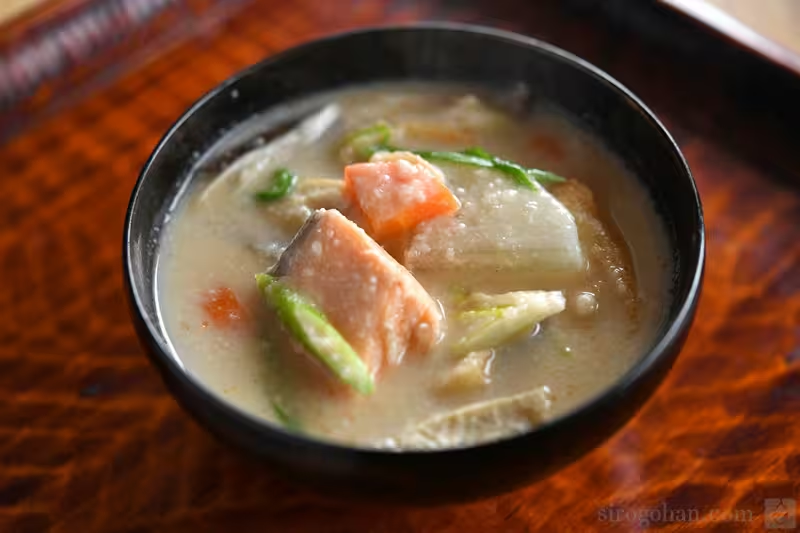
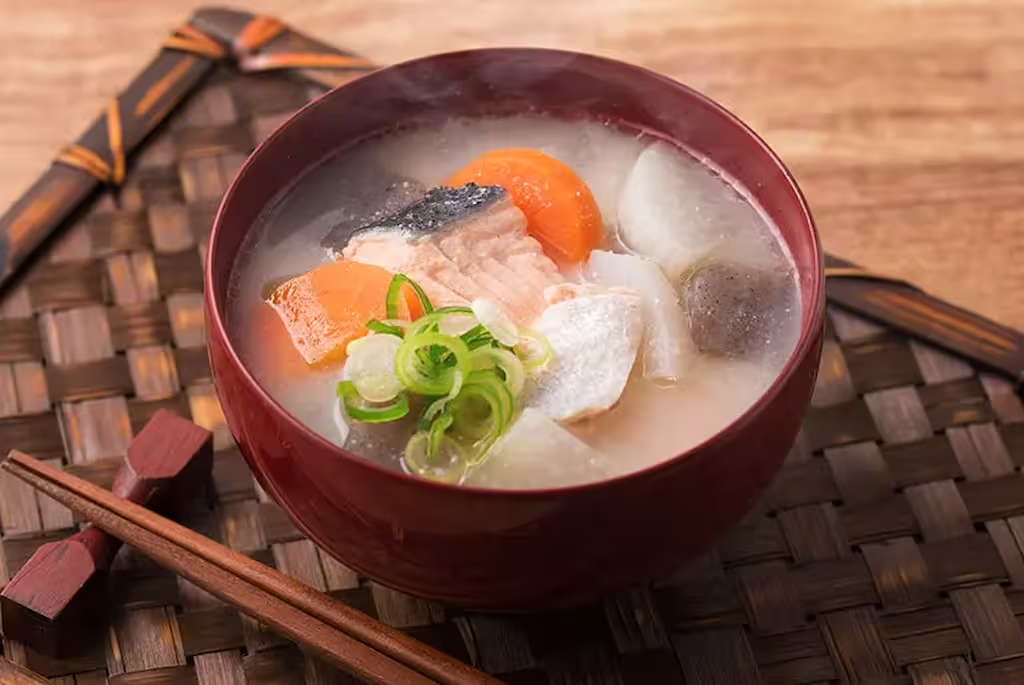
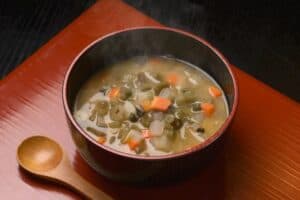
Kasujiru (粕汁) translates roughly to “lees soup.” The name says it plainly. Sake kasu is dissolved into a dashi broth. Then vegetables, protein, and sometimes a touch of miso are added. The result is something between a soup and a stew. It is not watery, not light. It coats the spoon.
The most common vegetables are daikon radish, carrot, burdock root (gobo), taro, and konjac. For protein, cooks use salted salmon or pork. Yellowtail (buri) is another popular choice in winter. Fried tofu, known as aburaage, often goes in as well. The combination sounds heavy. In the bowl, it balances beautifully.
One question people always ask: does it taste like alcohol? Not really. Most of the alcohol cooks off during simmering. What remains is a faint, fruity warmth. It is subtle. Almost floral. Nothing like drinking sake itself.
The Flavor: How Do You Describe It?
This is where things get interesting. Kasujiru has a flavor profile unlike most Japanese soups. Miso soup is savory and clean. Tonjiru is rich and hearty. Kasujiru is both, and something more.
The sake kasu brings umami, a mild sweetness, and a lightly fermented sourness. Those three things together create depth that is hard to pin down. The broth is creamy in texture without any dairy. The root vegetables soften slowly, absorbing that complex flavor. Each spoonful tastes slightly different depending on what you pick up.
It also warms the body fast. Not just the stomach. The warmth spreads. That effect is probably partly the residual alcohol, partly the thick broth itself. Either way, it works.
Where Does Kasujiru Come From?
The Kansai region is closely linked to kasujiru. This makes sense historically. Two of Japan’s most famous sake-brewing districts sit right here. Nada in Hyogo Prefecture and Fushimi in Kyoto have been producing sake for hundreds of years. Fresh sake kasu was abundant and cheap. Home cooks found a way to use it.
The spirit behind that decision has a name in Japanese: mottainai. It means something like “what a waste” — used to express regret over discarding something valuable. Sake kasu is nutritious. It contains protein, fiber, B vitamins, and amino acids. Throwing it away would have been wasteful. Turning it into a warming winter soup? Practical genius.
From those Kansai kitchens, kasujiru spread across Japan. Today it is enjoyed nationwide during winter months. But it retains its strongest identity in Osaka, Kyoto, and Hyogo. If you want to try it in its most natural setting, that is where to look.
You can also explore other warming dishes from the region, like Kappa Nabe or Negima Nabe, which share that same comforting, cold-weather spirit.
Is It Healthy?
Surprisingly, yes. Sake kasu is packed with nutrients that survive the fermentation process. It supports digestion and has been linked to immune system benefits. The vegetables in kasujiru add fiber and vitamins. The fish or pork provides protein.
It is not a light dish by any measure. But it is nourishing in a real, substantive way. This is food that was designed to get people through cold winters. It still does that job very well.
Best Time to Try It
Kasujiru is a seasonal dish. Fresh sake kasu becomes available during the brewing season, which runs from winter into early spring. That timing is no accident. The soup is made for cold days. Trying it in summer would miss the point entirely.
If you are visiting the Kansai region between December and March, look for it at local izakayas, teishoku restaurants, and even some udon shops. It does not always appear on English menus. Knowing what to ask for helps.
Also worth noting: kasujiru tastes even better the next day. Like curry or stew, the flavors deepen overnight. If you make it at home, save some.
A Specialty Spot for eating
Sakakōji Bishio (酒麹 びしを)
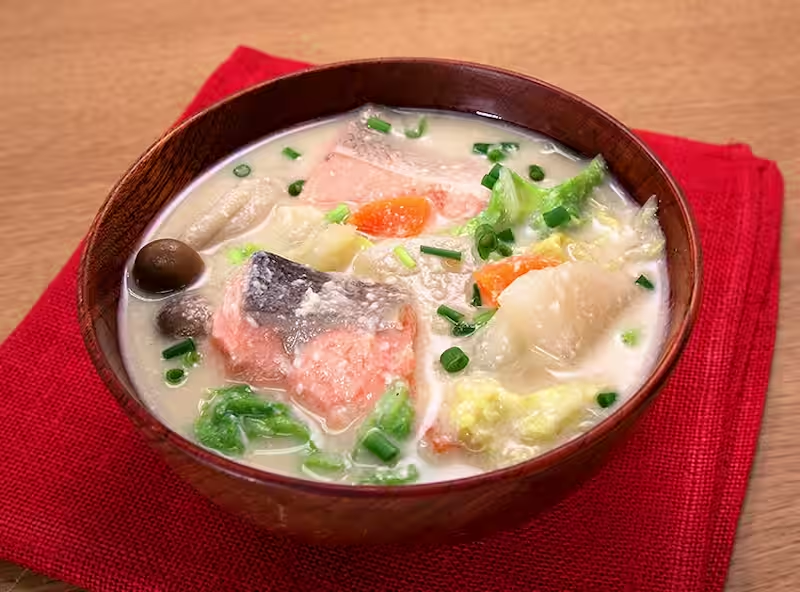
To truly enjoy the fine flavors of a sake lees dish, we highly suggest visiting a special restaurant in the Kansai area. Sakakōji Bishio (酒麹 びしを) in Kita-ku, Osaka, focuses on food that uses sake lees. This makes it the perfect place to try Kasu Jiru when it is in season. This restaurant uses high-quality fish and vegetables. They match these foods with the rich, savory notes that come from traditional sake ingredients.
Conclusion
Kasu Jiru is a delicious example of Japanese smart thinking. It turns a brewing leftover into a highly filling and deeply flavorful winter treat. It successfully mixes the complex smells of fermented rice with the pure taste of seasonal vegetables and protein. This brings deep warmth and comfort. Since the dish is only available in season, looking for it is a valuable part of the winter food experience.
For those who enjoy the hearty, warming, and comforting depth of Kasu Jiru, we recommend trying similar Japanese Kappa nabe and Negima nabe.
Kasujiru FAQ
What is Kasujiru?
Kasujiru is a traditional Japanese winter soup made by dissolving sake kasu (sake lees) into a dashi broth, usually simmered with root vegetables, fish, or pork.
What exactly is sake kasu (sake lees)?
Sake kasu is the solid, white, paste-like byproduct left over after the fermented rice mash is pressed to extract liquid sake. It is highly nutritious and rich in umami.
What does Kasujiru taste like?
It has a deep, creamy, and mildly sweet flavor with a rich, aromatic fragrance of sake. The umami from the sake lees blends with the savory dashi, creating a deeply warming and comforting taste.
Does Kasujiru contain alcohol?
Yes, raw sake kasu naturally contains about 8% alcohol. While simmering the soup evaporates most of it, a small amount may remain depending on how long it is cooked.
Can children or pregnant women eat Kasujiru?
Because a slight amount of alcohol might remain even after boiling, it is generally recommended that young children, pregnant women, and people highly sensitive to alcohol avoid eating it.
What ingredients are typically used in Kasujiru?
Common ingredients include salted salmon or yellowtail (buri), pork, daikon radish, carrots, burdock root (gobo), konnyaku, and fried tofu (aburaage).
Why is Kasujiru particularly famous in the Kansai region (Osaka and Kyoto)?
The Kansai region is home to historically famous sake-brewing districts like Nada (Hyogo) and Fushimi (Kyoto). Because fresh, high-quality sake kasu was easily available, the soup became a staple of local winter home cooking.
What is the difference between Kasujiru and Tonjiru?
Tonjiru is a pork and vegetable soup flavored purely with miso. Kasujiru shares many of the same root vegetables but uses a large amount of sake lees as the primary flavor base, often combined with a little miso or soy sauce.
What is the best season to eat Kasujiru?
Winter is the absolute best time. Fresh sake lees become available from winter to early spring during the sake brewing season, and the rich, thick soup is perfectly designed to warm the body on cold days.
Is Kasujiru healthy?
Yes, it is highly healthy. Sake lees are packed with protein, fiber, B vitamins, and amino acids. Fermented foods like sake kasu are also known to promote good digestion and boost the immune system.
What kind of fish is best for Kasujiru?
Salted salmon (shiozake) and yellowtail (buri) are the most traditional choices. The saltiness and rich fat from the fish perfectly balance the slight sweetness of the sake lees.
How do you season the broth for Kasujiru?
Cooks typically start with a standard bonito or kelp dashi, then dissolve a generous amount of sake kasu into it. To balance the flavor, they usually add a small amount of white miso or soy sauce.
Does Kasujiru taste better the next day?
Yes. Much like curry or stews, the flavors in Kasujiru meld and deepen overnight. Many locals actually prefer eating the reheated “second-day Kasujiru” because it becomes richer, thicker, and milder.
What condiments go well with Kasujiru?
Diners frequently top the soup with chopped green onions (negi), a sprinkle of Shichimi Togarashi (seven-spice blend), or a dash of grated ginger to add a sharp, refreshing kick.
Where can I eat Kasujiru in Osaka or the Kansai region?
During the winter months, you can find Kasujiru at traditional izakayas, local set-meal diners (teishoku-ya), and udon shops throughout Osaka, Kyoto, and Hyogo. It is truly a seasonal local soul food.




Comments