





Saga Beef is premium Japanese wagyu from Japanese Black cattle raised by farms within the JA Group Saga area. Only carcasses graded 5, or grade 4 with a Beef Marbling Standard score of No.7 or higher, qualify for the name. Grade 4 carcasses with BMS No.6 or lower, together with grades 3 and 2, are marketed separately as Saga Wagyu.
The brand comes from Saga Prefecture in Kyushu and dates from 1984. This guide explains the grading rules, the history, the taste, and real Saga Beef price examples. It also covers where to eat Saga Beef and how it compares with Kobe beef.
What Is Saga Beef?
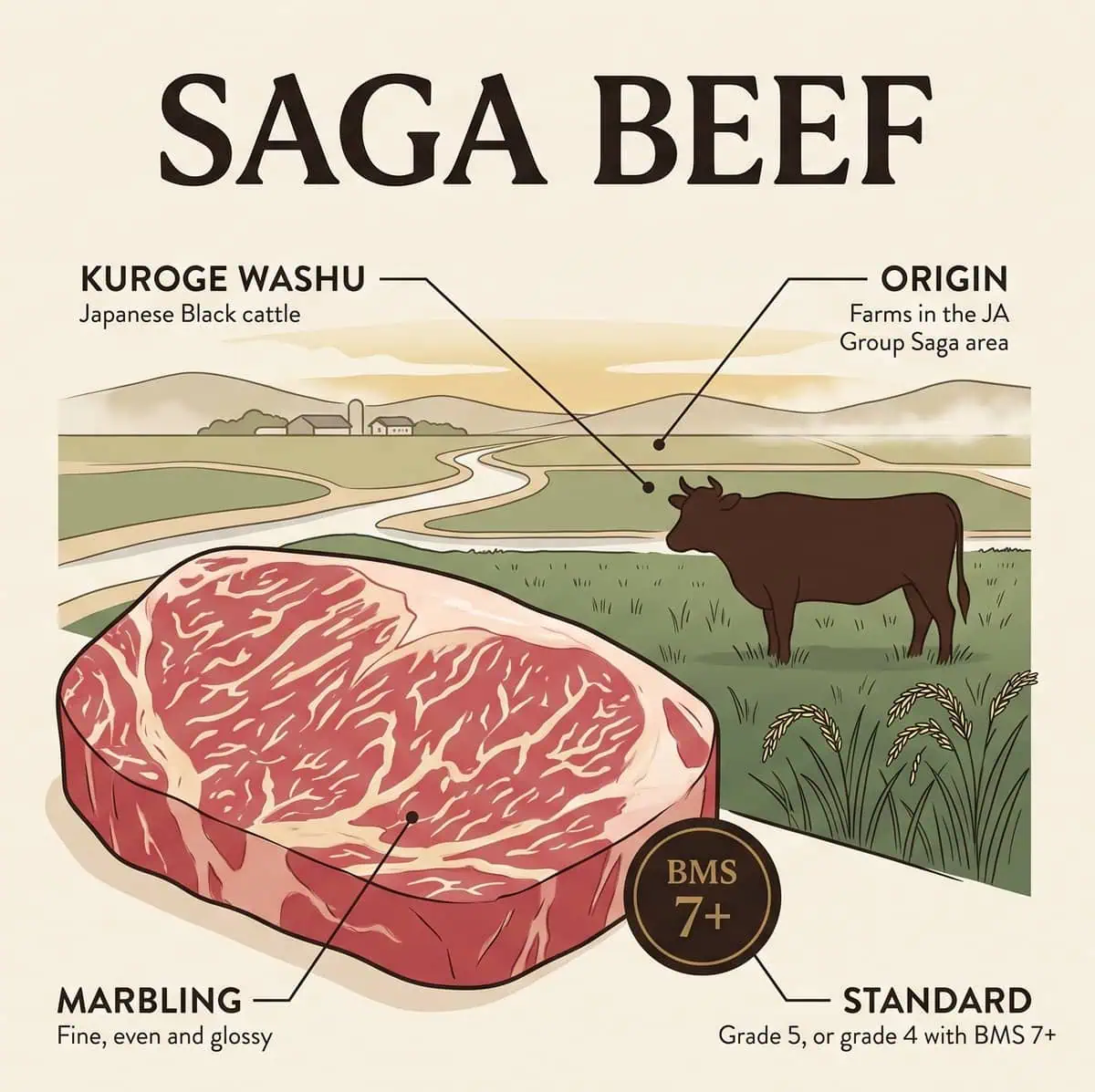
In short, Saga Beef is JA Group Saga’s premium Japanese Black beef label. Graders judge it carcass by carcass after slaughter. Therefore, the name works as a quality label, not just a place name. The lower tier, Saga Wagyu, appears on menus as Saga-san Wagyu (佐賀産和牛).
Quick Facts: Saga Beef
- Japanese name
- 佐賀牛 (Saga-gyu)
- Breed
- Japanese Black cattle (Kuroge Washu)
- Production area
- Farms within the JA Group Saga area, Saga Prefecture
- Required grade
- Quality grade 5, or grade 4 with BMS No.7 or higher
- Brand launched
- 1984, first sold at the Osaka City meat market
- Trademark
- Registered in 2000
- Typical dishes
- Steak, sukiyaki, shabu-shabu, yakiniku
- Lower-grade label
- Saga Wagyu (佐賀産和牛)
- Share that qualifies
- 85.2% of JA Group Saga shipments in fiscal 2024
- Retail price guide
- About ¥1,300 to ¥2,500 per 100 g, as of October 9, 2026

New to Japanese beef? Our Wagyu hub explains the basics, and the Saga Prefecture page lists more local dishes.
How Is Saga Beef Certified?
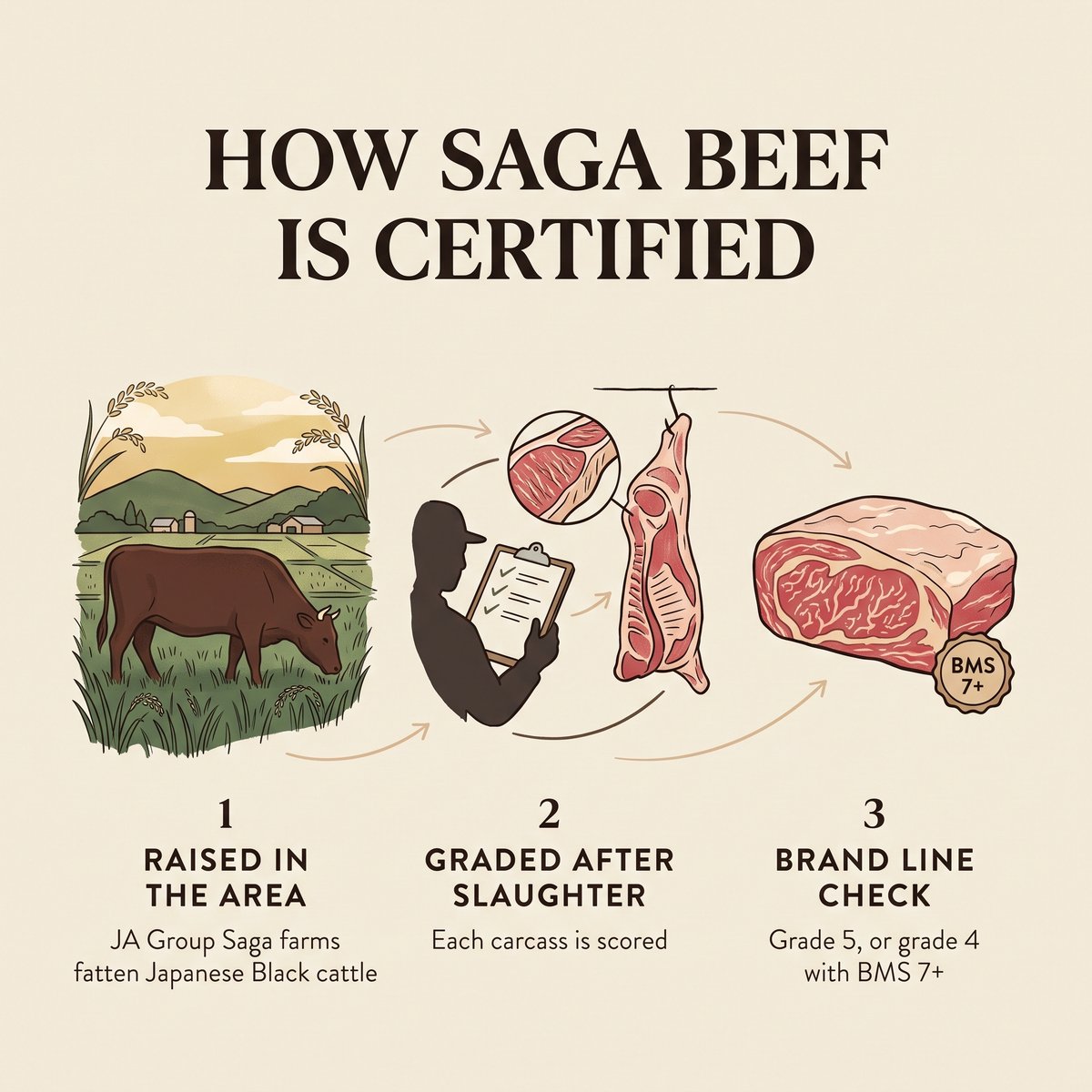
Saga Beef is certified in three steps: origin, national grading, and a brand marbling check. Only beef meeting strict standards earns the name Saga Beef. Because the check happens after slaughter, nobody knows the result in advance.

Three Steps to the Saga Beef Name
- Raised in the designated area. Farmers in the JA Group Saga area fatten Japanese Black cattle.
- Graded after slaughter. Graders from the Japan Meat Grading Association score each carcass.
- Checked against the brand line. Grade 5, or grade 4 with BMS No.7 or higher, becomes Saga Beef.
Carcasses that miss the line are still good wagyu. However, they carry the Saga Wagyu label, which covers grade 4 at BMS No.6 or lower, plus grades 3 and 2. Shops and menus may use either name, so read labels carefully.
The Beef Grading System in Plain Words
Japan’s beef grading system uses a letter and a number. The letter, A to C, shows yield, meaning how much usable meat the carcass gives. Meanwhile, the number, 1 to 5, shows meat quality.
Graders judge quality on four factors: marbling, meat color, firmness and texture, and fat color and quality. The lowest of the four sets the final number. Therefore, a carcass with superb marbling can still drop a grade because of dull meat color. A5 describes a carcass on paper. It does not promise that you will enjoy it more.
What Is BMS?
BMS stands for Beef Marbling Standard. It runs from No.1 to No.12, and graders read it at the grading surface between the sixth and seventh ribs. In other words, it indicates the degree of intramuscular fat visible in the loin. It does not directly measure flavor, tenderness, or health value.
| Meat quality grade | BMS range | Saga label |
|---|---|---|
| 5 | No.8 to No.12 | Saga Beef |
| 4 | No.7 to No.12 | Saga Beef |
| 4 | No.5 to No.6 | Saga Wagyu |
| 3 | No.3 to No.4 | Saga Wagyu |
| 2 | No.2 | Saga Wagyu |
What Is Wagyu Marbling?
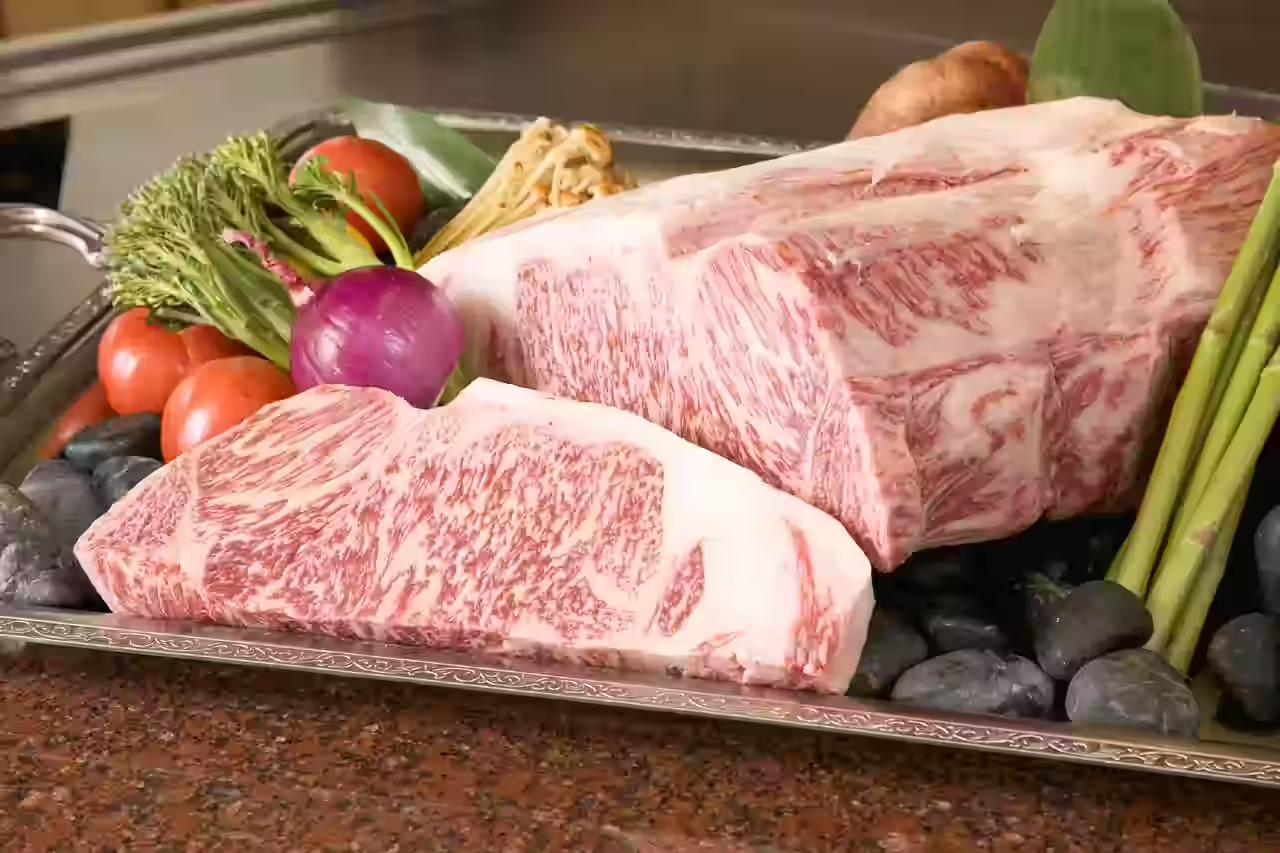
Wagyu marbling is the web of white fat inside the red muscle. In Japanese, it is called sashi. The official Saga Beef brand uses the promotional expression tsuya-sashi, meaning “glossy marbling,” for its fine marbled appearance.
Japanese Black is one of Japan’s four recognized Wagyu breeds. Our Kuroge Wagyu article explains how “wagyu,” “domestic beef,” and brand beef differ.
What Makes Saga Beef Special?
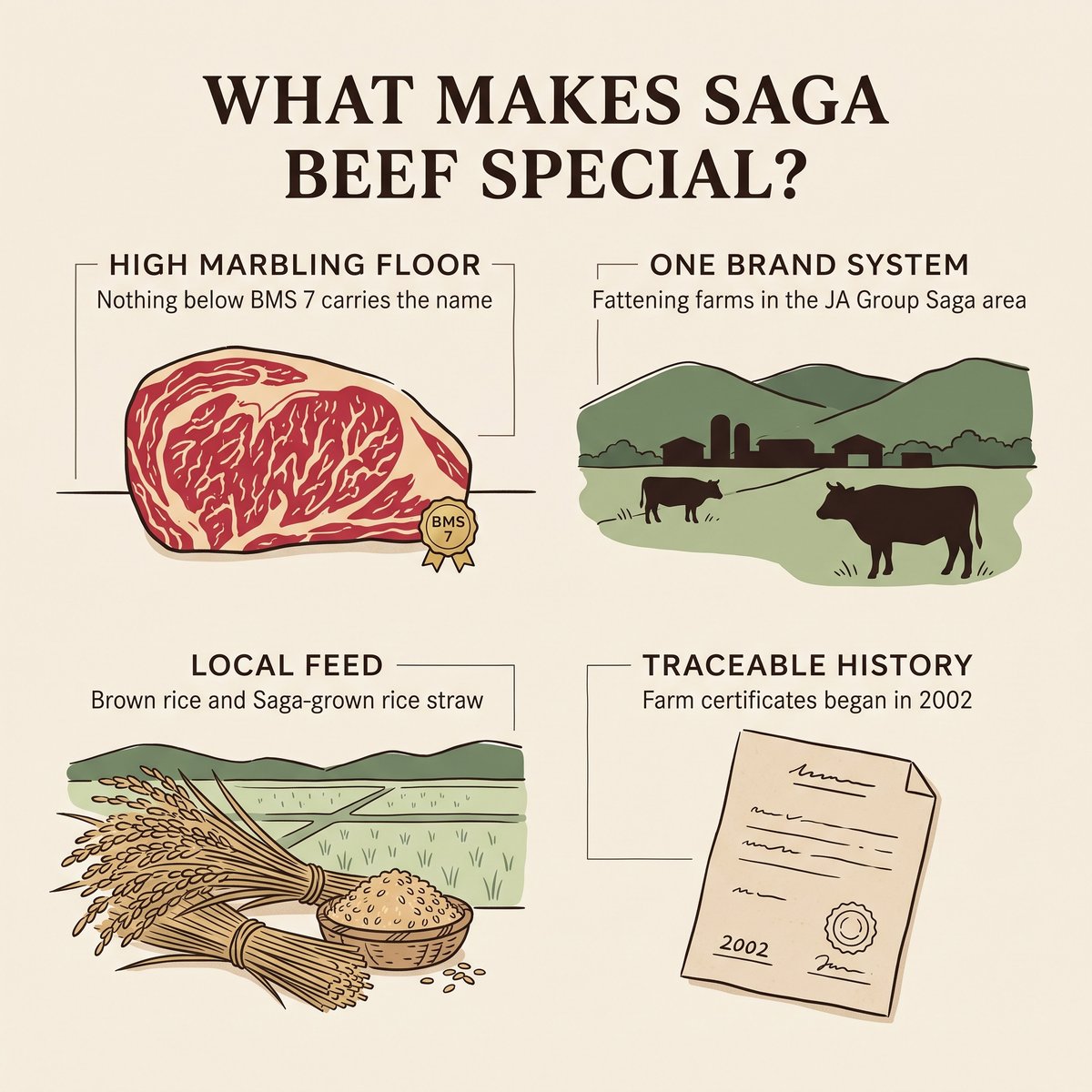
The short answer is consistency. Because the brand demands BMS No.7 at minimum, every cut sold as Saga Beef clears a high marbling floor. The longer answer involves the farms themselves.
A high marbling floor
Nothing below BMS No.7 can carry the name.
One brand system
Fattening farms within the JA Group Saga area supply it.
Local feed
The feed includes brown rice and Saga-grown rice straw.
Traceable history
Farm certificates with production history began in 2002.
Where Is Saga Beef Produced?
Farmers raise Japanese Black cattle across Saga Prefecture, in northwestern Kyushu. However, location alone is not enough, because the farm must sit within the JA Group Saga area. The prefecture counted 478 beef cattle farms and 50,800 head as of February 1, 2025. Those figures cover all beef cattle, so they are not a Saga Beef headcount.
Raising Environment and Feed
JA Saga describes low-stress rearing and its own blended feed. The official site lists the main ingredients, including corn, barley, bran, brown rice, and rice bran. It also describes rice straw dried in Saga’s paddies after harvest. However, it does not publish the precise proportions or a farm-by-farm feeding schedule.
Older write-ups credit “clean water and fresh air” for the flavor. It sounds nice, though it explains very little. The official sources place more concrete emphasis on feed formulation, feeding methods, low-stress management, and skilled fattening.
Production Numbers
How much Saga Beef is produced? According to Saga Prefecture’s January 2026 livestock report, JA Group Saga shipped 16,654 cattle in fiscal 2024. Of those, 14,194, or 85.2%, qualified as Saga Beef. The share has risen every year since fiscal 2019, when it stood at 67.7%.
History of Saga Beef
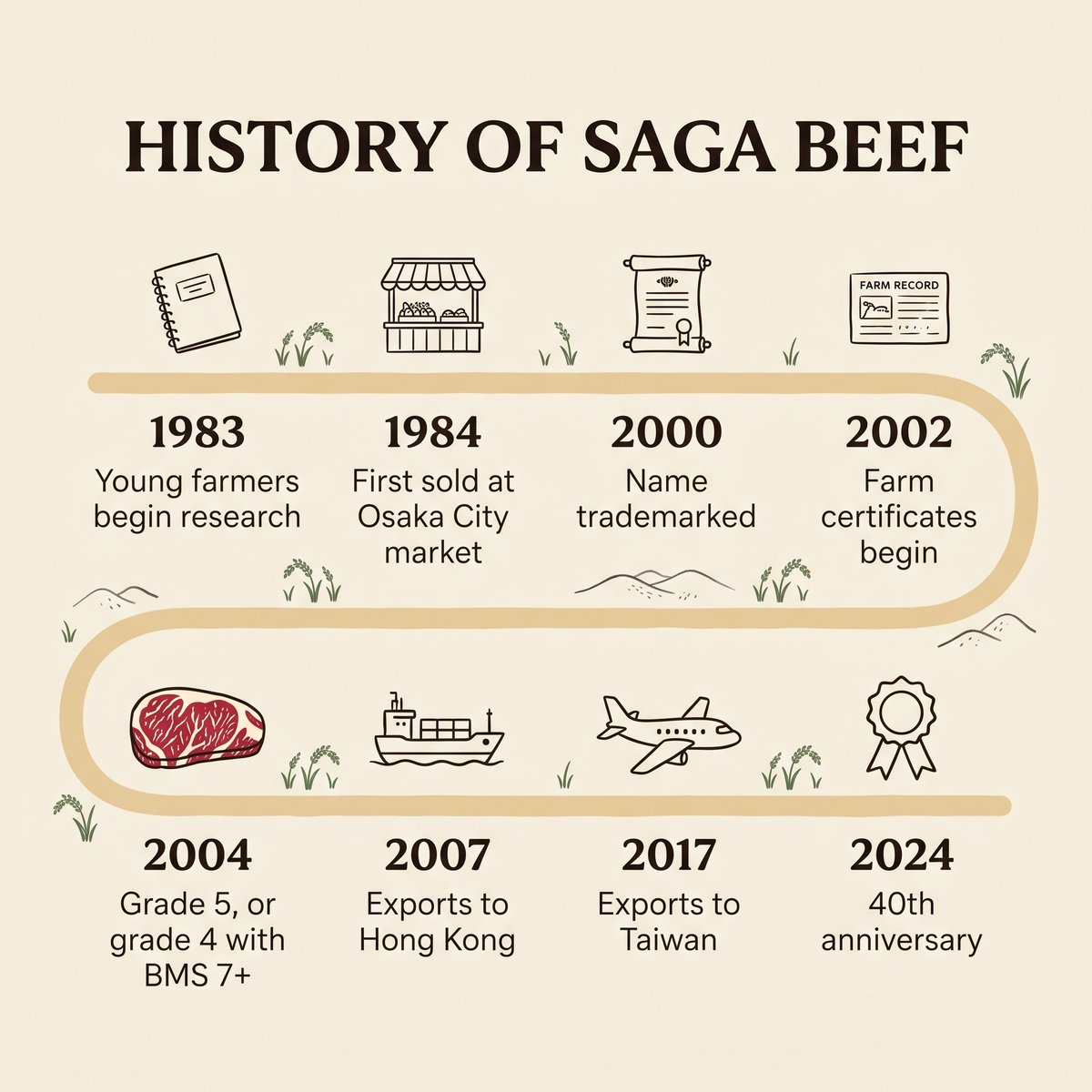
Saga Beef is younger than most people expect. The Saga Beef brand was established in 1984, which makes it a newcomer beside Kobe or Omi.

From a Study Group to a Brand
The groundwork began in 1983. That year, a group of young fattening farmers started studying how to raise better beef. A year later, they named the result Saga Beef and sold it at the Osaka City meat market, with stickers on each carcass. The official history does not explain why Osaka was chosen, but that market became the launch point for the name.
Growth then came in steps. Producers trademarked the Saga Beef name in 2000. After that, the standard changed in 2004, when the brand widened to include grade 4 carcasses with BMS No.7 or higher. In other words, the current rule dates from that year.
- 1983Young farmers begin quality research.
- 1984The Saga Beef name appears at the Osaka City meat market.
- 2000Word trademark registered.
- 2002Farm certificates with production history begin.
- 2004Current standard adopted (grade 5, or grade 4 with BMS No.7+).
- 2007Exports to Hong Kong start.
- 2017Exports to Taiwan start.
- 2024The brand marks its 40th anniversary.
Exports and Recognition Overseas
Exports began with Hong Kong in June 2007. The United States followed in 2008, then Singapore in 2011, Thailand in 2013, the Philippines in 2014, Vietnam in 2015, and Taiwan in 2017. More recently, the prefectural meat center KAKEHASHI entered full operation in June 2023. According to the prefecture, it began exporting to the United States in July 2024.
What about awards? We looked for a verified list of international prizes and found none we could confirm, so we will not claim any. JA Saga does note one moment of prestige. In 2017, the State Guest House served Saga Beef at a dinner for the visiting U.S. president.
What Does Saga Beef Taste Like?
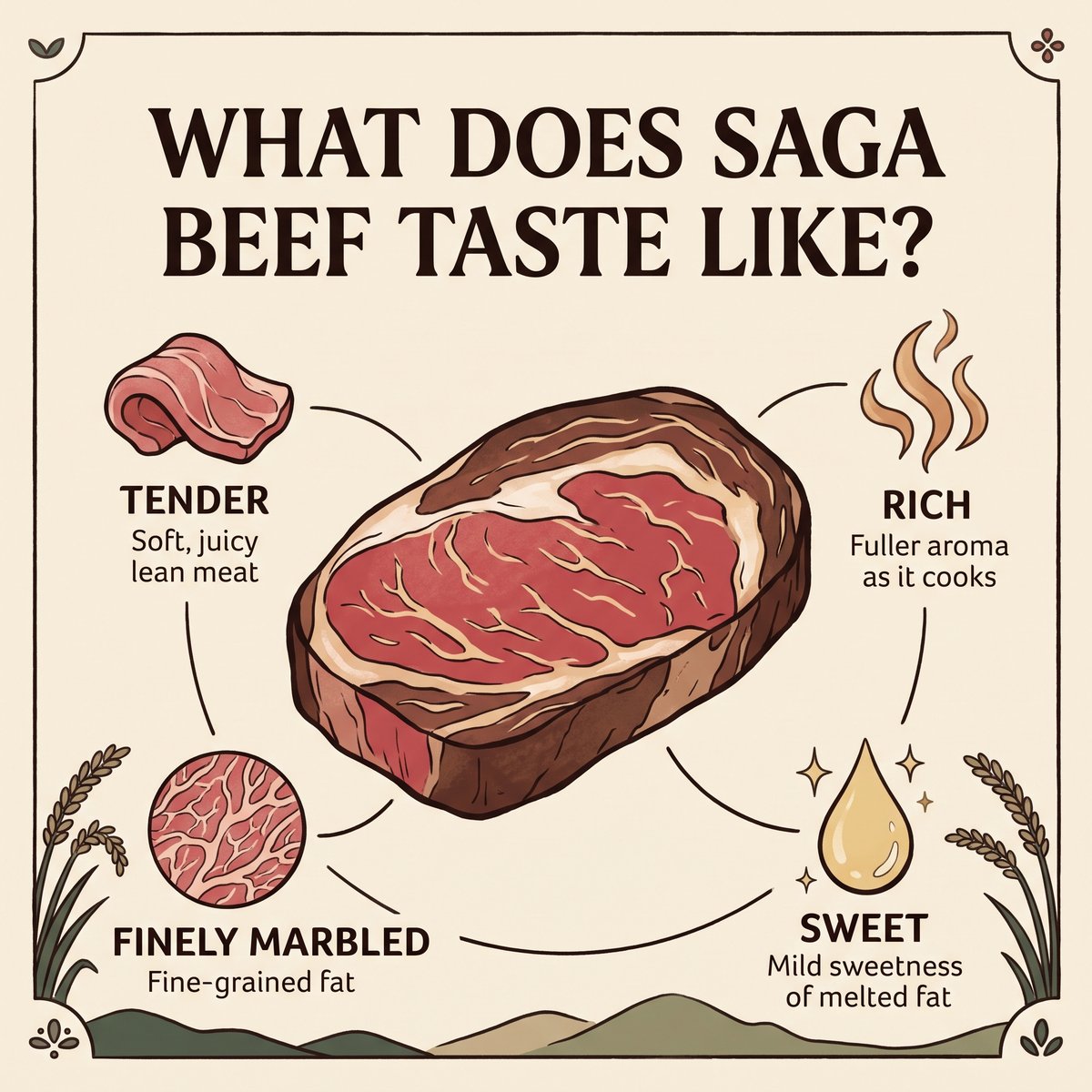
JA Saga describes Saga Beef as tender, finely marbled, sweet, and rich. Those four words cover what the brand promises on the plate.

Flavor and Aroma
Saga Beef develops a richer flavor as it cooks and releases its marbled fat. As the fat melts, it adds juiciness and a fuller aroma. Seasoning should stay simple for that reason. Salt, a little wasabi, or light soy sauce is usually enough.
Texture and Mouthfeel
The official description stresses tender lean meat and fine-grained fat. But why does marbled beef feel so smooth? A 2021 review in Nihon Chikusan Gakkaiho, a Japanese animal science journal, offers one explanation. Wagyu fat tends to hold more monounsaturated fatty acids and to melt at a lower temperature. The review links that low melting point to smooth mouthfeel and juiciness. That research covers wagyu in general, not Saga Beef alone.
Is it for everyone? Perhaps not. Some diners find heavily marbled beef too rich after a few slices, and that reaction is fair.
Saga Beef vs Kobe Beef and Matsusaka Beef
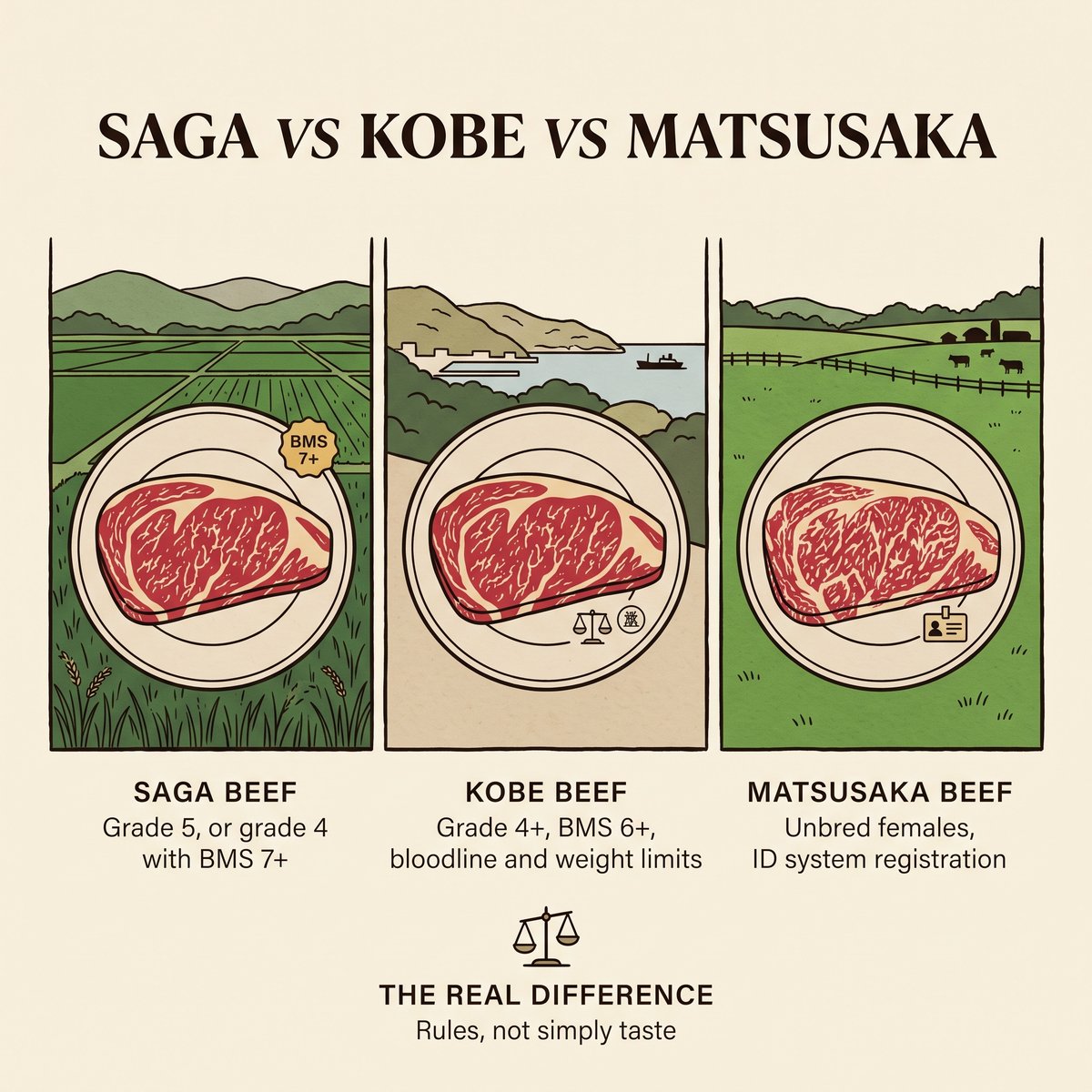
Saga Beef asks for BMS No.7 or higher, while Kobe beef asks for BMS No.6 or higher plus bloodline and weight limits. Matsusaka beef uses a different system again. So the Saga Beef vs Kobe beef question is really about rules, not about which one tastes better.
| Item | Saga Beef | Kobe Beef | Matsusaka Beef |
|---|---|---|---|
| Region | JA Group Saga area, Saga | Hyogo Prefecture | Designated area in Mie |
| Cattle | Japanese Black | Tajima cattle, heifers (unbred females) or steers | Japanese Black, unbred females |
| Quality rule | Grade 5, or grade 4 with BMS No.7+ | Grade 4+, BMS No.6+ | No brand-wide BMS line in the definition |
| Other rules | Fattening farms within the JA Group Saga area | Yield A or B; carcass 270 to 499.9 kg (females) or 300 to 499.9 kg (steers) | ID system registration, entry by 12 months |
Saga Beef sets its minimum BMS at No.7, compared with No.6 for Kobe beef. However, Kobe beef adds bloodline, sex, yield, and carcass-weight conditions. Matsusaka beef, by contrast, focuses on unbred females and individual tracking. Likewise, Omi beef and Yonezawa beef follow their own regional rules.
How to Eat Saga Beef
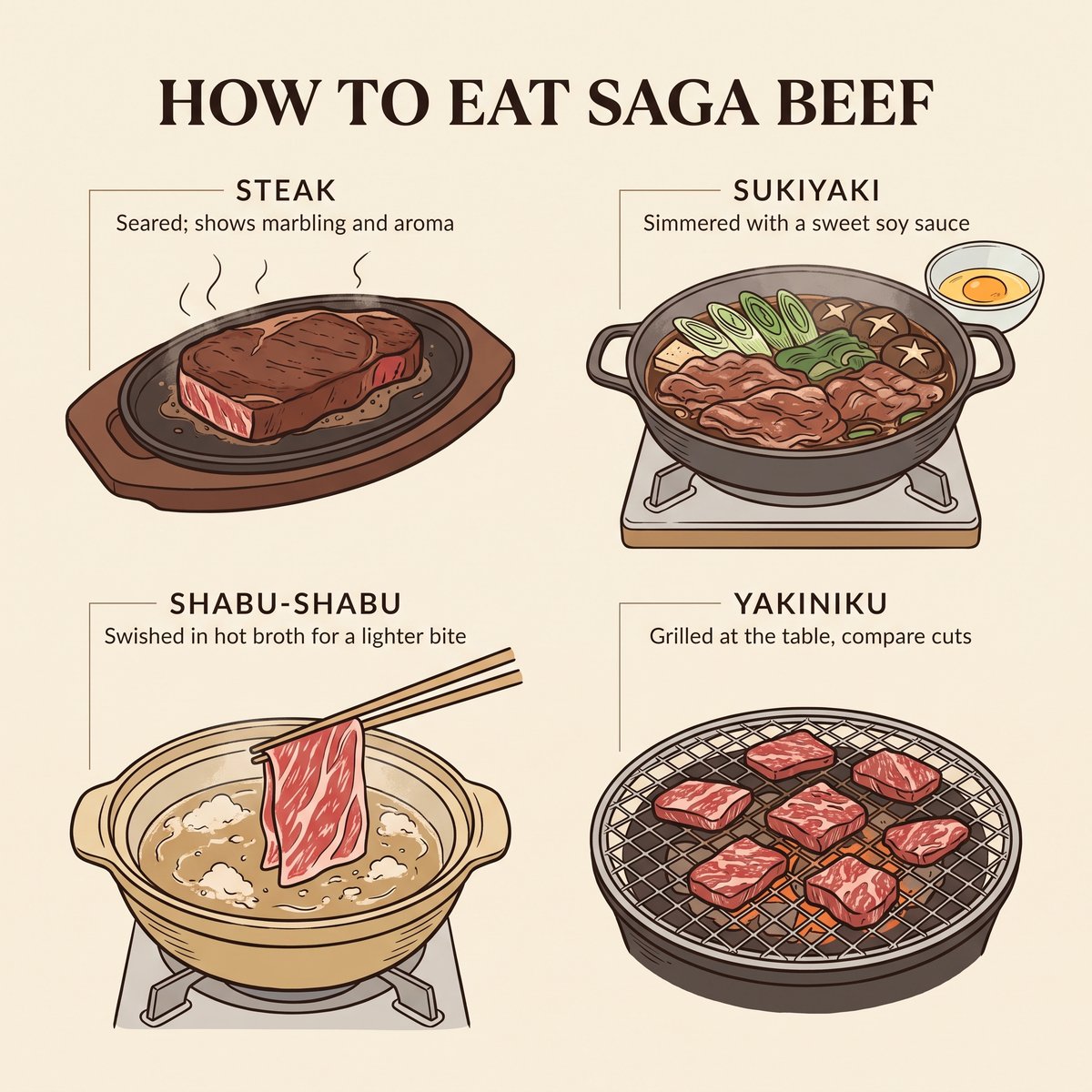
Steak, sukiyaki, shabu-shabu, and yakiniku are the four classic styles. Each one treats the fat differently.
Steak
Seared on an iron plate. Highlights the marbling and seared aroma.
Sukiyaki
Simmered and served with egg. Pairs the beef with a sweet soy-based sauce.
Shabu-shabu
Swished through hot broth. Offers a lighter preparation.
Yakiniku
Grilled at the table. Lets diners compare several cuts.
Saga Beef Steak

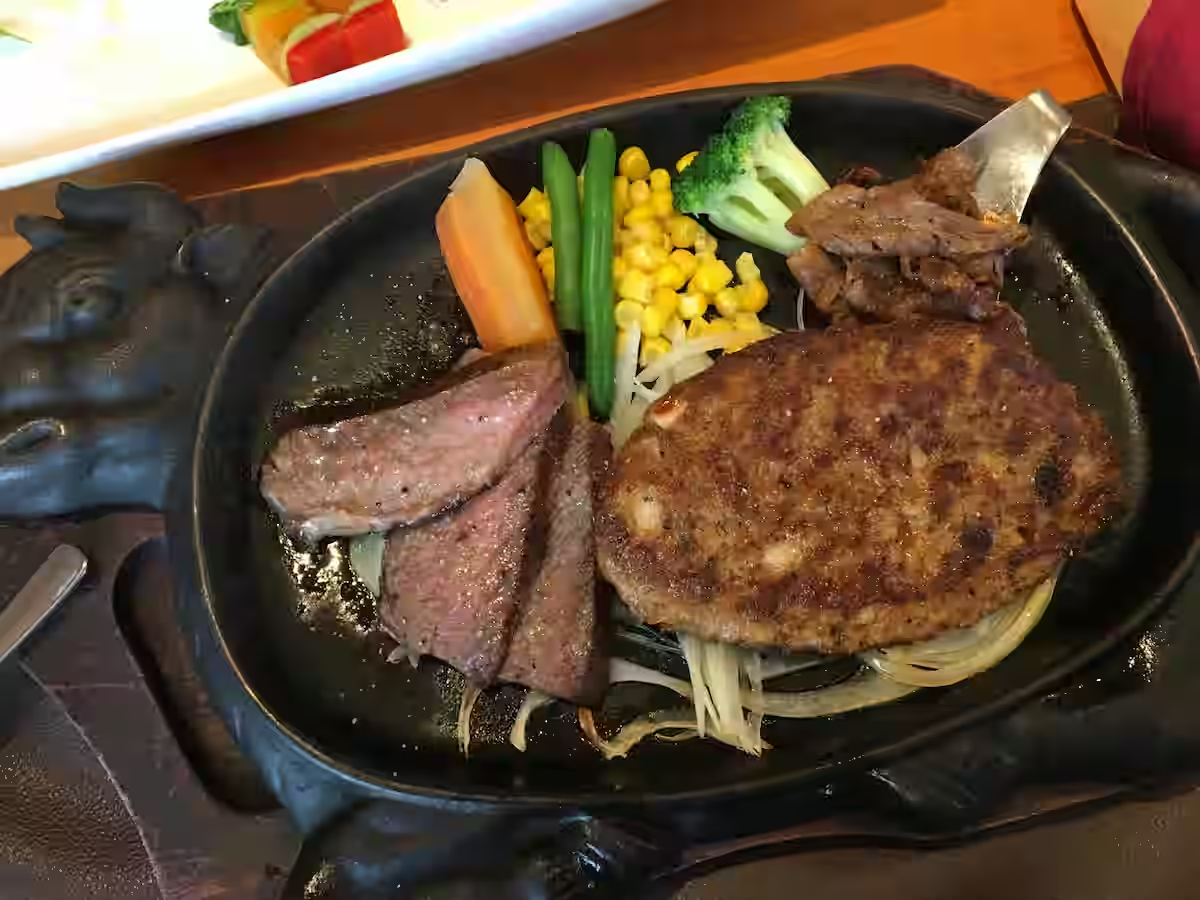
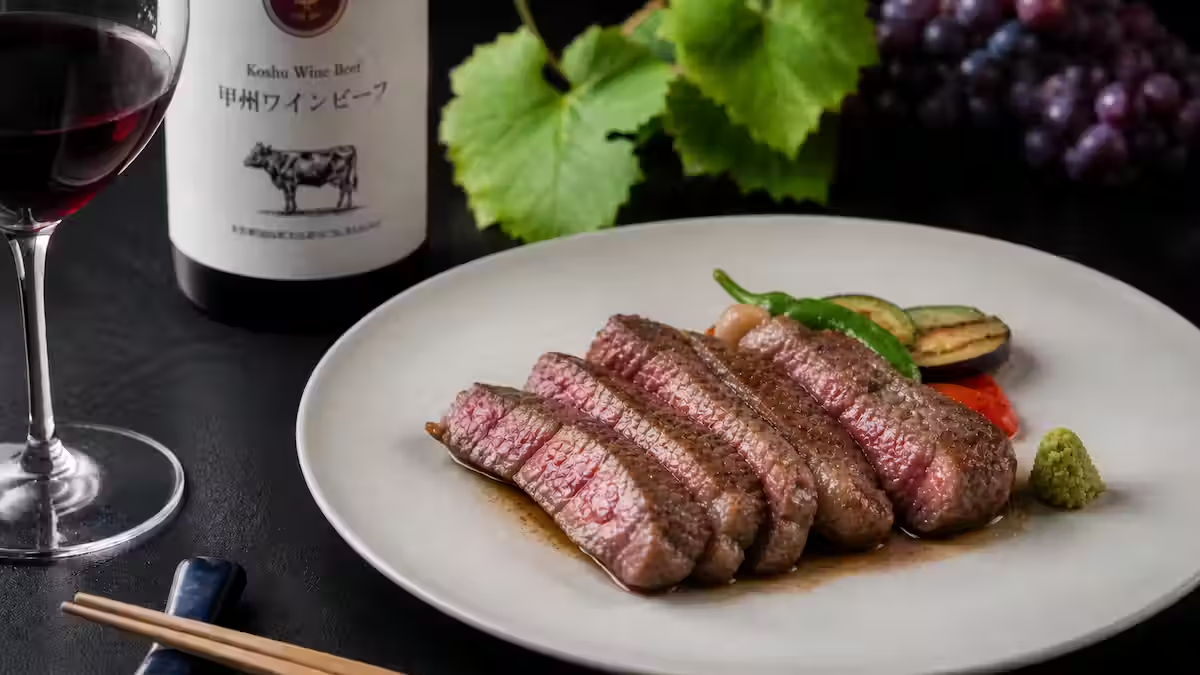
Sirloin and fillet are the best-known choices for Saga Beef steak. Sirloin shows off the marbling, while fillet is leaner and softer. Kira Honten, for example, serves it at a teppanyaki counter. Many diners prefer it medium-rare, so the marbling softens without rendering out too much fat.
Sukiyaki
In sukiyaki, thin slices simmer in a sweet soy-based sauce. In Japan, it is commonly served with raw beaten egg. Diners who prefer not to eat raw egg can enjoy the beef without it. For first-time diners, sukiyaki is an accessible way to see how marbling changes texture and richness.
Shabu-shabu

Shabu-shabu works differently. You swish each slice through hot broth for a few seconds, then dip it in ponzu or sesame sauce. Since the meat cooks in broth, not in its own fat, many diners find it lighter.
Yakiniku
Yakiniku means grilling bite-size cuts at the table. It lets you try several cuts in one meal, such as loin and short rib. Looking for a local drink to go with it? Our Saga sake guide covers the prefecture’s breweries.
Saga Beef Price
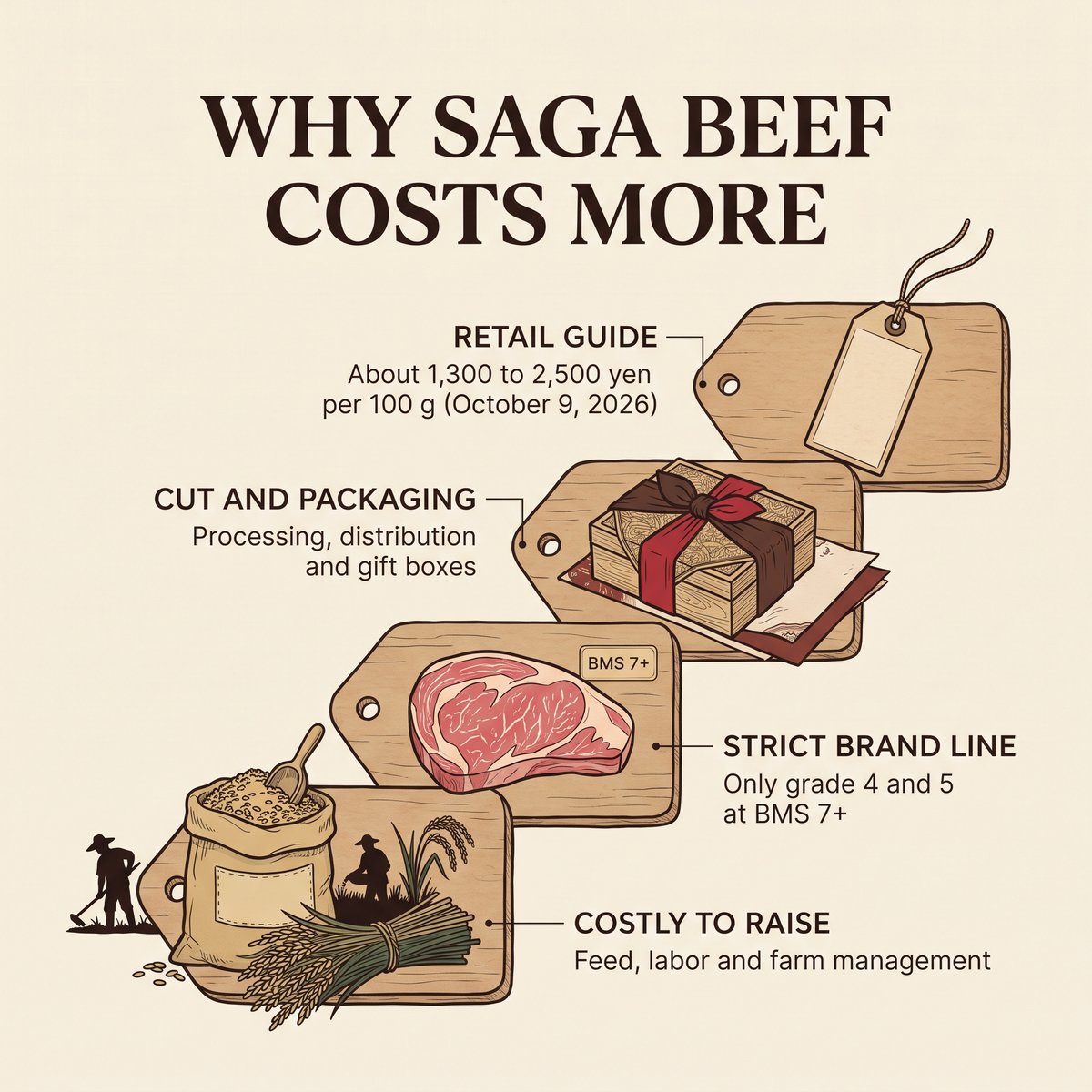
Retail packs on the JA online shop worked out to roughly ¥1,300 to ¥2,500 per 100 g. We checked those listings on October 9, 2026, and prices move often.
Saga Beef Price at Retail
| Product (JA Town) | Weight | Price, tax included |
|---|---|---|
| Loin steak, 2 pieces | About 400 g | ¥9,600 to ¥10,100 |
| Yakiniku set | About 600 g | ¥7,680 |
| Chuck loin in a wooden box | 400 g | ¥7,220 |
| Loin slices | 400 g | ¥9,600 |
Saga Beef Price at Restaurants
At Yorankan, a JA Group Saga restaurant, the dinner menu listed a sirloin steak course at ¥7,800. Sukiyaki and shabu-shabu were ¥6,500 per person, and a plate of loin for yakiniku was ¥4,380. Those are tax-included prices as of October 9, 2026, and they may change.
Why Is Saga Beef Expensive?
The price cannot be explained by the qualification rate alone. Instead, several production and retail costs add up. First, raising and fattening premium wagyu requires substantial feed, labor, and farm management costs. Second, the brand accepts only grade 4 and 5 carcasses at BMS No.7 or higher. Third, cut, processing, distribution, and gift packaging all raise the final price.
Where to Eat Saga Beef
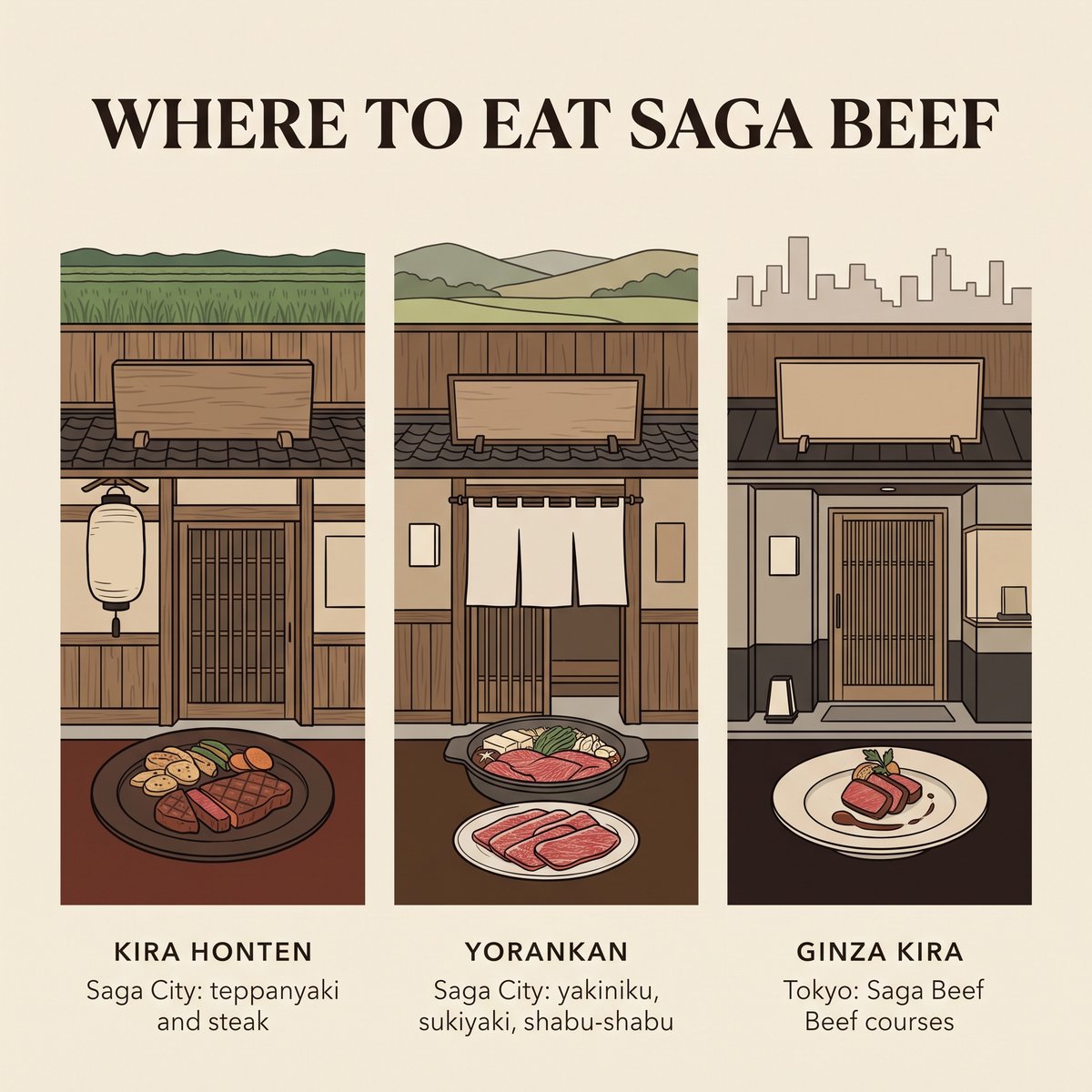
JA Group Saga’s own restaurants are a reliable starting point for visitors. Its Saga Beef restaurants include Kira Honten and Yorankan in Saga City, and Ginza Kira in Tokyo.
| Restaurant | Area | Main styles |
|---|---|---|
| Kira Honten | Saga City, Otakara | Teppanyaki, steak, yaki-shabu |
| Yorankan | Saga City, Kubota | Yakiniku, steak, sukiyaki, shabu-shabu |
| Ginza Kira | Tokyo, Ginza | Saga Beef courses |
Each address below links to Google Maps. Hours and closing days change, so please confirm on the official site or by phone before you go.
Kira Honten (佐賀牛レストラン 季楽 本店)

Kira opened in Saga City’s Otakara district in 1993. Saga’s tourism federation describes a teppanyaki counter and a signature dish called yaki-shabu. That dish is lightly seared Saga Beef eaten with ponzu.
Yorankan (与羅ん館)

Yorankan is another JA Group Saga restaurant, opened in 2005. It leans toward yakiniku, but it also serves steak, sukiyaki, and shabu-shabu.
Reservation Tips for Travelers
Book ahead where you can, and ask whether a course uses Saga Beef or Saga Wagyu. Saga’s official tourism site also promotes a Saga Beef dining coupon priced at ¥3,900, as of October 2026. Advance booking with a participating restaurant is required. Availability periods vary, so check the official booking page before planning a visit.
How to Buy and Cook Saga Beef
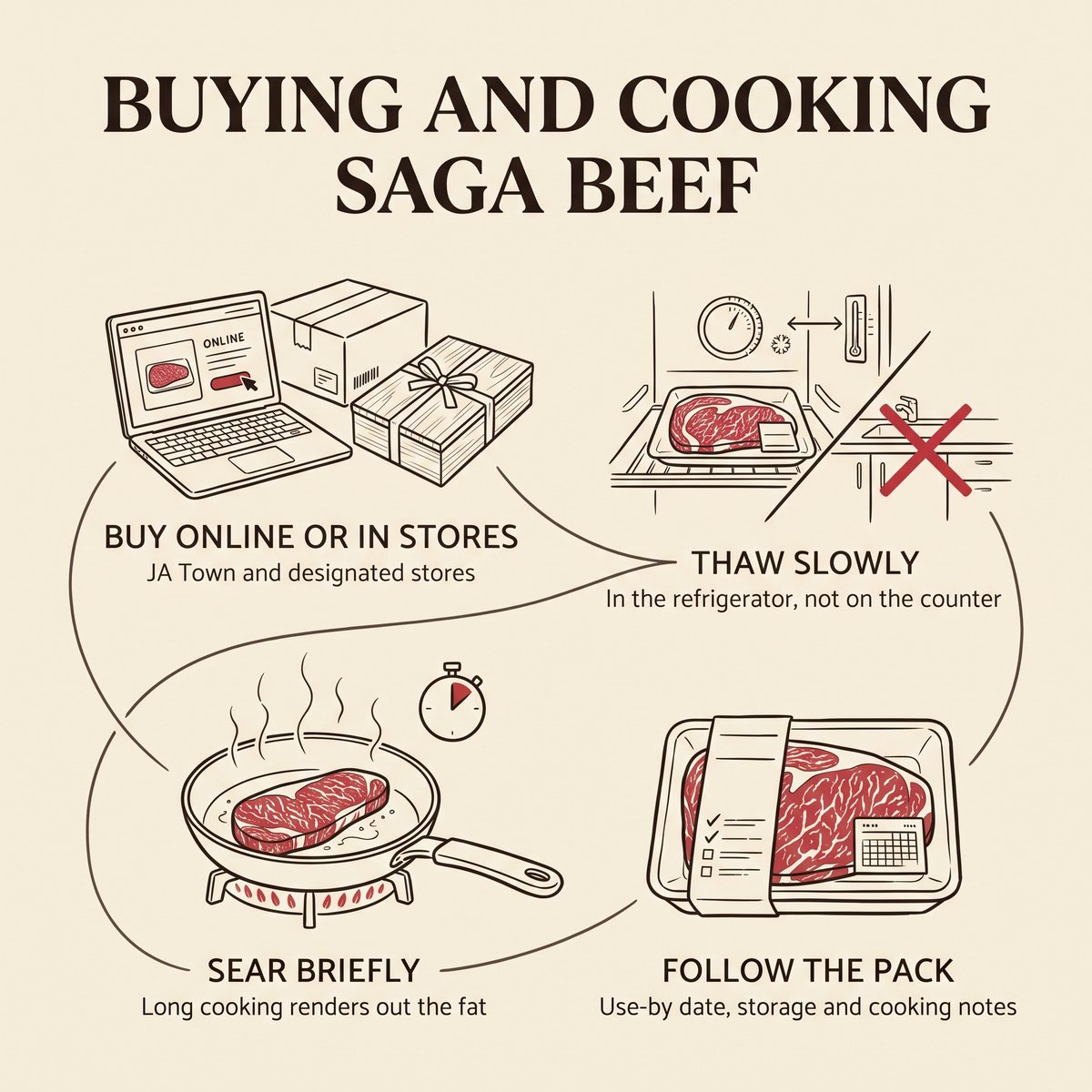
In Japan, you can order Saga Beef online or buy it from designated stores. At home, short cooking and light seasoning suit it.
Buying Saga Beef Online and as a Gift
JA sells Saga Beef through JA Town, its national online mall. The brand also runs a designated-store system, which passed 1,000 stores in 2018. In Japan, premium beef is a common formal gift, which explains the wooden boxes in the listings above. For overseas travelers, however, taking raw beef home may be difficult because many countries restrict meat imports.
Cooking and Storage
- Follow the use-by date and storage temperature printed on the pack.
- Thaw frozen beef slowly in the refrigerator, not on the counter.
- Sear steak briefly, because long cooking can render out much of the fat.
- Follow the seller’s handling and cooking instructions, especially for diced or pre-cut products.
Is Saga Beef Healthy? Nutrition Notes
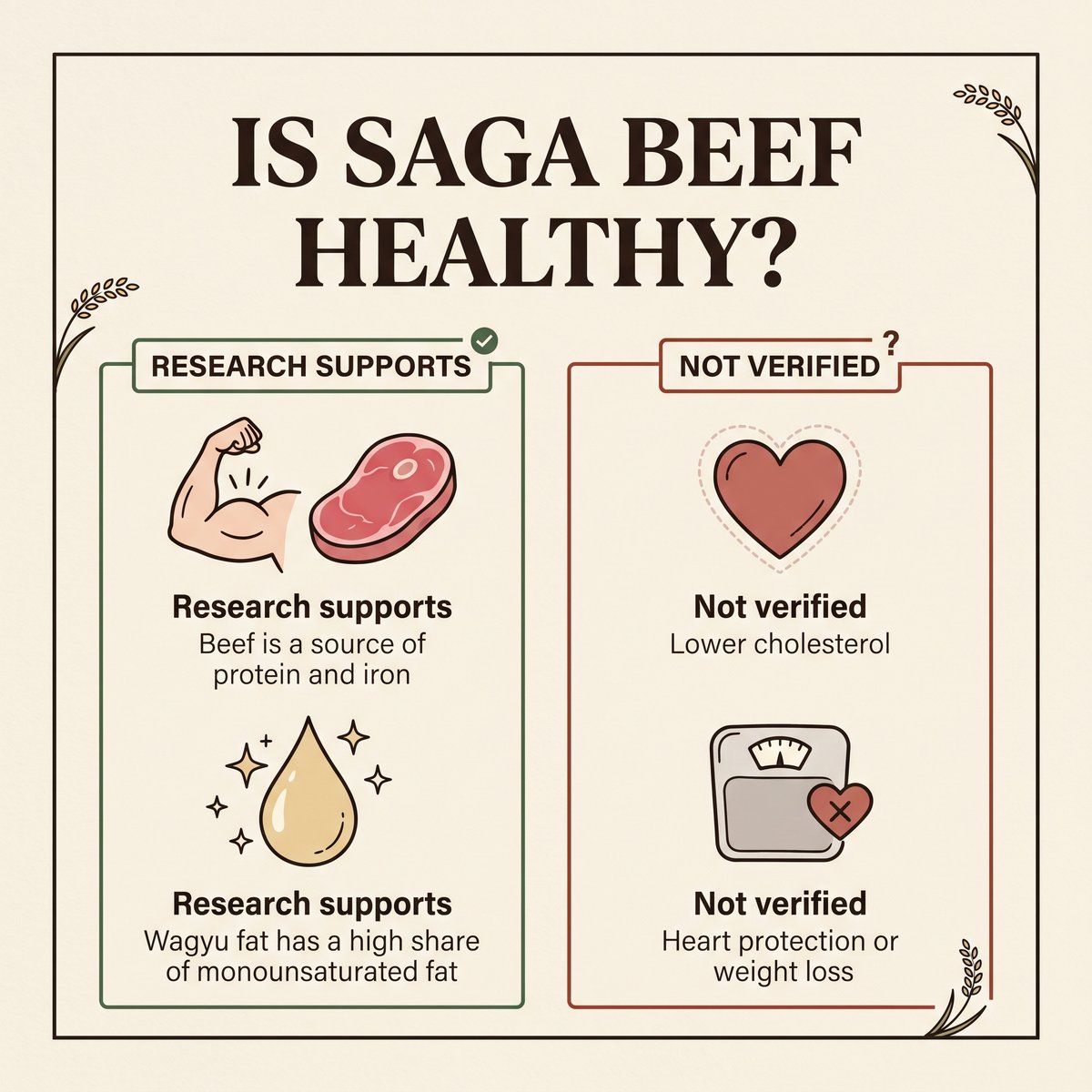
Like other beef, Saga Beef is a source of protein and iron. However, marbled cuts are also high in fat and calories. Searches for “Saga Beef health benefits” turn up bold claims, and we could not verify them.
Research on wagyu generally reports a relatively high proportion of monounsaturated fatty acids in its fat, including oleic acid. That finding relates to texture and melting point. We found no study testing Saga Beef itself for health effects.
What research supports
- Beef is generally a source of protein and iron.
- Wagyu research generally reports a relatively high proportion of monounsaturated fatty acids.
- A lower melting point gives a smoother mouthfeel.
What we could not verify
- Lower cholesterol from eating Saga Beef.
- Protection against heart disease.
- Help with weight loss.
So how should you think about it? Treat it as an occasional pleasure, not a health food. Anyone managing a medical condition should follow advice from a qualified healthcare professional.
Final Thoughts
Saga Beef is a young brand with a clear rule, so the label tells you what marbling to expect. Whether that richness suits you is a personal matter, and a small first order is a fair way to find out.
Keep reading: compare other brands in our premium beef collection, learn the basics in Wagyu beef, or plan a trip with our Saga Prefecture food guide.
Saga Beef FAQ
Basics and Grading
- What is Saga Beef?
-
Saga Beef is a certified wagyu brand from Saga Prefecture. Farms in the JA Group Saga area raise the Japanese Black cattle. The carcass must reach quality grade 5, or grade 4 with BMS No.7 or higher. Qualifying carcasses below the Saga Beef standard are marketed separately as Saga Wagyu.
- How is Saga Beef graded?
-
The Japan Meat Grading Association scores yield from A to C and quality from 1 to 5. Graders check marbling, meat color, texture, and fat quality. The lowest of those four factors decides the quality grade. JA Group Saga then applies its own BMS No.7 rule.
- Is Saga Beef the same as Saga Wagyu?
-
No, the two labels differ. Both come from Japanese Black cattle in the JA Group Saga system. However, Saga Wagyu covers the carcasses that miss the Saga Beef marbling line. By definition, it has less marbling or a lower quality grade.
Price and Comparison
- Why is Saga Beef expensive?
-
Raising and fattening premium wagyu requires substantial feed, labor, and farm management costs. The brand also accepts only grade 4 and 5 carcasses at BMS No.7 or higher. In addition, cut, processing, distribution, and gift packaging raise the price. The high qualification rate does not by itself explain the retail price.
- How much does Saga Beef cost?
-
JA Town listings on October 9, 2026 showed many 400 to 600 g packs between ¥7,000 and ¥10,000. That equals roughly ¥1,300 to ¥2,500 per 100 g. On the same date, Yorankan listed Saga Beef sukiyaki and shabu-shabu at ¥6,500 per person. Prices change, so confirm before you order.
- Is Saga Beef better than Kobe beef?
-
Neither brand is simply better. Saga Beef requires BMS No.7 or higher, while Kobe beef requires BMS No.6 or higher. However, Kobe beef also limits bloodline, sex, and carcass weight. The two brands measure different things, so taste is the fairer judge.
Eating and Health
- Is Saga Beef healthy?
-
Saga Beef supplies protein, but marbled cuts also contain plenty of fat and calories. Wagyu research notes a relatively high share of monounsaturated fat. Still, no study we found shows that Saga Beef prevents disease or aids weight loss. Small portions within a balanced diet are the sensible approach.
- Where can I eat Saga Beef?
-
JA Group Saga runs its own Saga Beef restaurants. They include Kira Honten and Yorankan in Saga City, plus Ginza Kira in Tokyo. Hours and closing days change, so check the official site first. Also ask whether a course uses Saga Beef or Saga Wagyu.
- What is the best way to cook Saga Beef?
-
Brief cooking suits marbled beef, because long cooking can render out much of the fat. Many diners prefer steak medium-rare with simple seasoning. For thin slices, sukiyaki or shabu-shabu works well. Always follow the seller’s handling instructions.
References
- JA Saga (Saga Agricultural Cooperative) – Saga Agricultural and Livestock Products: Saga Beef (Accessed October 2026)
- Saga Beef Official Site (JA Saga Livestock Sales Division) – About Saga Beef (Accessed October 2026)
- Saga Beef Official Site (JA Saga Livestock Sales Division) – About the Feed (Accessed October 2026)
- Japan Meat Grading Association – Beef Carcass Trading Standards (Accessed October 2026)
- Saga Prefecture Livestock Division – Overview of Saga Prefecture Livestock, January 2026 (Accessed October 2026)
- Saga Prefecture – FY2026 Saga Beef Publicity Project in Taiwan: Specification, background on the KAKEHASHI meat center and U.S. exports (Accessed October 2026)
- J-STAGE, Nihon Chikusan Gakkaiho – Irie, M. (2021). A review: Fat quality and eating quality of Wagyu beef. 92(1), 1-16 (Accessed October 2026)
- Kobe Beef Marketing & Distribution Promotion Association – Classification (Accessed October 2026)
- Matsusaka Beef Council – What Is Matsusaka Beef (Accessed October 2026)
- JA Town (JA Zen-Noh) – Saga Fudokan Kira Shop, product listings checked October 9, 2026 (Accessed October 2026)
- Saga Beef Restaurant Kira (JA Group Saga) – Yorankan (Accessed October 2026)
- Asobo Saga (Saga Prefectural Tourism Federation) – Saga Beef Restaurant Kira Honten (Accessed October 2026)
- SAGA Oshi (Saga Tourism Activities) – Saga Beef Coupon (Accessed October 2026)
Related Articles
- Wagyu beef (和牛) (Surveyed: October 2026)
- Kobe beef (神戸牛) (Surveyed: October 2026)
- Matsusaka Beef (松阪牛) (Surveyed: October 2026)
- Ōmi Gyu / Omi Beef (近江牛) (Surveyed: October 2026)
- Yonezawa Beef (米沢牛) (Surveyed: October 2026)
- Sukiyaki (すき焼き) (Surveyed: October 2026)
- Saga sake (佐賀の酒) (Surveyed: October 2026)
- Saga Ramen (佐賀ラーメン) (Surveyed: October 2026)



Comments