



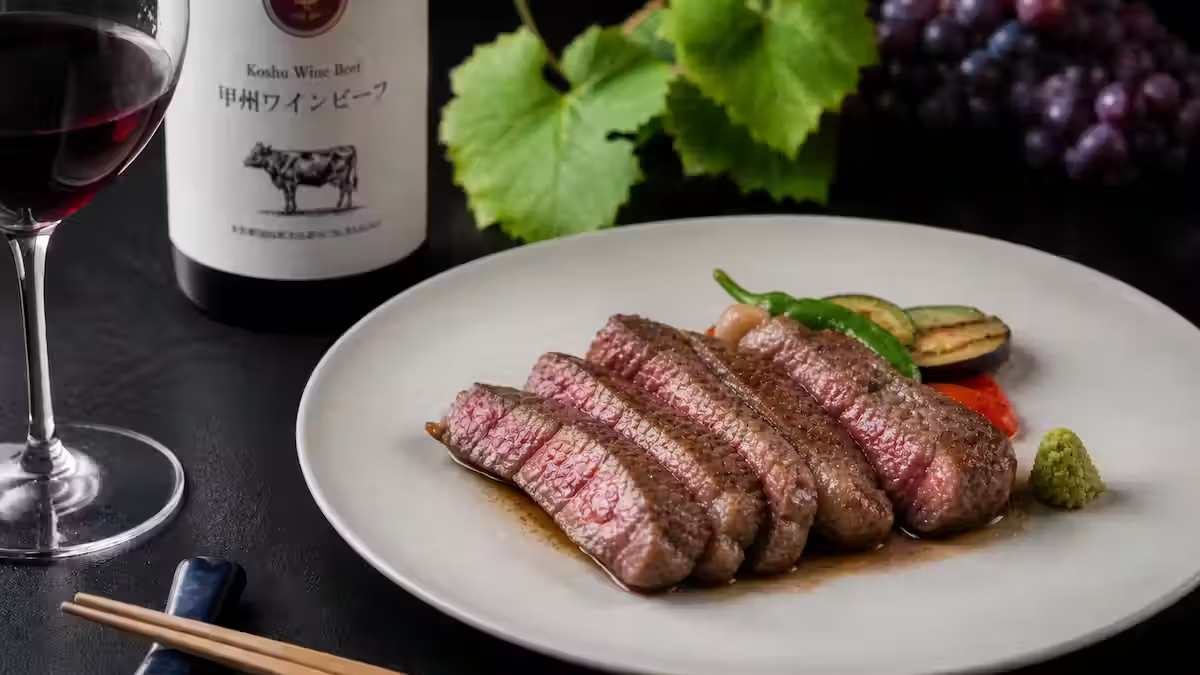
Yamanashi Prefecture is best known for two things: Mount Fuji and wine. Fewer people realize it also produces one of Japan’s most distinctive beef varieties. Koshu Wine Beef is a high-quality Japanese beef raised on a special diet that includes wine lees and grape skins from local wine production. The result is something genuinely unusual — a Japanese beef with red meat character, deep umami, and a subtle flavor influence that connects directly to the vineyards around it.
It’s not wagyu in the conventional, heavily marbled sense. And honestly, that’s part of what makes it interesting.
What Is Koshu Wine Beef?
Koshu Wine Beef (甲州ワインビーフ) comes from cattle raised in Yamanashi Prefecture, Japan’s leading wine-producing region. Farmers feed the cattle a blend that includes sake lees, wine lees (the sediment left after fermentation), and dried grape skins, all byproducts of the local wine industry. Additionally, the diet incorporates locally grown grass and grains to support healthy development.
The breed itself varies. Unlike Kobe beef, which specifies Tajima-strain Japanese Black cattle, Koshu Wine Beef producers use several cattle breeds. Some farms work with Japanese Black (Kuroge Wagyu), while others use crossbreeds. Consequently, the marbling level differs across producers. However, the defining characteristic across all versions is the wine lees feeding protocol and the Yamanashi origin.
To understand how Koshu Wine Beef fits within Japan’s broader beef landscape, the wagyu category guide provides useful context on how Japanese beef classifications work.
Why Koshu Wine Beef Stands Out
Several factors make this beef genuinely worth paying attention to.
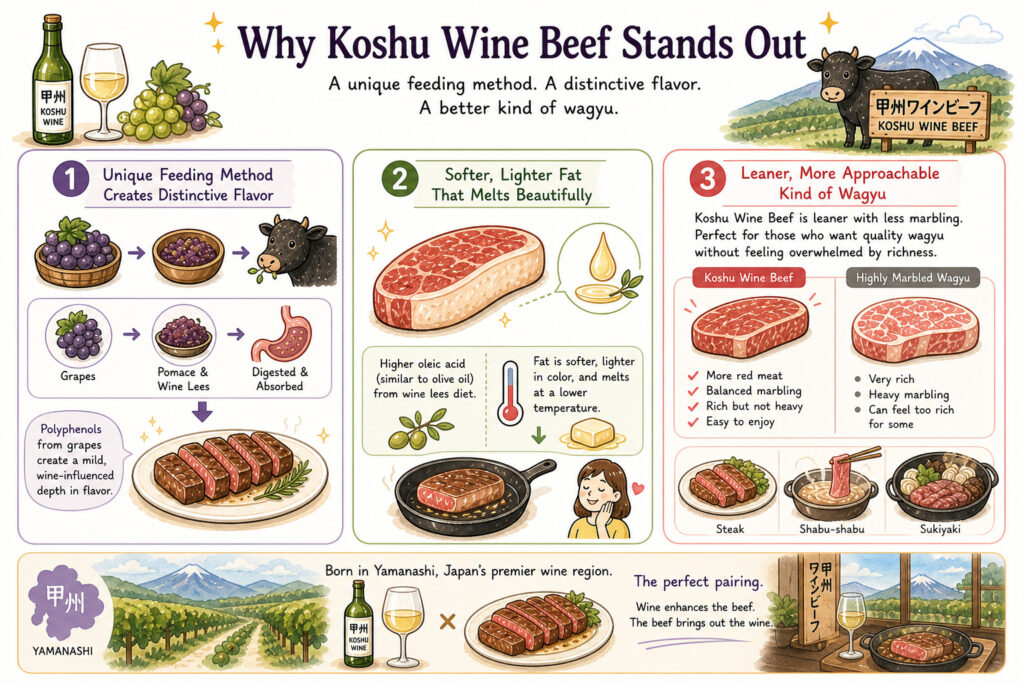
First, the feeding method produces a flavor profile that differs noticeably from standard wagyu. Polyphenols from the grape skins and wine lees transfer into the cattle’s system during digestion. Producers and chefs working with the beef describe a mild, wine-influenced depth in the meat that you don’t encounter in other Japanese beef varieties.
Second, the fat in Koshu Wine Beef tends to be softer and lighter-colored than in many wagyu styles. The oleic acid content, similar to that found in olive oil, increases with the wine lees diet. As a result, the fat melts at a lower temperature and feels less heavy on the palate.
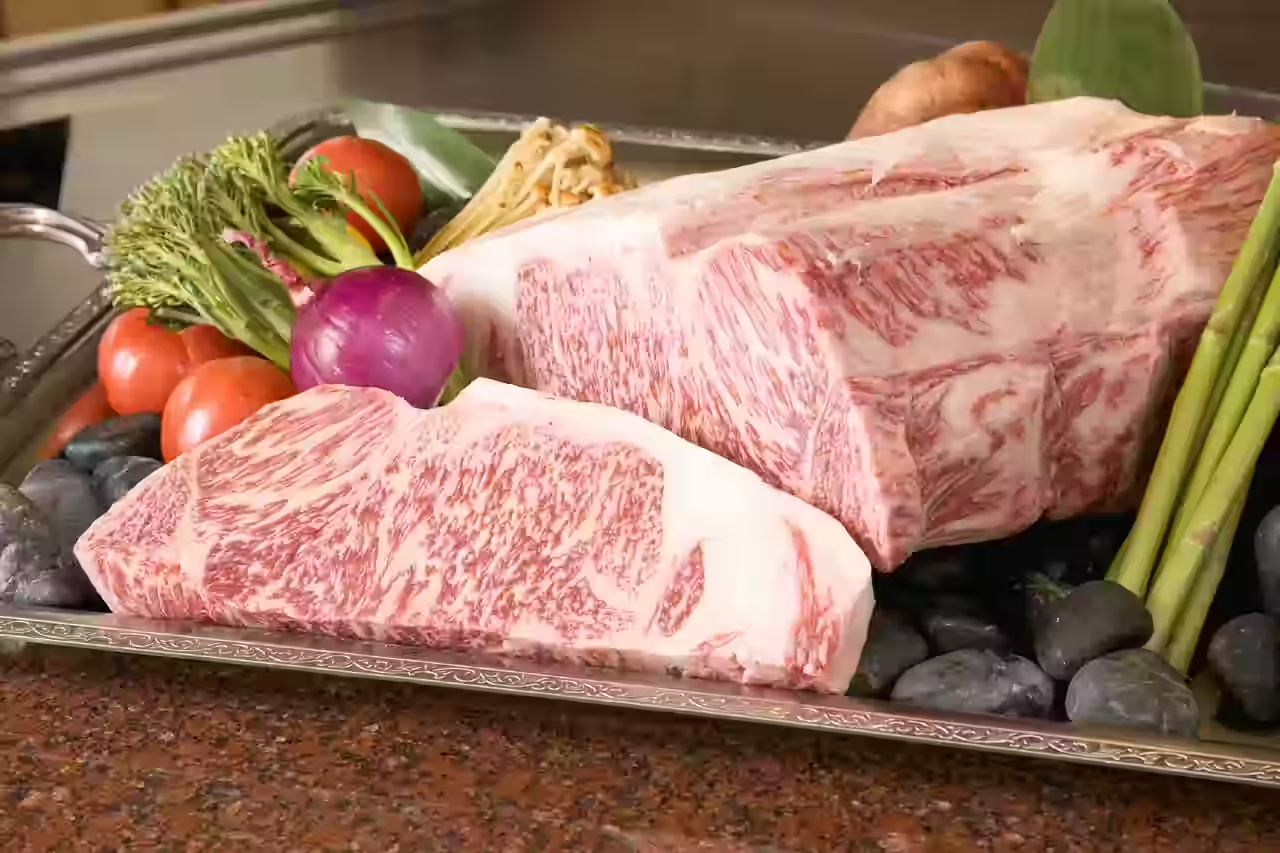
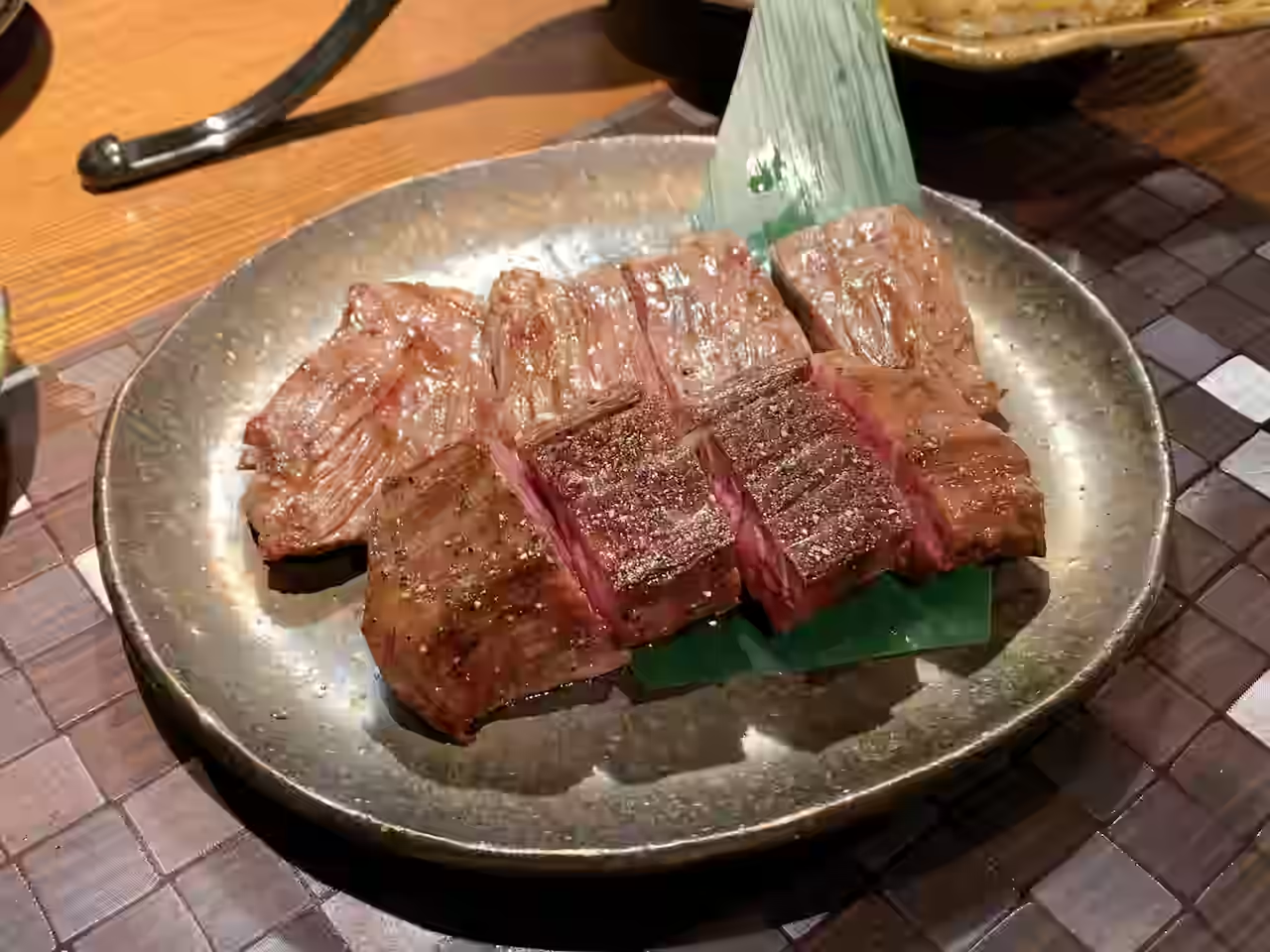
Third, this beef leans toward red meat rather than heavy marbling. For people who find highly marbled wagyu overwhelming or too rich, Koshu Wine Beef offers a compelling middle path: genuine Japanese beef quality with a leaner, more approachable character.
How Koshu Wine Beef Compares to Other Japanese Beef
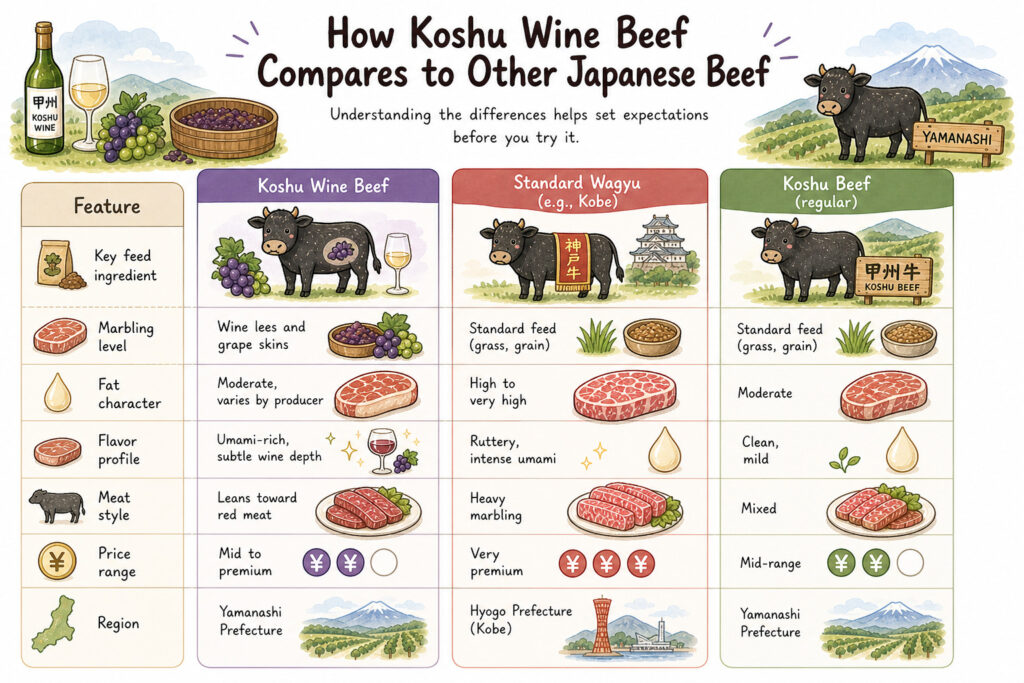
Understanding the differences helps set expectations before you try it.
| Feature | Koshu Wine Beef | Standard Wagyu (e.g., Kobe) | Koshu Beef (regular) |
|---|---|---|---|
| Key feed ingredient | Wine lees and grape skins | Standard feed (grass, grain) | Standard feed |
| Marbling level | Moderate, varies by producer | High to very high | Moderate |
| Fat character | Soft, lighter-colored, high oleic acid | Rich, creamy, heavy | Standard |
| Flavor profile | Umami-rich, subtle wine depth | Buttery, intense umami | Clean, mild |
| Meat style | Leans toward red meat | Heavy marbling | Mixed |
| Price range | Mid to premium | Very premium | Mid-range |
| Region | Yamanashi Prefecture | Hyogo Prefecture (Kobe) | Yamanashi Prefecture |
For more detail on how Japanese beef gets graded and ranked across categories, the wagyu ranking guide explains the grading system clearly.
The History Behind Yamanashi Wine-Fed Beef
The story of Koshu Wine Beef connects directly to Yamanashi’s wine industry, which dates back to the 1870s.
Koshu grapes, the native variety used in Japan’s oldest wine region, had been cultivated in Yamanashi for centuries before wine production began. When commercial wine production expanded in the Meiji era (1868-1912) and accelerated significantly through the 20th century, wineries accumulated growing quantities of byproducts: fermented grape skins, stems, and wine lees. Disposing of these materials posed a logistical challenge.
Farmers in the region began experimenting with feeding wine byproducts to cattle as a practical solution. Over time, they noticed the results in the meat quality. The cattle showed good condition, and the beef carried qualities that distinguished it from standard cattle feed products.
By the 1990s and early 2000s, producers in Yamanashi started formalizing the concept into a regional brand. The Koshu Wine Beef initiative brought together local cattle farmers and wine producers, creating a cooperative relationship that benefited both industries. Wine waste found a productive use. Cattle received nutritionally interesting feed. And Yamanashi gained a premium beef product tied directly to its most famous agricultural identity.
Today, Koshu Wine Beef appears on menus at Yamanashi’s winery restaurants, high-end Japanese beef establishments, and regional tourism venues. Some producers offer direct purchase and delivery within Japan, though international availability remains limited.
What Does Koshu Wine Beef Taste Like?
This is the question most people genuinely want answered before spending premium prices.
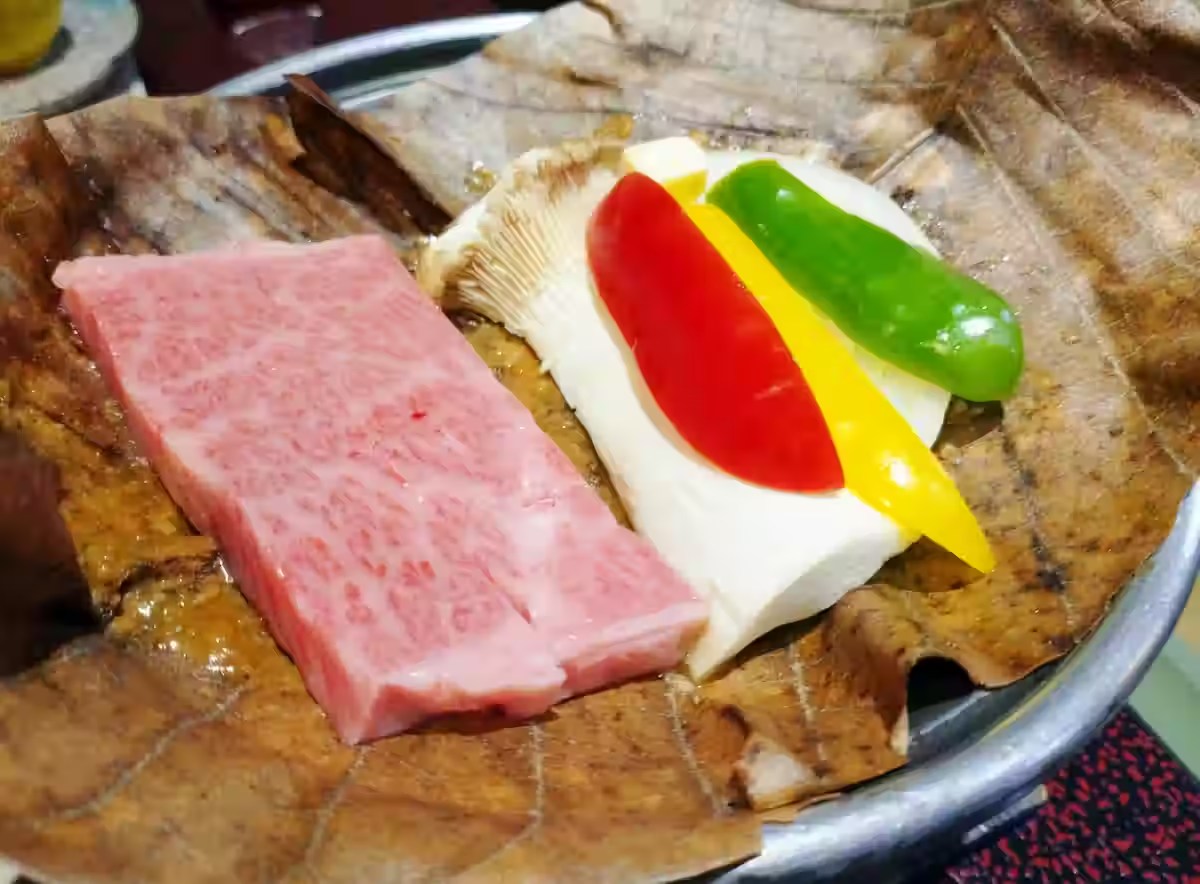
The texture of Koshu Wine Beef tends toward firm but tender. Without the extreme marbling of top-grade wagyu, the meat has more chew and structure. That’s not a criticism. For many dishes, that texture actually works better.
The flavor carries a pronounced umami that builds gradually. Some tasters notice a mild sweetness, possibly linked to the grape-derived diet. Others describe a faintly earthy, mineral quality that feels different from conventionally fed beef. The wine depth is subtle rather than obvious, more of a background note than a dominant flavor.
Koshu Wine Beef handles heat differently from heavily marbled wagyu. Because the fat content is more moderate, it suits longer cooking methods better than ultra-marbled cuts that require only seconds of heat. Shabu-shabu, grilling over charcoal, and slow-simmered preparations all bring out its best qualities.
How to Eat Koshu Wine Beef
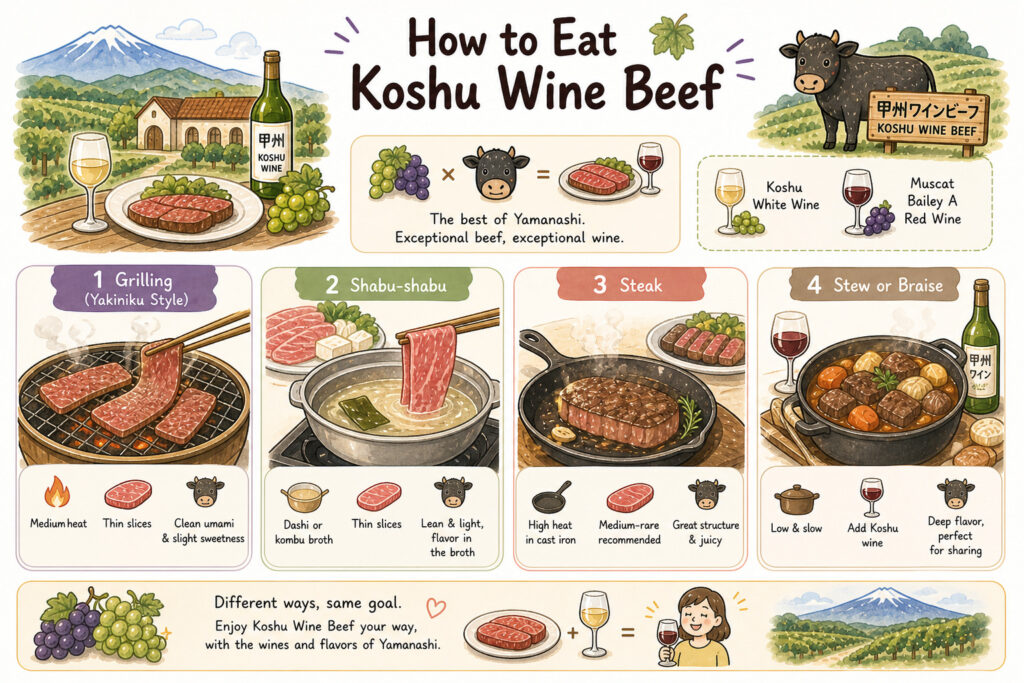
The Yamanashi setting offers the most complete experience. Many wineries in the region now operate farm-to-table restaurants where Koshu Wine Beef appears alongside locally produced Koshu white wine or Muscat Bailey A red wine. That pairing works well. The beef’s moderate richness and umami depth hold up nicely against both styles.
For home cooking, these approaches suit Koshu Wine Beef particularly well:
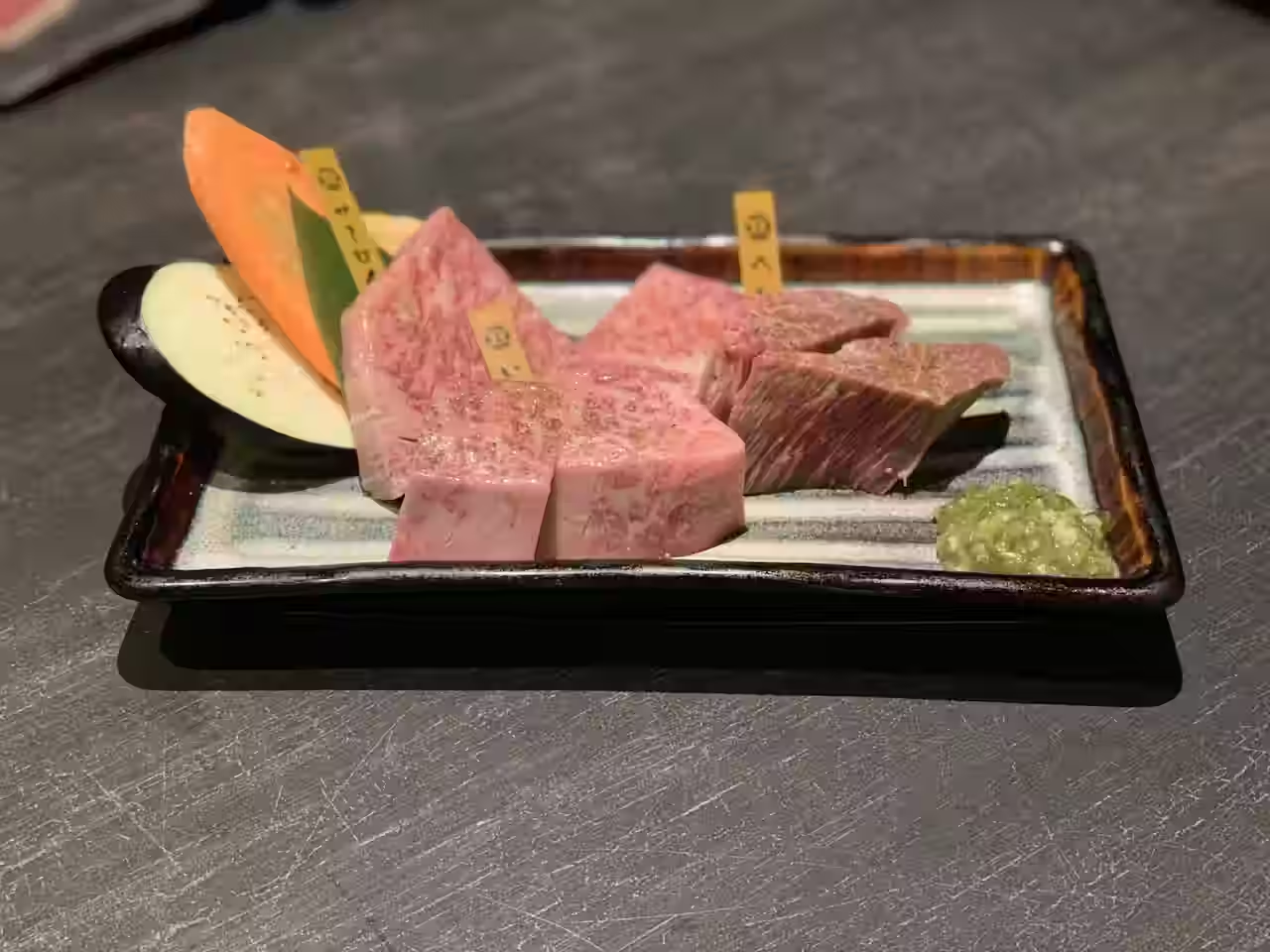
- Grilling (yakiniku style): Thin-sliced cuts over charcoal bring out the clean umami and slight sweetness. Keep the heat moderate to preserve the soft fat’s character.
- Shabu-shabu: Thinly sliced beef cooked briefly in hot dashi or kombu broth. The leaner profile makes this method especially good, as the broth carries some of the wine-influenced flavor.
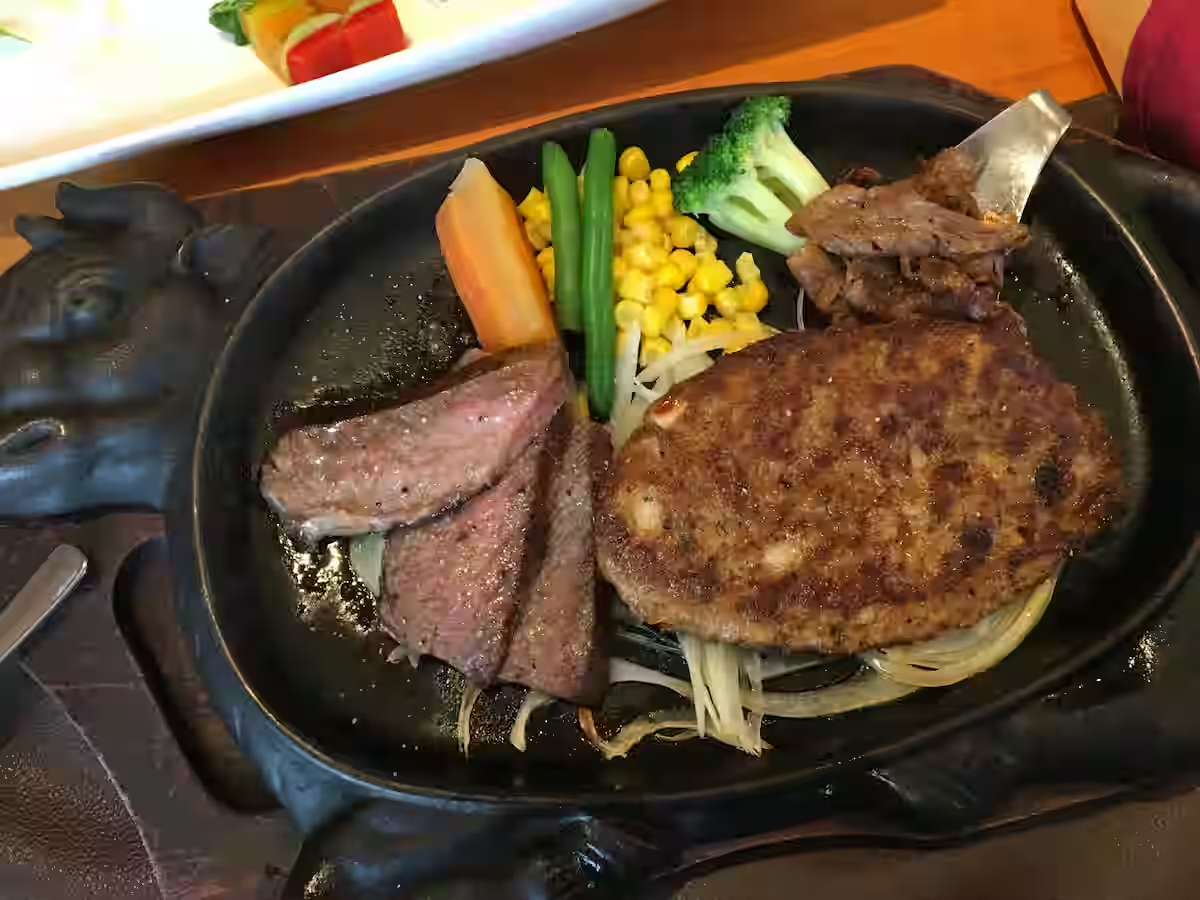
- Steak: Thicker cuts benefit from a cast iron pan with high heat, then a short rest. Medium-rare works well here. The meat has enough structure to show well at that doneness.
- Stew or braise: Tougher cuts develop excellent depth when simmered slowly with vegetables and a splash of Koshu wine, creating a dish that ties the whole Yamanashi story together on one plate.
You can also read about Koshu Beef, the broader Yamanashi beef category, for more context on the regional beef tradition that Koshu Wine Beef belongs to.
Finding Koshu Wine Beef Outside Yamanashi
Availability beyond Yamanashi stays limited. Within Japan, some specialty beef retailers and upscale supermarkets in Tokyo occasionally stock it, particularly around Shinjuku and Shibuya, where regional Japanese products find premium retail space.
For visitors to Japan, Yamanashi is accessible by limited express train from Shinjuku in around 90 minutes. Several winery areas around Katsunuma and Kofu offer the beef as part of a wine tasting and dining experience. That combination of Koshu wine and Koshu Wine Beef in the region where both originate is genuinely hard to replicate elsewhere.
For those curious about Japanese wagyu more broadly, understanding how regional beef brands connect to specific landscapes, climates, and food cultures helps explain why Koshu Wine Beef has a loyal following despite its relatively limited footprint.
This is niche beef. But for the right kind of curious eater, it’s exactly the kind of thing Japan does that nowhere else does quite as well.
Related Articles
Japanese Wagyu: Everything You Need to Know
Grades, breeds, regional brands, marbling explained for beginners and enthusiasts.
→
Yamanashi Beef
References
- Yamanashi Prefecture Tourism Organization, “Koshu Wine Beef” (2023): https://www.yamanashi-kankou.jp/foreign/en/
- JETRO, “Japanese Regional Food Products: Yamanashi” (2022): https://www.jetro.go.jp/en/
- Japan Food Product Overseas Promotion Center, “Regional Brand Beef from Japan” (2021): https://www.jfoodo.jetro.go.jp/en/
- Yamanashi Prefecture Agricultural Policy Division, “Koshu Wine Beef Production Guidelines” (2020): https://www.pref.yamanashi.jp/chikusan/
- Travel Japan (JNTO), “Yamanashi: Wine, Fruit, and Regional Cuisine” (2023): https://www.japan.travel/en/spot/1929/




Comments