


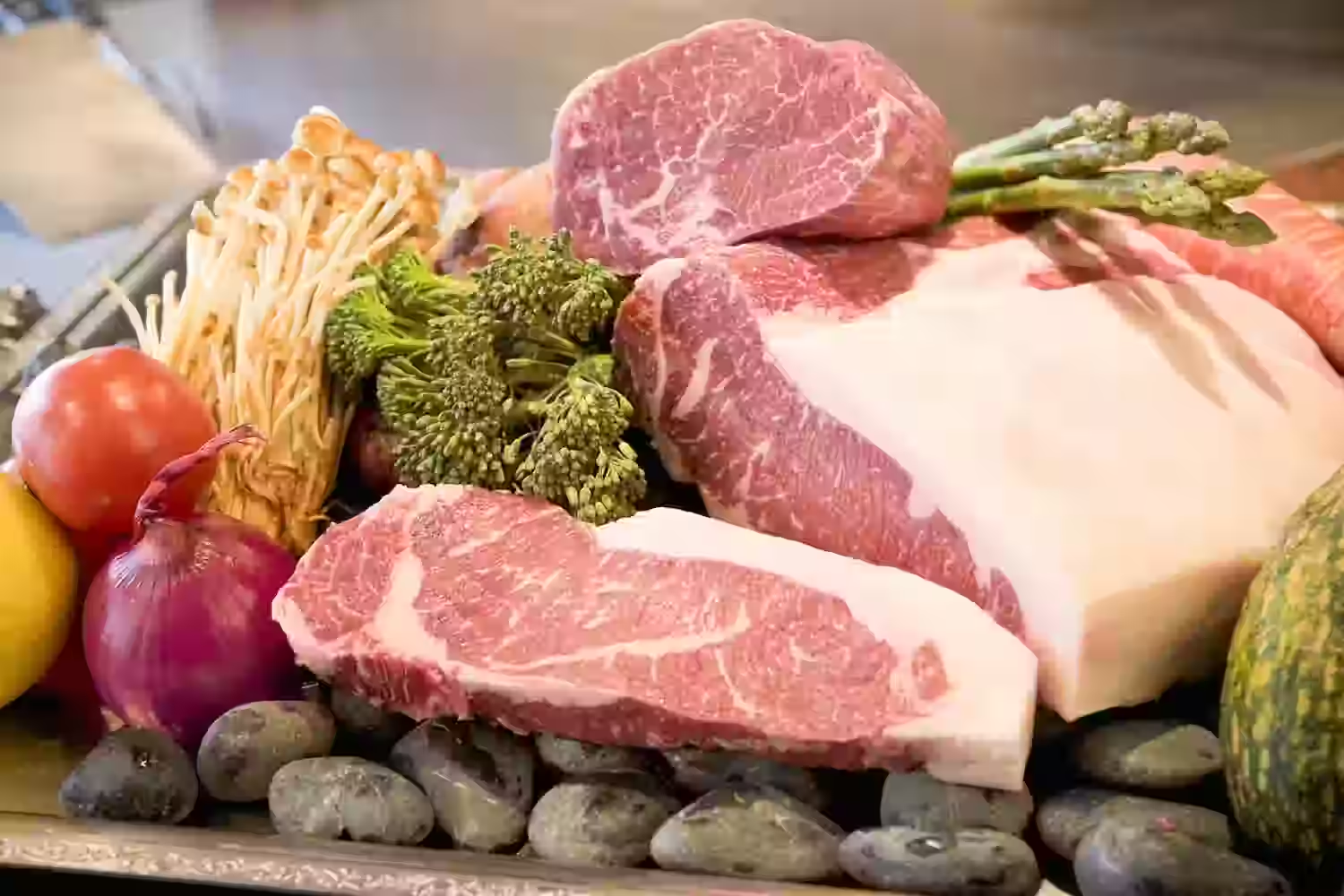


Say “Wagyu” to many travelers, and they picture beef so marbled it looks almost white. Iwaizumi Tankaku Beef (岩泉短角牛) tells a different story. The beef comes from Japanese Shorthorn cattle raised in Iwaizumi, Iwate Prefecture. It stands out for lean red meat, a firm texture, and deep beef flavor.
Japanese Shorthorn, or Nihon Tankakushu (日本短角種), is one of Japan’s four officially recognized Wagyu breeds. Unlike the heavily marbled Japanese Black, it grew out of a mountain tradition built on seasonal grazing. This guide explains its history, flavor, production, and cooking uses, plus where travelers may find it.
What Is Iwaizumi Tankaku Beef?
Put simply, it is a regional beef brand produced in Iwaizumi from Japanese Shorthorn cattle. It sits within Iwate Tankaku Beef, the prefecture’s certification for qualifying Shorthorn beef. The other main production areas are Yamagata in present-day Kuji City, plus Ninohe and Morioka.
Quick Facts
- Japanese name
- 岩泉短角牛 (Iwaizumi Tankaku-gyū)
- Breed
- Japanese Shorthorn (日本短角種), one of four Wagyu breeds
- Hometown
- Iwaizumi Town, Iwate Prefecture, Tohoku region
- Roots
- Nanbu pack cattle crossed with Shorthorn from 1871
- Farming style
- Natsuyama Fuyusato: summer in the mountains, winter in the village
- Meat
- Lean red meat with light marbling
- Rarity
- Iwate kept 2,819 head in 2025, or 48.6% of Japan’s total
- Recognition
- Tankaku cattle joined Slow Food’s Ark of Taste in 2005
- Best uses
- Steak, yakiniku, sukiyaki, stews
Is Iwaizumi Tankaku Beef Wagyu?
Yes. In Japan, “Wagyu” refers to four officially recognized Japanese cattle breeds, rather than a level of marbling. Iwate Prefecture lists them as Japanese Black, Japanese Brown, Japanese Shorthorn, and Japanese Polled. So Tankaku beef counts as Wagyu, even though it looks nothing like a heavily marbled A5 steak. Our Wagyu beef guide explains all four breeds in more detail.
Japanese Shorthorn and Nihon Tankakushu
Tankaku means “short horn,” a nod to the British Shorthorn in the breed’s ancestry. The cattle have brown coats and suit outdoor grazing well. NBAFA, a national beef cattle promotion body, also notes their strong mothering ability and rapid early growth.
Where Does Iwaizumi Tankaku Beef Come From?
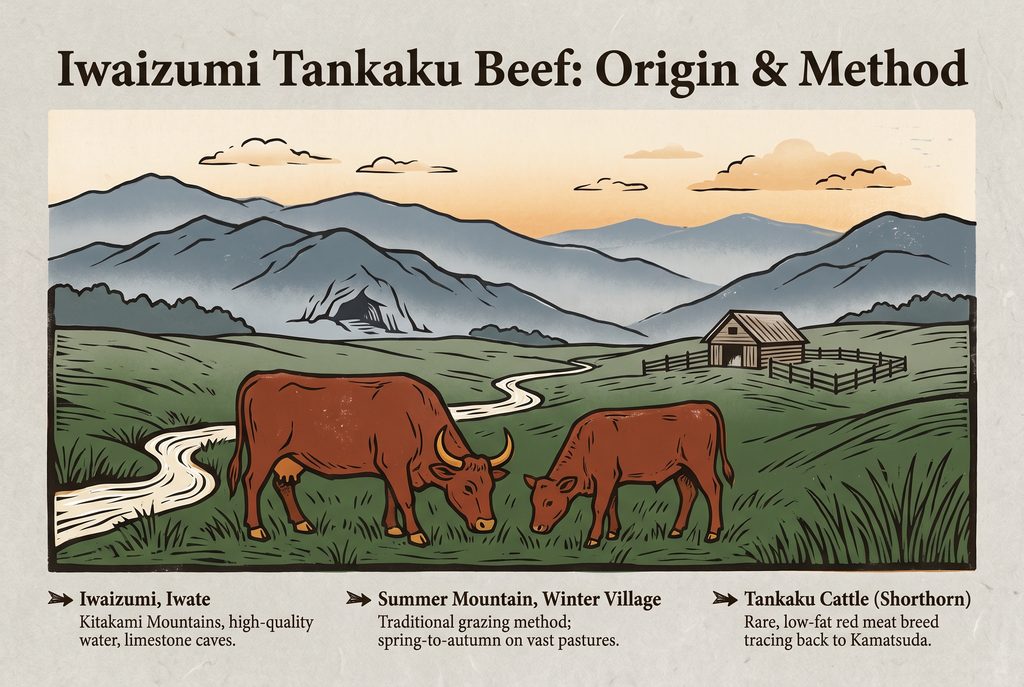
Iwaizumi in Iwate Prefecture
Iwaizumi sits in the Kitakami Mountains of eastern Iwate, in the Tohoku region of northern Japan. The town is also home to Ryusendo, one of Japan’s three great limestone caves. The Iwate Beef Promotion Council also highlights the area’s high-quality water as part of its production environment.
Steep, forested slopes leave little flat farmland. This geographical constraint helped shape local cattle raising. Farmers rely on mountain pastures and compact corn plots because large feed fields are rare.
Kamatsuda, a Cradle of Tankaku Cattle
The Kamatsuda district in southwestern Iwaizumi matters most in this story. During the feudal era, it bred prized Nanbu cattle known as Kamatsuda cattle, according to Iwaizumi Holdings. This history explains why Iwaizumi describes Kamatsuda as a cradle of Tankaku cattle breeding.
The History of Iwaizumi Tankaku Beef
Nanbu Cattle and the Salt Road
Before the breed became associated with regional beef, its ancestors worked as pack cattle. Nanbu cattle hauled salt, seafood, and iron from the Sanriku coast inland. On the return trip, they carried rice, sake, and daily goods.
Iwaizumi Holdings describes a three- to four-day trip along the Omoto Kaido, a route remembered as a “salt road.” Steep passes demanded strong legs and a calm temperament. Nanbu cattle had both, so they suited the job well.
Shorthorn Cattle Arrive in 1871
The breed’s development entered a new phase during the Meiji era. In 1871, Kamatsuda received American Shorthorn cattle on loan, the Iwate Beef Promotion Council explains. Crossbreeding with Nanbu cattle began there earlier than in other areas, so Kamatsuda played an early role. By 1877, a Kamatsuda bull even appeared at Japan’s First National Industrial Exhibition.
Holstein, Ayrshire, and other foreign breeds followed later. Shorthorn crosses, however, handled the harsh Kitakami highlands best, so breeders kept focusing on them.
Japanese Shorthorn Becomes Official in 1957
Later, in 1957, the Japanese Shorthorn Registry Association formed, and unified registration of the breed began. Watanabe (2022) traces this history in a review for a Japanese dietary studies journal. Today the breed lives mainly in Iwate, Aomori, Akita, and Hokkaido.
How Iwaizumi Tankaku Cattle Are Raised
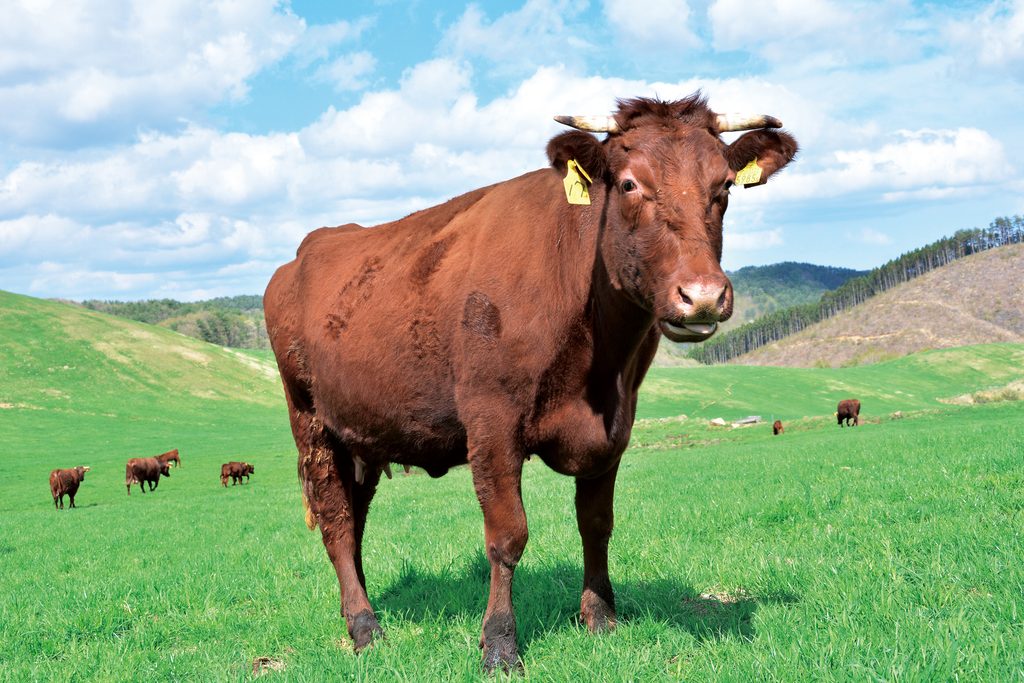
The farming system sits at the heart of this beef. Locals call it Natsuyama Fuyusato, which means “summer in the mountains, winter in the village.” Iwaizumi Town’s official product listing lays out a typical cycle:
- Feb to AprCows give birth in the barn, and calves nurse through late winter.
- MayMothers and calves climb to pastures at 800 to 1,000 meters.
- May to OctCalves drink milk, learn to graze, and cows mate naturally.
- Mid-OctThe herd comes down to the village for winter.
- For 14 to 18 monthsYoung cattle finish indoors on forage and mixed feed.
- Around 22 to 25 months of ageThe cattle go to market as Iwaizumi Tankaku Beef.
Summer Grazing and Natural Breeding
In Iwate’s Tankaku system, one pasture section typically holds 50 to 60 cows and a single bull. According to the Iwate Beef Promotion Council, breeding then relies on natural mating with that bull. Calves drink their mothers’ milk while they gradually start eating fresh grass.
Because mating follows nature, farmers cannot fully control when calves arrive. A producer interviewed by the council in Morioka explained that births often cluster in March and April. Individual farms differ, but this shows how natural mating makes calving less predictable. It also preserves a farming system closely adapted to the Kitakami highlands.
Winter Housing and the Fattening Stage
After coming down, calves go to market and move to fattening farms. In Iwaizumi, fattening leans heavily on forage such as hay, rice straw, and corn silage. Farmers feed mostly roughage until around the following June, then shift gradually to mixed feed.
A note on “grass-fed” claims
Iwaizumi Tankaku cattle graze as calves, but they finish in barns on forage plus mixed feed. Calling the beef 100% grass-fed would therefore be inaccurate. “Pasture-raised in youth, forage-rich finishing” describes it far better.
What Does Iwaizumi Tankaku Beef Taste Like?
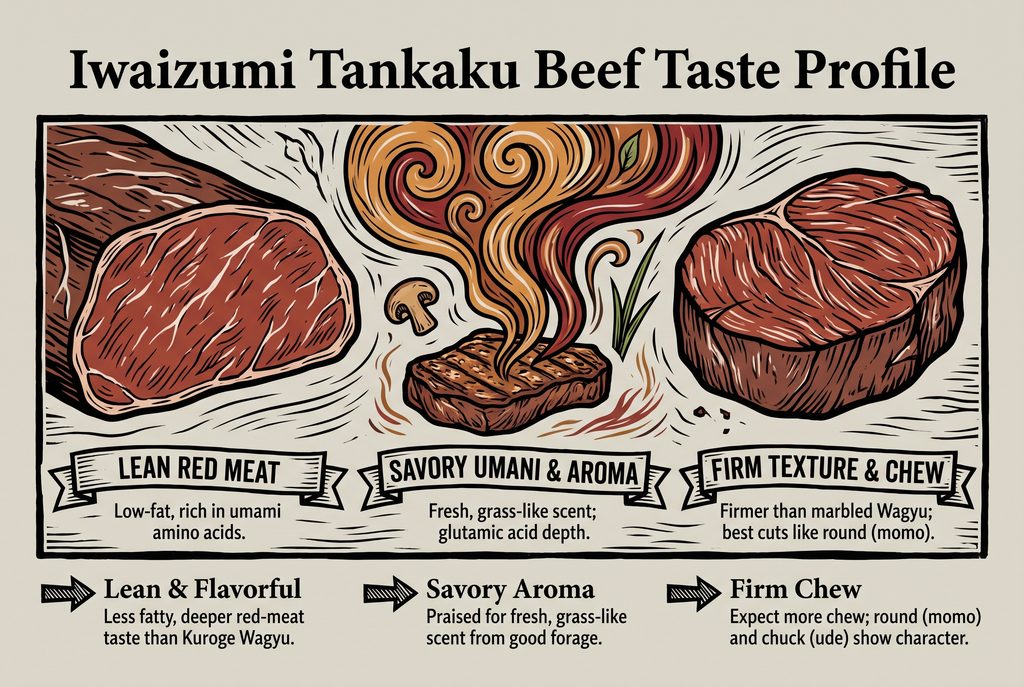
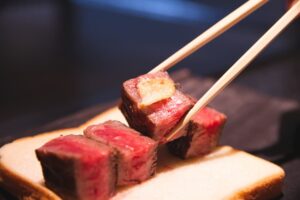
Here is where expectations need adjusting. If you want beef that melts on the tongue, this is not it. Tankaku beef offers chew, red-meat flavor, and a clean finish instead.
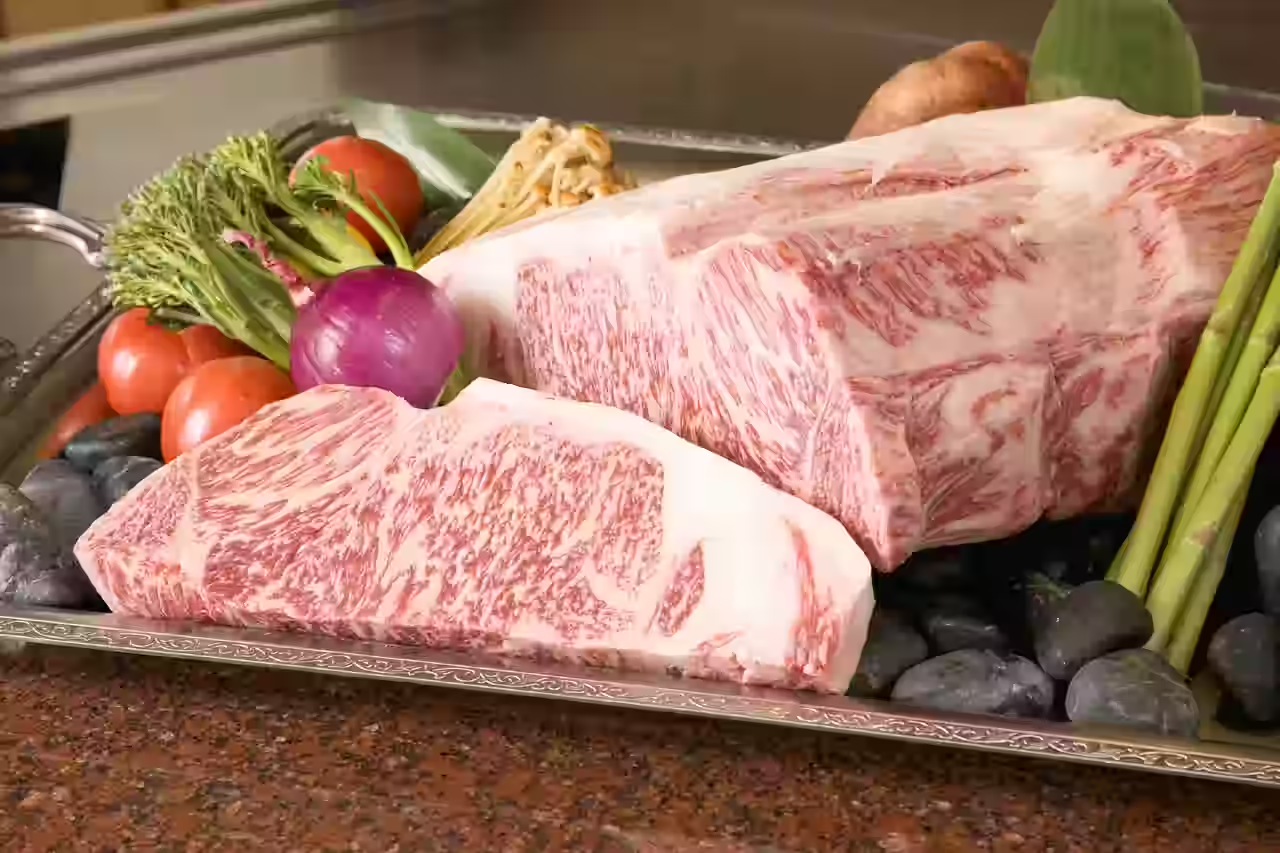
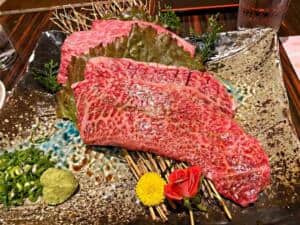
Lean Red Meat With Light Marbling
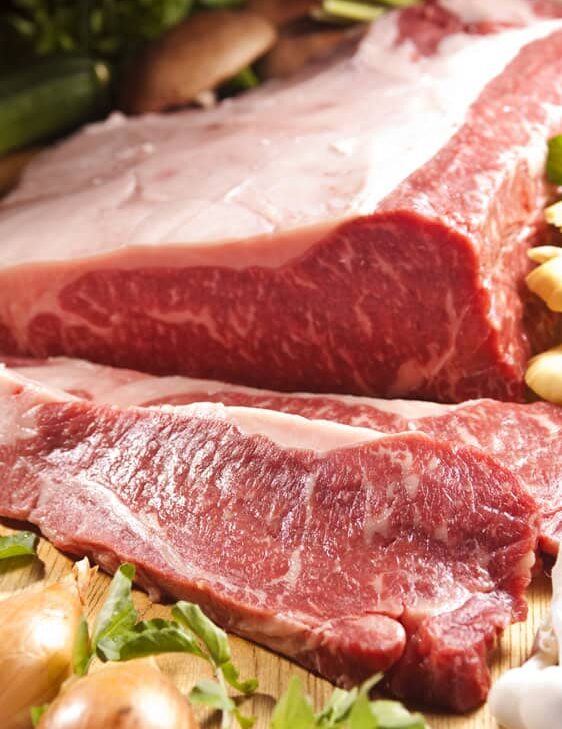
Iwate Prefecture describes Japanese Shorthorn as low-fat red meat rich in amino acids linked to umami. Slow Food likewise calls it less fatty and more flavorful than heavily marbled Kuroge Wagyu. Loin and sirloin still carry some fat, though, so cuts vary more than the “lean” label suggests.
Umami, Aroma, and Texture
Producers stress glutamic acid and savory depth, although published side-by-side comparisons remain limited. The Iwate Beef Promotion Council reports praise for a fresh, grass-like aroma. It credits good forage and water. Flavor still varies by cut and preparation, though.
Is it tough? Lean beef like this is generally firmer than highly marbled Wagyu, so expect more chew. Still, the right cut and careful cooking make a big difference. Iwaizumi’s official listings say round (momo) and chuck (ude) show the breed’s character most clearly.
Tankaku Beef vs Japanese Black Wagyu
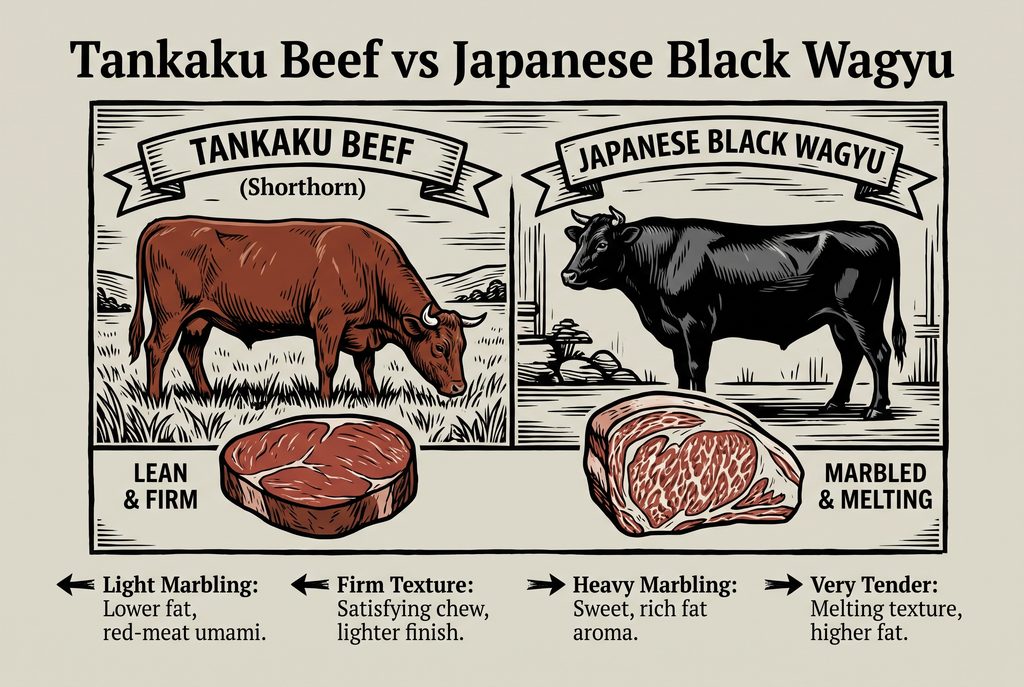
Comparing breeds is not about ranking them. The table shows broad tendencies rather than rules. Feeding, breeding, marbling, and texture also vary by producer, cut, grade, and region.
| Japanese Shorthorn (incl. Iwaizumi) | Kuroge Wagyu (Japanese Black) | |
|---|---|---|
| Production area | Mainly Iwate and northern Japan | Nationwide |
| Coat | Brown | Black |
| Marbling | Generally light | Often heavy |
| Fat level | Generally lower, depending on cut | Often higher, especially in top grades |
| Flavor | Red-meat umami, lighter finish | Sweet, rich fat aroma |
| Texture | Firmer, satisfying chew | Very tender, melting |
| Breeding | Traditionally includes natural mating during seasonal grazing | Breeders widely use artificial insemination |
| Rarity | Very limited supply | Widely available |
| Common uses | Steak, yakiniku, sukiyaki (loin), stews | Sukiyaki, shabu-shabu, yakiniku, steak |
Famous names such as Kobe beef belong to the Japanese Black column. For a marbled brand from Iwate itself, read our Maesawa beef guide. Our Wagyu grading article explains why marbling scores dominate Japanese beef prices.
Who Will Prefer Tankaku Beef?
Diners who find A5 Wagyu too rich after a few bites may prefer Tankaku. Steak lovers used to leaner, red-meat-focused beef may also find it familiar, with a lighter finish than marbled Wagyu. On the other hand, fans of melt-in-the-mouth texture might feel it lacks drama.
How to Cook Iwaizumi Tankaku Beef

Steak and Grilling
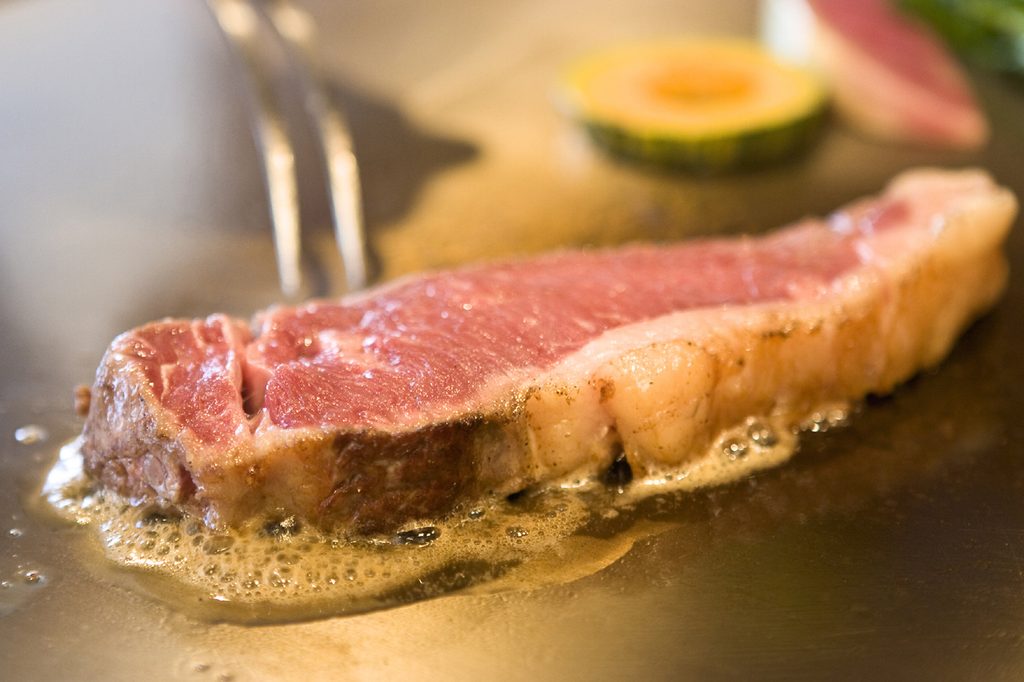
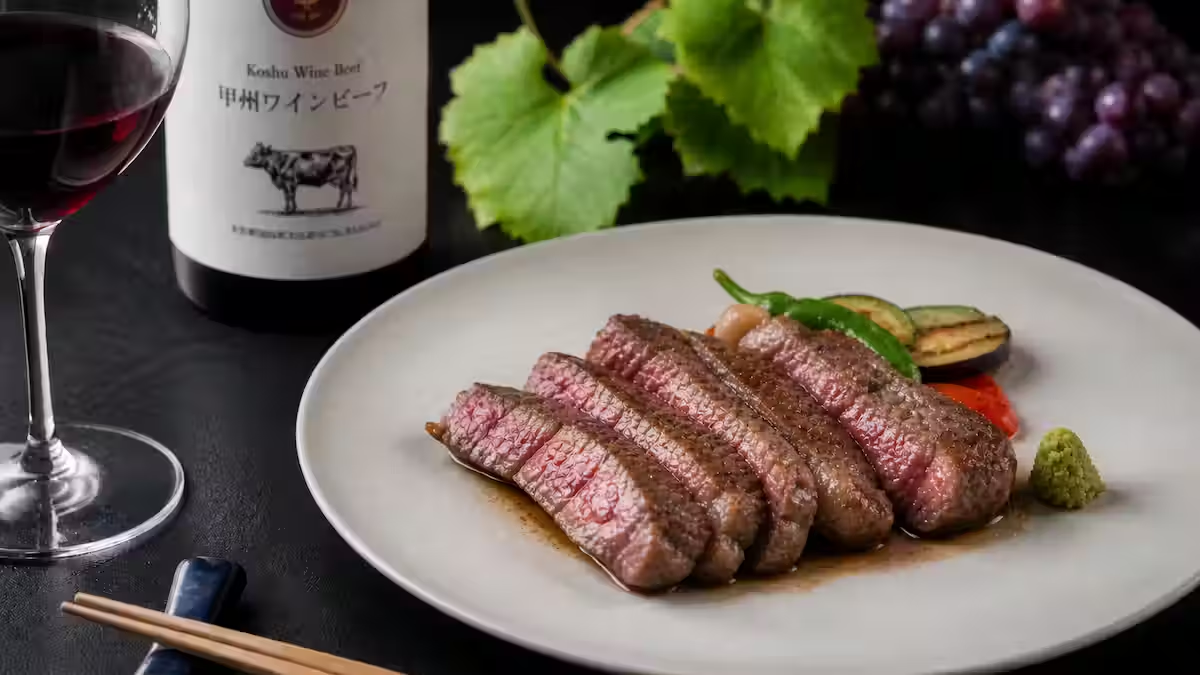
Lean beef can turn firm when overcooked. For intact steaks, cook to your preferred doneness and follow local food-safety guidance. Then rest the meat before slicing. Iwaizumi’s official steak listing also warns against overcooking, and Iwaizumi Holdings recommends loin and sirloin for steak.
Yakiniku and Beef Skewers
Thin slices grill in seconds, so turn them once and eat right away. Iwaizumi also sells skewers of thinly sliced Tankaku beef, which became popular at the local roadside station. Iwaizumi recommends simple salt and pepper to bring out the beef’s flavor. For table-grill basics, see our yakiniku guide.
Sukiyaki and Shabu-Shabu
Iwaizumi Holdings recommends fattier cuts such as loin for sukiyaki. For shabu-shabu, thin lean slices need only a brief dip in the broth. Our sukiyaki guide covers regional styles if you want to try it at home.
Stews, Ground Beef, and Firmer Cuts
Firmer cuts shine in slow-cooked stews or as ground beef, which you should always cook thoroughly. Morioka’s Tankaku beef fairs have also featured hamburg steak and hashed beef at local restaurants.
Five habits for lean Japanese beef
- Pat steaks dry so they sear instead of steaming.
- Season simply; salt and pepper are usually enough.
- Sear the surface over high heat, then lower the heat to finish the center gently.
- Rest steaks before slicing so the juices settle.
- Slice across the grain for a softer bite.
Nutrition and Health Considerations
Official sources describe Tankaku beef as a relatively lean source of protein. However, reliable breed-specific nutrient comparisons remain scarce. We found no breed-specific figures in Japan’s standard food composition tables. Values also change with cut, age, feed, and cooking method.
Some sellers mention L-carnitine or fat-burning benefits. Such claims deserve caution because they rarely identify the cut, serving size, cooking method, or comparison group. Enjoy it as good beef in sensible portions, rather than as a health food.
Why Is Iwaizumi Tankaku Beef Rare?
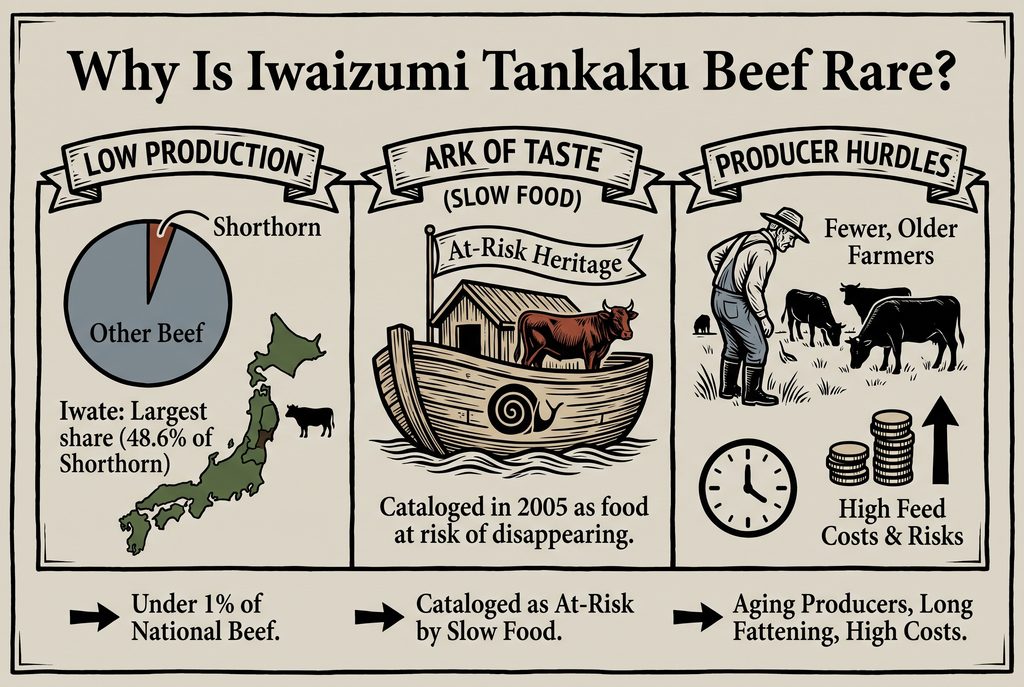
In 2025, Iwate kept 2,819 Japanese Shorthorn cattle, according to the prefecture. That figure made up 48.6% of the national total, the largest share in Japan. By comparison, the Iwate Beef Promotion Council says Shorthorn accounts for under 1% of beef distributed in Japan.
Slow Food’s Ark of Taste
Slow Food also placed Tankaku cattle on Japan’s first Ark of Taste list in 2005. The Ark catalogs foods at risk of disappearing, rather than luxury products. Note that this is a Slow Food program, not a UNESCO listing.
Challenges Facing Producers
An Iwaizumi fattening farmer told the council that local farmers are fewer and older than before. A Morioka producer also told the council that long fattening periods raise feed costs and risks. For deeper analysis, a 2020 study by ALIC, Japan’s agriculture and livestock industries agency, examined the breed’s farm economics.
Where to Eat and Buy Iwaizumi Tankaku Beef
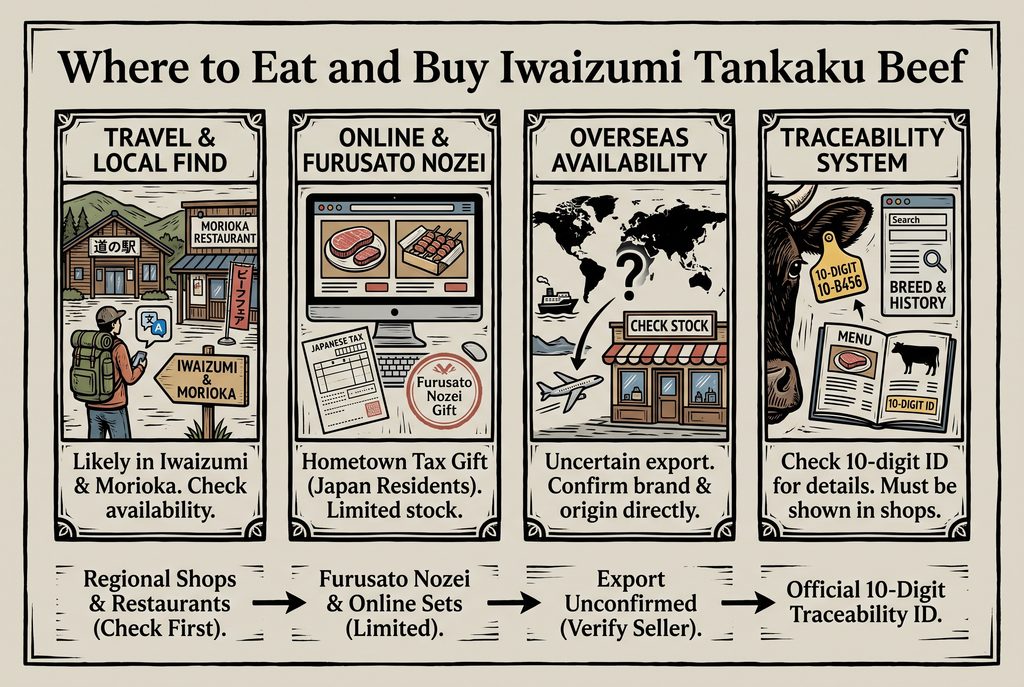
Where Travelers Are Likely to Find It
Travelers are most likely to encounter it in Iwaizumi itself, at regional product shops and the town’s roadside station. Selected restaurants in Morioka and other parts of Iwate also serve Tankaku beef, and Morioka has hosted Tankaku beef fairs.
Because supply is limited, contact the restaurant directly before making a special trip. English menus are not guaranteed, so a translation app helps. The Iwate Beef Promotion Council also publishes a directory of recommended retailers and restaurants by region.
Online Shopping in Japan
Iwaizumi Town also offers Tankaku steaks, slices, and skewers as furusato nozei (hometown tax) gifts. Keep in mind, though, that this program targets people who pay Japanese income and resident taxes. Iwate’s prefectural product shop online also lists Iwaizumi Holdings sets. Every channel has limited stock, so check availability when you order.
Can You Buy It Outside Japan?
Export availability is uncertain, and we could not confirm a steady overseas supply. The council’s directory includes some overseas businesses, although a listing does not guarantee current stock of Iwaizumi Tankaku Beef. So confirm the brand and origin directly with each seller.
Traceability and the 10-Digit Number
Every head of cattle raised in Japan carries a 10-digit identification number, according to Japan’s agriculture ministry. You can enter it into the official cattle database to check details such as breed and rearing history. Restaurants that mainly serve yakiniku, shabu-shabu, sukiyaki, or steak must also show it on menus or in the shop.
Other Foods to Try in Iwate Prefecture
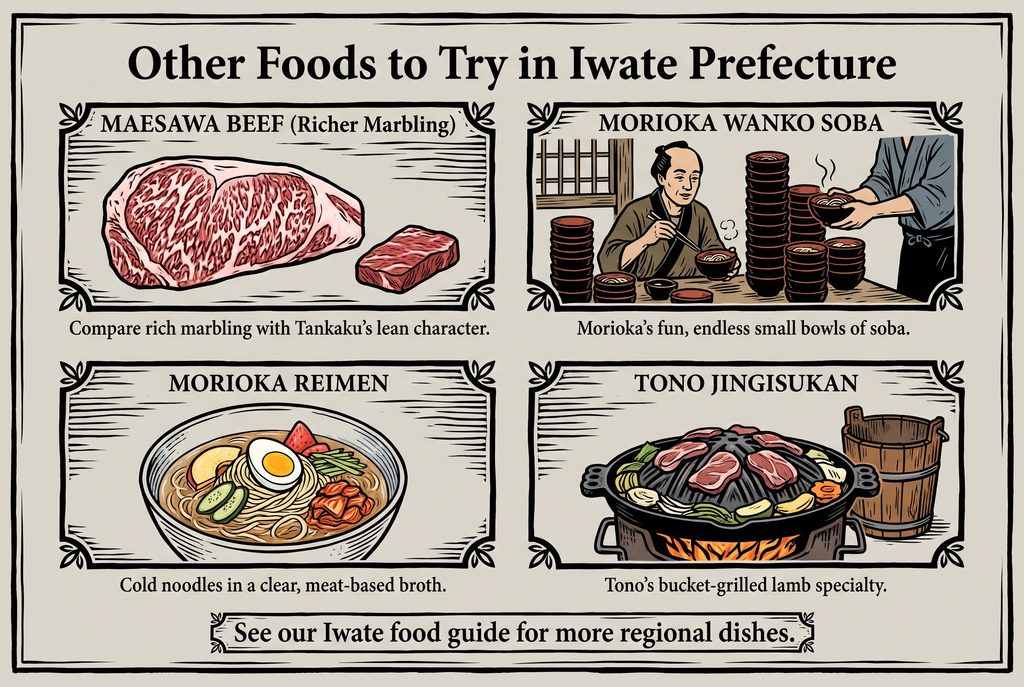
If your trip continues through Iwate, compare Tankaku’s lean character with the richer marbling of Maesawa beef. Morioka also offers wanko soba and Morioka reimen, a cold noodle dish often served in a clear, meat-based broth. Tono, meanwhile, takes pride in Tono Jingisukan, its bucket-grilled lamb. Our Iwate food guide covers more regional dishes.
Final Thoughts on Iwaizumi Tankaku Beef
So what is Iwaizumi Tankaku Beef? It is Wagyu in the official sense, yet it tastes of lean red meat rather than melting fat. Its story runs from Nanbu pack cattle to a mountain grazing system that Iwaizumi still keeps alive. Before you travel, check the Iwate Beef Promotion Council’s directory and confirm supply with the restaurant.
If you visit northern Japan, a Tankaku steak is worth seeking out. It may not melt like A5 beef, and that is exactly the point.
Frequently Asked Questions
About the Beef
- Is Iwaizumi Tankaku Beef a type of Wagyu?
-
Yes. Wagyu refers to four officially recognized Japanese cattle breeds, and Japanese Shorthorn is one of them. Tankaku beef simply carries far less marbling than Japanese Black Wagyu. That difference reflects breed and farming style, not a lower status.
- What does Tankaku beef taste like?
-
Official sources describe a low-fat red meat with savory, amino-acid-rich flavor. The Iwate Beef Promotion Council also notes a fresh, grass-like aroma in Iwaizumi beef. Expect a firmer chew and a lighter feel than heavily marbled Wagyu.
- Are Tankaku cattle grass-fed?
-
Only partly. Calves graze mountain pastures with their mothers from spring to autumn. After that, they finish in barns on forage such as hay and corn silage, plus mixed feed.
- Why is Iwaizumi Tankaku Beef rare?
-
Japanese Shorthorn is a small breed population, and Iwate kept only 2,819 head in 2025. Natural mating and long fattening periods also limit output. Fewer and older farmers add further pressure on supply.
Cooking, Buying, and Checking
- How should Tankaku beef be cooked?
-
For intact steaks, sear the surface well and avoid unnecessarily long cooking. Rest the steak before slicing, and follow local food-safety guidance. Always cook ground beef thoroughly.
- Where can visitors try it?
-
Look first in Iwaizumi and at selected restaurants in Morioka and elsewhere in Iwate. The Iwate Beef Promotion Council’s directory is a good starting point. Supply changes often, so contact restaurants before you visit.
- How can I tell if beef is really Japanese Shorthorn?
-
Ask for the 10-digit identification number on the pack or menu. You can then look it up in Japan’s official cattle database, which shows the breed and rearing history. Brand names alone tell you less than that record does.
References
- Iwate Prefecture – Japanese Shorthorn (Iwate Pride Series), updated April 2026 (Accessed September 2026)
- Iwate Beef Promotion Council – Iwate Tankaku Beef (Accessed September 2026)
- Iwate Beef Promotion Council – Iwate Tankaku Beef Brands: Iwaizumi, Kuji Yamagata, Ninohe, Morioka (Accessed September 2026)
- Iwaizumi Holdings – Iwaizumi Tankaku Beef (Accessed September 2026)
- Iwaizumi Town (Furusato Choice) – Iwaizumi Tankaku Beef Loin Steak Set (Accessed September 2026)
- Iwaizumi Town (Furusato Choice) – Iwaizumi Tankaku Beef Skewer Set (Accessed September 2026)
- Iwaizumi Town (Furusato Choice) – Iwaizumi Tankaku Beef Lean Slices (Accessed September 2026)
- Iwate Kensan Online Shop – Iwaizumi Holdings Tankaku Beef Set (Accessed September 2026)
- NBAFA (Japan Beef Cattle Promotion Fund Association) – Japanese Shorthorn (Accessed September 2026)
- Slow Food Foundation – Tankaku Cow (Accessed September 2026)
- Slow Food – The Ark of Taste in Japan (Accessed September 2026)
- Ministry of Agriculture, Forestry and Fisheries – What Is the Individual Identification Number on Beef Packs? (Accessed September 2026)
- ALIC (Agriculture and Livestock Industries Corporation) – Survey on the Management of Japanese Shorthorn Farms (2020) (Accessed September 2026)
- J-STAGE – Watanabe, A. (2022). Japanese Shorthorn, a regional Wagyu breed. Journal for the Integrated Study of Dietary Habits, 32(4), 163–170 (Accessed September 2026)
Related Articles
- Wagyu Beef (Surveyed: September 2026)
- Maesawa Beef: Iwate’s Premium Wagyu (Surveyed: September 2026)
- Wagyu Ranking Echelons (Surveyed: September 2026)
- Japanese Yakiniku Guide (Surveyed: September 2026)
- Sukiyaki (すき焼き) (Surveyed: September 2026)
- Tono Jingisukan (Surveyed: September 2026)
- Sasuke Pork (Surveyed: September 2026)
- Wanko Soba (わんこそば) (Surveyed: September 2026)
- Morioka Reimen (Surveyed: September 2026)




Comments