




Shiraoi beef is a premium Hokkaido Wagyu brand from Shiraoi Town, made mainly from Japanese Black cattle raised under local standards in southern Hokkaido. The beef is known for fine marbling, mellow fat sweetness, tender texture, and deep flavor. It is one of Hokkaido’s signature local specialties.
This brand is not only a luxury ingredient. It also reflects Shiraoi Town’s warm coastal climate, rich water resources, cattle breeding skills, and local producer community. As broader background, see Japanese Wagyu and Wagyu beef. In addition, the Hokkaido Food Guide helps explain the regional food context.
Quick Summary of Shiraoi Beef
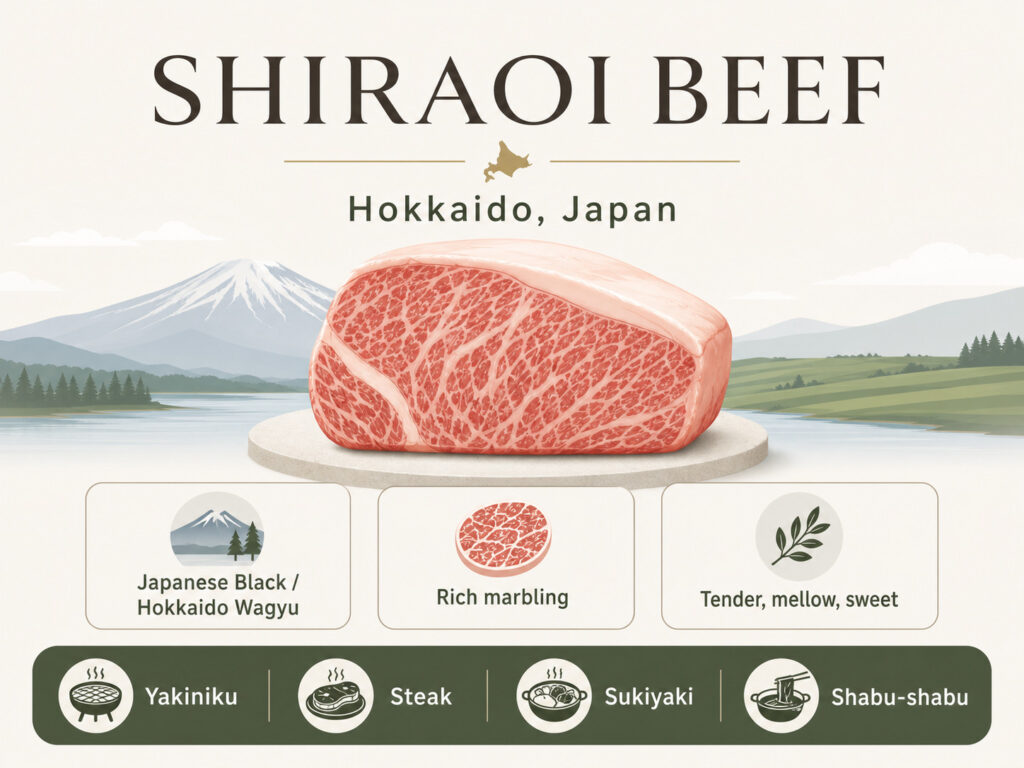
| Item | Summary |
| Region | Shiraoi Town, southern Hokkaido |
| Beef type | Japanese Black beef and Hokkaido Wagyu |
| Famous for | Rich marbling and gentle sweetness |
| Environment | Warm climate, rich nature, and abundant water |
| Brand identity | Local Hokkaido specialty and premium Japanese beef |
| Common dishes | Yakiniku, steak, sukiyaki, shabu-shabu, roast beef |
| Texture | Tender, fine-grained, and smooth |
| Flavor trend | Mellow, sweet, rich, and balanced |
This summary answers what is Shiraoi beef in simple terms. It is a beef brand from Shiraoi Town, shaped by Hokkaido’s land and water. The meat is prized for softness, marbling, and a mellow taste.
What Makes Shiraoi Beef Unique?
Shiraoi beef is unique because the brand connects cattle, land, and producer standards. Shiraoi Town sits in southern Hokkaido, near the Pacific coast. Compared with many northern inland areas, the local climate is relatively gentle.
In addition, water also matters. Rich water resources support cattle-raising, feed production, and the wider agricultural environment. As a result, the town has built a strong identity as brand beef territory.
Next, cattle breeding provides another layer. Producers raise Japanese Black cattle with attention to health, feeding, and stress reduction. This careful management helps develop marbling and tender texture.
However, environment alone does not create quality. Local producer communities also matter. Their standards, experience, and shared brand rules help protect Shiraoi beef as a recognizable Hokkaido specialty.
Flavor Profile and Texture
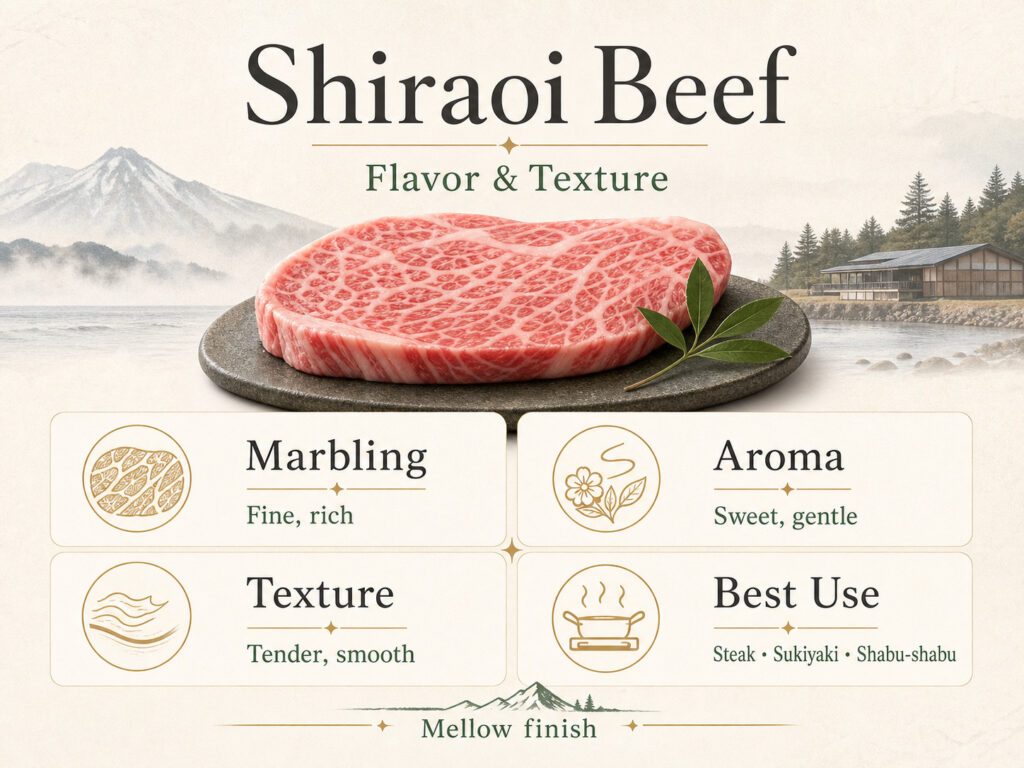
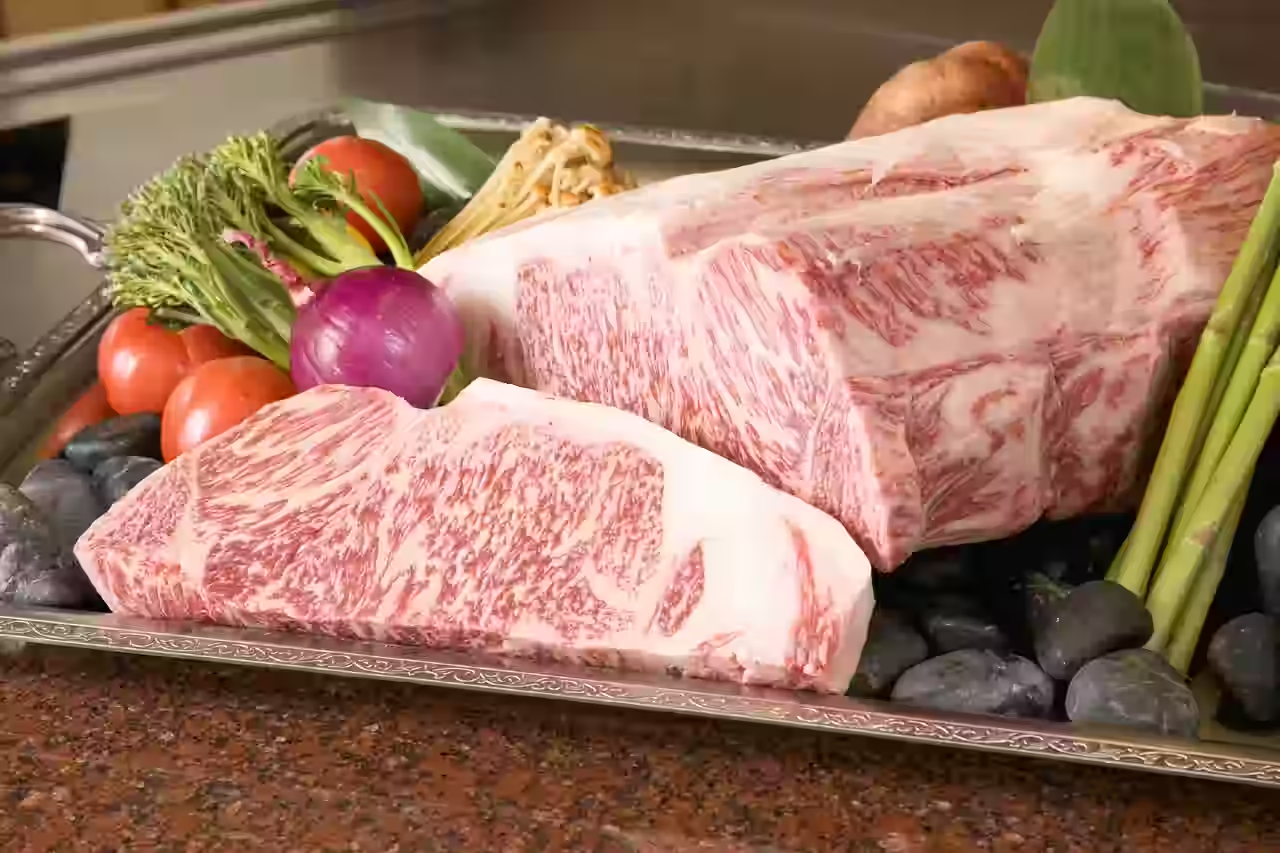
Shiraoi beef flavor profile centers on richness and softness. The marbling melts during cooking, giving the beef a gentle sweetness. This fat sweetness does not feel sharp. Instead, it spreads slowly and leaves a mellow finish.
Meanwhile, the texture is also important. Fine marbling helps create a tender bite. In good cuts, the meat feels smooth before it turns heavy. That balance makes the beef useful for both steak and thin-sliced dishes.
Compared with leaner beef, Shiraoi beef feels rounder and more luxurious. Still, the flavor can remain clean when cooked carefully. Overcooking may hide the softness, so gentle heat is usually better.
| Feature | Typical Shiraoi beef expression |
| Marbling | Fine, visible, and rich |
| Aroma | Sweet beef aroma with gentle fat notes |
| Texture | Tender, smooth, and fine-grained |
| Flavor | Mellow, rich, and savory |
| Best cooking | Short grilling, steak, sukiyaki, shabu-shabu |
| Eating impression | Deep flavor with a tender bite |
This is why Shiraoi beef is considered premium. It combines marbled richness with a texture that stays refined.
Brand Standards and Quality Criteria
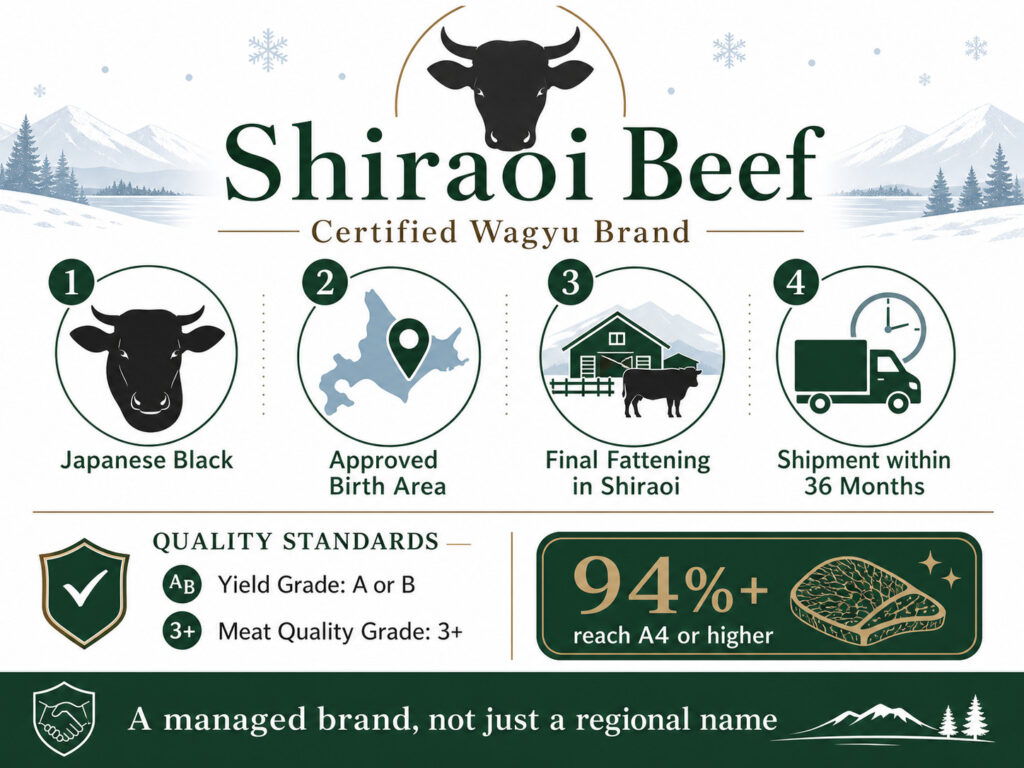
Shiraoi beef follows clear brand conditions. Brand rules center on Japanese Black cattle connected to Shiraoi Town and approved areas. Cattle must finish fattening in Shiraoi Town, which keeps the brand tied to local production.
Core criteria include Japanese Black breed, approved birth area, final fattening in Shiraoi, and shipment within 36 months. In addition, the beef needs a yield grade of A or B and a meat quality grade of 3 or higher. These rules separate Shiraoi beef from ordinary domestic beef.
This system matters for trust. Consumers can understand that Shiraoi beef is not just a regional name. It is a managed beef brand with breed, place, age, and grading conditions.
The quality image is also strong. Official brand materials note that more than 94% of Shiraoi-produced Wagyu receives A4 or higher grading. That number gives useful context for why the brand carries a premium image.
How Hokkaido Climate Affects Shiraoi Beef
Hokkaido climate affects Shiraoi beef through temperature, water, and farm environment. Shiraoi is part of coastal Hokkaido, where sea air and seasonal change shape local agriculture. The climate supports cattle farming without the harsh extremes of some inland areas.
Cooler conditions can help reduce heat stress. Meanwhile, clean water and open land support stable husbandry. These factors do not act alone, but they create a useful setting for cattle breeding.
Regional environment also shapes feed and farm management. Hokkaido has strong dairy farming and livestock culture. Therefore, Shiraoi beef belongs to a wider northern land tradition of animal husbandry.
For more on regional food culture, see Hokkaido cuisine.
History of Shiraoi Beef
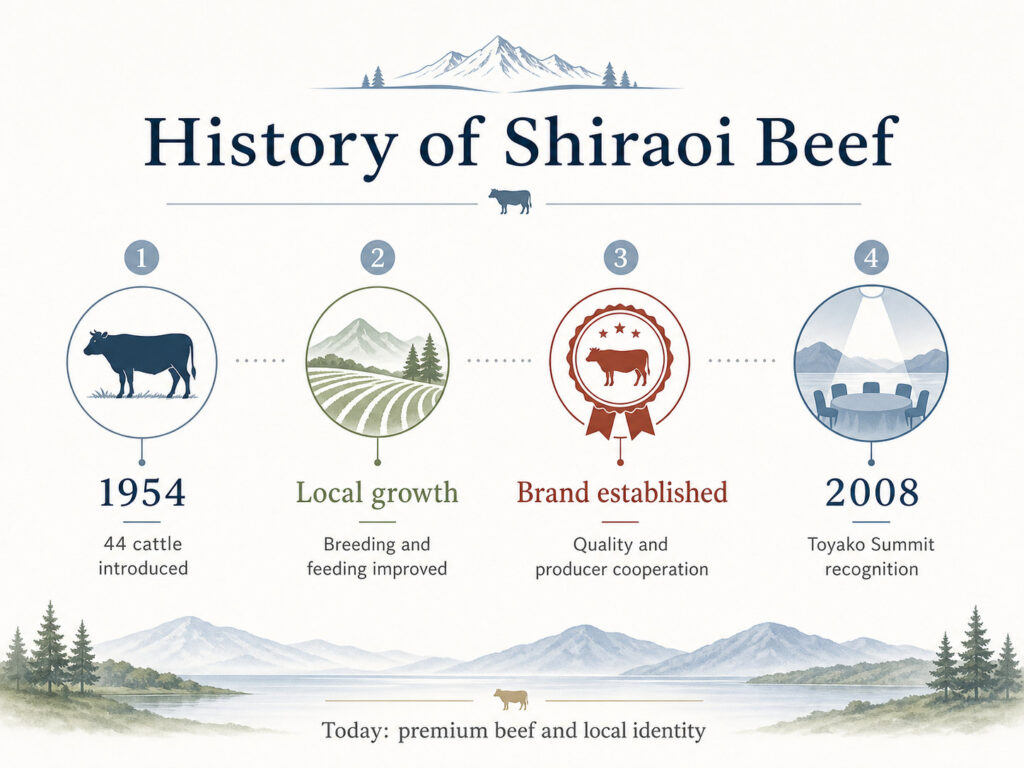
Shiraoi beef history began in 1954, when Japanese Black cattle were introduced from Shimane to Shiraoi Town. The first introduction brought 44 cattle to the area. This marked the start of Shiraoi’s modern beef production.
The choice made practical sense. Shiraoi had volcanic soil, cool conditions, and limits for field agriculture. Cattle production offered another path for local farming. Over time, producers improved breeding and feeding methods.
Eventually, the brand developed around quality control, producer cooperation, and regional pride. Shiraoi became known as one of Hokkaido’s major Wagyu-producing areas. The town later built a stronger brand structure through its promotion council.
Later, a major recognition point came in 2008. Shiraoi beef appeared in meals connected to the Hokkaido Toyako Summit. That moment helped raise national and international awareness.
Today, the brand continues through producers, local restaurants, direct sales, and regional promotion. The name now signals both premium beef and regional identity. It is not just meat from Hokkaido. It is meat tied to Shiraoi Town.
How Shiraoi Beef Differs from Other Wagyu
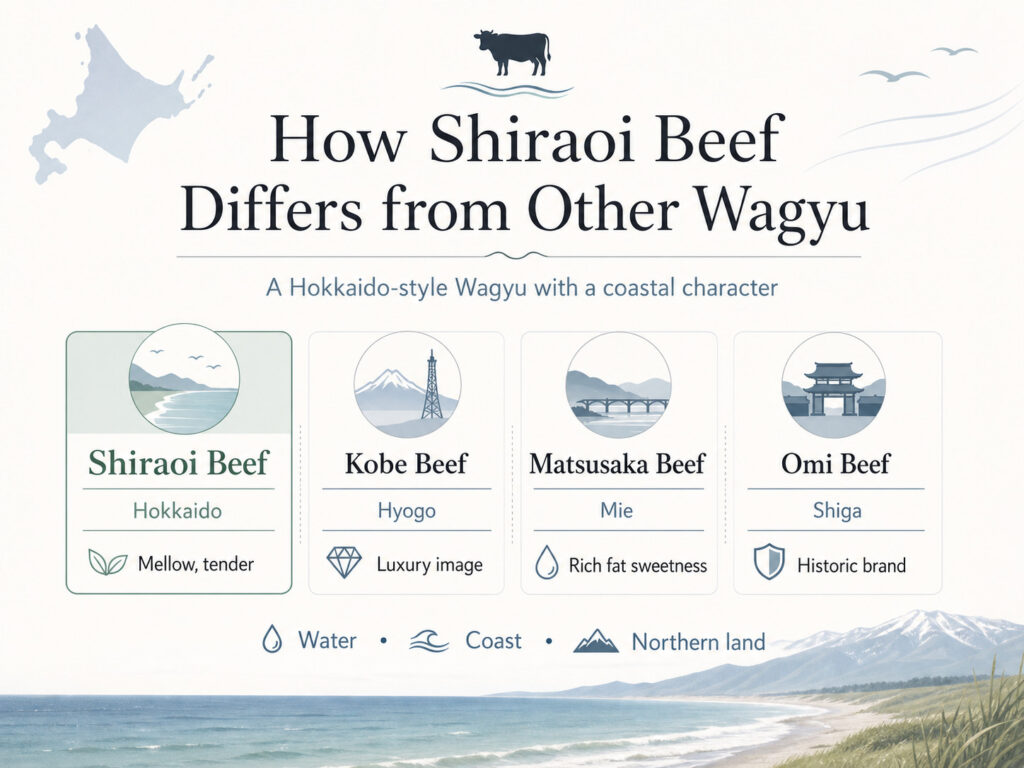
Shiraoi beef belongs to the larger world of Wagyu, but it has its own regional character. Famous brands such as Kobe, Matsusaka, and Omi are often associated with long-established mainland traditions. Shiraoi beef expresses Hokkaido food culture instead.
| Beef brand | Region | Main impression |
| Shiraoi beef | Hokkaido | Mellow, tender, shaped by water and coastal climate |
| Kobe beef | Hyogo | Highly controlled luxury Wagyu image |
| Matsusaka beef | Mie | Famous for rich fat sweetness |
| Omi beef | Shiga | Historic brand with old merchant culture |
The difference is partly environmental. Shiraoi’s abundant water, coastal setting, and northern land create a distinct story. The flavor often feels mellow, sweet, and rich, with a tender bite.
In addition, regional identity creates another difference. Shiraoi Town is also known for Ainu culture and Hokkaido heritage. While beef production is modern, the town’s identity includes layered local history.
For a related Hokkaido food with Ainu roots, see Ruibe.
Common Ways to Eat Shiraoi Beef
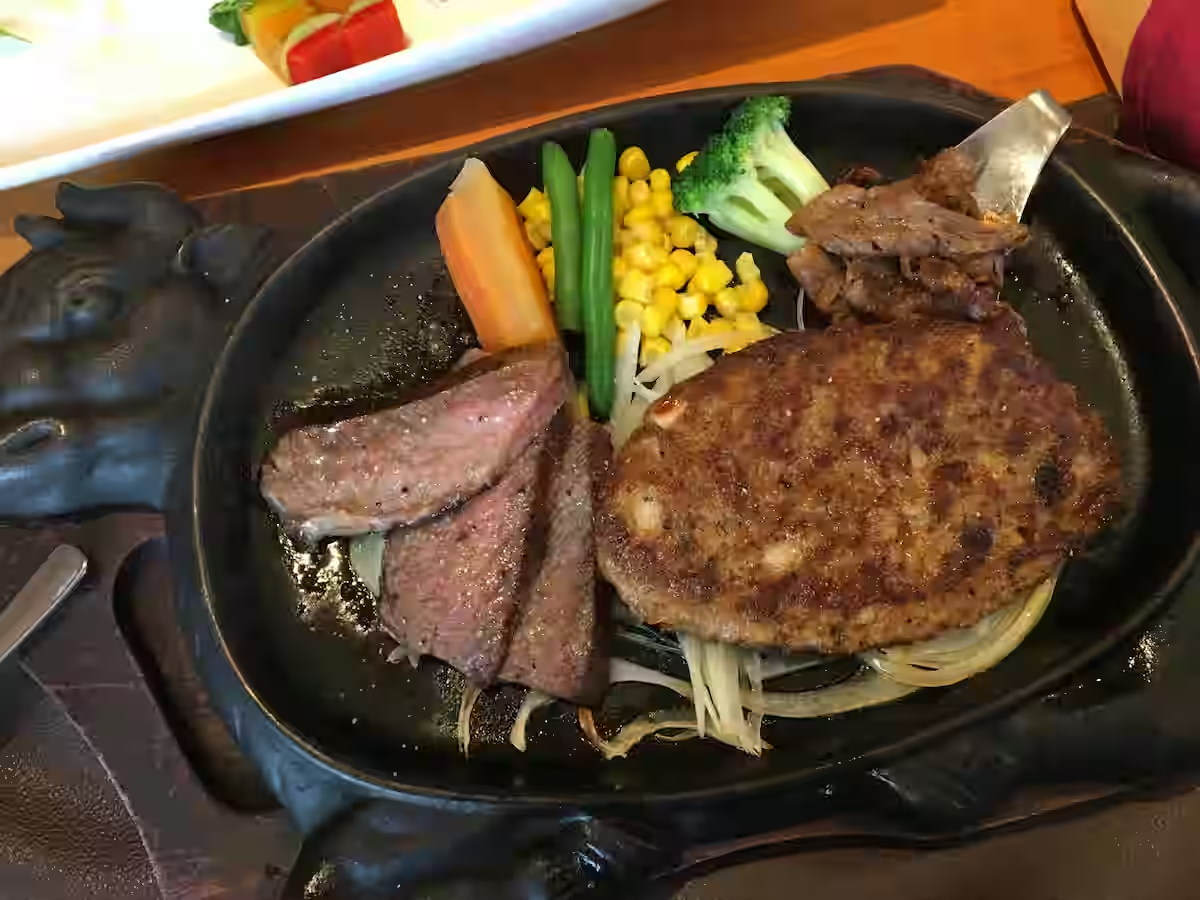
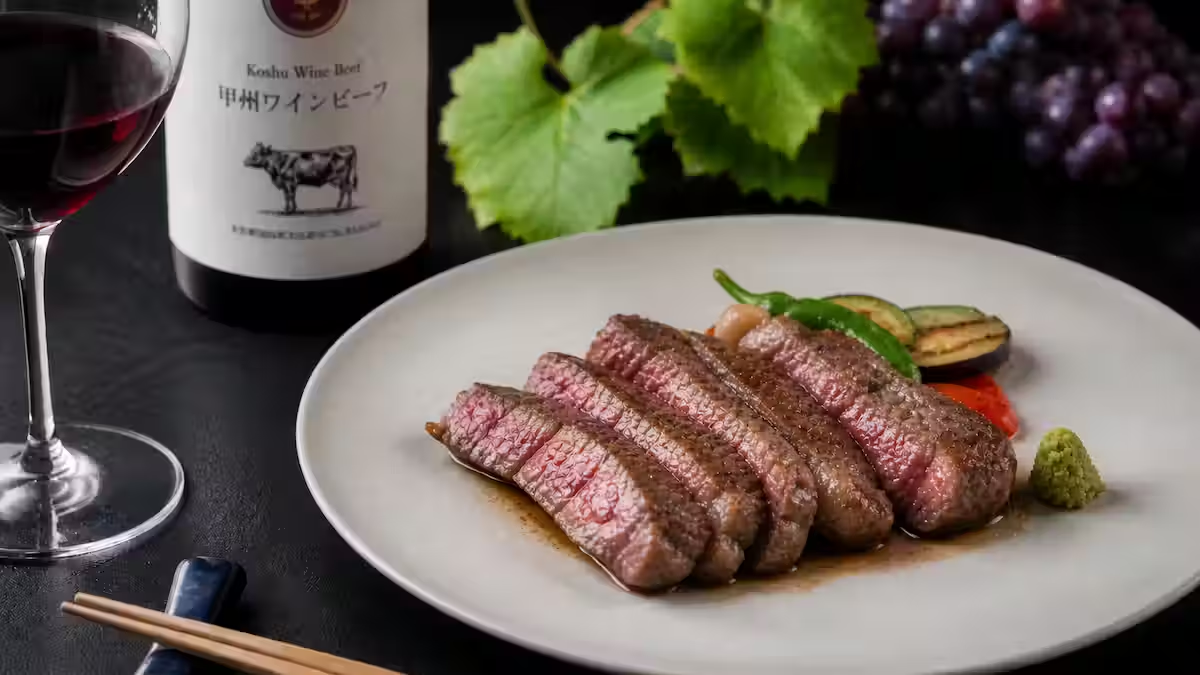
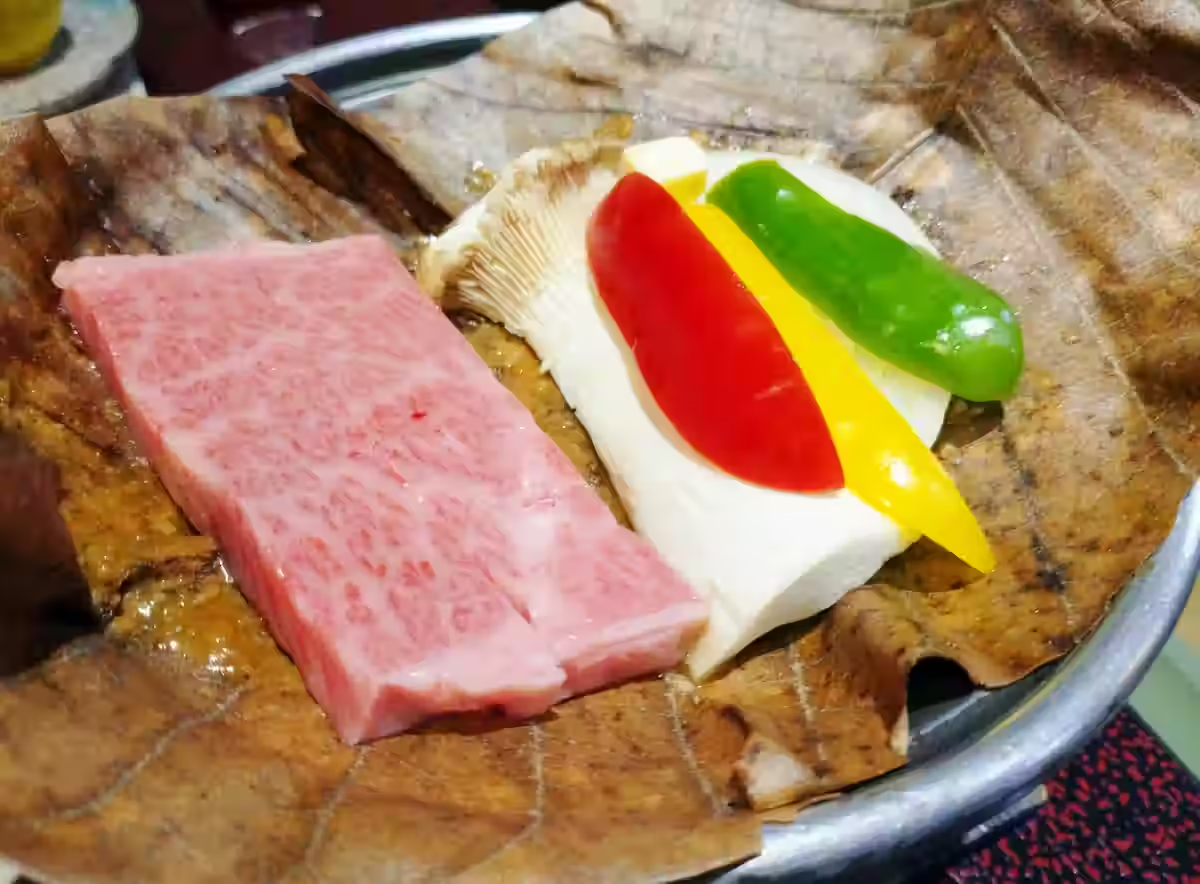
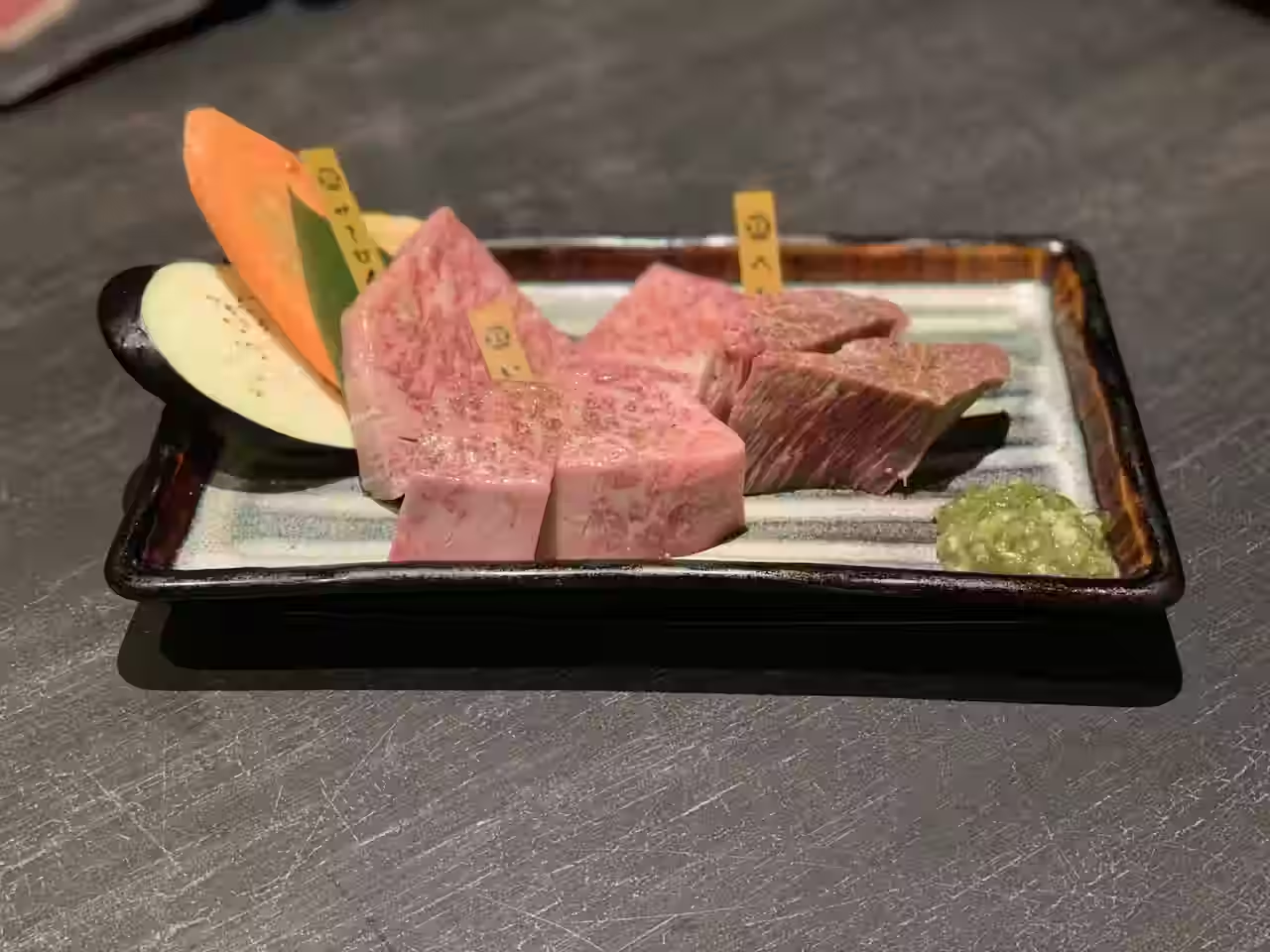
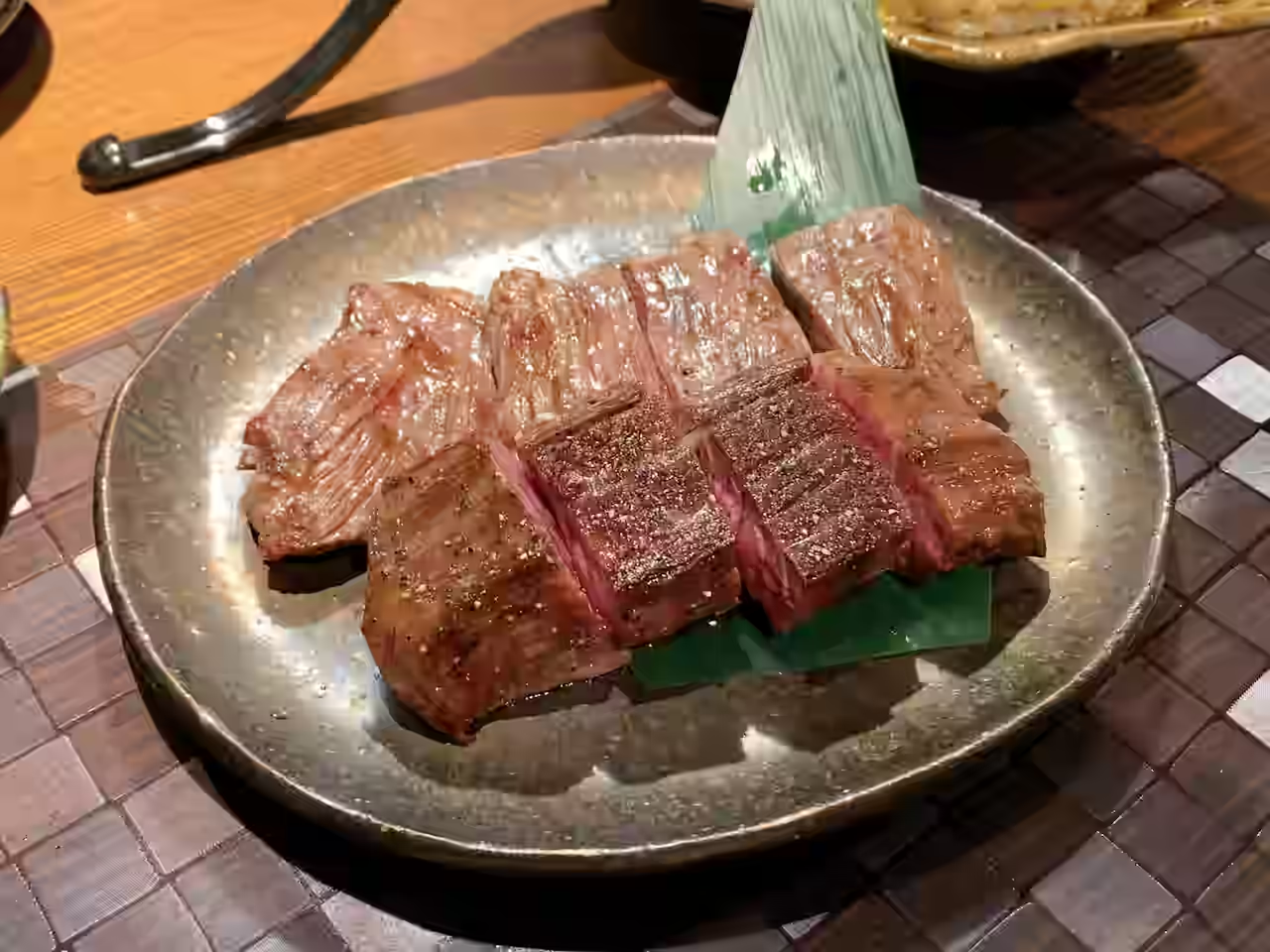
Shiraoi beef works well in dishes that highlight marbling. Thin slices suit sukiyaki and shabu-shabu. Thicker cuts work well as steak. Smaller cuts suit yakiniku because quick grilling melts the fat without losing texture.
For example, common ways to enjoy it include these.
- Steak with simple salt
- Yakiniku with light sauce
- Sukiyaki with sweet soy broth
- Shabu-shabu with ponzu or sesame sauce
- Roast beef served thin
- Hamburg steak using Wagyu richness
- Beef stew with slow-cooked depth
For first-time diners, steak or yakiniku is easiest. These methods show fat sweetness and tenderness clearly. For steak, medium-rare to medium often preserves softness. For yakiniku, short grilling usually works better than long cooking.
Where Can You Try or Buy Shiraoi Beef?
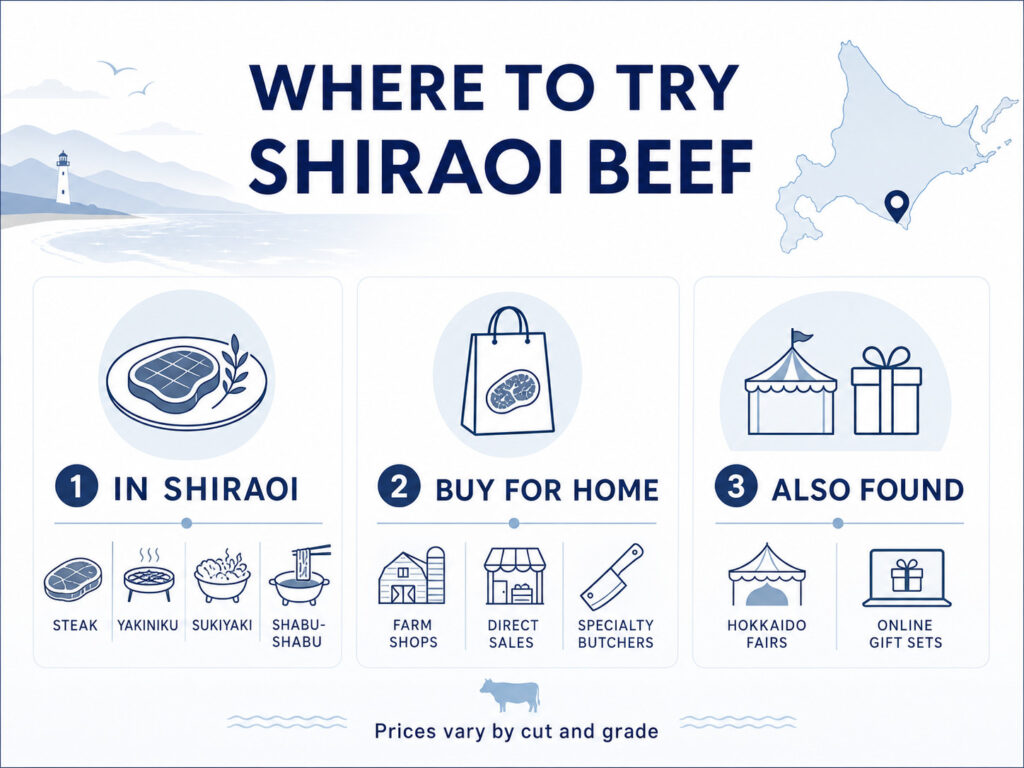
Shiraoi beef is easiest to experience in Shiraoi Town and nearby Hokkaido areas. Local restaurants often serve steak, yakiniku, sukiyaki, and shabu-shabu. Some farm restaurants and direct sales shops also sell cuts for home cooking.
Visitors may also find Shiraoi beef at Hokkaido product fairs or specialty butcher shops. Online gift sets appear as well, though price changes by cut, grade, and weight. Therefore, official sellers or recognized retailers are safer choices.
Restaurant prices vary widely. Casual dishes cost less than premium steak courses. Gift beef sets can become expensive when they use high-grade sirloin or ribeye. Still, smaller portions make the brand easier to try.
Best Pairings and Local Food Context
Shiraoi beef pairs well with simple sides. Rice, grilled vegetables, potatoes, and light pickles balance the marbling. Strong sauces can work, but they may hide the beef’s mellow flavor.
Moreover, Hokkaido ingredients also fit naturally. Corn, potatoes, dairy products, and seafood all belong to the same regional food culture. Therefore, a Shiraoi beef meal can feel broader than a single steak.
For general food planning, see Hokkaido food. For wider Japanese food categories, see local specialties.
Final Thoughts
Shiraoi beef is a prized Hokkaido Wagyu shaped by land, water, and producer skill. It offers rich marbling, gentle sweetness, and deep flavor with a tender bite. The brand also reflects Shiraoi Town’s regional identity.
For readers studying Japanese brand beef, Shiraoi beef is an important northern example. It shows how climate, water, cattle breeding, and local culture can create a distinctive premium food.
Shiraoi Beef FAQ
What is Shiraoi beef?
This premium culinary brand represents high-quality Wagyu from the southern region of Japan’s northern island. Local farmers raise elite Japanese Black cattle under strict regional quality standards. Food lovers praise this meat for its rich marbling, mellow fat sweetness, and exceptionally tender, fine-grained texture. The area’s mild coastal climate, rich clean water resources, and dedicated producer community shape its unique identity. These factors establish the product as one of the island’s most famous signature meat specialties.
Why is Shiraoi beef famous?
This luxury meat enjoys immense fame because it beautifully combines a pristine northern environment with highly disciplined cattle breeding. The local town offers abundant water resources, a gentle coastal climate, and generations of experienced producers. Furthermore, the G8 summit organizers selected this specific brand in 2008, which rapidly spread its prestigious reputation worldwide. Today, gourmets highly value this product as a prime example of premium Japanese Wagyu.
How does Shiraoi beef taste?
It delivers an incredibly rich, mellow, and slightly sweet flavor profile due to its abundant marbling. The high-quality fat melts smoothly at low temperatures, providing a gentle and clean finish on the palate. Diners enjoy an exceptionally tender, fine-grained texture with every single bite. The best cuts feel remarkably luxurious and satisfying without ever becoming heavy or greasy.
What makes Shiraoi beef different from other Wagyu?
This exceptional meat differs from other varieties through its northern island origin, unique coastal environment, and strict local branding standards. The product beautifully reflects the local town’s clean spring water, mild climate, and dedicated cooperative of producers. While it shares the typical marbling of Japanese Black cattle, its distinctive regional story sets it apart. The final flavor profile feels remarkably mellow, sweet, and highly refined on the tongue.
How should I eat Shiraoi beef?
Diners can perfectly enjoy this marbled meat as steak, yakiniku, sukiyaki, or shabu-shabu. Thick steak cuts highlight the fine-grained texture, while thin slices for Japanese barbecue release the sweet aroma quickly over charcoal. Preparing it as sukiyaki brings out the natural sweetness of the fat through the savory soy sauce. Alternatively, quick boiling in shabu-shabu hot pot offers a lighter, highly refreshing expression of the meat.
Is Shiraoi beef expensive?
This premium beef typically commands higher prices than ordinary domestic varieties due to its pure breed, high marbling score, and strict quality controls. Final costs vary greatly depending on the specific cut, grade, weight, and restaurant style you choose. Premium steak cuts and beautiful gift boxes naturally cost more than casual dishes like beef bowls or croquettes. Ordering smaller yakiniku portions at a local grill offers an easier, highly affordable first experience for budget-conscious travelers.
Where does Shiraoi beef come from?
This prestigious brand originates from Shiraoi Town, located in the scenic southwestern region of Hokkaido. Local farmers began raising Black Toyaki cattle here in 1954, making it the very first Wagyu brand on the northern island. The surrounding Lake Toya and Shikotsu-Toya National Park provide the pristine natural environment that nurtures these cattle.
Where can I eat Shiraoi beef in Japan?
You will find the freshest and most authentic dining experiences directly in Shiraoi Town at local steakhouses and butcher shops. Famous restaurants near Upopoy (the National Ainu Museum and Park) serve these grilled delicacies daily. High-end restaurants in Sapporo and luxury hotels in Tokyo also feature this premium brand on their seasonal menus.
Is Shiraoi beef vegetarian or vegan friendly?
This premium ingredient consists entirely of high-grade Wagyu beef. Vegans and vegetarians cannot eat this meat product, though they can easily find fresh vegetable dishes in Hokkaido. Many local restaurants serving this delicacy also offer plant-based sides using the region’s famous local produce.
Is Shiraoi beef popular outside Japan?
This elite brand enjoys rapidly growing popularity among luxury gourmets outside Japan. High-end steak joints in major Asian hubs like Singapore, Hong Kong, and Taiwan import these premium cuts. International food lovers highly prize its clean, sweet marbling as a stellar example of northern Japanese agricultural excellence.
References
- Shiraoi Beef Brand Promotion Council – About Shiraoi Beef – checked in 2026; official brand definition, quality standards, history, and A4-or-higher quality reference.
- Shiraoi Town – Shiraoi Beef – checked in 2026; official town information on origin, standards, cattle numbers, and production history.
- HOKKAIDO LOVE – Shiraoi Beef – checked in 2026; Hokkaido tourism information on Shiraoi beef texture, feeding, and dishes.
- UU-Hokkaido – Shiraoi Wagyu – checked in 2026; English overview of Shiraoi Wagyu, brand rules, and recommended dishes.
- Japan Meat Information Service Center – Beef Grading – checked in 2026; official explanation of Japanese beef yield and quality grading.
- Japanese Wagyu – checked in 2026; internal overview of Wagyu and Japanese beef culture.
- Wagyu beef – checked in 2026; internal explanation of Wagyu breeds and grading.
- Japanese Yakiniku – checked in 2026; internal reference for grilled beef dining culture.
- Hokkaido Food Guide – checked in 2026; internal reference for Hokkaido regional food culture.
- Kurashiki Official Tourism – Kurashiki Udon Bukkake – checked in 2026; required reference source.




Comments