



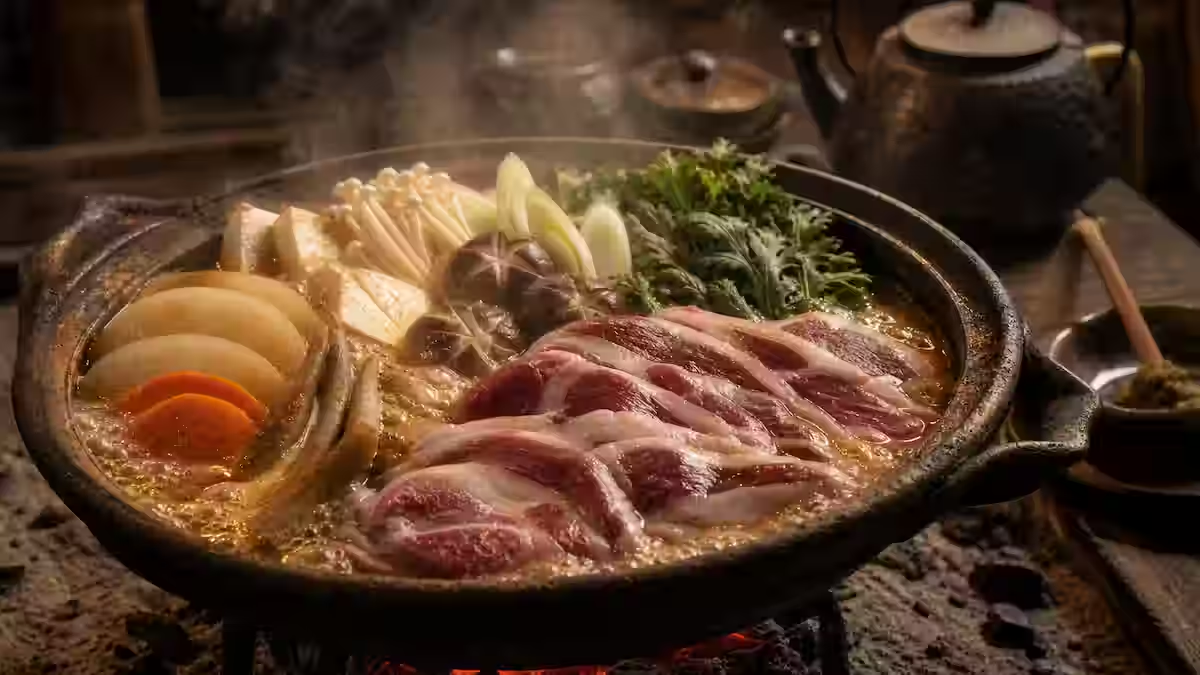
Picture a cold mountain village in old Japan. A heavy iron pot bubbles over the coals. Inside simmers dark, marbled wild boar meat. This warming dish is yamakujira nabe. It is one of Japan’s oldest game-meat hot pots.
So what is yamakujira nabe exactly? It is a rich and hearty wild boar hot pot from Japan. Cooks simmer boar meat with miso and root vegetables. The name literally means “mountain whale.” That strange name hides a fascinating history.
Today, many people know boar hot pot as botan nabe. Yet the older Edo-style name was yamakujira. Both dishes share the same star ingredient. So the two names often cause friendly confusion. For more on Japanese one-pot dishes, see our traditional Japanese soups guide.
Quick Facts About Yamakujira Nabe
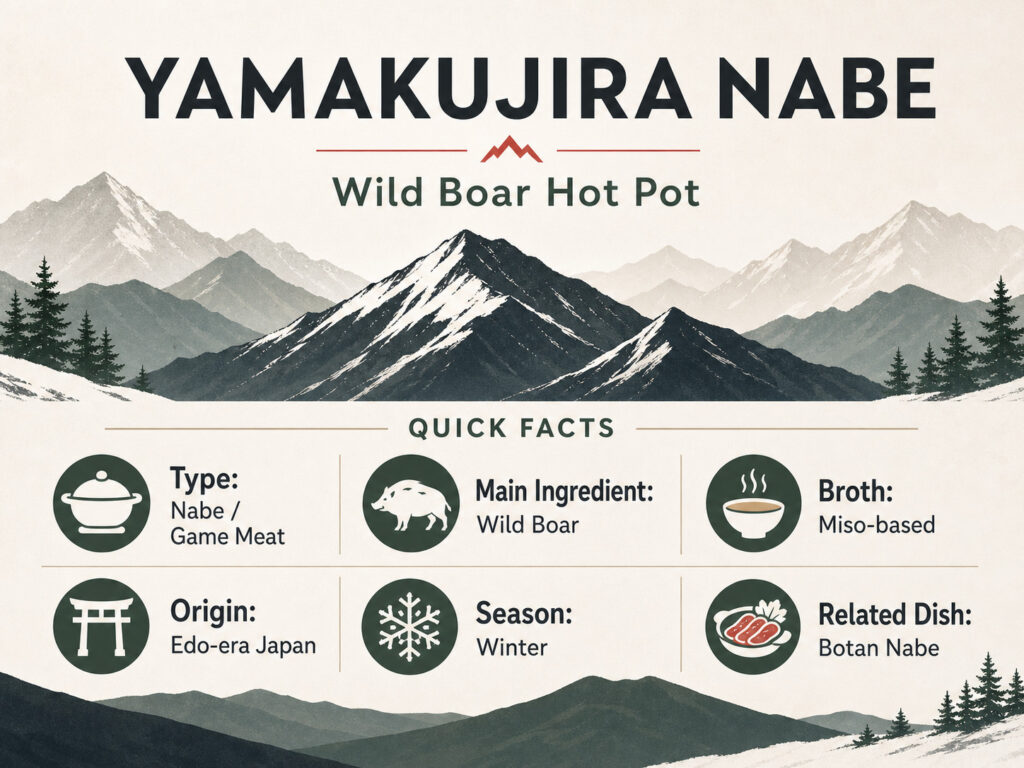
Here is a quick snapshot before the details begin.
| Japanese Name | 山鯨 / 山くじら鍋 (yamakujira nabe) |
| English | Wild boar hot pot |
| Type | Nabe hot pot, gibier (game meat) |
| Main Ingredient | Wild boar meat (inoshishi) |
| Broth | Miso-based, with root vegetables |
| Origin | Edo-era game-meat culture |
| Regions | Tosa (Kochi), Tamba-Sasayama, rural Japan |
| Season | Winter |
| Related Dish | Botan nabe (peony hot pot) |
What Does Yamakujira Nabe Taste Like?
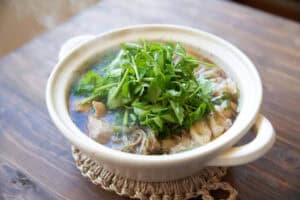
Yamakujira nabe is a wild boar hot pot. The boar meat sits at its heart. Cooks slice it thin to show its marbling. The fat ribbons through the deep red meat. Simmered gently, it turns tender and rich.
The broth is usually miso-based. A miso-based wild boar stew with root vegetables feels deeply comforting. Daikon, carrot, burdock, and mushrooms join the pot. Tofu and leafy greens often appear too. So every bowl mixes meat, vegetables, and warmth.
The flavor is bold but not heavy. Boar meat tastes a little like rich pork. Yet it carries a deeper, gamey character. The fat is sweet and full of collagen. This fatty, collagen-rich boar meat hot pot warms you from within.
How Does Boar Compare to Pork?
How does the boar taste compared to pork? The lean parts feel firmer and more savory. The fat melts slowly and coats the broth. Some people notice a faint wild aroma. Good preparation keeps that aroma gentle and pleasant. So the meat tastes clean, not strong.
Many newcomers worry the meat will be tough. In truth, slow simmering makes it soft. The collagen breaks down into silky richness. So patience rewards the cook with tenderness. This is winter comfort food at its finest.
Yamakujira nabe belongs to the world of Japanese gibier. Gibier means wild game meat in French. This Japanese gibier yamakujira nabe celebrates the mountain harvest. Hunters once relied on boar through the cold months. So the dish ties food to the rhythm of nature.
Yamakujira Nabe vs Botan Nabe
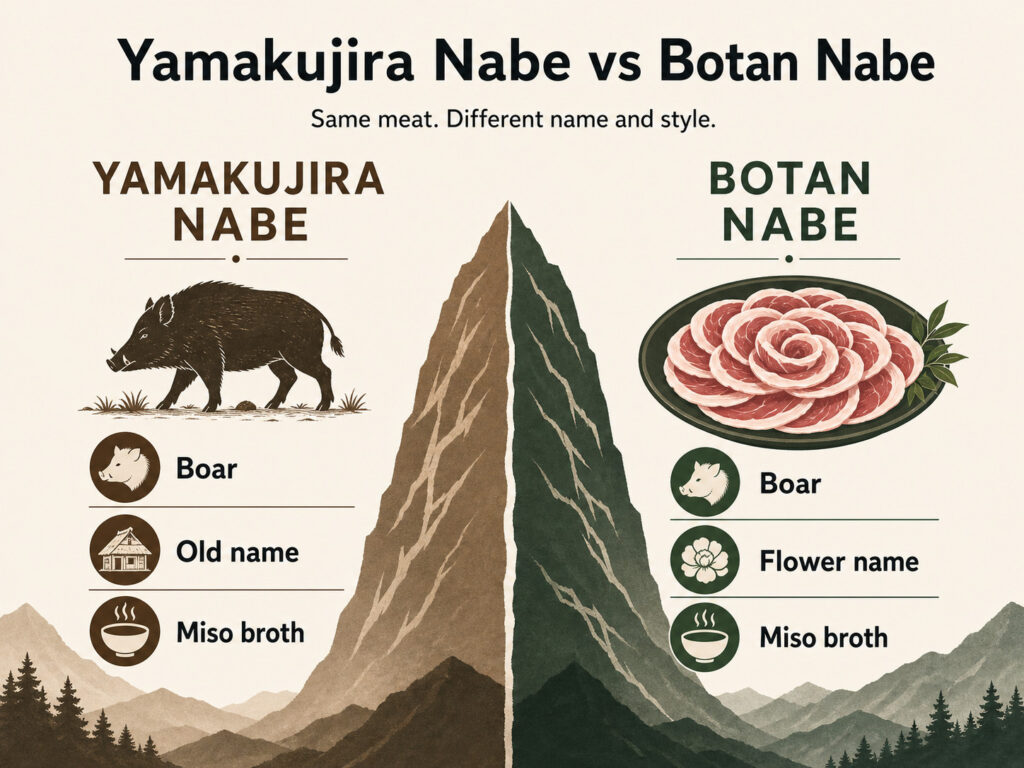
It is worth comparing the famous boar dishes. Yamakujira nabe and botan nabe are very close cousins. Both simmer wild boar in a miso broth. The difference lies mostly in the name and region. So a quick comparison helps clear things up.
| Point | Yamakujira Nabe | Botan Nabe |
|---|---|---|
| Main meat | Wild boar | Wild boar |
| Name meaning | “Mountain whale” | “Peony” flower |
| Origin of name | Edo-era disguise for boar | From flower-like meat slices |
| Typical broth | Miso-based | Miso-based |
| Image | Old Edo game-meat culture | Elegant modern presentation |
The botan nabe name comes from the plant world. Sliced boar meat looks like a peony, or botan. Cooks arrange the red slices like flower petals. So the dish earned a beautiful, poetic name. Yamakujira, by contrast, carries an older disguise.
Why Was Wild Boar Called “Mountain Whale”?
Why was wild boar meat called yamakujira? The answer lies in old religious custom. For centuries, many avoided eating four-legged animals. Buddhist values discouraged the killing of land beasts. Yet people still craved nourishing meat in winter.
Whale offered a clever loophole at the time. People then saw whales as fish, not mammals. Fish remained acceptable to eat without guilt. So clever cooks called boar meat “mountain whale.” This let people enjoy it with a clear conscience.
This habit had its own gentle name too. Eating such meat was called kusurigui, or “medicine eating.” People framed it as a health remedy, not indulgence. The word even became a winter season word in poetry. So the meat carried both flavor and quiet excuse.
Yamakujira Nabe in Edo-Era Japan
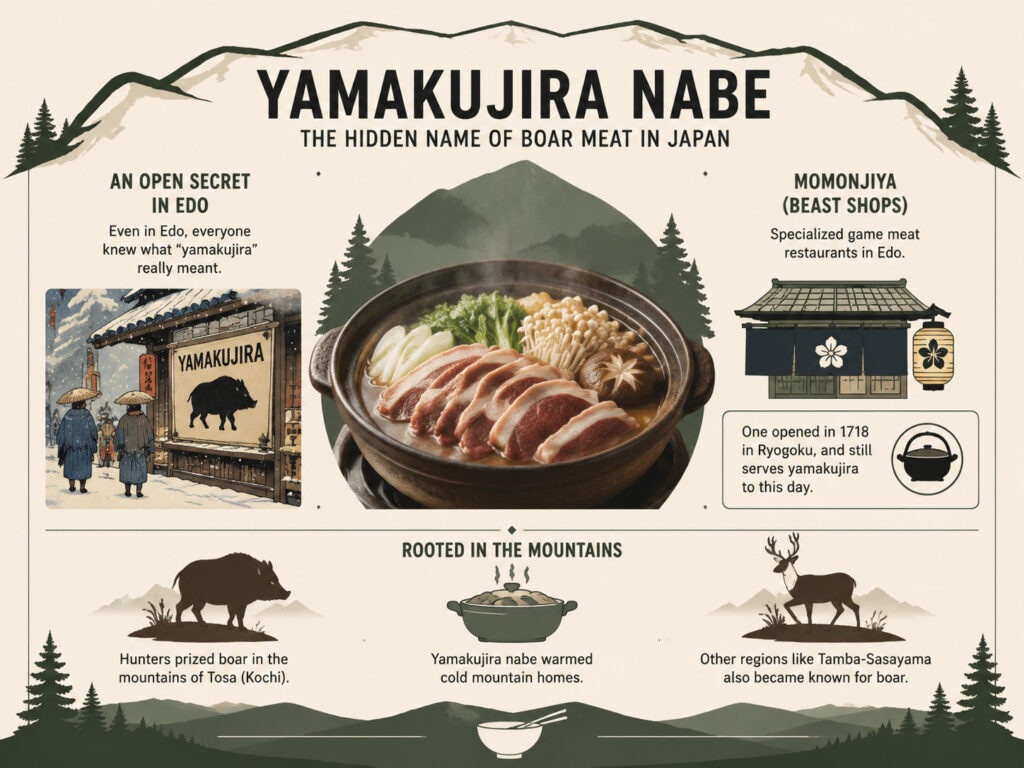
The famous artist Hiroshige captured this world. One snowy scene shows a shop sign reading “yamakujira.” It advertised boar meat to hungry Edo customers. So the disguise was an open secret in the city. Everyone understood what “mountain whale” really meant.
These Edo-era game meat restaurants had a special name. People called them momonjiya, or beast shops. They sold boar, deer, and other wild meats. One famous momonjiya opened in 1718 in Ryogoku. Remarkably, that shop still serves yamakujira today.
The countryside kept this tradition alive for generations. In the Tosa mountains of Kochi, hunters prized boar. Traditional yamakujira nabe from Tosa warmed cold mountain homes. Other regions, like Tamba-Sasayama, also grew famous for boar. So the dish spread across rural Japan.
Yamakujira Nabe Today
After the Meiji era, open meat eating returned. Beef and pork slowly took center stage. Yamakujira faded from everyday city menus. Yet it never disappeared from the mountains. So tradition survived in rural kitchens and old shops.
Today, the dish enjoys a quiet revival. Interest in gibier and local food keeps growing. Hunters and chefs now promote sustainable wild boar. Modern diners seek its rich, honest flavor. So this old dish feels fresh once more.
There is also a practical side to this story. Wild boar damage many farms and forests. Eating them helps balance the countryside. So enjoying yamakujira nabe carries a gentle purpose. Tradition and ecology meet in a single warm pot.
If you ever visit Japan in winter, seek it out. A steaming boar hot pot suits the cold beautifully. Share it with friends around a bubbling pot. Let the rich broth and tender meat warm you. You may taste centuries of clever, hungry history.
Yamakujira Nabe FAQ
What is yamakujira nabe?
It is a Japanese wild boar hot pot. Cooks simmer boar meat in a miso broth. Root vegetables and tofu join the pot. The name means “mountain whale.”
Why is it called “mountain whale”?
Old custom discouraged eating four-legged animals. People saw whales as fish, which were allowed. So they called boar meat “mountain whale.” This let them enjoy it without guilt.
How is yamakujira nabe different from botan nabe?
Both are wild boar hot pots with miso broth. Yamakujira is the older Edo-era name. Botan nabe refers to the peony-like meat slices. So they are largely two names for similar dishes.
What does wild boar meat taste like?
It tastes a bit like rich, deep pork. The lean meat is firm and savory. The fat is sweet and full of collagen. A faint wild aroma adds character.
Is boar meat tough?
Not when cooked slowly in a hot pot. Gentle simmering breaks down the collagen. The meat then turns soft and silky. So patience gives a tender result.
Where can I try yamakujira nabe?
Look for it in rural, mountainous regions. Kochi’s Tosa area and Tamba-Sasayama are known for boar. Some old game-meat shops in Tokyo serve it too. Winter is the best season to try it.
Is wild boar a sustainable food?
It can be, in many rural areas. Wild boar often damage farms and forests. Eating them helps manage their numbers. So the dish supports a local balance.
References
- Ministry of Agriculture, Forestry and Fisheries (MAFF), information on gibier (wild game meat) use in Japan. (Surveyed: June 2026)
- Kabuki-za, Edo Food Culture Journal, “Meat Eating in Edo.” (Surveyed: June 2026)
- Okada, Tetsu, Nihon no Aji Tankyu Jiten (Encyclopedia of Japanese Flavors), Tokyodo Publishing, 1996. (Surveyed: June 2026)
- Okitsu, Kaname, Edo Tabemono-shi (A History of Edo Foods), Sakuhinsha, 1982. (Surveyed: June 2026)
Related Articles
- Traditional Japanese Soups (Surveyed: June 2026)
- The Complete Guide to Miso Soup (Surveyed: June 2026)





Comments