



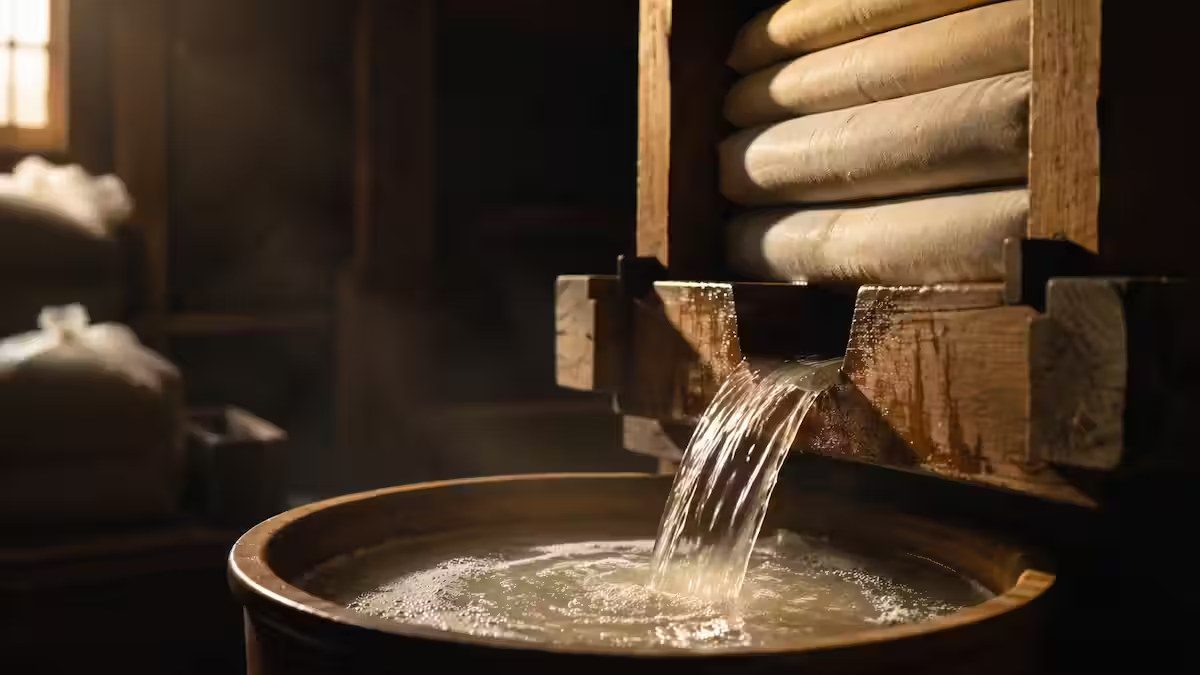
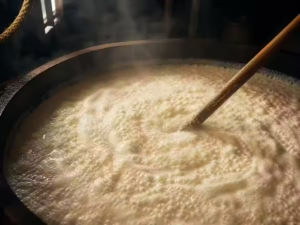
Imagine weeks of careful fermentation finally complete. The tank holds a thick, milky mash called moromi. Yet this cloudy mixture is not sake just yet. Pressing in sake brewing is the stage that turns that mash into a clear drink. It separates the liquid from the solids at last.
So what is pressing in sake brewing? Pressing, known as joso in Japanese, separates the moromi. It splits the mash into clear sake and sake lees. Brewers squeeze the fermented moromi to draw out the liquid. Whatever solids remain become sake kasu.
This stage shapes the final drink in many ways. It affects clarity, aroma, texture, and style. The timing and method both matter greatly. So pressing is far more than a simple filter step. For the wider process, see our guide on how sake is made.
Pressing also carries real legal weight. By law, sake must be pressed to count as sake. An unpressed mash becomes a different drink entirely. So this step truly defines the beverage. Let me walk you through this pivotal moment.
Quick Facts About Pressing
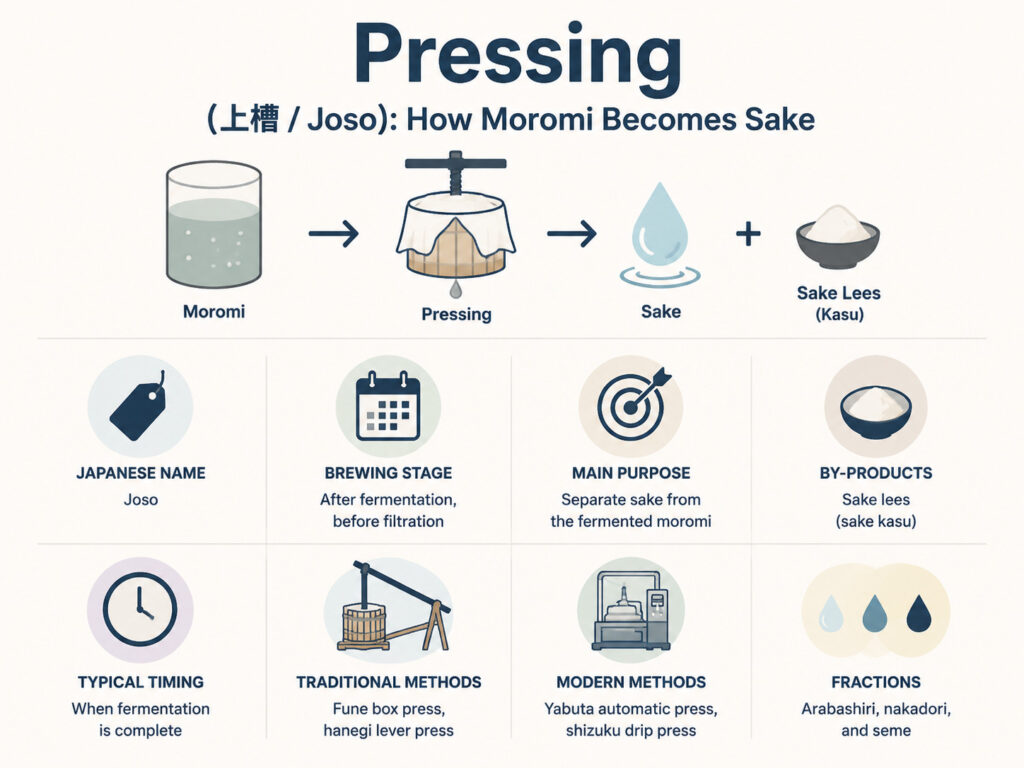
Here is a quick snapshot before the details begin.
| Japanese Name | 上槽 (joso) |
| Brewing Stage | After fermentation, before filtration |
| Main Purpose | Separate sake from the fermented moromi |
| By-products | Sake lees (sake kasu) |
| Typical Timing | When fermentation is complete |
| Traditional Methods | Fune box press, hanegi lever press |
| Modern Methods | Yabuta automatic press, shizuku drip press |
| Fractions | Arabashiri, nakadori, and seme |
What Is Pressing in Sake Brewing?
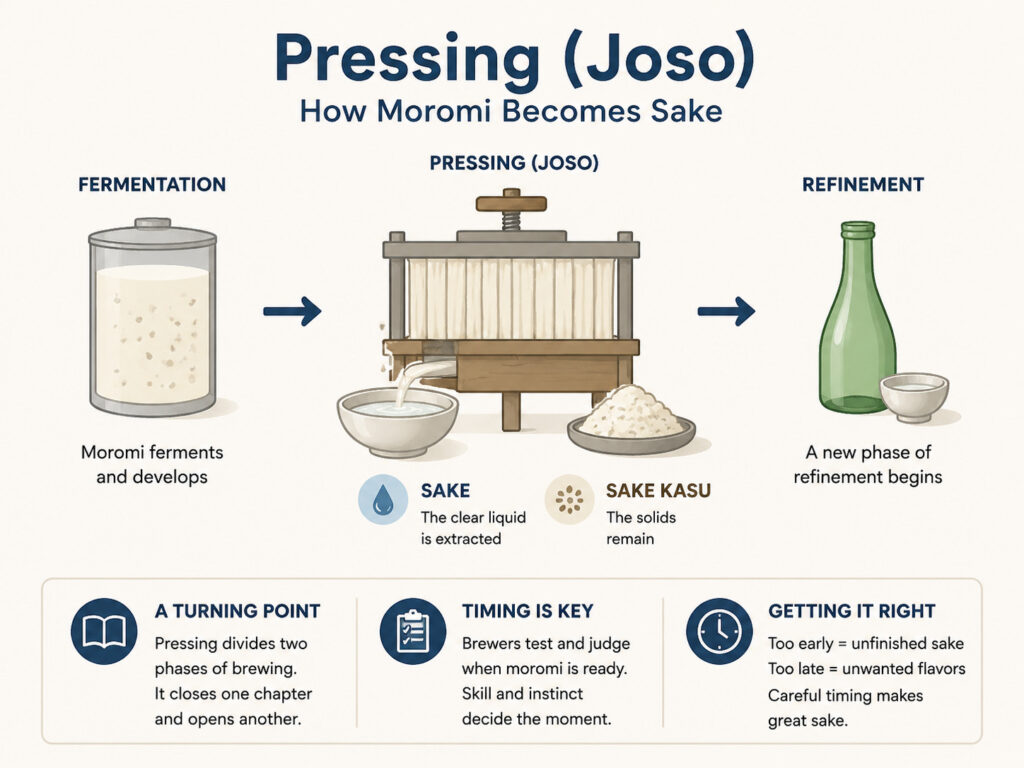
Pressing in sake brewing is the stage that separates sake from moromi. It comes right after fermentation finishes. The fermented mash still holds solid rice particles. Pressing squeezes out the clear liquid sake. The solids left behind become sake kasu.
In Japanese, this step is called joso. The word traces back to an old tool. Brewers once used a wooden box called a fune. They pressed the mash inside this box. So the name itself recalls the traditional method.
Pressing marks a clear turning point in brewing. Before it, the focus is on fermentation. After it, the focus shifts to refinement. So the press divides two great phases of the craft. It closes one chapter and opens another. For the stage just before, see our moromi guide.
The end of fermentation is a quiet moment. The bubbling mash finally grows calm. Brewers test the sugar and alcohol levels. They judge that the moromi is ready at last. So the tank waits for the press.
This decision takes real skill and instinct. Press too early, and the sake tastes unfinished. Press too late, and unwanted flavors creep in. So the brewer reads the mash with care. Timing is its own small art.
Why Pressing in Sake Brewing Is Necessary
Why is pressing in sake brewing necessary in the first place? The answer involves both law and quality. Japanese law requires sake to be filtered or pressed. Without pressing, the cloudy mash is legally not sake. So the step has a clear regulatory role.
Quality offers an even bigger reason. Solids left in the liquid would keep changing the flavor. Removing them stabilizes the young sake. It also clarifies the appearance beautifully. So pressing both protects and refines the drink.
There is also a practical matter of storage. Clear sake keeps far better than a thick mash. The separated liquid is easier to age and bottle. So pressing prepares the sake for its next steps. Filtration and pasteurization come soon after.
What Happens During Pressing?
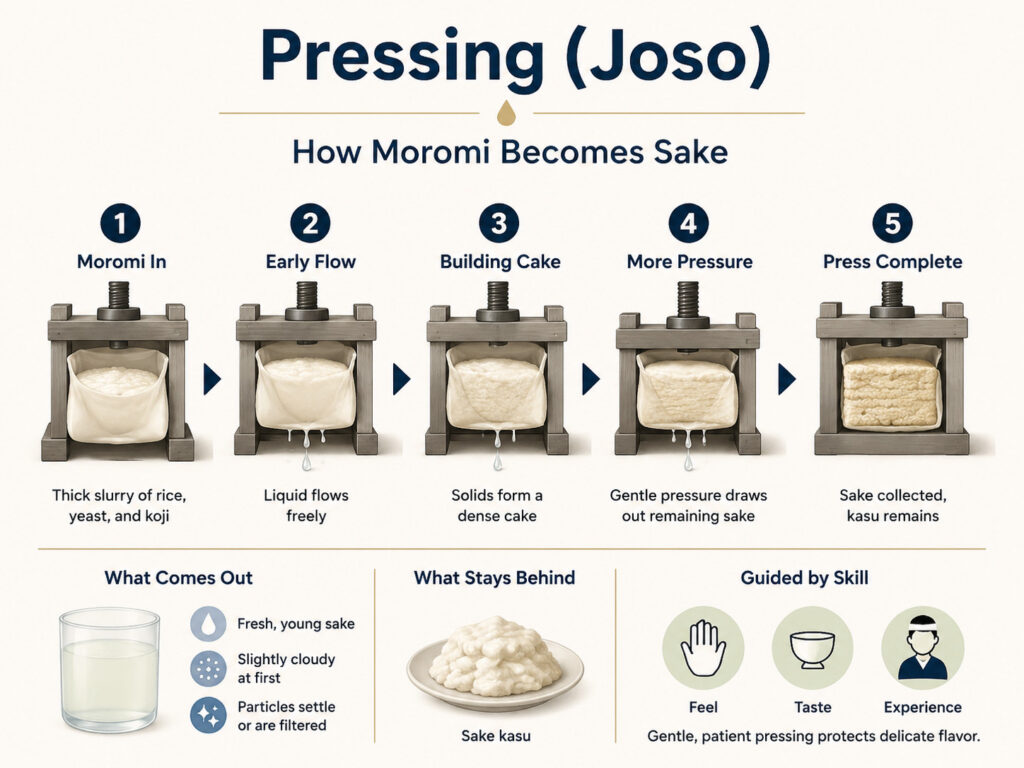
Let us follow what physically happens during pressing in sake brewing. First, brewers transfer the finished moromi to a press. The press applies gentle, even pressure to the mash. The liquid seeps through cloth or fine mesh. So clear sake escapes while solids stay behind.
The process works like filtering and squeezing at once. Early on, the liquid flows freely through the cloth. Then the solids form a dense cake inside. After that, more pressure draws out the remaining sake. So a single press moves through several stages.
The collected liquid is fresh, young sake. It often looks slightly cloudy at first. Fine particles still drift within it early on. Later, these settle or get filtered away. The solid cake left behind becomes sake kasu.
Brewers watch this whole process closely. They judge the pressure by feel and experience. They also taste the sake as it flows. So human skill still guides even modern presses. Each decision shapes the final character.
The moromi enters the press as a thick slurry. Inside sit rice solids, yeast, and koji particles. The liquid clings to all of these solids. Pressing forces the two apart gently. As a result, clear young sake flows out.
This step does not happen all at once, though. Brewers control the pressure with great care. Too much force can crush unwanted bitterness into the sake. So a gentle, gradual approach often works best. Patience here protects the delicate flavor.
Traditional Pressing: The Fune Method
For centuries, pressing in sake brewing relied on a wooden fune. The fune is a long, narrow wooden box. Its name actually means “boat” in Japanese. The shape does resemble a small boat. So the tool gave its name to the whole process.
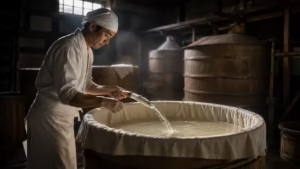
Brewers fill many small cloth bags with moromi. They stack these bags carefully inside the fune. The weight of the bags begins the pressing. Slowly, sake drips down and collects below. So the first liquid emerges with no extra force.
Then brewers add gentle pressure from above. A lid or beam presses down on the stacked bags. This squeezes out more sake over many hours. The pressure increases in slow, careful stages. So the method demands patience and skill.
An older variation used a long wooden lever. This lever press is called the hanegi method. A heavy beam pressed the bags using leverage. It relied entirely on this clever balance of weight. So brewers needed no machines at all.
The fune method has clear strengths and weaknesses. It treats the mash gently and allows fine control. Brewers can collect different fractions separately. Yet it also demands heavy manual labor. Filling and stacking the bags takes real effort.
Many premium breweries still use the fune today. They value its gentle, traditional touch. The method suits delicate, high-grade sake well. So the old wooden box has never disappeared. It remains a symbol of careful craftsmanship.
The history of pressing stretches back centuries. Early brewers had only simple, manual tools. They wrapped the mash in cloth and squeezed it. Over time, the methods grew more refined. So today’s presses rest on long tradition.
Each of these tools left a mark on language. The word joso still honors the old fune. Many labels proudly say “funeshibori” today. This means the sake was pressed in a fune. So the words carry history into the present.
Modern Pressing: The Yabuta Method
Most pressing in sake brewing today is done by machine. The dominant device is the yabuta press. It automates the whole pressing process. So it saves both time and hard labor.
The yabuta looks like a giant accordion. It holds dozens of filter panels in a row. Some large machines hold over a hundred panels. The moromi pumps into the spaces between them. So the mash spreads across a huge filtering area.
Then the machine inflates air-filled membranes. These balloons press the mash against the filters. The liquid sake flows out through the panels. The solid kasu stays stuck to the cloth. So the press cleanly separates the two.
The yabuta offers several major advantages. It works quickly and needs little manual labor. It also gives very consistent results. Moreover, it limits the mash’s contact with air. So the sake stays fresher during pressing.
Speed is one of its greatest strengths. A fune press can take two days to finish. The yabuta can do the job in about one day. So it nearly halves the pressing time. This efficiency suits busy modern breweries.
The yabuta became the industry standard decades ago. By the late twentieth century, most breweries adopted it. Today, it presses the vast majority of sake. So even fine sake often passes through a yabuta. The machine balances quality with practical needs.
Let us look closer at the yabuta machine. Its design is genuinely ingenious. Filter cloths cover many vertical plates. Between the plates sit inflatable rubber membranes. So the machine packs huge filtering power into a small space.
The yabuta also eases a serious labor problem. Many breweries struggle to find enough workers. The old methods demanded many strong hands. The machine cuts that burden sharply. So small breweries especially value its help.
Yet the yabuta cannot do everything by feel. It blends the fractions more than a fune does. Fine separation of arabashiri takes extra care. So some brewers still prefer manual methods. Each tool fits a different priority.
Shizuku Pressing: The Drip Method
The gentlest form of pressing in sake brewing uses no pressure at all. It is called shizuku, or drip pressing. Brewers simply hang bags of moromi in the air. Gravity alone pulls the sake out drop by drop. So the liquid falls slowly into waiting vessels.
This method is also called fukurozuri, or bag hanging. The name describes the technique perfectly. Each bag drips on its own gentle schedule. The collected drops form an exquisite, pure sake. So the result feels almost like liquid silk.
Shizuku pressing yields only a small amount of sake. The process is slow and highly labor-intensive. It also wastes more liquid in the leftover kasu. So the method is reserved for special bottles. Breweries rarely use it for everyday sake.
Now consider the drip method in more detail. Brewers fill sturdy bags with finished moromi. They tie the bags and hang them on a rack. Then gravity does all the gentle work. So clear sake falls drop by precious drop.
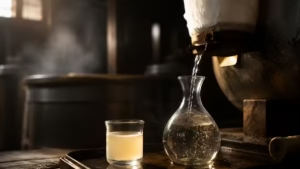
The drops gather in vessels placed below. Brewers often use large glass bottles for this. The careful collection is called tobin-gakoi. The first drops may carry a little sediment. So brewers separate the clearest portions with care.
They then chill these bottles to very low temperatures. The cold helps any haze settle out. Brewers move only the clearest sake forward. So the final entry looks crystal clear. This painstaking work suits a contest entry.
Because of its purity, shizuku suits competitions well. Brewers often enter drip-pressed sake into contests. They collect it carefully in small glass vessels. The flavor stays delicate, with no harsh notes squeezed in. So drippers prize this method for premium ginjo and daiginjo.
Still, shizuku is not automatically the best choice. Some sake styles want more body and grip. A gentle press can add welcome richness. So the method depends on the brewer’s goal. No single approach wins every time.
The patience involved can feel almost spiritual. A brewer waits hours for a modest yield. Each drop reflects deep devotion to quality. So shizuku sake carries a sense of dedication. You can almost taste the care inside it.
Arabashiri, Nakadori, and Seme
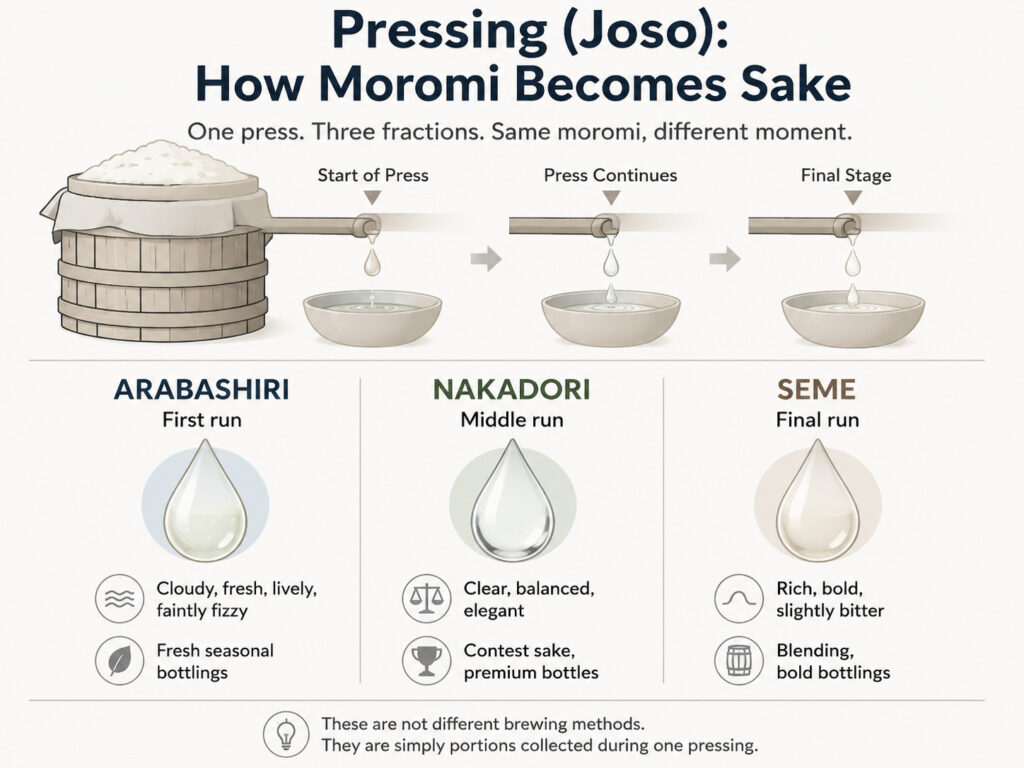
Here is a point that confuses many newcomers. Pressing does not yield one uniform sake. The liquid changes as the pressing continues. Brewers divide it into three named fractions. These are arabashiri, nakadori, and seme.
It is important to grasp one key idea here. These three are not different brewing methods. They are simply portions collected during one pressing. The same tank of moromi yields all three. So they differ only by when they emerge.
| Fraction | When It Flows | Character | Typical Use |
|---|---|---|---|
| Arabashiri | First run | Cloudy, fresh, lively, faintly fizzy | Fresh seasonal bottlings |
| Nakadori | Middle run | Clear, balanced, elegant | Contest sake, premium bottles |
| Seme | Final run | Rich, bold, slightly bitter | Blending, bold bottlings |
Arabashiri means “rough run” in Japanese. It is the very first sake to flow out. The liquid escapes under the mash’s own weight. So no real pressure is applied yet. This first run has a lively character.
Arabashiri often looks slightly cloudy and pale. It may still hold a little carbon dioxide. So it can taste fresh, vivid, and faintly fizzy. The flavor feels youthful and a touch wild. Many fans love its bright, raw energy.
Nakadori is the middle portion of the pressing. It flows after the arabashiri has passed. By now, the sake runs clear and clean. The flavor reaches its finest balance here. So nakadori is often the most prized fraction.
Brewers treasure nakadori for its harmony. Its aroma, body, and acidity align beautifully. The texture feels smooth and refined. For this reason, breweries often enter it into contests. The terms nakagumi and nakadare mean the same part.
Seme is the final portion of the pressing. It emerges only under the strongest pressure. By now, brewers squeeze the mash firmly. So the sake carries bolder, rougher notes. The flavor turns rich and slightly bitter.
Seme is not a lesser sake, though. Its strong character has real value. Brewers may blend it to add backbone. Some bottle it on its own for bold drinkers. So each fraction serves a different purpose.
Together, these three fractions tell a story. They trace the journey of a single pressing. Early energy gives way to balance, then to strength. So one tank can yield several distinct sakes. This variety is part of pressing’s quiet magic.
Sake Kasu: The Valuable By-product
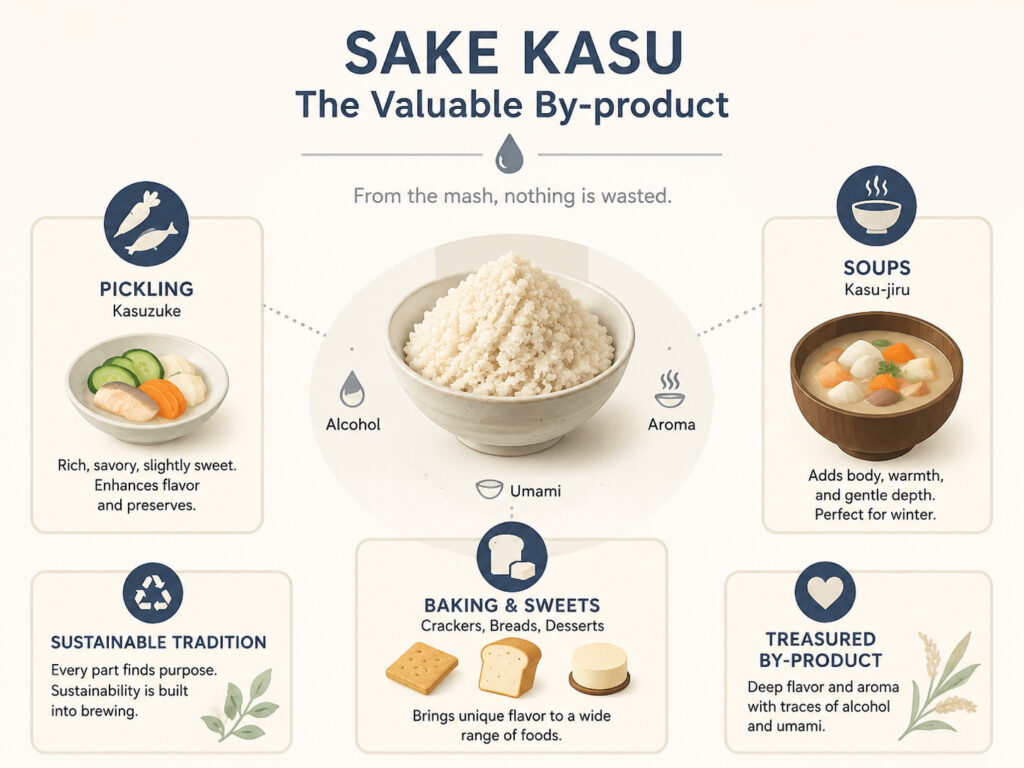
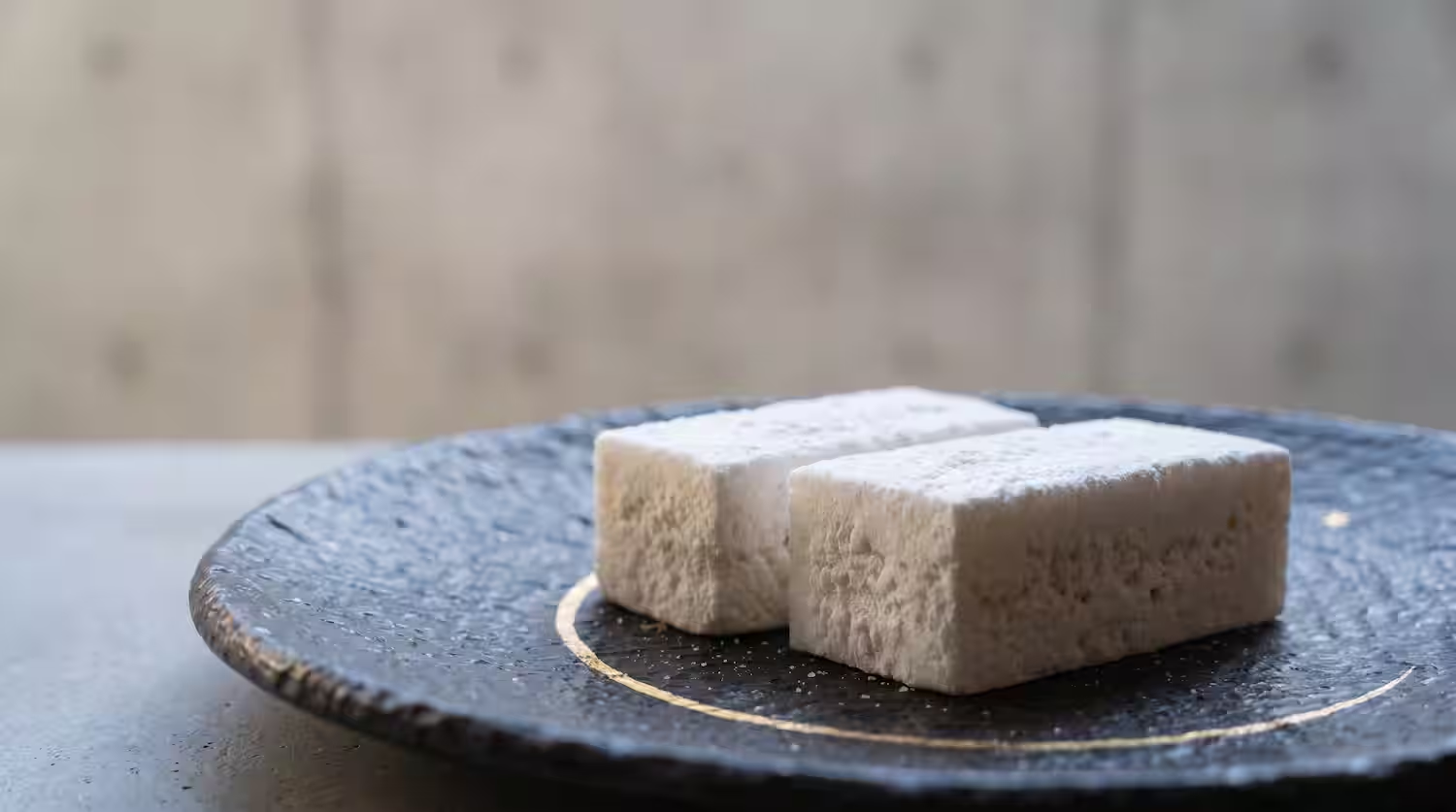
Pressing leaves behind more than just sake. The solid cake of lees is called sake kasu. It is far from a useless waste product. In fact, it is a treasured ingredient. So nothing from the mash goes to waste.
Sake kasu carries deep flavor and aroma. It still holds traces of alcohol and umami. Cooks use it in many traditional dishes. So this by-product has a long culinary life. Its uses stretch across Japanese cuisine.
One classic use is in pickling, called kasuzuke. Vegetables and fish marinate in the lees. They gain a rich, savory, slightly sweet taste. So the kasu transforms simple foods beautifully. This method also helps preserve them.
Sake kasu also enriches warming winter soups. A soup called kasujiru uses it as a base. The lees add body, warmth, and gentle depth. So the by-product becomes comfort food. It suits the cold brewing season perfectly.
Bakers and confectioners value it too. Sake kasu flavors crackers, sweets, and breads. It even appears in modern desserts. So its reach extends well beyond savory cooking. This versatility makes it genuinely prized.
The use of sake kasu reflects a deeper value. Japanese brewing has long avoided waste. Every part of the mash finds a purpose. So sustainability is built into the tradition. The humble lees prove this point nicely.
How Pressing in Sake Brewing Influences Flavor
Pressing in sake brewing shapes the finished drink in subtle ways. The method and pressure both leave their mark. So two sakes from one tank can differ. The press is a quiet but powerful tool.
Gentle pressing tends to give cleaner flavor. Less pressure means fewer harsh, bitter notes. So delicate aromas survive more fully. This is why premium sake favors soft methods. The lightest touch protects the finest scents.
Stronger pressing extracts more from the mash. It yields more liquid and deeper body. Yet it can also add rougher edges. So brewers balance yield against finesse. Every choice involves a small trade-off.
Flavor science helps explain these differences. The moromi holds both clear liquid and fine solids. Light pressing captures mostly the clean liquid. Hard pressing also drags out solid compounds. So pressure changes the chemical makeup of the sake.
Those extra compounds bring both good and bad. They add body, color, and savory depth. Yet they can also add bitterness and roughness. So the brewer balances richness against purity. The press dial is really a flavor dial.
Carbon dioxide also shapes the early sake. Fresh arabashiri often still holds dissolved gas. This gives a faint, lively prickle on the tongue. So the first run can taste almost sparkling. Many drinkers chase this fleeting freshness.
Oxygen plays the opposite role in pressing. A little contact can soften harsh edges. Too much, however, tires the delicate aromas. So modern brewers often limit air exposure. They press quickly and keep things cool.
Temperature also plays a quiet role here. Cool pressing helps preserve fragile aromas. Many brewers chill the press for fine sake. So even the room’s warmth gets controlled. These small details add up in the glass.
Traditional vs Modern Pressing
Each form of pressing in sake brewing offers its own balance. None is simply better than the others. They differ in labor, time, cost, and feel. So brewers choose based on their goals. A quick comparison makes this clear.
The fune method gives gentle, hands-on control. Yet it demands heavy labor and long hours. The yabuta works fast with little effort. However, it offers less fraction-by-fraction nuance. So the two suit different needs.
Shizuku pressing sits at the gentle extreme. It uses no pressure and yields little sake. The result can be sublime and pure. Yet the cost and labor are very high. So it stays reserved for special bottles.
The choice often reflects the sake’s purpose. Everyday sake suits the efficient yabuta. Premium and contest sake may use fune or shizuku. So the method matches the ambition. Each path has a proper place.
Pressing and Premium Sake
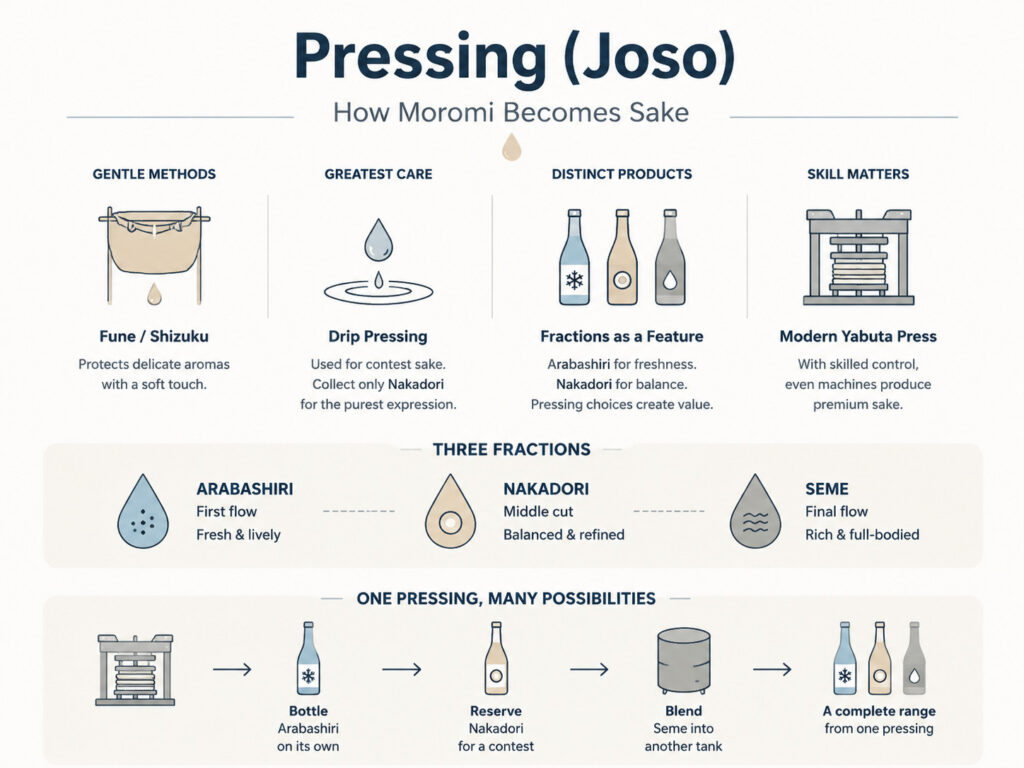
Premium sake often demands extra care at pressing. Ginjo and daiginjo carry delicate aromas. These fragile scents need a gentle method. So brewers may turn to fune or shizuku. The softer touch protects the bouquet.
Contest sake receives the greatest care of all. Brewers often choose drip pressing for it. They then collect only the prized nakadori. So the entry represents the purest expression. Every step aims for flawless quality.
Limited editions may highlight a single fraction. A bottle of pure arabashiri feels fresh and lively. A nakadori release showcases perfect balance. So pressing choices become a selling point. They let brewers craft distinct products.
Still, premium does not require a single method. Many fine sakes use the modern yabuta well. Skilled control makes the machine shine. So quality depends on the brewer, not just the tool. The press is one part of a larger art.
Consider how a brewer plans these fractions. They might bottle the arabashiri on its own. They could reserve the nakadori for a contest. Then they may blend the seme into another tank. So one pressing yields a whole product range.
What Happens After Pressing?
Pressing in sake brewing is not the final step, though. The young sake still needs refinement. Several stages follow before bottling. So the pressed liquid has a journey ahead.
First comes filtration in many cases. This step clarifies the sake further. It can also adjust color and flavor. So the liquid grows cleaner and brighter. Some sake skips heavy filtering, though.
Pasteurization usually follows next. Gentle heat stabilizes the sake for storage. It stops unwanted changes in the bottle. So the flavor stays steady over time. Some fresh styles skip this step entirely.
Fresh pressed sake even has its own name. Brewers call this lively young style shiboritate. The word means “freshly pressed” in Japanese. So fans can taste sake at its most vivid. Many drinkers wait all year for it.
After that, the sake often rests and ages. A short maturation can round out the flavor. Then brewers adjust, bottle, and ship it. So pressing begins the final stretch toward the glass. The hardest work is now behind.
How to Read Pressing Terms on a Label
Labels often hint at the pressing method used. Learning these terms helps you shop with confidence. A few words appear again and again. So a short guide makes them easy to spot.
The word funeshibori points to fune pressing. It signals a gentle, traditional approach. The term shizuku or fukurozuri means drip pressing. So these words promise a careful, premium method.
Arabashiri on a label marks the first run. It suggests a fresh, lively, slightly cloudy sake. The word nakadori or nakagumi marks the middle. So it promises balance and refined elegance.
You may also see the word shiboritate. It means the sake was bottled freshly pressed. Such bottles burst with youthful energy. So they suit drinkers who love bright flavors.
These label clues reward a little study. They let you predict a sake’s character. So you can choose a bottle with purpose. A small vocabulary unlocks real confidence at the shop. With practice, you will read them at a glance.
Common Misconceptions About Pressing
Pressing invites several common myths. Let us clear them up plainly.
- Does pressing stop fermentation? Mostly. It separates the yeast from the liquid, ending active fermentation.
- Is shizuku always best? No. The ideal method depends on the brewer’s goal.
- Is arabashiri unfiltered? It is the first run and may look cloudy, but it is still pressed.
- Does pressing set the grade? No. Grade depends on rice polishing and sake type.
- Is sake kasu waste? No. It is a prized cooking ingredient.
The fraction myth causes the most confusion. So hold on to the central idea. Arabashiri, nakadori, and seme are pressing fractions. They come from one tank, not three methods. Keep that clear, and pressing makes sense.
Another myth surrounds the drip method. Some assume shizuku is always the finest. Yet the best method depends on the goal. So judge each sake on its own merits. The tool alone does not crown a winner.
Final Thoughts
Pressing in sake brewing is both science and art. It separates finished sake from the fermented moromi. The method and timing shape aroma, texture, and balance. So this single stage influences the whole character. Arabashiri, nakadori, and seme show its quiet range. They flow from one tank, not three methods. No single press is best for every sake. Instead, each choice reflects the brewer’s vision. Understand pressing, and you understand how moromi becomes sake.
Pressing in Sake Brewing FAQ
What is joso?
Joso is the Japanese word for sake pressing. It is the stage that separates the moromi. Brewers squeeze the mash into clear sake and lees. The name comes from the old fune press.
Why is sake pressed?
Pressing separates clear sake from solid lees. It also stabilizes and clarifies the drink. By law, sake must be pressed to qualify as sake. So the step is both legal and practical.
What is arabashiri?
Arabashiri is the first sake to flow during pressing. It runs out under the mash’s own weight. The liquid is fresh, lively, and slightly cloudy. It may even feel faintly fizzy.
What is nakadori?
Nakadori is the middle portion of the pressing. It flows clear and well balanced. Many consider it the finest fraction. Brewers often enter it into contests.
What is seme?
Seme is the final portion of the pressing. It emerges under the strongest pressure. The flavor is rich, bold, and slightly bitter. Brewers often use it for blending.
Are arabashiri, nakadori, and seme different methods?
No, they are fractions from one pressing. The same tank of moromi yields all three. They differ only by when they flow out. So they are stages, not separate methods.
What is fune pressing?
Fune pressing uses a long wooden box press. Brewers stack cloth bags of moromi inside. Gentle, gradual pressure squeezes out the sake. It is a traditional, hands-on method.
What is a yabuta press?
The yabuta is a modern automatic press. It uses inflatable membranes and filter panels. The machine works fast with little labor. Most sake today is pressed this way.
What is shizuku pressing?
Shizuku pressing uses only gravity, with no force. Brewers hang bags of moromi and collect the drips. The result is pure and delicate. It often becomes premium or contest sake.
What is sake kasu?
Sake kasu is the solid lees left after pressing. It still holds aroma, umami, and some alcohol. Cooks use it for pickling, soups, and sweets. It is a prized ingredient, not waste.
Does pressing affect sake quality?
Yes, the method and pressure shape the flavor. Gentle pressing protects delicate aromas. Stronger pressing adds body but can add roughness. So pressing choices matter for the final character.
References
- Japan Sake and Shochu Makers Association, glossary of sake terms (joso, arabashiri, nakadori, seme, sake kasu). (Surveyed: June 2026)
- National Research Institute of Brewing, sake brewing process and pressing technology. (Surveyed: June 2026)
- National Tax Agency of Japan, definition and labeling standards for seishu (refined sake). (Surveyed: June 2026)
- Bokulich et al., Applied and Environmental Microbiology, “Indigenous Bacteria and Fungi Drive Traditional Kimoto Sake Fermentations,” Vol. 80 (2014), noting that moromi is pressed, filtered, and pasteurized to become finished sake. (Surveyed: June 2026)
- Miki et al., Journal of Bioscience and Bioengineering, “Identification of 2,4,6-trichloroanisole causing a musty/muddy off-flavor in sake and its production in rice koji and moromi mash,” Vol. 100 (2005). (Surveyed: June 2026)




Comments