




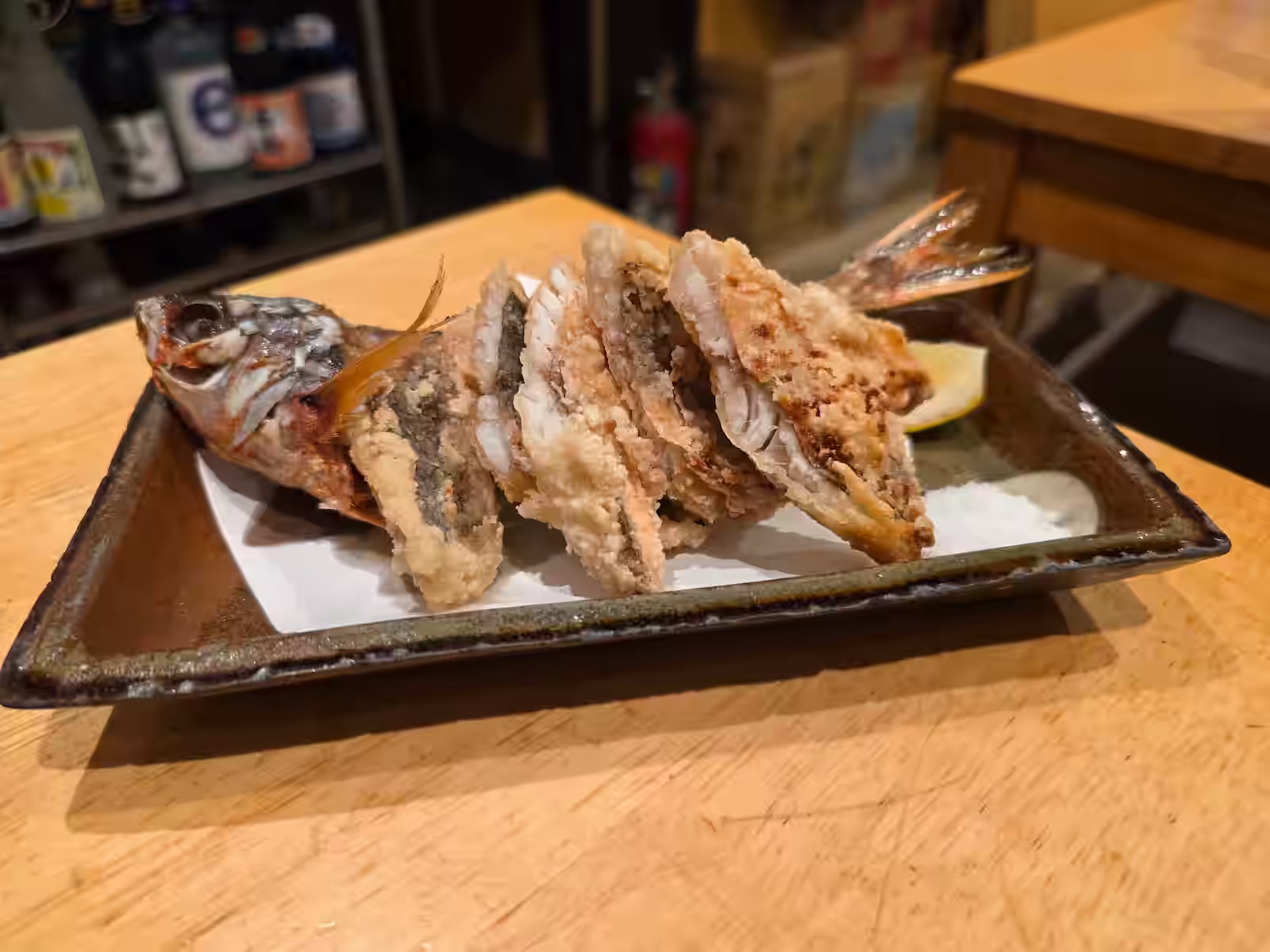
Gurukun is Okinawa’s prefectural fish, and most visitors first meet it as a whole small fish split open and deep-fried until the bones crunch. Locals call the dish gurukun no karaage. It tastes mild and clean rather than strong, so it suits people who normally avoid oily fish.
Walk into an izakaya in Naha around seven in the evening and glance at the tables nearby. Chances are that at least one carries exactly this, fins flared, fried a deep gold. Yet the fish almost never travels beyond the islands, so first-timers arrive with no reference point at all. This guide covers what gurukun actually is, how Okinawans cook it, what it costs, and how to order it without hesitating at the counter.
Gurukun at a Glance
Before the details, here is the short version. Everything below is drawn from Okinawa Prefecture publications and FishBase, with sources listed at the end.
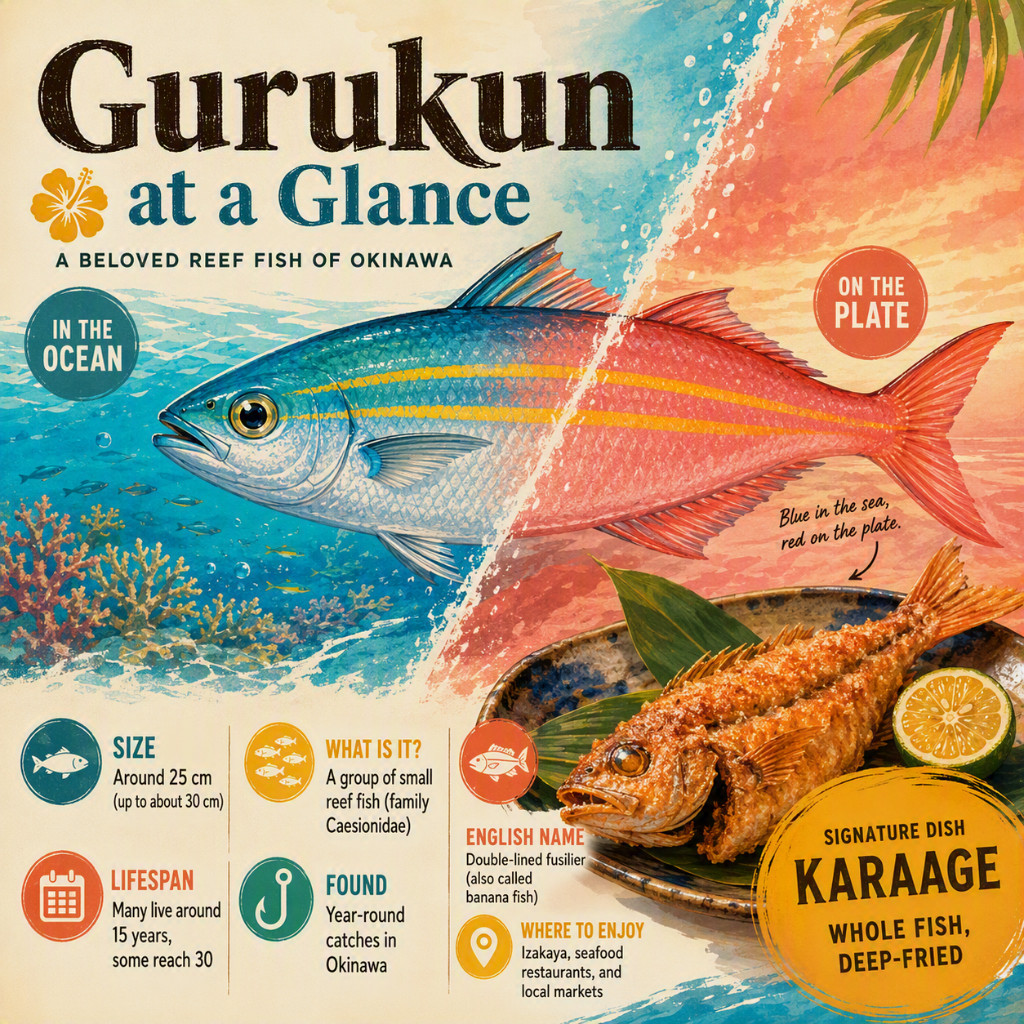
| Okinawan name | Gurukun (グルクン) |
|---|---|
| Standard Japanese name | Takasago (タカサゴ) |
| English name | Double-lined fusilier, sometimes banana fish |
| Scientific name | Pterocaesio digramma, family Caesionidae |
| Typical size | Around 25 cm, maximum about 30 cm |
| Official status | Prefectural fish of Okinawa since May 15, 1972 |
| Signature dish | Karaage, the whole fish deep-fried |
| Taste | Mild white fish, lightly sweet, not oily |
| Typical price | Roughly 1,000 to 2,000 yen for a small or medium fish |
| Where to order | Izakaya, seafood restaurants, Makishi Public Market |
| Season | Landed year-round, spawning peaks in early summer |
What Is Gurukun?
Gurukun is the Okinawan name for a group of small reef fish. Standard Japanese calls the best-known one takasago. Both names point to the same slim swimmer that schools above the coral, and Okinawa Prefecture lists it at around 25 centimeters long.
One Name, Several Species
In Okinawa, gurukun does not mean one single species. The Okinawa Prefectural Fisheries Research and Extension Center explains that islanders apply the word to the whole fusilier family, Caesionidae. Japan hosts four genera and ten species of these fish. Around eight of them show up regularly on the end of a local fishing line.
Locals even keep separate nicknames for each one. Ukugurukun, hiragurukun, and akajugurukun all sit side by side on the same rack at a fish shop. Most diners never bother with the distinction, though. Fried up, they taste close enough that the label stops mattering.
The same prefectural research also turned up something unexpected. Despite their modest size, many gurukun species live around 15 years, and a few individuals reached 30. For a fish that ends up on a weeknight plate, that longevity still surprises me.
English Name and Scientific Family
In English, the headline species is the double-lined fusilier, Pterocaesio digramma. The name refers to the two thin yellow lines running along each flank. Some field guides also use the nickname banana fish, which has nothing to do with any other use of that phrase.
Fusiliers belong to the family Caesionidae, although several classifications place them inside the snapper family, Lutjanidae. That unsettled boundary explains why a few Japanese sources file gurukun under snappers. Either way, the kitchen treats it as a small white reef fish.
Color is where things get strange. Underwater the fish looks blue and green as it drifts over the reef. Once it leaves the water, however, the body flushes pink or red. Okinawa Churaumi Aquarium describes exactly this shift, and it still catches me off guard at the market. Nobody warns you that the blue fish you saw while snorkeling is the red one on the ice.
Where the Name Comes From
Nobody has confirmed the origin of the word gurukun. One popular explanation links the first syllable to a local term for a group, since the fish moves in dense schools. Another traces it to the restless circling motion the schools make. Both remain folk etymologies rather than documented history, so treat them as stories rather than facts.
Juveniles carry their own dialect name, sanera. Okinawa Prefecture also notes that fishermen once used young gurukun as live bait for pole-and-line skipjack fishing. That detail says a lot about how ordinary the fish once was.
Why Gurukun Matters in Okinawa
Plenty of fish swim off Okinawa, and many taste excellent. Only one of them, though, carries official status.
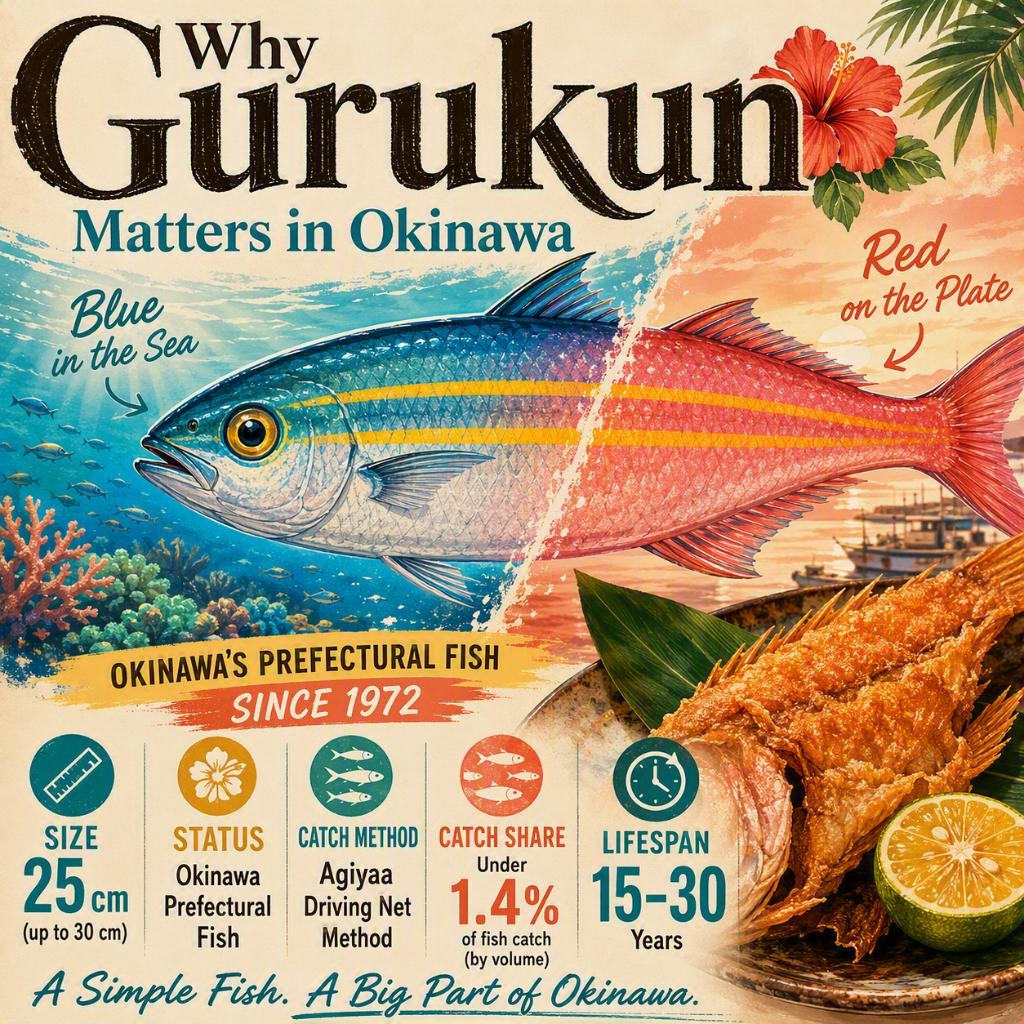
Okinawa’s Prefectural Fish Since 1972
Okinawa designated takasago as its prefectural fish on May 15, 1972. That date is not a coincidence, because it is also the day the islands returned to Japanese administration. Choosing a cheap, everyday reef fish as a symbol on that particular morning tells you something about local priorities.
The prefecture published its reasoning, and it stays refreshingly practical. Boats land the fish all year, and it ranks among the prefecture’s main species. Okinawa’s distinctive driving-net fishery accounts for most of the catch. Beyond that, it is one of the few genuinely affordable fish on local tables, it supplies raw material for kamaboko, and its coloring calls the surrounding sea to mind.
That affordability still explains a great deal. Gurukun never turned into a luxury item, and nobody auctions it for headline prices. Instead it stayed a weeknight fish, cheap enough for school lunches and casual pubs alike.
The Agiyaa Driving Net Tradition
Okinawa developed an unusual way to catch these schools. Fishermen call it agiyaa, a diving driving-net method credited to the seafarers of Itoman in the late nineteenth century. Crews first set a bag net with long wing nets on the seabed. Then divers swim in from a distance and herd the school straight into the trap.
The method depends on warm water, clear sight lines, and a lot of trust between crew members. It also owes something to the mikagan, a wooden diving goggle. Itoman City records credit the fisherman Tamagusuku Yasutaro with devising it during the 1880s, and the city now protects surviving examples as a designated cultural property.
Sources differ on the exact year, so the decade is the safer claim. What nobody disputes is the effect. Once divers could see clearly underwater, driving-net fishing expanded quickly along the Itoman coast.
A Common Misconception About the Catch
Here is where most articles get it wrong. Because gurukun carries prefectural status, many people assume it tops Okinawa’s landings. The prefecture’s own fisheries page corrects that directly, citing 218 tons in the 2006 agricultural and fisheries statistics, which came to under 1.4 percent of the fish catch by volume.
Tuna dominates Okinawan fisheries by weight, and gurukun never came close. So the fish is culturally central rather than commercially dominant. That figure dates from 2006, and no newer species-level number appears on the prefectural page, so read it as an order of magnitude rather than a current statistic.
What Does Gurukun Taste Like?
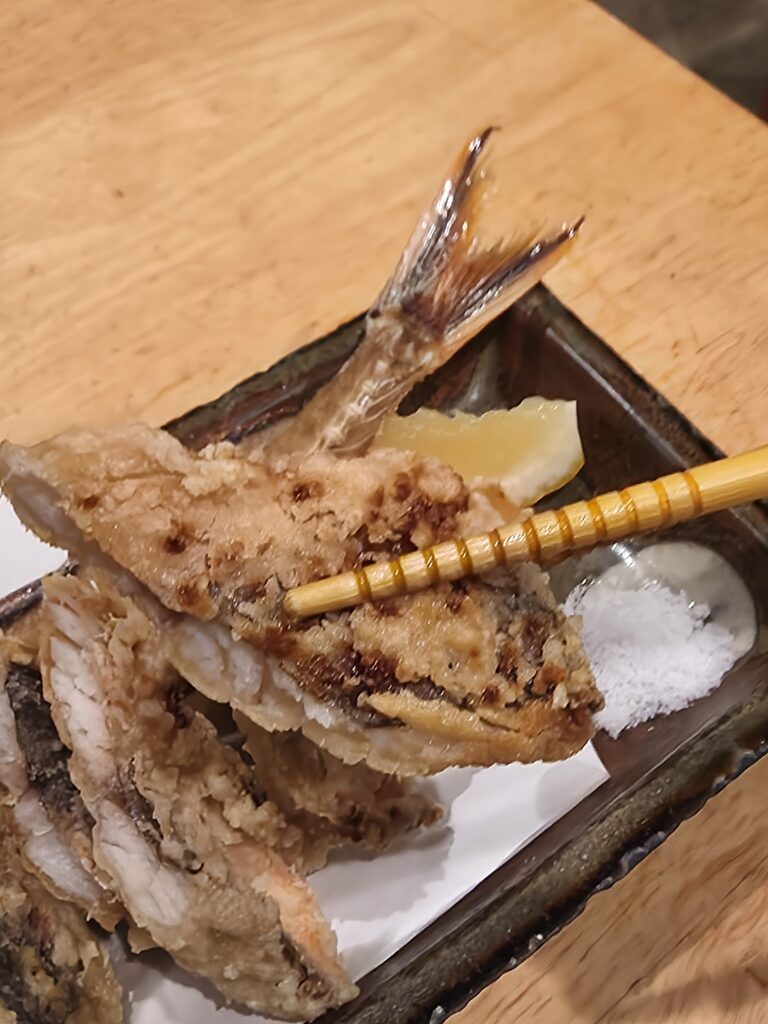
This is the question every traveler asks, usually while staring at a whole fish they were not expecting. The short answer is gentle, clean, and far less fishy than the appearance suggests.
Flavor Profile
Gurukun is a white fish with a light, clean taste. There is no oiliness and no metallic edge at all. Instead you get faint sweetness and a soft savory finish that fades quickly. Next to mackerel or sardine, it tastes almost shy.
That mildness cuts both ways, to be fair. Plain and unseasoned, the flesh can seem a little forgettable. Add salt, hot oil, and a squeeze of citrus, however, and the whole thing wakes up.
Texture and Aroma
Fresh gurukun has fine, slightly flaky flesh that pulls apart with almost no resistance. After frying, the outside turns brittle while the inside stays surprisingly moist. The aroma leans warm and nutty rather than fishy, largely because cooks work with fish landed only hours earlier.
My first plate came at a small pub near Kokusai-dori, and I remember hesitating. A whole fish staring back at you does test your nerve. Then the tail snapped like a cracker between my teeth, and the hesitation disappeared for good. That reaction is personal, of course, though almost everyone I have taken there since has had the same one.
How It Compares With Other Japanese Fish
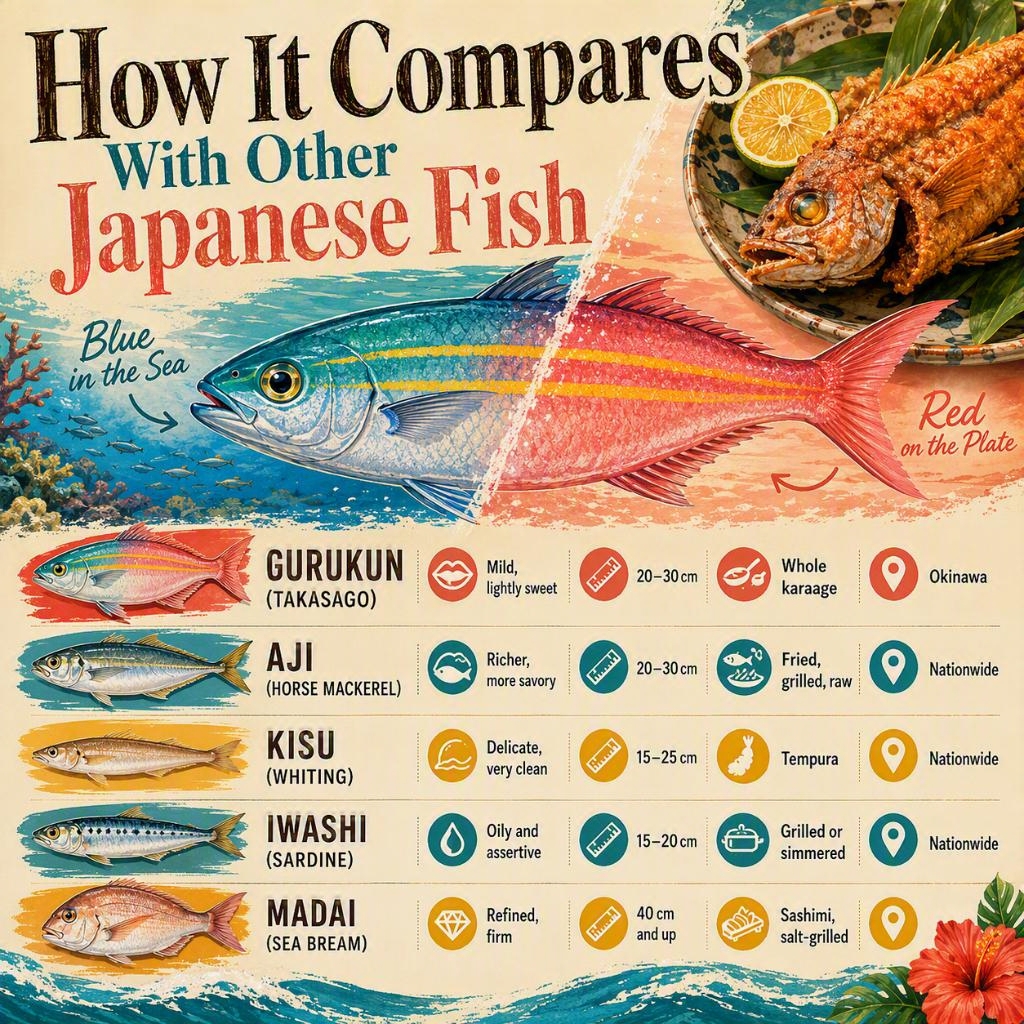
Comparison helps if you already know the Japanese fish counter. The table below places gurukun beside four familiar names.
| Fish | Flavor | Usual size | Classic preparation | Where you meet it |
|---|---|---|---|---|
| Gurukun (takasago) | Mild, lightly sweet | 20 to 30 cm | Whole karaage | Okinawa |
| Aji (horse mackerel) | Richer, more savory | 20 to 30 cm | Fried, grilled, raw | Nationwide |
| Kisu (whiting) | Delicate, very clean | 15 to 25 cm | Tempura | Nationwide |
| Iwashi (sardine) | Oily and assertive | 15 to 20 cm | Grilled or simmered | Nationwide |
| Madai (sea bream) | Refined, firm | 40 cm and up | Sashimi, salt-grilled | Nationwide |
One pattern jumps out of that table. Gurukun sits closest to kisu in gentleness, and yet Okinawan kitchens treat it much the way mainland kitchens treat aji. Frying whole is the shared instinct.
Popular Gurukun Dishes
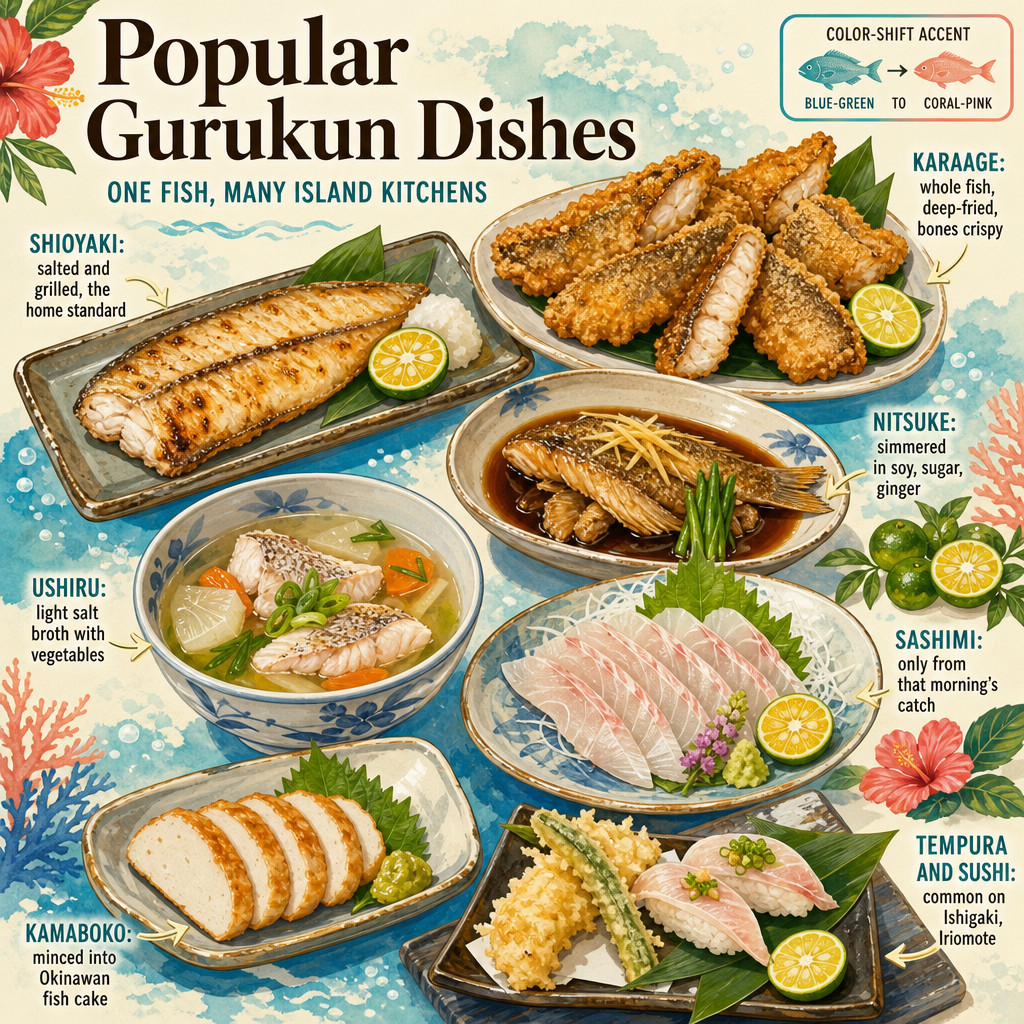
Okinawan cooks do not limit gurukun to a single recipe. Still, one version dominates almost every menu you will open.
- Karaage: the whole fish, split and deep-fried until even the bones turn crisp
- Shioyaki: salted and grilled, the standard home treatment
- Nitsuke: simmered with soy sauce, sugar, and ginger
- Ushiru: cooked in a light salt broth with island vegetables
- Sashimi: reserved for fish that came off the boat that morning
- Kamaboko: minced into Okinawan fish cake, one reason the prefecture named it
- Tempura and sushi: common on Ishigaki and Iriomote
Gurukun Karaage
Karaage is the version that traveled beyond the islands. Cooks split the fish along the back, salt it, dust it with flour, and lower it into hot oil. The finished fish stands upright on the plate with its fins flared, looking faintly theatrical. Bones, fins, and tail all become edible in the process.
Grilled and Simmered Styles
At home, salt-grilling is far more common than deep frying. Salt goes on, the grill does everything else, and nobody has to deal with a pot of oil. Nitsuke, the simmered version, suits fish that is a day past its best and coaxes out more sweetness.
Gurukun also loses freshness fast, which keeps sashimi mostly to port towns. Where you do find it, though, the flesh turns translucent and faintly sweet. Ishigaki and Irabu are your best bets.
Fish Cake and Soup
Okinawan kamaboko leans heavily on local white fish, gurukun included. You meet it sliced thin as a topping in a bowl of Okinawa soba, springy and mildly savory. Soup versions live mostly in home kitchens rather than restaurants. A clear salt broth with fish and vegetables makes a quiet, restorative bowl on a humid evening.
How Gurukun Karaage Is Made
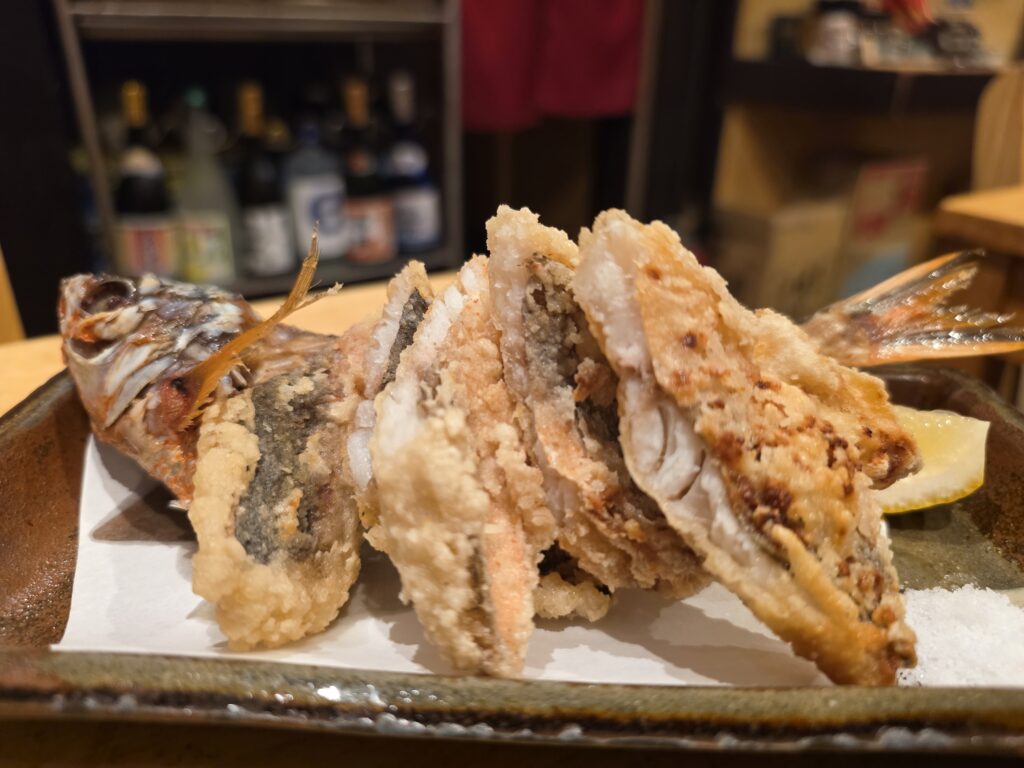
The dish looks elaborate on the plate. In practice, the recipe is almost aggressively simple.
Main Ingredients
The shopping list is short, almost stubbornly so. You need whole gurukun, salt, and either wheat flour or potato starch. Frying oil finishes it. Some cooks splash in a little awamori or grind over black pepper, and plenty of them skip both.
The Back-Split Cut
Preparation is where real technique shows up. Cooks scale the fish, pull the gills and guts, then split it along the backbone so the flesh opens outward. That shape lets heat reach the spine directly. As a result, the bones fry through completely instead of staying tough and inedible.
Deep scoring along the ribs helps as well. Home cooks in Okinawa often mention this as the step they learned the hard way, usually after serving a fish nobody could chew.
Tips for a Crisp Finish
Dry the fish thoroughly before flouring, because surface moisture ruins any crust. Fry once at moderate heat until the flesh firms up. Then lift the temperature and fry a second time for barely a minute. This double-fry approach is standard across Japanese frying, and it separates crisp from merely cooked.
The same logic drives other Japanese fried dishes, from chicken karaage to tako karaage. Once you understand the two-stage fry, the whole category opens up.
How to Eat Gurukun
Nobody explains this at the table, which trips up plenty of first-timers. The approach is easier than it looks.
Eating It Whole
Start at the belly, where the meat sits thickest and sweetest. Work outward toward the tail, and eat the fins as you go. The head is edible too, although not everyone finishes it. Leave it on the plate if you like, since nobody in Okinawa will judge you for it.
Common Sauces and Seasonings
Salt alone works beautifully, especially when the fish is very fresh. Most tables also set down lemon, and many offer shikuwasa, the small green Okinawan citrus. One squeeze cuts straight through the oil. Ponzu is the other regular partner, particularly at izakaya.
Best Side Dishes and Drinks
Rice, miso soup, and a stir-fry round out a proper set meal. Goya chanpuru pairs unexpectedly well, since the bitterness balances a fried crust. Braised rafute pushes the meal in a richer direction if you are hungry.
For drinks, awamori is the obvious local answer, usually poured over ice with water alongside. Orion beer works just as happily. Either way, the salt and citrus do most of the pairing work for you.
Where to Eat and How to Order Gurukun
Finding gurukun takes almost no effort in Naha. Ordering it confidently takes slightly more, mainly because size grading affects the bill.
Okinawan Izakaya and Seafood Restaurants
Nearly every izakaya in the city lists gurukun no karaage somewhere on the menu. Many print it in Japanese and English side by side. Seafood specialists go further and offer the same fish grilled, simmered, or baked with sea urchin.
What to Say and What It Costs
Say “gurukun no karaage, hitotsu kudasai” and you will be understood anywhere. Written down, it appears as グルクンの唐揚げ. Pointing at the menu works equally well, so do not overthink the pronunciation.
Restaurants usually grade the fish by size rather than serving a fixed portion. Published menus surveyed in August 2026 ranged from under 1,000 yen for a small fish to roughly 3,800 yen for an extra-large one at seafood restaurants. Most izakaya portions land between 1,000 and 2,000 yen. Ask which size the price refers to before ordering, because the gap is genuinely large.
Allergens and Practical Warnings
The coating normally uses wheat flour, so the dish is not gluten free unless a cook substitutes potato starch. Ponzu and soy-based dips contain soy and often wheat as well. Shared fryers also handle shrimp and squid at most izakaya, therefore cross-contact is likely.
One more practical point deserves mention. Although the small bones fry until edible, larger fish keep firmer bones near the head. Serve it to young children with a little care, and check the head yourself first.
Makishi Public Market in Naha
Naha City First Makishi Public Market reopened in a new building in March 2023. Fish sellers fill the ground floor, and restaurants fill the second. You can buy a whole gurukun downstairs, then carry it up and have a kitchen cook it for a fee. Locals call this mochiage, and it remains one of the most enjoyable ways to eat the fish.
Menus at the market appear in Japanese, English, and Chinese. Cooking fees depend on the method, so confirm the price when you hand over the fish. Lunchtime gets busy, therefore an early or late visit usually goes smoother.
Outer Islands and Fishing Ports
Irabu, Ishigaki, and Iriomote all serve gurukun within sight of where it lands. Port restaurants there sometimes offer sashimi, which Naha rarely manages. Itoman, on the southern coast of the main island, keeps a strong fishing tradition as well. If you have a rental car, that drive repays the effort.
Season, Nutrition, and Sustainability
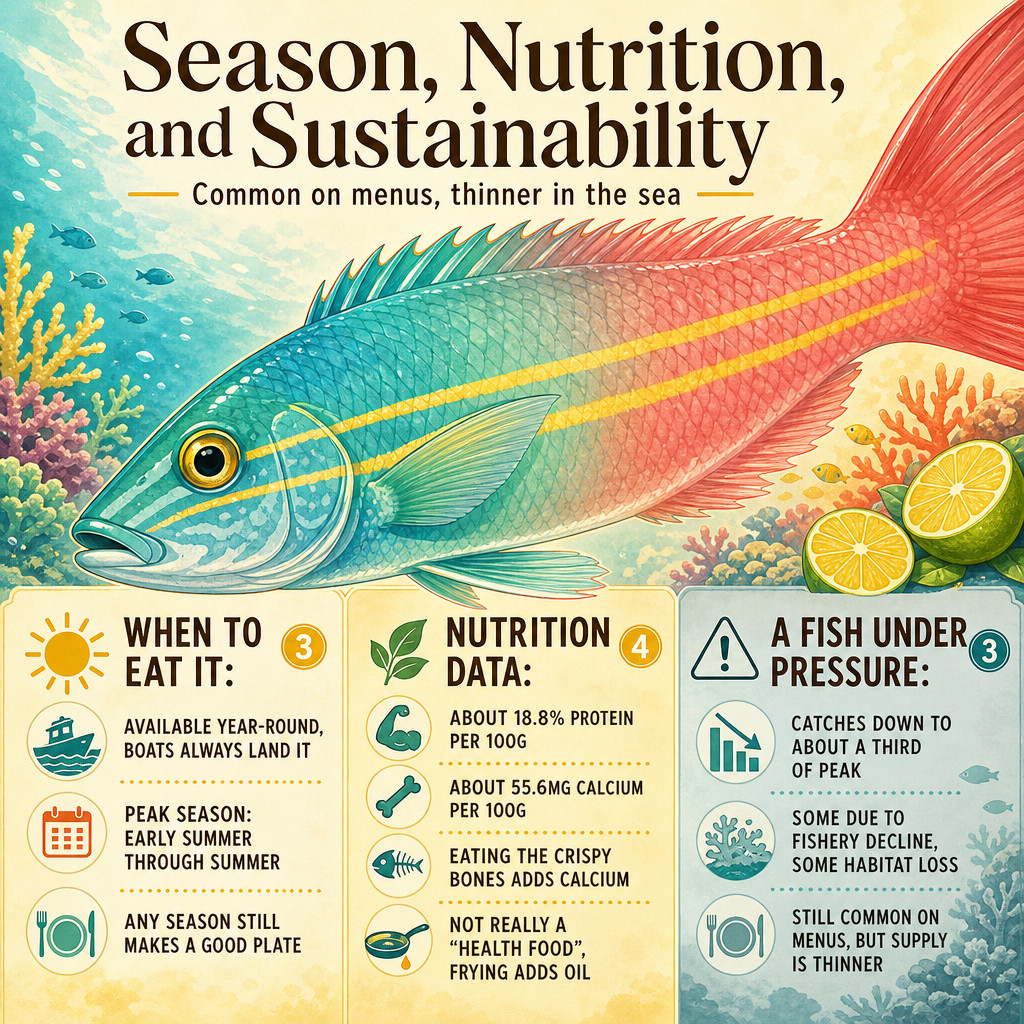
Three practical questions come up once people have tried the dish. This section handles all three together.
When to Eat It
Boats land gurukun throughout the year, so menus never run dry. Prefectural research found that most species around Okinawa Island spawn from early summer into summer. Many locals rate the warmer months highest for flavor, and anglers concentrate their trips there too. Any season still delivers a good plate, which is part of why the prefecture chose this fish.
What the Nutrition Data Shows
FishBase estimates roughly 18.8 percent protein and about 55.6 milligrams of calcium per 100 grams for this species. Those are modeled figures rather than laboratory results for a specific dish, so treat them as indicative. Deep frying naturally adds oil and calories on top.
Eating the crisp bones does add calcium compared with a filleted fish. Beyond that, I would avoid framing gurukun as a health food. Grilled or simmered versions simply keep the meal lighter if that matters to you.
A Fish Under Pressure
Numbers tell a quieter story here. The prefectural fisheries center reports that catches of fusiliers have fallen to roughly a third of their peak. Operators leaving the agiyaa fishery account for part of that decline. Habitat and reef deterioration probably account for the rest.
So gurukun occupies an odd position right now. It remains an everyday fish on every menu, and yet the supply behind it looks thinner than it once did. Ordering it is not a problem, though the prefecture continues to study the stock for good reason.
Cooking Gurukun at Home
Recreating this dish outside Okinawa is possible, though it requires one compromise. The fish itself is the hard part.
Simple Gurukun Karaage Recipe
Clean the fish and pat it completely dry with paper towels. Salt both sides, then let it rest for about ten minutes. Dust with flour and shake off every loose speck. Fry at roughly 170°C, or 340°F, for three minutes. Then raise the oil to 190°C, about 375°F, and fry again for one minute.
Drain on a rack rather than paper, since paper traps steam underneath. Serve immediately with lemon and salt. The window between perfect and merely good is short, so call people to the table first.
Ingredient Substitutes Outside Japan
Fresh gurukun almost never leaves Japan, so most cooks abroad need a stand-in. Small whole fish work best by a wide margin. Sardines, smelt, small snapper, and fresh anchovies all butterfly the same way. Frozen gurukun does appear in Japanese grocery stores overseas, although stock comes and goes without warning.
Conclusion
Gurukun is not a showpiece fish. It has no marbling, no premium grade, and no auction theatrics behind it. Instead it earns its place through consistency, low prices, and a crunch that stays in your memory long after the trip ends. Okinawa made that judgment official on the day it rejoined Japan.
So if you order one plate of local seafood in Okinawa, make it this one. Ask for the medium size, squeeze the shikuwasa, and eat the tail. Then follow it with goya chanpuru, a bowl of Okinawa soba, and a glass of awamori. Our Okinawa food guide covers where to take that meal next.
Gurukun FAQ
What is gurukun?
Gurukun is Okinawa’s prefectural fish, a small reef fish usually served whole and deep-fried. Islanders use the word broadly, so it covers several related species rather than one. Standard Japanese calls the most common one takasago. Restaurants across the prefecture also grill and simmer it.
What is the English name for gurukun fish?
English speakers usually call it the double-lined fusilier, or Pterocaesio digramma. Some guides also use the nickname banana fish. The two yellow stripes along its side give the species its scientific name. Fusiliers belong to the family Caesionidae, which several classifications place inside the snappers.
Is gurukun the prefectural fish of Okinawa?
Yes, and Okinawa designated it on May 15, 1972, the day the islands returned to Japanese administration. The prefecture cited year-round landings, the fish’s role in the local driving-net fishery, and its use in kamaboko. Affordability mattered too. Its coloring, officials noted, also evokes the surrounding sea.
What does gurukun taste like?
Gurukun tastes mild, clean, and faintly sweet, with none of the oiliness of mackerel. The white flesh flakes easily and carries a gentle savory finish. Deep frying adds a nutty aroma and a brittle exterior. A squeeze of lemon or shikuwasa lifts the whole plate.
Can you eat the bones of gurukun karaage?
Yes, and that is the whole point of the karaage version. Cooks split the fish along its back so heat reaches the spine directly. The bones then fry until they snap like a cracker. Larger fish can keep firmer bones near the head, so check that part before serving children.
How do you order gurukun at a restaurant in Okinawa?
Ask for “gurukun no karaage,” written as グルクンの唐揚げ, or simply point at the menu line. Most restaurants price the dish by fish size rather than by portion. Menus surveyed in August 2026 ran from under 1,000 yen for a small fish to around 3,800 yen for an extra-large one. Confirm the size before you order.
Where can tourists eat gurukun in Naha?
Almost every izakaya near Kokusai-dori lists gurukun karaage. Naha City First Makishi Public Market offers a livelier option. Buy a whole fish from a ground-floor seller, then take it upstairs and pay a restaurant to cook it. Staff there handle English and Chinese menus daily.
Does gurukun karaage contain common allergens?
The coating normally uses wheat flour, so the dish is not gluten free by default. Ponzu and other dipping sauces usually contain soy and often wheat. Izakaya fryers also handle shrimp and squid, therefore cross-contact is likely. Ask the kitchen directly if an allergy is serious.
When is the best season to eat gurukun?
Boats land gurukun year-round, so no season is a bad one. Prefectural research shows that most species around Okinawa Island spawn from early summer into summer. Many locals rate the warmer months highest for flavor. Anglers likewise treat that stretch as prime season.
Can I make gurukun karaage outside Japan?
Fresh gurukun rarely reaches markets abroad, so most cooks substitute. Sardines, smelt, fresh anchovies, and small snapper all work well. Butterfly the fish along the backbone, salt it, flour it, and fry it twice. Finish with lemon, and the result lands remarkably close.
References
- Okinawa Prefecture, Symbols of Okinawa Prefecture (designation reasons for the prefectural fish), https://www.pref.okinawa.lg.jp/kensei/kengaiyo/1014098.html (Surveyed: August 2026)
- Okinawa Prefecture, Symbols of Okinawa (designation date of May 15, 1972), https://www.pref.okinawa.jp/kyoiku/kodomo/1002657/1002665.html (Surveyed: August 2026)
- Okinawa Prefecture, Fisheries Division, Gurukun Fish Character Page (catch share, juvenile name, bait use), https://www.pref.okinawa.lg.jp/shigoto/suisangyo/1011078/1022282/1011091.html (Surveyed: August 2026)
- Okinawa Prefectural Fisheries Research and Extension Center, Okinawa no Imaiyu Vol. 10: Gurukun (species, age, spawning, catch decline), https://www.pref.okinawa.jp/fish/kenkyu/kankobutu/okinawa-no-imaiyu-data/10_gurukun.pdf (Surveyed: August 2026)
- Okinawa Prefectural Fisheries Research and Extension Center, Annual Research Report No. 77, pp. 61-75 (2017), https://www.pref.okinawa.jp/fish/kenkyu/jigyohokoku-data/jihouh27/61-75.pdf (Surveyed: August 2026)
- Okinawa Prefecture, Fisheries in Okinawa (typical body length of gurukun), https://www.pref.okinawa.jp/kyoiku/kodomo/1002669/1002679.html (Surveyed: August 2026)
- Itoman City, Designated Tangible Folk Cultural Property: Mikagan and Production Tools, https://www.city.itoman.lg.jp/soshiki/31/21601.html (Surveyed: August 2026)
- Okinawa Churaumi Aquarium, Churaumi Fish Encyclopedia: Double-lined fusilier, https://churaumi.okinawa/en/fishbook/00000523/ (Surveyed: August 2026)
- Froese, R. and D. Pauly (Editors), FishBase: Pterocaesio digramma summary page (size, nutrient estimates), https://www.fishbase.se/summary/Pterocaesio-digramma (Surveyed: August 2026)
- Carpenter, K. E., Fusilier Fishes of the World: An Annotated and Illustrated Catalogue of Caesionid Species Known to Date, FAO Fisheries Synopsis No. 125, Vol. 8 (1988), https://www.gbif.org/species/2374768 (Surveyed: August 2026)
- Government of Japan, Highlighting Japan: Naha City First Makishi Public Market, https://www.gov-online.go.jp/hlj/en/november_2025/november_2025-07.html (Surveyed: August 2026)
- Japan 47 GO, Oikomi-ami Ryo (Agiyaa), Itoman City, Okinawa, https://www.japan47go.travel/ja/detail/ca1121bb-b7f3-4028-9e81-bbd1d33fba75 (Surveyed: August 2026)
- Kirishima Shuzo, Kyushu no Aji to Tomoni: Gurukun no Karaage (back-split preparation), https://www.kyushufood.kirishima.co.jp/kyuaji/502/ (Surveyed: August 2026)
Related Articles
- Okinawa Food Guide (Surveyed: August 2026)
- Goya Chanpuru (Surveyed: August 2026)
- Okinawa Soba (Surveyed: August 2026)
- Soki Soba (Surveyed: August 2026)
- Rafute (Surveyed: August 2026)
- Awamori (Surveyed: August 2026)
- Taco Rice (Surveyed: August 2026)
- Shima Tofu (Surveyed: August 2026)
- Karaage (Surveyed: August 2026)
- Tako Karaage (Surveyed: August 2026)
- Aji (Surveyed: August 2026)
- Kamaboko (Surveyed: August 2026)
- Japanese Seafood Dishes (Surveyed: August 2026)
- Kyushu Food Guide (Surveyed: August 2026)




Comments