




Hida beef is a certified Japanese Wagyu brand from Gifu Prefecture. It comes from Japanese Black cattle raised for at least 14 months in the region. Fans know it for fine marbling, a tender bite, and clean, sweet-tasting fat. This guide covers what Hida beef is, how certification works, what it tastes like, and where to eat it in Takayama. You will also find cooking tips, price ranges, and answers to common questions travelers ask before their trip.
Registered producers raise the cattle slowly and with real patience. That care shows up on the plate later. The meat feels soft, tastes rich but clean, and that combination is why chefs in Takayama build entire menus around it.
What Is Hida Beef? Definition and Certification Standards
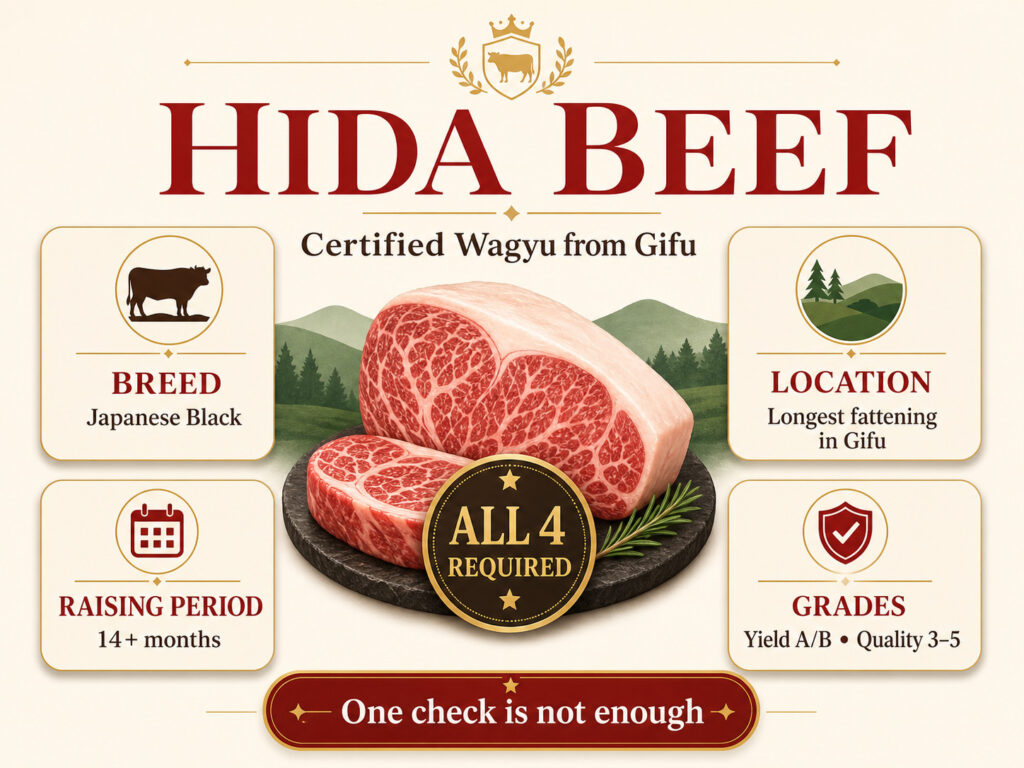
Hida beef comes from Japanese Black cattle, the breed behind most premium Wagyu beef in Japan. Registered producers must raise the cattle in Gifu Prefecture for at least 14 months. The Hida Beef Brand Promotion Council checks four separate conditions before it approves the label, and all four must be met together.
- Breed: only Japanese Black cattle qualify for certification
- Location: Gifu Prefecture must be where the animal spent the longest fattening period
- Raising period: at least 14 months under a registered producer
- Yield grade: A or B, based on the ratio of usable meat to carcass weight
- Meat quality grade: 3, 4, or 5, as scored by the Japan Meat Grading Association
These checks work as a set, not on their own. A high meat quality grade alone will not earn the Hida beef label. Producers also need official registration and a passing yield grade. This layered system runs through most Japanese Wagyu grading, which is one reason Kobe beef follows a similar structure with its own regional rules.
Certification protects buyers from vague marketing claims. Each approved cut carries a label showing the meat grade, the producer’s name, an identification number, and the certification date. Shoppers can trace the beef back to a real farm, which is unusual in many meat markets.
Certification and Quality Standards
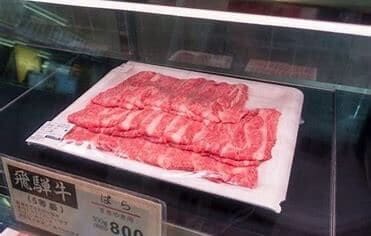
Meat quality grading in Japan looks at four separate factors: marbling, meat colour and brightness, firmness and texture, and fat colour and quality. Marbling usually carries the most weight in the final score. Genetics and farming techniques both shape how that marbling develops, and researchers studying Japanese Black cattle have traced this fat deposition to specific genetic pathways within the muscle tissue.
At Tokyo’s Metropolitan Central Wholesale Market, certified Hida beef in grades 4 and 5 sells for roughly 20 percent more than average Wagyu, while grade 3 sells for about 10 percent more. That price gap reflects decades of breeding work built on the Yasufuku bloodline, which still shapes much of the region’s cattle today.
Taste, Marbling and Texture
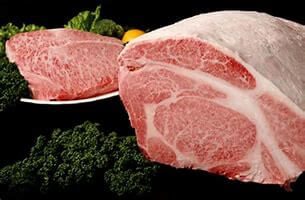
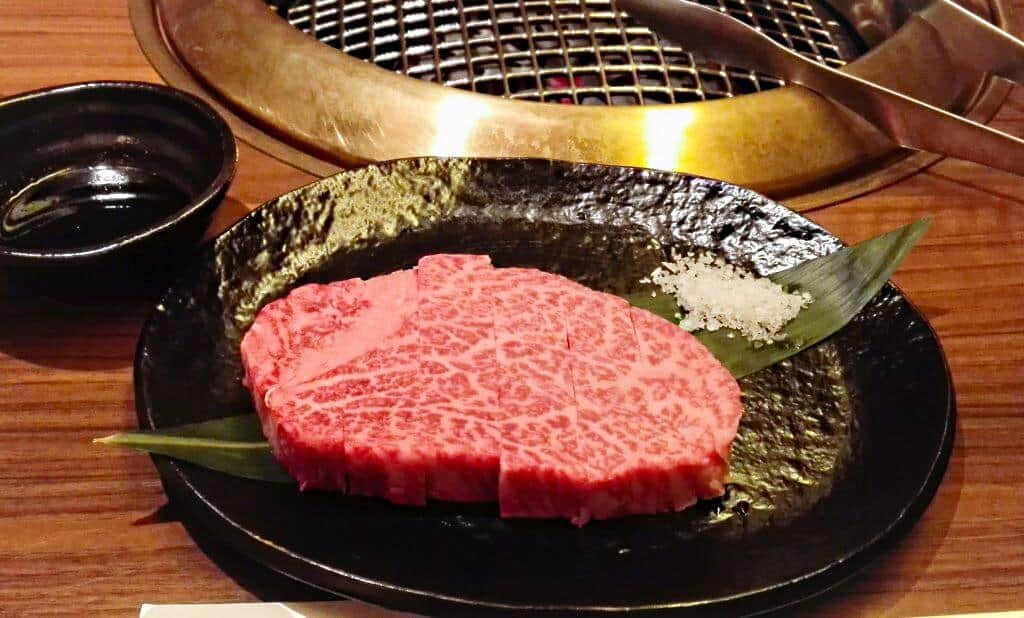
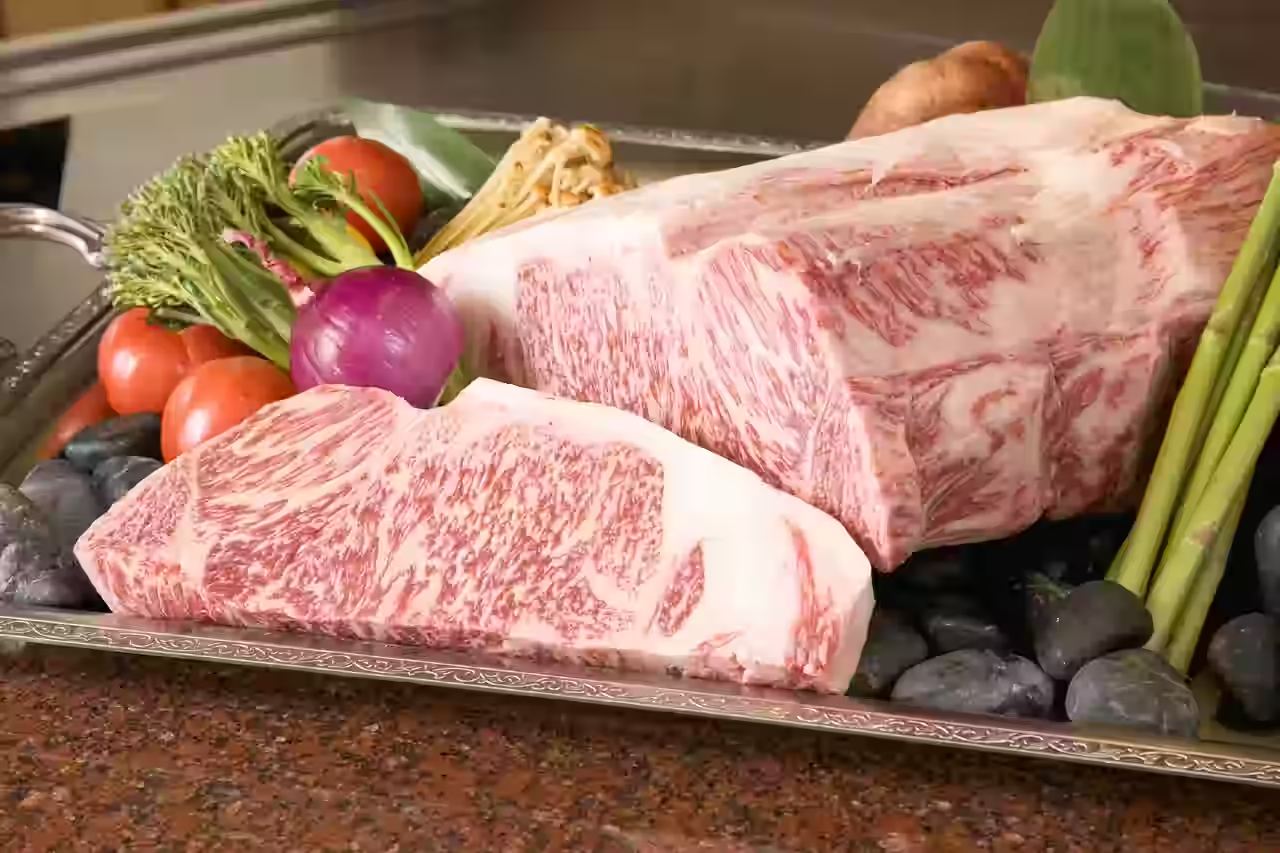
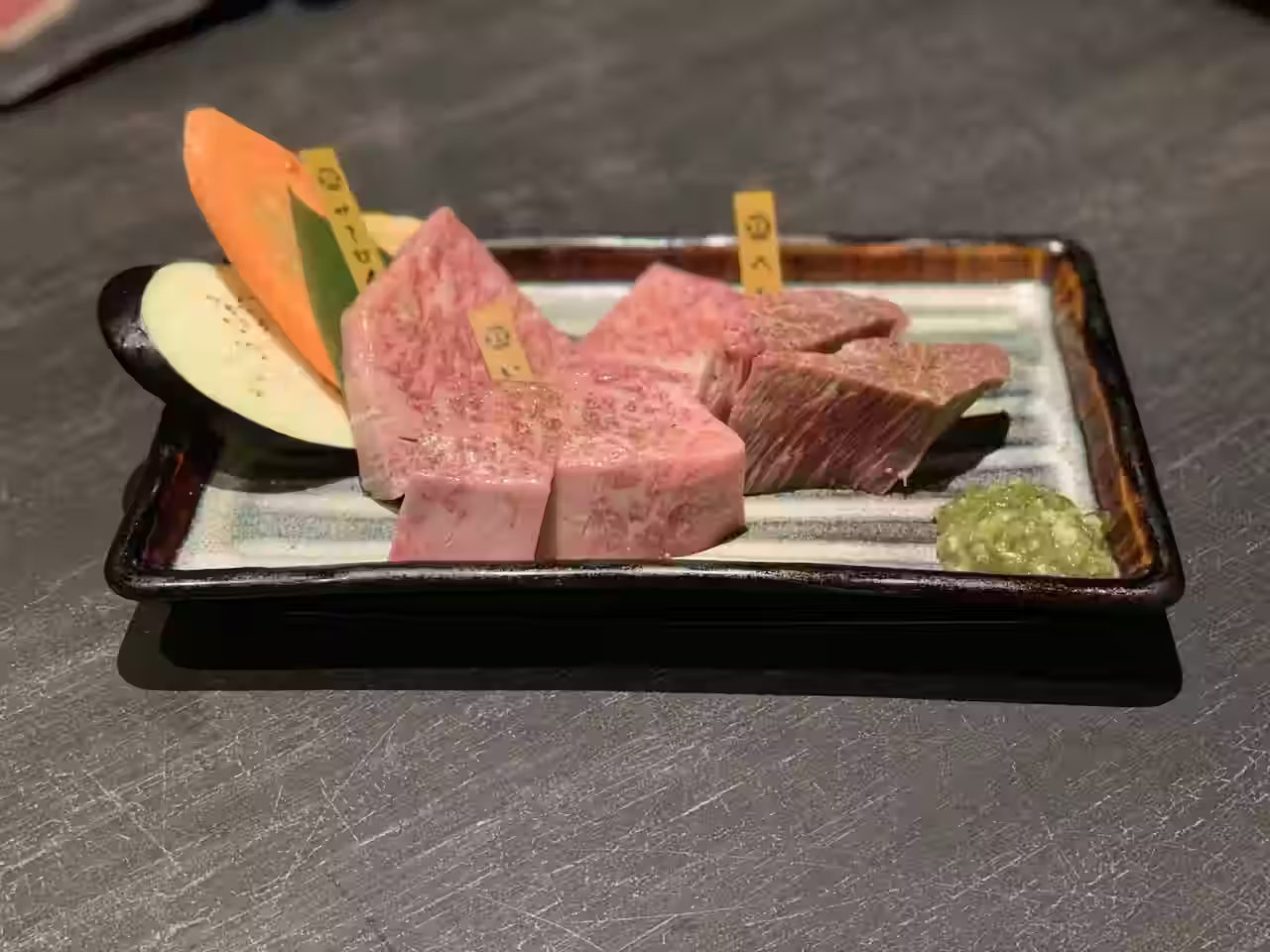
Hida beef earns its reputation through fine, even marbling that spreads through the muscle in a web-like pattern. Careful feeding, clean mountain water, and a calm raising environment all shape how that fat forms over time. The result feels soft rather than chewy, especially in cuts served thin.
Thin slices used in sukiyaki or shabu-shabu almost dissolve on the tongue. Thicker steak cuts hold their shape a little longer, yet they still cut easily with a fork. Colour matters too, since certified beef should show a bright red flesh tone alongside the marbling.
What Does Hida Beef Taste Like?
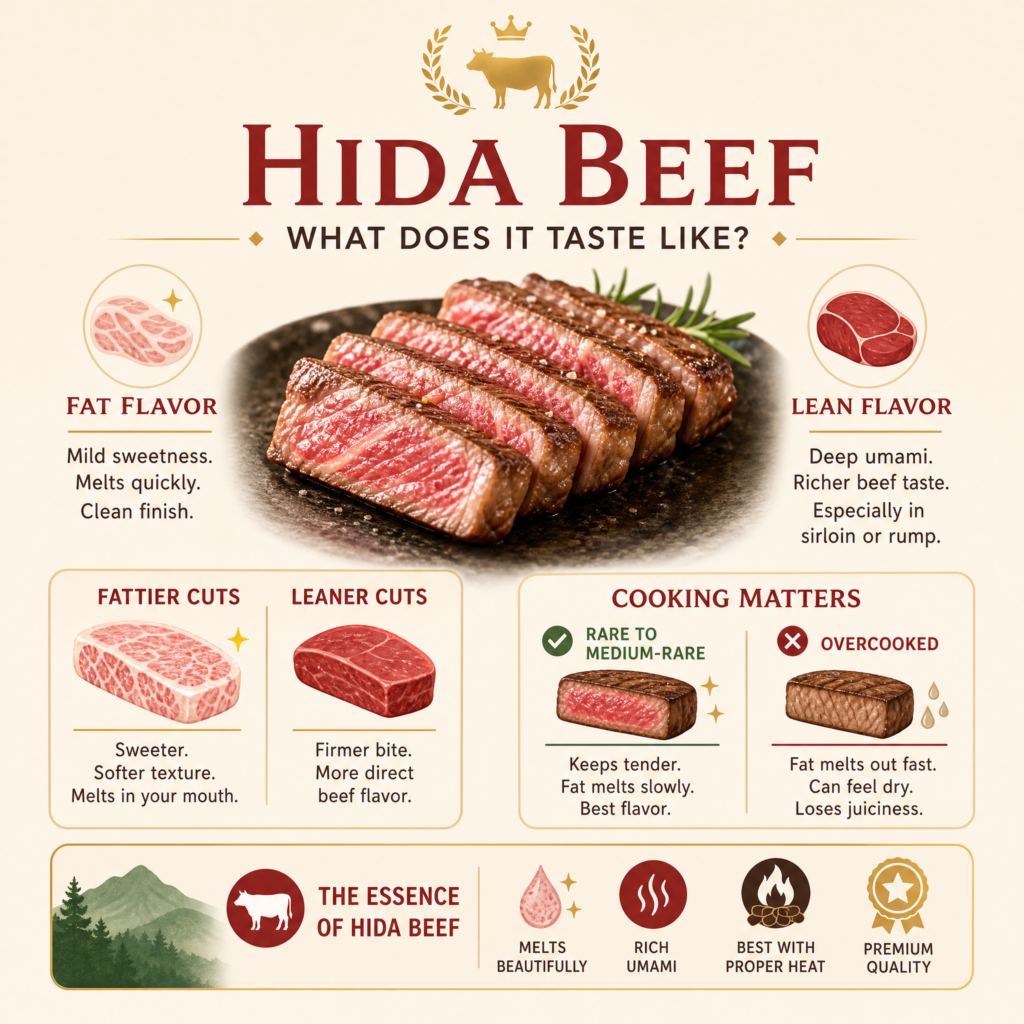
So what does Hida beef actually taste like? The fat carries a mild sweetness, not a heavy or greasy flavour. Many first-time eaters brace for something overwhelming, but the fat melts fast and leaves a surprisingly clean finish. The lean part brings a deeper umami taste, especially in sirloin or rump cuts.
Fattier cuts, such as short rib, taste sweeter and feel softer in the mouth. Leaner cuts offer a firmer bite with a more direct beef flavour underneath. Cooking method changes things too. Rare or medium-rare steak keeps the meat tender while letting the fat melt slowly, whereas overcooking can push the fat out too fast and leave the beef feeling dry despite the marbling.
History of Hida Beef
During the 1950s, farmers in Gifu Prefecture mainly kept cattle for agricultural work. Machines slowly took over farm labour after 1955, and that shift freed cattle to be raised for meat instead of ploughing fields.
Attention to meat quality grew steadily between 1965 and 1975. Farmers experimented with feeding programmes and weight gain targets, and the results spread through the wider Wagyu industry in Japan.
The turning point arrived in 1981, when a bull named Yasufuku arrived in Gifu from Hyogo Prefecture. His genetics later shaped much of the region’s Wagyu bloodline. Producers eventually settled on one shared brand name instead of scattered local labels.
The Hida Beef Brand Promotion Council formed in January 1988, marking the official start of the brand. Hida beef went on to win the Best Carcass Award for two consecutive years at Japan’s National Competitive Exhibition of Wagyu, an event held once every five years and often nicknamed the Wagyu Olympics. As of January 2022, roughly 10,000 cattle earned certification each year, with 168 designated shops and 193 designated restaurants recognized within Japan.
Hida Beef vs Kobe Beef and Matsusaka Beef
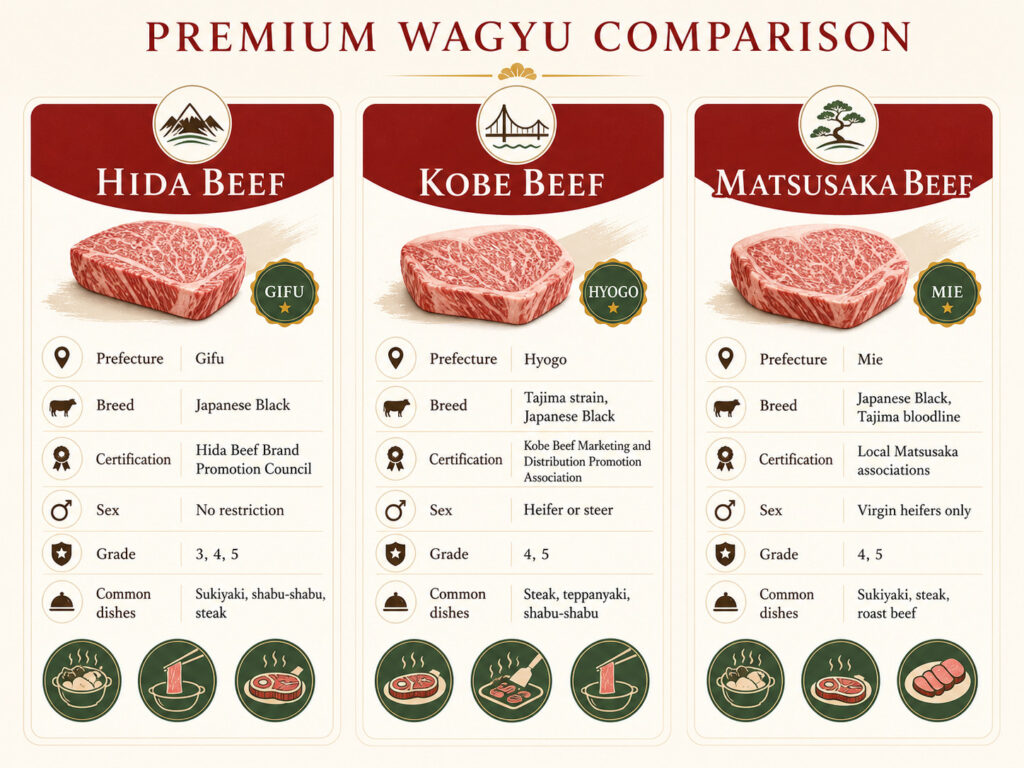
Travelers often ask how Hida beef compares with Japan’s other famous Wagyu brands. Each region follows its own certification rules, even though all three come from Japanese Black cattle. The table below lines up the key differences.
| Feature | Hida Beef | Kobe Beef | Matsusaka Beef |
| Prefecture | Gifu | Hyogo | Mie |
| Breed | Japanese Black | Tajima strain, Japanese Black | Japanese Black, mainly Tajima bloodline |
| Certification body | Hida Beef Brand Promotion Council | Kobe Beef Marketing and Distribution Promotion Association | Local Matsusaka beef associations |
| Sex requirement | No specific restriction | Heifer or steer | Virgin heifers only |
| Meat quality grade | 3, 4 or 5 | 4 or 5 | Judged on marbling, colour, firmness and fat quality |
| Common cooking styles | Sukiyaki, shabu-shabu, steak, sushi | Steak, teppanyaki, shabu-shabu | Sukiyaki, steak, roast beef |
None of these three brands is simply “better” across every measure. Kobe beef leans toward strict lineage and slaughter-location rules. Matsusaka beef restricts itself to virgin heifers, which producers say gives the fat a particular smoothness. Hida beef, by comparison, focuses heavily on the Gifu raising environment and the Yasufuku bloodline, and many diners find its price more approachable than top-grade Kobe beef.
How to Cook Hida Beef at Home
Home cooks usually choose between three methods: pan-seared steak, sukiyaki, or shabu-shabu. Each style suits a different cut, and overcooking is the most common mistake with marbled Wagyu.
Pan-Seared Steak
- Bring to room temperature. Take the steak out of the fridge about 30 minutes before cooking.
- Salt lightly. A light coating of salt just before cooking helps the surface sear evenly.
- Sear on high heat. Use a hot pan for a short time on each side, since marbled beef cooks faster than lean cuts.
- Rest before slicing. Let the steak sit for a few minutes so the juices settle before you cut it.
Sukiyaki and Shabu-Shabu
Thinly sliced cuts work best for both dishes. For sukiyaki, simmer the beef briefly in a sweet soy-based broth alongside vegetables and tofu. For shabu-shabu, swirl each slice through hot kombu dashi for only a few seconds, since the thin marbling melts almost instantly. In both cases, avoid leaving the beef in the pot too long. The fat separates quickly once the meat overcooks, and the texture turns tougher than it should be.
Where to Eat Hida Beef in Takayama
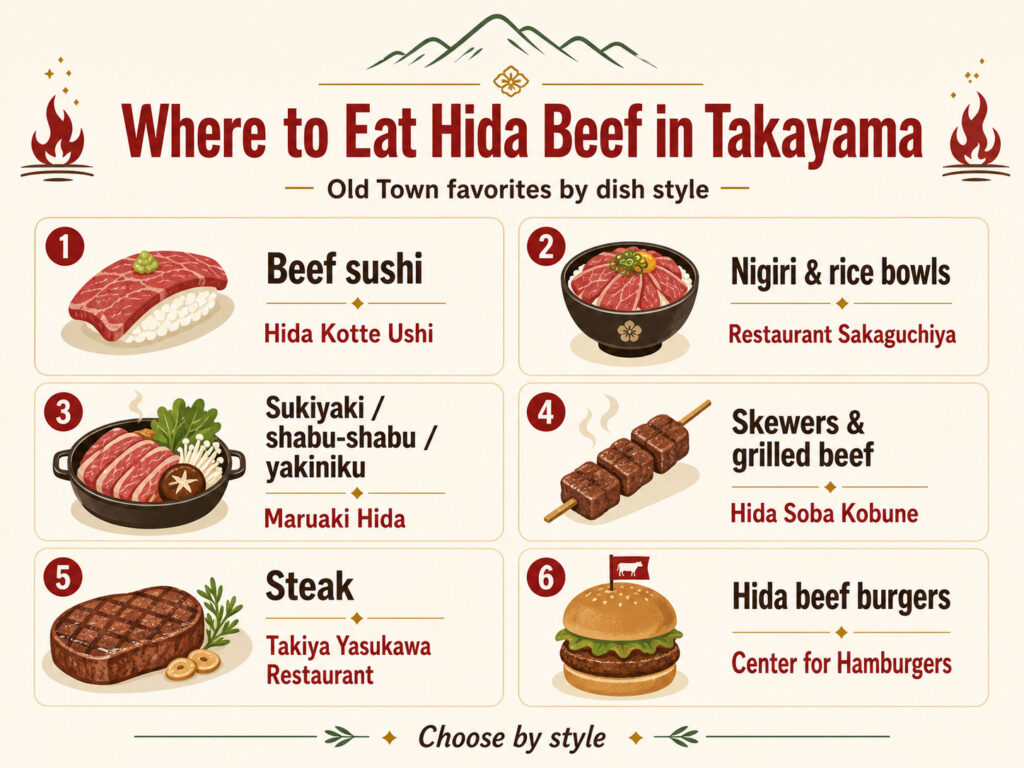
Takayama’s old town holds most of the city’s best-known Hida beef restaurants. The quick guide below groups them by dish style, so you can decide where to head first.
| Dish style | Recommended restaurant |
| Beef sushi | Hida Kotte Ushi |
| Nigiri and rice bowls | Restaurant Sakaguchiya |
| Sukiyaki, shabu-shabu, yakiniku | Maruaki Hida |
| Skewers and grilled beef | Hida Soba Kobune |
| Steak | Takiya Yasukawa Restaurant |
| Hida beef burgers | Center for Hamburgers |
Hida Kotte Ushi
Dish: Grilled Hida beef sushi, roughly 600 yen for two pieces, with a choice of bamboo charcoal salt or ginger soy sauce.
Price range: Meals start around 1,000 yen.
Nearest station: About a 10-minute walk from Takayama Station.
Reservations: Not required, though queues form during busy hours.
Hours: Please confirm current hours on the restaurant’s own listing before visiting.
Restaurant Sakaguchiya
Dish: Hida beef nigiri from around 500 yen for two pieces, along with beef and rice bowl sets.
Price range: Roughly 1,000 to 3,000 yen per meal.
Nearest station: About a 12-minute walk from JR Takayama Station.
Reservations: Usually not necessary for lunch.
Hours: Please check the latest opening hours and closed days on the restaurant’s official page.
Maruaki Hida
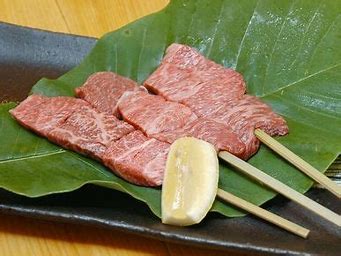
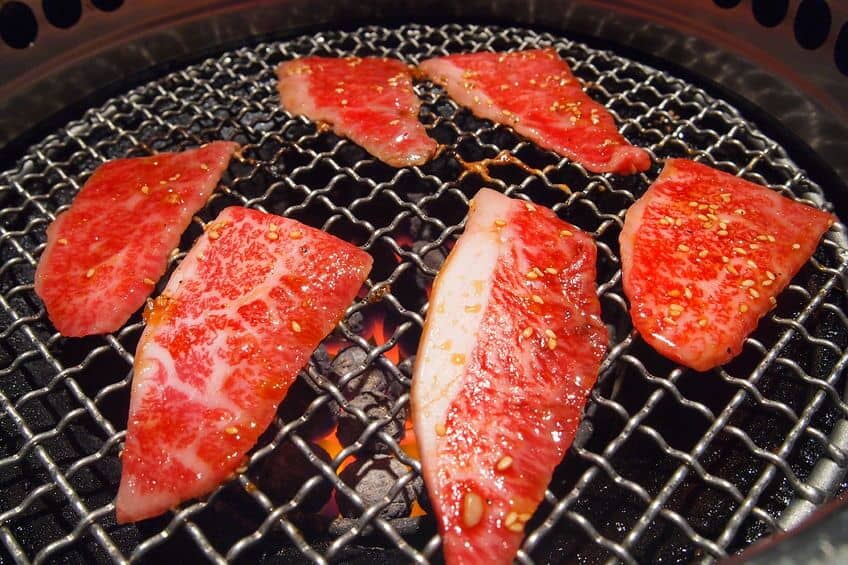
Dish: Sukiyaki, shabu-shabu, or yakiniku using officially branded beef. The yakiniku platter costs around 2,900 yen.
Price range: Roughly 3,000 to 6,000 yen per meal.
Nearest station: About a 5-minute walk from Takayama Station.
Reservations: Recommended for groups, especially around lunchtime.
Hours: Please confirm current hours on the official restaurant website.
Hida Soba Kobune
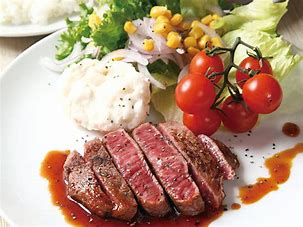
Dish: Soba noodles topped with Hida beef, including curry seiro and shigure-style bowls.
Price range: Roughly 1,000 to 2,000 yen for lunch.
Nearest station: About a 3-minute walk from Takayama Station.
Reservations: Usually not needed outside peak lunch hours.
Hours: Please check the current schedule, since this restaurant closes on Wednesdays as of the last check.
Takiya Yasukawa Restaurant
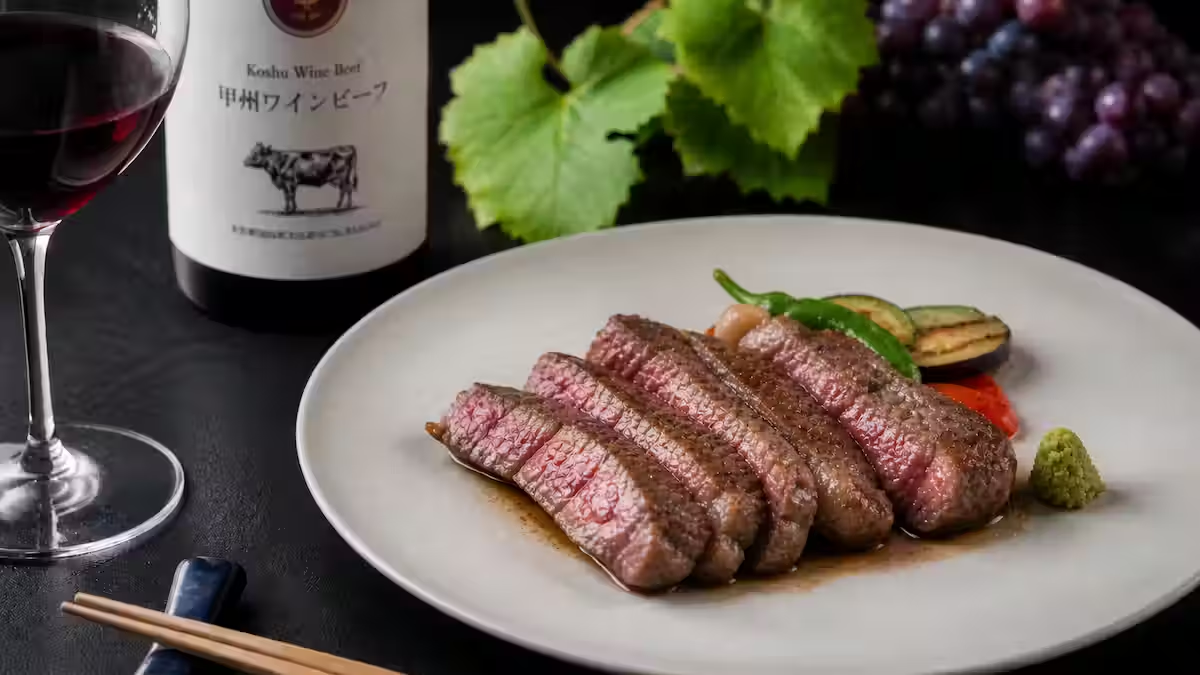
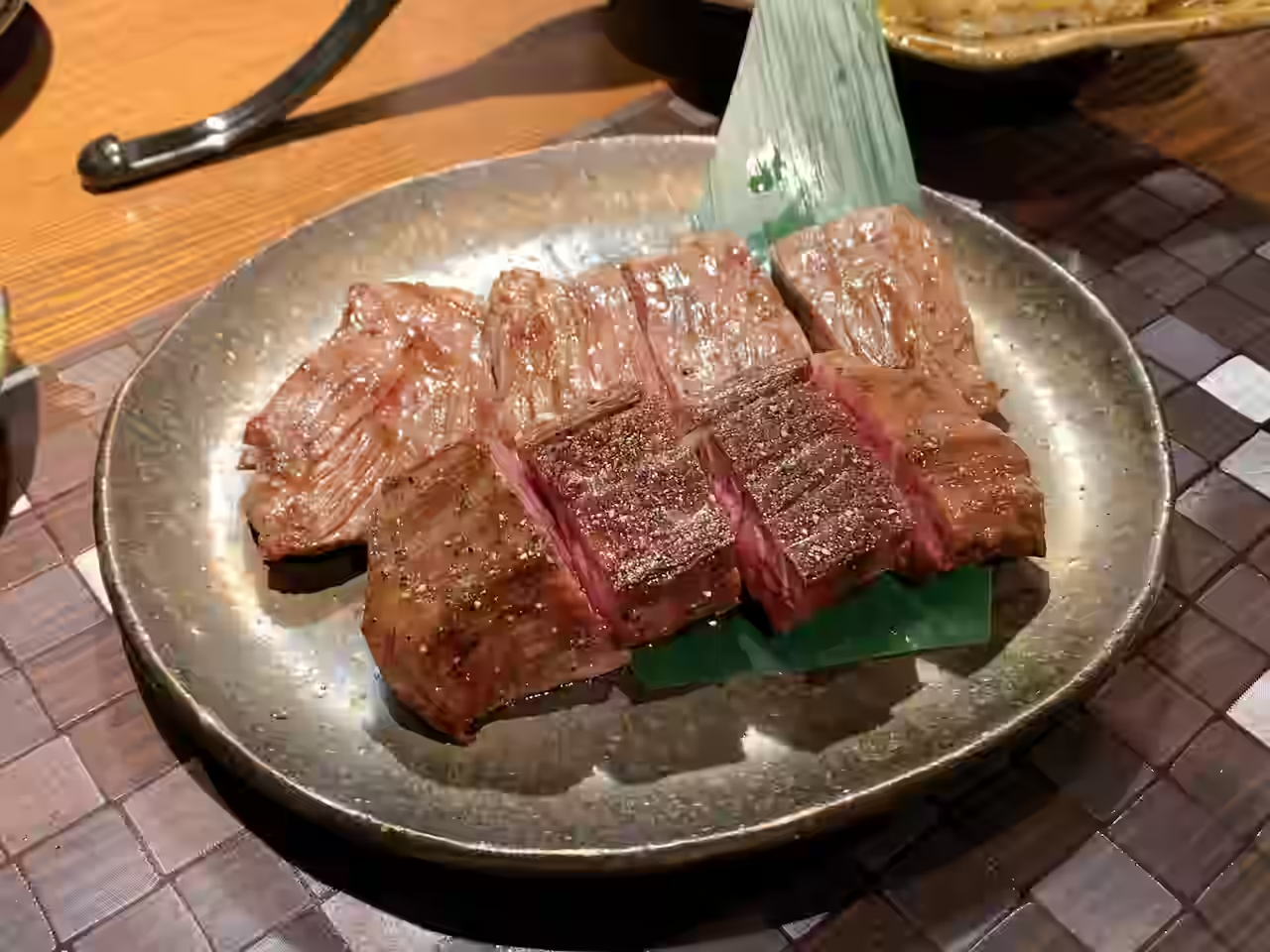
Dish: Thick-cut Hida beef steak, including a signature dish priced around 3,800 yen.
Price range: Up to roughly 4,000 yen per meal.
Nearest station: About a 12-minute walk from Takayama Station on the JR Takayama line.
Reservations: Arriving early is advised, since the restaurant fills up during peak hours.
Hours: Closed Wednesdays as of the last check; please confirm current hours before visiting.
Center for Hamburgers
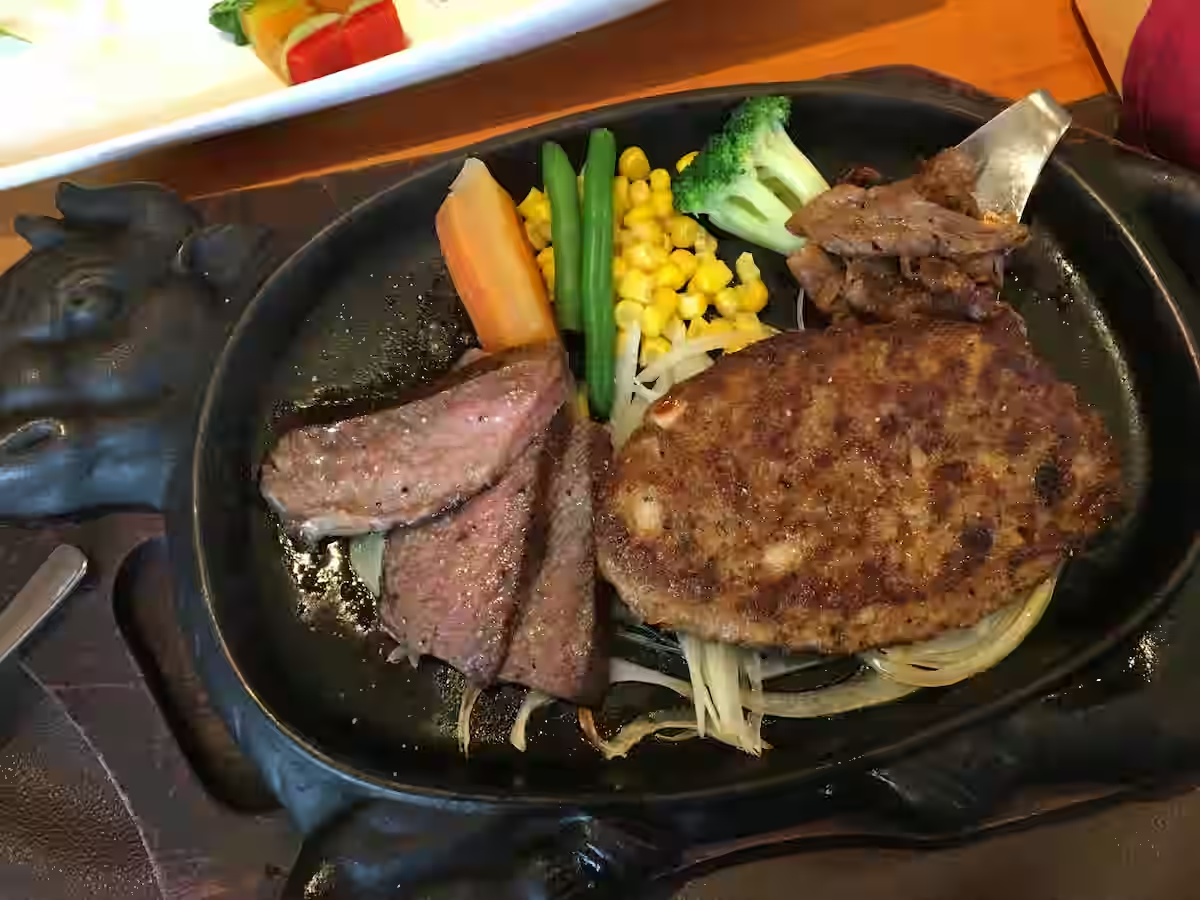
Dish: Hida beef hamburger, priced around 2,300 yen, with only a limited number sold each day.
Price range: Similar to the burger price above for most orders.
Nearest station: About an 11-minute walk from Takayama Station.
Reservations: Recommended for weekend visits.
Hours: Closed Wednesdays as of the last check; please confirm current hours before visiting.
Where to Buy Hida Beef and How Much It Costs
Certified retailers sell most of the Hida beef available in Japan. Look for shops carrying the official Hida beef label, since that label confirms the certification chain described earlier. As of January 2022, 168 shops within Japan and 59 recommended shops overseas carried official certification, and department store food halls in Nagoya, Gifu, and Tokyo often stock it around gift-giving seasons.
Online retailers also ship certified cuts within Japan, and some offer international shipping with cold storage. Prices vary widely depending on cut and grade. Grade 5 sirloin can cost noticeably more per 100 grams than grade 3 cuts from the shoulder or rump. Shoppers should always check for the identification number on the packaging, since that number lets you trace the beef back to its producer.
Frozen Hida beef keeps well if stored properly, and many certified shops offer vacuum-sealed packs for travelers. Thaw frozen cuts slowly in the refrigerator rather than at room temperature, since rapid thawing can affect the texture of the marbling.
Takayama’s Food Culture and Hida Beef
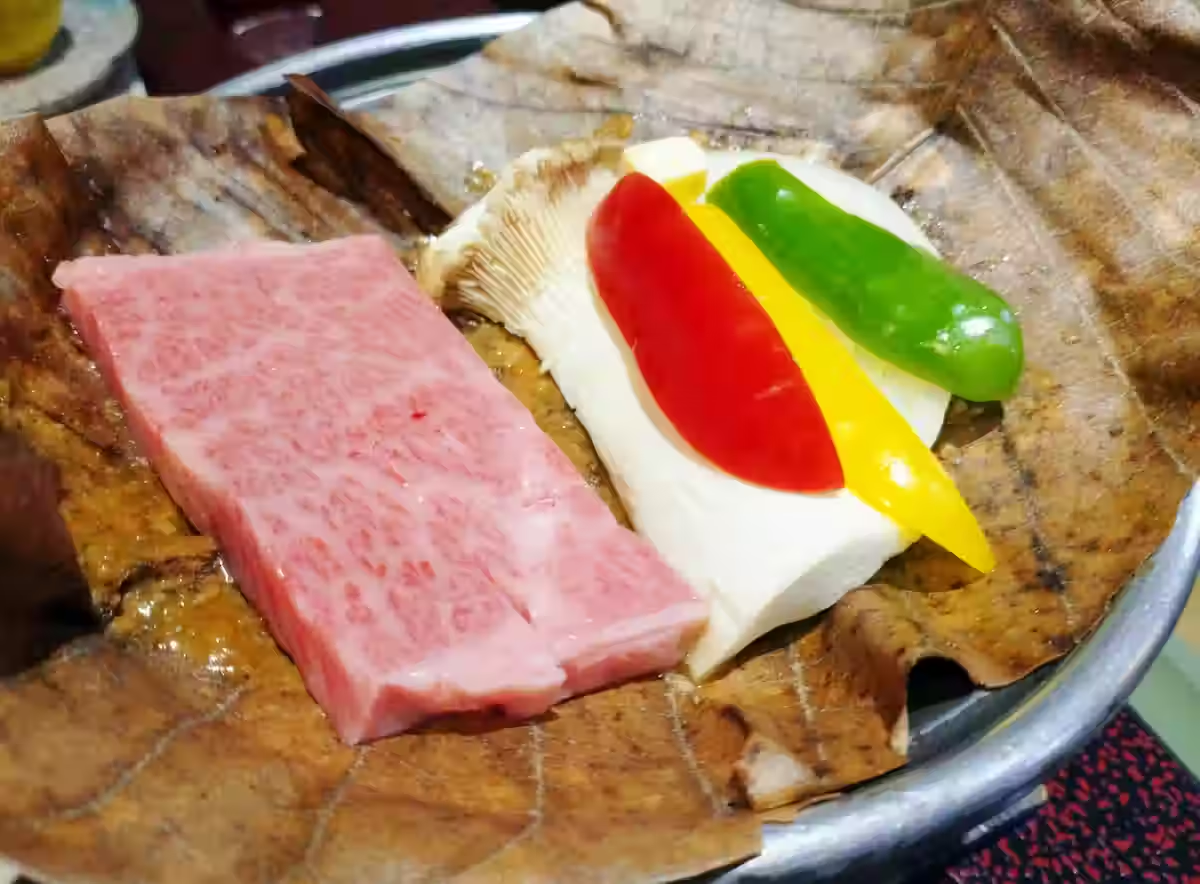
Takayama’s old town, with its preserved Edo-era streets, became a natural stage for Hida beef’s rise in popularity. Vendors began selling grilled beef sushi and skewers to tourists walking through the historic district, and the format caught on quickly. Locals often pair grilled Hida beef with hoba miso, a regional dish of miso grilled on a magnolia leaf, since the smoky leaf aroma complements the beef’s sweetness. This mix of old streets, regional ingredients, and a modern beef brand gives Takayama a food identity that feels distinct from other Wagyu regions in Japan.
Dietary Considerations
Hida beef is not suitable for vegetarian, vegan, or halal diets, since certified producers do not follow halal slaughter practices. Travelers with dietary restrictions should contact restaurants directly before booking, since menu flexibility varies by location. Some restaurants may also use shared grills or utensils across meat and seafood dishes, so guests with allergies should ask about kitchen practices in advance.
Takeaway
Hida beef stands out through a clear certification process, careful breeding history, and a taste that balances sweetness with clean umami depth. Its story runs from Yasufuku’s arrival in 1981 through the council’s founding in 1988 to today’s steady output of around 10,000 certified cattle a year. Whether you try it as sushi, steak, or sukiyaki in Takayama, understanding the grading behind the label helps you order with more confidence.
There are several other premium beef brands in Japan worth exploring. Matsusaka beef is famous for its rich sukiyaki tradition, while Kobe beef remains one of the most recognized Wagyu names worldwide. If you get the chance, try comparing all three to find your own favorite.
Last checked: July 2026. Certification standards, prices, and restaurant hours were reviewed against official sources at that time, though readers should confirm current details directly with restaurants before visiting.
Hida Beef FAQ
Frequently Asked Questions
What is Hida beef?
It is a certified Japanese Wagyu brand from Gifu Prefecture, made from Japanese Black cattle raised for at least 14 months. This Wagyu brand needs approval from the Hida Beef Brand Promotion Council. Certification checks breed, location, yield grade, and meat quality grade together. The result is beef known for fine marbling and a clean, sweet fat.
Is Hida beef always A5?
No, certified cuts can carry meat quality grades of 3, 4, or 5, not only the top grade. This Wagyu brand still qualifies for the label at grade 3, as long as the other certification conditions are met. Higher grades usually cost more and show heavier marbling. Buyers should check the label for the exact grade rather than assuming top quality automatically.
How is Hida beef different from Kobe beef?
Both come from Japanese Black cattle, yet each follows separate regional rules. Kobe beef restricts itself to the Tajima bloodline raised and processed in Hyogo Prefecture. This Gifu brand instead focuses on the local raising period and the Yasufuku bloodline. Prices and availability also differ, with Hida beef often easier to find at moderate prices in Takayama.
How much does Hida beef cost?
Prices vary by cut and grade, with premium sirloin costing more per 100 grams than shoulder or rump cuts. Restaurant meals in Takayama often range from about 1,000 to 6,000 yen, depending on the dish. Retail prices depend on the certified grade and the seller’s location. Always check current pricing directly, since costs shift with the season and market demand.
Where can I eat Hida beef in Takayama?
Takayama’s old town holds most of the well-known restaurants serving this Wagyu brand. Options range from grilled beef sushi to full sukiyaki courses. The quick guide earlier in this article groups restaurants by dish style. Reservations help during peak lunch hours, especially for sukiyaki and steak restaurants.
Can I buy Hida beef outside Japan?
Some certified retailers offer international shipping with cold storage for this Wagyu brand. Availability depends heavily on export regulations in your country. As of January 2022, 59 shops overseas held official recommended status, though buyers should confirm current certification directly with the seller. Checking for the identification number on packaging helps confirm authenticity.
References
- Hida Beef Brand Promotion Council — What Is Hida Beef? (Surveyed: July 2026)
- Ministry of Agriculture, Forestry and Fisheries, Japan Geographical Indication Products — Hidagyu Registration Entry (Surveyed: July 2026)
- Japan Meat Information Center — About Meat Beef Grading (Surveyed: July 2026)
- Wikipedia — Kobe Beef (Surveyed: July 2026)
- PubMed Central, National Institutes of Health — Gene Expression Analysis Provides New Insights Into the Mechanism of Intramuscular Fat Deposition in Japanese Black Cattle (Academic Paper, Surveyed: July 2026)
- PubMed Central, National Institutes of Health — Genetics of Marbling in Wagyu Revealed by the Melting Point of Fat (Academic Paper, Surveyed: July 2026)
- Journal of Animal Science — Structural Changes in Intramuscular Connective Tissue During Fattening in Japanese Black Cattle (Academic Paper, Surveyed: July 2026)
- Highlighting Japan, Government of Japan — Hida Beef: From Gifu to the World (Surveyed: July 2026)
Related Articles
- Wagyu Beef (Surveyed: July 2026)
- Kobe Beef (Surveyed: July 2026)
- Matsusaka Beef (Surveyed: July 2026)
- Sukiyaki (Surveyed: July 2026)




Comments